Offshore Wind Shock: Trump Administration Hits Pause Citing National Security Risks

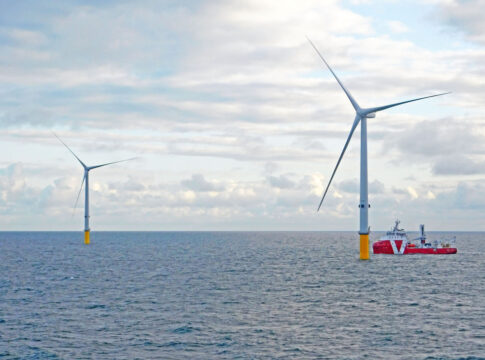
The U.S. offshore wind sector has been thrown into uncertainty after the Trump administration announced an immediate pause on all large-scale offshore wind projects already under construction. The Interior Department said the decision stems from “national security risks” flagged by recently completed classified reports from the Department of War. Officials argue the pause gives time to reassess whether these risks can be reduced through mitigation measures.

However, the move has triggered intense pushback from states, developers, utilities, grid operators, and industry groups. Many warn that the decision could raise electricity prices, delay clean energy deployment, threaten investments, hurt reliability, and undermine years of planning and regulatory approvals.

Secretary of the Interior Doug Burgum said:

“The prime duty of the United States government is to protect the American people. Today’s action addresses emerging national security risks, including the rapid evolution of the relevant adversary technologies, and the vulnerabilities created by large-scale offshore wind projects with proximity near our east coast population centers. The Trump administration will always prioritize the security of the American people.”

National Security Concerns Take Center Stage

According to the Interior Department, the pause affects major U.S. offshore wind projects, including:

The following leases are paused:

  1. Vineyard Wind 1 (OCS-A 0501)
  2. Revolution Wind (OCS-A 0486)
  3. CVOW – Commercial (OCS-A 0483)
  4. Sunrise Wind (OCS-A 0487)
  5. Empire Wind 1 (OCS-A 0512)

Officials claim large offshore wind turbines can interfere with national defense radar systems. Their rotating blades and reflective towers can create what’s called “radar clutter,” which may obscure real targets or generate false signals — a concern highlighted in earlier U.S. government assessments. A 2024 Department of Energy report noted that raising radar thresholds to reduce this clutter could also mean missing actual threats.

Interior Secretary Doug Burgum framed the pause as a security-first decision, saying the administration must prioritize protecting Americans amid evolving adversary capabilities.

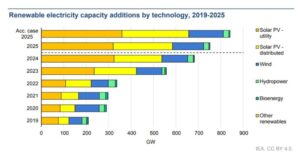
RENEWABLE growth wind
Source: IEA

Industry Pushes Back: “We’ve Already Cleared Defense Reviews”

The BBC reported that developers and energy leaders strongly dispute the need for the pause. Dominion Energy, developer of the major Virginia offshore wind project, stressed that its site is far offshore and has not caused security issues. The company noted its two pilot turbines have operated for five years without any national security concerns. Still, Dominion’s stock fell over 3% following the announcement, while Danish developer Ørsted sank 12%, and turbine maker Vestas dropped 2.6%.

Similarly, S&P Global also highlighted that the National Ocean Industries Association (NOIA) called the action unnecessary. President Erik Milito said all projects under construction had already passed Department of Defense coordination and clearance through rigorous legal processes. He urged the administration to end the pause quickly and highlighted that defense officials were engaged at every permitting stage.

The same S&P Global report also cited that the Oceantic Network, representing the offshore wind industry, called the decision a “veiled attempt” to derail offshore wind progress, arguing it contradicts years of multi-agency review and previous Pentagon approvals. The network warned the pause could delay nearly 6 GW of new power capacity — at a time of rapidly rising electricity demand — while driving prices higher and discouraging investment.

Political and Legal Fallout Intensifies

Governors and state leaders are sounding alarm bells. Connecticut Governor Ned Lamont criticized the decision as “erratic,” saying it will raise electricity costs and disrupt jobs and predictability for businesses. Many of these projects are nearing completion or already supplying power, and states argue that sudden federal reversals undermine economic confidence.

The pause also arrives after the administration has suffered multiple legal defeats. Earlier in December, a federal judge rejected a broader wind project ban, calling it “arbitrary and capricious.” Courts also blocked attempts to halt Revolution Wind and overturned the January permitting freeze. Analysts at ClearView Energy Partners suggested the timing of the new pause may be a strategic response — a “counterpunch” to recent judicial losses.

Meanwhile, 17 states led by New York are already challenging earlier wind restrictions, calling them an “existential threat” to the U.S. wind industry. That broader political and legal confrontation is now expected to deepen.

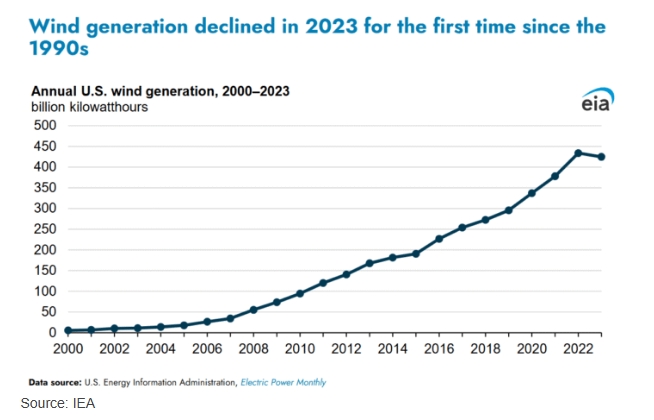
wind energy offshore us

Grid Reliability Concerns: “We Need Every Electron”

Energy security isn’t just about defense — it’s also about keeping the lights on. Former FERC Chairman Neil Chatterjee sharply criticized the pause, calling it reckless at a time when the U.S. needs every available power source. With electricity demand projected to surge — especially from artificial intelligence data centers — offshore wind plays a growing role in supporting grid reliability.

ISO New England echoed the concern. Vineyard Wind is already feeding power to the grid, while Revolution Wind is expected to be online by 2026. Both are built into regional power planning and winter reliability strategies, when offshore wind often performs strongest while other energy supplies tighten. Pausing or canceling them, ISO warned, would raise costs and increase reliability risks.

Offshore Wind Was Finally Gaining Momentum: Wood Mackenzie 

Before the pause, the U.S. offshore wind market was finally building traction after years of delays, inflation pressures, supply chain constraints, and permitting battles. Wood Mackenzie projected strong growth ahead, forecasting 46 GW of new U.S. wind capacity from 2025 to 2029 across onshore and offshore projects combined.

The U.S. offshore sector had begun recovering from cost overruns and contract cancellations. Near-term projects targeting 2026 commercial operation were advancing, even though post-2027 developments still faced hurdles like limited installation vessel capacity and tariff uncertainty. Major players like Ørsted and Equinor were restructuring finances and navigating policy headwinds, but momentum was slowly returning.

Wood Mackenzie expected total national wind capacity to reach nearly 197 GW by the end of the decade — including 6 GW of offshore wind. A peak year of 12 GW or more installations was forecast for 2027. This new federal pause now threatens to disrupt that trajectory.

A High-Stakes Crossroads for U.S. Clean Energy

Energy markets also feel the shock. S&P Global reported growing concern within the sector that halting projects could tighten power supply and worsen price pressures, especially in high-demand regions like the Northeast. Many experts warn that the U.S. can’t afford to pull back on clean energy just as consumption is projected to surge.

In short, the offshore wind pause has pushed the U.S. to a defining moment. While framed as a national security safeguard, it carries major economic, energy, and policy consequences. With legal battles intensifying and investment confidence wavering, the outcome will shape jobs, power reliability, and America’s broader clean energy ambitions. So at this moment, the stakes are high!

The post Offshore Wind Shock: Trump Administration Hits Pause Citing National Security Risks appeared first on Carbon Credits.

Canada to Launch Sustainable Investment Taxonomy in 2026 to Guide Green and Transition Finance

Canada to Launch Sustainable Investment Taxonomy in 2026 to Guide Green and Transition Finance

Canada is preparing to launch a sustainable investment taxonomy in 2026. The federal government announced it will develop a national system to classify economic activities that are environmentally and climate-aligned. This system will serve as a guide for investors, lenders, and companies to identify what counts as “green” and “transition” activity.

The taxonomy is part of Ottawa’s strategy to support private investment in climate action and speed up the shift to a net-zero economy. The government selected the Canadian Climate Institute to take charge of building the framework.

The initiative follows earlier promises in Canada’s 2023 Fall Economic Statement and Budget 2024. It aims to create sustainable finance guidelines. It also seeks to boost climate investment, attract funds for clean tech, and enhance financial disclosure rules for large companies.

Jonathan Arnold, Director of Sustainable Finance, Canadian Climate Institute, remarked:

“The new sustainable investment guidelines will give Canada what investors have been asking for: a clear, credible, science-based system for identifying which activities in the economy are aligned with the country’s climate and competitiveness goals. Crucially, Canada’s guidelines will not just focus on defining clean technologies and investments—they will be designed to help transform emissions-intensive sectors that are central to the national economy, and guide credible pathways for them to compete in a low-carbon world.”

Defining Green and Transition Finance: How Taxonomies Work

A sustainable investment taxonomy is a system that classifies economic activities. It shows which activities are considered environmentally meaningful. It also provides clear, science-based criteria. This helps investors tell the difference between climate-aligned activities and less sustainable ones.

The system lowers uncertainty in financial markets. It also boosts private investment in activities that help meet climate goals.

Taxonomies typically cover two broad categories:

  • Green activities: Clear environmental benefits, such as renewable energy and energy efficiency.
  • Transition activities: High-emission sectors that are shifting toward lower emissions, like cleaner industrial processes.

The Canadian taxonomy will start as voluntary. Its goal is to build transparency and trust for investors in climate-aligned projects. It will standardize how investments are labeled.

Similar frameworks already exist in other jurisdictions. The European Union’s taxonomy serves as a model for many countries. It helps investors compare opportunities consistently.

Over 40 places around the world are creating or using sustainable finance taxonomies. They help guide investment choices.

Why Canada Is Developing Its Own System

Canada’s government says the taxonomy will help channel private funds into activities that support the country’s climate goals. Ottawa has committed to reaching net-zero greenhouse gas emissions by 2050, with a 2030 target of 45-50% lower than 2005 levels.

Canada net zero goals 2030 target
Source: Government of Canada
  • To achieve that, experts estimate Canada needs between CAD 125 billion and CAD 140 billion in investment every year. A strong taxonomy helps boost investment by showing what qualifies as climate-aligned.

Without clear definitions, investors may face uncertainty. For example, without a taxonomy, some activities marketed as “green” may not actually reduce emissions. This can cause greenwashing. That’s when investments are marked as eco-friendly, but they aren’t. A taxonomy helps make investment claims more credible.

Canada’s taxonomy is being designed to reflect both national priorities and global best practices. The government appointed the Canadian Climate Institute. This independent research body will lead the development.

The Institute will work with financial institutions, technical experts, civil society groups, and Indigenous representatives. Together, they will shape the criteria and governance of the taxonomy.

How the Taxonomy Will Be Developed

The taxonomy project has entered an operational phase, with the Climate Institute selected to guide its design. This step moves Canada from planning to execution. The system will follow these broad steps:

  1. Governance setup: Establish independent oversight to ensure transparency and scientific rigor.
  2. Sector prioritization: Identify key economic sectors where taxonomy guidance is most needed.
  3. Criteria development: Define what qualifies as green and transition activities.
  4. Public consultation: Seek input from investors, companies, experts, and the public.
  5. Finalization: Release the first set of taxonomy guidelines by the end of 2026.

The government expects to finalize taxonomy guidance for three priority sectors by late 2026. Additional sectors will be addressed by fall 2027. Priority sectors will focus on areas vital for cutting emissions and transforming the economy. These include clean energy, transportation, and heavy industry.

This phased approach allows Canada to focus first on areas where taxonomy guidance can have the greatest impact. It also gives market participants time to adjust and provide feedback.

What the New Framework Means for Investors and Markets

A sustainable investment taxonomy can influence markets in several ways, including:

  • Standardization: It helps investors evaluate climate-aligned opportunities.
  • Transparency: Clear definitions reduce ambiguity and greenwashing risks.
  • Capital flows: Reliable criteria can shift capital toward sustainable and transitional investments.
  • Risk management: Investors can better assess climate risks in their portfolios.

Financial institutions, pension funds, asset managers, and insurance companies often use taxonomies to screen investments. They may also use them to structure green bonds or sustainability-linked debt instruments. A Canadian taxonomy could make these tools more credible and attractive domestically.

Connecting Investment Labels With Climate Disclosure

Canada’s sustainable investment taxonomy links closely to a key policy: climate-related financial disclosure. Ottawa plans mandatory climate disclosure rules for large private corporations. These rules help companies show how climate risks impact their business. They also detail how companies plan to tackle those risks.

Mandatory disclosures help investors see how companies are getting ready for a low-carbon economy. Clear sustainability data allows investors to compare companies and investment opportunities with more confidence. When combined with a taxonomy, these disclosures can create a clearer picture of sustainability performance across the economy.

In December 2025, new plans require large private companies to disclose climate information under the Canada Business Corporations Act. The government may encourage smaller firms to make voluntary disclosures, but it will not require them to report.

Aligning Capital Markets With Canada’s Net-Zero Path

Canada intends its sustainable investment taxonomy to support the country’s broader climate strategy and reach net-zero emissions by 2050. The country aims to bring in significant private investment. This funding will support clean energy, clean technology, energy efficiency, and decarbonization efforts across various sectors.

Taxonomy guidance can help investors focus on economic activities that contribute to those goals. Setting science-based standards reduces uncertainty and risk for private capital providers. This, in turn, encourages more investment in low-carbon sectors. This could boost Canada’s clean economy and create jobs. Emerging industries like renewable energy, electric vehicle supply chains, and low-emission technologies will benefit.

In the global context, taxonomies are becoming common policy tools to manage the transition to a sustainable economy. Canada’s taxonomy will move the country closer to global best practices. It helps Canadian companies and investors stay competitive in global markets. These markets now want more environmental transparency and accountability.

Canada’s plan to introduce a sustainable investment taxonomy in 2026 represents a major step in aligning financial markets with climate goals. The taxonomy, developed with independent oversight and input from many stakeholders, seeks to boost investor confidence. It also aims to speed up capital flow into sustainable and transitional economic activities.

The post Canada to Launch Sustainable Investment Taxonomy in 2026 to Guide Green and Transition Finance appeared first on Carbon Credits.

Codelco and SQM Unite to Boost Chile’s Lithium Future Through 2060

chile lithium

Chile has just entered a new phase of its lithium journey. State-owned Codelco and global lithium producer SQM have formed NovaAndino Litio SpA, a significant public-private joint venture that will oversee lithium development in the Salar de Atacama through 2060. This move strengthens Chile’s control over one of the world’s richest lithium resources. At the same time, it supports the world’s fast shift toward electric vehicles and clean energy.

The agreement merges Codelco’s Minera Tarar SpA with SQM Salar SpA. All assets, technology, people, and know-how now sit under one company. NovaAndino Litio will handle everything from exploration to production to sales. It will also guide long-term growth in the Atacama Salt Flat. With majority state participation and modern governance, the partnership shows Chile wants leadership, transparency, and sustainable value creation.

Máximo Pacheco, Chairman of the Board of Codelco, said:

“Codelco is taking a strategic step today to actively participate in lithium production, a key resource for the global energy and digital transition. This partnership with SQM fills us with pride and reflects a new form of public-private collaboration: transparent, professional, and long-term.”

Strong State Role, Steady Operations, and Smooth Transition

This joint venture was formally announced through Chile’s Financial Market Commission. It followed reviews from many national and international institutions. It also included a wide Indigenous consultation process. Now, the planning stage is over. The project moves into real action as the new board begins shaping the future of Chile’s lithium industry.

Additionally, NovaAndino Litio brings together the government’s strategic leadership and SQM’s strong operational experience. It gathers all necessary permits, subsidiaries, and international offices in one place. As a result, current Atacama operations can continue without disruption.

And at the same time, the partnership prepares for new contracts after 2031, ensuring stability for customers, investors, and communities.

There is also another major win. SQM transferred its Maricunga Salt Flat concessions to Codelco. This move strengthens Chile’s control over another key lithium reserve. It opens the door for future projects and reinforces national authority over critical minerals.

Lithium Demand Surges as Electric Mobility Grows

This partnership matters even more because of what is happening globally. Electric vehicles are growing fast across the world. So, lithium demand is rising sharply. Chile already supplies more than a quarter of global lithium. It mainly comes from brine extraction in the Salar de Atacama, which generally produces lower greenhouse gas emissions than hard-rock mining in other regions.

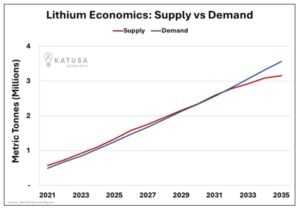
lithium demand lithium supply

According to research from the International Council on Clean Transportation (ICCT) and the Centro de Movilidad Sostenible, battery demand in Chile is expected to jump dramatically. It could rise from 0.5 GWh in 2024 to up to 18 GWh by 2030, and even reach 38 GWh by 2035. Because of this, lithium demand from vehicles could surge from just 44 tonnes in 2024 to more than 3,000 tonnes by 2035. So, NovaAndino’s timing is not just important—it is essential.

lithium chile

Boosting Chile’s Lithium Production, Revenues, and Economy

Chile’s lithium production capacity is already set to expand. Announced capacity could rise from 42,000 tonnes in 2024 to 64,000 tonnes in 2030, and nearly 79,000 tonnes in 2035. Most of this will come from existing, proven operations. That means less risk and stronger reliability.

Financial benefits are also big. Lithium brought Chile about $2.7 billion in 2024. By 2030, revenues could reach $7.3 billion. By 2035, they could climb close to $9 billion, depending on prices and project success. Meanwhile, Codelco says the merger will have a strong positive effect on its financial results, which should show up in its 2025 reports.

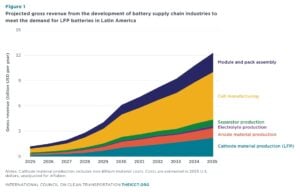
The country wants to move higher up the value chain for raw materials export. Today, almost all lithium mined in Chile is already refined locally. The next step is producing cathode materials. Making LFP cathodes for Latin American markets alone could generate $1.1 billion each year by 2030 and up to $2.2 billion by 2035. This would be almost double the income from exporting lithium carbonate. Even better, it would also create thousands of skilled jobs.

If Chile goes even further and builds full battery manufacturing, the impact becomes massive. Developing full LFP battery supply chains could generate up to $6.1 billion by 2030 and $12.3 billion by 2035, while creating as many as 32,000 direct jobs. So, NovaAndino Litio is not just a mining venture. It is a path to full industrial transformation.

lithium demand
Source: IEA

Balancing Growth with Environment and Community

However, growth must remain responsible. The Atacama Desert is fragile. Water use and environmental protection remain critical. Indigenous communities and local stakeholders also need to stay involved. So, consultation and shared benefits must continue. Thankfully, this partnership was built with oversight, community discussion, and environmental awareness in mind.

Looking ahead, recycling will also become important. As more EV batteries reach the end of their life, recovering materials will reduce environmental pressure and help keep more value inside Chile’s economy.

A Defining Moment for Chile and the Global EV Shift

In the end, NovaAndino Litio marks a defining moment. Chile is protecting national interests while staying competitive in a rapidly changing world. With strong governance, advanced technology, and plans to expand downstream, Chile is moving from just supplying resources to creating long-term value.

As electric vehicles grow, renewables expand, and climate goals tighten, lithium will stay essential. Chile’s decision to build this state-led but globally competitive partnership shows confidence and direction. With NovaAndino Litio now in motion, Chile is ready to power the next generation of batteries—and help drive a cleaner, more sustainable energy future worldwide.

The post Codelco and SQM Unite to Boost Chile’s Lithium Future Through 2060 appeared first on Carbon Credits.

Microsoft and Iberdrola Power AI with 150 MW Wind PPA in Spain

Microsoft and Iberdrola Power AI with 150 MW Wind PPA in Spain

Microsoft and the Spanish energy company Iberdrola have announced a new long-term deal. Under this agreement, Microsoft will buy clean wind power in Spain. It will also work with Iberdrola on artificial intelligence (AI) and cloud technologies across the energy group’s operations. This is the first renewable energy power purchase agreement (PPA) the two companies have signed in Europe.

The contracts cover 150 megawatts (MW) of wind energy from two wind farms in northern Spain. These are the Iglesias wind farm in Burgos and the El Escudo wind farm in Cantabria. By securing this clean power, Microsoft supports its goal of running on 100% renewable energy in Europe.

In addition to energy supply, the deal includes work on digital transformation. Microsoft will expand the use of its Azure cloud platform and deploy AI tools across Iberdrola’s global business units. This combination of clean power and digital technology is meant to help both companies meet their climate and growth goals.

Aitor Moso, director of Iberdrola’s global customer business, remarked:

“This partnership will accelerate the adoption of AI across the Iberdrola Group to strengthen our leading digital capabilities and expand our renewable PPA portfolio with Microsoft, in line with both companies’ strong commitment to combining major growth in electricity consumption with full decarbonisation.” 

What PPAs Mean for Tech and Climate Goals

A power purchase agreement is a contract where a buyer agrees to purchase electricity from a generator at a set price over a long period. PPAs help companies secure predictable energy costs. They also support the financing and construction of new renewable power projects. PPAs are usually signed for periods of 10 to 30 years.

For technology companies like Microsoft, PPAs are part of a strategy to reduce carbon emissions. These contracts provide clean energy directly from wind or solar projects. They can also help companies meet sustainability goals and reduce long-term energy price risk.

Large technology firms have been signing more PPAs in recent years. Corporate demand for renewable power is driving growth in this market. Investors valued the global corporate Power Purchase Agreement market at billions of dollars, and they expect it to grow further in the next decade.

How This Deal Fits Into Microsoft’s Goals

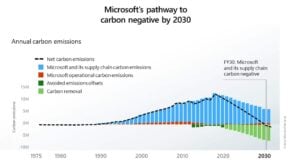
Microsoft has made public commitments to run on 100% renewable energy worldwide. The company also has goals to become carbon negative by 2030 and to remove its historical carbon emissions by 2050. These goals require sourcing large amounts of clean power and investing in new renewable energy projects.

Microsoft 2030 carbon negative goal
Source: Microsoft

The wind energy from these Spanish PPAs will help Microsoft meet its renewable energy targets in Europe. The company has previously signed clean energy deals in the United States, where it partnered with Avangrid, a U.S. subsidiary of Iberdrola. Those contracts cover solar and wind farms in several U.S. states.

The Spain agreement brings Iberdrola and its subsidiaries’ total renewable capacity to about 500 MW. This expanded partnership reflects Microsoft’s broader strategy to connect its technology operations with clean energy.

Samer Abu-Ltaif, President of Microsoft for Europe, the Middle East, and Africa, noted:

“By combining Iberdrola’s leadership in renewable energy with Microsoft’s cutting-edge cloud and AI technologies, we’re not only advancing our sustainability goals, we’re also driving innovation and resilience for our customers and communities. Together, we’re setting a new standard for how technology and energy can drive positive change at scale.”

AI and cloud computing require large data centers. These data centers use a substantial amount of electricity. Companies increasingly want that electricity to come from renewable sources to reduce environmental impacts. The chart below shows Microsoft’s clean energy contracts, excluding the Iberdrola deal.

Microsoft Clean Energy Contracts (Capacity, MW)
Notes: Clean energy deals include solar and wind projects

SEE MORE on Microsoft: 

AI Meets Wind: Energy for Data Centers

The growth of artificial intelligence and cloud services is increasing demand for electricity. Data centers, where computing and storage happen, use vast amounts of energy.

In recent years, the share of AI workloads in total data center power use has grown. Analysts expect global electricity use by data centers to nearly double by 2030. This rise is mainly due to the growing demand for AI computing.

data center electricity demand due AI 2030
Source: IEA

This rising demand for energy creates challenges for power systems. Electricity grids must supply more power while also reducing carbon emissions. Clean energy procurement through PPAs helps tech companies boost renewable power in their data centers. It also provides more stable energy prices over the long run.

As AI workloads expand, the pressure on utilities and grids rises. In some markets, data centers already account for a growing share of overall electricity demand. For example, in the United States, data centers accounted for around 4% of national electricity use in 2024. That figure is expected to grow as new AI deployments come online.

Iberdrola’s Role in Europe’s Renewable Boom

Iberdrola is one of the largest renewable energy companies in Europe. It produces energy from wind, solar, hydroelectric, and other low-carbon sources. The company has been expanding its clean energy portfolio in Spain and globally.

In Spain, Iberdrola has committed to building and connecting new renewable power plants. It also invests in projects that improve the electricity grid to support clean energy growth. The company recently got funding to boost renewable capacity by over 2,000 MW. This will provide clean power to almost one million homes each year.

Beyond wind and solar, Iberdrola is working on other technologies like green hydrogen and energy storage. These solutions can help balance the grid and support variable renewable power sources.

Iberdrola also uses digital technology and AI internally to improve operational efficiency. It recently received awards for using generative AI in its digital processes. These tools help the company manage complex energy systems and improve decision‑making.

Forecasting the Market: PPAs and Data Center Demand

The clean energy market is growing fast. Corporate demand for renewable PPAs has increased as companies set net-zero targets. BloombergNEF reported that the corporate clean power buying market hit record levels in 2023, with $70 billion. It has been growing steadily since 2015.

Forecasts suggest the global PPA market will continue to grow in the next decade. Industry reports expect the PPA market to reach over $85 billion by 2030 and up to $604 billion by 2034. Growth is driven by cost declines in wind and solar energy, stronger climate policies, and rising corporate commitments to sustainability.

global power purchase agreement PPA market
Source: Market

At the same time, data center energy demand is expected to rise sharply. The International Energy Agency estimates that by 2030, electricity use for data centers may hit about 945 terawatt-hours (TWh) a year. That’s nearly double what it is now. AI workloads are a major factor in this trend.

These projections mean that technology companies will need more clean power in the future. Agreements like Microsoft’s PPAs with Iberdrola can help meet this demand while supporting climate goals. Long‑term contracts give renewable energy developers the stability needed to finance new projects.

The Bigger Picture: Energy Transition and Sustainability

Microsoft and Iberdrola’s expanded partnership shows how technology and clean energy markets are converging. As companies invest in AI and data centers, they are also investing in renewable energy to make growth sustainable. This trend reflects a broader shift in how businesses source energy and plan for future power needs.

Long-term renewable contracts reduce exposure to volatile electricity prices and support investment in new clean energy capacity. They also help companies report progress on emissions reductions.

For policymakers, the rise of corporate PPAs shows how private investment can support national and regional climate targets. Both technology and energy companies are likely to pursue these types of deals to meet future energy needs responsibly.

The post Microsoft and Iberdrola Power AI with 150 MW Wind PPA in Spain appeared first on Carbon Credits.

Why Chevron Updated Biofuels and Geothermal in Its Energy Strategy to Cut Carbon

Chevron is adjusting its clean energy strategy at a time when global attention on emissions continues to rise. At the WSJ CEO Council, CEO Mike Wirth shared how the company plans to grow its traditional oil-and-gas business while steadily expanding into biofuels, geothermal power, and a few select emerging technologies. His message was clear: Chevron wants to stay practical, invest in what works now, and keep improving its carbon profile without making unrealistic leaps.

Chevron Bets on Biofuels to Boost Profits and Cut Carbon

Even though Chevron exited a U.S. biomass diesel trade group last year, it maintains that strong financial returns remain possible through smarter feedstocks and better use of existing refinery assets.

Wirth put biofuels at the center of Chevron’s renewable plans. He said these fuels offer a real-world, ready-to-use solution for cutting emissions, especially because they work in today’s engines, pipelines, and fueling systems. Unlike early-stage technologies that still need major breakthroughs, biofuels can scale faster and support industries that cannot switch to electricity overnight.

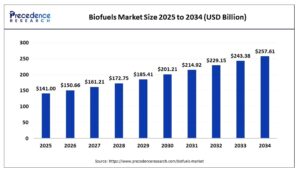
  • The global biofuels market size is estimated at USD 141 billion in 2025 and can reach around USD 257.61 billion by 2034, at a CAGR of 6.9%.

global biofuel market

Expanding Refineries to Meet Growing Demand

The oil major already runs nine biorefineries around the world, and it recently boosted capacity at its Geismar, Louisiana, site. The company expanded renewable diesel output there from about 90 million gallons to 340 million gallons a year. Wirth explained that this growth helps Chevron serve transportation and maritime sectors, where demand for drop-in fuels remains high.

Additionally, partnerships also play a key role. Chevron works with Bunge and Corteva to produce canola-based feedstocks and teams up with Optimus Power to integrate B100 biodiesel into municipal fleets. Its Renewable Energy Group supplies lower-carbon fuels made from used cooking oil and animal fats, and Chevron has become Singapore’s second-largest marine biofuels supplier.

With ISCC certification in key U.S. ports, Chevron has a strong hold to serve global shipping customers who want cleaner fuels.

Geismar Expansion Stands Out

In this context, more than 40 major biofuel projects worldwide aim to deliver around 260,000 barrels per day by 2030. Chevron’s own Geismar expansion stands out as one of the largest of the 31 new projects tracked. The company is also converting units at traditional refineries, such as El Segundo, to produce about 10,000 barrels per day of renewable fuel.

Research and development efforts continue behind the scenes. At the Ames Technology Centre, Chevron is advancing catalytic technologies for multiple fuels—renewable diesel, biodiesel, SAF, and renewable natural gas—to improve efficiency and cut emissions even further. Its RNG projects are also growing through partnerships with CalBio in California and dairy farms in Michigan.

Geothermal Steps Alongside Biofuels

Along with biofuels, Wirth highlighted geothermal energy as a promising and reliable clean power source. He described geothermal as a natural fit for Chevron because the company already has decades of subsurface experience from oil-and-gas operations.

Chevron is exploring enhanced geothermal systems that could significantly boost output from traditional geothermal wells. He also said partnerships will play an important role as the company works to scale these technologies and support utility-scale power generation. Because geothermal power does not depend on weather, it can help balance grids as more intermittent energy enters the system.

This interest reflects a broader industry shift. Many energy analysts now see next-generation geothermal as a strong candidate for 24/7 clean electricity, especially for data centers and industrial facilities. Chevron believes it can use its drilling and reservoir expertise to help bring this technology forward.

Connecting the Strategy to Chevron’s Emissions Profile

Chevron’s emissions numbers show why the company wants practical solutions.

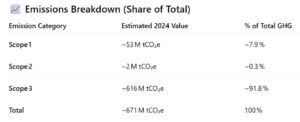
In 2024, Chevron reported total greenhouse gas (GHG) emissions of approximately 671 million tonnes of CO₂‑equivalent (tCO₂e). This figure includes emissions from direct operations as well as the broader value chain, with Scope 3 emissions — mainly from the use of sold products — accounting for roughly 92% of the total.

  • Scope 1 — Direct Operational Emissions: It comes from company-controlled operations such as fuel combustion and flaring, totaled around 53 million tCO₂e in 2024.
  • Scope 2 — Indirect Emissions: arising from purchased electricity, steam, and heat, were approximately 2 million tCO₂e in 2024, calculated using both market‑based and location‑based approaches.
  •  Scope 3 — Value Chain Emissions: reached about 616 million tCO₂e in 2024. The bulk of these emissions comes from Category 11: Use of Sold Products, which includes the CO₂ released when customers consume Chevron’s fuels.
Chevron emissions
Source: Chevron Sustainability Report 2024

Chevron has still made progress in areas it directly controls. Flaring intensity has dropped 22% since 2013, and methane intensity has fallen between 20% and 25%. The company aims to cut upstream emissions intensity to 3 kg CO2e per barrel by 2028, representing a 66% reduction from 2016. Independent assessments show Chevron outperforming about 71% of its oil-and-gas peers on emissions management.

Biofuels help reduce lifecycle emissions in the products Chevron sells, which supports these intensity goals. Geothermal also contributes by lowering operational footprints, especially when combined with carbon capture or renewable power procurement.

Taps Carbon Credits to Offset Emissions

Biofuels and RNG connect directly to the carbon credit market. Both can generate certified greenhouse gas reductions under systems like ISCC. These credits help Chevron and its customers offset certain emissions and meet regulatory and voluntary climate requirements. They also support compliance markets under Article 6, especially for SAF and RNG.

Chevron continues to invest in carbon capture and storage. The Gorgon CCS project in Australia has stored more than 10 million tonnes of CO2 since 2019. While CCS alone cannot solve Chevron’s Scope 3 challenge, it remains an important part of the company’s long-term net-zero plan.

Wirth stressed that Chevron does not expect one single solution to dominate. Instead, the company is building a portfolio that lets it adapt to changing policies, especially as energy rules shift under the current U.S. administration.

Investors following Chevron’s commitment to spend $10 billion on low-carbon investments by 2028 see biofuels and geothermal as the clearest opportunities for near-term commercial value. These technologies lower emissions while supporting Chevron’s core business model.

A Practical Path Through the Energy Transition

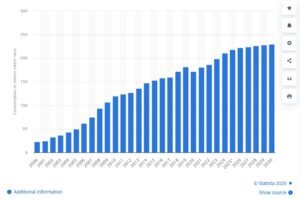
Statista reported that the global biofuel consumption is projected to reach 217.72 million metric tons in 2025, marking an increase of roughly seven million metric tons compared to 2024.

By 2030, the combined annual demand for ethanol and biodiesel is expected to approach 230 million metric tons. The United States is forecasted to continue as the world’s largest biofuel consumer.

Biofuel consumption worldwide from 2000 to 2024, with a forecast until 2030

biofuel demand

The company’s updated strategy shows a company trying to move forward without losing sight of real-world constraints. It plans to keep growing its oil-and-gas business while lowering carbon intensity and expanding into renewable fuels, geothermal, carbon capture, hydrogen, and other emerging technologies. Significantly, Wirth also noted growing interest in nuclear energy and the company’s venture investments in fusion companies.

In simple terms, Chevron is choosing a practical, step-by-step transition. Biofuels offer quick wins. Geothermal adds stable, clean power. Nuclear and fusion represent longer-term bets. Together, they form a balanced path that blends its strengths with rising pressure to cut emissions.

The post Why Chevron Updated Biofuels and Geothermal in Its Energy Strategy to Cut Carbon appeared first on Carbon Credits.

Big Bet, Bigger Stakes: Korea Zinc’s $7.4 Billion Smelter Reshapes U.S. Critical Minerals Supply

Korea Zinc is taking a major step to reshape the global critical minerals market. The world’s largest non-ferrous metal smelter will build a state-of-the-art facility in Clarksville, Tennessee, in partnership with the U.S. Department of War and the U.S. Department of Commerce. The project known as the “U.S. Smelter” will require $6.6 billion in capital spending and $7.4 billion in total investment, including financing costs.

Deputy Secretary of War Steve Feinberg.

“President Trump has directed his Administration to prioritize critical minerals as essential to America’s defense and economic security. The Department of War’s conditional investment of $1.4 billion to build the first U.S.-based zinc smelter and critical minerals processing facility since the 1970s reverses 50 years of industrial decline. The new smelter in Tennessee creates 750 American jobs to unlock strategic minerals as a force multiplier across aerospace, defense, electronics, and advanced manufacturing without chokepoints.”

“U.S. Smelter”: A Landmark Project for Supply Chain Security

The project is the largest U.S. metals refining investment in decades, strengthens U.S.–South Korea economic and security ties, and helps the United States reduce reliance on China for materials crucial to electronics, clean energy, and defense.

  • The U.S. Department of War will arrange about $2.15 billion with private investors.
  • The Department of Commerce will provide $210 million in CHIPS Act funding to support U.S.-based equipment purchases, with JPMorgan helping structure the financing

This will be the first zinc refinery built in the U.S. since the 1970s. More importantly, it will operate as an integrated smelter capable of producing 13 non-ferrous metals, most of which the U.S. government classifies as critical minerals.

U.S. officials see the project as a flagship example of how allied nations can work together to secure vulnerable supply chains. As global competition for natural resources intensifies, the facility aims to ensure steady access to materials that underpin modern industry and national security.

Secretary of Commerce Howard Lutnick, highlighted:

“Korea Zinc’s critical minerals project in Tennessee is a transformational deal for America. Our country will now produce, in volume, 13 critical and strategic minerals that are vital to aerospace and defense, semiconductors, AI, quantum computing, autos, industrials, and national security. With our investment in this state-of-the-art project, we are decisively strengthening our national and economic security by producing these critical minerals at scale and thus reducing dependence on foreign nations. Additionally, the United States has preferred access to a portion of Korea Zinc’s expanded production in South Korea.”

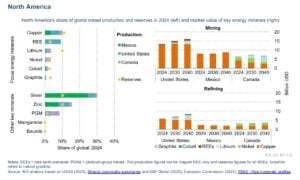
north america
Source: IEA

Korea Zinc Brings Global Smelting Leadership to the U.S

Korea Zinc plans to deploy personnel and technical expertise from its Onsan Smelter early in the project. This approach aims to ensure smooth commissioning and reduce operational risks.

Onsan’s strength lies in processing complex and low-grade materials, including scrap with high impurity levels. Its integrated zinc-lead-copper system maximizes metal recovery and sets global benchmarks for efficiency.

By transferring this know-how, Korea Zinc expects the U.S. Smelter to rank among the most advanced facilities in the world. For Korea Zinc, the U.S. smelter is more than an expansion. It creates a strategic production base in the world’s largest demand market.

By producing inside the U.S., Korea Zinc can reduce exposure to geopolitical risks, trade restrictions, and logistics disruptions. It can also source scrap and raw materials locally, making its global supply chain more flexible and resilient. The move positions Korea Zinc as a trusted long-term partner in America’s critical minerals ecosystem.

Shareholders Pushback

Despite strong government support, Korea Zinc faces resistance– its largest shareholder alliance, led by MBK Partners and YoongPoong, opposes the U.S.-backed joint venture, arguing it could dilute existing shareholders and cement Chairman Choi Yun-beom’s control. They may even seek a court injunction to block new share issuance.

Markets reacted sharply. Korea Zinc shares initially jumped more than 26% when the project was announced, but later fell by over 13% as opposition surfaced.

What the Tennessee Smelter Will Produce

The United States consumes vast volumes of critical minerals, driven by growth in electric vehicles and batteries, semiconductors and AI data centers, aerospace and defense manufacturing, etc.

Once fully operational, the U.S. Smelter will process around 1.1 million tons of raw materials per year and produce 540,000 tons of finished products annually.

The output will include:

  • Base metals: zinc, lead, and copper
  • Precious metals: gold and silver
  • Strategic minerals: antimony, indium, bismuth, tellurium, cadmium, gallium, germanium, and palladium
  • Chemical products: sulfuric acid and semiconductor-grade sulfuric acid

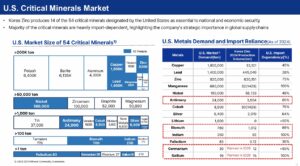
Notably, 11 of the 13 metals qualify as critical minerals under the 2025 U.S. Geological Survey list. Some, such as indium and gallium, are currently 100% import-dependent in the United States.

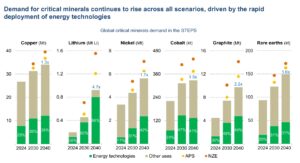
critical minerals
Source: IEA

Phased Construction with Operations Starting in 2029

Site preparation will begin in 2026, followed by full construction in 2027. The company expects to start phased commercial operations in 2029, beginning with zinc, lead, and copper production.

The smelter will span 650,000 square meters, modeled after Korea Zinc’s Onsan Smelter in Ulsan, South Korea. Onsan is the world’s largest single-site smelting complex and the backbone of Korea Zinc’s global leadership.

By applying the same advanced technology, process optimization, and digital control systems, the company aims to replicate that success in North America.

Why Clarksville Makes Strategic Sense

Clarksville offers several advantages that make it an ideal location.

First, the site already hosts Nyrstar’s existing zinc smelter, the only zinc refinery currently operating in the United States. Korea Zinc plans to acquire Nyrstar’s U.S. operations, subject to conditions, then dismantle the old facility and replace it with a much larger and more advanced plant.

Second, the region provides strong infrastructure, including stable soil conditions, reliable drainage, and favorable groundwater characteristics. It also offers excellent rail and road connectivity.

Third, Clarksville brings a skilled workforce. The existing smelter has operated for nearly 50 years, and the new project will allow hundreds of experienced workers to transition into the expanded facility.

Finally, electricity costs, one of the largest expenses in smelting, are relatively low in the region. Combined with federal and state incentives, this gives the project a clear cost advantage.

The bigger picture is that the Tennessee project remains a defining moment for Korea Zinc and U.S. industrial policy. For the U.S., it strengthens supply chain independence. For Korea Zinc, it secures long-term growth in a high-demand market.

US critical minerals
Source: Korea Zinc

To end with, Chairman Yun B Choi emphasized,

“With its project in the United States, Korea Zinc will solidify its position as a strategic partner supplying essential minerals for aerospace and defense. This will become a model case of strengthened U.S.-ROK economic security cooperation. Given the current geopolitical climate and strong U.S. support, now is the optimal moment for expansion into the American market.”

The post Big Bet, Bigger Stakes: Korea Zinc’s $7.4 Billion Smelter Reshapes U.S. Critical Minerals Supply appeared first on Carbon Credits.

Top 4 Clean Tech Companies to Watch in 2026

Top 4 Clean Tech Companies to Watch in 2026

Clean technology is changing how the world makes and uses energy. It is helping reduce pollution and fight climate change. More companies are building tools and systems that produce energy without burning carbon fuels. These companies attract investors who want growth and a positive environmental impact.

In this article, we look at the top 4 clean tech companies to keep an eye on in 2026. We rank them by size, growth potential, financial strength, and clean tech impact. The goal is to help you understand who these companies are and why they matter. 

Global clean tech investment hit $1.8T in 2025 (up 15% YoY), with solar and wind dominating 62% and hydrogen/fuel cells at 12%. These four companies capture 8% of the US-listed clean tech market cap.

NextEra Energy: Clean Power at Utility Scale

NextEra Energy is the largest clean energy company in the world. It owns and operates wind farms, solar fields, and battery storage systems across the United States. The clean tech company also runs Florida Power & Light, a big utility that serves millions of customers.

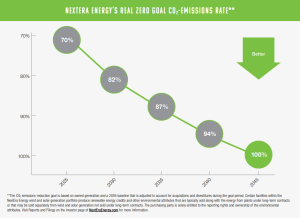
NextEra’s strategy is to produce as much clean power as possible. The company has set clear targets to reduce carbon emissions sharply by 2025 and reach net zero by 2045. NextEra is also working on new technology, like green hydrogen and smart grid systems, to support future clean energy growth.

NextEra Energy's net zero goal
Source: NextEra

On the financial side, NextEra is strong. Its market value was over $170 billion in 2025, making it one of the most valuable clean energy stocks. In 2024, it reported revenues near $25 billion and posted solid net income, showing stable profits and a healthy balance sheet. NextEra has also increased its dividend for more than 26 years in a row, which many long‑term investors find attractive.

Clean energy and emissions reduction efforts include:

NextEra Energy is the largest producer of wind and solar power in North America. As of September 2025, the company operated 76 gigawatts (GW) of renewable energy capacity.

Through Florida Power & Light, NextEra has reduced power-sector carbon emissions by more than 30% since 2005, even as customer demand has grown. The utility has installed over 6 GW of solar capacity in Florida alone, making it the largest utility-scale solar owner in the U.S. It continues to expand battery storage to support grid stability and emissions reduction.

Nextera Energy portfolio

NextEra’s stock is widely held by clean energy funds and large investors. It appears in many U.S. clean energy ETFs. The company’s scale and track record make it a core choice for those who want a clean energy leader with financial strength.

First Solar: Manufacturing the Solar Backbone

First Solar is one of the top makers of solar panels worldwide. It uses a technology called thin‑film photovoltaic modules. These panels are lighter, use fewer raw materials, and often perform better in hot climates compared to traditional silicon panels. The company builds large solar power plants that send power to utilities and corporate customers.

First Solar has a solid backlog of signed contracts stretching out to 2030. These long‑term deals help make its future revenue more predictable. The company is also expanding its manufacturing in the U.S. with new factories in Ohio and Alabama. This growth adds capacity and helps secure the clean energy supply chain at a time when many countries want more domestic production.

Here’s the company’s achievements in numbers:

Fist Solar achievements
Source:

Financially, First Solar is a strong player. Its market cap was around $24 billion in 2025, and it has shown double‑digit revenue growth. Analysts note that the company’s order book gives it visibility into future sales, which is important for stability and planning.

Clean energy initiatives are: 

First Solar’s thin-film cadmium telluride (CdTe) modules are among the lowest-carbon solar technologies commercially available. Independent lifecycle assessments cited in company sustainability filings show First Solar modules produce over 40% lower lifecycle carbon emissions than conventional crystalline silicon panels manufactured in Asia.

The company also operates a global panel recycling program with a documented recovery rate above 90% for semiconductor materials and glass, reducing waste and raw material demand.

By supplying utility-scale solar projects worldwide, First Solar’s deployed modules contribute to the displacement of fossil fuel generation with zero-emission electricity over multi-decade operating lives.

First Solar value chain
Source: First Solar

First Solar’s focus on solar manufacturing and project development makes it a favorite among investors who want exposure to clean tech with clear and measurable revenues.

Bloom Energy: Fuel Cells for a Low-Carbon Grid

Bloom Energy makes a special type of power generator called a solid‑oxide fuel cell. These units produce electricity efficiently and with low emissions. Customers include data centers, large buildings, and industrial sites that need reliable power without high carbon output. Bloom’s fuel cells can run on hydrogen or biogas, which makes them flexible for future clean energy systems.

Bloom’s stock performance in 2025 has been remarkable. Premium financial news reported that its stock jumped more than 410 % in 2025 after strong earnings results. The company posted quarterly revenue of $519 million, beating analyst expectations.

Although Bloom still reports net losses at times, these are seen by many as part of its growth and investment phase.

Bloom’s clean energy and emissions impact are embedded in its fuel cell technology: 

Bloom Energy’s solid-oxide fuel cells generate electricity at electrical efficiencies of up to 60%. This is significantly higher than traditional combustion-based power generation.

When operating on natural gas, Bloom systems emit up to 45% less CO₂ than coal-fired power and materially less than diesel backup generators. When fueled with biogas or hydrogen, direct carbon emissions are near zero at the point of generation.

According to company disclosures, Bloom systems deployed globally have generated tens of terawatt-hours of electricity, supporting emissions reductions for data centers, hospitals, and industrial customers seeking lower-carbon, high-reliability power.

As a mid‑sized public company, Bloom Energy blends innovation with real market traction. It has partnerships with major firms and is finding demand in areas like data center power and microgrids. Investors interested in clean tech that goes beyond solar and wind often watch Bloom closely.

Plug Power: Betting on the Hydrogen Economy

Plug Power focuses on hydrogen fuel cell systems. Its products are designed to replace traditional batteries and fossil fuels in heavy equipment, forklifts, and industrial vehicles.

The company is also building hydrogen production and fueling infrastructure across North America and Europe. This supports a broader “green hydrogen” economy — where hydrogen is made from clean energy sources like wind and solar.

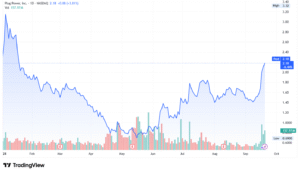
Plug Power has faced financial challenges, including consistent net losses and stock price volatility. Recent tax policy changes in the U.S. extended incentives for hydrogen infrastructure, delivering some support to the hydrogen sector and lifting Plug Power shares.

plug power stock pice

In 2024 and 2025, Plug Power reported revenue in the low hundreds of millions, but with plans to scale its electrolyzer and fuel cell deployments. Its long‑term growth story depends on hydrogen demand and policy support worldwide.

Clean energy and emissions efforts include:

Plug Power has deployed more than 60,000 hydrogen fuel cell systems globally, primarily replacing lead-acid batteries and propane systems in material-handling fleets. These deployments have enabled customers to eliminate on-site combustion emissions and reduce operational carbon output.

Plug is also expanding green hydrogen production, with multiple operational and planned plants designed to produce hydrogen using renewable electricity rather than fossil fuels. The company reports that hydrogen fuel cell forklifts can cut greenhouse gas emissions by up to 30% compared with propane alternatives, depending on hydrogen sourcing, while eliminating tailpipe pollutants.

While riskier than the companies above, Plug Power represents a future‑focused segment of clean tech — hydrogen. Investors drawn to bold, transformative ideas may find it worth watching.

What Sets These Clean Tech Leaders Apart

Clean technology is not a single tool; it is a wide set of technologies that can reduce carbon emissions and power the future. Wind farms, solar panels, fuel cells, and hydrogen systems are all part of the clean tech mix investors watch today.

There are three big reasons these top four clean tech companies matter:

  • They produce or enable energy with lower emissions than fossil fuels.
  • They have real revenue or backed contracts that support long‑term growth.
  • They are part of a global shift toward clean energy demand and infrastructure build‑out.

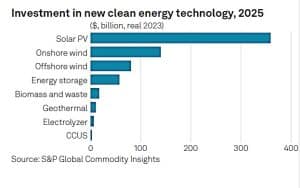
Clean tech investments are often tied to government policies, tax incentives, and climate goals. In the United States and abroad, new rules and funding for clean energy are helping make these companies more financially viable and attractive to investors.

investment in new clean tech 2025

What to Watch in 2026 and Beyond

The clean tech sector is evolving fast. Here are the key trends to follow:

  • Demand from Big Tech and Data Centers

Large tech firms are moving to clean power for their data centers and operations. This demand helps companies like NextEra, First Solar, Bloom Energy, and Plug Power. Solar plus storage and fuel cell solutions fit this trend well.

  • Policy and Incentives

Tax credits, renewable energy standards, and climate legislation can shift investor confidence quickly. Recent policies have supported both solar and hydrogen incentives.

  • Infrastructure Build‑Out

To support wind, solar, hydrogen, and storage at scale, new infrastructure, from transmission lines to fueling stations, is needed. Companies involved in these systems may see growth if infrastructure spending continues.

clean energy tech investment 2025

Clean Tech’s Role in the Next Energy Cycle

Clean technology is more than a trend — it is becoming a core part of how the world produces and uses energy. The four companies above each play a role in this shift.

NextEra leads at scale, First Solar drives solar manufacturing, Bloom pushes new fuel cell solutions, and Plug Power bets on hydrogen’s future. Investors looking for exposure to clean tech growth may consider these companies as part of a broader energy portfolio.

The post Top 4 Clean Tech Companies to Watch in 2026 appeared first on Carbon Credits.

Voluntary Carbon Market in 2026: Top Forecasts and What They Mean for Investors

2026 is shaping up to be a defining year for the voluntary carbon market (VCM). After years of criticism, uncertainty, and volatility, the market is entering a more mature phase. Corporate climate ambition is higher than ever. Investment is flowing in at record levels. At the same time, integrity standards are tightening, regulators are stepping in, and the supply of truly high-quality credits remains tight. The result is a market that is growing quickly, becoming more disciplined, and rewarding projects that deliver real, durable climate impact.

Throughout 2025, momentum built rapidly. Companies retired more credits than in any first-half period before. Capital committed to new projects tripled. Asia emerged as a powerhouse. And by the time 2026 arrives, the market is not just bigger; it is more credible, more competitive, and more strategic than previous years.

Below is a closer look at where the market stands, how big it could get, and what matters most as we move through 2026.

Voluntary Carbon Market Size: Growth Accelerates Into 2026

Different analysts see the market through different lenses, but they all agree on one thing: the VCM is expanding fast.

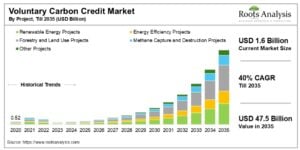
Roots Analysis takes a conservative but confident view. They expect the market to reach around USD 1.7 billion in 2026, rising from USD 1.6 billion in 2025, before accelerating sharply to nearly USD 47.5 billion by 2035 with a strong 38% CAGR. Their outlook focuses heavily on verified, high-quality credits, especially removals and premium nature-based solutions, supported by more than 6,200 companies pursuing science-based climate targets.

vcm voluntary carbon market carbon credits
Source: Roots Analysis

Mordor Intelligence is far more aggressive. They anticipate a significantly larger base market of USD 15.83 billion in 2025, implying around USD 23.8 billion in 2026 and rising to USD 120 billion by 2030, driven by rapid growth across renewable, waste, and forestry project pipelines.

Meanwhile, Regreener estimates the 2026 market at USD 3.04 billion, but still growing at a rate of more than 20% CAGR, while Bloomberg reports that 2025 saw record-breaking retirements and unprecedented capital inflows. In fact, companies retired more credits in the first half of 2025 than in any previous period, while more than USD 10 billion was committed to new carbon credit generation—three times 2024 levels.

Despite the different price tags, the direction of travel is clear. Demand is rising. Market value is expanding. And confidence is slowly returning as integrity improves.

Voluntary carbon credit market VCM
Source: Modor Intelligence

Asia-Pacific Takes Control While the West Shapes Quality

  • Asia-Pacific is more than just a participant in the VCM. It is becoming its center of gravity.

Forecasts suggest the region could grow at a staggering 36–58% CAGR, outpacing every other geography. China leads through massive renewable deployment and methane initiatives. India is transitioning from voluntary participation toward compliance under its Carbon Credit Trading Scheme, opening huge domestic demand. Indonesia’s peatlands, forestry investments, and regional alliances like the Asia Carbon Alliance further accelerate supply and credibility.

  • North America remains the biggest buyer base, likely capturing 30–37% of market share in 2026. Major U.S. corporates—especially tech giants—continue to sign some of the largest removal deals ever recorded.

Microsoft alone accounted for the majority of durable CDR in 2025, driving enormous confidence and setting procurement benchmarks. Meanwhile, digital platforms and MRV innovations are cutting verification costs and improving transparency.

  • Europe, however, is shaping the market’s integrity story. Policies like CBAM, aviation ETS rules, and the Green Claims Directive are forcing companies to prove climate claims with credible, traceable credits. The SBTi has also strengthened demand for long-lived removals, often commanding price premiums of more than 300% compared to avoidance credits.

Removals Lead the Charge as Premium Credits Tighten

One of the biggest structural shifts heading into 2026 is the clear transition from cheap avoidance credits to scarce, premium removal credits.

Analysts expect removal credits to grow at nearly 56% CAGR, fueled by:

Prices reflect this reality. Nature-based removals such as afforestation and reforestation range between USD 7 and USD 24 per tonne, though premium verified projects fetch significantly higher rates.

Meanwhile, technology-based removals like DAC remain extremely expensive, often trading above USD 170–USD 500 per tonne, with corporates willing to pay because supply is limited and permanence is strong.

Waste methane management is another standout, growing above 50% CAGR, driven by landfill methane reductions and oil and gas methane capture. Consumer-facing brands are also accelerating credit purchases, with companies like JPMorgan financing hundreds of millions into project pipelines.

However, supply is tightening. For the first time, many analysts believe retirements are overtaking issuances for premium credits. That creates scarcity, price resilience, and intense competition for the best credits.

vcm Carbon credit market

Technology, Policy, and Capital Push the Market Forward

Three forces now shape the future of the voluntary carbon market.

Corporate climate ambition remains the strongest driver. More companies have net-zero pledges than ever before. Many have 2030 milestones approaching fast, forcing real action rather than PR commitments.

Policy alignment is transforming the VCM into a bridge between voluntary and compliance markets. ICVCM’s Core Carbon Principles are setting a global quality baseline. Paris Agreement mechanisms are increasingly connecting voluntary and regulatory systems, while countries like Singapore and EU regulators demand credibility and restrict low-quality credits.

Investment is scaling. Billions of dollars are now flowing into biochar, engineered removals, forestry restoration, and digital trading infrastructure. ETFs and blended finance vehicles are also appearing, enabling institutional participation.

Together, these shifts push the VCM from experimentation to execution.

Challenges Remain—but They Build Resilience

Despite the progress, 2026 is not a smooth ride. This is because market fragmentation remains high. Around two-thirds of transactions still happen privately, which limits transparency and market trust. Price volatility persists, too, especially for nature-based credits, which have ranged between USD 7 and USD 24 per tonne entering 2026.

Integrity concerns have not disappeared either. Any scandal instantly shakes confidence. Meanwhile, premium credit supply simply cannot keep pace with demand before 2030, particularly for engineered removals and high-quality land projects.

Yet, these challenges are forcing discipline rather than collapse. Standards are tightening. Buyers are getting smarter. Developers are investing earlier. And regulators are closing loopholes.

What 2026 Means for Developers, Buyers, and Investors

  • For project developers, 2026 is a golden opportunity. Asia-Pacific offers unmatched scale. Removal technologies are gaining priority. Certification under credible frameworks will unlock long-term value.
  • For buyers, the message is simple: quality first. Durable, verified credits cost more but protect brand trust and climate outcomes. Transparent platforms and reliable MRV tools are essential.
  • For investors, the VCM represents one of the fastest-growing climate asset classes. Returns look strong, but diversification is key given volatility and evolving rules.

To summarize, 2026 is not about hype. It is about maturity. Record retirements in 2025, rising capital flows, Asia’s leadership, stricter governance, and accelerating removals all signal a market that is finally stabilizing after turbulence.

The post Voluntary Carbon Market in 2026: Top Forecasts and What They Mean for Investors appeared first on Carbon Credits.
Google Joins ReNew Energy for 150 MW Solar Project in India to Cut Scope 3 Emissions

Google Joins ReNew Energy for 150 MW Solar Project in India to Cut Scope 3 Emissions

Google and ReNew Energy Global have signed a long-term agreement to develop a 150 megawatt (MW) solar power project in Rajasthan, India. This is another step for major tech companies to get clean energy and cut emissions. The project will start operations in 2026. It will boost renewable capacity in one of India’s fastest-growing clean energy markets.

Google will buy environmental attributes from the solar plant. This will help the company tackle emissions in its value chain, also called Scope 3 emissions. The project will generate clean electricity that adds to India’s broader goal of building a cleaner, more reliable energy system.

Vrushali Gaud, Global Director of Climate Operations at Google, remarked:

“Clean, affordable electricity is central to our growth ambitions, both for our own infrastructure and for our value chain this novel agreement with ReNew is a critical strategic step; it brings new solar capacity onto the grid in a key region, and helps address challenging portions of our value chain emissions. We are committed to supporting India’s clean energy journey through this collaboration and contributing and contributing positively to the national grid.”

How Environmental Attributes Power Corporate Climate Goals

The solar scheme will have a capacity of 150 MW. It is expected to generate around 425,000 megawatt-hours (MWh) of electricity each year after it starts in 2026. This amount of power is enough to meet the annual electricity needs of more than 360,000 households in India.

Even though the project is medium-sized compared to India’s largest solar parks, it is important. This is because it connects to a long-term commercial agreement. The sale of environmental attributes helps make the project financially viable. Long-term procurement deals provide revenue certainty. This certainty is key to financing and building renewable projects.

The agreement also expands ReNew’s portfolio of corporate clean energy contracts. By late 2025, its commercial and industrial renewable capacity will be around 2.7 GW. This shows strong interest from corporate buyers in India’s clean energy market.

India’s Solar Market: Rapid Growth and Scale

India’s solar energy sector has grown significantly over the past decade and continues to expand rapidly. As of early 2025, total installed renewable capacity in India exceeded 180 GW, with almost half coming from solar and wind power. Solar alone accounted for 119 GW of that renewable base—about 63% of the country’s total renewable capacity.

solar power growth India

The Government of India wants to achieve 500 GW of non-fossil fuel capacity by 2030. This goal has boosted investment and encouraged private sector involvement in solar projects nationwide. The country added a record 22 GW of renewable capacity in the first half of 2025, further showing strong growth momentum.

Industry forecasts project continued expansion. India’s solar energy market is expected to grow from about 122.5 GW in 2025 to nearly 295.8 GW by 2030. This shows an annual growth rate of around 19%. This growth is driven by policy support, falling technology costs, and increasing demand for clean power from industry and households.

Why Google Is Betting on Clean Energy in India

Google’s deal with ReNew highlights a trend. Big companies are increasingly securing renewable energy directly. Tech firms like Amazon and Microsoft have made big clean energy deals worldwide. They aim to meet climate goals and power energy-heavy operations, such as cloud data centers.

Google buys environmental attribute certificates to help reach its goal of using 100% carbon-free energy by 2030. The solar project helps Google show that it generates clean energy in India. It may also offset emissions beyond what it directly uses.

The project also contributes to reducing Scope 3 emissions, which include indirect emissions in a company’s value chain. Many corporations find that direct renewable energy procurement helps address emissions they cannot eliminate through internal operations alone.

Google clean energy emission reductions

Google’s Clean Energy Procurement

Google is one of the world’s largest corporate buyers of clean energy. From 2010 to 2024, the company signed more than 170 clean energy contracts, totaling over 22 gigawatts (GW) of capacity. These deals include solar, wind, and other clean power sources across many regions.

In 2025, Google continued expanding its clean energy supply. Other clean energy deals in 2025 include:

  • A 15-year renewable supply contract in the United States for about 1.5 terawatt-hours (TWh) of clean electricity from a large solar plant in Ohio.

  • A corporate wind power purchase agreement in Belgium to reduce roughly 27,000 tons of CO₂ emissions per year.

  • Renewable energy progress in Ireland that will help data centers reach 60% carbon-free energy on an hourly basis in 2025.

Google’s long-term goal is to use 100% carbon-free energy every hour of the day by 2030. Clean energy procurement remains a central part of this strategy as electricity demand continues to grow.

India’s Broader Renewable Energy Landscape

India stands as one of the world’s fastest-growing renewable energy markets. The country is currently ranked among the top global producers of renewable power. It ranks third globally in solar power generation and fourth in total renewable energy installed capacity. This reflects the rapid expansion of solar and wind capacity in recent years.

Solar power has experienced particularly strong growth. India surpassed the 120 GW solar capacity milestone in 2025, a notable benchmark toward the 2030 renewable goals. Annual additions continue to track high, with utility-scale deployments making up the majority of solar capacity.

India annual solar manufacturing projections
Chart from SolarPower Europe

India is boosting its solar manufacturing capacity. This move is key to cutting costs and ensuring supply chain security in the long run. Solar module capacity is expected to hit 160 GW by 2030, while cell manufacturing capacity might grow to 120 GW. This would greatly strengthen the local industry and cut down on imports.

In addition to large utility projects, states such as Rajasthan and Gujarat lead in installation and policy support. Rajasthan alone holds over 37 GW of installed renewable capacity, making it one of the country’s key hubs for solar energy.

Looking Ahead: India’s Renewable Energy Trajectory

Despite strong growth, India’s solar market faces challenges. A lot of renewable energy capacity is still in development and not yet running.

The country also needs to expand its transmission infrastructure. This will help ensure reliable power delivery across regions. Some projects face delays due to regulatory and land acquisition issues. This can push commissioning past the planned timelines.

Financing and grid integration also remain areas of focus. India is moving toward higher renewable energy targets. Energy storage and hybrid solutions, which mix solar with wind or storage systems, are becoming popular.

india electricity sources
Source: CEA and NPP (https://iced.niti.gov.in/energy/electricity/generation)

Moreover, investing in battery energy storage systems helps balance the energy supply. This improves grid stability, especially during peak demand times.

Even with these hurdles, India’s solar sector outlook remains strong. Analysts expect steady growth for the rest of the decade. And solar energy will keep driving clean energy capacity expansion. Policy support and corporate off-take agreements like Google’s will play an important role in shaping this trajectory.

The post Google Joins ReNew Energy for 150 MW Solar Project in India to Cut Scope 3 Emissions appeared first on Carbon Credits.