Lucid Motors Raises $1B and Names New CEO to Accelerate Robotaxi Push

Lucid Motors has appointed a new chief executive officer while securing more than $1 billion in fresh capital, marking a major strategic shift toward autonomous driving and mobility services.

The leadership transition comes at a critical time for the luxury electric vehicle (EV) maker. Lucid Motors is expanding beyond premium EV manufacturing into autonomous vehicle development and ride-hailing partnerships.

The move shows wider changes in the global auto industry. Companies are racing to blend electrification with self-driving technology.

Lucid built its brand on high-performance EVs. The Lucid Air, its flagship model, offers an EPA-estimated range of over 500 miles. This makes it one of the longest-range electric vehicles on the market today. This technological strength now serves as the foundation for its next phase of growth.

The CEO change suggests a stronger focus on scaling technology platforms, partnerships, and long-term revenue streams beyond vehicle sales.

A $1B War Chest to Fund Lucid’s Next Chapter

The new funding round features a public offering of common stock. It also includes increased investment from strategic partners like Uber Technologies. The deal is one of the larger capital raises in the EV sector in recent months.

Raising capital has become more difficult across the EV industry. Investors are now focusing on companies with strong technology and clear growth strategies. This shift is due to higher interest rates and tighter financial conditions.

Lucid’s ability to secure over $1 billion suggests continued confidence in its long-term plans. The funding is expected to support several priorities:

  • Development of autonomous driving systems,
  • Expansion of manufacturing capacity, and
  • Strengthening of partnerships in mobility services.

The partnership with Uber is especially important. It shows a deeper relationship that could extend beyond supplying vehicles to supporting future autonomous ride-hailing networks.

This hybrid approach combines vehicle production with platform partnerships. It may help Lucid lower risks as it enters a competitive market. Its shift toward robotaxis places it in direct competition with companies such as Waymo, Cruise, and Tesla.

Robotaxi Market Growth Creates New Opportunities

The autonomous vehicle market is expected to grow rapidly in the coming years. Industry forecasts predict that the global robotaxi and autonomous mobility market may exceed $2 trillion by 2030. This growth is due to improvements in artificial intelligence, sensors, and electric vehicle technology.

A more conservative estimate shows around $44 billion in market value for robotaxis in 2030.

robotaxi market forecast 2030

Several factors are supporting this growth:

  • Rising demand for shared mobility in urban areas,
  • Lower operating costs from automation,
  • Policy support for low-emission transport, and
  • Increased investment from technology and automotive companies.

Lucid’s technology may offer specific advantages in this space. Its long-range battery systems can reduce charging frequency for fleet vehicles. This is important for robotaxis, which need to operate for long hours with minimal downtime.

Its premium status might allow for higher-margin services. This could include luxury ride-hailing or subscription-based mobility options.

How Robotaxis Could Cut Transport Emissions at Scale

The expansion of electric robotaxi fleets could have a significant impact on emissions. Transportation makes up around 24% of global energy-related CO₂ emissions, says the International Energy Agency.

Electric vehicles already reduce emissions compared to gasoline-powered cars. When combined with shared mobility and autonomous operation, the impact can be even greater.

Shared electric autonomous vehicles could cut per-mile emissions by 60% to 80%. This depends on how electricity is made and how well the vehicles are used.

shared autonomous vehicle emission reductions potential
Summary of the effects of Autonomous Vehicle on the Environment.. Source: https://doi.org/10.1016/j.scitotenv.2022.154615

Lucid has also emphasized sustainability in its operations. Its manufacturing facility in Arizona incorporates energy efficiency measures and increasing use of renewable energy. EVs have zero tailpipe emissions, but their total lifecycle emissions vary. This depends on battery production and the electricity mix used for charging.

The company has set broader ESG goals. These include:

  • Improving energy efficiency,
  • Reducing supply chain emissions, and
  • Supporting cleaner transportation systems.

More countries are setting net-zero targets. Thus, EV and autonomous technologies will be crucial for cutting transport emissions.

High Stakes, High Costs: The Reality of Autonomous Tech

The autonomous vehicle sector has strong growth potential. However, it remains very competitive and technically complex. Companies should invest heavily in:

  • Artificial intelligence and machine learning,
  • Sensor systems such as lidar and radar,
  • High-performance computing platforms, and
  • Safety validation and regulatory compliance.

Urban driving environments remain a major challenge. Autonomous systems must handle unpredictable traffic, pedestrians, and changing road conditions.

This has led many companies to form partnerships to share costs and risks. Lucid’s collaboration with Uber reflects this trend. Both companies can speed up development and deployment by combining vehicle expertise with a proven mobility platform.

At the same time, regulatory frameworks for autonomous vehicles are still evolving. Different regions have different rules, which can slow large-scale deployment.

Lucid will need to balance innovation with compliance as it expands into new markets.

Market Trends in EV and Autonomous Investment

The broader EV market continues to grow, but at a more measured pace than in previous years. Global EV sales reached about 17 million units in 2024. That represents roughly 20% of total car sales worldwide, says the International Energy Agency.

global EV sales 2024 china lead
Source: IEA

Growth is expected to continue, supported by government policies, falling battery costs, and expanding charging infrastructure. However, competition has intensified, with both new entrants and established automakers investing heavily.

At the same time, investment is shifting toward software and mobility services. Autonomous driving is viewed as a major long-term value driver. It can create steady revenue from ride-hailing and fleet services.

Lucid’s strategy reflects this shift. The company plans to combine EV manufacturing with autonomous technology and partnerships. This will help it adapt to future mobility trends.

Lucid’s High-Risk, High-Reward Bet on Mobility’s Future

Lucid Motors’ leadership change and $1 billion-plus funding round mark a turning point in its growth strategy. The company is moving beyond luxury EV manufacturing to focus on autonomous driving and shared mobility.

The investment provides financial support for technology development and expansion. Partnerships with companies like Uber offer a pathway to market for future robotaxi services.

At the same time, the move aligns with broader industry trends. Automakers are increasingly integrating electrification, automation, and digital services into their business models.

Lucid’s success will depend on its ability to scale autonomous technology, manage costs, and compete in a crowded market. It must also navigate regulatory challenges and maintain its brand in the premium segment.

If successful, the company could play a role in shaping the future of transportation—where electric, autonomous, and shared mobility systems work together to reduce emissions and improve efficiency.

As the global transition to low-carbon transport accelerates, strategies like Lucid’s highlight how technology and capital are converging to redefine the automotive industry.

The post Lucid Motors Raises $1B and Names New CEO to Accelerate Robotaxi Push appeared first on Carbon Credits.

NVIDIA and Idaho National Laboratory Launch AI Project to Cut Nuclear Build Time in Half

NVIDIA and Idaho National Laboratory Launch AI Project to Cut Nuclear Build Time in Half

Idaho National Laboratory (INL) has partnered with NVIDIA to launch a major project that uses artificial intelligence (AI) to speed up nuclear reactor development. The initiative aims to cut reactor build times by up to 50% and reduce operating costs by a similar margin.

The project, called Prometheus, focuses on using AI across the full nuclear lifecycle. This includes reactor design, licensing, construction, and daily operations. The goal is to deploy reactors in years instead of decades.

Today, building a nuclear plant can take 15 to 20 years from planning to operation. This long timeline has slowed the growth of nuclear energy, even as demand for clean and reliable power increases.

The Prometheus project aims to remove these delays by combining advanced computing with human oversight. Engineers will still guide decisions, but AI will handle complex modeling, data analysis, and repetitive tasks.

DOE’s Genesis Mission Drives AI Adoption

The Prometheus project is part of a broader federal program led by the U.S. Department of Energy (DOE). Known as the Genesis Mission, the program aims to double the impact of U.S. science and engineering within a decade.

Launched in November 2024, the initiative promotes the use of AI across all 17 national laboratories. It focuses on solving major challenges in energy, manufacturing, and national security.

The DOE has committed $293 million in funding through a competitive program. This funding supports more than 20 national challenges, including nuclear energy, advanced materials, and grid systems.

The agency has also signed agreements with 24 organizations, including Amazon Web Services, Google, Microsoft, OpenAI, and NVIDIA. These partnerships give national labs access to advanced AI tools and cloud computing systems.

By combining public research with private sector technology, the DOE aims to speed up innovation and reduce development costs.

AI Energy Demand Creates Urgency for Nuclear Power

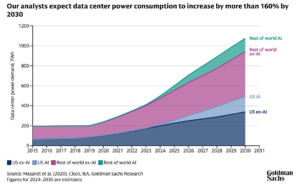
The partnership also responds to a growing energy challenge. AI systems require large amounts of electricity, especially in data centers.

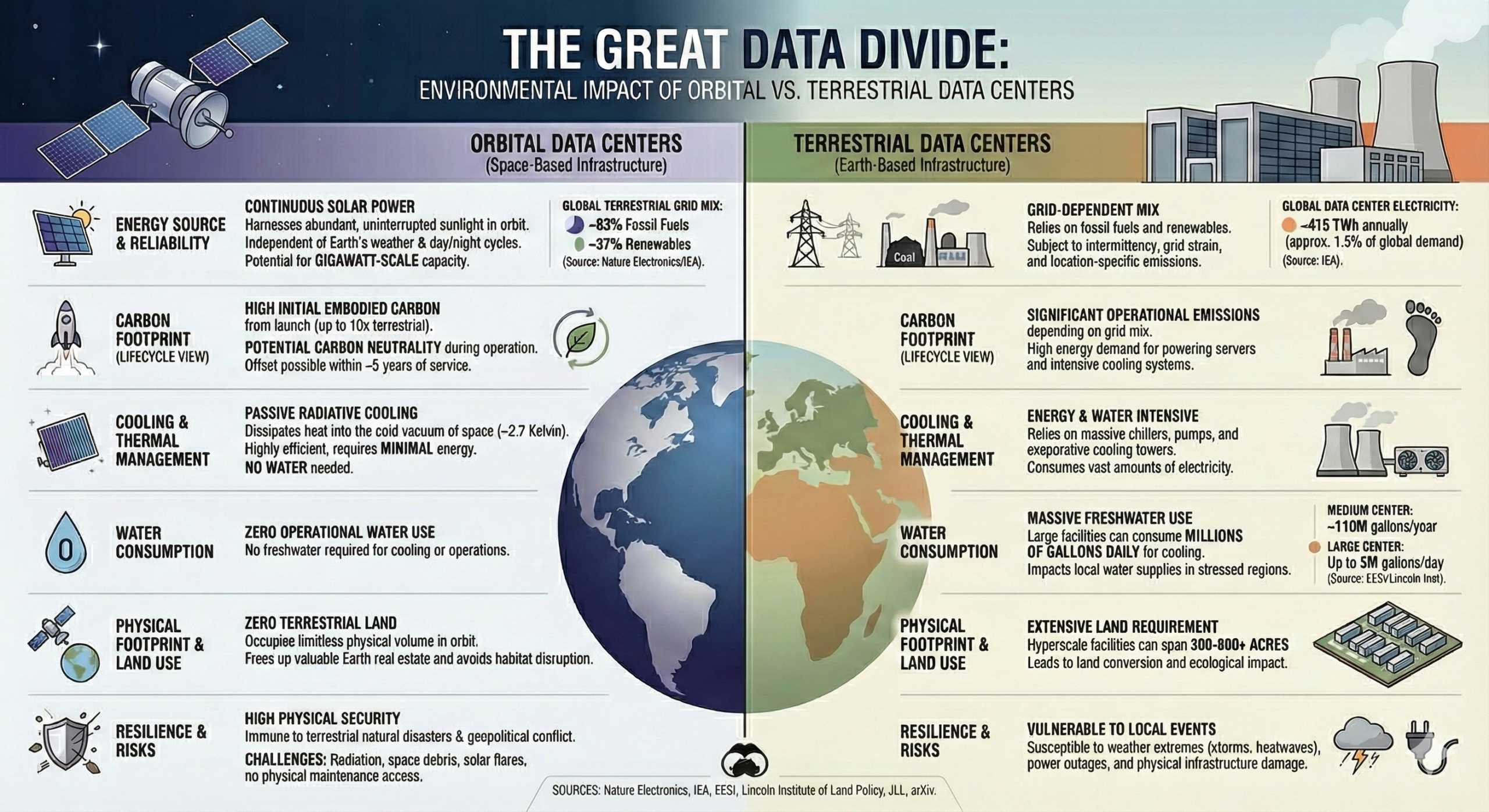
According to the International Energy Agency, global data centers used about 415 terawatt-hours (TWh) of electricity in 2024. This is close to the total annual power consumption of a country like Japan.

Demand is expected to rise sharply as AI adoption expands. This creates pressure on power grids and increases the need for stable, low-carbon electricity.

data center power demand AI 2030 Goldman

Nuclear energy offers a solution. Unlike solar and wind, it provides constant baseload power. This makes it well-suited for energy-intensive AI systems that must run 24 hours a day.

The partnership creates what researchers describe as a “virtuous cycle.” AI helps speed up nuclear deployment, while nuclear energy supplies the power needed for AI growth.

How NVIDIA’s GPUs Are Rewiring Nuclear Engineering

NVIDIA brings key technology to the project. Its graphics processing units (GPUs) are widely used for AI and high-performance computing.

These systems can speed up complex simulations used in nuclear engineering. Tasks that once took weeks can now be completed in days or even hours.

The project will improve several major nuclear codes, including MOOSE, BISON, Griffin, and Pronghorn. These tools model reactor physics, heat transfer, and fuel performance.

NVIDIA also provides tools for real-time operations. Its systems can help balance workloads and improve energy efficiency in data centers. The company reports that some of its solutions can reduce peak power demand and improve system performance.

Another key platform is NVIDIA’s Omniverse. This system creates digital twins, or virtual models of real-world systems. In nuclear energy, digital twins can simulate plant operations, test safety scenarios, and improve maintenance planning.

These tools allow engineers to test designs and operations before building physical systems. This reduces risk and lowers costs.

Real-World Testing at U.S. Nuclear Facilities

The Prometheus project will use existing facilities at INL to test its AI systems.

One key site is the Neutron Radiography Reactor (NRAD). This research reactor supports testing of nuclear fuel and materials. It provides a controlled environment to validate AI models without affecting commercial operations.

Another facility is MARVEL, a small microreactor under development. It is expected to produce about 85 kilowatts of electricity and connect to a nuclear microgrid by 2027 or 2028.

MARVEL will serve as a test platform for AI-driven reactor control. This includes automated load management and predictive maintenance. Its smaller size and advanced safety features make it suitable for early-stage testing.

The project will use a mix of computing systems. Large supercomputers will handle training and complex simulations. Local AI systems will manage real-time operations inside nuclear facilities. This hybrid approach balances performance, security, and reliability.

Can AI Finally Fix Nuclear’s Cost Problem?

The partnership could have a major economic impact. Nuclear projects often face delays and cost overruns.

For example, the Vogtle Units 3 and 4 project in the United States experienced more than 100% cost increases and delays of over seven years. These challenges have made investors cautious about new nuclear builds.

AI tools could reduce these risks. By identifying problems early, they can prevent costly changes during construction.

The DOE expects the project to expand beyond INL and NVIDIA. Future partners may include reactor developers, utilities, and investors. This open model could help build a full ecosystem for AI-driven nuclear deployment.

Market demand is also growing. Analysts at Goldman Sachs estimate that 85 to 90 gigawatts (GW) of new nuclear capacity may be needed by 2030 to support global data center growth. This creates strong demand for faster and more efficient reactor development.

Why Faster Nuclear Could Be a Climate Game-Changer

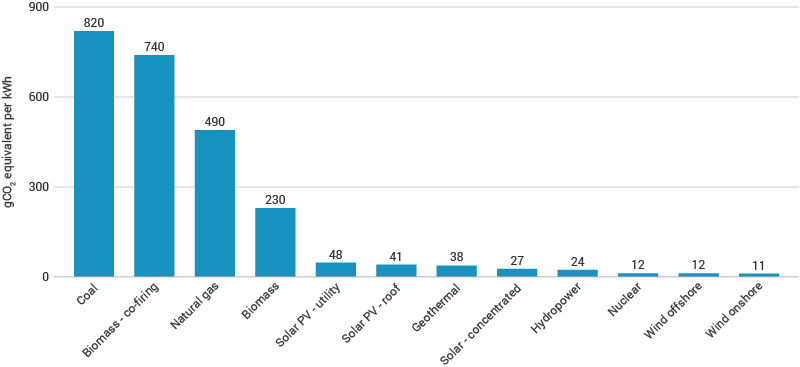
Nuclear energy plays an important role in reducing emissions. According to the Intergovernmental Panel on Climate Change, nuclear power produces about 12 grams of CO₂ per kilowatt-hour over its lifecycle.

This is much lower than fossil fuels. Coal produces around 820 grams, while natural gas produces about 490 grams per kilowatt-hour.

lifecycle emissions of nuclear coal gas

As electricity demand rises, low-carbon power sources become more important. AI-driven growth in data centers could increase emissions if powered by fossil fuels.

By enabling faster nuclear deployment, the Prometheus project supports climate goals. It helps provide reliable, low-emission electricity at scale.

The project also aligns with broader ESG priorities. These include improving energy efficiency, reducing system costs, and strengthening energy security.

AI Could Slash Nuclear Red Tape 

One of the most ambitious goals of the project is to speed up nuclear licensing. Today, the approval process can take 5 to 10 years. This adds uncertainty and increases project costs.

Ai vs traditional nuclear development timeline

AI systems could help by generating safety reports, environmental studies, and regulatory documents. These tools can also identify issues early in the design phase.

By improving consistency and speed, AI could make nuclear projects more attractive to investors. Faster approvals would also support the deployment of standardized reactor designs, including small modular reactors.

The INL–NVIDIA partnership marks a major step in combining AI and nuclear energy. By targeting 50% faster deployment and lower costs, the Prometheus project aims to solve long-standing challenges in the nuclear sector.

The initiative also addresses a growing need for reliable, low-carbon power. As AI systems expand, energy demand will continue to rise.

If successful, the project could reshape how nuclear reactors are designed, built, and operated. It may also create a model for using AI to solve other complex energy challenges.

For policymakers, investors, and industry leaders, Prometheus represents a key test of how advanced technology can accelerate the global energy transition.

The post NVIDIA and Idaho National Laboratory Launch AI Project to Cut Nuclear Build Time in Half appeared first on Carbon Credits.
OpenAI Hits Pause on $40B UK AI Project: Energy Costs Shake Data Center Economics

OpenAI Hits Pause on $40B UK AI Project: Energy Costs Shake Data Center Economics

ChatGPT developer OpenAI has paused its flagship UK data center project, known as “Stargate UK,” citing high energy costs and regulatory uncertainty. The project was part of a broader £31 billion ($40+ billion) investment plan aimed at expanding artificial intelligence (AI) infrastructure in the country.

The initiative was designed to deploy up to 8,000 GPUs initially, with plans to scale to 31,000 GPUs over time. It was aimed to boost the UK’s “sovereign compute” capacity. This means building local infrastructure to support AI development and reduce reliance on foreign systems.

However, the company has now paused development. An OpenAI spokesperson stated that they:

“…support the government’s ambition to be an AI leader. AI compute is foundational to that goal – we continue to explore Stargate UK and will move forward when the right conditions such as regulation and the cost of energy enable long-term infrastructure investment.”

Energy Costs Are Now a Core Constraint

The main issue is energy. AI data centers require large amounts of electricity to run GPUs and cooling systems.

In the UK, industrial electricity prices are among the highest in developed markets. Recent estimates show costs at around £168 per megawatt-hour, compared to £69 in France and £38 in Texas. This gap creates a major disadvantage for large-scale data center investments.

AI workloads are especially power-intensive. A single large data center can consume as much electricity as tens of thousands of homes. As AI adoption grows, this demand is rising quickly.

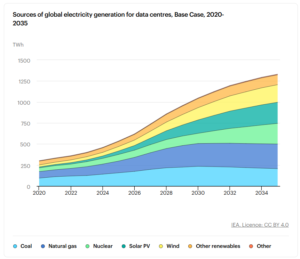
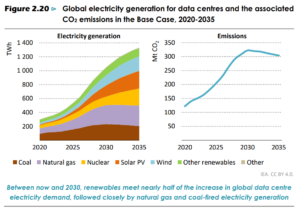
Globally, the International Energy Agency estimates that data centers could consume over 1,000 terawatt-hours (TWh) of electricity by 2030, up sharply from about 415 TWh in 2024. This growth is largely driven by AI. 

data center electricity use 2035
Source: IEA

The result is clear. Energy is no longer just a cost. It is a key factor in where AI infrastructure gets built.

Regulation Adds Another Layer of Risk

Energy is only part of the challenge. Regulation is also slowing investment. In the UK, uncertainty around AI rules, especially copyright laws for training data, has created hesitation among companies.

Earlier proposals to allow AI firms to use copyrighted content were withdrawn after backlash. This left companies without clear guidance on compliance.

For large infrastructure projects, this uncertainty increases risk. Data centers require billions in upfront investment. Companies need stable rules before committing capital.

Planning delays and grid connection timelines also add friction. These factors increase both cost and project timelines.

Together, energy costs and regulatory uncertainty create a difficult environment for hyperscale AI infrastructure.

OpenAI’s Global Infrastructure Expands, But More Selectively

Despite the pause, ChatGPT-maker is still expanding globally. The company is investing heavily in AI infrastructure through partnerships with Microsoft, NVIDIA, and Oracle. It is also linked to a much larger $500 billion “Stargate” initiative in the United States, focused on building next-generation AI data centers.

At the same time, the company faces rising costs. Reports suggest OpenAI could lose billions of dollars annually as it scales infrastructure to meet demand.

This reflects a broader industry shift. AI is becoming more like energy or telecom infrastructure. It requires large capital investment, long timelines, and stable operating conditions.

The pause also highlights a deeper issue. AI growth is increasing pressure on energy systems and the environment.

The Hidden Carbon Cost Behind Every AI Query

ChatGPT and similar tools rely on large data centers. These facilities already account for about 1% to 1.5% of global electricity use. Projections for their energy use vary widely due to various factors. 

Each individual query may seem small. A typical ChatGPT request can use about 0.3 watt-hours of electricity, which is relatively low. However, usage at scale changes the picture.

ChatGPT now serves hundreds of millions of users. Even small energy use per query adds up quickly. Training models is even more energy-intensive. For example, training GPT-3 required about 1,287 megawatt-hours of electricity and produced roughly 550 metric tons of CO₂.

chatgpt environmental footprint

Newer models are even larger. Some estimates suggest training advanced models like GPT-4 could emit up to 15,000 metric tons of CO₂, depending on the energy source.

At the system level, the impact is growing fast. AI systems could generate between 32.6 and 79.7 million tons of CO₂ emissions in 2025 alone. By 2030, AI-driven data centers could add 24 to 44 million tons of CO₂ annually.

AI servers annual carbon emissions
Note: carbon emissions (g) of AI servers from 2024 to 2030 under different scenarios. The red dashed lines in e–g denote the forecast footprint of the US data centres, based on previous literature. Source: https://doi.org/10.1038/s41893-025-01681-y

Looking further ahead, global generative AI emissions could reach up to 245 million tons per year by 2035 if growth continues. These numbers show a clear pattern. Efficiency is improving, but total demand is rising faster.

Big Tech Scrambles to Balance AI Growth and Emissions

OpenAI has not published a detailed standalone net-zero target. However, its operations rely heavily on partners such as Microsoft, which has committed to becoming carbon negative by 2030.

The company has acknowledged that energy use is a real concern. Leadership has pointed to the need for more renewable energy, including nuclear and clean power, to support AI growth.

Across the industry, companies are responding in several ways:

  • Improving model efficiency to reduce energy per query
  • Investing in renewable energy and long-term power contracts
  • Exploring new cooling systems to reduce water and energy use

Efficiency gains are already visible. Some AI systems have reduced energy per query by more than 30 times within a year, showing how quickly technology can improve. Still, total emissions continue to rise because demand is scaling faster than efficiency gains.

The Global AI Infrastructure Race

The pause in the UK highlights a larger trend. AI infrastructure is becoming a global competition shaped by energy, policy, and cost.

Regions with lower energy prices and faster permitting processes have an advantage. The United States and parts of the Middle East are attracting large-scale AI investments due to cheaper power and supportive policies.

At the same time, governments are trying to attract these projects. The UK has pledged billions to support AI growth and improve compute capacity. But this case shows that policy ambition alone is not enough. Companies need reliable energy, clear rules, and predictable costs.

AI’s Next Phase Will Be Decided by Energy, Not Code

The decision by OpenAI does not signal a retreat from AI investment. Instead, it reflects a shift in priorities.

Companies are becoming more selective about where they build infrastructure. They are focusing on locations that offer the right mix of energy access, cost stability, and regulatory clarity.

The UK project may still move forward, but only if conditions improve. For now, the message is clear. The future of AI will not be shaped by technology alone. It will also depend on energy systems, policy frameworks, and long-term investment conditions.

The post OpenAI Hits Pause on $40B UK AI Project: Energy Costs Shake Data Center Economics appeared first on Carbon Credits.
U.S. Uranium Mining Returns: UEC Launches First New Mine in a Decade

U.S. Uranium Mining Returns: UEC Launches First New Mine in a Decade

Uranium Energy Corporation (NYSE: UEC) has started production at its Burke Hollow project in South Texas. This is the first new uranium mine to open in the U.S. in over ten years.

The project started production in April 2026 after getting final regulatory approval. This marks a big step for domestic uranium supply. It’s also the world’s newest in-situ recovery (ISR) uranium mine, which shows a move toward less harmful extraction methods.

Burke Hollow was originally discovered in 2012 and spans roughly 20,000 acres, with only about half of the site explored so far. This suggests significant long-term expansion potential as additional wellfields are developed.

The mine’s output will go to UEC’s Hobson Central Processing Plant in Texas. This plant can produce up to 4 million pounds of uranium each year.

A Scalable ISR Platform Expands U.S. Uranium Capacity

The Burke Hollow launch transforms UEC into a multi-site uranium producer in the United States. The company runs two active ISR production platforms. The second one is at its Christensen Ranch facility in Wyoming; both are shown in the table from UEC.

UEC burke hollow resources

UEC Christensen Ranch resources

This “hub-and-spoke” model allows uranium from multiple wellfields to be processed through centralized facilities, improving efficiency and scalability. UEC’s operations in Texas and Wyoming are now active. This gives them a licensed production capacity of about 12 million pounds per year across the U.S.

ISR mining plays a key role in this strategy. Unlike conventional mining, ISR involves circulating solutions underground to dissolve uranium and pump it to the surface. This reduces surface disturbance and can lower environmental impact compared to open-pit or underground mining.

Burke Hollow is the largest ISR uranium discovery in the U.S. in the last ten years. This boosts its long-term value as a domestic resource.

Unhedged Strategy Pays Off as Uranium Prices Rise

UEC’s production launch comes at a time of strong uranium market conditions. The company uses a fully unhedged strategy. This means it sells uranium at current market prices instead of securing long-term contracts.

This approach has recently delivered strong financial results. In early 2026, UEC sold 200,000 pounds of uranium for $101 each. This price was about 25% higher than average market rates. The sale brought in over $20 million in revenue and around $10 million in gross profit.

The strategy allows the company to benefit directly from rising uranium prices, which have been supported by:

  • Growing global nuclear energy demand
  • Supply constraints in key producing regions
  • Increased long-term contracting by utilities

Unhedged exposure raises risk in downturns, but offers more upside in strong markets. UEC is currently taking advantage of this.

Nuclear Energy Growth Is Driving Demand for Uranium

The timing of Burke Hollow’s launch aligns with a broader global shift back toward nuclear energy. Governments are increasingly turning to nuclear power as a reliable, low-carbon energy source.

nuclear power capacity additions IAEA projection 2024 to 2050
Source: IAEA

The International Atomic Energy Agency projects that global nuclear capacity could double by 2050, depending on policy and investment trends. This would require a significant increase in uranium supply.

In the United States, nuclear energy accounts for around 20% of electricity generation. It also produces zero carbon emissions during operations. This makes it a key component of many net-zero strategies.

There are several factors supporting renewed nuclear demand, including:

  • Development of small modular reactors (SMRs)
  • Extension of existing nuclear plant lifetimes
  • Government funding to maintain nuclear capacity
  • Rising electricity demand from data centers and electrification

As demand grows, securing a reliable uranium supply becomes increasingly important.

uranium demand and supply UEC

Reducing Import Risk: A Strategic Domestic Supply Push

The Burke Hollow project also addresses a major vulnerability in U.S. energy policy. The country currently imports about 95% of its uranium needs, leaving it exposed to global supply risks.

A large share of uranium production and enrichment capacity is concentrated in a few countries, including Russia and Kazakhstan. This concentration has raised concerns about supply disruptions and geopolitical risk.

uranium production US 2025 EIA

By expanding domestic production, UEC is helping to reduce reliance on imports and strengthen the U.S. nuclear fuel supply chain.

The company’s broader strategy includes building a vertically integrated platform covering mining, processing, and, eventually, uranium conversion. This approach aligns with U.S. government efforts to rebuild domestic nuclear fuel capabilities.

Federal programs have allocated billions to boost uranium production and enrichment. This shows how important the sector is.

Two Hubs, One Strategy: Wyoming Supports the Texas Breakthrough

While Burke Hollow is the main focus, UEC’s Christensen Ranch operation in Wyoming remains an important part of its production base.

The Wyoming site has recently received approvals for expanded wellfield development, allowing it to increase output alongside the Texas operation.

Together, the two sites form the foundation of UEC’s dual-hub production model. However, it is the Texas project that marks the first new U.S. uranium mine in over a decade, making it the central milestone in the company’s growth strategy.

Investor Momentum Builds Around Uranium Revival

The restart of U.S. uranium production is drawing strong attention from investors and industry players. Uranium markets have tightened in recent years, driven by rising demand and limited new supply.

UEC’s production launch has already had a positive market impact. The company’s share price rose following the announcement, reflecting investor confidence in its growth strategy.

UEC stock price

At the same time, utilities are increasing long-term contracting activity to secure fuel supply. This trend is expected to continue as new nuclear capacity comes online and existing plants extend operations.

Industry forecasts suggest that uranium demand will remain strong through the 2030s, supporting higher prices and increased investment in new production.

Lower Impact Mining, Higher ESG Expectations

The use of ISR mining at Burke Hollow reflects a broader shift toward more sustainable extraction methods. ISR typically reduces land disturbance and avoids large-scale excavation.

However, environmental management remains critical. Key issues include groundwater protection, chemical use, and long-term site restoration.

UEC has emphasized environmental controls and regulatory compliance in its operations. These efforts are important for maintaining social license and meeting ESG expectations.

From a climate perspective, uranium production plays an indirect but important role. Supporting nuclear energy, it helps enable low-carbon electricity generation and reduces reliance on fossil fuels.

The Bottom Line: A Defining Moment for U.S. Uranium Production

The launch of the Burke Hollow mine marks a major milestone for the U.S. uranium sector. It ends a decade-long gap in new mine development and signals renewed momentum in domestic production.

In the short term, it strengthens supply and supports rising uranium markets. In the long term, it highlights the growing role of nuclear energy in global decarbonization strategies.

UEC’s Burke Hollow shows that new uranium projects can advance in today’s market. There are still challenges, like scaling production and handling environmental risks, but progress is possible.

As demand for nuclear energy continues to grow, domestic projects like Burke Hollow will play a key role in shaping the future of energy security and low-carbon power.

The post U.S. Uranium Mining Returns: UEC Launches First New Mine in a Decade appeared first on Carbon Credits.

JPMorgan’s Carbon Bet Marks a Turning Point for the Removal Market

JPMorgan’s Carbon Bet Marks a Turning Point for the Removal Market

JPMorgan Chase has signed two major carbon removal agreements this month. The first one involves a purchase of 60,000 metric tons of durable carbon dioxide removal (CDR) over ten years from climate startup Graphyte. The deal uses biomass-based technology that converts agricultural and timber waste into stable carbon blocks stored underground.

In parallel, JPMorgan has also secured 85,000 tons of forest-based carbon removal credits through improved forest management projects. These credits, marketed by Anew Climate, come from U.S. forest projects managed by Aurora Sustainable Lands.

They aim to extend harvest cycles, boost forest health, and enhance long-term carbon storage. The approach helps maintain higher carbon stocks in working forests while supporting biodiversity and sustainable timber production.

Taylor Wright, Head of Operational Sustainability at JPMorgan Chase, noted:

“We were excited to add credits from the Little Bear Forestry Project to our carbon removal portfolio. The dynamic baselining provides meaningful evidence that these credits meet a high threshold for quality, supporting our interests as both a buyer and as a steward of market integrity.”

Carbon Removal Still Small, But Growing Fast

The agreements are part of a broader push by the bank to expand its carbon removal portfolio. While the total volume is small compared to global emissions, the deals highlight a shift in corporate climate strategies.

Companies are now focusing more on durable carbon removal, not just emission reductions. JPMorgan’s mix of engineered and nature-based solutions also reflects a growing trend toward portfolio diversification in carbon removal sourcing.

Carbon removal remains a small but critical part of climate action. The United States emits about 5 billion tons of CO₂ per year, showing how limited current removal volumes still are.

However, long-term demand is expected to grow sharply. The Intergovernmental Panel on Climate Change estimates that by 2100, the world might need to remove 100 to 1,000 gigatons of CO₂. By mid-century, annual removal should reach about 10 gigatons per year.

IPCC carbon removal pathway

Today’s market is far from that scale. Most carbon removal deals are measured in thousands or hundreds of thousands of tons. But these early contracts are seen as critical. They help build supply, reduce costs, and attract investment into new technologies.

JPMorgan’s latest deals fit this pattern. Together, the 60,000-ton biomass contract and 85,000-ton forest-based agreement provide long-term demand signals across different removal pathways. This helps scale both emerging engineered solutions and more established nature-based approaches.

Turning Waste Into Permanent Carbon Storage

Graphyte’s process, known as “carbon casting,” uses natural carbon capture through plants. Biomass absorbs CO₂ through photosynthesis. The material is then dried, compressed, and sealed to prevent decomposition. This allows the carbon to remain stored for long periods.

The company uses waste materials such as crop residues and timber byproducts. This reduces the need for new land use and lowers overall costs. The process also uses relatively low energy compared to other removal methods.

Projects linked to the JPMorgan deal include facilities in Arkansas and Arizona. These projects also provide added benefits. For example, using forest thinning residues can help reduce wildfire risk and support land restoration.

This reflects a broader trend in carbon markets. Buyers are increasingly looking for projects that deliver both carbon removal and environmental co-benefits. The bank’s forest-based deal reinforces this trend by supporting improved forest management practices that enhance carbon storage while maintaining productive landscapes.

JPMorgan’s $1 Trillion Net Zero Strategy and Climate Finance Push

JPMorgan’s carbon removal investments are part of a wider climate strategy. The bank has committed to facilitating $1 trillion in climate and sustainable development financing by 2030. It has already deployed about $309 billion between 2021 and 2024 toward this goal.

JPMorgan $1 trillion green investment
Source: JPMorgan

In addition to financing, the bank is building a diversified carbon removal portfolio. Since 2023, it has signed deals to cut hundreds of thousands of tons of CO₂. This includes a plan for up to 800,000 tons of carbon removal through long-term contracts.

The company aims to match its unabated operational emissions with durable carbon removal by 2030.

JPMorgan is also investing in a range of technologies. These include direct air capture, bio-oil sequestration, biomass storage, and forest-based removal. Its latest forest deal shows a continued commitment to high-quality, nature-based removals that meet stricter standards for durability and verification.

JPMorgan carbon removal portfolio
Source: JPMorgan disclosures

This diversified approach helps reduce risk while supporting different pathways to scale. Compared to many financial institutions, JPMorgan remains an early mover. Most large buyers in carbon removal are still technology companies, particularly Microsoft.

Microsoft Pullback Shakes Market Confidence

However, Microsoft, the largest buyer of carbon removal credits, has reportedly paused new purchases.

The tech giant has played a dominant role in the market. It accounts for up to 90% of global carbon removal purchases and has contracted more than 45 million tons of CO₂ removal to date. In 2025 alone, the company signed agreements for 45 million tons, doubling its 2024 volume and far exceeding any other buyer.

However, reports suggest the company may be adjusting the pace of new deals. This shift does not mean the end of carbon removal demand, but it signals a transition.

The market can no longer rely on a single dominant buyer. In this context, JPMorgan’s continued activity—across both engineered and nature-based deals—shows how new buyers are stepping in to support market stability.

Top buyers of carbon removals 2025

Market Trends: From Cheap Offsets to High-Durability Carbon Credits

The carbon market is evolving quickly. Traditional carbon credits often focus on avoiding emissions, such as protecting forests. However, there is growing demand for removal-based credits that physically take CO₂ out of the atmosphere.

Corporate net-zero goals drive this shift. Many companies now face limits on how much they can reduce emissions directly. Carbon removal is becoming necessary to address remaining emissions.

At the same time, supply remains limited. High-quality removal credits are scarce. This keeps carbon prices high, especially for engineered solutions.

Early buyers like JPMorgan are helping shape the market. Long-term contracts provide price signals and encourage project development. They also help define standards for quality and verification.

Another key trend is the focus on durability. Buyers prefer solutions that store carbon for decades or centuries, rather than short-term offsets.

Early-Stage Market, High-Stakes Growth

Despite growing momentum, carbon removal is still in its early stages. Current volumes are small compared to global needs. Policy support is also limited in many regions.

However, corporate demand is rising. Deals like JPMorgan’s show how private sector investment is driving the market forward.

The combination of long-term contracts, new technologies, and climate finance is expected to accelerate growth. Over time, this could help bring down costs and expand supply.

For now, the focus remains on building scale. Each new agreement adds to a growing pipeline of projects. These projects will play a key role in meeting long-term climate targets.

JPMorgan’s latest purchases may be modest in size. But together, they reflect a larger shift. Carbon removal is moving from early experimentation to a more structured and investable market, supported by a broader mix of buyers and solutions.

The post JPMorgan’s Carbon Bet Marks a Turning Point for the Removal Market appeared first on Carbon Credits.

US and Australia Boost Critical Minerals Support with $3.5B Alliance, Challenging China’s Grip

US and Australia Boost Critical Minerals Support with $3.5B Alliance, Challenging China's Grip

Australia and the United States have launched a $3.5 billion critical minerals partnership, marking one of the largest bilateral efforts to secure materials essential for clean energy and electric vehicles (EVs).

The agreement focuses on strengthening supply chains for minerals such as lithium, cobalt, nickel, and rare earth elements. These materials are vital for batteries, solar panels, wind turbines, and other low-carbon technologies.

The deal comes as global demand for these minerals rises sharply. The International Energy Agency estimates that demand for critical minerals could quadruple by 2040 under net-zero scenarios. Lithium demand alone could grow more than 40 times by 2040, driven by EV adoption and battery storage.

critical mineral demand net zero by IEA
Source: IEA

Australia plays a central role in this supply chain. It currently produces about 55% of the world’s lithium, making it the largest global supplier. However, much of the processing still takes place overseas, creating supply risks for Western economies.

The new partnership aims to address this gap by boosting both extraction and domestic processing capacity.

Billions Back the Full Value Chain—from Mine to Market

The $3.5 billion investment will be deployed over seven years. The United States will give around $2.1 billion. This funding comes from the Defense Production Act and the Infrastructure Investment and Jobs Act. Australia will provide $1.4 billion through national financing programs.

The funding is designed to support the full value chain, from mining to refining to advanced research. The main areas of investment include:

  • $1.8 billion for new mining projects and infrastructure upgrades
  • $1.2 billion for processing and refining facilities
  • $500 million for research, innovation, and sustainable extraction technologies

A key goal is to reduce reliance on external processing markets and build more resilient supply chains. This includes expanding refining capacity for lithium and rare earth elements, which are often processed outside producing countries.

The partnership is also expected to create economic benefits. Government estimates say about 15,000 direct jobs will be created. Additionally, around 30,000 indirect jobs will come from supply chains and related industries.

Breaking China’s Grip on Mineral Processing

The agreement reflects growing concern over the concentration of mineral processing in China. Currently, China dominates key parts of the global supply chain.

China dominates critical mineral refining
Source: IEA

According to the International Energy Agency:

  • China handles about 60% of global lithium processing
  • It controls more than 80% of rare earth refining
  • It also leads in battery component manufacturing

This dominance creates risks for supply security, pricing, and geopolitical stability. Disruptions in one region can affect global clean energy deployment.

By investing in alternative supply chains, Australia and the United States aim to diversify production and reduce these risks. The partnership could also encourage other countries to develop their own critical minerals strategies.

In addition, the deal may help stabilize prices for key materials. Volatility in lithium and nickel markets has impacted EV production costs. It has also delayed some renewable energy projects in recent years.

Supporting Climate Goals and the Energy Transition

The partnership has direct implications for global climate efforts. Critical minerals are essential for scaling clean energy technologies. Without a reliable supply, the pace of decarbonization could slow.

Battery storage is a key example. Energy storage systems help manage the variability of renewable energy sources like solar and wind. Expanding mineral supply will support the growth of these systems.

The IEA projects that global battery capacity must increase significantly to meet climate targets. Some estimates suggest energy storage capacity needs to grow more than sixfold by 2030 to stay on track for net-zero emissions.

IEA energy storage capacity

The US-Australia alliance could help unlock this growth by ensuring stable access to raw materials. This, in turn, may reduce costs for batteries and renewable energy systems over time.

Both countries have also committed to improving environmental standards in mining. This includes reducing emissions, improving water management, and limiting land impacts. These measures are important because mining itself can be carbon-intensive.

Efforts to lower emissions in mineral extraction could also influence carbon accounting frameworks. As supply chains become more transparent, companies may need to track and report emissions linked to raw material sourcing.

ESG, Carbon Markets, and the New Mining Reality

The expansion of critical minerals supply chains is expected to influence carbon markets and ESG strategies.

As mining activity increases, so does the need to manage emissions. This could increase the need for carbon credits in the extractive sector. This is true for projects that cut or offset emissions from mining.

At the same time, improved supply chains for clean technologies may accelerate renewable energy deployment. This could support carbon reduction efforts across multiple sectors, including power generation and transportation.

The partnership may also lead to higher standards for responsible sourcing. Materials produced under strict environmental and social guidelines could command a premium in global markets.

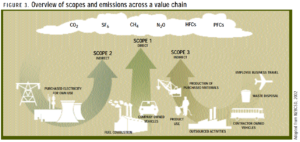
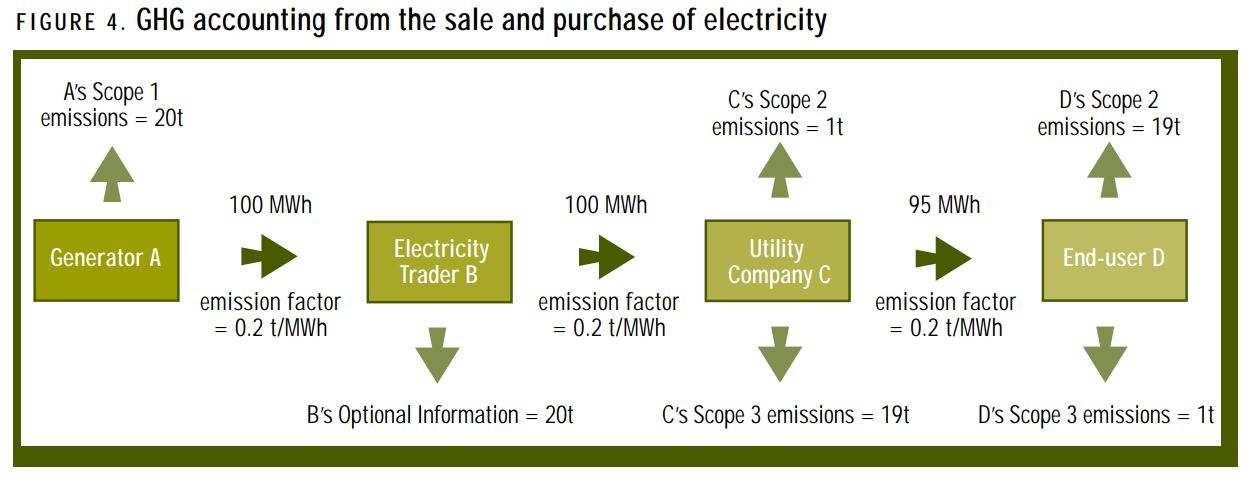
This shift aligns with growing investor focus on ESG performance. Companies face growing pressure to show that their supply chains meet sustainability standards. This includes tracking emissions across Scope 1, 2, and 3 categories.

Over time, these trends could reshape how carbon credits are used. Companies may focus more on cutting emissions directly in their supply chains, rather than just using offsets.

Industry Scrambles to Secure the Next Wave of Supply

The announcement has received strong support from industry players. Major automakers and battery manufacturers are seeking secure and stable supplies of critical minerals. Companies like Tesla, Ford, and General Motors want to source materials from projects tied to the partnership.

Mining firms are also responding. Albemarle Corporation and Pilbara Minerals will likely gain from more investment and quicker project timelines.

Investor interest in the sector is rising as well. Global spending on energy transition minerals is growing rapidly, supported by both public and private capital.

The International Energy Agency reports that investment in critical minerals has increased sharply in recent years. This trend is expected to continue as countries compete to secure supply chains for clean energy technologies.

A Defining Shift in the Global Energy Economy

The $3.5 billion Australia–US critical minerals partnership represents a major step in reshaping global energy supply chains. It addresses a key bottleneck in the transition to a low-carbon economy: access to essential raw materials.

In the short term, the deal may help stabilize supply and reduce risks linked to market concentration. In the long term, it could accelerate the deployment of clean energy technologies and support global climate goals.

For carbon markets, the impact is indirect but important. More minerals can help speed up the use of renewables and energy storage. This, in turn, cuts emissions throughout the economy. At the same time, higher mining activity may drive demand for carbon credits and new emissions reduction strategies within the sector.

The success of the partnership will depend on execution. Expanding mining and processing capacity takes time, investment, and strong environmental oversight.

If these challenges are addressed, the alliance could serve as a model for future international cooperation on critical minerals. It also highlights how energy security, economic policy, and climate action are becoming increasingly connected.

Ultimately, as demand for clean energy continues to grow, securing sustainable and reliable mineral supply chains will remain a key priority for governments and industries worldwide.

The post US and Australia Boost Critical Minerals Support with $3.5B Alliance, Challenging China’s Grip appeared first on Carbon Credits.
Carbon Market 2026: Supply Squeeze Pushes Premium Carbon Credit Prices Up, Sylvera Finds

The global carbon market is changing fast in 2026. The latest insights from Sylvera’s State of Carbon Credits report show a clear shift. Volumes are falling, but value is holding steady. This means buyers now focus more on quality than quantity.

Furthermore, the market is splitting into two clear segments. High-quality credits are in demand and sell at higher prices. Older or lower-quality credits are losing interest. This divide is growing stronger and shaping how the market will evolve in the coming years.

Shell’s Sharp Cut Pulls Down Market Volumes

Carbon credit retirements reached 51 million in the first quarter of 2026. This is down from 55.3 million in the same period last year. The total market value also fell slightly to $290 million, compared to $309 million a year ago.

Despite this decline, prices did not weaken. The average price per credit increased to $5.69 from $5.60. This shows that buyers are willing to pay more for credits they trust.

Carbon credit retirements

Interestingly, a major reason for the drop in volumes was reduced activity from Shell. The company sharply cut its purchases. It retired just 494,000 credits in Q1 2026, compared to 6.7 million in Q1 2025 and 5.6 million in 2024. This single change had a large impact on the overall market.

Value Now Drives the Market

The carbon market now runs on a simple idea. Value matters more than volume. Buyers want credits that deliver real environmental impact. They prefer projects with clear data, strong verification, and proven results.

High-quality credits now define the market. These credits meet strict standards and often align with compliance systems. Because of this, they command higher prices and stronger demand.

This shift is also linked to the rise of compliance markets. Programs like CORSIA are increasing demand for reliable credits. As a result, voluntary buyers and compliance buyers now compete for the same supply.

Experts expect this trend to grow stronger. Compliance demand could surpass voluntary demand by 2027. This will increase pressure on supply and push premium credit prices higher.

The report highlighted that, investment-grade credits (BBB+) now command an average of $20.10 per credit in Q1 2026, up from $18.10 in Q1 2025, as shown in the image below:

high quality credits

Recap of 2025 Carbon Market

Compliance programs made up 24% of total retirements in 2025. According to Sylvera, this share is rising fast. It is expected to go beyond voluntary demand by 2027. This growth is mainly driven by CORSIA Phase 1 rules and the expansion of domestic carbon markets.

This means compliance demand is set to change the carbon market in a big way. Soon, both voluntary buyers and regulated systems will compete for the same high-quality credits. This is already making supply tighter and more competitive.

At the same time, international trading under Article 6 gained momentum. In 2025, around 20 new bilateral agreements were signed, and the first large-scale carbon credit trades took place. This shows that global carbon transfer systems are now becoming active in practice.

carbon credits
Source: Sylvera

However, the system is also becoming more complex. One key factor is “corresponding adjustments,” which now decide whether a credit is fully acceptable in compliance markets. In addition, countries like China, Japan, Brazil, and Indonesia are building their own domestic carbon systems.

These systems are expected to create strong new demand, but they also add more rules and complexity to the market.

Supply Crunch Becomes the Key Challenge

However, Sylvera has flagged a different scenario for his year. Supply is now the biggest issue in the market. High-quality credits are becoming harder to find. Many credits exist, but not all meet strict requirements.

Furthermore, the main bottleneck is coming from approvals under Article 6. These rules govern international carbon trading. Delays in approvals mean many credits cannot yet enter the market. Now this creates a gap. Supply looks strong on paper, but usable supply remains limited. This shortage keeps prices firm and supports premium credits.

CORSIA Supply Expands, But Not Enough

There has been progress in aviation supply. Eligible credits under CORSIA reached 32.68 million. This is more than double last year’s level.

These credits come from major registries like Verra, Gold Standard, and ART TREES. However, supply still falls short in practice. Not all credits meet full compliance standards. This keeps the market tight and competitive.

Moving on, the question is what’s driving market growth.

Cookstoves Drive Market Growth

Cookstove projects are growing quickly. Their share increased from 17% in 2025 to 26% in Q1 2026. Africa leads this segment. Around 80% of the supply comes from the region. Most of these projects also meet compliance requirements under CORSIA.

Quality is improving in this category. Developers are moving away from older methods. They now use stronger, data-driven approaches. This shift improves trust and attracts more buyers.

Other projects: 

  • REDD+ Regains Trust: Forestry projects under REDD+ are making a comeback. Their share of retirements rose to 25% in Q1 2026. These projects faced heavy criticism in the past. However, new rules and better standards are restoring confidence. Updated methodologies have removed weaker credits. This has improved the overall quality of supply. Global policy clarity has also helped. Buyers now have more confidence in using REDD+ credits in compliance markets. This has supported demand.
  • Waste management projects: They are growing in importance, and their share reached 10% of total retirements, the highest so far. Landfill methane projects are leading this growth. These projects are easier to measure and verify. They also meet compliance standards. Buyers are now exploring options beyond traditional sectors. Waste projects offer a reliable and practical solution.

New Credit Types Expand the Market

Several new project types are growing fast. They are adding fresh supply and attracting new buyers.

  • Clean water projects have seen strong growth in recent years. They now produce millions of credits annually. Marine and mangrove projects are also gaining attention. They offer strong environmental benefits and long-term carbon storage.
  • Industrial projects focused on nitrous oxide reduction are expanding as well. These projects are highly measurable and align well with compliance systems. At the same time, regenerative agriculture is growing at the fastest pace. It has moved from almost no activity to millions of credits in a short time.

These new categories are helping the market grow. However, quality remains the key factor that drives demand.

carbon credits type

Buyers Shift Toward Better Credits: Regional Analysis 

Buyer behavior is changing across regions. The United Kingdom is leading the move toward high-quality credits. Companies are under pressure to show real climate action. This has pushed them to choose better credits.

The United States and Canada are also improving. Buyers prefer projects that meet both voluntary and compliance standards. This supports demand for high-quality supply.

North America Sets the Benchmark

North America sets the benchmark for quality. A large share of its credits meets high rating standards. This strong quality supports higher prices. The average price reached $14.80, the highest globally. Strong domestic demand and strict standards drive this trend.

On the other hand, South America is seeing strong demand but limited new supply. This creates pressure in the market. Prices have slightly declined to $11.50. However, the quality mix is improving. Waste projects are helping fill the gap left by falling forestry supply.

  • Europe remains the largest market by volume. However, the quality mix is still uneven. Some buyers continue to use lower-rated credits.
  • Japan and South Korea focus on lower-cost options like hydropower. This keeps their share of high-quality credits low. In Latin America, buyers often choose local projects. Limited regulatory pressure keeps the quality demand weaker.
  • Africa is moving toward better quality. High-rated supply is increasing, while low-rated supply is falling. As explained before, cookstove projects are the main driver. At the same time, lower-quality forestry projects are declining. This improves the region’s overall market position.
  • Asia faces weaker market conditions. Supply has dropped sharply due to fewer renewable energy projects. The average price stands at $5.30, the lowest globally. Demand remains steady but lacks strong growth. This keeps prices under pressure.

Indonesia Stands Out in Asia

Indonesia is a bright spot in the region. Credit prices have risen strongly in the past year. High-quality peatland projects are driving this growth. International deals under Article 6 are also adding value. These factors attract buyers looking for reliable credit.

This shows how strong quality and supportive policies can boost market performance.

Final Take: Quality Defines the Future

The carbon market in 2026 is clear and focused. Quality now drives demand, pricing, and growth. Buyers are becoming more selective. They want credits that are verified, reliable, and compliant.

Supply remains tight, especially for high-quality credits. At the same time, compliance markets are growing. This increases competition and pushes prices higher.

The gap between high- and low-quality credits will continue to widen. In simple terms, the market is no longer about how many credits exist. It is about how good they are.

The post Carbon Market 2026: Supply Squeeze Pushes Premium Carbon Credit Prices Up, Sylvera Finds appeared first on Carbon Credits.
Radisson Hotel Group Ramps Up Net Zero Push by 2030: How Does it Compare with Marriott and Accor?

Radisson Hotel Group Ramps Up Net Zero Push by 2030: How Does it Compare with Marriott and Accor?

Radisson Hotel Group has raised its climate ambition in the hospitality sector. The group now targets 100 verified net-zero hotels by 2030 across its global portfolio. This move builds on its existing science-based net zero commitment by 2050, approved under the Science Based Targets initiative (SBTi).

Radisson defines verified net-zero hotels as properties that cut operational emissions completely. This is done through energy transition and efficiency upgrades. while using limited offsets only for any remaining emissions.

The company has already launched early examples of this model in Manchester (UK) and Oslo (Norway). These hotels were upgraded through full operational redesigns instead of new construction. The goal is to scale this approach across multiple regions and hotel types.

Radisson Hotel Group CEO Federico J. González Tejera remarked during the release: 

“At Radisson Hotel Group, sustainability ultimately starts with people. It is about delivering for our guests, creating value for our owners, and supporting the communities where we operate. Verified Net Zero Hotels are an important step in our net zero transformation, setting a new standard for how hospitality can reduce its environmental impact while continuing to support people, destinations, and economic activity.”

How Net Zero Hotels Work in Practice

Radisson’s net zero model follows a structured decarbonization system developed with industry partners. It is designed to measure, reduce, and gradually eliminate emissions across hotel operations.

The process involves several steps:

  • measuring carbon fully,
  • switching to renewable electricity,
  • electrifying heating and cooking, and
  • upgrading efficiency in water, waste, and energy use.

Over time, the goal is to reduce reliance on carbon offsets and focus on real emissions cuts.

The Manchester and Oslo hotels show how this works in practice. Both properties switched to renewable electricity, removed fossil fuel systems, and added low-carbon changes. These include electrified kitchens and waste reduction programs.

Radisson Hotel group verified net zero steps
Source: Radisson Hotel Group

Radisson says these pilot hotels cut emissions by about 60%. This shows that significant reductions are possible in existing buildings.

Big Targets, Real Progress: Radisson’s Carbon Cuts

Radisson has set measurable climate targets aligned with global climate frameworks. The company aims to reduce Scope 1 and Scope 2 emissions by 46% by 2030, compared with a 2019 baseline. It also targets a 28% reduction in Scope 3 emissions by 2030, which includes supply chain and outsourced activities.

The group has already made measurable progress. By 2023, Radisson achieved a 35% reduction in carbon footprint per square metre compared to 2019 levels. Over the past decade, it has also improved energy and water efficiency by around 30% across operations.

The company works in over 100 countries and manages more than 1,500 hotels. This makes its decarbonization effort one of the biggest in the global hospitality sector.

Industry Shift: Hotels Move Toward Low-Carbon Operations

The hotel industry is increasingly under pressure to reduce emissions. Hospitality is energy-intensive because of heating, cooling, laundry, food services, and continuous building operations.

global hotel ghg emissions forecast
Source: Sustainable Hospitality Alliance report

Hospitality accounts for ~1% of global carbon emissions and ~7.8% of water use worldwide. The sector’s energy intensity averages 200-800 kBtu/sq ft annually, with heating/cooling consuming 50-60% of total energy.

Emissions breakdown by source:

  • Building energy: 60-70% (HVAC, lighting, hot water)
  • Food/beverage supply chains: 20-25%
  • Waste management: 10-15%

Hotels are now focusing on electrification and using renewable energy. They are also upgrading efficiency to cut their carbon footprint and journey toward net positive hospitality

Radisson is joining a trend toward verified net-zero hotels. These hotels need to cut emissions and get third-party checks. This approach reduces uncertainty in sustainability claims and improves transparency for investors and customers.

Independent verification systems are now widely used to confirm emissions reductions. They help make sure that net zero claims are credible and comparable across the industry.

The standard third-party verification:

  • Green Key/SGS: Verify WTTC Hotel Sustainability Basics (12 criteria)
  • TÜV Rheinland: Certifies Radisson’s net zero hotels
  • Cornell Hotel Sustainability Index: Benchmarks 1,307 global markets

The Net Zero Race in Hospitality: Radisson vs Marriott vs Accor

Radisson Hotel Group, Marriott International, and Accor Hotels all follow long-term net-zero goals. However, their timelines and strategies differ.

  • Radisson Hotel Group

Radisson Hotel Group aims for net zero across Scope 1, 2, and 3 emissions by 2050. It has a near-term target to cut Scope 1 and 2 emissions by 46.2% by 2030 (2019 base year) and reduce Scope 3 emissions by 27.5%.

Radisson has also launched “Verified Net Zero” hotels powered by 100% renewable electricity and low-waste operations. It is adding energy-saving upgrades. This includes LED lighting, smart heating and cooling systems, and building retrofits throughout its portfolio. It also pushes waste reduction programs, including food waste tracking and recycling systems in many hotels.

  • Marriott International

Marriott International also targets net zero across its value chain by 2050, with science-based approval. It plans to reduce Scope 1 and 2 emissions by 46.2% and Scope 3 emissions by 27.5% by 2030 (2019 baseline). It is investing in large-scale renewable electricity procurement through long-term power purchase agreements.

Marriott is also improving building efficiency with smart energy management systems across thousands of properties. Marriott is also promoting low-carbon supply chains. They are working with suppliers to reduce packaging and use more sustainable materials.

  • Accor

Accor also targets net zero by 2050, with a strong focus on operational efficiency and procurement reform. It is upgrading hotels with energy-efficient systems and expanding renewable electricity use across its brands.

Accor is also reducing food-related emissions by increasing plant-based menu options and cutting food waste. However, it provides less detailed interim emission reduction percentages than Radisson and Marriott. It focuses more on operational efficiency and engaging suppliers to make progress.

Radisson vs Marriott vs Accor net zero
Data from company reports

Overall, all three groups are moving toward net zero, but Radisson and Marriott show more defined short-term emissions targets. In contrast, Accor focuses more on operational changes and supply chain improvements.

ESG and Sustainable Hospitality: Green Travel Is No Longer Optional

Sustainability is becoming a stronger factor in travel decisions. More guests now prefer hotels that show clear environmental performance and use verified sustainability systems.

Corporate travel buyers are also adding ESG requirements to hotel contracts. This includes emissions reporting, renewable energy use, and waste reduction commitments. As a result, sustainability is becoming a competitive factor in hotel selection.

The global hospitality sector is adopting structured plans for decarbonization. This includes energy efficiency upgrades and using renewable electricity. Digital tracking of emissions is also becoming more common, especially for large hotel groups.

Radisson’s net-zero hotels are part of this shift. Sustainability-focused hotels can boost guest engagement and enhance brand positioning. This is backed by industry case studies. These strategies help hotels stand out in competitive markets.

The Hard Truth About Scaling Net Zero Hotels

Scaling net-zero hotels globally is complex. One major challenge is the cost of retrofitting existing buildings. Many hotels require major upgrades to heating, cooling, and kitchen systems to reduce emissions.

Another challenge is uneven access to renewable electricity across regions. Some markets still rely heavily on fossil fuels. This limits emissions reductions, even when hotels switch to cleaner operations.

Supply chain emissions also remain difficult to control. These include food sourcing, construction materials, and outsourced services. Tracking and reducing Scope 3 emissions requires coordination across many suppliers.

Finally, implementation varies by country due to differences in regulation, infrastructure, and energy systems. This creates uneven progress across global hotel portfolios.

Can Net Zero Become the New Hotel Standard?

Radisson’s plan to reach 100 net-zero hotels by 2030 marks a significant step in hospitality decarbonization. If achieved, it would create one of the largest verified net-zero hotel networks globally.

The strategy also supports its long-term goal of achieving net zero emissions across its entire value chain by 2050, aligned with global climate targets.

Future progress relies on quicker electrification of hotel operations, broader access to renewable energy, better ESG reporting, and ongoing investment in low-carbon technologies.

If done right, net-zero hotels could be the norm in global hospitality within the decade. This would change how hotels run and compete in international travel.

The post Radisson Hotel Group Ramps Up Net Zero Push by 2030: How Does it Compare with Marriott and Accor? appeared first on Carbon Credits.
Microsoft Hits Pause on All Carbon Removal Purchases: A Major Shift in Corporate Climate Strategy

Microsoft Hits Pause on All Carbon Removal Purchases: A Major Shift in Corporate Climate Strategy

Microsoft has temporarily halted all new carbon removal purchases as it reviews its broader climate strategy. The move affects direct air capture, biochar, and other engineered carbon removal solutions supported by its $1 billion Climate Innovation Fund, launched in 2020. It could delay hundreds of millions of dollars in planned investments across the carbon removal sector.

The pause was first reported by Heatmap News, in which a company spokesperson said that Microsoft is not indefinitely halting all of its purchases. Rather, she stated:

“We continually review and assess our carbon removal portfolio along with market conditions for the optimal balance on our path to carbon negative.”

Microsoft has been one of the largest corporate buyers of high-quality carbon removal credits. Its decision signals a shift in how major companies evaluate carbon offsets and removal technologies.

The review focuses on whether current solutions can deliver reliable, long-term emissions reductions at scale. It also reflects growing scrutiny of corporate net-zero claims from regulators, investors, and climate groups.

Impact on Carbon Removal Market Pricing

Microsoft’s pause is expected to have an immediate impact on the voluntary carbon market (VCM). The company has played a leading role in scaling demand for engineered carbon removal credits.
These credits are more expensive than traditional offsets. Microsoft has typically paid between $100 and $600 per metric ton of CO₂ removed, compared with $5 to $15 per ton for many nature-based or avoidance credits.
Industry estimates suggest that Microsoft’s pause could significantly reduce demand in the engineered carbon removal market. The tech giant has accounted for as much as 80% to 90% of global purchases of carbon removals.

Several suppliers are directly exposed. Companies such as Climeworks and Carbon Engineering have signed multi-year agreements with Microsoft worth a combined $200 million to $300 million. These deals helped fund the early deployment of direct air capture facilities.

The broader voluntary carbon market has already seen price pressure. According to the Ecosystem Marketplace, average prices for carbon credits vary widely depending on quality. Premium removal credits trade at a steep premium due to limited supply and higher verification standards.

Microsoft’s exit, even if temporary, may accelerate a correction in these high prices. It may also reduce near-term funding for early-stage carbon removal technologies.

Microsoft’s Net-Zero Targets Face a Reality Check

Microsoft has some of the most ambitious climate goals in the corporate sector. The company aims to become carbon negative by 2030 and remove all the carbon it has emitted since its founding by 2050.

To support this, the tech giant has committed significant capital to carbon removal. By 2025, it had invested more than $750 million in carbon removal projects and contracted roughly 45 million tonnes of removals.

microsoft carbon removal contracts 2023-2025

The current review is examining whether these investments can scale fast enough to meet long-term targets. Key concerns include:

  • The permanence of carbon storage, especially for geological projects
  • The high cost of engineered removal compared to direct emissions cuts
  • The limited capacity of current technologies to deliver millions of tons annually

Many removal methods are still in early stages. Direct air capture, for example, currently removes only a small fraction of global emissions. The International Energy Agency estimates that global carbon removal capacity remains well below what is needed to meet net-zero scenarios by mid-century.

Microsoft is also reviewing how carbon removal fits into its broader decarbonization strategy. This includes aligning removal purchases with renewable energy investments and operational emissions reductions

SEE MORE:

Broader Big Tech Climate Strategy Shifts

Microsoft’s move reflects a broader shift across the technology sector. Other major companies, including Amazon, Meta, and Google, have slowed their carbon removal purchases in recent quarters.

Instead, many are focusing more on reducing emissions directly. This includes expanding renewable energy use, improving energy efficiency, and redesigning supply chains.

This trend aligns with updated guidance from the Science Based Targets initiative (SBTi). The SBTi emphasizes that companies should prioritize emissions reductions across Scope 1, 2, and 3 before relying on carbon removal.

Under this framework, carbon removal is treated as a solution for residual emissions that cannot be eliminated. This approach reduces reliance on offsets and increases pressure on companies to decarbonize core operations.

At the same time, regulatory scrutiny is increasing. In the United States, the U.S. Securities and Exchange Commission has proposed new climate disclosure rules. These rules would require companies to provide more detailed reporting on emissions and climate-related risks.

This is pushing companies to strengthen verification standards for carbon credits and avoid reputational risks linked to low-quality offsets.

A Turning Point for Carbon Removal Investment Models

Microsoft’s decision may signal a broader shift in how companies support carbon removal technologies. Instead of buying credits directly, some firms are exploring new funding models.

These include advance market commitments, where companies guarantee future demand, and direct investments in technology development. These approaches can provide more stable funding while reducing reliance on spot market purchases.

The technology sector has been a major driver of carbon removal demand. Since 2022, it has accounted for about 40% of high-quality removal credit purchases. Between 2020 and 2025, major tech companies committed billions of dollars to carbon removal initiatives.

total cdr sales cdr.fyi data
Source: image from CDR.fyi

If large buyers step back, developers may face funding gaps in the short term. However, this could also push the industry to improve cost efficiency and scalability.

Current removal costs remain high. Direct air capture can exceed $500 per ton, though companies aim to reduce this below $100 per ton over time. Achieving this will require technological advances, economies of scale, and supportive policy frameworks.

What It Means for Carbon Markets and Climate Goals

Microsoft’s pause marks a key moment for the VCM. It highlights the growing demand for higher standards, better verification, and clearer climate impact.

In the short term, the decision may slow growth in the premium carbon removal segment. Prices could soften, and some projects may face delays or funding challenges.

However, the long-term impact could be positive. Stronger scrutiny may lead to more reliable and transparent carbon removal solutions. This would help build trust in the market and attract new investment.

For companies, the message is clear. Net-zero strategies must focus first on reducing emissions. Carbon removal remains important, but it must be credible, scalable, and cost-effective.

For the carbon removal sector, the challenge is to prove that its technologies can deliver on these expectations. If successful, it will play a critical role in global climate efforts.

The International Energy Agency and other bodies have made it clear that carbon removal will be essential to achieving net-zero emissions by 2050. The question is not whether it is needed, but how fast it can scale.

As the sector evolves, companies that can deliver verified, permanent, and affordable carbon removal solutions are likely to lead the next phase of expansion.

The post Microsoft Hits Pause on All Carbon Removal Purchases: A Major Shift in Corporate Climate Strategy appeared first on Carbon Credits.