Solar Surge and Wind Wins: 2024’s Renewable Energy Boom Breaks All Record

The global energy transition hit a major milestone in 2024. According to the latest report from the International Renewable Energy Agency (IRENA), the world added a record-breaking 582 gigawatts (GW) of new renewable energy capacity. This marks a 19.8% increase from 2023 and the highest annual addition on record since IRENA began reporting.

Clean Energy Breaks Records in 2024

Most of this growth came from solar photovoltaics (PV), which made up 452.1 GW or nearly 78% of the total new capacity. Wind energy followed with 114.3 GW, while hydropower, geothermal, bioenergy, and concentrated solar power (CSP) made up the rest.

  • By the end of 2024, the world’s total renewable capacity reached 4,443 GW.

China led the world in new installations. It contributed 276.8 GW of new solar capacity and 79.4 GW of wind. That means China alone was responsible for more than 60% of global solar additions and nearly 70% of new wind installations. Other top contributors included India, the United States, Brazil, and Germany, which all made significant progress in expanding their clean energy capacity.

Even though these numbers are impressive, IRENA points out that global deployment must accelerate even faster to meet the “UAE Consensus” target agreed upon at COP28. That goal is to triple renewable capacity by 2030, reaching over 11,000 GW worldwide. With six years left, the world will need to more than double the rate of annual additions to stay on track.

Renewables Prove the Cheapest Power Option

One of the clearest messages in the IRENA report is that renewables are now the most affordable form of new electricity generation in most countries. In 2024, 91% of newly commissioned utility-scale renewable projects produced electricity at a lower cost than fossil fuel-based alternatives.

Here are the global average levelized cost of electricity (LCOE) figures from 2024:

  • Onshore wind: $0.034 per kilowatt hour (kWh)
  • Solar PV: $0.043/kWh
  • Hydropower: $0.057/kWh
  • Offshore wind: $0.082/kWh

Some markets saw even lower costs. For example, onshore wind in China came in at $0.029/kWh, and in Brazil, it was $0.030/kWh. Solar PV was also particularly cheap in China ($0.033/kWh) and India ($0.038/kWh).

While overall prices remained low, some renewable technologies experienced small cost increases in 2024:

  • Solar PV: Up 0.6%
  • Onshore wind: Up 3%
  • Offshore wind: Up 4%
  • Bioenergy: Up 13%

Other technologies saw cost declines:

  • Concentrated Solar Power (CSP): Down 46%
  • Geothermal: Down 16%
  • Hydropower: Down 2%

Despite a few short-term fluctuations, the long-term trend is clear: renewables are getting cheaper and more competitive every year.

Battery Storage Supercharges the Grid

One of the most important enablers of the renewable boom is battery storage. These systems allow energy from variable sources like solar and wind to be stored and used when needed. This helps balance the grid and supports a stable electricity supply even when the sun isn’t shining or the wind isn’t blowing.

According to IRENA, the cost of utility-scale battery storage has dropped 93% over the past decade. In 2010, it cost $2,571 per kilowatt-hour (kWh). In 2024, it fell to just $192/kWh.

This dramatic price drop is the result of improved materials, larger manufacturing scale, and more efficient production processes. Batteries are also increasingly paired with solar and wind systems in hybrid projects. These setups include on-site generation, storage, and sometimes digital monitoring tools, allowing for smarter and more efficient energy use.

As battery prices continue to fall and deployment increases, these systems will play a critical role in grid flexibility and renewable integration.

Obstacles Still Stand in the Way

Despite the progress, the transition to renewable energy is not without challenges. IRENA points to several key barriers that could slow growth if not addressed:

  1. Geopolitical Tensions and Trade Barriers
    • Rising tariffs on solar panels, wind turbines, and raw materials could disrupt global supply chains.
    • Dependence on a few countries for manufacturing, especially China, adds risk.
  2. Financing Difficulties in Emerging Markets
    • Capital costs are higher in developing countries.
    • Limited access to affordable loans or public funding stalls projects.
  3. Slow Permitting and Grid Constraints
    • Many countries face delays in approving renewable energy projects.
    • Existing power grids are not always ready to handle large amounts of new renewable electricity.
  4. Policy Uncertainty
    • Inconsistent or unclear policies on renewable targets, tax incentives, or feed-in tariffs make it hard for investors to commit long-term.

IRENA stresses that urgent action is needed. Governments must streamline regulations, invest in grid upgrades, and expand financial support if they want to scale up clean power and meet their climate goals.

Fossil Fuel Costs Avoided: A Hidden Benefit

One powerful but often overlooked benefit of renewables is the economic value of avoided fossil fuel costs. In 2024, renewable energy helped the world avoid $467 billion in fossil fuel spending, according to IRENA estimates.

This means fewer oil and gas imports, lower exposure to global price spikes, and less economic instability. For many developing nations, the ability to generate power locally using the sun or wind is not just cheaper — it’s also more secure.

Avoiding fossil fuel use also reduces exposure to geopolitical risks, such as conflicts that disrupt fuel supply. That makes renewables not only a climate solution, but also a resilience strategy.

Looking Ahead: Accelerate or Fall Behind

The IRENA report makes it clear: renewable energy is no longer a niche technology. It is a mainstream energy source that’s expanding fast and cutting costs. Still, the pace must double to meet global targets.

The cost trends are encouraging. The technology is ready. Investment is rising. But challenges remain, and time is short.

If governments and industry leaders can work together to remove barriers, increase financing, and support innovation, renewable energy could power most of the world’s electricity by 2030. 

The post Solar Surge and Wind Wins: 2024’s Renewable Energy Boom Breaks All Record appeared first on Carbon Credits.
Is Tesla (TSLA) Securing U.S. Battery Independence with $4.3 B LG Energy Solution Deal?

LGES

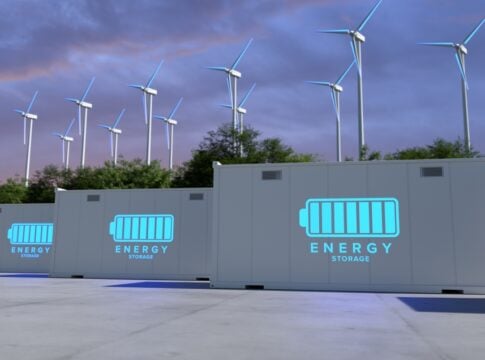
In a major move to reduce dependence on Chinese imports, South Korea’s LG Energy Solution (LGES) has reportedly secured a $4.3 billion deal to supply Tesla with lithium iron phosphate (LFP) batteries for energy storage systems. As the U.S. ramps up tariffs on Chinese goods, the agreement marks a strategic pivot for Tesla, which has heavily relied on China for its battery needs.

Reuters disclosed that neither company has confirmed the deal publicly, but a source familiar with the matter said that the LFP batteries will be produced at LGES’s Michigan factory, which recently began production.

The contract, among LGES’s largest to date, will run from August 2027 through July 2030, with an option to extend for up to seven additional years and increase volumes based on future discussions.

LG Energy Solution’s (LGES) Power Shift: From EVs to Energy Storage

CNBC reported that LG Energy Solution had earlier disclosed a $4.3 billion contract to supply LFP batteries globally over three years, but did not name Tesla as the customer or clarify whether the batteries would be used for electric vehicles or energy storage systems (ESS). However, growing signals point to Tesla’s booming energy business as the likely focus.

With EV demand slowing, LGES has shifted gears toward energy storage. The company is betting on a surge in demand fueled by the rapid expansion of AI data centers and renewable energy installations.

Liz Lee, Associate Director at Counterpoint Research, confirmed to CNBC that the deal is expected to be closely linked to LGES’s Michigan facility, which now serves as its first North American ESS battery manufacturing hub.

This strategic shift comes as LGES considers repurposing some of its U.S. EV battery lines for ESS production in response to weakening EV market dynamics.

ESS LGES
Source: LGES

Strong Q2 2025

The company recently posted solid second-quarter earnings for 2025, even without North American production incentives. The company reported revenue of KRW 5.6 trillion, down 11.2% from the previous quarter. However, operating profit surged 31.4% to KRW 492.2 billion, with an 8.8% margin. Notably, North American incentives contributed KRW 490.8 billion to the operating profit.

CFO Chang Sil Lee stated,

“In the second quarter, we secured stable EV battery sales and also started production at our new ESS battery facility in North America. However, constrained customer purchase sentiment, coupled with the reflection of metal price decline to our average selling price (ASP), affected our quarterly revenue.”

Moving forward, LGES anticipates a short-term slowdown in EV demand due to new tariffs and cost pressures on automakers. Yet, the company remains optimistic about mid- to long-term growth, driven by advances in autonomous driving and energy storage.

To adapt to this shift, it is focusing on maximizing output at existing production lines, particularly for ESS batteries. It plans to expand its annual production capacity for ESS to 17 GWh by year-end. The company also aims to reduce fixed costs by scaling back investments while securing a competitive supply chain.

Sustainability Goals 

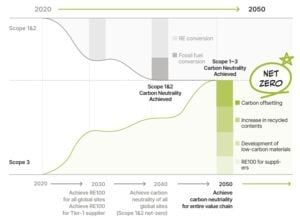
Beyond profits, the company is committed to achieving carbon neutrality across its value chain by 2050. One major step involves converting 100% of its power use across all global sites to renewable energy by 2030.

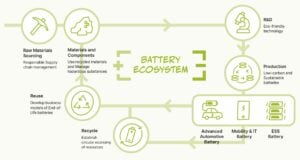
LGES is also working on creating a closed-loop battery ecosystem. With millions of tons of used EV batteries piling up, the company is actively exploring ways to reuse them for energy storage and recycle production waste. These initiatives aim to minimize environmental harm while securing critical raw materials.

lg energy solution LGES
Source: LGES

Tesla’s Push for U.S.-Made Batteries Gains Momentum

The global battery market is shifting rapidly, driven by policy changes like the U.S. Inflation Reduction Act (IRA) and similar initiatives in Europe and the UK. These regulations are encouraging companies to diversify supply chains and reduce reliance on Chinese suppliers. For LG Energy Solution (LGES), this creates a clear advantage. With operational plants in Michigan and an upcoming facility in Arizona, LGES is well-positioned to meet growing U.S. demand while staying aligned with evolving trade rules.

China has long dominated the lithium iron phosphate (LFP) battery space, but LGES is emerging as one of the few manufacturers building significant LFP production capacity on American soil. Its Michigan plant began operations in May, and the Arizona plant is set to further strengthen its U.S. presence.

CEO Elon Musk reinforced the importance of this shift, noting that energy demand is booming despite ongoing tariff and supply chain pressures.

He said during the company’s latest earnings call,

“Not many people realize just how massive battery demand has become.”

While Tesla plans to open its own LFP cell manufacturing facility in Nevada by the end of the year, it’s expected to cover only a fraction of the company’s overall battery needs. That’s where LGES comes in.

Its new U.S.-based capacity provides Tesla with a critical, non-Chinese alternative. The partnership aligns perfectly with Tesla’s goal to localize its battery supply chain—offering both strategic location and advanced manufacturing capability.

Battery Demand Powers Growth Outlook

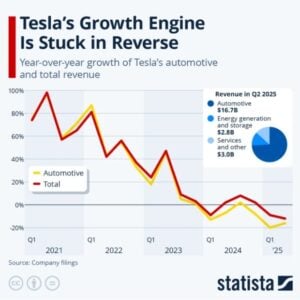
Tesla’s energy generation and storage division, which includes its Megapack and Powerwall products, continues to play a growing role in its business. Despite overall revenue falling 12% in Q2 2025 to $22.5 billion, the energy segment generated more than $2.8 billion. However, this was a 7% year-over-year drop due to pricing pressure and supply chain challenges.

Still, the segment stands out as a growth area amid softening EV sales. Tesla has stressed that battery demand is growing at an unprecedented pace, making partnerships like the one with LGES essential to scaling operations.

TESLA

The Rise of Solid-State Batteries

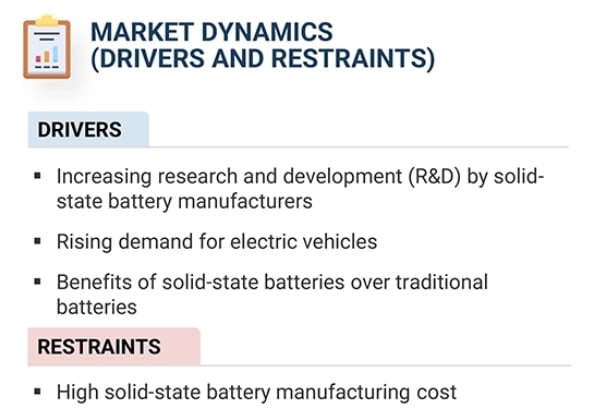
As lithium-ion battery innovation continues, solid-state batteries are emerging as the next frontier in battery technology. These advanced batteries utilize solid ceramic or polymer electrolytes, providing enhanced safety, higher energy density, and longer lifespan.

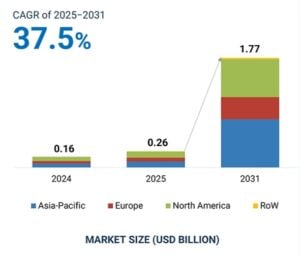
The global solid-state battery market is expected to grow from $0.26 billion in 2025 to $1.77 billion by 2031, with a projected CAGR of 37.5%, according to MarketsandMarkets.

Solid-State Battery Market Size

Solid state battery market
Source: MarketsandMarkets

Solid-state batteries are ideal for electric vehicles, medical devices, and industrial sensors due to their resistance to leakage and thermal runaway. Primary solid-state batteries, commonly used in smart packaging, RFID tags, and medical patches, will likely dominate the market in the short term.

North America is set to lead in both research and commercialization. U.S. companies like Solid Power, QuantumScape, Sakuu Corporation, and Excellatron are spearheading innovation, with Mercedes-Benz and Factorial Energy collaborating on a technology that could offer EVs over 600 miles of range on a single charge.

solid state battery
Source: MarketsandMarkets

Other major players like ProLogium (Taiwan), Ilika (UK), and Blue Solutions (France) are also advancing the global rollout of solid-state battery technologies, signaling a strong future for energy storage innovation.

The LGES-Tesla deal signals a major shift in the energy market. As EV demand slows and energy storage rises, resilient, tariff-friendly supply chains and advanced battery tech are taking center stage. With new U.S. plants and strong sustainability goals, LGES is emerging as a key player in powering Tesla’s energy growth amid global trade and policy shifts.

The post Is Tesla (TSLA) Securing U.S. Battery Independence with $4.3 B LG Energy Solution Deal? appeared first on Carbon Credits.
Rare Earth Demand to Triple by 2035: Can the U.S. Catch Up with China?

rare earth

Rare Earth Elements (REEs) play a vital role in the global transition to clean energy and advanced technology. Known for their magnetic, luminescent, and electrochemical traits, these 17 elements are widely used in high-tech applications—from electric vehicles and wind turbines to medical devices and defense systems.

As the energy transition accelerates, global demand for REEs is set to surge, raising major concerns around supply chain stability and geopolitical risks.

Magnet REEs Demand Set to Triple as EVs and Wind Power Take Off

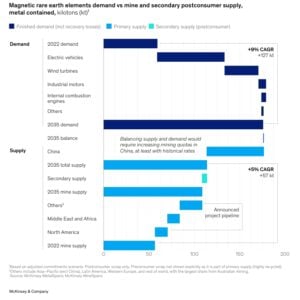
A McKinsey report reveals that global demand for magnetic rare earth elements is projected to triple—from 59 kilotons in 2022 to 176 kilotons by 2035. This sharp rise is driven by booming electric vehicle adoption and the rapid expansion of wind power projects.

Neodymium (Nd) and praseodymium (Pr) form the core of REE magnets, while dysprosium (Dy) and terbium (Tb) are added to enhance performance in extreme conditions. Although magnetic REEs make up only 30% of REE volume, they account for over 80% of market value.

The demand surge is outpacing efforts to substitute REEs with copper coil magnets. Without sufficient supply, the world could face a 60-kiloton shortage by 2035—roughly 30% of projected demand.

The energy transition will likely lead to a surge in demand for magnetic
rare earth elements, with market balance tied to mining quotas in China

rare earth elements
Source: McKinsey

China’s REE Dominance: A Double-Edged Sword

China currently controls over 60% of global REE mining and more than 80% of refining. This dominance in the REE supply chain poses a major challenge for other countries. Light REE mining and refining are expected to remain concentrated in China through 2035 unless other regions ramp up production significantly.

Heavy REEs, critical for wind turbines, EVs, and robotics, are mostly mined in the Asia-Pacific region but still primarily processed in China. As a result, countries worldwide are scrambling to develop local REE supply chains. But even with rising investments, most current pipelines are unlikely to meet near-term demand.

Trade Tensions Trigger Rare Earth Supply Shocks

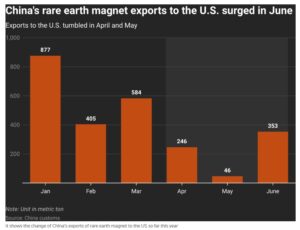
In April 2025, Beijing imposed export restrictions on several rare earth products in response to U.S. tariffs and tech restrictions. This caused rare earth magnet exports to the U.S. to plummet, disrupting global supply chains and forcing automakers outside China to partially suspend production.

However, following new trade agreements in June, shipments rebounded sharply. Reuters reported that China’s exports of rare earth magnets to the U.S. jumped 660% month-over-month in June to 353 metric tons. Yet, global export levels remained 38% lower compared to the same month in 2024, showing the lingering effects of supply disruption.

china rare earth
Image collected from Reuters. Original source: China Customs

America’s Untapped Rare Earth Potential Could Shift Global Dynamics

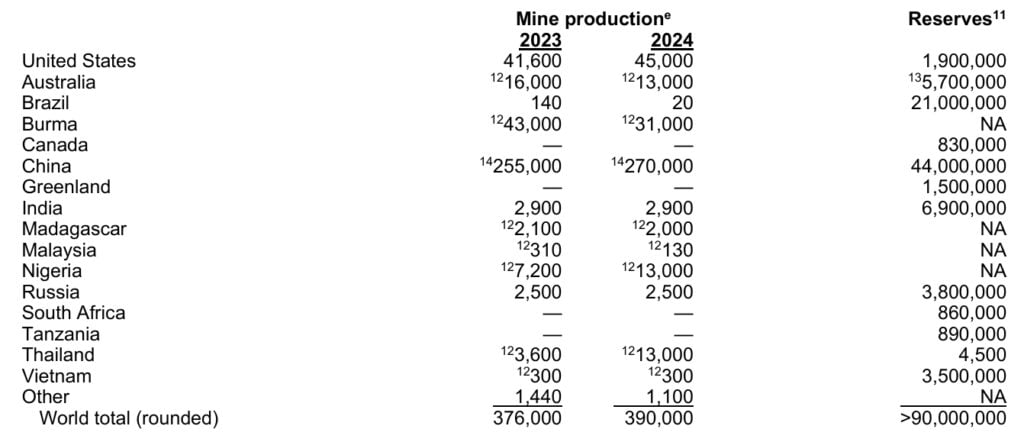
The U.S. Geological Survey (USGS) estimates that the United States has 3.6 million tons of measured and indicated rare earth resources. They are primarily in California, Alaska, Wyoming, and Texas. Canada boasts an even larger potential, with more than 14 million tons of identified REE resources, spread across Ontario, Quebec, and the Northwest Territories.

The only active rare earth mine in the U.S. is located at Mountain Pass, California, operated by MP Materials. In 2024, it produced approximately 45,000 tons of REO (rare earth oxide) concentrate, valued at $260 million. However, the ore is still mostly shipped to China for final processing, highlighting a critical gap in domestic refining capacity.

In southeastern U.S. states like Georgia and North Carolina, monazite—a phosphate mineral rich in rare earths—is being recovered as a byproduct from heavy mineral sands. Companies like Energy Fuels and Ucore Rare Metals are exploring new separation facilities and pilot-scale processing plants to close the refining gap and build end-to-end domestic REE supply chains.

Meanwhile, Canada has over 20 advanced rare earth projects in development, with several aiming to become commercial by the late 2020s. Notably, Vital Metals began small-scale production at its Nechalacho project in the Northwest Territories in 2021. Also Appia Rare Earths & Uranium Corp. is advancing its Alces Lake project in Saskatchewan.

Together, these efforts mark a strategic push by North America to reduce dependency on China. However, challenges remain, including long permitting timelines, environmental review hurdles, and the high cost of separating and refining REEs domestically.

World Mine Production and Reserves

rare earth
Source: USGS

Rare Earth Market Forecast: Strong Growth, High Volatility

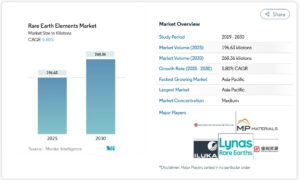
According to Mordor Intelligence, the global rare earth metals market is expected to grow from 196.63 kilotons in 2025 to 260.36 kilotons by 2030, at a 5.8% CAGR. The magnet application segment will lead this growth with a forecasted CAGR of 8.02%, thanks to the rising demand for NdFeB magnets in EV motors and wind turbines.

rare earth market size
Source: Mordor Intelligence

Despite the promising outlook, market volatility is expected to persist through 2025. As manufacturers adapt, many are redesigning products to minimize REE use where possible, while governments are providing financial support. Since 2020, the U.S. Department of Defense has committed over $439 million to strengthen domestic REE supply chains.

Securing the Future: Time to Diversify the REE Supply Chain

The race is on to reduce global reliance on China for rare earths. Countries must invest in domestic mining, develop recycling infrastructure, and support technological innovation to ensure a steady, sustainable supply of REEs. Regulatory reforms and international collaboration will be key to overcoming bottlenecks.

Recycling Rare Earths

Given long mine development timelines and environmental concerns, recycling offers a fast-track solution to strengthen REE supply chains. By recovering REEs from used electronics, industrial equipment, and EV motors, countries can reduce import dependence and close supply gaps.

While large-scale recycling systems are still developing, they represent a sustainable and cost-effective way to boost local supply, especially for high-value magnets.

As the energy transition speeds up, rare earth elements are essential. In the future, ensuring resilient supply chains will be critical to advancing clean energy, digital technology, and national security.

The post Rare Earth Demand to Triple by 2035: Can the U.S. Catch Up with China? appeared first on Carbon Credits.

Facebook Owner Meta Stock Surges After Beating Q2 Forecasts and Sustainability Milestone Progress

Meta Stock Jumps Over 11% After Smashing Q2 Forecasts with AI-Powered Growth—and a Greener Edge

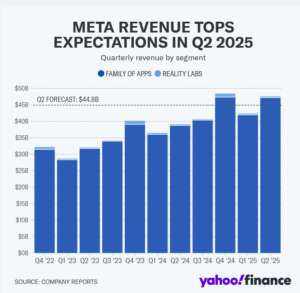
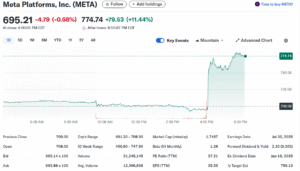
Meta Platforms delivered a standout Q2 2025, reporting $47.5 billion in revenue and $7.14 in earnings per share—both well above analyst expectations. The company’s stock jumped over 11% after the announcement. This rise came from high advertising demand and ongoing investment in AI.

At the same time, Meta reaffirmed its leadership in sustainability, maintaining net-zero emissions across global operations since 2020 and advancing its goal to reach full value-chain net-zero by 2030.

Stock Reaction: Sudden Surge after Earnings

Meta reported results for the quarter ending June 30, 2025. Revenue reached $47.5 billion, up 22% year‑over‑year, exceeding analyst estimates near $44.8 billion. Earnings per share came in at $7.14, a 36–38% rise above forecasts of about $5.88–5.92.

Advertising revenue drove the results, rising 21% to $46.6 billion. Meta raised its Q3 revenue guidance to a range of $47.5–50.5 billion, above prior expectations. The company also narrowed its full‑year expense range to $114–118 billion and capital expenditures to $66–72 billion.

Meta revenue q2 2025
Chart from Yahoo Finance

Meta’s stock price jumped sharply after hours. Shares rose nearly 11% on the day the results were released. Investors reacted favorably to the strong ad revenue, solid earnings beat, and guidance above consensus.

Confidence in Meta’s AI strategy also supported the rally. The stock is up almost 20% year‑to‑date and over 50% in the past 12 months.

META stock price q2 2025
Source: Yahoo

Building the AI Empire: Llama 4 and Superintelligence Labs

Meta continues to place AI at the center of its growth plan. The company is investing heavily in infrastructure, talent, and tools like its Llama 4 model and Advantage+ ad platform.

It plans up to $70 billion in capital spending in 2025, most of which will fund AI data centers and talent recruitment. While this drives costs, it also improves ad conversion rates—early AI tools reportedly boosted Reels conversion by about 5%.

Meta also took a $15 billion stake in Scale AI and formed a new Superintelligence Labs division led by the founder of Scale AI.

Green Tech Titan: Meta’s Sustainability Wins and Net Zero Goals

Apart from its financial wins, Meta has also made a series of climate and sustainability commitments over the past 5 years. The company published its latest Sustainability Report in 2024, which outlined progress toward its long-term goal of reaching net-zero emissions across its entire value chain by 2030.

Meta already achieved net-zero emissions for its global operations (Scope 1 and 2) in 2020. This includes emissions from company offices, owned data centers, and electricity use. It has accomplished this by reducing direct emissions and purchasing renewable energy for 100% of its operations.

From a 2017 baseline, Meta has cut its operational emissions by 94%. This reduction comes from both energy efficiency improvements and a major shift to renewable power.

As of 2023, the company had signed contracts for over 11.7 gigawatts (GW) of renewable energy, placing it among the world’s largest corporate buyers of clean electricity.

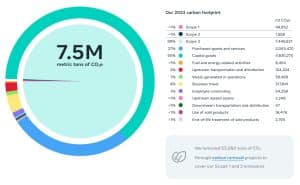
However, Meta’s Scope 3 emissions — which come from its suppliers, business travel, hardware manufacturing, logistics, and cloud usage — remain significantly larger. In 2023, its market-based net emissions were about 7.5 million metric tons of CO₂e, while location-based emissions stood at 14 million metric tons.

meta GHG emissions 2023
Source: Meta

The difference reflects the use of renewable energy certificates (RECs), which have been criticized by some experts as less effective than direct decarbonization.

To address these upstream emissions, Meta has launched a Net Zero Supplier Engagement Program. It encourages its suppliers to set their own science-based targets.

By the end of 2023, around 28% of supplier-related emissions were covered by supplier reduction plans. The company is working to increase this figure by expanding engagement, improving tracking, and offering guidance to smaller vendors.

Other Major Sustainability Initiatives

In addition to climate targets, Meta is also addressing water use, waste, and biodiversity:

  • Water restoration is a key part of its environmental strategy. The tech giant aims to become water positive by 2030, meaning it will restore more water to the environment than it withdraws. In 2024, the company restored over 1.5 billion gallons of water through 18 nature-based projects across North America, India, and Southeast Asia. These include wetland rehabilitation, forest restoration, and rainwater harvesting.
  • Zero-waste and circularity programs are expanding. Meta diverted over 80% of operational waste from landfills in 2023 and is exploring ways to reuse server parts and electronics from decommissioned data centers.
  • Sustainable design is also integrated into Meta’s buildings and data centers. Many facilities are certified under LEED (Leadership in Energy and Environmental Design). The company also uses low-carbon materials like mass timber in construction.

Meta supports broader climate disclosure frameworks as well. It aligns its climate-related reporting with the Task Force on Climate-related Financial Disclosures (TCFD). It also follows guidance from the Sustainability Accounting Standards Board (SASB). Furthermore, the company supports policies that promote clean energy adoption and sustainable supply chains.

Despite these advances, Meta still faces ESG challenges. Critics point out that the company relies heavily on carbon offsets and RECs. Moreover, they claim that it has not disclosed a detailed decarbonization pathway for its full Scope 3 emissions.

Still, Meta’s environmental performance shows clear progress. Its operational footprint has shrunk significantly, and its large investments in renewables and water restoration have measurable impacts.

The next phase—achieving net zero across its supply chain—will require more supplier collaboration, stronger accountability, and continued transparency.

Dual Strategy: Balancing AI Growth with Green Responsibility

Meta shows it can grow rapidly while investing in AI. The strong Q2 results reflect healthy ad demand and early returns from AI ad tools. But AI expansion also raises environmental and governance questions.

Capital spending is increasing emissions from data centers and infrastructure—even as Meta offsets these with renewables and carbon accounting. The company must balance scaling AI with deeper value‑chain decarbonization. Its net‑zero goal across Scope 3 by 2030 remains ambitious but challenging.

Governance risks tied to policy changes and moderation remain material. These could affect ESG ratings over time, especially if controversies arise.

Meta posted strong 2025 second-quarter earnings. Heavy AI investments drive growth and costs alike. At the same time, it has also maintained net‑zero operations since 2020 and targets full value‑chain net‑zero by 2030. As such, the company continues to balance expansion with sustainability and net-zero goals. 

The post Facebook Owner Meta Stock Surges After Beating Q2 Forecasts and Sustainability Milestone Progress appeared first on Carbon Credits.
Microsoft (MSFT Stock) Tops Q2 2025 Record-Breaking Surge in Durable Carbon Removal Credit Purchases

Microsoft Tops Q2 2025 Record-Breaking Surge in Durable Carbon Removal Credit Purchases

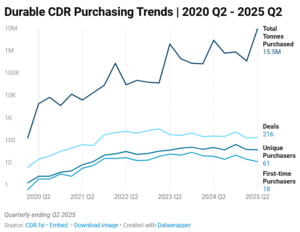
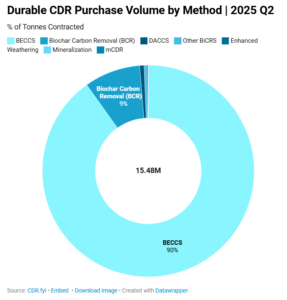
The durable carbon dioxide removal (CDR) market experienced its strongest quarter ever in Q2 2025, per the CDR.fyi report. Companies bought 15.48 million tonnes of durable carbon removal credits. This almost doubles the total volume contracted in all past quarters combined.

This quarter’s figure exceeded the Q1 2025 total of 13.6 million tonnes and marked a major turning point for the market. Let’s discover the top buyers, suppliers, and what CDR methods are most in demand.

Microsoft the Megabuyer: One Tech Giant, Five Massive Deals

Microsoft dominated the quarter, contracting 14.6 million tonnes across five mega‑deals. These purchases accounted for 93.8% of Q2 volumes. The largest single deal was for 6.75 million tonnes from AtmosClear, followed by around 3.7 million tonnes from CO₂ Limited.

Other deals included contracts with:

Microsoft has bought nearly 25 million tonnes of durable CDR since late 2020. This accounts for about 79.5% of the total market volume, according to CDR.fyi.

Rising Stars: Non-Microsoft Buyers Step Up Their Game

Even excluding Microsoft, Q2 remained strong. Other buyers, not including the tech giant, purchased about 902,000 tonnes. This makes it the second-highest quarter for non-Microsoft purchases, just behind Q4 2024, according to CDR.fyi CSO Futures.

durable cdr purchasing trend q2 2025

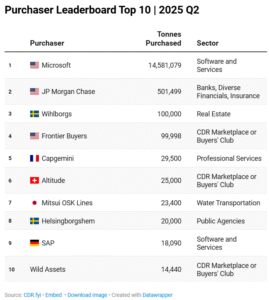
JPMorgan Chase accounted for 450,000 tonnes of BECCS and 50,000 tonnes of DACCS, representing about 63% of the non-Microsoft volume.

Other buyers were Wihlborgs (a Swedish real estate firm), City-owned Helsingborgshem, Frontier Buyers marketplace, Capgemini, Mitsui O.S.K Lines, SAP, and Wild Assets.

New players like Capgemini and Mitsui expanded the buyer base. They made purchases in various technical removal types and improved weathering.

Purchaser Leaderboard Top 10

Biochar Delivers, BECCS Leads: Tech Showdown in the Carbon Race

BECCS led technology choices in Q2, making up 86% of contracted volume. This included Microsoft and other buyers, according to CDR.fyi CSO Futures.

Biochar is a key player in biomass carbon removal solutions (BiCRS). It achieved strong delivery performance, making up 89.4% of the 116,800 tonnes delivered this quarter. Biomass direct storage and biomass geological sequestration added another 6.6% of deliveries.

Durable CDR Purchase Volume by Method

BECCS is popular due to its high technology readiness levels (TRL 7–9), especially in Nordic countries where they have forest biomass feedstock. They also have strong energy markets and new CO₂ storage projects. For example, Norway’s Longship and Northern Lights facilities are part of this effort.

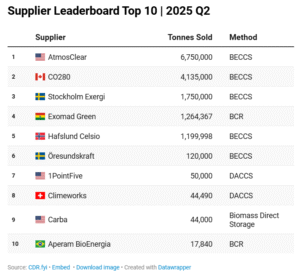
In terms of suppliers, biochar producers dominated the supplier leaderboard. Five of the top six suppliers are driving nearly 90% of contracted volume via large-scale BECCS or biochar projects.

CDr supplier q2 2025

Exomad Green held the top spot, delivering ~172,000 t and selling nearly 1.76 M t of biochar carbon removal (BCR) credits in total. Other leading firms included Aperam BioEnergia, Varaha, Wakefield Biochar, and Carboneers.

Together, they contribute significant delivery and contracted volumes via high-performing biochar methods. These recurring players show consistent performance and growing commercial traction in durable CDR.

Fewer Cheques, Bigger Bets: Why VC Funding Slowed While Deals Grew

While purchase volumes soared, investment funding cooled off. In Q2, just eight CDR companies raised $122 million, down from 24 companies and $137 million in Q1.

Direct air capture startups accounted for most fundraising. This slowdown reflects a maturing market where large corporate contracts play a bigger role than venture capital for project scaling.

The strong Q2 performance signals a turning point for durable CDR. It reflects both rapid growth in purchase activity and a narrowing gap between durable methods and nature-based removals.

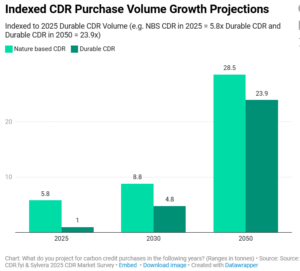
A recent survey found that durable credits accounted for just 200,000 tonnes of retirements in 2024. In contrast, nature-based options reached 11 million tonnes.

Buyers want durable carbon dioxide removal volumes to equal or surpass nature-based credits by 2050. This will narrow the 6:1 ratio to parity by 2030.

Indexed CDR Purchase Volume Growth Projections

Buyers want clear net-zero standards, solid business case validation, and lower costs to boost durable CDR demand. About 65% of companies surveyed said stronger net-zero frameworks, like those from SBTi, drive demand.

Many investors are cautious about unproven technologies and gaps in standards. However, the record Q2 shows that major buyers are eager to invest in removal methods. These methods align with their climate goals.

What Comes Next: Can Durable CDR Close the Gap with Nature-Based Offsets?

The global CDR market is now about $2 billion. Analysts expect it to grow to $50 billion by 2030. If favorable policies and buyer demand happen, it could surpass $250 billion by 2035. McKinsey and others estimate durable, engineered CDR could scale into a trillion-dollar sector by mid-century.

Yet, challenges still exist, including:

  • Fragile market liquidity
  • Different credit types that aren’t interchangeable
  • Price uncertainty (durable carbon credits average about $180 per tonne, while nature-based credits average $35)
  • Concerns about delivery risk and credit permanence

These issues affect the market’s stability. Survey data shows that buyers usually expect prices to be lower than what suppliers predict. This is especially true for non-biochar technical removals. Cost barriers are slowing down adoption.

Q2 2025 results marked a milestone: the durable carbon dioxide removal market grew faster than ever before. Microsoft’s anchor purchases and broader corporate engagement drove 15.5 million tonnes of contracted volume—more than doubling the market size in a single quarter. BECCS and biochar led in both scale and delivery.

Still, investment slowed, and adoption barriers persist. Companies cite the need for net-zero standards, cost declines, and clearer risk frameworks. But as large-scale contracts become more common, durable CDR is shifting from early promise to practical climate action.

The post Microsoft (MSFT Stock) Tops Q2 2025 Record-Breaking Surge in Durable Carbon Removal Credit Purchases appeared first on Carbon Credits.
Powering Slovakia’s Nuclear Future: Urenco Secures Uranium Deal with Slovenské elektrárne

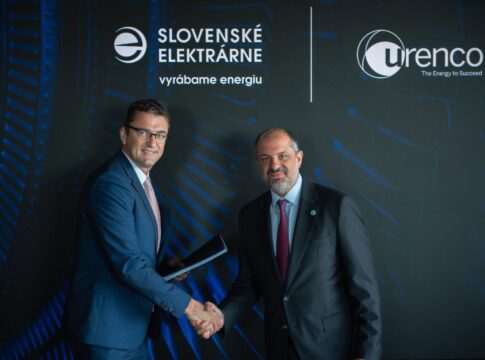
Featured image sourced from Slovenské elektrárne’s official press release 

Slovenské elektrárne, a.s., Slovakia’s largest electricity producer, signed a long-term contract with the Urenco Group on July 25, 2025. British Ambassador Nigel Baker witnessed the agreement. This contract secures enriched uranium for Slovakia’s nuclear plants in Bohunice and Mochovce until the mid-2030s. It helps Slovakia diversify its nuclear fuel sources and boost energy security.

By partnering with Urenco, Slovenské elektrárne gains a trusted enrichment provider. This deal also lowers risks from geopolitical tensions and supply issues.

Branislav Strýček, Chairman of the Board of Directors and CEO of Slovenské elektrárne

“We are pleased that thanks to the future cooperation with Urenco, we will be able to ensure the diversification of our business relationships. This will significantly help us to continue to maintain the stable and safe operation of our nuclear power plants.”

Slovenské elektrárne: Leading Slovakia’s Carbon-Free Future

Slovenské elektrárne is Slovakia’s leading energy company. It generates over 70% of the country’s electricity. After shutting down the last coal-fired power plant in early 2024, it now produces electricity with zero direct CO₂ emissions.

The company’s energy mix includes nuclear, hydroelectric, and solar power. Its sustainability efforts focus on:

  • Efficient resource use

  • Environmental management

  • Reliable and ethical supply chains

  • Continuous improvement and financial stability

Energy efficiency services help businesses and homes cut energy use and CO₂ emissions. Solutions like LED lighting and smart cooling systems allow clients to make real strides toward their climate goals.

Slovenské elektrárne is 66% owned by Slovak Power Holding B.V., which is part of the Czech group Energetický a průmyslový holding (EPH). The Slovak Republic owns the other 34%. This structure provides local oversight and leverages regional expertise.

Energy Independence with Nuclear Power

Nuclear power has been central to Slovakia’s energy system for over 50 years. Slovenské elektrárne produces over 87% of the country’s electricity from nuclear sources, making it one of Europe’s leaders in low-carbon energy.

The contract followed an international tender launched in early 2024. With global geopolitical uncertainties and rising pressure on nuclear fuel markets, securing a reliable uranium partner is more important than ever. This deal with Urenco helps ensure a stable and clean electricity supply for households and industries in Slovakia.

Nigel Baker, British Ambassador to Slovakia

“In today’s world, diversification of energy supplies is crucial for national security. The long-term contract between Urenko and Slovenské elektrárne helps Slovakia achieve this goal and provides a reliable alternative for the supply of enriched uranium for the operation of the Slovak nuclear industry in the coming years. I am very pleased with this close partnership, which also helps to strengthen ties between Slovakia and the United Kingdom.”

Modern, Safe, and Efficient Nuclear Fleet

Slovenské elektrárne operates five VVER 440 pressurized water reactors—two at Bohunice and three at Mochovce. These reactors provide nearly two-thirds of the country’s electricity.

They are built with strong safety features, including thick reinforced containment structures and large cooling water reserves. The completion of new units at Mochovce has increased capacity. In January 2023, Unit 3 was connected to the grid after final regulatory approval in August 2022.

Each unit produces up to 535 MW of electricity, meeting around 13% of Slovakia’s needs. One reactor prevents about 5 million tonnes of CO₂ emissions yearly—like removing two million cars from the road.

This also strengthens Slovenské elektrárne’s resilience against nuclear fuel supply disruptions and supports its path toward climate neutrality.

Urenco: A Global Player in the Nuclear Supply Chain

Urenco, based in London, has offered uranium enrichment services for over 50 years. The company plays a vital role in the global nuclear fuel supply chain. It supports low-carbon electricity production in Europe, North America, and beyond. With enrichment facilities in Germany, the Netherlands, the UK, and the US, Urenco guarantees a secure supply for its clients.

The company aims for net-zero carbon emissions by 2040 and emphasizes strong environmental governance. Regular assessments monitor its impact on air, water, and energy use. Oversight by the UK’s Office for Nuclear Regulation ensures high operational safety standards.

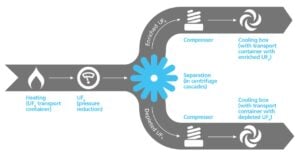
Uranium Enrichment Process

URENCO URANIUM
Source: URENCO

Why Uranium Enrichment Is a Strategic Priority?

Uranium enrichment is a key and expensive part of the nuclear fuel cycle. This cycle includes mining, conversion, enrichment, and fuel assembly. Only a few companies worldwide can manage this process. Nuclear power operators, like Slovenské elektrárne, need reliable and varied enrichment services.

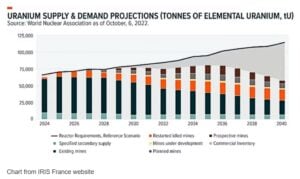
According to data from the World Nuclear Association, global demand is projected to keep rising steadily through 2040, while supply remains constrained. This growing imbalance is expected to create a significant gap between the world’s uranium supply and the level of demand by that time.

Some experts say that this is a cause for concern, as current mining and processing levels may fall short of what’s needed to scale up nuclear power generation. Thus, significant investments are required to ramp up supply and meet the rising demand for nuclear fuel.

uranium

Slovenské elektrárne’s contract with Urenco Group comes at the right time when the uranium market is strained. It’s also a step toward a strong, climate-friendly energy future for Slovakia. By investing in secure nuclear fuel and focusing on sustainability, the company leads in Central and Eastern Europe.

Laurent Odeh, Chief Commercial Officer of Urenco Group

“At Urenco Group, we are very proud to be entering a new market with a new customer, and I would like to thank Slovenské elektrárne for their trust.”

As Europe moves away from fossil fuels, Slovenské elektrárne leads the way—driving innovation, providing clean power, and ensuring electricity for all in Slovakia.

The post Powering Slovakia’s Nuclear Future: Urenco Secures Uranium Deal with Slovenské elektrárne appeared first on Carbon Credits.
Robotaxi Showdown: Tesla, WeRide and Saudi Arabia Shift Gears in the Self-Driving Race

Robotaxi Showdown: Tesla, WeRide and Saudi Arabia Shift Gears in the Self-Driving Race

The race to launch robotaxis is speeding up. Tesla, Saudi Arabia, and Chinese firms like WeRide are hitting big milestones. As countries and companies invest in autonomous mobility, robotaxis are fast becoming a central feature in the global shift toward safer, more efficient, and lower-emission transportation.

This article looks at new advances in the robotaxi industry. It also highlights Tesla’s robotaxi reveal and it discusses what this means for the future of transportation.

Tesla Begins Robotaxi Operations in Austin

Tesla began offering rides in its robotaxi fleet in June as part of an invitation-only pilot program in Austin. The initial fleet included roughly 10–20 Model Y vehicles, operating within a geofenced area in South Austin. Safety monitors rode along, though they lacked vehicle controls. Early rides were priced around $4.20 each.

Tesla intends to expand robotaxi service to San Francisco and other cities later in 2025. Starting in 2026, Tesla owners could also earn income by adding their vehicles to the robotaxi network.

Elon Musk confirmed a full production robotaxi vehicle—dubbed “Cybercab”—will roll out in 2026 and could cost under $30,000.

This driverless electric vehicle (EV) will be built on Tesla’s new platform. It aims for full autonomy and low-cost production. Unlike Tesla’s current vehicles, the robotaxi will have no steering wheel or pedals, marking a bold leap into full self-driving (FSD) territory.

The EV giant has been developing its FSD software for years. While current Autopilot and FSD Beta versions still require human oversight, the design of the robotaxi allows it to operate independently.

The vehicle will probably be part of a ride-hailing service. This service will use Tesla’s AI and neural network tech. It will work like Uber or Lyft, but there won’t be any human drivers.

Tesla’s early success triggered market optimism. Despite a drop in Q2 automotive revenue, the company’s stock rose on investor confidence in autonomous mobility.

WeRide Advances Driverless Tech in China and the Middle East

While Tesla gears up for its launch, Chinese autonomous driving pioneer WeRide is also making headlines. The company recently announced the launch of its fully driverless robotaxi service in Saudi Arabia, a first for the region.

The service is launching in NEOM. This is a futuristic megacity supported by the Saudi government. It is part of the kingdom’s Vision 20230 economic plan.

WeRide’s robotaxi service in Saudi Arabia uses electric vehicles. These cars have advanced sensors and AI systems. They can drive themselves in most situations, thanks to Level 4 autonomy—meaning the car can operate without a human driver in most conditions. This milestone is a big win for the Middle East. It shows that autonomous mobility is moving beyond classic areas like California and Shanghai.

The company also introduced a cost-cutting HPC platform. This platform makes robotaxi hardware more efficient and affordable. This innovation could cut deployment costs by up to 50%, says WeRide’s projections. This will help speed up commercialization in various markets.

In China, WeRide is expanding its driverless testing. They are focusing on Guangzhou and Shenzhen. Their fleet of electric robotaxis runs 24/7 in geofenced areas. The company’s dual focus on global expansion and hardware optimization positions it as a formidable player in the robotaxi space.

Saudi Arabia: A New Frontier for Robotaxis

Saudi Arabia‘s deal with WeRide is a big step for self-driving cars in new markets. NEOM’s robotaxi service launch is part of a bigger goal. It aims to create smart cities that use clean energy and advanced technology.

Saudi authorities created a good environment for autonomous vehicles. They provide testing zones, support public-private partnerships, and enhance infrastructure. These policies aim to reduce traffic, lower emissions, and improve access to transportation.

The NEOM project envisions a car-free urban core, where shared electric vehicles—many of them autonomous—move people between hubs. Robotaxis are key to this vision. Companies like WeRide and others are racing for early-mover advantage in a new billion-dollar market.

Saudi Arabia’s efforts mirror a growing global trend: emerging economies are not just watching the AV revolution—they’re shaping it.

WeRide also launched Southeast Asia’s first fully driverless shuttle bus service at Resorts World Sentosa in Singapore. It operates without any safety operator onboard.

The Robobus travels a set 1.2 km loop. It is equipped with advanced multi-sensor systems, including LiDAR and cameras that provide 360-degree perception and can detect obstacles up to 200 meters away.

This driverless shuttle service is a big step for Singapore’s autonomous mobility plans. It also improves last-mile connectivity in RWS.

Robotaxis and the Climate Clock: Why Autonomy Fuels Net-Zero Goals

The robotaxi movement is more than a tech trend—it’s part of the broader transition to cleaner, more efficient urban transport. Traditional internal combustion engine (ICE) vehicles add a lot to city emissions. Urban transport makes up about 20% of global CO₂ emissions. Robotaxis, especially when electric, offer a cleaner alternative.

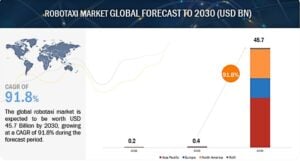
Analysts predict the global robotaxi market will grow from about $0.4 billion in 2023 to $45–46 billion by 2030. This means a compound annual growth rate of 73% to 92%.

robotaxi market 2030
Source: MarketsandMarkets

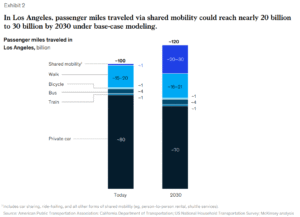
McKinsey estimates that autonomous ride-hailing services may hit $1.2 trillion in global market value by 2030. Their modeling using Los Angeles shows that robotaxis could result in this shift in urabn mobility:

shared mobility modeling los angeles 2030
Sorce: McKinsey & Company

Key drivers include falling hardware costs, improved AI, and stronger government support. In the U.S., China, and the EU, funding for smart mobility is growing, often tied to climate policy and energy transition goals.

Robotaxis could also improve road safety. According to the World Health Organization, over 90% of road accidents are caused by human error. Autonomous vehicles, if widely adopted, could significantly reduce fatalities and injuries. This is especially true in densely populated areas.

What’s Next for Tesla and the Robotaxi Market?

Tesla’s launch marks a crucial test—not only for the company, but for the robotaxi sector as a whole. Success could cement Tesla’s role as both an EV and autonomous tech leader. But challenges remain.

For one, regulatory approval is still a hurdle. In the U.S., states such as California and Arizona allow robotaxi testing to happen. However, full approval for driverless services everywhere is still years away. Tesla must also prove its vision-based FSD approach can meet or exceed safety expectations without LiDAR.

Meanwhile, rivals like WeRide, Waymo, Cruise, and Baidu are building out services with more conventional tech stacks that combine cameras, radar, and LiDAR. These systems are generally seen as safer in the short term, but potentially more expensive and less scalable.

In the short term, Tesla may launch its robotaxi first as a supervised service or in select geofenced zones. Over time, if software reliability and safety validation improve, broader rollout could follow.

Tesla’s robotaxi success may push other car makers to speed up their AV programs. It could also boost partnerships between tech firms and cities seeking low-emission transport options.

Robotaxis are no longer science fiction. Across the globe—from California to Saudi Arabia to China—driverless EVs are hitting the roads. Tesla’s launch and WeRide’s operational breakthroughs signal a major acceleration in the autonomous mobility race.

If robotaxis succeed at scale, they could reshape how cities move, how emissions are cut, and how transportation is accessed by millions.

The post Robotaxi Showdown: Tesla, WeRide and Saudi Arabia Shift Gears in the Self-Driving Race appeared first on Carbon Credits.
Tesla’s Game-Changing $16.5Bn Samsung Deal for AI Chips – Is This a Turning Point for Tesla Stock?

tesla

Samsung Electronics Co. (005930.KS) has secured a major multiyear deal with Tesla Inc. (NASDAQ: TSLA) to manufacture advanced AI semiconductors at its upcoming facility in Taylor, Texas. The $16.5 billion agreement runs through 2033 and marks a crucial win for Samsung’s underperforming foundry business.

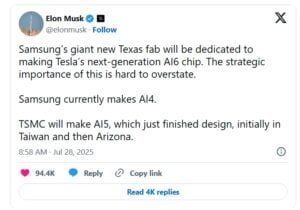
Elon Musk confirmed that the Texas fab will produce Tesla’s AI6 chip, a next-generation inference processor critical to powering autonomous vehicles and humanoid robots. Here’s a snapshot of his tweet:

elon musk Tesla

Tesla Shifts from TSMC to Samsung to Diversify Supply Chain

Tesla’s decision to switch from longtime chip partner Taiwan Semiconductor Manufacturing Co. (NYSE: TSM) to Samsung reflects a broader strategy to strengthen supply chain resilience. Tensions in Taiwan and global semiconductor shortages have prompted Tesla to explore alternative partners. Samsung’s progress in 2nm gate-all-around (GAA) chip fabrication, with yields now surpassing 40% makes it an appealing option.

This move also signals Tesla’s deeper commitment to vertical integration. By co-developing chip manufacturing processes with Samsung, Tesla is embedding itself in the heart of one of the world’s largest semiconductor ecosystems.

A Boost for Samsung’s Struggling Foundry Division

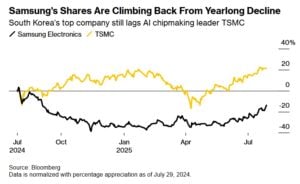
The contract comes as Samsung’s chip foundry business with the Texas fab had been facing delays. According to TrendForce, its share of the global foundry market slipped to 7.7% in Q1 2025, far behind TSMC’s 67.6%.

But the Tesla deal now provides a clear pathway to scale operations by 2026. Notably, Samsung shares surged 6.8% on Monday following the announcement, their highest level since September, as indicated by Bloomberg.

samsung stock
Source: Bloomberg

The partnership signals confidence in Samsung’s next-gen chip tech and could serve as a launchpad to secure more U.S. and global clients. Interestingly, Samsung’s role as a viable TSMC alternative also grows stronger.

New Chips, Faster Cars: Tesla’s Path to Full Autonomy

The AI6 chip, set for production at Samsung’s Texas facility, is the centerpiece of Tesla’s next-gen Full Self-Driving (FSD) platform. Elon Musk emphasized that the chip could deliver exaflop-level computing power, unlocking near-human-level decision-making for autonomous systems.

While production is still two years away, the AI6 chip plays a crucial role in Tesla’s roadmap to deploy fully driverless robotaxis and expand its AI offerings, including Optimus humanoid robots. Tesla expects these FSD-equipped vehicles could make up 30% of total sales by 2027.

Still, Musk acknowledged challenges ahead. Tesla’s current FSD offering requires driver supervision, and its early robotaxi trials in Austin have faced criticism for erratic behavior. He also noted the transition from AI4 (already made by Samsung) to AI5 (designed by TSMC) and then to AI6 could cause confusion and delays in retrofitting older vehicles.

Tesla and Samsung Eye the AI Chip Market’s Explosive Growth

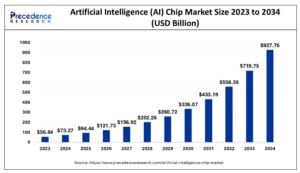
A report says the AI chip industry size was valued at USD 52.92 billion in 2024 and is predicted to reach USD 295.56 billion by 2030, at a CAGR of 33.2% from 2025 to 2030.

Another analysis forecasted USD 927.76 billion by 2034, expanding at a CAGR of 28.90% from 2024 to 2034.

ai chip semiconductor market
Source: Precedence Research

Tesla and Samsung’s alliance offers two key advantages in this fast-moving space:

  • Higher Efficiency and Performance: Tesla can develop more efficient FSD systems using Samsung’s advanced 2nm chips, reducing costs and improving AI capabilities.
  • Stronger Supply Chains: Samsung’s dual-hub strategy spanning Texas and its planned $228 billion mega-cluster in South Korea offers Tesla a reliable chip supply free from geopolitical threats.

Global Strategy Backed by U.S. and South Korea

Bloomberg revealed that this partnership aligns well with the U.S. effort to revitalize domestic semiconductor manufacturing. Supported by the CHIPS and Science Act, Samsung is set to receive up to $9 billion in U.S. funding and tax incentives for its operations in Texas. This aligns with broader efforts to reduce dependency on East Asia and strengthen American tech supply chains.

Simultaneously, the deal reinforces South Korea’s $450 billion K-Semiconductor Strategy, positioning the country as a powerhouse in AI chip innovation. By anchoring its foundry with Tesla’s contract, Samsung strengthens its role in global AI manufacturing.

All these factors combined could significantly strengthen both companies’ positions in the race toward scalable AI.

Investors Bet Big on TSLA STOCK 

Tesla’s ability to commercialize its AI5 and AI6 chips will directly influence its valuation in the coming years. As its FSD system matures and becomes more widely adopted, TSLA can boost subscription revenue and capitalize on valuable driving data.

This shows that the Samsung deal is a big win for Tesla. Experts noted that it can give the company long-term access to custom AI chips that are key for its Full Self-Driving (FSD) system, robots, and data centers.

Market data showed, Tesla (TSLA Stock) shares have risen following the announcement of the major chip supply deal with Samsung. The latest available price for Tesla (TSLA) is $325.59, up about 3% from the previous close of $316.06.

tesla TSLA STOCK
Source: Yahoo Finance

This partnership also helps Tesla strengthen its supply chain and have better control over how its chips are made. And for investors, the deal is more than a headline. It’s a foundational shift in the semiconductor and AI chip tech that could redefine the self-driving and AI semiconductor race.

The post Tesla’s Game-Changing $16.5Bn Samsung Deal for AI Chips – Is This a Turning Point for Tesla Stock? appeared first on Carbon Credits.
Trump’s Most Ambitious AI Plan to Lead America in the Global Data Center Race

AI

In January, President Donald Trump signed an executive order titled “Removing Barriers to American Leadership in Artificial Intelligence.” The goal was to maintain and expand America’s edge in AI technology to enhance national security, economic power, and human development.

Following up on that directive, the White House released “Winning the AI Race: America’s AI Action Plan” on July 23. The strategy aims to place the U.S. at the forefront of global AI development by fast-tracking infrastructure, encouraging innovation, and promoting international cooperation. Officials called it a transformative roadmap to power a new era of American technological dominance.

Key Highlights of America’s AI Action Plan

The plan outlines over 90 policy actions centered around three core areas:

  1. Accelerating innovation
  2. Building strong AI infrastructure
  3. Leading global AI diplomacy and security

White House Science and Technology Policy Director Michael Kratsios said,

 “America’s AI Action Plan charts a decisive course to cement U.S. dominance in artificial intelligence. President Trump has prioritized AI as a cornerstone of American innovation, powering a new age of American leadership in science, technology, and global influence. This plan galvanizes Federal efforts to turbocharge our innovation capacity, build cutting-edge infrastructure, and lead globally, ensuring that American workers and families thrive in the AI era. We are moving with urgency to make this vision a reality.” 

Several major actions were outlined in the strategy:

  • Exporting AI Technology: The U.S. Commerce and State Departments will work with industry leaders to export complete AI solutions—including hardware, software, and standards—to trusted allies.
  • Faster Buildout of Data Centers: The government plans to speed up the permit process for building data centers and chip factories. It will also support workforce development in trades like electrical and HVAC services.
  • Regulatory Reform: The administration will eliminate or ease federal rules that slow AI progress. Businesses will be asked to share feedback on outdated regulations that should be scrapped.
  • Safeguarding Free Speech: New guidelines for government AI contracts will require that language models are free from political bias and allow open discourse.

Relaxed Environmental Rules Raise Red Flags

The plan includes fast-tracking environmental permits under the National Environmental Policy Act to ease the construction of large data centers. This also involves rolling back rules from the Clean Air Act and Clean Water Act. In return, data centers must promise to invest at least $500 million per site.

Federal agencies have also been asked to offer up government-owned land for building both data centers and their supporting energy infrastructure. These moves aim to speed up construction but have raised concerns about environmental oversight.

The Department of Energy announced four government sites where private companies will partner to build new AI data centers and power facilities. Energy Secretary Chris Wright called it “a bold step” and compared it to launching a new Manhattan Project.

Global Data Center Energy Use Set to Soar

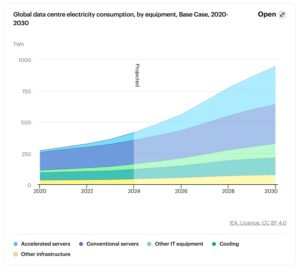
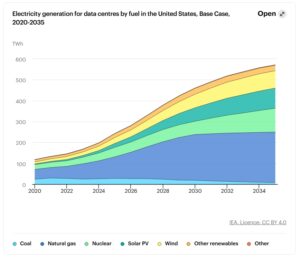
AI needs a lot of electricity to power advanced servers, cooling systems, and data management. The International Energy Agency (IEA) warned that global electricity use from data centers could double by 2030, reaching more than Japan’s current energy demand.

By 2030, it could reach about 945 TWh, which is nearly 3% of total global demand.

  • From 2024 to 2030, data center electricity use is projected to grow 15% each year—four times faster than other sectors.

Notably, all data center types, enterprise, colocation, and hyperscale, contribute to this rise.

U.S. data center demand

The U.S. AI Infrastructure Demands Massive Power

Talking about the U.S., a report revealed that data centers and AI platforms used 4% of the nation’s electricity in 2023. The electricity use has remained steady for 20 years, but the rise of AI will likely push total demand up by 9% by 2028 and 20% by 2033.

Much of this power may come from fossil fuels like coal and natural gas, which release greenhouse gases such as carbon dioxide and methane. This could worsen global warming and increase extreme weather events.
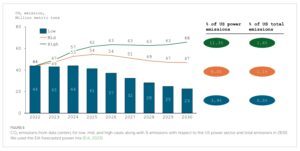
  • This surge in electricity use could lead to greenhouse gas emissions equal to 40% of the U.S.’s current annual emissions. This amount is the same as emissions coming from 540 million gasoline-powered cars.
us data center emissions
Source: IEA

Chart: CO2 emissions from data centers for low, mid, and high cases, along with % emissions concerning the US power sector and total emissions in 2030.

US Data center emissions
Source: Frontiers

Additionally, AI data centers require large amounts of water for cooling, putting stress on water supplies in already dry regions.

Why is AI so energy-hungry?

GPUs used in AI are much more power-intensive than standard chips. Even a single ChatGPT query uses nearly 10 times the power of a Google search. Creating AI-generated images takes thousands of times more electricity than generating text.

  • In 2024, ChatGPT alone used over 500,000 kilowatt-hours of electricity daily, which is equal to the power used by 180,000 U.S. homes.
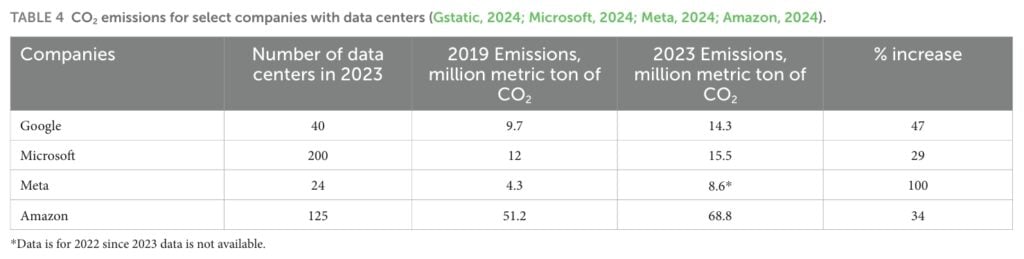
  • A single Meta data center consumes as much power as 7 million laptops running eight hours a day.
  • In Santa Clara, California, 50 data centers use 60% of the city’s electricity, often paying lower rates than residents.
big tech AI emission
Source: Frontiers

How Big Techs Are Responding to Trump’s AI Policy?

To keep up with rising energy demands, many tech companies are relying on existing power plants. In the U.S., most of these still use fossil fuels, especially natural gas. While some areas are adding renewables and battery storage, nuclear energy is gaining attention as a cleaner, steadier power source.

To begin with, Nvidia CEO Jensen Huang said,

 “America’s unique advantage that no country could possibly have is President Trump.”

Meanwhile, OpenAI and Oracle announced progress on their massive “Stargate” project. The $500 billion effort aims to create a national AI infrastructure network. The companies revealed they are developing 4.5 gigawatts of new data center capacity, more than twice the power used in San Francisco. While specific energy sources weren’t mentioned, one site in Abilene, Texas, is already up and running. The rest of the project will be rolled out in phases over the next four years.

With demand from AI and cloud services growing fast, nuclear energy is becoming a key part of the tech industry’s strategy to ensure reliable, low-carbon power.

AI Is the New Arsenal—And America Must Win

Even though critics stress the need for updated energy policies and better efficiency standards, Trump stays undeterred. He is clean on his stance. America has to dominate the artificial intelligence space.

And Secretary of State and Acting National Security Advisor, Marco Rubio, also vouches for this vision. He noted,

“Winning the AI Race is non-negotiable. America must continue to be the dominant force in artificial intelligence to promote prosperity and protect our economic and national security. President Trump recognized this at the beginning of his administration and took decisive action by commissioning this AI Action Plan. These clear-cut policy goals set expectations for the Federal Government to ensure America sets the technological gold standard worldwide, and that the world continues to run on American technology.”

The post Trump’s Most Ambitious AI Plan to Lead America in the Global Data Center Race appeared first on Carbon Credits.