Chevron (CVX Stock) Powers Through Q2 With $5.5B Payout, Permian Growth, and Net-Zero Push

Chevron Powers Through Q2 With $5.5B Payout, Permian Growth, and Net-Zero Push

Chevron (NYSE: CVX) delivered better-than-expected earnings in the second quarter of 2025 despite falling oil prices and weaker refining margins. Profits fell year-over-year. However, strong production in the Permian Basin and careful capital management allowed the company to generate solid cash flow. This also helped maintain returns for shareholders.

Alongside its financial results, Chevron reaffirmed its climate goals. This includes net-zero Scope 1 and 2 emissions by 2050. It also involves ongoing investments in carbon capture, hydrogen, and renewable fuels. These efforts support a wider energy transition strategy.

Chevron’s Q2 Delivers Amid Oil Price Drops

Chevron Corporation shared its financial results for the second quarter of 2025. The results show pressure from lower oil prices but also show progress in its long-term strategy.

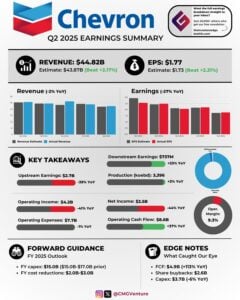
For the quarter ending June 30, 2025, the company posted net income of $2.49 billion, or $1.45 per share. After adjusting for special items, earnings came in at $1.77 per share, slightly higher than what Wall Street expected.

Total revenue came in at $44.82 billion, a decline of about 12% compared to the same quarter last year. This marks Chevron’s lowest quarterly profit in four years, largely due to weaker oil prices and refining margins.

Chevron Q2 2025 earnings
Source: CMG Venture Group

Even so, the company’s earnings still exceeded analyst expectations on an adjusted basis.

Chevron’s earnings followed a similar trend seen across the oil and gas sector. Other major energy firms also reported lower profits, driven by high production levels and flat global demand.

In particular, weaker natural gas prices and reduced margins in fuels and chemicals impacted Chevron’s bottom line.

Strong Oil Production and Cash Flow Help Offset Weak Prices

Despite the decline in profits, Chevron maintained a strong operating performance. The company increased production in the Permian Basin, reaching over 1 million barrels of oil equivalent per day. This is the highest output the company has reported from that region since mid-2024.

Chevron generated $4.9 billion in free cash flow during the quarter, a 15% increase compared to the first quarter of the year. The company also returned $5.5 billion to shareholders through a mix of dividends and share buybacks.

Notably, Chevron continued its stock buyback program temporarily in the second quarter. The oil major’s ongoing efforts to acquire Hess Corporation will boost its access to oil reserves in Guyana.

Overall, Chevron’s operational strength and disciplined capital management helped it weather the effects of falling oil prices.

Cleaner Barrels Ahead: Chevron’s Climate and Net Zero Plan

Chevron continues to work toward reducing its greenhouse gas emissions while meeting global energy demand. The company has a long-term goal of reaching net-zero emissions for its upstream Scope 1 and Scope 2 operations by 2050.

Scope 1 includes direct emissions from Chevron’s operations. Scope 2 covers indirect emissions from electricity and heat that Chevron buys.

Chevron measures emissions with a full value chain approach. This includes Scope 3 emissions. These emissions cover the use of sold products, such as gasoline and diesel. Although the company has not committed to a full Scope 3 net-zero goal, it reports these figures for transparency and to track progress.

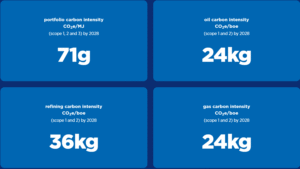
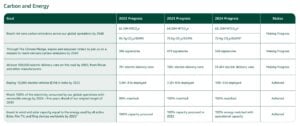
In addition to these goals, Chevron has introduced a carbon intensity reduction target, aiming to cut emissions per unit of energy produced. The company’s target is to reduce its Portfolio Carbon Intensity by more than 5% by 2028, using a 2022 baseline.

chevron carbon emissions intensity targets

Chevron’s reported greenhouse gas (GHG) emissions for 2024 are approximately:

  • Scope 1: 53 to 54 million tonnes CO2 equivalent (Mt CO2e)

  • Scope 2 (market-based indirect emissions): about 3 to 4 million tonnes CO2e

  • Scope 3 (mainly from use of sold products): between 416 million and 717 million tonnes CO2e, depending on calculation method (production, throughput, or sales method).

Chevron’s portfolio carbon intensity is at around 70.7 grams CO2e per megajoule energy produced. The oil giant’s upstream carbon intensity is about 23.9 kg CO2e per barrel of oil equivalent.

Investing in Lower-Carbon Solutions

Beyond reducing emissions from its own operations, Chevron is building a portfolio of low-carbon businesses. The company is investing in carbon capture and storage (CCS), hydrogen, and renewable fuels.

According to its 2024 Corporate Sustainability Highlights, Chevron invested over $600 million in over 100 emissions abatement projects in 2024, which will grow to $1.5 billion this year. These projects aim to cut around 1.2 million tonnes of CO2 equivalent each year. These include:

  • methane emission reductions through facility retrofits,

  • electrification of natural gas compression stations, and

  • efficiency improvements at refineries and LNG plants.

Moreover, Chevron has invested over $1 billion in carbon capture and storage projects. These efforts aim to cut emissions by around 5 million tonnes of CO2 each year. The company is growing its range of abatement technologies and low-carbon investments. This shows a big increase from previous years.

These efforts aim to reduce the company’s upstream carbon intensity to around 24 kilograms of CO₂ equivalent per barrel of oil. Chevron’s decarbonization plan includes energy efficiency upgrades, equipment changes, and the use of renewable electricity at production sites.

Chevron has partnerships with multiple firms focused on carbon removal, including projects that store CO₂ underground or use advanced technologies to capture emissions at industrial sites. These investments are intended to grow over time as demand for clean energy increases.

The company is also looking into hydrogen storage solutions. It has also invested early in fusion energy technologies. These ventures are still in development but represent Chevron’s effort to stay ahead of long-term changes in the energy system.

Chevron’s total planned investment in low-carbon businesses is projected to reach $10 billion through 2028. The company has made it clear that it wants to be part of the energy transition, even while continuing to supply traditional oil and gas.

Eyes on 2026: Risks, Rewards, and What’s Next for Chevron

Still, Chevron faces criticism from some investors and environmental groups. Concerns include how fast things are changing. There’s also a need for total emissions cuts, not just reducing intensity.

Plus, the company keeps investing in oil and gas production. Chevron responds by saying it must balance energy reliability, affordability, and sustainability. It also supports carbon markets, carbon pricing, and efforts to scale up verified carbon credits.

Though the amount or figure wasn’t disclosed, Chevron has bought millions of carbon credits. Between 2022 and 2024, Chevron’s Colombian subsidiary purchased around 3 million carbon credits. These credits support Indigenous community conservation projects in the Colombian Amazon through the REDD+ program.

Chevron also bought 1.8 million carbon credits from the Cotuhé Putumayo project. This purchase helped offset regional emissions. These credits mainly reflect avoided deforestation and conservation efforts.

Chevron believes oil and gas will remain important for decades. Their strategy focuses on cutting emissions from this supply. At the same time, they are developing new energy solutions.

The company’s Q2 results show the pressure facing oil producers in a lower-price environment. Even though revenue and profits fell from last year, Chevron posted solid operating results.

Whether Chevron can meet its 2050 net-zero goals while maintaining shareholder value and energy supply will depend on policy changes, market demand, and technological progress. But for now, the company is signaling that it plans to be part of both today’s energy system and tomorrow’s clean energy transition.

The post Chevron (CVX Stock) Powers Through Q2 With $5.5B Payout, Permian Growth, and Net-Zero Push appeared first on Carbon Credits.

U.S. Residential Solar in 2025: Market Slowdown Now, but 2050 Forecast is Massive

residential solar

The U.S. residential solar market is uncertain. Its long-term potential is huge, exceeding current U.S. power generation capacity. However, recent policy changes threaten short-term growth.

Wood Mackenzie’s analysis, “Near-term challenges but long-term potential: evaluating the US residential solar addressable market,” shows how the One Big Beautiful Bill Act (OBBBA) affects homeowners and solar developers. The main concern is the removal of the Section 25D Investment Tax Credit (ITC) for customer-owned systems starting in 2026.

The U.S. Residential Solar Stumbles in Tough Climate

According to the SEIA Q2 solar report, residential solar installations fell sharply in Q1 2025. Homeowners installed 1,106 MWdc of capacity. This is a 13% drop from Q1 2024 and 4% lower than Q4 2024.

High interest rates, economic uncertainty, and upcoming changes to federal tax credits are slowing demand. California remains the top solar state with 255 MWdc installed, but this is its weakest performance since Q3 2020.

More than 20 states saw installation declines. Puerto Rico and Florida follow California, but nationwide momentum has stalled.

solar installations
Source: SEIA

OBBBA Shakes Up an Already Fragile Solar Policy

The OBBBA introduces significant policy uncertainty. The removal of the Section 25D credit has made solar less affordable for homeowners. While third-party-owned (TPO) systems can still qualify for credits under Section 48, they now face new restrictions like compliance with “foreign entity of concern” (FEOC) rules.

An executive order issued on July 7 adds to the confusion and may limit TPO system eligibility for incentives.

Additionally, the House passed a budget reconciliation bill on May 22. This bill could eliminate tax credits for both customer-owned and leased solar systems starting in 2026. Though it passed narrowly, it faces Senate negotiations, where amendments could change its impact.

Sunny Horizon Yet Cloudy Now

Due to rising policy and economic challenges, the five-year outlook for residential solar has been cut by 9%. Installers report significant disruption, and consumer demand is softening amid uncertainty around tariffs and future tax incentives.

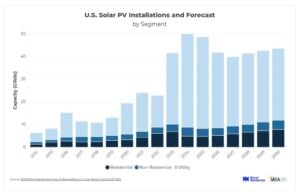
Despite these challenges, the market’s potential is enormous. By the end of 2024, only 7.5% of suitable U.S. homes had solar installed. Wood Mackenzie forecasts that, barring setbacks, the residential solar segment could grow 9% annually through 2030 and reach a 13% penetration rate.

However, these figures do not account for OBBBA’s full impacts. In a worst-case scenario, assuming the loss of all tax credits and high interest rates, adoption could drop 46% below baseline projections by 2030.

Can the Solar Market Recover Without Tax Credits?

Looking ahead, the key question is how solar companies will adapt without the Section 25D ITC. Many smaller players may not survive the transition, especially if TPO options become less viable.

Industry veterans expect surviving companies to change. Homeowners might find solar appealing due to lower system costs, new financing options, and rising electricity bills. Concerns about resilience and energy independence may also increase adoption.

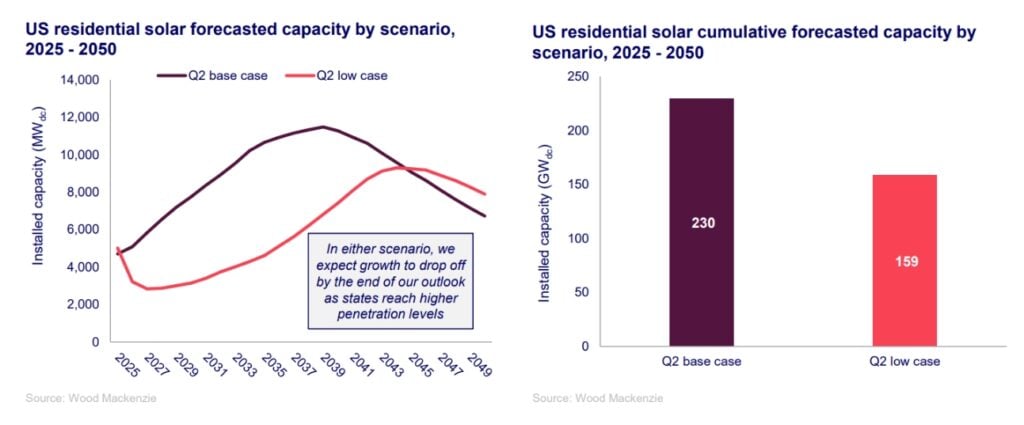
Even in the most pessimistic forecast, the U.S. residential solar market is expected to rebound after 2028 and add at least 150 GWdc by 2050.

Looking Ahead to 2050: Residential Solar’s Next Frontier

The solar industry’s long-term outlook is promising. With electricity demand expected to rise and the push for energy independence growing, solar remains a top solution for decarbonizing the residential sector.

By 2050, solar will play a vital role in how Americans power their homes. While only 7.5% of suitable homes had solar by the end of 2024, that number could increase significantly if conditions align.

Key growth drivers toward 2050 include:

  • Retail electricity rate hikes: Rising utility rates may lead more homeowners to adopt solar.

  • Battery storage adoption: Pairing solar energy with affordable home batteries can help solve intermittency issues and unlock significant savings.

  • State policy momentum: Even if federal support wanes, state-level incentives and renewable mandates could keep driving adoption.

  • Technological advances: More efficient panels, easier installations, and longer warranties will boost solar’s appeal.

Business Models Will Evolve

If traditional customer-owned systems lose their tax advantages, solar companies may pivot to new business models. Community solar, subscription-based plans, and solar-as-a-service may gain traction. These models allow broader participation, especially among renters and low-income households.

Digital platforms that streamline financing, permitting, and installation could cut costs, making solar feasible even without generous tax credits.

1,494 GWdc: A Market Bigger Than the Grid

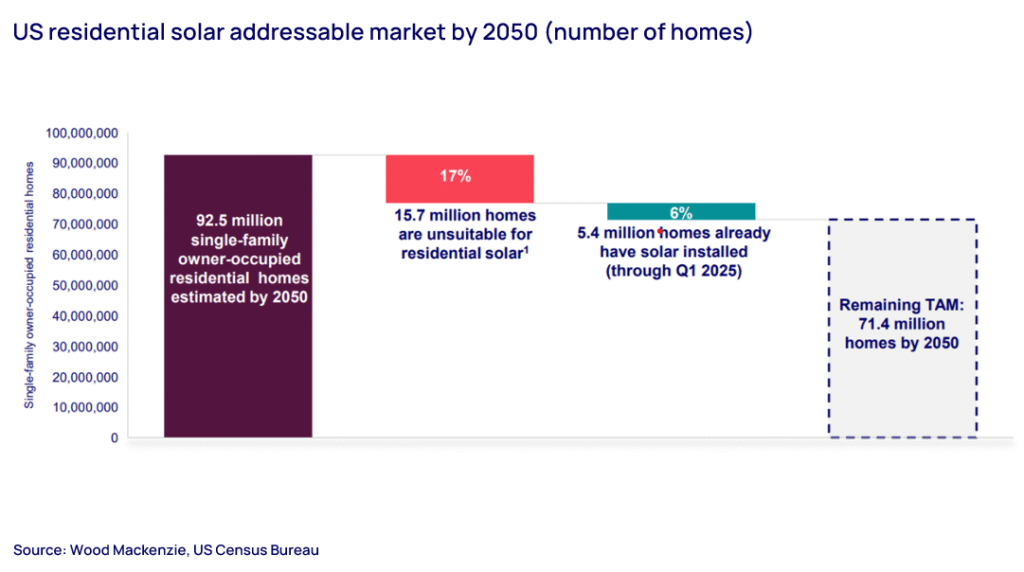
Despite current challenges, the long-term market size is impressive. Wood Mac says, by 2050, there will be about 92 million owner-occupied single-family homes in the U.S. Excluding homes with solar already and those not suitable for installation, around 70 million homes could still get solar upgrades.

If average system sizes continue to increase, this leads to a total addressable market (TAM) of roughly 1,494 GWdc, exceeding the current U.S. electricity generation fleet of around 1,300 GW.

residential solar
Source: Wood Mackenzie

Will Solar Reach Its Full Potential?

Wood Mackenzie’s “low case” scenario suggests only 12% of the total addressable market may be reached by 2050. However, this might be too cautious. Over the next 25 years, innovation, lower costs, and new business models could greatly increase market penetration.

RESIDENTIAL SOLAR
Source: Wood Mackenzie

Under favorable conditions, the market might reach a penetration of 30–40%. If the average system size grows as expected and costs drop below grid parity, growth could speed up.

In summary, the 1,494 GWdc TAM won’t be fully captured, but even partial adoption could add hundreds of gigawatts of clean capacity.

Overall, the long-term picture is compelling. With a TAM that exceeds the U.S. power generation fleet, the opportunity is immense. Even modest adoption could reshape the residential energy landscape by 2050.

The next few years will test the resilience and agility of solar companies. Those that survive will likely power a cleaner, more self-sufficient future for millions of American homes.

The post U.S. Residential Solar in 2025: Market Slowdown Now, but 2050 Forecast is Massive appeared first on Carbon Credits.
From Steel to Mass Timber: Meta’s Low-Carbon Data Center Makeover

meta

Data centers are usually built with carbon-heavy materials like concrete and steel. However, cement and steel production together contribute to about 15% of global carbon emissions. That makes them key targets for climate action. To reduce this impact, Facebook owner Meta announced that it is turning to mass timber.

So what’s mass timber? It’s a strong, engineered wood that has a much lower carbon footprint. Unlike steel and concrete, mass timber stores carbon absorbed by trees during their growth.

From Steel to Timber: Meta’s Smart Shift in Construction Materials

Meta is rapidly expanding its global infrastructure. But with growth comes responsibility. The company has committed to reaching net zero emissions across its value chain by 2030. This includes Scope 1, Scope 2, and Scope 3 (emissions from suppliers, construction, travel, and product use).

To meet this goal, Meta is acting on all fronts. One major step is rethinking how it builds its data centers. Notably, this move is a major step toward targeting Scope 3 emissions tied to building construction and materials.

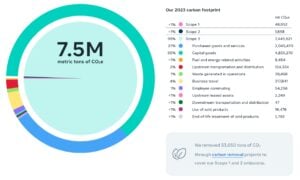
In 2023, its market-based net emissions were about 7.5 million metric tons of CO₂e, while location-based emissions stood at 14 million metric tons. However, the company has maintained net zero emissions in its global operations since 2020, cutting emissions by 94% from 2017 levels.

meta emissions
Source: Meta

This year, Meta started using mass timber at its data center campuses. And the company’s first mass timber office building was completed in Aiken, South Carolina, with more projects underway in Cheyenne, Wyoming, and Montgomery, Alabama.

Check out the video here:

Why Mass Timber Matters for the Planet

Mass timber offers multiple environmental and operational benefits. For example:

  • It can cut embodied carbon by about 41% compared to traditional materials.
  • Since timber products are prefabricated, construction times are shorter and on-site emissions are lower.
  • The material’s lighter weight reduces the need for deep concrete foundations—further reducing carbon impact.

Moreover, this approach significantly reduces Scope 3 emissions from construction activities, while also supporting Scope 1 and 2 targets through smarter, cleaner infrastructure operations.

Strength, Safety, and Speed in One Material

Beyond its climate advantages, mass timber is strong and fire-resistant. Engineered to handle industrial use, it meets the safety standards required for large-scale buildings like data centers. Its high strength-to-weight ratio means it can even outperform steel in some applications.

Additionally, mass timber can be pre-insulated and customized for use in walls, roofs, and floors. When exposed indoors, it contributes to biophilic design, a building style that connects people with nature and boosts workplace morale and well-being.

Responsible Sourcing for a Greener Future

Meta is also focused on ensuring that the timber it uses is sustainably harvested. It requires third-party audits to verify that the wood is traceable back to responsibly managed forests. These audits ensure that forests are protected for long-term health and that timber operations uphold fair labor practices and community benefits.

In certain cases, reclaimed wood is used to avoid new harvesting altogether—helping further reduce Scope 3 emissions tied to raw material sourcing.

Partnering for Climate-Smart Forestry

In addition to using sustainable timber, Meta is investing in nature-based carbon removal projects that benefit both people and the planet.

For instance, the company partnered with BTG Pactual Timberland Investment Group in Brazil to support a major reforestation effort. This long-term agreement will deliver up to 3.9 million carbon removal credits through 2038—helping offset residual emissions that cannot be eliminated, particularly in Scope 3.

These credits come from a $1 billion Latin America forestry strategy, guided by Conservation International to ensure biodiversity and social equity.

Meta’s Circular Tech and Carbon Tracking Drive Greener Data Centers

Besides using low-carbon building materials, Meta is embedding circularity into its data center hardware lifecycle, further cutting Scope 1 and Scope 3 emissions.

A key example is Meta’s use of lithium-ion battery backup units (BBUs), which replaced older lead-acid versions starting in 2014. These new batteries last longer, take up less space, and are easier to monitor and reuse.

By tracking battery health, the tech giant determines which units are suitable for reuse—even after hardware decommissioning. Currently, about 95% of BBUs are eligible for reuse, and this is expected to climb to 98% as diagnostics improve. Unused components are recycled responsibly, keeping valuable materials in circulation and reducing demand for virgin resources.

Additionally, the company is working with the iMasons Climate Accord (iCA) and the Open Compute Project (OCP) to tackle the issue of embodied carbon in data centers. The goal is to create a standard, transparent way to measure and report the carbon emissions tied to building and running data centers.

This new framework will help operators understand their carbon footprint better and make smarter choices to cut their environmental impact.

Scaling Up: Timber Pilots Show the Way

While building with mass timber has clear benefits, scaling it across the data center industry remains a challenge. However, the company’s pilot projects serve as real-world models for how to do it successfully.

As Meta continues to grow, it is committed to scaling low-carbon building strategies to tackle emissions in all three scopes.

As said before, the emissions generated from making and transporting steel and concrete are far higher than those from mass timber. By choosing bio-based, sustainable materials, Meta shows how tech companies can build smarter, cleaner, and more climate-resilient digital futures.

The post From Steel to Mass Timber: Meta’s Low-Carbon Data Center Makeover appeared first on Carbon Credits.
DevvStream Bets $10M on Bitcoin and Solana to Reinvent Carbon Credit Markets

DevvStream Bets $10M on Bitcoin and Solana to Reinvent Carbon Credit Markets

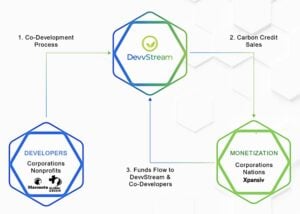
DevvStream Holdings Inc., a publicly traded carbon management and technology company, has taken a bold step into the world of digital assets. The company announced it will use $10 million from its first financing round to buy digital currencies like Bitcoin and Solana. This strategy helps DevvStream’s long-term goal. It aims to use blockchain tech to digitize and grow the global carbon credit market.

The funds come from the first tranche of a much larger $300 million convertible note facility, provided by Helena Partners. DevvStream plans to speed up the growth of tokenized carbon credit systems. They will do this while keeping share dilution low for existing investors. This latest development positions DevvStream at the intersection of sustainability, finance, and technology.

Building a Blockchain Treasury: Why Bitcoin and Solana?

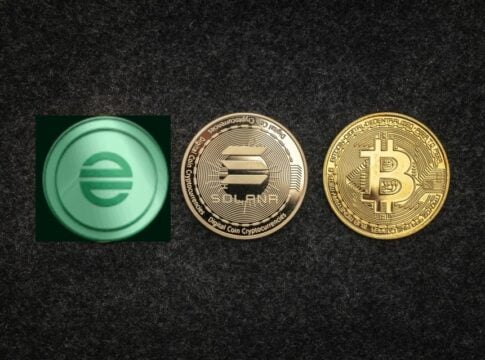
DevvStream’s newly launched crypto treasury will include Bitcoin (BTC), Solana (SOL), and the company’s own DevvE token. Each digital asset plays a different role in the company’s overall strategy.

  • Bitcoin

Bitcoin is being used as a reserve asset. This cryptocurrency is known for its limited supply and wide use. This gives DevvStream a stable and liquid foundation. Its role in the treasury is to provide long-term value. It also acts as a financial cushion, separate from traditional markets.

  • Solana 

Solana, on the other hand, is being used for its technical utility. Known for fast transaction speeds and low fees, Solana’s blockchain provides the flexibility DevvStream needs to power smart contracts and digital token systems. It will play a central role in enabling the real-time creation, exchange, and settlement of tokenized carbon credits.

  • DevvE

Finally, DevvE—the company’s native utility token—will serve as the bridge between environmental assets and blockchain infrastructure. DevvStream plans to use DevvE to create financial tools. These tools will help trade, monitor, and verify carbon credits and other sustainability assets on the blockchain.

These digital assets give DevvStream a varied crypto base. In turn, this base helps ensure financial security and supports platform functionality. The company noted:

“This $300 million facility allows us to improve capital efficiency, reduce dilution, and bring global investors into the carbon ecosystem through a digital gateway. The combination of crypto reserves and real-world asset tokenization represents the next evolution of our capital strategy.”

Tokenizing Carbon Credits and Real-World Environmental Assets

At the core of DevvStream’s strategy is the tokenization of carbon credits and related environmental assets. Tokenization turns real-world assets, like a certified carbon offset or a clean energy project, into digital tokens. These tokens can be issued, traded, and tracked on a blockchain.

Devvstream carbon credit ecosystem

This move is designed to bring transparency, liquidity, and speed to carbon markets, which are criticized for being slow, opaque, and fragmented. DevvStream thinks that by tokenizing these credits, it can help investors. This will improve access, ensure quality and traceability, and lower transaction costs.

The company is not only focused on carbon credits. It is also looking into tokenizing renewable energy infrastructure. This includes solar farms and battery storage systems.

These real-world assets could turn into digital investment products. This change could create new ways to finance clean energy development.

With this, DevvStream is not just making digital currencies; it is also building a new model for sustainable finance. This model links environmental impact with digital market infrastructure.

Trust and Tech: Safeguarding the Digital Green Future

DevvStream has chosen a regulated digital asset custodian. This helps them manage their crypto treasury safely and professionally. It has also partnered with a digital asset adviser to oversee treasury operations and ensure compliance with financial and regulatory standards.

DevvStream’s approach shows it is dedicated to building a strong and secure base for its digital finance strategy. It also helps build trust with investors and partners who may still be cautious about cryptocurrency exposure.

The company’s stock responded positively to the announcement. Shares jumped after the news. This shows that investors trust DevvStream’s plan to mix sustainability with blockchain innovation.

The treasury allocation is just the beginning. DevvStream will use more funds from the $300 million facility. They plan to boost their blockchain capabilities, support new sustainability projects, and launch their full token platform worldwide.

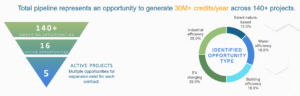
devvstream pipeline and project type
Source: Devvstream

A Glimpse Into the Future Where Climate Goals Meet Crypto Gains

DevvStream’s decision to combine carbon management with digital assets reflects a growing trend in climate finance. More companies see how blockchain can fix old problems in the carbon market. These issues include double counting, poor transparency, and limited access.

As a result, the voluntary carbon market, though valued at around $4 billion in 2024, still operates far below its potential.

The issue of double counting alone may affect up to 30–40% of reported GHG reductions, undermining trust in climate claims. Also, carbon markets are often broken up, unclear, and depend on many brokers and registries.

Blockchain solves these issues with features like:

  • Tamper-proof tracking

  • Real-time updates

  • Automated credit retirement

  • Tokenizing real-world assets, such as carbon offsets

These systems make it easier to trace the origin and ownership of each credit, reduce fraud, and lower transaction costs. They expand access by allowing fractional ownership. This allows more people and companies to take part.

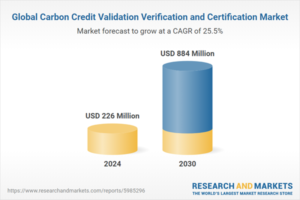
The market for blockchain carbon credit certification is growing fast. It could jump from about $884 million–$1.06 billion by 2030.

global-carbon-credit-validation-verification-and

By combining carbon management with digital assets, DevvStream is tapping into this momentum—helping build a more open, liquid, and trustworthy carbon credit market.

A Digital Pathway to Real Climate Impact

With blockchain, each token can carry data about the origin, verification, and impact of a carbon credit. Investors can see where their money goes and what environmental results it supports. This level of clarity is difficult to achieve in traditional markets but becomes possible with digital tools.

In the long run, this approach could allow sustainability projects—from reforestation efforts to clean transportation systems—to raise capital faster, more efficiently, and with full transparency. It also helps align financial returns with climate goals, providing a win-win for investors and the planet.

DevvStream’s $10 million investment in Bitcoin, Solana, and its own token isn’t just about treasury management. It shows the future direction of sustainable finance.

The company is using digital assets and blockchain. This creates a platform for carbon credits and environmental projects, where they can work quickly, reliably, and openly. With this strategic move, DevvStream is not just participating in the future of clean finance. It is helping to define it.

The post DevvStream Bets $10M on Bitcoin and Solana to Reinvent Carbon Credit Markets appeared first on Carbon Credits.
Amazon (AMZN) Stock Dips Despite Q2 2025 Beat: Cloud Growth Slows, Net-Zero Push Expands

amazon

Amazon reported strong second-quarter results for 2025, exceeding Wall Street expectations on both revenue and earnings. However, a lighter-than-expected guidance for the upcoming quarter and lukewarm growth in its cloud business triggered a sharp stock decline.

Investors, while impressed with the current numbers, are showing concern over the company’s forward momentum, especially in light of increasing competition in the AI-driven cloud space. On the other hand, if we take a peek into its sustainability goals, the retail giants’ emissions are still challenging.

Let’s study the revenue growth and the net-zero plans in the content below:

Amazon Tops Q2 Forecasts with Strong Sales and Profit Jump

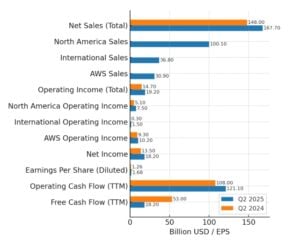
Amazon posted net sales of $167.7 billion, a solid 13% increase from $148 billion in Q2 2024. This beat analyst estimates around $162 billion.
The company also reported:
  • Adjusted earnings per share (EPS) of $1.68, up 33% year-over-year.
  • Operating income came in at $19.2 billion, outpacing analyst predictions of $16.9 billion.

Despite this strong showing. The market now values the company at approximately $2.44 trillion.

amazon revenue
Data Source: Amazon Earnings Press Release

AWS Struggles to Keep Pace in AI Race

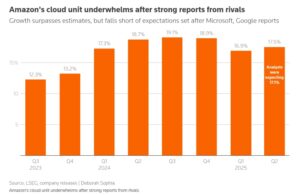
Amazon Web Services (AWS), long the crown jewel of Amazon’s business, grew 17% to $30 billion in revenue. While that’s still solid, it fell just short of expectations ($30.78 billion) and didn’t match the high momentum shown by Microsoft’s Azure and Google Cloud Platform.

amazon AWS
Sourced from Reuters

AMZN Stock Slides but Analysts Still See Upside

Reuters reported that investors are holding Amazon to a higher standard, especially as Microsoft and Google have both shown clear AI-driven revenue jumps in their cloud platforms. While Amazon is also investing heavily in AI, the returns haven’t yet wowed investors.

So far in 2025, Amazon’s stock had gained around 7% leading up to the earnings announcement. But after the company issued weaker-than-expected guidance, some investors pulled back, causing the stock to dip in after-hours trading.

Even so, market sentiment remains mostly positive. Analysts are still confident in the company’s long-term growth and expect the AMZN stock to recover soon. Many have set short-term price targets between $234 and $238 by the end of August 2025.

Meanwhile, full-year 2025 consensus estimates project earnings per share (EPS) of around $6.29. This signals faith in the company’s fundamentals despite short-term uncertainty.

AMZN stock
Source: Yahoo Finance

Future Guidance Adds to Market Jitters

Amazon’s Q3 2025 guidance suggests net sales between $174 billion and $179.5 billion, a projected 10% to 13% increase over Q3 2024. The company also forecasts operating income of $15.5 billion to $20.5 billion, compared with $17.4 billion a year earlier.

Though these are healthy figures, they indicate slowing growth and rising spending. Capital expenditure for 2025 is now expected to exceed $118 billion—well above rivals—fueling concerns over shrinking margins.

Amazon’s Emissions Still a Big Challenge

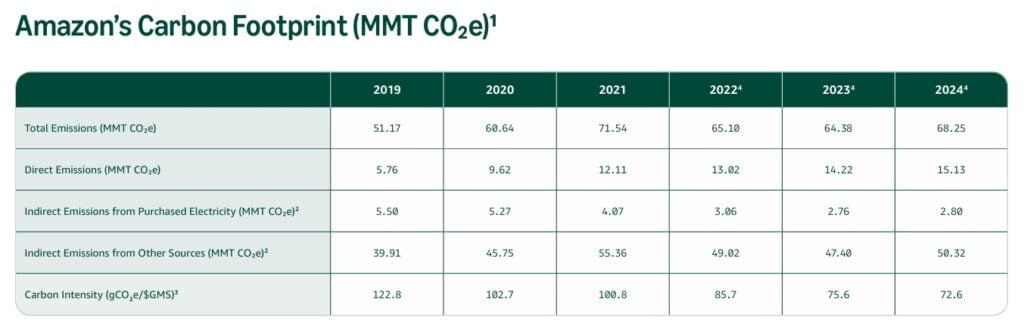
Amazon says it’s working to cut its carbon footprint. The company has reduced its Scope 1 and 2 emissions slightly by utilizing more renewable energy and improving the efficiency of its buildings. These emissions come from its operations and the electricity it buys.

But Scope 3 emissions—which come from suppliers, product shipping, and customer use—are still going up. These emissions make up over 75% of the company’s total carbon output. As the company builds additional data centers and expands its cloud and AI services, these indirect emissions may increase further.

Amazon has promised to reach net-zero carbon by 2040. Still, some experts say the company needs to share more details about these indirect emissions and do more to cut them across its supply chain.

amazon carbon footprint
Source: Amazon

Electrifying Delivery Fleet

Amazon has aggressively ramped up its electric delivery vehicles (EVs).

  • As of mid-2025, the company has delivered 1.5 billion packages using over 31,400 EVs.
  • It also built the largest private charging network in the U.S. with 11,770 chargers across 50 delivery stations.
  • In Europe, it is adding over 200 Mercedes-Benz eActros 600 electric trucks, expected to carry around 338 million packages annually.

Renewable Energy Milestone Reached Early

Amazon pledged to power all its operations with 100% renewable energy by 2025, but achieved this target two years early in 2023. Today, it matches 100% of its global electricity usage with renewables, primarily through wind and solar projects.

AMAZON ENERGY
Source: Amazon

READ MORE: 

Cleaner Fuels and Smarter Shipping

In 2024, the company scaled up its use of cleaner fuels. It used 4.7 million gallons of renewable diesel, compared to just 286,300 gallons the year before. It also bought 3.7 million gallons of blended sustainable aviation fuel to cut emissions from air transport.

It also improved delivery routes. By offering customers smarter shipping options, it saved over 452 million delivery trips and reduced the use of more than 494 million boxes. These changes helped avoid an estimated 335,000 metric tons of carbon emissions in 2024 alone.

Making Packaging and Logistics Greener

Amazon is cutting emissions by bringing fulfillment centers closer to customers, reducing delivery distances and fuel use. It uses more rail transport instead of trucks to lower emissions.

In cities, it relies on on-foot deliveries and electric cargo bikes for short trips as well. This cuts pollution and eases traffic. The company also invests in lighter, recyclable packaging, aiming to have half of its shipments be net-zero carbon by 2030.

Expanding Carbon Removal Projects

While Amazon is cutting emissions through renewable energy and electrification, it’s also backing large-scale carbon removal efforts. These initiatives are vital for tackling the emissions that cannot be completely avoided.

It is investing heavily in nature-based solutions like reforestation, wetland restoration, and soil carbon capture. The company partners with trusted environmental organizations and developers to ensure these projects meet strict environmental and scientific standards.

Additionally, Amazon also funds early-stage technologies focused on direct air capture (DAC) and ocean-based carbon removal. These advanced methods pull CO₂ directly from the air or water and lock it away permanently. The company views these long-term technologies as crucial to scaling carbon removal in the decades ahead.

By building out a global portfolio of carbon removal projects, Amazon is not only addressing its own footprint but also helping grow the carbon market and drive down the cost of climate solutions.

Amazon’s Game-Changing Carbon Credit Platform

Amazon launched a carbon credit platform through its Sustainability Exchange to help suppliers and partners reach their net-zero goals. This new service gives qualified companies access to high-quality carbon credits. These credits come from real projects that either remove CO₂ from the air or prevent its release.

Unlike many carbon marketplaces, Amazon’s platform is selective. It only allows companies that set net-zero targets, measure and report emissions, and commit to cutting carbon in line with climate science.

Driving Real Change Beyond Offsetting

This platform goes beyond simple offsetting. It aims to enable real decarbonization across Amazon’s entire value chain. By offering vetted credits to customers, suppliers, and Climate Pledge members, Amazon unlocks new private funding for effective climate projects.

Over time, this platform could make Amazon a leader in corporate carbon management—not just logistics or cloud services. Plus, it encourages collaboration by providing educational tools, playbooks, and a space for companies to share best practices. This broad approach could speed up the decarbonization of many industries.

As Amazon navigates the twin challenges of AI-driven cloud competition and rising operating costs, its environmental leadership and aggressive long-term planning offer strong fundamentals for future growth.

The post Amazon (AMZN) Stock Dips Despite Q2 2025 Beat: Cloud Growth Slows, Net-Zero Push Expands appeared first on Carbon Credits.
Rolls-Royce Stock Soars with 50% Profit Surge, Strong SMR Partnerships, and Net Zero Drive

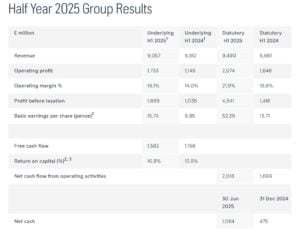
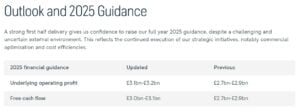
Rolls-Royce reported a 50% jump in underlying operating profit to £1.7 billion in the first half of 2025. The operating margin rose to 19.1%, up from 14% last year. This increase shows the effect of strategic changes, smarter operations, and cost discipline.

  • Revenue grew by 10.8% to £9.06 billion and free cash flow hit £1.58 billion, driven by higher profits and solid performance from long-term service agreements (LTSA).
  • Its market value topped £90 billion for the first time, placing it among the top five firms in the FTSE 100.
Rolls Royce revenue
Source: Rolls-Royce

CEO Tufan Erginbilgic, said:

“Our multi-year transformation continues to deliver. Our actions led to strong first half year results, despite the challenges of the supply chain and tariffs. We are continuing to expand the earnings and cash potential of Rolls-Royce. 

We delivered continued strong operational and strategic progress in the first half of 2025. In Civil Aerospace, we achieved significant time on wing milestones and delivered improved aftermarket profitability. In Power Systems, where we now see further growth potential, we continued to capture profitable growth across data centres and governmental. In addition, Rolls-Royce SMR was selected as the sole provider of the UK’s first small modular reactor programme. We expect Rolls-Royce SMR to be profitable and free cash flow positive by 2030.”

Rolls-Royce Holdings PLC (RYCEY) Stock Performance 

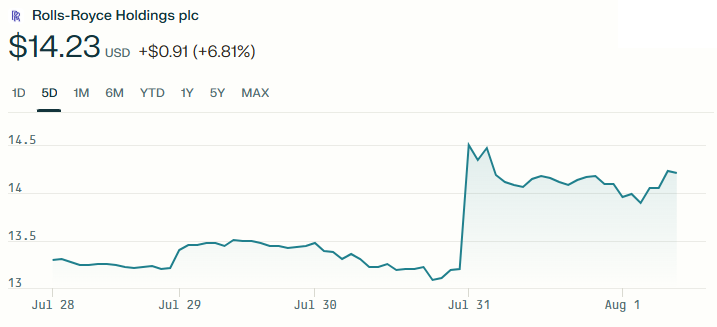
Rolls-Royce Holdings PLC has seen a strong comeback in 2025, following record profits. On July 31, Rolls-Royce reported a significant beat on its first-half operating profit and free cash flow, raising full-year forecasts. The company posted a 50% jump in operating profit to £1.7 billion and increased its guidance for 2025 operating profit to between £3.1 billion and £3.2 billion (up from a prior range of £2.7–£2.9 billion), and free cash flow to £3.0–£3.1 billion.

This strong performance was driven by:

  • Substantial improvements in its civil aerospace business, with higher utilization and engine flying hours surpassing pre-pandemic levels.
  • Growing power systems sales to data centers and government contracts.
  • Robust order intake, particularly for large aircraft engines.
  • Successful delivery on turnaround strategies set by the CEO, including enhanced profitability and margin expansion across divisions.

The jump reflected renewed investor confidence and belief that the company can sustain this growth trajectory. The day’s gain of about 10% made Rolls-Royce one of the top performers in major European indices and resulted in record share prices.

Rolls-Royce share price

Analysts have praised the results. Shore Capital called them “excellent,” noting strong margins in Civil Aerospace. Morgan Stanley mentioned that the company’s guidance might be conservative, given the current momentum.

The firm also pleased investors by announcing an interim dividend of 4.5p per share, payable in September. Additionally, it completed £400 million of its planned £1 billion share buyback, boosting shareholder confidence.

The company raised its full-year forecast, now expecting £3.1 billion to £3.2 billion in profit and £3.0 billion to £3.1 billion in free cash flow.

2025 rolls royce
Source: Rolls-Royce

SMRs Set to Power Rolls-Royce’s Nuclear Ambitions

The company’s clean energy vision centers on its Small Modular Reactor (SMR) program. It is making great progress and aims to be a global leader in SMRs.

Key SMR Developments:

  • UK Government Deal: Rolls-Royce was selected by Great British Energy – Nuclear as the preferred bidder to develop Britain’s first SMRs, supported by £2.5 billion in public funding.

  • Czech Republic Partnership: A partnership with ČEZ Group aims to deploy up to 3GW of clean energy in the Czech Republic, with more opportunities in Central Europe.

  • Growing Nuclear Ties: The UK and Hungary are deepening cooperation, potentially opening more SMR opportunities.

  • Technology Backing: Siemens Energy will supply steam turbines and generators, while Westinghouse is developing nuclear fuel for Rolls-Royce SMRs.

These collaborations enhance technical capabilities, lower costs, and support global SMR deployment.

Research and Supply Chain Push

Rolls-Royce is teaming up with the University of Sheffield’s AMRC. They aim to enhance modular manufacturing methods. This partnership will speed up production and lower costs for SMR.

As a member of the European Industrial Alliance on SMRs, Rolls-Royce collaborates with governments and industry to boost energy security and expand nuclear energy across Europe.

The company plans to form new utility partnerships in Asia and North America. It also aims to expand its supply chain with local engineering partners. There’s potential to link SMRs with energy storage and hydrogen. This could position them as a clean energy backbone for the future.

Rolls-Royce Aims Net Zero by 2050: Real Progress, Not Offsets

Rolls-Royce has made climate leadership a priority. It aims for net zero by 2050, not just in its operations but also across its products.

The company avoids relying on carbon offsets. Instead, it focuses on cutting emissions through innovation, efficient operations, and renewable fuels.

Here’s how it is cutting Scope 1 and 2 emissions from its operations:

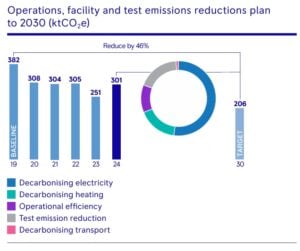
It targets a 46% emissions cut by 2030, based on 2019 levels. The goal is to reach net zero emissions from its operations by 2050. This includes emissions from engine testing, which have increased due to higher development activity.

Rolls-Royce net zero
Source: Rolls-Royce

The company plans to use sustainable aviation fuel (SAF) in tests. They are shifting to clean power sources and installing batteries in locations like Friedrichshafen. Additionally, they are also buying renewable energy and focusing on efficiency improvements.

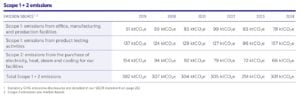
  • In 2024, total Scope 1 and 2 emissions increased to 301 ktCO2e. This rise includes a 55 ktCO2e jump in test-related emissions.
  • However, operational emissions dropped by 5 ktCO2e, a 3% decrease, which indicates progress.
scope emissions Rolls-Royce
Source: Rolls-Royce

Scope 3 Focus: Tackling Value Chain Emissions

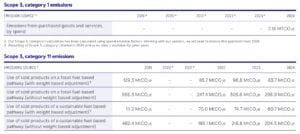
Beyond direct emissions, Rolls-Royce is addressing Scope 3 emissions—especially from the use of its products (category 11) and purchased goods and services (category 1). These are major sources, with purchased goods accounting for 2.18 MtCO2e in 2024, around 2.5% of total emissions.

It is working with suppliers to set net zero targets, partnering with logistics firms for low-emission transport, and promoting resource efficiency to reduce waste.

Rolls-Royce emissions
Source: Rolls-Royce

Innovation for Cleaner Products

Rolls-Royce is investing significantly in future-ready, low-carbon products. They aim to ramp up their R&D spending on net-zero technologies by 75% this year.

Notable milestones include the UltraFan engine, a next-gen demonstrator with high fuel efficiency and SAF compatibility. All current in-production aero engines are certified to run on 100% sustainable aviation fuel. The company’s SMR projects aim to deliver scalable, clean electricity to national grids.

These projects are vital for its net-zero strategy and essential for decarbonizing the heavy industry and global aviation sectors.

All in all, Rolls-Royce demonstrates that climate action and financial growth can be mutually beneficial. From record profits to world-class clean tech investments, Rolls-Royce exemplifies how legacy companies can become climate leaders even without carbon credits. This approach helps create a responsible and profitable future.

The post Rolls-Royce Stock Soars with 50% Profit Surge, Strong SMR Partnerships, and Net Zero Drive appeared first on Carbon Credits.
Microsoft (MSFT) to Get Fusion Power as Helion Energy Kicks Off Orion Plant Construction

fusion

In a major leap toward commercial fusion energy, Washington-based Helion has begun site work on its first fusion power plant, Orion. The move marks a defining moment for both Helion and its key partner, Microsoft.

In 2023, Helion signed the world’s first power purchase agreement (PPA) for fusion energy, committing to supply electricity to Microsoft once the plant is operational. Located in Chelan County, Washington, the site was selected for its easy access to power transmission and its legacy of energy innovation.

This project represents a significant step in Helion’s mission to bring fusion electricity to the grid by 2028. Constellation Energy will serve as the power marketer. Now, with construction efforts underway, Helion is staying on track to meet the 2028 target.

helion fusion
Source: Helion

Helion’s Fusion Breakthrough: A Clean Energy Milestone

Fusion energy—the process that powers the sun—has long been viewed as the ultimate solution to the world’s energy needs. It offers virtually unlimited, clean energy without carbon emissions or long-lived radioactive waste. If Helion succeeds in delivering fusion electricity to the grid, it could mark a paradigm shift in how the world powers itself.

Over the past decade, Helion has built six fusion prototypes and made steady technical progress through rapid iteration and testing. Its sixth machine, Trenta, made history by achieving a fuel temperature of 100 million degrees Celsius—considered the minimum threshold for fusion to become commercially viable.

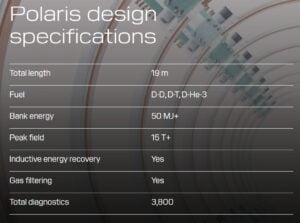
Now, Helion is constructing its seventh and most advanced prototype, Polaris. This machine is expected to go further than any before it: demonstrating not just fusion reactions, but also the first electricity produced directly from fusion.

Polaris: A Critical Step Toward Commercial Fusion

Polaris represents a major step in Helion’s roadmap to build a zero-carbon fusion generator. It will improve upon previous machines in several key ways:

  • Higher Frequency Pulses: Polaris is designed to pulse faster than Trenta, allowing more frequent fusion reactions.
  • Stronger Magnetic Fields: Enhanced magnets will provide improved plasma confinement, essential for sustaining the extreme conditions needed for fusion.
  • Direct Electricity Generation: Unlike traditional fusion designs that rely on steam turbines, Polaris is built to demonstrate direct electricity generation from fusion reactions, a critical innovation for scalable deployment.

If successful, Polaris will become the first fusion machine—public or private—to show that fusion can generate electricity in a compact system. Its success will provide the foundation for Orion, the first commercial-scale plant aiming to deliver fusion electricity to Microsoft and the wider grid.

polaris fusion
Source: Helion Energy

From Permits to Power: Orion Prepares to Energize the Grid

Helion began building the Orion facility on leased land from the Chelan County Public Utility District. The project cleared Washington’s rigorous environmental review process, receiving a Mitigated Determination of Non-Significance (MDNS) under SEPA guidelines.

Since 2023, Helion has actively collaborated with government agencies, Tribal Nations, and local stakeholders to prepare for the construction and operation phases. The company’s transparent approach to permitting and community engagement has helped smooth the path for the project.

After a one-year ramp-up period, the fusion power plant is expected to generate at least 50 megawatts (MW) of electricity. If successful, the Orion project could fast-track fusion’s role in global clean energy supply—years ahead of other industry projections.

Microsoft’s Energy Shift: From Solar to Fusion and Fission

Helion’s fusion energy isn’t the only clean power solution Microsoft is betting on. As the tech giant races to meet its ambitious climate goals to become carbon negative by 2030, it has also turned to traditional nuclear energy. The growing power demands of artificial intelligence (AI) and cloud computing have made constant, reliable energy a top priority.

While wind and solar remain crucial parts of Microsoft’s strategy but their intermittency creates challenges for powering massive data centers around the clock.

That’s where nuclear energy enters the equation. Microsoft has invested in multiple nuclear projects, including a 20-year PPA to purchase power from the restarted Three Mile Island nuclear facility in Pennsylvania. This deal alone will supply over 800MW of carbon-free electricity to Microsoft’s operations starting in 2028.

Microsoft MSFT emissions
Source: Microsoft

AI and the Rising Demand for Energy

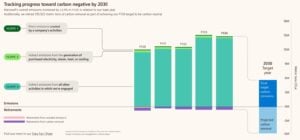
Microsoft’s clean energy push is largely driven by surging electricity needs tied to AI development and cloud infrastructure. Industry analysts expect data center energy use to double by 2028, fueled by generative AI technologies and hyperscale computing. Between 2020 and now, Microsoft’s total energy use rose by 168%, driven by a 71% increase in revenue and significant expansion in its cloud operations.

At the same time, Microsoft’s emissions have gone up by 23.4% compared to its 2020 baseline. While this rise is modest relative to the company’s operational growth, it underscores the difficulty of decarbonizing at scale. Fusion and nuclear energy offer Microsoft a path forward—delivering stable, 24/7 clean electricity that wind and solar alone can’t guarantee.

Supporting Innovation and Clean Energy Leadership

The tech giant is becoming a leader in reshaping the nuclear and fusion energy industry. The company signed its first large-scale nuclear PPA with the Crane Clean Energy Center in 2024. That agreement will enable the restart of an 835MW nuclear plant in Pennsylvania, retired in 2019. The plant’s return will inject new clean energy into the PJM power grid, one of the largest in the U.S. and critical to Microsoft’s East Coast data centers.

By partnering with emerging fusion firms like Helion and supporting small modular reactor (SMR) projects, Microsoft is also fueling innovation in next-generation nuclear technologies. These efforts don’t just benefit Microsoft—they send a strong signal to markets, encouraging other corporations to invest in scalable, zero-carbon power solutions.

In fact, Microsoft’s influence is already visible across the energy sector. Its clean energy strategy is helping revive shuttered nuclear facilities, create local jobs, and guide public policy toward advanced carbon-free solutions.

Economic and Community Benefits

The economic ripple effects of Microsoft’s nuclear partnerships are expected to be substantial. Reviving plants like Three Mile Island will bring billions of dollars in investment and long-term job creation to surrounding communities. These projects also help maintain grid stability as power demand continues to grow.

Moreover, Helion’s Orion project could turn Chelan County into a global showcase for fusion innovation. If Polaris succeeds in producing electricity, Helion would not only lead the private fusion race but also bring global attention to the Pacific Northwest as a clean tech hub.

How Big Tech Is Reshaping the Clean Energy Landscape

Alongside Microsoft, Amazon, Google, and Meta are the hyperscalers driving renewable and nuclear energy adoption. As projected by S&P Global Insights, collectively, these tech giants have amassed more than 84 gigawatts of clean energy capacity across 29 countries. This scale is transforming global corporate energy markets, shifting clean energy from a sustainability perk to a business necessity.

Additionally, Microsoft has also joined influential advocacy groups like the Fusion Industry Association and the U.S. Nuclear Industry Council (USNIC), strengthening its voice in policy and industry discussions around the future of energy.

NUCLEAR

The partnership between Helion and Microsoft is more than a fusion pilot—it’s a turning point for nuclear energy innovation. As the Orion plant moves forward, it could accelerate the arrival of commercial fusion while giving Microsoft a reliable, zero-carbon energy source to support its rapidly growing AI infrastructure.

The post Microsoft (MSFT) to Get Fusion Power as Helion Energy Kicks Off Orion Plant Construction appeared first on Carbon Credits.

Apple (AAPL Stock) Rings Up $94B Q3 Win Fueled by iPhones, AI Push, and Climate Smarts

Apple (AAPL Stock) Rings Up $94B Q3 Win Fueled by iPhones, AI Push, and Climate Smarts

Apple Inc. (NASDAQ: AAPL) delivered a strong third quarter in fiscal 2025 and beat analysts’ expectations. Robust iPhone sales and steady services growth drove the results, while rising AI investments and continued progress toward net-zero emissions highlighted Apple’s dual focus on innovation and sustainability.

Q3 Power Surge: Apple Beats on iPhones and Service

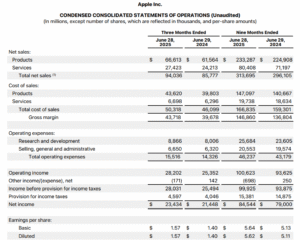
For its fiscal Q3 ended June 28, 2025, Apple reported revenue of over $94 billion, up nearly 10% year-over-year and ahead of analyst expectations. 

The company also posted earnings per share (EPS) of $1.57, beating forecasts of $1.43. Net income came in at approximately $23.4 billion.

iPhone sales surged 13.5%, reaching $44.58 billion, driven by early purchases ahead of possible tariffs. Mac revenue rose to $8.05 billion, surpassing estimates, while iPad sales reached $6.58 billion, slightly below forecasts.

Wearables and accessories sales fell short at $7.4 billion. Meanwhile, services revenue totaled $27.42 billion, marking steady growth. Gross margin stood at 46.5%, slightly above analyst expectations. Overall, financial performance is strong and has mostly beaten expectations. 

Apple financial report q3 2025
Source: Apple Financial Report

Tim Cook, Apple’s CEO remarked:

“Today Apple is proud to report a June quarter revenue record with double-digit growth in iPhone, Mac and Services and growth around the world, in every geographic segment. At WWDC25, we were excited to introduce a beautiful new software design that extends across all of our platforms, and we announced even more great Apple Intelligence features.”

Investors React: Small Stock Bump, Big AI Optimism

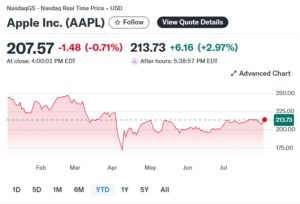
Following the earnings release, Apple’s stock rose slightly in after-hours trading, reflecting investor satisfaction over Q3 2025’s stronger-than-expected iPhone results and service growth. Analysts consider Apple better positioned as it accelerates AI investments and continues to diversify its supply chain.

Still, the stock remains down around 15–16% year to date, lagging behind other major tech companies. Analysts broadly expect potential upside, with many targeting price levels around $235. This is supported by confidence in Apple’s next steps in AI and hardware innovation.

apple stock q3 2025
Source: Yahoo

Scaling Up Services and Supply Chain Smarts

Services revenue, which includes the App Store, iCloud, and Apple Music, continues to be a key growth engine with 13% year-over-year growth. This segment now contributes nearly 29% of total revenue.

Additionally, Apple’s move to shift iPhone production from China to India helped avoid roughly $900 million in tariff exposure. Sales in Greater China recovered, rising to $15.37 billion, while Americas revenue grew 9.3% to $41.2 billion.

AI Investments and Product Evolution

Apple is increasing its focus on artificial intelligence. The company plans to make a more personal Siri. It is also investing in on-device intelligence. This will improve user privacy and performance.

Moreover, research and development spending reached an estimated $8.8 billion, about $800 million more than the same period last year.

Some experts think Apple is behind rivals like Microsoft and Google in AI. However, others back its focus on privacy and integration with products.

Apple’s strategy is to add AI features to its current ecosystem. Instead of launching separate products, they enhance what they already have.

Apple’s Climate Strategy: Net Zero, Circular Design, and Carbon Removal

Apple has committed to becoming carbon neutral across its entire value chain by 2030. It has achieved carbon neutrality for its corporate operations. Now, it aims to cut Scope 3 emissions, which account for most of its total footprint.

Apple net zero goals
Source: Apple

To get there, Apple is working with over 300 suppliers that now use 100% renewable energy for Apple production.

Recent Apple Watch models were the first to be labeled as carbon neutral, and Apple has also eliminated most plastics from its packaging.

Apple is also redesigning its products with the climate in mind. The company is steadily using more recycled materials. This is especially true for device enclosures and internal parts. These include aluminum, rare-earth elements, and recycled gold in important parts.

Many recent Mac and iPad models are made with 100% recycled aluminum, and newer iPhones now include recycled rare earth elements in key parts.

Packaging is also changing. Apple has switched most plastic in its boxes to fiber-based options. This change cuts waste and boosts recyclability.

In 2023, the company introduced its first carbon-neutral products, starting with select models of the Apple Watch. These products combined a lower-emission design with clean energy use and carbon removal investments.

Energy efficiency is another priority. Apple’s hardware is designed to consume less electricity during everyday use. This not only benefits the environment but also saves energy costs for consumers.

In terms of emissions Apple cannot yet eliminate, the company supports carbon removal initiatives, including:

  • reforestation,
  • wetland restoration, and
  • advanced tech, which features direct air capture and enhanced rock weathering.

The company publishes a Carbon Removal Progress Report to keep stakeholders informed of its progress.

Apple remains highly rated in ESG assessments and is aligned with the Science Based Targets initiative. It regularly receives top scores from groups like CDP and MSCI.

Final Take: Stable Growth Meets Purpose-Driven Innovation

Apple’s Q3 2025 performance shows its ability to deliver strong financial results while advancing in new areas like AI and sustainability. Robust iPhone sales, healthy service growth, and tight cost control helped Apple exceed expectations.

At the same time, its long-term climate commitments and innovation in design, materials, and carbon removal reinforce the company’s broader mission.

As Apple prepares for future product launches and further develops its AI ecosystem, its ability to balance profitability, innovation, and environmental responsibility will remain central to its identity—and its value to investors.

The post Apple (AAPL Stock) Rings Up $94B Q3 Win Fueled by iPhones, AI Push, and Climate Smarts appeared first on Carbon Credits.