How Princeton’s Break with BP Exposed the Hidden Influence of Fossil Fuel Money on Universities

PRINCETON

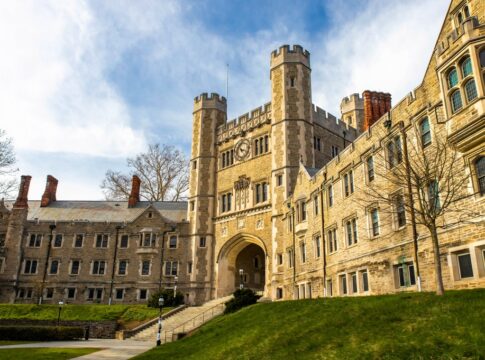
For a quarter of a century, Princeton University partnered with one of the world’s biggest oil and gas giants, BP. The alliance poured money into the University’s Carbon Mitigation Initiative (CMI), one of its most prominent climate research programs. On the surface, the deal brought prestige and resources. In reality, critics argue that it delayed the urgent work of phasing out fossil fuels.

Now, the partnership is ending, as reported by The Daily Princetonian. When the current contract expires in 2025, BP will no longer fund CMI. Both sides insist it’s a mutual decision, but the move comes after years of growing criticism, student protests, and investigations that raised serious questions about how fossil fuel companies use academia to protect their business model.

A Deal That Shaped Climate Research

The report further explained: when Princeton struck its deal with BP back in 2000, it was framed as a groundbreaking collaboration. BP’s funding supported research into carbon capture, storage, alternative fuels, and other mitigation strategies.

CMI quickly became one of the University’s flagship institutes, producing influential studies like the Net Zero America report, which mapped possible pathways for the U.S. to achieve net zero by 2050.

Of the five modeled scenarios, four kept fossil fuels in play through mid-century, relying heavily on carbon capture to offset emissions. Critics later pointed out that this conclusion closely mirrored BP’s corporate strategy: continue pumping oil and gas while showcasing carbon capture as a lifeline.

At the time, renewable energy was less developed and more expensive than today. But as wind, solar, geothermal, and battery technologies advanced rapidly, the wisdom of pouring billions into carbon capture began to look like a stalling tactic.

Prestige for BP, Problems for Princeton

For BP, the partnership was a communications jackpot. Having Princeton’s name attached to its climate efforts gave the company a veneer of credibility, even as it expanded drilling and exploration. Internal communications later revealed how BP staff highlighted Princeton’s research to bolster its case for carbon capture and hydrogen in U.S. policy circles.

For Princeton, the financial support was significant, but the cost was reputational. As the climate crisis worsened, the University found itself increasingly criticized for giving BP legitimacy. By 2022, Princeton announced it would divest from fossil fuels, yet the BP relationship remained—an uncomfortable contradiction for a campus under growing activist pressure.

Net Zero: Whose Roadmap?

The partnership’s most contested legacy is the Net Zero America report. Funded by BP and Exxon, the study leaned heavily on carbon capture and fossil fuels. Just five months later, the International Energy Agency (IEA) issued its own net-zero roadmap, independent of fossil fuel influence.

The IEA’s message was blunt: no new investments in fossil fuel projects could be made if the world hoped to stay within 1.5°C of warming. The sharp contrast between Princeton’s BP-backed report and the IEA’s independent findings laid bare the risks of corporate-funded science.

Investigations Pull Back the Curtain

The true extent of BP’s influence came into sharper focus in 2024. A congressional investigation concluded that BP leveraged its Princeton ties to promote policies that aligned with its long-term strategy rather than committing to large-scale renewable investments.

The investigation found that BP not only shaped the narrative around carbon capture but also used the partnership to influence how energy and emissions policies were discussed in Washington. For student groups like Sunrise Princeton and Divest Princeton, this confirmed what they had warned for years: the partnership was less about science and more about extending the fossil fuel era.

Is Fossil Fuel Money Too Toxic for Academia?

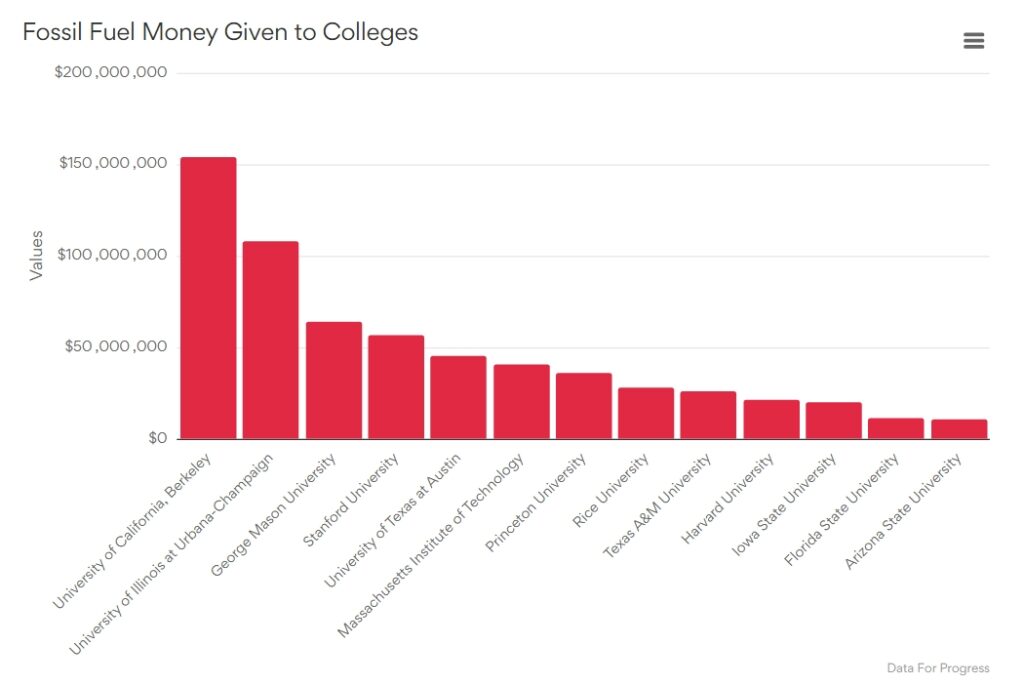
Princeton is hardly alone. We discovered that a 2023 report by Data for Progress and Fossil Free Research revealed that fossil fuel companies funneled more than $675 million into 27 U.S. universities between 2010 and 2020. The University of California, Berkeley topped the list with $154 million, followed by the University of Illinois at Urbana-Champaign ($108 million) and George Mason University ($64 million).

The debate over whether universities should accept fossil fuel funding is complex. Supporters argue that oil and gas companies bring valuable expertise, particularly in areas like carbon storage, green hydrogen, or sustainable aviation fuel. They say tapping into that knowledge can accelerate decarbonization.

Critics counter that these partnerships are inherently compromised. Any research tied to fossil fuel dollars risks being skewed toward preserving oil and gas interests. The history of tobacco industry funding of medical research is often cited as a warning: money from industries whose business models depend on harmful practices should not dictate academic inquiry.

What’s clear is that fossil fuel money buys more than just lab equipment—it buys influence, legitimacy, and access to future policymakers. That’s a trade-off many now say is too high a price to pay.

FOSSIL fuel
Source: Data for Progress

From Princeton to Harvard: BP’s Quiet Academic Powerplay

BP’s influence extended beyond Princeton. Documents show the company paid between $2.1 million and $2.6 million to CMI between 2012 and 2017. It also funded programs at Harvard and Tufts, contributing hundreds of thousands annually to policy-focused research. Harvard’s Kennedy School and Tufts’s Fletcher School, both heavily tied to government policymaking, received funds earmarked for climate policy labs.

The report noted that these partnerships gave BP access not just to research, but also to future policymakers—a revolving door that helped the company shape long-term political outcomes.

Princeton’s Climate Work Seeks New Lifelines

The end of BP’s sponsorship comes as Princeton faces broader challenges in securing climate research funding. In mid-2024, the U.S. Department of Commerce cut $4 million earmarked for University climate programs, claiming they no longer aligned with federal priorities.

Professor Stephen Pacala, CMI’s director, acknowledged that the termination of BP’s support will reduce funding for some projects and end the annual BP-Princeton conference, but he emphasized that the work will continue with other backers. Professor Jonathan Levine, a lead investigator, echoed that sentiment, noting that the research pillars will remain intact but under new funding models.

Student Demands for Real Leadership

With BP now stepping back, Princeton students and climate activists see an opening for change. Divest Princeton has called on the University to:

  • Cut all ties with fossil fuel companies.

  • Offer pension plans free of fossil fuel exposure.

  • Introduce an undergraduate climate crisis course requirement.

  • Make campus operations a model of sustainability, from dining halls to reunions.

  • Acknowledge and address harms inflicted on frontline communities impacted by fossil fuels.

To them, Princeton has lagged on sustainability, and its long partnership with BP represents decades of lost opportunity. Instead of backing bold renewable solutions already proven at scale—solar, wind, geothermal, and battery storage—Princeton, they argue, gave BP the cover it needed to keep selling fossil fuels.

A Chance for Princeton to Reset

The end of Princeton’s BP partnership represents more than just the expiration of a contract. It’s a moment of reckoning for the University, and a chance to redefine its role in the global energy transition.

Princeton could choose to double down on independent, transparent climate research that focuses on accelerating renewable deployment, scaling storage, and building resilient, low-carbon systems. It could use its prestige not to give cover to fossil fuel interests, but to lead the charge toward a sustainable future.

Whether Princeton seizes this opportunity or clings to the legacy of a 25-year deal that many see as a costly mistake. Nonetheless, it will send a powerful signal about the role of higher education in solving the climate crisis.

The post How Princeton’s Break with BP Exposed the Hidden Influence of Fossil Fuel Money on Universities appeared first on Carbon Credits.

The AI Energy War: How China’s Solar and Nuclear Outshine the U.S.

China is rapidly changing the global energy landscape. In just a few years, the country has boosted its renewable and nuclear energy capacity. This growth not only surpasses much of the world but also sets the stage for future industrial growth.

China’s focus on clean energy is making it the top choice for the digital age. This comes as AI, robotics, and large data centers use huge amounts of power.

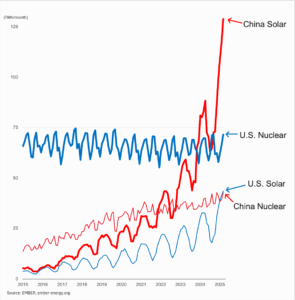
Recent charts show clear momentum: China’s solar output now exceeds U.S. nuclear generation. Also, its nuclear expansion is the largest globally. These developments are not accidental. They come from careful planning, state funding, and a choice to lead in clean energy and related industries.

China’s Solar Boom Surpasses U.S. Nuclear

China’s solar industry has experienced an explosive rise. In early 2025, monthly solar generation surged past 125 terawatt-hours (TWh)—a more than fivefold increase since 2018. For perspective, this figure is now higher than the steady 65–75 TWh per month produced by the entire U.S. nuclear fleet.

China solar and nuclear
Source: https://x.com/Laurie_Garrett

This is a symbolic turning point. For decades, nuclear power was the gold standard for large-scale, carbon-free electricity. Today, China’s solar farms produce more clean power on a monthly basis than America’s entire nuclear sector. The gap is expected to widen, as China continues adding record-breaking solar capacity each year.

Solar growth has been so steep that it is no longer just about meeting household or industrial demand. China is producing extra electricity. This allows it to power energy-demanding technologies like AI, cloud services, and electric vehicles. This “overbuilding” strategy ensures that when demand spikes, the grid has capacity ready.

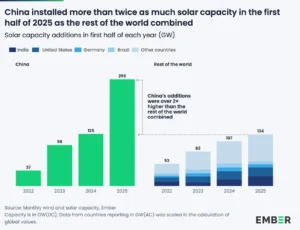
In the first half of 2025, China’s solar installations more than doubled from a year earlier. This surge meant China added over twice the solar capacity of all other countries combined. The country now accounts for 67% of global installations, up from 54% in the same period of 2024.

China solar capacity H1 2025 Ember
Source: Ember

Two Strategies, Two Futures: Beijing vs. Washington

A side-by-side comparison of energy goals shows just how far apart the two countries are in their approaches.

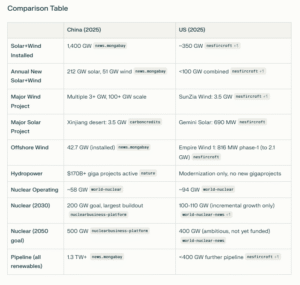
  • Solar and Wind Capacity (2025): China is on track for 1,400 GW, while the U.S. will reach only about 350 GW.
  • New Additions in 2025: China plans to add 212 GW of solar and 51 GW of wind, compared to less than 100 GW combined in the U.S.
  • Mega Projects: China is developing multi-gigawatt solar bases in deserts and multiple 100+ GW wind farms. The U.S.’s largest solar project—Gemini in Nevada—is just 690 MW, or less than 0.7 GW.
  • Offshore Wind: China already has 42.7 GW installed, compared with the U.S.’s Empire Wind project (816 MW phase 1, with a potential expansion to 2.1 GW).

China vs US clean energy capacity

The comparison reveals a structural difference. China views clean energy as national infrastructure, central to its industrial policy. The U.S., meanwhile, relies more heavily on market incentives and tax credits, which can shift with each administration.

Nuclear Power: The Long Game 

China’s clean energy dominance is not limited to solar and wind. Nuclear power is becoming a core pillar of its long-term strategy.

As of 2025, China operates about 58 GW of nuclear power capacity, compared to 94 GW in the United States. At first glance, this seems like a smaller footprint, but the forward-looking numbers tell a different story.

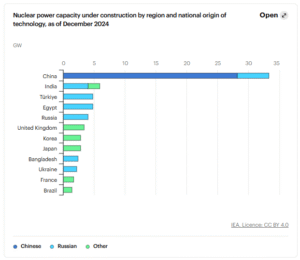
China has more than 30 GW of nuclear capacity under construction, representing over half of the world’s current nuclear buildout. By comparison, U.S. nuclear growth is limited to incremental projects, with little in the way of large-scale expansion.

China nuclear capacity
Source: IEA

Looking ahead:

  • 2030 Goal: China is targeting 200 GW of nuclear, while U.S. projections range from 100–110 GW.
  • 2050 Vision: China aims for 500 GW of nuclear capacity, compared to the U.S.’s ambitious but unfunded target of 400 GW.

Nuclear offers China two critical advantages. First, it provides reliable baseload electricity, balancing out the intermittency of solar and wind. It also provides a secure, carbon-free power supply. This is crucial for industries that need constant electricity, like AI supercomputing, semiconductor fabs, and robotics manufacturing.

Mega Projects That Redraw the Energy Map

China’s energy expansion is not just about adding capacity; it’s about reshaping the global map of mega energy projects. Some of the most ambitious include:

  • Xinjiang Desert Solar Farm:
    A 3.5 GW solar base, one of the largest in the world, leveraging the region’s vast open land and high sunlight exposure.
  • Hundred-Gigawatt Wind Clusters:
    Multiple projects, each scaling over 100 GW, dwarf anything currently planned in other countries.
  • Hydropower Expansion:
    With over $170 billion invested, China is pursuing new gigaprojects, unlike the U.S., which is focused only on modernizing existing dams.

These projects are not built in isolation. They connect to ultra-high-voltage transmission lines, ensuring that clean electricity from remote areas flows to coastal cities, industrial parks, and increasingly, to massive data centers.

Energy and AI: The Hidden Race Behind Algorithms

The global AI race is about algorithms and chips as well as energy. Training large-scale AI models requires massive amounts of electricity. Data centers using these systems now consume power like small countries. By the end of this decade, their demand is set to triple.

China’s decision to overbuild renewables and expand nuclear capacity is directly linked to this future. By ensuring a surplus of clean, low-cost energy, China is preparing to host the next generation of AI clusters, robotics hubs, and cloud infrastructure.

U.S. Policy Uncertainty: A Strategic Weakness

While China pushes ahead, U.S. clean energy growth faces obstacles. Policy shifts and partisan battles have slowed momentum. Proposals to roll back tax credits or defund renewable energy research could reduce investor confidence and stall growth.

As one observer, Laurie Garrett, noted:

“By blocking and de-funding alternative energy R&D and tax incentives for use of solar, wind, nuclear and other renewables, Trump is handing the future on a gold platter to China.”

This concern is not just about climate. It’s about competitiveness. If the U.S. can’t boost energy capacity to meet growing AI and industrial needs, it may lose its leadership in key sectors. These sectors will shape global influence in the coming decades.

US energy capacity additions, retirements by fuel type

Clean Energy as the New Industrial Edge

China’s renewable and nuclear surge is reshaping the balance of global power. With solar generation now surpassing U.S. nuclear, nuclear projects expanding faster than anywhere else, and gigaprojects rising across deserts, mountains, and coastlines, China is ensuring it has the energy backbone for the AI-driven future.

The U.S. still retains advantages in innovation, advanced nuclear designs, and private-sector dynamism. But without consistent policy support and accelerated project deployment, it risks falling behind.

Countries that control abundant, affordable, and carbon-free electricity will lead in AI, robotics, electric vehicles, and the digital economy. China seems determined to be that country.

The post The AI Energy War: How China’s Solar and Nuclear Outshine the U.S. appeared first on Carbon Credits.

Netflix (NFLX Stock) Partners with American Forest Foundation on Carbon Credits: A Step Toward Its Net-Zero Goal

Netflix Partners with AFF on Carbon Credits: A Step Toward Its Net-Zero Goal

Netflix (NASDAQ: NFLX) has taken another step in its climate strategy by signing a long-term carbon credit deal with the American Forest Foundation (AFF). The agreement backs tree planting and forest restoration in the U.S. South. It also boosts Netflix’s efforts to reduce emissions throughout its operations.

The deal shows a shift in the voluntary carbon market(VCM). Companies now want high-quality, verifiable credits that offer social and environmental benefits.

Building Forests, Supporting Landowners

Through AFF’s Family Forests program, Netflix will help convert farmland into new forests. The partnership follows a milestone-based financing model. Netflix gives partial funding as acres are planted and trees grow. The rest is paid once the carbon credits are verified.

The project already covers about 2,500 acres with 1.4 million trees planted and has directed $2 million in payments to landowners. By 2032, AFF aims to expand the program to 75,000 acres, generating an estimated 4.8 million carbon credits. These credits represent millions of tonnes of carbon dioxide captured and stored in forests over decades.

This program helps rural economies by creating new income for family landowners. It also supports biodiversity, water quality, and soil restoration. In a carbon market under increasing scrutiny, such local, transparent projects align with the Core Carbon Principles set by the Integrity Council for Voluntary Carbon Markets.

More Than Tree Planting: The Power of ARR

ARR projects help restore degraded land and increase forest cover. They lock away carbon and support biodiversity.

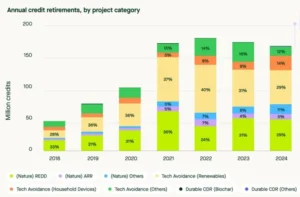
These projects represent one of the fastest-growing forest carbon project types in the VCM, with 346 registered ARR projects having issued over 150 million tons of CO2 credits. By 2030, ARR issuances could reach 100 million tons annually. This makes them the second largest project subtype within the VCM.

ARR carbon credit retirement
Source: Sylvera

Studies suggest reforesting suitable areas worldwide could remove up to 3–10 gigatons of CO₂ annually by 2050. In the U.S., ARR projects have captured tens of millions of tonnes of CO₂e. Companies like Microsoft, Apple, and Netflix are increasingly investing in forest-based credits, which boosts momentum.

ARR also provides co-benefits such as cleaner water, soil restoration, and community engagement. For Netflix, this deal is key to its net-zero and ESG strategy.

Net-Zero on Screen: Inside Netflix’s ESG Strategy

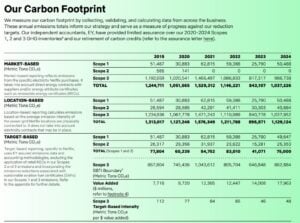
Netflix has sharpened its climate strategy, with updated emissions data from its 2024 ESG report providing a clearer picture of its environmental footprint. The company reported total greenhouse gas (GHG) emissions of 1,037,226 metric tons of CO₂e in 2024, measured under the market-based method. This figure includes:

  • Scope 1: 50,488 tCO₂e (direct emissions from facilities, vehicles, and equipment).

  • Scope 2: 0 tCO₂e (purchased electricity, reported as zero under market-based accounting due to renewable energy sourcing).

  • Scope 3: 986,738 tCO₂e (upstream and downstream emissions, largely from cloud services, content production, and supply chains).

Netflix carbon footprint ghg emissions 2024
Source: Netflix ESG Report

This marked a 23% increase from 2023, when emissions totaled 843,107 tCO₂e. Much of the rise was attributed to higher production activity and expanded content delivery across global markets.

Netflix shares a second set of emissions figures. These come from its Science-Based Targets initiative (SBTi). This framework has stricter rules for counting emissions. Under this method, Scope 1 and 2 totaled 75,000 tCO₂e in 2024, while Scope 3 reached 862,884 tCO₂e. These metrics form the baseline for Netflix’s near-term reduction goals.

  • Netflix confirmed its Science-Based Target. It aims for a 46% cut in Scope 1 and 2 emissions by 2030, using 2019 as a baseline. Also, it plans a 27.5% reduction in Scope 3 emissions by 2030.

Netflix Climate Transition Plan
Source: Netflix

To get there, Netflix is pursuing a “reduce, retain, and remove” strategy. The focus includes:

  • Reduce: Cutting energy use in production, optimizing streaming efficiency, and working with cloud providers to source renewables.

  • Retain: Using renewable energy credits to ensure 100% renewable electricity, which it already reports under Scope 2.

  • Remove: Investing in natural climate solutions and verified carbon removal projects to offset residual emissions.

Netflix has funded reforestation and forest management projects. These efforts align with its new deal with the American Forest Foundation. It is also piloting partnerships to support carbon removal technologies.

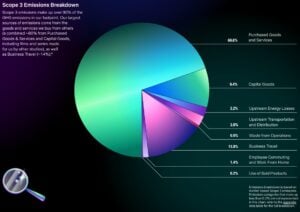
The streaming giant tracks emissions intensity, measured as tCO₂e per revenue unit. This helps ensure that climate progress matches business growth. The company notes that reducing Scope 3 remains its biggest challenge, as these emissions account for more than 95% of its total footprint.

Netflix scope 3 emissions
Source: Netflix

Carbon Credits in Action: Positioning Ahead of Demand

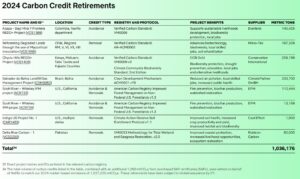
Netflix also relies on carbon credits as part of its “retain and remove” strategy to reach its net-zero target. In 2024, the company purchased and retired 1,036,176 metric tons of CO₂ equivalent in high-quality carbon credits.

These credits came from various nature projects like reforestation, better forest management, and mangrove restoration. They also include tech-based methods that capture and store carbon. Netflix uses these credits after cutting operational emissions. They focus on projects that offer clear carbon removal and help the community.

netflix carbon credit retirements 2024
Source: Netflix

The VCM has grown into a multibillion-dollar sector. In 2024, its value was about $2.5 billion. By 2030, it could jump to $20–45 billion. This will depend on corporate demand and regulatory support.

Nature-based solutions, such as forestry, make up 40–60% of traded credits. Carbon prices usually fall between $15 and $25 per tonne of CO₂.

High-quality credits linked to recent vintages usually have strong verification. They often include co-benefits like biodiversity or community development, which can raise their prices. In contrast, older credits or less verifiable renewable energy offsets are valued much lower, sometimes under $10 per tonne.

Netflix’s decision to invest in AFF’s afforestation projects reflects this market reality. By securing 4.8 million future credits, the company positions itself ahead of growing demand and potential supply shortages. It also signals confidence in domestic forestry as a reliable and socially beneficial source of removals.

American Forest Foundation’s Nature-Based Solutions

The American Forest Foundation is dedicated to supporting family forest owners across the United States. Small private forests make up nearly 39% of U.S. forestland, yet many landowners face barriers to managing them for climate benefits.

AFF’s programs, including the Family Forest Carbon Program (FFCP) and the Fields & Forests initiative, help landowners adopt sustainable practices like reforestation, forest management, and climate-smart planting. These efforts improve carbon sequestration, wildlife habitat, and rural economies.

With this expanded support, AFF is positioned to accelerate enrollment and ensure forestry-based carbon credits deliver real, lasting climate impact. This raises important questions about how the partnership shapes both landowner participation and the integrity of carbon credits.

AFF provided insights in an exclusive interview with the CarbonCredits team.

Q: “How does the partnership with Netflix change the scale and speed at which AFF can expand its Family Forests program, and what impact do you expect this will have on U.S. landowners over the next decade?”

A: Netflix’s investment will catalyze and launch the first 6,000 acres of Fields & Forests, and their funding will support essential research & development, outreach, and practice improvements, helping us scale to 75,000 acres enrolled over the next decade.

Additionally, Netflix’s long-term investment helps Fields & Forests build trust with landowners, a critical component in meeting our long-term enrollment goals. Engaging and building relationships with small-acreage landowners takes time, and one question landowners often have is whether the program will be there for the long haul. 

Landowners enrolled in Field & Forests are making a major decision that will impact them and their heirs for decades, and they want to know that we are dependable partners in the long-term. This deal provides landowners with that assurance. 

Q. “Given growing scrutiny of forestry-based offsets, what measures is AFF taking with Netflix to ensure these carbon credits remain high-integrity, permanent, and resilient against risks like wildfires or pests?”

A: AFF has been working for years, alongside a number of partners, to improve the way that the impacts of forest carbon projects are measured, and to ensure that the atmosphere feels a difference from this work.

We helped develop the use of dynamic baselines in forest carbon accounting, leading to the creation of VM 0047, used in Fields & Forests and now the established gold standard for ARR projects. The dynamic baseline compares the carbon sequestered on land enrolled in a program to highly comparable unenrolled forests, isolating the program as the key intervention that can be credited with creating the carbon benefit.

A Blueprint for Corporate Action

Netflix’s partnership with AFF shows how corporations can combine climate commitments with community benefits. By investing in U.S. forests, the company addresses both carbon reduction and rural economic development. This dual focus could serve as a model for future offset deals, more so as stakeholders want more impact from corporate ESG strategies.

If AFF meets its targets, the program will capture millions of tonnes of CO₂ and set a standard for high-quality nature-based credits. For Netflix, the credits will support its net-zero goal while strengthening its ESG narrative for investors and subscribers. Its recent step in the evolving carbon market highlights the value of long-term partnerships. These collaborations can provide climate credibility and help withstand supply challenges and growing expectations.

The post Netflix (NFLX Stock) Partners with American Forest Foundation on Carbon Credits: A Step Toward Its Net-Zero Goal appeared first on Carbon Credits.

American Airlines (AAL Stock) Posts Strong Passenger Growth Ahead of Holiday Travel, Bets Big on SAF Future

american

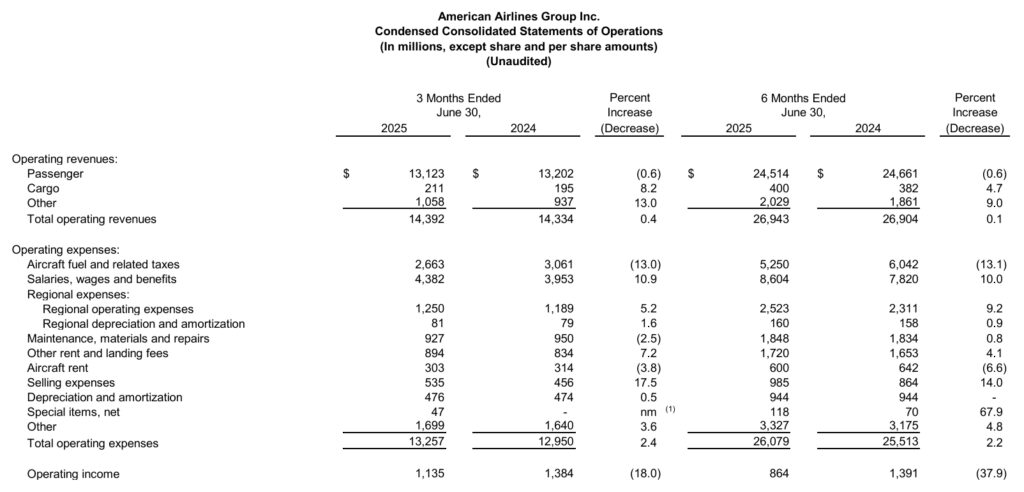
American Airlines (AAL Stock) entered the busy summer travel season with clear momentum. The carrier posted record Q2 2025 revenues of $14.4 billion, a 5% jump in international passenger unit revenue, with especially strong demand across the Atlantic. Its operating margin climbed to 8%, while earnings per share of $0.95 beat Wall Street expectations. AAL is also giving a strong net-zero push with significant investment in SAF.

Let’s deep dive into its revenue and its sustainability goals below.

American Airlines’ Passenger Growth Gives Earnings a Lift

The earnings release showed that premium cabins led the charge, with families, leisure travelers, and business flyers paying up for long-haul comfort. The airline also leaned into its AAdvantage loyalty program, which grew 7% in 2025. Upticks in co-branded credit card use and new perks like instant upgrades helped drive repeat bookings.

Together, these gains signaled more than just post-pandemic recovery—they showed targeted growth in high-margin categories.

American Airlines earnings
Source: American Airlines

Holiday Travel Tailwinds

Heading into the year-end holidays, American is adding capacity both at home and abroad. Routes to resilient leisure destinations are expanding, while premium travel remains a strong revenue engine. The airline is betting that higher engagement and a growing loyalty base will keep its planes full during the holiday surge.

Yet, investors are cautious. AAL shares trade at $13.39, nearly 28% below their 2025 peak of $18.66. AAL stock has been volatile, with 22 swings of more than 5% this year alone. Analysts maintain a neutral outlook, with a median 12-month price target of $13.55, suggesting limited upside unless cost pressures ease.

AAL stock
Source: Yahoo Finance

Q3 Forecast: Clear Skies or Turbulence Ahead?

Despite Q2 strength, management offered a more sober Q3 forecast. The company expects a loss per share between $0.10 and $0.60, missing analyst profit estimates. That guidance reflects the industry’s most stubborn challenges:

  • Fuel volatility – oil prices are holding around $86 per barrel.
  • Labor pressures – wage hikes, including a 10% pilot raise, are cutting into margins.
  • Tariff and macro risks – global trade uncertainties remain a drag.

Margins for Q3 are projected between -1% and +2%. At the same time, costs per available seat mile may climb another 2.5–4.5% year-on-year. Pilot shortages and weather disruptions have also played their part, denting operational efficiency.

Still, the company is leaning on its $12 billion liquidity buffer to manage volatility. With the industry facing similar headwinds, investors will watch closely to see how well the airline balances growth with cost control.

A Different Flight Path: American Airlines 2050 Net Zero Goals

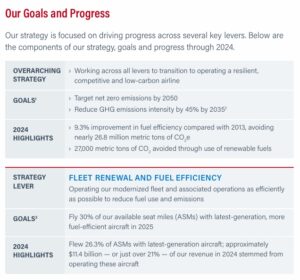
While financials dominate headlines, American Airlines is also pushing ahead on climate commitments. Aviation remains one of the hardest sectors to decarbonize, but the carrier has tied its long-term competitiveness to a net-zero emissions goal by 2050. Intermediate targets for 2030 and 2035 add pressure to deliver progress sooner.

Decarbonizing air travel requires public-private collaboration, innovation, and policy support. However, the company is investing heavily in efficiency, sustainable aviation fuel (SAF), and next-generation aircraft within its operations.

Capital Investments with Climate Benefits

In 2024, roughly 55% of American’s capital spending supported both profitability and decarbonization. That included billions invested in new aircraft, fuel-saving initiatives, and fleet modernization. Although deliveries slowed in 2024 due to supply chain delays, the company expects to take delivery of more efficient aircraft in 2025.

Next-generation aircraft is the key to the airline’s climate playbook.

  • It became the largest airline to sign a conditional purchase agreement for 100 ZeroAvia hydrogen-electric engines. They can power regional jets with zero emissions beyond water vapor.
  • The company aims to induct hydrogen-powered aircraft by 2032 or earlier.
American airlines AAL
Source: AAL

Betting Big on Sustainable Aviation Fuel

SAF is widely regarded as the most critical near-term lever for reducing aviation’s carbon footprint. Compared to conventional jet fuel, SAF can cut life-cycle emissions by up to 85%. But supply remains limited, and high costs are slowing adoption.

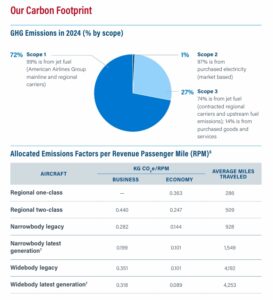
It aims to replace 10% of its jet fuel use with SAF by 2030, which would avoid about 3.5 million metric tons of CO2. In 2024, the airline used 2.9 million gallons of SAF, a modest 9.7% increase from 2023 but still under 0.1% of total fuel use.

It has signed offtake deals to scale SAF. They include

  • Up to 10 million gallons from Valero by mid-2026.
  • Agreement with Infinium, an e-fuels producer, with deliveries expected as early as 2027.

The company also became a founding member of the SAF Coalition, which lobbies for federal incentives to make SAF cost-competitive.

American applies strict sourcing principles to its SAF purchases, requiring at least a 50% life-cycle emissions reduction, full feedstock impact assessments, and sustainability certifications.

AMERICAL AIRLINES
Source: AAL

Airspace Efficiency

Beyond fuel, American is working with policymakers to modernize airspace management. Better flight planning and optimized routing reduce emissions while boosting safety and on-time performance.

In 2024, the airline rolled out a flight planning optimization tool and equipped its A321 fleet with ADS-B In technology, allowing pilots to adjust routes in real-time for efficiency. These upgrades enhance both operational reliability and sustainability.

Carbon Markets as a Backstop

American Airlines also participates in voluntary carbon markets to neutralize residual emissions. The company is exploring offsets and removals as complementary tools to in-sector solutions.

Last year, it onboarded new digital tools to help corporate customers meet their own decarbonization goals, signaling growing demand for carbon-aligned travel options.

Momentum vs. Risk: Can AAL Keep Flying High?

For shareholders, AAL stock presents a mix of opportunity and risk. The airline is benefiting from record revenues, stronger loyalty engagement, and solid demand for premium travel. Yet, rising costs, $38 billion in debt, and the heavy price of climate transition investments are weighing on its outlook.

With a price-to-sales ratio of 0.16 compared to the industry average of 0.69, AAL appears undervalued. Still, challenges like wage pressures and fuel volatility temper bullish sentiment. Most analysts recommend patience, noting that future gains will hinge on execution and broader market conditions.

Looking ahead, American Airlines has shown it can soar when demand is strong, but turbulence is likely in 2025. The airline is balancing earnings volatility with billions committed to its net-zero pathway. Its ability to manage profitability while pushing forward on decarbonization will shape its role as both a leading U.S. carrier and a case study in how aviation adapts to market and climate pressures.

The post American Airlines (AAL Stock) Posts Strong Passenger Growth Ahead of Holiday Travel, Bets Big on SAF Future appeared first on Carbon Credits.
ASEAN at COP30: How Malaysia Pushes Carbon Finance and Heritage Parks to the Forefront of Climate Action

ASEAN

ASEAN environment ministers met in Langkawi, Malaysia, for a three-day summit on climate and sustainability. The 18th ASEAN Ministerial Meeting on Environment (AMME-18) gathered more than 200 delegates from member states, Timor-Leste, and partners like the EU, China, South Korea, and Japan.

The timing is key. With COP30 in Brazil just weeks away, ASEAN leaders are aligning their climate goals. As per reports, Malaysia used the platform to push regional cooperation, highlight haze reduction, and strengthen climate finance strategies.

Carbon Credit Potential in ASEAN Heritage Parks

During the summit, Malaysia nominated three sites as ASEAN Heritage Parks: the Tengku Hassanal Wildlife Reserve, Bako National Park, and Lambir Hills National Park. These designations highlight biodiversity protection while boosting climate goals.

Heritage Parks act as natural carbon sinks. Protecting them enhances carbon capture, builds ecosystem resilience, and supports communities. They also set the stage for large-scale carbon credit projects that meet strict international standards.

ASEAN Heritage Parks are the protected areas of high conservation importance, preserving in total a complete spectrum of representative ecosystems of the ASEAN region.”

They now represent new frontiers for carbon markets. By safeguarding forests and restoring degraded land, these areas can generate verified carbon credits. With strong monitoring, reporting, and verification (MRV), the credits become highly attractive for global buyers.

Malaysia has already shown proof of concept. The Kuamut Rainforest Conservation Project sold its first carbon credits through auction earlier this year. Expanding this model to new Heritage Parks could unlock billions in climate finance while conserving vital ecosystems.

Building Trust Through Policy and Standards

Carbon markets rely on credibility. To address this, ASEAN is creating strong governance tools. The upcoming ASEAN Centre for Climate Change will guide compliance, carbon reporting, and green investment. This move gives investors confidence in the quality of regional credits.

At the same time, the ASEAN Climate Change Strategic Action Plan provides a roadmap for carbon pricing, emissions trading, and sustainable finance. These efforts prove that ASEAN is not only setting targets but also building systems that work.

Nature-Based Solutions Drive Climate Advantage

ASEAN holds one-quarter of the world’s natural climate solutions potential. Its tropical forests, wetlands, and mangroves can absorb vast amounts of carbon. By centering Heritage Parks in climate policy, ASEAN is positioning itself as a global leader in nature-based projects.

These projects also bring co-benefits. They protect biodiversity, improve water and air quality, and support rural livelihoods. Recognizing cities and parks for sustainability achievements adds momentum and strengthens public trust in climate action.

ASEAN and the COP30 Action Agenda

The outcomes from Langkawi directly tie into the COP30 Action Agenda, which calls for faster global action on mitigation, adaptation, finance, technology, and capacity-building. ASEAN’s focus on Heritage Parks, carbon markets, and haze reduction fits squarely into this framework.

The Action Agenda also builds on the results of the first Global Stocktake (GST-1), urging countries and non-state actors to close implementation gaps. ASEAN’s joint statement for COP30 signals that the region is ready to mobilize all actors—governments, businesses, and communities—to accelerate emission cuts and protect ecosystems.

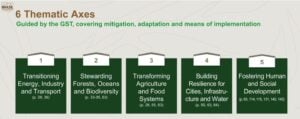
By aligning regional goals with the six thematic pillars of COP30, ASEAN is demonstrating how nature-based solutions and carbon markets can translate negotiated commitments into practical outcomes. Heritage Parks, in particular, serve as proof that the region is putting Paris Agreement ambitions into action on the ground.

COP30 Brazil
Source: COP30 BR

Malaysia Pushes Carbon Pricing and Green Finance

Malaysia used AMME-18 to emphasize the financial opportunities of carbon markets. Officials called for emissions trading and carbon taxes as core tools for a low-carbon economy.

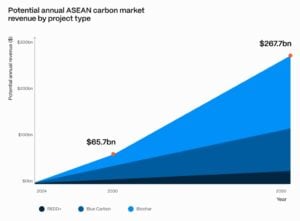
The stakes are high. Analysts estimate that ASEAN could generate up to $3 trillion in revenue by 2050 through carbon credit projects. Forest restoration, reforestation, and sustainable agriculture will drive this growth, yielding both economic and environmental benefits.

ASEAN carbon markets

Source: Abatable

What Carbon Market Stakeholders Should Watch

The Langkawi summit delivered key signals for businesses, investors, and project developers:

  • Aligned Standards: Expect smoother trading across Southeast Asia as regulations harmonize.

  • New Nature Projects: Forest-rich states will expand high-quality carbon credit projects.

  • Guidance Hub: The ASEAN Centre for Climate Change will release updates on MRV and finance.

  • Investor Confidence: Regional oversight will improve trust in ASEAN carbon credits.

These outcomes make ASEAN one of the most attractive regions for carbon finance in the coming decade.

Malaysia’s leadership at AMME-18 marked a turning point. Heritage Parks now stand as proof that protecting nature can fuel credible carbon credits and attract global investment.

By linking conservation to finance, ASEAN is creating a model where climate action also drives economic growth. With stronger policies, high-quality credits, and nature-based leadership, ASEAN is stepping onto the global stage as a key player in carbon markets and the COP30 Action Agenda.

The post ASEAN at COP30: How Malaysia Pushes Carbon Finance and Heritage Parks to the Forefront of Climate Action appeared first on Carbon Credits.
NuScale Power Stock Surges After U.S. Biggest SMR Nuclear Deal

NuScale Power (SMR) Stock Surges After Historic Small Modular Nuclear Reactor Deal

NuScale Power Holdings’ (NYSE: SMR) share price surged after the U.S. made a historic commitment to use its small modular reactor (SMR) technology. The company’s clean-energy credentials are now in the spotlight. This matters not only for investors but also for governments and industry leaders who aim for net-zero goals.

John Hopkins, NuScale’s President and Chief Executive Officer, remarked:

“We are honored that ENTRA1 has selected NuScale’s U.S. NRC-approved SMR technology for this historic deployment in delivering power to the TVA region…Together, we are ready as partners to meet America’s surging demand for reliable, carbon-free baseload power—powering AI data centers, critical mining, semiconductor manufacturing, and the energy-intensive industries that are driving our nation’s economic future.”

Historic Nuclear Deal Drives Stock Rally

NuScale stock has been in the spotlight since its late August surge. Shares rose over 25% after the Tennessee Valley Authority (TVA) made a historic agreement. This deal marks the largest SMR power commitment in U.S. history. 

As of September 4, NuScale stock is up nearly 16% today. This rise shows continued investor confidence and extends its rally.

NuScale stock
Source: Yahoo Finance

The TVA deal sets NuScale up to build the first SMR nuclear power station in the U.S. Many analysts view this as a key moment for nuclear energy in the country. 

Bank of America raised its price target on the stock. They see the TVA agreement as proof of SMRs’ commercial potential. Reports also suggest the planned capacity is more than 5x the size of all existing global SMR projects combined.

Industry watchers note that SMRs have key advantages over traditional nuclear plants. Unlike large reactors, they can be factory-built, modularized, and deployed incrementally. This lowers costs, improves flexibility, and makes SMRs an attractive option for utilities transitioning toward carbon-free energy.

Wall Street Backs Nuclear’s Next Chapter

NuScale’s stock reaction followed nearly immediate upward revisions by Wall Street analysts. Analysts reported the stock jumped when Wells Fargo and other firms raised their ratings. Their new price target is US$4.50, up from about $3. This change shows expected growth in construction contracts and licensing revenue.

The TVA project is expected to cost between US$2–3 billion. It will also generate significant ongoing revenue from operations, maintenance, and long-term fuel services. This financial commitment is seen as a credible revenue pipeline extending into the next decade.

SMRs and ESG: A Green Power Game-Changer

NuScale SMRs provide low-carbon energy. They help grid operators close coal or gas plants, which supports net-zero goals. As mini nuclear reactors with passive safety systems, they offer several environmental and social advantages:

  • Lower emissions: SMRs emit zero CO₂ at the point of generation, with life-cycle emissions similar to renewables.
  • Land efficiency: A single SMR needs only ~32 acres, compared to hundreds for solar or wind projects of similar output.
  • Grid stability: SMRs deliver steady, 24/7 power. Renewables often can’t match this without storage.
  • Local economic impact: SMR sites create hundreds of jobs in construction and operations. They often help communities shift away from fossil fuels.

NuScale SMR power plant view

NuScale’s main plant will generate up to 600 megawatts (MWe). This can power about 500,000 homes. It will also cut emissions by over 1 million metric tons of CO₂ each year, compared to similar coal plants.

These features reinforce ESG portfolios for utilities and investors prioritizing both return and sustainability.

Scaling SMRs: The Outlook for Clean Nuclear Power

NuScale’s move with TVA may be the first of many SMR deployments in the U.S. and abroad. Key dynamics impacting future growth include:

  • Licensing progress: NuScale received NRC approval in 2024 as the first SMR ever, paving the way for future units.
  • Global interest: Countries like Poland, the U.K., and Canada are looking at NuScale-style modular reactors. They want to expand clean energy options.
  • Electric grid synergy: Utilities view SMRs as a partner to solar, wind, and batteries. They help balance variable energy sources with reliable nuclear power.

Several hundred SMRs are proposed worldwide using mirror designs. This places NuScale at the heart of what analysts see as the next wave in nuclear deployment.

SMR globbal map

Small modular reactors could reshape nuclear energy as demand for clean power rises. Current plans target 25 GW of SMR capacity, rising to 40 GW by 2050 under existing policies.

With stronger support, capacity could hit 120 GW—over 1,000 SMRs—requiring investment to grow from $5 billion today to $25 billion by 2030 and $670 billion by 2050. If costs fall to match large reactors, capacity may reach 190 GW, sparking $900 billion in global investment.

NuScale’s Net-Zero Promise for Industry and Grid

NuScale Power’s small modular reactor technology offers clear advantages for ESG-focused investors. It also supports global goals for net-zero emissions, with these facts:

  • First-of-its-kind NRC approval

NuScale’s advanced light-water reactors are the only SMR design certified in the U.S. They help utilities close coal and gas plants. This ensures reliable baseload power, which is vital for deep decarbonization.

  • Low lifecycle carbon:

NuScale’s SMRs produce zero on-site CO₂ and emit carbon on par with renewables when accounting for the full fuel cycle. They provide clean, continuous energy, unlike solar or wind, which require storage to match baseload demand.

  • Multi-sector decarbonization potential:

The SMR modules provide electricity and steam. They can be used for industrial heat, desalination, and hydrogen production. A single 60-MWe module could power ~70,000 fuel-cell vehicles or replace up to 40% of refinery CO₂ emissions.

  • Coal-to-clean transitions:

NuScale enables the repowering of retiring coal plants, preserving jobs and grid infrastructure. Each 12-module plant can create about 1,600 construction jobs and 270 operating jobs. It can also support around $470 million in local economic activity each year.

  • Global decarbonization alignment:

The nuclear company is involved in global clean energy projects. Their SMR deal with Romania’s state utility might cut around 4 million metric tons of CO₂ yearly.

  • Strategic grid services:

SMRs provide flexible load-following, black-start, and dispatchable carbon-free power. These features are key for grids with a lot of renewable energy.

Challenges and What to Watch

While NuScale’s stock momentum is accelerating, several challenges remain. The first TVA plants are not expected to deliver power until the late 2020s, with subsequent units coming online gradually after that.

Even though SMRs are modular, they still need billions in upfront costs. So, support from utilities and government agencies will be crucial. The chart below shows SMR construcion costs in key markets.

SMR construction cost
Source: IEA

NuScale must also show it can grow operations. This means building a reliable supply chain and mastering serial manufacturing. Both steps will help reduce costs over time.

Public perception is still a challenge. Nuclear energy faces local resistance and cautious regulations. This is true even with the passive-safety features in SMR designs.

Investors will be watching closely for several milestones:

  • Final investment decisions from TVA in 2026.
  • NuScale’s ability to deliver 2nd and 3rd units (economies of scale).
  • Expansion into new markets under international SMR tenders.

NuScale at the Forefront of Clean Energy Evolution

NuScale Power’s recent stock surge reflects more than a headline deal—it signals the shifting economics of nuclear energy. SMRs now provide a compact, safe, and ESG-friendly option. They offer a solution for modern grids, especially as traditional SMRs face issues with cost and scale.

The TVA agreement marks a turning point: nuclear power—once considered too slow or expensive—is now viable again, at scale. For investors, NuScale offers exposure to climate-aligned innovation with tangible revenue potential. For utilities and policymakers, it offers a path to deep decarbonization.

The post NuScale Power Stock Surges After U.S. Biggest SMR Nuclear Deal appeared first on Carbon Credits.

Isometric Hits 100-Supplier Milestone with Flux, Setting New Standard for Durable Carbon Removal

Isometric, today recognized as the world’s leading carbon removal registry, has hit a major milestone—signing its 100th supplier, Flux. Over the past year, the number of organizations working with Isometric has more than quadrupled. That growth highlights one clear trend: the market is demanding transparency, scientific rigor, and fast verification.

Lukas May, Chief Commercial Officer of Isometric, noted that the Isometric Registry now represents the broadest mix of carbon removal technologies in the industry.
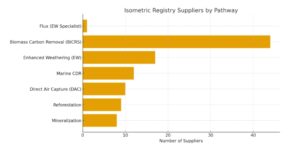
Suppliers span across every major pathway, as shown in the chart below. This list includes industry pioneers such as Charm Industrial, Mati Carbon, Vaulted Deep, Varaha, Carboneers, Deep Sky, Living Carbon, re.green, and Planetary.
isometric carbon removal
Source: Isometric

Flux Joins as the 100th Supplier

Flux, a fast-rising Enhanced Weathering company, is on a mission to remove five million tonnes of CO₂ by 2030. Their model is built around farming partnerships. By supplying alkaline rock powders, Flux provides dual benefits: capturing carbon from the atmosphere while enhancing soil health.

These rock powders neutralize acidity and add nutrients, leading to improved soil fertility and stronger yields. For agricultural communities, this means better productivity alongside climate action, making Enhanced Weathering especially compelling.

Sam Davies, CEO and Co-Founder of Flux, said,

“Partnering with Isometric helps us take a big step toward our mission of deploying Enhanced Weathering at scale across Africa. Their scientific rigor, transparent approach, and robust verification process align perfectly with how we operate, giving buyers confidence in the climate and community impact our credits deliver.”

Why Isometric’s Standard Matters?

Suppliers joining Isometric must follow the Isometric Standard, widely regarded as one of the toughest in the carbon market. To qualify, credits must be:

  • Durable – Stored securely for centuries or millennia.

  • Additional – Delivering removals that would not have happened otherwise.

  • Scientifically Verified – Using advanced methods with quantified uncertainty.

Each Verified Credit logged on the Isometric Registry represents real net CO₂ removals. Importantly, all data, calculations, and supporting evidence are publicly available, giving buyers complete transparency.

In December 2024, Isometric issued the first-ever verified EW credits under its Enhanced Weathering in Agriculture Protocol. This breakthrough set a new benchmark for MRV (monitoring, reporting, and verification), proving EW credits can meet the highest integrity standards.

Raising the Bar for Enhanced Weathering

Enhanced Weathering accelerates a natural process. In nature, CO₂ dissolves in rainwater, reacts with rock minerals, and is stored in the oceans as bicarbonates for over 10,000 years. Grinding rocks into powder and spreading them on farmland significantly speeds up this process.

Compared to reforestation, which risks reversal from wildfires or land-use change, EW offers a more permanent and scalable solution. It also brings direct co-benefits: healthier soils, better yields, and rural job creation.

For years, EW’s biggest challenge was credibility. Without rigorous MRV, buyers hesitated to engage. Isometric’s protocol has changed that, requiring direct measurement and statistical confirmation that removals have taken place. Each credit now represents one tonne of CO₂ permanently removed.

Concisely, among carbon removal pathways, EW is fast emerging as a leader. It offers:

  • Permanence – CO₂ is locked away for millennia.

  • Scale – Gigaton potential at relatively low cost.

  • Co-Benefits – From soil health to food security to rural jobs.

Unlike costly DAC or fragile natural solutions, EW sits at the intersection of affordability, scalability, and durability. Verified EW credits bring credibility to this promise.

carbon removal
Source: CDR.fyi

Isometric’s Role in Market Integrity

The carbon credit market is undergoing a major reset. BloombergNEF forecasts supply could rise 20–35x by 2050, creating one of the largest financing tools for global decarbonization. But that future depends on integrity and governance.

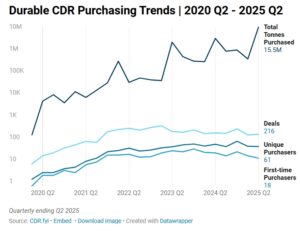
Significantly, CDR.fyi, in its Q2 2025 Durable CDR Market Update, reported the sector’s strongest quarter yet. Contracts reached 15.48 million tonnes of carbon removals—exceeding the combined total of all prior quarters at 13.6 million tonnes.

durable CDR
Source: CDR.fyi

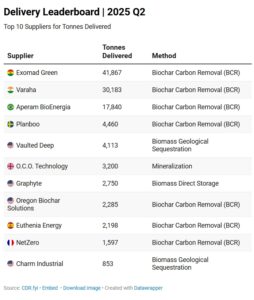
Additionally, deliveries also rose sharply, with 113.7 thousand tonnes supplied in Q2, a 39% jump over Q1 2025 and the second-highest quarterly delivery on record.

Isometric’s role is pivotal in the carbon removal market. By enforcing rigorous protocols and making data public, the registry ensures that credits are trustworthy. Since 2022, its mission has been building confidence in a market that too often suffers from quality questions. And the 100-supplier milestone marks real progress in this sector.

The post Isometric Hits 100-Supplier Milestone with Flux, Setting New Standard for Durable Carbon Removal appeared first on Carbon Credits.
Tesla Shifts From EVs to AI: Musk Says Robots Will be 80% of Company Value

Tesla Unveils Master Plan 4: From EVs to Robots, Musk Bets Big on AI

Tesla unveiled Master Plan Part 4, its boldest vision yet. Unlike earlier plans that focused on electric vehicles, renewable energy, and autonomous driving, this roadmap shifts Tesla’s center of gravity toward artificial intelligence and humanoid robotics.

Elon Musk, known for bold predictions, said humanoid robots, like the Optimus line, might make up 80% of Tesla’s value.

Optimus Rising: Musk’s Boldest Bet Yet 

Tesla’s past master plans followed a clear logic: build affordable EVs, scale clean energy, and move toward self-driving mobility. Part 4 marks a pivot. Musk calls the new phase “sustainable abundance.” In this future, labor and energy costs could be nearly zero. This happens because robots and AI will handle most of the work.

The star of the plan is Optimus, Tesla’s humanoid robot. Optimus is made for repetitive or dangerous tasks in factories and, soon, in homes. It aims to create a multi-trillion-dollar market.

Tesla has ambitious production goals. The company aims for several thousand units in 2025. In 2026, the target is 50,000 to 100,000 units. By the decade’s end, they might reach 500,000 to 1 million units each year. If achieved, it would dwarf Tesla’s automotive scale-up.

Musk has called Optimus “the largest product opportunity in history.” For Tesla, this is not simply a side project but a claim that the company’s future valuation rests on robots more than cars.

Elon Musk’s long-term vision positions Tesla as a potential $25 trillion company by 2050, with the Optimus humanoid robot at the core of that growth. The company plans to produce around 5,000 Optimus units in 2025.

Each unit will likely cost $20,000 to $30,000. This puts Tesla in the humanoid robotics market. Analysts believe this market could reach $218 billion by the decade’s end.

Reality Check: Roadblocks on the Robotics Path

As with past Tesla ambitions, execution is proving more complicated. By mid-2025, Tesla had reportedly built around 1,000 prototype Optimus units, but production was paused for redesigns. Engineers faced technical limits like overheating, battery life issues, and low payload capacity. These challenges needed supply chain requalification.

The redesign effort is producing Gen-3 prototypes with improved dexterity and more advanced hand articulation. Supporters see this as Tesla’s iterative engineering model at work.

Critics, however, point to Tesla’s long history of overpromising and underdelivering on timelines. Robotaxis and solar roofs, once headline promises, remain incomplete years later.

EV Sales Stall While Robots Take Center Stage

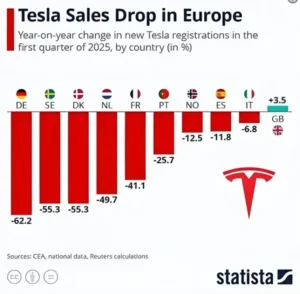
While robots take the spotlight, Tesla’s core electric vehicle business is facing headwinds. Global deliveries fell 13% in the first half of 2025, including a nearly 40% drop in Europe and a 5% dip in China. Competition from Chinese automakers like BYD has eaten into Tesla’s market share.

Tesla EV sales Europe

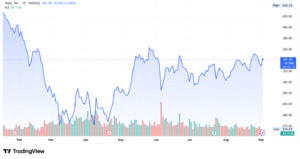
Tesla’s stock has reflected this turbulence, recently falling around 17–20% year-to-date. Analysts cite multiple pressures: the expiration of EV tax credits, a slowdown in consumer demand, and rising competition. At the same time, quarterly revenues slipped to about $22.5 billion, marking a 12% year-over-year decline.

This underscores a reality:

  • While Tesla promotes robots as its future, vehicles and energy still account for nearly all of its current revenue.

TSLA Stock Rebound on AI and Robotics Pivot

Despite earlier declines in 2025, Tesla’s shares have shown signs of recovery following the release of Master Plan Part 4. The company’s focus on AI and robotics has caught investors’ attention. Many view this shift as a way to counter slowing electric vehicle sales.

Market analysts say the buzz around the Optimus humanoid robot and Tesla’s AI projects has boosted trading volumes. Some investors see the plan as a chance for long-term growth. They believe Tesla could boost robot production by 2026. Skepticism still exists, but the recent rise in Tesla’s stock price shows more confidence in its AI-driven future.

tesla stock
Source: TradingView

Analysts Weigh In: Vision vs. Execution

The market is split on Tesla’s fourth master plan. Some analysts see it as visionary, believing Tesla could pioneer a robotics revolution that reshapes manufacturing and labor. Some say the roadmap misses key details found in earlier master plans. It lacks clear product rollout timelines and financial pathways.

Key takeaways from analysts and industry watchers include:

  • Tesla’s near-term revenue is still tied to cars and energy storage.
  • The Optimus rollout remains speculative, with initial pricing estimated at $20,000–30,000 per unit.
  • Production setbacks show how far Tesla is from mass manufacturing humanoid robots.
  • Investor patience may wear thin if EV sales continue to falter.

Opportunities and Risks in the Robot Age

Moreover, Tesla’s pivot into robotics carries both transformative potential and serious risks.

Opportunities are:

  • Humanoid robots could disrupt labor-intensive industries, especially manufacturing.
  • Integration of AI into physical tasks could drive cost reductions across the economy.
  • If production scales successfully, Optimus could open a market measured in trillions of dollars.

Challenges include:

  • Scaling from prototypes to millions of units requires breakthroughs in robotics hardware, energy density, and manufacturing efficiency.
  • Tesla’s credibility has been hurt by past delays in delivering on bold promises.
  • EV demand is slowing, raising questions about Tesla’s financial cushion to fund robotics R&D.
  • Technical risks—such as safety, durability, and supply chain bottlenecks—could slow adoption.

Tesla’s Sustainability Commitments Still in Focus

Even as Tesla shifts toward robotics, its sustainability goals remain central to its brand identity. The company continues to emphasize its mission of accelerating the world’s transition to sustainable energy.

  • Tesla reported avoiding over 20 million metric tons of CO₂ emissions through its EV fleet as of 2024.

Notably, energy storage reached a record 14 GWh in 2024. This supports renewable integration on various grids.

The company is dedicated to using 100% renewable energy for its Gigafactories. Facilities in Nevada and Shanghai are already making great strides toward this goal.

Tesla notes that robotics and AI innovations can help with sustainability. They do this by making manufacturing more efficient and cutting down on waste. Musk believes humanoid robots could help with green infrastructure projects. This aligns with Tesla’s goal of achieving net-zero emissions.

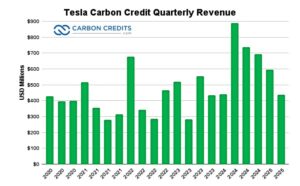
Tesla’s strategic shift toward robotics and AI could also reshape its revenue streams from carbon credits. Historically, the company earned billions by selling regulatory credits linked to zero-emission vehicle sales. As the focus shifts from EVs to AI products and humanoid robots, revenue from carbon credits might decrease.

The Next Big Test: Can Tesla Deliver?

The path forward hinges on Tesla delivering measurable milestones:

  • Factory deployment: The first large-scale use of Optimus robots in Tesla’s Gigafactories will be a crucial proof point.
  • Technical improvements: Advances in battery life, joint durability, and autonomous control will determine whether Optimus is commercially viable.
  • External sales: If robots reach outside customers by 2026, it could validate Tesla’s strategy.
  • EV turnaround: To maintain financial strength, Tesla must also stabilize its vehicle segment.

These milestones will test whether the company can truly transition from being seen primarily as an automaker to a robotics-first company.

Tesla’s Master Plan Part 4 is a radical reimagining of the company’s identity. It places humanoid robotics and AI, not cars, at the heart of its future. Musk promises “sustainable abundance” through mass deployment of Optimus robots, a vision that could transform both Tesla and the global economy.

In the end, Tesla’s future may depend not on how well it sells cars, but on whether it can build—and scale—robots that truly work.

The post Tesla Shifts From EVs to AI: Musk Says Robots Will be 80% of Company Value appeared first on Carbon Credits.
Blue Carbon Credits Hit Record High as Demand Outpaces Supply

Blue Carbon Credits Hit Record High as Demand Outpaces Supply

Blue carbon markets are gaining momentum, with the latest development marking a significant milestone. According to Platts, the price of blue carbon credits under its DBC-1 benchmark reached a record high in late August 2025. This surge shows strong demand for high-quality carbon credits tied to coastal and marine ecosystems.

Limited supply also plays a role, as project pipelines are still constrained. The event highlights both the potential and the growing challenges in scaling blue carbon as a reliable tool for climate action.

Record High Prices for DBC-1 Credits

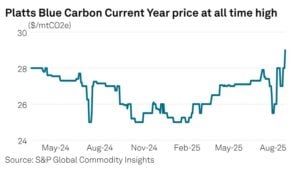
Platts assessed its Blue Carbon (DBC-1) current-year carbon price at $29.30/mtCO₂e on Aug. 28, up $1.30/mtCO₂e day over day. Prices hit a 15-month high in early July, then dropped to a five-month low on Aug. 1 before rebounding 14.9% into late August.

blue carbon credit price by Platts.png
Source: S&P Global

This rebound, fueled by high demand and low supply, has pushed the benchmark close to record levels since its launch in March 2024. The price strength shows how fast demand for blue carbon projects is growing. It is now outpacing the supply of credits.
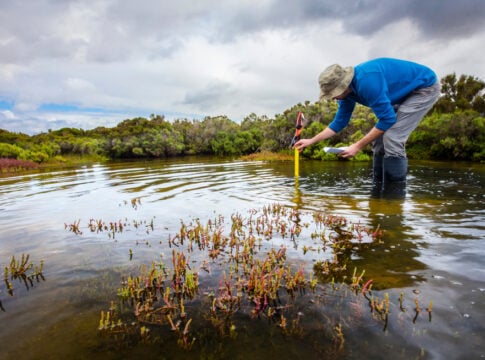
Blue carbon credits come from activities like restoring mangroves, protecting seagrass, and conserving salt marshes. They differ from traditional forest-based carbon offsets. These ecosystems capture and store carbon quickly.

They also provide key benefits. These include preserving biodiversity, boosting coastal resilience, and helping local communities.

What’s Driving Demand: Climate Targets, Policy, and Trust

Several factors explain why demand for blue carbon is spiking:

  • Corporate climate targets: Companies are increasingly seeking high-integrity offsets to complement decarbonization plans. Blue carbon, with its dual climate and ecological benefits, is seen as a premium option.
  • Policy support: Governments in Southeast Asia, Africa, and Latin America have started or grown programs to boost investment in coastal ecosystems. This has added momentum to project development.
  • Market differentiation: In a scrutinized voluntary carbon market, blue carbon projects shine. They offer verifiable, high-quality credits, making them appealing to buyers worried about greenwashing.

Traders and developers say buyers are now paying more for DBC-1 credits than for other nature-based offsets.

Why Blue Carbon Projects Struggle to Scale

Despite demand growth, the supply of blue carbon credits remains limited. Coastal projects can be tricky. Land tenure issues, regulatory uncertainty, and long verification timelines add to the complexity. 

Moreover, countries with big mangrove or seagrass areas often struggle to scale projects. This is due to limited capacity and gaps in funding.

Current blue carbon projects represent only a fraction of the voluntary carbon market. Industry estimates show that fewer than 10 million metric tons of blue carbon credits are issued each year. This is much lower than the hundreds of millions needed to make a real impact on climate change. This structural imbalance between demand and supply is one of the main drivers of the record-high pricing.

Nature’s Superpower: How Coastal Ecosystems Lock Away Carbon

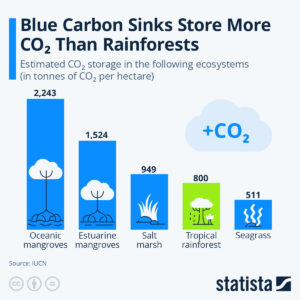
Blue carbon ecosystems, including mangroves, seagrasses, and tidal marshes, are among the most effective natural carbon sinks. The UN Environment Programme says these habitats can capture carbon four times faster than forests. They also store it in sediments for centuries.

blue carbon sequestration
Source: Statista

Blue carbon ecosystems worldwide capture about 0.5 to 1.0 gigatonnes of CO₂ each year. However, coastal degradation leaves much of this potential unused. Restoration and conservation projects are growing, especially in Southeast Asia, Africa, and Latin America. Large areas of mangrove forests are at risk.

Forecasts show that if restoration projects grow as planned, blue carbon initiatives could offset up to 3% of global emissions by 2030. This makes them vital in both voluntary and compliance carbon markets.

Broader Trends: Blue Carbon in the Market Landscape

Blue carbon’s rise comes at a time when the broader VCM is evolving. Demand for higher-quality credits has shifted investment from cheaper offsets to premium options, like blue carbon. This fits into a larger effort to ensure carbon markets help real decarbonization. They shouldn’t let companies skip cutting emissions.

Financial institutions are also entering the space, with specialized funds being established to back blue carbon projects. These funds provide upfront money for restoration or conservation projects.

In return, they receive future credit revenues. This trend reflects the growth of the carbon market. Investors see offsets as both environmental assets and financial instruments with good return potential.

In addition, new methodologies and standards are being developed to improve the credibility of blue carbon credits. Verra and Gold Standard are updating accounting rules. This helps capture the complete climate value of coastal ecosystems.
Also, Article 6 of the Paris Agreement could create opportunities for trading blue carbon credits. This would boost demand in compliance markets
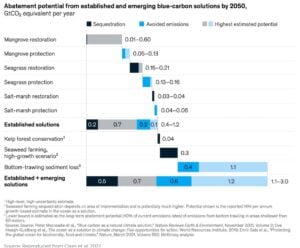
The chart below shows the potential carbon abatement for each type of blue carbon solution by 2050.

blue carbon abatement potential by 2050
Chart sourced from Ecosystem Marketplace report

The co-benefits of blue carbon projects also make them uniquely appealing. Mangrove and seagrass restoration offers unique benefits. They can boost fisheries, lower coastal erosion, and shield vulnerable communities from storm surges.
Blue carbon links climate mitigation, adaptation, and biodiversity protection. This makes it appealing for buyers who want to achieve climate and sustainability goals.

Signals for Investors, Companies, and Policymakers

The record-high DBC-1 price signals several important implications for stakeholders:

  • For investors:
    Blue carbon allows entities to join a fast-growing premium market. However, supply bottlenecks might hold back short-term growth. Early movers could benefit from long-term appreciation in credit values.
  • For companies:
    Buyers should be prepared for higher costs as competition for limited credits intensifies. Securing long-term offtake agreements with project developers may become necessary.
  • For policymakers:
    There is a need to create supportive environments for coastal ecosystem projects. This includes clear rules, land-use plans, and financial incentives.
Blue Carbon’s Defining Moment

Platts’ DBC-1 benchmark shows that blue carbon is shifting from a niche area to a key part of the voluntary carbon market. With prices hitting record highs, the market is sending a strong signal: demand for high-quality, high-impact carbon credits is here to stay.

Without significant supply growth, the imbalance will continue. This will keep prices high and limit access for some buyers.

For now, blue carbon remains a premium and scarce commodity. The sector is set for more growth, thanks to rising interest from governments, investors, and companies. With strong policies and new financing, blue carbon could be key to global climate strategies. It can also provide numerous ecological and social benefits.

The post Blue Carbon Credits Hit Record High as Demand Outpaces Supply appeared first on Carbon Credits.