TSLA Stock Slides After Tesla Unveils ‘Affordable’ Model Y and Model 3 — Investor Confidence Wavers
Tesla is once again in the spotlight of the EV world with the launch of its most affordable versions of the Model Y SUV and Model 3 sedan. On October 7, 2025, the company unveiled “Standard” trims of its two bestsellers, priced at $39,990 for the Model Y and $36,990 for the Model 3. The move marks Tesla’s latest attempt to reignite demand amid slowing sales, fierce competition, and the loss of the $7,500 U.S. federal EV tax credit.

While the announcement initially stirred excitement, investor sentiment quickly turned cautious. Many had hoped for even deeper price cuts—possibly closer to the long-promised $25,000 Tesla. The unveiling highlighted a strategic shift by Elon Musk: opting for affordability through existing models rather than introducing a completely new low-cost vehicle platform.

Breaking Down Tesla’s New “Standard” Models

The new “Standard” variants are stripped-down versions of Tesla’s premium trims. They feature fewer upgrades and shorter ranges but come with the same core technology, including access to Tesla’s Supercharger network.

Key details:

  • The Model Y Standard is about $5,000 cheaper than previous trims.
  • The Model 3 Standard starts under $37,000, but still well above investor hopes for a sub-$30,000 model.
  • The new models aim to lift sales volumes and defend market share against growing competition from BYD, Rivian, and traditional automakers entering the EV market.
  • Musk’s earlier $25,000 EV project—rumored to be Tesla’s “Model 2”—was scrapped last year in favor of modifying current production lines.

For Tesla, the real challenge is finding the right balance between keeping prices low and staying profitable. The price cuts could boost sales, but at the same time, they might reduce profits since battery materials and shipping costs are still high.

Why TSLA Stock Dipped Despite Pricing Push?

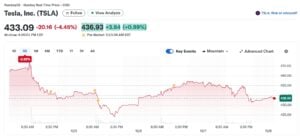
Despite the buzz surrounding the October 7 announcement, Tesla’s stock (TSLA stock) reflected mixed investor emotions. Shares closed down nearly 5% at $433 after spiking briefly ahead of the event. The stock has still gained about 7% in 2025, but it has underperformed the S&P 500 and remains highly sensitive to quarterly delivery numbers and market expectations.

Tesla shares hit $453.25 earlier that day, marking a 12.2% gain year-to-date before the decline. The volatility suggested that while investors welcomed the effort to boost affordability, many were disappointed that prices weren’t slashed further.

Analysts also warned that the new lower-priced versions might hurt sales of Tesla’s more expensive models, which could slow down the company’s overall growth.
tsla stock tesla
Source: Yahoo Finance

Analysts Turn Conservative

Wall Street’s tone toward Tesla has shifted from bullish to cautious. The current analyst consensus rates Tesla as a “Hold,” with an average price target of $342.82—implying potential downside from current trading levels.

Options data also reflect waning enthusiasm. Traders have sold off most October $470 call options, while implied volatility has dropped 27%, signaling a more restrained outlook.

Analysts from Wedbush noted that while the new Standard models could help Tesla maintain its quarterly delivery pace, the pricing left them “relatively disappointed.” The company’s next few quarters will test whether these trims can sustain demand without eroding profitability.

Q3 2025: Record Deliveries but Margin Strain

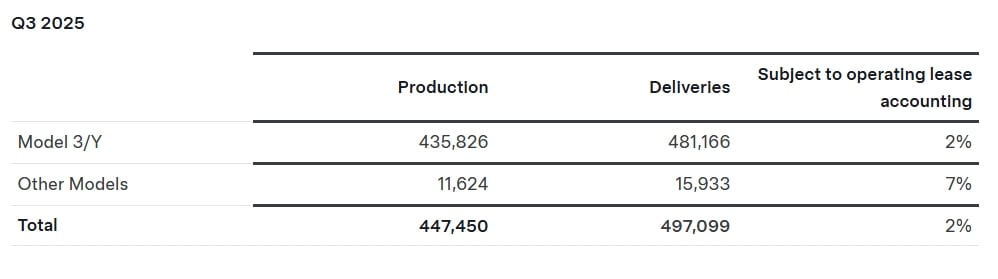
Tesla’s Q3 2025 results gave the company some breathing room. It delivered a record 497,099 vehicles, beating Wall Street expectations and setting a new milestone. Despite this success, financial challenges persist.
tesla Q3
Source: Tesla

Earnings per share are projected at $0.37, a 40% decline compared to the same quarter last year. Furthermore, the expiration of the $7,500 U.S. EV tax credit and ongoing price cuts have put pressure on profitability.

Still, Tesla’s balance sheet remains strong, with $37 billion in cash, easily covering its $30 billion in short-term debt.

Delivery growth suggests Tesla is running efficiently, but analysts remain cautious. Many believe Q3 sales were boosted by customers rushing to buy before the tax credit expired. This front-loading of demand could lead to softer sales in Q4.

Thus, even with strong deliveries, TSLA stock remains sensitive to these financial pressures. Investors are closely watching to see whether Tesla can maintain momentum without further cutting prices and compressing its margins.

Tesla’s Strategic Pivot: From EVs to AI and Robotaxis

Elon Musk has been steering Tesla toward artificial intelligence, robotaxis, and humanoid robots—technologies he believes will drive the company’s next phase of growth. In late 2024, he suggested that the long-awaited affordable car might be used mainly as a robotaxi rather than a regular consumer vehicle.

This approach aligns with Tesla’s broader strategy to prioritize autonomous driving and recurring software revenue. A lower-priced model could help build a future robotaxi fleet and open new ways to earn from Tesla’s self-driving features.

However, investors are split. Some see this as a smart move that could strengthen Tesla’s position in mobility technology. Others worry it could distract from Tesla’s core EV business, which faces shrinking margins, rising competition, and high expectations from the market.

Competition Heats Up Across the EV Market

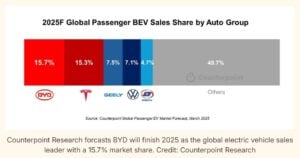
Tesla’s dominance is being tested on all fronts. In China, BYD continues to outpace Tesla in sales volume. In Europe and the U.S., automakers like Volkswagen, Ford, and GM are scaling their EV production lines with aggressive pricing strategies.

The loss of federal incentives further complicates Tesla’s position. Competitors that still qualify for subsidies can offer cheaper, effective prices, eroding Tesla’s competitive edge. The company must rely on its brand power, efficiency, and innovation to sustain growth.

Even though Tesla’s growth story remains compelling, several risks loom large. Industry pundits highlight the following challenges.

  • Competition: Legacy automakers and new startups are closing the innovation gap quickly.
  • Incentive Losses: The expiration of the $7,500 U.S. EV tax credit could dampen sales momentum.
  • Supply Chain Sensitivity: Battery material shortages and global logistics disruptions could slow production.
  • Margin Pressure: Price cuts, cost inflation, and heavy R&D investments are squeezing profits.
  • Valuation Risk: With a valuation above 100x earnings, even small setbacks could trigger sharp stock corrections.
EV sales

RELATED:

Balancing Growth with Sustainability

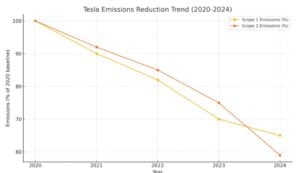
Now talking about sustainability, Tesla is ahead in the game. The company reported a total carbon footprint of 56 million metric tons CO₂e in 2024, including emissions from operations and supply chains.

  • Yet, Tesla’s vehicles helped customers avoid 20 million metric tons of CO₂e that year compared to traditional cars.

Regulatory credits also continue to play a big role in Tesla’s profits. In 2024, the company earned $2.76 billion from selling carbon credits—a 54% jump from 2023. These credits made up nearly 39% of Tesla’s net income, showing just how important carbon markets remain to the company’s bottom line.
tesla emissions
Source: Tesla

Can Tesla’s “Affordable” EVs Sustain Long-Term Growth?

Tesla’s new “Standard” lineup is a tactical reset, not a revolution. It aims to boost demand, defend market share, and protect margins in a crowded EV market.

Still, investors are unsure. Tesla posts record deliveries and holds strong cash reserves, yet its growth depends on balancing affordability, innovation, and profitability.

At the same time, the company is investing heavily in AI and autonomous driving. The big question is: will Tesla succeed by selling more cars or by getting more cars to drive themselves?

These affordable EVs may keep sales steady, but bigger challenges lie ahead. Rising competition, tight margins, and shifting investor sentiment will test Tesla’s ability to stay profitable while driving innovation forward.

The post TSLA Stock Slides After Tesla Unveils ‘Affordable’ Model Y and Model 3 — Investor Confidence Wavers appeared first on Carbon Credits.


Mercedes-Benz and Norsk Hydro Join Forces for Greener EVs

Mercedes-Benz has partnered with Norwegian aluminium producer Norsk Hydro to reduce emissions in the manufacturing of its electric vehicles (EVs). The collaboration centers on using Hydro’s low-carbon aluminium, which is produced with renewable energy and recycled materials.

The deal is part of Mercedes’s plan to make production greener. It aims to reduce the carbon footprint of future EVs. This includes the new electric CLA model, which will be the first vehicle to feature Hydro’s aluminium.

This partnership shows how carmakers are changing materials and energy use. They aim to meet rising climate goals and consumer demand for cleaner cars.

The Partnership: How Green Aluminium Is Recasting Mercedes’ EV Blueprint

Norsk Hydro will supply Mercedes with aluminum that emits far less carbon than standard production. Hydro’s smelting sites in Norway run mostly on hydropower, which helps avoid fossil-fuel emissions.

Hydro says its low-carbon aluminum generates just hydropower for every kilogram of metal. In contrast, the global average is 16.7 kilograms. That makes it one of the lowest-carbon aluminum products available today.

For Mercedes, this has a direct effect. The company thinks using Hydro’s aluminum in the new CLA will reduce CO₂ emissions by about 40% compared to the old petrol version. This includes emissions from raw materials, manufacturing, and assembly.

This step supports Mercedes’s long-term goal to make all its passenger cars net carbon neutral by 2039. The target covers the full life cycle — from raw materials and production to driving and recycling.

Aluminum production makes up around 2% of global CO₂ emissions, says the International Energy Agency (IEA). Switching to cleaner aluminum can reduce CO₂ emissions by millions of tonnes annually in global supply chains.

Why Aluminium Defines the EV Climate Race

Aluminium is a core material in EVs because it’s lightweight, durable, and helps improve driving range. However, producing it takes a lot of energy and often leads to high carbon emissions. This is mainly because smelting furnaces run on fossil fuels.

Switching to low-carbon aluminium cuts “embedded emissions.” These are the emissions created during material production, before a car even drives.

As global demand for EVs grows, the carbon footprint of materials has become a major focus. Aluminum production alone makes up about 2% of the world’s CO₂ emissions, says the International Energy Agency. Reducing this share can make a big difference in the total climate impact of electric mobility.

Hydro’s approach combines renewable electricity with recycled scrap, cutting both emissions and waste. Recycling aluminum uses just 5% of the energy needed for new production. This makes it a key part of a circular manufacturing system.

How Green Materials Are Reshaping Auto Supply Lines

The Mercedes-Hydro deal fits a larger pattern in the auto industry. Manufacturers are quickly working to decarbonize their supply chains. This effort supports both national and international climate goals.

In Europe, the EU Green Deal and CSRD now require automakers to report emissions from materials and suppliers. These are called Scope 3 emissions, which often make up over 80% of a car’s total carbon footprint.

Major competitors like BMW, Volvo, and Tesla have also announced partnerships for low-carbon metals. Volvo partners with SSAB to create fossil-free steel. Tesla gets aluminum from hydro-powered smelters in Canada.

Teaming up with Hydro helps Mercedes cut its emissions. It also strengthens Europe’s supply chain for sustainable materials. This cuts reliance on imports from high-emission sources.

Driving Through Headwinds: Scaling the Green Metal Revolution

Transitioning to low-carbon aluminum brings benefits but also practical challenges.

Hydro must ensure it can scale up production to meet Mercedes’s needs without raising costs too much. Producing green aluminum costs more than traditional metal. This is mainly because of the investment needed for clean power and recycling facilities.

Mercedes also faces logistical hurdles. It needs a stable and traceable flow of low-carbon aluminum across its global production network. Maintaining product quality while introducing new materials requires careful engineering and testing.

Yet, both companies see strong long-term value. Governments are tightening carbon limits and penalizing high emissions. This creates a chance for sustainable materials to offer a competitive edge. They also align with investor and consumer expectations for more responsible products.

Turning ESG Goals Into Action

This partnership boosts the sustainability credentials of both companies from an ESG perspective.

  • Environmental: The collaboration aims to cut emissions from manufacturing. This is one of the toughest areas to decarbonize. It promotes renewable energy use and circularity through recycling.
  • Social: It supports cleaner industry jobs and responsible resource management. Norway’s smelting, powered by hydropower, poses fewer risks to communities and the environment compared to coal-based operations in other places.
  • Governance: Both companies promise clear emissions reporting, third-party checks, and easy-to-understand sustainability metrics. This is becoming a must for ESG compliance.

Mercedes and Hydro’s efforts show how ESG strategies are shifting from corporate promises to measurable action.

How Low-Carbon Manufacturing Is Steering the Auto Industry’s Future

This partnership may set a standard for the auto industry. As EV adoption increases, the focus on the environment will shift. It will look at total life-cycle emissions, not just tailpipe emissions. This includes everything from materials to recycling.

Experts expect global demand for low-carbon aluminum to increase by over 30% by 2030. This rise will be fueled by the automotive, construction, and packaging sectors. Hydro’s early investment in renewable-based production could give it a strong position in this market.

For Mercedes, the deal supports its broader “Ambition 2039” plan — a roadmap toward climate-neutral mobility. The company aims to cut supply chain emissions by at least 50% by 2030, compared with 2020 levels.

If the low-carbon CLA rollout works, similar materials might spread to all of Mercedes’ EVs, like SUVs and compact models.

The Mercedes-Benz and Norsk Hydro partnership marks a major step toward greener electric vehicle production. Mercedes is using low-carbon aluminum in its manufacturing. This helps cut emissions from both driving and the materials used to make its cars.

For Hydro, it validates years of investment in clean production and renewable energy. For the broader auto sector, it sets a clear signal: sustainability now extends beyond the battery — it starts with every component.

If more companies follow this model, the EV industry could move closer to true net-zero manufacturing, where innovation and environmental responsibility go hand in hand.

The post Mercedes-Benz and Norsk Hydro Join Forces for Greener EVs appeared first on Carbon Credits.

Microsoft Expands Japan’s Green Grid with Shizen Energy’s 100 MW Solar Push

In October 2023, Shizen Energy Inc. signed a 20-year virtual power purchase agreement (VPPA) with Microsoft (MSFT stock) to provide renewable energy from a 25 MWac solar farm in Inuyama City, Aichi Prefecture. As with other global deals, this VPPA helped Shizen Energy secure funding for the Inuyama project.

Now the company has recently announced an expanded partnership with Microsoft. It currently has 100 MW in Renewable Energy Purchase Agreements across four solar projects in Japan.

Building on this success, Microsoft signed three additional 20-year agreements for solar plants in Kyushu and Chugoku, further advancing both companies’ renewable energy goals.

Rei Ushikubo, Executive Officer of Shizen Energy, said,

“Following the Inuyama Project, we are honored to have signed long-term agreements with Microsoft for several new projects. We believe that securing financing from domestic and international financial institutions for these projects is proof of the growing presence of Renewable Power Purchase Agreements in the Japanese market. We will continue to prioritize our power purchase agreement business to support our customers’ decarbonization efforts.” 

Shizen Energy Delivers Efficiency Across Four Solar Plants

Shizen Energy has already started operations at one Kyushu plant. The remaining projects are under construction, including its site and wholly-owned EPC subsidiary, Shizen Engineering Inc. All four projects will operate under Shizen Operations Inc., which manages asset operations and maintenance.

The company is also handling project coordination, financing, and asset management, while its subsidiaries manage EPC and O&M. This integrated approach allows the company to deliver large-scale projects efficiently and reliably.

Earlier, it was revealed that the Inuyama Solar Power Plant stands as the largest single-asset solar project in Japan to reach financial close under a VPPA. The project had received ¥10.9 billion in non-recourse financing from Societe Generale, marking the first international funding for a Japanese VPPA-linked renewable project.

Inuyama City Solar Project

solar energy Japan Shizen Energy
Source: Shizen Energy

Global Expansion and Innovation

Shizen Energy aims to accelerate the global shift to renewable energy under the motto “We take action for the blue planet.” The company has expanded projects to Southeast Asia and Brazil and introduced advanced energy technologies, including microgrids, virtual power plants (VPPs), and smart EV charging systems through its proprietary EMS.

It has generated more than 1 GW of renewable energy worldwide and earned recognition as Forbes Japan’s top startup in 2024. With these milestones, the company continues to lead both domestic and international corporate renewable markets.

Boost to Microsoft’s 100% Renewable Energy Goal

This deal is Microsoft’s first renewable energy purchase in Japan. And these REPAs help Microsoft move toward 100% renewable energy for its operations by 2025.

By adding clean energy to Japan’s electricity grid, the tech giant is contributing to both corporate sustainability and grid decarbonization.

Adrian Anderson, General Manager, Renewable and Carbon Free Energy at Microsoft, had said,

“Shizen Energy’s expertise and presence in the Japanese market is enabling our first renewable energy purchase in Japan and it’s great to see near-term supply for our 100% renewable energy goal. A commercial structure like this is important to promoting grid decarbonization in the country.”

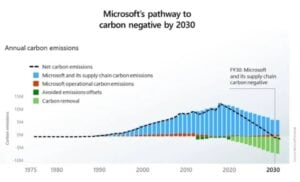
Globally, to date, Microsoft has contracted over 34 GW of renewable capacity across 24 countries, up from 1.8 GW in 2020, as highlighted in its 2025 sustainability report.

Last year, it further diversified its portfolio and added 19 GW of new renewable energy across 16 countries. Key expansions included:

  • Brookfield Renewable Energy Framework – Delivering over 10.5 GW in the U.S. and Europe over the next five years.

  • Wisconsin PPA with National Grid Renewables – A 250 MW agreement supporting a growing datacenter region, paired with a $15 million community fund for environmental resilience.

Some other global projects included a 415 MW solar facility in Germany, a 48.8 MW wind project in Ireland, and a 36 MW solar plant in Poland. These projects showcase our commitment to expanding clean energy capacity across diverse markets.

These investments allow Microsoft to expand renewable markets worldwide and support grid decarbonization in all regions where it operates.

Microsoft emissions
Source: Microsoft

SEE MORE: 

Japan’s Renewable Energy Outlook

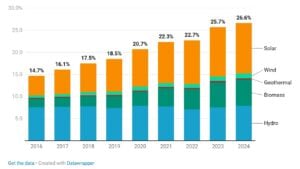
Data shows that Japan aims for 36–38% renewables in its electricity mix by 2030, but slower project development and rising electricity demand keep the share below 30%. Nuclear restarts and decommissioning of old thermal plants have helped reduce emissions by nearly 5% from 2023, reaching the lowest levels since 2015.

Most significantly, agri-solar projects, combining solar generation with farmland, are emerging as a key growth area. Japan has solar potential of 1,465–2,380 GW, far above the current installed capacity of 74 GW. Interestingly, local developers are aggregating small projects and securing financing, creating scalable, sustainable solutions for corporate PPAs.

JAPAN RENEWABLE ENERGY

Shizen Energy’s REPAs with Microsoft show the growing impact of corporate renewable procurement. The agreements attract international financing, provide long-term revenue certainty, and accelerate renewable deployment. Corporate PPAs help companies meet energy goals while supporting broader grid decarbonization.

Shizen Energy continues to expand solar, wind, biomass, and innovative energy solutions. Its integrated development, construction, and operations model ensures projects are delivered efficiently and effectively.

Together, Microsoft and Shizen Energy are shaping Japan’s corporate renewable energy market and proving that sustainable, commercially viable solutions are achievable.

The post Microsoft Expands Japan’s Green Grid with Shizen Energy’s 100 MW Solar Push appeared first on Carbon Credits.
Is QS Stock the Future of EV Batteries? Inside QuantumScape’s Game-Changing Deal with Corning

QuantumScape Corporation (NYSE: QS), a leader in solid-state lithium-metal batteries, has partnered with Corning Incorporated (NYSE: GLW), a company specializing in glass and ceramics.

This partnership aims to improve the production of ceramic separators. These separators are crucial for bringing QuantumScape’s advanced battery technology to market.

Ceramics Meet Innovation: A New Era for EV Batteries

Traditional lithium-ion batteries are hitting their energy density limits while global demand for better storage continues to rise.

  • QuantumScape’s solid-state design uses a solid ceramic separator instead of a flammable liquid electrolyte.

The ceramic separator is crucial for QuantumScape’s solid-state battery design. It offers higher energy density, faster charging, and improved safety. And these advantages could transform the electric vehicle (EV) and energy storage markets.

Dr. Siva Sivaram, CEO and President of QS, said,

“Corning’s world-class capabilities in ceramics manufacturing makes it an ideal addition to the QS technology ecosystem. Together with our ecosystem partners, we’re building the foundation for scalable production of our high-performance solid-state batteries and furthering our mission to revolutionize energy storage.”

Unlocking Corning’s Materials Mastery 

Corning has leveraged its unmatched expertise in glass, ceramics, and optical sciences. Its strong manufacturing and engineering capabilities help to create groundbreaking innovations and life-changing products.

Thus, by combining QuantumScape’s innovation with Corning’s materials science, they plan to speed up mass production and deployment of the EV batteries.

Notably, QuantumScape’s technology can adjust to various cathode types, including Nickel Manganese Cobalt (NMC) and Lithium Iron Phosphate (LFP). This flexibility may also boost energy density and lower costs for various uses. All these factors align with its goal to create scalable, high-performance batteries for a low-carbon future.

Ron Verkleeren, Senior Vice President of Corning’s Emerging Innovations Group, noted that both companies share “a spirit of innovation.” He expressed excitement about working with QuantumScape to advance battery technology.

QS Stock Soars on Partnerships and U.S. Policy Boost

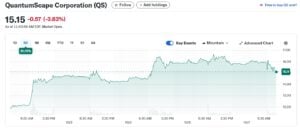
QuantumScape’s stock rallied in 2025, driven significantly by strategic partnerships and renewed U.S. government focus on domestic lithium production.

The Corning deal played a key role in boosting QS stock. Shares hit a 52-week high of $16.49 before closing at $15.92, an 11.3% daily gain. Year-to-date, the stock has risen 181%, outperforming the S&P 500’s 14.1% return.

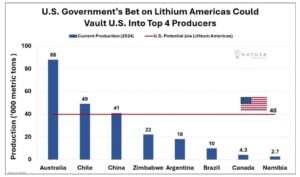
As read before, the U.S. government recently invested in Lithium Americas and its Thacker Pass project with General Motors. This move aims to secure critical mineral supply chains. and will have a direct positive impact on battery developers like QuantumScape.

QS stock
Source: Yahoo Finance

VW Boosts QuantumScape, Yet Industrial Hurdles Persist 

QuantumScape’s progress has also been boosted by Volkswagen. Last year July, Volkswagen’s battery unit, PowerCo, secured a license to mass-produce QuantumScape’s solid-state cells, shifting from a joint venture to a licensing model with royalty payments tied to performance.

Volkswagen, which owns a 17% stake in QuantumScape valued at around $459 million, plans to produce up to 40 gigawatt-hours (GWh) of battery cells annually, with potential expansion to 80 GWh—enough to power roughly one million vehicles.

Although QuantumScape remains a pre-revenue company, its financial position and stock have strengthened after these deals. And Volkswagen’s commitment underscores its confidence in the company’s technology and its impact on the EV market.

However, the analysts say that the longer-term outlook for QS stock is mixed. While partnerships with Corning and Volkswagen boost its prospects, challenges remain. This is because scaling solid-state batteries from prototype to production is a complex process. And consistency, cost control, and long-term reliability are still unproven at an industrial scale.

Government Support Boosts Battery Sector Confidence

This shows that federal backing has boosted investor confidence in the battery sector. As the government invests in key mining projects, companies like QuantumScape will benefit from a more secure supply chain.

Solid-state batteries rely on lithium as a key component. As domestic supply grows, QuantumScape may lower risks from resource shortages and geopolitical issues. These changes fit with the Trump administration’s plan to invest in essential industries.

The Thacker Pass project fits perfectly in this timeline. It will produce 40,000 metric tons of lithium carbonate each year. This amount is enough for about 800,000 EVs.

us lithium

A Key Moment for Solid-State Batteries

QuantumScape’s rise shows that investors are increasingly confident in solid-state battery technology. They see it as a key solution for future energy storage.

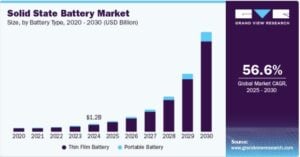
As per FortuneBusinessInsights, the global solid-state battery market is projected to experience rapid growth over the coming years.

  • In 2024, the market size was valued at around $98.96 million, and it is forecasted to reach $119 million by 2025.
  • By 2032, the market could surge to $1.36 billion, growing at a compound annual growth rate of 41.61% between 2025 and 2032.

solid state battery

The partnership with Corning has strengthened QuantumScape’s path from lab research to large-scale production. At the same time, Volkswagen’s backing ensures that once the technology is ready, there’s already a market waiting for it.

Furthermore, with the current government policies, the company is now in a stronger position than ever. However, its future success will depend on how effectively it can scale production and turn its groundbreaking technology into a market-ready product.

And if it succeeds, QuantumScape could play a pivotal role in the EV revolution—reshaping the battery landscape and speeding up the world’s transition to cleaner energy

The post Is QS Stock the Future of EV Batteries? Inside QuantumScape’s Game-Changing Deal with Corning appeared first on Carbon Credits.
UNDP partners with Carbon Markets Africa Summit: “Preparing governments to become carbon market ready”

UNDP partners with Carbon Markets Africa Summit: “Preparing governments to become carbon market ready”

Disseminated on behalf of VUKA Group.

“Carbon markets can unlock billions in finance for the continent”

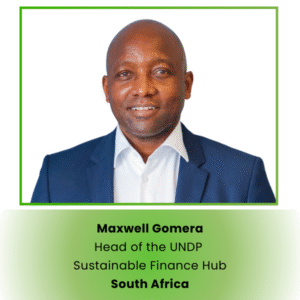
“How is it possible that in 2025, when we are able to send people to the moon, when we are able to create driverless vehicles, we’ve not been able to solve the problem of cooking energy in Africa’s rural areas?” asks Maxwell Gomera, Resident Representative of UNDP South Africa and Director of the Africa Sustainable Finance Hub.

He continues: “This is something that is within our means. And as the United Nations Development Programme (UNDP) Africa Sustainable Finance Hub, we are now working with governments across Africa on how to solve such problems. High-integrity carbon markets can offer Africa a powerful tool to mobilise finance required to advance climate action and ensure fair benefits while driving sustainable and inclusive development.”

Carbon markets unlocking billions

“Africa no longer waits for promises to be kept—we act,” Mr Gomera adds. “Carbon markets can unlock billions in finance, strengthen our institutions, and accelerate both Agenda 2063 and the Paris Agreement’s 1.5°C goal. At UNDP’s Africa Sustainable Finance Hub, we believe in a unified continent ready to harness this opportunity, own its solutions, and lead the global transformation towards resilience and prosperity.”

The UNDP is the official host partner of the upcoming Carbon Markets Africa Summit (CMAS), taking place in Johannesburg from 22 to 23 October, gathering the continent’s entire carbon markets value chain, from successful early carbon market movers, climate-finance-ready projects, and regulatory bodies to global institutional development organisations and investors. 

“We cannot continue talking about Africa’s potential. We must make that potential a reality,” says UNDP’s Maxwell Gomera. “The Carbon Markets Africa Summit matters because we bring together like-minded people to strengthen the ecosystem around a problem that we all share and provide solutions. Our message is: Tomorrow is worth fighting for.” 

The UNDP is making important contributions to the Carbon Markets Africa Summit programme:

CARBON 101

As part of the CARBON 101 pre-summit masterclass on 21 October, UNDP Carbon Market Programme Specialist Bernardin Uzayisaba will facilitate a session on “Why carbon markets matter – and why Africa’s timing is critical.” There is already a lot of interest in this masterclass by delegates who will gain a foundational understanding of global carbon markets—both voluntary and compliance—and their evolving mechanisms: what they are and how they work. In addition, he will explore the global architecture shaped by Article 6 of the Paris Agreement and Africa’s emerging role in a system that’s rapidly evolving.

Day 1: Keynote session

– Maxwell Gomera, Resident Representative of UNDP South Africa and Director of the Africa Sustainable Finance Hub, will deliver a keynote address in the CMAS opening session on 22 October.

Maxwell

Sandra Lindström, Head of International Climate Cooperation, Swedish Energy Agency, a UNDP partner, is another keynote speaker in this session, as she explains: “Sweden has been active in carbon markets for over two decades, and we believe that Article 6 of the Paris Agreement has an important role to play in enabling increased global climate ambition. Our long-standing partnerships in Africa are being ramped up to include cooperation on emissions trading with strong sustainable development contributions”. 

Turning policy into action

As African countries transition from climate ambition to implementation, regulatory clarity is emerging as the cornerstone of carbon market development. UNDP Carbon Market Programme Specialist Bernardin will moderate the discussion on “Africa’s carbon market frameworks: Turning policy into action” in this session, which will explore how national frameworks are evolving post-COP29, what integration of Article 6 looks like on the ground, and how public-private collaboration can drive effective execution. 

NBS & AFOLU discussion

In the sector-focused dialogue on nature-based solutions and AFOLU, Mr Uzayisaba will also join the expert panel discussion to explore carbon methodologies, investment models, policy frameworks, and the role of communities in delivering high-integrity, land-based carbon outcomes.

African companies entering carbon markets

On Day 2, Tomas Sales, Special Advisor for UNDP Africa Sustainable Finance Hub, will co-lead the workshop on “How African companies can enter the carbon market.”
This workshop is designed for African corporates and SMEs looking to understand the business case for engaging in carbon markets. 

[Read the full interview with UNDP’s Maxwell Gomera here.]

VUKA Group 
Carbon Markets Africa Summit is organised by VUKA Group, which has more than 20 years’ experience in serving the business community across Africa. The United Nations Development Programme (UNDP) is the official host organisation. 

Other partners and sponsors for this inaugural event include the following:
Strategic institutional partners: AUDA NEPAD and UNEP.
Diamond sponsor: TASC
Gold sponsors: FSD Africa, SGS and Trees for the Future

Event dates and location:
Dates:
21 October: Pre-summit day
22–23 October: Summit
Location: Johannesburg, South Africa

Contact details for Carbon Markets Africa Summit
Project Lead: Emmanuelle Nicholls 
Cell: +27 83 447 8410  
Email: emmanuelle.nicholls@wearevuka.com  

Event website: About — Carbon Markets Africa

The post UNDP partners with Carbon Markets Africa Summit: “Preparing governments to become carbon market ready” appeared first on Carbon Credits.
AMD Stock Skyrockets with OpenAI Deal, Sparking a New Challenge to Nvidia’s AI Dominance

AMD Stock Skyrockets with OpenAI Deal, Sparking a New Challenge to Nvidia's AI Dominance

OpenAI, ChatGPT maker, and AMD have signed a multi-year deal for AMD to supply chips that will power OpenAI’s future AI systems. As part of the deal, OpenAI will get warrants that allow it to buy up to 10% of AMD’s shares — about 160 million shares — at a very low price. These shares will only be available if OpenAI meets certain goals in performance and deployment.

OpenAI plans to start using 1 gigawatt of computing power with AMD’s new Instinct MI450 chips by the second half of 2026. Over time, this could grow to as much as 6 gigawatts of AI computing power.

The move shows OpenAI’s plan to reduce its heavy dependence on Nvidia. Nvidia remains an important partner, as it has already agreed to provide up to 10 gigawatts of computing power under its own deal with OpenAI. The AMD agreement is not exclusive, which means OpenAI can still work with other chip makers in the future.

AMD CEO, Lisa Su, noted in an interview that:

“You need partnerships like this that really bring the ecosystem together to ensure that, you know, we can really get the best technologies, you know, out there…So we’re super excited about the opportunities here.”

Numbers That Matter: The $100B Power Play Behind OpenAI’s AI Engine

Experts believe the AMD–OpenAI deal could bring AMD tens of billions of dollars in new yearly revenue. It could also generate over 100 billion dollars in new income for OpenAI and its clients over four years.

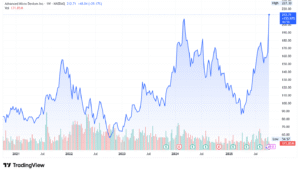
AMD stock price

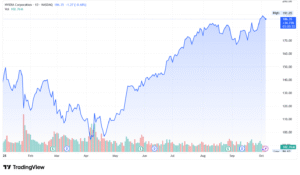
After the announcement, AMD’s stock rose sharply by over 30% trading. On the other hand, Nvidia’s shares dropped slightly, as investors worried about new competition in the AI chip market.

Nvidia stock price

AMD currently has about 1.62 billion shares in total. The warrants given to OpenAI will only be valid if AMD meets specific stock price and performance goals — including reaching $600 per share for the final stage. These financial terms show how large this partnership could become and how much confidence investors now have in AMD’s growing role in AI hardware.

Chip Chess: AMD, Nvidia, and OpenAI’s Strategic Power Moves

Nvidia’s earlier deal with ChatGPT’s owner included up to 10 gigawatts of computing systems. The new AMD partnership doesn’t replace Nvidia — it expands OpenAI’s supply options. The rollout is expected over several years, with the first systems planned for 2026.

However, there are risks. AMD must prove that its chips can perform as well as Nvidia’s in speed, power efficiency, and reliability. There are also challenges in scaling up production, securing parts, and meeting OpenAI’s demanding timelines. 

The warrants are split into parts (“tranches”) tied to both AMD’s stock performance and the rollout of AI systems. That means OpenAI’s potential ownership depends on how well AMD performs.

This deal impacts each of the companies involved:

  • OpenAI gains a second major chip supplier, reducing its risk of relying on one company. It also strengthens ties with AMD through possible ownership, helping it expand its AI computing capacity over time.
  • AMD earns a major boost in reputation and a long-term client in OpenAI. The deal supports AMD’s AI growth strategy and could help it compete with Nvidia. But it also adds pressure to meet production goals, manage costs, and hit strict performance targets.
  • Nvidia faces stronger competition in the AI chip space. This could affect its prices and profit margins over time. To stay ahead, Nvidia will likely focus on improving chip efficiency, system integration, and value-added services while monitoring demand shifts between itself and AMD.

RELATED: TSMC Dominates AI Chip Market with Record Sales—But Can It Tackle Its Rising Emissions?

The Carbon Cost of Intelligence: AI’s Growing Energy Appetite

While this deal is a big step in business and technology, it also raises environmental, social, and governance (ESG) concerns — especially around power use and emissions.

Wired for Power: How 6 Gigawatts Could Change AI’s Footprint

AI data centers use huge amounts of electricity. The International Energy Agency (IEA) says power demand from global data centers could more than double by 2030, reaching around 945 terawatt-hours — about the same as Japan’s total power use today. In developed countries, data centers could drive over 20% of all electricity demand growth.

data center electricity demand due AI 2030
Source: IEA

Deloitte estimates that in 2025, data centers will use around 536 terawatt-hours of power — about 2% of the world’s total. By 2030, this could exceed 1,000 terawatt-hours.

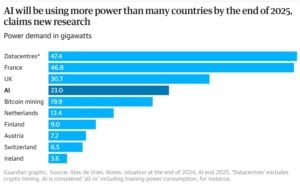
Some studies suggest AI systems alone might take up nearly 50% of all data center energy use by late 2025, using about 23 gigawatts of power — roughly equal to the total electricity demand of small countries.

AI power use by end 2025
Source: The Guardian

If global AI hardware demand hits between 5.3 and 9.4 gigawatts in 2025, total energy use could reach 46 to 82 terawatt-hours — similar to what Switzerland or Finland uses each year. That means OpenAI’s 6-gigawatt deployment with AMD could consume a major share of global power, depending on how efficiently it runs.

A single high-end training node with eight GPUs can draw up to 8.4 kilowatts of power when training AI models like ChatGPT. Scaled across thousands of nodes, total power use becomes massive.

Silicon and Sustainability: The Hidden Cost of Making AI Chips

AI chips also affect the environment during manufacturing. Producing GPUs requires mining rare minerals, refining metals, and making semiconductors — all of which use a lot of energy and create waste.

Studies show that while power use has the largest climate impact, making the chips themselves also causes issues like mineral depletion, water pollution, and toxic waste. Some estimates say training advanced AI models can use up to 4,600 times more energy than older machine-learning systems.

If AI adoption continues to grow quickly, its total electricity use could increase 24 times by 2030Because of this, researchers and companies are exploring ways to make AI more energy-efficient.

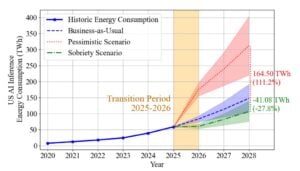
Smaller and optimized models can cut energy use by nearly 28% without much loss in accuracy. Streamlining data and removing extra model layers can lower energy needs by more than 90% in some cases.

The researchers noted that in the U.S., using more efficient AI models could save about 16.25 terawatt-hours of power in 2025 — the same amount as two nuclear plants produce in a year. By 2028, the savings could reach 41.8 terawatt-hours, equal to seven nuclear plants. These cuts show how choosing better models can greatly reduce the energy use of data centers and make AI more sustainable.

Projected US Data Center Energy Consumption
Source: https://doi.org/10.48550/arXiv.2510.01889

Greening the Grid: Can AMD, Nvidia, and OpenAI Align AI with ESG?

From an ESG standpoint, the AMD–OpenAI deal puts pressure on all three companies — OpenAI, AMD, and Nvidia — to act responsibly as AI expands. They are expected to:

  • Disclose how much energy and emissions come from their AI systems.
  • Use renewable energy or carbon offsets to power their data centers.
  • Build strong governance rules to ensure fairness, privacy, and transparency in AI use.
  • Be accountable to investors, regulators, and the public about their environmental and social impacts.

Some experts recommend that companies fully integrate ESG principles into AI projects — assessing environmental and social risks early, applying strong oversight, and aligning goals with long-term sustainability.

The AMD–OpenAI deal marks a new chapter in the AI hardware race. It could reshape how computing power is built, supplied, and shared between tech leaders. But as AI infrastructure grows, so will its energy demands. Balancing performance with sustainability will be one of the biggest challenges for the big tech in the years ahead.

The post AMD Stock Skyrockets with OpenAI Deal, Sparking a New Challenge to Nvidia’s AI Dominance appeared first on Carbon Credits.

Bitcoin Breaks Records Passing $126K: The Bull Run That’s Redefining Digital Gold and Climate Debate

Bitcoin Breaks Records Passing $125K: The Bull Run That’s Redefining Digital Gold and Climate Debate

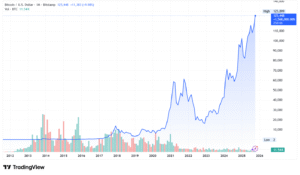
Bitcoin has broken another record, rising above $126,279 USD on the Coinbase BTC/USD pair on October 6, 2025. The price jump came as strong inflows poured into Bitcoin exchange-traded funds (ETFs) and as the U.S. government faced a partial shutdown.

The rally shows how much investor confidence has grown in digital assets. Even in uncertain economic conditions, Bitcoin continues to attract both institutional and retail investors. Analysts say that hundreds of millions of dollars entered Bitcoin ETFs in just a single day, helping push prices to new highs.

This rise also reflects a wider shift in financial markets. Investors are using Bitcoin not just as a speculative asset but also as a hedge against inflation and government instability. As one analyst put it, “Bitcoin’s resilience during macroeconomic stress strengthens its case as digital gold.”

The $126K Question: What’s Driving Bitcoin’s Meteoric Rise?

There are a few main reasons behind Bitcoin’s latest surge, and it’s hitting over $126,000.

bitcoin price

First, institutional demand is back in full force. Spot Bitcoin ETFs are now approved and active in the U.S., making it easier for big investors to buy Bitcoin without dealing with the complexity of wallets and exchanges.

In recent trading sessions, U.S. spot Bitcoin ETFs saw total inflows of around $307 million in a single day. BlackRock’s iShares Bitcoin Trust (IBIT) alone accounted for $177 million of that amount. These are large numbers that reflect strong confidence from big players like asset managers, pension funds, and hedge funds.

Second, the U.S. government shutdown caused some investors to move money into alternative assets. When government operations slow or economic uncertainty grows, investors often turn to decentralized assets like Bitcoin as a form of protection.

Finally, market momentum itself plays a big role. As prices climb, new buyers enter, creating a feedback loop that drives Bitcoin even higher.

Despite this, analysts warn that volatility remains high. Sharp corrections are still possible as traders take profits or respond to changing policies.

The Environmental Side of Bitcoin

While the price surge excites investors, it also renews focus on Bitcoin’s environmental impact. Mining Bitcoin uses a lot of energy. That energy demand produces a significant amount of carbon emissions.

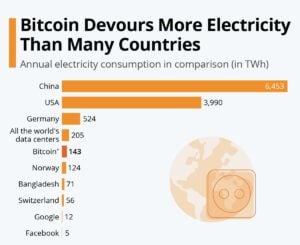
Estimates show that the Bitcoin network consumes around 175 to 180 terawatt-hours (TWh) of electricity each year. This is similar to the yearly power use of countries such as the Netherlands or Argentina, and even more than Norway.

Bitcoin energy use versus countries
20210505_Bitcoin_Energy_EN

That level of energy use leads to about 98 million tonnes of CO₂ emissions every year. To put that in perspective, that’s roughly the same as the total annual emissions of some smaller developed countries.

  • Each Bitcoin transaction can generate hundreds of kilograms of CO₂ (672 kg of CO₂), roughly the same as driving a gasoline car for more than 1,000 miles.

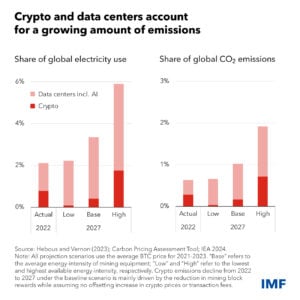
Globally, data centers and crypto mining together now use around 2% of the world’s electricity. Their combined emissions account for nearly 1% of global carbon output. If mining continues to grow, this share could rise further, raising questions about whether such growth is sustainable in a net-zero world.

crypto and data centers emissions growing
Source: IMF

Beyond the Blockchain: The Hidden E-Waste Problem

The environmental footprint of Bitcoin doesn’t stop at electricity. Mining requires powerful machines called ASICs (Application-Specific Integrated Circuits). Producing these machines consumes a lot of materials and energy.

Mining hardware becomes outdated quickly, often within one to two years. Newer models are more efficient, forcing miners to replace old machines. This creates a steady stream of electronic waste (e-waste).

A study from the United Nations University found that global e-waste could exceed 75 million tonnes per year by 2030, and crypto mining adds to this problem.

Building the machines also requires rare minerals like lithium, nickel, and copper. Extracting and refining these resources can harm local ecosystems and produce toxic waste. Manufacturing contributes up to 80% of the total lifecycle impact of some mining systems.

These factors mean that even before a Bitcoin is mined, environmental costs are already being paid.

Bitcoin’s Race Toward Renewable Power

In response, parts of the Bitcoin industry are shifting toward cleaner energy. Reports suggest that by mid-2025, about 52% of Bitcoin’s power mix will come from renewable or low-carbon sources like hydropower, wind, and solar.

Bitcoin electricity use and mix by method
Source: Cambridge Report

Some miners have built facilities near renewable energy plants, using excess energy that would otherwise go to waste. Others buy carbon credits or join programs to offset their emissions.

For example, miners in Iceland and Norway already rely almost entirely on geothermal and hydropower, giving them some of the cleanest operations in the world. In Texas, where many U.S. miners operate, some companies now run flexible systems that shut down during peak electricity demand, helping stabilize the power grid.

However, not all mining is clean. Many sites in countries like Kazakhstan or regions in the U.S. still depend on coal or natural gas. These differences make it harder to calculate the true carbon footprint of the entire Bitcoin network.

Regulators Step In: Can Bitcoin Go Green Under Pressure?

As Bitcoin grows, so does pressure from regulators and ESG-focused investors. They want more transparency about how Bitcoin is mined and how much carbon it emits.

Some governments have discussed banning or limiting mining in areas with high emissions. However, bans can push miners to relocate to countries with dirtier energy, which increases global emissions instead of reducing them — a problem known as carbon leakage.

A more balanced solution could be a carbon tax on mining energy use. A report from the International Monetary Fund (IMF) suggested that a small tax — around $0.05 per kilowatt-hour — could both reduce emissions and generate government revenue.

Meanwhile, new frameworks for carbon intensity labeling are being discussed. These would give each cryptocurrency a score showing how clean or dirty its energy use is. Such tools could help investors choose more sustainable digital assets.

Institutional investors are also demanding better disclosure. They want mining companies to report their power sources, total energy use, and steps taken to reduce emissions. Without clear data, Bitcoin may find it difficult to fit into portfolios that follow ESG principles.

A Turning Point for Bitcoin’s Future

Bitcoin’s climb past $126,000 marks a major moment for the digital asset. It confirms that investor appetite remains strong and that Bitcoin has matured into a key part of the global financial system.

But the environmental costs are also becoming clearer. To remain part of a sustainable economy, the Bitcoin industry will need to:

  • Use cleaner energy sources.
  • Improve mining efficiency and reduce power per transaction.
  • Extend hardware lifespan and recycle old machines.
  • Increase transparency about emissions.
  • Work with regulators on smart climate policies.

If these steps are in place, Bitcoin could continue to grow while shrinking its environmental footprint.

In the long run, balancing profit and planet will define Bitcoin’s role in the new financial era. Its future success will depend not only on market prices but also on how responsibly the network manages its impact on climate and energy systems.

The post Bitcoin Breaks Records Passing $126K: The Bull Run That’s Redefining Digital Gold and Climate Debate appeared first on Carbon Credits.
U.S. Tungsten Revival: Rising Demand, Tight Supply, and Top Stocks to Watch in 2025

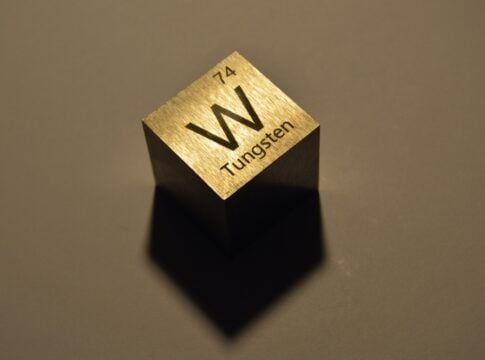
tungsten

Tungsten, a critical mineral with unmatched heat resistance and strength, is gaining global attention. It’s dense, brittle, and grayish-white, with the highest melting point and tensile strength of any pure metal. These traits make it vital for high-performance applications. and industries needing extreme durability.

With China controlling most of the supply, the U.S. and allies are racing to secure domestic sources and diversify supply chains. Let’s deep dive into the complete outlook of the tungsten market below:

Demand Drivers: Why Tungsten Keeps Rising in Importance

The tungsten market expanded from USD 6.04 billion in 2024 to USD 6.50 billion in 2025. It is projected to grow at a CAGR of 7.95%, reaching USD 11.16 billion by 2032.

Its demand is rising due to industrial and defense needs. Key drivers include:

  • Electronics & Semiconductors: Vital for high-performance chips and circuits.
  • Defense & Aerospace: Used in rocket nozzles and armor-piercing ammunition. It also strengthens steel alloys for aerospace and defense.
  • Tungsten is used in turbine blades and as a lead substitute in ammunition.
  • Industrial Tools: Crucial for cutting and drilling in mining, construction, lighting, welding, and manufacturing.
  • Green technology and electrification: Increasing use of tungsten in electric vehicle batteries, energy storage, and renewable energy technologies

Industry experts are indicating that global tungsten demand is expected to rise in 2025 and the next few years. With geopolitical tensions increasing, the U.S. and allies anticipate further growth as supply diversification becomes essential.

China’s Tight Grip on Tungsten Supply

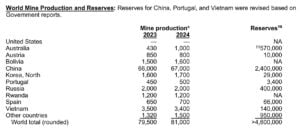
Tungsten is found worldwide, but most supply comes from China. It produces over 80% of global tungsten and holds more than half of the known reserves. Vietnam and Russia follow, contributing only a small share. Other producers like Spain, Austria, Bolivia, and Rwanda account for just 1% to 2% each.

Interestingly, other countries own about 35% of global reserves but produce only 1%. This gap shows growth potential but highlights challenges like high costs and long permitting times.

China also controls production. In late 2024, Beijing introduced new export licensing rules for tungsten, tightening supply further. Analysts view these controls as part of China’s strategy in global trade.

Global Push for Supply Chain Resilience

China’s dominance has raised concerns. Countries are diversifying their tungsten supply chains. New projects in Australia, South Korea, Canada, and Africa show promise, but scaling up will take years.

Vietnam, Russia, and Spain are boosting production. Smaller nations like Rwanda are gaining attention for their resources. However, these efforts face high costs and technical challenges.

China’s market control is expected to last until the early 2030s, but momentum is shifting toward more resilient supply options.

TUNGSTEN supply
Source: USGS

U.S. Tungsten Dependence: A Strategic Risk for Defense

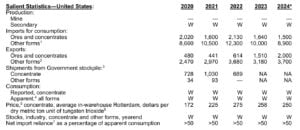
As per the U.S. Geological Survey, the U.S. has not mined/ tungsten since 2015. It relies mostly on imports, especially from China. Notably, in 2023 U.S. imported over 10,000 metric tons of tungsten.

Most U.S. tungsten is used in cemented carbide parts for construction, mining, and drilling. The rest goes to specialty steels, defense alloys, electronics, and chemicals.

This dependence poses serious risks as tungsten is vital for defense applications, including armor-piercing munitions and missile systems. Thus, supply disruptions could threaten U.S. military readiness and high-tech industries.

U.S. tungsten
Source: USGS

DoD’s Big Investments and New Rules

The U.S. Department of Defense (DoD) is boosting efforts to secure tungsten, a critical metal for defense systems. Since last year, it has directed millions toward U.S. and allied projects.

In July 2025, it awarded $6.2 million under the Defense Production Act to Golden Metal Resources for the Pilot Mountain project in Nevada, the largest undeveloped tungsten deposit in the U.S.

The project aims to restore domestic production, reduce reliance on China’s 80% market share, and prepare for the 2027 ban on China- and Russia-sourced tungsten in defense contracts.

Procurement Rules

A new U.S. law prevents the Pentagon from sourcing tungsten, magnets, and other critical materials from adversarial nations like China, Russia, Iran, and North Korea. By January 2027, these rules will also cover the mining stage. This means tungsten mined in these countries can’t enter U.S. defense supply chains.

Thus, the U.S. Department of Defense now views tungsten as a national security issue. In summary, its strategy focuses on:

  • Diversifying supply chains beyond China.
  • Funding domestic exploration and allied projects.
  • Expanding metallurgical testing and engineering studies.
  • Tightening procurement rules to phase out adversarial tungsten by 2027.

This effort demonstrates a strong commitment to boosting domestic tungsten production for new defense systems and advanced manufacturing. Additionally, it also aims to build secure supply partnerships with allies.

Top Tungsten Stocks Gaining Investor Attention

In 2025, tungsten stocks are attracting attention as the metal becomes essential across industries. Rising demand and tight supply make these stocks appealing. Investors value tungsten for its strategic role in technology and its relatively stable prices compared to other critical minerals.

Elemental Altus Royalties Corp. (ELE.V) Rises on Strong Momentum

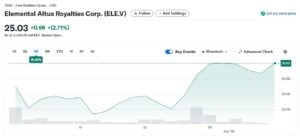
Canada-based Elemental Altus trades around $15.76 USD (OTC) and CAD 24.37 (TSX Venture) as of October 2025. Its shares climbed nearly 47% in six months, outperforming peers, with a market cap of $388 million USD. Analysts set the TSX target price at CAD 25.92, signaling upside potential.

In September 2025, it merged with EMX Royalty to form Elemental Royalty Corp. Tether Investments backed the deal with $100 million USD to buy 75 million shares at CAD 1.84 each. The capital fuels growth, acquisitions, and expansion in tungsten, rare earths, and other critical minerals.

Elemental Altus leads in the critical minerals’ royalty space, with strong stock momentum and strategic investments positioning it for growth.

Elemental Altus Royalties Corp.
Source: Yahoo Finance

American Tungsten (TUNG) Fuels U.S. Supply Revival

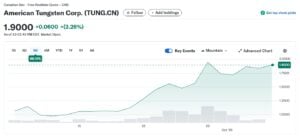
American Tungsten Corp. (TUNG) is gaining attention as a pure-play tungsten stock. In February 2025, it hit an all-time high of CA$2.37, reflecting strong investor confidence in the company’s efforts to develop domestic tungsten resources.

Currently, it is trading at around CAD 1.84 per share. Analysts forecast the stock to rise through the rest of 2025 and into 2026.

With a market capitalization of roughly CAD 25.72 million, the stock has experienced some volatility. This was influenced by critical minerals sector trends and tungsten market dynamics.

American Tungsten (TUNG)
Source: Yahoo Finance

However, the company’s performance remains closely tied to progress in U.S. tungsten projects, government support, and global supply-demand trends.

In March, the company announced that its application to join the U.S. Defense Industrial Base Consortium (DIBC) had been approved. The consortium, managed by Advanced Technology International (ATI) for the Department of Defense (DoD), connects private-sector companies with the U.S. Government to strengthen the defense supply chain.

Another key development is the IMA Mine Project in Lemhi County, Idaho, a major step in restoring U.S. tungsten production. This critical mineral supports tank armor, hypersonic weapons, submarine hulls, and semiconductors.

The mine sat idle for nearly 70 years. It is now being redeveloped to meet rising domestic demand. With a few publicly traded tungsten companies existing in North America, American Tungsten is the top choice for investors in U.S. supply chains.

The Rise of Tungsten Juniors

However, this year, several junior mining companies focusing on tungsten in the U.S. are also gaining attention, particularly those developing critical mineral resources to strengthen domestic supply chains.

One such example is Patriot Critical Minerals. It owns100% of the MEGA Deposit in Elko County, Nevada, a strategically located resource that could help close the domestic tungsten supply gap.

The deposit contains approximately 19 million tonnes of mineralized material, with about 32,300 tonnes of contained tungsten trioxide.

Tungsten Prices Stay High Amid Tight Supply

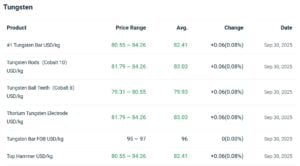
In September 2025, tungsten bar FOB prices held steady at USD 95–97 per kg. Meanwhile, tungsten concentrates (scheelite and wolframite) traded at RMB 284,000 per ton. This marked a 1.1% drop from peak levels but doubled the price from early 2025, showing strong market volatility.

tungsten prices
Source: SMM

However, global prices continue to fluctuate due to Chinese export restrictions, production issues, and rising demand in defense, aerospace, and electronics. At the same time, supply-demand gaps, geopolitical tensions, and stockpiling keep prices elevated.

In conclusion, rising demand, tight global supply, and national security concerns make tungsten a strategic mineral. Consequently, U.S. projects and companies like Elemental Altus, American Tungsten, and Patriot Critical Minerals are actively reducing reliance on China.

As production ramps up, tungsten will play an increasingly vital role in defense, technology, and industrial applications.

The post U.S. Tungsten Revival: Rising Demand, Tight Supply, and Top Stocks to Watch in 2025 appeared first on Carbon Credits.

Sungrow Powers ENGIE’s €290M Vilvoorde Battery Park, Europe’s Largest of Its Kind

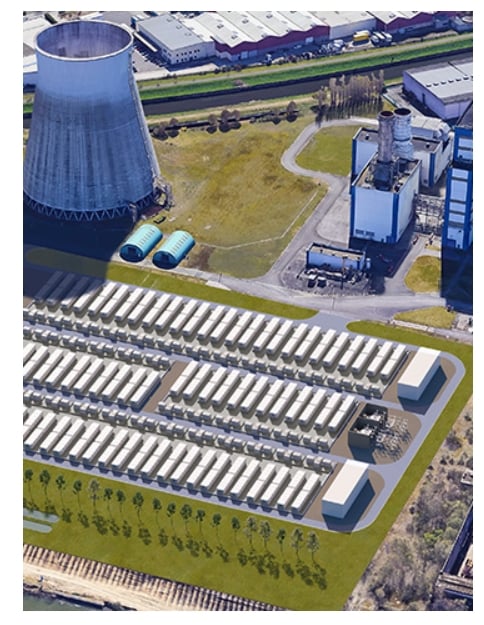
Sungrow, a leader in PV inverters and energy storage, has connected 400 MWh of ENGIE’s 200 MW/800 MWh battery project in Vilvoorde, Belgium, to the grid. This marks the start of mainland Europe’s largest battery project, featuring 320 units of Sungrow’s PowerTitan liquid-cooled technology.

The company highlights that the second phase will be connected by late 2025. It will provide reliable, clean power to nearly 96,000 Belgian households. Located just north of Brussels, this project is a major step toward green energy and energy security for Belgium.

From Gas to Gigawatts: ENGIE’s Bold Battery Investment

Vilvoorde has been linked to electricity generation since the 1960s, mainly using fossil fuels. But ENGIE is transforming the 30-hectare site by adding a three-hectare battery park next to its gas plant.

Belgium’s Capacity Remuneration Mechanism (CRM) auctions began in 2021. They ensure enough supply to prevent shortages, especially in winter. ENGIE won the project through this mechanism. Construction started after Elia, the national grid operator, approved the plan in late 2023.

Moving on, the Vilvoorde battery park will launch in two phases, each with 100 MW, spaced three months apart. Phase one is already operational. Phase two should be completed by late 2025. ENGIE is investing €230–290 million. This project is the first of its size in continental Europe, outside the UK.

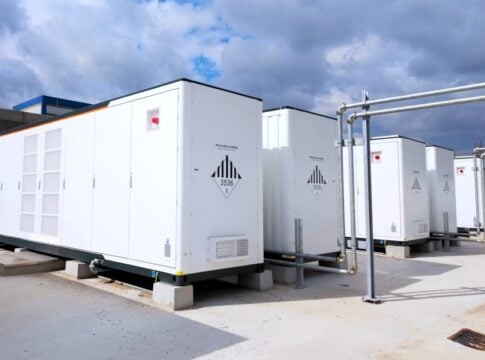
Vilvoorde Battery Park

Vilvoorde Battery project
Source: Engie

Scaling Energy Storage

Belgium’s experience with energy storage has been limited to pilot projects, like the smaller Battery Park in Drogenbos. With Vilvoorde, ENGIE is moving from testing to large-scale deployment.

“This project shows One ENGIE in action,” said Quentin Renoy, ENGIE Belgium’s BESS Business Developer. “It’s about flexible generation and teamwork across market analysis, legal, and public relations.”

The battery park has a 15-year contract with Elia. This ensures a steady income while supporting Belgium’s renewable grid.

A Reliable Backup

While storage offers clean energy, Belgium still faces gaps between demand and renewable capacity. In October 2023, authorities confirmed that ENGIE’s former gas power plant in Vilvoorde will serve as a backup unit for three years, with options to extend.

This dual approach—using flexible storage and legacy plants—ensures Belgium can transition without supply shortages.

ENGIE also plans similar projects in Kallo (near Antwerp) and Drogenbos, expected to start in 2024.

Europe’s Modern Infrastructure for a Net-Zero Future

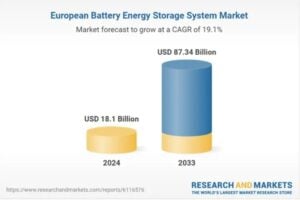
  • Data shows that the European Battery Energy Storage System (BESS) market is expected to jump from US$18.1 billion in 2024 to US$87.34 billion by 2033, growing at a 19.11% CAGR.

This rise is attributed to increased renewable energy use, government support, and lower battery costs. BESS boosts energy efficiency by storing extra renewable power, helping grids stay stable.

Countries such as France, Germany, the UK, and Spain are rapidly expanding BESS to enhance grid resilience with innovative battery technologies.

europe bess

The Vilvoorde project does more than provide electricity for households. It modernizes Europe’s energy infrastructure. By absorbing excess renewable power during high-production times and releasing it during peak demand, the system tackles clean energy’s biggest challenge: intermittency.

Large-scale Battery Energy Storage Systems (BESS) like this ensure stability, prevent grid congestion, and create a model for integrating renewables into existing grids across Europe.

Safe, Smart, and Scalable Technology

Both phases of the Vilvoorde project use Sungrow’s PowerTitan liquid-cooled storage units. These units have compact, modular designs that optimize land use and allow quick deployment.

They include intelligent cooling to maintain temperature stability, extend battery life, and reduce costs. This setup ensures safety, efficiency, and reliability.

Vincent Verbeke, CEO of ENGIE Belgium, said,

“With the first series of batteries now operational in Vilvoorde, ENGIE is delivering part of the additional flexibility the electricity grid requires to balance supply and demand. The efficient construction of this battery park is only possible thanks to strong partnerships. By working hand in hand with trusted and innovative partners such as Sungrow, we can continue to accelerate the integration of renewables into the grid, and help deliver a more reliable, sustainable and affordable energy system.”

Sungrow’s Growing Footprint in Europe

Sungrow has a solid presence in the BeNeLux region, providing technical support, sales, and after-sales services from local offices and its R&D center in Amsterdam. The company engages with the market through industry events like Intersolution and Laadinfra Congress, while hosting its own summits, such as the EV Charging Summit in Amsterdam.

This local presence ensures Sungrow delivers effective solutions to partners, reinforcing its commitment to Europe’s clean energy transition.

Globally, Sungrow has over 28 years of experience in renewable power solutions, having installed 870 GW of power electronic converters worldwide by June 2025. BloombergNEF consistently ranks Sungrow as the world’s most bankable PV inverter and energy storage provider.

Carbon Neutral Goals

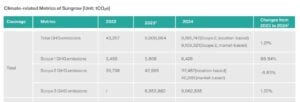
The company has pledged to achieve operational carbon neutrality by 2028 (Scope 1 and 2 emissions) while managing Scope 3 emissions across its supply chain.

sungrow emissions
Source: Sungrow

Its strategy includes:

  • Phasing out fuel-powered vehicles and forklifts for electric alternatives.
  • Electrifying all new canteens and eliminating gas use in operations.
  • Removing SF6-based equipment from distribution systems.
  • Expanding renewable electricity use across facilities.
  • Improving energy efficiency in production and manufacturing.

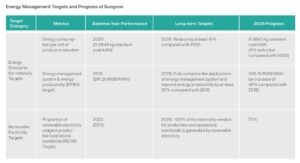
Sungrow is committed to staying on track. It has joined initiatives like RE100, which focuses on 100% renewable electricity, and EP100, which aims for better energy productivity.

It has set measurable performance targets, including energy consumption per production unit. Annual monitoring ensures transparency and accountability.

sungrow renewable energy
Source: Sungrow

Vilvoorde Battery Park: A Blueprint for Europe

The Vilvoorde battery park is a model for Europe’s energy transition. It shows how large-scale storage can stabilize grids, support renewables, and cut fossil fuel use.

By combining ENGIE’s expertise in energy management with Sungrow’s technology, Belgium is positioning itself at the forefront of Europe’s clean energy transformation.

As the continent works toward its 2050 net-zero goals, projects like Vilvoorde show us the future of energy. They rely on flexibility, innovation, and strong partnerships. This battery project marks a key step in Europe’s clean energy journey.

It proves that large-scale storage can power homes and balance renewable supply. With ENGIE’s investment and Sungrow’s technology, Belgium leads the way to a greener, stronger power grid. As phase two nears, the project shows that energy storage is crucial for Europe’s net-zero goals.

The post Sungrow Powers ENGIE’s €290M Vilvoorde Battery Park, Europe’s Largest of Its Kind appeared first on Carbon Credits.