U.S. DOE Backs 11 Advanced Nuclear Reactors Under Trump’s Fast-Track Pilot Program

us nuclear

The U.S. Department of Energy (DOE) has officially launched President Trump’s Nuclear Reactor Pilot Program, selecting 11 advanced reactor projects to move closer to deployment. The initiative aims to have at least three test reactors built, operational, and achieving criticality by July 4, 2026, using DOE’s streamlined authorization process.

Deputy Secretary of Energy James P. Danly noted,

“President Trump’s Reactor Pilot Program is a call to action. These companies aim to all safely achieve criticality by Independence Day, and DOE will do everything we can to support their efforts.”  

DOE Overhaul Strengthens U.S. Nuclear Leadership

The program reflects President Trump’s goal to restore U.S. leadership in nuclear power, ensuring a reliable, affordable, and diversified energy mix. It follows Executive Order 14301, signed in June 2025, which reformed DOE’s reactor testing procedures and opened the door for projects outside national laboratory sites to receive DOE authorization under the Atomic Energy Act.

The selected companies are:

  • Aalo Atomics Inc.

  • Antares Nuclear Inc.

  • Atomic Alchemy Inc.

  • Deep Fission Inc.

  • Last Energy Inc.

  • Oklo Inc.

  • Natura Resources LLC

  • Radiant Industries Inc.

  • Terrestrial Energy Inc.

  • Valar Atomics Inc.

Securing DOE authorization is expected to help these developers attract private investment and speed up their path toward commercial licensing.

Significantly, earlier in August, the DOE conditionally selected Oak Ridge, Tennessee-based Standard Nuclear as the first company to join its newly launched nuclear fuel line pilot program.

nuclear power U.S.
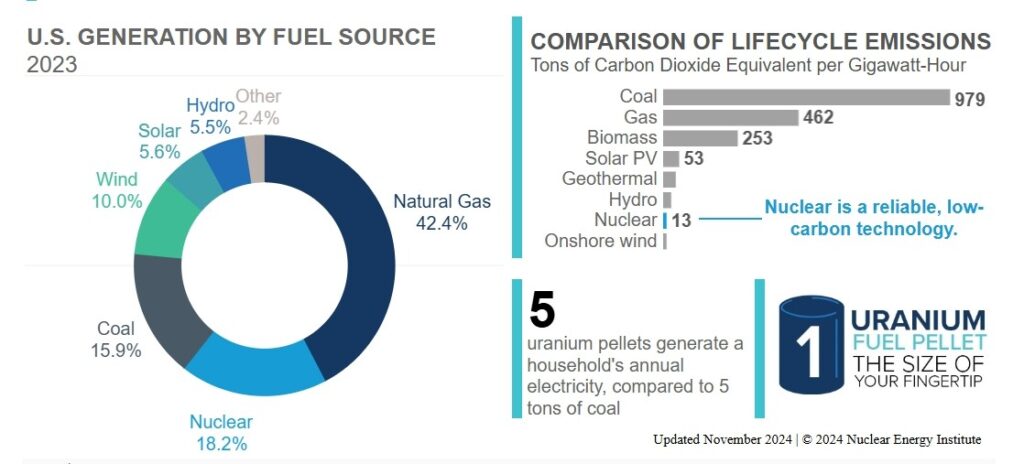
Source: NEI

Background and Program Scope

On May 23, 2025, President Trump issued four executive orders directing DOE to spearhead a U.S. nuclear revival. EO 14301, in particular, streamlined national lab testing rules and called for this pilot program to accelerate advanced reactor demonstrations.

The Reactor Pilot Program provides a direct DOE pathway for rapid testing and deployment. The goal is to achieve criticality for at least three new reactor designs, built outside of national laboratories, by mid-2026.

DOE began accepting applications on June 18, 2025, with the first-round closing July 21. Additional applications will be accepted on a rolling basis. According to the World Nuclear Association, the submissions showcase an exceptional range of innovation among U.S. reactor developers.

Each participating company will cover the costs of design, manufacturing, construction, operation, and eventual decommissioning of its test reactor. DOE will work closely with them to ensure safe, efficient progress toward commercialization.

U.S. Nuclear Power Snapshot

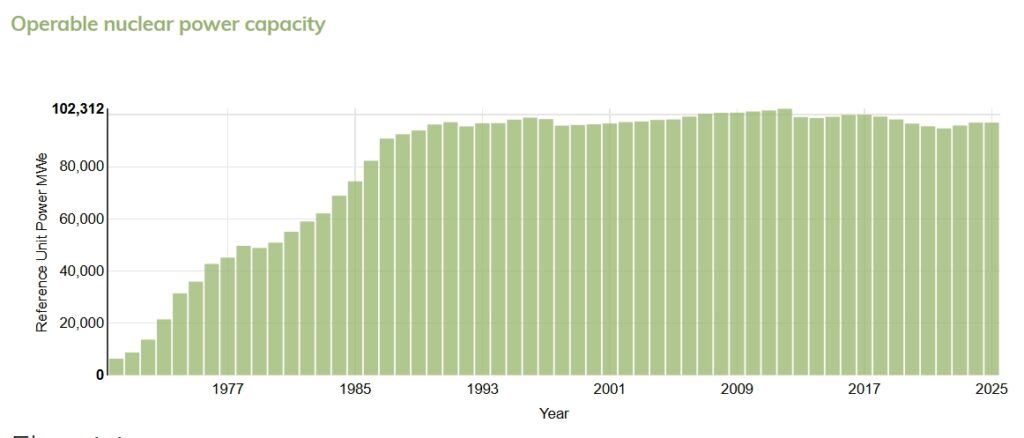
The United States is the world’s largest producer of nuclear power, accounting for approximately 30% of global nuclear electricity generation. Across the nation, 94 nuclear reactors power millions of homes and play a key role in supporting local economies.

The World Nuclear Association stated that in 2023, U.S. reactors produced 779 TWh, making up 19% of the nation’s total electricity output. In May 2025, the administration set a target to quadruple the country’s nuclear capacity to 400 GWe by 2050.

us nuclear
Source: WNA

Also, according to the International Energy Agency, the U.S. government aims to add 35 GW of new nuclear capacity by 2035, including plants already under construction, with a long-term vision to deploy 200 GW by 2050—tripling today’s capacity.

SMR Drive Gains Momentum

In March, the DOE reissued a $900 million funding call to advance small modular reactor deployment. This aligns with President Trump’s push to boost American energy and AI leadership.

In another move, the U.S. Air Force chose California-based Oklo Inc. to build a microreactor at Eielson Base in Alaska, which showed growing military trust in the technology. The project was part of a broader move toward SMRs and microreactors, delivering reliable, carbon-free power where wind and solar fell short.

SMR
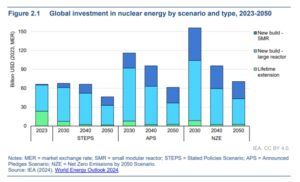
Source: IEA

All in all, the DOE’s Advanced Reactor Demonstration Program complements this effort, providing over $3 billion in funding for SMRs and other cutting-edge designs.

The post U.S. DOE Backs 11 Advanced Nuclear Reactors Under Trump’s Fast-Track Pilot Program appeared first on Carbon Credits.


Apple: $94 Billion Record Earnings and the Breakthrough Climate Solutions Fueling Growth

apple

Apple stock (AAPL) has been on an upward trend, fueled by a mix of strategic investments, strong earnings, and a push toward domestic manufacturing. Investors are taking notice as the tech giant positions itself to reduce tariff risks, strengthen its supply chain, and meet rising demand for its products—all while staying true to its sustainability goals.

The Rise of AAPL Stock: Why and How

Several factors are driving the recent rally in Apple (AAPL) shares. The company’s $100 billion expansion of its U.S. manufacturing program, record-breaking quarterly results, partnerships with domestic suppliers, and commitment to recycled materials have combined to create strong investor confidence.

On top of that, bullish technical signals and potential AI collaborations are adding to the market enthusiasm.

“As of August 14, 2025, Apple Inc. (AAPL) is trading at $233.33 USD on the NASDAQ exchange, reflecting a 1.6% increase (+$3.68) from the previous close.”

APPLE AAPL Stock
Source: Yahoo Finance

Let’s dive deeper into this:

$100 Billion Boost to American Manufacturing

Apple recently pledged an additional $100 billion to expand its U.S. manufacturing footprint, raising its total four-year American Manufacturing Program commitment to $600 billion. This plan includes opening new plants, offering supplier grants, and forming partnerships for key components like glass and chips.

The move is seen as a direct response to trade tensions with Washington, particularly past threats from President Donald Trump to impose a 25% tariff if iPhones weren’t made in the U.S. By increasing domestic production, Apple is improving its standing with policymakers and reducing the risk of costly import tariffs.

Key Partnerships Strengthen U.S. Supply Chain

As per media reports, the manufacturing expansion covers a broad network of U.S.-based suppliers and partners:

  • Corning (GLW): Expanding smartphone glass production in Kentucky.
  • Coherent (COHR): Producing VCSEL lasers for Face ID in Texas.
  • TSMC, GlobalFoundries (GFS), and Texas Instruments (TXN): Collaborating on semiconductor production across Arizona, New York, Utah, and Texas.
  • GlobalFoundries: Manufacturing wireless charging tech in New York.

Apple says this reshoring effort will enable an “end-to-end” chipmaking process in the U.S., from wafers to finished semiconductors. Over 19 billion chips for Apple products will be made domestically this year.

Rare Earth Partnership with MP Materials

Apple is also investing $500 million in MP Materials (NYSE: MP) to secure a long-term supply of rare earth magnets made entirely from recycled materials. These will be processed and manufactured in the U.S., supporting both supply chain resilience and Apple’s environmental commitments.

Apple’s Strong Earnings Fuel Investor Optimism

Apple’s latest earnings report added fuel to the rally. The company posted record June-quarter revenue of $94 billion—up 10% year over year. Product sales hit $66.6 billion, led by strong demand for the new iPhone 16 lineup and Mac computers.

Services revenue rose 13% to $27.4 billion, showing the company’s ability to diversify beyond hardware and generate steady, high-margin income.

Sustainability at the Core of Apple Products

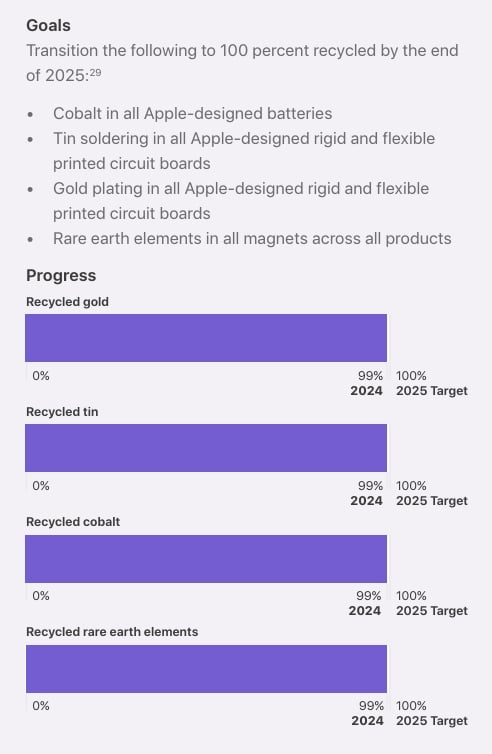
Apple’s stock story also has a purpose. As per its latest sustainability report, in 2024, 24% of all product materials came from recycled or renewable sources, including:

  • 99% recycled rare earth elements in magnets
  • 99% recycled cobalt in batteries
  • 100% recycled aluminum in many cases

Apple avoided 41 million metric tons of greenhouse gas emissions in 2024—equal to taking 9 million cars off the road. The company aims for a 75% emissions reduction from 2015 levels.

apple products
Source: Apple

AI Partnerships Could Add Another Growth Driver

Reports suggest Apple is exploring partnerships with OpenAI and Anthropic to enhance Siri. If successful, these deals could strengthen Apple’s position in the fast-growing AI market.

Can U.S. Manufacturing Plans Keep the Rally Going?

Apple’s reshoring strategy could sustain momentum over the medium term. By resonating with Trump’s “America First” policies and reducing reliance on overseas suppliers, the company is lowering regulatory risks and earning political goodwill.

Nonetheless, challenges remain, but the long-term benefits could outweigh them by securing a more resilient supply chain.

From this analysis, it’s evident that Apple’s recent gains reflect a powerful combination of U.S. manufacturing investments, record earnings, sustainability leadership, and potential AI growth. By strategically aligning with domestic policy and building a stronger supply chain, the company is reducing uncertainty, which is one of the biggest drivers of investor confidence.

The post Apple: $94 Billion Record Earnings and the Breakthrough Climate Solutions Fueling Growth appeared first on Carbon Credits.
U.S. DOE Reveals $1B Funding to Boost Critical Minerals Supply Chain

U.S. DOE Reveals $1B Funding to Boost Critical Minerals Supply Chain

The U.S. Department of Energy (DOE) has announced a nearly $1 billion program to strengthen America’s supply of critical minerals and materials. The funding will support mining, processing, and manufacturing within the country. These materials power clean energy technologies and are vital for national security.

This funding builds on President Trump’s Executive Order to Unleash American Energy. It also supports the DOE’s wider Critical Minerals and Materials Program, which focuses on boosting U.S. production, expanding recycling, and strengthening supply chain security.

U.S. Secretary of Energy Chris Wright remarked:

“For too long, the United States has relied on foreign actors to supply and process the critical materials that are essential to modern life and our national security. Thanks to President Trump’s leadership, the Energy Department will play a leading role in reshoring the processing of critical materials and expanding our domestic supply of these indispensable resources.”

From Mines to Magnets: Where the $1B Goes

The DOE’s $1 billion plan targets key minerals like lithium, cobalt, nickel, and rare earth elements. These are essential for electric vehicle batteries, wind turbines, solar panels, and advanced electronics used in defense systems.

The funding is split across several areas:

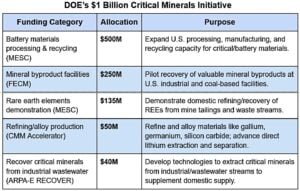
  • $500 million to the Office of Manufacturing and Energy Supply Chains (MESC) for battery material processing, manufacturing, and recycling projects.
  • $250 million to the Office of Fossil Energy and Carbon Management to support facilities producing mineral byproducts from coal and other sources.
  • $135 million to boost rare earth element production by extracting them from mining waste streams.
  • $50 million to refine materials like gallium, germanium, and silicon carbide, which are crucial for semiconductors and high-performance electronics.
  • $40 million through ARPA-E’s RECOVER program to extract minerals from industrial wastewater and other waste streams.
DOE’s $1 Billion Critical Minerals Initiative
Source: U.S. DOE

By investing from extraction to refining, the DOE aims to reduce reliance on foreign suppliers, especially those in politically unstable regions. The plan also encourages public–private partnerships to scale production faster.

Why Critical Minerals Matter for America’s Future

Critical minerals lie at the heart of America’s economic transformation and defense strategy. In recent years, demand for lithium, cobalt, nickel, and rare earth elements has grown. This rise comes as clean energy technologies become more important.

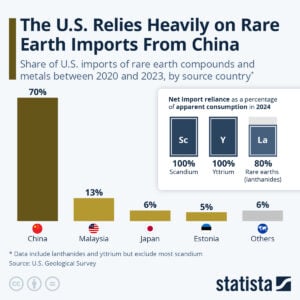
The U.S. imports more than 80% of its rare earth elements, and most of this comes from one country – China. This heavy reliance creates risks during trade or geopolitical tensions.

US rare earth import from China

The Trump administration has placed strong emphasis on closing this vulnerability. In March 2025, an executive order highlighted critical minerals as vital for national defense. It also set timelines to boost U.S. production and processing capacity. This aligns with broader economic priorities, including clean energy jobs, green infrastructure, and domestic manufacturing.

The Inflation Reduction Act and infrastructure programs have unlocked billions in grants and tax credits. These funds support electric vehicle manufacturing, battery plants, and renewable energy projects.

The DOE’s $1 billion critical mineral fund supports programs by focusing on materials essential for the clean energy economy. Also, by reusing existing industrial facilities to recover minerals instead of building entirely new ones, the DOE can speed up progress and reduce costs.

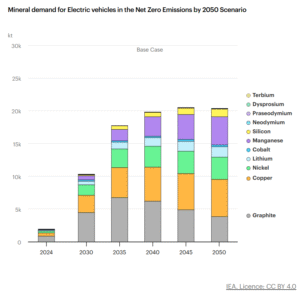
EV production is expected to grow faster than any other sector, with demand for minerals likely to be more than 10x higher by 2050. This surge will transform the global supply chain and is critical for the global Net Zero aspirations.

Mineral demand for Electric vehicles in the Net Zero Emissions by 2050 Scenario
Source: IEA

The combined impact of industrial strategy, financial incentives, and supply chain investments shows a clear push to:

  • Move production back onshore,
  • Boost innovation in materials recycling,
  • Support the energy transition, and
  • Cut down on foreign imports.

Building on Early Wins

The DOE’s new $1 billion investment boosts earlier funding for critical minerals. This aims to strengthen U.S. industrial capacity.

In 2023, the Department gave $150 million to various clean mineral projects. These include direct lithium extraction in Nevada and early-stage nickel processing partnerships in Oregon.

Since 2021, DOE has invested more than $58 million in research. This work focuses on recovering critical minerals from industrial waste or tailings. They are turning by-products into valuable feedstock.

These R&D projects created pilot facilities. They show how to recover lithium from geothermal brines and rare earths from coal ash. This approach models resource use without needing new mining.

Built on these early successes, the new $1 billion fund signals a shift from pilot programs to scaling proven technologies. It allows U.S. manufacturers to pivot from lab-scale experiments to full commercial operations. 

For example, lithium recovery projects are moving from test sites to large extraction facilities. This shift is supported by the technical help from DOE’s national labs.

Likewise, battery recycling pilots are set to grow. More recycling centers are being planned in the Midwest and Southwest.

This funding approach provides continuity. It supports U.S. firms from basic research to commercialization. This helps them quickly move from proof-of-concept to production-ready operations. It also reassures private investors that government backing is strategic and sustained.

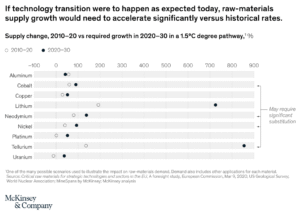
McKinsey projects that developing new copper and nickel projects will require between $250 billion and $350 billion by 2030. By 2050, the broader critical minerals sector could grow into a trillion-dollar market to support the net-zero or low-carbon transition.

raw materials supply for low-carbon transition

Washington’s Backing, Industry’s Buy-In

Political backing for the domestic minerals strategy is strong. A recent executive order aims to speed up mining permits and provide federal support.

The Defense Department has also invested $400 million in MP Materials, the largest stakeholder in the only U.S. rare earth mine. This deal includes a new plant to produce magnets for electronics and defense applications.

Industry players are moving in the same direction. Battery maker Clarios is exploring sites for a $1 billion processing and recovery plant in the country. These moves show a shared goal between government and industry to rebuild America’s mineral supply chains.

Opportunities—and the Roadblocks Ahead

The DOE’s program offers major opportunities:

  • Less reliance on foreign countries for essential materials.
  • Creation of high-quality U.S. jobs.
  • Growth in recycling and recovery technologies.

However, challenges remain. Mining and processing must be done without harming the environment. Technology costs need to stay competitive. And benefits must be shared fairly with local and Indigenous communities.

Amid all this, the global race for critical minerals is intensifying. Many countries are already securing their own supplies. The U.S. wants to close its supply gap and become a leader in clean energy manufacturing.

The DOE’s nearly $1 billion plan is a key step toward reshoring America’s critical minerals industry. It builds on earlier successes and aligns with private investments and new policies. If successful, it could make U.S. supply chains more secure, support the clean energy transition, and strengthen national security.

The post U.S. DOE Reveals $1B Funding to Boost Critical Minerals Supply Chain appeared first on Carbon Credits.
Bitcoin Price Hits $124,000 Record High vs Ethereum Price Near $4,800: Which Crypto Is Greener?

Bitcoin Hits A New Record, Ethereum Nears Its Peak: But Which Is Greener?

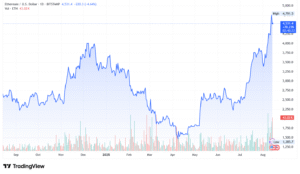
Bitcoin price just smashed through $124,000 while Ethereum is closing in on its $4,800 record, fueling fresh excitement in the crypto market. But beyond price charts, the two blockchains have sharply different environmental footprints.

One still runs on an energy-hungry proof-of-work system, while the other has reinvented itself with a proof-of-stake model that slashes energy use by over 99%. The question for climate-minded investors: which crypto comes out greener? Let’s find out.

Crypto’s New Highs, Old Questions

Bitcoin price surged past $124,000 upon writing, setting a new all-time high. Analysts credit several factors:

  • strong institutional buying,
  • increased inflows into Bitcoin ETFs,
  • favorable regulatory changes allowing crypto assets in 401(k) retirement accounts, and
  • growing market optimism over expected Federal Reserve interest rate cuts.
Bitcoin all time high $124,000
Source: AlphaFlipper

The rally reflects both a recovery from previous market downturns and a renewed appetite for digital assets among mainstream investors.

Ethereum, the second-largest cryptocurrency by market capitalization, is also on the rise. It is now approaching its all-time high of around $4,800, last seen in November 2021.

ethereum near record high

Investor sentiment is rising because of Ethereum’s role in decentralized finance (DeFi) and NFT marketplaces. Its better environmental profile, thanks to the switch to a proof-of-stake (PoS) model, also helps.

With both tokens in focus, let’s look at their energy use and carbon footprint. This matters for investors and policymakers who care about their climate and environmental impact.

How Bitcoin’s Proof-of-Work Consumes Energy

Bitcoin’s network runs on a process called proof-of-work (PoW). Miners around the world compete to solve complex mathematical puzzles. The first to solve it gets to add a block of transactions to the blockchain and earn newly minted Bitcoin. This process secures the network but demands enormous computing power.

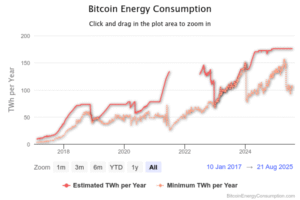
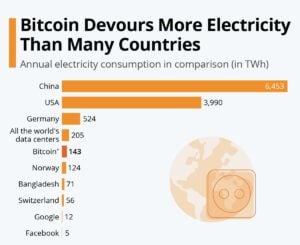
That computing power uses a lot of electricity. Bitcoin’s annual energy use is estimated at about 138–178 terawatt-hours (TWh). This is similar to the electricity consumption of countries like Poland or Thailand, and even greater than Norway.

The carbon footprint is equally large, at around 40 million tonnes of CO₂ equivalent per year. To put that into perspective, that’s similar to the emissions of Greece or Switzerland.

On a per-transaction basis, a single Bitcoin payment can use as much energy as a typical U.S. household does in one to two months.

Bitcoin energy use versus countries
Source: Statista

Beyond electricity, Bitcoin mining also generates significant electronic waste. Specialized mining hardware, called ASICs, becomes obsolete quickly—often within two to three years—because faster, more efficient models keep being developed. This turnover contributes thousands of tonnes of e-waste annually.

Ethereum’s Post-Merge Energy Transformation

Before 2022, Ethereum also used proof-of-work, with high energy demands. But in September 2022, the network completed the Merge, switching to proof-of-stake.

Ethereum now uses validators instead of miners. These validators “stake” their ETH tokens as collateral. This helps confirm transactions and secure the network.

This change cut Ethereum’s energy use by over 99.9%. Today, the network consumes an estimated 2,600 megawatt-hours (MWh) annually—roughly 0.0026 TWh. That’s less electricity than a small town of 2,000 homes might use in a year.

The carbon footprint is also tiny compared to Bitcoin—under 870 tonnes of CO₂ equivalent annually. That’s about the same as the yearly emissions of 100 average U.S. households. In environmental terms, Ethereum has gone from being one of the largest blockchain energy consumers to one of the most efficient.

Ethereum carbon footprint
Source: Ethereum

Beyond Electricity: Hidden Environmental Costs

While electricity use is the biggest factor, it’s not the only environmental concern for both cryptocurrencies. Here are the other environmental impacts:

  • Water Use:
    Large-scale Bitcoin mining facilities often require substantial cooling, which can consume millions of liters of water annually. This can put pressure on local water supplies, particularly in drought-prone regions. Ethereum’s low energy profile greatly reduces such needs.
  • Heat Output:
    Mining facilities generate significant heat. In some cases, waste heat is reused for industrial or agricultural purposes, but in most situations, it is simply released into the environment, adding to local thermal loads.
  • Land and Infrastructure:
    Bitcoin mining operations require large warehouses and access to high-capacity electrical infrastructure. This can limit available industrial space for other uses and put stress on local grids.

By using proof-of-stake, Ethereum avoids most of these impacts. It just needs standard server equipment. This can run in data centers with other low-impact computing tasks.

bitcoin versus ethereum carbon footprint

How the Industry Is Addressing Bitcoin’s Footprint

The crypto industry is aware of Bitcoin’s environmental challenges and is taking steps to address them. Some of the actions taken include:

  • Renewable Mining: Some mining operations use only hydro, wind, or solar energy. This is common in areas with plenty of renewable resources.
  • Waste Heat Recovery: A few miners capture and reuse waste heat for agriculture (e.g., greenhouse farming) or district heating systems.
  • Carbon Offsetting: Companies and mining pools are buying carbon credits to offset emissions. However, how well this works depends on the quality of those credits.
  • Policy Proposals: Governments may require Bitcoin miners to share their energy sources or meet renewable energy goals.

SEE MORE: Top 5 Sustainable Bitcoin Mining Companies To Watch Out For

While these efforts are promising, the core challenge remains: proof-of-work’s high energy requirement is built into Bitcoin’s security model.

Why This Matters for ESG-Minded Investors

For investors who care about environmental, social, and governance (ESG) factors, the difference between Bitcoin and Ethereum is stark. Ethereum’s low-energy proof-of-stake model makes it easier to align with climate goals. Bitcoin’s high energy use and emissions, while partially mitigated by renewable adoption, remain a significant concern.

These factors may influence where ESG-focused funds allocate capital. Companies and institutions wanting exposure to blockchain technology without a large carbon footprint might prefer Ethereum or other PoS networks.

Bitcoin may still attract investors because of its market dominance and value as a store. However, it will likely keep facing environmental concerns.

The Road Ahead for Crypto and Climate

Bitcoin and Ethereum’s price rallies show that investor interest in crypto remains strong. As climate change and sustainability gain importance in policy and investment, environmental performance may play a larger role in the long-term value and acceptance of digital assets.

For now, Ethereum sets the standard for energy efficiency among major blockchains, while Bitcoin represents the ongoing challenge of balancing security, decentralization, and sustainability. Can Bitcoin cut its environmental impact without losing its key features? This will be an important question in the coming years.

The post Bitcoin Price Hits $124,000 Record High vs Ethereum Price Near $4,800: Which Crypto Is Greener? appeared first on Carbon Credits.
ENGIE Lands $600M from World Bank Group and Investors to Boost Peru’s Renewable Energy

ENGIE Lands $600M from World Bank Group and Investors to Boost Peru’s Renewable Energy

The International Finance Corporation (IFC), part of the World Bank Group, approved up to $600 million in funding to support ENGIE Energía Perú’s push into non-conventional renewable energy. Of that, $250 million is from the IFC itself, and an additional $350 million comes from other mobilized investors.

The financing structure is a Sustainability-Linked Loan (SLL), which links financial terms to performance goals. Let’s uncover where the funds will go and how this will help ENGIE’s net zero and climate goals.

Where Will the Money Go?

The goals of the fundraising are to expand renewable energy, support climate adaptation, and promote gender diversity initiatives. The first tranche of $120 million will immediately fund the acquisition and development of key renewable infrastructure.

The first installment will finance these three major projects:

  • Expand the Intipampa Solar Plant: Increase capacity by 51.4 MW in Moquegua, boosting total solar output.
  • Wind Farm Acquisitions: Acquire existing wind capacity of 36.8 MW at the Duna and Huambos sites.
  • Battery Energy Storage System (BESS): Develop or refinance the 26.5 MW Chilca battery system—the largest in Peru—to improve grid flexibility.

These investments help ENGIE reach its goal of adding 800 MW of non-conventional renewables in five years. This will transform the country’s energy mix.

ENGIE’s Power Play in Peru’s Energy Market

ENGIE Energía Perú (EEP) is a dominant force in Peru’s energy sector. By 2024, it was the biggest electricity generator in the country. It owned about 2,694 MW from ten plants. This made up 19% of Peru’s total installed capacity and around 14% of national production.

EEP’s renewable and conventional installations include:

  • Punta Lomitas Wind Farm (296 MW), the largest in Peru.
  • Expanded solar capacity with Intipampa.
  • Hydro and gas-fired plants such as Chilca and Ilo.
  • The Chilca BESS, launched in 2023 with an investment of approximately $20 million, demonstrates its adaptability and drive for stability.

Peru’s Renewable Wave: From Hydro to Solar Growth

Peru’s electricity mix is shifting. In 2024, renewables accounted for arond 59% of electricity, with breakdowns of hydroelectricity at almost 50%, wind at around 6%, solar at almost 2%, and biomass at 0.8%.

Peru energy mix 2024
Source: Low Carbon Power

The country boasts significant untapped renewable potential:

  • Hydropower: Installed capacity stands at 5.7 GW (2020), with untapped technical potential of ~70 GW.
  • Renewables Market Growth: In 2022, Peru’s renewables sector generated 34,727 GWh, valued at around $900 million, with moderate annual growth in both output and value.

Looking ahead, an IFC study predicts that by 2050, wind and solar could make up 45% of installed capacity in the country. This growth will be backed by investments in grid storage, which will help improve system resilience.

Other big investments show regional growth. For instance, Spain’s Zelestra is investing $1–1.5 billion in Peru’s renewable energy. This will support mining operations with a pipeline of 1 GW capacity.

How The Loan Could Change Peru’s Grid

The $600 million SLL from IFC is more than capital; it’s a catalyst for renewable energy growth in Peru. The key benefits include:

Increased Clean Energy: The financing helps deliver over 100 MW of additional wind and solar capacity, plus the country’s largest BESS, enhancing energy diversification.

Climate Action: IFC estimates the Intipampa expansion alone will save 61,461 tonnes of CO₂ equivalent per year by displacing fossil-based electricity.

Grid Modernization: Energy storage fosters a more flexible, renewable-friendly grid and supports off-grid electrification in rural areas.

Market Confidence: The SLL’s structure signals investor belief in Peru’s green energy potential and supports broader regional ambitions.

ENGIE’s expansion is part of a broader wave of renewable growth in Latin America. In Peru, ENGIE’s projects contribute to the broader energy transition—and set an example for public-private collaboration in sustainable infrastructure. 

More notably, it forms part of the energy giant’s net zero goals.

ENGIE’s Global Renewable Energy and Net-Zero Strategy

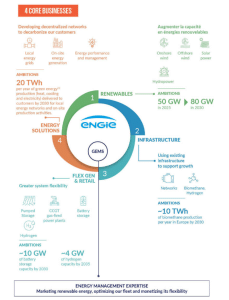
The company’s global stance reflects increasing corporate commitment to clean energy infrastructure. The infographics below shows ENGIE’s decarbonization ambitions. 

Engie net zero startegy

Globally, ENGIE has positioned itself as a leader in the clean energy transition. It aims to achieve net-zero greenhouse gas emissions by 2045. The company focuses on quickly increasing renewable energy capacity. It aims to phase out coal and expand energy storage solutions. This will help integrate more variable renewables.

By 2025, ENGIE targets 50 gigawatts (GW) of renewable capacity worldwide, growing to 80 GW by 2030. This expansion focuses on wind, solar, hydro, and green hydrogen projects, supported by digital tools for efficiency and performance monitoring.

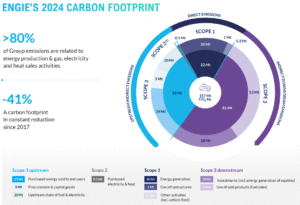
ENGIE has cut its direct emissions (Scope 1) by over 40% from 2017 to 2024. This change came mainly from retiring coal assets and switching to clean energy. Below is the company’s 2024 carbon footprint.

ENGIE 2024 carbon footprint or emissions
Source: ENGIE report

The company is investing in large energy storage, aiming for 10 GW of battery capacity by 2030. This will help keep the grid stable as more renewable energy comes online.

ENGIE’s climate roadmap includes Science Based Targets initiative (SBTi) validation, ensuring its emissions reduction pathway aligns with the Paris Agreement’s 1.5°C goal.

These global efforts reinforce ENGIE’s operations in Peru, showing how the company’s local renewable expansions contribute to a broader, coordinated push toward a carbon-neutral energy system worldwide.

Moreover, ENGIE supports strong carbon pricing policies and systems that encourage investment in low-emission technologies, energy efficiency, and reduced energy use.

As part of its path to net zero, the company plans to carry out internal carbon absorption projects and use carbon removal credits. These credits will follow the Integrity Council’s ten principles, with a focus on transparency, proving real additional impact, and ensuring that reductions last over time.

With IFC’s backing, ENGIE Energía Perú is poised to expand its renewable energy footprint significantly. The financing supports solar expansion, wind farm acquisition, and advanced energy storage. This boosts Peru’s clean energy pipeline, strengthening grid reliability, and contributing to national sustainability targets.

As Peru works toward a greener energy future, ENGIE’s investments may become a model for transformative growth across Latin America.

The post ENGIE Lands $600M from World Bank Group and Investors to Boost Peru’s Renewable Energy appeared first on Carbon Credits.

Data Centers’ Copper Hunger: How AI is Driving a Looming Supply Crunch?

copper

The rapid global rollout of artificial intelligence (AI) data centers is set to add new pressure to the already strained copper market. A recent BloombergNEF (BNEF) report warns that:

  • Copper supply gap could swell to 6 million tonnes by 2035 if demand keeps rising at this pace.
  • Copper demand from AI-powered facilities will average about 400,000 tonnes a year over the next decade, peaking at 572,000 tonnes in 2028.
  • By 2035, the cumulative copper locked into data centers could surpass 4.3 million tonnes.

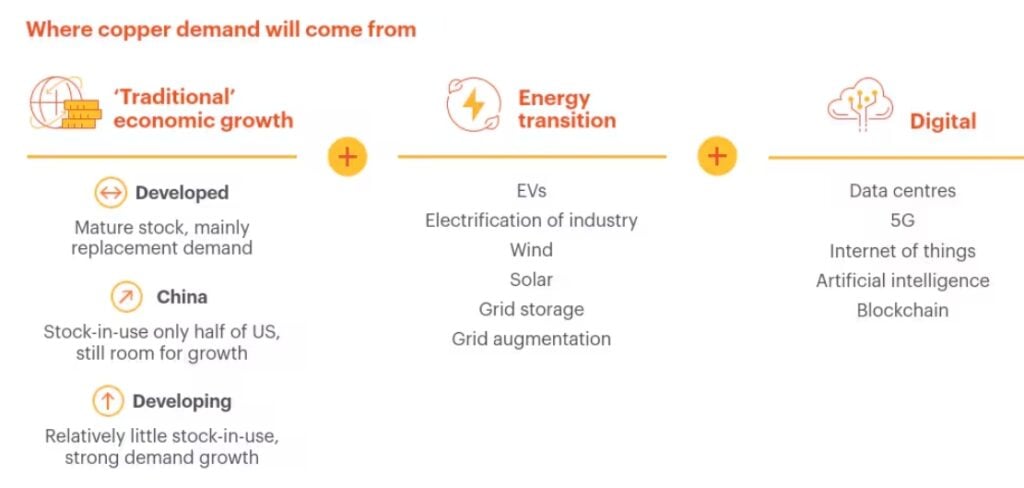
Furthermore, this rise comes as other copper-hungry industries, like power transmission and wind energy, are also using more of the metal. BNEF expects their copper demand to almost double by 2035. Together, they are putting heavy pressure on a market already held back by years of low investment in new mines.

Why AI Data Centers Are So Copper-Intensive?

Copper may account for up to 6% of a data center’s capital costs, but its role is essential. The metal’s unmatched electrical conductivity ensures efficient power transmission, while its high thermal conductivity supports heat exchangers vital for cooling AI-intensive servers. That’s why cables, busbars, power distribution strips, connectors, transformers, and cooling systems all rely heavily on copper.

Its ductility and malleability also allow it to be shaped into compact connectors and other components critical to space-optimized server rooms. From high-capacity cabling to switchgear and transformers, copper is woven into every layer of a data center’s infrastructure.

copper demand AI data centers
Source: BHP

Mining giant BHP predicts:

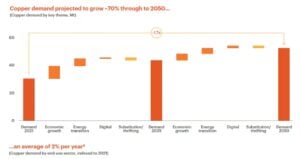
  • Copper demand will rise 72% by 2050 — driven largely by AI infrastructure and the clean energy transition.
  • By 2050, it could hit 3 million tonnes per year. That would lift the sector’s share of total global copper consumption from about 1% today to as much as 7% by mid-century.

Case studies illustrate the scale: Microsoft’s $500 million Chicago data center, completed in 2009, used about 2,177 tonnes of copper — roughly 27 tonnes per megawatt of power capacity. With AI-ready racks increasing power needs, the copper footprint per site is growing.

Copper demand
Source: BHP

Growth Projections Paint a Steep Climb

Similarly, a Macquarie analysis estimates that by 2030, data centers could consume between 330,000 and 420,000 tonnes of copper annually, with a midpoint of 375,000 tonnes. This projection factors in recent mega-project announcements from Microsoft, Meta, and the $500 billion Stargate Project to build OpenAI infrastructure in the U.S.

It also accounts for a forecast jump in required data center power capacity from 77 gigawatts in 2023 to 334 GW in 2030.

  • Goldman Sachs says AI will drive a 165% increase in data center power demand by 2030.
  • This means this massive leap will require extensive copper use for both on-site systems and the wider electrical grid.
 Data center power required for AI

data center AI

The Grid Connection Factor

Moving on comes the grid connection factor. As Colin Hamilton of BMO Capital Markets notes, the copper demand story isn’t just about what’s inside the data center. He says, “Data centers themselves are becoming incrementally less copper-intensive, but getting the electricity to them, that is copper-intensive.”

That means transmission lines, substations, and grid upgrades, all of which use large volumes of copper. In the era of AI, hyperscale campuses will need multiple redundant grid connections to ensure an uninterrupted power supply, further boosting copper demand.

Additionally, the scale of investment is staggering. North American data center infrastructure spending is expected to rise from $33 billion in 2020 to $70 billion by 2030 and $185 billion by 2040. Each new AI-ready site locks in thousands of tonnes of copper for decades.

What’s Driving the Copper Market Now?

On August 1, the U.S. imposed a 50% tariff on copper imports to boost domestic production. This policy could benefit major U.S.-based miners like Freeport-McMoRan and Rio Tinto, but some industry players warn it could cause short-term disruptions. The news hit just as Goldman Sachs lowered its 2025 copper price forecast on weaker Chinese demand.

However, following the BNEF report on future shortages, copper stocks like Freeport-McMoRan and the Global X Copper Miners ETF fell as investors weighed the combined effect of tariffs and market forecasts.

Analysts still expect a long-term crunch, projecting a 6 million-tonne shortfall by 2035 as AI data centers and clean energy projects drive demand higher.

Copper Price Volatility and Shocks

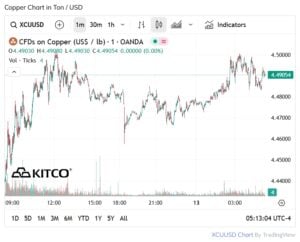
Copper prices plunged more than 20% after the tariff announcement, partly due to speculative trading, arbitrage, and stockpiling. In short, the “tariff trade” quickly unraveled in the U.S. market.

BNEF believes this is temporary, forecasting a price peak of $13,500 per tonne in 2028 as demand outpaces supply. By 2035, global output could reach just 29 million tonnes, well below the 35 million tonnes needed.

J.P. Morgan takes a cautious view, predicting prices could dip toward $9,100 per tonne in Q3 before recovering slightly to around $9,350 in Q4.

Copper price
Source: KITCO

AI Turns Copper into a Bottleneck

AI-ready data centers are changing the copper demand story. Unlike electric vehicles, which add demand gradually, these facilities need massive amounts of copper all at once — from utility-scale wiring and high-voltage tie-ins to dense cabling inside the building.

As said before, the demand extends beyond data centers. Hyperscale campuses drive new substations, grid upgrades, and redundant networks—each packed with copper. Combined with renewable grid expansion, copper is becoming a key bottleneck for AI and the clean energy shift.

With mine development taking more than a decade, the AI-driven copper crunch could arrive sooner than expected. For miners, utilities, and tech giants, this collision of digital expansion and material scarcity is set to be one of the biggest industrial challenges of the next 20 years.

The post Data Centers’ Copper Hunger: How AI is Driving a Looming Supply Crunch? appeared first on Carbon Credits.

France Eyes Bitcoin Mining Powered by Surplus Nuclear Energy

France Eyes Bitcoin Mining Powered by Surplus Nuclear Energy

France is weighing a bold proposal to use surplus nuclear energy in Bitcoin mining, turning unused power into millions in revenue. The five-year pilot is backed by the far-right Rassemblement National (RN) party. It would use EDF (Électricité de France)’s excess electricity during low-demand hours, with heat reuse systems warming homes and greenhouses.

If approved, it could make France the first EU nation to weave crypto mining into its official energy strategy.

From Waste to Wealth: The Surplus Power Plan

France’s far-right party, RN, is backing a bold plan that could repurpose surplus nuclear electricity to power Bitcoin mining. MP Aurélien Lopez-Liguori introduced an initiative for a five-year pilot program. It aims to use excess energy from EDF-run nuclear plants for crypto mining.

The pilot allows Bitcoin mining to run only when nuclear energy is more than needed, like at night. This way, it uses power that would otherwise be wasted. Developers say one gigawatt of extra nuclear power could make $100–150 million in BTC revenue each year.

The plan also includes heat reuse systems that will capture waste heat from mining rigs. The heat can then warm homes, greenhouses, or industrial facilities. This model is already in use across Scandinavia.

Why Nuclear? France’s Energy Context

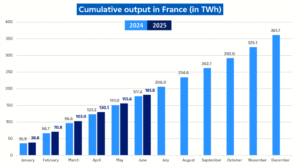
France, the EU’s top nuclear energy producer, gets over 70% of its electricity from nuclear plants. This amounts to 338,000 GWh each year. However, during low-demand periods, power supply often surpasses consumption.

France nuclear output cumulative EDF
Source: EDF

France occasionally sells extra power at negative prices. Sometimes, it even pays for nearby countries to take this power, leading to losses of hundreds of millions. Bitcoin mining offers a way to monetize this surplus and ease grid stress.

Mining rigs can quickly adjust their load, providing a flexible buffer that stabilizes grid operations. This strategy supports wider energy transition goals. It helps manage inflexible nuclear output more effectively.

Political 180: From Crypto Ban to Bitcoin Boost

This move marks a dramatic shift in RN’s stance on crypto. In 2016, Marine Le Pen condemned cryptocurrencies as elitist tools and pledged to ban them. By 2022, she softened her position to support regulation. In 2025, she supports Bitcoin mining as a smart economic tool. This shows a wider trend of political practicality.

However, not all RN lawmakers agree. Jean-Philippe Tanguy, the party’s finance chief, argues that Bitcoin undermines centralized monetary control.

Meanwhile, the left and green parties oppose the plan due to its environmental impact, pointing to Bitcoin’s intensive energy use. Approval will require navigating internal party splits and environmental scrutiny.

bitcoin energy use
Source: Digiconomist

Potential Benefits and Concerns

Supporters of the proposal see several clear advantages. First, surplus nuclear power can generate revenue. Estimates show it could bring in $100–150 million each year for every 1 GW of excess output.

Second, bitcoin mining facilities can be a flexible load for the grid. They absorb extra electricity when demand is low. Then, they can power down fast when demand rises. This helps stabilize the system.

Third, the heat generated by mining rigs could be captured and reused to warm buildings or support greenhouse agriculture. This improves overall energy efficiency.

However, critics raise valid concerns:

Bitcoin energy use versus countries
Source: Statista
  • Environmental impact: Despite cleaner power, increased Bitcoin mining still uses heavy energy. The chart above shows that Bitcoin alone utilizes more power than most countries. 
  • Regulatory challenges: The proposal needs strong legal and policy backing—June’s similar amendment failed on procedural grounds.
  • Public perception: Tying climate-smart infrastructure to crypto may provoke resistance.

INTERESTING READ: The Energy Debate: How Bitcoin Mining, Blockchain, and Cryptocurrency Shape Our Carbon Future

Global Trends: Nuclear Meets Bitcoin Mining

This move in France aligns with growing interest worldwide in matching crypto mining with low-carbon energy. Here are some major facts to know:

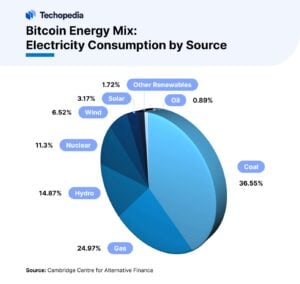
  • Clean Energy Uptake: More than 52% of global Bitcoin mining now runs on sustainable energy. Of this, about 11% comes from nuclear sources.
  • Fuel Mix Shifts: Coal and gas once dominated Bitcoin’s electricity supply. But the share of nuclear has roughly doubled from 4% in 2021 to over 11%.
  • Energy Use Scale: Bitcoin mining is energy-intensive—estimated at 176–180 terawatt-hours (TWh) annually, on par with national consumption by countries like Poland or Egypt.
  • Hashrate Surge: The Bitcoin network’s computing power, or hashrate, continues to rise. As of May 2025, it exceeded 831 exahashes per second (EH/s), a 77% jump from its 2024 low.
  • Adaptation to Costs: With mining profitability squeezed, miners seek cheap, stable energy like nuclear to stay competitive.

bitcoin mining energy mix

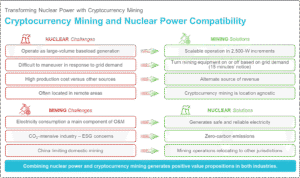
Analysts at ScottMadden argued that Bitcoin mining paired with nuclear energy offers a compelling value proposition—a clean energy use case that could diversify utility income. The business case has only grown stronger as Bitcoin prices rose from about $9,275 in 2020 to over $47,000 by 2021.

France isn’t alone in exploring this pairing. Studies suggest that Bitcoin mining might use extra power wisely. This could cut waste and help the grid stay flexible. For example, South Korean researchers found surplus electricity could be a new revenue stream for the power utility while stabilizing the grid.

Moreover, academic models propose a zero-emissions energy system. This system combines nuclear power with crypto-mining. In this setup, mining serves as a flexible load that helps balance demand. Also, many devices around the world already rely on constant nuclear power.

crypto mining and nuclear power compatibility
Source: ScottMaden

The Road Ahead: Regulation, Revenue, and Resistance

If the pilot moves forward, EDF and lawmakers would need to finalize guidelines, site mining hubs near existing infrastructure, and ensure regulatory oversight. A six-month feasibility review by the French Council of State is planned, followed by expansion if the pilot succeeds.

When that happens, France could become the first EU nation to legally integrate Bitcoin mining into its energy roadmap. It could turn an economic burden—unused power—into a revenue stream while mitigating grid stress. This would spark debate across Europe—might other nuclear-rich countries follow suit?

From a crypto standpoint, the move elevates mining from underground activity to a strategic industrial asset, redefining its role in the energy economy. 

However, the plan still faces political, environmental, and technical hurdles. Yet, as the proposal gains traction, it may shape how nations view the intersection of crypto, energy policymaking, and sustainability.

The post France Eyes Bitcoin Mining Powered by Surplus Nuclear Energy appeared first on Carbon Credits.
Gevo Stock Surges 65% as Carbon Credits Bring in First-Ever Profits

Gevo Stock Surges 65% as Carbon Credits Bring in First-Ever Profits

Gevo, Inc., a renewable fuels and carbon solutions company, has reported its first-ever profitable quarter in Q2 2025, marking a major shift in its financial performance. This is all thanks to its carbon credit sales of around $22 million and other low-carbon product sales.

The company posted net income of $2.1 million, a sharp turnaround from previous losses. Adjusted earnings reached $17 million, and earnings per share came in at $0.01. That is well above analyst forecasts of a loss of $0.07.

Revenue for the quarter totaled $43.41 million. This was about $14 million higher than the previous quarter, though slightly below some market expectations. This earnings surprise drove a dramatic reaction in the stock market.

Gevo shares surged 65% in after-hours trading following the announcement. It has continued to climb about 46% in pre-market trading the next day.

This milestone is significant for Gevo. The company has been working to diversify revenue streams and build a sustainable business model that integrates renewable fuel production with carbon reduction initiatives.

Gevo stock price q2 2025 earnings
Source: TradingView

Carbon Credits: The Secret Sauce Behind Gevo’s First-Ever Profit

A major factor behind Gevo’s profitability was its revenue from carbon credits. This segment has become an important part of its business model. The company benefits from two main types of credits:

Clean Fuel Production Credits (CFPCs):

These credits contributed roughly $21 million to net income during the first half of 2025. They reward low-carbon fuel producers for displacing fossil fuel use.

Carbon Dioxide Removal (CDR) credits:

In Q2, Gevo generated over $1 million from selling high-integrity carbon removal credits. The company expects to earn $3–5 million a year from CDR credits soon. In the long run, this could grow to over $30 million each year.

In addition, Gevo completed its first sale of carbon removal credits certified by Puro.earth.  It is a leading registry for engineered carbon removal. These credits are backed by carbon capture and storage (CCS) at Gevo’s planned North Dakota ethanol facility. The plant is designed to sequester up to 1 million metric tonnes of CO₂ per year.

By monetizing its carbon abatement efforts, Gevo is tapping into a rapidly growing market. This strategy reduces its reliance on volatile biofuel margins. Also, it positions the company to benefit from both regulatory programs and voluntary corporate climate commitments.

Dr. Patrick Gruber, Gevo’s Chief Executive Officer, remarked:

“This was a landmark quarter for us…I really like these results regarding carbon sales. It’s outstanding that companies are willing to step up and pay for what they believe in–carbon reduction. It’s a new product; and for us, it’s a co-product. Our fuel manufacturing systems are designed end-to-end to abate carbon. The result is that we can manufacture cost-competitive renewable liquid fuels, while abating carbon.”

Turning CO₂ into Cash: CCS, Carbon Removal, and Net Zero

Gevo’s business is built on producing renewable fuels such as sustainable aviation fuel (SAF) and renewable natural gas (RNG. These are while integrating carbon reduction technologies to maximize climate benefits. 

In the first quarter of 2025, the company reported over 100,000 metric tons of carbon abatement. This combines CO₂ captured through CCS and emissions avoided through renewable fuel production.

The company’s CCS operations in North Dakota could play a critical role in scaling these achievements. Once it starts working, the facility can remove and store CO₂. This amount equals the yearly emissions of over 200,000 cars.

These milestones help Gevo reach its goal of providing clean fuels and real carbon reductions. This aligns with the needs of airlines, shipping companies, and other sectors under increasing pressure to cut emissions.

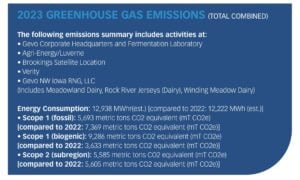
Gevo aims to reach net-zero greenhouse gas emissions by 2050. The company’s strategy focuses on producing low-carbon fuels and removing CO₂ from the atmosphere.

Carbon credits are a key part of Gevo’s plan. By selling high-quality credits from CCS and renewable fuel projects, the company earns revenue while helping other businesses offset their emissions. These efforts cut Gevo’s own carbon footprint and support wider climate goals.

gevo carbon emissions
Source: Gevo

Carbon Markets: Opportunities and Challenges

Gevo’s success underscores the growing influence of carbon markets in the clean energy economy. The voluntary carbon market, valued at about $2 billion in 2024, is projected to grow to $50 billion or more by 2030, according to industry forecasts. Demand for high-quality, verifiable credits is rising as corporations seek to meet net-zero targets.

voluntary carbon credit demand growth

High-integrity carbon removal credits, like those sold by Gevo, are particularly short in supply. This allows sellers to command premium prices. However, the market is also facing scrutiny over credit quality and transparency. 

durable cdr purchasing trend q2 2025

For Gevo, selling credits backed by measurable and permanent CO₂ storage offers a competitive advantage in a market where buyers are increasingly selective.

With the global push for decarbonization growing stronger, companies that blend renewable energy and carbon removal could attract long-term buyers. This is true for both compliance and voluntary markets. 

Why Investors Are Suddenly Paying Attention

The market’s strong response to Gevo’s Q2 results reflects investor confidence in the company’s shift toward profitability and diversified revenue sources. The surge in trading volume—over 71 million shares traded on the day of the earnings release. This signals that both institutional and retail investors are paying attention to its growth story.

If Gevo keeps making money from carbon credit sales and grows its clean fuel production, it could attract climate-focused funds and ESG investors with a strong track record. However, market volatility in both fuel prices and carbon credits could still present some challenges.

Scaling the Model: Can Gevo Keep the Momentum?

Gevo will expand its production of sustainable fuels. It also plans to grow its CCS capabilities and carbon credit sales. This strategy aligns with global climate policies that reward low-carbon energy solutions and penalize heavy emitters.

The company is combining renewable fuel production and measurable carbon removal. This strategy places it in a fast-growing area that connects energy and environmental sectors. If it keeps showing strong results and clear credit checks, it could set a standard for blending clean energy and carbon markets.

Gevo’s first profitable quarter shows the financial promise of combining renewable fuel production with carbon credit sales. The company is responding to the rising demand for high-quality carbon removal credits. Their effective operations help them stand out in the new clean energy and carbon economy.

Gevo’s ability to sustain profitability will depend on scaling production, securing long-term credit buyers, and navigating the fast-evolving landscape of carbon markets. 

The post Gevo Stock Surges 65% as Carbon Credits Bring in First-Ever Profits appeared first on Carbon Credits.
Lithium Prices Jump as CATL Shuts Major Jianxiawo Mine in China

CATL

As per top media reports, China’s battery leader, Contemporary Amperex Technology Co. Ltd. (CATL), has stopped operations at a key lithium mine. This move surprised commodity markets and led to a rise in lithium prices. The shutdown occurred because of an expired mining license. It also comes as Beijing tightens control over excess capacity in the lithium sector.

CATL’s Major Lithium Hub Falls Silent

CATL’s mining license for the Jianxiawo lithium project in Yichun, Jiangxi, expired on August 9, 2025. Without approval to continue, the company closed the mine. CATL is now seeking a renewal. They aim to restart operations “as soon as possible.” However, experts believe the process may take at least three months due to current regulations.

Reuters highlighted that the Jianxiawo site, hailed as the “Lithium Capital of Asia,” produces over 46,000 metric tons of lithium carbonate equivalent (LCE) each year. This amount is about 3–6% of the world’s expected output for 2025. Even a short disruption at this key facility impacts global supply chains.

Beijing’s Crackdown on Overcapacity

This shutdown fits into Beijing’s broader efforts to control fast-growing industries. Officials target sectors with overcapacity, including steel, coal, and renewable materials. The lithium industry, which surged during the 2020–2022 price boom, is now under scrutiny.

Recently, authorities also ordered Zangge Mining in Qinghai province to halt production. CATL’s closure is the first major suspension in Yichun, showing that no company is safe from government actions.

Cost Pressures Threaten Viability

CATL’s cost structure shows the challenges miners face. Reports suggest production costs at Jianxiawo are around RMB 100,000 ($13,920) per ton, much higher than current market prices. This means the mine has been operating at a loss, which regulators may consider when reviewing its license renewal.

If Beijing aims to cut oversupply, delaying permits for high-cost operations like Jianxiawo could help stabilize prices.

CHINA lithium

Lithium Stocks Surge on Supply Jitters

The market reacted quickly to CATL’s announcement. Lithium carbonate futures on the Guangzhou Futures Exchange jumped 8% to the daily limit. The shutdown led to a surge in lithium stocks, and shares of lithium miners worldwide rose sharply. Investors expected a tighter lithium supply and higher prices.

As per Bloomberg,

  • In Hong Kong, Tianqi Lithium’s shares jumped 19% and China’s Ganfeng Lithium rose by 21%.

Australian miners also saw strong gains in a single day due to speculative buying. Even North American lithium producers, who faced heavy losses, gained renewed interest. For instance, Albemarle also benefited from rising investor optimism

Traders believed China’s supply cuts could benefit global competitors. Analysts say this rally shows both short-term speculation and hope for lithium price recovery from Beijing’s actions.

Regulatory Hurdles Ahead

Renewing a mining license in China involves multiple reviews. Environmental impact assessments, land use compliance checks, safety protocols, and community impact studies are all part of the process. Authorities also assess resource utilization efficiency to ensure sustainable operations.

Will Lithium Supply Shocks Shake CATL’s EV Battery Dominance?

Lithium is essential for electric vehicle (EV) batteries, especially lithium iron phosphate (LFP) types that dominate CATL’s production. With CATL holding a 37.9% share of the global EV battery market in the first half of 2025, any disruption to its lithium supply could lead to wider effects.

For CATL, the stakes are high. The Jianxiawo mine is crucial for its business model, supplying lithium for battery production and reducing reliance on imports. A prolonged shutdown may force the company to source more lithium abroad, increasing costs and complicating logistics.

Higher raw material costs, supply bottlenecks, and delivery delays may impact automakers relying on CATL’s batteries. Although the global market is oversupplied, local disruptions can still cause temporary price spikes and strain supply chains.

China’s Expanding Lithium Mining Power

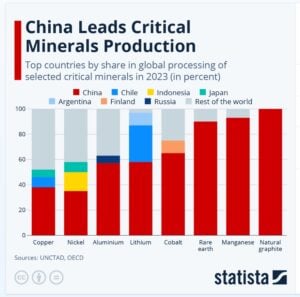
Despite challenges, China’s lithium dominance is expected to grow. Fastmarkets predicts the country will surpass Australia as the world’s largest lithium producer by 2026, with 8,000–10,000 metric tons more output than its rival. This is a significant increase from 2023, when China ranked third after Australia and Chile.

However, many Chinese producers struggle with current prices, and government actions could reshape the industry. The goal seems to be a more efficient sector with stronger environmental compliance.

Market Outlook: Short-Term Lift, Long-Term Questions

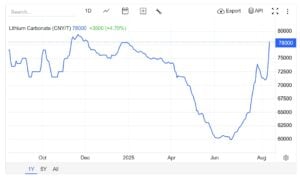
Trading Economics highlighted that, in August, lithium carbonate prices climbed above CNY 75,000 per tonne, reaching their highest level since March.

lithium prices
Source: Trading Economics

Analysts see CATL’s shutdown as a short-term price stabilizer, potentially forcing smaller high-cost miners to merge or exit. Producers may prioritize efficiency and compliance to avoid similar issues. Last but not least, Jianxiawo’s closure underscores the lithium market’s fragile balance and signals that unchecked mining growth may be ending.

The post Lithium Prices Jump as CATL Shuts Major Jianxiawo Mine in China appeared first on Carbon Credits.