Pony.ai (PONY) Expands in Singapore as Global Robotaxi Race Heats Up

PONY.AI

Pony.ai (NASDAQ: PONY), a leader in autonomous driving, has officially entered the Singapore market. The company is partnering with ComfortDelGro, the nation’s largest transport service provider, to launch self-driving mobility services in Punggol. Operations will begin once regulatory approvals are secured.

The rollout supports Singapore’s strategy to integrate autonomous vehicles (AVs) into public transport. By the end of 2025, the Ministry of Transport aims to introduce AVs in public housing estates, with Punggol being the first focus area. The plan is designed to tackle driver shortages and improve connectivity, especially during off-peak hours when demand remains unmet.

Dr. James Peng, Founder and CEO of Pony.ai, said,

“We are thrilled to introduce Pony.ai’s advanced autonomous driving technology to Singapore. By delivering safe, comfortable, and efficient autonomous mobility services, we are committed to enhancing local residents’ daily commutes and advancing the nation’s smart mobility vision.”

WeRide and Grab Compete for Singapore’s Growing Robotaxi Market

Pony.ai’s arrival comes with immediate competition. The press release highlighted that Chinese rival WeRide, in partnership with Grab Holdings, launched its Ai.R shuttle service in the same Punggol district. The Land Transport Authority tapped WeRide to operate Singapore’s first autonomous shuttle routes.

WeRide has deployed 11 vehicles, including five-seater GXRs and eight-seater Robobus models, across two fixed routes. Both passed Singapore’s rigorous Milestone 1 safety assessment, giving them the green light for public road operations.

The competitive tension is already showing in the market. WeRide’s stock has dropped 19% year-to-date amid investor concerns about intensifying rivalry, while Pony.ai (NASDAQ: PONY) has surged more than 44% over the same period. Investors appear to be betting that Pony.ai’s technology and global partnerships will give it an edge.

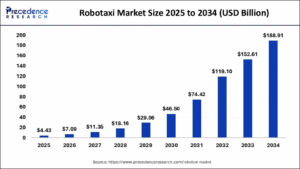
global robotaxi market

ALSO READ ABOUT: 

Pony.ai Robotaxi Services Scale Across China’s Tier-1 Cities

Pony.ai is no stranger to large-scale deployment. The company already operates fully driverless robotaxis across all four of China’s tier-1 cities: Beijing, Shanghai, Guangzhou, and Shenzhen. These operations span over 2,000 square kilometers, with the company logging more than 50 million kilometers of autonomous driving globally.

User adoption is also accelerating. Registered users on Pony.ai’s ride-hailing platform jumped 136% year-over-year in Q2 2025. Despite rapid growth, customer satisfaction remains strong, with ratings above 4.8 out of 5.

The company’s advantage lies in being the only operator with fully driverless, commercially available robotaxis in all four tier-1 cities—a milestone competitors have yet to match.

Accelerates Gen-7 Robotaxi Fleet Production in 2025

Pony.ai is aggressively scaling production to meet surging demand. In June and July, it kicked off mass production of its Gen-7 robotaxis with partners Guangzhou Automobile Group (GAC) and Beijing Automotive Industry Corporation (BAIC).

More than 200 vehicles are already produced, and the company is targeting a 1,000-vehicle fleet by year-end 2025. Alongside expansion, Pony.ai is driving down costs. Improved efficiency in remote monitoring is expected to reach a 1:30 ratio by the end of this year—meaning one remote assistant will be able to oversee 30 vehicles. Lower insurance costs are also boosting margins.

At the World Artificial Intelligence Conference (WAIC) 2025 in Shanghai, Pony.ai stood out as the only company offering fully driverless ride-hailing to the public. It also remained operational during extreme weather events, including typhoons and heavy rains, highlighting the resilience of its technology.

Expands Robotaxi Partnerships in the Middle East and Europe

The Singapore launch is part of a broader global push. Pony.ai recently partnered with Qatar’s national transport company, Mowasalat “Karwa,” to bring autonomous vehicles to the Gulf state. This builds on its earlier collaboration with Dubai’s Roads and Transport Authority (RTA).

In Europe, the company is conducting road trials with Luxembourg’s Emile Weber, one of the region’s largest transport providers. Meanwhile, in South Korea, Pony.ai runs 24/7 testing in Seoul’s Gangnam district. The company is also working with Uber on joint initiatives in the Middle East.

This multi-region expansion highlights Pony.ai’s strategy: build strong partnerships with local transport leaders while scaling a unified autonomous driving platform across continents.

Autonomous Vehicles and the ESG Climate Question

Autonomous vehicles are often seen as climate-friendly, but the reality is more complex. While most AV fleets, including Pony.ai’s, rely on electric or hybrid-electric vehicles, the carbon footprint depends on several factors:

  • Electricity Source: Charging with renewable energy reduces emissions, but fossil-based grids limit climate gains.
  • Hardware Energy Use: AVs consume extra power due to sensors, computing, and communications systems.
  • Supply Chain: LiDAR systems, batteries, and chipsets add carbon costs if supply chains are not sustainable.

Pony.ai’s partnerships with Toyota, GAC, and BAIC ensure that most of its fleets are electric or hybrid-electric, a positive step toward cleaner mobility. However, the company has yet to publish detailed net-zero targets or disclose its carbon accounting framework. Without formal ESG reporting, it remains unclear how sustainable its operations are in the long term.

PONY Stock Rides Robotaxi Growth Amid ESG Uncertainty

Pony.ai’s Singapore debut marks another milestone in its global expansion. The company is scaling faster than rivals, producing new fleets at a record pace, and securing partnerships across Asia, the Middle East, and Europe.

With its stock (NASDAQ: PONY) already up more than 40% this year, investors are betting on Pony.ai’s edge in fully driverless technology. But the climate question lingers.

pony stock pony.ai
Source: PONY

However, the stock has also gained on its financial performance. It shows momentum even as profitability remains elusive. For Q2 2025, Pony.ai reported:

  • Total revenue up 76% year-over-year.
  • Robotaxi fare revenues up 300% year-over-year.
  • Significant progress on cost efficiency through better monitoring ratios and insurance savings.

Although still loss-making, the company’s growth trajectory is catching Wall Street’s attention. Goldman Sachs recently raised its price target for Pony.ai stock to $27.70, maintaining a Buy rating.

As of September 22, 2025, Pony.ai (NASDAQ: PONY) trades at $20.56, giving it a market capitalization of about $7.25 billion. To sum up, the stock is up more than 71% over the past 12 months

For Pony.ai, proving its climate credentials may be the final piece needed to solidify its leadership in the robotaxi race.

The post Pony.ai (PONY) Expands in Singapore as Global Robotaxi Race Heats Up appeared first on Carbon Credits.


Eni’s $1 Billion Bet on Fusion: Partnering with Commonwealth Fusion Systems (CFS) for a Net-Zero Future

FUSION

Eni has taken a bold step in its energy transition journey by signing a power offtake agreement worth more than $1 billion with Commonwealth Fusion Systems (CFS). The deal secures clean energy from CFS’s upcoming 400 MW ARC fusion power plant in Virginia, expected to deliver power to the grid in the early 2030s.

This agreement expands the long-term partnership between Eni and CFS, positioning fusion energy as a cornerstone of the future clean power market.

Eni CEO Claudio Descalzi said,

This strategic collaboration, with a tangible commitment to the purchase of fusion energy, marks a turning point in which fusion becomes a full industrial opportunity. Eni has been strengthening its collaboration with CFS through its technological know-how since it first invested in the company in 2018. As energy demand grows, Eni supports the development of fusion power as a new energy paradigm capable of producing clean, safe, and virtually inexhaustible energy. This international partnership confirms our commitment to making fusion energy a reality, promoting its industrialization for a more sustainable energy future.”

Driving the Energy Transition: Eni’s Fusion Power Strategy

Eni, headquartered in San Donato Milanese, Italy, has been active in the US since 1968. Traditionally an oil and gas producer, the company has transformed into a broad energy leader. Today, Eni operates across oil, gas, renewables, and biofuels while also investing in cutting-edge energy transition technologies through its Boston-based venture arm, Eni Next.

The agreement with CFS underscores Eni’s role as both an energy provider and a pioneer in clean innovation. By locking in future fusion power supply, Eni gains an early-mover advantage in a market expected to revolutionize global electricity generation.

How CFS’s ARC Plant Is Shaping the Future of Energy

The centerpiece of the deal is CFS’s ARC plant, the world’s first grid-scale fusion power facility, currently under development in Chesterfield County, Virginia. Once operational, ARC will generate 400 MW of zero-carbon electricity, enough to power hundreds of thousands of homes.

CFS sees ARC as the launchpad for a new era of energy. After the Virginia project comes online, the company plans to replicate the model worldwide—building thousands of ARC plants to meet rising electricity demand.

ARC isn’t just about scale. It’s designed to integrate smoothly with existing grids and mimic the flexibility of natural gas plants—except without the carbon emissions. Operators will be able to adjust output quickly, making ARC an ideal partner for renewable sources like wind and solar.

Game-Changing Features

Fusion power has long been seen as a distant dream. ARC, however, is built for real-world deployment. Its design checks every box utilities look for in a new capacity:

  • Firm, clean power available on demand.

  • Compact footprint, about the size of a big-box store.

  • Rapid siting, thanks to its small land requirements compared to wind and solar.

  • Inherent safety, with no meltdown risk or long-lived nuclear waste.

  • Affordable electricity, expected to compete with or beat the cost of fossil fuel power.

Fusion’s fuel mix—deuterium and tritium—is abundant and cheap. A single truckload can supply 30 years of fuel for an ARC plant. With no exposure to volatile global commodity markets, ARC’s economics offer long-term price stability for customers.

Here’s what CFS ARC looks like: 

CFS arc fusion
Source: CFS

Drawing Big Backers

The Virginia ARC plant has already attracted high-profile partners. In addition to Eni’s offtake agreement, Google has signed a deal to buy half of the plant’s electricity. The tech giant’s involvement highlights the growing interest from corporations looking for dependable, zero-carbon power.

CFS will finance, build, own, and operate the facility itself, creating hundreds of jobs in the Richmond region. With support from strategic partners like Eni and Google, CFS is on track to turn fusion from a lab experiment into a commercial industry.

Bob Mumgaard, Co-founder and CEO of CFS, also highlighted,

“The agreement with Eni demonstrates the value of fusion energy on the grid. It is a big vote of confidence to have Eni, who has contributed to our execution since the beginning, buy the power we intend to make in Virginia. Our fusion power attracts diverse customers across the world — from hyperscalers to traditional energy leaders — because of the promise of clean, almost limitless energy.” 

Eni’s Bold Bet on Fusion and Net Zero Strategy

Eni has been betting on fusion since 2018, when it became one of the first investors in CFS. The company later boosted its stake during CFS’s $863 million Series B2 round. In 2023, the two firms signed a Collaboration Framework Agreement to share expertise, methodologies, and industry connections.

This latest offtake deal cements Eni’s role as a key player in commercializing fusion. For Eni, fusion is not just a side project—it’s part of its roadmap to achieve carbon neutrality by 2050.

To achieve this, the company is also transforming its operations, investing in clean energy, and supporting breakthrough technologies that can accelerate global decarbonization.

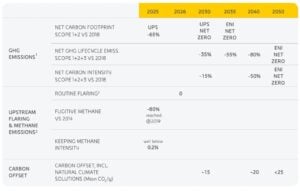
2050 Net-Zero Plan

ENI net zero
Source: ENI

Key strategies of net-zero goals include:

  • Cutting Carbon from Oil and Gas
    Eni is cutting emissions from oil and gas by upgrading facilities, reducing methane leaks, and streamlining production. These steps help meet energy demand while lowering its carbon footprint.

  • Scaling Renewables and Biofuels
    The company is expanding solar and wind projects and boosting bio-refining capacity. By turning waste and feedstocks into low-carbon fuels, Eni targets emissions in aviation and shipping.

  • Advancing Carbon Capture Solutions
    CCS is key to Eni’s strategy. By installing it at industrial sites and power plants, the company locks away carbon and prepares for future negative emissions technologies.

  • Driving Circular Economy Practices
    Through circular initiatives, Eni recycles materials, reuses resources, and cuts waste. This reduces environmental impact while improving efficiency and lowering costs.

Fusion as the Next Frontier

The promise of fusion is clear: virtually limitless clean energy without the risks of traditional nuclear or the land demands of renewables. CFS’s progress, especially its advances in high-temperature superconducting magnets, shows the technology is moving from science fiction to reality.

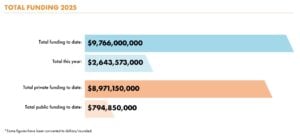
According to the Fusion Industry Association’s latest report, the fusion industry secured $2.64 billion in private and public funding in the 12 months ending July 2025. Global investment in fusion has surged, reaching nearly $10 billion by mid-2025, driven by both public and private capital and rapid annual growth since 2020.

fusion market
Source: The global fusion industry in 2025 Fusion Companies Survey by the Fusion Industry Association

The U.S. and China lead the market, accounting for roughly 85% of total funding, with the private sector attracting most new investment. This marks a notable rise from 2024 and is the second-highest annual funding total since the report began, trailing only the 2022 record year.

As fusion edges closer to commercialization, early adopters like Eni and Google stand to gain significant advantages. They will secure reliable, zero-carbon energy sources at predictable prices, while also shaping the trajectory of a new global industry.

However, Eni’s $1 billion-plus deal with Commonwealth Fusion Systems is a landmark moment for the energy transition. It also signals fusion is moving from promise to practice.

The post Eni’s $1 Billion Bet on Fusion: Partnering with Commonwealth Fusion Systems (CFS) for a Net-Zero Future appeared first on Carbon Credits.

NVIDIA’s Mega Deals with OpenAI and Intel Fuel Stock Performance and Sustainable Tech in 2025

NVIDIA

The semiconductor industry powers artificial intelligence, cloud computing, and modern data centers. Yet, it is also one of the most energy-hungry and resource-heavy industries. When Nvidia announced a $5 billion investment in Intel, with plans to co-develop chips that combine Nvidia’s AI technology with Intel’s CPU architecture, many see this as a big business move.

Adding to the spotlight, Nvidia also signed a $100 billion deal with OpenAI to supply advanced AI hardware for the next generation of AI models. However, these moves raise an important question: can such deals help reduce carbon emissions and improve sustainable computing?

The High Cost of Silicon: Why ESG Matters

Environmental, social, and governance (ESG) issues now play a major role in how technology companies are judged. Making chips requires huge amounts of water, energy, and chemicals.

Once built, the chips power data centers and AI systems that consume even more electricity. This makes sustainability a challenge for both chip production and chip use.

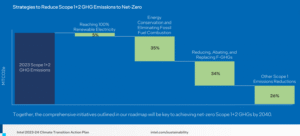
Both Intel and Nvidia have set ambitious climate goals. Intel has pledged to reach net-zero greenhouse gas emissions for Scope 1 and Scope 2 operations by 2040. The company further aims for net-zero upstream Scope 3 emissions by 2050. It also targets net-positive water use and zero waste to landfills by 2030.

Intel net zero roadmap
Source: Intel

Nvidia, which outsources chip production, promises to lower emissions in its products. It also wants suppliers to set science-based climate goals.

By the end of fiscal 2025, Nvidia used 100% renewable electricity in all its offices and data centers. This move cut its Scope 2 emissions to zero. In fiscal 2024, the company emitted 3,692,423 metric tons of CO₂ equivalent. This total includes emissions from Scopes 1, 2, and 3, showing its environmental impact.

nvidia 2024 emissions
Source: NVIDIA

Nvidia surpassed its supplier engagement goal. It worked with partners covering over 80% of Scope 3 Category 1 emissions, up from the initial target of 67%.

By joining forces with Intel, Nvidia gains access not only to its production capacity but also to its sustainability practices. Intel aims for cleaner supply chains and greener manufacturing. This effort could lower the impact of new joint chips.

Nvidia is “fabless” and usually relies on partners like Taiwan Semiconductor Manufacturing Company (TSMC). This partnership gives Nvidia more control over how chips are made, packaged, and delivered.

The recent OpenAI deal further emphasizes Nvidia’s role in high-powered AI while keeping sustainability in mind. The company will provide energy-efficient chips for OpenAI’s large AI tasks. This shows the importance of balancing AI development and reducing carbon emissions.

Power-Hungry AI: Cutting Emissions per Computation

The environmental impact of chips is not limited to their production. In fact, much of the emissions tied to semiconductors come from how they are used in practice. Large-scale AI training, for example, requires massive computing power and electricity.

As demand for AI continues to surge, the energy needs of data centers are climbing quickly. The International Energy Agency predicts that global data center electricity demand may double by 2030. This raises concerns about the carbon footprint of AI-driven growth.

data center electricity demand due AI 2030

Here, the Nvidia-Intel partnership could play a vital role. Intel has set a target to improve the energy efficiency of its processors by 10 times by 2030. Nvidia is also focusing on efficiency. They aim to cut emissions for each computation. This includes lowering carbon dioxide equivalent per petaflop of processing power.

The OpenAI deal adds another layer. Nvidia will supply AI chips to power massive models while aiming to maintain energy efficiency. This ensures that even as AI workloads grow dramatically, emissions per computation can stay lower than older technologies.

“Compute infrastructure will be the basis for the economy of the future,” said Sam Altman, cofounder and CEO of OpenAI. “We will utilise what we’re building with Nvidia to both create new AI breakthroughs and empower people and businesses with them at scale.”

Sam Altman, OpenAI CEO, stated:

“Compute infrastructure will be the basis for the economy of the future… We will utilise what we’re building with Nvidia to both create new AI breakthroughs and empower people and businesses with them at scale.”

Nvidia and OpenAI: The $100 Billion AI Hardware Deal

Under its $100 billion deal with OpenAI, Nvidia will provide AI hardware for the next generation of large AI models. This agreement names Nvidia as the main supplier of specialized GPUs and AI chips for OpenAI’s large computing tasks.

The deal includes support for AI training infrastructure. It also covers software optimization and ongoing maintenance of data center operations.

Nvidia’s fine print states it will provide advanced GPUs over the years. This way, OpenAI can grow its AI systems smoothly and without delays. OpenAI will also commit to using Nvidia’s energy-efficient chips and adopt best practices to limit energy use per computation. Both companies will closely track power use and emissions. They will link efficiency gains to contract milestones.

The companies will work together to build advanced AI supercomputing systems, starting with the Nvidia Vera Rubin platform in the second half of 2026. They plan to roll out 10 gigawatts of computing power, creating one of the largest AI infrastructures ever.

This partnership emphasizes two points:

  • AI demand is growing at an unprecedented speed, and

  • There is increasing pressure to meet that demand while minimizing carbon emissions.

Nvidia is using high-performance, energy-efficient hardware to support OpenAI’s bold AI projects. This helps keep energy use and emissions low. The deal further boosts Nvidia’s role in driving sustainable AI growth. It aligns with its ESG and supply-chain efforts.

Following this announcement, Nvidia’s stock experienced a significant uptick. Shares surged over 4%, making it a top performer on major indices including the Dow, Nasdaq, and S&P 500. This surge reflects investor optimism about Nvidia’s strengthened position in the AI infrastructure market.

nvidia stock

The Fine Print: Supply Chains and Scope 3 Hurdles

Even with progress, the semiconductor industry faces significant challenges in reducing its environmental footprint. Making advanced chips requires temperatures over 1,000°C. It also requires special chemicals and rare materials such as gallium, cobalt, and indium.

Modern fabs use a lot of energy. For example, one Intel fab can use up to 150 million kWh of electricity each year. This results in about 50,000 metric tons of CO₂ emissions annually.

Globally, semiconductor manufacturing produces over 400 million metric tons of CO₂ each year. This is about 1% of all global emissions. With demand for AI chips and cloud services growing, efficiency gains risk being offset.

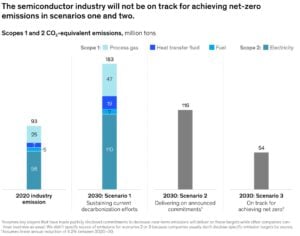
McKinsey & Company’s analysis suggests that the industry must reduce Scope 1 and 2 emissions by at least 4.2% annually from 2020 levels to align with a 1.5°C trajectory by 2030. However, even with full implementation of current decarbonization measures, emissions could reach 89 million tons of CO₂e by 2030, falling short of the 54 million tons needed for net-zero by 2050.

semiconductor industry net zero scenario
Source: McKinsey & Company

Supply chains are an even bigger hurdle. Scope 3 emissions cover raw material extraction, supplier manufacturing, packaging, and logistics. They can account for 70–80% of a chipmaker’s total carbon footprint.

Nvidia has already engaged suppliers covering over 80% of Scope 3 Category 1 emissions, exceeding its initial 67% target. Yet, emissions from mining, wafer fabrication by foundries, transportation, and overseas assembly are still significant. For example, shipping a single ton of semiconductor wafers internationally can add up to 20 metric tons of CO₂.

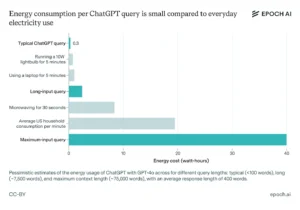
Energy sourcing is also critical. Chips remain high-emission if produced or operated in regions reliant on fossil fuels. Training a large AI model, such as OpenAI’s GPT-4 or the future GPT-5, can use up to 1,000 MWh of electricity. This process may emit hundreds of metric tons of CO₂, depending on the energy source. It does not even include the energy for using the AI model.

chatGPT energy use
Source: EpochAI

A coal-powered data center with an efficient chip generates 17 kg of CO₂ per teraflop. In contrast, renewable-powered setups only produce 4–5 kg per teraflop. The Nvidia–OpenAI deal focuses on providing GPUs and AI hardware.

This new tech aims to boost energy efficiency. It could cut emissions per computation by 30–50% compared to older hardware. This shows that while chip-level efficiency is essential, a full lifecycle approach is necessary.

Emissions reduction relies on several factors. It depends on processor design, energy sources for manufacturing, supplier practices, and how data centers operate. Without cleaner grids and good supply chain management, much of the carbon-saving potential from new chips and AI workloads may be wasted.

Beyond Business: A Climate Play in Disguise

These partnerships show that top chipmakers now see sustainability as part of growth. Investors, customers, and regulators are increasingly focused on the carbon footprint of technology. Linking climate goals to high-profile deals shows that Nvidia and Intel view emissions reduction as a strategic priority.

The Nvidia-Intel partnership and Nvidia’s OpenAI deal could shape the chip industry’s climate impact. Intel’s clean manufacturing record and Nvidia’s efficient AI hardware can help reduce emissions in production and use.

Still, the results will depend on whether efficiency matches demand and if energy sources move to renewables. For now, these collaborations highlight how innovation and sustainability can go hand in hand.

The post NVIDIA’s Mega Deals with OpenAI and Intel Fuel Stock Performance and Sustainable Tech in 2025 appeared first on Carbon Credits.

Plug Power Stock Soars 40% on Hydrogen Deals, DOE Boost and Climate Goals

Plug Power Stock Soars 40% on Hydrogen Deals, DOE Boost and Climate Goals

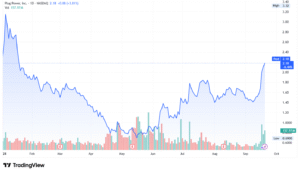
Plug Power’s shares have taken off once again. The stock rose about 40% in just three days and more than 50% across the last eight trading sessions. The sudden rise has drawn strong attention from investors, many of whom see Plug as a key player in the fast-growing hydrogen economy.

This rally comes as the company extends major partnerships, reports stronger sales, wins government support, and pushes ahead with big clean energy goals. Plug Power wants to scale hydrogen production and help build a net-zero future.

A Big Rally in Plug’s Shares

Plug Power’s stock had been under pressure earlier in the year. But over the past week, shares rebounded sharply, climbing past the $2 level for the first time in months.

plug power stock price

Several factors drove the surge. Interest rate cuts in the U.S. lifted clean energy stocks across the board. Plug also showed strong results in its electrolyzer business, with sales rising more than 200% year over year. Together, these updates gave investors new confidence in the company’s growth plans.

Another big driver was the news that Plug Power extended its deal with Uline, a major logistics company, through 2030. The long-term contract shows that big customers continue to rely on Plug’s hydrogen fuel solutions.

At the same time, Plug announced a new partnership with GH2 Global in Brazil, which will bring hydrogen-powered logistics to South America. These agreements strengthen Plug’s market reach and support its goal of building a global hydrogen network.

What Plug Power Does

Plug Power builds hydrogen fuel cells, electrolyzers, and storage systems. Its technology replaces fossil fuel engines and batteries in forklifts, trucks, and stationary power systems.

Fuel cells make electricity by combining hydrogen with oxygen, leaving only water vapor as waste. Electrolyzers create “green hydrogen” by splitting water with renewable electricity. This type of hydrogen has no carbon footprint.

Plug’s goal is to create a full hydrogen network — from making the fuel, to moving it, to using it in everyday machines. The company says this can cut emissions from industries that are hard to abate, like trucking and heavy industry.

Today, Plug has thousands of fuel cells in use, including in forklifts at major warehouses for companies like Walmart, Amazon, and now Uline. These real-world applications show how hydrogen can replace fossil fuels in everyday logistics.

Government Backing Fuels Expansion

Plug Power got a major boost when the U.S. Department of Energy approved a $1.66 billion loan guarantee. The money will fund up to six new hydrogen plants in the U.S. These plants will make liquid hydrogen using renewable energy, rather than fossil fuels.

The company is also expanding abroad. It has signed deals in Europe, Australia, and Asia to sell electrolyzers and supply hydrogen.

In Australia, Plug is working with Allied Green Ammonia to provide a massive 3 GW electrolyzer system, one of the largest announced projects to date.

With the global hydrogen market expected to grow from about $200 billion in 2023 to more than $600 billion by 2030, Plug hopes to capture a large share of green hydrogen. Governments worldwide are funding clean hydrogen as part of their climate plans, which provides Plug with both opportunities and competition.

global green hydrogen market 2030
Source: Grand View Research

Plug Power’s Climate Goals

While it does not have a direct net-zero target year, Plug Power has made clear climate commitments. The company says it wants to help build a net-zero economy while also reducing its own footprint.

Key goals and steps include:

  • Producing 2,000 metric tons of green hydrogen per day by 2030.
  • Supplying Amazon with liquid green hydrogen, helping the retailer meet its 2040 net-zero pledge.
  • Completing a full Scope 3 emissions inventory to track indirect emissions from suppliers and customers.
  • Using renewable power to run its hydrogen plants, avoiding reliance on natural gas.
  • Recycling and reusing parts from fuel cells and electrolyzers to cut waste.

These steps show that Plug is tying its growth to climate progress. By scaling clean hydrogen, the company aims to replace dirty fuels, cut emissions, and support global net zero targets.

PLUG power GHG emissions 2023
Source: Plug Power

Hydrogen’s Role in the Global Transition

The rise in Plug’s stock reflects bigger trends in the clean energy transition. Hydrogen is now seen as a critical fuel for cutting carbon emissions in industries like steel, cement, aviation, and shipping.

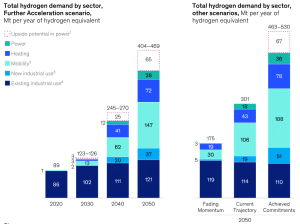
The International Energy Agency says global demand for low-carbon hydrogen could grow sixfold by 2050. If the world is to reach net-zero emissions, hydrogen will play a major role.

hydrogen demand by sector 2050 McKinsey
Source: McKinsey & Company

Governments in the U.S., Europe, Japan, and South Korea all have hydrogen roadmaps. Billions of dollars in public and private money are being invested in the space. More than 1,000 hydrogen projects worldwide have already been announced or are in development.

Plug Power is positioning itself early. By building large-scale hydrogen plants, extending long-term partnerships, and expanding into new regions like Brazil, it is pushing to secure a role at the center of this global shift.

Opportunities and the Pains

The current rally shows strong investor interest, but Plug Power still faces hurdles. Some of the opportunities for the company are:

  • Riding a global wave of clean energy policies that favor hydrogen.
  • Serving companies that need low-carbon fuel to meet climate goals.
  • Using government support to lower costs and expand faster.
  • Building credibility with long-term deals, like those with Uline and GH2 Global.

But Plug also has to deal with these risks:

  • Execution risks in building hydrogen plants on time and within budget.
  • Supply chain challenges, especially for key components.
  • Volatile market sentiment which often swings in clean energy stocks.

The company has struggled with cash burn in the past, which has made investors cautious. Achieving financial stability while scaling hydrogen production will be one of Plug’s biggest tests.

From Rally to Reality: What’s Next for Plug?

Plug Power’s stock surge was boosted by new demand, supportive policies, and investor optimism. Behind the rally is a company aiming to scale clean hydrogen while linking growth to climate goals.

The extension of its Uline partnership through 2030 and its new deal with GH2 Global in Brazil add credibility to Plug’s expansion plans. With targets like producing 2,000 metric tons of green hydrogen a day by 2030, Plug is moving fast.

The path is not without risks. Plug still needs to prove it can scale profitably. But its mix of bold expansion, clean energy focus, and climate commitments is putting the company at the center of the hydrogen transition. For investors, the stock’s surge signals growing belief that Plug Power can help shape the future of energy.

The post Plug Power Stock Soars 40% on Hydrogen Deals, DOE Boost and Climate Goals appeared first on Carbon Credits.

Singapore to Buy $76.4M Worth of Nature-Based Carbon Credits

Singapore to Buy $76.4M Worth of Nature-Based Carbon Credits

Singapore has announced that it will buy about US$76.4 million worth of carbon credits from international projects in Ghana, Peru, and Paraguay. The move reflects the country’s growing role in the global carbon market and its strategy to meet national climate targets. The credits will come from nature-based projects such as forest conservation and reforestation, which reduce or capture greenhouse gas emissions.

The government stated:

“These projects aim to reduce carbon emissions from deforestation, increase carbon sequestration of soil organic carbon stock in grasslands through sustainable management practices, and remove carbon emissions through the reforestation of degraded pastureland.”

Buying Carbon, Growing Climate Impact

The carbon credits will be bought through agreements signed under Article 6 of the Paris Agreement. This article allows countries to trade emission reductions across borders.

Investing in projects abroad helps Singapore reach its climate goals. It also supports other nations in funding sustainable development.

The total contract amounts to S$104 million (US$76.4 million), or about 2.175 million tonnes worth of credits. These credits will come from projects that protect rainforests, restore damaged land, and capture carbon in nature. Each credit represents one metric ton of carbon dioxide reduced or removed from the atmosphere.

Officials have emphasized that all credits must meet strict quality standards. Projects need to show that emission reductions are real, measurable, and verified by independent groups. They must also show benefits for local communities and biodiversity.

Why Singapore Is Buying Carbon Credits

Singapore is a small, urban country, ranked as the world’s 57th-biggest emitter by Global Carbon Atlas. It has little space for renewable energy or big nature projects. The nation is investing in solar power, efficiency measures, and new technologies. However, it still can’t meet its climate targets on its own.

Carbon credits allow Singapore to close this gap. By supporting projects overseas, the country can compensate for emissions it cannot cut at home. Officials have stressed that credits are not a substitute for domestic action. Instead, they are a way to complement local measures and move faster toward climate goals.

Singapore has pledged to cut emissions to 60 million tons of CO₂ equivalent by 2030, down from about 52 million tons in 2021, and to reach net zero by 2050. Buying high-quality credits is part of that plan.

Singapore net zero roadmap
Source: Ministry of Sustainability and the Environment, Singapore

The Role of Nature-Based Projects

The credits Singapore will buy focus on nature-based solutions. These include protecting forests, restoring ecosystems, and preventing land degradation. Such projects are critical because they deliver both climate and social benefits.

Forests, for example, absorb carbon dioxide while also providing habitat for wildlife and resources for local communities. Reforestation creates jobs, improves soil health, and supports water cycles. Protecting land in Ghana, Peru, and Paraguay keeps these benefits going. It also helps avoid emissions from deforestation.

Analysts say nature-based credits are among the most popular in the voluntary carbon market (VCM). In 2024, they made up over 40% of global credits traded. They often sold for higher prices than energy-related credits.

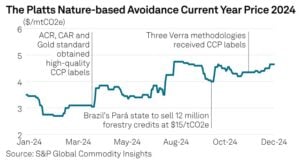
Nature-based avoidance credits, mainly from REDD+ forest projects, are expected to see higher demand in 2025, per S&P Global analysis. However, prices will likely stay low, mostly under US$5 per ton. Despite growing corporate interest, buyers remain cautious and unwilling to pay more without stronger proof of credit quality and stricter standards, keeping prices steady.

nature-based carbon credits price

Singapore’s Hub Ambition in Carbon Markets

The global carbon market is growing quickly. The VCM was valued at about US$2 billion in 2024 and could reach US$50 billion by 2030 if demand keeps rising.

Compliance markets, such as the European Union’s Emissions Trading System, are even larger. Singapore’s early participation positions it to benefit from this growth and to shape global standards.

Singapore has positioned itself as a regional hub for carbon trading and finance. In recent years, the country launched the Climate Impact X (CIX) exchange, a platform for trading high-quality credits. It also signed bilateral carbon credit agreements with countries such as Papua New Guinea, Bhutan, and Morocco.

Partnerships Stretching Across Continents

Singapore’s US$76.4 million purchase from Ghana, Peru, and Paraguay is part of a broader plan. This strategy aims to create a strong network of carbon credit partnerships under Article 6 of the Paris Agreement. These deals focus on getting high-quality credits. They also aim to boost climate cooperation and keep environmental integrity.

A key milestone was the Implementation Agreement with Ghana in May 2024. This agreement sets the rules for generating and transferring credits. It also required that 2% of credits be canceled at issuance and 5% of proceeds be directed toward Ghana’s climate adaptation.

In August 2025, Singapore signed its first transfer agreement with Thailand, its first such deal in Southeast Asia. This opens the way for Thai mitigation projects to supply credits for Singapore’s climate targets.

In September, a request-for-proposal boosted activity from four projects in Ghana, Peru, and Paraguay. They have support from GenZero, AJA Climate Solutions, Boomitra, and Mercuria Asia Resources.

Beyond these deals, Singapore is working with Bhutan, Chile, Vietnam, Papua New Guinea, and Rwanda on new agreements. These partnerships strengthen Singapore as a carbon market hub. They also direct funding into global climate action.

Through this growing network, Singapore is positioning itself as a trusted player in global carbon markets. It also supports partner nations in attracting funding for climate and conservation projects.

singapore carbon trading hub
Source: The Straits Times

Benefits for Host Nations and Their Communities

For Ghana, Peru, and Paraguay, the deal brings funding for sustainable development. Forest protection projects often struggle with limited resources. Selling credits helps these countries pay for activities like patrols against illegal logging. They can also fund community programs and build infrastructure to support conservation.

Carbon finance also creates jobs in rural areas. Planting trees, restoring land, and managing conservation areas all require local workers. Communities can gain from revenue-sharing programs. These programs can help schools, health care, and water access.

By linking their projects to Singapore’s market, these countries gain more visibility and credibility. This can attract further investment from other governments or private companies seeking high-quality credits.

Global Signals From a Small Island Nation

The deal shows how international carbon markets are starting to scale. Under the Paris Agreement, countries can trade credits to meet national targets. This allows funds to move from rich countries with few natural resources to those with big forests and ecosystems.

Experts say such cooperation is essential. Meeting global climate goals will require both deep domestic emission cuts and large-scale protection of natural ecosystems. Carbon markets provide a way to finance the latter.

Singapore’s move could inspire other small but wealthy nations to follow. If successful, the model may become a blueprint for how developed economies can support climate action in developing regions while also meeting their own goals.

The purchase also boosts Singapore’s role as a carbon market hub and highlights the rising importance of international carbon finance. Credit quality and long-term effects remain a challenge. However, strict standards help this deal show that global partnerships can boost climate action and support sustainable development.

The post Singapore to Buy $76.4M Worth of Nature-Based Carbon Credits appeared first on Carbon Credits.

U.S. Nuclear Boom and A Guide to UEC’s Role in Closing America’s Uranium Supply Gap

UEC

Nuclear energy is back in focus in the U.S., fueled by rising power demand, data centers, and new government support. In May 2025, President Trump signed executive orders (EOs) to boost the nuclear industry.

The goal is clear: expand capacity to 400 gigawatts (GW) by 2050, up from about 100 GW today. That would mean building 250–300 new reactors, a scale unseen in decades.

In the near term, the plan targets 10 new reactors by 2030. The EOs also speed up NRC licensing, expand DOE and DOD roles in plant siting, and release government uranium reserves. Additionally, to ease fuel shortages, the White House will also provide 20 metric tons of HALEU to private industry.

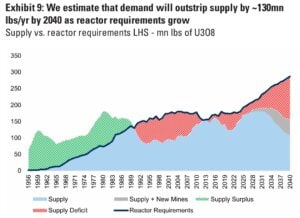
And all these steps could change the course of the U.S. nuclear sector, which is just starting to recover after decades of stagnation. More nuclear reactors will also mean higher demand for nuclear fuel — uranium, the yellow metal.

Nuclear Ambitions and America’s Uranium Supply Gap

A Goldman Sachs report pointed out that the U.S. is the world’s largest uranium consumer, using 29% of global supply each year. Its ~100 reactors represent a quarter of the world’s nuclear capacity.

Much of today’s demand is being fueled by tech giants. Hyperscale data centers require massive amounts of electricity, making clean and reliable power a business necessity. This shift is putting nuclear energy back in focus.

uranium demand U.S.
Source: Goldman Sachs Report

Furthermore, private sector demand is now aligning with government ambitions. Nuclear is increasingly viewed as the only scalable clean energy source that can run 24/7 while meeting both grid needs and the energy appetite of digital industries.

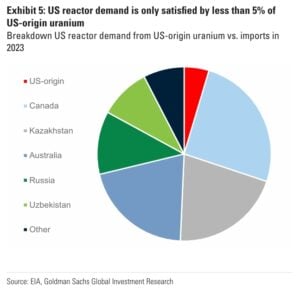
Yet domestic supply tells a different story. The report also says that in 2024, the U.S. produced just 0.7 million pounds of U₃O₈. Production may climb to 3.1 million pounds in 2025, but that still covers only a fraction of the nation’s needs.

This heavy reliance on foreign uranium has long been seen as a national security risk, especially amid geopolitical tensions and fragile supply chains.

Now, with Washington pushing to secure critical minerals, the tide is turning. As America works to build a self-sufficient nuclear fuel cycle, domestic suppliers like Uranium Energy Corp (UEC) will play a pivotal role.

uranium supply uranium demand
Source: Goldman Sachs Report

Why Uranium Energy Corp Stands Out

Against this high uranium demand scenario, Uranium Energy Corp (UEC) has emerged as an important player. The company is already America’s largest and fastest-growing uranium supplier. It is focused on In-Situ Recovery (ISR) mining projects in the U.S., as well as high-grade conventional assets in Canada.

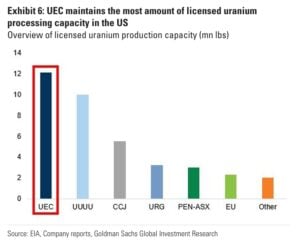
UEC operates three hub-and-spoke platforms across South Texas and Wyoming, with a combined licensed production capacity of 12.1 million pounds of U₃O₈ per year. This gives the company a strong foundation to scale as U.S. nuclear demand accelerates.

More importantly, as a pure-play uranium producer, the company is positioned to directly benefit from federal policies that aim to rebuild a domestic nuclear fuel supply chain. The company’s growth is tied to both rising uranium demand and pricing power in a market where U.S. supply has long fallen short.

Uranium Energy Corporation UEC
Source: Goldman Sachs Report

UEC Launches Refining and Conversion Subsidiary to Secure U.S. Nuclear Future

In a major step forward, UEC recently announced the creation of the United States Uranium Refining & Conversion Corp (UR&C). The wholly owned subsidiary will explore building a state-of-the-art uranium refining and UF₆ conversion facility in the U.S.

Key Highlights:

  • Full Nuclear Supply Chain – UR&C would make UEC the only American firm with the capability to move uranium from mining and milling through refining, conversion, and delivery of natural UF₆ to enrichment plants for LEU and HALEU production.
  • Aligned with Federal Policy – The initiative directly supports Trump’s executive orders that call for quadrupling U.S. nuclear capacity and reducing reliance on foreign sources. The plan also leverages the Defense Production Act (DPA) to prioritize an onshore fuel cycle.
  • Tight Market Dynamics – UF₆ conversion pricing remains near record highs, with spot prices at $64–66/kgU and long-term contracts at around $52/kgU. The lack of U.S. conversion capacity is a key bottleneck in the supply chain.
  • Designed for Scale – The proposed plant would be the largest and most modern UF₆ conversion facility in the U.S., capable of producing 10,000 metric tonnes of uranium per year. That represents more than half of U.S. demand, currently estimated at 18,000 MtU annually.
  • First-Mover Advantage – UEC has already completed a year of engineering and design work with Fluor Corporation, a Fortune 500 EPC firm with deep nuclear experience. This partnership gives the project a significant head start.
  • Phased Development – The project will advance in stages, with updates as government partnerships, regulatory approvals, and utility contracts progress.

If successful, the UR&C initiative would close one of the biggest gaps in America’s nuclear fuel cycle while cementing UEC’s role as a strategic supplier.

Advancing Production Across Hubs

UEC continues to expand production across its three hubs.

  • Wyoming Hub – With a measured and indicated resource base of 54 million pounds, the hub supports a 14-year mine life at full capacity of 4 million pounds per year. The Irigaray Processing Plant is already active, processing, drying, and drumming yellowcake.
  • Texas Hub – Holds 13 million pounds of measured and indicated resources. Expected to start production in late fiscal Q1 2026, the hub has a licensed capacity of 4 million pounds but a physical capacity of 2 million pounds per year, giving it a 6.5-year mine life.
  • Sweetwater Hub – Recently acquired, it brings 4.1 million pounds of licensed capacity. The company is preparing a technical report to define resources by July 2025, with ISR production projected as early as 2029 under fast-track permitting.

Combined, these assets provide UEC with a path to 10.1 million pounds of annual physical capacity (12.1 million licensed). That makes it the largest American uranium producer by scale.

Strategic Positioning in a Tight Market

The uranium market is tightening as global nuclear expansion accelerates. North America, Europe, and Asia are all ramping up nuclear plans in response to energy security concerns and net-zero commitments.

UEC’s focus on ISR mining—considered more cost-effective and environmentally friendly than traditional methods—adds another advantage. The company is positioned not only as a volume supplier but also as a potential price-setter as U.S. utilities look to secure domestic contracts.

With conversion and refining capacity also in play through UR&C, UEC is on track to offer utilities a vertically integrated solution, reducing reliance on foreign intermediaries.

UEC Stock Holds Strong Buy Ratings

UEC currently trades at $12.26 per share, with a market cap of $5.45 billion. Analysts maintain a “Strong Buy” consensus, with price targets clustered between $10.65 and $13 over the next year.

The company remains unprofitable, with negative EPS and no dividend, but the trajectory is improving. Analysts expect uranium demand and prices to strengthen in tandem with new reactor builds, restarts, and life extensions.

Short-term volatility remains a factor, with bearish reports occasionally weighing on sentiment. However, the structural drivers of the market—domestic energy security, rising nuclear capacity, and tight supply chains—suggest a favorable long-term outlook.

uec stock
Source: Yahoo Finance

A Strategic Bet on Nuclear Fuel Security

The U.S. nuclear industry is entering a new era. With government mandates, private sector demand, and rising global momentum, nuclear is positioned for its strongest growth in decades.

Uranium Energy Corp sits at the center of this shift. Its ISR mining hubs, refining and conversion ambitions, and alignment with federal policy make it a strategic asset for America’s nuclear future.

As the U.S. works to close its uranium supply gap and build a self-sufficient fuel cycle, UEC offers investors exposure to both the near-term upswing in uranium prices and the long-term buildout of nuclear capacity.

In short, in many ways, UEC is not just supplying uranium—it is shaping the foundation of American energy security for decades to come.

The post U.S. Nuclear Boom and A Guide to UEC’s Role in Closing America’s Uranium Supply Gap appeared first on Carbon Credits.
CATL Stock Surges on JPMorgan Upgrade and China’s Energy Storage Boom

catl

Contemporary Amperex Technology Co. Ltd. (CATL), the world’s largest battery maker, grabbed the spotlight again after JPMorgan’s upgrade sent its shares higher. This move reflected rising optimism around CATL’s earnings outlook and China’s aggressive push into battery energy storage systems.

CATL Soars on JPMorgan Upgrade and Earnings Boost

CATL’s Hong Kong-listed shares jumped 10.2% to HK$476.8, their highest since the company’s May listing. Its Shenzhen-traded shares surged 14% to 371.52 yuan, the strongest level since late 2021.

JPMorgan analyst Rebecca Wen raised CATL’s 2025–2026 earnings forecast by nearly 10%, a Street-high estimate on expectations of strong Q3 production and rising energy storage demand.

By the close, CATL’s Hong Kong shares ended 7.4% higher, while Shenzhen shares gained 9.1%. Offshore valuations now trade about 20% above mainland prices, a rare premium among Chinese dual-listed firms.

CATL
Source: Yahoo Finance

China Doubles Down on Energy Storage

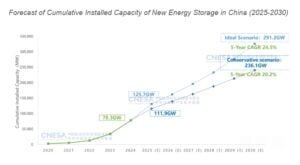
CATL’s rally came just as Beijing unveiled an ambitious plan to nearly double new energy storage capacity to 180 GW by 2027, representing roughly $35 billion in direct investment. The target marks a nearly 90% increase from the current 95 GW installed, with most of the growth coming from lithium-ion batteries.

China energy storage
Source: CNESA

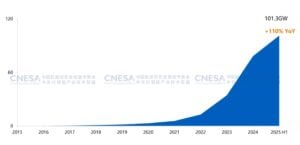
According to the China Energy Storage Alliance (CNESA), the country’s cumulative power storage capacity reached 164.3 GW by June 2025, up 59% year-on-year. This broadly means it surpassed 100 GW for the first time this year, a milestone that is 32 times greater than at the end of the 13th Five-Year Plan.

Pumped hydro’s share has now dropped below 40%, showing a shift toward lithium-ion battery dominance.

  • In just the first half of 2025, newly commissioned storage projects reached 23.03 GW/56.12 GWh, a 68% jump year-on-year.

May alone set a record with 10.25 GW/26.03 GWh of new installations, climbing more than 500% from a year earlier.

China energy storage
Source: CNESA

CATL Positioned to Benefit

CATL is expected to be one of the biggest winners from this rapid growth. The company has already deployed over 256 GWh of energy storage capacity across more than 1,000 projects worldwide.

Notably, China has consistently beaten its own targets, having reached its original 2025 goal of 30 GW two years ahead of schedule.

Market Leadership Stays Firm

CATL continues to dominate the global battery market, holding a 37.5% share in the first seven months of 2025, more than double that of BYD. In August, CATL’s market share in China rose to 42.4% from 41.4% the prior month, according to the China Automotive Battery Innovation Alliance.

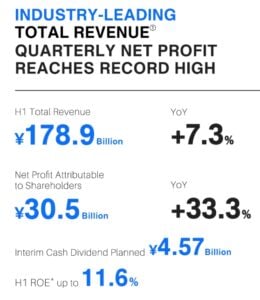
Financial results also highlight its strength. CATL’s Q2 net income surged 34% to a record high, while rival BYD reported a profit decline. Analysts say CATL’s premium reflects its role as a proxy for China’s clean energy ambitions and its unrivaled scale in energy storage.

catl revenue
Source: CATL

Energy Storage Boom Lifts Entire Sector

CATL’s rally boosted other Chinese battery and clean energy stocks. Companies like Hunan Yuneng New Energy Battery Material, Sungrow Power Supply, and Eve Energy all surged in Monday’s trade.

Investor attention now turns to the World Energy Storage Conference in Ningde, Fujian—CATL’s hometown. The event is expected to spotlight China’s dominance in the energy storage sector and reinforce CATL’s role in driving the global clean energy transition.

China’s Megaprojects Leave U.S. Battery Storage Trailing

Mentioned before, China plans to more than double its battery storage capacity to 180 GW by 2027, supported by a $35 billion investment push and dozens of gigawatt-scale projects. The country’s National Energy Administration already reported about 95 GW of new energy storage installed by June 2025, showing just how fast capacity is expanding.

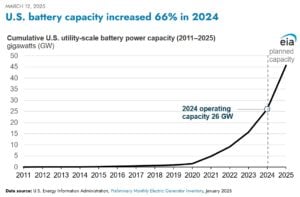
By contrast, U.S. Energy Information Administration (EIA) data shows domestic storage stood at only 28 GW at the end of Q1 2025, with projections to reach around 65 GW by 2026. This gap highlights the significant disparity between the U.S. and China’s scale. While America has strong growth momentum, most projects remain below the 1 GW mark.

The largest, California’s Moss Landing Energy Storage Facility, currently has about 750 MW / 3,000 MWh of capacity after expansions—impressive, but modest compared to China’s gigawatt-scale rollouts.

U.S. battery storage
Source: EIA

In conclusion, we can say that CATL’s stock surge reflects strong earnings momentum and China’s rapid energy storage buildout. With China doubling its energy storage target in another two years and lithium-ion batteries dominating new projects, CATL is set to capture a major share of this growth. Its market leadership and record profits position it as the key driver of China’s clean energy ambitions, leaving the U.S. trailing in large-scale storage deployment.

READ MORE:

The post CATL Stock Surges on JPMorgan Upgrade and China’s Energy Storage Boom appeared first on Carbon Credits.
Xpansiv and KRX Collaborate on Korean Carbon Credit Market Launch

Xpansiv and KRX Collaborate on Korean Carbon Credit Market Launch

Xpansiv, a global provider of market infrastructure for environmental commodities, is teaming up with the Korea Exchange (KRX). They will launch a Korean Carbon Credit Market together.

The initiative will offer a trading platform for several types of credits. This includes voluntary carbon credits, Article 6 credits from the Paris Agreement, and credits linked to compliance systems like CORSIA.

This partnership is a big step for South Korea. It has run its own national Emissions Trading System (K-ETS) since 2015. It’s also significant for Xpansiv, which operates the largest spot carbon exchange in the world. Together, they aim to bring transparency, liquidity, and confidence to a rapidly growing sector.

Why Asia Matters in Global Carbon Markets: A Milestone in Seoul

Asia is emerging as the center of gravity for carbon markets. The region’s scale, economic growth, and rising emissions make it critical for the success of global climate goals. According to Xpansiv,

“Asia is home to some of the world’s fastest-growing economies and largest emitters, which makes the region critical to achieving global climate goals. Countries like Korea are setting ambitious net-zero targets, and carbon markets provide a flexible, effective tool to reach them. We’re also seeing growing demand from Asian companies, financial institutions, and investors who want credible instruments to demonstrate progress on decarbonization, making Asia a natural hub for carbon market growth.”

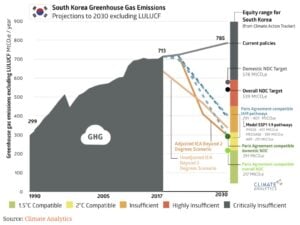
South Korea has pledged to cut greenhouse gas emissions 40% below 2018 levels by 2030 and achieve net zero by 2050. Its national carbon trading system already covers more than 80% of national emissions, making it one of the largest in the world.

south korea 2030 emissions projection

Korea plans to launch a new carbon credit market with global ties. This will give companies more ways to achieve their ambitious goals.

Infrastructure That Builds Trust

For carbon markets to work well, they need trustworthy trading systems. This builds confidence among participants. KRX is already the central platform for South Korea’s financial markets and compliance carbon allowances. By teaming up with Xpansiv, it can extend this role into the voluntary and international carbon space.

As the Xpansiv spokesperson noted,

“Exchanges such as KRX’s are trusted platforms that support liquidity, transparency, as well as operational and credit efficiencies. When you combine KRX’s established role in compliance carbon and financial markets with Xpansiv’s proven exchange and post-trade infrastructure, you get a system that can scale quickly, build participation, and accelerate time to market. Exchanges boost markets by giving commercial end users and investors confidence that transactions are effectively priced, secure, and efficiently settled. This trust and confidence are important to build participation from large companies and financial institutions.”

This model shows a global trend. Exchanges are becoming the backbone of environmental commodity markets. Linking KRX’s platform with Xpansiv’s Carbon Business Line (CBL) lets South Korean users tap into global liquidity. It also connects international players to Korean projects.

Xpansiv’s CBL exchange remains the largest marketplace for voluntary carbon credits, handling more than 250 million metric tons CO₂e since 2020. In 2025, activity remains strong, with weekly trades exceeding 300,000 tons, most from nature-based projects.

The platform also launched CORSIA-compliant GEO CP1 contracts and expanded removal-only credit listings, including 75,000 forestry credits. Since early 2023, over 3.5 million Australian ACCUs have traded on CBL. With ~25% global VCM share, Xpansiv anchors voluntary market growth in 2025.

The market is also shifting toward credits with stronger co-benefits, like biodiversity and community impact. Also, early adoption of carbon removal credits has begun, signaling an evolution in market quality and transparency.

The Broader Role of Carbon Trading: Putting a Price on Carbon Progress

Carbon trading is seen more as a market driver than just a compliance tool for climate solutions. By putting a price on carbon, trading systems create demand for projects that avoid, reduce, or remove emissions.

Xpansiv highlighted this broader role:

“Carbon markets are not necessarily an end in themselves. When implemented properly, they’re a tool and arguably a market accelerator. By putting a price on carbon and creating demand for projects that avoid, reduce, or remove emissions, markets have the potential to unlock billions in private capital to fund real-climate solutions. These funds support renewable energy, reforestation, and innovative technologies that would otherwise struggle to scale. In that way, carbon markets bridge climate ambition and real-world decarbonization, speeding up the global energy transition.”

The voluntary carbon market was valued at around $2 billion in 2024. It could grow to nearly $50 billion by 2030 if corporate demand continues to rise.

voluntary carbon credit demand growth
Source: McKinsey & Company

At the same time, compliance carbon markets worldwide reached a record $950 billion in traded value in 2023. This growth was led by the EU Emissions Trading System. South Korea can boost its role in carbon finance by being a hub for compliance and voluntary trading.

Xpansiv’s Global Playbook

Xpansiv partners with KRX to expand global environmental commodity markets. The company runs trading, registry, and post-trade platforms. These support carbon credits, renewable energy certificates, and digital fuels.

In their words, “Our mission is to accelerate the world’s energy transition by operating robust infrastructure for environmental commodity markets. Our technology platform makes these markets work efficiently and securely. Supporting Korea’s new market is a significant step to drive measurable and real climate impact.”

Xpansiv strengthens its global network by enabling Korea’s carbon credit market. This move helps one of Asia’s leading economies get closer to its climate goals.

The collaboration between Xpansiv and the Korea Exchange to launch a new Korean Carbon Credit Market underscores the growing importance of carbon trading in Asia. With ambitious climate goals, strong policy frameworks, and rising demand from companies and investors, South Korea is well-positioned to become a regional leader.

The new platform combines KRX’s trusted market role with Xpansiv’s global exchange. It aims to provide the transparency, liquidity, and confidence needed to grow carbon finance. The partnership shows that strong carbon markets can attract private investment. This, in turn, speeds up the global shift to cleaner energy.

The post Xpansiv and KRX Collaborate on Korean Carbon Credit Market Launch appeared first on Carbon Credits.

Microsoft’s $6.2 Billion AI Bet in Norway for 100% Renewable Energy Powered Computing

Microsoft’s $6.2 Billion AI Bet in Norway for 100% Renewable Energy Powered Computing

Microsoft has made one of its biggest commitments yet to clean energy and artificial intelligence. The company signed a $6.2 billion deal to secure new AI computing capacity in Northern Norway. The project will run on 100% renewable energy, mainly hydropower. It will help Microsoft meet rising AI demand while keeping emissions down.

This move highlights how the tech industry is trying to balance two big goals: growing faster with AI and meeting climate targets at the same time.

President of Business Development and Ventures for Microsoft, Jon Tinter, stated:

“We are incredibly excited for what this means for our customers, in Norway and across Europe, providing the latest and most advanced AI services from Microsoft. It is inspiring to see how Nscale and Aker are building cutting-edge, sustainable AI infrastructure, and adding this facility to our comprehensive Microsoft cloud offering in Europe demonstrates our unwavering commitment to customers on the continent.”

What the Deal is All About?

The agreement is set for five years. Microsoft will lease AI computing from Nscale Global Holdings and Aker ASA. Together, they plan to deliver the power of about 100,000 NVIDIA GPUs by the end of 2026.

The site will be in Northern Norway, chosen for its clean electricity and cool climate. Hydropower will supply the energy, while the natural cold will reduce the need for mechanical cooling. That makes the project both cost-efficient and climate-friendly.

The scale of the deal is huge. With AI use soaring worldwide, this project gives Microsoft a strong base in Europe. It ensures the company can serve governments, businesses, and research institutions that need secure, low-carbon AI compute.

Benefits of the Deal

The Norway deal gives Microsoft several major benefits:

  • First, it reduces greenhouse gas emissions by replacing fossil fuels with hydropower.
  • Second, it shows customers that Microsoft’s AI services are backed by clean energy, which matters for ESG reporting.
  • Third, it helps Microsoft move closer to its net-zero targets while still expanding its AI capacity.

Recently, the tech giant also agreed to a deal with Nebius worth around $19.4 billion over five years to supply massive GPU-powered AI infrastructure. Deliveries will begin in late 2025. The arrangement boosts Microsoft’s ability to compete in cloud and AI markets.
With these deals, Microsoft is showing a dual strategy: expand AI capacity at record speed while anchoring that growth in clean energy, balancing innovation with sustainability goals.

Why This Matters for Microsoft’s Climate Goals

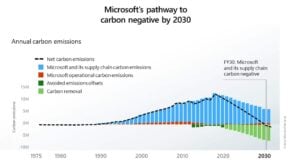
Microsoft has pledged to become carbon negative, water positive, and zero waste by 2030, and to protect more land than it uses. By 2050, it also aims to erase all emissions it has produced since 1975.

Microsoft 2030 carbon negative goal

Reaching these goals has not been easy. Between 2020 and 2023, Microsoft’s total emissions rose by about 30%, largely due to the rapid growth of cloud services and AI workloads. Training and running large AI models require enormous amounts of electricity. And Scope 3 emissions from suppliers and product use now make up more than 96% of the company’s footprint.

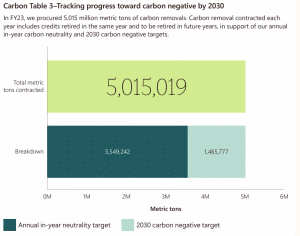
At the same time, Microsoft has made significant progress in clean energy. It has contracts for more than 19 gigawatts of renewable capacity worldwide, making it one of the largest corporate buyers of green power. It has also invested in carbon removal projects such as reforestation, soil carbon, and direct air capture.

Microsoft carbon removal targets
Source: Microsoft

The new Norway project is a direct response to these challenges. By pairing AI growth with renewable energy, Microsoft shows that it can expand without abandoning its climate targets. This step also helps build trust with investors and customers who increasingly expect measurable progress, not just long-term pledges.

Why Norway?

Norway is a natural choice for this kind of project. It has several key advantages:

  • Abundant hydropower provides clean and stable electricity.
  • Cool weather helps lower cooling needs for data centers.
  • Strong industrial experience supports complex energy and technology projects.

These factors reduce both costs and emissions. They also allow the site to run efficiently year-round. For Microsoft, this means reliable AI computing with a lower environmental impact.

The Growth and the Risks of Scaling Green AI

AI demand has exploded in recent years. Businesses, schools, and governments now use advanced AI tools daily. Large language models, predictive analytics, and AI-powered cloud services are driving record growth in computing needs.

The global market for AI infrastructure is expected to grow more than 30% per year. By 2030, the sector could be worth hundreds of billions of dollars. But this growth brings pressure. Data centers already account for around 2% of global electricity use, and that share is climbing.

data center electricity demand due AI 2030

Microsoft has responded by signing contracts for 19 gigawatts of renewable energy across 16 countries in 2024 alone. The Norway project adds even more clean power, directly linked to AI expansion.

Competitors like Amazon and Google are also making big clean energy deals. But Microsoft’s $6.2 billion project stands out because it ties renewable energy directly to AI growth in Europe.

The project also faces challenges:

Scaling to 100,000 GPUs by 2026 will take a massive supply of hardware and careful planning. Global shortages in chips or materials could delay progress. Local regulations and permits may also slow the build.

Another issue is that AI hardware itself has a carbon footprint. Manufacturing, shipping, and recycling servers and GPUs all release emissions. Microsoft will need to keep working with suppliers to cut those impacts.

Finally, demand for AI may outgrow even this massive project. Microsoft could soon need more clean energy sites to keep pace.

Setting the Benchmark for Big Tech and the AI Industry

This project could shape how other tech companies build AI capacity in the future. It proves that large AI data centers can run entirely on renewable energy. If successful, it may push rivals to copy the model. It also shows that clean power can be built into the foundation of AI growth.

For renewable energy producers, this trend means larger, long-term contracts. Deals like this provide financial stability and help scale up clean power projects.

The deal aligns with Microsoft’s 2030 climate goals and gives it a strategic advantage in Europe. It also sets a benchmark for how AI and sustainability can move forward together.

Challenges remain, from hardware supply to rising demand. Yet, the message is clear: the future of AI may also be a future powered by clean energy.

The post Microsoft’s $6.2 Billion AI Bet in Norway for 100% Renewable Energy Powered Computing appeared first on Carbon Credits.