Waymo Expands With Lyft Robotaxi Deal and Strong Safety Record

Waymo Expands With Lyft Robotaxi Deal and Strong Safety Record

Waymo, formerly Google’s self-driving car project, keeps making moves. New safety data shows its self-driving cars crash far less than human drivers. Moreover, Waymo and Lyft just announced a robotaxi deal in Nashville that pushed Lyft’s stock up over 10%. These developments highlight Waymo’s growing influence in autonomous transportation.

Waymo’s Safety Data Shows Big Reductions

Waymo has driven over 96 million miles in rider-only mode in cities like Phoenix, Los Angeles, and San Francisco. It compared those miles to human driving on similar roads and found major safety improvements:

  • 79% fewer airbag-deployment crashes,
  • 80% fewer injury crashes, and
  • 91% fewer serious injuries or worse.

These findings show Waymo can reduce serious crashes significantly. They help build trust with regulators, passengers, and city leaders.

Lyft Rides the Robotaxi Wave

Alongside its safety data release, Waymo is teaming up with Lyft to launch robotaxis in Nashville by 2026. Under the plan, passengers will initially book rides through Waymo’s app, with Lyft’s app integration to follow.

Lyft will manage the fleet through its Flexdrive unit. This includes handling depots, maintenance, and charging. The partnership is designed to start with a smaller fleet and then grow to hundreds of vehicles as the service scales.

Investors reacted quickly. Lyft’s stock jumped by 13% to 14% after the deal was announced. This shows optimism about the company’s comeback in the ride-hailing and robotaxi market.

Lyft stock

For Waymo, the agreement is a way to expand without taking on the entire operational burden. For Lyft, it offers a way to participate in autonomous mobility after years of uncertainty about its role in the space.

Why This Partnership and More Waymo Deals Matter

The Nashville project is important. It’s Waymo’s first big partnership with Lyft for robotaxi services. The robotaxi company is changing its strategy. It will now partner with established ride-hailing platforms. This way, it can expand its reach without building everything on its own.

For Lyft, the deal brings new credibility. In recent years, the company has struggled to keep pace with Uber in traditional ride-hailing. By adding Waymo’s autonomous vehicles, Lyft gains a chance to position itself as a player in the future of mobility.

The stock market response shows that investors see this as more than just a pilot project—it is a sign of growth potential.

Cleared for Takeoff at SFO

Moreover, Waymo recently secured a permit to begin autonomous vehicle operations at San Francisco International Airport (SFO). The permit allows Waymo to roll out a phased testing plan there.

In phase one, Waymo will map airport roadways and conduct safety trials with a human safety driver supervising. 

The company will first provide rides to airport employees. Later, it will start pickups and drop-offs for passengers. SFO is a major transit hub, serving tens of millions of travelers annually, which makes this permit highly significant. 

The decision shows strong support from local regulators. It highlights Waymo’s safety record and technical skills. This airport rollout broadens Waymo’s reach. It also helps boost commercial autonomous mobility in tricky settings. It further strengthens Waymo’s role as a leader in safely scaling autonomous ride services.

Most recently, Waymo teamed up with Via to integrate its driverless robotaxis into public transit. This begins this fall in Chandler, Arizona.

The service will plug into Chandler Flex, an on-demand microtransit system run by Via. This decision aims to improve transit accessibility, reduce costs, and enhance safety for riders.

Analysts view this as a smart move for Waymo’s robotaxi growth. It adds to their recent Lyft partnership in Nashville. It also underscores Waymo’s push to embed autonomous vehicles (AVs) in shared, transit-oriented settings. 

Broader Context of Autonomous Expansion

Waymo’s expansion into airports and now through partnerships reflects a strategy of gradual scaling. At Phoenix Sky Harbor Airport, it already runs robotaxi services for travelers. 

The global picture also shows growing momentum for robotaxis. Analysts predict the autonomous vehicle industry might surpass $100 billion by 2030. They expect annual growth rates to exceed 30%. In North America, the AV market growth is staggering. 

AV market 2030 in north america

Cities are testing grounds for this technology. Companies like Waymo, Cruise, Zoox, and Motional are all seeking permits to operate.

Waymo’s advantage lies in its long record of safety data and its willingness to publish results. In contrast, many competitors offer fewer details. Waymo shows lower crash rates over millions of miles. This builds credibility and boosts its regulatory standing.

In addition to this, robotaxis are also considered as one way to help curb the transport sector’s carbon emissions. 

Robotaxis and Emission Reductions

Robotaxis, especially electric ones, can play a major role in cutting emissions. Waymo’s all-electric fleet provides over 250,000 rides weekly, avoiding about 315 tons of CO₂. In San Francisco, Los Angeles, and Phoenix alone, the service prevents another 135 tons each week by replacing traditional cars.

Studies back these gains: research from Lawrence Berkeley National Lab found that electric robotaxis could emit 87–94% less greenhouse gases per mile than gasoline cars. With durable designs and clean power, fleets could lower lifecycle emissions by up to 72%, showing strong climate potential as adoption grows.

If 5% of U.S. vehicle sales in 2030 were autonomous robotaxis, that shift could save 7 million barrels of oil per year. In turn, this can reduce CO₂ emissions by about 2.1 to 2.4 million metric tons annually.

The Roadblocks Ahead

Despite the strong data and new partnerships, challenges remain. Regulatory approval is complex and can differ widely from city to city. Public trust is another factor. While safety statistics are compelling, many passengers are still uneasy about riding in cars with no human driver.

Costs are also a concern. Building and maintaining fleets of autonomous vehicles requires significant investment in hardware, software, and infrastructure. Waymo’s partnership with Lyft helps share some of that burden, but scaling to hundreds or thousands of vehicles will still take time and capital.

Competition is increasing as well. Companies such as Cruise and Zoox are also testing services in U.S. cities, while global firms in China and Europe push forward with their own models. The race is becoming crowded, and success will depend on execution, cost control, and the ability to win regulatory and public acceptance.

Looking Ahead: Driving Into Tomorrow

Waymo’s next milestones are to expand operations at the San Francisco International Airport. They also plan to launch the Nashville project with Lyft in 2026. Both will be closely watched as tests of whether autonomous vehicles can operate at scale in busy, complex environments.

The Nashville service, in particular, could become a template for future partnerships between autonomous technology companies and ride-hailing platforms. If successful, it may lead to similar deals in other U.S. cities. 

Waymo’s recent safety results show how autonomous vehicles can greatly improve road safety, as shown by the sharp drop in crash rates. Challenges remain in regulation, costs, and public trust. But with clear momentum, strong data, and strategic alliances, Waymo is shaping the path toward safer and more connected urban mobility.

The post Waymo Expands With Lyft Robotaxi Deal and Strong Safety Record appeared first on Carbon Credits.

Anglo American and Codelco’s $5B Joint Mine Plan Secures Chile’s Copper Future

copper

Anglo American and Codelco have signed a landmark agreement to coordinate their copper operations in Chile. Through Anglo American Sur S.A. (AAS), the partners will integrate mine plans for Los Bronces and Andina, two neighboring sites. This deal, approved by both boards, builds on a memorandum of understanding signed in February 2025.

Let’s unlock all details about this deal:

Anglo and Codelco’s $5B Copper Leap

The plan unlocks 2.7 million tons of additional copper over 21 years, starting in 2030 once permits are secured. Annual output will rise by about 120,000 tons, split equally between both companies. Costs are expected to fall by roughly 15% compared to standalone operations, with minimal new capital required.

This integration could generate a pre-tax NPV uplift of at least $5 billion, evenly shared by AAS and Codelco. Combined output from the two sites would place them among the world’s top five copper mines, up from their current top 10 ranking.

A new jointly owned operating company will oversee the plan and optimize processing capacity across Los Bronces and Andina. While copper production and profits will be split equally, both Anglo American and Codelco will keep ownership of their assets and continue to manage their concessions.

The alliance also allows flexibility. Each company can still pursue independent projects, including underground resource development, while coordinating operations under the joint framework.

Duncan Wanblad, CEO of Anglo American, said,

“Copper is a vital resource for the global energy transition and is at the forefront of our growth ambitions. We are delighted to finalise this landmark agreement with Codelco, ushering in a new chapter for Los Bronces and Andina, which are two exceptional copper assets. I am immensely proud of the collaboration between Anglo American and Codelco, which has brought this ambitious vision to life. Together, we are demonstrating what is possible when two leading copper mining companies work together with a shared purpose and commitment to excellence. I express my sincere gratitude to our partners in Anglo American Sur – Mitsubishi and Mitsui – without whose support this would not have been possible. The outstanding work of our teams reinforces our confidence in the joint mine plan and the expected more than $5 billion of additional pre-tax value for Anglo American Sur and Codelco. Together we are unlocking the full value potential of these neighbouring assets and one of the world’s premier copper resource endowments, for the benefit of all stakeholders and, of course, for Chile.”

Máximo Pacheco, Chairman of Codelco, also emphasized,

“We are reliable companies that honour our commitments. In just eight months, we finalised the joint mining plan we announced in February. I value that this process included the voices of workers, as well as the intense effort, remarkable capabilities, and outstanding professionalism of our teams, who succeeded in reaching an agreement that had been waiting for years. We can now maximise the potential of the Andina-Los Bronces mining district without major investments and with significantly greater returns. This collaboration for sustainable mining will also help meet the urgent need for more critical minerals for the energy transition, in a world where copper production has so far remained stagnant.”

Commitment to Sustainability and Communities

Both parties agreed to a set of principles guiding the plan’s execution. These include maintaining environmental safeguards and supporting existing social programs. The joint approach aims to set new standards for innovation, efficiency, and sustainable mining.

The transaction remains subject to regulatory and competition approvals, along with environmental permits expected before operations begin in 2030.

Chile’s Copper Strength in the Global Energy Transition

Chile remains the world’s largest copper producer, accounting for 24–30% of global output. Copper exports are the backbone of its economy, driving GDP, trade surpluses, and government revenues.

In 2024, Chile exported $103 billion worth of goods, with total exports including services reaching over $105 billion. This created a trade surplus of $14.8 billion, underscoring the nation’s global competitiveness. China continues to lead as the top buyer of Chile’s copper, alongside the U.S., Japan, and South Korea.

Copper Demand Outlook

IEA data revealed that global demand for refined copper (excluding scrap) reached nearly 27 million tonnes in 2024. Forecasts show this figure climbing to 33 million tonnes by 2035, and as high as 37 million tonnes by 2050.

The electric vehicle (EV) transition, renewable energy expansion, and infrastructure growth are fueling this surge. For Chile, this creates a long-term opportunity to leverage its resource advantage.

Copper demand
Source: IEA

Chile’s Export Strategy Beyond 2025

Looking ahead, Chile plans to strengthen exports by moving up the value chain. That means shifting from unrefined copper concentrate, currently about two-thirds of its output, to higher-value refined products and processed metals. The country also aims to expand exports in agroforestry and advanced food processing.

This strategy positions Chile not only as the world’s top copper supplier but also as a leader in sustainable and value-added trade. With the Anglo American–Codelco alliance, Chile is set to reshape the global copper market while reinforcing its role in powering the clean energy transition.

The post Anglo American and Codelco’s $5B Joint Mine Plan Secures Chile’s Copper Future appeared first on Carbon Credits.

ARMR Sciences – The Future of Drug Defense

Disseminated on behalf of ARMR Sciences.


Please read our Full RISKS and DISCLOSURE here.

The post ARMR Sciences – The Future of Drug Defense appeared first on Carbon Credits.
TSMC Stock Gains on 38% Semiconductor Market Share, AI Breakthroughs, and Sustainability Efforts

tsmc

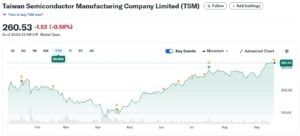
Taiwan Semiconductor Manufacturing Company (TSMC) continues to set new benchmarks in both market performance and environmental responsibility. Recently, the company’s stock (TSM) hit a record-high closing price of NT$1,280, pushing Taiwan’s main stock index to an all-time peak.

Investors responded positively, betting on U.S. Federal Reserve rate cuts and rising demand for artificial intelligence (AI) technologies. But behind the market excitement lies a deeper story. TSMC’s leadership in semiconductor manufacturing and its bold climate action strategy are driving long-term value for shareholders and the planet.

Why Investors Are Bullish on TSMC (TSM Stock)

In the second quarter of 2025, the fab giant expanded its global foundry market share to 38%, up from 31% a year earlier. This jump signals how effectively the company is capturing opportunities in advanced chipmaking.

Counterpoint Research reports that TSMC accounted for nearly three-quarters of the revenue growth in the fast-growing “foundry 2.0” market. This segment, which focuses on next-generation semiconductor production, grew by 19% year-over-year.

The company’s rapid 3nm process ramp-up, along with high utilization of its 4nm and 5nm nodes for AI-related chips, positions it at the forefront of innovation.

Furthermore, MediaTek’s announcement that its next flagship chip will use TSMC’s 2nm process underscores the company’s industry leadership. Investors recognize that TSMC’s advanced technologies are critical to powering AI, 5G, and cloud computing.

tsmc stock
Source: Yahoo Finance

AI-Driven Growth Fuels Future Prospects

The much-hyped semiconductor demand is soaring as companies deploy AI chips in data centers, autonomous vehicles, and edge devices. As per reports, its flagship CoWoS (Chip-on-Wafer-on-Substrate) packaging capacity is expected to reach between 65,000 and 75,000 wafers per month by the end of 2025, with further expansion to about 100,000 units by 2026.

This capacity expansion gives TSMC a competitive edge, ensuring it remains the supplier of choice for high-performance AI chips.

The entire supply chain benefits from this growth. Additionally, Advanced Semiconductor Engineering (ASE), a key player in outsourced assembly and test services, saw an 11% increase in revenue. Thus, rising demand for sophisticated packaging solutions confirms that AI-driven expansion is reshaping the industry.

TSMC’s Strong Financials Support Long-Term Investment Confidence

Investors are drawn to TSMC’s resilience. In August 2025, the company’s revenue hit NT$335.77 billion—up 3.9% from the previous month and 33.8% from August 2024. Year-to-date revenue through August reached NT$2,431.98 billion, marking a 37.1% increase compared to 2024.

This growth reinforces TSMC’s reputation as a stable, high-performing investment. The company’s diverse client base, advanced manufacturing capabilities, and strategic expansion into AI markets strengthen its long-term outlook.

tsmc earnings
Source: TSMC

Climate Action: A Competitive Edge for Investors

While growth captures headlines, TSMC’s commitment to sustainability builds deeper trust with investors and stakeholders. The semiconductor industry is energy-intensive, and responsible climate action is now a key differentiator.

  • In 2024, TSMC’s total greenhouse gas emissions reached 21 million metric tons of CO₂ equivalent.
  • Electricity usage (Scope 2) caused 52% of TSMC’s emissions, while its supply chain (Scope 3) contributed 39%, and direct processes (Scope 1) accounted for 9%.

Emissions increased by 8% compared to the previous year, and emissions per product unit rose by 19%. While the company missed its reduction targets, it swiftly accelerated its efforts to improve energy efficiency and reduce its carbon footprint.

tsmc emissions
Source: TSMC

Key Climate Initiatives Driving Impact

Last year, the company installed or upgraded more than 3,400 scrubbers at manufacturing sites, cutting 390,000 metric tons of direct emissions.

It added nine new green factories certified by LEED Gold or higher, bringing its total to 51 eco-certified facilities. These buildings use energy-saving designs and materials that enhance operational efficiency.

Recognizing that reducing supply chain emissions is essential, TSMC introduced its “Supply Chain Carbon Reduction Action Strategy.” This framework focuses on performance tracking, supplier support, motivation incentives, and collaborative innovation, encouraging suppliers to adopt low-carbon practices.

Renewable Energy Drives TSMC’s Climate Action

Renewable energy leads TSMC’s climate roadmap. In 2024, its Taiwan fabs used 1,450 GWh of renewable power. Meanwhile, its global offices ran entirely on renewable electricity, and all CO₂ emissions from overseas sites were fully offset. As a result, TSMC has achieved net-zero electricity-related emissions for seven straight years.

Looking ahead, the company aims to source 40% of its electricity from renewables by 2030. It also fast-tracked its goal to reach 100% renewable energy by 2040—ten years earlier than planned.

Through initiatives like roof-mounted solar panels and maximizing renewable installations, TSMC boosted its renewable energy use to 3,610 GWh in 2024. By year’s end, it secured 4.4 GW of renewable energy contracts, cutting an estimated 5.23 million metric tons of CO₂ emissions annually.

TSMC energy
Source: TSMC

Bringing Bees Back: How TSMC’s Green Efforts Revived Local Ecosystems

The company’s environmental initiatives have restored ecosystems around its manufacturing sites, resulting in unexpected benefits for biodiversity. After reintroducing plant species suitable for pollinators, bees naturally returned to areas near TSMC’s fabs.

Recent reports say that the company partnered with local beekeepers and Taiwan’s Tunghai University to produce “Ji Mi,” a branded honey cultivated in and around its factories. The project not only supports pollinators but also creates new community livelihoods.

In conclusion, investors benefit from TSMC’s leadership not only through market gains but also by aligning with global sustainability trends. As demand for AI and advanced computing grows, TSMC’s forward-thinking strategy keeps it at the forefront—driving returns while safeguarding the environment.

The post TSMC Stock Gains on 38% Semiconductor Market Share, AI Breakthroughs, and Sustainability Efforts appeared first on Carbon Credits.
Scaling Sustainable Farming: AgreenaCarbon’s 2.3 Million Verified Carbon Credits Redefine Regenerative Agriculture

regenerative agriculture

Danish carbon credit company, Agreena’s “AgreenaCarbon Project” reached a major milestone by becoming the first large-scale arable farming initiative verified under Verra’s Verified Carbon Standard (VCS) VM0042 Improved Agricultural Land Management v2.0 methodology.

This achievement advances carbon markets by providing verified, traceable, and compliance-ready credits supported by measurable, field-level data. By issuing 2.3 million Verified Carbon Units (VCUs), the project enables farmers and corporates to drive real climate action and align with global sustainability goals.

Mandy Rambharos, the Chief Executive Officer of Verra, commented:

“The AgreenaCarbon Project is extremely important because it demonstrates how soil carbon projects can scale. It spans vast areas of land across multiple countries in Europe – from Ukraine to Spain – showing the breadth and reach of its impact. By implementing VM0042 and ensuring the right protocols, we can guarantee the quality and integrity of the carbon credits generated. This gives us confidence that these projects truly have the ability to scale.”

AgreenaCarbon: Setting a New Benchmark for Agriculture-Based Carbon Credits

The press release highlights that the AgreenaCarbon Project operates across 1.6 million hectares of regenerative farmland spanning countries including the UK, Denmark, Ukraine, Moldova, Romania, Lithuania, Latvia, Estonia, Bulgaria, and Spain. Its success in securing VCS verification underscores the credibility and integrity of its carbon credits.

Unlike conventional farming initiatives that primarily focus on yield, Agreena’s approach emphasizes soil health, biodiversity restoration, and measurable greenhouse gas reductions.

Through its holistic solution, Agreena finances farmers’ transition toward regenerative practices, rigorously verifies their impact using AI-driven digital measurement, reporting, and verification (dMRV), and offers corporates access to high-quality nature-based carbon offsets.

The verification process, following its validation earlier in 2025, confirms that the project has delivered verifiable carbon benefits from historic practices implemented in 2021, 2022, and 2023.

Simon Haldrup, CEO and co-founder of Agreena, added:

“The verification of the AgreenaCarbon Project reaffirms Agreena as a leader in regenerative agriculture, proving that soil carbon sequestration can be measured, verified, and trusted at scale. This milestone empowers farmers – the true climate heroes – to adopt new practices through verified carbon credits, while giving corporate buyers the confidence to invest in meaningful climate action. Agreena is proud to be building the world’s largest verified supply of soil carbon credits, bringing the first large-scale wave of high-quality credits to market.”

Delivering Climate Solutions with Proven Impact

Agreena’s regenerative practices have already contributed to achieving the following carbon reduction milestones:

  • Nearly 1.2 million tonnes of CO₂ have been cut through improved farming methods, equivalent to removing 261,000 cars from the roads for an entire year.

  • Over 1.1 million tonnes of CO₂ have been captured and stored in soils, matching the yearly carbon footprint of 90,000 individuals.

These results are independently verified by accredited third-party agencies, ensuring that every credit issued reflects real, field-based impact.

Farmers are the backbone of this effort. Oleksandr Mustipan, a farmer involved with Agreena, described the project as transformative: “Working with Agreena has truly been a game-changer. It enabled us to scale up regenerative practices faster and more effectively than I ever could alone. The verification process validates our contribution and motivates us to continue making a difference.”

For corporates, these credits offer a trusted mechanism to meet ESG targets while supporting agricultural ecosystems. Leading firms such as Radisson Hotel Group have already pre-ordered a substantial share of the credits, underscoring market confidence in Agreena’s offering.

AgreenaCarbon carbon credits
Source: AgreenaCarbon

Growing Carbon Credits with Regenerative Agriculture

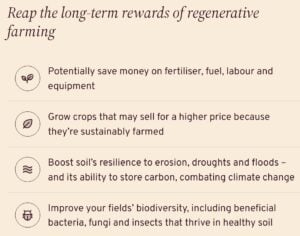
Agriculture is responsible for 22% of global anthropogenic emissions, making soil management a critical pillar in climate mitigation strategies. Conventional farming practices, reliant on chemical inputs and intensive tillage, have degraded soil health and diminished its carbon-storing potential.

In contrast, regenerative practices focus on rebuilding organic matter, enhancing biodiversity, and fostering long-term resilience.

Key practices employed across Agreena’s projects include:

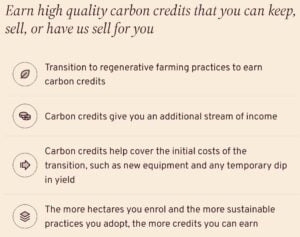
  • Cover cropping helps lock carbon into the soil while improving nutrient cycling.
  • Crop rotations promote soil structure and reduce disease pressure.
  • Residue management, minimizing soil disturbance, and protecting microbial life.
  • Reduced or no-tillage techniques, lowering emissions, and preserving soil integrity.

These interventions not only generate carbon removal credits by storing atmospheric CO₂ in the soil but also contribute avoidance credits by reducing emissions from fertilizer use or energy consumption. The combined effect of such practices offers a diversified credit profile that meets varying market needs.

regenerative agriculture AgreenaCarbon
Source: AgreenaCarbon

How Regenerative Practices Are Redefining Agriculture

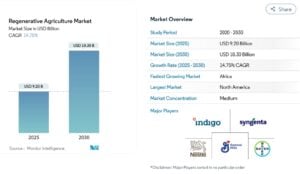
According to Mordor Intelligence, the regenerative agriculture market is poised for rapid expansion. With an estimated market size of USD 9.2 billion in 2025, projections indicate growth to USD 18.3 billion by 2030, reflecting a 14.75% CAGR.

The report further explains several factors that are driving this momentum:

Corporate Commitments

Major food and beverage companies are investing heavily in regenerative sourcing. Nestlé pledged CHF 1.2 billion to source half its priority materials from regenerative farms by 2030, while PepsiCo is funding USD 216 million to transition 7 million acres. These initiatives are expanding through supply chains, offering growers premium contracts and stable revenue.

Government Incentives

Policies are increasingly supporting regenerative practices. The USDA’s USD 3.1 billion program rewards verified soil improvements, and 25% of Europe’s CAP payments now target eco-friendly schemes. Denmark’s mix of taxes and subsidies further encourages sustainable farming.

Consumer Preferences

Growing demand for climate-friendly products is pushing brands to highlight regenerative practices. 63% of food companies now include regenerative agriculture in their sustainability plans, creating new market opportunities for growers.

Financial Risk and Opportunity

Banks and investors are factoring soil-carbon gains into lending strategies. Verified projects help reduce financing risks, leading to lower interest rates and easier access to capital for sustainable farming initiatives.

regenerative agriculture
Source: Mordor Intelligence

Driving Trusted, Scalable Climate Action with Verra

The AgreenaCarbon Project’s verification by Verra marks a pivotal moment in agriculture-based carbon markets. It confirms not only the methodology but also the soil’s wider potential as a climate solution.

By combining financial support, scientific rigor, and farmer-focused practices, it is driving regenerative agriculture into the mainstream and creating new revenue streams through nature’s restoration.

Tech-Enabled Growth for Regenerative Agriculture

Furthermore, the company uses cutting-edge technology to unlock scalable solutions in regenerative agriculture. By leveraging satellite imagery, machine learning, and sensor networks, its dMRV system verifies every credit with accurate, field-level data. This approach prevents fraud, boosts transparency, and helps farmers adopt practices faster by easing technical challenges.

Agreena also integrates with tokenized carbon marketplaces and digital platforms to lower transaction costs, making it easier for smallholders and large enterprises to participate. As verification processes streamline, confidence in regenerative carbon credits continues to rise.

As corporations pursue reliable carbon offsets and consumers demand climate-resilient food, the regenerative agriculture market is poised for dramatic growth. Verified, scalable, and supported by field-level data, Agreena’s carbon credits lead the next wave of climate action—benefiting farmers, businesses, and the planet alike.

The post Scaling Sustainable Farming: AgreenaCarbon’s 2.3 Million Verified Carbon Credits Redefine Regenerative Agriculture appeared first on Carbon Credits.

Uber Stock Hits Record High with Joby and Blade Air Mobility Deal

Uber Stock Hits Record High with Joby and Blade Air Mobility Deal

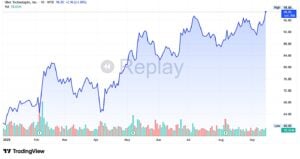
Uber Technologies has reached an all-time stock high of about $98.85 on September 16, signaling strong investor confidence in the company’s growth strategy. In the last year, Uber’s share price rose by over 70%. This growth was driven by higher demand for ride-hailing, delivery expansion, and more people using its premium services. 

Revenue has expanded by nearly 18% year over year, reflecting Uber’s ability to scale across different business lines. The company now has over 150 million monthly active users worldwide, underscoring its scale and reach.

The latest announcement linking Uber with Blade Air Mobility through Joby Aviation has added momentum. Investors see this as more than a transportation deal—it’s a sign that Uber is serious about entering the next wave of mobility innovation.

From Street to Sky: Uber’s Boldest Move Yet

Joby Aviation, a leader in eVTOL (electric vertical take-off and landing) aircraft, bought Blade’s passenger business for up to $125 million. Blade is well known for its helicopter and seaplane operations, which carried over 50,000 passengers in 2024. Its flights connect key urban markets, including New York, the Hamptons, and Southern Europe.

By 2026, Uber users will be able to book Blade flights directly through the Uber app. This means a customer in Manhattan could book a ride to the airport and seamlessly add a helicopter leg through Blade, all within the same app. 

Joby aims to replace Blade’s helicopters with eVTOL aircraft. These new planes will be quieter and produce fewer emissions. This change supports climate goals.

This integration makes Uber one of the first big ride-hailing companies to add air mobility to its platform. Joby gains instant access to Uber’s huge global customer base. Meanwhile, Blade enjoys greater reach and operational scale.

Why Investors Are Flying High on Uber

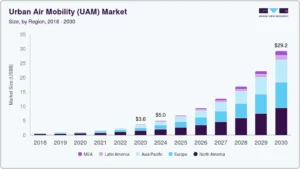
The deal comes at a time when Urban Air Mobility (UAM) is emerging as a high-growth sector. The global UAM market was about $5.4 billion in 2023. It is set to grow over 30% each year, reaching around $30 billion by 2030.

global urban air mobility market 2030
Source: Grand View Research

For Uber, this move opens up access to a premium segment with much higher average fares than traditional car rides. Short flights from airports to city centers can cost hundreds of dollars each trip. This leads to higher revenue per passenger.

For Joby, pairing with Uber lowers customer acquisition costs and speeds up market acceptance of its eVTOL technology.

Investor enthusiasm reflects these possibilities. Uber’s new all-time high signals that markets see the company as more than a ride-hailing and food delivery platform. It is now viewed as a diversified mobility company preparing for future transportation needs.

uber stock price
Source: TradingView

The Race for Urban Air Supremacy

Urban air mobility is drawing heavy interest from startups and established aerospace players alike. Archer Aviation, Lilium, and Vertical Aerospace are all working on eVTOL aircraft. Boeing and Airbus are also monitoring the space, given their long history in aviation.

Joby has a clear edge. It was one of the first to secure key approvals from the U.S. Federal Aviation Administration (FAA). It also signed contracts with the U.S. Air Force worth over $100 million, giving it valuable testing and revenue. Acquiring Blade’s passenger business provides immediate infrastructure, like lounges and landing sites. Many competitors don’t have these.

By combining this with Uber’s app integration, Joby has a unique first-mover advantage. Customers can still use helicopters and seaplanes today. They can then switch to eVTOL flights when certification is done. This hybrid model provides revenue now and builds customer trust for the future.

Flying Cleaner: Uber’s ESG Takeoff

Uber seeks to grow its mobility services, including air travel, in a way that supports climate goals. The air mobility deal aligns with Uber’s sustainability targets and its efforts to reduce emissions.

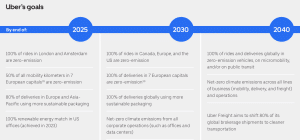
Uber has committed to becoming a zero-emission mobility platform globally by 2040. This includes rides, deliveries, and using public transit or micromobility (like bikes and scooters).

Uber net zero goals
Source: Uber

It also aims that by 2030, 100% of rides in the U.S., Canada, and Europe will be zero-emission. Here are Uber’s recent progress highlights:

  • As of Q1 2025, Uber has more than 230,000 active zero-emission (ZEV) drivers globally. That is over 60% more than in the same period a year ago.
  • In that same quarter, drivers using ZEVs completed over 105 million emission-free trips globally, more than 60% more than a year earlier.
  • In many European cities (like London, Amsterdam), over one in every three miles traveled on Uber is now electric.
  • Uber has committed $800 million through 2025 to support drivers switching to EVs. By the end of 2023, it had already allocated $439 million.

By adding air mobility with Joby’s eVTOLs, Uber can cut emissions per trip by 50% to 80% compared to helicopters. This helps Uber move closer to its net-zero goals.

Market Outlook for Urban Air Mobility

The long-term outlook for UAM is strong, driven by several trends, including:

  • Urban Congestion: Cities like New York, Los Angeles, and Tokyo face heavy traffic. Short flights save time and reduce road emissions.
  • Technology: Advances in battery density are extending eVTOL range to 150+ miles.
  • Policy Support: Governments are backing clean aviation, with the U.S. Federal Aviation Administration and European Union Aviation Safety Agency both advancing certification frameworks.
  • Funding: Billions in private and public capital are flowing into advanced air mobility. For example, Archer Aviation secured $1.1 billion in funding from Stellantis and the U.S. Air Force.

If Joby and Uber succeed, they could set the standard for how urban air mobility integrates with everyday transportation. Analysts predict that by the early 2030s, millions of passengers may fly on eVTOL aircraft each year. This growth will be backed by networks of vertiports in major cities. 

McKinsey & Company reported that by 2030, top companies in advanced air mobility (AAM) may run fleets larger than today’s biggest airlines. Their aircraft will carry one to six passengers, plus a pilot, on short trips averaging about 18 minutes.

air mobility by 2030 vs large airlines

Skybound Future of Mobility

The partnership between Joby Aviation, Blade Air Mobility, and Uber represents a major step forward in the future of transportation. Uber’s stock hitting a record high highlights the excitement around this deal and the opportunities it creates. 

Adding air mobility to the Uber app boosts the platform. It draws in high-value customers and prepares Uber for the future of travel.

For Joby, the integration accelerates the rollout of its eVTOL technology by pairing it with Blade’s infrastructure and Uber’s global reach. While challenges remain—especially around regulation, infrastructure, and cost—the momentum is clear. Urban air mobility is no longer just a futuristic idea; it is on the verge of becoming part of everyday travel.

With strong investor support, expanding customer demand, and groundbreaking partnerships, Uber, Joby, and Blade are helping to redefine what it means to move through cities.

The post Uber Stock Hits Record High with Joby and Blade Air Mobility Deal appeared first on Carbon Credits.
One Carbon World joins Carbon Markets Africa Summit as Official Climate Impact Partner

One Carbon World joins Carbon Markets Africa Summit as official climate impact partner

Disseminated on behalf of VUKA Group.

“Partnerships the way to scale of the African carbon market”

One Carbon World (OCW) will be the official climate impact partner of the upcoming Carbon Markets Africa Summit (CMAS) taking place in Johannesburg from 22 to 23 October.

OCW is a not-for-profit dedicated to helping organisations reduce their carbon footprint and achieve recognised standards such as the Science Based Targets initiative (SBTi). They provide tailored guidance to clients and advocate for putting high-quality data in front of decision-makers.

Carbon Markets Africa Summit will gather the continent’s entire carbon markets value chain, from successful early carbon market movers, climate-finance-ready projects, and regulatory bodies to global institutional development organisations and investors. 

Measuring CMAS carbon footprint

“We are very, very proud to be working with the VUKA group as their climate impact partner for the CMAS Summit,” says Madeleine Garlick, One Carbon World Africa Director. “We will be measuring the carbon footprint of the CMAS Summit. VUKA believes in leading by example, which includes setting high standards for themselves.”

She adds:

“Our partnership, we hope, will enable VUKA to gather huge amounts of data to understand the impacts of their summits. By working together, we hope to be able to track year-on-year improvements. It is a journey. And we think that this is a really, powerful move by an organisation who are not only hosting the critical green conversations that we need about Africa’s future, but are also leading the way by walking the walk themselves.”

Monitoring, reporting and verification

One Carbon World recently began to expand its work into nature-based solutions projects in the carbon market. Garlick explains:

“This is very much in response to what our customers have been asking for, which is high integrity carbon credits to support their low carbon journey. We particularly support our customers and clients and projects through the MRV process (monitoring, reporting and verification) to ensure that their process and activities are of high integrity and comply with all the relevant data and global verification requirements. Ultimately, we believe that carbon markets are a key part of the climate journey for a number of organisations.”

Partnerships key to scale African carbon markets

According to Madeleine Garlick, One Carbon World’s key message at CMAS will be that:

“African stakeholders and innovators are developing and leading the market at the moment. And the most important thing at this point in the progress and development of the African carbon market is partnership. Partnerships between businesses, partnership between project implementers to learn from each other, partnerships with communities, and finding new ways to deliver value at the grassroots level. Partnership is the way we will get scale out of the African carbon market and ensure it is delivering for everybody.”

Future of sustainable events in Africa

“We’re thrilled to accompany VUKA on the start of their journey as they take meaningful steps to measure the emissions of their inaugural Carbon Markets Africa Summit,” states Andrew Bowen, One Carbon World CEO. He continues:

“With One Carbon World’s extensive experience in footprinting the emissions from large events around the world, we know how impactful this kind of leadership can be in shaping credible sustainability conversations and global climate action. We look forward to our partnership as we work together to advance the future of sustainable events in Africa and beyond.”

[Read and watch the full interview with Madeleine Garlick, One Carbon World Africa Director here.]

Carbon markets africa summit

VUKA Group 
Carbon Markets Africa Summit is organised by VUKA Group, and the United Nations Development Programme (UNDP) is the official host organisation. 

The VUKA Group (formerly Clarion Events Africa) is a leading Cape Town-based and multi-award-winning organiser of exhibitions, conferences and digital events across the continent in the infrastructure, energy, mining, mobility, ecommerce and CX sectors. It has more than 20 years’ experience in serving the business community across Africa.

Other well-known events by The Vuka Group include Africa’s Green Economy Summit, Smarter Mobility Africa, Enlit Africa, DRC Mining Week, Nigeria Mining Week, DRC-Africa Battery Metals Forum, ECOM Africa and CEM Africa. 

Event dates and location:
Dates:
21 October: Pre-summit day
22–23 October: Summit
Location: Johannesburg, South Africa

Contact details for Carbon Markets Africa Summit
Project Lead: Emmanuelle Nicholls 
Cell: +27 83 447 8410  
Email: emmanuelle.nicholls@wearevuka.com  

Event website: About — Carbon Markets Africa
One Carbon World website: https://www.onecarbonworld.com 

The post One Carbon World joins Carbon Markets Africa Summit as Official Climate Impact Partner appeared first on Carbon Credits.
US-UK Nuclear Pact Sends Oklo Stock (OKLO) to Record Highs in Clean Energy Boom

Oklo Stock Surges 1,460% as US and UK Launch Landmark Nuclear Energy Pact

The United States and the United Kingdom have announced a landmark initiative called the Atlantic Partnership for Advanced Nuclear Energy. This partnership aims to speed up the development and deployment of next-generation nuclear technologies. These include small modular reactors (SMRs) and microreactors. They are smaller, more flexible, and often cheaper to build than traditional nuclear plants.

Both nations view this agreement as a way to secure their energy futures while also cutting carbon emissions. The partnership involves sharing research, aligning regulations, and boosting supply chains for nuclear parts and fuel.

By doing so, the US and UK hope to accelerate projects that can deliver reliable, clean power not only at home but also to global markets.

The announcement comes at a time when energy security and climate change are pressing issues. Recent global events, like rising fossil fuel prices and supply issues, highlight the need to diversify energy sources. And nuclear energy is gaining attention again. It can provide steady, low-carbon electricity. This makes it a key part of our energy mix.

Oklo’s Meteoric Rise

The news has sent ripples through the financial markets. Companies in advanced nuclear technology feel the impact the most. One of the biggest winners is Oklo Inc. (OKLO).

The company focuses on creating compact microreactors. These reactors provide clean, reliable power for various needs, including industrial operations, military bases, and remote communities.

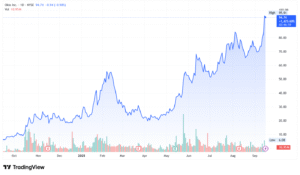
Oklo’s stock has been on a dramatic upward path after the announcement:

  • 1,460% increase in one year — rising from $6.20 on September 16, 2024, to $96.70 today.
  • 30% gain in just five days, from September 11 to September 16, 2025.

This performance has positioned Oklo as one of the standout companies in the clean energy sector. Investors believe the company’s technology and solid policy support will make it key in the global nuclear revival.

Oklo stock price

Moreover, Oklo was chosen by the U.S. Air Force in June to build a microreactor at Eielson Air Force Base in Alaska. It has a capacity of up to 75 megawatts of combined electrical and thermal power. The project will be designed, built, owned, and operated by Oklo on-site, helping the base cut fuel deliveries and improve energy security.

Why Nuclear Energy is Back in Focus

The renewed focus on nuclear energy is not accidental. The world is experiencing rapid growth in electricity demand.

According to the International Energy Agency (IEA), global electricity use could rise by 30% between 2023 and 2030. A lot of this growth will come from electric vehicles, industrial electrification, and big data centers. These centers are needed to support artificial intelligence and cloud computing.

At the same time, governments around the world have pledged to reduce greenhouse gas emissions to net zero by the middle of the century. Nuclear energy already provides 10% of global electricity and about 25% of all low-carbon power. Without nuclear, meeting climate targets would be much more difficult.

nuclear power share of electricity global 2024

The Intergovernmental Panel on Climate Change (IPCC) has also emphasized the role of nuclear in reducing emissions. Their reports show that doubling or tripling nuclear power by 2050 could cut billions of tons of CO₂ from the global energy system.

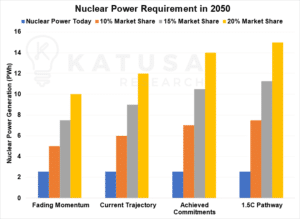
The chart below from Katusa Research shows how much nuclear power the world needs by 2050 in different scenarios.

Nuclear Power Requirement in 2050

Small Reactors, Big Promise

Traditional nuclear plants are large, costly, and can take more than a decade to complete. In contrast, advanced reactors are designed to be smaller, modular, and easier to construct. Oklo’s main project, the Aurora microreactor, provides about 1.5 megawatts of electricity. This is enough to power hundreds of homes or a small industrial site.

Aurora reactors are designed to run for up to 20 years without refueling. Oklo is also developing technologies to recycle used nuclear fuel. This process turns waste into a resource, enhancing the sustainability of nuclear energy.

The US-UK partnership is expected to speed up the demonstration and deployment of advanced reactors. Both countries aim to launch new nuclear designs in under a decade. They plan to do this by aligning regulations and funding demonstration projects.

Billions Flowing Into Atoms

The nuclear industry is experiencing a wave of new investment. The IEA says that yearly investment in nuclear energy should double to around $120 billion by 2030. This growth comes as governments and companies seek reliable, clean power.

nuclear energy investment outlook by type 2050
Source: IEA

Several countries are already moving forward with SMR projects. Canada has committed $970 million to develop SMRs in Ontario. Poland and Romania are working with US-based companies to deploy new reactor designs. Japan, South Korea, and France have also signaled stronger support for nuclear after years of slower growth.

Oklo stands out in this context because of its early-mover advantage in microreactors. Its reactors are smaller than most SMRs. This makes them ideal for specialized markets such as off-grid industries, island nations, and military uses. This flexibility gives the company a potential edge as countries and companies look for clean, scalable power solutions.

Investor Bet on Oklo

Oklo’s stock rally is part of a broader trend of growing investor enthusiasm for nuclear. Over the past year, companies tied to the nuclear sector have outperformed broader market indexes.

While the S&P 500 gained around 12% in the past 12 months, Oklo’s more than 1,400% increase stands out as extraordinary. By comparison, NuScale Power, another SMR developer, has seen more modest stock performance as it works to advance its projects.

The surge highlights both the opportunities and risks of investing in emerging nuclear technologies. Oklo still has big challenges ahead. They need regulatory approvals and must scale up manufacturing. However, the market is signaling confidence that Oklo’s approach aligns with the global push for clean, dependable power.

What This Means Going Forward

The Atlantic Partnership for Advanced Nuclear Energy marks a turning point in transatlantic cooperation. The US and UK are joining forces. By sharing their expertise, resources, and political will, they send a strong message: Nuclear energy will be key to their strategies.

For Oklo, the timing could not be better. Investor enthusiasm is high, government policies are supportive, and demand for clean energy is rising. And so, the company can take advantage of the nuclear boom.

If Oklo can deliver on its promises, it could help reshape the way the world thinks about nuclear power. Microreactors could become common in places where traditional reactors were never an option, from rural communities to industrial hubs.

The company’s story also reflects a larger shift. Nuclear power, once seen as a legacy technology, is now being recast as a driver of innovation and climate action. The mix of private-sector energy and government support could finally unleash its full potential.

The post US-UK Nuclear Pact Sends Oklo Stock (OKLO) to Record Highs in Clean Energy Boom appeared first on Carbon Credits.
Fentanyl – A National Security Crisis Demanding Prevention

Fentanyl - A National Security Crisis Demanding Prevention

Disseminated on behalf of ARMR Sciences Inc.

Fentanyl is no longer just another opioid – it has become the single most lethal synthetic drug in the United States. Since 2000, it is estimated that more than 20 million nonfatal overdoses have occurred in the U.S.- surpassing deaths from COVID-19, HIV/AIDS, and even major wars.

Today, fentanyl is the leading cause of death for adults aged 18–45, claiming an estimated 220 lives every single day.

A Silent, Rapid Killer

A minuscule amount – equivalent in size to just a few grains of salt – can be fatal. Fentanyl is fast-acting and often hidden in counterfeit pills or laced into drugs without the user’s knowledge. 

Fentanyl is cheap to manufacture and covertly laced with counterfeit pills and recreational drugs. This stealth factor explains why the vast majority of overdose victims never intended to take fentanyl.

The financial toll is also staggering: the opioid epidemic costs the U.S. economy an estimated $2.7 trillion in 2023 alone, with cumulative losses exceeding $10 trillion over the past two decades.

Why Current Defenses Fall Short

Tools like naloxone (Narcan) have saved lives but remain purely reactive. They only work after an overdose begins and often fail against emerging analogs such as xylazine, nitazenes, or medetomidine, which Narcan cannot reverse. First responders, military personnel, and even families are left without effective long-term defenses.

ARMR’s Preventive Approach

ARMR Sciences is advancing its novel immunotherapy, ARMR-100, designed to train the immune system to block fentanyl before it reaches the brain. In animal studies, ARMR-100 blocked 92% of fentanyl’s entry into the brain and eliminated its addictive behavioral effects. 

Unlike reactive antidotes, this would provide months of protection – functioning like a biochemical shield.

The program is building on seven years of U.S. Department of Defense–funded research and is working to leverage proven vaccine components, such as carrier proteins already approved in licensed products and adjuvants tested in hundreds of clinical trials. 

The Market and ARMR’s Mission

The potential reach is vast: 2.7 million Americans with opioid use disorder, over 2 million first responders and law enforcement officers, more than 18 million military personnel and veterans who experience higher rates of opioid use, chronic pain, and post-traumatic stress disorder, and more than 30 million high-risk young people.

A once or twice annual preventive shot could help transform national defense against fentanyl, making protection scalable across households, schools, hospitals, and security agencies.

The fentanyl crisis is no longer just a health issue – it’s a national security emergency. And we believe prevention, not rescue, may be the only path to saving a generation.

Why Investors Should Pay Attention

ARMR is more than a biotech startup – it is working to tackle America’s most urgent social and health crisis. This is a mission-driven company focused on building a preventive defense platform that could save thousands of lives each year:

  • $30M private raise launched
  • Seven years of DoD-backed research form the foundation
  • Lead candidate ARMR-100 blocked 92% of fentanyl from entering the brain in preclinical studies
  • A targeted exchange listing in the future

By investing in this round, investors have a chance to back a company whose mission is as much about impact as it is about growth potential. 

Invest now to help support ARMR’s efforts to build the nation’s first line of defense against fentanyl and other synthetic threats.

This is a paid advertisement for ARMR’s private offering. Please read the offering circular at InvestARMR.com for additional information on the company and the risk factors related to the offering.


DISCLOSURES & DISCLAIMERS

CLIENT CONTENT: Carboncredits.com is not responsible for any content hosted on ARMR Sciences’ sites; it is ARMR Sciences’ responsibility to ensure compliance with applicable laws.

NOT INVESTMENT ADVICE: Content is for educational, informational, and advertising purposes only and should NOT be construed as securities-related offers or solicitations. All content should be considered promotional and subject to disclosed conflicts of interest. 

Do NOT rely on this as personalized investment advice. Do your own due diligence.

Carboncredits.com strongly recommends you consult a licensed or registered professional before making any investment decision.

REGULATORY STATUS: Neither Carboncredits.com nor any of its owners or employees is registered as a securities broker-dealer, broker, investment advisor, or IA representative with the U.S. Securities and Exchange Commission, any state securities regulatory authority, or any self-regulatory organization.

CONTENT & COMPENSATION DISCLOSURE: Carboncredits.com has received compensation of thirty thousand dollars from ARMR Sciences for this sponsored content. You should assume we receive compensation as indicated for any purchases through links in this email via affiliate relationships, direct/indirect payments from companies or third parties who may own stock in or have other interests in promoted companies. We may purchase, sell, or hold long or short positions without notice in securities mentioned in this communication.

RESULTS NOT TYPICAL: Past performance and results are unverified and NOT indicative of future results. Results presented are NOT guaranteed as TYPICAL. Market conditions and individual circumstances vary significantly. Actual results will vary widely. Investing in securities is speculative and carries high risk; you may lose some, all, or possibly more than your original investment.

HIGH-RISK: Securities discussed may be highly speculative investments subject to extreme volatility, limited liquidity, and potential total loss. The Securities are suitable only for persons who can afford to lose their entire investment. Furthermore, investors must understand that such investment could be illiquid for an indefinite period of time. No public market currently exists for the securities, and if a public market develops, it may not continue.


Disclosure: Owners, members, directors, and employees of carboncredits.com have/may have stock or option positions in any of the companies mentioned: None.

Carboncredits.com receives compensation for this publication and has a business relationship with any company whose stock(s) is/are mentioned in this article.

Additional disclosure: This communication serves the sole purpose of adding value to the research process and is for information only. Please do your own due diligence. Every investment in securities mentioned in publications of carboncredits.com involves risks that could lead to a total loss of the invested capital.

Please read our Full RISKS and DISCLOSURE here.

The post Fentanyl – A National Security Crisis Demanding Prevention appeared first on Carbon Credits.