Apple Inc. (NASDAQ: AAPL) is back in the spotlight. The tech giant’s stock saw a surge in trading volume as investors weighed fresh product launch speculation alongside strong quarterly earnings. The mix of hype and solid fundamentals has fueled both retail and institutional interest, placing Apple at the center of the tech conversation.
Apple’s Trading Volume Climbs as Market Reacts
On August 27, Apple stock traded about 31.3 million shares, well above recent sessions. Market watchers point to two drivers behind the surge: rumors of upcoming product launches and the company’s strong Q3 results. Together, these factors have created momentum that has investors—big and small—leaning in.
iPhone and Services Drive Q3 Earnings Beat
Apple delivered a solid fiscal Q3 ended June 28, 2025. Revenue reached $94 billion, nearly 10 percent higher than last year and $5 billion above expectations. Earnings per share came in at $1.57, topping forecasts of $1.43, while net income was $23.4 billion.
iPhone revenue rose 13.5 percent to $44.58 billion, partly boosted by pre-tariff demand. Mac sales climbed to $8.05 billion, exceeding estimates, while iPad revenue was $6.58 billion, just under forecasts. Wearables slipped to $7.4 billion, while services grew steadily to $27.42 billion. Gross margin stood at 46.5 percent, slightly above analyst expectations.
These results reinforced investor confidence that Apple remains resilient even as the broader technology sector faces economic headwinds.
Beyond earnings, Apple continues to push sustainability at the core of its business. In 2024, 24 percent of all product materials came from recycled or renewable sources. That included nearly all rare earth elements in magnets, cobalt in batteries, and aluminum in many cases.
The company avoided 41 million metric tons of carbon emissions last year, equal to removing nine million cars from the road. Apple has set a target of cutting emissions 75 percent by 2030 compared to 2015 levels.
AAPL Stock Price Gains and Analyst Sentiment
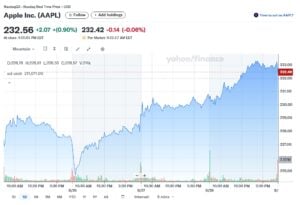
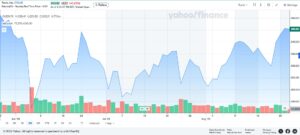
Apple’s stock closed at $232.56 on August 28, a 0.90 percent gain for the day. Analysts explained that over the past three months, it has returned 16.3 percent, outperforming the S&P 500’s 10.1 percent. However, its one-year return of 2.4 percent lags the SPY’s 16.8 percent, reflecting investor caution.
Volatility models suggest Apple will likely trade between $226.65 and $234.33 in the near term, with a 67 percent probability. Analysts remain largely bullish, seeing Apple as a core growth-and-stability holding.
Source: Yahoo Finance
Product Launch Rumors Spark Anticipation
Speculation is mounting around Apple’s next big reveal. Industry reports suggest the company may unveil new iPhone models featuring advanced AI chips and upgraded cameras. New Mac models and expanded subscription services are also rumored, which could deepen Apple’s ecosystem and create new revenue streams.
Historically, product launches have triggered bursts of trading activity as the market reacts to consumer adoption. For investors, each launch is both a sales opportunity and a test of Apple’s ability to maintain its leadership in consumer technology.
Investors Position for Apple’s Next Move
Both retail and institutional investors are closely tracking Apple’s next steps. Institutions are analyzing their balance sheet, global supply chains, and margin performance, while retail traders are chasing short-term momentum and looking for pullbacks as entry points.
Apple’s size, profits, dividends, and constant innovation keep it a core pick for many investors. Whether chasing short-term gains or holding for the long run, it remains a go-to stock in a volatile tech market.
With trading volume up, strong earnings, and product buzz building, Apple (AAPL) stock is still a bellwether for the sector. The next launches will show if it can hit new highs or face fresh challenges.
https://globalcarbonfund.com/wp-content/uploads/2018/10/GCF_header_logo_340x156.png00carbonfundhttps://globalcarbonfund.com/wp-content/uploads/2018/10/GCF_header_logo_340x156.pngcarbonfund2025-08-29 10:03:312025-08-29 10:03:31Apple (AAPL) Stock Sees Trading Spike on Product Buzz and Strong Earnings
California-based General Atomics has stepped into the fusion spotlight with a $20 million, ten-year investment in Fusion Fuel Cycles, Inc. (FFC), a Canadian joint venture between Canadian Nuclear Laboratories (CNL) and Kyoto Fusioneering. The deal marks a landmark partnership to speed up development of UNITY-2, a tritium fuel cycle test facility that could help unlock the path to commercial fusion power.
Anantha Krishnan, senior vice president of the General Atomics Energy Group, noted,
“Our collaboration with FFC is a pivotal step toward realizing the full potential of fusion energy. Developing a practical fusion power plant demands that all core systems—including the fuel cycle—operate in concert. This collaboration directly targets one of the toughest challenges and brings us closer to solving the puzzle of integrating a complete, functional fusion system.”
Scheduled to go live by mid-2026, UNITY-2—based at CNL’s Ontario campus—will be the first fully integrated facility in the world to test the deuterium-tritium (D-T) fuel cycle, a key puzzle piece for building a working fusion power plant.
Why Tritium Testing Matters?
Fusion, the same reaction that powers the sun, is often called the “holy grail” of clean energy. To work at scale, a D-T fusion power plant needs four systems:
A plasma confinement device, like a tokamak or stellarator
A blanket system to capture energy and produce new fuel
A fuel cycle system to handle and recycle tritium
A conversion system to turn heat into electricity
UNITY-2 will focus on the fuel cycle system, simulating the full process of tritium recovery, purification, and resupply. This is critical because tritium is rare, radioactive, and expensive. Mastering its safe handling will determine how practical and scalable fusion power becomes.
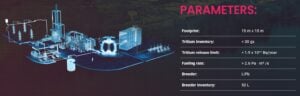
UNITY-2 Parameters
Source: Fusion Fuel Cycles
CNL’s Role in Canada’s Fusion Push
The Canadian government has signaled strong support. Honourable Mélanie Joly, Minister of Industry, responsible for Canada Economic Development for Quebec Regions, said,
“Advancing innovation in clean energy technology is a key priority for the Government of Canada. This investment by General Atomics in Fusion Fuel Cycles Inc, made through the Industrial and Technological Benefits Policy, will support the development of fusion energy, strengthen Canada’s competitive advantage in the green economy of the future, and create high-value jobs and economic benefits across the country.”
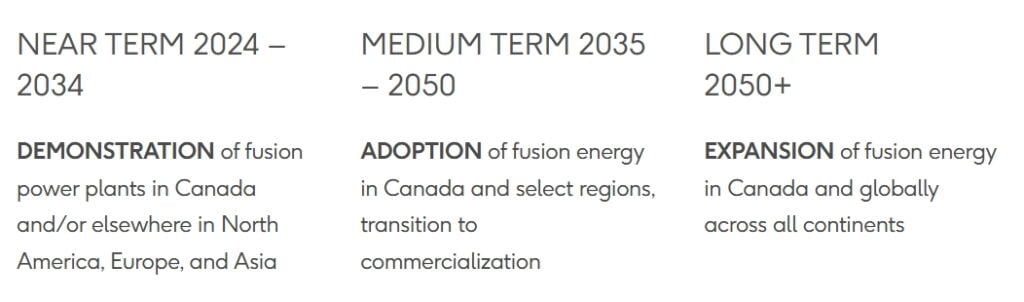
Canada is already moving fast on fusion. Last year, CNL hosted Fusion Day 2024 in Ottawa, where leaders unveiled the “Fusion Energy for Canada” report, a national strategy to make fusion energy part of the country’s net-zero toolkit by 2050.
Source: CNL
According to the report, fusion is no longer just a science experiment—it’s shifting into a stage of prototypes and demonstrations. Globally, there are now 98 fusion experiments in operation, 13 under construction, and 33 more planned. Meanwhile, the number of private companies in the space has increased to 43 firms worldwide, attracting more than $8.2 billion in funding.
The report urged Canada to seize the economic and environmental benefits by creating a fusion ecosystem supported by clear policies and government backing.
Expanding Canada’s Nuclear Programs
To make this happen, CNL announced expansions of two major programs:
Small Modular Reactor (SMR) Invitation Process – now open to fusion prototypes, giving developers access to demonstration sites at Chalk River and Whiteshell Laboratories.
Canadian Nuclear Research Initiative (CNRI) – broadened to support fusion R&D, offering cost-shared research opportunities to companies developing advanced reactors.
By leveraging existing nuclear infrastructure, Canada is positioning itself as a hub for both fission and fusion innovation.
General Atomics (GA) is no stranger to fusion. From its base in San Diego, the company runs the DIII-D National Fusion Facility, the largest magnetic fusion research center in the United States. The lab is the only operational tokamak in the country and a cornerstone of America’s fusion roadmap.
With UNITY-2, GA will not only contribute funding but also use the facility to advance its own R&D on fusion components. The company will work with Canadian teams to develop best practices for tritium management and safety, while also laying the groundwork for a future blanket test facility—another vital step toward commercial fusion power plants.
The investment also counts toward GA’s Industrial and Technological Benefits obligations tied to Canada’s procurement of MQ-9B SkyGuardian Remotely Piloted Aircraft Systems (RPAS), underscoring how fusion and aerospace partnerships can align.
General Atomics’ move comes at a time when the fusion industry is attracting record levels of capital. The Fusion Industry Association’s Global Fusion Industry Report shows that companies raised $2.64 billion between July 2024 and July 2025. That’s a 178% jump from the previous year, marking the highest annual investment since 2022.
Cumulatively, private and public funding in fusion has hit $9.77 billion across 53 companies—a five-fold jump since 2021. The number of firms has more than doubled in just four years, expanding from 23 to 53.
Powering the Future – Fusion & Plasmas
GA also emphasized the Department of Energy’s Fusion Energy Sciences Advisory Committee (FESAC) had unveiled a roadmap for U.S. fusion and plasma research.
The report urges the U.S. to push forward with fusion energy development, highlighting its potential to power society while cutting emissions. It outlines a vision for affordable, practical fusion and sets the stage for building a pilot plant by the 2040s
Big Tech Joins the Race
Tech giants are fueling this momentum. In June, Google signed a 200-megawatt power purchase agreement with Commonwealth Fusion Systems (CFS)—the largest corporate offtake deal in fusion history. The contract covers half the output from CFS’s first ARC plant in Virginia, set for the early 2030s.
Meanwhile, Microsoft partnered with Helion Energy in 2023 for 50 megawatts of fusion power by 2028. The deal has since grown, with Helion raising a $425 million Series F round in January 2025, pushing its valuation above $5.4 billion.
Record Funding Rounds Signal Investor Confidence
Several startups have made headlines with massive funding rounds, showcasing investors confidence in fusion’s potential.
Pacific Fusion burst onto the scene with a $900 million Series A, one of the largest in fusion history, backed by General Catalyst and Bill Gates.
Marvel Fusion, based in Germany, extended its Series B to €113 million, making it Europe’s best-funded fusion company. Investors included Siemens Energy Ventures and the European Innovation Council Fund, marking the EIC’s first private fusion equity stake.
Oil and Gas Step In
Traditional energy giants are also hedging their bets on fusion. Companies like Chevron, Shell, and Equinor have invested in startups, betting that fusion could reshape the global energy system. Their involvement signals that fusion is no longer just the domain of labs and startups—it’s attracting serious interest from incumbents in oil and gas.
Despite the optimism, challenges are significant. A survey of fusion firms revealed that 83% still see funding as a top barrier. On average, companies estimate they need $700 million each to get a pilot plant online. Across the sector, that adds up to around $77 billion in required capital—eight times what’s currently committed.
Even so, 84% of companies expect to supply electricity to the grid before 2040, with over half targeting 2035. The industry has also grown its workforce, employing more than 4,600 people directly and another 9,300 in the supply chain.
A Transformative Moment for Fusion
The UNITY-2 project highlights the importance of international collaboration in building the infrastructure for commercial fusion. Canada is positioning itself as a global hub, while General Atomics strengthens its leadership role.
The wave of new funding, corporate commitments, and government backing suggests fusion is moving from dream to early commercial reality. While hurdles remain—especially around financing and scaling—confidence in the sector has never been higher.
Fusion’s promise is clear: a near-limitless source of clean, reliable energy that could play a central role in meeting global net-zero goals by 2050. With UNITY-2, Canada and General Atomics are helping bring that vision one step closer.
Dell Technologies is riding two big waves: rising demand for AI servers and a strong push for sustainability. Recently, the company announced record second-quarter earnings and raised its revenue forecast for fiscal 2026. AI systems are now key to its growth and climate goals.
Dell’s AI Servers Drive a Big Revenue Jump
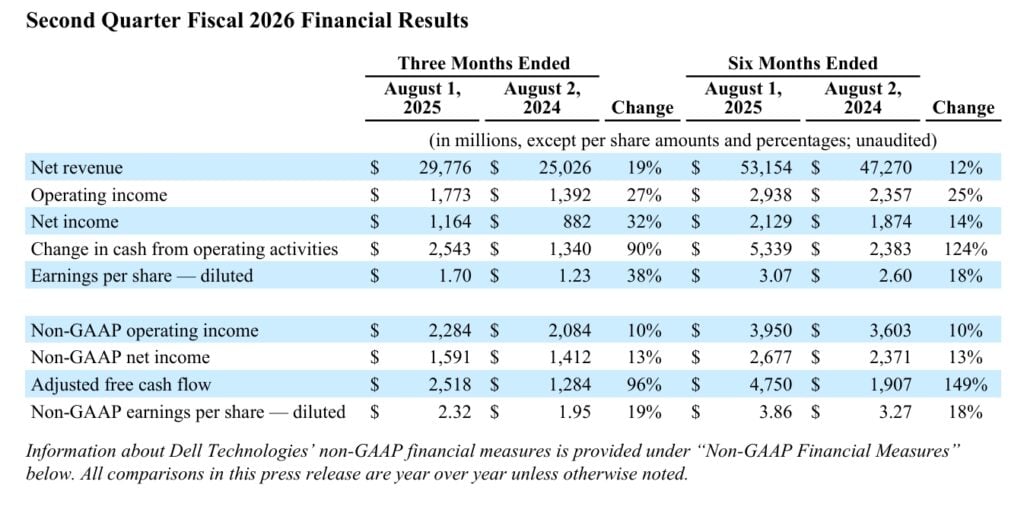
In the second quarter of fiscal 2026, Dell saw rapid growth in its AI sector. Revenue reached a record $29.8 billion, up 19% from last year. Operating income rose to $1.8 billion, a 27% increase. Earnings per share jumped 38% to $1.70, with adjusted EPS hitting a record $2.32.
The standout? AI servers. Built on NVIDIA chips, these systems drove a 44% revenue increase in Dell’s Infrastructure Solutions Group. Sales of servers and networking soared 69% to $12.9 billion. The company shipped $8.2 billion in AI systems, secured $5.6 billion in new orders, and ended the quarter with an $11.7 billion backlog.
This momentum led Dell to raise its AI server sales outlook to $20 billion for fiscal 2026, a 33% increase. The total expected annual revenue is now between $105 billion and $ 109 billion, a 12% increase from last year.
PCs Lag as Enterprise Demand Surges
While AI boosted Dell’s growth, the PC segment lagged. Sales grew only 1%, mainly due to corporate upgrades as support for Windows 10 ends in October. This weak outlook impacted Dell’s near-term forecast, with Q3 EPS projected at $2.45, which fell short of Wall Street’s expectations. Shares dropped nearly 5% after hours.
Even so, a clear trend is emerging. PCs may grow slowly, but enterprise spending on AI and cloud infrastructure is reshaping Dell’s growth story.
Source: Dell
The Sustainability Thread in Dell’s Growth
Dell is aligning its growth with climate goals. The company uses circular economy principles in its supply chain and customer relationships. It aims to reduce waste, enhance resource efficiency, and cut emissions throughout its product lifecycle.
Dell has pledged to achieve net-zero emissions by 2050 across its value chain. Its 2030 goals focus on energy efficiency, renewable power, and responsible sourcing. This shows Dell’s belief that technology can help drive a low-carbon economy.
Tackling Energy and Emissions
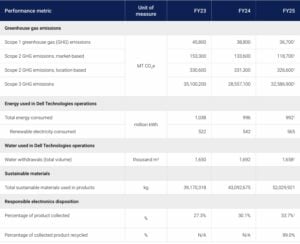
Its sustainability report says that Dell targets Scope 1 emissions, including fuel use from corporate jets and vehicles. The company plans to switch to sustainable aviation fuel (SAF) and work with providers to expand access.
For its fleet, Dell is optimizing vehicle types and numbers while adding more electric options. Electrifying its fleet may raise electricity demand (and Scope 2 emissions), but Dell is balancing this by speeding up its renewable energy transition.
Like many tech firms, Dell’s Scope 2 emissions—from purchased electricity—make up most of its footprint. To address this, Dell invests in renewable power through virtual power purchase agreements (vPPAs), joint PPAs, and renewable energy credits. It is also exploring new on-site solar projects to lessen grid reliance.
It is making significant efficiency improvements in its labs and data centers, where much electricity is consumed. These sites power the servers driving AI growth, making energy efficiency vital for operations and climate goals.
Source: Dell
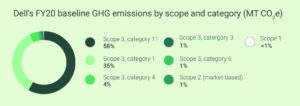
Dell is also tackling Scope 3 emissions throughout its value chain, focusing on two areas: purchased goods and customer product use. Separate targets address both areas.
As it moves toward its 2030 goals, other Scope 3 categories will account for a larger share of emissions. While Categories 1 and 11 are priorities, Dell monitors all Scope 3 sources for meaningful reductions.
Source: Dell
The Role of Carbon Credits in Dell’s Net Zero Goals
Dell knows some emissions will remain, even with aggressive decarbonization. The company plans to offset no more than 10% of its baseline emissions with carbon removals, following best practices from the Integrity Council for the Voluntary Carbon Market (ICVCM).
Currently, Dell is not engaging in large-scale carbon removals, focusing instead on its near-term 2030 decarbonization efforts. As technologies improve, Dell plans to acquire high-quality credits and removals to meet its net-zero target.
Building a Just Transition
Dell insists that the move to net zero must be fair. The company commits to sourcing renewable power only from projects that do not harm underserved communities. It integrates social responsibility into its supplier code, ensuring human rights and fair labor practices.
As a founding member of the Responsible Business Alliance, Dell requires suppliers to commit to decarbonization and respect for vulnerable workers. This involvement ensures its climate ambitions reach throughout its value chain.
Climate Resilience Through Digital Access
Dell views technology access as crucial for climate resilience. Its Solar Community Hub program offers solar-powered internet and computer access to underserved communities worldwide. By promoting digital inclusion, Dell aims to impact one billion lives by 2030, broadening the benefits of the clean energy transition.
Investors Ask: What’s Next?
With its stock outperforming the market this year, investors wonder about Dell’s next steps. According to experts, the answer likely lies in two areas:
Earnings trajectory – Analysts will watch if Dell can sustain its AI-driven growth amid weaker PC demand and margin pressures.
Sustainability execution – Stakeholders want Dell to show that its booming AI server business can grow without sacrificing climate commitments.
Dell’s guidance of $105–109 billion in annual revenue and $20 billion in AI server sales reflects confidence in growth and demand. Its detailed climate strategy indicates that Dell recognizes investors and customers want progress on emissions, not just profits.
https://globalcarbonfund.com/wp-content/uploads/2018/10/GCF_header_logo_340x156.png00carbonfundhttps://globalcarbonfund.com/wp-content/uploads/2018/10/GCF_header_logo_340x156.pngcarbonfund2025-08-29 10:03:302025-08-29 10:03:30Dell’s AI Server Boom Powers Record Earnings and a Net Zero Push
Tesla is set to launch its Full Self-Driving (FSD) technology in Australia and New Zealand. This change could transform how drivers view electric and autonomous vehicles in the region. It’s another step in Tesla’s plan to grow its driver-assistance systems globally, pushing Tesla stock up.
The move has generated both excitement among drivers and renewed interest from investors. It also highlights the growing role of autonomous driving in the future of transportation.
Tesla has tested and improved FSD in many countries. However, entering new markets like Australia and New Zealand offers both chances and challenges.
What Full Self-Driving Means
Tesla’s Full Self-Driving system is an advanced driver-assistance package that goes beyond the company’s Autopilot feature. Autopilot can handle highway driving, including steering and lane-keeping.
FSD, on the other hand, is meant for tougher tasks. It navigates city streets, makes turns, recognizes traffic signals, and reacts to real-world conditions.
The system does not yet allow cars to operate entirely without human oversight. Drivers must stay attentive and ready to take control at any time. However, Tesla continues to improve the technology through software updates. These updates come from data gathered by millions of Tesla vehicles. This information helps improve the system’s decision-making.
In markets like the United States, FSD has been available in beta form, with select drivers testing and providing feedback. Bringing the system to Australia and New Zealand will help Tesla learn how it works in various driving conditions, road rules, and traffic.
Wall Street Watches Every Move
Tesla’s latest trading sessions show how closely investors are watching its progress. On August 27, Tesla’s stock closed at $351.73, marking a small but steady gain of 0.02% from the prior day. During the day, shares fluctuated between $350.05 and $355.21, signaling healthy trading activity and investor interest.
This move comes after a strong trend last week when Tesla shares rose nearly 6% in one session. That was the company’s biggest one-day gain in over two months.
Source: Yahoo Finance
The stock rally happened as investors felt hopeful about Tesla. They focused on the recent Full Self-Driving updates and the company’s progress in boosting production. Analysts note that the break above a key technical resistance level at $348.98 further fueled bullish momentum.
The stock’s strength shows that investors are balancing short-term ups and downs with Tesla’s long-term goals in EVs, autonomy, and clean energy. This week’s gains are modest, but they show steady confidence. The company focuses on maintaining its leadership in a competitive global market.
Why Australia and New Zealand Are Tesla’s Next Test Track
Tesla’s expansion of FSD into Australia and New Zealand signals confidence in both demand and regulatory readiness. The two countries already have a growing appetite for electric vehicles.
In 2024, EV sales in Australia surpassed 100,000 for the first time, accounting for around 9% of all new car sales. New Zealand has also seen rapid EV adoption, with government rebates and incentives playing a major role.
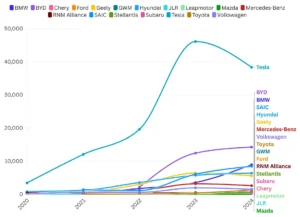
Australia EV sales by OEM
Chart from Medium
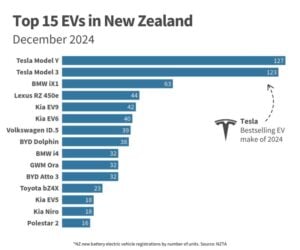
Tesla is among the top-selling EV brands in both markets, with its Model 3 and Model Y making up the majority of sales. Introducing FSD could boost Tesla’s edge. It offers advanced technology that rivals have yet to match.
Source: EVDB.NZ
At the same time, regulators in both countries will play a central role. Autonomous driving systems must pass safety checks, and governments need to create rules for how such technologies are used on public roads. For Tesla, approval from regulators will be essential before the system is fully launched to drivers.
Tesla promotes FSD as a step toward safer and more efficient transportation. By reducing human error—the leading cause of road accidents—autonomous systems could lower crash rates and improve traffic flow.
Battery-electric vehicles with advanced driver-assistance systems can lower emissions. They make EVs more practical for long trips and daily driving. Here are some key facts about these cars:
Impact of driver-assistance: Advanced driver-assistance systems (ADAS) improve efficiency, reducing energy use by up to 10% through smoother acceleration, braking, and route optimization.
Long-distance practicality: With ADAS and autonomous features, EVs can extend real-world range by 5–10%, making long trips more convenient.
Future outlook: By 2030, up to 40% of all the miles driven worldwide could be done by autonomous systems, amplifying emissions reduction potential.
Texla’s FSD system also enhances user convenience. Features such as automated lane changes, smart navigation, and traffic-aware cruise control make driving less stressful. Tesla sees a future with fleets of self-driving cars that could offer ride-hailing services. This change would turn private vehicles into money-making assets.
However, concerns remain. Safety advocates argue that the technology is not yet advanced enough to replace human judgment in all scenarios. Even small errors in object recognition or decision-making can cause accidents. Governments and regulators need to weigh the benefits of innovation against the risks of using partially autonomous systems on public roads.
Racing Rivals in the Global Autonomy Game
Tesla is not alone in the push for self-driving technology. Competitors such as Waymo, Cruise, and Chinese EV makers are investing heavily in autonomous systems. Tesla uses a vision-based method with cameras and neural networks. Others combine sensors like lidar and radar.
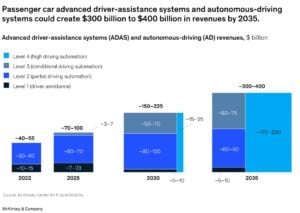
The global autonomous vehicle market is growing quickly. Analysts say the sector might hit over $800 billion by 2035, with up to $400 billion in revenues. This growth is driven by the need for safer transport, better logistics, and improved mobility services. Tesla’s entry into more international markets with FSD positions it to capture part of that growth.
In Australia and New Zealand, this rollout is part of a larger trend. It focuses on using digital technology in transportation systems. Both countries are testing smart infrastructure. They are also exploring how connected vehicles can boost road safety and efficiency. Tesla’s FSD could support these efforts if the technology works reliably in real life.
Where Tesla Goes From Here
Tesla’s next steps will rely on three key factors:
regulatory approvals,
driver acceptance, and
improvements to the FSD system.
If the rollout in Australia and New Zealand works well, it might speed up similar launches in other areas where Tesla is strong. The company will also likely expand its FSD subscription model.
Customers may choose to pay a monthly fee instead of a one-time purchase. This could make the system more accessible and generate steady revenue for Tesla as it scales up.
For drivers, the arrival of FSD represents both excitement and uncertainty. Some will embrace the convenience and new features. Others, however, might stay cautious until the technology proves it’s safe and reliable.
Tesla’s planned launch of Full Self-Driving in Australia and New Zealand shows both the company’s ambition and the growing global interest in autonomous vehicle technology. The move creates new chances for drivers and boosts Tesla’s stock and competitive edge. As EV adoption continues to grow in both countries, the introduction of FSD could mark a significant step toward the future of transport.
https://globalcarbonfund.com/wp-content/uploads/2018/10/GCF_header_logo_340x156.png00carbonfundhttps://globalcarbonfund.com/wp-content/uploads/2018/10/GCF_header_logo_340x156.pngcarbonfund2025-08-28 04:51:342025-08-28 04:51:34Tesla Rolls Out Full Self-Driving (FSD) in Australia & New Zealand: What Drivers and Investors Need to Know
Nvidia (NASDAQ: NVDA) delivered another standout quarter, reporting $46.7 billion in Q2 revenue, up 56% year-over-year, as demand for AI and data center products surged. The chipmaker is not only posting strong financial results but also speeding up its sustainability efforts.
It aims for 100% renewable electricity in its operations. It engages with its supply chain and develops advanced GPUs that reduce energy use. This dual focus on growth and green innovation highlights how Nvidia is shaping both the future of AI and the path to a net-zero tech industry.
Profit Surge Meets Climate Pledge
Nvidia shared its latest earnings (Q2 2026), which showed strong financial growth again. This growth comes from the ongoing demand for its AI and data center products.
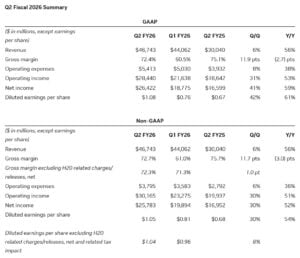
Revenue: Approximately $46.7 billion, up 56% year-over-year. This result came in slightly above Wall Street expectations of around $46 billion.
Adjusted EPS: About $1.05, exceeding consensus estimates of roughly $1.01.
Net Income: Around $26.4 billion, up 59% year-over-year.
Data Center Revenue: $41.1 billion, up 56% but slightly below expectations of about $41.29 billion.
Source: Nvidia
Nvidia forecasts $54 billion in revenue for Q3, above analyst expectations. Shares fell about 3% in after-hours trading, even with the earnings beat. Investors are concerned about Nvidia’s cautious view on data center performance and risks related to China.
Source: Yahoo Finance
These results show Nvidia’s strong hold in the AI and semiconductor markets. They also reveal how much investor feelings can change due to geopolitical and industry risks.
While Nvidia continues to lead in financial performance, the company is also working to align its growth with sustainability initiatives. As a leading chipmaker for data centers and AI, it recognizes the environmental issues tied to energy use and greenhouse gas emissions.
The company’s sustainability programs aim to reduce climate impact and promote innovation. The following is Nvidia’s emission reduction target.
Cut absolute Scope 1 and 2 emissions by 50% by fiscal 2030 (from FY2023).
Reduce Scope 3 emissions intensity per PFLOP by 75% by 2030.
Powering Up: Nvidia’s Clean Energy Progress
Nvidia has achieved 100% renewable electricity at all of its offices and data centers under direct control by the end of its fiscal year 2025. This shift cuts its Scope 2 emissions (indirect energy use) to zero based on market-based reporting.
In fiscal year 2024, Nvidia emitted 3,692,423 metric tons of CO₂ equivalent. This total includes all greenhouse gas emissions (Scopes 1, 2, and 3), highlighting the company’s environmental impact.
Source: NVIDIA
The company also achieved supplier engagement ahead of schedule. By fiscal 2025, it had worked with suppliers covering more than 80% of Scope 3 Category 1 emissions, exceeding its initial 67% goal. These efforts aim to drive science-based emission reduction practices across its supply chain.
Driving Efficiency with Smarter Technology
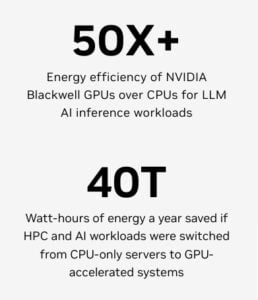
Beyond its clean energy commitments, Nvidia delivers sustainability through innovative and energy-efficient technology. The new Blackwell GPUs save energy by being up to 20 times more efficient for AI inference tasks than regular CPUs.
Nvidia’s Data Processing Units (DPUs) optimize data routing. This cuts energy use by about 30%. Tests on the U.S. Department of Energy’s Perlmutter supercomputer found that Nvidia GPU systems are up to five times more energy efficient than CPU-only setups. This saves nearly 588 megawatt-hours of electricity each month.
Source: NVIDIA
Technological efficiency gains are vital for cutting emissions from AI workloads, high-performance computing, and cloud infrastructure. These areas are crucial for Nvidia’s growth.
Nvidia combines its environmental goals with broader social and governance progress. It set new goals validated by the Science Based Targets initiative (SBTi). Moreover, the chipmaker’s operations follow strong environmental management:
Facilities in Santa Clara and Israel operate under ISO 14001 standards.
Over 41% of data center energy in FY25 was under ISO 50001 energy management.
Headquarters buildings in Santa Clara and Hyderabad earned LEED Gold certification. The Santa Clara location features 845 kW of installed solar capacity.
In addition, Nvidia is a top workplace, ranking #4 on Glassdoor’s Best Places to Work and #5 on Fortune’s Best Companies for 2025. The company also supports diversity and inclusion with corporate initiatives.
Real-World Impact Through Innovation and Partnerships
Nvidia leverages its technological strength and strategic partnerships to create tangible sustainability impacts. The Omniverse platform helps industries create digital twins. These are virtual replicas of real-world operations. This technology leads to major cuts in energy use and waste.
One manufacturer using Omniverse realized savings of 120,000 kWh and 60 metric tons of CO₂ annually. Nvidia teamed up with Schneider Electric to create new data center designs. These designs can lower cooling energy use by 20% and cut construction times by 30%.
The company works closely with policymakers to promote AI’s benefits for the climate. They want to create climate policies and rules. These should promote sustainable growth in AI and high-performance computing.
From Growth to Green Computing
Nvidia’s rapid expansion in AI computing is closely linked with its leadership in environmental sustainability. Nvidia shows how top tech companies can cut emissions. They combine clean energy success, efficient hardware, and strong supplier partnerships.
Aligning financial success with environmental responsibility boosts the company’s competitive edge. It also sets new sustainability standards in the high-tech sector.
Looking Ahead: Balancing AI Growth and Climate Action
Nvidia’s Q2 earnings show its strong position in the semiconductor industry. It leads especially in the AI and data center markets. However, with growth comes responsibility.
Nvidia is under pressure from regulators, customers, and investors. They want to make sure its technologies support a sustainable future.
The company’s commitment to net-zero emissions by 2050, renewable energy use, and supply chain sustainability reflects steps in the right direction. AI demand is rising fast. So, Nvidia must focus on balancing performance with environmental impact. This will stay key to their strategy.
https://globalcarbonfund.com/wp-content/uploads/2018/10/GCF_header_logo_340x156.png00carbonfundhttps://globalcarbonfund.com/wp-content/uploads/2018/10/GCF_header_logo_340x156.pngcarbonfund2025-08-28 04:51:342025-08-28 04:51:34Nvidia Posts Over $46B Revenue in Q2 But Stock Slides, Balancing Record Profits with Green Goals
“Projects with monumental impact at the grassroots level”
The organizers of the upcoming Carbon Markets Africa Summit have announced the diamond sponsorship of TASC, the award-winning and pioneering carbon finance project developer with a proven track record of innovative climate mitigating techniques and investing in local communities.
Taking place in Johannesburg from 22 to 23 October, Carbon Markets Africa Summit will gather the continent’s entire carbon markets value chain, from successful early carbon market movers, climate-finance-ready projects, and regulatory bodies to global institutional development organizations and investors.
High-Impact Carbon Projects at Scale
“At its core, TASC is community-driven and we believe in delivering real-world social and environmental impact rooted in rigorous carbon science,” says Shelley Estcourt, TASC’s CEO for Africa.
Image: Shelley Estcourt, CEO, TASC
She adds: “We focus on delivering high-integrity, high-impact carbon projects at scale. Historically, we have been focused on cookstoves, but our GRASS* project is a testament to our ability to diversify quite significantly. Backed by a dedicated in-house R&D team, we are constantly innovating and exploring new methodologies, platforms, and country partnerships. We have a big focus on projects that deliver impact at scale, combined with sound carbon modelling and science.”
Grassland Restoration and Stewardship in South Africa
TASC is currently active across sub-Saharan Africa and Australia, with expansion plans into other parts of Africa and the Australasian region. Their focus is on jurisdictions with advanced Article 6 carbon market frameworks, where the enabling environment allows for long-term, scalable impact.
950,000 cookstoves distributed
In 2023, TASC won the Environmental Finance Voluntary Carbon Market Award for its cookstove project. “The award and the associated finance mechanism via Standard Bank were instrumental,” says Estcourt.
“It enabled us to repay early-stage funding and significantly expand the scope of the programme. To date, we’ve distributed clean cookstoves to over 950,000 households across rural South Africa, with benefits for both community health and carbon reductions.”
Reversing The Effects of Climate Change
TASC’s GRASS project directly tackles the consequences of climate change by restoring degraded rangelands, boosting carbon sequestration, and building long-term resilience for rural communities.
Escourt: “Climate change has significantly reduced the adaptive capacity of farmers, which sees them to increased drought vulnerability, erosion, bare soils, and more extreme weather impacts. GRASS helps reverse these effects by improving water-holding capacity, stabilising soil temperatures, reducing erosion, and increasing biodiversity across hundreds of thousands of hectares.”
GRASS is also the world’s first project registered under Verra’s VM0042 methodology, enabling robust monitoring and the generation of certified carbon credits.
Important opportunity
As the diamond sponsor of the inaugural Carbon Markets Africa Summit in Johannesburg from 22–23 October, TASC is excited to be part of what Estcourt describes as “an important opportunity to bring thought leaders, developers, policymakers, and buyers into one room. It’s a platform to hopefully accelerate Article 6 readiness, deepen understanding of what high-impact projects look like on the ground, and promote stronger collaboration across the continent.”
She continues: “For buyers, this is your chance to meet developers face-to-face, ask the hard questions, and build real trust in the market. Come and listen to the passion.”
VUKA Group Carbon Markets Africa Summit is organised by VUKA Group, which has more than 20 years’ experience in serving the business community across Africa. The United Nations Development Programme (UNDP) is the official host organisation.
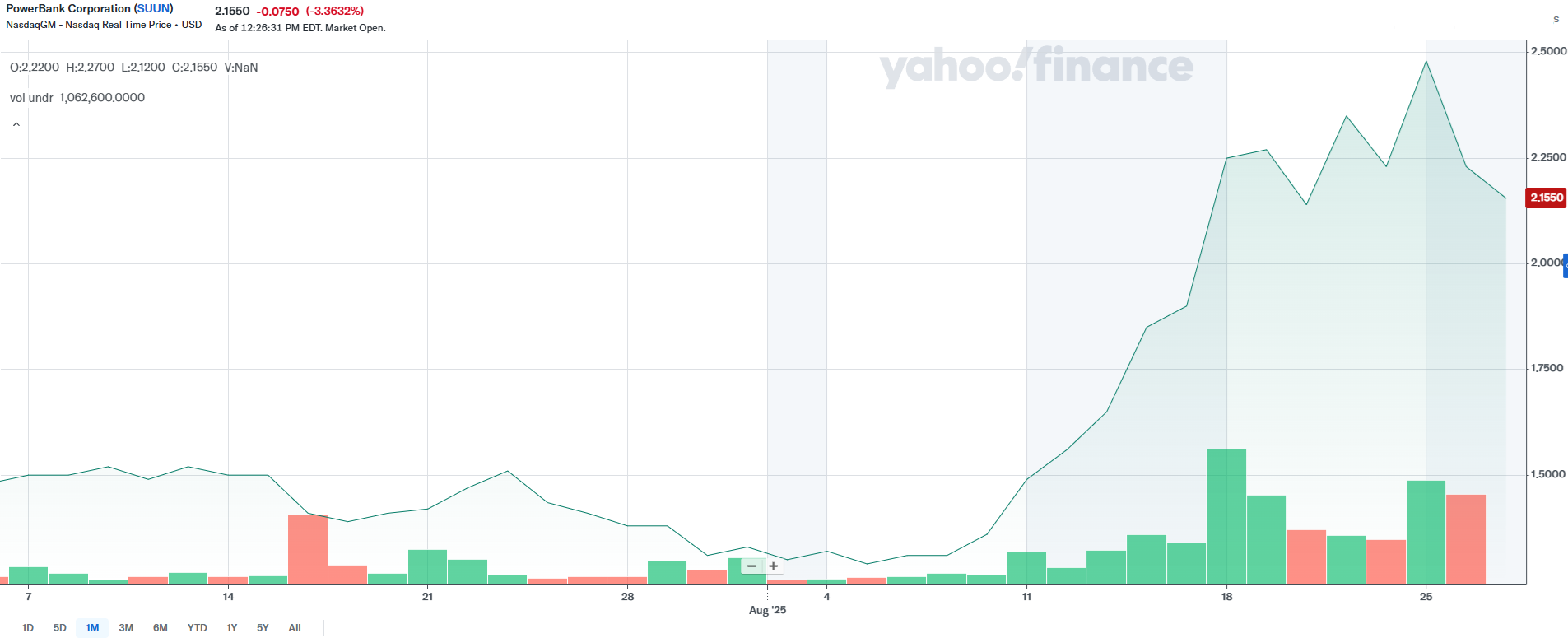
PowerBank Corp. (NASDAQ: SUUN) delivered one of the sharpest moves in the clean-energy space this month. Its stock has rebounded from recent lows. The rally was fueled by a mix of company-specific news and broader clean-energy policy developments.
The increase shows strong interest in PowerBank’s battery storage project in Ontario. It also reflects optimism from updated U.S. clean-energy tax guidance. This news improved sentiment in the entire sector.
Ontario Battery Deal Powers SUUN
A key driver for PowerBank is its battery storage business with its Cramahe, Ontario project known as SFF-06, commencing installation of the battery energy storage system (BESS). The 4.99 megawatt (MW) BESS is backed by a 22-year capacity contract that ensures long-term income once operational.
The contract is priced at $1,221 per megawatt per business day, translating into predictable and stable revenues over two decades.
The project also benefits from a $25.8 million loan from the Royal Bank of Canada (RBC), which covers financing at favorable terms for two projects, including SFF-06. PowerBank also plans to secure the 30% Canada Clean Technology Investment Tax Credit. This will boost the project’s financial profile.
With this move, PowerBank is no longer seen solely as a solar player. Instead, the company is positioning itself as a diversified clean energy infrastructure firm with long-term recurring revenues. For a micro-cap stock often valued on speculation, this shift towards diversified revenue streams is a major milestone.
Analysts Turn Bullish on PowerBank’s Future
Analysts covering PowerBank are turning more bullish after the Ontario news.
PowerBank has a forward price-to-earnings (P/E) ratio of about 17x. This is potentially low when you consider its growth potential. If the company executes its pipeline of projects beyond Ontario, the stock has the potential to re-rate higher. For now, the Ontario project provides a strong foundation for growth.
PowerBank is based in Canada, but the company gained from a boost in optimism in the clean energy sector. This came after the U.S. Treasury Department released amended clean energy tax credit rules.
The new rules made it clear that renewable projects can still get a 30% federal tax credit. This applies as long as physical construction starts. They also keep the traditional four-year “safe harbor” provision. This eased concerns that stricter guidance could have limited access to credits.
Following the announcement, major U.S. solar stocks like Sunrun and First Solar jumped nearly 9%, while the MAC Global Solar Energy Index rose 4%. PowerBank itself has a strategy to accelerate the development or sale of projects to ensure that as many projects as possible can qualify for the tax credits.
However, the overall positive vibe for clean energy companies boosted SUUN. Investor confidence in renewable themes appears strong, especially as cross-border opportunities for financing and project expansion remain attractive.
Momentum Meets Volatility in SUUN Stock
PowerBank’s sharp stock increase also reflects technical momentum. The stock is now well above its 200-day moving average, a sign that bullish sentiment could hold. However, traders are watching closely as technical indicators show overbought conditions.
Despite this, the overall momentum trend remains upward. If PowerBank keeps sharing project updates and benefits from optimism in the sector, the stock might hold higher trading ranges.
Battery Storage: The Next Big Clean-Energy Play
PowerBank’s continued development of battery storage projects mirrors a broader industry trend. As renewable energy penetration grows, storage is becoming essential for grid reliability. In Ontario, battery storage supports the province’s transition away from natural gas while balancing variable renewable inputs like wind and solar.
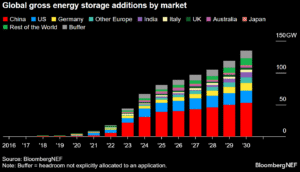
The global energy storage market is set for another record year in 2025. Even with policy shifts and uncertainty in the United States and China—the two biggest markets—developers are moving ahead with larger utility-scale projects.
Since 2024, huge gigawatt-hour systems have begun construction or been commissioned. This is happening not just in the U.S. and China, but also in Saudi Arabia, South Africa, Australia, the Netherlands, Chile, Canada, and the UK.
BloombergNEF predicts storage additions will increase by 35% in 2025. This will total 94 gigawatts (247 gigawatt-hours), excluding pumped hydro. After this surge, the sector is expected to expand at a compound annual growth rate (CAGR) of 14.7% through 2035. By then, annual installations could hit 220 gigawatts (972 gigawatt-hours), underscoring the market’s long-term growth potential.
By securing a long-term contract, PowerBank demonstrates it can compete in this high-growth sector. Its ability to secure financing and government incentives also highlights the company’s ongoing shift from speculative development to structured infrastructure investment.
Investor Watchlist: What’s Next for PowerBank
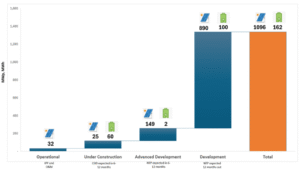
For investors, the Ontario battery storage development is significant because it provides both credibility and visibility into future cash flows. This makes SUUN less of a pure momentum trade and more of a potential long-term clean energy infrastructure play. Below is the company’s project pipeline, including battery storage at 162 MWh.
Going forward, investors will be watching:
Execution of the Ontario project, including construction timelines and cash flow ramp-up.
Expansion opportunities into other Canadian provinces or U.S. markets.
Financing partnerships, particularly whether PowerBank can continue to secure favorable loans and tax incentives.
The supportive backdrop of clean energy policy in both Canada and the U.S. provides further encouragement. If PowerBank matches its Ontario success, it could change from a speculative micro-cap to a credible small-cap clean energy growth story.
The Ontario project strengthens PowerBank’s revenue outlook and aligns the company with global clean energy trends. For investors ready to handle ups and downs, SUUN offers high risk and high reward. It’s a chance in the rapidly expanding clean energy infrastructure market.
There are several risks associated with the development of the Project. The development of any project is subject to required permits, the continued availability of third-party financing arrangements for the Company, the risks associated with the construction of a battery energy storage project and the degradation of battery storage capacity over time based on the number of discharge cycles. In addition, governments may revise, reduce or eliminate incentives and policy support schemes for battery energy storage, which could result in future projects no longer being economic. Please refer to “Forward-Looking Statements” for additional discussion of the assumptions and risk factors associated with the projects and statements made in the SolarBank press release dated dated August 6, 2025 entitled: “PowerBank (SUUN) Begins Installation of First Battery Energy Storage System in Ontario“.
https://globalcarbonfund.com/wp-content/uploads/2018/10/GCF_header_logo_340x156.png00carbonfundhttps://globalcarbonfund.com/wp-content/uploads/2018/10/GCF_header_logo_340x156.pngcarbonfund2025-08-27 10:29:392025-08-27 10:29:39PowerBank Corp. (SUUN) Transforms Into Clean Energy Leader with Ontario Battery Storage Deal
The global carbon market is undergoing a dramatic reset that could transform both supply and costs over the next 25 years. New projections from BloombergNEF (BNEF) suggest that carbon credit supply may grow 20- to 35-fold by 2050, creating one of the most significant financial mechanisms for funding decarbonization. But the shape of this future market hinges on integrity, governance, and the types of projects that ultimately win buyers’ trust.
While the long-term trajectory points upward, the road is being shaped by near-term shifts. From surging issuances to a rapid geographic rebalancing, the market reset is already redefining which sectors and regions are taking the lead.
Carbon Credit Costs Head Higher
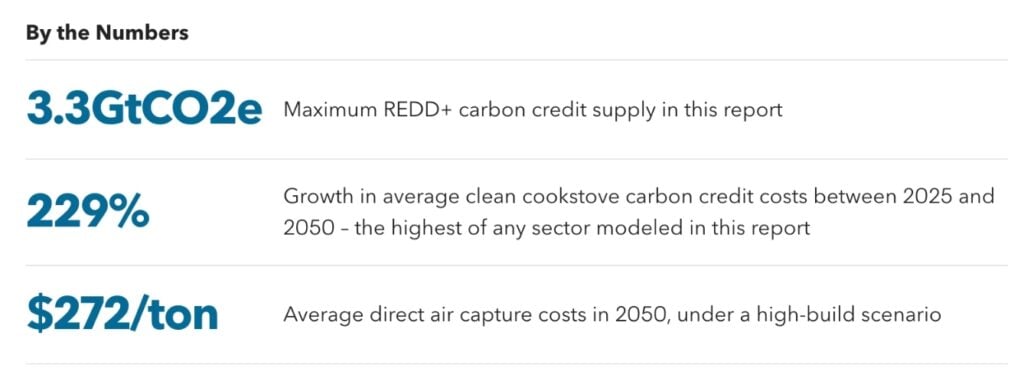
BNEF further points to steep increases in average costs as high-quality projects dominate. Prices could reach $60 per ton of CO₂e in 2030 and rise to $104 per ton in 2050 if technology-based removals, such as direct air capture (DAC), dominate the supply mix.
In scenarios where lower-quality credits flood the market, prices would remain significantly lower—just $69 per ton in 2050—but at the cost of weaker governance and reduced impact. This highlights the growing divide between volume-driven growth and integrity-driven supply.
Source: BNEF
Issuances Surge as Market Resets
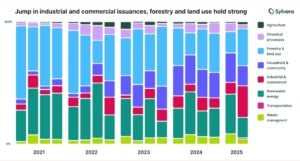
According to Sylvera, new credit creation has picked up pace. In Q2 2025, issuances reached 77 million credits, up 39% from Q1 and 14% higher than Q2 2024. This signals renewed confidence among project developers and buyers, with particular momentum in both traditional land-use projects and industrial breakthroughs.
Nature-Based Leaders Face New Competition
Forestry and Land Use projects still dominate, making up 31% of Q2 issuances. Within this group, Afforestation, Reforestation, and Revegetation (ARR) projects stood out. These credits averaged $24 each, reflecting higher implementation costs and buyers’ willingness to pay for premium, nature-based removals. For higher-rated ARR projects (BBB+), the premium stretched closer to $27, driven by limited supply.
Yet the real story this quarter was the surge in Industrial and Commercial projects, which jumped from 7.9% of issuances in H1 2024 to 19% in H1 2025. These include refrigerant recovery, methane capture from coal mines, and advanced industrial efficiency. Meanwhile, REDD+ projects rebounded strongly, climbing to 16% of Q2 issuances, their highest share since mid-2023.
This diversification shows the market moving beyond forests alone, with industrial innovation gaining ground.
Source: Sylvera
North America Rises as Supply Hub
One of the most striking changes came from geography. North America more than doubled its share of issuances, rising from 21% in Q1 to 43% in Q2. This momentum made the American Carbon Registry (ACR) the top registry for the first time, accounting for 33% of all new credits.
It was followed by Gold Standard (25%) and Verra (21%), signaling a more competitive registry landscape. This shift reflects both investor appetite for high-integrity projects in North America and the region’s strong regulatory backdrop, which is creating demand for compliance-grade credits.
Cheap vs. Trusted: The Carbon Market’s Fork in the Road
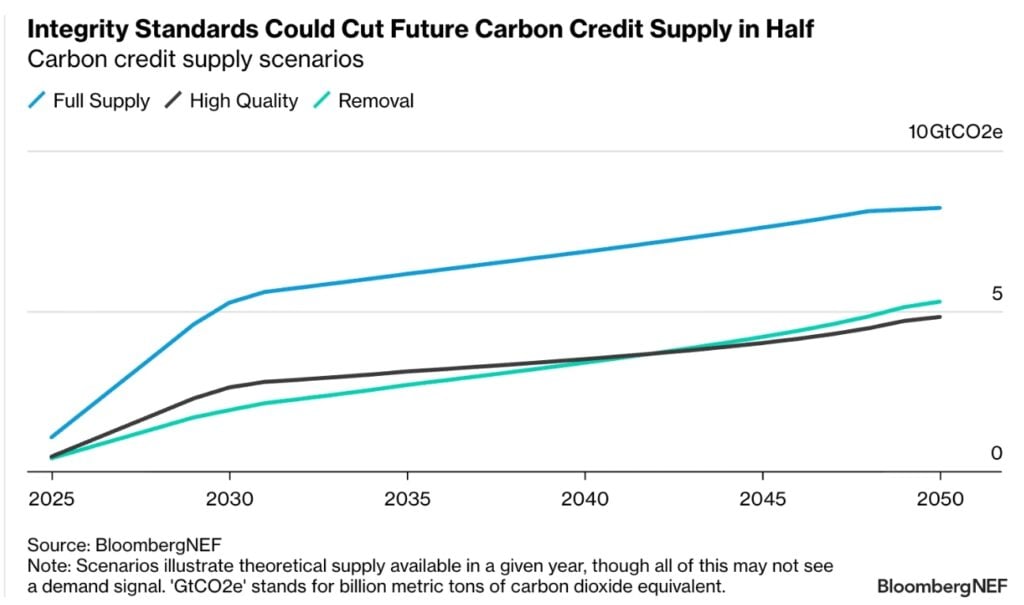
BNEF outlined the possible futures for the global carbon credit market. Carbon credit supply could follow three different paths, shaped by governance, investor trust, and project quality.
High-Quality Scenario: If the market reset succeeds, supply reaches 2.6B tons in 2030 and 4.8B in 2050. The market stays smaller but centers on high-impact projects. Direct air capture (DAC) grows to 21% of supply by 2050, with prices averaging $104/ton.
Full Supply Scenario: If governance fails, supply surges to 5.3B tons in 2030 and 8.2B in 2050. Most credits come from avoided deforestation and reforestation, about two-thirds of the total. Prices stay low at $69/ton, but quality concerns weaken trust.
OTC Carbon Removal Scenario: This middle path sees bespoke deals growing 27 times since 2022. Supply hits 2B tons in 2030 and 5.3B in 2050. Bioenergy with carbon capture (BECCS) dominates, with prices at $98/ton by 2050.
The trade-off: Cheaper credits risk poor quality, while higher-cost, smaller markets could build the trust buyers want.
Even as average credit prices softened, buyers continued paying premiums for nature-based removal credits and high-rated projects. For instance, ARR credits rated BBB+ commanded roughly $27 each, compared to lower-rated alternatives.
This price differentiation shows that buyers—especially corporates seeking credible net-zero claims—are prioritizing quality over volume. Credits recognized in compliance systems or international frameworks also commanded higher prices, reflecting their stronger governance.
Carbon Pricing Expands Across Economies
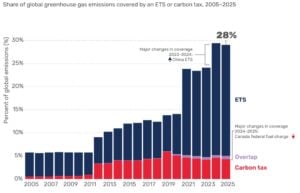
Alongside the voluntary market reset, government-led carbon pricing systems are expanding. As per the World Bank Group, by mid-2025, 43 carbon taxes and 37 emissions trading systems (ETSs) were in place, covering 28% of global emissions—up from 24% just a year earlier.
Several major moves drove this growth:
China’s national ETS expanded beyond power to include cement, steel, and aluminum, adding 3 billion tons of coverage.
Colombia broadened its carbon tax to include coal combustion.
Together, these expansions lifted global coverage to nearly 15 billion tons CO₂e, representing two-thirds of global GDP under a direct carbon price.
Source: World Bank Group
Power Sector Leads, Industry Joins In
The power sector continues to dominate carbon pricing. Over half of global power emissions—about 30% of global GHGs—are now priced. This matters because electrification of industry and transport can only deliver deep cuts if electricity itself is low-carbon.
Industry is catching up fast. Thanks to China’s ETS expansion, over 40% of industrial emissions are now covered, marking a major leap for one of the most carbon-intensive sectors.
Despite short-term price softening, demand remains resilient. Corporations remain the biggest buyers through voluntary and domestic compliance markets, viewing credits as essential for net-zero alignment. Global retirements rose in early 2025, driven by a spike in compliance demand.
This reflects carbon markets’ central role: channeling private capital into decarbonization projects while governments pursue broader policy goals like economic development, job creation, and fiscal stability.
The Political Economy of Pricing
The durability of carbon pricing depends not just on policy design but also on public sentiment and perceived fairness. Governments are balancing competing goals—emissions cuts, economic growth, and equity. As seen with China and Colombia, systems are being designed to ratchet up coverage and ambition over time, offering flexibility while building acceptance.
This political economy lens will be crucial as carbon pricing moves into harder-to-abate sectors like heavy industry and as middle-income economies such as Brazil, India, Indonesia, and Türkiye expand their systems.
Outlook: Carbon Market Integrity Over Volume
The global carbon market is no longer defined by raw volume. Instead, the reset since 2022 has pushed integrity to the forefront. Whether through nature-based solutions, industrial projects, or advanced removals, the projects that deliver measurable, durable impact will attract the highest demand and premiums.
What’s clear from BNEF’s forecast on carbon credits supply is that carbon markets will remain a cornerstone of climate finance, one where buyers, governments, and investors increasingly value quality over quantity.
https://globalcarbonfund.com/wp-content/uploads/2018/10/GCF_header_logo_340x156.png00carbonfundhttps://globalcarbonfund.com/wp-content/uploads/2018/10/GCF_header_logo_340x156.pngcarbonfund2025-08-27 06:34:382025-08-27 06:34:38Carbon Credits Supply to Skyrocket 35x by 2050 – But at What Price?
The United States has released an updated list of critical minerals, highlighting the growing importance of metals that support clean energy, technology, and national security. This new list from the U.S. Geological Survey (USGS) and the Department of the Interior now has 51 minerals.
The draft recommends adding six minerals—potash, silicon, copper, silver, rhenium, and lead, listed in order of risk—to the U.S. Critical Minerals List, while removing two minerals, arsenic and tellurium.
Silver and copper are included for the first time. The update shows how crucial these resources are for America’s industrial and clean energy plans. Both metals are in high demand for renewable energy systems, electric vehicles, and advanced electronics.
The U.S. wants to expand the list to boost supply security, cut down on imports, and get ready for global competition over these resources.
Why the U.S. Updates Its Critical Minerals List
Critical minerals are defined as non-fuel minerals that are vital to the U.S. economy and security but are at risk of supply disruptions. The U.S. first released a formal list in 2018, and it has been updated several times as global demand and geopolitical risks shift.
The 2025 update considers several factors, including:
Economic importance: Minerals are essential for industries like defense, energy, and technology.
Supply chain risks: The potential for shortages due to import dependence or geopolitical tensions.
Silver and copper were added because new data show their strategic role in clean energy. Both metals are widely available globally, but demand is increasing so quickly that supply risks are now more relevant.
This update highlights how the U.S. is adjusting its policies to keep pace with the global race for minerals.
Silver: A Rising Star in the Energy Transition
Silver’s addition to the list is significant. Traditionally known as a precious metal, silver is also one of the most effective conductors of electricity. This property makes it essential for solar panels, batteries, and electronics.
Solar panels: Silver paste is used in photovoltaic cells to conduct electricity. Each panel requires 15–20 grams of silver, and global solar demand is expected to drive record use.
Electronics: From smartphones to electric vehicles, silver is a critical component in circuit boards and electrical connections.
Medical uses: Silver’s antimicrobial properties also make it valuable for healthcare applications.
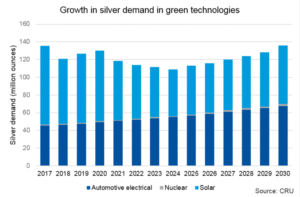
According to the Silver Institute, solar energy alone could account for nearly half of silver’s industrial demand by 2030. However, global mine supply has been relatively flat, creating concerns about shortages.
Source: Silver Institute
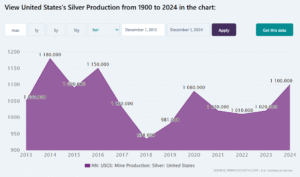
By adding silver to the list, U.S. policymakers recognize the growing risk of relying too heavily on foreign sources. While the U.S. produces some silver, much of the supply comes from countries like Mexico, Peru, and China. This creates potential vulnerabilities as clean energy deployment accelerates.
Copper is another critical addition to the 2025 list. Known as the “metal of electrification,” copper is vital for power grids, renewable energy, electric vehicles, and data centers.
Electric vehicles (EVs): EVs require up to four times more copper than gasoline-powered cars, mainly for batteries and wiring.
Power grids: Copper is a key material in transmission lines, transformers, and substations. Expanding renewable energy capacity depends on copper-intensive infrastructure.
Clean energy: Wind turbines and solar farms use large amounts of copper in their electrical systems.
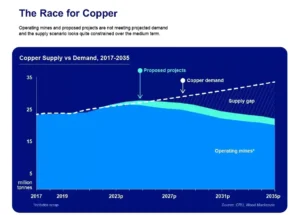
Global demand for copper is projected to double by 2035, according to industry forecasts. Yet, mining capacity has struggled to keep pace. Large new projects take years to develop, and permitting challenges in the U.S. have slowed growth.
Source: CRU, Wood Mackenzie
The U.S. currently imports a significant share of its copper, with major suppliers including Chile and Canada. The government calls copper a critical mineral. This signals a plan to boost domestic production and recycling. The goal is to reduce reliance on imports.
Broader Implications of the Critical Minerals List
The new list does more than identify resources; it also influences U.S. policy and investment. Minerals on the list qualify for government programs that support domestic exploration, mining, and processing. This can include federal funding, streamlined permitting, and public-private partnerships.
For companies, being linked to critical minerals often boosts investor interest. It signals long-term demand and potential access to U.S. government support. U.S. mining firms looking for silver and copper deposits could find more financing options.
The updated list also affects international trade. By focusing on these resources, the U.S. can form new partnerships with allies that have rich mineral reserves. This move also helps cut down reliance on countries with high supply risks.
Adding silver and copper to the critical minerals list is more than just a policy shift. It impacts markets, industries, and climate goals directly. Knowing how these metals influence clean energy and tech development shows why the update is important.
The Global Race for Silver and Copper
The U.S. is not alone in its push to secure mineral supplies. The European Union, Japan, and China are updating their plans. They want to secure steady access to silver, copper, and other key resources.
China: A dominant player in mineral refining and processing, especially for copper and rare earths. By 2025, China is set to produce 57% of the world’s refined copper. Its output is expected to rise by 7.5% to 12% each year, despite global copper shortages. China also leads in copper smelting and refining. Since 2019, it has added over 97% of the global capacity.
Europe: The region recycles around 37% of the world’s silver. This is much higher than its primary silver production, which is only about 7%. Most of that production comes from Poland and Sweden. In Europe, up to 90% of copper in buildings and infrastructure is recycled. This highlights the importance of reuse and circular economy initiatives.
Global supply: Silver and copper mining is concentrated in a few countries, such as China, Peru, Chile, and the DRC, raising concerns about bottlenecks.
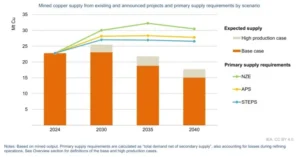
As countries accelerate clean energy goals, competition for these metals is expected to grow. Some analysts warn of a potential supply gap in copper as early as 2030 if new projects do not come online quickly enough.
Source: IEA
Mining, Recycling, and the Green Dilemma
While expanding mining is a logical solution to supply risks, it comes with challenges. Mining projects often raise environmental and social concerns, including water use, land disturbance, and impacts on local communities.
In the U.S., new projects frequently face delays due to permitting and opposition. Balancing the need for secure supply with environmental protections will remain a key challenge. Recycling may help close the gap, but new production will still be required.
The recognition of silver and copper as critical minerals reflects these trade-offs. Policymakers see the environmental challenges. They believe that securing supply is key to economic and climate goals.
Looking Ahead: U.S. Strategy for a Mineral-Driven Future
The updated critical minerals list reveals how the U.S. is getting ready for a future focused on clean energy, electrification, and digital technologies. Silver and copper are now seen not only as industrial metals but as pillars of energy security.
Moving forward, the U.S. will likely expand efforts to:
Support domestic mining and refining of silver and copper.
Increase recycling and circular economy solutions.
Build alliances with mineral-rich countries.
Balance environmental concerns with supply needs.
By naming silver and copper as critical, the U.S. is aligning its resource strategy with long-term economic and climate goals. The next decade will determine whether the country can secure enough of these essential metals to stay competitive in the global energy transition.
https://globalcarbonfund.com/wp-content/uploads/2018/10/GCF_header_logo_340x156.png00carbonfundhttps://globalcarbonfund.com/wp-content/uploads/2018/10/GCF_header_logo_340x156.pngcarbonfund2025-08-27 05:39:332025-08-27 05:39:33U.S. Releases New Draft Critical Minerals List: Silver and Copper Join the Clean Energy Race