Data Center Giants Enter Carbon Credit Market as Hyperscalers Fuel a New Green Tech Gold Rush

Data Center Giants Enter Carbon Credit Market as Hyperscalers Fuel a New Green Tech Gold Rush

A data center firm backed by Oaktree Capital Management is planning to sell carbon credits directly to hyperscale cloud companies. These are large tech firms that run massive cloud and AI infrastructure.

The plan, reported by Bloomberg, reflects a new shift in how data centers approach climate action. Some firms are not just cutting emissions in their operations but are also exploring carbon markets. This helps them create extra revenue while reaching their sustainability goals.

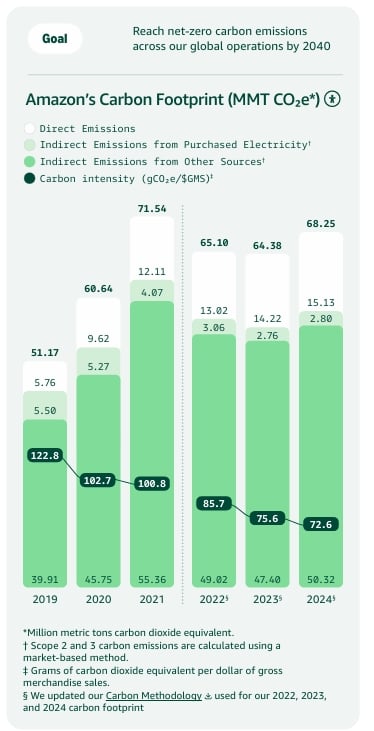
Hyperscalers like Microsoft, Amazon, and Google have all set strong climate targets. Microsoft aims to become carbon negative by 2030, while Amazon targets net-zero carbon by 2040. Google aims for net zero emissions across its operations and value chain by 2030.

This growing demand for carbon reduction tools is creating new business opportunities across the digital infrastructure sector.

Why Data Centers Are Under Climate Pressure

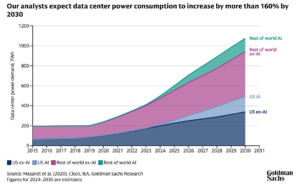
Data centers are now one of the fastest-growing sources of electricity demand. The International Energy Agency (IEA) reports that data centers, AI, and cryptocurrency used about 1.5-2% of global electricity in recent years. This demand is rising fast because of AI growth.

This matters because electricity use is closely tied to carbon emissions, depending on the energy source. As more digital services move to the cloud, emissions from power-hungry servers also increase.

data center electricity use and type EIA

Hyperscalers are now under pressure from regulators, investors, and customers to reduce their carbon footprint. Many companies have already improved energy efficiency and shifted to renewable energy procurement.

However, in many regions, a clean power supply is still not enough to fully match demand. This gap is where carbon credits are becoming more important.

How Carbon Credit Selling Would Work in Pure DC’s Removal Platform

Carbon credits represent verified reductions or removals of greenhouse gases. One credit usually equals one metric ton of carbon dioxide reduced or removed from the atmosphere. These credits could help tech companies meet their voluntary or regulatory climate goals.

In this case, the Oaktree-backed data center firm, Pure Data Centres (Pure DC), is launching a carbon removal credit platform for hyperscale cloud companies. The initiative will operate through its climate-tech unit, A Healthier Earth.

The move comes as AI and cloud computing sharply increase electricity demand and emissions from data centers. Many facilities still rely partly on fossil fuels for power.

Pure DC’s chief research and development officer, Alastair Collier, stated:

“This is about turning carbon removal into infrastructure, aligning organisations with the ambition to lead on climate with a platform designed and committed to deliver at scale.”

Pure DC is also expanding its infrastructure business. The company reportedly sought funding last year at a valuation of up to £5 billion ($6.7 billion). It plans to build AI-focused data center campuses across Europe and the UK with a combined target capacity of 3 gigawatts.

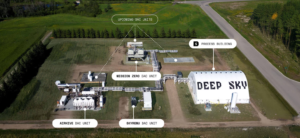
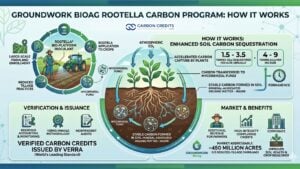
Its carbon credit strategy focuses on biochar. A Healthier Earth is developing a biochar project in Wiltshire, England. The process converts agricultural waste and biomass into a charcoal-like material that can store carbon for hundreds of years.

biochar carbon credit market 2025

Gary Wojtaszek, Executive Chairman & interim CEO, Pure DC, remarked:

“What we’re doing at Pure DC is the first of its kind anywhere in the world. In Dublin we’ve demonstrated that net zero carbon, self-powered data centres are deliverable. Now, with our Biochar Integrated Carbon Removal from AHE, we’re making them scalable. This isn’t incremental improvement; it’s a complete reset of how this sector will be built going forward.”

Each credit will represent one metric ton of carbon dioxide removed from the atmosphere. Pure DC expects annual carbon credit supply to reach about 100,000 credits by 2029. That is equal to the yearly emissions of around 23,000 passenger cars.

The company plans to issue its first verified credits before the end of the year. Pure DC also said it will not use the credits for its own emissions. Instead, they will be sold to hyperscalers and other companies seeking to offset residual emissions.

Pure DC believes combining AI infrastructure with verified carbon removal services will help attract major cloud customers. The company is also building a self-sufficient data center in Ireland as part of its broader sustainability strategy.

This approach is part of a broader trend where infrastructure companies are blending physical decarbonization with market-based solutions. Companies are now looking beyond just renewable energy and efficiency upgrades. They are also using carbon markets to fill any emissions gaps.

However, carbon credit markets have faced criticism. Concerns include:

  • Inconsistent quality,
  • Risks of double counting, and
  • Questions about real emissions reductions from some projects.

These issues have led to tighter standards and more scrutiny from buyers. Despite this, demand from large technology firms remains strong due to their aggressive net zero timelines.

Microsoft, Amazon, and Google Drive Demand for Carbon Solutions

The biggest driver of carbon credit demand is the rapid expansion of hyperscale computing. Cloud services, artificial intelligence, and data storage are all expanding at high speed.

Companies like Microsoft and Google have committed to 24/7 carbon-free energy goals in the coming years. This means matching electricity use with clean energy sources every hour of the day, not just annually.

Amazon has also expanded renewable energy investments across global operations. It has become one of the largest corporate buyers of renewable energy worldwide.

These companies still face a challenge. Clean energy availability is uneven across regions. Data center growth is also faster than renewable infrastructure expansion in many markets.

As a result, carbon credits are being used as a transitional tool. They help companies bridge the gap while long-term clean energy systems are built. This dynamic explains why infrastructure players are now entering carbon credit markets more directly.

Can Carbon Credits Keep Big Tech’s Net-Zero Promises Alive?

For hyperscalers, carbon credits offer flexibility but not a full solution. Most companies still prioritize direct emissions reductions as the main path toward net zero.

Across the broader market, corporate use of carbon credits has grown steadily. According to data from major market registries tracked by the Ecosystem Marketplace, companies retired hundreds of millions of carbon credits annually in recent years.

Per AlliedOffsets data, voluntary market retirements are estimated at around 190 million credits in 2023 and decreased to 188 million in 2025.

Carbon credit retirements for voluntary and compliance
Source: AlliedOffsets

Carbon credits are generally seen as a supporting tool rather than a substitute for real emissions cuts. Many companies now prefer high-quality credits tied to verified carbon removal projects such as reforestation or direct air capture.

For data center operators, the move into carbon credit sales adds a new revenue layer. It also increases pressure to ensure transparency and credibility in emissions accounting.

A New Link Between Cloud Growth and Carbon Markets

The decision by an Oaktree-backed data center firm to sell carbon credits to hyperscalers reflects a broader shift in the tech and energy landscape. Data centers are no longer just infrastructure providers. They are becoming active participants in carbon markets and climate finance.

As demand for AI, cloud computing, and digital services continues to rise, energy use will also increase. This creates ongoing pressure for companies to balance growth with climate responsibility.

Carbon credits offer a solution to fill the gap. While not a complete solution, they are becoming more integrated into how large tech ecosystems manage emissions. The result is a new connection between digital infrastructure and global climate markets—one that is likely to grow as both sectors expand.

The post Data Center Giants Enter Carbon Credit Market as Hyperscalers Fuel a New Green Tech Gold Rush appeared first on Carbon Credits.

From Timber Crisis to Climate Opportunity: Why Carbon Credits Are Becoming Critical for Japan’s Forest Future

Japan’s forestry sector is facing a deep crisis. Falling timber prices, an aging workforce, and shrinking rural populations are leaving large parts of the country’s forests abandoned or poorly managed. Now, carbon credits are emerging as a possible lifeline that could help restore forests, support local economies, and strengthen Japan’s climate goals.

According to reporting by The Japan Times, forestry groups in Miyagi Prefecture are trying to use carbon finance to transform struggling plantation forests into healthier and more climate-resilient ecosystems.

The effort highlights a larger shift happening across Japan as foresters, companies, and policymakers search for ways to make forest management profitable again while cutting carbon emissions.

Japan’s Forestry Industry Faces Long-Term Decline

Japan has vast forest resources, but many forests are no longer economically viable. Cheap imported timber has reduced domestic wood prices for years. At the same time, forest ownership is highly fragmented, making large-scale management difficult.

The workforce is also shrinking quickly. Many forestry workers are elderly, and younger generations are leaving rural communities for cities. As profits disappear, more landowners are giving up their forests entirely.

Akio Abe, associate director of the Ishinomaki District Forestry Association in Miyagi Prefecture, told The Japan Times that forest values have fallen so sharply that many owners no longer see a reason to keep managing their land.

Poor Forest Management Raises Climate Risks

Around 40% of Japan’s forests are planted forests, mostly dense cedar and cypress plantations established decades ago when timber demand was much stronger. These monoculture forests require regular thinning and maintenance. Without proper care, biodiversity declines and ecosystems weaken.

Many forests are now overcrowded because owners cannot afford thinning operations. That creates multiple environmental risks. Dense forests block sunlight from reaching the ground, preventing undergrowth and broadleaf species from developing naturally.

Koumei Maruyama, CEO and co-founder of Japanese startup iForest, explained that poorly managed plantation forests also develop weak root systems, increasing the risk of landslides.

How a Tsunami Helped Spark a Forest Carbon Project

The Ishinomaki forest carbon project began after the devastating 2011 tsunami that struck northeastern Japan. The disaster heavily damaged the city of Ishinomaki and nearby Onagawa, where forestry remains an important industry.

Years later, local populations still have not fully recovered.

In 2022, Hitachi Systems sent employees to Onagawa to explore regional revitalization ideas. The company partnered with French climate startup Everimpact, which specializes in carbon measurement and climate finance.

The project team selected 900 hectares of forest dominated by planted conifers. About 72% of the area consisted of cedar and cypress plantations.

JAPAN Forests

Everimpact used two decades of satellite data to study changes in forest biomass and carbon storage. The analysis showed that many aging conifer plantations were declining.

As the trees aged, photosynthesis slowed while decomposition and respiration increased. Some forest areas were gradually becoming net carbon emitters during parts of the year instead of carbon sinks.

The findings confirmed what local foresters already feared. Without thinning and restoration work, the forests would continue losing ecological and climate value.

The Race to Build Climate-Resilient Forests in Japan

Project members decided to completely rethink forest management. Their strategy involves thinning older conifers and planting younger trees, including more broadleaf species. The goal is to create mixed forests that are healthier, more biodiverse, and better adapted to climate change.

Akihito Kitade of Hitachi Systems said plantation forests now cover far more land than Japan’s timber demand requires. He believes many forests should gradually return to conditions closer to natural ecosystems.

Mixed forests also require less long-term maintenance. Broadleaf species can better tolerate hotter and drier climates, which climate models suggest northeastern Japan may increasingly experience in the future.

The issue is becoming more urgent as climate change raises wildfire risks across Japan. Neighboring Iwate Prefecture has already experienced destructive wildfires in recent years.

The Ishinomaki project hopes:

  • Carbon finance can support this transition while generating new revenue for local forest owners.
  • And it can potentially generate carbon credits worth up to ¥260 million.

Kitade said the goal is not simply to create profits, but to reinvest money into improving environmental value and sustaining forests for future generations.

Japan carbon credit

How High-Integrity Carbon Credits Could Support Forest Restoration?

Forest carbon projects generate credits by demonstrating that improved forest management (IFM) can store more carbon or reduce emissions compared to standard forestry practices. A major requirement is “additionality,” meaning projects must demonstrate that the work would not occur without carbon finance support.

IFM has become an important part of voluntary carbon markets:

  • Globally, around 293 IFM projects have produced roughly 11% of all carbon offset credits issued by registries.
  • IFM could help increase global carbon storage by 0.2 to 2.1 gigatonnes of CO₂e each year without reducing timber supply.

Practices such as longer harvest cycles, careful logging, and soil protection help forests absorb more carbon while keeping ecosystems healthier. Better forest management can also make forests more resilient to wildfires, pests, and extreme weather, which are becoming more common as climate change worsens.

  • The Ishinomaki project chose the Verified Carbon Standard’s Improved Forest Management methodology under Verra, one of the world’s largest voluntary carbon standards organizations.
  • The methodology compares forest carbon performance against national forest data baselines.

Notably, the project team selected Verra’s program because it supports satellite-based carbon monitoring and has strong international market recognition.

Furthermore, high-quality carbon credits can also command higher prices, especially when projects provide biodiversity benefits alongside carbon reductions.

  • According to iForest’s Maruyama, global data suggests carbon credits with biodiversity co-benefits can sell for 38% to 60% more than credits focused only on carbon.

However, forest carbon markets have also faced criticism. Multiple investigations in recent years questioned whether some forest carbon projects truly delivered the climate benefits they promised.

Experts continue to stress that carbon credits should support — not replace — direct fossil fuel emissions reductions. Still, many climate specialists believe forest carbon finance remains an important tool for protecting ecosystems and mobilizing investment.

Japan’s Government Wants Forests to Absorb More Carbon

Japan’s government sees forests as a major part of its long-term climate strategy.

  • Government data shows Japan’s forests removed roughly 45 million tons of CO2 in 2023. Officials want that number to rise to 72 million tons annually by 2040 — an increase of about 60%.
  • Japan is also targeting a 46% reduction in greenhouse gas emissions by 2030 compared with 2013 levels while pursuing net-zero emissions by 2050.

To help achieve these goals, the government operates the J-Credit system, launched in 2013. The program certifies emissions reductions from projects such as energy efficiency upgrades and forest management.

As of March, 356 forestry-related projects had been registered under the system.

According to reporting from S&P Global Commodity Insights,

  • Forestry J-Credits in Japan’s over-the-counter market were trading around ¥10,000 to ¥14,000 per ton of CO2 equivalent.
  • That was significantly higher than solar renewable energy J-Credits, which traded near ¥4,000 per ton.

Market participants told S&P Global that forestry credits often command premiums because buyers value their environmental co-benefits, including biodiversity and local ecosystem restoration.

Carbon brokers also noted that many forestry projects are connected to local governments, which are often reluctant to sell credits quickly because forests are treated as important public assets.

Supply Constraints Could Push Carbon Prices Higher

Japan’s carbon market may face growing supply shortages in the coming years.

According to a 2025 market survey conducted by Exroad and the Tokyo Stock Exchange Carbon Credit Market Development Office, annual demand under Japan’s GX-ETS Phase 2 emissions trading system could conservatively reach 3 million tons per year.

  • Current J-Credit supply, however, is estimated at only around 1 million tons annually.
  • The report warned that this imbalance could push prices significantly higher. Forecasts suggest allowance prices may rise from roughly ¥4,000–6,000 per ton in 2027 to more than ¥6,000 per ton by 2030.

Without a major increase in domestic credit generation, carbon-intensive industries could face rising financial pressure as climate regulations tighten.

At the same time, stricter standards are making carbon credits more credible and scientifically rigorous.

japan carbon credits carbon market

For projects like Ishinomaki, this creates an opportunity to combine forest restoration, biodiversity protection, and climate action into one long-term economic model. The Ishinomaki team hopes its project can become a model for other regions across Japan.

Everimpact co-founder Alain Retierez said modern forestry must focus on building climate-resilient forests managed in a more selective and nature-focused way.

To sum up, the project aims to prove that carbon finance can help revive Japan’s struggling forestry sector while supporting the country’s path toward net zero.

The post From Timber Crisis to Climate Opportunity: Why Carbon Credits Are Becoming Critical for Japan’s Forest Future appeared first on Carbon Credits.