ExxonMobil’s (XOM Stock) Wild Ride: Gas Discovery, $14M Pollution Fine, and Carbon Storage Push

ExxonMobil’s (XOM Stock) Wild Ride: Gas Discovery, $14M Pollution Fine, and Carbon Storage Push
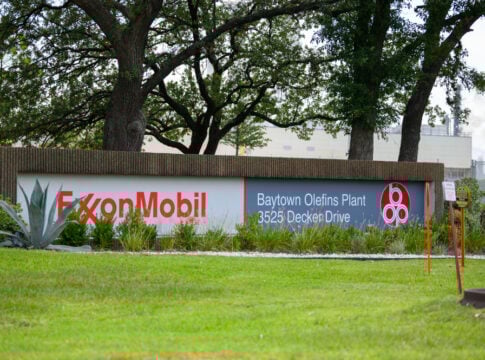
ExxonMobil (NYSE: XOM), one of the world’s largest oil and gas producers, is once again in the public eye. Last week brought big news for the oil major. There was a new gas find offshore in the Mediterranean. Moreover, a key legal ruling was issued regarding old refinery pollution in Texas. Adding to the headlines, the U.S. Environmental Protection Agency (EPA) has also proposed key carbon storage permits for the company’s growing low-carbon ventures.

These events show how ExxonMobil balances new energy projects with scrutiny over its environmental record. The gas company is feeling pressure from climate change demands. Its actions reveal both the opportunities and the challenges it faces in the evolving energy landscape.

Cyprus Gas Discovery Strengthens Global Portfolio

The first big development came from the Eastern Mediterranean. On July 7, ExxonMobil and QatarEnergy announced they had found a large natural gas reservoir off the coast of Cyprus. The find, located at the Pegasus-1 well in Block 10, revealed more than 350 meters of gas-bearing rock at a depth of about 1.9 kilometers.

This is the second major find for ExxonMobil in Cypriot waters, following the Glaucus-1 discovery in 2019. These discoveries are big wins for Europe. The region wants to find new natural gas sources and lessen its reliance on Russian energy.

The Eastern Mediterranean is becoming a key energy hub. Pegasus-1 adds important reserves to ExxonMobil’s global gas portfolio. It could help boost liquefied natural gas (LNG) exports. This would supply cleaner fuels in areas trying to move away from coal.

Pollution Comes at a Price: Baytown Fine Stands After Supreme Court Snub

The same day ExxonMobil celebrated its discovery off Cyprus, it also faced a legal setback at home. The U.S. Supreme Court chose not to review a lower court’s decision. That ruling upheld a $14.25 million civil penalty for long-term air pollution violations at the Baytown refinery complex in Texas.

Environment Texas and the Sierra Club filed a case against the company. They claimed it broke the Clean Air Act by releasing harmful pollutants like nitrogen oxides and sulfur dioxide for years. These emissions can contribute to respiratory issues, smog, and other environmental harm.

This decision ends a decade-long legal battle and marks one of the largest citizen-led environmental fines under the said law. It also highlights growing public and legal accountability for emissions from major energy facilities.

EPA Backs Exxon’s Texas Carbon Storage Ambitions

Amid legal challenges, ExxonMobil continues to invest in low-carbon technology. The Environmental Protection Agency (EPA) has proposed three Class VI carbon storage permits for ExxonMobil’s Low Carbon Solutions Onshore Storage LLC. This move could shape the company’s future in climate solutions in Jefferson County, Texas.

ExxonMobil CCS Rose project
Source: U.S. EPA

These permits back ExxonMobil’s “Rose” project seen in the map above. It’s a carbon capture and storage (CCS) site. The project aims to inject up to 5 million metric tons of CO₂ each year into deep underground rock formations.

The EPA’s proposal opens a 30-day public comment period, with a virtual hearing scheduled for July 31, 2025. EPA officials say early reviews show the project won’t risk underground drinking water. If approved, this would allow ExxonMobil to store CO₂ emissions from clean hydrogen and ammonia plants.

This CCS effort is part of a larger federal shift to expand carbon storage across the country. The EPA is also working to give permitting power to the Texas Railroad Commission. This puts Texas alongside states like Louisiana, North Dakota, and Wyoming. These states aim to speed up approvals for carbon storage projects.

CCS class VI well permits in US
Source: Carbon Capture Coalition

CCS is vital for hard-to-decarbonize sectors like steel and cement. According to a DNV report, global CCS investment could reach $80 billion by 2030, enabling the capture of 270 million tons of CO₂ per year—a major tool in the climate transition.

CCS capacity additions 2030
Source: DNV Report

Global CCS capacity is set to grow from 50 to over 550 million tonnes of CO₂ annually by 2030, says DNV. That’s equal to 6% of current energy-related emissions. North America and Europe will lead, backed by climate policies and funding. The U.S. offers $85/ton tax credits, while the EU supports CCS via its Innovation Fund and North Sea projects.

By investing in CCS, ExxonMobil aims to position itself as a leader in technologies that can reduce industrial emissions—key to meeting its long-term climate targets.

ExxonMobil’s Climate Strategy: Progress and Pressure

These three developments—exploration success, legal accountability, and carbon storage expansion—reflect ExxonMobil’s evolving role in the energy transition.

The oil major is advancing its climate strategy. The goal is to reach net-zero greenhouse gas emissions from its operated assets (Scope 1 and 2) by 2050. The company has laid out interim goals to cut upstream emissions intensity by 40–50%, methane by 70–80%, and flaring by 60–70% by 2030, based on 2016 levels.

ExxonMobil emission reduction plans
Source: ExxonMobil Report

In the Permian Basin, ExxonMobil targets net-zero emissions from its unconventional operations by 2030. The company has installed more than 6,000 low-emission pneumatic devices. It has also eliminated routine flaring, added electric compressors, and started using wind-sourced electricity.

ExxonMobil’s Low Carbon Solutions division will invest more than $20 billion by 2027. This funding will support technologies such as carbon capture, clean hydrogen, and biofuels. This includes the $5 billion acquisition of Denbury Inc., adding to its CO₂ pipeline and storage network.

ExxonMobil has captured over 120 million metric tons of CO₂. Right now, it captures about 9 million tons each year. This makes the company a leader in industrial carbon capture worldwide. Projects like the Baytown low-carbon hydrogen facility aim to capture 7 million metric tons of CO₂ annually.

The company also plans to produce 1 billion cubic feet per day of hydrogen and 1 million metric tons of ammonia using CO₂ capture technologies. Globally, ExxonMobil is involved in CCS and hydrogen projects in Europe, the U.S., and the Middle East.

In summary, here’s the company’s climate targets:

  • Cut Scope 1 and 2 emissions intensity from its oil and gas production by 40% to 50% by 2030 (vs. 2016 levels).
  • Achieve net-zero emissions from its operated assets (Scope 1 and 2) by 2050.
  • Invest $20 billion through 2027 in low-carbon projects globally.

Despite progress on Scope 1 and 2 goals, ExxonMobil has not set targets for Scope 3 emissions, which account for customer use of its products. This remains a point of pressure from environmental groups and ESG investors.

ExxonMobil GHG or carbon emissions 2024
Source: ExxonMobil Report

ExxonMobil focuses on exploration and production. But it is also creating a new strategy to tackle emissions. This shift helps meet rules and investor expectations.

Can ExxonMobil Stay on Track Toward Net Zero?

ExxonMobil had a week of mixed headlines. This shows the clash between old fossil fuel practices and the needs of a climate-aware future. The company is working to expand its  carbon capture efforts and find new gas sources.

This reveals its plans for two things: keeping energy supplies strong now and creating lower-carbon resources for the future.

With this, ExxonMobil’s future will likely hinge on three key factors: growth, environmental responsibility, and investor pressure. As regulations tighten and clean energy competition rises, finding the right balance will be crucial.

The post ExxonMobil’s (XOM Stock) Wild Ride: Gas Discovery, $14M Pollution Fine, and Carbon Storage Push appeared first on Carbon Credits.

BitMine Immersion Technologies (BMNR Stock): Can its $250M Ethereum Pivot and Green Crypto Mining Strategy Attract Investors?

BitMine

U.S.-based BitMine Immersion Technologies, Inc. (NYSE American: BMNR), is rapidly transforming the world of Bitcoin and digital asset mining. By harnessing immersion cooling technology and targeting carbon neutrality, the next-gen bitcoin miner is setting new standards for efficiency, sustainability, and operational scale in the crypto sector.

With a recent surge in stock price and a $250 million capital raise, the company is drawing attention from both institutional and retail investors seeking exposure to the future of green blockchain infrastructure.

First, let’s take a peek at its operations

Inside BitMine’s Bitcoin Operations

BitMine Immersion Technologies has built a multi-faceted Bitcoin mining business designed for performance and scale. It operates four active mining sites. Two of these are located in Texas, selected for their robust energy infrastructure and access to low-cost power. The other two are in Trinidad & Tobago, where the company benefits from long-term energy contracts and high energy efficiency.

This strategic geographic mix helps BitMine maintain a balance between reliability, energy savings, and consistent uptime. Its operations include:

  • Immersion-cooled data centers fully owned by the company
  • Partnerships with air-cooled mining facilities
  • Active trading of Bitcoin mining hashrate
  • Direct Bitcoin mining and hashrate management
  • Offering Mining-as-a-Service (MaaS) solutions
  • Consulting services for Bitcoin treasury management

Why Immersion Cooling Sets BitMine Apart?

BitMine’s mining success is because of its immersion cooling. It’s a next-generation method that replaces traditional air cooling. Instead of relying on fans and air conditioners, it submerges its mining rigs in a special dielectric liquid. This fluid absorbs heat more efficiently, keeping equipment cooler and operating at peak performance.

This advanced approach offers several benefits:

  • Boosts Efficiency: Safely overclocks machines, increasing hashrate by 25–30%
  • Reduces Noise: Eliminates fans, creating near-silent operations
  • Lowers Costs: Cuts electricity usage by reducing the need for air cooling
  • Extends Hardware Life: Protects rigs from dust and overheating
  • Saves Space: Systems have a compact footprint and can be deployed in various environments
  • Improves PUE: Achieves power usage effectiveness as low as 1.05, meaning nearly all the energy goes into mining rather than cooling

What is Hashrate and Why Does It Matter?

Hashrate measures how much computing power miners use to validate Bitcoin transactions and secure the blockchain. It’s a key indicator of network strength and miner confidence.

Here’s a breakdown:

  • Unit of Measure: Hashrate is measured in hashes per second
  • Security Marker: A higher hashrate makes the network harder to attack
  • Reward System: Miners earn Bitcoin based on how much of the total network hashrate they contribute, usually via mining pools
  • Tradable Asset: Hashrate can be bought and sold, either through direct contracts or financial derivatives, letting miners hedge risk or speculate on future performance

Currently, the global bitcoin network runs at over 865 exahashes per second (EH/s)—one of the highest levels in history.

This technology is especially relevant as AI, data centers, and crypto mining all demand more power and generate more heat. As air cooling reaches its limits, immersion cooling positions BitMine as a leader in next-generation infrastructure.

BitMine Immersion Technologies: Sustainability and Low-Carbon Strategy

BitMine Immersion Technologies is also serious about protecting the environment. The company’s immersion cooling systems drastically cut energy consumption and reduce environmental impact. This shows they are investing capital in infrastructure upgrades aimed at cutting emissions and maximizing operational efficiency.

Research from the Bitcoin Policy Institute (BPI) highlights how bitcoin mining increasingly relies on renewable energy, turning surplus energy into a valuable resource. Using excess power from renewable sources like wind and solar helps stabilize grids and reduce energy waste, proving that it can contribute to carbon reduction rather than exacerbating emissions.

bitcoin mining energy

Here’s how immersion cooling is energy efficient

Immersion cooling is widely recognized as a greener alternative to traditional air cooling. This technique involves submerging mining hardware in a non-conductive dielectric fluid that quickly absorbs and dissipates heat. Thereby offering several sustainability advantages.

  • Lower Energy Use: Immersion systems eliminate the need for high-powered fans and large-scale air conditioning. This can reduce electricity consumption by up to 40%, shrinking overall energy costs and the company’s carbon footprint.
  • Reduced Emissions: Improved energy efficiency leads to fewer carbon emissions. For instance, a 1 MW mining facility using immersion cooling can produce around 30% less CO₂ annually than an equivalent air-cooled operation.
  • Longer Equipment Life: The consistent, lower temperatures reduce wear and tear on machines. This results in fewer hardware failures, less electronic waste, and fewer replacements, further cutting environmental impact.

BitMine Is Redefining Eco-Friendly Crypto Mining

BitMine Immersion Technologies is showing how high-performance mining can also be environmentally responsible. With an initial hosting capacity of 50 megawatts, the company is rapidly expanding across North America and the Caribbean, without losing sight of its commitment to sustainability.

Dual Revenue Model Powers Growth

It runs on a smart, dual-income model that supports both resilience and expansion. Key highlights of its portfolio are:

  • Mines Bitcoin for its own portfolio (self-mining)
  • Hosts mining equipment for other businesses
  • Leases and manages mining hardware, which helps reduce upfront costs and speeds up scaling

This approach gives Bitmine steady revenue, lowers risk, and allows it to adjust quickly to shifts in the crypto market. By partnering with leading ASIC equipment providers and locking in service contracts, the company ensures consistent payouts and flexibility.

BITMINE immersion technologies
Source: AI Invest

BMNR Stock Wins Big: Fuels Market Excitement

Investors have taken notice of BMNR stock’s momentum:

  • Stock Rally: On July 1, 2025, BMNR shares jumped more than 50% in one day, with trading volume doubling. Over the past year, the stock has surged over 400%, reflecting growing interest in clean crypto mining and immersion cooling.
  • Massive Funding Round: In June 2025, it raised $250 million to expand infrastructure, improve cybersecurity, and move closer to carbon neutrality.
  • Pivot to Ethereum: After an $18 million public offering and a large Bitcoin purchase, the company announced plans to invest the full $250 million in Ethereum. It aims to become one of the largest publicly listed ETH holders.

Jonathan Bates, CEO of BitMine, said in the press release that,

“The private placement will accelerate BitMine’s treasury holdings shortly after its first treasury purchase on June 9, 2025. FalconX, Kraken, and Galaxy Digital plan to partner with the Company to grow a world-class Ethereum treasury strategy alongside existing custody partners, BitGo and Fidelity Digital.”

Financial Performance: Fast Growth, High Risk

BitMine has grown rapidly, outpacing much of the market:

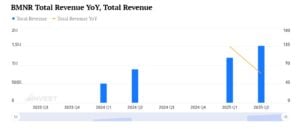
  • Revenue Surge: Over the past three years, revenue has climbed an average of 295%, compared to just 5.5% for the S&P 500. In its latest quarter, revenue jumped 70% year-over-year to $1.5 million.

However, it still presents a high-risk investment profile. The company is not yet profitable, with a net income margin of -77.8%, as it continues to prioritize rapid growth and infrastructure expansion over short-term earnings.

BitMine Immersion Technologies BMNR stock
Source: Yahoo Finance

According to experts, its valuation is also on the higher side, trading at a price-to-sales ratio of 14.4, well above the S&P 500 average of 3.1. This indicates strong investor expectations for future growth. Additionally, BMNR stock remains highly volatile, experiencing sharp fluctuations in price in recent months.

BitMine runs a lean team of just seven employees. As said before, it leases its mining equipment to enable fast scaling based on market demand. Strategic partnerships with ASIC brokers and service providers give it access to the latest technology and support steady revenue growth.

What’s Next for BitMine? Scaling Up Green Mining

With new funding secured, BitMine is gearing up to expand its hosting capacity well beyond the current 50 megawatts. The company also plans to deploy advanced cybersecurity systems and smart management tools.

It is actively working on launching additional facilities across North America and the Caribbean, adding hundreds of megawatts in capacity. At the same time, the company is focused on setting new industry benchmarks through its sustainable immersion-cooled mining systems.

These initiatives emerge at a time when ESG standards are gaining increasing importance to investors and regulators alike. As the push for cleaner blockchain practices continues, its unique model may well shape the future of green digital asset mining.

BitMine Immersion Technologies
Source: BitMine

Overall, Bitmine Immersion Technologies stands at the intersection of clean energy, financial innovation, and cutting-edge tech. Its use of immersion cooling makes crypto mining more efficient and environmentally friendly. With a bold carbon neutrality target, fast-growing revenues, and a flexible business model, Bitmine is well-positioned to lead the charge in sustainable blockchain mining.

The post BitMine Immersion Technologies (BMNR Stock): Can its $250M Ethereum Pivot and Green Crypto Mining Strategy Attract Investors? appeared first on Carbon Credits.

KATCO Launches South Tortkuduk Uranium Site, Expands Sustainable Mining in Kazakhstan

uranium

KATCO, a joint venture of France’s Orano and Kazakhstan’s Kazatomprom, has begun full operations at the South Tortkuduk uranium mining site. This launch marks the completion of the uranium processing plant and the overall South Tortkuduk project.

The event featured officials from Kazakhstan, the French ambassador, and local community members. This milestone marks a new chapter for uranium mining in the area. It also shows the need for global teamwork in energy security.

KATCO Takes a Major Step Forward in Sustainable Uranium Mining

KATCO was formed in 1996 through a partnership between Orano, a French nuclear fuel company, and Kazakhstan’s Kazatomprom. Orano owns 51 percent, while Kazatomprom holds 49 percent. Over time, KATCO has become a key player in Kazakhstan’s uranium sector.

The company operates in the Sozak district of Turkestan, developing, mining, and processing uranium at the Tortkuduk and Muyunkum sites.

KATCO aims to set a global standard in uranium mining by prioritizing safety, sustainability, and technical excellence.

Unlock more details from this video:

South Tortkuduk Unlocks 46,000 Tons of Uranium Potential

The new uranium plant is part of the South Tortkuduk expansion, located between existing mining zones. This site has about 46,000 metric tons of uranium reserves. Production is expected to gradually replace current mining areas, ensuring steady output for the next decade.

In August 2022, KATCO received the mining license for South Tortkuduk. The company invested $190 million to develop the site, following global best practices to reduce environmental impact and enhance efficiency.

Despite tight deadlines, the project was completed in just three years. It maintained a strong safety record, showing the team’s commitment to responsible mining. The mine will use advanced in-situ recovery (ISR) technology, which is already in use at KATCO’s other sites.

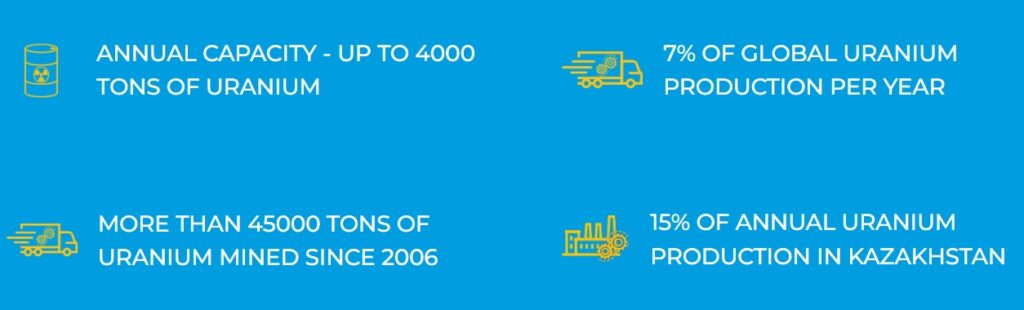
  • By 2026, KATCO aims to reach its full production level of 4,000 tons of uranium each year.
katco URANIUM
Source: KATCO

The ISR Edge: Mining with Care for the Environment

KATCO uses in-situ recovery (ISR), a cost-effective and environmentally friendly mining method. This technique is now the global standard for uranium extraction. It makes up over 50 percent of production.

ISR is effective because it avoids traditional open-pit or underground mining. The steps include:

  • Injecting a special solution into uranium-rich rock through wells.
  • This solution breaks down uranium underground. Then, it’s pumped to the surface for processing.
  • Uranium is separated, purified, and packaged. The solution, now without uranium, is then reinjected into the ground.
  • This creates a closed-loop system with minimal environmental disruption.

ISR mining does not produce waste rock or tailings, and its surface impact is low. It’s also more affordable for lower-grade uranium deposits. This is why ISR is favored in Kazakhstan, where such deposits are common.

Kazakhstan’s Power Play: Leading the World in Uranium Production

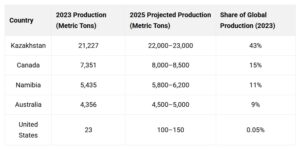
Kazakhstan leads the global uranium market due to its rich reserves and extensive use of ISR technology. The country is the largest uranium producer in the world.

According to ResearchAndMarkets, global uranium production is set to rise by 2.6 percent in 2025, reaching 62.2 kilotons. This comes after a strong 12.4 percent increase in 2024. Despite some setbacks, including temporary halts at major mines like Inkai, Kazakhstan supplied 38.1 percent of the world’s uranium in 2024.

Other top producers, like Canada, Australia, and Namibia, are also expected to see modest growth. Meanwhile, the United States is slowly increasing its uranium output as policy shifts favor nuclear energy.

Despite global fluctuations, Kazakhstan’s use of ISR technology keeps its uranium production efficient and stable.

uranium Kazakhstan
Source: Statranker

Uranium: The Fuel Behind the Net-Zero Future

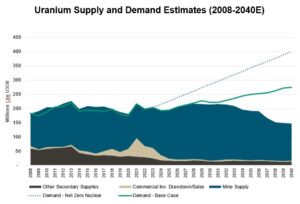
Uranium is crucial for the global energy transition. It powers nuclear energy, generating about 10 percent of the world’s electricity with almost no carbon emissions.

The International Energy Agency (IEA) projects nuclear power generation will grow by about 3 percent annually through 2026. A record high in nuclear output is expected by 2025. By 2050, nuclear capacity could double to 647 gigawatts, requiring around 100,000 metric tons of uranium each year.

Most of this demand will come from fast-growing economies like China and India. These countries are building over half of the world’s new nuclear reactors, which are driving uranium demand.

uranium

Source: Sprott (UxC and Cameco Corp. Data as of 9/30/2024)

KATCO’s Role in a Low-Carbon World

With the launch of the South Tortkuduk project and continued use of ISR technology, KATCO secures a long-term uranium supply for Kazakhstan and France. Its role is becoming increasingly important in a low-carbon world with the rise in demand for clean energy resources.

Its focus on responsible mining, community involvement, and sustainable practices makes it a leader in the global uranium industry.

All in all, by blending technical innovation with environmental responsibility, KATCO can power the future with its vast uranium potential.

The post KATCO Launches South Tortkuduk Uranium Site, Expands Sustainable Mining in Kazakhstan appeared first on Carbon Credits.
EU Bets on Carbon Credits: Bold 2040 Climate Target Adds Global Twist

EU Bets on Carbon Credits: Bold 2040 Climate Target Adds Global Twist

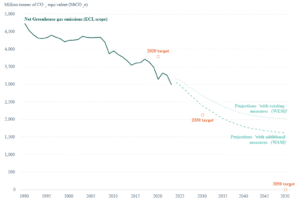
The European Commission (EC) recently proposed a bold climate target: reduce net greenhouse gas emissions by 90% by 2040 compared to 1990 levels. For the first time, the plan allows up to 3% of this reduction to come from international carbon credits. This marks a major shift in EU climate strategy—blending domestic action with global cooperation.

Ambitious Goal with New Flexibility: A Shift in the EU’s Climate Strategy

Under the EU’s original plans, all emission cuts had to occur within its borders. Now, the EU will permit a limited share of high-quality international carbon credits, starting in 2036, and no more than 3% of the total 90% target by 2040. This allows the bloc to maintain ambition while offering economic and technical ease for industries under stress.

In announcing the proposal, European Commission President Ursula von der Leyen called it “a clear, pragmatic and realistic” step. Officials say that allowing member states some flexibility sends a good message. This approach benefits both local industries and global climate partners.

The Commission states that with the new proposed target, the EU is:

“…sending a signal to the global community: it will stay the course on climate change, deliver the Paris Agreement and continue engaging with partner countries to reduce global emissions.”

How the New Framework Works

The new EU climate plan aims to cut net greenhouse gas emissions by 90% by 2040, based on 1990 levels. This target includes direct emission cuts, domestic carbon removals, and the use of carbon credits. However, the plan strictly limits the role of international carbon credits.

EU net GHG emissions
Source: European Commission

Starting in 2036, the EU will allow up to 3% of the 90% reduction goal to be met using carbon credits from outside the EU. These credits must meet high-quality standards and undergo transparent monitoring.

SEE MORE: International Carbon Credits Back on the Table? EU’s Climate Goal Gets a Twist

Most emissions reductions need to happen in Europe. This can be done by:

  • Improving energy efficiency,
  • Expanding clean energy,
  • Capturing and storing carbon, and
  • Using sustainable land management practices.

Carbon removal methods—whether through planting trees, improving soil health, or using new technologies—will also play a role. These efforts are already being tracked through the EU Emissions Trading System (ETS). It will also govern how domestic carbon removals are counted.

The framework focuses on internal solutions first. It looks at international carbon offsets only after. This way, the EU aims to cut emissions at home before using credits from other countries.

Why Include Carbon Credits?

Ministers from Germany and Poland said the 90% target could hurt the manufacturing, transport, and heating sectors. A 3% international offset helps ease this pressure. It allows the EU to buy emission reductions from projects in developing countries. These projects include forest conservation and cleaner cookstoves.

Supporters see this as a win-win, mixing ambition with resilience. But, scientific advisers warn that these credits might slow down home-grown clean energy efforts. They cautioned: it “might divert resources” if misused.

The Credit Tug-of-War: Flexibility vs. Integrity

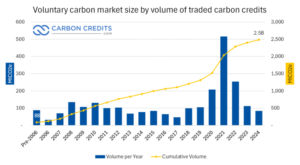
The shift has sparked a heated debate. Supporters say carbon credits offer economic flexibility for EU industries. This helps them manage costs and still meet climate goals. The chart below shows the traded volume of voluntary credits that entities used in offsetting emissions.

VCM market size traded volume 2024

Moreover, the credits can provide important funding for emission-reduction projects in developing countries. This helps build global cooperation and solidarity in the fight against climate change.

However, critics warn that past reliance on carbon credits has not always resulted in real emissions cuts. Some projects have been poorly monitored, or overestimated their climate benefits.

They worry that if the EU relies too much on credits, it could slow down important actions at home. This includes growing renewable energy and updating infrastructure.

Scientists and environmental groups stress the need for strict rules. They warn that low-quality or unverified credits can harm public trust. This, in turn, can slow real climate progress.

Colin Roche, from the Friends of the Earth Europe, remarked:

“The European Commission will try to portray this as an ambitious step forward, but the reality is we are fast running out of room to achieve the Paris agreement. This target is in line neither with climate science nor with climate justice.”

To address these concerns, the European Commission plans to introduce a set of EU-wide rules in 2026. These rules will aim to ensure that carbon credits are transparent, traceable to their origin, and meet strong integrity standards. This step helps stop greenwashing. It also ensures that using credits really supports the EU’s climate goals, not just in theory, but in real life.

To prevent abuse, the Commission plans to propose EU-wide rules in 2026, ensuring transparency, clear origins, and high integrity.

What This Means for EU Policy and Global Climate Action

These reforms set the stage for mid-term climate planning ahead of the EU’s 2035 submission under the Paris Agreement, which is due by September.

By promoting a 90% target with a 2036–2040 credit window, the EU signals both ambition and realism. Yet it also underscores that pure domestic reductions remain unpopular among some Member States. Denmark’s climate minister urged not to “stall the green transition” despite pressures for flexibility.

This shift may also impact the EU’s global image. Compared with slower-moving nations, the EU positions itself as a climate leader. However, critics worry that lean credit use could be seen as avoiding internal responsibilities.

For international carbon markets, the EU’s plan is a major boost, potentially adding 140 million tonnes worth of demand by 2040. But sluggish rollout and tight standards may limit near-term impact.

Eyes on 2026: Rules, Votes, and What to Watch

Looking forward, here are some major things to watch as the region continues with this new proposal:

  • Approval Process: The proposal needs approval from the European Parliament and all 27 EU Member States.
  • Credit Rules by 2026: Watch for legislation defining which offset projects meet EU standards—no shortcuts.
  • Member State Limits: Key actions may focus on how countries use credits, for example, in transport versus energy.
  • Future Targets: The 2040 rule will guide the EU’s 2035 climate pledge and set the course toward net-zero by 2050.
  • Industry Response: Some businesses may welcome flexibility with stricter emissions. Others might push for deeper cuts at home.

The EU’s new law is a compromise that balances ambition with adaptability: maintaining momentum while giving industries breathing room. Critics caution that credits must not replace hard-fought investment in domestic clean infrastructure. Ensuring strong governance and transparent carbon credit standards will be key to aligning the EU’s high-level goals with on-the-ground climate action.

As the EU prepares to finalize the law and set its 2035 target, one message is clear: global cooperation will count—but so will cutting emissions at home.

The post EU Bets on Carbon Credits: Bold 2040 Climate Target Adds Global Twist appeared first on Carbon Credits.
Princeton Study Shows How Trump’s “One Big Beautiful Bill” Derails U.S. Climate Goals

Study Shows How Trump's "One Big Beautiful Bill" Derails U.S. Climate Goals

The recently passed President Donald Trump’s “One Big Beautiful Bill Act” (OBBB) by Congressional Republicans is raising alarms among energy and climate experts. 

According to a report from Princeton University’s REPEAT Project, the sweeping repeal of Biden-era climate legislation could derail the United States’ path to net zero. The analysis finds that the bill, combined with Trump’s planned executive actions, could lead to more than 7 billion tons of additional greenhouse gas emissions by 2050.

This marks a sharp reversal from current policy momentum under the Inflation Reduction Act (IRA) and the Infrastructure Investment and Jobs Act (IIJA), which helped push the U.S. toward cleaner energy, lower emissions, and affordable electricity.

What the “One Big Beautiful Bill” Does

The OBBB repeals nearly all clean energy tax credits passed under the IRA. These credits supported wind, solar, battery storage, clean fuels, and electric vehicles. The bill also rescinds billions in unspent funding for clean energy projects from both the IRA and IIJA.

Key actions under OBBB include:

  • Canceling tax incentives for clean electricity, electric vehicles, and green manufacturing.
  • Freezing the use of unspent federal funds for climate programs.
  • Repealing EPA emissions standards and DOE efficiency rules.
  • Rolling back vehicle fuel economy requirements.

In short, OBBB represents a full-scale retreat from the policies that formed the foundation of U.S. climate action over the last few years, per the report findings.

U.S. Emissions Rise Under the Bill

One of the most serious consequences of the OBBB is its impact on U.S. greenhouse gas emissions. According to the REPEAT Project analysis, the rollback of climate policies under the bill will significantly slow down the country’s progress in reducing emissions.

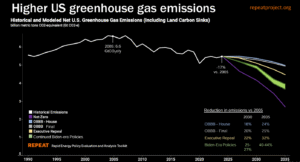
US GHG emissions with OBBB

Under current policies—especially the IRA—the U.S. was on track to reduce its emissions to about 38% below 2005 levels by 2030. This was already falling short of the country’s official Paris Agreement target of a 50–52% reduction by 2030. But under the OBBB, this gap widens even further.

The report estimates that emissions in 2030 will be about 190 million metric tons higher than they would be if current climate policies remained in place. To put that into perspective, that’s roughly equal to the annual emissions of the entire state of New York or the combined emissions of over 40 million gasoline-powered cars.

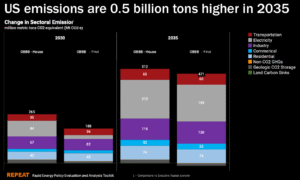
And the gap continues to grow, as the chart above from the report shows. By 2035, annual emissions could be 470 million metric tons higher under the OBBB pathway. This means more pollution from fossil fuels, more climate-related risks like extreme weather, and a greater burden on future efforts to catch up.

Even more alarming, the cumulative emissions added between now and 2050 could reach over 7 billion metric tons of CO₂. That’s more than the total emissions the entire U.S. economy produces in a single year today. These extra emissions would be very difficult—if not impossible—to offset in time to meet net-zero goals by mid-century.

US emissions in 2035 under OBBB

The increase in GHG emissions comes from several sources as a consequence of the new law:

  • Less clean electricity
  • Slower EV adoption
  • Weaker building and appliance standards
  • Increased industrial emissions

All these factors combined mean that the U.S. will emit more carbon dioxide and other greenhouse gases than it would have under current climate laws. That means the U.S. would miss its climate pledges under the Paris Agreement, including the nationally determined contribution (NDC) to cut emissions by at least 50–52% by 2030.

Not only that. There are also significant impacts on other areas and sectors involved as follows. 

Costs to Households and the Economy

According to the REPEAT analysis, the bill will increase energy costs for American households and businesses. By 2030, total U.S. energy spending will rise by $28 billion annually, and by 2035, that number could exceed $50 billion per year.

For households, that means higher monthly bills:

  • An increase of $165 per year in 2030, growing to $280 per year in 2035.
  • That’s roughly a 7.5% rise in 2030 and over 13% in 2035 compared to the current policy.

Higher fossil fuel use and slower renewable deployment will lead to more expensive energy systems in the long run.

Clean Energy Development Slows Sharply

The report finds that OBBB will cut cumulative clean energy investment by $500 billion between 2025 and 2035. Solar and wind additions will drop significantly:

  • Nearly 29 gigawatts less solar and 43 gigawatts less wind by 2030.
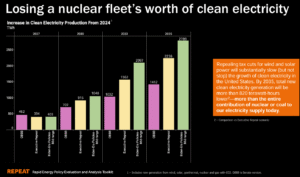
  • By 2035, clean energy generation will be 820 terawatt-hours lower—equal to the combined output of today’s entire nuclear or coal fleet.

The result: more fossil fuel reliance, slower energy system modernization, and fewer climate benefits.

Battery storage and geothermal will see some growth, but not enough to compensate for the loss of wind and solar momentum. Fossil gas and gas with carbon capture may step in to fill part of the gap, but their emissions profile is still far from net zero.

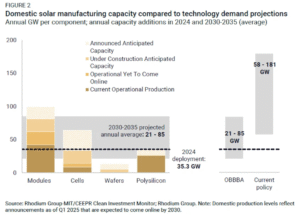
A separate analysis by Rhodium Group shares similar concerns. It shows that the One Big Beautiful Bill may cut clean energy growth in the U.S. In particular, repealing key clean-energy tax credits could cut new clean power capacity by 57–72% by 2035. It would also put about $522 billion in planned clean energy investments at risk across the U.S.

The Rhodium report further predicts that wind and solar capacity could drop by more than 60% by 2030 compared to what the Inflation Reduction Act projected. Investment uncertainty and the rollback of tax incentives would slow new projects and weaken supply chains.

solar manufacturing capacity with OBBB Rhodium
Source: Rhodium Group

The report also warns that this decline could lead to more fossil fuel use. It might increase electricity costs and make it harder for the U.S. to compete in the global clean energy transition.

Electricity Demand Is Rising — But Clean Supply Shrinks

Another concern raised by the REPEAT Project is that electricity demand is expected to grow 25% from 2024 to 2035, driven largely by AI, data centers, and electric vehicles. This makes clean energy capacity even more urgent.

But under OBBB, clean electricity growth slows, while demand keeps rising. That means more coal and gas could be used to meet growing needs, pushing emissions even higher.

Notably, the report reveals that clean electricity generation will be much lower, like “losing a nuclear fleet’s worth of clean power”.

OBBB losing clean energy generation

Will Carbon Credits Close the Gap?

The rollback also affects carbon markets. By removing incentives for clean energy and low-carbon technologies, the U.S. may rely more on carbon credits and offsets—if at all. However, experts warn this won’t be enough.

Without federal backing, carbon credit markets may shrink in scale and credibility. The U.S. would lack domestic reductions to balance out emissions, and there’s no guarantee that offsets from abroad would meet the needed quality or volume.

And worse, companies may abandon climate targets if federal policies signal that emissions cuts are no longer a priority.

What Happens Next? A Turning Point in U.S. Climate Policy

While the bill passed both chambers of Congress, legal challenges and regulatory battles are expected. Some state governments may double down on their own clean energy programs to fill the gap. However, state efforts alone likely won’t make up for the national rollback.

REPEAT’s modeling shows that even with favorable market trends, federal policy remains critical to accelerating the clean energy transition. The One Big Beautiful Bill represents a sharp reversal in the U.S. clean energy journey.

For now, the new law’s full impact depends on future elections, legal challenges, and how aggressively states and companies react. But the REPEAT findings leave no doubt: the policy shift under OBBB could be a major setback for U.S. climate leadership.

The post Princeton Study Shows How Trump’s “One Big Beautiful Bill” Derails U.S. Climate Goals appeared first on Carbon Credits.
United States Antimony Corporation (NYSE: UAMY) Ramps Up Domestic Mining to Strengthen America’s Supply Chain

Antimony

United States Antimony Corporation (NYSE American: UAMY), also called USAC, is quietly bringing antimony mining back to the U.S. The company recently announced that it has started buying land and mining claims near its old smelter in Thompson Falls, Montana. This move could help reduce America’s heavy dependence on foreign sources of antimony.

As global supplies tighten and prices rise, USAC’s return to domestic mining could play a big role in securing this critical mineral, especially since antimony is used in everything from solar panels and batteries to missiles and ammunition.

United States Antimony Corporation (USAC) Restarts Antimony Mining in Montana

Since the start of 2025, USAC has been acquiring mining rights and land close to its antimony smelter in Sanders County, Montana. This site has been home to the company’s smelting operations for decades. In the 1970s, USAC’s earlier leadership had mined antimony from underground veins in the same area.

Mr. Gary C. Evans, Chairman and CEO of USAC, explained elaborately by saying,

“The U.S. Government is continuing to get actively involved in securing North American supply chains of critical minerals, especially antimony. This is due to China’s dominance and embargos initiated last year. Market rules do not apply to national security and China does not play fairly in the global free marketplace as we outlined in our Form 8-K dated June 27, 2025. Governments around the world are finally beginning to understand the need to secure their own supply chains, specifically for critical minerals. There continues to exist a worldwide shortage of this critical material necessary for our Department of Defense.

The significant price increase experienced for worldwide supplies of antimony ore have made this decision to reopen our existing antimony mine adjacent to our smelting operations an easy one. With these mining claims combined with our over 35,000 plus acres of new mining claims located in Alaska, we are the first company to restart mining operations in the United States going back decades. Additionally, we are the first fully integrated antimony company in the world having our own antimony supply and controlling both our own midstream and downstream operations.”

Now, after reviewing old records, maps, and site visits, the company found signs of at least three antimony-rich vein systems. These areas could once again support mining. USAC owns around 24 acres of land and has mining rights to about 1,200 acres in total.

The company plans to restart operations on five acres of patented land, where it’s already allowed to mine under Montana’s Small Miners Exclusion Statement (SMES). A second SMES is expected soon. USAC is also filing for exploration permits with the Montana Department of Environmental Quality and the U.S. Forest Service.

This is a big step toward bringing American antimony mining back online right next to the only operating antimony smelter in the U.S.

United states antimony corporation
Source: US Antimony

Why This Montana Smelter Matters

The Thompson Falls smelter is the only antimony smelter still running in the United States. This gives USAC a big advantage. While other companies must import processed antimony, USAC can mine and refine the metal in one place.

The smelter can produce:

  • 15 million pounds of antimony oxide per year, or
  • 5 million pounds of pure antimony metal per year

Antimony oxide is used to make flame-resistant products, such as plastics, paper, rubber, textiles, coatings and paints, fluorescent lights, etc.

USAC also produces antimony trisulfide, used in military gear and ammunition, and processes precious metals and zeolite at its facilities in Mexico and the U.S.

US antimony
Source: US Antimony

Alaska and Canada Add More Strength

US Antimony is also expanding outside Montana. In Alaska, the company holds over 35,000 acres of mining claims. These sites could feed more ore into the Montana smelter and help USAC grow its production capacity.

On June 27, 2025, the company completed a deal to buy the Fostung Properties in Ontario, Canada. This site is rich in tungsten, another important mineral used in military and industrial tools. The property is about 70 kilometers from Sudbury and covers 50 mining claims across 1,114 hectares.

The deal cost only $5 million. The sellers kept a small 0.5% royalty, meaning they earn a bit if minerals are sold. This move helps USAC grow into other critical mineral markets while staying in safe, stable regions like Canada.

What’s Causing the Global Antimony Shortage?

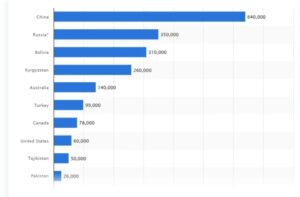
The company notes that right now, the global antimony supply is facing serious problems. For years, China and Russia have controlled most of the world’s antimony. In fact:

  • Over 60% of global antimony ore comes from China and Russia
  • China made over 70% of processed antimony (ATO) up until 2022

Countries with the largest reserves of antimony worldwide as of 2023

antimony global
Source: Statista

However, things are changing. In the first half of 2024, China’s exports of antimony dropped by 45%. This is because more of it is being used in the nation to make solar panels, which are in high demand. Also:

  • Chinese ore quality is getting worse
  • New environmental rules make it harder to mine
  • China, despite producing the most antimony, is now a net importer of antimony concentrates

Other countries have very little processing capacity. This makes it difficult for buyers to find reliable, non-Chinese sources of antimony.

Antimony Is a Critical Mineral for the U.S.

The U.S. government has called antimony a critical mineral, especially because of its military uses. Antimony is used in:

  • Ammunition and explosives
  • Infrared-guided missiles
  • Night-vision gear
  • Nuclear weapons
  • Fire-resistant materials
  • Batteries and solar panels

Without it, both the defense and clean energy industries could suffer. That’s why the Department of Defense (DoD) and the Department of Energy (DOE) are pushing for more U.S. production.

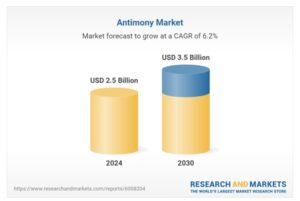
antimony market

Trump Speeds Up Mine Permits

To support this effort, the Federal Permitting Improvement Steering Council announced on April 18 that it will fast-track permits for 10 major U.S. mining projects. Antimony projects were among them.

One of those projects is the Stibnite Gold Project by Perpetua Resources, which has large antimony reserves. The project is now on the Federal Permitting Dashboard, which helps speed up reviews, improve coordination, and make the process more transparent.

The further boosts America’s strategy to boost local mining, especially for minerals needed in defense and clean energy.

Investors Pay Attention as United States Antimony Corporation Stock (UAMY) Rises

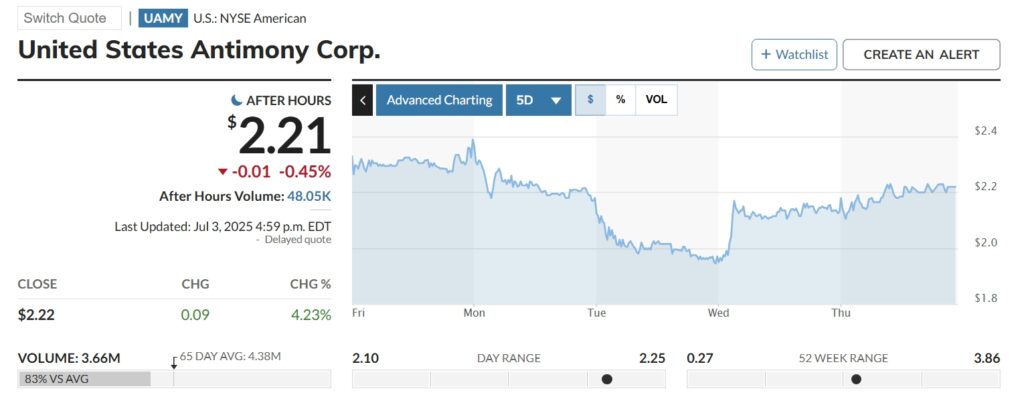
Following USAC’s announcements and expansion news, investors reacted. On July 3, 2025, the company’s stock rose 4%, and its market cap reached $258.5 million.

US ANTIMONY STOCK
Source: MarketWatch

Investors see strong potential in domestic antimony production, particularly as global supply shrinks and demand rises. USAC’s low-cost expansion strategy and access to key land and smelting facilities make it an attractive bet in the growing critical minerals market.

With strong assets in Montana, Alaska, and Canada, the company can become a key supplier of antimony and tungsten in North America. The company is rebuilding its operations at a time when global supply chains are weak and prices are rising.

By bringing mining back to Montana, feeding its smelter with local ore, and expanding into new critical minerals, United States Antimony Corporation is helping rebuild America’s mineral independence.

The post United States Antimony Corporation (NYSE: UAMY) Ramps Up Domestic Mining to Strengthen America’s Supply Chain appeared first on Carbon Credits.

Plug Power Stock Surges as It Sparks Clean Hydrogen Boom with Almost $1.7B DOE Funding

Plug Power Stock Surges as It Sparks Clean Hydrogen Boom with Almost $1.7B DOE Funding

Plug Power (NASDAQ: PLUG), a developer of hydrogen fuel cells and electrolyzer systems, has seen a renewed wave of investor interest in recent days. Its stock rose, supported by strong trading volume of over 81 million shares. This surge comes after big announcements from the company and the U.S. Department of Energy (DOE) backing. It may mark a turning point for Plug Power’s clean hydrogen growth.

Plug Power’s role goes beyond financial gains: it is helping build the hydrogen infrastructure needed to support global net-zero goals. Its clean hydrogen and fuel cell technology provides a low-carbon option for transport, logistics, and industry.

With government support and a clear pipeline of green projects, Plug is aiming to help power a net-zero future—one hydrogen molecule at a time.

DOE Loan Boosts Plug’s Green Hydrogen Expansion

Plug Power secured a $1.66 billion conditional loan guarantee from the DOE’s Loan Programs Office. This funding will support the development of up to 6 green hydrogen production plants across the United States.

The DOE’s backing lowers financial risk and strengthens Plug’s ability to scale operations in a capital-intensive market. Its hydrogen expansion plans also help send the company’s stock skyrocketing as seen below. 

PLug power stock price
Source: Yahoo Finance

The first of the six projects is located in Graham, Texas. The facility will run on renewable energy from wind power and use Plug’s in-house electrolyzer technology. Plug will also deploy its own liquefaction systems built in Houston, helping control costs and supply.

As of now, the company produces about 45 tons of liquid hydrogen per day, with capacity expected to grow as new plants come online.

The DOE loan allows Plug to accelerate its green hydrogen network at a lower cost of capital. It also makes the company a key player in the clean energy shift. This is important for tough sectors to decarbonize, like industry and long-haul transport.

Tax Credit Clarity Supports Market Confidence

Plug Power’s outlook also improves because of the new guidance from the U.S. Treasury. This guidance focuses on clean hydrogen tax credits from the Inflation Reduction Act (IRA). These rules give companies like Plug more flexibility in how they source power for hydrogen production. For example, they allow for different types of renewable energy and other sources such as renewable natural gas or coal mine methane.

With clearer rules in place, Plug and its partners can better plan projects and reduce risks related to compliance and eligibility. The DOE loan, along with clear regulations, is boosting market confidence in Plug Power’s long-term strategy.

Hydrogen Math: How Plug Plans to Slash Carbon Emissions

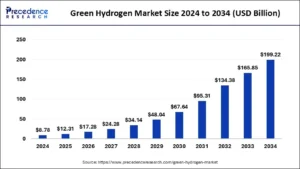
The global green hydrogen market is valued at around $12.3 billion in 2025 and is expected to grow to nearly $200 billion by 2034, with an annual growth rate of about 41%. Growth is driven by clean energy policies in the U.S., EU, and Asia, along with falling renewable energy costs.

green hydrogen market forecast
Source: Precedence Research

Technologies like proton exchange membrane (PEM) and alkaline electrolyzers are leading current adoption. Despite higher costs than grey hydrogen, green hydrogen is gaining traction in hard-to-decarbonize sectors like transport and heavy industry.

Plug Power has set ambitious goals for hydrogen production. The company plans to produce 500 tons per day (TPD) of green hydrogen in North America by 2025 and reach 1,000 TPD globally by 2028. These targets support the company’s goal to help decarbonize logistics, transportation, and industrial sectors.

At full scale, these hydrogen volumes can replace large amounts of fossil fuels:

Plug is achieving these results through its expanding production network. It partners with users in shipping, warehousing, and data centers.

Sustainability Strategy and ESG Reporting

Plug Power has made progress in its environmental, social, and governance (ESG) efforts. In its 2023 ESG report, the company confirmed that it has completed its Scope 1 and Scope 2 emissions inventory and is starting to track Scope 3 emissions. These steps help in understanding the company’s total carbon footprint. This includes direct operations, the supply chain, and customer use.

PLUG power GHG emissions 2023
Source: Plug Power ESG Report

The company also reports several sustainability-focused actions, including:

  • Using wind and solar energy to power hydrogen plants
  • Recycling precious metals from fuel cells and electrolyzers
  • Treating and reusing wastewater for hydrogen production
  • Designing fuel cells and systems with circular economy principles

Plug has partnered with companies like Johnson Matthey to reduce the amount of rare materials needed in its equipment. This helps lower costs and reduces environmental impact over time. The company is also working on product lifecycle planning to improve repairability and extend equipment use.

Moreover, Plug has joined global net-zero leadership groups. CEO Andy Marsh is part of advisory boards that focus on sustainable energy. These roles reflect the company’s commitment to broader climate and policy goals beyond its direct operations.

Powering Partnerships, From Forklifts to Data Hubs

Plug Power is not just planning projects—it is actively deploying hydrogen solutions across different industries. One recent example is its partnership with Southwire, a major cable and wire producer.

The hydrogen developer is supplying hydrogen-powered forklifts and a fueling station to Southwire. This will help them reduce over 1 million pounds of CO₂ emissions each year at one facility.

The company’s technology is also used in Amazon’s warehouses. There, hydrogen-powered forklifts take the place of traditional fossil-fuel vehicles. These projects show how Plug’s hydrogen systems are already helping reduce emissions in real-world settings.

Risks Remain, But Hydrogen’s Time Has Come—And Plug’s at the Helm

While Plug’s recent gains are promising, the company still faces challenges. Hydrogen production and infrastructure remain expensive, and many customers are early adopters.

The market is also influenced by trade policy and fluctuating costs for equipment and raw materials. Earlier this year, Plug faced cost pressures from having to buy hydrogen on the spot market due to supply shortfalls.

Despite these obstacles, the DOE loan and IRA tax support may help level the playing field. Analysts believe the funding could ease the financial strain of large-scale production and improve Plug’s long-term competitiveness. The company is also focused on improving efficiency and scaling its technology to reduce costs over time.

The company’s environmental goals are also taking shape. Plug is taking action with its ESG reporting, hydrogen targets, and partnerships. They are moving past promises to show real results. From warehouse logistics to industrial transport, Plug’s hydrogen solutions are helping companies reduce emissions today.

As clean energy policies roll out and demand for low-carbon fuels rises, Plug Power could gain an advantage. They are an early mover in green hydrogen. Its vertical integration—from electrolyzer manufacturing to hydrogen delivery—gives it more control over quality, pricing, and reliability.

The post Plug Power Stock Surges as It Sparks Clean Hydrogen Boom with Almost $1.7B DOE Funding appeared first on Carbon Credits.
Why BYD Stock (BYDDY) Is a Long-Term Winner in Clean Energy and EV Markets?

BYD

Investors today are looking for companies that aren’t just talking about change, but are leading in cleaner energy and lower emissions. One company doing exactly that is BYD Company Limited (HKEX: 1211 | OTC: BYDDY).

With record EV sales, strong profits, and real action on sustainability, the Chinese EV maker stands out. In this article, we’ll explain why BYD stock is one of the best sustainable EV stocks to buy and hold for the long term.

BYD’s New Energy Vehicles Hit a New High

In June 2025, BYD made history by selling 382,585 New Energy Vehicles (NEVs) in just one month. That’s the company’s highest monthly total ever and a 12% jump from the same time last year. While growth from May was only 0.03%, it still shows a strong and steady performance.

This sales milestone is more than a number. It proves BYD is leading the clean transportation race. As countries move toward cleaner energy and lower emissions, BYD continues to grow both at home and abroad.

BYD NEV sales
Source: BYD LinkedIn

BYD Builds It All—And That’s a Big Advantage

BYD, aka “Build Your Dreams”, started as a battery company and has since grown into a global name in electric vehicles and clean energy. While many carmakers only joined the EV wave recently, BYD has been working on electric solutions for decades.

One of its biggest strengths is that it makes most of its key parts in-house. The company designs and builds its own batteries (e.g., lithium iron phosphate: LFP batteries), motors, chips, and vehicle platforms. This full control helps BYD avoid supply chain delays and cut costs, while still delivering high quality.

This setup allows the company to launch new products faster and respond quickly to market shifts. When other automakers face delays or cost jumps, BYD keeps moving due to its strong in-house system.

Furthermore, the EV giant is aggressively expanding its global footprint across the U.S., Hungary, Brazil, and Thailand. Its EVs are reaching customers in Europe, Southeast Asia, Latin America, and the Middle East.

Today, exports make up about 20% of BYD’s NEV sales. As more countries push for cleaner vehicles and tighter emissions rules, BYD is well-positioned to meet that demand.

Driving Toward Net Zero: BYD’s Carbon Commitment

The company aims to cut its carbon intensity by 50% by 2030 and become carbon neutral by 2045. It’s already working on this goal by switching to renewable energy and improving factory efficiency.

BYD revealed,

“As of 10 March, 2025, BYD has counterbalanced 86,874,386,498 kg of CO₂, equivalent to the CO₂ absorption of 1,447,906,442 trees”

BYD’s 2024 sustainability report outlines major efforts, including:

  • Using 35% green electricity by 2025

  • Expanding solar power use across its plants

  • Producing only zero-emission vehicles

  • Recycling batteries and finding second-life uses for them

By investing in both clean vehicles and green manufacturing, BYD is creating a full-circle sustainable business model.

byd EMISSIONS
Source: BYD

Solar and Battery Storage Push

BYD isn’t only about vehicles. It also plays a key role in the solar energy and battery storage industries. The company builds everything from solar wafers to full PV modules, offering complete systems for homes, businesses, and power grids.

A recent deal with Saudi Electricity Company shows just how far BYD has come. The two companies signed a contract to build the world’s largest grid-scale energy storage project, with a capacity of 12.5 GWh. That brings their total collaboration in Saudi Arabia to 15.1 GWh—a major win for both BYD and the country’s Vision 2030 goals.

This move highlights BYD’s growing role in the global energy market, beyond just transportation.

Competing and Winning in a Tough EV Market

The EV space is crowded, with companies like Tesla, NIO, and legacy automakers all in the mix. But BYD stands out by growing steadily, even during price wars and economic uncertainty.

Its strong supply chain and smart pricing strategies help the company stay competitive. When others cut prices to chase market share, BYD keeps its margins by relying on its low-cost, in-house production model.

BYD’s ability to adapt quickly to changes in policies, markets, and supply trends shows just how solid its game plan is.

Analysts Say BYD Stock Is a Long-Term Winner

Despite global challenges, BYD’s numbers look strong. As of mid-2025, its market value reached HK$359.45 billion. The company expects 16% sales growth this year, with revenue possibly hitting HK$1.4 trillion.

Earnings per share (EPS) are also climbing. Analysts predict an average EPS of HK$7.20, which is higher than last year. Out of 115 analysts, 106 have rated BYD as a “Buy” or “Strong Buy”—a clear sign of confidence in its future.

Experts believe BYD’s stock has room to grow over the next decade and beyond, and the price projections reflect the company’s ongoing research, innovation, and international growth plans.

byd stock
Source: Yahoo Finance

Beyond EVs: BYD’s Bigger Vision

BYD isn’t just building electric cars. It also makes electric buses, trucks, and even monorail systems. Its SkyRail, a driverless monorail, is already in use in several cities, offering clean urban transit options.

Its all-in-one approach, making batteries, building cars, producing solar panels, and supporting the energy grid, provides a solid base for future growth.

If investors are looking for a stock that blends smart innovation, global reach, and real climate impact, BYD is a top choice. It’s not just about profits, it’s about progress. And BYD is clearly driving both.

The post Why BYD Stock (BYDDY) Is a Long-Term Winner in Clean Energy and EV Markets? appeared first on Carbon Credits.
Carbon Removal in 2025: Are You Investing in the Right Climate Credits?

carbon removal

The voluntary carbon market made great strides in early 2025.  strong growth. This is fueled by record credit retirements, a focus on integrity, and increased interest in carbon removals compared to traditional avoidance credits.
We have studied newly published reports from two credible research agencies, namely Sylvera and CEEZER. Both say that organizations are now willing to invest more in credits that deliver real climate impact. Thus, the market is shifting from quantity to quality, and the numbers support this. Let’s deep dive.

Carbon Credit Retirements Reach a New Peak

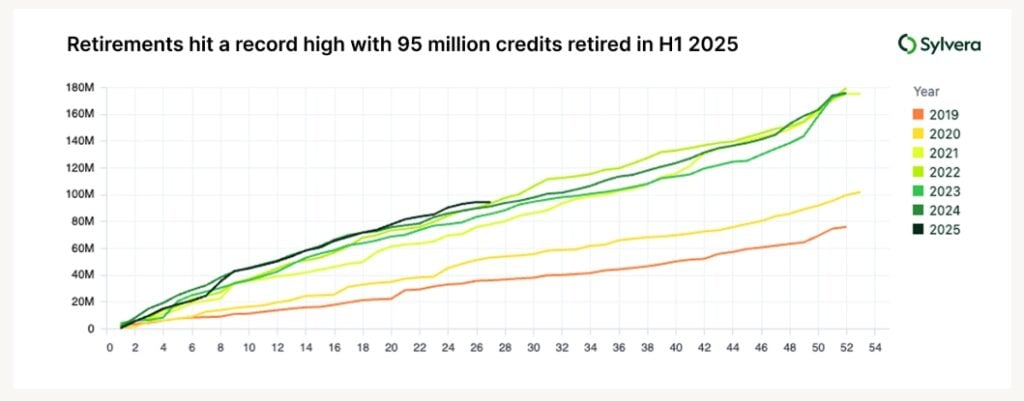
Carbon credit retirements hit 95 million in the first six months of 2025, the highest total ever recorded for a half-year. This marks a 9% increase compared to H1 2024. More importantly, total retirement value jumped by 32%, indicating that buyers are not just retiring more credits—they’re paying more for the right ones.

This increase reflects a clear preference for verified high-quality credits. Buyers are becoming more selective and placing climate integrity at the forefront.

carbon removal
Source: Sylvera

Supply is Growing, But Demand Is Growing Faster

On the supply side, carbon credit issuances rose to 77 million in Q2 2025, a 39% increase from the previous quarter. This represents a 14% boost compared to Q2 2024.

Yet even with more credits available, retirements continue to outpace issuances. If this trend holds, this year could see negative net issuance for the first time. However, this imbalance can inevitably put pressure on developers to meet demand for high-integrity credits. As companies pursue long-term climate targets, they seek more than low-cost offsets.
carbon credits issuance
Source: Sylvera

Quality Becomes a Core Priority

Data shows buyers are moving up the quality ladder. In H1 2025, 57% of Sylvera-rated credits retired had BB ratings or higher, up from 52% in all of 2024. This shift is driven by better due diligence tools, clearer carbon credit ratings, and initiatives like the ICVCM’s Core Carbon Principles.

Market participants are becoming more informed and aligning purchases with ESG goals, climate science, and regulations. Buyers now choose credits with intention instead of blindly purchasing.

CORSIA Spurs Growth in Compliance-Eligible Credits

The Sylvera report further emphasizes that more than 37% of credits issued in Q2 2025 could be eligible under Phase 1 of CORSIA, the global offsetting scheme for international aviation.

  • This is a notable increase from 28% in the same period of 2024. This alignment with international standards is closing the gap between voluntary and compliance markets.

Full CORSIA eligibility depends on host country authorizations under Article 6 of the Paris Agreement. The cancellation deadline for Phase 1 is January 2028, and developers are closely watching national authorities’ responses.

The Market Shifts Toward Durable Carbon Removals

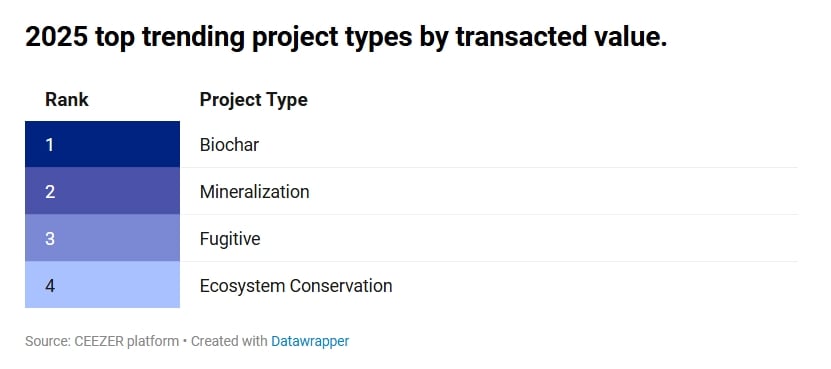
One key trend of 2025 is the strong shift toward carbon removals. CEEZER data shows a 102% increase in the share of removal credits transacted compared to last year. Buyers are prioritizing long-term impact over short-term avoidance.

Spending patterns reflect this shift. The average spend per ton across all credit types has more than doubled, rising 2.2 times year-on-year. For removals specifically, prices have increased by 3.2 times. This premium reflects interest in projects with lasting impact, such as biochar, mineralization, and reforestation.

Companies are now focusing on credits in Oxford Category 5, representing durable removals with low reversal risk, rather than Category 4 credits, which carry higher long-term uncertainties.

carbon removal
Source: CEEZER

Nature-Based Credits in Demand, But Supply and Standards Remain a Challenge

Nature-based projects like ARR (Afforestation, Reforestation, and Revegetation) are attracting premium prices. On average, ARR credits are selling for $24 per ton in the primary market. For credits with BBB+ ratings, prices can reach up to $27. However, these credits only make up 3.7% of total retirements, indicating high demand but limited supply.

This supply-demand gap is prompting developers to increase high-quality nature-based removal projects. However, challenges like land access, cost, and long verification timelines still hinder expansion.

Moving on, REDD+ projects, aimed at reducing deforestation and forest degradation, rebounded in Q2 2025. Their share rose from 3% in Q1 to 16%, the highest since Q2 2023. Still, scrutiny remains over outdated REDD+ methodologies, many of which may not meet ICVCM’s integrity standards.

This uncertainty is pushing buyers to explore alternatives like waste management, biogas, and improved forest management, where credibility and transparency are easier to achieve.

North America Leads Issuance Growth

Significantly, North America has become a major player in carbon markets, doubling its share of new issuances to 43% in Q2 2025. This growth propelled the American Carbon Registry (ACR) to the top spot among registries, holding a 33% share. Gold Standard followed at 25%, and Verra at 21%.

This surge reflects stronger project pipelines, clearer regulations, and confidence in the U.S. market’s ability to meet both voluntary and compliance criteria.

Industrial and Commercial Credits Gain Market Share

Carbon credit projects from industrial and commercial sectors are quickly gaining traction. In H1 2025, these projects accounted for 19% of new issuances, up from just 7.9% during the same time in 2024. These include initiatives like refrigerant recovery, methane capture, and energy efficiency upgrades.

These scalable, technology-driven projects are becoming popular alternatives to traditional forestry and land use projects. As demand grows, industrial credits are expected to capture a larger share of the market.

Tech and Services Drive Up Carbon Removal Demand

The CEEZER report also highlighted that professional services and tech sectors are emerging as key players in carbon removal. Professional services firms now account for 24% of the total retirement value in 2025. The tech and IT sector has seen a 61% jump in retirement value for removals, the highest growth rate of any sector this year.

These industries align decarbonization with business values, helping shape the next phase of the market.

Greenhushing Begins to Decline

Many companies used to quietly retire credits. This trend is known as “greenhushing.” However, things are changing. CEEZER’s Greenhushing Index tracks these anonymous retirements. It peaked at 42% during the 2024 U.S. elections. By Q1 2025, it fell to 35% and then to 23% in Q2.
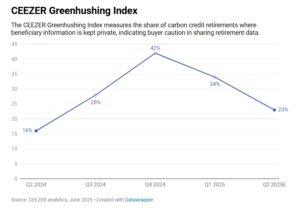
This decline indicates growing buyer confidence. Companies are becoming more transparent, using credit retirements to showcase their climate leadership.

carbon removals
Source: CEEZER

So, Is Integrity the New Standard for the Carbon Market?

Data from H1 2025 shows the carbon market is growing. Buyers are now focusing on credits that offer long-term benefits instead of offsets. With PACM credits coming later this year and high-integrity standards becoming standard, 2025 could establish new benchmarks for credibility and performance.

As demand and quality expectations increase, developers and registries will feel more pressure to deliver. The voluntary carbon market is aligning more with compliance markets. It is becoming a key tool for global climate action.

Allister Furey, CEO at Sylvera, summarized:

“Demand for credits and, in particular, high-quality credits is at an all-time high. At the same time, increasing use of project-based credits in compliance schemes is narrowing the gap between voluntary and compliance markets. Meeting both higher climate integrity standards, as evidenced by ratings, and eligibility criteria for schemes, like CORSIA, is being seen as essential for new projects in development. Market alignment with both integrity and regulatory expectations is starting to unlock the potential of carbon markets to deliver genuine climate impact at lower economic costs.”

If this trend continues, 2025 won’t just break records; it could redefine how the world values the carbon removal market.

The post Carbon Removal in 2025: Are You Investing in the Right Climate Credits? appeared first on Carbon Credits.