Lithium Prices Climb Again in 2026, Sending Stocks Skyward
Disseminated on behalf of Surge Battery Metals Inc.
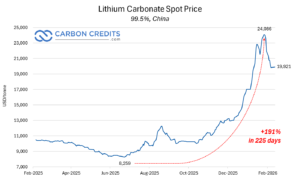
The lithium market is experiencing a major rebound due to rising demand and tightening supply. Battery-grade lithium carbonate spot prices have jumped to about $24,086 per metric ton, based on data from Shanghai Metals Market (SMM). This marks a sharp increase from earlier lows in 2025, after a period of oversupply had weighed on the market.
What Causes Lithium Prices to Rebound
Several factors are behind the lithium price surge. First, the growth in stationary energy storage systems has been rapid. In 2025, demand for lithium in storage applications jumped about 71%, and analysts expect another 55% growth in 2026. As more utilities, data centers, and industrial players adopt battery storage, lithium demand continues to expand beyond just electric vehicles (EVs).
Second, China’s battery manufacturing sector is ramping up production to meet both domestic and global demand. Policy support for clean energy and EV adoption has helped absorb excess lithium that previously contributed to oversupply.
Meanwhile, regions like Europe and North America are boosting support for EVs and energy storage. European demand for batteries could reach 1 terawatt-hour by 2030. At the same time, U.S. incentives from the Inflation Reduction Act have already led to hundreds of new battery projects. These programs are driving additional lithium demand, putting further pressure on an already tight supply.
Third, supply constraints are becoming a concern. Forecasts for 2026 suggest a shift from surplus to a potential supply deficit of 22,000 to 80,000 metric tons, depending on how quickly new projects come online. This deficit is boosting hope among producers and investors. Prices might stay high if demand keeps outstripping supply.

Lithium’s Double Boost: AI + Data Center Batteries
Additional factors include rising interest in AI and data center batteries, which require large amounts of high-quality lithium. Emerging markets are generating new demand for battery-grade lithium. This adds to the existing need for electric vehicles. Coupled with a limited number of major lithium producers and delays in bringing new projects online, the market has become increasingly tight.
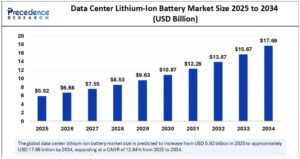
Other factors driving lithium prices up are the fast-growing need for batteries in AI data centers and energy storage systems. The global lithium-ion battery market for data centers was around $5.2 billion in 2024, per Prsedence Research. It is set to grow to nearly $17.7 billion by 2034, most of which will come from lithium batteries.
Lithium battery shipments for data center energy storage might rise over 80% in the next five years. Operators are expanding systems to support AI workloads that need steady power and load balancing. This surge in demand from new markets adds to the traditional battery needs of electric vehicles.
In short, the surge in lithium prices reflects a perfect storm of strong demand, constrained supply, and supportive policies. Investors and companies are taking note, as this environment signals higher revenues for producers. It also creates more opportunities for juniors to develop high-grade resources.
Surge Battery Metals Step Into the Spotlight
Surge Battery Metals (TSX-V: NILI | OTCQX: NILIF) is one such company advancing its position in the lithium supply chain. Surge focuses on the Nevada North Lithium Project (NNLP), which hosts the highest-grade lithium clay resource in the United States. It has a mineral resource estimate of 11.24 million tonnes of lithium carbonate equivalent (LCE) grading 3,010 ppm lithium at a 1,250 ppm cutoff.
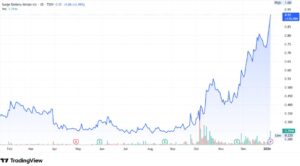
The company has also seen strong investor interest in recent trading. In early 2026, its stock rose about 35%, and over the past month, it gained nearly 46%. This rally reflects the overall optimism in the lithium market. It also matches the strong gains of major producers like Albemarle. The increase shows growing confidence in NILI’s high-grade Nevada project and its potential role in meeting rising lithium demand.
In early January 2026, Surge announced a key executive hire to strengthen its commercial leadership. The company appointed Steffen Ball as Vice President of Commercial Development for Nevada North Lithium LLC, the joint venture between Surge and Evolution Mining. Mr. Ball brings senior experience from major automakers’ battery material sourcing teams, including roles at Nissan North America and Ford.
This appointment signals Surge’s focus on preparing the project for eventual production and strategic partnerships. It also shows the company’s plan to create a team with strong industry knowledge and connections in the lithium value chain.
Alongside personnel moves, Surge has attracted increased investment from institutional groups. The Quaternary Group, for example, increased its ownership in Surge by buying shares on the open market. Now, it holds about 7.8% of the company on an undiluted basis.
Nevada North: High-Grade, High Stakes
Surge Battery Metals stands out among junior lithium miners. Its main asset, the Nevada North Lithium Project, sits in a well-established U.S. mining region with strong infrastructure.
Early exploration shows lithium clay grades up to 7,630 ppm, with updated drill intercepts as high as 8,070 ppm, considered high for clay-based deposits. A Preliminary Economic Assessment (PEA) shows an after-tax NPV of US$9.2 billion. It also has an IRR of 22.8% when lithium carbonate equivalent (LCE) is priced at US$24,000 per tonne.
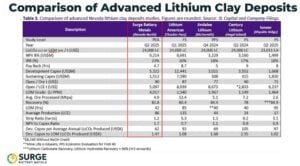
The project could produce an average of 86,300 tonnes of LCE annually, peaking at 109,100 tonnes in Year 6. Operating costs are estimated at US$5,243 per tonne of LCE, giving Surge a competitive edge.
The project is now progressing toward a Pre-Feasibility Study targeted for completion in late 2026, led by global engineering firm Fluor Corporation.
Surge is expanding its resource base through drilling across several kilometers of strike. The company recently reported additional strong drill results from Nevada North. It announced a 30.6-meter intercept grading 4,196 ppm lithium from surface in a 640-meter step-out hole to the southeast.
In infill drilling, Surge also reported 116 meters averaging 3,752 ppm lithium, including 32.1 meters grading 4,521 ppm near surface, highlighting a strong high-grade core within the deposit. These results confirm that high-grade lithium extends beyond the current resource area.
The wide step-out distance also shows strong potential for further expansion. Consistent high grades near the surface can support future resource growth and strengthen the project’s development outlook.
Moreover, Nevada’s mining-friendly environment, with access to roads, power, and skilled labor, reduces development risk. Strategic hires with experience in battery supply chains signal the company’s readiness to move toward production and partnerships.
High-grade resources, strong economics, and a strategic location put Surge in a great spot in the growing lithium market.
From Clay to Clean Energy
The recent rise in lithium prices shows how supply and demand dynamics are shifting. As energy storage and electric vehicles expand, major companies are boosting their market positions. Higher lithium prices support stronger revenue forecasts and have led analysts to raise price targets on key stocks.
At the same time, projects further upstream, including junior developers like Surge, are gaining strategic significance. Investments in early-stage lithium resources help diversify supply beyond dominant producers and geographies. Surge’s focus on commercial leadership and resource development reflects how smaller companies can play a role in meeting future demand.
If lithium prices keep rising and demand stays strong, both current producers and new developers could gain. For mining giants, this could mean the expansion of production capacity and stronger earnings. For Surge and similar companies, it could support project financing and advancement toward commercial output.
Live Nickel Spot Price