Silver Price Nears Highest Level Since 2011 Amid Precious Metals Rally

Silver Price Nears Highest Level Since 2011 Amid Precious Metals Rally

Silver prices are making headlines once again as the metal approaches its highest levels in more than a decade. On September 10, 2025, silver traded in the range of $41 to $42 per ounce in global markets, holding near levels not seen since 2011.

In the United States, the silver spot price stood at $41.2 per troy ounce, with futures trading slightly higher at around $41.50 per ounce. The day’s trading range stretched between $41.44 and $42.12, showing strong investor activity.

In India, one of the largest silver markets, the Multi-Commodity Exchange (MCX) saw silver climb to around ₹125,000 per kilogram. That represents a nearly 45% gain so far in 2025, outpacing the performance of both gold and the country’s stock markets.

This price surge has placed silver at the center of global commodity discussions, drawing comparisons with gold’s record-breaking rally.

What Is Driving Silver Higher?
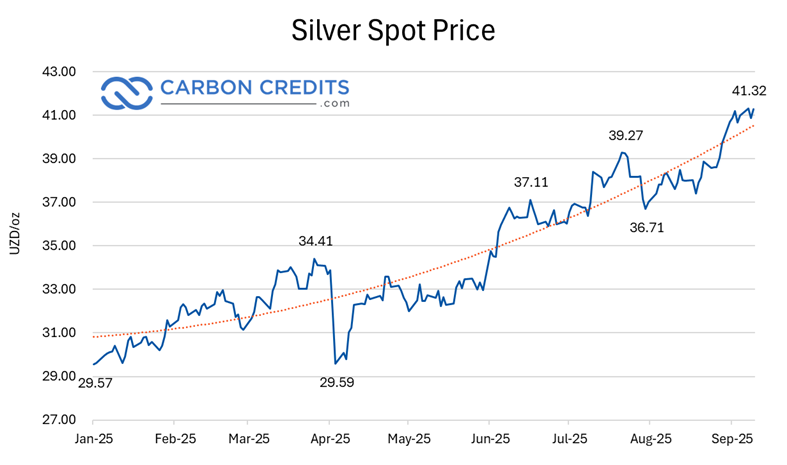
Silver Spot Price
Source: Bloomberg

Several forces are converging to push silver toward decade-high levels.

One of the most important drivers is monetary policy. With the U.S. Federal Reserve expected to cut interest rates later this year, both the U.S. dollar and bond yields have weakened.

For investors, this lowers the opportunity cost of holding precious metals. These metals don’t pay interest or dividends, but they usually retain value during economic uncertainty.

At the same time, silver plays a unique dual role. Like gold, it is a safe-haven asset, often sought out during times of geopolitical tension or financial instability. Yet silver also has extensive industrial uses, making it more sensitive to global economic trends.

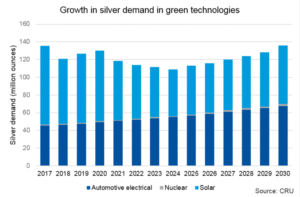
The demand from industries such as electronics, semiconductors, and especially renewable energy is particularly important. Silver is a critical material in solar panels, where it is used in photovoltaic cells to conduct electricity.
silver demand from solar 2030

As countries accelerate their shift to cleaner energy, demand for silver in solar technology is growing rapidly. Electric vehicles (EVs) and 5G technology need a lot of silver. This boosts long-term demand even more.

In July 2025, the U.S. Department of the Interior added silver to its draft list of critical minerals, recognizing its strategic importance for clean energy technologies. The designation highlights silver’s essential role in solar panels, electronics, and the broader transition to a low-carbon economy

Silver vs. Gold: A Tale of Two Metals

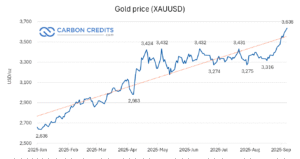
The silver rally is unfolding alongside gold’s historic surge. On the same day, silver touched $41, and gold set a new record at $3,671 per ounce. Both metals are gaining from investors looking for safety in uncertain times. However, their price trends are different.
gold price today

The gold-to-silver ratio, which measures how many ounces of silver are equal to one ounce of gold, remains at elevated levels historically. A high ratio suggests silver may be undervalued compared to gold, leading some analysts to argue that silver could have more room to rise.

For investors, silver’s lower entry price compared to gold also makes it an attractive option. Retail investors who may find gold too expensive often turn to silver as a more accessible precious metal investment. This affordability factor could bring additional momentum if gold continues to climb to new highs.

Flashback to 2011: Will History Repeat?

To understand today’s silver price rally, it helps to look back at history. The last time silver traded near these levels was in 2011, when it spiked close to $50 per ounce. At that time, global markets were still healing from the 2008 financial crisis. Investors put their money into safe-haven assets.

The rally was quick but brief. Silver prices fell as monetary policy tightened and demand weakened. That history brings up a key question for today’s market:

Will silver keep its momentum, or will it drop again when central banks change their strategies?

Some experts believe this rally could last longer. They point to silver’s rising industrial demand, which is linked to the energy transition. Unlike in 2011, silver today has a stronger fundamental base beyond just investment demand.

India’s Silver Fever: Fueling Global Momentum

India plays an especially important role in silver demand. The country has long been a major consumer of precious metals, and silver is widely used in jewelry, ornaments, and investment products.

In 2025, the MCX reported silver prices hitting a record high of ₹125,000 per kilogram. Some analysts say the rally might reach ₹150,000 if the momentum keeps going.

Silver’s strong returns this year have surpassed equities and gold for Indian investors. This makes silver one of the most appealing assets in the country’s commodity markets.

India’s rising demand affects global prices because it makes up a large part of silver use worldwide.

Green Silver: Mining Meets Clean Energy Goals

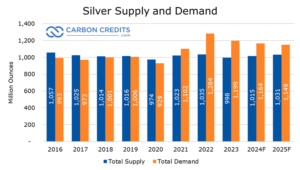
While demand for silver continues to rise, supply growth has been slower. Silver is mined both as a primary product and as a byproduct of other metals such as lead, zinc, and copper. Global mining output has struggled to keep pace with growing demand, tightening the market balance.
silver supply and demand

Another factor shaping the silver industry is sustainability. Mining companies face growing pressure to cut carbon emissions, use renewable energy, and lessen their environmental impact. 

Silver plays a vital role in clean technologies, especially solar energy. Because of this, there’s increasing focus on making sure its production meets global climate goals.

Who’s Leading Silver’s Green Shift?

Major mining companies aim for net-zero by 2050. Some are already using renewable energy in their operations. This adds to silver’s investment story. It’s not just a metal for clean energy; the industry is also moving toward more sustainable practices.

Investors want to be sure that silver production meets environmental, social, and governance (ESG) standards. Several of the world’s largest silver producers have introduced ambitious sustainability goals:

Fresnillo plc (Mexico):

The company is the biggest primary silver producer in the world. The company plans to cut its carbon footprint by switching to renewable energy for its operations. The company aims for a 50% cut in greenhouse gas emissions by 2030. It has started using solar and wind power at its mining sites in Mexico.

Pan American Silver (Canada):

Pan American has pledged to reach net-zero greenhouse gas emissions by 2050. It has invested in water recycling systems. It supports energy efficiency programs. It also protects biodiversity around its mining projects in South America. The company also publishes detailed annual sustainability reports that track emissions, safety, and community engagement.

First Majestic Silver (Canada/Mexico):

First Majestic has focused on reducing its environmental impact by upgrading processing technologies that minimize water and chemical use. The company has also increased the share of hydropower and solar energy in its electricity mix. First Majestic also backs community development in its operating regions. This ties sustainability to social responsibility.

Hecla Mining (U.S.):

As one of the oldest U.S. silver producers, Hecla has modernized its operations to improve safety and reduce emissions. The company has set a net-zero by 2050 goal and is currently working on electrifying parts of its mining fleet. Hecla also highlights worker safety and inclusion programs as part of its ESG priorities.

These efforts highlight an important trend. The silver industry is supplying materials for clean energy tech. At the same time, it is also undergoing its own green transformation. For investors, silver companies with strong ESG strategies might gain from rising demand and good sustainability ratings.

The Road Ahead: Can Silver Hold the Shine?

Looking ahead, the outlook for silver depends on a mix of short-term monetary policy and long-term industrial trends.

In the near term, the Federal Reserve’s decision on interest rates will be critical. A rate cut could weaken the dollar further and support additional gains in both gold and silver. However, if U.S. economic data surprises to the upside, it could dampen expectations and cool off the rally.

Over the longer horizon, silver’s industrial demand appears solid. With global investment in solar energy and EVs accelerating, silver’s role as a “green metal” is likely to remain strong. Supply constraints could amplify this trend, pushing prices higher if production struggles to catch up.

Some analysts think international silver prices might rise above $45 per ounce soon. They also believe Indian prices could reach ₹150,000 per kilogram if both global and local demand keep growing.

For investors, silver offers both a hedge against economic uncertainty and exposure to the growth of renewable energy and electric vehicles. Risks are still present, especially if interest rates change suddenly. However, the fundamentals show that silver’s position in global markets is stronger than ever.

With gold setting new records and silver price climbing toward decade highs, 2025 is shaping up to be a defining year for precious metals.

The post Silver Price Nears Highest Level Since 2011 Amid Precious Metals Rally appeared first on Carbon Credits.


QuantumScape’s Battery Breakthrough Powers Safer EVs – and Sends QS Stock Up 20%

QS

QuantumScape Corporation (NYSE: QS), a leader in advanced battery solutions, has made a major breakthrough in electric vehicle (EV) technology. In partnership with PowerCo SE, the battery arm of the Volkswagen Group, the companies showcased the world’s first live demonstration of a solid-state lithium-metal battery powering a motorcycle.

The event took place at the IAA Mobility conference in Munich, where a Ducati motorcycle equipped with QuantumScape’s cutting-edge QSE-5 battery cells made its debut. This demonstration marks a major milestone in the push toward safer, higher-performing energy storage systems for electric vehicles and beyond.

Why QuantumScape’s Solid-State Battery Is a Game-Changer

QuantumScape’s mission is to transform energy storage. The company highlighted that its next-generation solid-state lithium-metal batteries can potentially improve energy density, charging speed, safety, lifespan, and cost-effectiveness—all areas where traditional lithium-ion batteries face limitations.

The live demo used QSE-5 cells, built with QuantumScape’s proprietary Cobra separator manufacturing process. This process, integrated into full-scale production in June 2025, has dramatically improved performance. According to industry experts, it offers a 25-fold upgrade over the earlier model and a 200-fold improvement compared to 2023 methods.

The QSE-5 battery delivered industry-leading results, including:

  • 844 Wh/L energy density – enabling longer driving ranges.
  • 12-minute fast charging from 10% to 80% capacity.
  • 10C continuous discharge, supporting high performance under stress.

This breakthrough addresses key EV challenges, making batteries safer and more efficient for both consumers and manufacturers.

Dr. Siva Sivaram, CEO and president of QS, said,

“Today we’ve crossed the threshold from possibility to reality. We believe that our partnership with PowerCo, together with Ducati as our demonstration launch partner, positions us to scale our transformative technology to gigawatt-hour production. Our world-leading battery innovation, combined with Ducati’s uncompromising craftsmanship and legendary commitment to performance, will help usher in a new era of electrified transportation.”

QuantumScape solid state batteryS
Source: QS

Real-World Test on the Racetrack

The demonstration featured a Ducati V21L race motorcycle powered by QuantumScape’s technology. The battery pack, developed by specialists from Audi, another Volkswagen Group brand, was tailored to show how these batteries can perform in extreme conditions.

Thomas Schmall, CEO of Volkswagen Group Components, presented the technology at the event. The racetrack setting was chosen to rigorously test the batteries’ limits. QuantumScape’s cells performed reliably under high loads, showcasing how this technology can meet the demands of future high-performance EVs.

From Lab Discovery to Commercial Reality

This event is a major step in taking solid-state batteries out of the lab and into real-world applications. Solid-state batteries use a solid electrolyte instead of liquid ones, which greatly reduces the risk of overheating, fires, or explosions—common concerns with conventional lithium-ion batteries.

The QSE-5’s anode-free design, paired with advanced separators, gives it advantages in safety and efficiency. If scaled successfully, this technology could become a standard for next-generation EVs and other energy storage solutions.

QuantumScape expects to ship sample cells for testing in 2026. Commercial production could begin between 2027 and 2028, depending on regulatory approvals and manufacturing scaling.

Strategic Partnership and Market Expansion

QuantumScape’s partnership with PowerCo is expanding rapidly. In July 2025, the two companies announced an updated collaboration agreement that includes up to $131 million in milestone-based payments over two years.

This will fund the scaling of production and technology transfer needed to bring QSE-5 cells to global markets.

  • Significantly, PowerCo plans to produce up to 5 gigawatt-hours of QSE-5 cells annually, serving customers beyond Volkswagen’s ecosystem.

This opens up new commercial opportunities and strengthens QuantumScape’s position in the global battery supply chain.

Frank Blome, CEO of PowerCo, said,

“The EV revolution is the biggest transformation the automotive industry has ever seen. Solid-state batteries will redefine what’s possible for high-performance, premium vehicles, and today’s historic demonstration is just the beginning. We’re combining QuantumScape’s world-class battery scientists with PowerCo’s manufacturing expertise to bring game-changing solid-state battery technology to the world as soon as possible.”

QS Stock Market Reaction: A Speculative Opportunity

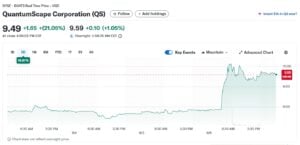
Following the announcement, QuantumScape’s (QS) stock jumped 20% to around $9.50, reflecting investor excitement. As of 2025, the company’s market cap stands at around $4.44 billion.

However, analysts warn that investing in QuantumScape carries significant risks. The technology’s success hinges on scaling production, navigating regulatory approvals, and competing with established battery players.

QuantumScape QS stock
Source: Yahoo Finance

Solid-State Batteries: Unlocking Safer, Smarter Energy Solutions

Solid-state batteries are seen as the next major leap in energy storage. Compared to lithium-ion batteries, they offer:

  • Higher energy density for longer ranges.
  • Faster charging capabilities.
  • Safer designs that lower fire and explosion risks.
  • Longer lifespan with fewer degradation issues.
  • Potential for lower costs as manufacturing processes improve.

These features make solid-state technology attractive not only for EVs but also for consumer electronics, renewable energy storage, and medical devices

Global Market Outlook: 2025 and Beyond 

As per FortuneBusinessInsights, the global solid-state battery market is projected to experience rapid growth over the coming years.

  • In 2024, the market size was valued at around $98.96 million, and it is forecasted to reach $119 million by 2025.
  • By 2032, the market could surge to $1.36 billion, growing at a compound annual growth rate of 41.61% between 2025 and 2032.
solid state battery
Source: FBI

The Asia Pacific region is leading this growth, holding a 43.76% market share in 2024. Rising adoption of solid-state batteries in consumer electronics, electric vehicles, and renewable energy storage is driving this trend. The consumer electronics segment, in particular, dominated the market last year, with applications far ahead of those in EVs and medical devices.

Investment in this technology is accelerating, with companies like Toyota, BMW, QuantumScape, CATL, and BYD increasing research and development efforts. Government support is also playing a key role in the development of solid-state batteries.

Key Drivers for Adoption

The demand for safer, higher-performance batteries is pushing companies and governments to invest heavily. Additionally, solid-state designs reduce fire risks, offer greater energy density, improve charging speeds, and extend battery lifespan.

These improvements are making solid-state batteries a preferred option across multiple industries, including consumer devices, EVs, medical implants, and renewable energy storage.

With governments backing funding initiatives and industry players scaling up manufacturing, the path to widespread adoption is becoming clearer. The global market is on the cusp of a transformation, and solid-state batteries are at the forefront of this change.

All in all, QuantumScape’s demonstration is a breakthrough in EV battery technology, showcasing its potential to overcome industry challenges. While risks persist, strong partnerships, advanced specs, and rising demand position the company as a leader in energy storage. If scaled successfully, its technology could drive safer, faster, and more efficient batteries for the future of electric mobility.

The post QuantumScape’s Battery Breakthrough Powers Safer EVs – and Sends QS Stock Up 20% appeared first on Carbon Credits.

Tesla’s AI5 Chip Challenges NVIDIA’s Dominance in AI Hardware Innovation

tesla

Tesla Inc. (TSLA Stock) has once again raised the stakes in the world of artificial intelligence and custom semiconductor design. CEO Elon Musk recently confirmed that Tesla’s AI5 chip has completed its design review, marking a significant milestone in the company’s efforts to develop in-house chip technology that rivals industry giants like Nvidia.

This move aligns with Tesla’s broader vision of reshaping technology infrastructure, reducing dependency on external suppliers, and driving innovation across its product ecosystem from EVs to humanoid robots.

AI5 Leads the Way: Tesla’s Bold Move Toward a Single Chip Platform

Until recently, Tesla had been developing two separate chip architectures. Musk’s latest announcement signals a shift toward consolidating these efforts into a single, unified platform.

  • During a post on X, Musk called the AI5 chip “epic” and hinted at its successor, the AI6, as potentially the “best AI chip by far.”

According to him, the AI5 chip will offer “the lowest cost silicon and best performance per watt” for inference tasks with models smaller than 250 billion parameters.

ELON MUSK TESLA

Dojo Disbanded?

This consolidation came after Tesla’s internal assessment determined that continuing separate paths would lead nowhere significant.

As per Bloomberg, the company discontinued its ambitious Project Dojo supercomputer initiative in August, despite analysts once attributing a potential $500 billion increase in market value to the project. Musk explained that “all paths converged to AI6,” and the supercomputer project was deemed “an evolutionary dead end.”

The unified architecture strategy reflects Tesla’s desire to streamline development and focus its engineering talent on solving broader computing challenges. By using the same chip platform for both training and inference tasks, Tesla expects to achieve greater efficiency and scalability.

Musk described this approach as a way to create supercomputer clusters where multiple AI5 and AI6 chips handle diverse workloads seamlessly, a configuration he dubbed “Dojo 3.”

TSMC and Samsung Fuel Tesla’s Manufacturing Strategy

Tesla’s chip development efforts are backed by a robust manufacturing roadmap involving partnerships with major semiconductor players.

  • The AI5 chip will be produced by Taiwan Semiconductor Manufacturing Company (TSMC) at its facilities in Taiwan before production shifts to its Arizona plant. This staged approach will help Tesla ramp up production while ensuring quality and scale.
  • For the AI6 chip, Tesla signed a $16.5 billion multiyear contract with Samsung Electronics to manufacture chips domestically in the United States.

Samsung’s dedicated Texas facility in Taylor will be exclusively focused on producing AI6 chips, with initial samples starting at Samsung’s South Korean sites before moving to Texas for mass production.

This dual-foundry strategy gives Tesla an edge in supply chain resilience. Unlike competitors dependent on a single supplier, Tesla’s collaboration with both TSMC and Samsung provides flexibility, experience, and speed. Analysts see this as a smart move, especially given the geopolitical tensions and chip shortages affecting global markets.

Competing With Nvidia and Beyond

Tesla’s AI ambitions are part of a growing trend among technology companies aiming to build custom chips and reduce reliance on Nvidia, a dominant player in AI hardware. OpenAI, for example, has announced plans to partner with Broadcom to produce its own chips at scale, shifting away from Nvidia’s ecosystem.

At the same time, Nvidia faces regulatory challenges under the U.S. Guaranteeing Access and Innovation for National Artificial Intelligence Act (GAIN Act), which could limit its export capabilities.

Tesla’s AI5 and AI6 chips are thus positioned not only as performance-driven solutions but also as strategic assets in a rapidly shifting regulatory and market landscape.

Musk’s confidence in Tesla’s silicon capabilities is backed by analysts projecting that the company’s AI-driven initiatives could be worth upwards of $1 trillion.

Notably, Wedbush Securities’ Dan Ives sees Tesla’s autonomous driving and AI business as a game-changer, while Cathie Wood of ARK Invest has called Tesla “the largest AI project on Earth,” with forecasts suggesting that global revenue from robotaxi networks could hit $8 trillion to $10 trillion in the next decade.

AI Chips Set to Soar: A $165 Billion Market by 2030

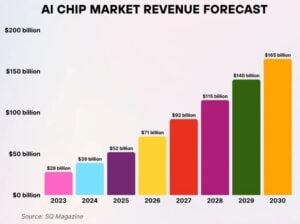
The AI chip market is growing fast. In 2023, it was worth $28 billion, showing that it is still in the early stages but gaining momentum. By 2025, experts expect the market to reach $40.79 billion and then jump to $52 billion, showing how quickly it is expanding.

Looking ahead, the market could grow even more and hit $165 billion by 2030 as more industries adopt AI technology. However, NVIDIA is still leading the way in this market and is expected to hold about 86% of the AI GPU segment in 2025. This shows how dominant NVIDIA is in the AI chip space.

ai chip market

AI’s Expanding Role Across Tesla’s Ecosystem

The AI5 and AI6 chips are not limited to just inference tasks in vehicles. Tesla’s broader roadmap, detailed in its Master Plan Part 4, envisions a future where artificial intelligence and robotics redefine how energy, transportation, and labor are managed.

Unlike earlier plans focused solely on electric vehicles and renewable energy, the new blueprint embraces “sustainable abundance,” where human labor and energy costs approach zero thanks to advanced robotics and AI-driven automation.

A central piece of this vision is the Optimus humanoid robot. Designed to handle repetitive and dangerous tasks in factories and eventually in homes. Optimus is seen as a cornerstone of Tesla’s next phase.

Musk predicts that humanoid robots could make up 80% of Tesla’s value in the future, with ambitious production targets ranging from several thousand units in 2025 to as many as 1 million annually by the decade’s end.

Media reports say that the AI6 chip will serve multiple roles across Tesla’s product lines. Besides powering Optimus, it will be used in the upcoming Cybercab robotaxi service and replace Dojo as Tesla’s AI training platform. The unified architecture allows these chips to be configured in clusters, seamlessly handling both training and inference tasks.

Despite Swings, TSLA Stock Inspires Investor Confidence

Despite these bold initiatives, Tesla’s stock (TSLA) has seen volatility. As of September 8, 2025, TSLA traded around $346.40, down about 1.2% over the previous day and pulling back from a recent high of $355.

The company’s market capitalization stands near $1.12 trillion, with a trailing price-to-earnings ratio exceeding 200—indicative of high expectations but also elevated risk.

tsla stock
Source: Yahoo Finance

Still, investors remain optimistic about Tesla’s AI-driven future. The combination of a unified chip architecture, diversified manufacturing strategy, and bold robotics roadmap positions Tesla at the forefront of a tech revolution. Moreover, expected shifts in global energy demand and Federal Reserve policies could further boost growth stocks like Tesla in the coming years.

In conclusion, Tesla’s AI5 chip marks a bold step beyond technology—it’s a move to lead the future of computing. With efficient chips, strong partnerships, and a unified architecture, Tesla is set to transform not just its business but global energy and labor markets. As Musk’s “sustainable abundance” vision unfolds, Tesla’s innovation could unlock a multi-trillion-dollar opportunity, drawing keen attention from investors and industry alike.

The post Tesla’s AI5 Chip Challenges NVIDIA’s Dominance in AI Hardware Innovation appeared first on Carbon Credits.
Rio Tinto Backs $250M Meldora Platform in Push for High-Integrity Carbon Credits

Rio Tinto Backs $250M Meldora Platform in Push for High-Integrity Carbon Credits

Rio Tinto has announced it will purchase carbon credits from a newly launched Australian platform, marking a major step in its decarbonization journey. The initiative shows how big companies are using high-integrity carbon markets in their sustainability plans. At the same time, the deal highlights how Australia is positioning itself as a leader in nature-based carbon solutions.

A New Platform for Scalable Carbon Offsets

Meldora, the new platform, just launched with $250 million in funding. This investment comes from the Clean Energy Finance Corporation (CEFC) and Canada’s La Caisse de dépôt et placement du Québec (CDPQ). 

The platform will produce Australian Carbon Credit Units (ACCUs) by investing in sustainable agriculture and reforestation projects on a large scale.

Meldora has acquired 15,000 hectares of farmland in Central Queensland. This land will be the starting point for its operations. The land will support productive farming and “Environmental Plantings.” Here, native trees and plants will be grown and cared for over many years. This dual-use model combines farming with carbon sequestration, creating reliable long-term credits.

Heechung Sung, CEFC’s head of natural capital, remarked:

“It’s a great privilege to again be able to work with La Caisse and GAP to invest in this strategy and alongside Rio Tinto, who have demonstrated with their long-term offtake, a commitment to invest in high-integrity carbon credits.”

Rio Tinto is now the first long-term buyer of carbon credits from Meldora. This gives the Australian mining giant a steady supply of carbon offsets. It also shows their commitment to real, science-based climate solutions.

How Meldora Works: The Power of Soil Carbon Sequestration

Soils hold remarkable potential as a natural climate solution. According to the Food and Agriculture Organization, well-managed soils could sequester up to 2.05 gigatons of CO₂ per year. That’s equal to about 34% of the total greenhouse gas emissions from agriculture. Another study estimates that improved cropland practices could remove 0.44 to 0.68 Pg of carbon annually, or roughly 1.6 to 2.5 gigatons of CO₂.

Meldora’s approach centers on integrating agriculture with reforestation. Farmers use their land for food, but they also restore some areas with native trees and plants. These help capture and store carbon dioxide.

The program follows strict rules:

  • Trees are maintained for 25 to 100 years, ensuring permanent carbon storage.
  • Projects generate ACCUs, the official credits recognized under Australia’s carbon market.
  • Native biodiversity is protected, which improves soil health and water retention on farmland.

The CEFC has committed $50 million to the platform, while CDPQ provided the remaining $200 million. They aim to expand projects across Australia. Their goal is to provide credits that meet the rising demand from companies needing high-quality offsets.

This model also addresses a common challenge in carbon markets: the need to balance credibility with scalability. Meldora aims to combine farming and forestry. This way, carbon projects can be practical for landowners and reliable for buyers like Rio Tinto.

Rio Tinto’s Climate Strategy

Rio Tinto has set bold decarbonization goals using operational changes and carbon offsets to achieve them. The company aims to reduce its Scope 1 and Scope 2 emissions by 50% by 2030 and achieve net zero by 2050.

Rio Tinto 2050 decarbonization pathway
Source: Rio Tinto 2025 Climate Action Plan

In 2024, its gross operational emissions fell to 30.7 Mt CO₂e, down from 33.9 Mt CO₂e in 2023, thanks to increased use of renewable energy and efficiency gains. The company increased renewable electricity consumption to 78% in 2024. That’s an increase of 71% from 2023.

Rio Tinto carbon emissions 2024
Source: Source: Rio Tinto 2025 Climate Action Plan

To bridge remaining emissions, Rio Tinto will limit its use of high-integrity carbon credits to up to 10% of its 2018 emissions baseline. The company keeps the emphasis on actual emission reductions. Its climate strategy includes:

  • Investing in renewable energy to power its mining operations, such as solar and wind projects in Australia.
  • Partnering with technology developers to explore low-carbon steelmaking.
  • Purchasing high-quality carbon offsets is necessary when direct emissions reductions are not yet possible.

Rio Tinto is a key investor in the Silva Fund, which backs nature-based carbon projects. It also owns a 14.15% stake in AiCarbon, an Australian carbon farming company. These investments show how the company is building a portfolio of long-term carbon solutions.

By buying credits from Meldora, Rio Tinto boosts its supply of reliable offsets. Global demand for these credits is rising, but supply is still low.

Integrity First: The Value of Verified Carbon Credits

One of the biggest challenges in carbon markets is the issue of integrity. Many credits on the voluntary market have faced criticism for overstating their environmental benefits. Rio Tinto’s CEO has publicly noted that up to 80% of credits reviewed in the U.S. did not meet the company’s internal standards.

Meldora wants to tackle these issues. They ensure projects are checked by independent parties. This way, they aim for lasting environmental benefits. Under Australia’s carbon market rules, ACCUs must meet strict standards and are subject to government oversight.

For Rio Tinto, the assurance of high-integrity carbon credits is key. As pressure mounts from regulators, investors, and the public, companies need offsets. These should balance emissions on paper and provide real benefits for the climate and local communities.

Australia’s Carbon Market Moment

Australia ranks among the top global issuers of carbon credits. Initiatives like Meldora will likely boost this standing. The country has a unique advantage in nature-based carbon projects. Its vast land resources allow for a mix of environmental restoration and agricultural productivity.

The Australian government is tightening climate rules. Under the Safeguard Mechanism, large emitters must cut their emissions every year. For many companies, purchasing ACCUs is one of the most practical ways to comply with these regulations.

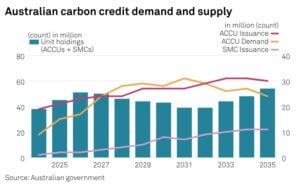
Per S&P Global analysis, Australia’s carbon credit demand will surpass issuances in 2028, as seen in the chart.

Australia carbon credit demand and supply forecast
Source: S&P Global

Platforms like Meldora could therefore play a dual role: supporting corporate net zero strategies and helping Australia meet its national climate targets.

Outlook: Scaling Nature-Based Climate Solutions

The Rio Tinto–Meldora agreement shows how companies are shifting to long-term carbon solutions. They are focusing more on scalability instead of just quick offsets. This change shows a bigger trend in corporate climate action. Nature-based projects are now valued more for their lasting impact and benefits to communities.

For Rio Tinto, the deal ensures access to a reliable stream of credits as it works toward its 2030 and 2050 goals. For Australia, it shows how it can use its land and farming resources to help the world move toward net zero.

By supporting projects that merge agriculture with long-term forest restoration, Rio Tinto is helping to advance a model that could benefit businesses, landowners, and the environment. As Australia grows its carbon credit market, platforms like Meldora could be key. They help connect corporate demand with the urgent need for real, verifiable climate solutions.

The post Rio Tinto Backs $250M Meldora Platform in Push for High-Integrity Carbon Credits appeared first on Carbon Credits.

Gold Price Today Surges to All-Time High at $3,671 as Miners Push ESG and Carbon Reduction Goals

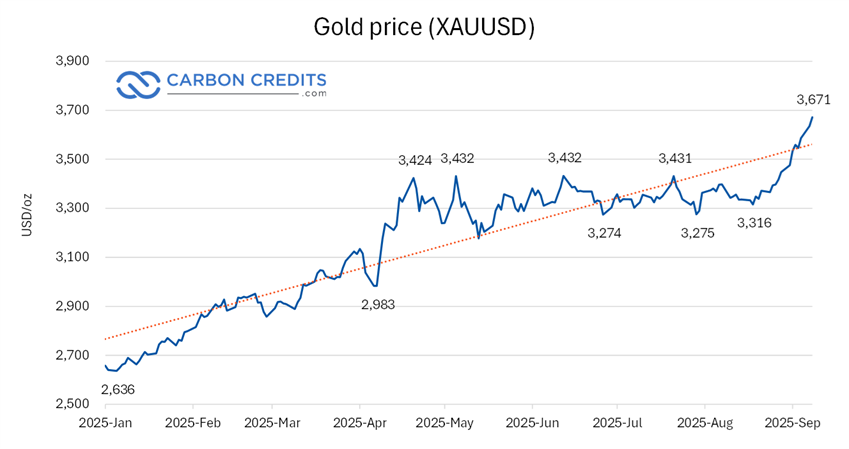
On September 9, 2025, the gold price set a new all-time high with an intraday peak of $3,671.38 per ounce. The rally shows strong investor demand. It also reflects rising geopolitical tensions and record central bank purchases.

At the same time, the gold industry is undergoing a transformation. Mining companies are committing to renewable energy, carbon reduction, and net-zero targets. Together, record prices and sustainability strategies are reshaping how gold is valued by both investors and communities.

Why Gold Price Today Reaches Historic Levels

Gold’s role as a safe-haven asset has been reinforced by global economic uncertainty. Inflation, supply chain issues, and conflicts have led investors to seek safety in gold. At $3,671/oz, prices are up more than 20% since the start of 2025.

Gold price
Source: Bloomberg

Central banks have played a major role. In 2024, they bought more than 1,050 metric tons of gold, the second-largest annual increase ever recorded.

China, India, and Turkey led the purchases as part of their strategy to diversify away from the U.S. dollar. Exchange-traded funds (ETFs) also recorded a rebound, with inflows of $6.8 billion in the first half of 2025.

Retail demand is strong, even with high prices. This is especially true in India and China, where jewelry makes up a big part of what people buy.

The gold price surge reflects more than short-term speculation. At a glance, here are the structural trends that support gold’s long-term appeal:

  • Currency diversification: Central banks are reducing reliance on the U.S. dollar, boosting demand for gold reserves.

  • Inflation hedge: With global inflation averaging 4.7% in 2024, gold continues to act as a store of value.

  • Geopolitical risk: From conflicts in Eastern Europe to supply chain disruptions, gold offers security in times of instability.

Analysts suggest that if these conditions continue, gold could rise toward $3,800 per ounce by the end of the year. While prices climb, the gold mining industry faces a major sustainability challenge.

The Carbon Footprint of Gold Mining

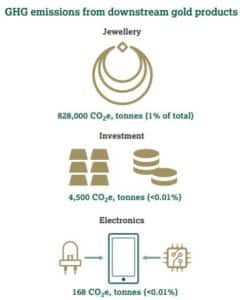
Gold production is energy-intensive, often relying on fossil fuels for power and processing. According to the World Gold Council (WGC), here are some facts about gold emissions:

  • The average emissions intensity of gold mining is ~0.9 metric tons of CO₂ per ounce of gold produced.

  • Gold mining accounts for roughly 0.3% of global greenhouse gas (GHG) emissions, a significant share for one sector.

  • Electricity and diesel fuel make up more than 80% of mining-related emissions.

gold scope 3 emissions
Source: WGC

These numbers highlight the importance of industry-wide decarbonization efforts. Without action, rising production could undermine global climate goals. Let’s get to know the top gold companies promoting sustainable mining.

Gold Miners Expanding ESG and Net-Zero Efforts

Several leading gold companies have committed to aggressive climate goals. Below is a closer look at how the biggest players are progressing.

Newmont Corporation

As the world’s largest gold miner, Newmont has pledged to reach net zero by 2050. The company reduced Scope 1 and 2 emissions by 6% in 2024, thanks to a mix of renewable power agreements and efficiency upgrades. Boddington mine in Australia and Peñasquito mine in Mexico are switching to solar and wind energy.

Newmont has also invested in battery-electric haul trucks to replace diesel fleets. By 2030, Newmont aims to cut absolute Scope 1 and 2 emissions by 32% and Scope 3 emissions by 30% compared to 2018 levels.

IAMGOLD

The Canadian miner has also made significant strides. Its Côté Gold mine in Ontario is powered primarily by hydropower, giving it net-zero Scope 2 emissions.

IAMGOLD aims to cut emissions intensity by 30% by 2030. They are also testing electric equipment in North America. Beyond emissions, IAMGOLD has invested in water conservation and biodiversity projects, positioning itself as a leader in responsible mining.

B2Gold

B2Gold has been recognized for its bold renewable energy strategy in Africa. The company built a 7 MW solar power plant at the Fekola mine in Mali, which reduces diesel use by 13 million liters annually. This saves about 39,000 tons of CO₂ emissions every year.

B2Gold is evaluating hydrogen pilot projects. They are also expanding solar infrastructure at other sites. Their goal is to cut emissions intensity by 30% across all operations in the next decade.

Nova Minerals

Based in Australia, Nova Minerals is exploring some of the most advanced decarbonization technologies in the sector. It is testing green hydrogen systems to power off-grid mining operations. It is also looking into carbon capture options in mine waste.

These steps aim not only to reduce emissions but also to position the company as an innovator in low-carbon mining solutions. Nova has announced plans to achieve carbon neutrality by 2035, earlier than most of its peers.

Gold Fields

Gold Fields, headquartered in South Africa, has set a net-zero by 2050 goal with interim targets to reduce Scope 1 and 2 emissions by 30% by 2030. The company is already producing tangible results.

At its South Deep mine in South Africa, it installed 40 MW of solar capacity, supplying about 25% of the site’s power needs. Across its global operations, Gold Fields’ renewable projects prevent an estimated 250,000 tons of CO₂ annually.

Together, these initiatives show how miners are transforming their business models to meet climate goals. Importantly, they also lower operating costs by reducing dependence on volatile fossil fuel prices.

The Gold Industry’s Green Makeover 

Beyond individual companies, the entire gold sector is moving toward sustainability. The World Gold Council’s “Net Zero by 2050” framework guides miners. It emphasizes using renewable energy, electrification, and engaging the supply chain.

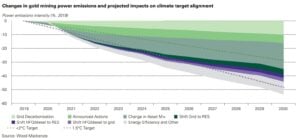
gold mining power emissions

By 2024, about 35% of electricity used by the gold industry came from renewables, up from 15% in 2019. Carbon credits are also becoming part of the transition. Many miners buy top-notch forestry and renewable energy offsets. They do this to balance emissions they can’t eliminate yet.

If current trends continue, the WGC projects that the sector could reduce total emissions by 30–40% by 2035, with deeper cuts possible through new technologies.

Soaring gold price is boosting revenues, but investors are increasingly focused on ESG credentials. A 2025 MSCI survey found that 72% of institutional investors consider ESG performance when evaluating mining companies. This is especially relevant as ESG-focused funds are projected to manage over $50 trillion globally by 2030.

For miners, this means profitability is no longer enough. Companies that show strong sustainability progress are more likely to secure financing and attract long-term investors. This dual focus – financial strength and ESG performance – will shape the industry’s outlook in the coming decade.

Gold’s Future: Shining Brighter, Greener, and Pricier

The future of gold is being shaped by two powerful forces: market momentum and sustainability. On one hand, record demand and central bank purchases are pushing gold prices higher, with forecasts pointing to $3,800/oz by the end of 2025.

On the other hand, the industry is undergoing a deep transformation. From Newmont’s electrified fleets to B2Gold’s solar-powered mines, gold companies are proving that it is possible to align profitability with climate responsibility. These moves not only reduce emissions but also make operations more resilient and cost-efficient.

The gold price today at $3,671 per ounce is a milestone for the industry, but the bigger story lies in how miners are responding to climate pressures. With carbon-intensive operations under scrutiny, leading companies are committing to ambitious net-zero goals and rolling out renewable energy projects across the globe.

For investors and policymakers alike, gold’s future will be measured not just in ounces and dollars, but in how sustainably those ounces are produced. In this sense, the industry is writing a new chapter – one where gold shines both as a financial safe haven and as a driver of responsible growth.

The post Gold Price Today Surges to All-Time High at $3,671 as Miners Push ESG and Carbon Reduction Goals appeared first on Carbon Credits.

Puro.earth Secures €11M as Nasdaq Backs Engineered Carbon Removal Boom

Puro.earth Secures €11M as Nasdaq Backs Engineered Carbon Removal Boom

Puro.earth, a global platform for engineered carbon removal, has secured €11 million in Series B funding. Nasdaq led the round, with support from Fortum Innovation and Venturing.

The investment marks a significant milestone for the company and the broader carbon removal market, which is expected to expand rapidly over the next decade. The funds will help Puro.earth boost its infrastructure, support suppliers better, and speed up the issuance of reliable carbon removal credits.

Strengthening the Backbone of Carbon Removal

The new funding will support Puro.Earth’s efforts to expand its infrastructure for issuing CO₂ Removal Certificates (CORCs). These certificates show verified carbon credits for removing one metric ton of carbon dioxide from the air. This is done using methods like biochar, enhanced rock weathering, and direct air capture.

Key areas where the investment will be deployed include:

  • Enhancing supplier onboarding to bring more carbon removal projects into the system.
  • Improving digital monitoring, reporting, and verification (dMRV) tools to ensure transparency.
  • Scaling credit issuance to meet rising demand from corporations with net-zero commitments.
  • Building stronger links between credit buyers and project developers.

These initiatives are designed to make carbon removal a trusted and reliable part of the global climate toolkit. 

Passing the One Million Credit Milestone

Puro.earth has already achieved a major industry milestone: the issuance of more than 1 million CORCs since its launch in 2019. Each certificate represents one verified metric ton of carbon dioxide removed. Notably, the platform doubled its issuance volume in just a year, underlining how quickly demand and supply are scaling.

The company expects the next million CORCs to be issued by mid-2026, showing exponential growth potential. For context, the credits issued to date are equivalent to removing the annual emissions of around 250,000 passenger cars. This progress shows how quickly engineered carbon removal is moving from a niche market to a mainstream climate solution.

Why the Funding Matters

Puro.earth’s Series B financing will help unlock several critical steps for scaling the carbon removal industry. With better infrastructure and closer supplier ties, the platform can boost CORC issuance. It can also widen the range of removal methods available.

This matters because companies around the world are under pressure to meet net-zero pledges. Access to trusted carbon removal credits provides a pathway for organizations to address residual emissions after reducing their own footprint.

High-quality credits show that corporations are serious about climate leadership. This impresses regulators, investors, and customers.

Jan-Willem Bode, President of Puro.earth, reiterate this saying:

“With this latest round of funding, we’re strengthening the systems that facilitate scale in CDR deployment and enhancing our customer offerings to better support the growing demand for durable engineered removals. Our approach is grounded in science, market discipline, and transparency. This is what our ecosystem of buyers and suppliers demands— Nasdaq and Puro.earth are well-placed to meet this need by combining financial infrastructure and climate expertise to foster innovation and accelerate the carbon market growth.”

Rising Demand for Engineered Carbon Removal

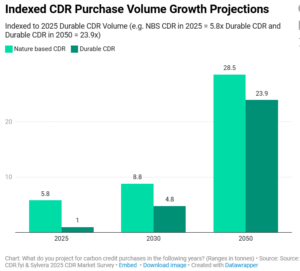
The global carbon removal market is still in its early stages, but demand is accelerating. In 2024, purchases of durable removal (CDR) credits totaled 8 million metric tons of CO₂.

Durable carbon removal credits CDR purchases 2024

Biochar projects made up most of the certified credits. Puro.earth was the top registry for these methods.


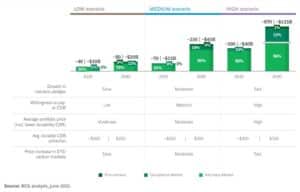
Market forecasts point to exponential growth. Analysts estimate that the carbon removal market, valued at about $2.7 billion in 2023, could grow to as much as $100 billion annually by 2030–2035. Such growth depends on stronger policy support, buyer confidence, and technological advances that reduce costs.

BCG carbon removal credit demand projection 2030-2040

Government policies are already playing a role. The U.S. Inflation Reduction Act offers incentives for carbon removal. Meanwhile, the European Union is creating its own certification frameworks. These measures encourage companies in energy, finance, aviation, and technology to look into lasting carbon removal credits.

What Sets Puro.earth Apart in the Carbon Market

With the backing of Nasdaq and Fortum, Puro.earth is positioning itself as a central hub in the carbon removal ecosystem. The company’s platform has several features that strengthen its credibility:

  • Rigorous methodologies:
    CORCs use conservative baselines. This ensures credits show only extra, verifiable removals.
  • Transparency:
    Digital tools track and verify carbon storage, helping buyers trust the credits they purchase.
  • Scalability:
    By focusing on engineered removals such as biochar and direct air capture, Puro.earth connects buyers with solutions that can expand rapidly.

This approach sets Puro.earth apart from project-level registries. Those registries have faced criticism for integrity issues. The platform aims to rebuild buyer trust in carbon markets by creating a strong framework at the jurisdiction level.

Strengthening ERW Credibility

Recently, Puro.earth has launched a public consultation. This aims to enhance its Enhanced Rock Weathering (ERW) method, the first engineered carbon removal approach of its kind. The revision aims to align with the latest scientific advances and its own General Rules and ICVCM benchmarks.

Key updates are:

  • Stricter measurement methods now require two ways to verify CO₂ removal.
  • Sampling guidance for soil chemistry is clearer.
  • There’s explicit accounting for carbon loss factors, like plant uptake and river transport.

The new method adds uncertainty discounts and needs strong statistical checks. This boosts both scientific accuracy and market trust.

Barriers Ahead: High Costs and Market Fragmentation

Despite the positive outlook, challenges remain. High costs continue to be a barrier for many engineered carbon removal projects. Market fragmentation means many standards and methods compete for attention. This can confuse buyers. In addition, demand has not yet caught up with potential supply.

In 2021, the voluntary carbon market reached a peak of 516 million metric tons in transactions, but volumes fell to around 84 million tons by 2024. Forest and land-use projects fell sharply. This made buyers more cautious about offset integrity.

carbon credit trading volume 2024

Jurisdictional and engineered solutions from Puro.earth can help with these issues. However, building trust will take time.

Still, analysts see the potential for a $250 billion carbon removal market in the future. Institutional support, like Nasdaq’s role in this funding round, can boost confidence and speed up adoption.

Indexed CDR Purchase Volume Growth Projections

Can Puro.earth Lead a $100B Market?

The outlook for carbon removal is both challenging and promising. Demand for verified credits is growing, yet it remains far below the levels needed to align with global climate goals.

Analysts estimate that by 2050, the world will need to remove billions of tons of CO₂ annually to stay within safe temperature limits. For platforms like Puro.earth, this means scaling quickly, building trust, and ensuring credits meet the highest integrity standards.

With the €11 million Series B funding, Puro.earth is taking important steps in that direction. The company aims to close the gap between bold climate promises and real outcomes. They’re doing this by:

  • Strengthening supplier infrastructure
  • Improving digital verification
  • Supporting more project developers

As the world approaches the 2030 milestone, engineered carbon removal will play a bigger role in net-zero strategies. If Puro.earth meets its growth goals, it could create a multi-billion-dollar carbon removal industry. This would also help make corporate climate goals a reality. In this way, the company’s progress reflects both the urgency and the opportunity of building a sustainable carbon removal market.

The post Puro.earth Secures €11M as Nasdaq Backs Engineered Carbon Removal Boom appeared first on Carbon Credits.

$60B Venture Capital Alliance Backs $300M Fund for Climate-Tech Startups

$60B Venture Capital Alliance Backs $300M Fund for Climate-Tech Startups

A major new funding initiative promises a breakthrough for climate-tech startups. A group of top venture capital and private equity firms, called “All Aboard Coalition”, managing $60 billion in assets, has started a $300 million fund. This fund will help climate-tech companies grow from pilot stages to commercial operations. This is the time when many firms encounter the “missing middle.””

Led by TED Conferences curator Chris Anderson, the group aims to bridge the critical funding gap in clean tech—often called the “valley of death.” Anderson stated:

“One of the biggest threats to the world’s future is that the companies capable of building a healthy low-emissions global economy are simply not getting the funding they urgently need. The only way to fix that is through collective action. By acting as a community, we can help propel these exciting vanguard companies to true global scale.”

Closing the “Valley of Death” for Climate Innovations

The “missing middle” refers to a familiar but frustrating gap in climate-tech funding. Early-stage seed rounds usually get enough funding to test ideas in labs. But moving to full deployment needs big infrastructure investments. Traditional venture investors often avoid this type of capital.

This new fund aims to close the gap. It targets rounds of $100–200 million. This money will help companies build manufacturing facilities, test prototypes, or develop commercial systems.

Leading firms backing the fund include recognizable names such as:

  • Breakthrough Energy Ventures,
  • Khosla Ventures,
  • DCVC, 
  •  Clean Energy Ventures,
  • Energy Impact Partners.

Their participation signals confidence in the climate solutions market and hopes to bring in generalist capital by reducing risk. The All Aboard Coalition brings both capital and credibility into a sector needing institutional support.

Ramp-Up Amidst Funding Declines

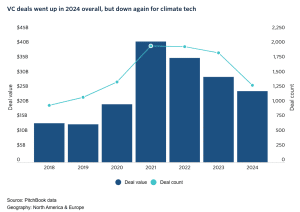
Global venture capital investment in climate tech has fallen for three straight years, according to PitchBook. Funding declined from $25.9 billion in 2022 to $19.7 billion in 2023, and slipped again to $17 billion in 2024—a total drop of about 34% in just two years.

climate tech investment 2024

Over the past two years, venture funding in climate technologies has dipped sharply. In early 2025, funding for technologies such as direct air capture fell by over 60% compared to the previous year.

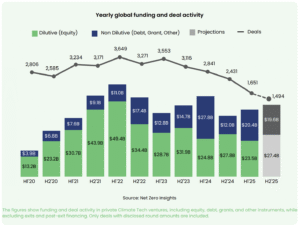
Broadly speaking, global investment in climate tech fell 19% in H1 2025 compared to the same period in 2024, signaling ongoing funding challenges. Non-dilutive funding, like debt and grants, hit record levels. This shows confidence in scalable, infrastructure-focused solutions, even with fewer deals.

global investment in climate tech h1 2025
Source: Net Zero Insights

The U.S. market led the global share with 51% of funding (around $21.4 billion), and it may end the year 12% higher overall. In contrast, Europe’s equity investments declined, though a rebound is expected later in the year.

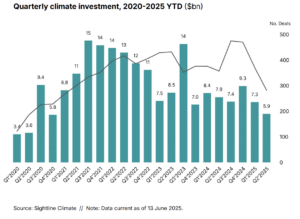
A report by Sightline Climate shows that global climate tech funding fell to $5.9 billion in Q2 2025, the lowest quarterly level since 2020. Although the sector is still expanding, growth has slowed to 7%, a pace the report describes as typical for a maturing market.

quarterly climate investment

For the climate tech community, however, this shift from rapid acceleration to steadier progress may require a period of adjustment. Moreover, without scalable capital, many startups hit a pause. This delays or stops their work on important technologies.

This new fund directly addresses the problem. By offering a vehicle for later-stage funding, it intends to keep innovations moving forward. One industry analyst said, “You can have great lab-scale solutions. But without funding to build factories or test them in the field, those solutions go nowhere.”

This new fund comes at a key time. It brings fresh energy to a sector facing slow commercialization. This is true even with strong policy support, especially in Europe and North America.

Why Climate-Tech Needs Big, Patient Capital

Climate technologies, such as green hydrogen and advanced battery storage, require different funding. This is unlike the software and service startups that VCs typically back. Building a green hydrogen plant or modular carbon capture equipment can require hundreds of millions in initial investment. This happens before any revenue comes in.

Institutional impact investors or infrastructure funds can provide capital. But this happens only after a concept is proven viable, operations are scaled, and revenue starts flowing.

Many climate companies fail to reach that stage due to capital constraints. This new fund provides flexible capital, using equity and convertible terms. It helps overcome the commercialization hurdle.

Coalition Power: Who’s Onboard and Why It Matters

The coalition gathers firms that manage $60 billion in assets. This gives them strong financial power and expertise in green technology. They have strong capital behind them. Their goal is to invest in later-stage rounds. They want to create a strong market signal. This signal will attract more generalist investors.

Key strategic opportunities this coalition unlocks:

  • Market validation: Their backing signals to other investors that climate tech is viable.

  • Network leverage: Members can share technical and operational support with portfolio companies.

  • Standard-setting: The fund could define benchmarks for due diligence and standards in climate-tech investing.

According to one venture partner, “This is not about gimmicks. It’s about building infrastructure to scale solutions that are already proven technically.

A Window into the Future

As the fund deploys capital, it will ramp up in three stages:

  1. Investment into expansion-stage companies with proven prototypes.

  2. Deployment into building manufacturing capacity or first-of-a-kind facilities.

  3. Financial returns and impact tracking, demonstrating investment viability.

If it succeeds, the fund could spark a climate-tech ecosystem. This would make delivering solutions faster, less risky, and more appealing to mainstream investors.

Road to Scale: What Drives Impact Forward

This fund arrives amidst promising developments in climate policy and corporate net-zero commitments. The U.S. Inflation Reduction Act and the EU’s Green Deal are reducing risks for clean tech investments.

This is especially true when they team up with private capital. Corporations looking for verified offset credits or ways to decarbonize their operations now have more tools. To maximize impact, the coalition aims to:

  • Invest in technologies fulfilling Tier 4 removals or real-world emissions reductions.

  • Support companies with strong go-to-market plans and partnerships with utilities or industrial firms.

  • Provide supplementary technical advisory support, alongside capital.

A Balanced Path Forward

While optimism is high, risks remain. The fund’s success hinges on:

  • Demonstrating real-world returns on large climate investments.
  • Ensuring measurement and verification of climate impact.
  • Balancing financial ROI with societal and environmental goals.

The launch of this $300 million fund by a coalition managing $60 billion in assets represents a turning point for climate-tech. Targeting the “missing middle” fills a long-standing funding gap. This move could speed up the journey from innovation to real impact.

If capital flows as planned, this fund could spark a wave of climate solutions. These solutions might generate billions in revenue and cut emissions by gigatons by 2030. This initiative provides a financial boost and shows how private capital can support real climate progress.

The post $60B Venture Capital Alliance Backs $300M Fund for Climate-Tech Startups appeared first on Carbon Credits.

The Power of Plastic Credits: How Verra’s Waste Reduction Program Can End Global Plastic Pollution

plastic pollution

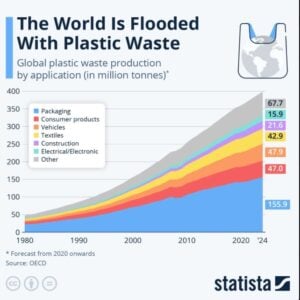
Plastic pollution is one of the greatest environmental challenges facing the world today. As per Verra, every year, more than 430 million tons of plastic are produced, and nearly two-thirds of this ends up as waste—dumped, burned, or abandoned in open spaces, rivers, and oceans.

Without significant intervention, global plastic waste is projected to triple by 2060, threatening ecosystems, economies, and communities alike. Thus, plastic credits are becoming essential tools in sustainable development strategies, particularly in emerging markets.

Let’s start with a quick look at what plastic credits are and how they help tackle the global plastic crisis.

What Are Plastic Credits and How Do They Work?

Plastic credits are a way to tackle plastic pollution through the market. Individuals and organisations can buy these credits to balance out the amount of plastic they use. The money from these purchases helps fund projects that collect, recycle, or reuse plastic waste—keeping it out of oceans, landfills, and the environment.

This system encourages people and businesses to cut back on plastic use while supporting waste recovery efforts both locally and globally.

This video further explains plastic credits:

How Are Plastic Credits Created?

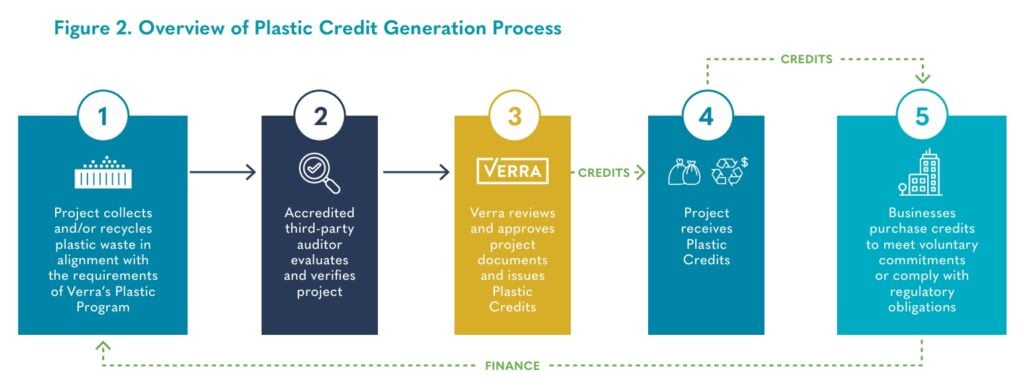
Plastic credits are only given for plastic waste that would have harmed the environment if it hadn’t been collected. Projects working with credit organizations gather plastic waste and recycle or process it using methods like:

  • Mechanical recycling

  • Advanced recycling

  • Reprocessing

  • Co-processing

For every extra kilogram of plastic that is recycled or recovered, a certified plastic credit is issued. These credits are checked through records and audits to make sure the plastic waste would have otherwise ended up in the environment without the project’s help.

Moving on to Verra, its globally recognized standards-setting organization ensures credibility, transparency, and impact of plastic credit programs.

This article explores how Verra’s Plastic Waste Reduction Program is transforming waste management, strengthening Extended Producer Responsibility (EPR) systems, and helping countries and businesses alike combat plastic pollution through verified, high-integrity plastic credits.

plastic pollution

Why Verra’s Work Is Key to Ending the Global Plastic Problem

Plastic pollution has long been a global concern, but its impact is particularly acute in emerging markets and developing economies (EMDEs). These regions face critical gaps in waste management infrastructure, financing, and regulation, which hinder their ability to collect and effectively recycle plastic waste.

Some key challenges include:

  • Lack of collection and recycling infrastructure

  • Funding shortages and limited private investment

  • Weak legal and regulatory frameworks

  • Underrepresentation of informal waste workers

  • Reliance on open dumping and burning of waste

These challenges make it difficult to reduce plastic pollution without external support, technological innovation, and robust governance frameworks.

And in the plastic sector, Verra is leading by creating a global framework for plastic credits that drives waste reduction, community support, and sustainable growth. Its results-based financing channels investments into projects with proven impact, building a cycle of trust and long-term environmental solutions.

Unlocking Verra’s Plastic Waste Reduction Standard

Verra’s EPR Discussion Paper states that its Plastic Waste Reduction Standard is the key to its plastic credit program. It offers a transparent, science-based methodology for tracking and certifying plastic waste recovery, ensuring that projects create real, measurable impact.

The standard is built on four foundational pillars:

1. Measurability and Transparency

Verra’s methodology makes projects document every step of waste collection and recycling. Projects track waste sources, volumes, and weights. They record management practices and verify the chain of custody from collection to recycling.

All data is accessible and traceable. This helps governments, funders, and consumers confidently assess project performance.

2. Impact Verification

Verra requires third-party auditors to validate the waste collection and recycling claims made by projects. These audits confirm that plastic waste would otherwise have been lost to the environment and that the recovery efforts are additional, meaning they would not have occurred without the project’s intervention.

The verification process safeguards against inflated reporting and helps maintain trust in the plastic credit system.

3. Social and Environmental Safeguards

Plastic waste projects often involve communities that rely on informal waste collection for their livelihoods. Verra integrates safeguards to ensure that projects:

  • Uphold human rights and provide fair compensation

  • Offer safe working conditions

  • Respect local environmental and social concerns

By aligning sustainability goals with community development, Verra ensures that projects generate benefits beyond just waste reduction.

4. Market Access and Financing

Verra’s certification enables projects to access both voluntary and regulatory markets. This creates investment opportunities for businesses aiming to offset their plastic footprint while supporting high-impact waste management efforts globally.

How Verra Supports Extended Producer Responsibility (EPR) Systems

Extended Producer Responsibility (EPR) is a policy tool that shifts the financial and environmental responsibility for plastic waste from governments to producers. Effective EPR frameworks incentivize companies to design recyclable products, invest in waste management infrastructure, and reduce their overall plastic consumption.

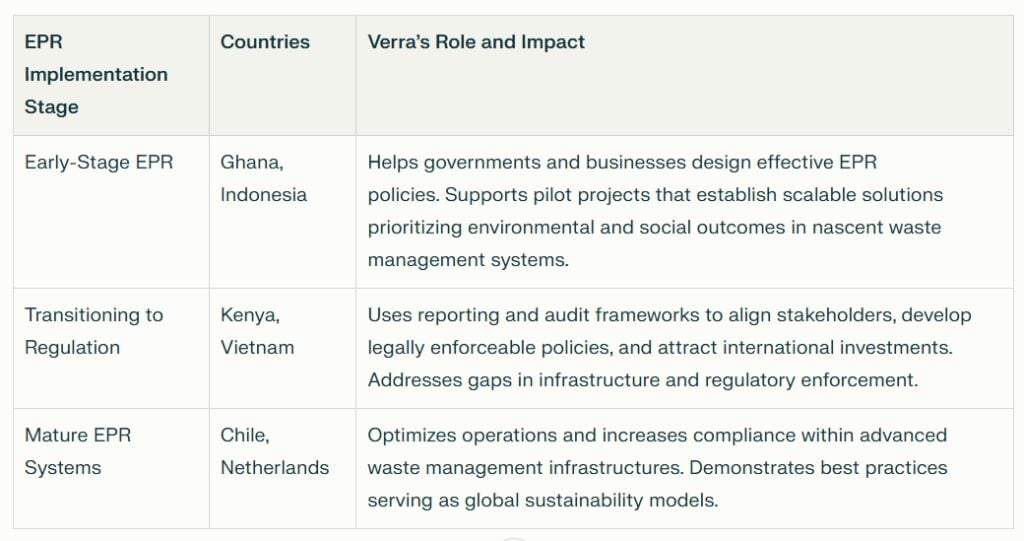
However, developing EPR systems is challenging, especially in countries with limited resources. Verra helps strengthen EPR systems across three phases:

Phase I – Initiation

During this phase, governments explore EPR as a policy tool and begin building legal frameworks. Verra’s methodologies help producers understand the measurable impacts of waste management, providing data that informs policymaking.

Phase II – Transition

This phase focuses on implementing enforceable regulations and aligning stakeholders. Verra’s third-party audits and reporting tools ensure that data collection is transparent, helping build trust in the early stages of regulation.

Phase III – Maturity

In mature systems, EPR frameworks are fully operational, with clearly defined regulations and robust monitoring mechanisms. Verra’s certifications support scaling waste management solutions by providing financing options and ensuring compliance with international standards.

By integrating plastic credits into EPR systems, Verra helps governments and companies build resilient waste management infrastructures while promoting accountability and innovation.

plastic credits Verra
Source: Verra

Making Every Ton Count: Financing Change with Plastic Credits

Plastic credits are only as effective as the financing structures behind them. Verra’s program helps mobilize investments from both public and private sectors, ensuring that projects receive the support they need to scale operations.

Key ways Verra enables financing include:

Bridging Funding Gaps

Plastic credit markets channel investments into waste collection and recycling projects that would otherwise lack access to funding. This is especially important in regions where waste management is underfunded and informal labor plays a significant role.

Results-Based Incentives

By issuing credits only after verified waste recovery, Verra ensures that funds are aligned with real-world impact. Investors and governments alike can be confident that their contributions lead to measurable improvements.

Promoting Innovation

Verra’s framework encourages the development of new recycling technologies, supply chain management tools, and data tracking solutions, helping to modernize waste management practices across sectors.

Encouraging Circular Economy Models

With verified credits, recycled plastic becomes a more valuable commodity, attracting demand and promoting the reuse of materials within production cycles. This supports long-term sustainability and reduces reliance on virgin plastics.

Verra’s Impact Across the Globe

Verra
Source: Data from Verra

Challenges and the Way Forward

While Verra’s plastic credit program offers promising solutions, challenges remain:

  • Data Quality: Accurate measurement and reporting remain difficult, especially in regions lacking infrastructure.

  • Risk of Misuse: Without strict regulation, companies might offset plastic usage without reducing consumption.

  • Funding Constraints: Infrastructure development requires significant capital, particularly in developing regions.

  • Inclusion of Informal Workers: Waste collection often depends on informal labor sectors, which require support and integration into formal systems.

However, Verra is actively working to address these challenges by promoting rigorous third-party audits, encouraging governments to adopt transparent frameworks, supporting inclusive policies that empower communities, and collaborating with global financial institutions to expand investment flows.

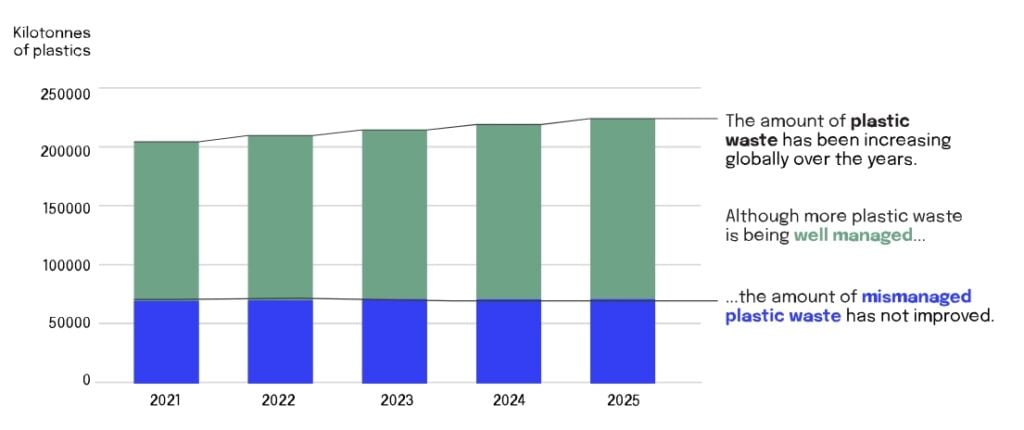
Global plastic waste generation: Management Vs Mismanagement

plastic waste generation report
Source: Plastic Overshoot 2025 Report

The Plastic Credit Market: Growing Demand and Opportunities

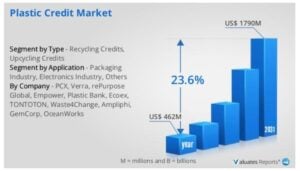
Industry report says, the global plastic credit market, valued at US$462 million in 2024, is projected to reach US$1790 million by 2031, growing at a CAGR of 23.6%. This surge is driven by increasing environmental awareness, regulatory frameworks, and consumer expectations.

Other key players include PCX, rePurpose Global, Empower, Plastic Bank, Ecoex, TONTOTON, Waste4Change, Ampliphi, GemCorp, and OceanWorks.

plastic credit market size
Source: Valuates

As read and studied, Verra’s Plastic Waste Reduction Program plays a pivotal role in ensuring that these efforts are credible, verifiable, and impactful. Last but not least, as plastic pollution worsens, Verra leads with accountability and innovation, turning waste into opportunity and responsibility into lasting action.

The post The Power of Plastic Credits: How Verra’s Waste Reduction Program Can End Global Plastic Pollution appeared first on Carbon Credits.
Frontier’s $31.3M Offtake with Planetary Signals a New Era for Ocean Carbon Removal

planetary

Frontier has taken another major stride in scaling up high-quality carbon removal. The coalition has signed a $31.3 million offtake agreement this August with Planetary Technologies, a company that uses ocean alkalinity enhancement (OAE) to remove carbon dioxide from the atmosphere and reduce ocean acidification.

Planetary and Frontier Push OAE Toward Large-Scale Deployment

Planetary’s journey has been defined by innovation and scientific rigor. Earlier this year, Isometric Registry issued the world’s first verified OAE credits, marking a historic milestone.

These credits were based on pilot projects such as the Tufts Cove facility in Halifax, where purified magnesium oxide was introduced into coastal waters and monitored with cutting-edge measurement protocols.

Significantly, the Frontier deal builds on Planetary’s earlier success with Isometric. And now, the company is moving into its next phase i.e., large-scale deployment.

  • Starting in 2026, Frontier buyers will receive 115,211 tons of verified CO₂ removals spread across a five-year delivery window through 2030.

It’s a turning point for marine-based carbon removal, showing the pathway’s credibility, scalability, and growing importance in global climate strategies.

The Science Behind Planetary’s Ocean Alkalinity Approach

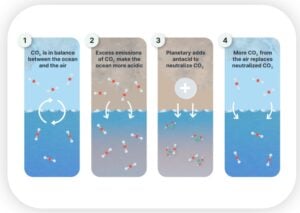
OAE is an emerging method of carbon dioxide removal that strengthens the ocean’s natural ability to act as a carbon sink. Here’s how Planetary does it:

  • Mineral addition: Planetary adds carefully dissolved alkaline minerals such as calcium oxide (CaO) or magnesium oxide (MgO) into coastal waters.

  • Carbon capture chemistry: These minerals react with dissolved CO₂, transforming it into stable bicarbonate ions that are stored in the ocean for more than 10,000 years.

  • Seamless integration: Planetary’s system plugs into existing outfalls like wastewater plants or power stations, avoiding the cost of building new infrastructure.

  • Scalability by design: The entire operational footprint fits into two shipping containers, allowing setups to be deployed in a matter of days.

Planetary OAE
Source: Planetary

This chemical pathway is powerful because it bypasses many uncertainties of biological methods. Instead of relying on ecosystems that may be vulnerable to climate change, OAE leverages the ocean’s natural buffering system to lock away CO₂ for millennia.

Why OAE Could Change the Game

OAE is gaining traction because it combines scale, affordability, and co-benefits—a rare combination in the carbon removal sector.

  • Gigaton potential: Scientists estimate OAE could remove billions of tons of CO₂ annually, making it one of the largest scalable solutions.

  • Cost advantage: Early estimates suggest costs between $50 and $160 per ton, with credible pathways to below $100/ton as operations scale.

  • Ecosystem impact: Unlike many removal methods, OAE tackles a second crisis—ocean acidification. Raising local pH creates better conditions for marine calcifiers such as oysters, shrimp, and crabs.

  • Proven monitoring: Planetary dissolves minerals before releasing them, eliminating uncertainties about when and where reactions take place. Real-time sensors and computational models track the carbon removal and ecological impact.

  • Strong safeguards: Each deployment includes feedstock screening, live monitoring of discharge waters, and a “stop trigger” system to halt operations if thresholds are exceeded.

These elements combined make OAE one of the most promising, durable, verifiable, and scalable methods of carbon removal.

Co-Benefits for Communities

Planetary’s work goes beyond carbon removal. The company partners with Indigenous leaders, scientists, regulators, and local communities to ensure projects support local priorities.

It also shares data openly under FAIR principles and the Carbon to Sea protocol, building trust and transparency. This community-first approach shows that carbon removal can deliver climate benefits while strengthening coastal ecosystems and communities.

The Frontier Deal: Who’s Backing OAE

Frontier’s offtake brings together some of the world’s leading climate-focused companies. The coalition comprises founding members Stripe, Google, Shopify, and McKinsey Sustainability, as well as Autodesk, H&M Group, and Workday.

Through a partnership with Watershed, additional companies, including Aledade, Canva, Match Group, Samsara, SKIMS, Skyscanner, Wise, and Zendesk, also participated in the purchase.

For buyers, the deal represents more than carbon credits. It’s a chance to support field-first innovation. Backing a method like OAE helps accelerate development, lower costs, and scale removals faster while also addressing the ocean health crisis.
Verified Ocean Carbon Credits: A New Chapter for Carbon Markets

The recognition of OAE by registries like Isometric signals a broader shift in the carbon markets. For years, marine-based solutions struggled to gain credibility due to measurement challenges. That barrier has now been broken.

  • Credits are issued only after rigorous MRV protocols confirm that CO₂ has been captured and stored as bicarbonate.

  • Standards such as the Ocean Alkalinity Enhancement from Coastal Outfalls Protocol guide verification and ensure environmental integrity.

  • Leading corporations like Stripe, Shopify, and British Airways have already purchased these credits, sending a clear market signal.

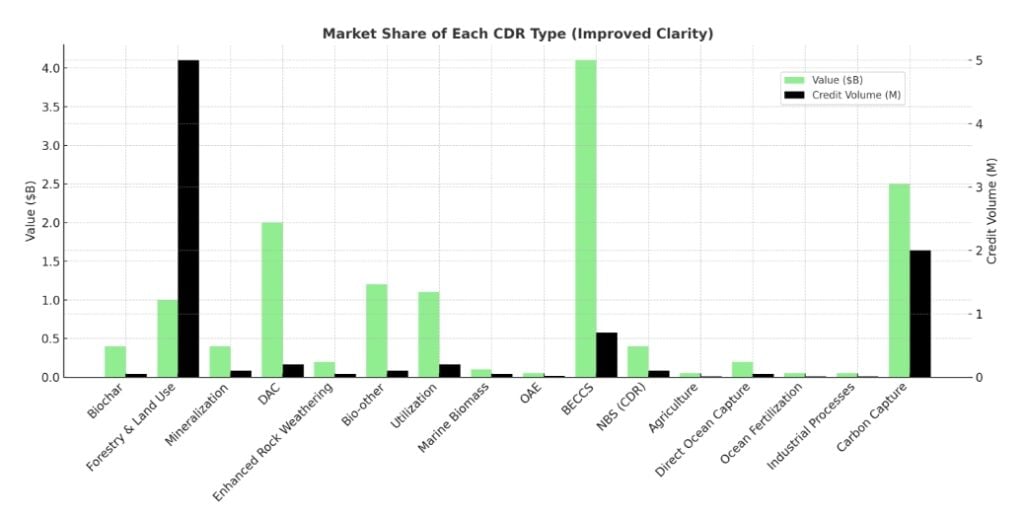
CDR
Data Source: Allied Offsets Q1 2025 Carbon Dioxide Removal (CDR) Market Update

Verified OAE credits are now entering the market, introducing a new wave of high-quality carbon removals. This method shows strong potential as an affordable, scalable solution that benefits both the climate and ocean health.

The $31.3 million Frontier-Planetary deal proves OAE can deliver durable, scientifically verified carbon storage at scale. And for carbon markets, the deal signals that ocean carbon removal solutions are ready.

The post Frontier’s $31.3M Offtake with Planetary Signals a New Era for Ocean Carbon Removal appeared first on Carbon Credits.