France Shocks Energy Sector and Rewrites Energy Future: New Law Boosts Nuclear, Cuts Renewables

France Shocks Energy Sector and Rewrites Energy Future: New Law Boosts Nuclear, Cuts Renewables
France has approved a major new energy law that cuts back renewable energy targets and strengthens support for nuclear power. The law was passed by decree on 13 February 2026 after nearly three years of political debate.

The law is part of France’s Multiannual Energy Programming (PPE), a 10-year framework that guides energy policy through 2035. It sets long-term goals for how power is produced, with revised targets for wind, solar, and nuclear energy.

French Finance Minister Roland Lescure said the changes reflect slower electricity demand growth than expected and the government’s desire for a stable energy mix. He also said nuclear power remains the “backbone” of France’s electricity system, while adding:

“We need to stop ​our internal family ‌squabbling. We need both nuclear and renewables.”

The new law marks a significant shift in French energy policy. It alters renewable goals that were set to help cut emissions and diversify power sources.

Wind and Solar Ambitions Dialed Down
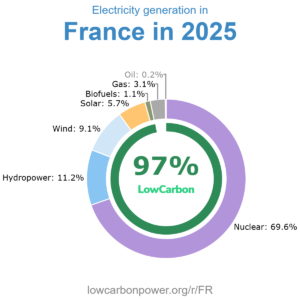
France gets almost 97% of its electricity from low-carbon sources in 2025. Nuclear power provides the largest share, supplying nearly 70% of total generation. This reflects the country’s long-standing reliance on nuclear energy for stable power.

Hydropower contributes about 11%, while wind provides around 9% and solar about 6%. Together, these sources create a diversified clean energy mix. Fossil fuels play a small role, making up just over 3%, mainly from gas and biofuels.

power generation in France 2025
Source: lowcarbonpower.org

France is also a major net exporter of electricity. As transport, heating, and industry electrify, demand will rise. More low-carbon capacity will be needed.

However, the new regulation lowers France’s wind and solar capacity goals for 2035. Previously, draft plans set higher targets for renewable capacity, but under the new law, the goals dropped.

  • Wind and solar combined (draft): 133–163 GW by 2035.
  • Wind and solar (new law): 105–135 GW installed capacity by 2035.

The law also adjusts specific sub-targets:

  • Offshore wind: reduced to 15 GW by 2035 (from 18 GW).

The reduction aims to show slower growth in electricity demand. It also addresses challenges in permitting and grid integration in France and the wider EU.

France’s wind and solar power deployment has been slower than in some neighbouring countries. Recent energy plans show that renewables made up about 14.6% of France’s electricity mix. Wind and solar still lag behind nuclear and hydro power.

Critics say that while renewable energy is growing, the new targets might slow down carbon cuts. They worry it could also make investors less confident in wind and solar projects.

Nuclear Reasserted as the Backbone

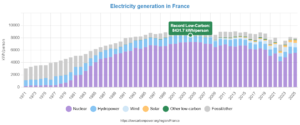
France’s low-carbon electricity history centers on nuclear power. In the 1980s, nuclear output grew quickly as new reactors came online. Growth slowed in the 1990s and early 2000s and after 2009, production declined.

Output later recovered, with gains of more than 25 TWh in 2021 and over 40 TWh in 2023 and 2024. Nuclear remains central to France’s low-carbon power system, again.
Electricity generation in France by source
Source: lowcarbonpower.org

The new energy law lets state-run utility Électricité de France (EDF) keep 14 nuclear reactors open. This requirement was part of earlier commitments and had been controversial.

Instead, the framework reinforces nuclear’s role in the energy mix. It also sets a goal for net production of 650–693 terawatt-hours (TWh) of decarbonized electricity by 2035, compared with about 540 TWh today.

EDF currently operates a fleet of 57 nuclear reactors, which supply roughly 65% of France’s electricity — one of the highest nuclear shares in the world. The law also foresees the construction of at least six new nuclear reactors, with the first expected to be inaugurated around 2038.

EDF welcomed the revision and said the law would help the company focus on its output goals and long-term planning.

Support for nuclear power reflects a broader policy shift. France has long relied on nuclear energy for low-carbon generation, and policymakers view it as vital for energy security and independence.

Rebalancing the Power Mix for 2035

The new law reshapes France’s energy mix. It places greater emphasis on nuclear while easing pressure on the rollout of renewables.

The revised framework aims to balance supply security, carbon goals, and economic considerations. Slower electricity demand growth is one reason officials cited for the policy shift.

France is also planning to increase the share of electricity in overall energy consumption to 60% by 2030, up from around 30% today. This goal reflects efforts to electrify transport, buildings, and industry as part of broader decarbonization strategies.

However, renewable energy growth has not kept pace with previous plans. France has reduced its wind and solar capacity targets. Some projects are also facing delays due to regulations and grid issues.

Hydroelectric power is a key renewable source in France, but wind and solar are becoming more important. The country aims to cut fossil fuel use and meet EU renewable goals.

A Divisive Shift in the Energy Transition

The energy law triggered a heated debate among legislators. Some lawmakers criticised the reduction in renewables targets as a step backward for the energy transition.

Marine Le Pen, leader of the far-right National Rally party, urged lawmakers to submit a no-confidence motion in response to the law. She argued that lowered targets could harm French industry and agriculture.

Environmental groups also voiced concern. Greenpeace France stated:

“If this PPE is ​more than two years late on paper, it’s at least a decade behind in its vision of an energy transition.”

Industry groups, including wind and solar developers, had mixed reactions. Some welcomed the clarity provided by the law after years of uncertainty, while others cautioned that investment could slow without stronger renewable goals.

The debate reflects broader tensions in France between emissions reduction goals and economic and security considerations. The law tries to balance these priorities in the face of fiscal pressures and geopolitical uncertainties.

EDF at the Center of France’s Power Strategy

EDF plays a central role in France’s electricity system. The utility’s large nuclear fleet is critical for providing low-carbon base power. The company is also expanding its renewable business. It runs hydroelectric plants and is involved in wind and solar projects domestically and abroad.

However, abundant wind and solar power across Europe has pressured wholesale power prices, reducing revenue for nuclear plants that operate best at higher price levels. The new law seeks to ease some of this pressure by rebalancing targets and supporting nuclear output.

EDF is also working on modernising its fleet. In recent years, it secured financing to extend the life of its older reactors and to pursue small modular reactor (SMR) technologies for future deployment.

The utility’s path forward will involve managing a complex energy mix that includes nuclear, renewables, hydroelectric, and other clean sources. Meeting climate goals while ensuring reliable, affordable power remains a key challenge.

The Road to 2035: Implementation and Impact

France’s new energy law sets the course for the next decade. It guides energy planning through 2035 under the PPE framework.

The law aligns nuclear and renewable policy with expected demand and economic conditions. It seeks to stabilise the power market and support key utilities like EDF.

Energy markets, investors, and grid operators will be watching how capacity targets unfold and how demand patterns evolve. France’s approach may influence broader EU energy policy debates, especially around balancing nuclear with renewable goals in the transition to net zero.

The post France Shocks Energy Sector and Rewrites Energy Future: New Law Boosts Nuclear, Cuts Renewables appeared first on Carbon Credits.

Copper Drives BHP’s $6.2B Profit Surge in FY26 Half-Year Results

copper

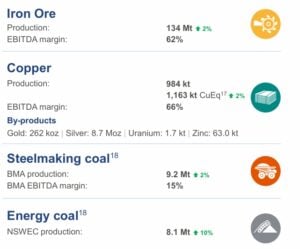
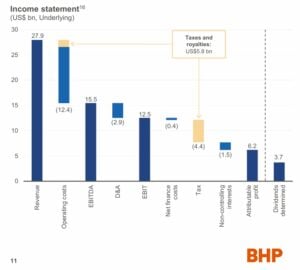
BHP Group delivered a strong first-half performance for FY26, confirming a major shift in global commodity markets. The world’s largest miner posted underlying attributable profit of $6.2 billion, up 22% year over year and broadly in line with forecasts. More importantly, copper has now become the company’s dominant earnings driver.

For the first time in its history, copper contributed 51% of BHP’s underlying EBITDA. This milestone reflects both higher production and stronger prices. It also signals that the long-anticipated structural tightness in copper markets is beginning to materialize.

CEO Mike Henry emphasized that BHP had positioned itself early for this moment. Over the past four years, the company lifted copper production by roughly 30%. That expansion now aligns with rising global demand tied to electrification, renewable energy, and digital infrastructure.

bhp h1 results

Copper Delivers Record Earnings as Prices Rise

Copper earnings jumped in the first half. The division’s underlying EBITDA rose 59% to $8 billion. Higher prices, up about a third, helped drive the gain. Margins topped 60%, showing strong operations and favorable market conditions.

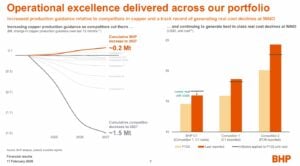
Strong output from Escondida in Chile, along with solid contributions from South Australia, boosted BHP’s results. As a result, the company raised its FY26 copper production guidance to 1.9–2.0 million tonnes. While some competitors lowered their forecasts, BHP went the other way, showing confidence in its operations.

bhp copper

At the same time, better cost management improved profits. Unit costs dropped across major copper assets, helping cash flow while prices stayed high. The company’s internal operating system also kept operations running efficiently and productively.

Meanwhile, iron ore earnings edged higher but showed slower momentum. Demand from Chinese steel exports and manufacturing offset weakness in the country’s property sector. However, China’s broader growth has plateaued. That shift explains why copper, rather than iron ore, now anchors BHP’s earnings profile.

Growth Pipeline Expands Beyond Copper

Copper is driving earnings now, but BHP is also looking at long-term growth. The Jansen Stage 1 potash project is on track to start production by mid-2027. Costs were revised up to $8.4 billion. Once fully operational, each stage could generate about $1 billion in annual EBITDA.

BHP also has copper growth options in Chile, Argentina, Arizona, and South Australia. The company aims to reach around 2.5 million tonnes of copper-equivalent production per year by the mid-2030s. Growth is expected to stay steady through 2035.

Strategic moves are helping BHP’s position. Recent deals could free over $6 billion. This gives the company flexibility to invest in high-return copper projects.

bhp

Copper Market Turns Tighter Heading into 2026

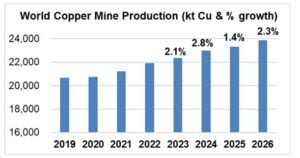
The wider market also supports a positive outlook for copper. The International Copper Study Group (ICSG) says global mine supply growth slowed more than expected. Mine production is expected to rise only slightly in 2025. Refined production may grow very slowly, only at 0.9% in 2026, because of concentrate shortages.

refined copper production
Source: icsg
  • As a result, the market, which had a surplus of 178,000 tonnes in 2025, could swing to a 150,000-tonne deficit in 2026. This is a big change from earlier forecasts that expected a surplus.

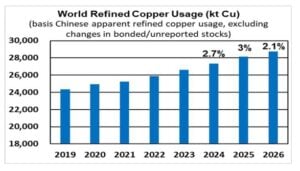
At the same time, demand keeps rising. Global refined copper usage could grow about 2% in 2026, reaching nearly 29 million tonnes. Asia continues to drive growth, even though Chinese consumption has slowed. Renewable energy, electric vehicles, grid upgrades, urbanization, and digital infrastructure all support long-term copper demand.

copper usage
Source: ICSG

Copper Prices to Hold Above $12,000?

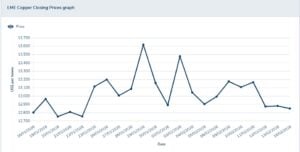
LME copper prices have fluctuated in early 2026. Prices fell from €13,327 per tonne on February 11 to €12,757 per tonne on February 16, showing short-term volatility. COMEX spot prices also dipped to $5.7710 per pound on February 12, down 3% daily but still up over 25% year-over-year. LME stocks rose slightly to 211,850 tonnes, signaling some inventory replenishment.

LME copper prices
Source: LME

J.P. Morgan forecasts an average of $12,075 per tonne in 2026. Prices could reach $12,500/tonne in the second quarter. Tight inventories and supply disruptions make the first half of the year particularly bullish.

Data centers are adding to demand. J.P. Morgan says copper used in data center installations could hit 475,000 tonnes in 2026, up 110,000 tonnes from this year. While still a small part of global demand, it adds pressure to an already tight market.

Higher prices could push some buyers toward aluminum. However, analysts warn that substitution is slow. It won’t quickly ease copper shortages.

BHP’s Strategic Advantage in a Structural Shift

For BHP, these trends back its long-term plan. Copper now makes up more than half of group earnings. The company increased production ahead of the market tightening. If prices stay above $12,000, margins could improve further.

Short-term volatility may continue. Slower growth in China or a weaker global economy could push prices down. On the other hand, mine disruptions or higher AI-related demand could push prices up.

Copper is vital for the energy transition. Electrification, decarbonization, and digitalization all need large amounts of the metal. With a projected deficit in 2026 and limited supply growth, the market fundamentals remain strong.

BHP’s results show more than a strong half-year. They highlight a bigger shift in commodities, where copper increasingly drives industrial growth and the clean energy transition.

The post Copper Drives BHP’s $6.2B Profit Surge in FY26 Half-Year Results appeared first on Carbon Credits.
ArcelorMittal Confirms $1.5 Billion Low-Carbon Steel Investment in France

ArcelorMittal Confirms $1.5 Billion Low-Carbon Steel Investment in France

ArcelorMittal will invest €1.3 billion (about $1.5 billion) to build a new electric arc furnace (EAF) at its steel site in Dunkirk, France. The company said the project marks a major step in cutting emissions from its French steel production.

The steelmaker announced the decision as French President Emmanuel Macron visited the Dunkirk site. ArcelorMittal said it now has more confidence to move forward because of recent policy and market changes in Europe and France. CEO Geert van Poelvoorde said,

“The decision to proceed with building an EAF in ArcelorMittal Dunkirk, to produce low-carbon emissions steel at scale for our customers, has been made possible because we now have the conditions in place to make this project a success…We will now focus on steering the Dunkirk EAF project to completion and commercial success.”

The EAF is scheduled to start up in 2029. It will have a capacity of 2 million tonnes of steel per year. 

A 2M-Tonne Shift Toward Scrap-Based Steel

Electric arc furnaces make steel mainly by melting scrap steel. They can also use low-carbon inputs like HBI/DRI (hot briquetted iron / direct reduced iron) mixed with hot metal. ArcelorMittal said its Dunkirk EAF will use a mix of scrap, HBI/DRI, and hot metal.

The company also gave a clear emissions estimate. It said the new EAF will emit about 0.6 tonne of CO₂ per tonne of steel and deliver three times less CO₂ than steel made in a blast furnace route.

This matters because steel is a hard sector to decarbonize. The industry produces significant CO₂e emissions, due to energy-intensive processes and heavy fossil fuel use. 

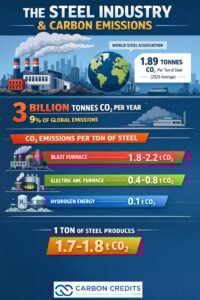
Per World Steel Association, the steel industry produces ~3 billion tonnes of CO₂ annually, accounting for ~9% of global emissions. The industry emits an average of 1.89 tonnes CO₂ per tonne in 2020. Producing one tonne of steel generates 1.7-1.8 tonnes of CO₂ on average, depending on technology use as seen below.

steel industry carbon emissions
Data source: World Steel Association

How Will France Support the Investment?

ArcelorMittal said part of the project will receive public support through Energy Efficiency Certificates (CEE). CEE is a regulatory mechanism in France that promotes energy savings and CO₂ reductions. The company said the support amount will represent 50% of the €1.3 billion investment.

The steelmaker also pointed to a key energy step in France. It said it recently signed a contract with EDF to secure a long-term supply of low-carbon, competitive electricity. The company described this as a major part of its energy strategy in France.

Electricity supply is critical for EAFs. The carbon benefit of an EAF depends heavily on how clean the grid is and how stable power prices are over time.

Why Did ArcelorMittal Invest in Bunkirk?

ArcelorMittal said three developments gave it confidence to confirm the Dunkirk investment.

  • Import Controls

First, it cited new European Commission proposals to limit unfair imports through a Tariff Rate Quota (TRQ) mechanism. ArcelorMittal said this approach would limit import quantities and impose additional duties if imports exceed set limits.

  • CBAM

Second, it pointed to proposed reforms to the EU’s Carbon Border Adjustment Mechanism (CBAM). ArcelorMittal said it expects these measures—if fully implemented—to restore “fair and competitive conditions” in the European steel market.

CBAM is the EU’s tool to apply a carbon price to certain carbon-intensive goods entering the EU. The European Commission says CBAM’s transitional phase runs from 2023 to 2025, and the definitive regime starts in 2026.

ArcelorMittal’s message was direct. It said it is important to implement the TRQ and adjust CBAM to close remaining loopholes as quickly as possible.

  • EDF Deal

Third, it highlighted its EDF electricity deal as another factor supporting the project.

€500M Bet on Electrification Demand

ArcelorMittal also highlighted another major investment near Dunkirk. At its Mardyck plant, close to Dunkirk, the company said it is starting up a new electrical steel production unit this quarter.

It said the company invested €500 million in this facility. ArcelorMittal described it as its largest investment in Europe in the last 10 years, excluding decarbonization projects.

Electrical steel is used in electric motors and other electrification applications. ArcelorMittal said the new plant supports the electrification of industrial and automotive uses. This point matters for demand.

Steelmakers often need clearer long-term demand signals for low-carbon materials before committing large capital to new production routes. 

From Blast Furnaces to EAFs: ArcelorMittal’s Broader Decarbonization Program

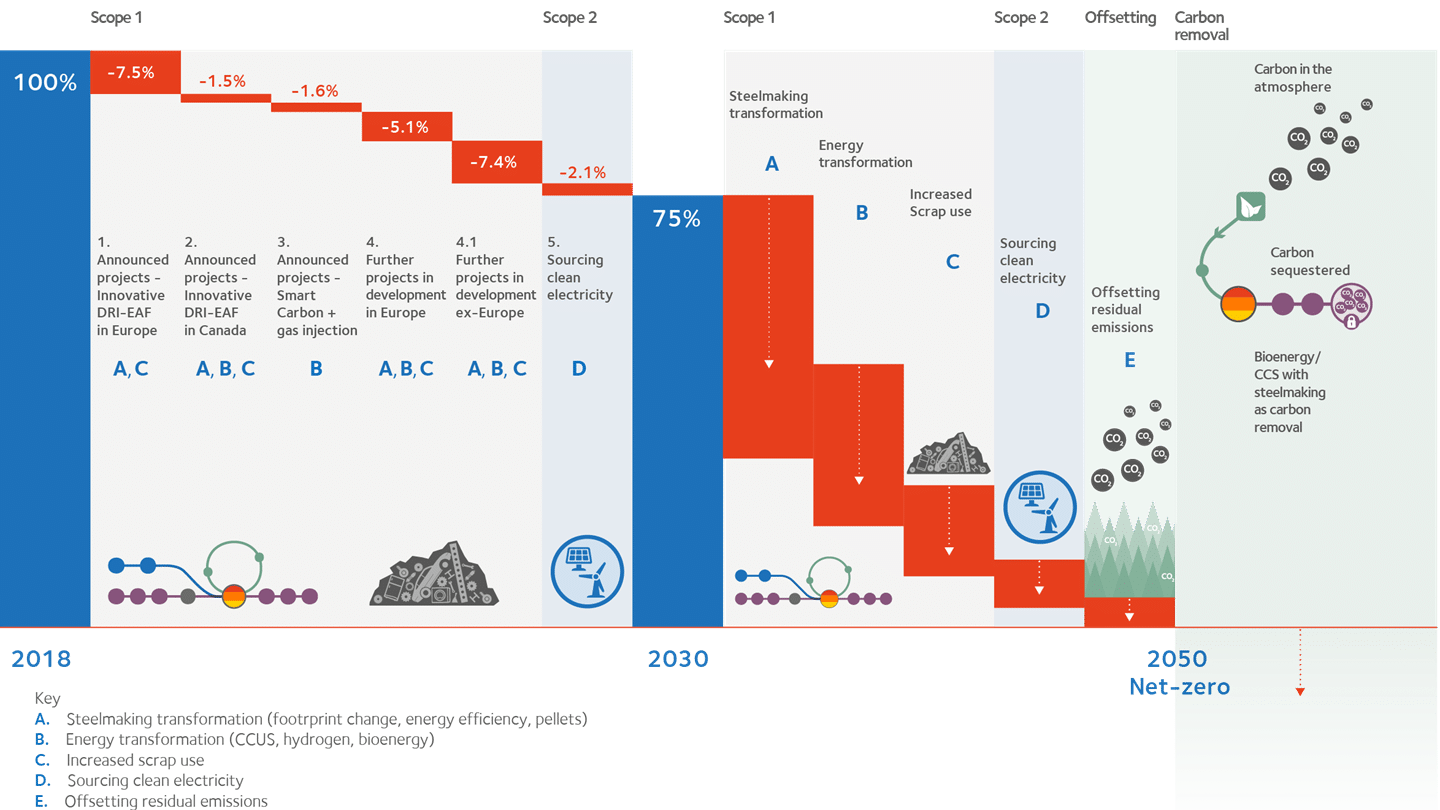
ArcelorMittal says it remains committed to reaching net-zero emissions by 2050. The company set this as a group-wide goal in 2020.

ArcelorMittal net zero or decarbonization roadmap
Source: ArcelorMittal

In its latest sustainability update, ArcelorMittal’s absolute emissions for its 2024 operating perimeter are almost 50% lower than its 2018 operating perimeter. The steel manufacturer further said it has invested $1 billion in decarbonization projects over that period.

The company is also shifting more steel production to the electric arc furnace (EAF) route. EAF production accounted for about a quarter of its global steelmaking in 2024, up from 19% in 2018.

In Europe, ArcelorMittal is moving ahead with several EAF-led projects. It said it started construction of a 1.1 million-tonne EAF at its long products plant in Gijón, Spain, which it expects will cut emissions by 1 million tonnes of CO₂e. It is also increasing output at Sestao, Spain, to 1.6 million tonnes by 2026, using two EAFs.

ArcelorMittal markets its low-carbon products under the XCarb® brand. The company said it can deliver low-carbon steel with a footprint as low as 300 kg CO₂ per tonne of steel, and it expected XCarb sales to rise to around 400,000 tonnes in the year it reported.

More notably, the company already operates an industrial-scale carbon capture and utilization (CCU) facility at Ghent, Belgium, with two additional pilots underway at the same site. 

Carbon Pricing and Competitiveness Reshape Steel

Steel decarbonization requires major capital and new infrastructure. It also needs policy support that reduces carbon leakage risk and helps companies compete with lower-cost imports.

The EU’s CBAM design aims to put a fair carbon price on imports and reduce the incentive to shift production outside the EU. The Commission notes that CBAM is also aligned with the phase-out of free allowances under the EU ETS to support industrial decarbonization.

At the same time, the steel sector still needs faster progress on emissions cuts. The IEA notes that steel emissions and emissions intensity need to fall by about 25% by 2030—around 3% per year—to get on track for net zero by mid-century.

ArcelorMittal’s Dunkirk EAF fits this direction. It shifts part of production toward a lower-emissions process and signals confidence that market rules are moving toward stronger climate and competitiveness safeguards.

Execution Phase: Can Policy and Profit Align?

ArcelorMittal said it will now focus on delivering the Dunkirk EAF project through to completion and commercial success.

The company also said it will review the possibility of building further EAFs elsewhere in Europe, but it plans to take a cautious approach based on its “economic decarbonisation” strategy.

For France, the project adds to broader efforts to keep heavy industry competitive while cutting emissions. Meanwhile, it reflects a wider shift toward low-carbon industrial investment for Europe backed by border measures, market defenses, and energy contracts.

For customers, the key outcome is supply. A 2-million-tonne EAF could provide lower-carbon steel at scale, starting in 2029, if the project stays on schedule and the policy measures ArcelorMittal cited take effect as planned.

The post ArcelorMittal Confirms $1.5 Billion Low-Carbon Steel Investment in France appeared first on Carbon Credits.
Is Carbon Capture Losing Steam? Equinor Reassesses CCS Investments

Equinor, long viewed as a global leader in carbon capture and storage (CCS), is slowing its near-term investment plans. The company said market conditions are not yet strong enough to support new large-scale CCS commitments, even though it has decades of technical expertise in the field.

As per reports, during its latest earnings call, CEO Anders Opedal acknowledged that CCS demand is developing more slowly than expected. As a result, Equinor will wait before approving new projects. The company remains willing to invest, but only when it sees clear customer demand, stable policy frameworks, and commercially viable contracts that can deliver solid returns.

In short, the technology is ready. The market signals are not.

Equinor Shifts Focus From Carbon Capture to Core Oil and Gas Returns

The reassessment is now visible in the company’s capital allocation plans. Equinor confirmed it will reduce capital expenditure by about $4 billion across 2026 and 2027 in its latest earnings report. Most of the reductions will affect its low-carbon solutions and power segment, which includes CCS, hydrogen, and ammonia.

At the same time, the company is sharpening its focus on profitability and cash flow. It plans to further develop the Norwegian Continental Shelf, pursue targeted growth in international oil and gas, and build an integrated power business.

  • Equinor also aims to reduce operating costs by 10% in 2026 and deliver around 3% oil and gas production growth that year.
  • For 2026 and 2027, it is targeting a return on average capital employed of roughly 13%.

However, the company’s financial performance has been solid. It reported 6% production growth in the fourth quarter and 3.4% growth for the full year. Portfolio “high-grading” and cost discipline remain central to its strategy. In this context, projects must compete for capital based on returns and risk. At present, large-scale CCS expansion does not yet meet those thresholds.

equinor
Source: Equinor

Low-Carbon Growth and Net-Zero Path

In its sustainability report, the company revealed that it has plans to keep investing in strong upstream projects while cutting emissions. It will prioritize existing infrastructure and factor carbon intensity into every portfolio decision. By producing cost-efficient barrels with lower emissions, Equinor aims to protect long-term value and maintain its license to operate responsibly.

At the same time, the company is investing in the energy transition. It is building renewable power, expanding low-carbon solutions, and applying its offshore engineering and subsurface expertise beyond oil and gas.

  • It targets10–12 GW of installed renewable capacity by 2030 and aims for 30–50 million tonnes of CO₂ transport and storage capacity by 2035.
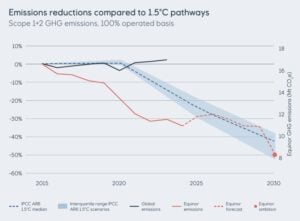
  • It also plans to reach net zero across Scope 1, 2, and 3 emissions by 2050, with a 50% cut in operated emissions by 2030 from 2015 levels.
equinor emissions
Source: Equinor

CCS remains central to these efforts. Equinor has safely stored millions of tonnes of CO₂ offshore Norway and continues developing transport networks connecting European industry to North Sea storage sites. Scaling CCS further will depend on stable policies, strong government support, and clear industrial demand.

low carbon ccs equinor
Source: Equinor

Norway’s Storage Potential Remains Strong

Equinor has spent more than 20 years developing CCS capabilities and has participated in over 40 research projects. Norway’s offshore geology provides a natural advantage. The seabed beneath the North Sea is considered highly suitable for long-term CO₂ storage and could potentially hold the equivalent of 1,000 years of Norway’s emissions.

Technically, the country is well-positioned to serve as a major European CO₂ storage hub. However, geology alone does not guarantee investment. Storage capacity must match real and committed capture volumes. Without enough industrial CO₂ flows secured under contract, storage sites cannot operate at scale.

Carbon Capture and Storage: A Growing Market With Real Barriers

As per Fortune Business Insights, the global carbon capture and sequestration market is still projected to expand. In 2025, the market was valued at around $4.51 billion. It is expected to approach $20 billion by 2034, reflecting strong long-term growth projections. North America currently leads the sector, supported by government incentives and operational CCS facilities.

ccs carbon capture and storage

CCS technology captures carbon dioxide from industrial sources or power plants, transports it by pipeline or ship, and stores it deep underground in geological formations. Storage often takes place in saline aquifers or depleted oil and gas reservoirs. In some cases, CO₂ is used for enhanced oil recovery, increasing oil production while storing emissions underground.

Despite this momentum, the industry faces clear challenges. CCS infrastructure requires high upfront capital. Projects involve complex regulation, long development timelines, and cross-border coordination. Most importantly, they require dependable revenue streams backed by firm customer commitments.

Equinor’s decision reflects these economic realities.

Decarbonization Delays Weaken Near-Term CCS Demand

The company emphasized that one of the biggest challenges is changing customer timelines. Just a few years ago, many industrial buyers of natural gas were actively exploring hydrogen supply and CO₂ transport and storage services. Decarbonization plans appeared urgent.

Today, that urgency has softened. Many of those same customers continue to buy gas, but they have pushed major emissions reduction commitments further into the future. Instead of focusing on projects before 2030, companies are now extending targets beyond that date.

This shift has weakened near-term demand for CCS services. Large storage projects depend on aggregating significant volumes of captured CO₂ under long-term contracts. Without those volumes, it becomes difficult to justify multi-billion-dollar infrastructure investments.

Although regulatory frameworks for CO₂ transport and storage have improved, progress on capture facilities and permitting has slowed. Policies are advancing, but the pipeline of ready-to-build projects is not growing at the same pace. For CCS to work commercially, capture projects, transport networks, storage hubs, and long-term contracts must move forward together. Right now, those pieces are not fully aligned.

A Reality Check for the CCS Sector

Equinor’s cautious stance highlights a broader reality facing the carbon capture industry. CCS is widely seen as essential for decarbonizing hard-to-abate sectors such as cement, steel, and chemicals. Many global net-zero pathways depend on large-scale deployment before 2030.

Yet technical readiness is not enough. Projects require predictable carbon pricing, stable long-term policy support, and customers willing to sign binding agreements. Without those elements, even experienced developers will hesitate.

The slowdown does not signal the end of CCS. Market forecasts still point to significant expansion over the next decade. However, deployment may not move as quickly as earlier expectations suggested.

Equinor’s message is clear. Climate ambition must translate into commercial commitment. Until customer demand strengthens and revenue visibility improves, capital will remain cautious. And for now, it is choosing discipline over speed. The company stands ready to invest when the economics make sense. But it will not move forward on optimism alone.

The post Is Carbon Capture Losing Steam? Equinor Reassesses CCS Investments appeared first on Carbon Credits.
Albemarle Shuts Lithium Plant But Bets Big on Strong Demand Outlook for 2026

Albemarle Shuts Lithium Plant But Bets Big on Strong Demand Outlook for 2026

Albemarle Corporation, one of the world’s largest lithium producers, has closed its Kemerton lithium hydroxide processing plant in Western Australia. The company made the decision due to rising costs and competitive pressures in hard-rock lithium processing. The closure affects more than 250 jobs and dozens of contractors.

The Kemerton plant processed lithium from the Greenbushes mine and was intended to supply battery-grade lithium chemicals. Albemarle invested over US$4 billion in the site, but the facility never reached its target performance. The company cited structural challenges and higher operating costs compared with plants in China.

The shutdown highlights difficulties in building competitive lithium processing outside China. China currently dominates lithium refining and battery supply chains. Many Western firms have struggled to build profitable chemical conversion capacity, even with recent lithium price improvements.

Solid Earnings, Shaky Investor Sentiment

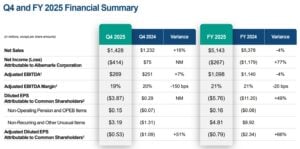
Albemarle reported its fourth-quarter and full-year 2025 earnings in mid-February 2026. The company posted net sales of US$1.4 billion, up about 16% year-on-year, driven by growth in energy storage volumes and pricing. Adjusted earnings before interest, tax, depreciation, and amortization (EBITDA) rose about 7% compared with 2024.

Albemarle financial results 2025
Source: Albemarle

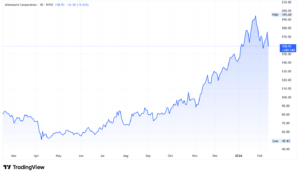
Despite these positive metrics, Albemarle’s stock fell sharply after the earnings release. Morningstar reported that on February 12, 2026, shares fell about 7%. This drop happened during a wider market sell-off. Still, the company’s profit outlook was better than what analysts expected.

Albemarle stock price

Investors reacted to a mixed message from the earnings data. The company had sales growth and strong cash flow. However, the closure of the Kemerton plant and ongoing cost pressures affected sentiment. Some investors were cautious about near-term guidance amid global market volatility.

But Management Bets on a 2026 Demand Rebound

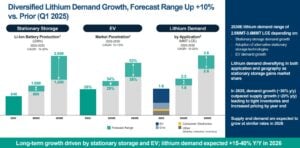
Despite short-term pressures, Albemarle’s management outlined a strong demand outlook for lithium in 2026. In a recent earnings call, company leaders projected that global lithium demand could grow by 15% to 40% in 2026.

Albemarle lithium demand outlook
Source: Albemarle

This growth is driven in part by a sharp rise in stationary energy storage demand and continued EV adoption. Stationary storage includes large battery systems used for grid balancing, renewable energy smoothing, and data centers. These systems are becoming major new consumers of lithium-ion batteries.

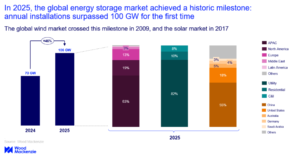
Industry reports say global energy storage installations more than doubled in 2025. This rise shows growing demand, extending beyond just electric vehicles.

global energy storage market 2025
Source: Wood Mackenzie

Albemarle also reported that its free cash flow in 2025 was about US$692 million after cost controls and capital discipline. The company plans to keep capital expenditures steady in 2026. It will focus on boosting productivity and developing resources instead of expensive expansion projects.

EVs and Grid Storage Keep the Battery Boom Alive

Lithium is a key metal for lithium-ion batteries. These batteries power electric vehicles (EVs), grid storage systems, portable electronics, and more.

Electric vehicle adoption continues to grow globally. The International Energy Agency says EV sales hit around 20 million units in 2025. This makes up nearly 25% of all car sales globally. EVs alone account for about 75% of total lithium demand in 2025 in battery markets.

In addition, stationary energy storage systems are becoming more common. Battery storage helps balance renewable energy like wind and solar on the grid. Storage growth is part of broader climate and energy policies in many countries.

  • Demand growth is also supported by new battery applications, such as data centers and backup power systems.

Some market analysts expect global lithium demand to more than double by the decade’s end. This will depend on EV adoption rates, renewable energy growth, and storage needs.

Processing Bottlenecks and Price Swings Complicate Supply

While demand is rising, the supply side of lithium faces challenges.

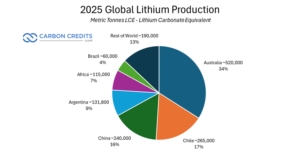
Mining output increased sharply between 2021 and 2025. Australia, Chile, and China expanded production during that period. However, processing capacity, especially outside China, has lagged.

2025 lithium global production

The closure of Albemarle’s Kemerton plant underscores these supply constraints. Western plants face higher labor, energy, and infrastructure costs compared with counterparts in China. These factors make lithium hydroxide production less profitable in some regions.

China dominates downstream lithium processing and battery cell production. The country holds 60–70% of the world’s lithium chemical processing capacity. It also makes around 75% of lithium-ion batteries, based on data from the International Energy Agency.

At the same time, some supply projects have delayed expansion, held back by financing costs, permitting hurdles, and fluctuating prices.

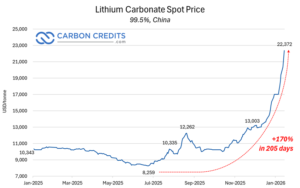
Price volatility has been a feature of the lithium market over the past few years. After reaching multiyear highs in 2022, lithium carbonate prices plunged through 2023 and 2024 due to oversupply. Prices bounced back in late 2025 and further skyrocketed in early 2026.

lithium carbonate spot price

Cost Cuts and Capital Discipline Take Center Stage

Albemarle’s recent actions illustrate how lithium producers respond to shifting conditions.

The company cut costs, lowered capital spending, and sold non-core assets to boost its balance sheet. These moves helped Albemarle generate strong free cash flow even with price swings.

Management noted cost and productivity gains of US$100–150 million aimed for 2026. This will help boost profit margins, particularly in energy storage segments.

Albemarle’s strategy focuses on maintaining stable operations while positioning for long-term demand growth. This includes optimizing asset portfolios, managing supply chains, and shifting production toward lower-cost channels.

Other companies in the lithium sector are also adapting. Some are concentrating on mining expansions, processing partnerships, and technology improvements. Others are exploring recycling and alternative battery chemistries to reduce reliance on lithium.

Miners like Pilbara Minerals, SQM, and Sigma Lithium are expanding and optimizing supply. They do this to stay competitive during price cycles. Refiners like Ganfeng Lithium and Tianqi Lithium are expanding their conversion capacity. They are also integrating their supply chains.

Moreover, firms like Standard Lithium and EnergyX are developing direct lithium extraction methods. These aim to boost recovery and lower water impacts. Recycling companies like Redwood Materials, Li-Cycle, and Umicore are expanding systems. They recover lithium and other metals from used batteries.

Battery makers such as CATL are also investing in sodium-ion technology, which can reduce lithium demand in some market segments.

A Tightening Market in the Making?

The lithium market continues to evolve. There are signs of a structural shift as demand grows faster than supply in some scenarios.

Analysts expect that demand from EVs and energy storage will keep pushing lithium consumption up for the rest of the decade. Albemarle’s plant closure shows that supply issues and processing challenges might tighten the market. This could happen if new capacity isn’t ready soon.

Long-term forecasts suggest many countries and companies will need secure lithium sources. They will also need more downstream processing capacity to meet climate and clean energy goals.

For Albemarle, the mix of cost discipline, demand growth forecasts, and strategic positioning could help the company navigate a market that is both dynamic and competitive.

The post Albemarle Shuts Lithium Plant But Bets Big on Strong Demand Outlook for 2026 appeared first on Carbon Credits.
DECARBON 2026 Concludes with Two Days of Strategic Debate and Practical Decarbonisation Insights

Hosted by Shell and held in partnership with Moeve, Fluor, Gasunie, The International Association of Oil & Gas Producers, Repsol, Spiecapag and Germany Trade and Invest, DECARBON 2026 centred on practical decision-making at the intersection of policy, technology and implementation across the oil and gas value chain in Vösendorf, Austria.

On 9 February, the first day opened with an Executive Opening Panel that set the strategic context for DECARBON by linking emissions targets with the operational capabilities required to deliver them. Drawing on perspectives from Petro IT, Shell Austria, Saipem SpA, Austrian Gas Grid Management AG, Chromalox, NEUMAN & ESSER Deutschland GmbH & Co KG and PCK Raffinerie GmbH, the discussion addressed investment priorities, data-driven decision-making and on-site constraints, clarifying why a strategic approach and clearly defined NetZero targets play a central role in modern oil and gas operations.

As Rainer Klöpfer, Country Chair & Managing Director at Shell Austria, emphasised, the conversation around net-zero must account for the full carbon intensity of energy products, spanning production, supply chains and end use. He underlined that operating plans are updated regularly and reflect today’s economic realities, while long-term net-zero targets sit beyond immediate planning cycles and require steady structural progress. This perspective shifted the focus from ambition to execution and naturally opened the floor to the next strategic question: which concrete low-carbon solutions can integrate into existing systems at scale.

This was followed by the Leaders Panel on low-carbon hydrogen as a decarbonisation tool, with contributions from a broad range of energy, infrastructure and technology players, including MOL Group, Eurogas, NextChem, Alléo Energy, Moeve and Italgas Reti. The panel examined hydrogen’s role within decarbonisation strategies and its interaction with existing infrastructure and regulatory frameworks.

Pedro Medina, Hydrogen Technology Manager at Moeve, outlined the company’s transformation of its refineries in San Roque and Palos de la Frontera into diversified energy parks adapted for renewable fuels, including biofuels and green hydrogen. He emphasised Southern Europe’s strong production potential and referred to the development of European hydrogen corridors connecting hubs such as Huelva and Algeciras with

Rotterdam, illustrating how green hydrogen is taking shape as a cross-border value chain within the evolving European energy landscape.

The conversation then continued through two roundtable discussions. The first roundtable on the digital approach to emissions performance brought together representatives from Siemens AG, Gradyent and other industry participants to explore digitalisation, automation and data-driven sustainability initiatives. The next roundtable on institutional readiness, with participants from Wood, OPEC, OGE and others, addressed regulatory risk, compliance requirements and policy developments.

Day One also featured two thematic sessions examining decarbonisation pathways in downstream operations through low-carbon fuels and feedstock, alongside practical levers for emissions reduction in upstream activities, with contributions from companies including TotalEnergies, Chromalox, VEM Sachsenwerk GmbH and others.

It concluded with a gala dinner and prize draw at Casino Baumgarten, located in the heart of Vienna. Live music, a magician’s performance and a gift raffle from BGS Group and participating delegates created a vibrant atmosphere, while conversations continued over dinner in an informal setting that strengthened professional connections.

The second day moved the discussion toward evaluation and optimisation, bringing sharper focus to cost, performance and implementation. During a moderated debate, representatives of Reganosa, Saras, Gas Infrastructure Europe and The Carbon Capture and Storage Association examined the financial implications of decarbonisation and the investment logic behind transition pathways. Roundtable 3 then turned to energy efficiency in downstream, where Fluor, Akselos and other sector specialists shared operational case studies and technical insight. The Congress concluded with a Closing Panel on CCUS, featuring perspectives from Petrofac, DESFA, Worley Comprimo and others, highlighting carbon capture, utilisation and storage within long-term emissions reduction strategies.

Phillip Cooper, Project Director at Petrofac for the Design of the Aramis CCS Pipeline System, summarised the key lesson from project delivery: effective CCS development requires a collaborative and knowledgeable client and FEED team in the room from the outset to ensure alignment and accelerate resolution. He stressed that system engineering across the entire value chain is critical, as the whole system must function as one despite contractual boundaries, and that early involvement of contractors and vendors is essential to understand what the project will realistically cost and to avoid unnecessary cost premiums.

Over the two days, DECARBON 2026 reinforced its role as a closed-door platform for senior executives, technical leaders and policy experts to engage in implementation-oriented dialogue grounded in real operational contexts. More than 180 pre-arranged B2B sessions took place within a structured networking format, coordinated by dedicated personal managers assigned to each delegate. Participants highlighted the productivity and efficiency of these targeted exchanges, with many confirming follow-up discussions and outlining future joint projects.

Registration for DECARBON 2027, taking place on 15-16 February 2027 in Berlin, Germany, is now open. Follow the Congress updates and secure participation in the next edition focused on real-world decarbonisation strategies: https://sh.bgs.group/3ui

The post DECARBON 2026 Concludes with Two Days of Strategic Debate and Practical Decarbonisation Insights appeared first on Carbon Credits.
Trump EPA’s Largest Climate Deregulation: What the 2009 “Endangerment Finding” Repeal Means for U.S. Emissions and the EV Market

On February 12, President Donald Trump and the U.S. Environmental Protection Agency (EPA) Administrator Lee Zeldin announced what they called the largest deregulation in U.S. history in the White House’s Roosevelt Room.

The EPA finalized a rule that removes the 2009 Greenhouse Gas (GHG) Endangerment Finding. The Obama administration created this finding, and it gave the federal government the legal authority to regulate greenhouse gas emissions under the Clean Air Act for more than a decade.

The new rule also removes all federal greenhouse gas standards for cars, trucks, and engines built from model year 2012 through 2027 and beyond. In addition, the EPA ended compliance credits tied to certain technologies, including start-stop systems.

In short, the administration rolled back the key rule that supported federal climate regulations on vehicles.

The Role of the 2009 Endangerment Finding

In 2009, the EPA said that six major greenhouse gases—including carbon dioxide—harm public health and the environment. The agency concluded that these gases drive climate change and damage air quality. That decision gave the federal government the authority to set emission limits for light-, medium-, and heavy-duty vehicles. It also supported climate rules for power plants and the oil and gas industry.

Because of this finding, the EPA introduced several greenhouse gas standards over the past decade. These rules shaped vehicle design, fuel economy targets, and broader climate policy across multiple sectors.

Why the EPA Repealed It Now

In 2025, the Trump administration began reviewing the 2009 decision. Officials argued that some of the science behind the finding was weaker than originally believed. They also said earlier climate projections were too pessimistic.

Now that the repeal is final, the EPA says it no longer has authority under Section 202(a) of the Clean Air Act to regulate greenhouse gases the way it did before. The agency believes Congress—not federal regulators—should decide major climate policy.

EPA leaders say this move restores a strict reading of the law and ends what they call regulatory overreach. Critics strongly disagree. Many scientists and public health experts argue that the repeal removes an important tool that protects Americans and helps address climate change.

Most importantly, the EPA estimates the final rule will save more than $1.3 trillion. It removes requirements for automakers to measure, report, certify, and comply with federal greenhouse gas standards. The agency says the rollback will lower vehicle prices, expand consumer choice, and reduce transportation costs for families and businesses.

Administrator Zeldin commented,

“The Endangerment Finding has been the source of 16 years of consumer choice restrictions and trillions of dollars in hidden costs for Americans. Referred to by some as the ‘Holy Grail’ of the ‘climate change religion,’ the Endangerment Finding is now eliminated. The Trump EPA is strictly following the letter of the law, returning commonsense to policy, delivering consumer choice to Americans and advancing the American Dream. As EPA Administrator, I am proud to deliver the single largest deregulatory action in U.S. history on behalf of American taxpayers and consumers. As an added bonus, the off-cycle credit for the almost universally despised start-stop feature on vehicles has been removed.”

U.S. Emissions Trends in 2025: Mixed Signals

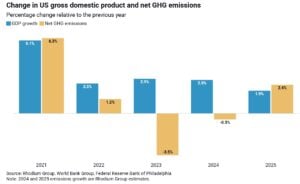
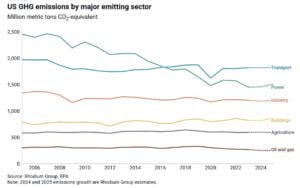
At a climate crossroads, the United States saw a rebound in greenhouse gas emissions in 2025 after years of overall decline. According to estimates from the Rhodium Group, total U.S. emissions rose about 2.4% in 2025, reaching roughly 5.9 billion tons of CO₂ equivalent—139 million tons higher than in 2024. This uptick ended a two‑year downward trend that had been driven by cleaner energy and transportation shifts.

us emission

Several factors pushed emissions higher: colder winter weather increased demand for heating; rising electricity demand from data centers and cryptocurrency mining boosted fossil fuel use; and higher natural gas prices led utilities to burn more coal. The power sector alone saw a 3.8% rise in emissions, while buildings’ emissions jumped 6.8%. Transportation emissions, the largest U.S. source, remained largely flat, increasing only modestly due to continued adoption of hybrid and electric vehicles.

us emissions

Despite the 2025 increase, total emissions are still below pre‑pandemic levels and well under 2005 baselines—roughly 18% below 2005 levels—showing that long‑term trends toward decarbonization have not entirely reversed yet.

Preliminary sector data from Climate TRACE also indicates that U.S. emissions continued rising throughout 2025, adding more than 71 million tonnes of CO₂ equivalent through the first three quarters of the year.

The EV Market in 2025: Growth and Slowdowns

In contrast to emissions trends, the U.S. electric vehicle (EV) market continued to grow in 2025, though the pace and dynamics evolved. EVs made notable gains in sales and market share, reflecting both consumer demand and industry transitions.

In the first quarter of 2025, nearly 300,000 battery‑electric vehicles were newly registered, marking over a 10% year‑over‑year increase. EVs accounted for about 7.5% of all new car registrations during that period.

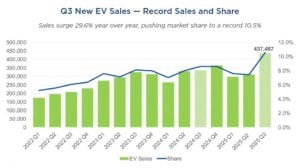
By the third quarter, sales surged again. Cox Automotive reported that EV sales jumped nearly 30% year‑over‑year, pushing EV market share to a record 10.5% of total vehicle sales in Q3 2025—a milestone reflecting strong consumer uptake in several segments.

ev sales
source: Cox Automotive

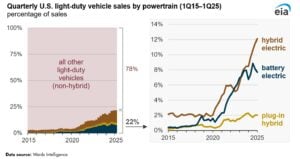
Even so, EV adoption remains far from dominating the U.S. market. Estimates show that electric vehicles comprised around 8–10% of total U.S. new car sales in 2025, with internal‑combustion engine vehicles still accounting for the large majority of the fleet.

Tesla remained the largest EV brand in the U.S. in 2025, holding about 46% market share, though this marked a slight decline from previous years. Rivals like Chevrolet and Hyundai grew their shares, reflecting broader model availability and shifting consumer preferences.

Market analysts also project that by 2025, the U.S. EV market’s size, sales, and technology focus will continue expanding—with battery‑electric vehicles expected to dominate EV segments. The broader EV market size had substantial growth in 2025, with further expansion expected toward the end of the decade.

us ev market

Balancing Regulation, Consumer Choice, and Emissions Goals

EPA officials say that removing federal GHG standards and related compliance credits will lower vehicle costs by about $2,400 per car. This will ease financial pressure on families and businesses and give buyers more choice. The agency calls it a step toward restoring the American Dream, making transportation more affordable without high regulatory costs.

Supporters argue the rollback removes artificial mandates, letting automakers and consumers focus on market-driven solutions. The EPA also ended “off-cycle” credits, which allowed carmakers to meet emission targets with minor technology changes. Critics called these credits gimmicks with little real environmental benefit.

Litigation and Future Policy

Environmental groups, scientists, and several states sharply criticized the move. They warn that it weakens climate action, public health protections, and emission reductions. Many fear that removing these rules while emissions are rising could set back U.S. climate goals.

Legal challenges are expected, with lawsuits likely to block or reverse the repeal. As federal rules change, state policies, corporate commitments, and Congress may play a larger role. Some states have already set carbon standards and EV incentives, creating a patchwork of climate policies across the country.

In conclusion, the 2026 repeal of the GHG Endangerment Finding marks a major shift in U.S. climate policy. With emissions rising and clean technology markets evolving, the country faces tough choices about balancing economic growth, innovation, and climate risk. The coming years will be shaped by lawsuits, state leadership, private investments, and the global move toward low-carbon economies.

The post Trump EPA’s Largest Climate Deregulation: What the 2009 “Endangerment Finding” Repeal Means for U.S. Emissions and the EV Market appeared first on Carbon Credits.
Canada Invests C$97M to Supercharge EV Charging and Cut Transport Emissions

Canada Invests C$97M to Supercharge EV Charging and Cut Transport Emissions

Canada’s federal government has announced C$97.3 million (almost US$72 million) in new funding for clean transportation projects across the country. It was announced by Natural Resources Canada and other federal departments. The money will support 155 projects in provinces and territories nationwide.

The investment aims to expand electric vehicle (EV) charging, help freight fleets reduce emissions, and increase public awareness of clean transportation.

The Honourable Julie Dabrusin, Minister of Environment and Climate Change and Nature, stated,

“We are making it easier, cleaner, and more affordable for Canadians to get where they need to go by investing in new EV charging infrastructure… Making the switch to an electric vehicle reduces greenhouse gas emissions, and with the EV Affordability Program, drivers can save up to $5000, making EVs more accessible for Canadians to go electric.”

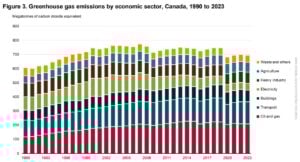
Transportation is Canada’s largest source of greenhouse gas emissions. According to Environment and Climate Change Canada, transport accounted for about 22–25% of national emissions in 2023, totaling almost 157 million tonnes of CO₂ equivalent. Passenger vehicles and freight trucks make up most of these emissions.

canada GHG emisssions by sector
Source: Government of Canada, ECCC

Reducing transport emissions is key to Canada’s goal of reaching net-zero emissions by 2050.

Charging Ahead: Billions Flow Into EV Infrastructure

The biggest part of the C$97.3 million package, C$84.4 million, will support EV charging infrastructure. This funding comes from Canada’s Zero Emission Vehicle Infrastructure Program (ZEVIP). It will support 122 projects that will install more than 8,000 new EV chargers across the country.

Canada already has more than 30,000 public charging ports installed, according to Natural Resources Canada. The new chargers will expand coverage in cities, rural areas, highways, workplaces, and multi-unit residential buildings.

Some major recipients include:

  • Pollution Probe Foundation: C$7.3 million for 495 chargers.
  • Manitoba Motor Dealers Association: C$6.5 million for up to 520 chargers.
  • DP World Canada: C$4.375 million for 111 chargers.
  • Purolator Inc.: C$2.575 million for 393 chargers.

Municipalities such as Calgary, Vancouver, Regina, Kelowna, Mississauga, and St. John’s are also receiving funding.

The federal government has set a target for 100% of new light-duty vehicle sales to be zero-emission by 2035. Expanding charging infrastructure supports this goal and helps reduce range concerns for drivers.

Greening the Freight Network

The announcement also includes C$5.7 million for three projects under the Green Freight Program. Medium- and heavy-duty trucks play a major role in freight transport. These vehicles consume large amounts of diesel fuel and produce significant emissions.

The Green Freight funding will help fleets with the following:

  • Upgrade engines and vehicles,
  • Improve fuel efficiency,
  • Adopt low-carbon technologies, and
  • Improve logistics planning.

Freight trucks represent about 37% of Canada’s transportation emissions, according to federal data. Cutting fuel use in this segment can reduce both operating costs and carbon output.

These projects aim to improve fleet performance while supporting Canada’s broader climate targets.

Education and Indigenous-led Initiatives in the EV Shift

The remaining C$7.2 million will support 30 education and awareness projects across Canada. These initiatives will provide information about EV adoption, charging technology, and clean fuels. They will also help train workers in EV infrastructure installation and maintenance.

Of the 30 projects, 11 are Indigenous-led. These projects focus on increasing awareness and access to clean transportation in Indigenous communities and northern regions.

Activities in this program include:

  • Community test-drive events
  • Skills training workshops
  • Public outreach on clean fuel options

The advocates believe that education helps build confidence in electric mobility and supports long-term adoption.

Part of a Bigger National Electrification Push

The C$97.3 million funding is part of Canada’s broader Automotive Strategy and National Charging Infrastructure Strategy, announced in early 2026.

In addition to this funding, the Canada Infrastructure Bank (CIB) increased its charging and hydrogen refueling program by C$1 billion. This brings the total funding in that initiative to C$1.5 billion. The CIB program aims to support up to 5,400 new public fast-charging stations across the country.

The government also continues to provide purchase incentives for zero-emission vehicles. Federal rebates of up to C$5,000 are available for eligible EV buyers under existing programs.

Together, these measures aim to reduce emissions while strengthening Canada’s auto sector and supply chains. More so, the sector’s GHG emissions keep rising again post-COVID 19 pandemic.

Supporting Canada’s Net-Zero and 2035 ZEV Targets

This funding supports Canada’s national climate targets. The federal government plans to cut emissions by 40–45% from 2005 levels by 2030. It also aims for net-zero emissions by 2050.

Canada net zero goals 2030 target
Source: Canadian Government

This commitment is part of the Canadian Net-Zero Emissions Accountability Act. Transportation is the biggest source of emissions in the country, and so cutting vehicle emissions is key to reaching these goals.

Canada has set rules for new light-duty vehicles. By 2035, all sales must be zero-emission. There are interim goals of 20% by 2026 and 60% by 2030. Expanding EV charging helps meet those sales targets by making electric vehicles more practical for drivers across urban and rural areas.

Also, the federal government has set national infrastructure targets of deploying 84,500 EV chargers and 45 hydrogen refueling stations by 2029. These targets aim to ensure that charging and refueling networks grow in step with rising zero-emission vehicle adoption across the country.

Cleaner freight projects also support Canada’s broader plan to cut emissions from medium- and heavy-duty vehicles. The C$97.3 million funding supports Canada’s long-term move to a lower-carbon transportation system. It combines infrastructure investment, fleet upgrades, and education programs.

Closing the Emissions Gap in Transport

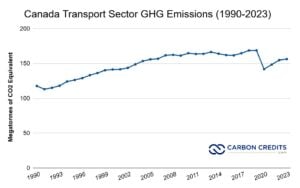
Transportation emissions remain high in Canada. Power plant emissions have fallen in recent years, but transport emissions have been slower to drop.

Canada Transport Sector GHG Emissions (1990-2023)
Data Source: Environment and Climate Change Canada (ECCC)

Electric vehicles produce zero tailpipe emissions. Canada’s electricity grid is about 83% non-emitting. So, when powered by it, EVs can greatly reduce carbon output. Heavy-duty vehicle upgrades and freight efficiency improvements also provide measurable reductions.

The new C$97.3 million funding helps close infrastructure gaps and prepares communities for increased EV adoption. It also sends a signal to private investors. Public funding often helps unlock additional private capital in clean energy and infrastructure projects.

Moreover, the installation of 8,000 new chargers will increase national charging coverage. Freight modernization projects will reduce diesel use, while education programs will improve awareness and workforce skills.

These steps support Canada’s commitment to reducing emissions by 40–45% below 2005 levels by 2030, while moving toward net-zero by 2050.

The C$97.3 million investment is one part of a broader national effort. As charging networks grow and fleets modernize, Canada’s transportation sector may gradually lower its carbon footprint. Further policy support, infrastructure development, and private investment will determine the pace of that transition.

The post Canada Invests C$97M to Supercharge EV Charging and Cut Transport Emissions appeared first on Carbon Credits.

Uranium Prices 2026: Supply Crunch and Rising Demand Fuel a Nuclear Bull Market

uranium

Uranium is back in the spotlight. In 2026, uranium prices are climbing to levels not seen in years, fueled by supply constraints, policy support, and rising demand from nuclear power and AI-driven data centers. What was once a quiet energy commodity is now a strategic asset at the heart of the global energy transition.

Sprott Drives Uranium Price Rally with Strategic Accumulation

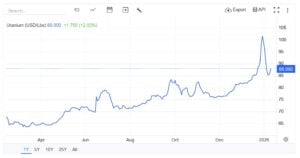
As per media reports, the global uranium market entered 2026 with strong momentum, as spot uranium prices surged by roughly 25% in January, surpassing $100 per pound for the first time in two years. This sharp rise reflects growing confidence in nuclear energy and mounting concerns about long-term supply constraints.

According to Sprott Asset Management, the rally toward 2024 peak levels indicates a stronger supportive backdrop than last year. In 2025, prices were volatile—falling in the early months before rebounding from the low $60s to the high $80s in the second half. Today, fundamentals appear more favorable.

uranium prices
Source: Trading Economics

Jacob White, Sprott’s ETF products director, noted that the January surge signals a shift in investor focus. Capital is moving away from downstream nuclear themes and returning to the upstream uranium supply chain, largely due to clearer policy signals and improving fundamentals.

Moreover, Sprott has been one of the largest buyers of physical uranium, adding around 4 million pounds to its uranium fund this year and bringing total holdings to nearly 79 million pounds. This accumulation highlights how investors increasingly view uranium as a strategic, long-term asset rather than a cyclical commodity.

Financial Buyers Are Redefining the Market

Institutional investors are transforming uranium into a financial asset class. Funds that accumulate physical uranium create additional demand beyond traditional utilities, removing supply from the spot market and amplifying price volatility.

Unlike utilities, financial buyers are less sensitive to short-term price swings. Their participation reduces downside risk and strengthens the long-term bull market thesis.

Strong Policy Support Is Driving Uranium Prices

Government policy is playing an increasingly influential role in shaping uranium prices in 2026. The U.S. government’s Section 232 framework on critical minerals explicitly designates uranium as vital for energy security and national defense, placing it alongside rare earths and lithium as a strategic resource.

At the same time, the U.S. Department of Energy (DOE) committed $2.7 billion over the next decade to expand domestic uranium enrichment. The investment aims to reduce reliance on foreign suppliers while supporting the next phase of nuclear power growth.

AI and Data Centers Boost Uranium Demand

This policy shift reflects a broader change in perception. Nuclear is now viewed as essential for meeting rising electricity demand, powering AI infrastructure, ensuring industrial resilience, and achieving long-term climate goals.

As tech companies increasingly recognize nuclear as a strategic power source, they create a new, enduring layer of uranium demand. Analysts project that the uranium market could expand to $60.5 billion by 2030, with AI-driven demand accelerating this growth.

Enrichment Bottlenecks Highlight Structural Weaknesses

Despite policy support, uranium enrichment remains a major bottleneck. Most reactors operate on low-enriched uranium (LEU), while advanced reactors—including small modular reactors (SMRs)—require high-assay low-enriched uranium (HALEU).

Currently, the U.S. produces less than 1% of global enrichment capacity and relies heavily on foreign suppliers. New restrictions on Russian uranium imports starting in 2028 further emphasize energy security risks.

Although the DOE’s investment aims to rebuild domestic enrichment capacity, new facilities will take years to become operational. Consequently, near-term enrichment constraints will continue to support higher uranium prices.

Mining Remains the Weakest Link

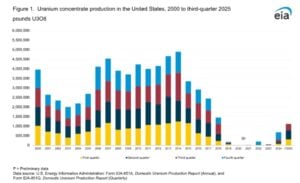
While enrichment is a challenge, upstream mining remains the weakest link in the nuclear fuel cycle. The U.S. Energy Information Administration reported that domestic uranium concentrate production fell 44% in Q3 2025, to about 329,623 pounds of U₃O₈, from only six operating facilities, mainly in Wyoming and Texas.

uranium demand us

This decline highlights a systemic problem. The nuclear fuel cycle requires coordinated growth across mining, processing, enrichment, and fuel fabrication. Advancements in one segment without corresponding growth in the others create structural bottlenecks.

In the short term, declining production adds bullish pressure. Over the long term, decades of underinvestment in mining point to a persistent supply deficit, which could keep prices elevated.

Uranium Supply and Demand Outlook

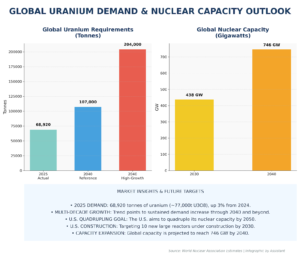
Global demand for reactor fuel continued to grow in 2025. The World Nuclear Association estimates uranium requirements at about 68,920 tonnes, or roughly 77,000 tonnes of uranium oxide, up 3% from 2024.

Looking ahead, demand is expected to rise sharply. Under the reference scenario, global uranium needs could reach 107,000 tonnes by 2040, and under a higher-growth scenario, up to 204,000 tonnes.

This growth aligns with increasing nuclear capacity, which is projected to climb to 438 gigawatts by 2030, and nearly 746 gigawatts by 2040. The trend points to a long-term, multi-decade increase in uranium demand.

Uranium demand and supply
Data Source: WNA

The U.S. also plans to quadruple nuclear capacity by 2050 and have 10 new large reactors under construction by 2030. If achieved, this expansion would dramatically increase uranium demand.

The timing mismatch between rising demand and the slow pace of mine development creates a structural imbalance between supply and demand. Analysts also speculate that the U.S. government could take equity stakes in uranium miners in exchange for long-term offtake agreements with price floors. This move would further tighten supply and support higher prices.

Kazatomprom’s 2026 Outlook Signals Tight Margins

Recent reports tell that Kazatomprom plans to raise uranium output by about 9% in 2026, targeting 71.5–75.4 million pounds of U₃O₈, slightly below state caps but above analyst forecasts.

However, new ISR projects and brownfield expansions take time, so near-term supply remains constrained, keeping upward pressure on prices.

2026: Why the Uranium Bull Market Could Continue

Given these dynamics, uranium prices could continue trending higher throughout 2026. Government investment, supply bottlenecks, and AI-driven demand are reshaping uranium’s role in the global energy mix. Prices could approach $92 per pound or more, particularly if contracting accelerates or financial buyers continue stockpiling physical uranium.

Uranium is evolving from a traditional commodity into a strategic pillar of the global energy transition. Policy support, structural supply constraints, institutional demand, and AI-driven electricity requirements are creating a compelling long-term bull case.

For investors and utilities alike, the uranium market is signaling that big moves—and big opportunities—are on the horizon.

The post Uranium Prices 2026: Supply Crunch and Rising Demand Fuel a Nuclear Bull Market appeared first on Carbon Credits.