India Needs $220 Billion in Clean Energy Investment to Hit 2030 Target

India Needs $220 Billion in Clean Energy Investment to Hit 2030 Target

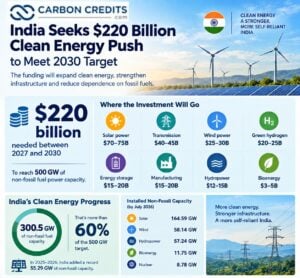
India is seeking a major investment boost to expand clean energy and reduce its dependence on fossil fuels. The government estimates that the country needs about $220 billion between 2027 and 2030 to meet its goal of 500 gigawatts (GW) of installed non-fossil fuel power capacity.

The funding would support solar and wind power, electricity transmission, energy storage, green hydrogen, and domestic manufacturing. The country is also looking for more private and foreign investment to help pay for the expansion.

The scale of the plan highlights both the opportunity and the challenge facing one of the world’s largest energy markets. India has made rapid progress in adding clean power, but it must build more infrastructure and attract enough investment to meet its 2030 target.

India Needs $220 Billion Across Clean Energy Sectors

Santosh Kumar Sarangi, secretary of India’s Ministry of New and Renewable Energy, outlined the investment need ahead of the Bharat Renewable Energy Summit and Expo, scheduled for November 2–5, 2026, in New Delhi. The government’s estimates show how the funding could be spread across the clean energy sector.

  • Solar power: $70 billion to $75 billion
  • Electricity transmission: $40 billion to $45 billion
  • Wind power: $25 billion to $30 billion
  • Green hydrogen: $20 billion to $25 billion
  • Energy storage: $15 billion to $20 billion
  • Domestic manufacturing: $15 billion to $20 billion
  • Hydropower: $12 billion to $15 billion
  • Bioenergy: $3 billion to $5 billion

Solar power accounts for the largest share of the projected investment. But the plan also shows why India cannot rely on new power plants alone.

Transmission lines are needed to move electricity from renewable energy projects to homes, businesses, and factories. Storage systems can hold surplus power and release it when solar and wind output falls.

The $220 billion figure is an estimated investment requirement. The Indian government plans to use the summit to discuss ways to bring together investors, project developers, manufacturers, and financial institutions.

India Has Added More Than 300 GW of Non-Fossil Power

India has already made significant progress toward its 2030 goal. The Ministry of New and Renewable Energy reported that the country had reached 300.5 GW of installed non-fossil fuel capacity by July 31, 2026. This represented more than 60% of the 500 GW target.

  • The total included 164.59 GW of solar power, 58.14 GW of wind, 57.24 GW of large and small hydropower, 11.75 GW of bioenergy, and 8.78 GW of nuclear power.
  • India added a record 55.29 GW of non-fossil fuel capacity during the 2025–2026 financial year, including 44.6 GW of solar and 6 GW of wind power.

These figures measure installed power capacity, not the amount of electricity generated at every moment. Solar and wind output changes with weather and time of day, making transmission and storage important as their share of the power system grows.

The 500 GW goal also covers more than renewable energy. It includes nuclear power and other non-fossil sources, so it should not be described as a target for renewables alone.
India’s $220B Clean Energy Push

Grid Expansion and Storage Remain Key Challenges

Adding clean power plants is only part of the transition. India also needs a stronger electricity grid to connect new projects and deliver their output where it is needed.

This is a major concern as solar and wind capacity grows. Some projects are located far from large centres of electricity demand, requiring new transmission lines and grid upgrades.

Energy storage can help balance supply and demand. Batteries can store electricity when production is high and release it when output falls, or demand rises. Hydropower and other flexible power sources can also support the grid, depending on local conditions.

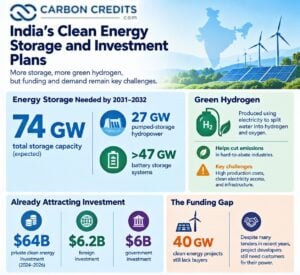
India’s Central Electricity Authority expects a need for about 74 GW of energy storage by 2031–2032. This includes around 27 GW from pumped-storage hydropower and over 47 GW from battery storage systems.

The investment plan also includes green hydrogen, which is produced using electricity to split water into hydrogen and oxygen. It can help reduce emissions in industries that are difficult to electrify, although production costs, access to clean electricity, and infrastructure remain important challenges.

India Faces a Funding Gap And a Shortage of Power Buyers

India has already attracted large amounts of capital into its clean energy sector. Sarangi told Reuters that the country received about $64 billion in private clean energy investment between 2024 and 2026, including $6.2 billion in foreign investment. The government invested an additional $6 billion over the period.
India’s Clean Energy Investment Outlook

However, the country still faces a gap between developing projects and securing customers for their electricity. Reuters reported that around 40 GW of clean energy projects had yet to find buyers, following a large number of project tenders in recent years.

This highlights a problem that new investment alone cannot solve. Developers need power purchase agreements or other arrangements that give them a clear route to sell the electricity they generate. Without buyers, projects may struggle to reach construction or secure financing.

The government is working with state governments to encourage greater use of clean power and expand battery storage. The upcoming renewable energy summit is also expected to bring together domestic and international investors to discuss funding and project opportunities.

The government hopes these efforts will help turn its investment target into projects that can be built and connected to the grid.

How Clean Energy Growth Supports India’s Climate Targets

India’s clean energy expansion is also linked to its wider climate commitments. The country aims to reach net-zero greenhouse gas emissions by 2070. Under its updated climate pledge, India has committed to reduce the emissions intensity of its gross domestic product by 45% by 2030 from 2005 levels. It also aims for non-fossil fuel sources to make up about 50% of its cumulative installed electricity capacity by 2030.
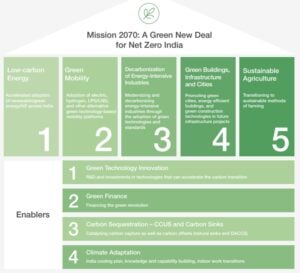
Mission 2070 for India net zero goal
Source: WEF

Emissions intensity measures the amount of greenhouse gas emitted for each unit of economic output. It can fall even while total emissions rise, so it is different from an absolute emissions-reduction target.

Expanding non-fossil power can help India meet these goals by reducing the need for coal and other fossil fuels in electricity generation. However, the climate benefit will depend on how much clean electricity is actually produced and how it changes the role of fossil fuel power.

Manufacturing is another part of the transition. India is seeking to expand domestic production of solar equipment and other clean energy technologies. This could support local industry and reduce reliance on imported components, while creating demand for more investment across the supply chain.

Green hydrogen could also help reduce emissions in sectors such as heavy industry, but its climate value depends on how the hydrogen is produced and the energy used.

Can India Mobilize $220 Billion by 2030?

India’s $220 billion plan sets out the scale of investment needed to expand its clean energy system over the next four years. Solar and wind projects will need to grow alongside transmission networks, storage, manufacturing, and other supporting infrastructure.

The country has already added more than 300 GW of non-fossil fuel capacity and attracted billions of dollars in private investment. Still, the need for new buyers for some projects shows that funding, grid access, and reliable demand must develop together.

If India can mobilize the required capital and address these infrastructure and market barriers, the expansion could support its 2030 power target and longer-term climate goals. The outcome will depend not only on how much money is raised, but also on how quickly projects are built and how effectively the power system can use the electricity they produce.

The post India Needs $220 Billion in Clean Energy Investment to Hit 2030 Target appeared first on Carbon Credits.
Verra Releases Combined Templates for Carbon Credits and Co-Benefits

Verra Releases Combined Templates for Carbon Credits and Co-Benefits

Verra has released new templates for carbon projects that seek certification for both their climate benefits and their impacts on communities and biodiversity. The updated documents bring together requirements under two of Verra’s standards programs and reflect changes to its Verified Carbon Standard (VCS) Version 5.

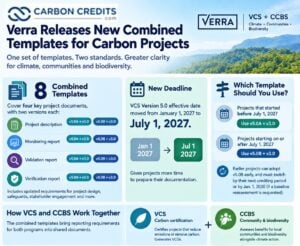
Announced on October 27, 2026, the templates are designed for projects registered, or seeking registration, under both the VCS and the Climate, Community & Biodiversity Standards (CCBS). The release gives project developers and auditors updated documents to prepare for the new VCS rules. Verra has also moved the effective date for Version 5 from January 1 to July 1, 2027, giving projects more time to prepare their documentation.

Eight Templates Cover Key Carbon Project Reports

The new package includes eight combined templates. They cover four main types of project documents, with two versions of each:

  • Project description: Explains the project, its activities, and its expected results.
  • Monitoring report: Tracks project activities and results over time.
  • Validation report: Records an independent assessment of the project design.
  • Verification report: Records an independent check of reported results.

Each document is available in versions VCS v5.0A + CCBS v3.0 and VCS v5.0B + CCBS v3.0.

Project developers and validation and verification bodies must select the version that applies to their project under Verra’s transition rules. The templates include new and revised reporting requirements related to project design, safeguards, stakeholder engagement, and other VCS Version 5 updates.

How Verra’s VCS and CCBS Standards Work Together

The VCS Program is one of the main standards used to certify projects that reduce greenhouse gas emissions or remove carbon dioxide from the atmosphere. Projects that meet its requirements can generate Verified Carbon Units, or VCUs.

The CCBS Program focuses on a project’s wider benefits. It assesses whether a project addresses climate change while supporting local communities and smallholders and protecting biodiversity.

For example, a forest project may seek to generate carbon credits by protecting or restoring trees. It may also aim to support local jobs, improve community livelihoods, or protect wildlife habitats. The VCS and CCBS programs assess different aspects of such work.

The combined templates bring the reporting requirements for both programs into shared documents. This gives developers and auditors a common set of forms to use when preparing and reviewing projects under the two standards.

Which Template Should Projects Use?

The version required depends on the project’s start date.

  • Projects that started before July 1, 2027, must use the combined VCS v5.0A + CCBS v3.0 templates under the stated transition rules.
  • Projects starting on or after that date must use the VCS v5.0B + CCBS v3.0 templates.

Earlier projects may choose to adopt the v5.0B templates before they are required to do so. Projects must switch to v5.0B either at their next crediting period renewal or when they submit a baseline reassessment request after January 1, 2030.

These rules mean project developers need to check both their project start dates and the timing of their submissions before preparing documents. Using the wrong version could lead to extra work or delays during review.

Why Verra Extended the Version 5 Deadline

The combined templates are part of Verra’s wider move to update its VCS Program. Verra announced on October 27 that it has extended the effective date of Version 5. This decision came after requests from project developers, auditors, and other market participants.

Many projects were trying to finish audits and submit documents under the previous rules before the original January 1, 2027 deadline. Verra said this workload also put pressure on the capacity of validation and verification bodies.

Verra’s Combined Carbon Project Templates

The extension is intended to give project teams more time to prepare accurate documents and avoid having to redesign projects or convert paperwork in the middle of an audit. Verra also said it would not provide additional implementation exemptions beyond those already set out in its effective-date guidance.

What This Means for Carbon Projects

The updated templates give developers a clearer set of documents for reporting under both the VCS and CCBS programs. They also help projects prepare for the reporting changes introduced by VCS Version 5.

The transition will still require work. Project teams and auditors need to understand the revised requirements, choose the correct template, and ensure that their project documents meet the applicable rules. Projects already deep into an audit may need to consider the timing of their submissions carefully.

Verra has encouraged projects that are still early in development to start preparing their documents under Version 5 as soon as possible. This could help reduce the risk of having to revise documents or repeat audit work if the process extends beyond the new deadline.

Why the Update Matters for Carbon Markets

Clear and consistent reporting matters to carbon markets because buyers need reliable information about the credits they purchase. Standardized templates help project developers and auditors show results consistently. This makes it easier to review climate benefits and the broader effects on communities and biodiversity.

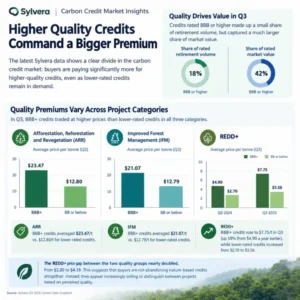
The update comes as carbon buyers become more selective about the credits they purchase. Data from Sylvera shows that credits rated BBB or higher made up just 18% of rated retirements in Q3 2026 but generated 42% of the market value. This gap suggests that buyers are paying more for credits with stronger quality ratings rather than focusing only on volume.

higher quality credit demand higher prices sylvera

Environmental and social benefits can also influence credit prices. An Ecosystem Marketplace study found that credits with at least one co-benefit certification received a 78% price premium over credits without one. Credits linked to the UN Sustainable Development Goals (SDGs) had an even higher premium of 86%.

These figures show why clear reporting of both carbon reductions and wider project benefits matters to the market. By combining VCS and CCBS requirements in shared templates, Verra aims to make it easier for project developers and auditors to document and assess these outcomes.

However, the templates alone do not guarantee better outcomes. Their value will depend on how well projects follow the requirements and how carefully independent auditors check the reported results.

A Step in Verra’s Wider Standards Update

The release of the combined templates is part of a broader update to the VCS Program, rather than a new carbon-crediting program in itself.

For projects seeking both carbon certification and recognition of community and biodiversity benefits, the new documents set out how to prepare reports under the updated rules. The July 2027 deadline also gives developers and auditors a defined period to prepare for the transition.

The impact will depend on how smoothly projects adopt the new templates and meet the revised requirements. For now, developers working under both programs should review Verra’s official guidance, confirm which template applies to their project, and prepare their documentation ahead of the deadline.

The post Verra Releases Combined Templates for Carbon Credits and Co-Benefits appeared first on Carbon Credits.

Amazon Stock Slips on Q3 Earnings Amid $220B AI Spending Push

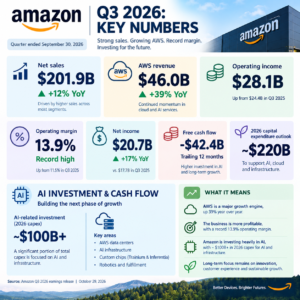
Amazon.com (NASDAQ: AMZN) reported strong third-quarter 2026 results, with revenue rising 12% year over year to $201.9 billion. However, heavy investments in artificial intelligence (AI) infrastructure and a weaker holiday-quarter outlook weighed on investor sentiment.

Amazon Web Services (AWS) drove most of the growth. Its revenue climbed 39% to $46 billion, marking its fastest growth in nearly five years. The cloud division also helped lift Amazon’s operating income to a record $28.1 billion.

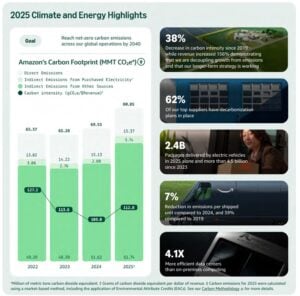
But the company’s AI expansion comes with growing financial and environmental costs. Amazon expects to spend approximately $220 billion on capital investments in 2026, much of it on AI infrastructure and data centers. Its latest sustainability report also showed that total greenhouse gas emissions increased to 80.9 million metric tons of carbon dioxide equivalent (CO₂e) in 2025.

As Amazon expands its cloud business, investors will watch whether it can balance higher profits, rising infrastructure costs, and its commitment to reach net-zero carbon emissions by 2040.

Amazon Revenue Reaches $201.9 Billion in Q3 2026

For the quarter ended September 30, 2026, Amazon reported net sales of $201.9 billion, up 12% from $180.2 billion in the same period last year. Excluding foreign exchange effects, revenue increased 13%.

amazon

The company’s three main business segments delivered mixed results.

  • North America: Sales increased 6% year over year to $112.9 billion.
  • International: Revenue grew 5% to $43.1 billion, or 8% excluding foreign exchange effects.
  • Amazon Web Services (AWS): Sales jumped 39% to $46 billion, making it the fastest-growing segment.

Operating income increased to $28.1 billion from $17.4 billion a year earlier. This represented an operating margin of 13.9%, Amazon’s highest ever.

AWS remained the biggest contributor to profitability, generating $17.8 billion in operating income, compared with $11.4 billion in Q3 2025. North America contributed $8.7 billion, while International operations generated $1.6 billion.

Net income, however, declined to $20.7 billion, or $1.89 per diluted share, from $21.2 billion, or $1.95 per share, a year earlier. The decline mainly reflected a $9.5 billion pre-tax gain from Amazon’s Anthropic investment included in the previous year’s results.

Amazon also reported a 29% increase in trailing 12-month operating cash flow to $168.3 billion.

However, free cash flow turned negative, reaching an outflow of $42.4 billion for the 12 months ended September 30, 2026. The company attributed this to higher spending on property, equipment, and AI infrastructure.

READ MORE: Amazon (AMZN) Stock Jumps on Record $200B Q2 Revenue, Fueled by AI Growth and Water-Positive Goals

AMZN Stock Falls as AI Spending Concerns Grow

Amazon shares came under pressure following the earnings announcement on October 29. The stock closed at $243.79, down 4.3% during the regular trading session, and fell further in after-hours trading.

Investors focused on the company’s rising capital expenditure and weaker-than-expected earnings and revenue figures.

amazon
Source: Yahoo Finance

The company’s fourth-quarter outlook added to investor concerns. Amazon expects revenue between $240 billion and $247 billion, representing 12% to 16% annual growth. The midpoint of this range was slightly below analyst expectations.

Meanwhile, Amazon maintained its 2026 capital expenditure forecast of approximately $220 billion. CEO Andy Jassy indicated that spending could increase further in 2027.

Despite the market reaction, AWS remains a major growth opportunity. Jassy expects the cloud business to grow by more than 40% annually in both 2027 and 2028.

The challenge for investors is whether this aggressive AI investment will generate enough long-term revenue and cash flow to justify its cost.

Amazon’s Carbon Emissions Rise to 80.9 Million Tons

Amazon’s rapid expansion also brings environmental challenges.

According to its 2025 Sustainability Report, the company’s total greenhouse gas emissions increased by more than 16% to 80.9 million metric tons of CO₂e in 2025.

The increase highlights the environmental impact of expanding its global operations, particularly data centers, transportation and supply chains.

Scope 2 emissions, which come from purchased electricity, increased nearly 34% year over year. Scope 3 emissions, generated across the company’s wider value chain, rose nearly 20%.

This is important because Amazon’s AI ambitions require more computing power, servers and data center capacity. These facilities consume large amounts of electricity and require cooling systems, water and other resources.

Amazon has made progress in reducing the carbon intensity of its business. Since 2019, its carbon intensity has fallen 38%, even as revenue increased 156%.

However, lower emissions intensity does not necessarily mean lower total emissions. The latest figures show that absolute emissions remain a major challenge as the company continues to grow.

amazon

Clean Energy Goals and Net-Zero Commitment

Amazon co-founded The Climate Pledge in 2019 and committed to reaching net-zero carbon emissions across its operations by 2040.

Renewable energy is a major part of this strategy. Amazon matched 100% of the electricity consumed by its global operations with renewable energy for the third consecutive year in 2025.

Its carbon-free energy portfolio includes more than 712 projects across 30 countries, representing approximately 42 gigawatts of capacity.

The company is also exploring additional energy sources to support its growing electricity needs. These include nuclear power, advanced geothermal energy, and long-duration energy storage.

These investments are particularly important as AI data centers increase electricity demand.

  • Amazon is also working to reduce emissions from its transportation network. In 2025, it operated more than 52,700 electric delivery vehicles globally and delivered 2.4 billion packages using electric vehicles.
  • The company aims to deploy 100,000 electric delivery vehicles worldwide by 2030.

Another important target is water conservation. It is working toward becoming water-positive by 2030, meaning it aims to return more water to communities than it uses in its direct operations. The company reported that it was 75% of the way toward this goal in 2025.

Its data centers are also becoming more water-efficient, with the company reporting that they use seven times less water than the industry average.

The Bottom Line: AI Push Meets the Reality of Rising Carbon Emissions

Amazon’s Q3 2026 earnings highlight the growing importance of cloud computing and AI to its long-term business strategy.

AWS is delivering strong revenue growth, while investments in data centers and AI technologies could create new opportunities across industries. However, these investments also increase electricity demand, infrastructure costs, and environmental pressure.

The company’s $220 billion capital expenditure plan shows how much it is willing to invest to strengthen its position in the AI market. At the same time, its rising emissions demonstrate the difficulty of separating business growth from environmental impact.

Amazon has made progress through renewable energy procurement, electric delivery vehicles, efficient data centers, and water conservation. But its 2025 emissions increase shows that these measures have not yet reversed the growth in its overall carbon footprint.

For investors, the bigger question is whether Amazon can turn its AI investments into sustainable long-term growth while keeping its 2040 climate commitment within reach.

The post Amazon Stock Slips on Q3 Earnings Amid $220B AI Spending Push appeared first on Carbon Credits.
Microsoft (MSFT Stock) Q1 FY2027 Earnings Show Azure Surging 48% as AI Raises Energy Concerns

Microsoft (MSFT stock) reported strong first-quarter results for fiscal 2027 as demand for artificial intelligence (AI), cloud computing and enterprise software continued to grow. Revenue reached $92.3 billion for the quarter ended September 30, 2026, up 19% year over year. Microsoft Cloud revenue climbed 30% to $63.9 billion, highlighting the growing importance of AI infrastructure to its business.

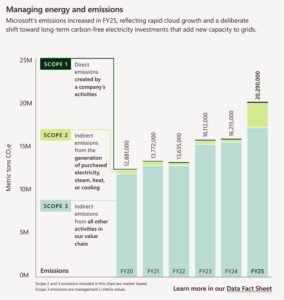
However, this expansion brings a major sustainability challenge. Microsoft’s 2026 Environmental Sustainability Report shows that its greenhouse gas emissions rose 25% in fiscal 2025 as the company expanded its data centers and changed how it procures renewable electricity.

The results highlight a growing tension for the technology giant: scaling AI services while working toward its goal of becoming carbon negative by 2030.

Microsoft Revenue Reaches $92.3 Billion as Cloud Demand Grows

Microsoft’s first-quarter results show continued strength across its cloud and AI businesses.

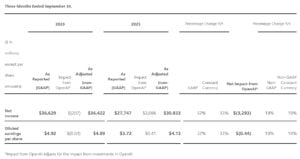
  • Revenue increased 19% to $92.3 billion, while operating income rose 21% to $45.9 billion.
  • Net income reached $36.6 billion on a GAAP basis, up 32% year over year.
  • Diluted earnings per share increased 32% to $4.92.

The company also reported commercial remaining performance obligations of $677 billion, up 73% year over year. This represents contracted revenue that Microsoft expects to recognize in the future, although the timing depends on customer demand and contract terms.

Microsoft returned $10.2 billion to shareholders through dividends and share repurchases during the quarter.

CEO Satya Nadella highlighted the company’s technology capabilities, while CFO Amy Hood pointed to strong cloud growth and results that exceeded expectations for revenue, operating income, and earnings per share.

microsoft msft revenue

Azure and AI Infrastructure Lead Growth

Microsoft’s Agents and Infra segment generated $76.8 billion in revenue, up 25% year over year. Azure revenue increased 48% to $33.2 billion, while Microsoft 365 cloud revenue rose 17% to $27.8 billion.

Industry solutions revenue increased 9% to $5.3 billion. Search and advertising revenue grew 10% to $6.6 billion.

Other businesses showed mixed results. Windows OEM and devices revenue declined 22% to $3.6 billion, while Xbox revenue fell 2% to $5.4 billion. The Devices and Consumer segment generated $15.5 billion, down 3% year over year.

These results show how cloud computing and AI are becoming central to the company’s growth.

Microsoft shares (MSFT stock) gained more than 3% in after-hours trading following its October 28 earnings announcement, as Azure growth of 48% and stronger-than-expected results eased concerns about returns on AI infrastructure spending.

MSFT stock
Source: Yahoo Finance

Microsoft’s Emissions Rise 25% as AI Expansion Continues

The latest sustainability report shows that the company’s total greenhouse gas emissions increased 25% year over year. It attributed the rise mainly to expanding data-center infrastructure and its decision to stop using non-additional, unbundled renewable energy certificates as it prioritizes investments that bring new carbon-free electricity to power grids.

This distinction matters. Renewable energy certificates can help companies account for renewable electricity, but they do not always lead to new clean energy generation. Microsoft is shifting toward projects and contracts intended to add new electricity supply.

The latest report highlights the difficulty of reducing emissions while building data centers at speed. Microsoft’s climate strategy must address both the electricity used to operate its infrastructure and the carbon embedded in the materials and equipment required to expand it.

msft emissions
Source: Microsoft

Energy Efficiency and Renewable Electricity Take Center Stage

Microsoft continues to improve data-center efficiency as demand for AI computing rises.

  • Its global power usage effectiveness (PUE) stood at 1.17 in FY2025, compared with 1.16 in FY2024. PUE measures total data-center energy use against the energy consumed by IT equipment. A value closer to 1 indicates better efficiency.
  • Global water usage effectiveness (WUE) improved from 0.30 to 0.27 liters per kilowatt-hour. This measures the water used for cooling and humidification relative to the energy consumed by IT equipment.
microsoft
Source: Microsoft

Microsoft is also developing cooling technologies that reduce water demand. In its Phoenix data centers, cooling improvements delivered a 23% year-over-year reduction in WUE in FY2025. The company is extending similar improvements to other facilities.

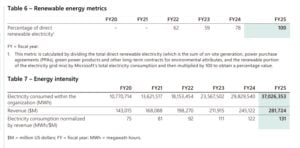
On clean electricity, it achieved its milestone of matching 100% of its annual global electricity consumption with renewable energy in FY2025. In February 2026, it reported that it had contracted 40 gigawatts of new renewable energy across 26 countries, with 19 GW already online.

Matching electricity consumption with renewable energy is an important milestone, but it does not mean every data center runs entirely on renewable power at every hour. Grid conditions, project availability and the timing of electricity generation still matter.

Water, Waste and Carbon Removal Support 2030 Goals

Microsoft also reported progress on water and waste. In FY2025, it replenished more than 14.2 million cubic meters of water, exceeding the amount it withdrew.

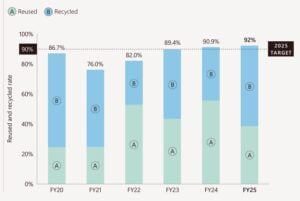
The company achieved a 92% reuse and recycling rate for decommissioned cloud hardware, surpassing its 90% target for the second consecutive year. Reusing equipment and components can reduce waste and limit demand for new materials.

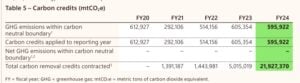
Microsoft continues to invest in carbon removal as part of its plan to become carbon negative by 2030. Its 2026 report highlights an agreement with Rubicon Carbon to purchase up to 18 million metric tons of afforestation, reforestation and revegetation credits.

These projects can help remove carbon from the atmosphere, but carbon removal alone cannot solve the emissions challenge. Microsoft must also reduce emissions from its operations, electricity purchases and supply chain.

microsoft carbon removal
Source: MSFT

Can Microsoft Balance AI Growth With Climate Goals?

Microsoft’s latest earnings show that AI and cloud computing remain powerful growth drivers. Its sustainability report, however, shows that rising infrastructure demand continues to put pressure on its climate targets.

For investors, the key question is whether Microsoft can improve efficiency, add new carbon-free electricity and cut supply-chain emissions fast enough to support its 2030 commitments.

The company has made progress on renewable electricity, water replenishment and hardware reuse. Yet the 25% annual increase in emissions shows that its sustainability strategy faces a difficult test as AI infrastructure expands.

The post Microsoft (MSFT Stock) Q1 FY2027 Earnings Show Azure Surging 48% as AI Raises Energy Concerns appeared first on Carbon Credits.

Copper Prices in 2026: Will Mine Shortages Sustain the AI-Driven Rally?

Copper prices are gaining support from artificial intelligence (AI) infrastructure, rising electricity demand and growing concerns about mine supply. The metal plays a central role in data centers, power grids, transformers and electrical equipment needed to expand AI computing capacity.

On October 27, benchmark three-month copper on the London Metal Exchange (LME) rose 1.1% to $14,487.50 per metric ton, its highest level since October 16, according to Reuters. Improving sentiment around AI stocks and stronger demand signals from China supported the rebound.

The rally comes as the copper market faces a longer-term challenge: announced mining projects may not produce enough metal to meet future demand. The International Energy Agency (IEA) estimates that the market could face a substantial supply gap by 2035, even as new projects improve the outlook.

For investors, the opportunity extends beyond the immediate price rally. Copper’s long-term outlook will depend on whether AI investment translates into actual metal consumption and whether mining companies can expand production fast enough to meet demand.

LME Copper Price Rises as AI and China Support Demand

The latest copper price movement reflects a combination of demand expectations, physical market tightness, and supply concerns.

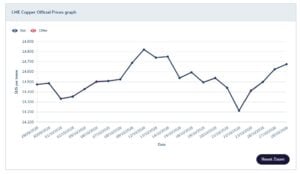
According to the LME’s official pricing data, the cash copper bid and ask prices stood at $14,733 and $14,735 per metric ton, respectively, on October 28. The three-month contract stood at $14,655 bid and $14,658 ask. These are official prices for October 28 and differ from Reuters’ October 27 intraday quotation.

lme copper
Source: LME

The recent rally also reflects copper’s strong performance through 2026. S&P Global reported during LME Week that the metal’s average price reached $13,395 per metric ton in 2026, about 35% above its 2025 average. Mine disruptions, lower ore grades and delays in developing new projects have added pressure to the market.

However, rising prices do not guarantee uninterrupted demand growth. High prices can discourage purchases by manufacturers, encourage substitution with aluminium and increase incentives to recycle scrap copper.

The market must therefore balance two competing forces: rising demand for electricity infrastructure and the risk that elevated prices will reduce consumption in more price-sensitive industries.

AI Data Centers Could Become a Major Copper Demand Driver

AI is creating a new source of demand for copper through data centers, high-performance computing systems and the electricity infrastructure that supports them.

Data centers need copper for power cables, transformers, electrical distribution systems, cooling equipment, and backup power systems. As operators build larger facilities to support AI workloads, they also need more grid connections and electricity capacity.

A recent estimate from commodity trader Trafigura highlights the potential scale of this demand. Bloomberg reported this on October 20 that copper consumption associated with AI infrastructure could reach 2.5 million to 3 million metric tons in 2028, compared with an estimated 1 million tons in 2026, if hyperscalers deliver their announced investment plans. Trafigura stressed that this was an implied outcome rather than its base-case forecast.

The estimate points to a potentially important shift in the copper market. However, the actual increase will depend on how quickly companies complete their projects and connect new data centers to electricity grids.

AI-related demand also competes with established copper users. Electric vehicles, renewable energy installations, electricity transmission networks and industrial equipment continue to require substantial quantities of the metal.

IEA Warns of a Copper Supply Gap by 2035

The International Energy Agency (IEA) sees copper as one of the most important minerals for the energy transition and emerging technologies.

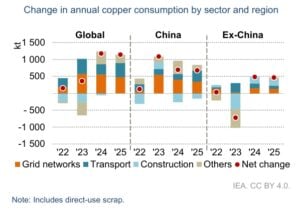
  • Its Global Critical Minerals Outlook 2026 projects that copper demand will increase by approximately 7 million metric tons between the present and 2040. Electricity networks and next-generation technologies will drive much of that growth.

copper demand

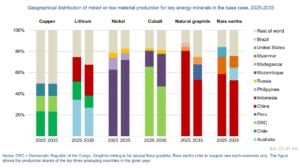
The report also warns that announced mining projects may fall short of future requirements. Under its base-case assessment, expected supply from existing and announced projects would cover only about 75% of primary copper supply requirements in 2035 under the Stated Policies Scenario. This implies a potential supply gap of around 25%.

The supply gap is a projection, not a confirmed current shortage.

The IEA’s outlook has improved from its previous assessment, which projected a supply gap of around 30%. New projects, particularly in the Democratic Republic of the Congo (DRC) and Zambia, have helped narrow the expected shortfall. However, the remaining gap suggests that the market will need additional production beyond the projects currently announced.

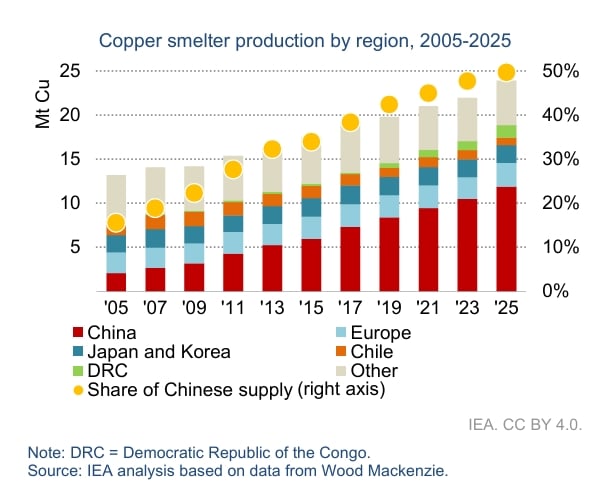
copper smelter

This creates a long-term challenge for miners. Developing a new copper mine requires exploration, feasibility studies, permits, infrastructure, and substantial capital. Even when prices rise, companies cannot bring large volumes of new production online immediately.

Mine Disruptions Add Pressure to Global Supply

Production challenges are already affecting the market.

S&P Global reported during LME Week that copper output from the 20 largest producers fell 2.5% year over year in the first half of 2026 to about 7 million metric tons. Lower ore grades, maintenance, and operational issues at major mines drove the decline.

Chile, the world’s leading copper-producing country, remains central to the supply outlook. Indonesia also matters because disruptions at major operations can remove significant volumes from the global market.

copper

At the same time, the industry faces a shortage of readily available copper concentrate. The IEA reported that benchmark annual copper smelting and refining treatment charges for 2026 settled at zero, reflecting intense competition among smelters for raw materials. Spot charges have also remained negative.

These conditions show why higher copper prices do not automatically translate into higher refined production. Miners must deliver enough concentrate, while smelters need viable economics to process it.

Can AI Demand Support Copper Prices Further?

The outlook remains positive over the long term, but investors should not treat every AI demand estimate as a certainty.

At LME Week in October, market experts warned that some projections for data-center copper consumption could be overstated. They also highlighted the possibility of aluminium replacing copper in certain applications as manufacturers seek to control costs.

China’s economic performance presents another important factor. The country remains a major consumer of copper, and weaker industrial activity could offset part of the growth generated by AI infrastructure. Higher prices could also encourage manufacturers to delay purchases or use existing inventories.

For investors, the key indicators to monitor include:

  • LME copper prices and warehouse inventories.
  • Quarterly mine production from major producers.
  • New mine approvals, project delays and revised production guidance.
  • AI data-center investment and electricity grid expansion.
  • Chinese manufacturing activity and copper import demand.

Copper’s Long-Term Investment Case Depends on Supply

Copper’s recent rally reflects more than enthusiasm about AI. The metal benefits from several structural demand drivers, including electrification, grid upgrades, renewable power and electric vehicles.

The IEA’s projected 25% supply gap by 2035 strengthens the case for investment in new mines, mine expansions and recycling capacity. The agency also reported that copper-focused companies increased capital spending by 8% in 2025, even as overall investment in critical minerals declined.

However, the market must still overcome project delays, lower ore grades and rising production costs. AI demand could provide another source of growth, but its actual impact will depend on how much announced infrastructure reaches completion.

For now, copper has a strong long-term demand story, while near-term prices remain sensitive to Chinese consumption, mine disruptions and market positioning. The strongest investment case will emerge if physical demand continues to grow while new supply struggles to keep pace.

The post Copper Prices in 2026: Will Mine Shortages Sustain the AI-Driven Rally? appeared first on Carbon Credits.
Alphabet Stock Falls 10% as Google’s AI Boom Pushes Emissions Up

Alphabet Stock Falls 10% as Google’s AI Boom Pushes Emissions Up

Alphabet’s latest earnings show how quickly its artificial intelligence (AI) business is growing. However, the expansion also raises a major environmental challenge for Google: how to meet its climate goals while building more data centers, buying more computer equipment, and using more electricity.

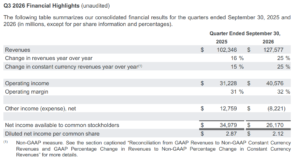
Alphabet reported $127.6 billion in revenue for the third quarter of 2026, up 25% from a year earlier. Google Cloud revenue more than doubled to $30.7 billion, driven by demand for AI infrastructure and services.

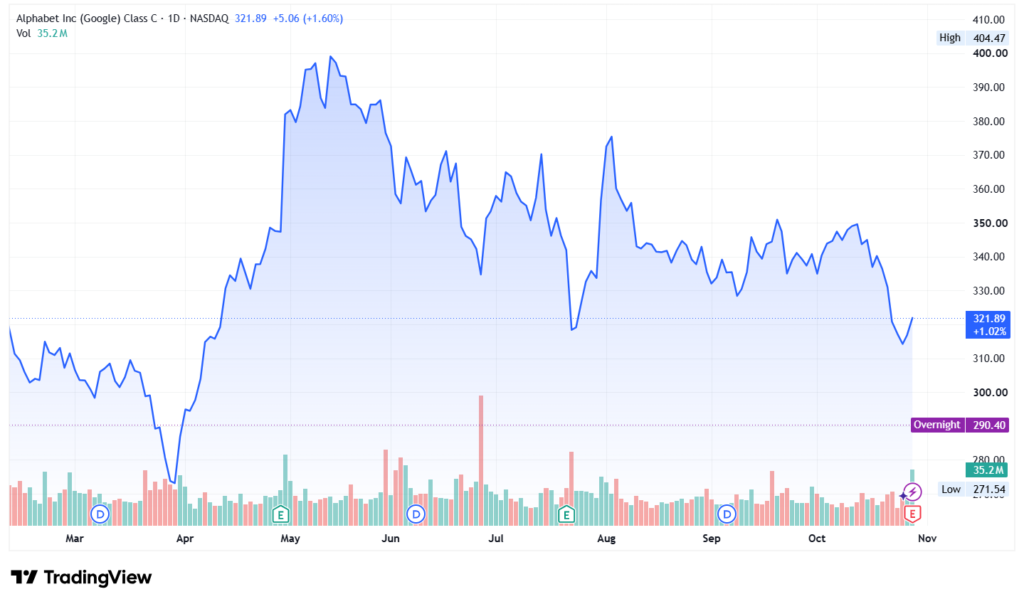
Yet, investors reacted to weaker-than-expected results and rising spending. Alphabet’s free cash flow turned negative by $9.1 billion as the company invested heavily in its AI and cloud businesses. Its shares fell about 10% in after-hours trading following the October 28 earnings release.

The financial results highlight the scale of Alphabet’s investment plans. Google’s latest environmental report reveals a different story: its total climate footprint grew by 18% in 2025, hitting around 14.5 million metric tons of carbon dioxide equivalent (CO₂e).

The company is still investing in clean energy and ways to reduce emissions. Still, its growing AI infrastructure is making its 2030 climate goals harder to achieve.

Alphabet’s AI Growth Comes With Rising Costs

Google Cloud revenue more than doubled, and operating income rose 30% to $40.6 billion, but net income fell 25% to $26.2 billion, partly due to losses on investments. The company also reported negative free cash flow of $9.1 billion, as capital spending reached $51.4 billion, largely to support AI infrastructure.

Alphabet Q3 2026 financial results
Source: Alphabet Report

Alphabet shares fell about 10% in after-hours trading following the results, as investors weighed the costs and returns of its expansion. These results show how quickly Google is expanding its AI business—and how much infrastructure that growth requires.

The same investment in servers, data centers, and electricity also creates environmental pressures, helping explain why Google’s emissions remain a major challenge despite its clean energy efforts.

google GOOG stock

Google’s Emissions Rise as AI Infrastructure Expands

The tech giant aims to reach net-zero emissions across its operations and supply chain by 2030. The plan aims to cut Scope 1, Scope 2, and Scope 3 emissions by 50% from 2019 levels. Then, it will use carbon removal to balance any remaining emissions.

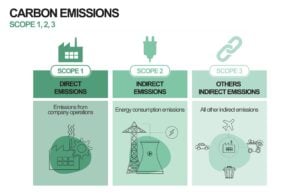
Scope 1 covers direct emissions from sources the company owns or controls. Scope 2 covers emissions linked to purchased electricity, heating, and cooling. Scope 3 includes other indirect emissions across its supply chain, such as making computer equipment and building data centers.

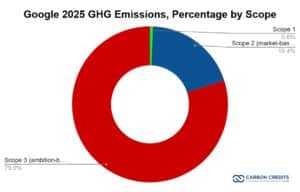
Google’s 2026 Environmental Report, which covers 2025, shows how difficult this target has become. Its total ambition-based emissions reached about 14.5 million metric tons of CO₂e in 2025, up 18% from 2024 and 81% above the 2019 baseline.

Scope 3 emissions accounted for about 11.6 million metric tons, or roughly 80% of the total. They rose 25% in 2025, mainly because Google needed more hardware and logistics to expand its technical infrastructure, along with more data center construction.

This matters because Google cannot cut its footprint by focusing only on electricity used in its own buildings. It must also address emissions from the companies that make its chips, servers, and other equipment.

Google says its emissions would have been much higher without its climate measures. It estimates that efficiency improvements and clean energy efforts avoided over 58 million metric tons of CO₂e in 2025. This is compared to a scenario without those measures. This is an estimate of avoided emissions, not a reduction in its reported total footprint.

Google 2025 ghg emissions by scope

Clean Energy Deals Grow, But the Challenge Remains

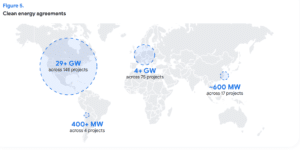
Google is expanding its clean energy purchases to support its growing electricity needs. In 2025, it signed agreements for more than 12 gigawatts (GW) of new clean energy. Google said this was the largest annual total in its history and exceeded its combined procurement in the previous two years.

These agreements can support new energy projects and help bring more clean electricity onto power grids. However, contracted capacity is not the same as electricity already generated. Actual output depends on when projects are completed and how they perform.

Google also aims to match its electricity use with carbon-free energy every hour of every day by 2030 in every grid where it operates. This goes beyond buying enough clean energy over a full year. It requires clean power to be available when its data centers and offices need electricity.

That goal is becoming harder as AI demand grows. Google says its AI infrastructure is expanding faster than electricity grids are becoming cleaner. Delays in grid connections, limits on energy supplies, and slow development of new technologies can all hold back progress.

The company’s challenge is therefore not just to sign more clean energy deals. It must help secure reliable, carbon-free electricity at the scale and times its growing operations require.

Google clean energy portfolio
Source: Google

AI Spending Brings More Pressure on Energy and Emissions

Alphabet’s latest results show how strongly AI is driving its business. Google Cloud revenue rose 103% year over year to $30.7 billion in the third quarter. The company also reported rising demand for its AI infrastructure and computing systems.

However, data centers need electricity to run servers and keep equipment cool. Building them also requires steel, concrete, chips, and other materials that carry emissions before the facilities even begin operating. These impacts help explain why Google’s supply chain emissions rose even as its operational emissions fell.

Google reported that combined Scope 1 and market-based Scope 2 emissions fell 2% in 2025 compared with 2024. This was a positive result despite higher electricity demand. However, operational emissions remained about 240% above their 2019 level.

The figures show that improvements in electricity sourcing and efficiency can help, but they have not yet reversed the longer-term rise in emissions. For Alphabet, the environmental test is whether efficiency gains and clean energy can keep pace with the rapid expansion of AI.

Water Use and Data Center Waste Add to the ESG Challenge

Energy and carbon emissions are not Google’s only environmental concerns. Data centers also need water, while their construction and operation create waste.

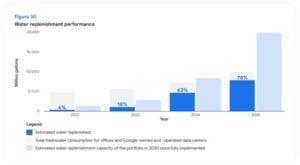
Google reported that its water projects replenished about 7.7 billion gallons in 2025, equal to roughly 78% of its total freshwater consumption that year. Its portfolio included 165 projects across 97 watersheds.

google water replenishment
Source: Google

The company aims to replenish more water than it consumes by 2030, on average across its offices and data centers. Replenishment projects can help restore water supplies, but their local impact depends on where they are located and whether they benefit the same watersheds affected by Google’s water use.

Google also reported that it diverted 88% of operational waste from disposal across its company-owned and operated data centers in 2025. These efforts show progress in managing resources. Still, growing demand for data center capacity can make it harder to maintain progress as the company expands.

Can Google Meet Its 2030 Climate Targets?

Google’s environmental results show both progress and a growing gap between its ambitions and its total emissions.

The company has increased clean energy purchases, reduced its operational emissions year-over-year, and invested in efficiency and water projects. It also says its climate measures prevented a much larger emissions footprint than it would otherwise have had.

However, its total reported emissions are still rising. The largest increase is coming from its supply chain, where the production of equipment and construction of infrastructure are closely tied to its AI expansion.

Alphabet’s latest earnings show that the company has the financial resources and growing business demand to keep expanding AI. Its environmental report shows that this growth comes with a serious climate challenge.

The key question is whether Google can make its AI business grow while bringing its absolute emissions down toward its 2030 target. For now, the company’s clean energy investments are growing, but its overall climate footprint has yet to turn downward.

The post Alphabet Stock Falls 10% as Google’s AI Boom Pushes Emissions Up appeared first on Carbon Credits.

GHG Protocol Delays Tougher Scope 2 Rules After Corporate Pushback

The Greenhouse Gas Protocol (GHG Protocol) is considering giving companies more time to meet stricter rules for reporting electricity emissions. The move follows concerns from businesses about higher costs, complex reporting, and access to renewable energy.

The proposed rules would require companies to match their clean electricity purchases more closely to when and where they use power. But many businesses oppose making these rules mandatory. They say the changes could make renewable energy projects harder to fund.

In an October 2026 update, GHG Protocol outlined a possible plan that would let companies choose between the current reporting method and a stricter method for a set period. Companies would have to state which method they use. The deadline for switching to the stricter method has not yet been set, and the final rules are still being developed.

The decision could affect thousands of companies that use GHG Protocol standards to measure and report their greenhouse gas emissions. The debate comes as electricity demand grows, especially from data centers and artificial intelligence (AI).

Why GHG Protocol Wants Stricter Scope 2 Reporting

Scope 2 emissions come from the electricity, heat, steam, and cooling that a company buys or uses. For many businesses, electricity is a major source of these emissions.

Under current GHG Protocol rules, companies can use a market-based method to report emissions from purchased electricity. This method lets them count contracts and certificates linked to renewable energy. However, the clean electricity they buy does not always match when or where they use power.

carbon emissions scope categories
Source: Shutterstock

The proposed changes would tighten the rules in two main ways.

  • Hourly matching would require companies to match their clean electricity purchases with their power use in the same hour. This would give a clearer picture of whether clean power is available when a company needs it.
  • Deliverability would require the renewable electricity a company buys to come from a market that can supply the grid where the company uses power.

GHG Protocol has also considered incrementality. This looks at whether a company’s clean energy purchases help bring new renewable power projects online.

The aim is to make company emissions reports better reflect the electricity systems that supply their power. Under current rules, a company could buy renewable energy certificates (RECs) from another region or match its power use with clean energy generation over a full year. This can happen even if the clean power was not available when the company needed electricity.

Companies Raised Strong Objections to the Proposed Rules

GHG Protocol opened a public consultation on the proposed Scope 2 changes in October 2025. The consultation was extended and closed on January 31, 2026, giving people more time to share their views. GHG Protocol received nearly 1,100 responses from 56 countries.

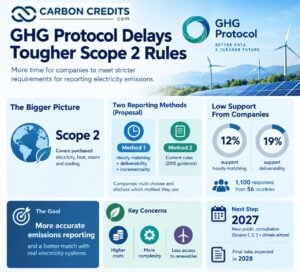
The results showed limited support among companies for the stricter rules. Only 12% of company respondents supported hourly matching, while 82% reported low or no support. For deliverability, 19% supported the proposal, while 71% reported low or no support.

Companies raised concerns about the cost and difficulty of collecting electricity data for every hour. They also warned that stricter rules could limit their ability to buy renewable energy in markets where clean power projects could have a greater impact.

Among respondents who raised concerns about hourly matching, 87% said it could discourage companies from taking part in voluntary clean energy markets. Another 86% raised concerns about the cost and extra work required for reporting.

For deliverability, 87% of those with concerns said stricter market limits could cut investment in strong renewable energy areas. Some also warned that the rules could discourage long-term renewable energy contracts and push companies toward shorter-term purchases.

These figures reflect feedback from consultation respondents. They are not a vote that decides the final rules. GHG Protocol says it must weigh this feedback against factors such as the accuracy of emissions reporting, climate benefits, and how practical the rules would be to use.

Proposed Rules Could Reshape Clean Energy Investment

In response to the feedback, GHG Protocol began exploring a plan with two ways to report purchased electricity emissions using the market-based method.

  • Method 1 would introduce stricter rules, including hourly matching and deliverability. The wider proposal also considers incrementality.
  • Method 2 would keep the requirements in the 2015 Scope 2 Guidance. This would let companies continue using their current ways of reporting renewable electricity purchases.

The proposed plan reflects a debate over how companies can best support clean energy.

Supporters of stricter rules say matching electricity use with clean power by time and place could encourage investment in renewables, battery storage, and other sources that provide cleaner power around the clock. Others warn that tighter rules could raise costs, limit access to renewable energy certificates, and discourage long-term contracts that fund clean energy projects.

Under the possible transition plan, companies could use Method 2 until a future deadline that has not been set. They would have to disclose their chosen method. After the deadline, Method 1 would apply to market-based reporting where suitable data is available. The rules are still under development and are not final.

The changes could affect how companies buy electricity and fund clean energy projects. Stricter matching may encourage investment in power sources that better fit actual demand, including storage and geothermal power.

However, some markets lack reliable hourly data, enough clean electricity, or the systems needed to support the new rules. Companies operating across countries could face uneven access, while smaller businesses may struggle with the added cost, staff, and data requirements.

The impact could be especially important for technology companies, whose data centers use large amounts of electricity as AI services grow. The final effect on renewable energy contracts and investment will depend on the rules GHG Protocol adopts, the time companies have to adjust, and the availability of reliable electricity data.

GHG Protocol Scope 2 Infographic

GHG Protocol Plans Further Consultation in 2027

GHG Protocol is continuing to develop the Scope 2 changes with its Technical Working Group and Independent Standards Board. The next major step is a public consultation planned for the second quarter of 2027.

The consultation will cover proposed updates to Scope 1, Scope 2, and Scope 3 reporting. It will also cover how companies report climate actions and the use of market-based tools, such as energy certificates.

This work is part of a greater effort by GHG Protocol and ISO. They aim to create a common standard for company greenhouse gas reporting. The combined standard is expected to be published in the fourth quarter of 2028.

Scope 1 emissions come directly from sources a company owns or controls, such as fuel burned at its facilities. Scope 3 emissions are other indirect emissions across a company’s value chain. These include emissions from suppliers and from the use of products a company sells.

The wider review could make company emissions reports more consistent across countries and reporting systems. But it also means businesses will have to wait longer for clear answers on the final Scope 2 rules.

Scope 2 Debate Puts Corporate Climate Reporting to the Test

The Scope 2 debate shows a big challenge in climate reporting. Companies want to make emissions claims more accurate, but they also need to avoid rules that are too costly or hard to follow. These rules shouldn’t limit investment in clean energy, either.

Stricter matching could help show whether a company’s renewable electricity purchases line up with its actual power use. At the same time, businesses and other groups argue that wider access to renewable energy markets can help direct more money to clean power projects.

GHG Protocol is now considering a plan that could allow both methods for a limited time before moving to stricter reporting where suitable data is available. Companies should follow the review and check whether their electricity contracts, emissions data, and reporting systems could meet the new requirements.

The final standard will shape how businesses report emissions from purchased electricity and how their renewable energy claims are assessed. Its impact will depend on how GHG Protocol balances accurate reporting, practical rules, and support for the shift to cleaner power.

The post GHG Protocol Delays Tougher Scope 2 Rules After Corporate Pushback appeared first on Carbon Credits.
Malawi, Switzerland Approve Clean Cooking Project Targeting 1.8M Carbon Credits

Malawi, Switzerland Approve Clean Cooking Project Targeting 1.8M Carbon Credits

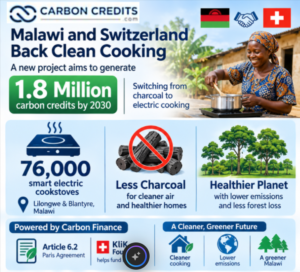
Malawi and Switzerland have approved a clean cooking project that aims to generate nearly 1.8 million carbon credits by 2030. The project will help households switch from charcoal to electric cooking, funded by the international carbon market.

Climate technology company ATEC Global plans to distribute 76,000 smart electric cookstoves to homes in Lilongwe and Blantyre, two districts in Malawi. The stoves will help families reduce their use of charcoal, which contributes to climate change, forest loss, and unhealthy indoor air.

The project is part of a climate agreement between Malawi and Switzerland under Article 6.2 of the Paris Agreement. This agreement allows countries to pay for emissions cuts made in other countries and count those cuts toward their climate targets.

The deal shows how carbon finance can help bring cleaner cooking technology to more households while supporting efforts to reduce emissions.

How Malawi and Switzerland Will Finance Emissions Cuts

Malawi and Switzerland signed a climate cooperation agreement in 2022. Under the deal, Switzerland can buy approved emissions reductions from projects in Malawi.

The Swiss KliK Foundation helps fund these projects by agreeing to buy the resulting carbon credits. This money can help pay for equipment, support households, and cover project costs.

Each carbon credit represents one metric tonne of greenhouse gas emissions reduced or removed. The project aims to generate nearly 1.8 million credits by 2030, but this is a target, not a number of credits already issued. Before the credits can be transferred to Switzerland, the project must meet the agreed rules and show that it has reduced emissions.

The two countries must also prevent double counting. This means Malawi cannot count the same emissions cuts toward its own climate target if Switzerland also claims them. The countries use a process called a corresponding adjustment to avoid this problem.

76,000 Electric Stoves to Replace Charcoal

Many households in the target areas still use charcoal as their main cooking fuel. Making charcoal can contribute to forest loss, while burning it releases greenhouse gases and smoke.

ATEC plans to provide 76,000 smart induction cookstoves to households that have access to the electricity grid. These stoves use electricity to heat pots and pans instead of burning charcoal.

The change could bring several benefits. Families may use less charcoal, reduce smoke inside their homes, and put less pressure on nearby forests.

The stoves also have built-in meters that record electricity use and send the data to a monitoring system. This helps project managers track how often households use the stoves and estimate the emissions they save.

This data is important because the project must show real results before it can claim carbon credits. The number of credits will depend on verified emissions cuts, not simply on how many stoves are distributed.

Carbon Payments Could Help Families Afford Electric Cooking

Buying an electric stove can be expensive for families with limited incomes. Without financial support, many households may continue using charcoal even when cleaner options are available.

The project uses a system called “Cook-to-Earn” to encourage households to use their new stoves. Under the scheme, families can receive payments based on verified stove use. The KliK Foundation says payments can reach up to $50 per household.

Carbon finance also helps cover project costs and make the stoves more affordable. ATEC says the project would not be financially viable without this support.

The model links funding to actual use. Instead of paying only to distribute the stoves, the project also rewards households for using them. This could help the programme reach more families and keep the stoves in regular use. However, results will depend on whether households can access reliable electricity and continue using the equipment.

Malawi and Switzerland clean cooking project

Project Targets Cleaner Air, Forest Protection and Jobs

The project aims to deliver benefits beyond lower emissions. Replacing charcoal stoves with electric cookers can reduce smoke inside homes. This may help protect health, especially for women and children who are often more exposed to cooking smoke.

ATEC estimates that the project could save women around 8 to 10 hours each month by reducing time spent on cooking tasks. It also expects the programme to create about 300 jobs in stove distribution, sales, transport, and maintenance. Using less charcoal could also help reduce pressure on forests.

These are expected benefits, and the project must be carried out successfully to deliver them. Access to electricity is also essential because the programme targets households connected to the power grid.

Clean Cooking Credits Face Price Pressure

Clean cooking is an established part of the voluntary carbon market. By August 2025, cookstove projects had issued more than 181 million carbon credits, according to an RMI analysis. However, oversupply has weighed on prices.

The Clean Cooking Alliance reported that unsold credits reached 124.4 million in 2024, while average prices fell from about $12 per credit in early 2022 to around $5 in 2024.

Major buyer sectors include energy, professional services, and financial services. Prices vary by credit quality and eligibility.

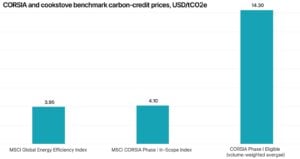
MSCI reported in May 2026 that cookstove credits eligible for CORSIA, the international aviation offsetting scheme, traded above $14 per tonne, compared with about $4 for the broader clean cooking market. These figures show how quality standards can influence demand and prices.

cookstove carbon credit prices benchmark
Source: MSCI

Malawi Expands Its Carbon Market

The project is part of Malawi’s wider effort to attract international funding for climate action. Article 6.2 of the Paris Agreement allows countries to work together to reduce emissions. Under this system, one country can fund a climate project in another country and receive approved emissions reductions in return.

For Malawi, this can bring money and technology into projects that may struggle to secure enough funding on their own. For Switzerland, it offers a way to support emissions cuts abroad and use approved reductions toward its climate commitments.

The system also requires countries to track emissions reductions and record credit transfers. These safeguards are important to help ensure that the claimed climate benefits are real and are not counted twice.

The next step is to turn the project’s plans into measurable results. That means distributing the stoves, ensuring households use them, and checking the emissions reductions before credits can be transferred.

Can Carbon Finance Help Scale Up Clean Cooking?

The Malawi project shows how carbon markets can help fund practical changes in people’s daily lives. By supporting electric cooking, the project aims to reduce charcoal use, cut emissions, and improve conditions inside homes. Carbon payments could also help households afford the switch and support local jobs.

However, the target of nearly 1.8 million credits by 2030 will depend on the project’s actual performance. The stoves must be used, emissions savings must be measured, and the results must meet the agreed rules.

For Malawi, the project offers a way to attract climate funding while expanding access to cleaner cooking. For Switzerland, it provides another potential source of approved emissions reductions under their bilateral agreement.

Its progress will help show whether carbon finance can make electric cooking more affordable and deliver climate benefits at scale.

The post Malawi, Switzerland Approve Clean Cooking Project Targeting 1.8M Carbon Credits appeared first on Carbon Credits.
Masdar Raises $600 Million in First Blue Bond to Fund Offshore Wind Projects

Masdar has raised US$600 million through its first blue bond to support eligible marine renewable energy projects, including offshore wind. The five-year bond is the fourth issuance under its US$6 billion Global Medium Term Note Programme. It also expands the company’s use of sustainable finance to support its global clean energy plans.

As per the press release, S&P Global Ratings and Fitch Ratings have both assigned the bond an AA- rating. According to the company, this makes it the highest-rated public blue bond issued by a corporate globally to date.

Issued on the London Stock Exchange’s International Securities Market, the bond carries a 5.875% US dollar coupon. The company then swapped the proceeds into euros at a yield of 4.374%, matching the funding with its European investment needs.

Investor demand remained strong despite difficult market conditions. The orderbook reached US$1.5 billion, making the final US$600 million issue 2.5 times oversubscribed. This means investors placed orders worth 2.5 times the amount offered.

Mazin Khan, Chief Financial Officer, Masdar, said:

“For two decades, Masdar has been a driving force in the development, deployment and commercialization of renewable energy solutions across the world. Our first blue bond issuance under our updated Green Finance Framework provides yet more opportunities for investors to join us in building the clean energy system of the future. This benchmark offering will ensure capital can be delivered where it will have the most impact, supporting the development of a more resilient blue and green economy.”

What Are Blue Bonds?

Blue bonds are debt instruments that raise money for projects linked to the protection and sustainable use of oceans and water resources. They work much like green bonds but focus on marine and water-related environmental goals.

Companies and governments can use them to fund ocean conservation, wastewater treatment, sustainable marine infrastructure, and eligible offshore wind projects.

Investors buy these bonds and receive interest payments under agreed terms. The issuer must direct the money toward eligible projects and report how it uses the funds.

However, a blue bond label alone does not guarantee environmental benefits. Clear project rules, regular reporting, and checks on possible harm to marine life help maintain investor trust.

For the renewable energy developer, this financing route creates another way to fund offshore wind and other eligible projects while supporting the sustainable use of marine resources.

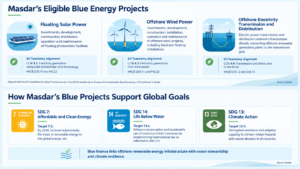
Masdar Updated Green Finance Framework Adds Blue Projects

In September 2026, the company updated its Green Finance Framework to include eligible blue projects. The framework sets the rules for selecting projects, allocating funds, and reporting their environmental impact.

Under the updated rules, green financing instruments can fund eligible green and blue projects. Blue financing instruments form a separate category, with all proceeds reserved exclusively for eligible blue projects.

The framework follows the Green Bond Principles of the International Capital Market Association (ICMA). It also considers the International Finance Corporation’s (IFC) blue finance guidelines and the 2023 guide to financing the sustainable blue economy, published by several international organizations.

                                 Eligible Blue Projects

masdar blue energy
Source: Masdar

Moody’s Gives Its Highest Sustainability Score

Moody’s assigned the framework an SQS1, or Excellent, Sustainability Quality Score. This is the highest score available under its sustainability assessment system.

The framework also requires environmental checks to identify and reduce potential harm to biodiversity. Where feasible, eligible projects must align with relevant European Union Taxonomy criteria for climate change mitigation.

These safeguards matter for offshore wind developments. While offshore wind generates electricity without burning fossil fuels, construction and operation can affect marine habitats and wildlife. Careful planning and environmental checks can help reduce these risks.

Bond Funding Supports Renewable Energy Growth

The latest issuance brings the total raised through the company’s bond programme to US$3.35 billion since 2023. Before this deal, it had raised US$2.75 billion through the programme.

By the end of 2025, US$2.3 billion had been allocated to 30 renewable energy projects across 10 countries. These projects had a combined gross capacity of more than 16 gigawatts (GW).

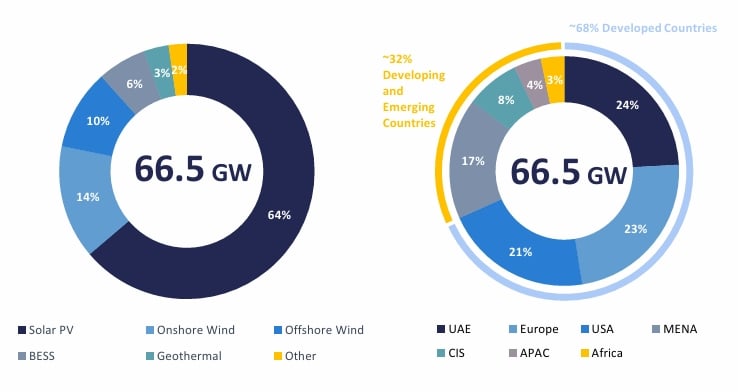
The company now reports more than 65 GW of renewable energy capacity across global markets. Its portfolio includes solar power, onshore and offshore wind, battery storage, and hybrid energy systems.

It aims to increase this capacity to 100 GW by 2030. Reaching that target will require further investment in project development, construction, and supporting infrastructure.

masdar renewable energy
Source: Masdar

The blue bond adds another source of capital for this expansion. It also links fundraising with specific environmental goals and may attract investors seeking opportunities in sustainable finance.

What Does the Blue Bond Mean for Investors?

The deal shows how sustainable finance is expanding beyond traditional green bonds. Blue bonds give investors another way to support environmental projects, with a focus on oceans and water resources.

Strong demand for the issuance points to investor interest in this type of financing. The AA- ratings from S&P and Fitch also reflect the agencies’ assessment of the issuer’s credit quality. However, credit ratings do not guarantee returns or eliminate investment risks.

The bond’s environmental value will depend on how the company uses the proceeds and how it measures results. Investors will need to review project selection, biodiversity safeguards, and impact reports to assess whether the funded activities meet their stated goals.

As the company works toward its 2030 capacity target, blue financing could help fund eligible offshore wind and other marine-related renewable energy projects. The deal also shows how specialised bonds can link corporate funding plans to measurable environmental objectives.

The post Masdar Raises $600 Million in First Blue Bond to Fund Offshore Wind Projects appeared first on Carbon Credits.