UK Fusion £2.5B Strategy Links AI Growth with Clean Energy Breakthroughs

The UK government recently released its Fusion Energy Strategy 2026, where it has laid out a bold plan to turn fusion into a commercial, clean power source while building a strong domestic industry.

The key vision is a £2.5 billion investment over five years. The goal is clear: make the UK the first country with a real pathway to commercial fusion energy. At the same time, the strategy connects clean power goals with economic growth, job creation, and long-term energy security.

A Clear Push Toward Energy Independence

The UK’s strategy comes at a time when global energy markets remain volatile. Fossil fuel dependence continues to create risks. As a result, the government sees fusion as a long-term solution for energy sovereignty.

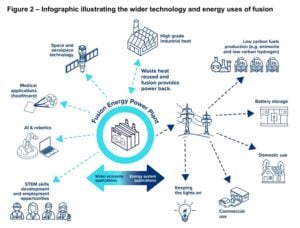
Fusion offers several advantages. It is clean, abundant, and reliable. Unlike solar or wind, it can provide constant power. Because of this, it could play a major role in meeting future electricity demand, especially as industries and AI systems consume more energy.

The government believes that reducing reliance on fossil fuels is the only way to secure long-term stability. Fusion, therefore, is not just a research goal—it is a strategic priority.

Investing Across the Fusion Ecosystem

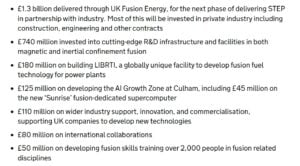
The £2.5 billion investment in fusion energy over five years (2025–2030) is spread across the following sectors:

Together, these investments aim to strengthen the entire value chain—from early research to final deployment.

At the same time, the UK is working closely with the private sector. More than 500 companies are already involved in the fusion space. This number is expected to grow as global competition increases.

The potential market is massive. Estimates suggest that fusion could become a £3 trillion to £12 trillion global industry. Therefore, countries are racing to secure leadership positions early.

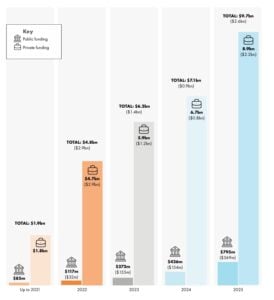
                          Five-Year Fusion Trends: Total Funding Till 2025

fusion industry global
Source: Fusion Industry Association Report 2025

STEP Program: Building the First Fusion Power Plant

A major part of the funding—£1.3 billion—will go to the Spherical Tokamak for Energy Production (STEP) program. This initiative aims to design and build the UK’s first prototype fusion power plant.

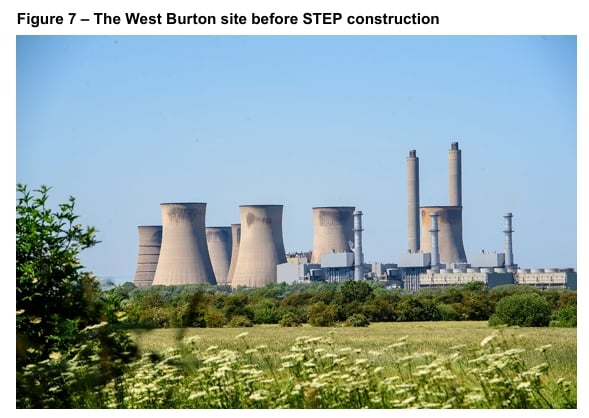
The plant will be located at a former coal site in Nottinghamshire. Construction is expected to begin in 2030, with completion targeted for 2040. The mission is ambitious: generate net energy from fusion and prove that the technology can work at a commercial scale.

UK FUSION
Source: UK Fusion Strategy 2026

To deliver this, the UK has partnered with a consortium called ILIOS. This group, led by Kier and Nuvia, will handle construction, engineering, and supply chain management. Their role covers everything from design integration to infrastructure development.

Importantly, STEP is meant to act as a catalyst. By building this prototype, the UK hopes to stimulate a broader fusion ecosystem, including suppliers, engineers, and technology firms.

UK Fusion Energy

A key part of this shift is the creation of UK Fusion Energy, a subsidiary responsible for delivering the STEP program. This organization will act as a systems integrator. It will bring together multiple technologies and partners to build a complete fusion power plant.

In summary, the three main goals for UK Fusion Energy are:

  • Make future fusion power plants safer and more reliable
  • Build strong UK industries and supply chains
  • Bring lasting economic benefits and energy security to the UK

UKAEA Group: The Backbone of the UK’s Fusion Ambition

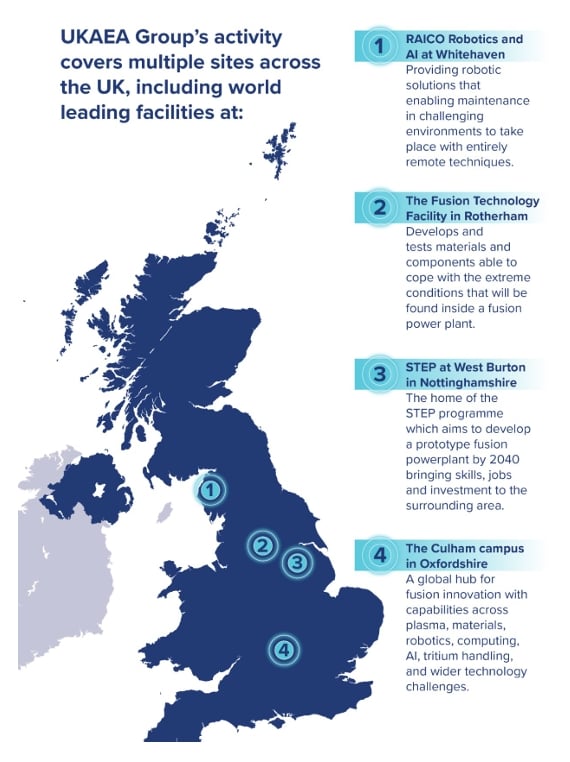
The backbone of the UK’s fusion strategy is the UK Atomic Energy Authority (UKAEA Group). It acts as the country’s main public body driving fusion research, innovation, and delivery.

The UKAEA operates the National Fusion Laboratory based in Culham, Oxfordshire. This facility leads advanced research in plasma science, robotics, materials, tritium systems, and high-performance computing. Over time, it has built a strong global reputation for technical excellence.

However, the UKAEA’s role is now expanding. Other than research, it is actively helping to turn scientific progress into commercial outcomes.

Turning Research into Real-World Innovation

Furthermore,  the UKAEA is working closely with industry to transfer knowledge and scale up technologies. Many of its capabilities are already moving toward commercialization. These include:
  • Neutral beam systems are used for plasma heating
  • Robotics for remote maintenance in extreme environments
  • Advanced diagnostics and sensor technologies
  • Fusion fuel cycle systems and materials

This approach ensures that public research does not remain in the lab. Instead, it flows into real-world applications, supporting both fusion and other industries.

UKAEA UK fusion
Source: UK Fusion Strategy 2026

Building a Strong Industrial Base

The UK’s strategy goes beyond technology. It focuses heavily on building a full industrial ecosystem.

The plan supports companies of all sizes—from startups to multinational firms. It also aims to develop strong supply chains within the country. By doing so, the UK wants to become a top destination for fusion investment.

Key areas of opportunity include:

  • High-temperature superconducting magnets
  • Advanced materials
  • Robotics and remote maintenance
  • Plasma systems and lasers
  • AI-driven control systems

These technologies are not limited to fusion. They also have applications in sectors like aerospace, automotive, healthcare, and telecommunications. As a result, fusion investment could drive innovation across multiple industries.

For example, UK-based companies are already exploring how fusion-related technologies can be used in power grids and advanced manufacturing. This creates near-term economic benefits, even before fusion becomes fully commercial.

fusion UK

AI Meets Fusion: A Game-Changing Combination

One of the most forward-looking parts of the strategy is its focus on artificial intelligence. The government sees AI as a key tool for unlocking fusion energy.

Fusion systems are highly complex. They involve extreme temperatures, fast reactions, and dynamic plasma behavior. Managing these systems requires advanced data analysis and real-time decision-making. This is where AI becomes critical.

Revealing an AI supercomputer: Sunrise

The UK plans to invest £45 million in a dedicated AI supercomputer called Sunrise. This system will support fusion research by accelerating simulations, improving designs, and optimizing operations.

In addition, the UKAEA’s Culham campus will become an AI Growth Zone. This hub will bring together scientists, engineers, and AI experts. The goal is to create a collaborative environment where innovation can thrive.

The government’s broader AI strategy supports this effort. It focuses on building strong data systems, expanding computing power, and encouraging multidisciplinary research. Fusion stands out as one of the priority sectors where AI can deliver rapid breakthroughs.

Interestingly, the relationship works both ways. While AI helps make fusion possible, fusion could eventually power energy-intensive AI data centers. This creates a strong link between future clean energy and digital growth.

DESNZ Sets Clear Rules for Fusion Development

Investors and developers need clear rules to plan fusion projects with confidence. This includes understanding safety, environmental, and planning approvals, as well as which UK organizations must be involved.

To provide clarity, DESNZ (Department for Energy Security and Net Zero) will release a roadmap for the UK fusion regulatory process by Summer 2026. This will guide developers on how to get approvals and engage with regulators early.

The plan also aims to help regulators understand fusion technologies better and support early collaboration, reducing risks in plant design. Fusion regulators are already working with industry and will continue reviewing processes as the sector grows.

In conclusion, with growth in fusion development around the world, collaboration and competition are both rising. The UK is becoming a global leader through the STEP program, international partnerships, and smart investment. And with public and private collaboration, the UKAEA Group is key to turning research into commercial fusion plants and boosting the UK’s role in the global market.

The post UK Fusion £2.5B Strategy Links AI Growth with Clean Energy Breakthroughs appeared first on Carbon Credits.

Nuclear + AI: NVIDIA and AtkinsRéalis Power the Future of Data Centers

AtkinsRéalis Group has announced a collaboration with NVIDIA to explore nuclear‑powered large‑scale “AI factories.” These facilities are meant to support next‑generation artificial intelligence computing using stable, low‑carbon energy. The work combines AtkinsRéalis’s engineering and nuclear expertise with NVIDIA’s digital and AI design tools.

The project aims to use AI tools like NVIDIA’s Omniverse libraries and accelerated computing systems. These tools help engineers design and test physical infrastructure in a digital, 3D environment before actual construction. AtkinsRéalis said this could speed up the deployment of highly efficient computing hubs powered by nuclear energy.

Ian L. Edwards, President and CEO, AtkinsRéalis stated:

“AtkinsRéalis brings deep engineering and delivery expertise across complex infrastructure and a 70-year legacy of excellence in the nuclear industry. This collaboration enables us to leverage these strengths in energy, infrastructure, and complex project delivery to complement NVIDIA’s leadership in accelerated computing to help power critical AI data centers.”

Why Nuclear Power Matters for AI

Nuclear energy is seen as a potential solution for very large energy needs. AI data centers and high‑performance computing facilities require constant, very high levels of electricity. Nuclear plants can run 24/7, unlike intermittent sources like solar or wind. This makes them attractive for energy‑intensive AI operations.

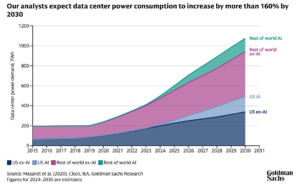
AI computing is driving huge increases in data center energy use. In 2024, global data centers consumed about 415 terawatt-hours (TWh) of electricity. That is enough to power all of Japan for a year.

This figure is forecast to grow to 800 TWh by 2026 and possibly beyond as AI workloads expand rapidly. Some analysts predict that AI will drive 165% increase in data center power demand by the same period.

data center power demand AI 2030 Goldman

The world’s leading research and consulting firms also view nuclear as key to meeting future electricity demand. For example, analysts at Goldman Sachs estimate that new nuclear capacity of 85 to 90 gigawatts (GW) may be needed by 2030 to supply power for data centers worldwide. 

Nuclear power offers stable, continuous energy — a trait industry leaders call baseload power. This helps facilities operate reliable computing systems without interruptions. Nuclear plants also have very low operational emissions compared with fossil fuels.

AI Tools Designing the Next Power Plants

The AtkinsRéalis–NVIDIA deal highlights another trend: AI is not just a load on power systems. It is also a tool for designing and optimizing new power infrastructure.

NVIDIA’s Omniverse and AI analytics can simulate everything from heat flow to electrical load in highly complex systems. This allows engineers to design layouts and workflows with precision. It also helps in digital twin modeling: creating virtual replicas of physical systems to test performance before building.

These tools can support nuclear reactor design, safety planning, and integration with computing facilities. AI can also help optimize operations, lowering costs and improving reliability.

The partnership focuses on three key areas to support the development of nuclear-powered AI infrastructure:

  • Nuclear + AI integration: AtkinsRéalis will link its CANDU® reactors with AI data centers, while NVIDIA provides computing and digital twin tools.
  • Faster project delivery: AI, simulation, and Omniverse tools aim to speed up design and construction and improve safety.
  • Data center engineering: AtkinsRéalis will deliver power, cooling, and modular systems for efficient AI facility deployment.

SEE MORE: From Code to Core: How AI is Fueling the Rise of Small Modular Reactors

Energy analysts believe that using digital tools with nuclear power can speed up new energy projects. This includes small modular reactors (SMRs), which are viewed as a key source of carbon-free energy for the future.

SMRs are typically smaller and more modular than traditional reactors. They may be built faster and at lower cost. Many technology companies and utilities are exploring SMRs for new power capacity to meet rising energy demand.

Data Center Boom Reshapes Global Energy Demand

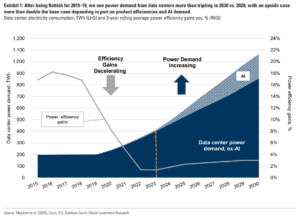
AI’s rise has reshaped energy demand. As shown below, power needs for data centers could double or more by 2030 compared with 2024 levels. This growth comes from both AI training workloads and everyday data processing.

Data center energy demand is expected to grow faster than many other industrial sectors. Some forecasts suggest that electricity consumption by data centers could account for up to 12% of total U.S. power demand by 2028.

data center power demand AI 2030 Goldman

Globally, around 15% of data center energy comes from nuclear power. This number is growing as companies make long-term deals with nuclear providers. Renewables (wind and solar) also play a growing role, with their share expanding due to climate goals and cost declines.

Despite this growth, fossil fuels still supply a large share of data center power today — around 56% globally — leading to rising carbon emissions unless clean sources are scaled rapidly.

Many major tech companies have set ambitious targets for net‑zero emissions. These targets focus on three main goals:

  • Powering data centers with zero-carbon electricity.
  • Improving energy efficiency.
  • Adopting new technologies like nuclear energy or carbon capture.

Can Nuclear Keep Up with AI Growth?

Investments in nuclear energy are rising. In 2025, nuclear capacity is expected to grow by about 29 GW worldwide, with more than half of that expansion in China and India.

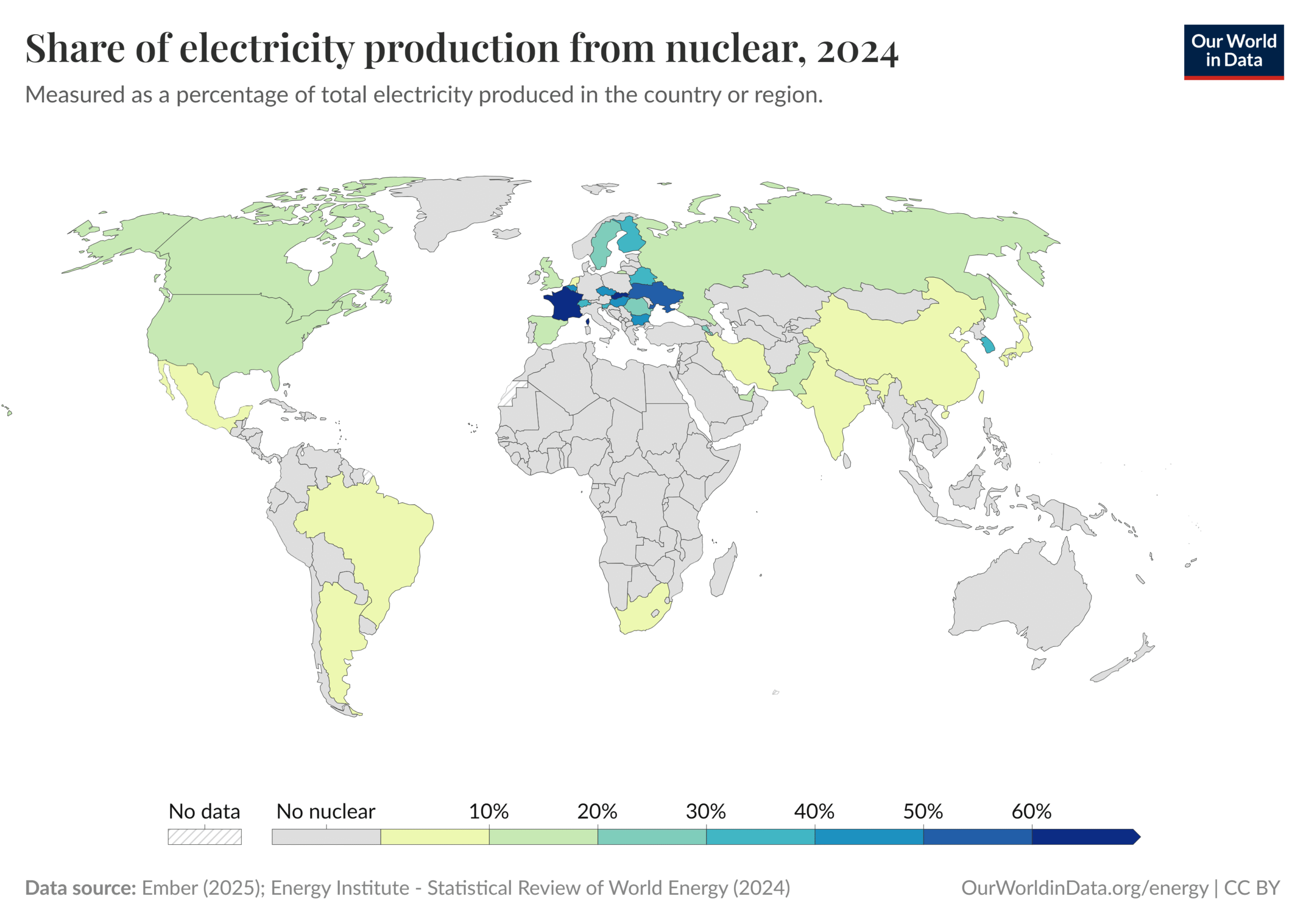
nuclear power share of electricity global 2024

Some nations are doubling down on nuclear power to support digital growth and energy security. France, for example, gets over 70% of its electricity from nuclear and is pushing to power new AI facilities with low‑carbon energy.

SMRs are gaining attention because they can be located closer to industrial or urban centers. Full commercialization of SMR technology is expected around 2030, making it a key component for future data center energy strategies.

In the clean energy market overall, nuclear power’s share is expected to grow alongside wind and solar. The International Energy Agency says that nuclear, renewables, and other low-carbon sources must grow a lot. This growth is needed to meet increasing electricity demand and reduce emissions.

Cost, Regulation, and Public Trust

Despite these trends, challenges remain. Nuclear infrastructure is expensive and time‑intensive to build. Regulatory hurdles, licensing processes, and community acceptance can slow deployment. Public perception of nuclear safety also affects project timelines. Analysts say streamlined permitting and clear safety standards will be needed to scale nuclear for data center support.

Moreover, deploying nuclear‑powered AI factories requires long‑range planning. Construction can take years, and financing relies on government incentives and private investment. Nuclear projects often require large capital outlays upfront, which can slow adoption without policy support.

At the same time, data centers are rapidly evolving. Advanced cooling systems help reduce energy use. AI workload scheduling makes tasks more efficient. Energy-efficient hardware also cuts the sector’s footprint. These technologies can reduce overall energy demand, but they do not eliminate the need for stable, baseload power sources like nuclear.

The Convergence of Energy and Computing

The collaboration between AtkinsRéalis and NVIDIA points to a future where energy and computing strategies are tightly linked. As AI demand grows, the need for reliable, low‑carbon energy becomes more urgent. Nuclear energy offers a potential answer — one that can deliver power around the clock without emissions.

Big tech companies are already exploring nuclear solutions. For example, Meta has signed long‑term agreements to secure hundreds of megawatts of nuclear power for its data centers, and Google is building small modular reactors to power AI operations.

The integration of AI design tools with nuclear engineering can speed up planning, improve safety, and reduce cost risk. This is important if large‑scale AI infrastructure is to be built in a way that supports sustainability goals.

As the energy and tech sectors converge, nuclear‑powered AI factories may represent a new evolution in how computing hubs are powered and designed. If successful, this trend could reshape data center energy strategies and help meet the growing power demand of the AI era with low‑carbon solutions.

The post Nuclear + AI: NVIDIA and AtkinsRéalis Power the Future of Data Centers appeared first on Carbon Credits.

Google Inks Waste-to-Carbon Deal to Remove 200K Tons of CO₂ With AI and Biochar

Google Inks Waste-to-Carbon Deal to Remove 200K Tons of CO₂ With AI and Biochar

Google has signed a major deal to buy carbon removal credits from an affiliate of AMP Robotics. The agreement targets the removal of 200,000 metric tons of carbon dioxide equivalent (CO₂e) by 2030. It is one of Google’s largest carbon removal purchases to date.

The project uses artificial intelligence (AI) to sort municipal solid waste. Organic waste is separated before it reaches landfills. Instead of decomposing and releasing methane, the waste is turned into biochar. Biochar is a stable material that can store carbon for hundreds of years.

The deal shows how large companies are moving beyond simple offsets. They are now funding durable carbon removal solutions that can scale over time.

AI + Biochar: Turning Trash into Carbon Storage

The project’s approach tackles two problems at once. It reduces methane emissions in the short term. It also removes carbon dioxide for the long term. Methane is a powerful greenhouse gas. In the United States, landfilled waste is the third-largest source of human-caused methane emissions, according to the U.S. Environmental Protection Agency.

Reilly O’Hara, Program Manager, Carbon Removal at Google, remarked:

“Beyond the carbon removal itself, we are excited to explore the dual-action impact of AMP’s approach on methane – a superpollutant 80x more potent than CO2. By diverting organic matter before it decomposes and utilizing biochar in landfill soil covers to neutralize existing gases, this partnership could serve as a blueprint for eliminating emissions at the source, leveraging existing industry, and creating a scalable model for the circular economy.”

The AMP system uses AI to identify and sort materials from mixed waste streams. The company says its platform has already identified more than 200 billion items and processed 2.9 million tons of recyclables globally.

In this project, the system will process up to 540,000 tons of waste per year in Virginia. At least 50% of this waste will be diverted from landfills. Each ton of waste diverted can reduce or remove more than 0.7 tons of CO₂e. That adds up to over 378,000 tons of CO₂ avoided or removed each year. This is equal to taking about 88,000 cars off the road annually.

The project is backed by a 20-year contract with a regional waste authority serving 1.2 million people. Over time, AMP aims to convert 5 million tons of organic waste into biochar over 20 years.

image here….

Biochar also has added uses. It can be used in landfills to reduce odors and control pollution. It may also be used in construction and cement. This creates new value streams while storing carbon.

Carbon Removal Market Gains Momentum

The deal reflects a wider shift in the carbon market. Companies are now focusing on carbon dioxide removal (CDR) instead of traditional offsets. Carbon removal captures CO₂ from the atmosphere and stores it for long periods.

The market is still small but growing fast. A coalition backed by major companies, including Google, has committed to spending $1 billion on carbon removal credits by 2030.

Recent deals show rising demand:

  • Google agreed to buy 100,000 tons of carbon removal credits from an agricultural biochar project in India.
  • It also signed a deal for 50,000 tons of removal credits using underground waste storage technology.

Prices for high-quality removal credits remain high. Some deals have reached around $362 per ton, reflecting early-stage technology and limited supply.

carbon removal credits and price

At the same time, developers are working to scale production and lower costs. Biochar is seen as one of the more practical options today because it uses existing waste streams and proven processes.

Methane Matters: Quick Wins for the Climate

One reason this deal matters is its focus on methane. Methane causes much faster warming than CO₂ in the short term. Reducing methane can deliver quick climate benefits.

Waste is a major methane source. When organic waste breaks down in landfills, it releases methane gas. By diverting this waste early, AMP’s system prevents methane from forming at all.

This makes waste-based carbon removal different from many other methods. It combines emissions avoidance and carbon removal in one process.

This dual benefit is attracting attention from companies and policymakers. Many climate strategies now include methane reduction as a priority. Technologies that can do both removal and avoidance may scale faster than single-purpose solutions.

Beyond market impact, the deal highlights how Google is managing its rising emissions.

How This Fits Google’s Climate Strategy

The deal is part of Google’s wider plan to reduce its climate impact. The company has set a goal to reach net-zero emissions across its operations and value chain by 2030. It also aims to run on 24/7 carbon-free energy by 2030, meaning every hour of electricity use is matched with clean energy.

Google carbon-free energy goal 2030
Source: Google

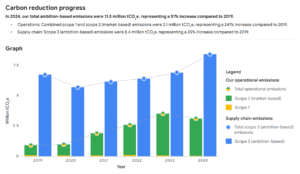
However, Google’s emissions have risen in recent years. In its 2024 environmental report, the company noted around 11.5 million tonnes of ambition-based CO₂e emissions. This marks an 11% rise from 2023 and is about 51% higher than in 2019. The increase shows ongoing growth in energy use, mainly from AI-powered data centers and expanded infrastructure.

Google carbon emissions 2024
Source: Google

Because of this, Google is using carbon removal to address emissions it cannot fully eliminate. The company has said it will rely on high-quality carbon removal credits instead of traditional offsets. These credits must remove carbon from the atmosphere and store it for long periods.

The tech giant is also a founding member of Frontier, a coalition of companies committed to spending $1 billion on carbon removal by 2030. The group helps fund early-stage technologies and scale supply.

This strategy reflects a broader shift among tech companies. As energy use grows, especially from AI and cloud computing, firms are investing more in carbon removal to meet climate targets. 

Carbon Removal Demand Surges, But Supply Falls Short

The Google–AMP deal shows how fast the carbon removal market is growing. But the market is still far from the scale needed to meet climate goals. Today, global emissions remain high at about 38 gigatonnes of CO₂ in 2024, according to the International Energy Agency.

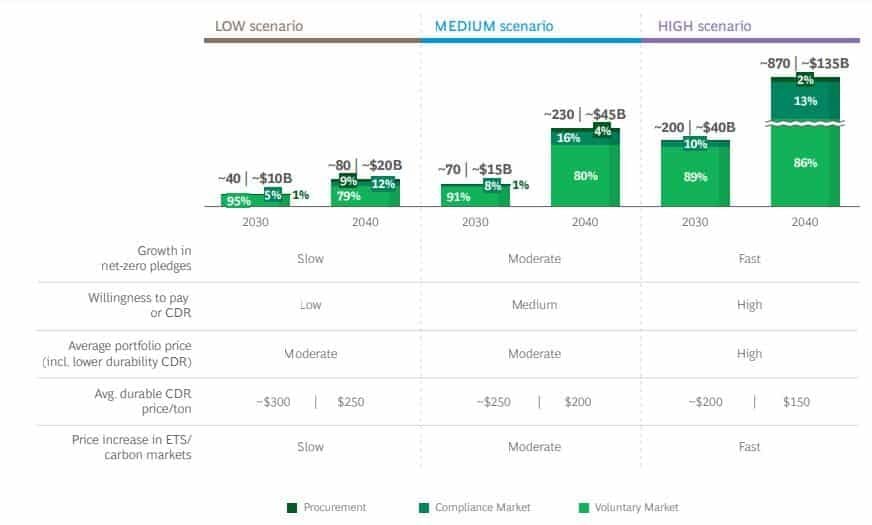
To balance these emissions, demand for carbon removal is rising quickly. Estimates show the market could reach 40 to 200 million tonnes of CO₂ removal per year by 2030, and as much as 80 to 900 million tonnes by 2040. This could create a $10 billion to $40 billion market by 2030, growing to as much as $135 billion by 2040.

BCG carbon removal credit demand projection 2030-2040
Source: BCG analysis

At the same time, supply is still limited. Current announced projects may only deliver around 33 million tonnes by 2030, far below expected demand. This gap is one reason large buyers like Google are signing long-term deals early. These agreements help scale new technologies and secure future supply.

Long-term, carbon removal will play a major role in climate strategy. Some projections show that removal capacity must reach around 1.7 gigatonnes per year by 2050 to meet global climate targets. Carbon capture alone could deliver about 12% of total emissions reductions between 2030 and 2050, especially in heavy industries like cement and steel.

CDR by sector 2050
Source: DNV Report

Investment is also rising fast. In the past five years, the number of carbon removal startups has grown fivefold, and venture funding has increased sevenfold. This shows strong interest from both private investors and large companies.

Closing the Carbon Gap

Still, challenges remain. Costs are high, and standards are still evolving. Some forecasts suggest the market could reach up to $100 billion per year by the early 2030s, but only if policy support and financing improve.

In this context, the Google–AMP deal reflects a clear shift. Companies are moving early to secure high-quality carbon removal. They are also helping build the market from the ground up. Waste-based solutions like biochar may scale faster because they use existing systems and deliver both methane reduction and carbon storage.

Overall, carbon removal is moving from a niche idea to a core part of climate strategy. But the gap between current supply and future demand remains large. Closing that gap will require strong investment, clear rules, and continued innovation across the sector.

The post Google Inks Waste-to-Carbon Deal to Remove 200K Tons of CO₂ With AI and Biochar appeared first on Carbon Credits.

From Uranium to Thorium: The New Equation Driving Global Nuclear Innovation

Thorium is making a strong comeback in the global energy conversation. For decades, it remained on the sidelines while uranium dominated nuclear power. Now, the shift toward net-zero emissions is changing that story. Countries need reliable, low-carbon energy that works around the clock. As a result, advanced nuclear technologies are gaining attention again—and thorium is leading that discussion.

At the same time, rapid innovation in reactor technologies is making thorium more practical. Designs such as molten salt reactors and small modular reactors are unlocking its potential. This combination of policy support, technological progress, and climate urgency is pushing thorium from theory toward reality.

Thorium vs Uranium: A New Nuclear Equation

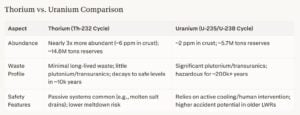
Thorium is a naturally occurring radioactive metal found in the Earth’s crust, but it works differently from uranium. It is not directly fissile, which means it cannot sustain a nuclear reaction on its own. Instead, thorium-232 absorbs neutrons inside a reactor and transforms into uranium-233. This new material then drives the nuclear reaction.

This process may sound complex, but it delivers clear benefits. Thorium reactors or thorium-based fuel systems are more stable under high temperatures. They also reduce the risk of catastrophic failure, such as meltdowns. In addition, they generate far less long-lived radioactive waste compared to conventional uranium reactors

Thus, the comparison between thorium and uranium is the key to this transformation. We summarize the differences in the table below:

thorium vs uranium
Data Source: nuclear-power.com

Another factor is safety. Many thorium reactors use passive safety systems that rely on natural processes, which lowers the risk of accidents. Uranium reactors, especially older ones, depend more on active cooling and human control.

Geopolitics also plays a role. Uranium supply is concentrated in a few regions, creating risks. Thorium is more widely available, which improves energy security and reduces dependence on specific countries.

However, uranium still has a clear advantage today. Its infrastructure is already in place, and it has long powered nuclear energy. Often called “yellow gold,” it is well understood and widely used with a mature supply chain. Thorium still needs new reactor designs, fuel systems, and regulatory support, so it is more likely to complement uranium in the near term.

Advanced Reactor Technologies Unlocking Thorium

For many years, thorium remained underutilized because conventional reactors were not designed for it. Today, that is changing. New reactor technologies are making thorium more viable.

  • Molten Salt Reactors (MSRs): Use liquid fuel for better heat transfer and low pressure, improving safety, efficiency, and thorium utilization.
  • Advanced Heavy Water Reactors (AHWRs): Support mixed fuel use, enabling gradual thorium adoption; central to India’s nuclear strategy.
  • Small Modular Reactors (SMRs): Compact and flexible systems that are easier to deploy; increasingly designed to support thorium fuel cycles.
  • Liquid Fluoride Thorium Reactors (LFTRs): A type of MSR offering high efficiency and built-in safety, making them a leading thorium energy solution.

Global Thorium Reserves Highlight Long-Term Potential

Thorium’s abundance is one of its strongest advantages. According to geological assessments, these reserves could theoretically generate electricity for several centuries if fully utilized in advanced reactor systems. That makes thorium not just an alternative fuel, but a long-term energy solution.

Even when compared to rare earth elements, which total around 120 million tons globally, thorium remains highly competitive in terms of its energy potential, despite differences in extraction economics.

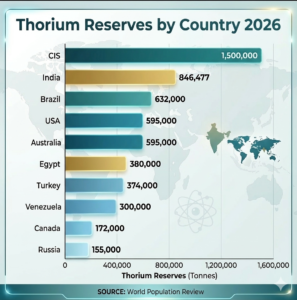
USGS data shows that the geographic spread of thorium further strengthens its appeal.

  • Major reserves are located in India, Brazil, Australia, and the United States. India leads with approximately 850,000 tons, followed by Brazil with 630,000 tons. Australia and the United States each hold around 600,000 tons.
  • In addition, countries within the Commonwealth of Independent States collectively hold about 1.5 million metric tons of thorium. This includes nations such as Kazakhstan, Uzbekistan, and Azerbaijan. This wide distribution supports global energy security by reducing reliance on a limited number of suppliers.

thorium

Regional Highlights

Asia-Pacific leads with over 55% of global share in 2025, supported by strong government backing, active research programs, and growing use of rare earth materials.

Countries like India and China are driving this growth. Rising energy demand and long-term policies are accelerating investment in thorium technologies. They are not just researching but actively preparing for deployment.

Meanwhile, North America is the fastest-growing region. Increased funding and private sector involvement are boosting innovation, especially in next-generation reactors that can use thorium fuel.

Together, this regional momentum is driving global competition and pushing the race for leadership in thorium energy.

Thorium Market Size and Demand Drivers

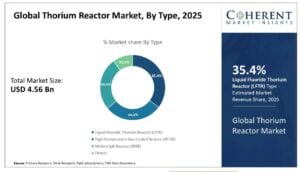
Market research reports indicate that the global thorium reactor market is projected to grow from $4.56 billion in 2025 to $8.97 billion by 2032, with CGAR 10.1%. This growth reflects increasing demand for clean, reliable, and low-carbon energy.

THORIUM MARKET

At the same time, other broader market estimates suggest the thorium sector could reach $13 billion by 2033, growing at a more moderate 4% rate. These figures include not just fuel, but also materials, reactor development, and associated technologies.

thorium market insights

Several factors drive this growth. Governments are increasing investments in clean energy technologies. Research institutions are advancing reactor designs. At the same time, the need for energy security and reduced carbon emissions is becoming more urgent.

These converging trends are positioning thorium as a strategic energy resource. While large-scale commercialization is still ahead, the direction of growth is clear.

Competitive Landscape: A Market Defined by Innovation

The thorium market is still in its early stages, and this is reflected in its competitive landscape. Unlike mature energy sectors, it is not dominated by large-scale commercial players. Instead, it is shaped by collaboration, research, and pilot projects.

Copenhagen Atomics’ Strategic Partnership with Rare Earths Norway

As the industry evolves, partnerships are becoming increasingly important. One notable example is Copenhagen Atomics, which has signed a Letter of Intent with Rare Earths Norway. This agreement aims to secure access to thorium from the Fensfeltet deposit in Norway.

This partnership highlights a key shift in how thorium is viewed. It is now being recognized as a valuable energy resource. By integrating thorium into supply chains, companies are laying the groundwork for future commercialization.

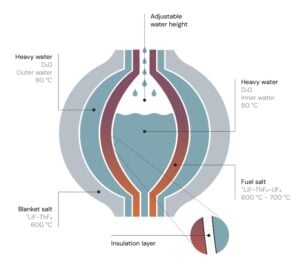
Copenhagen Atomics is also developing modular molten salt reactors designed for mass production. This approach requires not only technological innovation but also a reliable supply of materials. Partnerships like this are critical for building that ecosystem.

Thorium molten salt reactor, with the focus on low electricity price and fast installation

thorium molten salt reactor
Source: Copenhagen Atomics

India’s Thorium Strategy Sets a Global Benchmark

India stands out as one of the most advanced players in the thorium space. Its nuclear program is built around a three-stage strategy designed to fully utilize its domestic thorium reserves.

  • The country’s Department of Atomic Energy and Atomic Energy Commission are leading this effort. Research institutions are developing advanced reactor designs, including the Advanced Heavy Water Reactor and molten salt systems.
  • One of the key milestones is the Prototype Fast Breeder Reactor at Kalpakkam, which is expected to play a crucial role in producing uranium-233 from thorium. This will enable a closed fuel cycle, improving efficiency and sustainability.
  • Private sector involvement is also growing. Clean Core Thorium Energy is supplying advanced fuel for testing in existing reactors. At the same time, companies like NTPC and Larsen & Toubro are supporting large-scale deployment and infrastructure development.

India’s long-term vision is ambitious. With its vast thorium reserves, the country aims to secure an energy supply for up to 200 years. This strategy not only strengthens energy security but also positions India as a global leader in thorium technology.

Thor Energy: Leading in Fuel Development

Companies like Thor Energy are leading the way in fuel development. Their work on thorium-plutonium mixed oxide fuel and ongoing irradiation testing provides valuable real-world data. Similarly,

Other players are taking different approaches:

  • Ultra Safe Nuclear Corporation is integrating thorium fuel cycles into its Micro Modular Reactor design. This approach focuses on creating a fully integrated energy system.
  • NRG in the Netherlands is conducting critical experiments that provide data on reactor performance and fuel behavior.
  • National laboratories also play a key role. Organizations such as Atomic Energy of Canada Limited provide the expertise and facilities needed to support research and development. Their contributions are essential for advancing the technology.

Overall, the market is best described as a technology race. Companies are not competing on volume yet. Instead, they are competing to prove that their solutions work at scale.

A Strong Fit for the Net-Zero Transition

The global push for carbon neutrality is a major driver behind thorium’s rise. More than 130 countries have set or are considering net-zero targets. Achieving these goals requires a mix of energy solutions.

As we may already know, renewables like solar and wind are essential, but they are not always reliable. Their output depends on weather conditions, which creates gaps in the electricity supply. These gaps must be filled by stable, low-carbon sources.

Thorium-based nuclear power offers exactly that. It provides consistent baseload electricity without producing greenhouse gas emissions during operation. At the same time, it addresses key concerns associated with traditional nuclear energy, such as safety and waste.

This alignment with climate goals is driving interest in thorium. Governments are exploring it as part of broader energy strategies. Investors are also paying attention, recognizing its long-term potential. Simply put, this phase can be seen as a technology race. The goal is to prove that thorium systems can operate safely, efficiently, and economically at scale. Success in this area will determine the pace of market growth.

The post From Uranium to Thorium: The New Equation Driving Global Nuclear Innovation appeared first on Carbon Credits.

Conflict in the Middle East Threatens Carbon Capture Buildout: What It Means for the Global CCUS Market?

Conflict in the Middle East Threatens Carbon Capture Buildout: What It Means for the Global CCUS Market?

The conflict in the Middle East is raising doubts about major carbon capture projects in the Gulf region. Carbon capture, utilization, and storage, known as CCUS, is a technology that prevents carbon dioxide (CO₂) from entering the atmosphere. It captures CO₂ from industrial sources and stores it underground or uses it in industrial processes. CCUS is seen as crucial for cutting hard‑to‑abate emissions from oil, gas, cement, and steel.

Gulf Ambitions Hit the Pause Button

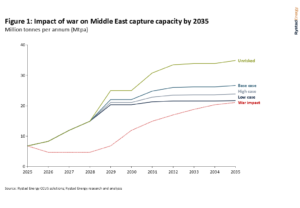
Before the conflict, Gulf plans aimed for about 20 million tonnes per year (Mtpa) of CCUS capacity by 2030. This would have positioned the region as a key global hub. But Rystad Energy says this is now unlikely. The pipeline may shrink closer to the lower case of around 12 Mtpa by 2035 due to delays and repriced risk. 

impact of middle east conflict to CCUS in gulf
Source: Rystad Energy

The Gulf’s CCUS buildout has strong logical drivers. The region has abundant oil and gas operations, and projects often connect to those facilities. However, when the upstream energy system is disrupted, CCUS plans can be delayed, pushed back, or re‑evaluated. This change affects investors’ view of CCUS as a near‑term investment in the region.

Rising Costs and Risk Reprice Carbon Capture

One major risk from prolonged conflict is rising energy costs. If energy prices jump — which often happens during regional conflict — the cost to capture and transport CO₂ also rises.

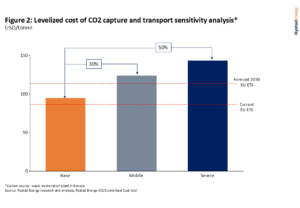
Rystad’s analysis shows that a 50 % rise in energy prices could increase capture and transport costs by about 30 %. That could push the cost of capturing a tonne of CO₂ well above the price range expected by 2030 in the European Union’s emissions trading system. 

  • The analysis suggests an increase from $95 per tonne to $124 per tonne using a ‘middle impact’ case, where energy prices rise about 50%.
ccus cost impact of energy price increase
Source: Rystad Energy

Higher costs come from more expensive power, higher equipment prices, and slower supply chains. All these pressures hit CCUS projects hard because they are already more costly than conventional infrastructure.

Energy‑intensive capture systems need cheap, reliable supplies of power and materials. Rising inflation and disrupted supply chains could reduce availability and slow project build‑outs. 

Longer project timelines may also raise the cost of capital. Investors typically demand higher returns when projects take longer or face greater uncertainty. In some cases, projects may only move forward if they are supported by governments or strategic partners, especially when the cost per tonne of CO₂ captured rises above key benchmarks. 

Global CCUS Market Still Expanding

While the Gulf faces near‑term risks, the global CCUS market has continued to grow. A large number of projects are being developed worldwide.

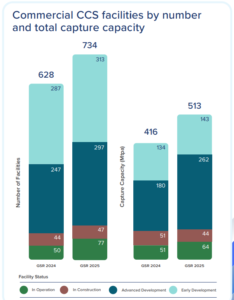
As of 2025, ~628 CCUS projects are tracked globally across all stages, with potential capture capacity exceeding 416 Mtpa if completed. Operational capacity reached 64 Mtpa from 77 facilities. The breakdown by number of facilities and total capture capacity is as follows:

commercial CCS facilities capacity and projects 2025 H1
Source: Global CCS Institute

The market is growing because many governments and companies have adopted emission‑reduction mandates. About 63 % of industries say these mandates accelerate CCUS deployment.

  • Nearly 55 % of new CCUS projects are integrated with other low‑carbon technologies like hydrogen or renewable energy.
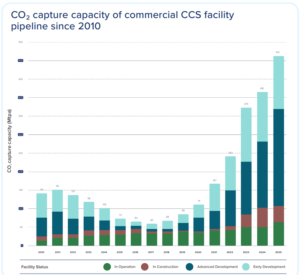
CO₂ capture capacity of commercial CCS facility
Source: Global CCS Institute

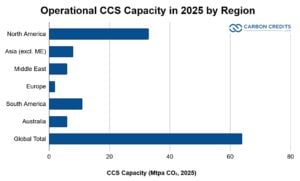
North America leads global capacity, accounting for about 46 % of total CCUS project capacity. Europe holds around 26 %, Asia‑Pacific about 21 %, and the Middle East & Africa roughly 7 % of the total project pipeline.

The oil and gas sector remains the largest user of CCUS, making up about 53 % of the global captured CO₂. Industrial decarbonization in sectors like cement and steel now represents around 25 % of the planned capacity worldwide. 

operational CCS capacity per region
Source: IEA estimations

Market research also shows that the CCS market size was estimated at about USD 3.9 billion in 2025, growing at a compound annual growth rate (CAGR) of 7 % to reach USD 6.7 billion by 2033. This growth reflects rising investments in decarbonization technologies across industrial and power sectors.

Long-Term Outlook: The Gigaton Challenge

CCUS projects are growing, but still fall far short of what climate models recommend. A recent Rystad Energy forecast suggests that global CCUS capacity could expand to more than 550 million tonnes per year by 2030. That’s more than a tenfold increase over today’s roughly 45 million tonnes per year of captured CO₂.

However, this projected expansion is still far below what many climate scenarios require. Limiting global warming to under 2 °C often needs CCUS to capture nearly 8 gigatonnes of CO₂ each year by 2050 in many energy transition models. That means growth must accelerate sharply after 2030 to meet climate goals.

The IDTechEx forecast shows a strong long‑term outlook for CCUS. It estimates global capture capacity will hit around 0.7 gigatonnes per year by 2036. This indicates rapid growth, with a CAGR over 20% from 2026 to 2036. This would place CCUS as a major technology in global decarbonization, if investment and deployment scale up quickly.

What This Means for the Gulf and the World

For the Gulf region, rising geopolitical risk is changing how CCUS projects are evaluated. Many planned build‑outs linked to oil and gas value chains may be slowed or repriced as risk premiums rise.

Some analysts now expect that Gulf CCUS capacity may align with a more cautious trajectory through the mid‑2030s rather than a rapid 2030 build‑out. Moreover, the 8 Mtpa shortfall equals 1.5% of the projected 550 Mtpa global capacity, placing intense pressure on North America and Europe to accelerate.

Rising costs from energy price shocks further complicate the equation. With Middle East & Africa capacity shrinking from 7% to ~4% of the total pipeline, US 45Q projects and EU ETS industrial clusters must find enough replacement capacity.

Still, global drivers for CCUS remain strong. Governments and companies worldwide continue to plan and build projects. New technologies and integrations with hydrogen, renewable energy, and industrial clusters could help spread costs and scale the technology.

As many countries expand their net‑zero plans, CCUS will play a key role in managing emissions that are difficult to eliminate through electrification or fuel switching alone.

In this evolving landscape, the CCUS market is poised for significant long‑term growth, but near‑term geopolitical disruptions and cost pressures will require careful planning, strong policy support, and sustained investment. Strategic partnerships and global cooperation will be key to ensuring that CCUS can meet both economic and climate goals.

The post Conflict in the Middle East Threatens Carbon Capture Buildout: What It Means for the Global CCUS Market? appeared first on Carbon Credits.
AstraZeneca Turns Up the Heat: New Program Tackles Industry’s Toughest Emissions

AstraZeneca Turns Up the Heat: New Program Tackles Industry’s Toughest Emissions

Industrial heat production makes up a large share of global emissions. About 18% of all greenhouse gas emissions come from heat used in factories, plants, and manufacturing processes. This type of heat is hard to decarbonize because it often requires high temperatures that are still powered by fossil fuels like natural gas. 

To tackle this challenge, AstraZeneca, together with Secaro and ERM, launched the Clean Heat Program. The initiative helps companies measure, plan, and reduce industrial heat emissions across their supply chains.

Rob Williams, Senior Director of Sustainable Procurement at AstraZeneca, said:

“It’s clear that a programme like this is the fastest and most effective way to decarbonise heat in our supply chain. We are long-term partners with Secaro and ERM, and now we’re expanding relationships with peers, buyers from other industries and suppliers to plan, fund and launch the projects that will make heat decarbonisation a reality.”

Industrial Heat: The Hidden Carbon Giant

Fossil fuels still supply most industrial heat energy today. Cleaner alternatives like electrification, hydrogen, or biofuels often cost more. They also require new technology and infrastructure.

Despite its importance, industrial heat has received less focus than clean electricity or transport. In many industries, heat drives fundamental operations, from making chemicals to processing food. Because of this, experts say improving how heat is produced is key to cutting industrial emissions.

Clean Heat Program: Turning Plans into Action

In March 2026, AstraZeneca teamed up with ERM and Secaro to launch the Clean Heat Program. This initiative aims to help companies reduce emissions tied to industrial heat across their supply chains.

By combining data tools, technical support, and financing options, the program aims to make it easier for industrial facilities to adopt low-carbon heat solutions and accelerate decarbonization.

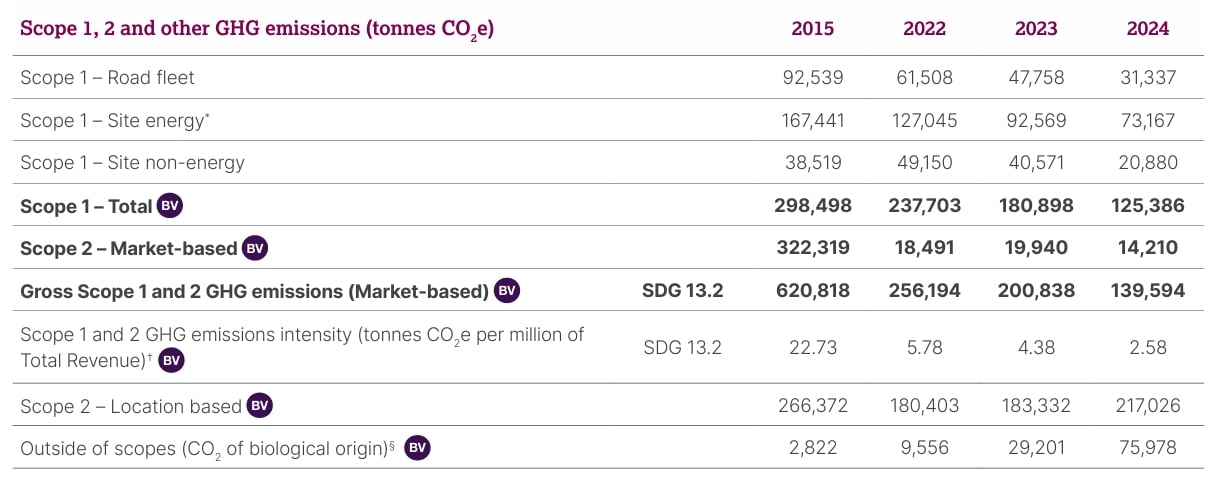
AstraZeneca is joining as a founding partner. The company has its own near‑term climate goals. By 2026, it aims to cut 98% of its Scope 1 and 2 emissions from operations compared to a 2015 baseline.

Astrazeneca
Source: Astrazeneca

The pharma giant has already achieved 88.1% reduction by the end of 2025. Its long‑term target is to reach net zero by 2045, including deep cuts in emissions across its suppliers and partners.

The Clean Heat Program is designed to go beyond simple planning. It aims to help companies move from studying options to actually acting on decarbonizing heat.

The program combines:

  • Supply chain data tools that show where heat is used and emitted.
  • Technical support to find practical ways to reduce emissions.
  • Financing options to help companies afford projects that cut heat emissions.

Secaro maps heat emissions across supply chains while ERM designs bankable projects, heat pumps, biomass conversion, and electrification upgrades. Notably, financing leverages EU funds and carbon credit revenue to de-risk upfront costs, moving companies from analysis to implementation.

Unlike many efforts that focus on one plant or site, the program looks at supplier networks. This broader view helps companies pinpoint where changes will have the biggest impact.

Why High-Temperature Heat Is Hard to Replace

Industrial heat is one of the largest sources of industrial emissions. According to the International Energy Agency, around 70% of industrial energy demand goes to producing heat for processes such as steel, cement, and chemicals.

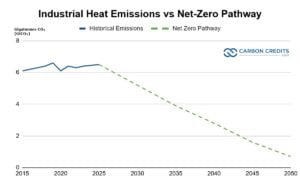
Industrial Heat Emissions vs Net-Zero Pathway IEA
Estimates based on industrial CO₂ emissions data from the International Energy Agency. Around 70–75% of industrial energy use is for heat, according to IEA analysis.

Estimates from IEA data show that heat-related emissions are about 6.5 gigatonnes of CO₂ each year. This underscores the significant decarbonization needed.

The same analysis suggests that these emissions must drop to less than 1 gigatonne by 2050. This pathway needs quick action from various industries. It also requires strong investment in technology and changes in supply chains to cut emissions in high-temperature processes.

Industrial heat often uses natural gas or other fossil fuels. While electricity can now come from wind or solar, renewable options for high‑temperature heat are still emerging. Solutions such as electrification, biomass fuels, or hydrogen require new equipment and deep planning.

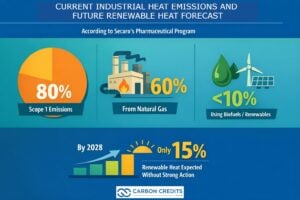
Electrification technologies work for low-temperature heat below 200°C. But industries that need higher heat still rely on fossil fuels. Secaro’s data show that 80% of industrial energy consumption is tied to heat, and 60% of these come from natural gas.

This complexity makes industrial heat one of the hardest parts of decarbonization — even for companies with net‑zero goals. In many cases, heat emissions make up a large share of a company’s direct emissions, known as Scope 1 emissions. 

Currently, less than 10% of sites use biofuels or other renewable energy. Industry forecasts suggest that renewable heat may reach only 15% of industrial use by 2028 unless strong action is taken.

CURRENT INDUSTRIAL HEAT EMISSIONS AND FUTURE RENEWABLE HEAT FORECAST

Pressure’s On: Regulators, Investors, and Rising Energy Costs

Pressure to cut heat emissions is growing from both regulators and investors. New rules such as the European Union’s Carbon Border Adjustment Mechanism (CBAM) and updated disclosure requirements from the U.S. Securities and Exchange Commission (SEC) require more detailed emissions reporting and climate risk disclosure.

Companies that ignore their emissions might face penalties. They could also lose contracts with buyers who want cleaner supply chains.

Energy price volatility also plays a role. Firms that rely on fossil fuels for heat may face wide swings in energy costs. Decarbonizing heat can help companies stabilize fuel expenses and reduce exposure to price shocks, which investors increasingly watch closely.

Tools and Support for Heat Decarbonisation 

Secaro’s data platform is central to the program. It now offers heat-specific insights, which show where emissions are highest and highlight chances for change. The platform links buyers, suppliers, and solution providers to highlight high‑impact decarbonization actions.

ERM steps in with its technical expertise. It helps companies assess options and build project plans to attract investment.

These can include:

  • Higher energy efficiency
  • Switching to low-carbon fuels
  • Installing heat recovery systems
  • Adopting new technologies, like high-temperature heat pumps

Financing is also part of the program. Many industrial heat projects stall because of upfront costs. The initiative aims to connect companies with financing options, including funds based in the European Union and other mechanisms that help lower financial barriers.

Markets Are Warming Up: Forecasts for Industrial Decarbonization

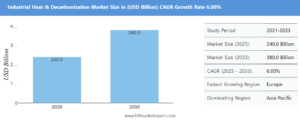
Efforts like the Clean Heat Program are significant as the market for industrial decarbonization is growing. A recent market outlook projects that global industrial heat decarbonization could grow steadily over the next decade.

From 2025 to 2033, the market is expected to expand at a compound annual growth rate (CAGR) of about 6%, reaching an estimated $380 billion by 2033.

industrial heat and decarbonization market forecast

Technologies such as industrial heat pumps are also gaining traction. These devices can reuse waste heat and reduce energy losses. A market forecast shows that the global industrial heat pump market will rise to over 13,150 units by 2035. Revenues may exceed $9.1 billion by that time.

Even though many low‑carbon heat solutions exist, adoption has been slow. For example, only a small share of industrial sites in some sectors currently use renewable heat sources. Without stronger action, forecasts suggest renewable heat may reach only around 15% of industrial heat use by 2028.

A Clear Path for Companies and Supply Chains

The Clean Heat Program offers companies a way to close the gap between their climate goals and the real challenges of industrial heat. It helps companies move beyond early analysis and toward real projects that reduce emissions, improve energy security, and meet investor and regulatory expectations.

For supply chain partners and smaller suppliers, the program can lower barriers to entry. Many small and mid‑tier suppliers struggle to access data, technical support, or financing. This initiative aims to change that by giving a clearer path to decarbonization. If widely adopted, this approach could help reduce significant emissions from industrial heat worldwide and support broader climate goals.

The post AstraZeneca Turns Up the Heat: New Program Tackles Industry’s Toughest Emissions appeared first on Carbon Credits.
Reliance and Samsung C&T $3B Green Ammonia Deal Powers India’s Hydrogen Exports

India’s clean energy transition is entering a new phase. Reliance Industries Limited (RIL) has signed a long-term green ammonia supply agreement with Samsung C&T Corporation. The deal, worth over $3 billion, will run for 15 years starting in the second half of FY2029.

This agreement reflects a structural shift in global energy markets. India is positioning itself not just as a clean energy producer, but as a future exporter of green fuels.

At the same time, the deal highlights a growing global race to secure long-term supplies of low-carbon energy. As industries look to decarbonize, green hydrogen and ammonia are becoming critical building blocks of the future energy system.

India’s Hydrogen Vision Meets Global Demand Reality

The agreement aligns with India’s broader policy push. Led by the Ministry of New and Renewable Energy, the National Green Hydrogen Mission aims to turn the country into a global hub for hydrogen production and exports.

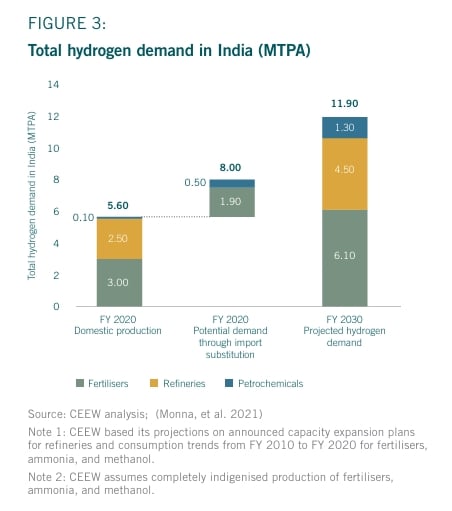
The government has proposed around $2.2 billion in funding through 2030. Its targets are ambitious. India plans to build at least 5 million metric tonnes of annual green hydrogen capacity, supported by 125 GW of new renewable energy.

The economic and environmental impact could be substantial. Investments may exceed ₹8 lakh crore. The mission could create over 600,000 jobs while cutting fossil fuel imports by ₹1 lakh crore. In addition, it aims to reduce around 50 million tonnes of greenhouse gas emissions each year.

INDIA GREEN HYDROGEN

However, market realities remain complex. As of August 2025, about 158 hydrogen projects were under development. While announced capacity is already more than double the government’s target, only a small fraction is under construction or operational. This gap highlights execution risks.

Reliance Builds a Fully Integrated Green Energy Platform

To capture this opportunity, Reliance is building a deeply integrated clean energy ecosystem. The company is not only producing green hydrogen but also controlling the entire value chain.

This includes renewable power generation, energy storage, hydrogen production, and downstream products like green ammonia. A key focus is domestic manufacturing of critical technologies such as solar modules, battery systems, and electrolysers.

This strategy serves two purposes:

  • First, it reduces costs by localizing supply chains.
  • Second, it strengthens India’s position as a manufacturing hub for clean energy technologies.

At the center of this ecosystem is the Dhirubhai Ambani Green Energy Giga Complex in Jamnagar. Spread across 5,000 acres, it will house multiple gigafactories producing solar panels, batteries, electrolysers, fuel cells, and power electronics.

reliance green hydrogen
Source: Reliance

In parallel, Reliance is developing a large renewable energy project in Kutch. By combining solar, wind, and storage, the project will provide round-the-clock clean electricity. This power will feed into hydrogen and ammonia production facilities in Jamnagar.

The company has also committed to achieving net-zero emissions by 2035, placing it among the more aggressive corporate climate targets globally.

Samsung’s Offtake Deal Brings Stability to the Green Hydrogen Market

The partnership with Samsung C&T plays a crucial role in addressing one of the hydrogen sector’s biggest challenges—demand uncertainty.

By securing a 15-year offtake agreement, Reliance gains revenue visibility. This makes it easier to finance large-scale projects. At the same time, Samsung C&T Corporation benefits from a stable and cost-competitive supply of green ammonia.

The company operates across more than 40 countries and is active in trading industrial materials and developing renewable energy projects. Access to green ammonia strengthens its ability to decarbonize operations and expand its clean energy portfolio.

This is particularly important as global companies face rising pressure to meet environmental, social, and governance (ESG) targets. Green ammonia can be used in fertilizers, as a hydrogen carrier, and even as a shipping fuel. Therefore, securing supply early provides a strategic advantage.

From Slow Start to Rapid Scale: McKinsey and PwC Map Hydrogen Growth

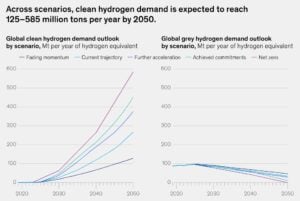
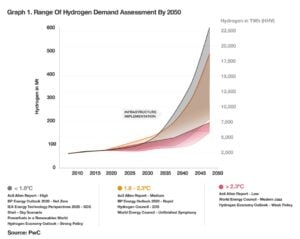
Global demand trends add another layer to the story. According to McKinsey & Company, clean hydrogen demand could reach between 125 and 585 million tonnes per year by 2050. This is a sharp increase from today’s levels, where nearly 90 million tonnes of hydrogen are still produced using fossil fuels.

In the near term, demand growth is expected to remain gradual. McKinsey notes that traditional sectors like fertilizers and refining will drive early adoption as they switch from grey to cleaner hydrogen. However, newer applications—such as steelmaking, synthetic fuels, and heavy transport—will likely scale up after 2030, accelerating overall demand.

green hydrogen
Source: McKinsey

While long-term demand looks strong, short-term growth is expected to be gradual. Insights from PwC suggest that hydrogen demand will remain limited until 2030.

There are several reasons for this. First, most current projects are still in early stages and operate at relatively small scales. Many electrolyser facilities today have capacities below 50 MW. Even planned projects, which may exceed 100 MW, are still small compared to existing fossil-based hydrogen plants.

Second, infrastructure development takes time. Building pipelines, storage systems, and export terminals can take seven to twelve years. Without this infrastructure, large-scale hydrogen trade cannot take off.

As a result, PwC expects stronger demand growth after 2030, with a more rapid acceleration after 2035. This timeline aligns with broader climate goals and the need to scale clean energy systems globally.

green hydrogen demand
Source: PwC

Challenges Still Loom Over the Sector

Despite growing momentum, the green hydrogen sector faces several hurdles. High production costs remain a major barrier. In many regions, green hydrogen is still more expensive than fossil-based alternatives.

In addition, global standards are still evolving. Different countries use different definitions for “green” or “low-emission” hydrogen. This creates uncertainty and complicates international trade. Demand visibility is another concern. Although many projects have been announced, actual uptake depends on policy support, pricing mechanisms, and technological progress.

These challenges explain why only a small portion of announced capacity has moved into construction or operation so far.

In conclusion, the Reliance-Samsung deal highlights a key turning point. It shows how large-scale, long-term agreements can unlock investments and accelerate project development.

At the same time, it signals India’s growing role in the global hydrogen economy. With strong policy backing, rising investor interest, and integrated industrial strategies, the country is building a foundation for large-scale exports of green fuels.

The post Reliance and Samsung C&T $3B Green Ammonia Deal Powers India’s Hydrogen Exports appeared first on Carbon Credits.

AI vs. Climate Reality: Why Big Tech Is Buying Millions of Carbon Credits

The artificial intelligence (AI) boom has entered a new phase. It is no longer just about innovation or market dominance. Instead, it is now deeply tied to energy demand, emissions, and capital discipline. As a result, the rapid expansion of AI infrastructure is pushing Big Tech into an uncomfortable position—balancing climate commitments with rising environmental costs.

Data compiled for CNBC by carbon management platform Ceezer shows a sharp rise in carbon credit purchases across the sector. Companies are scaling AI aggressively, yet at the same time, they are leaning more heavily on carbon markets to offset the emissions they cannot yet avoid.

This shift is not happening in isolation. It reflects a broader structural tension between growth, sustainability, and financial performance.

AI Expansion Is Driving Both Emissions and Offsets

Tech giants such as Alphabet, Microsoft, Meta, and Amazon are collectively expected to spend close to $700 billion this year to scale their AI capabilities. This includes building hyperscale data centers, deploying advanced chips, and expanding global cloud infrastructure.

However, these investments come with a high environmental cost. AI systems require vast computing power, which in turn demands continuous electricity and cooling. Water use is also rising, particularly in large data center clusters. Consequently, emissions are increasing even as companies reaffirm their net-zero ambitions.

This is where carbon credits play a growing role. Each credit represents one metric ton of carbon dioxide either reduced or removed from the atmosphere. By purchasing these credits, companies aim to offset emissions that remain difficult to eliminate in the short term.

Yet this approach raises a fundamental question. Are carbon credits acting as a bridge to decarbonization—or becoming a substitute for it?

AI growth carbon credits

A Market Surge Signals Structural Dependence

The scale of growth in carbon credit purchases suggests a structural shift rather than a temporary adjustment.

In 2022, permanent carbon removal purchases across these companies stood at just over 14,000 credits. Within a year, that figure jumped dramatically to 11.92 million. The momentum did not slow. Purchases increased to 24.4 million in 2024 and then surged to 68.4 million in 2025.

This exponential rise highlights how quickly AI-driven emissions are feeding into carbon markets. More importantly, it shows that demand for high-quality removal credits is accelerating faster than supply.

At the same time, companies are not relying on a single solution. Their portfolios include nature-based projects such as forestry and soil carbon, alongside engineered approaches like direct air capture. Long-term offtake agreements are also becoming more common, helping secure future credit supply while supporting project development.

However, the rapid increase in demand raises concerns about market depth. High-integrity carbon removal credits remain scarce, and scaling them is both capital-intensive and time-consuming.

Microsoft Sets the Pace—but Questions Remain

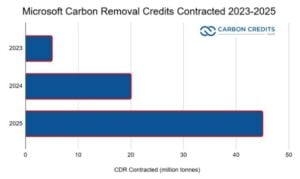
Among its peers, Microsoft has taken a clear lead in carbon removal efforts. The company reported a 247% increase in credit purchases between fiscal 2022 and 2023, followed by a further 337% jump in 2024. Growth continued into the next fiscal year, roughly doubling again.

More notably, Microsoft expanded its carbon removal agreements to 45 million metric tons of CO₂ in 2025, up from 22 million tons the previous year. These agreements span multiple geographies and technologies, reflecting a diversified approach to carbon removal.

carbon removal credits microsoft

The company is now a top climate leader, intending to become carbon-negative by 2030. Its strategy emphasizes reducing emissions first and then removing what cannot be avoided.

However, a key gap remains. It has not explicitly tied its carbon credit strategy to its AI expansion. While the correlation is clear, the lack of direct disclosure leaves room for interpretation.

This ambiguity is not unique to Microsoft. It reflects a broader issue across the sector, where sustainability narratives are evolving faster than reporting frameworks.

Free Cash Flow Pressures Are Becoming Harder to Ignore

While environmental concerns are rising, financial pressures are also building.

The CNBC report further highlighted that the scale of AI investment is unprecedented. As companies ramp up spending, free cash flow is beginning to decline. The four largest U.S. tech firms generated a combined $237 billion in free cash flow in 2024. That figure dropped to $200 billion in 2025, and further declines are expected.

This trend signals a shift in capital allocation. Companies are prioritizing long-term growth over short-term financial efficiency. However, this comes at a cost. Lower cash generation reduces flexibility and may increase reliance on external financing.

For instance, Alphabet raised $25 billion through a bond sale in late 2025, while its long-term debt rose sharply to $46.5 billion. This move underscores how even cash-rich companies are turning to debt markets to sustain their AI ambitions.

carbon credits investment

For investors, the implications are significant. The AI story remains compelling, but it now comes with margin pressure, delayed returns, and increased financial risk.

Renewables Help Stabilize Emissions—but Not Fully

Despite the rise in emissions, the increase has not been as steep as some feared. This is largely due to the rapid adoption of renewable energy.

Hyperscalers have expanded their clean energy portfolios, securing power purchase agreements and investing in renewable projects. As a result, they have been able to offset part of the additional demand created by AI workloads.

Ceezer’s data suggest that while emissions rose alongside AI growth, the increase was relatively moderate. This indicates that companies are responding quickly by integrating renewable energy into their operations.

However, this strategy has limits. Renewable energy can reduce operational emissions, but it cannot fully eliminate the impact of rapid infrastructure expansion. As AI demand continues to grow, the gap between emissions and reductions may widen.

Stricter Rules Are Reshaping Carbon Credit Use

At the same time, the regulatory landscape for carbon credits is becoming more stringent. New frameworks are redefining how companies can use offsets within their climate strategies.

Initiatives such as the VCMI Scope 3 Action Code now allow limited use of high-quality credits, but only under strict disclosure conditions. Meanwhile, the Science Based Targets initiative (SBTi) continues to refine its guidance, particularly as Scope 3 emissions remain difficult to reduce.

The challenge is substantial. The global Scope 3 emissions gap is estimated at 1.4 billion tonnes and could increase significantly by 2030. This creates pressure on companies to find credible solutions without over-relying on offsets.

In parallel, disclosure frameworks such as CSRD are pushing companies to provide detailed explanations of their carbon credit strategies. This includes justifying project selection, verifying credit quality, and demonstrating measurable impact.

The direction is clear. Carbon credits are no longer a simple compliance tool. They are becoming part of a broader accountability framework.

Carbon Removal Market Expands—but Supply Constraints Persist

The carbon removal market is growing rapidly, yet it remains constrained.

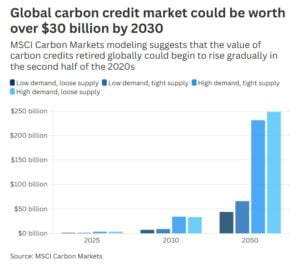
MSCI Projections suggest the global carbon credit market could exceed $30 billion by 2030. Corporate demand for carbon removal credits may surpass 150 million metric tons annually within the same timeframe.

msci carbon market

However, supply is struggling to keep pace. High costs remain a major barrier, particularly for advanced technologies such as direct air capture, where prices often exceed $100 per ton.

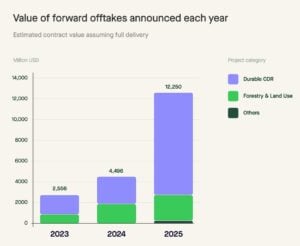
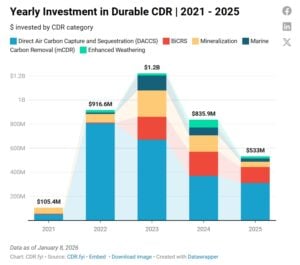
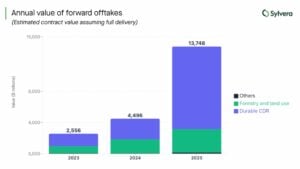
In 2025, offtake agreements reached $13.7 billion, reflecting a strong corporate commitment. Yet these agreements will deliver only 78 million credits over the next decade. Actual durable carbon removal credits retired in the same year remained below 200,000.

This mismatch highlights a key issue. While demand is accelerating, real-world deployment is lagging. As a result, the market faces both growth potential and structural limitations.

carbon offtake big tech
Source: Sylvera

The Bottom Line: A Delicate Balancing Act

Big Tech’s AI expansion is reshaping both the digital economy and the carbon market. On one side, companies are investing heavily in future growth. On the other hand, they are navigating rising emissions, tighter regulations, and increasing financial pressure.

Carbon credits are playing a critical role in bridging this gap. However, they are not a long-term solution on their own.

The path forward will require a more balanced approach—one that combines technological innovation with real emissions reductions and transparent reporting. Companies must prove that their climate commitments are more than offset strategies.

At the same time, investors will need to adjust expectations. The AI boom promises strong returns, but it also introduces new risks. Lower cash flow, higher capital intensity, and evolving climate obligations are all part of the equation.

Ultimately, the success of this transition will depend on execution. The companies leading the AI race must now show they can scale responsibly—without compromising either financial stability or climate credibility.

The post AI vs. Climate Reality: Why Big Tech Is Buying Millions of Carbon Credits appeared first on Carbon Credits.
Who Will Drive the Next Wave of Carbon Credit Demand? Insights from AlliedOffsets

Who Will Drive the Next Wave of Carbon Credit Demand? Insights from AlliedOffsets

The voluntary carbon market (VCM) lets companies buy carbon credits to offset their greenhouse gas emissions. AlliedOffsets, a data and technology firm for carbon offsetting, tracks this market closely. Their database covers more than 36,000 projects, over 28,000 buyers, and billions of tons of carbon that have been issued or retired. 

The VCM is growing fast. Over the last five years, most buyers have come from technology, telecommunications, and energy. Other sectors, like industrials, manufacturing, financial services, and aviation, also participate, though in smaller amounts.

The United States, the United Kingdom, France, Germany, and Japan have the most buyers, showing that developed countries lead the market.

As the market grows, new companies and sectors are expected to join. AlliedOffsets studied over 130,000 companies to predict who will likely buy carbon credits next. This helps sellers, project developers, and policymakers focus their efforts where demand is likely.

LtB Model: Predicting the Next Wave of Credit Buyers

AlliedOffsets uses a model called Likelihood to Buy (LtB). It looks at companies active before and since 2024, and even those that have never bought credits publicly. The company stated:

“Ranking specific companies’ likelihoods and identifying patterns in their unifying traits informs market suppliers and intermediaries about who to pivot engagement towards. Understanding the features that play the greatest roles in determining companies’ likelihoods, meanwhile, is vital for highlighting wider drivers for the growth of the market, which serve as levers for policymakers and signals for companies themselves.”

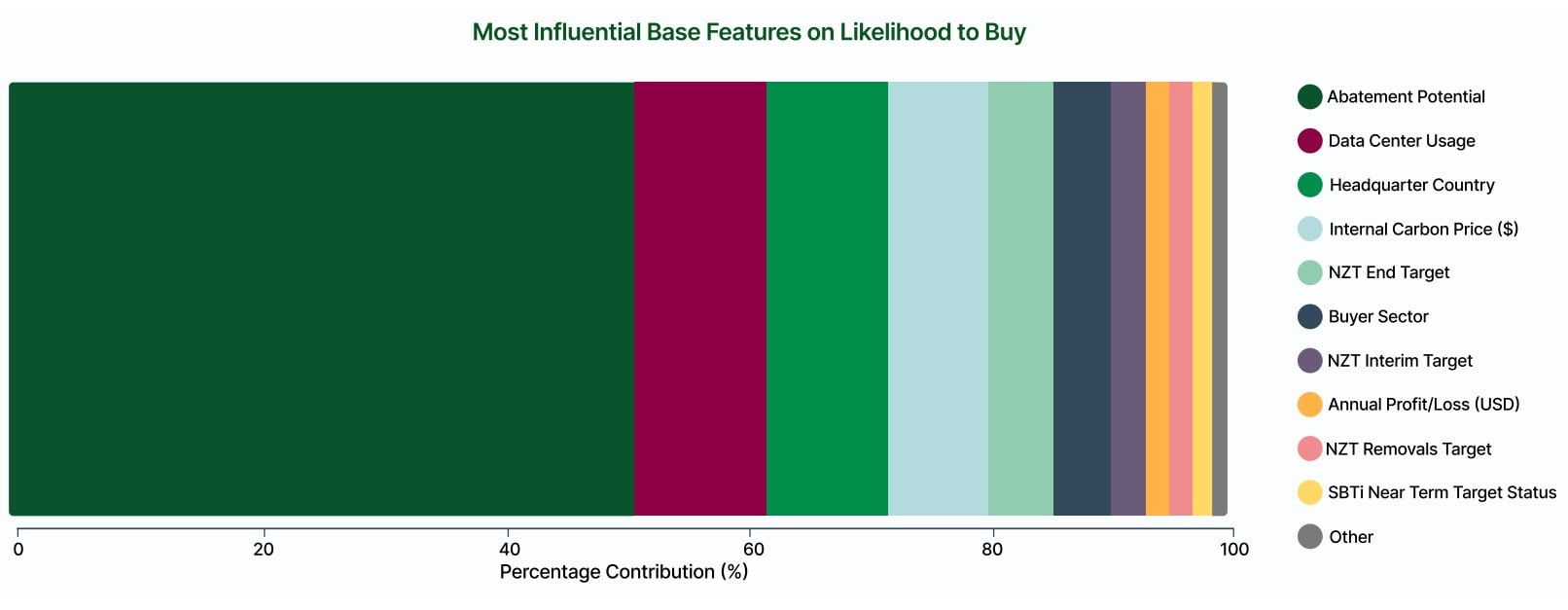
The model includes data from 36 global registries, covering both non-anonymous purchases and retirements. It looks at several key factors that affect a company’s likelihood to buy, including:

  • Abatement potential – how easy it is for the company to reduce emissions.
  • Data center usage – companies with large data centers use more energy and may buy more credits.

  • Headquarters country – companies in the US, UK, and China lead predicted purchases.
  • Internal carbon pricing – companies with higher carbon costs buy more credits.

  • Net-zero targets – companies with short-term or long-term climate goals are more likely to buy.
  • Sector – aviation, energy, and tech tend to buy more due to rules and public pressure.
  • Annual profit or loss – profitable firms are more able to purchase carbon credits.
factors for Likelihood to Buy VCM
Source: AlliedOffsets

The model also uses SHAP analysis to show which factors influence predicted buying the most. Companies that recently bought credits are weighted higher. Some sectors, like aviation, are manually marked as high-likelihood because of rules like CORSIA, which requires airlines to offset emissions.

AlliedOffsets also separates companies into new entrants and returning buyers, helping track demand trends.

Forecasted Carbon Credit Demand

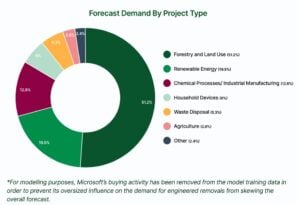
AlliedOffsets predicts that new and returning buyers will need about 281 million credits per year. This comes from over 11,500 companies with characteristics similar to current buyers.

The demand by project type is expected to have this composition:

VCM demand by project type AlliedOffsets
Source: AlliedOffsets

Demand for forestry projects is rising, partly because of forward contracts, which made up 55% of the 147 million credits negotiated in 2025. 

carbon credit offtakes annual 2025 Sylvera
Source: Sylvera

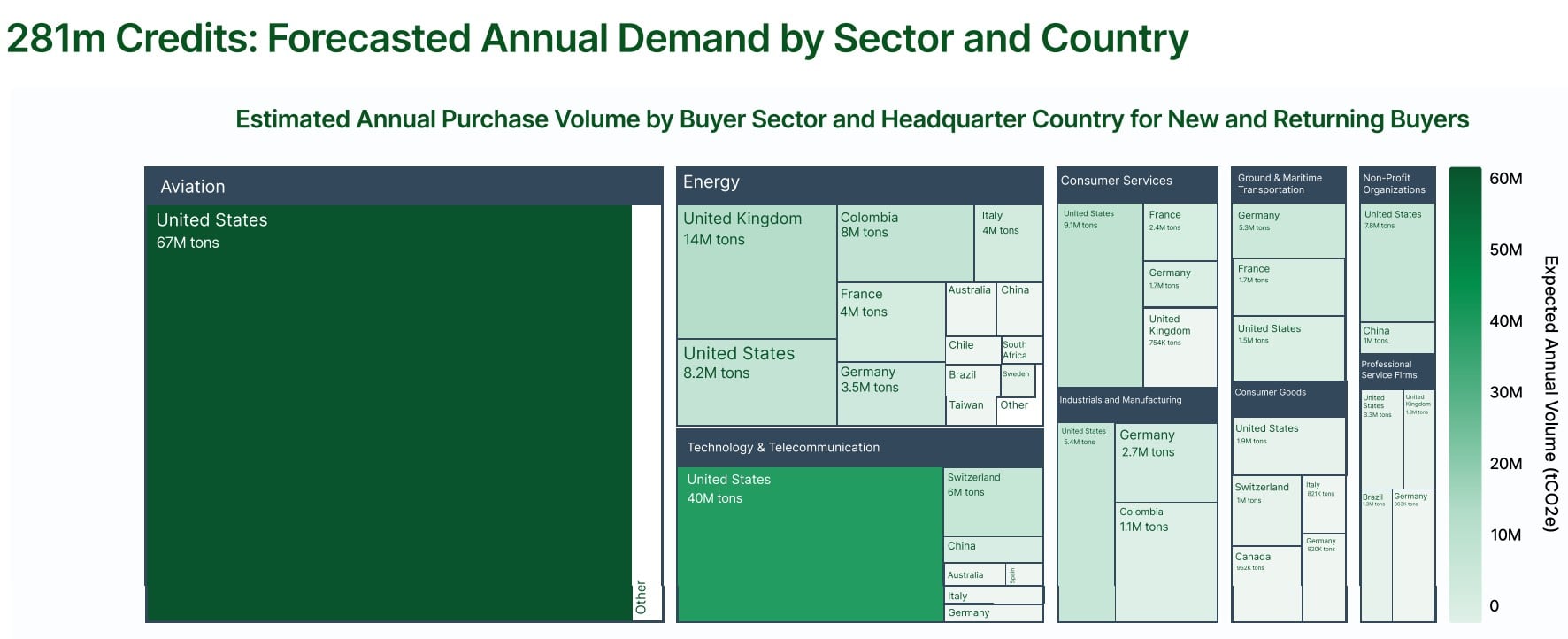
By country, the greatest demand will come from the U.S., China, UK, France, Germany, and Brazil. 

VCM credits forecasted demand by country and sector
Source: AlliedOffsets

Aviation will be a big factor because airlines must offset emissions under CORSIA rules. Energy and technology companies in the US, like AT&T, IBM, and Ingram Micro, are likely to enter or re-enter the market.

Moreover, new entrants will expand the buyer base, per AlliedOffsets analysis. These include consumer goods, professional services, healthcare, and industrial firms. Many come from countries with fewer buyers so far, like Turkey and Belgium.

Financial Impact of Returning and New Buyers 

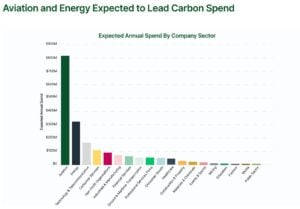
AlliedOffsets estimates that new and returning buyers will spend around $2.27 billion per year. Sector contributions are expected as follows, with aviation and energy leading the pack:

  • Aviation: over $800 million per year (about one-third of total).
  • Energy and Technology & Telecommunications: substantial ongoing purchases, over $300 million a year.
  • Consumer services, industrials, financial services, professional services: smaller but steady spend.

sectors expected to lead VCM demand forecast
Source: AlliedOffsets

Returning buyers bought nearly 7 million credits in previous years. ExxonMobil accounted for 66% of these purchases through both forward contracts and OTC deals. Other companies, like ArcelorMittal, invest in low-emission technology, reducing the need to buy credits.
New entrants, especially airlines, will increase activity. Credits purchased for CORSIA compliance must match emissions for international flights to and from ICAO member states.

Overall, growth in both returning and new buyers shows that corporate demand for carbon credits is likely to rise sharply. Companies that belong to initiatives like RE100, SBTi, Race to Zero, or NZBA are more likely to participate in the voluntary carbon market.

A Turning Point and Future Forecasts: Supply, Demand, and Policy Drivers

In 2025, the voluntary carbon credit market saw big changes. Total retirements fell to about 168 million tonnes, and new issuances dropped to around 270 million tonnes, the lowest since 2020.

Despite this, spending rose to roughly $1.04 billion, up from $980 million in 2024. The average price per credit also climbed to about $6.10, showing that buyers are paying more for high-quality, trusted credits rather than just buying large amounts.
carbon credit price 2025 MSCI

Companies are now choosing credits with strong monitoring and real climate impact. Nature-based projects, like afforestation and reforestation, did better than older REDD+ credits.
Forward contracts also grew, with over $12 billion signed in 2025, even though these will deliver only about 10 million credits a year through 2035. This shows that many companies want to secure the future supply of trusted credits. These trends match forecasts from AlliedOffsets, where demand is expected to rise for durable, high-quality carbon credits.

AlliedOffsets keeps expanding its database, now covering over 60,000 companies. Adding historical emissions data and checking with initiatives like the Forest Stewardship Council and Science Based Targets will improve forecasts.

Analysts expect supply limits may appear in forestry and land use projects as demand grows. Engineered removals, chemical processes, and industrial projects will also get more attention. Large investments by companies like Google and Amazon, which pledged $100 million to superpollutant removal projects by 2030, are expected to drive this.

Returning and new buyers, led by aviation, energy, and tech, will shape the next wave of demand. Understanding these patterns helps policymakers, intermediaries, and project developers plan supply and engagement strategies.

The voluntary carbon market is entering a new growth phase, driven by rules, climate commitments, and better forecasting tools. With models like Likelihood to Buy, market participants can plan ahead. Forestry, renewable energy, and industrial projects are likely to see the biggest benefits as corporate demand grows worldwide.

The post Who Will Drive the Next Wave of Carbon Credit Demand? Insights from AlliedOffsets appeared first on Carbon Credits.