Trump Admin Pays TotalEnegries $1B to Scrap Wind Projects, Putting a Hold on America’s Clean Energy Plans
Trump Admin Pays TotalEnegries $1 B to Scrap Wind Projects, Putting a Hold on America’s Clean Energy Plans

The U.S. government has agreed to pay nearly $1 billion to the French energy company TotalEnergies to cancel major offshore wind projects planned on the East Coast. The deal was announced by the Department of the Interior and represents a major shift in federal energy policy.

TotalEnergies will give up its lease holdings and invest in fossil fuel development instead. Meanwhile, the U.S. will reimburse the company for lease fees it has already paid.

This move comes as offshore wind was expected to become a key part of America’s renewable energy future. Now, it raises new questions about the future of offshore wind, the role of the federal government, and broader energy and climate strategies.

The Deal: What Happened and What It Means

Officials from the Department of the Interior and TotalEnergies announced that the company will abandon two planned offshore wind projects. These leases were located off the coasts of New York and North Carolina.

TotalEnergies will get back up to $928 million. This amount covers the money it spent on lease rights.

In return, the energy giant plans to redirect that capital toward fossil fuel development. This includes investing in liquefied natural gas (LNG) infrastructure in Texas. It also covers expanded oil and gas activities in the Gulf of Mexico and U.S. shale regions.

TotalEnergies Chair and CEO Patrick Pouyanné said:

“TotalEnergies is pleased to sign these settlement agreements with the DOI and to support the Administration’s Energy Policy. Considering that the development of offshore wind projects is not in the country’s interest, we have decided to renounce offshore wind development in the United States, in exchange for the reimbursement of the lease fees.”

The government framed the deal as a way to reduce federal exposure to expensive and “unreliable” offshore wind projects. The Interior Department described the agreement as an efficient way to shift resources toward energy sources they view as more cost‑effective.

US Interior Secretary Doug Burgum noted:

“We welcome TotalEnergies’ commitment to developing projects that produce dependable, affordable power to lower Americans’ monthly bills while providing secure US baseload power today—and in the future.”

On Hold: Offshore Wind’s Place in U.S. Energy Plans

Offshore wind power has been part of U.S. climate and energy planning for years. The National Renewable Energy Laboratory (NREL) has estimated that the United States has a technical potential of:

  • 1,476 GW of fixed‑bottom offshore wind resources
  • 2,773 GW of floating offshore wind resources

These resources could be developed off the coasts of the Atlantic, Pacific, and Gulf of Mexico.

Despite this potential, the industry is still in its early stages. As of early 2025, the U.S. had just 174 megawatts (MW) of installed offshore wind capacity. 

America offshore wind energy potential NREL
Source: NREL

Several major projects were in development and construction before the recent policy shift. These included:

  • Vineyard Wind 1, near Massachusetts
  • Empire Wind 1, near New York
  • Coastal Virginia Offshore Wind (CVOW)
  • Revolution Wind
  • Sunrise Wind

These projects were expected to add several gigawatts of clean energy to U.S. grids in the coming years. The federal government considered this one way to help meet broader climate goals. This was part of U.S. commitments under the Inflation Reduction Act and other climate legislation.

Now, the cancellation of TotalEnergies’ projects marks a notable change in that trajectory.

Costs, Risks, and Market Headwinds

Offshore wind is capital‑intensive and technically complex. The industry has faced cost pressures in recent years. Offshore wind development in the U.S. has high costs. Often, these expenses are several times greater than those for onshore wind installations.

US wind energy cost
Source: NREL study; 10.2172/2433785

In a 2025 study, fixed-bottom projects cost about $72 to $140 per MWh, while floating wind often exceeds $150 per MWh. Capital costs range from $3,000 to $6,000 per kW, with early floating projects higher. Over time, costs may fall to $50 to $100 per MWh by 2050.

In addition to costs, developers have faced supply chain issues, regulatory delays, and scaling challenges. These factors have slowed project timelines and increased financial risk.

However, offshore wind has continued to be a key part of long‑term clean energy forecasts. A 2023 U.S. Department of Energy outlook estimates up to 30 GW of offshore wind capacity by 2030. By 2050, this could reach 110 GW if policies support growth.
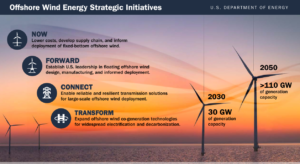
Offshore Wind Energy Strategic Initiatives
Source: U.S. DOE

These capacity levels would help support decarbonization efforts in the power sector and contribute to electricity market diversification. Offshore wind resources are generally strongest and most consistent offshore, offering high capacity factors compared to some onshore renewables. But now that wind projects are cancelled, these clean energy goals are under strain. 

Is This a Fossil Fuel Pivot?

Offshore wind is just one piece of a larger clean energy landscape. The U.S. has significantly expanded onshore wind and solar capacity in recent years, driven by federal tax incentives in the Inflation Reduction Act.

Offshore wind infrastructure includes large turbine components, subsea cabling, and port facilities. These elements have economic multipliers that can support regional supply chains and workforce development.

At the same time, fossil fuels remain a significant part of the U.S. energy mix. The Trump administration’s deal with TotalEnergies reflects federal policy that prioritizes traditional energy sources, such as natural gas and oil, alongside efforts to support domestic energy security.
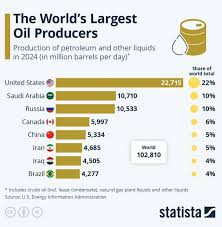
largest oil producers 2025 Statista

U.S. fossil fuel production remains high. In 2025, the U.S. was the world’s largest producer of crude oil and natural gas liquids combined. The country’s energy exports, including LNG, also rose sharply in recent years as global markets shifted.

Natural gas accounts for a large share of U.S. electricity generation, usually around 40% of net generation, providing a flexible baseload power source for grids.
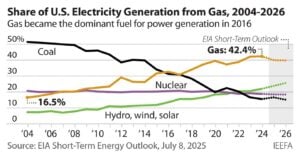
US electricity generation share gas 2026

Global Offshore Wind Snapshot

Offshore wind development continues globally, particularly in Europe and Asia. Countries such as the United Kingdom, Germany, China, and Taiwan have deployed substantial offshore wind capacity.

Europe, for example, exceeded 30 GW of installed offshore wind capacity by the end of 2025, with continual growth projected. The global pipeline includes tens of gigawatts under development, driven by policy support and falling technology costs.

Cost reductions in turbine technology, floating wind platforms, and installation methods are expected to continue. Global forecasts project offshore wind capacity reaching 234 GW by 2030 and 2,000 GW by 2050 under the 1.5°C scenario.
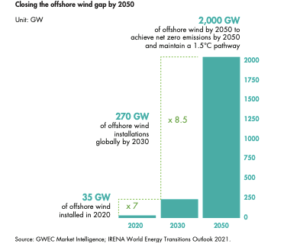
global offshore wind energy forecast 2030
Source: REGlobal

These figures indicate that offshore wind could play a major role in the energy transition worldwide — even as policies vary by region.

America’s Clean Energy Goals in Flux

The TotalEnergies deal marks a clear shift in federal energy policy. It reflects a calculated decision by the current administration to redirect capital and incentives away from offshore wind.

This decision could affect investor confidence, supply chains, and future project pipelines. Offshore wind developers have warned that a lack of federal support and policy uncertainty may hinder industry growth.

Elizabeth Klein, former director of the Department of the Interior’s Bureau of Ocean Energy Management under the Biden administration, remarked in a CNN interview that the move:

“…will actually cause a further energy deficit in our country and increase the cost of energy certainly along the East Coast… For the current administration to be cutting that off makes no sense at all.”

For states with clean energy goals, reliance on offshore wind as part of a diversified renewable portfolio may now require adjustments.

The broader climate context remains focused on reducing emissions from the power sector. Renewable energy deployment, grid modernization, and clean energy innovation continue to be key strategies for long-term decarbonization.

As the energy landscape evolves, market participants and policymakers are watching closely. What unfolds next will shape not only the offshore wind sector but the broader clean energy transition in the United States.

The post Trump Admin Pays TotalEnegries $1B to Scrap Wind Projects, Putting a Hold on America’s Clean Energy Plans appeared first on Carbon Credits.

From Air to Ale: Introducing the First-of-its-Kind Beer Made with Captured Carbon

From Air to Ale, Introducing the First-of-its-Kind Beer Made with Captured Carbon

A new beer is turning carbon removal into a real-world product. U.S.-based Aircapture and Almanac Beer have launched what they call the world’s first commercial beer carbonated using (carbon dioxide) CO₂ captured directly from the atmosphere.

The system uses direct air capture (DAC) technology. It pulls carbon dioxide from ambient air and delivers it on-site for use in brewing. The captured CO₂ replaces conventional industrial CO₂, which is usually sourced from fossil fuel processes.

The DAC unit is installed at Almanac’s brewery in California. It captures CO₂ from the air and feeds it directly into the beer carbonation process. This removes the need to transport CO₂ from external suppliers and reduces the carbon footprint of production.

While the volume of CO₂ used in beer is small, the concept is significant. It shows how captured carbon can move beyond storage and into everyday consumer products.

How Direct Air Capture Works in Practice

Direct air capture is a technology that removes CO₂ directly from the atmosphere. Unlike traditional carbon capture, which targets emissions at industrial sources, DAC works anywhere.

The process uses chemical materials to bind CO₂ from the air. The captured gas is then purified and either stored or reused. In this case, it is reused in beverage production.

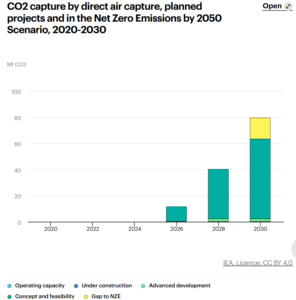
Globally, DAC is still at an early stage. According to the International Energy Agency, only 27 DAC plants are operating worldwide, capturing about 0.01 million tonnes of CO₂ per year.

CO2 capture by direct air capture, planned projects and in the Net Zero Emissions by 2050 Scenario, 2020-2030
Source: IEA

However, the pipeline is growing. More than 130 DAC facilities are in development, including large-scale plants that could capture over 1,000 tonnes of CO₂ per year each.

Aircapture’s model is different from many large DAC projects. Instead of building centralized plants, it installs modular units directly at industrial sites. This allows companies to use captured CO₂ on-site, reducing transport costs and emissions.

This approach fits well with industries like food and beverage, where CO₂ is already used as an input.

Why CO₂ Matters in Beer Production

Carbon dioxide plays a key role in brewing. It creates the bubbles in beer and affects taste, texture, and shelf life. Most breweries rely on industrial CO₂ supplies, often sourced from fossil fuel processes or as a byproduct of fertilizer production.

This supply chain has faced disruptions in recent years. CO₂ shortages have affected breweries across the U.S. and Europe, highlighting the risks of relying on centralized supply.

Using DAC changes this model. Breweries can produce CO₂ on-site, reducing supply risks and emissions. It also provides a way to use carbon that would otherwise remain in the atmosphere.

Damian Fagan, CEO of Almanac Beer Co., stated:

“Brewing is both science and craft. By integrating direct air capture into our production floor, we’re rethinking one of our essential ingredients and contributing to carbon-removal efforts. Instead of relying on distant industrial supply, we’re sourcing CO₂ from the air right here in Alameda. It’s local, circular, and a glimpse of what the future will look like.”

This does not make beer carbon-negative on its own. But it reduces reliance on fossil-derived CO₂ and shows how carbon can be reused in circular systems.

Almanac’s DAC unit captures 50-100 tCO₂/year, small volume, massive market signal. On-site generation cuts fossil CO₂ emissions from trucking by 20-30% in the supply chain. It also creates premium utilization credits for beverage Scope 3 or supply chain emissions.


DAC Market Set for Explosive Growth

The launch comes as interest in carbon removal technologies is rising. Governments and companies are investing in solutions that remove CO₂ from the atmosphere, not just reduce emissions.

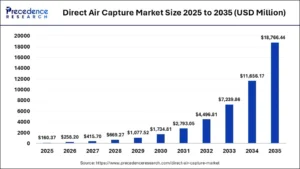
The DAC market is still small but growing fast. One estimate values the market at about $160 million in 2025, with projections reaching nearly $18.7 billion by 2035, growing at a 61% annual rate.

direct air capture dac market size
Source: Precedence Research

Other forecasts show similar trends. The market could reach over $9 billion by 2033, driven by corporate climate targets and government incentives.

This growth is supported by key factors, including:

North America currently leads the DAC market, accounting for a large share of global deployment. However, scaling remains a challenge. DAC systems require energy and infrastructure, and costs are still high compared to other climate solutions.

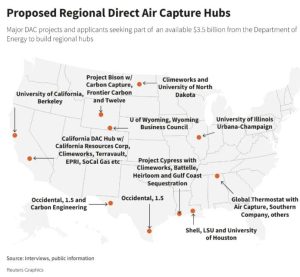
DAC Projects in US, prosed DAC hubs
Source: Reuters

From Storage to Utilization: A New Carbon Economy

Most DAC projects focus on storing CO₂ underground. This is known as carbon dioxide removal (CDR). It is essential for reaching global climate targets, especially for hard-to-abate sectors.

But there is growing interest in carbon utilization. This means using captured CO₂ as a resource rather than storing it. Common applications include:

  • Synthetic fuels
  • Building materials
  • Chemicals
  • Food and beverages

The beer project shows a simple but visible example of this shift. It turns captured carbon into a product that consumers can see and use.

While the scale is small, it helps build awareness and demand for carbon removal technologies. It also shows that DAC can integrate into existing industries without major changes to production systems.

Corporate Climate Strategies Drive Innovation

Projects like this are also linked to corporate climate goals. Many companies are looking for ways to reduce emissions across their operations and supply chains. Carbon removal is becoming part of these strategies.

Using captured CO₂ in products supports these goals. It reduces reliance on fossil inputs and creates new pathways for decarbonization.

More notably, in sectors like food and beverage, where emissions are harder to eliminate completely, these solutions can play a supporting role.

Carbon Markets Expand Beyond Offsets

The launch of a DAC-based beer highlights a broader shift in carbon markets. The focus is expanding from reducing emissions to actively removing and reusing carbon.

Carbon markets are expected to grow as demand for high-quality carbon credits increases. Many experts see carbon removal as essential for meeting global climate targets.

At the same time, new use cases for CO₂ could create additional value streams. Instead of treating carbon only as a cost, companies can use it as an input for products.

However, scale remains the key challenge. Current DAC capacity is far below what is needed. The IEA notes that global DAC deployment must reach around 65 million tonnes of CO₂ per year by 2030 to align with net-zero pathways. This will require major investment, policy support, and technological progress.

A Small Beer with a Big Climate Message

The beer itself is a niche product, but the idea behind it is larger. It shows how carbon removal can move into everyday life and consumer markets.

By turning captured CO₂ into a usable product, companies can demonstrate the value of climate technologies in simple terms. This can help build public support and encourage further investment.

The project also highlights a key trend. Climate solutions are becoming more integrated into business operations, not just separate offset programs.

For now, a single beer will not change global emissions. But it offers a glimpse of how carbon could be managed differently in the future, not just emitted or stored, but reused in practical ways.

The post From Air to Ale: Introducing the First-of-its-Kind Beer Made with Captured Carbon appeared first on Carbon Credits.

Microsoft Inks Biggest-Ever U.S. Biochar Deal with Liferaft

Microsoft Inks Biggest-Ever U.S. Biochar Deal with Liferaft

A new agreement between Microsoft and Liferaft highlights the rapid growth of carbon removal markets. The deal covers 1 million carbon removal units or credits over 10 years, making it one of the latest long-term offtake agreements in the sector.

These agreements are important. They give developers guaranteed future demand while helping them raise capital, build projects, and scale operations. For buyers like Microsoft, they secure access to high-quality carbon removal credits in a tight market.

Phillip Goodman, Director, Carbon Removal at Microsoft, commented:

“At Microsoft, we’re pleased about the Liferaft project’s potential to pair high-quality, durable carbon removal with meaningful local benefits. Liferaft has strong plans for putting locally available biomass waste to productive use, generating local jobs, and supporting farmers and land managers. This demonstrates how carbon removal can strengthen agricultural communities, improve land outcomes, and deliver durable climate impact.”

The deal also reflects a broader shift. Companies are moving from short-term carbon offsets to long-term carbon removal contracts. These focus on physically removing carbon dioxide from the atmosphere and storing it for long periods.

Microsoft Expands Its Carbon Removal Playbook

Microsoft is the largest corporate buyer of carbon removal credits today. The company has rapidly scaled its purchases in recent years.

Microsoft carbon removals by the numbers 2025
Source: Microsoft

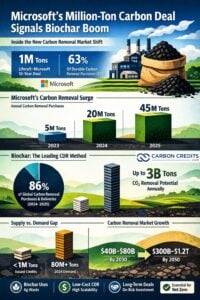
In 2025 alone, Microsoft signed agreements covering about 45 million tonnes of carbon removal. This was more than double its 2024 volume and a major jump from about 5 million tonnes in 2023.

  • The company also dominates the broader market. In 2024, Microsoft accounted for about 63% of all durable carbon removal purchases, securing over 5.1 million tonnes.

Recent deals show how fast this is growing:

  • 2.85 million tonnes of soil carbon removal credits with Indigo Ag over 12 years
  • 2 million tonnes from afforestation projects in Africa
  • 1.24 million biochar credits in one of the largest deals of its kind
  • 3.6 million tonnes from a bioenergy carbon capture project in the U.S.

These numbers show a clear trend. Microsoft is using long-term contracts to build supply across multiple carbon removal pathways.

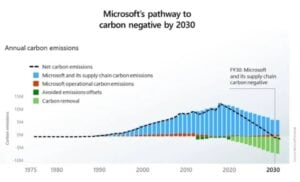
The company’s goal is ambitious. It aims to become carbon-negative by 2030 and to remove all its historical emissions by 2050. Carbon removal plays a key role in achieving this target.

Microsoft emissions
Source: Microsoft

Why Biochar Is Dominating Early Carbon Markets

Liferaft is a U.S.-based carbon removal developer focused on biochar-based solutions. The company converts agricultural and forestry residues into stable biochar, which locks carbon in soil for hundreds of years.

Liferaft then sells these durable carbon removal credits to corporate buyers. Its approach combines carbon storage with soil health benefits, improving nutrient retention and reducing methane and nitrous oxide emissions from land.

The Microsoft offtake deal marks one of its largest long-term agreements, helping Liferaft scale operations and expand biochar deployment. It is important because it highlights the growing role of biochar carbon removal.

Biochar is produced by heating organic materials like agricultural waste in low-oxygen conditions. This process locks carbon into a stable solid form that can be stored in soil for hundreds to thousands of years.

It is considered one of the most practical carbon removal methods available today. Moreover, it is relatively low-cost compared to technologies like direct air capture. It can also scale faster because it uses existing biomass waste.

Biochar already plays a major role in the market. In 2024–2025, it accounted for about 86% of global carbon removal purchases and deliveries.

biochar purchased and delivered 2024
Source: IBI

Demand is strong, but supply is limited. In 2024, biochar made up a large share of purchases, but actual issued credits remained below demand levels.

The long-term potential is also huge. Estimates suggest biochar could remove between 0.3 and 4.9 billion tonnes of CO₂ per year globally, with some studies pointing to around 3 billion tonnes annually using available biomass waste.

This makes biochar one of the most scalable carbon removal options available today.

How Offtake Deals Help Scale Carbon Removal

The Liferaft–Microsoft agreement follows a model that is becoming standard in carbon removal markets: long-term offtake contracts.

These deals serve several purposes:

  • They provide price certainty for developers.
  • They reduce investment risk for new projects.
  • They help scale technologies that are still early-stage.

Microsoft has emphasized that early demand is critical. By committing to future purchases, companies help suppliers secure financing and expand capacity. This model is similar to how renewable energy markets grew. Long-term power purchase agreements helped scale solar and wind by guaranteeing revenue.

Now, the same model is being applied to carbon removal.

From Offsets to Permanent Carbon Removal

The carbon removal market is still small but growing fast. Demand is driven by corporate climate targets and stricter net-zero standards. Global purchases of carbon removal credits reached about 8 million tonnes in 2024, up nearly 78% from 2023.

By 2025, demand had already surged further, with tens of millions of tonnes under contract. Looking ahead, forecasts show strong growth:

  • The market could reach $40 billion to $80 billion per year by 2030.
  • By 2050, it could expand from $300 billion to $1.2 trillion annually.

microsoft biochar million ton deal liferaft

However, supply remains a key constraint. Less than 1 million tonnes of durable carbon removal credits have been issued globally, far below demand.

This gap is pushing companies to secure long-term contracts early. It also supports higher prices for high-quality credits, especially those with long-term storage like biochar.

Carbon Removal Becomes Essential for Net Zero

Carbon removal is now seen as essential for climate goals. Reducing emissions alone is not enough. Some emissions are hard to eliminate, especially in sectors like agriculture, aviation, and heavy industry.

Carbon removal helps address these residual emissions. It removes CO₂ directly from the atmosphere and stores it in a durable way.

Experts note that carbon removal is what makes “net-zero” possible. Without it, many climate targets would be difficult to achieve at scale. This is why companies like Microsoft are investing heavily in the sector. They are building portfolios that include:

  • Nature-based solutions like forests and soil,
  • Engineered solutions like DAC and BECCS, and
  • Hybrid approaches like biochar.

This diversified strategy reduces risk and supports multiple technologies at once.

A New Phase for Carbon Markets Emerges

The Liferaft agreement may seem small compared to Microsoft’s larger deals. But it reflects an important shift in the market.

First, it shows that demand is spreading across more suppliers. This helps build a broader and more competitive market.

Second, it highlights the growing role of biochar. As one of the most mature carbon removal methods, it is likely to remain a key part of early market growth.

Third, it reinforces the importance of long-term contracts. These agreements are becoming the main way to scale carbon removal globally.

With all these, the broader trend is clear. Carbon removal is moving from pilot projects to large-scale deployment. Companies are no longer testing the market. They are actively building it.

For now, Microsoft remains the dominant buyer. But its strategy is also creating space for others to follow. By securing supply early, the tech giant is helping to unlock a new phase of growth in climate technology.

The post Microsoft Inks Biggest-Ever U.S. Biochar Deal with Liferaft appeared first on Carbon Credits.

IEA Sounds Alarm as War Disrupts Energy Markets, Boosting Australia’s Uranium Demand

The global energy system is under pressure again. This time, the shock is not just about oil and gas. It is also about minerals that power clean energy and nuclear technologies. Media reports revealed that, according to International Energy Agency chief Fatih Birol, the current crisis could soon look small compared to what lies ahead in critical minerals.

Speaking at a major industry event in Canberra, Birol warned that supply risks in minerals like uranium, copper, and battery metals could reshape global energy security. His message was clear: countries must diversify supply chains now or face deeper disruptions later.

A New Energy Shock Unfolds 

The world is already dealing with a massive energy disruption. The ongoing conflict involving the United States, Israel, and Iran has removed the equivalent of around 10 million barrels of oil per day from global markets, according to the IEA. This supply gap has pushed countries to rethink energy security. Oil prices remain volatile, and supply routes are under strain. However, Birol stressed that the bigger challenge may not be oil at all.

Instead, the future risk lies in critical minerals. These materials are essential for clean energy systems, electric vehicles (EVs), and nuclear power. Without stable access to them, the global energy transition could slow down sharply.

The problem is concentration. Today, one country dominates the refining and processing of many key minerals. China controls more than 80% of global refining capacity for several critical materials, according to IEA estimates. This creates a major bottleneck in supply chains.

To sum up, without urgent diversification, countries could face even greater risks than today’s energy shock.

IEA Highlights Australia as a Reliable Supplier of Uranium and Critical Minerals

Amid these concerns, Australia is emerging as a key player. The country holds vast reserves of critical minerals and energy resources. This includes uranium, lithium, copper, and natural gas.

Australia has the world’s largest uranium reserves. It accounts for roughly one-third of the known global resources, according to data from the Minerals Council of Australia. At the same time, it ranks among the top global uranium producers, alongside Kazakhstan, Canada, and Namibia.

australia uranium
Source: World Population Review

This puts the nation in a strong position as nuclear energy gains traction again worldwide. IEA highlighted that Australia is a reliable supplier that does not use energy exports as a geopolitical tool. This reliability is becoming more valuable as global tensions rise.

At the same time, Australia is also rich in battery minerals. It is the world’s largest producer of lithium and a major supplier of nickel and cobalt. These materials are critical for EV batteries and renewable energy storage.

SMRs Open Lucrative Uranium Export Path for Australia

One of the biggest shifts expected from this crisis is the revival of nuclear energy. Governments are now looking for stable, low-carbon energy sources that can reduce reliance on volatile fossil fuel markets.

A key driver of this nuclear growth will be Small Modular Reactors (SMRs). They are smaller, faster to build, and more flexible than traditional nuclear plants. Countries like the United States, the United Kingdom, France, and South Korea are leading their development.

The IEA expects global nuclear capacity to grow strongly through 2035. In its latest outlook, nuclear generation could rise by nearly 50% by 2040 under net-zero scenarios. This shift will significantly increase demand for uranium. According to the World Nuclear Association, uranium demand could double by 2040 if new reactors and SMRs scale up as expected.

For Australia, this presents a major export opportunity. Even though the country does not use nuclear power domestically, it plays a crucial role in supplying fuel to the global market.

One of the biggest shifts expected from this crisis is the revival of nuclear energy. Governments are now looking for stable, low-carbon energy sources that can reduce reliance on volatile fossil fuel markets.

As per WNA, in 2022, Australia produced 4087 tU of uranium, 8% of global production. Uranium comprises about 17% of the country’s energy exports in thermal terms.

Contracted Imports of Australian Uranium Oxide Concentrate – U3O8

australia uranium
Source: WNA

LNG Demand Set to Rise

The current crisis is also boosting demand for liquefied natural gas (LNG). Damage to energy infrastructure in the Middle East has disrupted supply flows, forcing countries to seek alternatives.

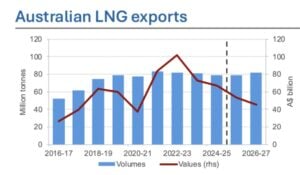
Australia is already one of the world’s largest LNG exporters. Projects in Western Australia and Queensland supply key markets across Asia, including Japan, South Korea, and China.

Birol said demand for Australian LNG is expected to grow further as countries look for stable suppliers. This could strengthen Australia’s role in global gas markets in the short to medium term. Similarly, Wood Mac had also projected earlier that the nation’s exports would remain steady throughout this year,

australia LNG
Source: Wood Mackenzie

According to the International Energy Agency, global LNG demand is projected to rise by around 3–4% annually through 2030, driven by Asia’s energy needs and coal-to-gas switching.

EV Growth Drives Copper and Battery Metals

Beyond nuclear and gas, electrification is another major trend shaping demand. The global shift to EVs and renewable energy systems is accelerating the need for metals like copper, lithium, and nickel.

Copper is especially important. It is used in power grids, EV motors, and renewable energy systems. Birol emphasized that expanding electricity grids worldwide will require massive amounts of copper.

The IEA estimates that clean energy technologies could double global copper demand by 2040. Similarly, lithium demand could grow more than 40 times under aggressive climate scenarios.

As said before, Australia is well-positioned here too. It leads global lithium production and has large untapped reserves of other key minerals. This gives it a strategic advantage as countries race to secure supply chains.

Investment Trends Show Growing Interest

Recent data shows rising investment in Australia’s resource sector. Uranium exploration spending has picked up after years of decline. According to the Australian Bureau of Statistics, uranium exploration spending reached about $55 million in 2023. This marked the highest level in over a decade.

This increase reflects renewed interest in nuclear energy and long-term expectations of higher uranium demand. At the same time, mining companies are investing more in critical minerals projects. Governments are also stepping in with policies to support domestic processing and reduce reliance on foreign supply chains.

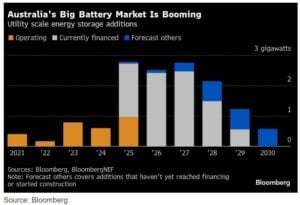
australia battery markets

Minerals, Not Oil, Are the New Battleground for Energy Security

While the current energy crisis is serious, Birol’s warning points to a deeper challenge. The world is entering a new phase where minerals, not just fuels, will define energy security. If supply chains remain concentrated, disruptions could become more frequent and more severe. This could slow down clean energy deployment and push up costs.

Diversification is key. Countries need to invest in new mining projects, expand refining capacity, and build resilient supply networks. And Australia is likely to play a central role in this shift. Its vast resources, stable political environment, and strong export infrastructure make it a critical partner for many nations.

The global energy landscape is changing fast. Oil shocks are no longer the only concern. Critical minerals are becoming the new backbone of energy systems. As nuclear power returns, EV adoption rises, and clean energy expands, demand for these materials will surge. This creates both risks and opportunities.

The challenge now is to scale supply, diversify processing, and ensure these materials remain accessible. If not, today’s energy crisis could soon be overshadowed by a much larger minerals crunch.

The post IEA Sounds Alarm as War Disrupts Energy Markets, Boosting Australia’s Uranium Demand appeared first on Carbon Credits.

From Oversupply to Opportunity: AEMC’s Nickel Upside in a Tightening Market

Disseminated on behalf of Alaska Energy Metals Corporation

The global nickel market is shifting fast. Years of oversupply pushed nickel prices lower and delayed new mining investments. But recent price gains suggest the cycle may be turning. In early 2026, nickel prices jumped about 18% in a single month, highlighting how sensitive the market is to supply expectations.

For investors, this shift creates a high-risk, high-reward opportunity. Early-stage developers advancing projects today could benefit disproportionately when deficits emerge. Alaska Energy Metals Corporation (AEMC) sits at the center of this narrative, with its Nikolai Nickel Project moving toward a Preliminary Economic Assessment (PEA) in 2026 and growing momentum in the U.S. critical minerals policy landscape.

Nickel Prices Are Rising, and the Market Is Fragile

Nickel’s recent rally reflects growing concerns about future supply. Indonesia dominates global nickel production, and any policy shift there can move prices instantly. Markets reacted strongly to speculation about Indonesian output controls, showing how fragile the supply balance remains.

Despite today’s inventories, analysts warn that the world will need massive investment to meet future demand. Estimates suggest roughly $66 billion in global nickel supply chain investment may be required to avoid shortages later this decade.

This gap creates a structural opportunity. Low prices discourage new mines today, but demand from EVs, grid storage, and stainless steel continues to rise. And companies advancing projects during the downturn could benefit when the cycle flips.

Nikolai Nickel Project: A Strategic U.S. Critical Minerals Asset

AEMC’s flagship Nikolai Nickel Project in Alaska ranks among the largest undeveloped nickel resources in the United States. The project also contains copper, cobalt, chromium, platinum, palladium, and iron, making it a polymetallic critical minerals asset.

This resource mix strengthens the investment case. Nickel and cobalt are essential for batteries. Platinum group metals support hydrogen and industrial applications. Chromium and iron add potential by-product revenue streams.

Thus, domestic critical minerals projects like Nikolai are becoming strategic priorities as governments seek to reduce reliance on foreign supply chains.

New Work Program Accelerates Path to PEA

In October 2025, AEMC closed a $1 million non-brokered private placement, issuing roughly 11.8 million units at $0.085 per unit. Each unit included one common share and one warrant exercisable until October 2030. Insider participation and no finder’s fees signaled management confidence in the project.

The company outlined a focused work program designed to move Nikolai toward economic evaluation:

  • Metallurgical studies to produce concentrates
  • Hydrometallurgical testing to assess on-site metal production
  • Permitting for road extensions and camp upgrades
  • Internal economic evaluations for a PEA
  • Planning for a 2026 field program and investor outreach

These steps are critical. Metallurgy, infrastructure, and early economics determine whether large deposits can become mines.

The current share structure shows:

AEMC share structure
Source: AEMC

Hydrometallurgy, RecycLiCo, and Lucid Partnership Add Value

AEMC’s Memorandum of Understanding with RecycLiCo Battery Materials adds a downstream processing angle. RecycLiCo’s U.S. subsidiary will test whether its hydrometallurgical technology can refine metals from Nikolai ore.

Alongside, the nickel miner has also signed an MOU with Lucid Group, Inc (NASDAQ: LCID), maker of the world’s most advanced electric vehicles.

AEMC confirmed hydrometallurgical studies as part of its development plan. On-site refining could reduce reliance on foreign smelters, improve margins, and strengthen U.S. supply chain security.

Integrated mining and refining projects often command premium valuations. They also attract government support and strategic partnerships.

Trump-Era Critical Minerals Push Boosts Domestic Projects

U.S. policy momentum around critical minerals accelerated during former President Donald Trump’s administration and continues to influence today’s strategy. Trump’s executive orders declared critical minerals a national security priority and directed federal agencies to support domestic mining, processing, and recycling.

This policy shift led to:

  • Funding programs under the Defense Production Act
  • Streamlined permitting initiatives
  • Federal grants for mining, processing, and battery supply chains
  • Public-private partnerships for domestic critical minerals

These initiatives laid the foundation for today’s expanded funding and permitting reforms. Projects like Nikolai align directly with this policy framework, positioning AEMC to benefit from federal incentives, grants, and offtake partnerships.

FAST-41 and Government Engagement Reduce Risk

Nikolai is listed on the U.S. Permitting Council’s FAST-41 Transparency Dashboard. FAST-41 aims to accelerate permitting and improve coordination across federal agencies.

AEMC has also reported ongoing engagement with U.S. government departments regarding Nikolai’s role in domestic supply chains. This alignment matters for investors. Government backing can reduce permitting risk, unlock funding, and attract strategic partners.

Emily Domenech, Permitting Council Executive Director.

“I am excited to welcome the Nikolai Nickel project to the FAST-41 program. We are proud to support more mining projects that will strengthen the U.S. economy and reduce our reliance on foreign nations. I look forward to working with the Alaska Energy Metals Development Corporation to provide a transparent and predictable federal permitting process while achieving President Trump’s vision for American energy dominance.”

2026 PEA: A Major Valuation Catalyst

AEMC has initiated internal scoping studies to evaluate mining rates, sequencing, and economics. Early plans focus on extracting higher-grade near-surface zones first to improve project economics.

The Preliminary Economic Assessment is a major milestone. It converts geological resources into financial metrics like net present value and internal rate of return. Mining equities often re-rate significantly after a credible PEA.

With a PEA targeted for 2026, AEMC could hit this milestone as nickel markets tighten—a powerful combination for valuation.

Valuation Leverage to Nickel Prices

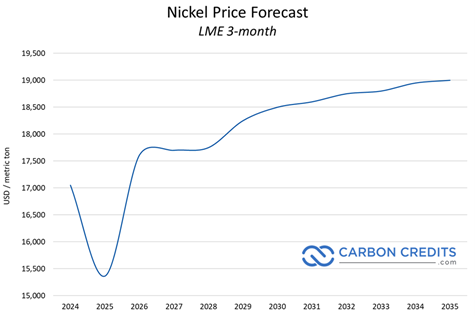
Junior miners offer strong leverage to commodity prices. A 10–20% increase in nickel prices can dramatically improve project economics for bulk tonnage deposits. The recent 18% monthly nickel rally highlights how quickly sentiment can change. If prices stabilize near $18,000–$20,000 per tonne, project valuations could rise sharply.

NICKEL PRICES

Key upside catalysts include:

  • Sustained nickel price recovery
  • Positive metallurgical and hydromet results
  • Completion of the PEA
  • Permitting and infrastructure progress
  • Government funding or strategic partnerships

Each milestone reduces risk and increases valuation multiples.

Macro Tailwinds: EVs, Grid Storage, and Infrastructure

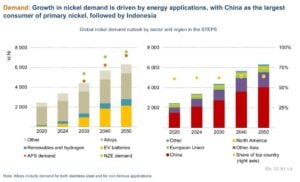
Nickel remains critical for high-energy-density batteries used in premium EVs and heavy-duty applications. Even as lithium iron phosphate batteries grow, nickel-rich chemistries dominate performance segments.

Stainless steel demand also continues to grow with global infrastructure and urbanization. Combined demand growth will strain supply, especially as Indonesian ore grades decline and regulatory pressures increase.

Western governments are pushing to localize critical minerals supply chains. This macro backdrop supports long-term bullish scenarios for domestic nickel developers.

nickel
Source: IEA

M&A and Strategic Optionality

Large miners, automakers, and battery manufacturers increasingly seek secure North American supply. Nikolai’s scale, polymetallic (high-grade Ni-Cu-PGE massive sulphide mineralization) profile, and location make it a potential joint venture or acquisition target.

Downstream processing partnerships further increase strategic value. Domestic refining capability could attract OEMs, defense contractors, and federal agencies seeking supply security.

This optionality adds upside beyond commodity price appreciation.

Investment Outlook: From Oversupply to Opportunity

The nickel market’s surplus today hides a structural supply challenge. Massive investment is needed to meet electrification demand, yet low prices discourage new projects. This disconnect creates asymmetric opportunities for developers advancing projects during downturns.

AEMC’s Nikolai Nickel Project sits at the intersection of rising demand, domestic supply chain policy, and improving market sentiment. The company has secured financing, launched metallurgical and hydromet studies, engaged government stakeholders, and targeted a 2026 PEA.

Trump-era critical minerals policies and ongoing federal funding programs further strengthen the domestic mining investment thesis. If nickel prices continue to recover and AEMC delivers on technical milestones, the company could see a significant valuation re-rating.

In a world racing to electrify and localize supply chains, domestic nickel developers are becoming strategic assets. AEMC could emerge as one of the most leveraged plays on America’s critical minerals push.

To sum up, AEMC CEO Gregory Beischer commented,

“The cost and time savings for further exploration and development once ground access is established will be quite significant. It is very encouraging to see proactive streamlining and coordination amongst permitting agencies. We are grateful to the Permitting Council for including the Nikolai Nickel project in the FAST-41 program. With Nikolai hosting six Critical Minerals – nickel, cobalt, copper, chromium, platinum and palladium, two of which, nickel and cobalt, are Defense Production Act Title III materials deemed to be in shortfall, we are extremely well aligned with the U.S. national security objective of developing long-lived, domestic sources of metals and minerals essential to the national economy and national defense. Nikolai is a project potentially capable of significantly reducing US nickel and cobalt import dependency and vulnerability.”

Google Turns Data Centers Into Grid Assets With 1 GW Flex Power Deal

Google Turns Data Centers Into Grid Assets With 1 GW Flex Power Deal

Google has taken a major step in reshaping how large energy users interact with the power grid. The company has secured 1 gigawatt (GW) of demand response capacity across its U.S. data center operations with several utility partners. This allows Google to cut or shift electricity use during high demand. It helps stabilize the grid and reduce system costs.

The scale is significant. One gigawatt is roughly enough to power about 750,000 U.S. homes for a year. Demand response helps reduce peak power needs, which can cut grid strain during extreme heat or cold. It also reduces the need for expensive “peaker” plants that run only a few hours per year.

The company noted:

“Demand response enables our data centers to be valuable assets for the power grid. Our ability to shift or reduce our energy demand can help utility companies balance supply and demand and plan for future capacity needs. These agreements create a smart solution to make the electricity systems that serve our data centers more affordable and reliable.” 

Demand Response: Turning Data Centers into Flexible Grid Assets

Google’s move reflects a growing challenge. U.S. electricity demand is rising fast. Data centers, especially those running artificial intelligence (AI) and cloud computing, are among the fastest‑growing power loads.

At the same time, building new power supply and grid infrastructure can take five to ten years or more. Google’s strategy bridges this gap by making demand more flexible instead of only increasing supply.

Demand response is a system where large electricity users reduce or shift power use during peak periods. Instead of running at full capacity all the time, facilities adjust operations based on grid conditions. This helps balance supply and demand in real time.

Google applies this by managing its data center workloads. It can delay or shift energy‑intensive tasks, especially machine learning and batch computing, to times when electricity demand is lower. This reduces energy use during peak grid stress without affecting performance.

It also turns data centers into flexible energy assets rather than fixed loads. Traditionally, grids treat demand as constant. Google’s model changes that assumption.

The company has built this system through agreements with multiple U.S. utilities, including:

  • Tennessee Valley Authority (TVA)
  • Indiana Michigan Power
  • Entergy Arkansas
  • Minnesota Power
  • DTE Energy

These partnerships let grid operators ask Google to cut demand during stressful times, like heat waves or winter peaks. This helps keep the system reliable without just depending on backup generation.

Why Peak Demand Matters for Costs and Reliability

The timing of this move is critical. The U.S. Department of Energy projects that electricity demand could grow 20% or more by 2030, driven by electrification and digital services.

Data centers are a major part of this growth. With AI workloads increasing rapidly, total data center energy use rose over 20% between 2020 and 2025 in the U.S., according to industry studies.

US data center power demand 2030

At the same time, grid expansion faces delays. Building new transmission lines or power plants can take years or even decades due to permitting, siting, and cost challenges. Demand response offers a faster solution that can be deployed now.

Google notes that flexible demand can help utilities:

  • Balance supply and demand in real time,
  • Avoid building rarely used “peaker” plants,
  • Reduce stress on transmission systems, and
  • Lower wholesale electricity prices during peaks.

Even small flexibility gains can have large system‑wide effects. Research from the Electric Power Research Institute (EPRI) suggests that demand response programs could reduce peak load by 10–20% in many regions, leading to significant savings in infrastructure costs.

This is because peak demand drives infrastructure spending. Power systems are often built to meet only a few hours of extreme demand each year. Reducing those peaks can delay or avoid costly investments in generation and transmission.

Cost Savings and Reliability Gains

Google’s demand response strategy targets two key outcomes: lower costs and improved reliability.

  1. First, cost reduction. Peak demand periods often coincide with the highest wholesale electricity prices. By lowering demand during those hours, both Google and utilities can save money. These savings can help stabilize electricity prices for businesses and households alike.
  2. Second, reliability. Power grids face increasing pressure from extreme weather, electrification of transport and buildings, and higher loads from digital infrastructure. Demand response adds flexibility that helps prevent outages when supply is tight.

Google’s system allows it to cut the load quickly when needed. This gives grid operators more tools during tight supply conditions. It also reduces the risk of blackouts and emergency calls for conservation.

Importantly, this approach does not reduce overall energy use over time. Instead, it shifts when energy is used. This makes the system more efficient without limiting long‑term growth in data center activity or other demand.

SEE MORE:

A Shift in Energy Strategy for Big Tech

Google’s move reflects a broader shift across the technology sector. Large tech companies are no longer just energy consumers. They are becoming active participants in energy systems.

This change is driven by several trends:

  • Rapid growth in AI workloads that require large computing resources;
  • Rising energy costs that pressure operating margins;
  • Corporate climate targets tied to investor and public expectations; and
  • Pressure to secure a reliable power supply amid grid uncertainty.

Demand response is now joining renewable energy procurement as a core strategy. Google has already invested heavily in solar, wind, geothermal, and energy storage. The company regularly ranks among the top corporate buyers of renewable energy, which helps avoid emissions.

Google clean energy emission reductions
Source: Google

Other industries have used demand response for years, including manufacturing and heavy industry. However, its use in data centers is still new. The scale of Google’s 1 GW deployment signals that this model could expand quickly and be adopted by other large energy users.

Linking Demand Response to Google’s 24/7 Carbon-Free Goals

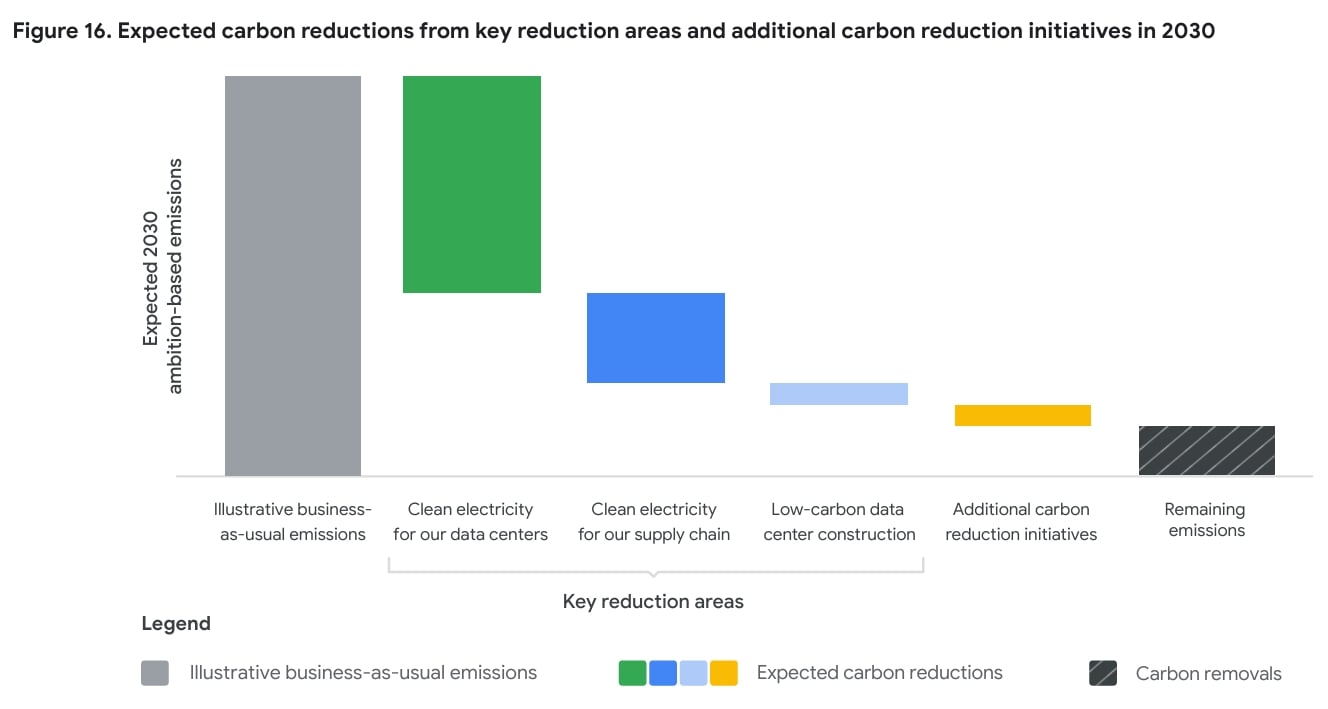
Google’s demand response move also supports its wider clean energy and climate strategy. The company aims to run on 24/7 carbon‑free energy by 2030 and reach net‑zero emissions across its operations and value chain by 2030.

google net zero
Source: Google

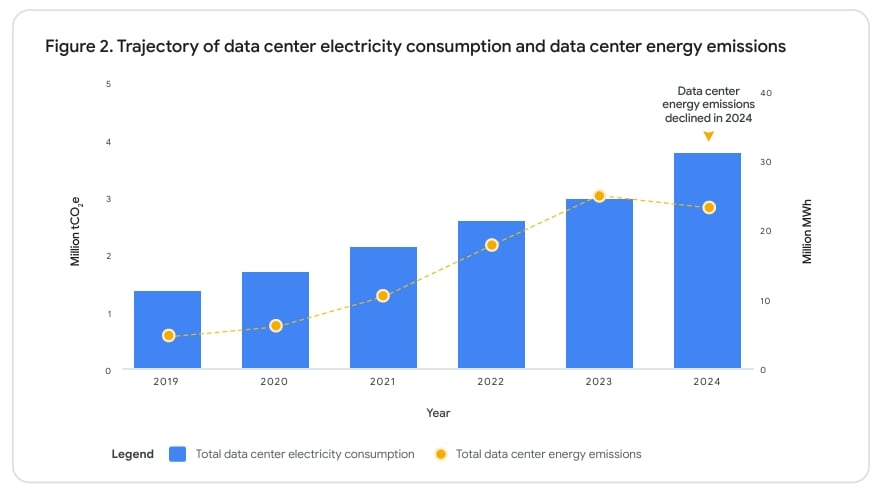
Progress is ongoing. In 2024, Google matched about 66% of its electricity use with carbon‑free energy on an hourly basis, even as power demand rose due to a 27% increase in workload from AI and cloud services.

google data center emissions
Source: Google

At the same time, Google added 2.5 GW of new clean energy capacity to the grids serving its operations and cut data center energy emissions by 12% compared with baseline years.

Demand response helps close the remaining gap. By shifting when electricity is used, Google can better match operations with clean energy supply. This improves its ability to run on carbon‑free power every hour of the day.

The Future of Demand Response in AI and Cloud Operations

The demand response market is expected to grow as grids become more complex. Several trends support this outlook.

  • Rising demand: U.S. data center growth will drive much of the new electricity use over the next decade. Digital services continue to push the load higher.
  • Renewables growth: Wind and solar are cheap but variable, making flexible demand more important for grid stability.
  • Grid limits: U.S. interconnection queues include thousands of gigawatts of projects, far more than the grid can handle quickly, causing delays.

Demand response can help manage these constraints. It acts as a “virtual power plant” by reducing demand instead of increasing supply. Studies suggest that flexible demand could unlock large amounts of additional grid capacity and reduce the need for costly transmission upgrades.

This makes demand response one of the fastest and most cost‑effective tools available for grid management.

A Cost-Effective Tool for Modern Grids

As electricity demand continues to grow, this energy model may become more common. Utilities, regulators, and companies are already exploring ways to expand demand‑side flexibility.

In the coming years, the success of these programs will depend on technology, policy support, and market design. However, the direction is clear. Flexible demand is becoming a core part of modern energy systems. Google’s latest move provides a real‑world example of how this transition can work at scale.

The post Google Turns Data Centers Into Grid Assets With 1 GW Flex Power Deal appeared first on Carbon Credits.

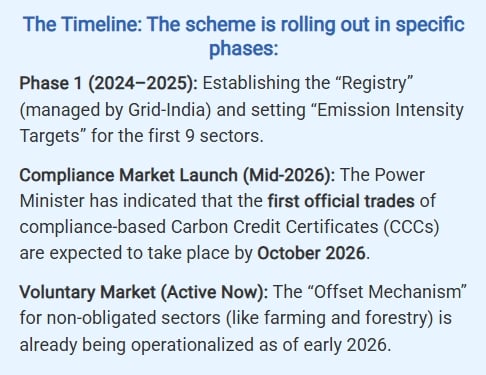
India’s Carbon Market Portal Goes Live as Carbon Credit Trading Nears

India has taken a major step toward building a working carbon market. The government has launched the Indian Carbon Market Portal, a central digital platform that will support the Carbon Credit Trading Scheme, or CCTS. With this move, India is no longer just designing its carbon market on paper. It is now putting the system into action.

The portal was launched at the International Conference on Carbon Markets, Prakriti 2026, held in New Delhi. Union Power Minister Manohar Lal said formal trading in carbon credit certificates is expected to begin within four months. That timeline makes the launch especially important. It shows that India is moving quickly from policy design to actual market operations.

The new portal will become the main platform for registration, monitoring, reporting, and verification of emissions. In simple terms, it will handle the back-end system needed to run a national carbon market. Companies that want to participate will need to register through the portal before they can trade carbon credits.

From Act to Action: India’s Carbon Market Story

2022: Laying the Foundation

India did not build this market overnight. The foundation was laid in 2022, when Parliament passed amendments to the Energy Conservation Act, 2001. These changes gave the government the legal power to create a carbon market and issue carbon credit certificates. That amendment was the first major sign that India wanted a structured, national system for carbon trading.

2023: Introducing the Carbon Credit Trading Scheme (CCTS)

After that, policymakers worked on the framework needed to turn the idea into reality. In 2023, the government formally introduced the Carbon Credit Trading Scheme. The CCTS created the core structure of the Indian Carbon Market and defined the roles of the institutions that would run it. It also set up the National Steering Committee for the Indian Carbon Market to oversee the framework.

This step mattered because carbon markets need strong governance to work properly. Without clear rules, trusted oversight, and proper measurement systems, trading can lose credibility. India’s approach has been to first build the rules and institutions and then move toward implementation.

2024: Detailed Rules for Compliance Mechanism

In 2024, the government added more detail by adopting regulations for the compliance mechanism under the CCTS. This mechanism follows an intensity-based baseline-and-credit system. That means companies are measured by the amount of greenhouse gas they emit compared with their production output, not simply by total emissions alone.
india carbon market
Source: lawrbit

Why the Portal Matters for Companies, Offsets, and Climate Goals

This structure fits India’s economy well. The country is still growing fast, and many industries are expanding. So instead of placing a fixed cap on total emissions right away, the system rewards firms that improve carbon efficiency. If a company performs better than its assigned greenhouse gas emission intensity target, it earns carbon credit certificates. If it falls short, it must buy credits from others.

That approach gives the industry some breathing room while still pushing it toward cleaner operations. It also sends a clear financial signal. The lower a company’s emissions intensity, the better its chance of earning value from the market. Over time, this can encourage investments in cleaner fuels, better equipment, energy efficiency, and modern industrial processes.

The compliance market will first cover large industrial units in energy-intensive sectors. These are the industries where emissions are high and where efficiency gains can make a real difference. By focusing first on major emitters, India is trying to create a market that targets the most important sources of industrial emissions.

india carbon market

The Digital Backbone of India’s Carbon Market

The Indian Carbon Market Portal is important because it brings all parts of the system together in one place. The Bureau of Energy Efficiency, or BEE, will oversee the portal and the wider market. Through the platform, authorities will assess emissions data, track compliance obligations, and manage the issue and trade of surplus certificates.

That means the portal is not just a registration website. It is the digital backbone of the whole market. It supports the monitoring, reporting, and verification process, often called MRV. This part is critical because carbon markets only work when emissions data is accurate, transparent, and trusted. If the numbers are weak, the market cannot function properly. So the portal plays a central role in building credibility.

Voluntary Carbon Credits Expand India’s Market Reach

Along with the compliance market, India is also developing a voluntary offset market under the CCTS. This part of the system is open to a wider group of projects and participants. It allows eligible climate projects to generate carbon credits that can be traded.

This is an important feature because it expands the market beyond large industrial companies. It gives project developers, clean energy players, and other climate-focused businesses a chance to participate. In turn, that can help bring more investment into low-carbon activities across the economy.

The government has already approved several methodologies for voluntary carbon credit generation. These methodologies set the rules for how emissions reductions are measured and verified. They are essential because credits have value only when buyers trust that the reductions are real.

On March 28, 2025, India’s Ministry of Power approved 8 crediting methodologies for generating voluntary carbon credits, including:

  • Renewable Energy
  • Green Hydrogen Production
  • Industrial Energy Efficiency
  • Mangrove Afforestation and Reforestation

Supporting India’s Net Zero Goal 

India’s carbon market also supports the country’s wider climate commitments. India has pledged to reduce the emissions intensity of its economy by 45% from 2005 levels by 2030. It has also committed to reaching net zero by 2070. A carbon market can help support both goals by encouraging industries to reduce emissions flexibly and cost-effectively.

india carbon emissions
Source: NITI Aayog

At the same time, the market may help Indian companies deal with external carbon rules such as the European Union’s Carbon Border Adjustment Mechanism, or CBAM. As global trade becomes more carbon-conscious, Indian exporters may need stronger emissions data and proof of climate compliance. A domestic carbon market can help improve both.

The launch also fits into a bigger policy trend. India has recently placed more attention on industrial decarbonization, including support for carbon capture, utilisation, and storage in hard-to-abate sectors. This shows that the government is not relying on one solution alone. Instead, it is building a broader climate strategy that combines regulation, technology, finance, and market incentives.

In conclusion, India’s move comes at a time when climate regulation is becoming more important not only at home but also in global trade. A strong domestic carbon market can help Indian industries improve emissions tracking, manage compliance, and prepare for international carbon pricing systems. That gives the portal a much bigger role than just administration. It could become a key tool in India’s low-carbon growth story.

The post India’s Carbon Market Portal Goes Live as Carbon Credit Trading Nears appeared first on Carbon Credits.

Is Tesla Building a 100 GW U.S. Solar Giant With Chinese Equipment?

Tesla may be getting ready for one of the biggest solar manufacturing moves in America. Reuters reports that the company is looking at buying about $2.9 billion worth of equipment from Chinese suppliers to make solar cells and solar panels in the United States.

If the plan moves forward, it could help Tesla build up to 100 gigawatts of solar manufacturing capacity on American soil by the end of 2028. That is a huge number. It also shows how serious Elon Musk may be about turning solar into a much bigger part of Tesla’s future.

But the report also reveals a bigger problem for the U.S. clean energy sector. Even when companies want to manufacture in America, they still often depend on Chinese tools, machinery, and supply chains to make it happen.

Tesla’s Solar Dream Is Getting Bigger

According to Reuters, Tesla is in talks with several Chinese companies that make solar manufacturing equipment. Suzhou Maxwell Technologies is one of the main names in the discussion. The company is known as the world’s biggest maker of screen-printing equipment used in solar cell production.

Other possible suppliers include Shenzhen S.C New Energy Technology and Laplace Renewable Energy Technology, Reuters said, citing people familiar with the matter.

Some of the equipment may need export approval from China’s commerce ministry before it can be shipped. Reuters reported that the companies were asked to deliver the machinery before autumn, and two sources said the equipment would likely head to Texas.

These details suggest Tesla’s plan is not just an idea or a long-term goal. The company seems to be preparing for a major manufacturing buildout in the U.S. However, the company has not publicly confirmed the reported order. The Chinese suppliers and China’s commerce ministry also did not respond to Reuters’ requests for comment, according to the report.

In January, Musk said solar power could meet all of America’s electricity needs, including rising demand from data centers. Reuters also noted that Tesla job postings said the company wants to deploy 100 GW of “solar manufacturing from raw materials on American soil before the end of 2028.”

The Cost Gap Keeps China in Charge of Solar Supply Chains

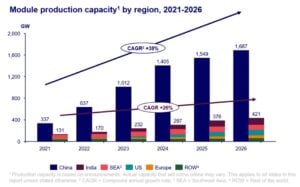
After years of heavy investment, China controls most of the world’s solar manufacturing chain. According to Wood Mackenzie, China is expected to hold more than 80% of global polysilicon, wafer, cell, and module manufacturing capacity from 2023 to 2026.

Wood Mac also said a solar module made in China is about 50% cheaper than one made in Europe and 65% cheaper than one made in the United States. That price gap makes it hard for U.S. factories to compete, especially in the early stages.

China solar
Source: Wood Mackenzie

So even when U.S. companies want to build locally, they still often need Chinese equipment and expertise. Reuters pointed out that the Biden administration excluded solar manufacturing equipment from tariffs in 2024 after U.S. solar companies said they had no real alternative source for the machines needed to launch domestic factories. That exemption has since been extended by the Trump administration.

In other words, America’s solar manufacturing push still depends, at least in part, on Chinese technology.

Why Tesla May Be Making This Move Now

Tesla’s reported plan is about much more than one company. It highlights a major challenge for the United States as it tries to build a stronger clean energy economy.

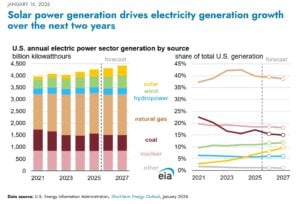
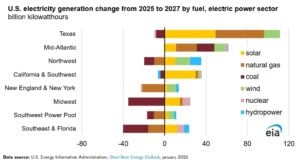
U.S. electricity demand is rising again, and solar is growing fast. The Energy Information Administration said U.S. power use hit its second straight record high in 2025. It also expects demand to keep rising in 2026 and 2027.

EIA solar

At the same time, solar is becoming one of the country’s fastest-growing power sources. In its latest outlook, the EIA said utility-scale solar generation in the U.S. is expected to grow from 290 billion kilowatt-hours in 2025 to 424 billion kilowatt-hours by 2027.

The EIA also said nearly 70 GW of new solar capacity is scheduled to come online in 2026 and 2027. That would increase U.S. solar operating capacity by 49% compared with the end of 2025.

Texas Solar Capacity Supports Tesla and SpaceX

Texas is expected to lead much of that growth. Solar generation in the ERCOT grid is forecast to rise from 56 billion kilowatt-hours in 2025 to 106 billion kilowatt-hours by 2027. Battery storage is also growing to help balance solar power throughout the day.

This helps explain why Texas is such an important part of Tesla’s reported plan. The state already plays a big role in Tesla’s manufacturing footprint. It is also one of the hottest solar markets in the country.

For Tesla, building solar equipment or solar products in Texas could support more than just the grid. Reuters said Musk plans to use much of the capacity for Tesla itself, while some could also help power SpaceX satellites.

That would turn solar into a strategic asset across Musk’s wider business empire. It would also tie clean power more closely to Tesla’s long-term growth story, especially as energy demand from artificial intelligence and data infrastructure keeps rising across the country.

us SOLAR TEXAS

Snapshot of US Solar Imports

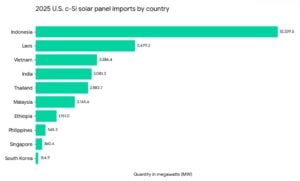
Even with more local manufacturing, the U.S. solar market still depends heavily on imported parts. Solar Power World reviewed U.S. International Trade Commission data and found that the United States imported 33 GW of silicon solar panels in 2025. It also imported 21 GW of silicon solar cells.

That cell figure is especially important because it shows that U.S. panel assembly is growing faster than domestic cell production. America may be building more panels at home, but it still imports many of the core components needed to make them.

us solar panel import
Source: Chart: Solar Power WorldSource: U.S. ITCGet the dataCreated with Datawrapper

The report said the U.S. has around 50 GW of silicon panel assembly capacity, but less than 5 GW of domestic cell manufacturing output. That means plenty of cells still have to be imported. Notably, most imported cells came from Indonesia and Laos in 2025, while South Korea was also a major supplier.

This is where Tesla could make a difference. If it builds large-scale solar cell and panel manufacturing in the U.S., it could help close one of the biggest gaps in the domestic solar supply chain.

Still, there is an irony here. To reduce America’s dependence on foreign solar products, Tesla may first need to buy Chinese machines.

A Massive Opportunity, But Also a Huge Challenge

If the deal happens, it would be a major win for Chinese solar equipment companies. Many of them have faced weak domestic demand because China has already built too much manufacturing capacity.

For Tesla, the order could lay the foundation for a giant U.S. solar platform. It could support the company’s long-term energy strategy at a time when America needs more electricity, more solar, and more battery storage.

But the challenge is enormous.

Building 100 GW of solar manufacturing capacity in just a few years would be a staggering task. Tesla would need factories, workers, permits, raw materials, logistics, and smooth equipment delivery. It would also need stable trade rules and a supportive policy environment.

The company has already faced supply chain setbacks before. Reuters previously reported that production preparations for the Cybertruck and Semi in the U.S. were disrupted last year after component shipments from China were suspended following higher tariffs on Chinese goods. This history shows how exposed U.S. manufacturing can still be to trade tensions.

If speculations are true, Musk appears to be thinking far beyond electric vehicles, i.e., building a larger clean energy system around solar, batteries, manufacturing, and power demand from new technologies like AI.

For now, Reuters’ report shows a simple reality. The U.S. wants a homegrown solar industry. Tesla may want to help build one. But China still holds many of the tools needed to make that goal real.

The post Is Tesla Building a 100 GW U.S. Solar Giant With Chinese Equipment? appeared first on Carbon Credits.

EU Plans Major Carbon Pricing Overhaul and €30B Clean Tech Boost to Drive Decarbonization

EU Plans Major Carbon Pricing Overhaul and €30B Clean Tech Boost to Drive Decarbonization

The European Union is preparing to make large changes to its carbon pricing system. EU Commission President Ursula von der Leyen announced that the bloc will revise its Emissions Trading System (ETS) and launch a new €30 billion cleantech investment fund. These moves aim to support the bloc’s climate goals and help industry cope with shifting energy markets.
The announcements came after a summit of EU leaders focused on energy prices and economic challenges. Rising global energy prices and geopolitical pressures are affecting Europe’s economy and industry.

The new proposals aim to improve the EU’s carbon pricing system. They will also encourage investment in clean technology throughout the bloc.

Von der Leyen said:

“The Emissions Trading System is working. It has massively reduced gas consumption. Because of that, it has reduced our dependency on imports of fossil fuels, and it has reduced our vulnerability. And it has driven major investments in the energy transition in the low-carbon energy sources like renewables and nuclear that are homegrown and give us independence. But we need to modernise it and make it more flexible.”

What Is the EU Emissions Trading System and Why Change It?

The EU’s Emissions Trading System is the bloc’s main carbon pricing tool. It was set up in 2005 to reduce greenhouse gas emissions from major industrial sectors. These include electricity and heat generation, steel, cement, chemicals, and commercial aviation.

Under the ETS, companies must buy permits for each ton of carbon dioxide they emit. The total number of permits is capped to reduce emissions over time.

Over nearly two decades, the ETS has helped reduce Europe’s dependence on fossil fuels and encouraged investment in cleaner energy. It is often viewed as a cornerstone of the EU’s climate policy.

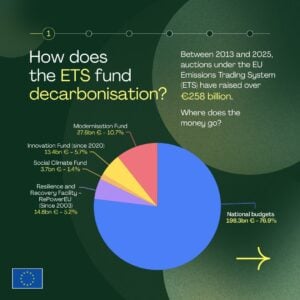
The EU ETS continues to generate large revenues that fund climate action across Europe. In 2025, total ETS auction revenues exceeded €43 billion, with about €24 billion going directly to EU member states.

EU ETS revenue 2025

The remaining funds were allocated to EU-level programs such as the Innovation Fund, Modernisation Fund, and the Social Climate Fund. Overall, ETS revenues since 2013 have surpassed €258 billion, making it one of the world’s largest carbon market funding sources.

However, rising energy costs are pressuring European industries. They started with the war in Ukraine and are now impacted by conflicts in the Middle East. Some member states have asked for a review of the ETS to ease short‑term burdens.

Planned changes “in the next days” may include:

  • Updating benchmarks for free allowances given to the industry.
  • Strengthening the Market Stability Reserve, which manages the supply of carbon allowances to stabilize prices.

Future changes will seek a “more realistic trajectory.” They may also extend free allocation for some industries past 2034.

Carbon Pricing in Europe: The Stakes and the Context

Carbon pricing has been a key driver of investment in clean energy. ETS prices influence how companies weigh fossil fuels versus low‑carbon options. In recent weeks, ETS prices have fluctuated, partly in response to talks about reform and broader energy market volatility.

Recent reports noted that benchmark EU carbon prices jumped almost 10% after policy statements from EU leadership.

EU ETS carbon price

Market stability is a core concern. The ETS’s design includes mechanisms to support consistent carbon prices, especially during times of economic stress. A strong and predictable carbon price can help investors commit to long‑term clean energy projects. Conversely, sudden changes can raise costs for industrial players and weaken investment incentives.

At the same time, formal industry and civil society groups have called for regulatory certainty. They say stable carbon pricing is key for planning big clean energy projects. It also helps the EU keep its role as a leader in global climate efforts. These groups emphasize that unpredictable policy shifts could slow clean industrial growth and raise risk for new projects.

A New €30 Billion Cleantech Fund to Boost Decarbonization

Alongside ETS reform, von der Leyen announced plans for a €30 billion ETS Investment Booster. This new fund will support decarbonization and clean technology projects across Europe. It will be financed by revenues from the ETS, meaning carbon pricing will help fund climate action directly.

The booster fund will operate on a “first-come, first-served” basis to support ready‑to‑deploy projects. Von der Leyen said that the fund will ensure access for lower‑income member states. This is intended to promote fairness across the EU and help balance regional disparities in clean technology investment.

The new fund complements existing EU climate finance mechanisms. The Innovation Fund has backed many projects. These include renewable energy, energy storage, and industrial decarbonization.

In 2024, the Innovation Fund provided €4.8 billion in grants. This supported 85 innovative net-zero projects. These efforts helped reduce nearly 476 million tonnes of CO₂ in the first decade.

Expanding funding sources for clean industrial investments reflects a broader EU trend. The Clean Industrial Deal, launched in 2025, plans to raise over €100 billion. This funding will support clean technology manufacturing, create jobs, boost energy efficiency, and promote circular economy solutions.

Renewables, Baseload, and Energy Market Trends in Europe

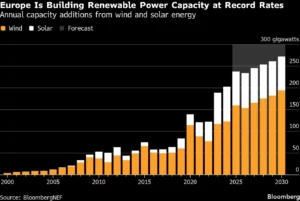
The EU’s net‑zero journey sits against a backdrop of changing energy markets. Renewable energy deployment in Europe continues to grow rapidly.

European Union energy demand under net zero

Wind and solar now make up an increasing share of electricity generation in many member states. These technologies are expected to gain further market share as costs fall and grid integration improves.

Europe renewable power capacity forecast 2030

However, the need for stable and resilient power systems has grown. Renewable sources like wind and solar are variable by nature. This increases interest in baseload options like geothermal, hydropower, nuclear, and storage paired with renewables.

Meanwhile, global energy prices have remained volatile. Brent crude prices rose above $110 per barrel due to geopolitical tensions. This increase is driving up electricity and heating costs in Europe. These price swings can influence industrial competitiveness and household energy bills.

EU leaders view carbon pricing and investment in decarbonization as key to reducing long-term risks from unstable fossil fuel markets. Policymakers want to use ETS revenues for clean technologies. This will help reduce the need for imported fuels and boost energy independence.

Industry Reaction: Balancing Flexibility and Climate Signals

The proposed changes have drawn mixed reactions. Some industry groups welcomed the updates to the ETS. They said the funding support could help reduce short-term cost pressures. Others warn that too much flexibility could weaken long‑term climate signals and reduce investment certainty.

Civil society organizations have stressed the importance of maintaining carbon pricing integrity. They believe a strong, predictable ETS is key. It will boost investment in electrification, renewables, energy efficiency, and circular economy solutions. Maintaining the market’s rules‑based design, supporters say, will help the EU stay on track with its 2030 and 2040 climate targets.

EU 2040 climate goal
Source: EC

The European Council has invited the Commission to present a formal ETS review by July 2026 at the latest. This timeline reflects the urgency of balancing climate goals with current economic pressures.

Looking Ahead: Combining Policy and Investment for Climate Goals

The EU’s planned changes mark an important step for climate policy. Reforming carbon pricing and launching a €30 billion cleantech fund will help drive decarbonization.

The ETS has already helped cut emissions by putting a cost on pollution and supporting cleaner energy. Using ETS revenues for clean technology will expand this impact. It will speed up renewable energy and support low-carbon industries.

These actions support the EU’s targets to reach climate neutrality by 2050 and cut emissions by at least 55% by 2030. The next phase of policy decisions will shape carbon markets, energy prices, and Europe’s clean energy transition.

The post EU Plans Major Carbon Pricing Overhaul and €30B Clean Tech Boost to Drive Decarbonization appeared first on Carbon Credits.