Honda is taking a new step toward its climate goals by supporting farmers across the United States. The company has joined Carbon by Indigo, a leading regenerative agriculture program that helps farmers improve soil health, capture carbon, and boost their income. Through this partnership, Honda is backing 1,800 metric tons of soil carbon removals, which brings the company closer to its long-term decarbonization targets.
Mahjabeen Qadir, sustainability strategy lead at Honda Development & Manufacturing of America, LLC, said:
“For over 40 years, Honda has supported farmers near our Ohio operations through conservation programs that protect farmland and help expand access to markets for their crops. Now, Honda is building on that history by supporting regenerative agriculture practices that help farmers manage climate challenges and maintain healthy farmland for future generations.”
Regenerative Farming: A Simple Way to Heal Soil and Cut Emissions
Regenerative agriculture is becoming a powerful tool in the fight against climate change. It helps the soil store more carbon, keeps water in the ground, and strengthens farms against extreme weather.
Carbon by Indigo: Empowering Farmers With High-Value Carbon Credits
Farmers who join Carbon by Indigo receive guidance on practices like:
Planting cover crops
Reducing tillage
Rotating crops
Using nitrogen more efficiently
These methods build healthier soil and reduce runoff. They also improve air quality and make farmland more resilient over time.
The company produces high-quality agricultural soil carbon credits that help farmers strengthen their bottom line while enabling corporations to reduce risk by supporting carbon removals, emission reductions, and water benefits.
Under its standard program, the company returns 75% of the carbon credit purchase price to the farmer.
In this case, farmers generate verified soil carbon credits that companies like Honda purchase to offset hard-to-eliminate emissions.
Carbon by Indigo Program Highlights
Source: Carbon by Indigo
Dean Banks, CEO of Indigo Ag, said:
“Indigo proudly works with companies like Honda to take action on achieving their climate goals while creating impact for the communities in which they operate. The Carbon by Indigo program builds prosperity from the ground up, with tangible benefits for local communities and their environment: cleaner air and water, more resilient soil and crop production, additional income for farmers and their families, and a legacy of stewardship across generations.”
Water Conservation and Carbon Removal Go Hand in Hand
Even though water conditions vary by region, the project achieved a notable result: on average, each metric ton of carbon removed conserved approximately 69,000 gallons of water. This demonstrates how regenerative practices enable farmers to adapt to changing climate conditions while enhancing productivity.
Supporting 150 Farmers Across Five States
Honda’s investment supports about 150 farmers near its U.S. operations in Alabama, Indiana, Ohio, North Carolina, and South Carolina. Altogether, these farmers manage 214,000 acres of farmland using regenerative methods.
Importantly, all carbon credits in the Carbon by Indigo program are independently verified by Aster Global Environmental Solutions and issued by the Climate Action Reserve, a widely trusted carbon registry.
Honda’s Road to Decarbonization: Cutting Emissions From Products and Operations
Honda has shown leadership in environmental efforts for over 50 years. Now, the company is moving quickly toward an electric and low-carbon future.
It reported 296.86 million t-CO₂e in total global greenhouse gas emissions for FY2025. About 80% of these emissions come from product use (Scope 3 Category 11). The remaining 20% comes from direct operations and upstream/downstream activities.
Because of this, Honda is prioritizing emission cuts from product use and business operations. The company aims to reach full carbon neutrality by 2050, aiming to increase sales of electric and hybrid vehicles in North America and other major markets.
Source: Honda
Triple Action to ZERO: Honda’s Framework for a Sustainable Future
Honda’s clean energy target is ambitious, and its environmental vision is shaped by its “Triple Action to ZERO” strategy, which includes:
Clean Energy – switching fully to carbon-free energy sources
Resource Circulation – creating products with sustainable and recyclable materials
These three actions connect to global climate and biodiversity goals. Honda also supports Nature-based Solutions, such as restoring forests and ecosystems, to increase its positive environmental impact.
Honda also trains suppliers through the Green Excellence Academy and supports dealerships through the Environmental Leadership Program, so the entire value chain can lower emissions.
Protecting Biodiversity Across the Globe
Honda is protecting ecosystems near its facilities through forest projects and greenbelt expansion. In Ohio, the company created the Honda Power of Dreams Forest, planting 85,000 trees over 40.5 hectares to restore riparian zones and create wildlife habitats.
Similar initiatives are underway in Europe and Brazil. In Belgium, Honda is restoring black poplar trees and building insect hotels and ponds to boost biodiversity. In the Amazon rainforest, Honda maintains 80% of its motorcycle test course as a protected conservation area and supports replanting endangered species like mahogany and rosewood.
A Long-Term Commitment to a Cleaner Future
Honda’s partnership with Carbon by Indigo reflects its broader mission to cut emissions, expand clean energy, and support sustainable communities. Through regenerative agriculture, renewable energy, circular manufacturing, and biodiversity programs, Honda is building a pathway toward a Zero Environmental Impact Society by 2050.
Source: Modor Intelligence
These efforts show how large companies can support climate solutions while strengthening local communities and protecting the planet for future generations.
https://globalcarbonfund.com/wp-content/uploads/2018/10/GCF_header_logo_340x156.png00carbonfundhttps://globalcarbonfund.com/wp-content/uploads/2018/10/GCF_header_logo_340x156.pngcarbonfund2025-11-21 07:48:092025-11-21 07:48:09Honda Backs U.S. Farmers With Regenerative Agriculture to Drive Its Net-Zero Future
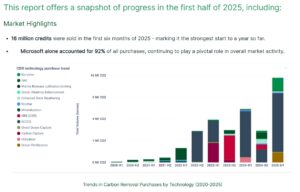
Microsoft and Alphabet have become the world’s strongest forces behind durable carbon removal. Together, they have funneled more than $10 billion into technologies designed to pull carbon dioxide out of the atmosphere for centuries. Their push marks a major turning point for the carbon removal market, which has struggled for years with high costs, slow progress, and limited buyers.
Today, the two tech giants are putting carbon removal at the center of their climate strategies. Their actions are injecting confidence, capital, and momentum into a sector that many once considered too expensive to scale. As demand for clean energy grows and artificial intelligence drives up electricity use, Microsoft and Alphabet are betting big on solutions that can permanently erase their emissions footprints.
Rising Investments Reset the Market
Morningstar’s 2025 analysis shows Microsoft driving about $8 billion in carbon removal commitments, with Alphabet close behind. Their combined spending has pushed global commitments above $10 billion, a sharp rise from the small voluntary market of recent years.
Both companies act as early buyers and long-term partners, giving startups stable funding. Microsoft’s nearly 300,000-tonne deal with Arca Climate Technologies, signed after an 18-month pilot, is now helping the company scale across North America.
Alphabet supports demand through the First Movers Coalition, committing $500 million to advance early carbon-negative technologies and help them progress from pilot scale to gigaton-scale solutions.
Several forces explain Big Tech’s sudden acceleration. One major factor is the explosive growth of data centers, especially those powering AI. Even with clean electricity purchases, Microsoft’s emissions rose 23% between 2020 and 2025. Its leaders now view durable carbon removal as a necessary “backstop” to meet their 2030 and 2050 climate goals.
Additionally, high-quality carbon removal credits are scarce and expensive. Some early-stage projects still cost more than $600 per tonne. However, Microsoft and Alphabet’s steady buying reassures investors that demand will continue.
Critics say relying on a few wealthy buyers makes the market fragile. Yet, Big Tech lowers risk for startups, funds pilots, and spurs government and investor support—similar to early solar, where large buyers drove scale, innovation, and lower costs.
What “Durable” Actually Means
Durability—how long carbon stays locked away—is central to Microsoft’s and Alphabet’s strategies. Microsoft, in particular, has defined strict criteria. The company prefers projects that store carbon for more than 1,000 years, with clear scientific validation. These include:
Direct air capture
Mineralization
Biomass carbon removal and storage
Certain types of bioenergy with carbon capture
Every proposal goes through lifecycle analysis and third-party review.
These deals signal confidence across a broad portfolio of solutions, ranging from industrial capture to innovative mineralization technologies developed in Canadian and Australian mines.
Alphabet continues to work through the First Movers Coalition to support next-generation carbon removal. At Davos, World Economic Forum President Børge Brende called these companies “the true first movers” that enable disruptive climate technologies to scale.
High Demand Sends Carbon Removal Prices Surging
If price signals matter, then the last two years show how fast demand has risen. Heavy buying from Microsoft, Alphabet, and other firms pushed high-durability credit prices to new highs. Because supply remains tight, these large contracts often go to the same handful of buyers.
Source: Allied Offsets
While smaller companies struggle with rising prices, the surge does encourage more innovation. Some mid-durability solutions, such as biochar, have seen costs fall as producers scale up to meet larger orders. Yet, the long-term health of the market depends on expanding demand beyond the tech sector.
Thanks to Big Tech’s leadership, more corporations are entering the carbon removal market. Salesforce, Amazon, Apple, and major insurers have begun purchasing durable removal credits. Governments—including Singapore, Sweden, and several European nations—are also exploring or funding carbon removal programs.
This widening participation is essential. Diverse buyers create market stability and help avoid over-reliance on a small group of tech companies.
Meanwhile, the voluntary carbon market is undergoing a quality overhaul. Buyers now demand strong verification standards, transparent lifecycle data, and clear durability claims. This shift is raising the bar for every project developer in the space.
One example of a success story is Arca’s partnership with Microsoft. It began with academic research in Canada and evolved into a commercial mineralization project supported by Big Tech funding. The deal shows how early capital can turn scientific ideas into permanent carbon sinks.
Can Today’s Billion-Dollar Investments Deliver Gigaton Removal?
Although current momentum is impressive, the challenge ahead is enormous. Microsoft leaders warn that AI-driven energy demand may continue to outpace emissions reductions. They frame the company’s strategy as “do our best, remove the rest,” acknowledging that cutting emissions alone is no longer enough.
Industry analysts see rapid progress. BloombergNEF and IEA data show permanent carbon removal commitments reached $10 billion in 2025, compared with less than $2 billion just two years earlier. Direct air capture capacity has passed 1.3 million tonnes per year, and the IEA reports a twelvefold jump in mineralization projects since 2022.
By 2030, experts anticipate a demand for durable carbon removal of 40 million tonnes per year. If investments continue, the market could exceed $50 billion by the end of the decade.
Still, big obstacles remain. Costs must fall so that smaller businesses can participate. Additionally, the world will need clearer rules to connect voluntary markets with compliance systems.
Source: IEA
Looking Ahead: A Turning Point for Carbon Removal
The next decade will determine whether carbon removal becomes a global climate tool or stays a niche market. Microsoft and Alphabet have pushed the industry to a new level, creating confidence and setting standards. Their investments have sparked competition, inspired more buyers, and accelerated innovation.
If current trends hold, carbon removal could soon become as essential as emissions reduction—and a true foundation of global net-zero strategies.
https://globalcarbonfund.com/wp-content/uploads/2018/10/GCF_header_logo_340x156.png00carbonfundhttps://globalcarbonfund.com/wp-content/uploads/2018/10/GCF_header_logo_340x156.pngcarbonfund2025-11-21 06:52:122025-11-21 06:52:12Big Tech Firms Microsoft (MSFT) and Alphabet (GOOGL) Lead in Durable Carbon Removal Investments Exceeding $10 Billion
Japan is moving toward restarting the Kashiwazaki-Kariwa nuclear power station, the world’s largest by capacity. The move could change the country’s energy policy, which relies on atomic power to tackle high fuel costs, boost energy security, and reduce carbon emissions.
The nuclear plant is run by Tokyo Electric Power Company (TEPCO), and the restart of its biggest units, No. 6 and No. 7, together producing about 2,710 megawatts (MW), could happen soon, if regulators and local authorities approve.
It is the governor of Niigata prefecture who moves to approve the restart of the Kashiwazaki-Kariwa facility. Hideyo Hanazumi plans to hold a press conference to announce his decision and said he will consult with the prefectural assembly. If the assembly also agrees, the restart will be officially authorized. He said during a media briefing:
“I would like to make a decision and express it soon.”
A Long Road Back: Why Japan’s Nuclear Revival Matters
After Fukushima in 2011, Japan shut down nearly all its reactors, and restarting them has been slow. By late 2024, only 14 reactors had started back up under the stricter post-Fukushima rules.
Source: Renewable Energy Institute
Kashiwazaki-Kariwa, also called KK, has a total capacity of 8,212 MW, making it the largest nuclear power plant in the world. The facility has mostly sat unused since 2012. This happened after safety worries and stricter rules came in after the 2011 Fukushima disaster.
In December, regulators lifted a de facto ban that had blocked TEPCO from loading fresh nuclear fuel into the plant. The company has done safety inspections and is now seeking approval from Niigata Prefecture. This includes getting the governor’s okay, as they have a lot of influence over the decision.
If approved, restarting even part of Kashiwazaki-Kariwa could dramatically boost Japan’s nuclear output. For TEPCO, this move may lower operating costs, reduce dependence on costly imported fuels, and improve its long-term financial outlook.
Japan’s Nuclear Comeback: The Bigger Picture
Nuclear’s share in Japan’s electricity mix has begun to rise, per the ISEP data. In fiscal year 2023, nuclear energy made up 8.5% of the country’s power generation. It is the highest level since before Fukushima. Fossil fuels, especially LNG and coal, still supply the bulk of power.
Data source: ISEP
The country still has far to go. Many reactors remain offline as utility firms seek regulatory approval and local consent. The largest plant, Kashiwazaki-Kariwa, could add back several gigawatts if its units restart.
Policy now backs a larger nuclear role. The government’s strategic energy plan targets roughly 20% nuclear by 2040, alongside a big push for renewables (40–50%). These goals aim to cut fuel import bills and lower emissions, but they will require many more restarts, life extensions, or new builds.
Source: Renewable Energy Institute
The commercial case for more nuclear in Japan rests on several factors. Restarted reactors reduce costly LNG use and help utilities stabilize generation costs. They also provide steady, low-carbon baseload power that complements intermittent renewables.
On the other hand, safety upgrades, decommissioning risks, and local opposition impose large financial and political costs.
In short, Japan’s nuclear comeback is real but cautious. Progress relies on a few key factors:
Regulatory approvals,
Local consent, ongoing safety investments, and
Nuclear’s ability to compete with cheaper renewables and storage as they grow.
Small but Mighty: Japan’s Growing Interests in SMR
Japan is also studying the use of Small Modular Reactors, or SMRs, as part of its longer-term energy plan. These reactors are smaller and can be built in factories, which may reduce costs and construction time. They could help Japan add more nuclear power without the long delays that come with large plants.
Several Japanese companies are already working with international partners to develop SMR designs. IHI, a leading equipment maker, is working with a U.S. firm, NuScale Power, on modular reactor technology. They have built full-scale mock-ups to test their engineering systems.
Chubu Electric Power, one of the country’s major utilities, has also announced plans to invest in SMR projects at home and overseas. These steps show rising industry interest in this new type of reactor.
Even with this momentum, Japan’s SMR plans are still at an early stage. The government has not yet completed a full regulatory framework for these reactors. Safety rules, design standards, and licensing pathways still need more work before construction can begin.
Japan faces key economic questions. Can SMRs compete with renewables, large reactors, and imported fuels?
Because of these factors, experts expect SMRs to grow slowly. The Asian country may first use them for research or for exports before they appear in domestic power grids.
Still, as the country looks for low-carbon energy and more stable power supplies, SMRs are becoming part of the national discussion about the future of nuclear power.
Even with regulatory and political momentum, restarting Kashiwazaki-Kariwa faces hurdles. Local consent remains a key issue: the governor needs the nod of the prefectural assembly.
Safety is a major concern. TEPCO must run the plant under the tougher standards imposed after Fukushima. For residents near the plant, the disaster’s memory is still strong. This leads to local resistance in some communities.
There are financial risks, too. Restarting nuclear plants requires huge investments in safety upgrades, regulatory compliance, and community relations. If the market for electricity or nuclear power shifts, these costs could pose a burden.
Strategic Impact on Japan’s Energy Market
If put back online, Kashiwazaki-Kariwa could play a key role in lowering Japan’s import bill for liquefied natural gas (LNG). Japan is one of the world’s largest LNG importers, and atomic power offers a way to reduce its reliance on volatile markets.
More nuclear generation could also support Japan’s climate goals. The government’s energy roadmap targets a big increase in nuclear while also expanding renewables, aiming for a 40–50% renewable share by 2040.In that plan, nuclear provides a stable, carbon-free “baseload” to complement fluctuating solar and wind power.
The restart could also reshape investor sentiment. Utilities, financial institutions, and even global energy analysts are watching closely. A strong comeback of large nuclear power could show faith in Japan’s atomic revival. This might also encourage long-term investments in its nuclear industry.
Why the Restart is Significant Globally
Japan’s potential restart of the world’s largest nuclear plant comes at a moment when many countries are rethinking nuclear power. Rising energy prices, geopolitical instability, and stronger climate targets make nuclear more attractive. A revival in Japan could influence other nations to reconsider or expand their own nuclear programs.
For TEPCO, a successful restart strengthens its case for nuclear as a core part of its business. For the region, it offers more stable energy, local economic support, and lower emissions. And for Japan, it could signal that the nuclear sector is fully back in its long-term energy mix.
If the governor of Niigata approves the restart as expected, Japan may very soon add a major source of clean, reliable power — and a potent symbol of its atomic revival.
https://globalcarbonfund.com/wp-content/uploads/2018/10/GCF_header_logo_340x156.png00carbonfundhttps://globalcarbonfund.com/wp-content/uploads/2018/10/GCF_header_logo_340x156.pngcarbonfund2025-11-21 06:52:122025-11-21 06:52:12Japan to Restart the World’s Largest Nuclear Power Plant
Petrobras and the Brazilian Development Bank (BNDES) opened a public call for proposals under the ProFloresta+ program to buy 5 million high-integrity carbon credits tied to Amazon restoration. The move seeks to boost forest restoration in the Amazon. It will also set a clear price benchmark for restoration credits and aims to create jobs and attract finance in the restoration sector.
What Petrobras and BNDES Want from Developers
The public notice covers five contracts of 1 million carbon credits each. Each contract must be backed by ecological restoration on at least 3,000 hectares. Contracts will last for 25 years. They will focus on areas within the Amazon biome. This includes both private land and public land with forest concessions.
Key facts in brief:
Five contracts × 1 million credits.
Minimum 3,000 hectares per contract, restored and verified.
25-year crediting and monitoring horizon.
The tender comes at a time when Brazil’s voluntary carbon market is growing. According to market surveys, Brazil issued about 14–16 million voluntary credits per year from 2021 to 2023. ARR (Afforestation, Reforestation, and Revegetation) credits accounted for about 10–15% of these total issuances.
The ProFloresta+ purchase of 5 million credits is a large amount. It’s much larger than the current supply of restoration credits.
Financing the Forest: How ProFloresta+ Unlocks Capital
Petrobras will buy the carbon credits through public tenders. Winning project developers may then get low-interest loans or financing from BNDES to cover upfront costs.
The Brazilian bank created tools to reduce financial risk for restoration companies and landowners. This pairing of long-term offtake and concessional finance is meant to make restoration projects bankable.
Over the past decade, carbon markets have shown that early funding is a barrier for landowners who want to begin restoration. BNDES’ model tries to fix this by offering credit lines with longer repayment periods and by supporting milestone-based contracts. Payments for credits are expected to follow a schedule tied to planting, survival rates, and verified carbon removals.
ProFloresta+ enters a market where ARR credits from the Amazon have sold for US$8 to US$18 per tonne. Prices vary based on quality, verification standards, and project risks. Petrobras hasn’t revealed its expected clearing price yet. However, the public tender sets a reference point for buyers and sellers to see.
Data Sources: Sylvera, CarbonCredits.com
The chart shows an indicative low, a broad nature-based market average, and an observed Brazil ARR average (USD per tCO₂e).
ProFloresta+ is framed as a multi-phase program. The initial phase targets about 15,000 hectares and 5 million credits, backed by roughly R$450 million (about US$77 million).
Over a longer horizon, the program states it can restore up to 50,000 hectares and sequester an estimated 15 million tonnes of CO₂. Organizers also expect thousands of local jobs in planting, maintenance, and monitoring.
Average CO₂ absorption rates help explain the numbers. Research on the Amazon biome shows that restoring native forests can remove 8 to 15 tonnes of CO₂ per hectare each year in early growth.
As the forests mature, they store even more CO₂ over the long term. Assisted natural regeneration can achieve similar rates in degraded lands that still have seed banks. These benchmarks support the program’s estimate of long-term removals.
Amazon deforestation trends also show why the program is urgent. INPE satellite data recorded nearly 13,000 km² of deforestation in 2021, which fell to around 9,000 km² in 2023 after new enforcement measures.
Source: Mongabay
Scientists estimate that over 54.2 million hectares of the Amazon have been lost in 20 years and need active or assisted restoration. The ProFloresta+ restoration area is small compared with this total, but it can test large-scale finance models.
Officials estimate the pilot will create about 4,500 jobs. It will also set clear rules and prices for restoration credits. Past restoration programs in Brazil and Latin America usually create 2–4 jobs per hectare during planting.
For long-term monitoring and maintenance, they generate 1–2 jobs per hectare. These figures help explain how large-scale planting can support rural employment.
Why This Tender Could Redefine Brazil’s Carbon Landscape
The program marks one of the largest public tenders for restoration credits in Brazil. It links a major corporate buyer (Petrobras) with a development bank to deliver scaled restoration. This structure can do three things:
Brazil is now a leading supplier of forest-related credits worldwide. REDD+, ARR, and agroforestry methods back this growth. But ARR supply has grown more slowly because restoration is expensive and long-term.
The chart shows indicative ARR credit price trends from 2019–2024, starting with broader market averages due to limited early ARR data. Reliable ARR-specific prices were not published in 2019–2020, so the series begins in 2021 with broader voluntary carbon market averages.
Prices rise from about US$4/t in 2021 to over US$7/t in 2022, dip slightly in 2023, then jump sharply in 2024 as demand for high-integrity nature-based removals strengthens.
Data sources: MSCI Carbon Markets, Sylvera
A project involving 3,000 hectares usually needs several million dollars in early investment. Public tenders like ProFloresta+ help bridge this gap.
Public tenders of this size are rare. Indonesia’s peatland and mangrove restoration programs have offered fewer large-volume restoration credit offtake tenders. In contrast, Congo Basin countries have emphasized REDD+ over ARR.
As such, ProFloresta+ is unique. It combines public procurement with development bank financing. It also includes long-term monitoring requirements.
Trust but Verify: How Brazil Will Track Every Tonne
The call requires robust verification and long monitoring periods. Projects must follow recognized restoration practices and provide measurable carbon removals.
BNDES and Petrobras require documentation, monitoring, and a 25-year contract to ensure credits are real, additional, and permanent.
Most Brazilian projects use international standards like Verra VCS or Gold Standard, alongside the national carbon registry, field audits, and remote sensing. Developers must follow restoration protocols, including native species, minimum density, and survival monitoring.
To ensure permanence, 10–20% of credits are often placed in a buffer pool, with some using insurance against fire, drought, or pests. Developers must submit baseline studies, restoration plans, and social-environmental safeguards, and undergo audits and reporting to qualify for credits and BNDES financing. Public tender results will be transparent.
Weighing ProFloresta+’s Impact
Proponents list several benefits of the program:
It channels immediate demand and revenue to restoration projects.
It uses public procurement to set market standards and prices.
It couples purchases with concessional finance to lower project risks.
The program also aims to support social safeguards. Restoration in the Amazon often requires consent from local communities, Indigenous groups, and landholders. Many programs now include benefit-sharing rules, training, and local hiring. Monitoring includes checks on land use rights and social co-benefits.
But limits remain. Restoration takes time; carbon removals accrue over decades. Projects must manage risks such as fires, pests, land-use conflicts, and changing climate conditions.
Credit buyers and financiers need confidence that credits remain valid over long periods. Observers say the program will only prove effective if verification and long-term protection are strong.
A High-Stakes Test for Restoration at Scale
The public call opens the clock for proposals. Petrobras and BNDES will evaluate bids and award contracts. If the pilot goes as planned, the program can expand to more hectares and credits. This might also inspire other companies to start similar tenders. Many energy, aviation, and consumer goods companies in Brazil want to buy carbon credits. This shows that the market is growing.
The tender could strengthen Brazil’s restoration market by proving that public, transparent purchasing and concessional finance can bring large projects to scale. Success will depend on strong verification, durable finance, and effective on-the-ground management across the program’s long timeframe.
https://globalcarbonfund.com/wp-content/uploads/2018/10/GCF_header_logo_340x156.png00carbonfundhttps://globalcarbonfund.com/wp-content/uploads/2018/10/GCF_header_logo_340x156.pngcarbonfund2025-11-20 12:06:172025-11-20 12:06:17Petrobras and BNDES Launch a 5-Million Carbon Credit Push to Regrow Brazil’s Amazon
Disseminated on behalf of Sierra Madre Gold & Silver Ltd.
Sierra Madre Gold & Silver is building a strong position in Mexico’s growing precious metals industry. The company is creating long-term value through smart growth, low costs, and balanced exposure to both gold and silver. With gold prices at record highs, Sierra Madre is turning opportunity into steady progress.
Its main operation, the La Guitarra Mine Complex, reached commercial production in January 2025 after being acquired from First Majestic Silver. Alongside this, the company holds the Tepic Project, expanding Mexico’s gold and silver frontier. By combining efficient mining with new exploration, Sierra Madre is proving that gold’s value still shines bright in today’s market.
Gold’s Strength in a Changing World
Gold remains a trusted safe-haven asset in uncertain times. Central banks are buying more gold, and geopolitical tensions are pushing demand higher. JP Morgan expects gold prices to average $3,675–$4,000 per ounce by mid-2026. State Street Global Advisors sees gold holding above $3,000/oz, showing that strong prices are here to stay.
Source: JP Morgan
The Demand and Supply Side
As per the World Gold Council, in Q2 2025, total gold demand reached 1,249 tonnes, up 3% year-over-year. Its value surged 45% to a record US$132 billion, driven by strong investment demand. Gold-backed ETFs, bars, and coins saw the biggest gains amid geopolitical tensions and trade uncertainty. Central banks added 166 tonnes to reserves, though at a slower pace than in previous quarters.
On the supply side, total gold output also rose 3% to 1,249 tonnes, with mine production hitting a Q2 record of 909 tonnes.
Source: Sources: Metals Focus, Refinitiv GFMS, World Gold Council
This environment supports Sierra Madre’s growth strategy. The company is using these high prices and Mexico’s low operating costs to boost production and deliver stronger returns to shareholders.
Driving Gold Growth at La Guitarra
The La Guitarra Mine Complex is Sierra Madre’s key asset. Located in Mexico’s historic Temascaltepec district, it currently produces 500 tonnes per day. The company plans to double that to 1,200 t/d to 1,500 t/d by late 2027.
In April 2025, Sierra Madre started underground mining at the high-grade Coloso vein within the La Guitarra property. This new zone should increase gold output and improve overall grades. At the same time, the company is upgrading its milling systems to raise recovery rates and lower costs.
Source: Sierra Madre Gold & Silver
Tepic Project: Expanding Mexico’s Gold and Silver Frontier
The Tepic Project adds exciting exploration upside. It sits in Mexico’s Sierra Madre Geologic Province and hosts low-sulfidation epithermal gold and silver mineralization. Multiple zones stretch over one kilometer long and 200 meters wide.
Once the flagship project of Cream Minerals, Tepic has a historic resource estimate outlined in a 2020 Technical Report. Past drilling covered 31,537 meters across 149 holes. However, with a 76% core recovery rate, grades may have been underestimated.
Recent exploration shows the Dos Hornos breccia veins remain open both along strike and at depth. This finding suggests strong potential for expanding resources in future drilling phases.
Tepic is just 22 km from Tepic City, the capital of Nayarit, and 120 km from Puerto Vallarta Airport. The project has excellent access to roads, power, and local services. A skilled mining workforce and nearby fabrication shops make operations easier and more cost-efficient.
The project covers 2,612.5 hectares across five mining concessions and is 100% owned by Sierra Madre. Being in a mining-friendly region of Mexico gives the company a stable environment to advance this asset.
Strong Gold Production and Steady Revenue
Sierra Madre’s production results show steady progress and solid performance:
Q2 2025 gold sales: 1,096 ounces.
H1 2025 gold sales: 2,118 ounces; production totaled 2,049 ounces.
Average realized price: $3,271/oz in Q2 and $3,058/oz for H1.
Gold recovery: around 78% during the first half of 2025.
Gold revenues reached $3.59 million in Q2 2025, up from $2.89 million in Q1. For the first half of 2025, gold generated $6.48 million in total revenue. Cash costs per silver-equivalent ounce sold were $23.32, showing strong cost control.
As the Coloso mine continues to deliver higher-grade mineralization, Sierra Madre expects better margins and lower costs in the coming quarters.
Financing Growth and Exploration Plans
In mid-2025, Sierra Madre raised C$19.5 million (US$19.5 million) through a private placement. The funds are being used to:
Expand throughput at La Guitarra.
Launch a +20,000-meter exploration program across 59 km of structures mapped to date.
Target new high-grade zones in the East District.
This financing strengthens the company’s ability to expand production and extend mine life while continuing to explore new areas.
Moving on, Sierra Madre has also begun underground development at the Nazareno silver-gold mine in the La Guitarra complex, Estado de Mexico. The team has delivered over 700 tonnes of mineralized material, not included in the current resource estimate, to the Guitarra mill. Workers are blasting existing workings and advancing the sill drive to test long-hole mining feasibility in the closely spaced veins.
Reconciliation with the 2023 Nazareno resource model shows silver grades 40% higher and gold grades 30% higher than estimated, signaling strong potential to expand the resource.
Taking Advantage of Record Metal Prices
Gold is trading above $4,000 per ounce, giving Sierra Madre a strong tailwind. Its mix of gold and silver exposure provides a natural balance – gold supports financial stability, while silver adds growth potential.
Source: Bloomberg
Analysts also believe that Silver is expected to face a structural deficit for the seventh straight year, due to rising demand from the clean energy and technology sectors. This gives Sierra Madre’s dual-metal strategy even more value in the current market.
Two Metals, One Strong Strategy
Sierra Madre’s dual focus sets it apart. Gold anchors the company’s stability as a safe-haven asset, while silver brings growth potential through its industrial uses — from solar panels to electric vehicles.
With a combination of efficient operations, strong assets, and focused execution, Sierra Madre is redefining what a modern Mexican mining company looks like one that blends stability with growth potential.
New Era Publishing Inc. and/or CarbonCredits.com (“We” or “Us”) are not securities dealers or brokers, investment advisers, or financial advisers, and you should not rely on the information herein as investment advice. Sierra Madre Gold and Silver Ltd. (“Company”) made a one-time payment of $25,000 to provide marketing services for a term of one month. None of the owners, members, directors, or employees of New Era Publishing Inc. and/or CarbonCredits.com currently hold, or have any beneficial ownership in, any shares, stocks, or options of the companies mentioned.
This article is informational only and is solely for use by prospective investors in determining whether to seek additional information. It does not constitute an offer to sell or a solicitation of an offer to buy any securities. Examples that we provide of share price increases pertaining to a particular issuer from one referenced date to another represent arbitrarily chosen time periods and are no indication whatsoever of future stock prices for that issuer and are of no predictive value.
Our stock profiles are intended to highlight certain companies for your further investigation; they are not stock recommendations or an offer or sale of the referenced securities. The securities issued by the companies we profile should be considered high-risk; if you do invest despite these warnings, you may lose your entire investment. Please do your own research before investing, including reviewing the companies’ SEDAR+ and SEC filings, press releases, and risk disclosures.
It is our policy that information contained in this profile was provided by the company, extracted from SEDAR+ and SEC filings, company websites, and other publicly available sources. We believe the sources and information are accurate and reliable but we cannot guarantee them.
CAUTIONARY STATEMENT AND FORWARD-LOOKING INFORMATION
Certain statements contained in this news release may constitute “forward-looking information” within the meaning of applicable securities laws. Forward-looking information generally can be identified by words such as “anticipate,” “expect,” “estimate,” “forecast,” “plan,” and similar expressions suggesting future outcomes or events. Forward-looking information is based on current expectations of management; however, it is subject to known and unknown risks, uncertainties, and other factors that may cause actual results to differ materially from those anticipated.
These factors include, without limitation, statements relating to the Company’s exploration and development plans, the potential of its mineral projects, financing activities, regulatory approvals, market conditions, and future objectives. Forward-looking information involves numerous risks and uncertainties and actual results might differ materially from results suggested in any forward-looking information. These risks and uncertainties include, among other things, market volatility, the state of financial markets for the Company’s securities, fluctuations in commodity prices, operational challenges, and changes in business plans.
Forward-looking information is based on several key expectations and assumptions, including, without limitation, that the Company will continue with its stated business objectives and will be able to raise additional capital as required. Although management of the Company has attempted to identify important factors that could cause actual results to differ materially, there may be other factors that cause results not to be as anticipated, estimated, or intended.
There can be no assurance that such forward-looking information will prove to be accurate, as actual results and future events could differ materially. Accordingly, readers should not place undue reliance on forward-looking information. Additional information about risks and uncertainties is contained in the Company’s management’s discussion and analysis and annual information form for the year ended December 31, 2024, copies of which are available on SEDAR+ at www.sedarplus.ca.
The forward-looking information contained herein is expressly qualified in its entirety by this cautionary statement. Forward-looking information reflects management’s current beliefs and is based on information currently available to the Company. The forward-looking information is made as of the date of this news release, and the Company assumes no obligation to update or revise such information to reflect new events or circumstances except as may be required by applicable law.
For more information on the Company, investors should review the Company’s continuous disclosure filings available on SEDAR+ at www.sedarplus.ca.
Disclosure: Owners, members, directors, and employees of carboncredits.com have/may have stock or option positions in any of the companies mentioned: None.
Carboncredits.com receives compensation for this publication and has a business relationship with any company whose stock(s) is/are mentioned in this article.
Additional disclosure: This communication serves the sole purpose of adding value to the research process and is for information only. Please do your own due diligence. Every investment in securities mentioned in publications of carboncredits.com involves risks that could lead to a total loss of the invested capital.
https://globalcarbonfund.com/wp-content/uploads/2018/10/GCF_header_logo_340x156.png00carbonfundhttps://globalcarbonfund.com/wp-content/uploads/2018/10/GCF_header_logo_340x156.pngcarbonfund2025-11-20 12:06:162025-11-20 12:06:16Gold’s Enduring Value: How Sierra Madre Is Advancing Mexico’s Next Generation of Gold Projects
Nvidia reported strong results for the third quarter of its fiscal year ending October 26, 2025. The company posted $57 billion in revenue, which increased 22% from the previous quarter and 62% from the same period last year. The numbers show that demand for Nvidia’s chips and systems remains high, especially in artificial intelligence and data center markets.
Q3 Performance: High Revenue and Steady Profit Margins
The Data Center segment led the quarter again with $51.2 billion in revenue. This segment grew 25% from the previous quarter and 66% from a year earlier. Growth comes from ongoing orders by cloud companies, enterprise clients, and research institutions. They use Nvidia’s platforms to train and run AI models.
Source: Wind Info
Profitability also stayed strong. Nvidia reported a 73.4% GAAP gross margin, up slightly from the previous quarter. Its non-GAAP gross margin was 73.6%. These margins show the company continues to benefit from strong pricing power and high demand for advanced AI hardware.
Net income reached $31.9 billion, rising 21% from the previous quarter and 65% from the year before. Diluted earnings per share (EPS) came in at $1.30 on both a GAAP and non-GAAP basis. Operating income also remained high at $36 billion, showing that Nvidia is managing its expenses while growing its revenue.
Source: Nvidia
Cash generation continued to strengthen. Free cash flow was about $22.1 billion, which increased by 32% from last year. Nvidia also returned $37 billion to shareholders in the first nine months of fiscal 2026 through buybacks and dividends. The company still has more than $62 billion available under its current buyback authorization.
Overall, the financial results show that Nvidia is still growing at a fast pace, even as its growth rate begins to stabilize. The results also provide a strong base as the company expands into new areas, such as infrastructure and energy-efficient computing.
After the earnings release, Nvidia’s stock rose about 3% in after-hours trading. This came after stronger-than-expected revenue and earnings.
Nvidia expects another strong quarter ahead. For Q4 fiscal 2026, the company forecasts revenue of around $65 billion, plus or minus 2%. It also expects gross margins to improve slightly, reaching about 75% on a non-GAAP basis. Operating expenses are set to rise as the company invests in research and in new product development cycles.
The outlook suggests that Nvidia believes demand will remain strong in the near term. At the same time, the company faces new challenges. Growth is still high, but it is no longer rising at the extreme levels of earlier years.
Nvidia will focus more on expanding its infrastructure. They aim to boost efficiency and manage long-term costs. These trends set the stage for the company’s latest major initiative.
A Major Strategic Turn: The $100 Billion AI Deal with Brookfield
Nvidia just announced a big partnership with Brookfield Asset Management, a leading asset management company. They plan to create an AI infrastructure program worth up to $100 billion. This move marks a shift in Nvidia’s strategy.
The chipmaker will shift from just selling chips and systems. Now, it will help build a complete infrastructure for AI growth. The program will include investments in land, power, data centers, and advanced computing systems.
Jensen Huang, founder and CEO of Nvidia, stated:
“AI is transforming every industry, and like electricity, it will require every nation to build the infrastructure to power it. AI infrastructure demands land, power, and purpose-built supercomputers—and our partnership with Brookfield brings all of these elements together in a ready-to-deploy AI cloud.”
Brookfield brings experience in infrastructure, real estate, and energy. Nvidia brings the technology and the hardware that run modern AI models. Together, they aim to support global demand for AI computing, which continues to rise sharply.
This partnership shows that Nvidia is expanding beyond its traditional role as a chip designer. The company wants to be part of designing and building the physical foundations that AI depends on. This includes everything from cooling systems to energy supply.
The move could help Nvidia secure long-term revenue streams and reduce the bottlenecks that come from limited infrastructure capacity.
As Nvidia steps deeper into infrastructure, the environmental impact of AI computing becomes more important. Data centers and high-performance computing systems use large amounts of electricity. They also demand advanced cooling systems and steady grid capacity.
The company has acknowledged these challenges and increased its sustainability efforts across its operations, supply chain, and product designs.
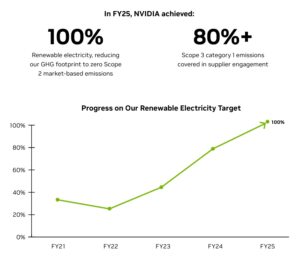
A key part of Nvidia’s environmental strategy is its use of clean electricity. The company reports that it achieved 100% renewable electricity for its offices and data centers under its operational control. This shift reduces its Scope 1 and 2 emissions and lowers the carbon footprint of its own operations.
Source: NVIDIA
The GPU king has set science-based targets to reduce emissions. They want to limit global warming to 1.5°C. The goal is to cut Scope 1 and Scope 2 emissions by 50% by FY 2030, using FY 2023 as the baseline.
For its products, Nvidia aims to cut emissions intensity during customer use by 75% per petaflop of computing power by 2030. This target matters because most of Nvidia’s emissions come from how its products are used, not how they are manufactured.
A big part of Nvidia’s total emissions comes from its suppliers, also known as Scope 3 emissions. They occur during the production of components.
Source: NVIDIA
Nvidia is also engaging its supply chain. The company reports that it has engaged suppliers responsible for more than 80% of its upstream emissions. It encourages these suppliers to set their own science-based targets.
The Blackwell GPU and Beyond
Energy efficiency is another focus area. Nvidia’s newer systems deliver much better performance for every unit of power used. Some platforms show 50% to 99% lower energy use per unit of compute compared to older systems.
The Blackwell GPU platform is very energy-efficient. It’s built to manage large AI workloads and cut down on power use.
Despite these efforts, Nvidia still faces challenges. Its total emissions rose in recent years because demand for its products grew so quickly. Scope 3 emissions make up the biggest part of its footprint. Reducing them will require long-term efforts with suppliers and customers.
As Nvidia grows its infrastructure role, it must also create facilities that use clean electricity. Efficient cooling systems will help keep its environmental impact aligned with its goals.
Balancing Growth, Infrastructure, and Sustainability
Nvidia’s Q3 results show a company that remains strong financially and continues to grow at a fast pace. The new partnership with Brookfield shows that Nvidia is preparing for the next phase of AI growth by investing in global infrastructure.
At the same time, the company is working to reduce emissions, improve energy efficiency, and manage its environmental impact as its influence expands. The coming years will test how well Nvidia balances these goals.
Strong finances give the company momentum. Large-scale projects bring long timelines. Sustainability efforts will become more important as AI’s energy use grows worldwide. Nvidia’s long-term progress will depend on how effectively it brings the strategies together.
https://globalcarbonfund.com/wp-content/uploads/2018/10/GCF_header_logo_340x156.png00carbonfundhttps://globalcarbonfund.com/wp-content/uploads/2018/10/GCF_header_logo_340x156.pngcarbonfund2025-11-20 10:09:242025-11-20 10:09:24Nvidia’s (NVDA) Stock Rose on Q3 Strong Results: $57B Revenue, $100B AI Infrastructure Plan
PowerBank Corporation and Orbit AI are preparing to launch a new project that aims to bring AI computing, communication systems, and blockchain verification into space. The companies plan to build the “Orbital Cloud“, a network of satellites. They can send data, run AI programs, and verify digital transactions while circling the Earth. Their first satellite, DeStarlink Genesis-1, is expected to launch in December 2025.
The project combines renewable energy, satellite networks, and advanced computing. It also reflects PowerBank’s move from traditional solar projects into digital infrastructure.
Dr. Richard Lu, CEO of PowerBank, said:
“The next frontier of human innovation isn’t just in space exploration — it’s in building the infrastructure of tomorrow above the Earth. The combined markets for orbital satellites, in-orbit data centers, blockchain verification, and solar-powered digital infrastructure are projected to exceed $700 billion over the next decade. By integrating solar energy with orbital computing, PowerBank is helping create a globally sovereign, AI-enabled digital layer in space — a system that can help power finance, communications, and critical infrastructure.”
Orbit AI will supply satellite technology and computing systems. PowerBank will provide solar energy and thermal control solutions that will allow the satellites to operate in space.
A New Type of Digital Infrastructure in Space
The Orbital Cloud brings together two main systems developed by Orbit AI. The first is DeStarlink, a decentralized network of satellites. Like current global internet constellations, it avoids relying on one operator or nation. The second is DeStarAI, a group of orbital AI data centers that use high-performance hardware to process data in low Earth orbit.
Orbit AI plans to combine these systems into one connected layer. This layer will allow satellites to store data, run AI models, and send information globally. It also verifies blockchain transactions.
The satellites work in space, so they don’t face typical limits found on Earth. They avoid issues like cooling needs, power shortages, and local regulations.
PowerBank plans to support this system by supplying solar arrays and cooling control technologies. These systems aim to power the satellites and help them manage the extreme temperatures in space. The company sees this as part of its move into digital assets and data centers, where solar energy helps meet the growing demand for AI and cloud computing.
How the Orbital Cloud Works
The Orbital Cloud works by placing computing hardware, communication tools, and blockchain systems together on satellites. These satellites move in low Earth orbit, which allows them to send data with low delay and maintain constant coverage.
The system uses solar panels to power the AI computers on board. Space offers steady sunlight, which allows continuous energy generation. Because there is no atmosphere in orbit, the satellites can also release heat more easily, which helps the computers stay cool. This reduces the need for complex cooling buildings or large data center facilities on Earth.
Genesis-1, the first test satellite, will include an Ethereum wallet and a blockchain node. This means it can verify transactions from orbit. It will also carry an initial AI payload that can run basic inference tasks. As more satellites launch, they will connect and form a larger network.
As the system expands, Orbit AI will let users send data, run AI programs, or request blockchain verification via the Orbital Cloud. PowerBank and Orbit AI expect this system to support industries such as finance, communication, defense, and digital identity systems.
Why Orbital Computing Is Becoming a Multi-Billion-Dollar Market
Several fast-growing sectors support the idea behind the Orbital Cloud. The companies point to forecasts showing strong growth in satellite technology, space-based data services, AI computing, and renewable energy infrastructure. Together, these sectors may form a market worth more than US$700 billion over the next decade.
Industry research highlights several key trends:
Orbital infrastructure is expected to grow from US$13.5 billion in 2024 to US$21.3 billion by 2029.
The global satellite market may reach US$615 billion by 2032.
In-orbit data centers may expand from US$1.77 billion in 2029 to US$39.1 billion by 2035.
Satellite data services may grow from about US$12 billion in 2024 to more than US$55 billion by 2034.
These markets grow due to rising demand for AI processing. Digital sovereignty also needs to drive them. Plus, the use of blockchain systems is on the rise. More countries and companies want secure, independent digital networks, but terrestrial infrastructure can’t keep up. So, space-based systems could become more important.
Moreover, orbital data centers avoid land, water, and grid constraints while accessing uninterrupted solar energy and natural radiative cooling. Companies like Axiom Space, Starcloud, Google, and ADA Space are also into this. These trends reinforce the commercial potential behind PowerBank and Orbit AI’s orbital ambitions.
PowerBank’s leadership sees this shift as an opportunity to combine solar infrastructure with the next wave of digital systems. Orbit AI’s leadership describes the Orbital Cloud as a way to build an autonomous digital layer that does not depend on Earth-based networks. Both companies view the partnership as a step toward long-term commercial growth in space technology.
The project plans to use hardware and technologies from several global leaders. Orbit AI and PowerBank intend to work with companies that provide GPUs, satellite materials, launch systems, and blockchain tools. These parts work together to create the computing, communication, and verification functions of the Orbital Cloud.
SparkX Satellite for building the Genesis-1 satellite.
AscendX Aerospace for materials for future satellite structures.
NVIDIA was chosen for its expertise in AI hardware, as shown by its record-breaking earnings on November 19, 2025: $57 billion in quarterly revenue, driven by demand for its accelerators and new Blackwell GPUs. This technology surge confirms NVIDIA’s central role in powering next-generation AI networks both on Earth and in space – supporting projects like the Orbital Cloud as industries rapidly pivot to scalable, climate-resilient infrastructure.
These partners support different stages of the project. Some focus on computing power while others provide communications gear. Some contribute launch vehicles or satellite parts. This approach allows PowerBank and Orbit AI to blend proven technologies in their orbital system. They don’t have to build every part from scratch.
Because of this, the project uses high-performance hardware and well-tested satellite structures. This reduces risk during early launches and also allows companies to focus on scaling the system after the first satellites work well.
Funding Roadmap and Key Launch Targets
PowerBank plans to begin its involvement with an initial US$50,000 investment in Orbit AI. The company also aims to invest up to US$10 million. In return, it can get an equity stake of 2% to 20%, depending on the final terms and how well the Genesis-1 launch performs.
Both companies have outlined a development timeline that runs from 2025 to 2030. The key steps are:
Launch Genesis-1 in late 2025.
Deploy more satellites in 2026.
Build a complete constellation by 2027 and 2028.
From 2028 to 2030, the companies plan to introduce autonomous network operations, where satellites can coordinate, compute, and verify on their own without heavy ground control.
If these milestones succeed, the Orbital Cloud could be one of the first large-scale orbital computing systems. It could also influence how countries, companies, and developers design digital services in the future.
https://globalcarbonfund.com/wp-content/uploads/2018/10/GCF_header_logo_340x156.png00carbonfundhttps://globalcarbonfund.com/wp-content/uploads/2018/10/GCF_header_logo_340x156.pngcarbonfund2025-11-19 14:27:252025-11-19 14:27:25PowerBank and Orbit AI to Launch the First Orbital Cloud for Space-Based Digital Network
Verde AgriTech, a company based in Brazil, has entered into an exclusive partnership with UNDO Carbon Ltd., a UK-based firm. Under this agreement, they will work together to create carbon removal credits. These credits will come from a process called Enhanced Rock Weathering (ERW), using a special mineral that Verde mines in Brazil.
This deal marks Verde’s first major step into the carbon credit market. Both companies believe their combined strengths can lead to large-scale removal of carbon dioxide (CO₂) from the atmosphere.
What Is Enhanced Rock Weathering (ERW)?
ERW is a method to capture CO₂ using natural minerals. The idea is to spread crushed rock, rich in silicate minerals, over farmland. When rain and soil interact with this rock, a natural chemical reaction pulls CO₂ from the air. Over time, that CO₂ becomes part of new, stable minerals — basically locking it in the ground.
UNDO specializes in this technique. They have developed systems to measure how much carbon is removed. They also know how to verify and package these removals into credits that companies can buy.
The partnership allows Verde to expand beyond fertilizers and minerals by selling carbon removal credits. Verde brings a large supply of glauconitic siltstone, mining operations, field-application capacity across Brazil, and local expertise in soil, agriculture, and mineral processing.
In effect, UNDO gains reliable access to mineral feedstock and a strong local partner, essential for scaling ERW projects. Verde’s facilities can handle, crush, and spread the rock, supported by its logistics and soil sampling experience.
UNDO will handle the measurement, reporting, and verification (MRV) of CO₂ removed from the atmosphere. Their platform uses proprietary (patent‑pending) protocols to ensure the credits are real and permanent.
Together, they aim to remove hundreds of thousands of tonnes of CO₂, with each tonne of rock capturing 70–120 kilograms depending on conditions.
Verde’s mineral reserves, in the hundreds of millions of tonnes, give the partnership long-term capacity to meet these goals.
The deal also offers a new revenue stream for the agritech company and high-quality credits verified through strict MRV, aligning with standards such as Verra, Gold Standard, and Puro.earth.
Cristiano Veloso, Founder and CEO, Verde, said:
“By combining our glauconitic siltstone products and established operations in Brazil with UNDO’s award-winning expertise in measurement, reporting, and verification, we aim to originate and deliver durable, high-quality carbon removal credits aligned with global best practices, including leading Enhanced Rock Weathering methodologies .”
The warrant system further aligns interests: UNDO benefits only when credits are sold, while Verde shares in future growth. With these combined strengths, the partnership could scale ERW locally and globally, providing credible, durable carbon removal.
Turning CO₂ Into Credible Carbon Credits
Verde and UNDO plan to sell the carbon removal credits to companies that want to offset their emissions. These credits are expected to be durable — meaning the CO₂ will stay locked away for a very long time.
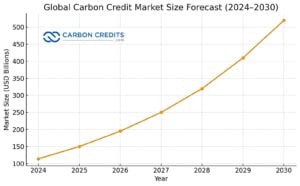
The voluntary carbon market has grown steadily in recent years. Industry estimates show it reached around $2 billion in annual transactions. Projections suggest that it could rise to over $40 billion by 2030 as companies demand more high-quality carbon removal. This growth provides a strong commercial foundation for Verde and UNDO as they prepare to bring ERW credits to market.
Meanwhile, estimates show the global carbon market will rise sharply by 2030.
To align incentives, Verde is granting UNDO up to 1.7 million share purchase warrants. These warrants will vest (or become usable) based on future sales of carbon credits.
Here is how the warrant structure works:
Initial warrants: 100,000 options, tied to credit sales at a high price per ton of CO₂.
Additional warrants: 1,000,000, tied to more credit sales at slightly lower prices.
Success-based warrants: 600,000, tied to further future sales if targets are met.
Verde’s Long Road to Carbon Market Leadership
Verde’s entry into carbon credits is not instant. In 2023, the company announced plans to enter the market. It highlighted the potential of its silicate rock for ERW to capture a lot of CO₂.
Based on its mineral reserves and processing capacity, Verde estimates it can produce up to 300,000 tonnes of carbon removal credits annually. This shows that carbon removal is a long-term strategic focus, not a side project.
To prepare, Verde explored partnerships that could strengthen its expertise in carbon markets. Verde teamed up early with WayCarbon, a well-known carbon project developer. They looked into how Verde’s minerals could help remove carbon and generate revenue.
WayCarbon guided Verde on project design, verification paths, and market demand. This helped Verde grasp what’s needed for high-quality, credible carbon credits.
These steps helped Verde gain experience in science, market trends, and regulations. This groundwork paved the way for bigger deals, like its current partnership with UNDO.
Studies in journals like Nature and PNAS back ERW’s effectiveness. They show that finely crushed silicate rock can capture CO₂ in months to years.
The carbon stays stored in mineral form for tens of thousands to millions of years. This validates Verde’s confidence in its mineral reserves as a tool for long-term climate mitigation.
ERW in Action: Impact on Emissions and Agriculture
This deal is part of a larger trend in the climate field: companies are looking for durable, scalable ways to remove CO₂. Enhanced Rock Weathering is one such method. When done right, it can store carbon for very long periods.
Brazil emits roughly 2.4 to 2.7 billion tonnes of CO₂-equivalent each year, depending on land-use trends. Agriculture accounts for about one-quarter of national emissions. Because ERW is deployed directly on farmland, it offers a pathway to reduce or offset part of this sector’s footprint while improving soil conditions.
Partnerships like this one help make carbon removal more real and credible. They mix scientific innovation (UNDO’s MRV systems) with physical capacity (Verde’s mineral operations). This could attract more buyers who want serious, long-term climate solutions.
However, scaling ERW also comes with challenges. Large-scale rock crushing and distribution can increase operational costs, and long-term monitoring requires specialized scientific methods.
Regulatory clarity for ERW credits is still developing in many markets, and some buyers remain cautious as they compare different carbon removal approaches. These factors may influence how quickly Verde and UNDO can expand their projects.
Blueprint for Scalable, Durable Carbon Removal
Verde AgriTech’s exclusive partnership with UNDO Carbon is a major step for both companies. Verde gains a new source of income. UNDO secures a reliable supply of mineral feedstock for its ERW work. Together, they hope to produce high-quality, durable carbon credits from Brazil.
If they succeed, they could remove hundreds of thousands of tonnes of CO₂ while building a scalable model for future carbon removal. Their partnership could become a blueprint for how mining and climate technology firms work together to fight climate change — not just in Brazil, but around the world.
https://globalcarbonfund.com/wp-content/uploads/2018/10/GCF_header_logo_340x156.png00carbonfundhttps://globalcarbonfund.com/wp-content/uploads/2018/10/GCF_header_logo_340x156.pngcarbonfund2025-11-19 07:51:272025-11-19 07:51:27Verde AgriTech and UNDO Carbon Partner to Scale Enhanced Rock Weathering
BASF, the world’s largest chemical producer based in Ludwigshafen, Germany, has partnered with ExxonMobil to develop low-emission hydrogen using methane pyrolysis technology. This collaboration aims to accelerate the production of cost-effective, clean hydrogen for industrial use. The companies have signed a joint development agreement and plan to build a demonstration plant in Baytown, Texas, to test the technology at scale.
BASF has been researching methane pyrolysis for several years with funding from Germany’s Federal Ministry of Research, Technology, and Space (BMFTR). By teaming up with ExxonMobil, the companies hope to combine expertise and bring this promising hydrogen solution closer to commercial reality.
BASF methane pyrolysis test facility at Ludwigshafen site
Source: Exxon
Methane Pyrolysis: Fueling a Low-Carbon Future
Methane pyrolysis is a process that splits methane—a major component of natural gas—into hydrogen and solid carbon using electricity. Unlike traditional hydrogen production methods, such as steam-methane reforming (SMR), methane pyrolysis does not produce CO2 during the reaction.
The process uses about five times less energy than water electrolysis and doesn’t require water, making it more efficient in many situations. Methane pyrolysis also benefits from existing natural gas infrastructure, so it can be deployed in multiple locations without major modifications.
Product costs and CO2 footprint of different hydrogen production technologies
Source: Royal Society of Chemistry https://pubs.rsc.org/en/content/articlehtml/2025/ee/d4ee06191h
Key Benefits and Challenges
Methane pyrolysis can play an important role in the transition to a low-carbon economy. Hydrogen demand is expected to grow across industries, from chemicals and steel to transportation and energy storage. By producing hydrogen without direct CO2 emissions, methane pyrolysis can help industries meet decarbonization targets.
Hydrogen is a critical energy carrier and feedstock for the chemical industry. Solid carbon, the byproduct of methane pyrolysis, is also valuable. It can be used in steel and aluminum production, construction materials, and advanced carbon products like battery components.
Key advantages of methane pyrolysis include:
No direct CO2 emissions during hydrogen production.
High-purity solid carbon that can be stored or used commercially.
Lower energy demand compared to electrolysis.
Compatibility with existing natural gas systems makes deployment easier.
However, the technology isn’t completely emissions-free. Upstream methane leaks—from extraction, processing, or transportation—can significantly increase greenhouse gas emissions. Methane has a global warming potential many times higher than CO2, so minimizing leaks is critical for keeping emissions low.
Thus, the process requires careful management of upstream methane leaks to ensure true low emissions. Also, methane supply chains must be monitored and controlled. Additionally, energy inputs must be optimized to maximize efficiency and minimize lifecycle CO2 emissions.
If successfully deployed, this technology could complement renewable-based hydrogen solutions and provide a scalable, industrial-ready pathway to cleaner hydrogen production. The Baytown demonstration plant will provide critical insights into operational efficiency, emissions management, and the commercial viability of methane pyrolysis.
Energy Efficiency: Methane pyrolysis requires about 37.5 kJ of energy per mole of hydrogen, compared to 63.4 kJ for SMR and 285.8 kJ for water electrolysis. This shows methane pyrolysis is highly energy-efficient.
Lifecycle Emissions: Studies estimate methane pyrolysis produces 9–12 tons of CO2 equivalent per ton of hydrogen, depending on methane management and energy sources. SMR with carbon capture (CCS) has slightly higher emissions, while electrolysis emissions depend entirely on the electricity source. If powered by renewable electricity, electrolysis can achieve near-zero CO2 emissions, but grid electricity with fossil fuels increases emissions.
Full Lifecycle Benefits: Methane pyrolysis may also avoid some emissions linked to manufacturing and resource use for electrolyzers. Its efficiency and carbon byproduct make it a competitive low-carbon solution.
In summary, methane pyrolysis offers a balance between low emissions, energy efficiency, and economic feasibility. It competes well with SMR + CCS and is generally less energy-intensive than full electrolysis, though renewable-powered electrolysis has the lowest emissions if electricity is green.
BASF and Exxon’s Demonstration Plant to Validate Technology
BASF and ExxonMobil plan to build a demonstration plant at ExxonMobil’s Baytown Complex. This facility will produce up to 2,000 tons of low-carbon hydrogen and 6,000 tons of solid carbon annually. The project will validate the technology at scale and prepare it for commercial deployment.
This plant represents a key step toward making methane pyrolysis a practical solution for industrial hydrogen demand. By combining BASF’s chemical expertise with ExxonMobil’s experience in energy infrastructure, the companies aim to accelerate the global adoption of low-emission hydrogen.
A Strategic Leap for Clean Hydrogen Innovation
Moreover, ExxonMobil brings additional strengths to the partnership. The company owns the largest CO2 pipeline network in the U.S. and has extensive experience in fuels, chemicals, and low-carbon solutions. Combining this with BASF’s innovation in chemical processes makes the collaboration a powerful step forward for sustainable hydrogen production.
Overall, this partnership represents a major step in advancing low-emission hydrogen.
IEA predicts that low-emissions hydrogen production is set to grow significantly by 2030. Projects that are already operational or have reached final investment decisions (FID) are expected to produce 4.2 million tons per year (Mtpa) by 2030. It’s a fivefold increase compared with 2024.
Source; IEA
Although this is still below the ambitious targets set by governments and industry earlier in the decade, it would raise the share of low-emissions hydrogen from less than 1% today to around 4% of total hydrogen production by 2030.
This growth is similar to the rapid expansion seen in other clean energy technologies, such as solar PV. In addition, a new assessment of announced projects suggests that another 6 million tons of low-emissions hydrogen could become operational by 2030, provided effective policies are in place to support demand and secure offtake agreements.
As industrial hydrogen demand rises and decarbonization becomes urgent, methane pyrolysis is set to play a key role in the energy transition. By combining their expertise, BASF and ExxonMobil are positioning themselves at the forefront of low-emission hydrogen innovation.
https://globalcarbonfund.com/wp-content/uploads/2018/10/GCF_header_logo_340x156.png00carbonfundhttps://globalcarbonfund.com/wp-content/uploads/2018/10/GCF_header_logo_340x156.pngcarbonfund2025-11-19 06:55:242025-11-19 06:55:24BASF and ExxonMobil Team Up to Boost Low-Emission Hydrogen with Methane Pyrolysis