Tesla (TSLA Stock) Wins Key FSD Approval in Italy as EV Maker Expands Across Europe

Tesla Wins Key FSD Approval in Italy as EV Maker Expands Across Europe

Tesla has won an important regulatory approval in Italy for its Full Self-Driving (FSD) technology, giving the electric vehicle (EV) maker a new opening in one of Europe’s largest car markets. Italy’s Transport Ministry approved Tesla’s Assisted Driving system on November 20, 2026. The decision makes the country the first major European Union (EU) market to accept the technology ahead of a wider EU approval process.

The move could help Tesla expand its software business in Europe. It also comes as the company works to grow its EV and energy businesses while cutting emissions across its supply chain.

However, the approval does not mean Tesla cars can drive without human control. FSD remains a supervised driver-assistance system. Drivers must stay alert, watch the road, and remain ready to take control.

Italy Gives Tesla a Major Regulatory Win

Italy’s Transport Ministry approved Tesla’s Assisted Driving system, which the company calls Full Self-Driving (Supervised) in other markets. The decision came after the Netherlands granted the system its first European type approval in April 2026.

Italy has now become the 12th EU country to accept the technology, according to the Italian Transport Ministry. It is also the first among the EU’s four most populous countries to allow the system. Germany, France, and Spain have not yet followed.

Tesla said the rollout in Italy would begin soon, but it has not announced a firm launch date. Eligible vehicles will need a software update before owners can use the feature.

The approval is an important step for Tesla because Europe has some of the world’s strictest vehicle safety and regulatory rules. Winning access to Italy could also help the company build support for wider approval across the region.

Still, this is not yet full EU-wide approval. The Dutch regulator, RDW, has submitted an application for wider recognition. EU member states must review and vote on that request before the system can be used across the bloc under a common approval.

FSD Still Requires Drivers to Stay in Control

Despite its name, Tesla’s FSD system does not make a car fully autonomous. The technology can steer, accelerate, brake, and handle many driving tasks. But it still requires active driver supervision. Drivers must pay attention at all times and remain responsible for the vehicle.

The Dutch vehicle regulator has made this point clear. It said FSD is a driver-controlled assistance system, not a self-driving system.

The regulator also said its approval followed more than 18 months of testing on test tracks and public roads. The review included more than 3,000 hours of testing, over 1,000 test runs, and data from 1.8 million kilometers driven in Europe.

Safety remains a major issue in the debate over the technology. The European Transport Safety Council (ETSC), a road safety group, has raised concerns about how the system handles speed limits. It urged EU countries to reject approval unless these concerns were addressed.

These concerns show why Tesla’s European expansion depends on more than software performance. The company must also meet local safety rules and gain the trust of regulators and drivers.

European Approval Could Support Tesla’s Software Business

The Italian decision could give Tesla another source of growth beyond vehicle sales. FSD is part of the company’s wider push to earn more from software, subscriptions, and connected services. Customers can pay to use advanced driving features, giving Tesla a chance to generate income after selling a vehicle.

Tesla reported growing demand for FSD in its third-quarter 2026 update. The company said it recorded a new high in net subscriptions during the quarter. More than 75% of new vehicle deliveries in North America included FSD subscriptions.

In Europe, Tesla said the system was available in nine countries at the end of the third quarter. More than 100,000 customers had used it, with total driving distance above 160 million kilometers since its initial approval.

Italy’s approval could help increase that customer base. However, the system’s growth will depend on further regulatory decisions and how quickly Tesla can make it available to eligible drivers.

Tesla’s latest financial filing also showed that higher FSD subscription revenue helped support automotive sales revenue in the third quarter. This matters as the company seeks to build a business that earns more from services and software, not just the sale of cars.

Tesla Stock Rebounds in Premarket Trading

The strategy is part of a wider shift in Tesla’s business model. Its plans include driver-assistance software, robotaxis, energy storage, and other services that could create new sources of revenue. 

Tesla TSLA stock price

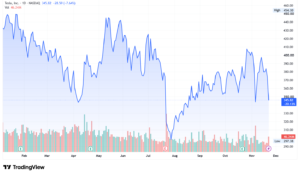
Tesla (TSLA) stock was trading at around $360.90 in premarket trading on November 23, up 4.36% from Friday’s close of $345.82. The rebound follows a sharp 7.64% drop on November 20, when Tesla shares fell alongside a broader sell-off in technology and AI stocks. US stock futures also pointed to a market recovery on Monday.

Tesla’s EVs Can Cut Transport Emissions

Beyond the software business, Tesla’s main environmental contribution comes from its electric vehicles and clean energy products. Battery-electric vehicles produce no tailpipe emissions while driving. Their total climate impact is not zero, however. Making vehicles and batteries creates emissions, and the power used to charge EVs can still come from fossil fuels.

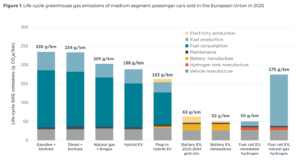
A 2025 study by the International Council on Clean Transportation (ICCT) found that battery-electric cars sold in the EU produce about 73% less lifecycle greenhouse gas emissions than comparable gasoline cars.

The study estimated average lifecycle emissions of 63 grams of carbon dioxide equivalent per kilometer for battery-electric cars. Comparable gasoline cars produced about 235 grams per kilometer.

Life-cycle greenhouse gas emissions EVs vs others
Source: ICCT

The analysis included emissions from vehicle and battery production, electricity and fuel use, maintenance, and recycling. It also found that EV production creates higher emissions at the start, mainly because of battery manufacturing.

But EVs make up for this difference through lower emissions while driving. The study estimated that battery-electric cars reach this point after about 17,000 kilometers of use.

This gives Tesla a clear role in the shift toward lower-emission transport. However, the full climate benefit depends on cleaner electricity, more efficient production, and better battery supply chains.

Battery Production Remains a Key ESG Challenge

Tesla’s environmental impact also depends on how it sources materials and makes its vehicles. Battery production requires materials such as lithium, nickel, graphite, and other minerals. Mining and processing these materials can use large amounts of energy and water. They can also affect local ecosystems and communities.

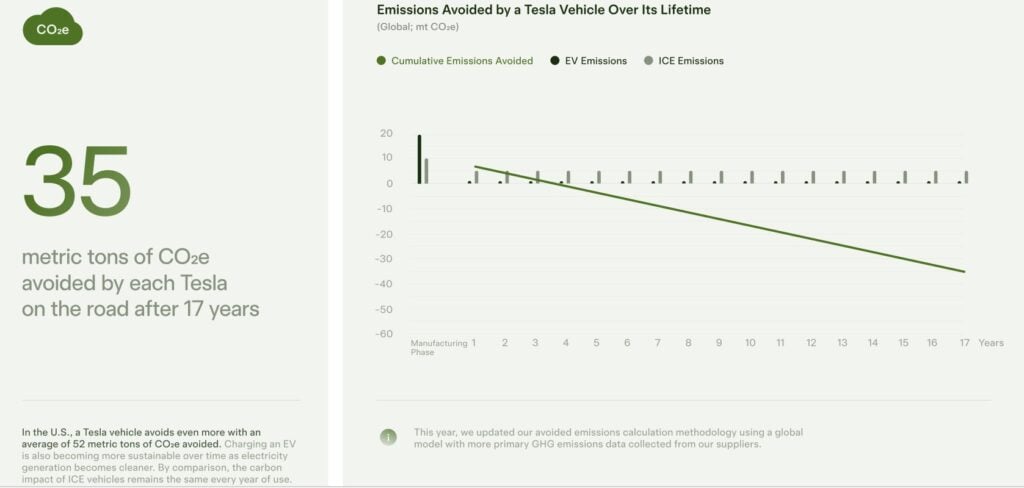
In its 2025 Impact Report, Tesla said its battery supply chain accounted for 26% of its total supply chain greenhouse gas emissions. It reported cutting these battery-related emissions by 9% in 2025.

Tesla EV emissions reductions
Source: Tesla

The company also said it used 3.5 terawatt-hours (TWh) of renewable energy in its battery supply chain during the year. It is working with suppliers to improve energy efficiency and increase the use of renewable power.

Tesla also reported that its Supercharger network had been matched with 100% renewable electricity for five consecutive years. This can lower emissions from charging its vehicles. However, the climate benefit also depends on the electricity used at other charging points.

The company has set a goal of reaching net-zero greenhouse gas emissions across its full value chain by 2040. This target covers more than its factories and offices. It also includes emissions linked to suppliers, products, and customers.

Tesla Reports Major Emissions Savings But Faces More Work

The EV giant said its global products helped customers avoid nearly 37 million metric tons of carbon dioxide equivalent emissions in 2025. That figure covers its combined portfolio of electric vehicles, solar products, and energy storage systems. It should not be treated as emissions savings from EVs alone.

The company also reported progress in its energy business. It deployed 36 gigawatt-hours of energy storage products through the first three quarters of 2026, according to its latest financial filing.

These products can support the wider shift to renewable energy. Large battery systems store electricity when supply is high and release it when demand rises, or renewable generation falls.

Still, Tesla faces pressure to reduce emissions from mining, battery production, and vehicle manufacturing. It must also show that its advanced driving technology meets safety rules as it enters more markets.

Italy’s decision is a major step for Tesla’s European software plans. It could help the company reach more customers and build its subscription business. However, the wider story remains tied to Tesla’s ability to grow its EV and energy businesses while improving safety and reducing its environmental footprint.

The post Tesla (TSLA Stock) Wins Key FSD Approval in Italy as EV Maker Expands Across Europe appeared first on Carbon Credits.


COP31 Closes With No Climate Pact And Exposes Carbon Removal Funding Gap

Carbon removal gained wider attention at COP31 in Antalya, Türkiye, as governments, investors, and industry leaders discussed how to scale technologies that remove carbon dioxide (CO₂) from the atmosphere.

However, the summit exposed a major challenge. Interest in carbon capture and removal is growing, but countries disagree on how these technologies should help meet climate targets, who should pay for them, and what safeguards they need.

The talks ended without agreement on a wider climate pact. Disputes over fossil fuels, climate finance, and proposed carbon capture targets blocked consensus.

For the carbon removal industry, the outcome highlights a pressing need: turn growing interest into clear policies, reliable funding, and projects that can deliver lasting emissions benefits.

COP31 Puts Carbon Capture and Removal on the Climate Agenda

Carbon capture and removal featured in discussions on the proposed COP31 outcome. One draft included a target for at least 500 million tonnes of annual carbon capture, utilization, and storage (CCUS) capacity by 2035. It also included a longer-term ambition of 1.3 billion to 2.5 billion tonnes.

These were proposed targets, not final commitments. The draft also faced strong opposition because it included carbon capture goals but dropped a clear reference to moving away from fossil fuels.

Around 130 countries wanted the fossil fuel transition included in the text. The European Union and several climate-vulnerable countries rejected the proposed pact, arguing that it did not address the main cause of climate change.

The final negotiations failed to produce an agreed-upon decision. This left the role of carbon capture and removal in future climate policy unresolved. The debate also showed why these technologies should not be treated as the same solution.

Carbon capture and storage (CCS) collects CO₂ from industrial facilities before it enters the atmosphere. Carbon dioxide removal (CDR), by contrast, takes CO₂ already in the air and stores it.

CDR methods include direct air capture, biochar, enhanced rock weathering, and some nature-based approaches. Both CCS and CDR can use shared pipelines and storage sites, but they serve different climate goals.

Carbon Removal Discussions Expand Beyond Technology

COP31 hosted several discussions on how to build a larger carbon removal industry.

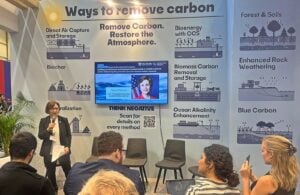
  • The Think Negative – Carbon Dioxide Removal Pavilion brought together researchers, policymakers, investors, and project developers. Its sessions covered technology, investment, policy, and industrial uses.
  • One discussion on November 11 explored whether the sector needs a dedicated global carbon removal organization. Supporters argued that an international body could help coordinate the industry, improve cooperation, and set shared priorities.
  • Other sessions examined the hidden costs of carbon removal, farmer-led soil projects, and ocean-based solutions.
  • Discussions also covered compliance carbon markets, Article 6 of the Paris Agreement, financing partnerships, and national carbon removal plans.

These topics show that the industry faces challenges beyond developing new technology. It also needs clear rules, buyers, project funding, and ways to measure results.

The pavilion discussions were not formal government agreements. Still, they showed the growing interest in carbon removal among companies, researchers, and policymakers.    

Think Negative – Carbon Dioxide Removal Pavilion
Source: Think Negative

Article 6 and Carbon Markets Could Help Fund Removal

Carbon markets were another major topic at COP31. Countries held discussions on Article 6 of the Paris Agreement, which allows them to work together on emissions reductions and carbon trading.

  • Article 6.2 covers direct cooperation between countries and the transfer of emissions reductions.
  • Article 6.4 establishes a UN-backed crediting system.
  • Article 6.8 covers climate cooperation that does not rely on carbon trading.

The talks focused on putting existing rules into practice and making international carbon trading work better. They did not produce a major change to the Article 6 rulebook.

These rules could help support carbon removal projects if countries allow eligible removals to generate credits for international transfer. But projects must meet requirements for measurement, verification, and environmental integrity.

The discussions also included the role of compliance markets, where companies must meet legal emissions limits or other requirements. Such markets could create demand for high-quality removal credits if governments allow them.

Still, carbon removal projects need more than market access. Developers need buyers willing to sign long-term contracts and provide funding before projects begin operating.

Funding Gaps Continue to Hold Back Carbon Removal Projects

The lack of progress on climate finance was another key issue at COP31. Developing countries called for more support to help them adapt to climate change and cut emissions. They also opposed the removal of a proposed US$120 billion adaptation finance target from the draft climate pact.

The disagreement matters for carbon removal because many projects require large upfront investments. Direct air capture facilities, for example, need substantial capital, energy, and access to CO₂ transport and storage networks.

Some industrial capture projects can take five to seven years to develop and require hundreds of millions of dollars in initial investment, according to industry representatives at COP31. Governments can help reduce these risks through grants, tax incentives, public procurement, and long-term purchase agreements.

There are already examples of public support. Canada has announced a carbon removal procurement round involving 19 companies. California also has a carbon removal purchase program, while the European Union’s Carbon Removal Certification Framework is developing rules for certifying removals.

These efforts could help create demand and give project developers more confidence to invest. But funding must support projects that deliver real and lasting CO₂ removal.

A report, State of Carbon Dioxide Removal, published in June 2026, estimates that newer carbon removal methods removed about 2.04 million tonnes of CO₂ in 2025. This was up from 1.4 million tonnes in 2023.

Biochar was the largest contributor, removing about 1.46 million tonnes in 2025. Bioenergy with carbon capture and storage (BECCS) accounted for another 510,000 tonnes.

However, newer methods remain small compared with the amount of CO₂ the world needs to remove. The report estimates that conventional methods, mainly afforestation and reforestation, remove around 2.2 billion tonnes of CO₂ each year. Novel methods account for only a small share of total removal.

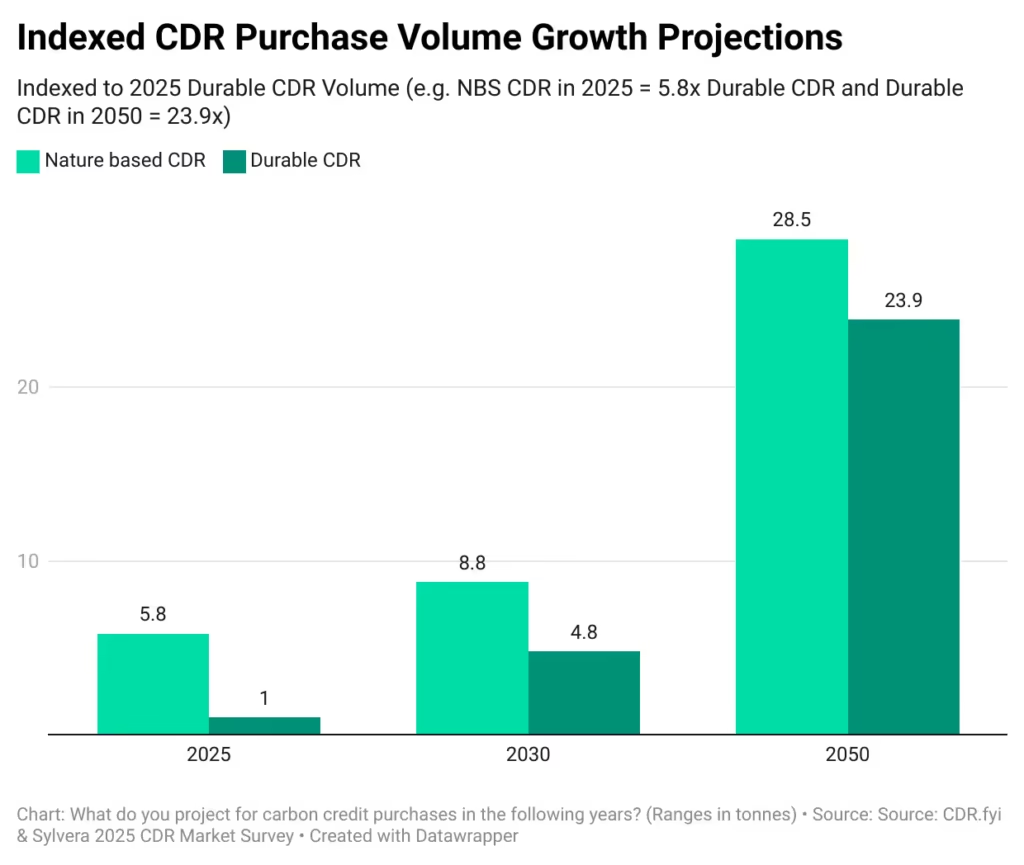
carbon removal credits nature-based versus durable

The gap also appears in the market for durable carbon removal. A June 2026 study by the London School of Economics’ Grantham Research Institute examined 43 million tonnes of contracted durable carbon removal across different methods and regions.

It found that only 1.2% of those contracted tonnes had been delivered by the end of 2025. This does not mean the remaining contracts have failed. Many are long-term agreements for projects that are still being developed or built. But it shows that a signed purchase agreement is not the same as CO₂ already removed and stored.

Carbon Capture Debate Raises Concerns Over Fossil Fuels

The debate over carbon capture also showed why public trust will matter. Supporters say CCS can help reduce emissions in industries such as cement and chemicals, where some pollution is difficult to avoid. Carbon removal may also be needed to balance emissions that remain after major cuts.

Critics, however, warn that carbon capture could extend the use of coal, oil, and gas if companies use it to justify continued fossil fuel production. They also question the cost, energy needs, environmental risks, and long-term responsibility for stored CO₂.

These concerns were central to the COP31 negotiations. Many countries argued that carbon capture targets should not take the place of clear plans to move away from fossil fuels.

The summit also saw wider discussions on carbon pricing. The European Union and United Kingdom agreed to link their emissions trading systems from 2028, which could support mutual exemptions from their carbon border measures. Türkiye also discussed plans for a carbon border mechanism linked to its national emissions trading system.

These developments show how carbon pricing and trade rules are becoming more important to industrial climate policy. They could also affect the demand for technologies that cut or remove emissions.

Carbon Removal Needs Stronger Rules, Buyers and Investment

COP31 gave carbon removal greater visibility, but it did not settle the main questions facing the industry. Governments still need to decide how carbon capture and removal fit into national climate plans. They must also set clear rules for project approval, carbon accounting, long-term storage, and the use of credits.

For investors, stable policy and reliable demand are essential. Projects cannot scale on announcements alone. They need financing, infrastructure, buyers, and proof that they deliver the climate benefits they promise.

Carbon removal will also need to complement direct emissions cuts. It cannot replace the shift away from fossil fuels or delay the use of renewable energy and cleaner industrial processes.

The discussions at COP31 showed that interest in carbon removal is growing across technology, finance, and carbon markets. The next test is whether governments and companies can turn that interest into projects that remove CO₂ at scale and store it safely for the long term.

The post COP31 Closes With No Climate Pact And Exposes Carbon Removal Funding Gap appeared first on Carbon Credits.

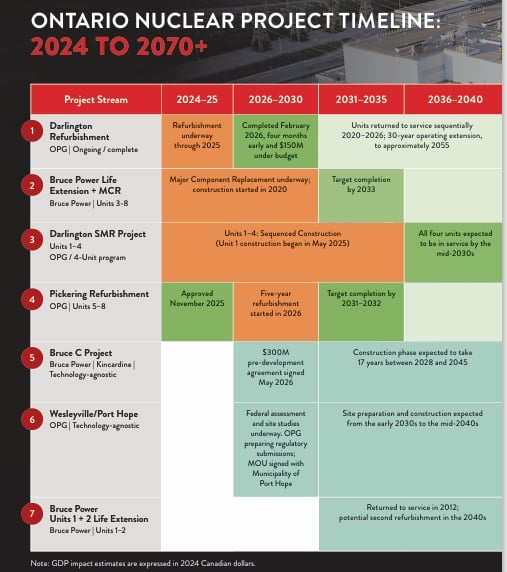
Ontario’s Nuclear Buildout Could Generate $881.5 Billion for Canada’s Economy

Ontario’s growing nuclear power program could deliver a major economic boost to Canada, creating millions of job-years and strengthening the country’s manufacturing sector. However, Canada must act quickly to ensure domestic manufacturers benefit from the massive investment rather than lose opportunities to international suppliers.

A November 2026 report from Canadian Manufacturers & Exporters (CME), titled Turning Ontario’s Nuclear Advantage into an Industrial Advantage, estimates that four major nuclear projects could contribute approximately CAD 881.5 billion to Canada’s GDP and generate 3.45 million cumulative job-years over their lifecycles.

Ontario could capture most of these benefits, with an estimated CAD 806.1 billion in GDP contributions and 2.94 million job-years. The findings highlight how nuclear investment could support more than electricity generation. It could also expand manufacturing capacity, create skilled jobs, strengthen domestic supply chains, and open new export opportunities.

The report was commissioned by Ontario’s Nuclear Advantage, a coalition of industry, labour, and supply-chain organizations. CME conducted the economic analysis and developed recommendations for turning the province’s nuclear expansion into a long-term industrial advantage.

ontario nuclear
Source: CME-MEC.CA

Four Nuclear Projects Could Deliver Billions in Economic Benefits

The report examines four major projects: the Darlington Small Modular Reactor (SMR) project, Pickering Nuclear Generating Station refurbishment, the proposed Bruce C project, and the potential Wesleyville nuclear development.

Together, these projects represent a multi-decade investment opportunity extending into the 2040s and beyond.

Here is a closer look at their estimated economic contributions.

1. Darlington SMR Project

Ontario Power Generation (OPG) is developing four BWRX-300 small modular reactors at its Darlington site. Each unit will have a capacity of 300 MW, bringing the total planned capacity to 1,200 MW.

Construction of the first reactor began in May 2025. All four units are expected to enter service by the mid-2030s, with an estimated operating lifespan of 60 years.

According to CME, the project could contribute CAD 38.5 billion to Canada’s GDP and support approximately 245,200 job-years. Ontario could account for CAD 35.1 billion of the economic contribution.

The project also gives Canadian manufacturers an opportunity to develop experience in SMR technology and build a supply chain that could support future international deployments.

2. Pickering Nuclear Refurbishment

OPG’s refurbishment of units 5 to 8 at the Pickering Nuclear Generating Station is another major investment. The five-year refurbishment program began in 2026 and is expected to finish by 2031–2032.

The project will extend the operating life of the 2,100 MW facility by approximately 30 years.

CME estimates that the refurbishment could add CAD 41.6 billion to Canada’s GDP and generate 261,000 job-years. Ontario could receive CAD 38.2 billion in GDP benefits and 235,400 job-years.

3. Bruce C Nuclear Project

Bruce Power’s proposed Bruce C development represents a much larger expansion opportunity. The company signed a CAD 300 million pre-development agreement in May 2026 to advance planning for the project.

The proposed development could add up to 4,800 MW of nuclear capacity. Construction is expected to run from 2028 to 2045, subject to regulatory approvals and final investment decisions.

The project could contribute CAD 259.6 billion to Canada’s GDP and generate 832,500 job-years. Ontario’s estimated share stands at CAD 237.5 billion and 714,000 job-years.

4. Wesleyville Nuclear Project

OPG’s proposed Wesleyville development near Port Hope could become the largest of the four projects by economic contribution.

The technology-agnostic project could deliver up to 10,000 MW of nuclear capacity. Site preparation and construction could begin in the early 2030s, with units potentially entering service in the early to mid-2040s.

CME estimates that Wesleyville could contribute CAD 541.8 billion to Canada’s GDP and generate approximately 2.1 million job-years. Ontario could capture CAD 495.2 billion and 1.78 million job-years.

The project remains subject to further planning, regulatory reviews, and government decisions.

ontario nuclear project

Canada’s Existing Nuclear Industry Provides a Strong Foundation

Ontario is not starting from scratch. The province already has an established nuclear industry, experienced manufacturers, and a domestic supply chain that has developed over several decades.

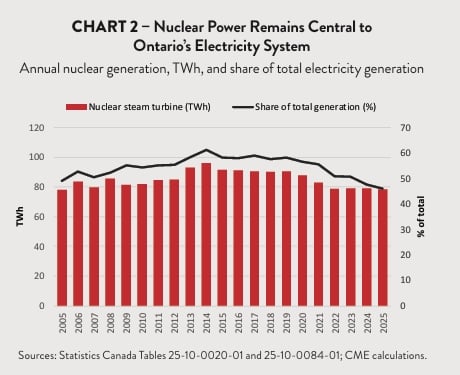
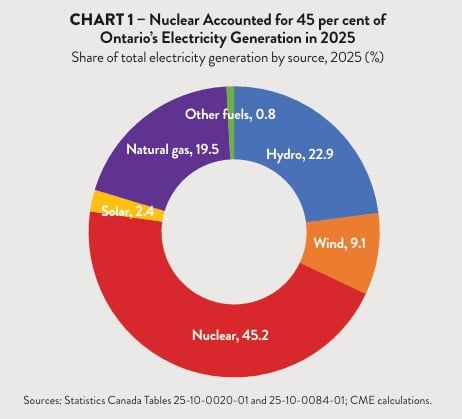
Nuclear power accounted for 45.2% of Ontario’s electricity generation in 2025, producing 78.3 terawatt-hours (TWh). The sector contributes approximately CAD 22 billion annually to Canada’s economy and supports 89,000 jobs nationwide.

Canada also has more than 250 companies supporting its nuclear supply chain. These businesses provide engineering, construction, precision manufacturing, electrical equipment, safety systems, digital technologies, and specialized services.

The benefits already extend across multiple communities. OPG’s Pickering refurbishment supply chain includes more than 200 suppliers across 50 Ontario communities. Its Darlington SMR supply chain includes more than 80 suppliers across 41 communities.

CME also highlights the role of companies such as BWXT Canada. In 2025, BWXT secured contracts worth more than CAD 1 billion to support Pickering’s life-extension program and the first Darlington SMR. The contracts include manufacturing 48 steam generators for Pickering and the reactor pressure vessel for Darlington.

These examples show how nuclear investment can support manufacturing businesses well beyond the power plant itself.

Rising Electricity Demand Strengthens the Nuclear Opportunity

Ontario’s nuclear expansion comes as electricity demand continues to increase.

The Independent Electricity System Operator (IESO) projects that provincial electricity demand could rise by as much as 90% by 2050 under its high-demand scenario. Population growth, industrial development, and the electrification of manufacturing are expected to drive much of this increase.

ontario electricity

Reliable electricity will become increasingly important for energy-intensive industries such as steel, cement, chemicals, automotive manufacturing, mining, and advanced materials.

Nuclear power can provide dependable, low-emissions electricity around the clock, complementing renewable energy sources such as wind and solar.

The report also highlights opportunities beyond nuclear equipment. Ontario manufacturers could expand production of transformers, switchgear, electrical components, control systems, and other grid technologies needed for the wider electricity buildout.

Global Nuclear Growth Could Create Export Opportunities

The economic opportunity extends beyond Canada’s borders.

  • The International Energy Agency estimates that annual global nuclear investment could increase from approximately US$88 billion today to US$162 billion by 2030 under its Announced Pledges Scenario.

Canada also has ambitions to become an important nuclear technology and supply-chain exporter. Its Nuclear Energy Strategy aims to secure CANDU technology in at least four new international markets by 2040 and significant Canadian supply-chain participation in at least five international large-reactor and SMR projects.

  • CME estimates that achieving these export objectives could generate an additional CAD 48 billion to CAD 97 billion in Canadian GDP and support between 333,000 and 665,000 cumulative job-years.

Potential exports include nuclear-grade components, engineering services, refurbishment expertise, fuel-cycle capabilities, inspection technologies, robotics, and SMR-related equipment.

Government and Industry Must Act Now

Despite the scale of the opportunity, CME warns that Canada needs stronger coordination to ensure domestic manufacturers capture the benefits.

The report outlines four priorities: advancing major nuclear projects and key investment decisions, expanding domestic manufacturing capacity, developing a skilled nuclear workforce, and strengthening export financing and procurement support.

Long-term project schedules and predictable procurement contracts would help manufacturers invest in new facilities, advanced equipment, and specialized technologies. Training programs and apprenticeships must also keep pace with demand for engineers, technicians, construction workers, and skilled tradespeople.

Ontario’s nuclear buildout could become a major driver of Canada’s industrial growth. However, the economic benefits will depend on how effectively governments, utilities, manufacturers, and workers coordinate their efforts.

For Canada, the opportunity is not simply to build more nuclear reactors. It is to develop the manufacturing capabilities, skilled workforce, and export capacity needed to compete in the global nuclear market for decades.

The post Ontario’s Nuclear Buildout Could Generate $881.5 Billion for Canada’s Economy appeared first on Carbon Credits.

First Vehicle Recycling Carbon Credits Issued by MMCM and CerCarbono at COP31

First Vehicle Recycling Carbon Credits Issued by MMCM and CerCarbono at COP31

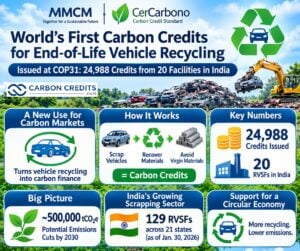
MMCM and carbon credit standard developer CerCarbono have announced the issuance of the world’s first carbon credits for end-of-life vehicle recycling at COP31. The milestone creates a new way to reward emissions reductions from recovering and recycling materials from old vehicles.

The first issuance covers 24,988 carbon credits from 20 Registered Vehicle Scrapping Facilities (RVSFs) in India. The program aims to turn vehicle recycling into a new source of carbon finance while supporting India’s shift toward a more circular economy.

The carbon credits follow a dedicated methodology developed by MMCM and CerCarbono. It measures the emissions avoided when recovered materials, such as steel, aluminum, plastics and glass, replace materials made from virgin resources.

India is expanding its vehicle scrapping system. It is also introducing rules that make manufacturers more responsible for what happens to vehicles at the end of their life.

MMCM estimates that its wider program could deliver around 500,000 tonnes of CO2 equivalent (CO2e) in emissions reductions by 2030. However, that figure is a future estimate. The 24,988 credits represent the program’s first issuance, not its full potential.

First Carbon Credits Issued for End-of-Life Vehicle Recycling

The initial issuance covers 20 registered vehicle scrapping facilities in India. These facilities recover and process materials from vehicles that have reached the end of their useful lives.

The program is linked to MMCM’s wider network of more than 40 authorized vehicle scrapping facilities. Its partners and associated facilities include operations connected with Mahindra CERO, TVS and Tata Re.Wi.Re.

The first issuance marks a new use of carbon markets in the automotive sector. Carbon credits have traditionally supported projects such as renewable energy, forest protection and methane reduction. This program applies carbon accounting to the recovery and recycling of materials from old vehicles.

Each issued credit represents one tonne of verified carbon dioxide equivalent emissions reduced or avoided. The reductions come from using recovered materials instead of producing the same materials from virgin resources.

The announcement also gives vehicle recycling companies a possible new source of revenue. Carbon finance could help support better recycling systems, improve material recovery and make formal scrapping facilities more attractive to investors.

How the Vehicle Recycling Carbon Credit Methodology Works

The credits use CerCarbono’s methodology, CM-WM-ELV-01: Recovery and Recycling of Materials from End-of-Life Vehicles. The standard was developed with MMCM and published in July 2025.

The methodology measures emissions avoided when materials recovered from old vehicles replace materials produced from virgin resources. It covers the recovery and recycling of metals, plastics, and glass.

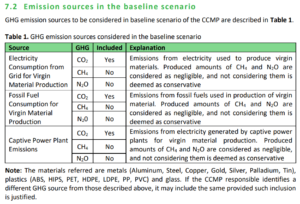
The calculation compares emissions under two scenarios. The first is the baseline. This shows emissions that would happen if similar materials came from virgin resources. The second is the project scenario: the emissions from collecting, dismantling, sorting, and processing materials recovered from end-of-life vehicles.

baseline scenario of the CCMP
Source: Cercarbono

The difference between these two figures determines the emissions reductions that may qualify for credits. The methodology includes extra emissions outside the main project activities, which are called leakage.

Importantly, the system does not automatically award credits for every vehicle that enters a scrapping facility. Projects need to prove that their recycling efforts offer extra environmental benefits. This should go beyond what would occur without the carbon-credit program.

Existing facilities must also demonstrate increased recycling compared with their historical activity. This helps prevent projects from receiving credits for recycling that was already taking place.

Vehicles that can still be legally repaired, reused, or returned to service are excluded. This rule helps ensure that the program focuses on vehicles that have genuinely reached the end of their useful lives.

These requirements are important for credit quality. They show that the claimed emissions cuts come from extra material recovery, not just counting processed vehicles.

India’s Vehicle Scrapping Industry Is Growing

India’s vehicle scrapping system provides a strong market for the new carbon credit program. The country’s vehicle fleet includes older vehicles that can create higher pollution and maintenance costs.

Formal scrapping facilities can take these vehicles out of use. They also recover valuable materials for reuse in manufacturing.

According to India’s Ministry of Road Transport and Highways, 129 Registered Vehicle Scrapping Facilities were operating across 21 states and union territories as of January 30, 2026. These facilities had scrapped a total of 430,306 vehicles by that date.

India has introduced policies to boost formal vehicle recycling. These policies make producers more responsible for the waste their products create.

The Environment Protection (End-of-Life Vehicles) Rules, 2025 introduced extended producer responsibility requirements for vehicle manufacturers. These rules set annual scrapping targets beginning in fiscal year 2025–26. The targets apply to vehicles placed on the market 15 years earlier for transport vehicles and 20 years earlier for non-transport vehicles.

This policy could boost demand for authorized scrapping facilities. It may also enhance material recovery from old vehicles.

Carbon credits may provide an additional financial incentive. Eligible facilities can earn credits for verified emissions reductions. This allows them to make money in addition to the value of recovered steel, aluminum, and other materials.

MMCM Targets 500,000 Tonnes of Emissions Cuts by 2030

MMCM expects the program to grow as more facilities join its network. The company estimates that the wider initiative could deliver around 500,000 tonnes of CO2e in emissions reductions by 2030.

This is a projection for the expanded program, not a volume of credits already issued. Reaching it depends on how many facilities join, how much material they recover, and if they meet the methodology’s requirements.

The company has also pointed to the potential for carbon finance to support India’s vehicle recycling sector. In 2025, MMCM’s CEO told Argus that the model could unlock about 10 billion rupees, or roughly US$116 million, in carbon funding over the next ten years.

That amount is a potential funding estimate, not money already raised or guaranteed revenue. Actual funding will depend on future credit generation, demand from buyers, and the prices those buyers are willing to pay.

Still, the model could create a stronger business case for formal vehicle recycling. It can also link car makers, recycling plants, and carbon market players. They can use a shared system to measure emissions cuts.

India’s First Vehicle Recycling Carbon Credits

Carbon Finance Could Boost India’s Circular Automotive Economy

The new issuance highlights how carbon markets could help reduce emissions beyond the energy and power sectors.

  • Vehicle production requires large amounts of materials and energy.
  • Making metals and other components from virgin resources can generate significant emissions.
  • Recycling materials from old vehicles can cut down on new production. It also helps keep valuable resources in use.

This is the main climate benefit behind the new methodology. It rewards verified reductions from material recovery rather than treating vehicle scrapping as an environmental benefit on its own.

However, the program’s impact will depend on strong monitoring and reliable data. Projects must show how much material they recover, how it is processed, and whether it actually replaces virgin materials. They must also account for emissions from collection, transport, and recycling.

Additionality will remain important as India’s vehicle scrapping industry grows. If recycling becomes standard practice because of government rules or market demand, projects will need to show that the activities receiving credits go beyond what would have happened anyway.

The first 24,988 credits provide an initial test of this approach. The next challenge will be expanding the program while maintaining clear records, credible calculations and independent verification.

For India, the initiative could bring carbon finance into a growing recycling market. For the wider automotive industry, it offers another way to connect emissions reductions with resource efficiency. Its long-term value will depend on whether the first issuance can lead to larger, measurable and verifiable results across the vehicle supply chain.

The post First Vehicle Recycling Carbon Credits Issued by MMCM and CerCarbono at COP31 appeared first on Carbon Credits.

Indonesia Signs 12 Million-Ton Carbon Deal With Norway to Boost Solar Power at COP31

Indonesia and Norway have signed a new carbon deal that could support the country’s shift to clean energy. Under the agreement, Norway may buy up to 12 million tonnes of carbon credits from Indonesian solar power projects by 2038.

The deal was signed during the COP31 climate conference in Antalya, Türkiye. It is Indonesia’s first agreement of this kind under Article 6.2 of the Paris Agreement.

The partnership could bring new funding for solar power, including floating solar projects with battery storage. However, the full 12 million tonnes of emissions cuts have not yet been achieved. The projects must first deliver verified emissions reductions before Norway can pay for them.

Deputy Minister of Environment and Deputy Head of the Environmental Control Agency (BPLH) Diaz Hendrapriyono remarked:


Indonesia and Norway Agree on Up to 12M Tons of Carbon Reductions

The agreement, known as a Mitigation Outcome Purchase Agreement (MOPA), was signed by Indonesia’s state-owned electricity company, PT PLN (Persero), and the Global Green Growth Institute (GGGI).

GGGI manages Norway’s Article 6 Climate Action Fund. Through the agreement, Norway can buy up to 12 million tonnes of eligible emissions reductions from Indonesian solar power projects. The program is expected to run through 2038.

The projects may include floating solar power plants combined with battery storage. These systems can produce clean electricity and store extra power for later use.

The reported carbon price is between $20 and $40 per tonne of carbon dioxide equivalent (tCO2e). At that range, 12 million tonnes could be worth $240 million to $480 million.

However, this is only an estimate. The final price and total payments have not been confirmed. Indonesia will also need to deliver the promised emissions cuts before it can receive payment.

The deal uses a Generation-Based Incentive (GBI) model. This means payments will depend on actual electricity generation and verified emissions reductions, not just planned power capacity. Norway has said it will pay only for emissions cuts that are achieved, verified, delivered, and shown to be additional.

Floating Solar and Batteries Could Help Cut Coal Emissions

The deal could help Indonesia expand solar power and reduce its reliance on coal. Coal still supplies more than 70% of Indonesia’s electricity. Solar and wind together account for less than 1% of power generation, according to the Norwegian government.

This leaves significant room for renewable energy to grow. Floating solar projects could help by using space on reservoirs and other bodies of water. They can also reduce the need to use land for large solar farms.

Adding battery storage can make these projects more useful. Batteries store electricity when solar production is high and release it when sunlight is limited or demand rises. This can help provide a more stable power supply and reduce the need for coal-fired plants to meet demand.

Indonesia–Norway Carbon Deal Infographic

The projects could also support Indonesia’s wider solar ambitions. President Prabowo Subianto has promoted a target of 100 gigawatts peak (GWp) of solar power capacity. Still, the actual climate benefits will depend on how much clean electricity the projects produce and how much coal-fired generation they replace.

Indonesia Targets 42.6 GW of New Renewable Energy Capacity

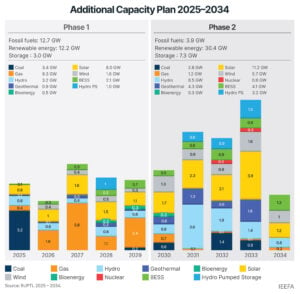
The Norway agreement comes as Indonesia works to increase renewable energy across its power system. Under its 2025–2034 electricity supply plan, known as the RUPTL, Indonesia aims to add 42.6 gigawatts (GW) of new and renewable energy capacity. This represents about 61% of the new power capacity planned during the period.

indonesia ruptl 2025-2034
Source: Institute for Energy Economics & Financial Analysis

The plan shows a stronger role for renewable energy in the country’s future electricity supply. However, turning these plans into operating projects will require investment, reliable infrastructure, and faster project development.

PLN has also mobilized $2.94 billion in energy transition financing. This includes $1.1 billion from the Just Energy Transition Partnership (JETP). That funding is separate from the Norway carbon deal.

During COP31, PLN also signed six power purchase agreements (PPAs) and two letters of intent (LOIs) for renewable energy projects with a planned capacity of 330 megawatts (MW). These agreements are also separate from the MOPA with Norway.

Together, these efforts show Indonesia’s push to attract more funding and build new clean power projects. The challenge will be to move from announcements and plans to actual electricity generation.

Article 6.2 Opens a New Carbon Finance Channel

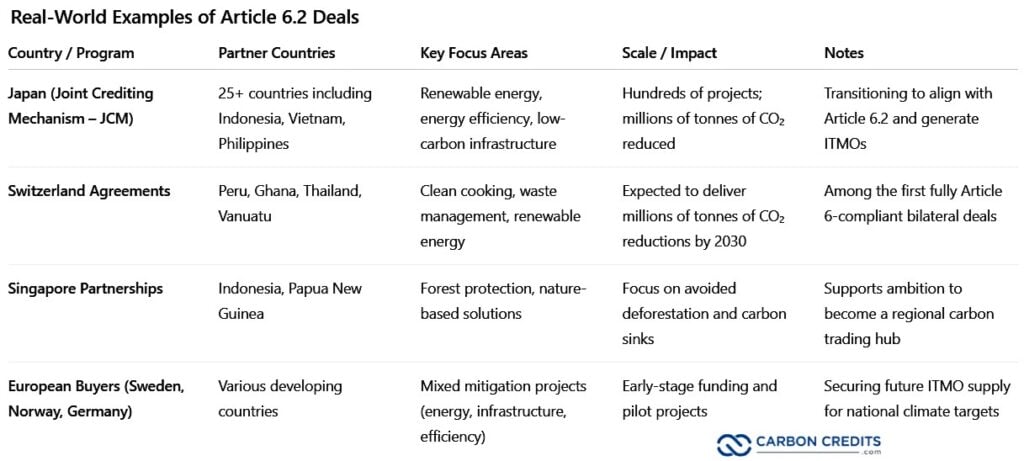
The agreement uses Article 6.2 of the Paris Agreement. This rule allows countries to work together to reduce emissions and transfer verified carbon savings between them. These transferred reductions are known as internationally transferred mitigation outcomes (ITMOs). Here are some of the major examples of Article 6.2 deals made by other countries. 

real world examples of article 6.2 carbon credit deals

In this deal, Indonesia is the host country, while Norway is the potential buyer. Indonesia can authorize eligible emissions reductions for transfer to Norway. The two countries must also follow the Paris Agreement’s accounting rules.

  • One important rule is the corresponding adjustment. This prevents both countries from counting the same emissions reduction toward their climate targets.

For example, if Indonesia transfers an emissions reduction to Norway, it must adjust its own carbon accounting. Norway can then count the transferred reduction toward its climate target under the agreed rules.

Indonesia has also introduced new rules for its domestic carbon market. Presidential Regulation No. 110 of 2025 provides a framework for carbon pricing and trading. The country also uses its national carbon registry, known as SRUK.

The registry was launched on July 9, 2026. International carbon transfers must follow Indonesia’s authorization and accounting requirements. These systems are important because they help track carbon credits and prevent double counting. They also support transparency as Indonesia enters more international carbon deals.

Indonesia’s national carbon registry summary
Source: SRUK Indonesia

Verified Emissions Cuts Will Determine Final Payments

Although the MOPA has been signed, several steps remain before the full deal can move forward. Indonesia’s Environment Ministry has said more technical work is needed. This includes:

  • setting up the authorization process,
  • recording ITMOs, and
  • completing the rules for the Generation-Based Incentive program.

The projects must also prove that their emissions reductions are real and measurable. They must meet the required standards before the reductions can be verified and transferred.

This is important because the 12 million tonnes represent the maximum amount that Norway may purchase under the agreement. They are not 12 million tonnes of emissions cuts already delivered.

The same applies to the possible $240 million to $480 million value. It is an estimate based on the reported carbon price range, not confirmed revenue for Indonesia or PLN.

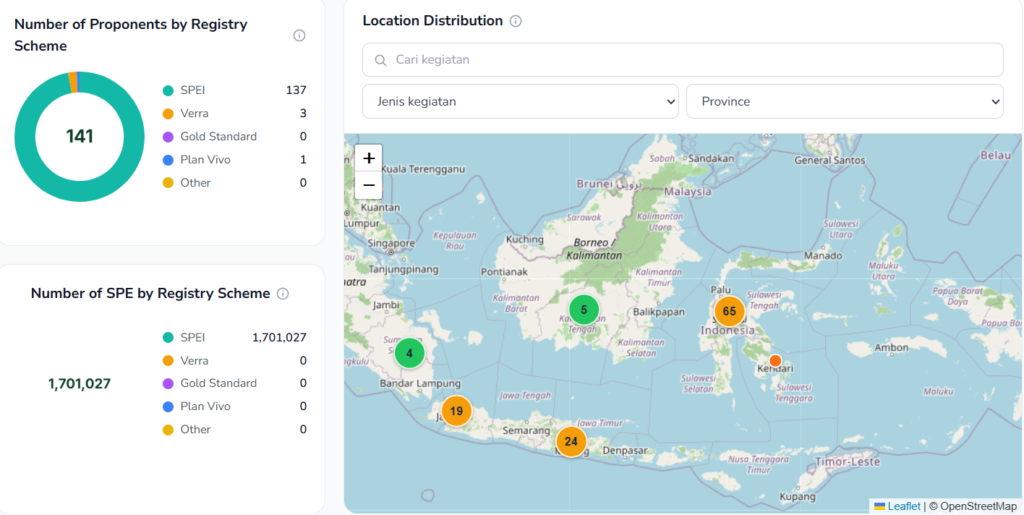
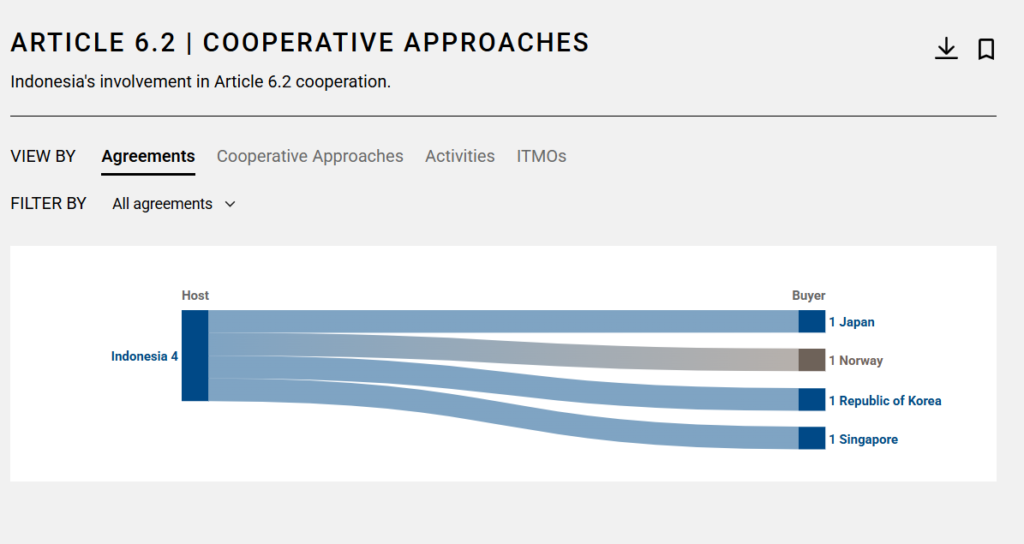
Data from the United Nations Environment Programme’s Article 6 Pipeline showed that Indonesia had four bilateral agreements and 40 activities under Article 6.2. At that time, the country had not yet transferred or received any ITMOs.

indonesia article 6.2 deals UNEP
Source: UNEP

Indonesia Uses COP31 to Build More Carbon Market Partnerships

The Norway agreement was one part of Indonesia’s wider carbon market push at COP31. From November 10 to 19, Indonesia held the Indonesia Carbon Connection Session. The program brought together 17 national project developers and presented 30 projects across forestry, energy, agriculture, and waste.

The country also highlighted six blue carbon projects, including four presented by the Ministry of Marine Affairs and Fisheries.

On November 10, Indonesia launched the Indonesia Climate and Carbon Partnership. The initiative includes eight Priority Support Packages aimed at helping develop the country’s climate and carbon market activities.

Other partnerships announced during the conference focused on nature protection and cleaner energy. Pertamina and Inhutani agreed to work together on forest conservation.

Meanwhile, PGN and Unilever announced plans to develop biomethane using waste from palm oil mills and rice straw. These announcements show that Indonesia is seeking more international partners and funding for its climate goals.

The deal with Norway adds a new source of potential carbon finance for solar power. Yet, its success will depend on whether the projects are built, generate clean electricity, and deliver verified emissions cuts.

If those steps are completed, the agreement could help Indonesia expand renewable energy while giving Norway access to eligible carbon reductions under the Paris Agreement.

The post Indonesia Signs 12 Million-Ton Carbon Deal With Norway to Boost Solar Power at COP31 appeared first on Carbon Credits.

Xpansiv Crosses 1.5 Million Tonnes in CORSIA Carbon Credit Trading as Airline Demand Rises

Xpansiv has surpassed 1.5 million tonnes in trading volume for carbon credits eligible under the first compliance phase of the Carbon Offsetting and Reduction Scheme for International Aviation (CORSIA). The milestone highlights growing demand from airlines as the aviation industry prepares to meet its carbon offsetting obligations.

The trading activity took place across Xpansiv’s CBL spot exchange and the International Air Transport Association’s (IATA) Aviation Carbon Exchange (ACE). Aviation companies purchased more than 50% of the eligible emissions units (EEUs) traded across the two platforms. More than 40 of these companies have registered to participate in IATA ACE’s Phase 1 procurement events.

The first CORSIA compliance phase covers 2024 through 2026. Airlines must purchase and cancel eligible carbon credits to cover their assigned emissions obligations under the scheme.

John Melby, CEO, Xpansiv, said:

“We are seeing broader and more active participation from the aviation sector. Xpansiv and IATA have worked together for years to deliver practical tools and infrastructure for CORSIA market participants. This volume milestone demonstrates the value of our collaboration and of market-based mechanisms to streamline access for the airline community, provide price transparency, and support robust execution and automated settlement to all market participants.”

CORSIA Carbon Credit Trading Gains Momentum

Of the 1.5 million tonnes traded, more than 1 million tonnes came through the CBL GEO CORSIA CP1 contract. This standardized contract allows market participants to trade eligible carbon credits through a centralized order book.

The remaining volume came from project-specific EEUs, which have recorded more than 500,000 tonnes in trading activity across CBL and IATA ACE.

Airlines and other participants can choose between standardized contracts and credits from individual eligible projects. This flexibility allows buyers to compare available supply and manage their carbon credit portfolios more efficiently.

The CBL GEO CORSIA CP1 contract also supports transparent price discovery. By bringing eligible credits into one trading system, it makes it easier for airlines, brokers, intermediaries, and other market participants to access the market.

How the IATA Aviation Carbon Exchange Supports Airlines

Xpansiv and IATA launched the Aviation Carbon Exchange in 2020 to create a centralized marketplace for aviation-related carbon credits.

ACE allows airlines, airports, aircraft manufacturers, and other market participants to buy and sell CORSIA-eligible emissions units. The platform also supports voluntary carbon offsetting.

Its settlement system connects with IATA’s Settlement Systems and Clearing House. This helps airlines complete transactions and settle payments through an established financial infrastructure.

The exchange offers several services to CORSIA participants:

  • Centralized trading: Buyers can access eligible carbon credits through a common marketplace.
  • Project-specific trading: Participants can select credits from individual projects.
  • Standardized contracts: The CBL GEO CORSIA CP1 contract simplifies transactions through a common trading instrument.
  • Flexible settlement: Integrated settlement systems help airlines manage payments and transactions.
  • Portfolio management: Airlines can manage eligible credits across multiple registries without opening primary accounts at each registry.

These services could become increasingly important as airlines move closer to their compliance deadlines.

Aviation Emissions Put More Pressure on Carbon Markets

The growth in CORSIA trading comes as global air travel continues to expand. Aviation remains a major source of transport-related carbon emissions, and reducing its climate impact remains a challenge.

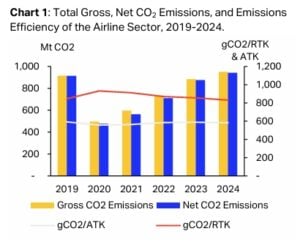
According to the Air Transport Action Group (ATAG), worldwide flights generated approximately 942 million tonnes of CO2 in 2024. This represented around 2% of global human-caused CO2 emissions.

Airlines are working to reduce their environmental footprint through more fuel-efficient aircraft, improved flight operations, sustainable aviation fuel (SAF), and carbon offsetting.

However, these measures will take time to scale. Carbon credits provide another tool for airlines to address emissions covered by CORSIA while the industry works toward longer-term decarbonization.

emission
Source: ATAG

CORSIA Creates a Large Market for Eligible Carbon Credits

ICAO introduced CORSIA to address the growth in international aviation emissions. Under the scheme, participating airlines must offset covered emissions above the applicable baseline by purchasing and cancelling eligible carbon credits.

For the first phase, which runs from 2024 to 2026, the baseline is set at 85% of 2019 international aviation emissions covered by the scheme.

Not every carbon credit qualifies. The International Civil Aviation Organization (ICAO) approves eligible emissions unit programmes based on specific environmental and social integrity criteria.

As of the latest ICAO eligibility updates in April 2026, eight programmes can supply eligible units for the first compliance phase. These include:

  • American Carbon Registry (ACR)
  • Architecture for REDD+ Transactions (ART)
  • Climate Action Reserve (CAR)
  • Global Carbon Council (GCC)
  • Gold Standard
  • Isometric
  • Premium Thailand Voluntary Emission Reduction Program
  • Verified Carbon Standard (VCS)

Credits must also meet applicable authorization requirements to prevent countries and airlines from claiming the same emissions reductions.

The market could see substantial demand as the first compliance period approaches its final stage. IATA estimates that airlines will need to purchase more than 200 million CORSIA-eligible emissions units by January 2028 to meet their obligations for the 2024–2026 period.

Carbon Credit Supply Remains a Key Challenge

Despite growing trading activity, the availability of eligible credits remains a concern.

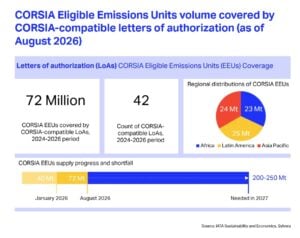
IATA’s September 2026 analysis estimated that approximately 72 million emissions units had the required CORSIA-compatible Letters of Authorization (LoAs) as of August 2026. This left a potential supply gap of around 150 million units against expected demand of 200–250 million credits.

Host countries play an important role in closing this gap. They must authorize eligible emissions reductions for CORSIA use and apply corresponding adjustments to prevent double counting under the Paris Agreement.

This creates opportunities for carbon project developers and credit suppliers that can meet ICAO’s requirements and secure the necessary country authorizations.

For airlines, access to reliable supply and transparent pricing will become increasingly important as they prepare to meet their obligations.

Carbon credits
Source: IATA

What Xpansiv’s Trading Milestone Means for the Aviation Carbon Market

Xpansiv’s 1.5-million-tonne milestone shows that dedicated trading infrastructure is beginning to support a more active CORSIA carbon market.

The next challenge will be connecting airlines with enough eligible credits before the first compliance cycle closes. As demand grows, standardized contracts, project-level trading, and reliable settlement systems could help improve market access.

With CORSIA entering the final year of its first compliance phase in 2026, airlines, carbon project developers, and market intermediaries will need to accelerate procurement and supply arrangements.

The development of a transparent and liquid market will be important not only for meeting current obligations but also for supporting CORSIA’s expansion into its second phase, which begins in 2027.

The post Xpansiv Crosses 1.5 Million Tonnes in CORSIA Carbon Credit Trading as Airline Demand Rises appeared first on Carbon Credits.

McDonald’s, Nestlé, and Mars Sign Regen Compact to Scale Regenerative Agriculture

McDonald’s, Nestlé, and Mars Sign Regen Compact to Scale Regenerative Agriculture

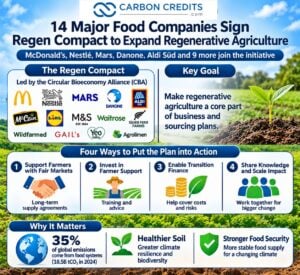
Fourteen major food companies and retailers, including McDonald’s, Nestlé, Mars, Danone, and Aldi Süd, have signed a new agreement to expand regenerative agriculture. The initiative aims to improve soil health, support farmers, and strengthen food supply chains against climate change.

The Regen Compact, announced on November 17, 2026, brings together businesses from across the food industry. Other signatories include McCain Foods, Lidl GB, Marks & Spencer, Waitrose, Silver Fern Farms, Wildfarmed, Gail’s, Yeo Valley and Agrolimen.

Led by the Circular Bioeconomy Alliance (CBA), the agreement asks companies to make regenerative agriculture part of their core business and sourcing plans. It supports farming methods that reduce soil disturbance and chemical use, protect biodiversity and improve natural carbon storage.

However, the compact does not set new targets or require all companies to use the same farming methods. Each signatory can choose actions that fit its business, suppliers and local farming conditions.

The agreement comes as food companies face rising costs, extreme weather and pressure to reduce their environmental impact. Its main test will be whether these voluntary commitments lead to real changes on farms.

Food Systems Face Growing Climate Risks

The compact describes regenerative agriculture as both an economic and food security priority. Farming depends on healthy soil, clean water, and stable weather. But climate change and nature loss are putting these resources under growing pressure.

The Food and Agriculture Organization (FAO) estimates that global agrifood systems produced 18.5 billion tonnes of CO2 equivalent in 2024. This equals about 35% of all global emissions. This includes emissions from farming, land use, food processing, transport, retail and waste.

The compact also highlights the financial cost of extreme weather. EU agriculture loses an average of €28 billion each year due to adverse weather. Heat and drought from climate change led to about $400 billion in losses for maize, wheat, and soybeans worldwide from 2000 to 2019. 

Higher fertilizer prices add to the pressure on farmers. Rising costs can reduce farm profits, while extreme weather threatens harvests and food supplies.

Regenerative agriculture aims to reduce some of these risks. It focuses on improving soil health, using fewer synthetic inputs, protecting biodiversity, and making better use of water. Common practices include no-till or reduced-tillage farming, cover crops, and crop diversification.

The compact also stresses that there is no single method for every farm. The right approach depends on local soil, climate, crops, and economic conditions.

Four Ways Food Companies Can Help Farmers Go Regenerative

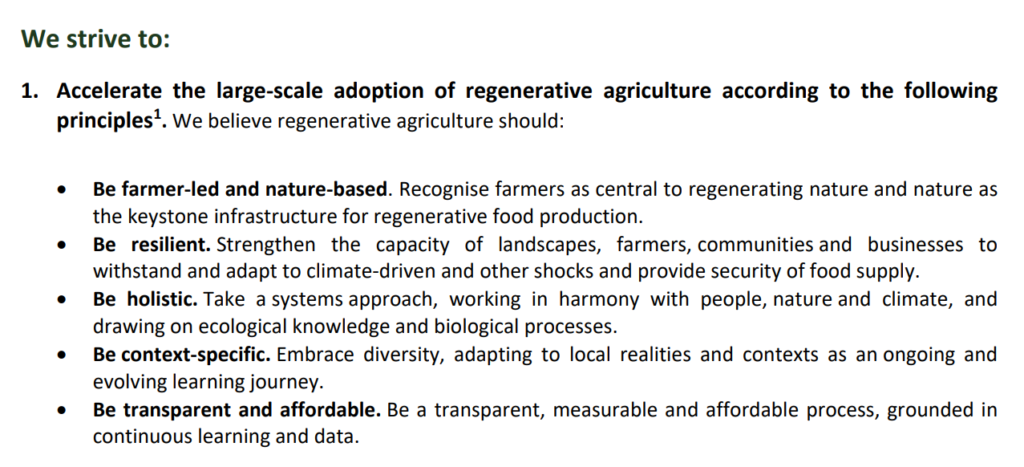
The agreement sets out five main principles. Regenerative agriculture should be farmer-led, nature-based, resilient, holistic and suited to local conditions. It should also be affordable and supported by clear data.

regen compact principles by food giants

To put these principles into practice, the signatories identify four areas of action.

  • First, companies should give farmers more reliable markets. This could include long-term supply agreements with farmers who use regenerative methods. Companies can also include regenerative farming practices in their own sourcing decisions.
  • Second, businesses should invest directly in farmer support. This includes training, farm advice, peer-learning groups, and other services that help producers change their methods. The compact says this support should reflect farmers’ needs and should not be tied to selling more farm inputs.
  • Third, companies should work with banks, lenders, investors and insurers to develop transition finance. This could help farmers cover the cost and manage the risks of changing their farming practices.
  • Fourth, signatories should work with farmers, researchers, governments and other businesses to share knowledge and support larger projects. The goal is to improve farming across whole landscapes, rather than focus only on individual farms.

The compact also proposes using the CBA’s Living Labs model. These projects can provide shared tools, open-access farm data and public plans for landscape-level changes. They will focus on non-commercial work and will not share sensitive business information.

Nestlé, Mars and McDonald’s Have Existing Programs

Several signatories already support regenerative agriculture through their supply chains. These programs show how companies could put the compact’s ideas into practice. However, they were already underway and are not new targets created by the agreement.

Nestlé reported that 20.7% of its key ingredient volumes came from farmers using regenerative agriculture practices in 2025. The company aims to raise this share to 50% by 2030. Its work covers ingredients such as dairy, coffee, cocoa, cereals and grains.

Nestlé also updated how it calculates this figure in 2026, converting ingredient volumes back to their original fresh state. This means the number may differ from its original 2025 report.

Mars supported around 77 climate-smart agriculture projects in 26 countries and across 12 crops in 2025. Its programs include regenerative farming, farmer training, and efforts to make crops more resilient to climate risks.

McDonald’s also supports farming and grassland projects. Its Grassland Resilience and Conservation Initiative in the United States aims to affect 4 million acres of grazing land by 2032. The program links better land management with grassland protection and stronger livestock supply chains.

These examples show that some companies already have experience with regenerative farming. The compact aims to build on this work and encourage wider action across the food industry.

Regen Compact_ Growing a Resilient Food Future

Annual Reports Will Track Progress Without New Mandatory Targets

The compact includes a process to track progress, but it does not create a new mandatory reporting system. Starting in 2027, signatories will share their existing reports and public disclosures with the compact’s Secretariat each year. The Secretariat will use these materials and other public information to prepare an annual summary.

It will also review the standards and systems companies use to measure regenerative agriculture. However, it will not rank or score individual companies. Signatories can keep using their current measurement systems, and they do not have to collect new data for the compact.

The CBA will be led by the Secretariat, with the European Alliance for Regenerative Agriculture as an adviser and lead on benchmarking. The Secretariat will also bring signatories together and support joint projects.

The compact aims to keep reporting simple for farmers and companies. It says data should be collected once and reused where possible, instead of creating extra paperwork.

Still, the lack of new company-specific targets makes it harder to measure how quickly each signatory will act. The annual summaries may show progress, but they will not provide a common scorecard for individual businesses.

FAIRR Finds Gaps in Corporate Commitments, But Outlook Is Strong

The Regen Compact comes as investors call for stronger proof that companies’ regenerative agriculture programs deliver results. A June 2026 report by investor network FAIRR assessed 78 listed food and agriculture companies. It found that only 28% had set measurable regenerative agriculture targets, down from 35% in 2023.

The report also found that 40% of companies provided financial support to farmers using regenerative methods. But this spending was only 0.01% to 0.05% of company revenue. No company in the assessment had set a specific pesticide-reduction target as part of its regenerative agriculture program.

There was some progress in measuring results. FAIRR found that 54% of companies measured regenerative agriculture outcomes or had systems in place to do so, up from 16% in 2023. Yet, only 4% had set targets based on these outcomes.

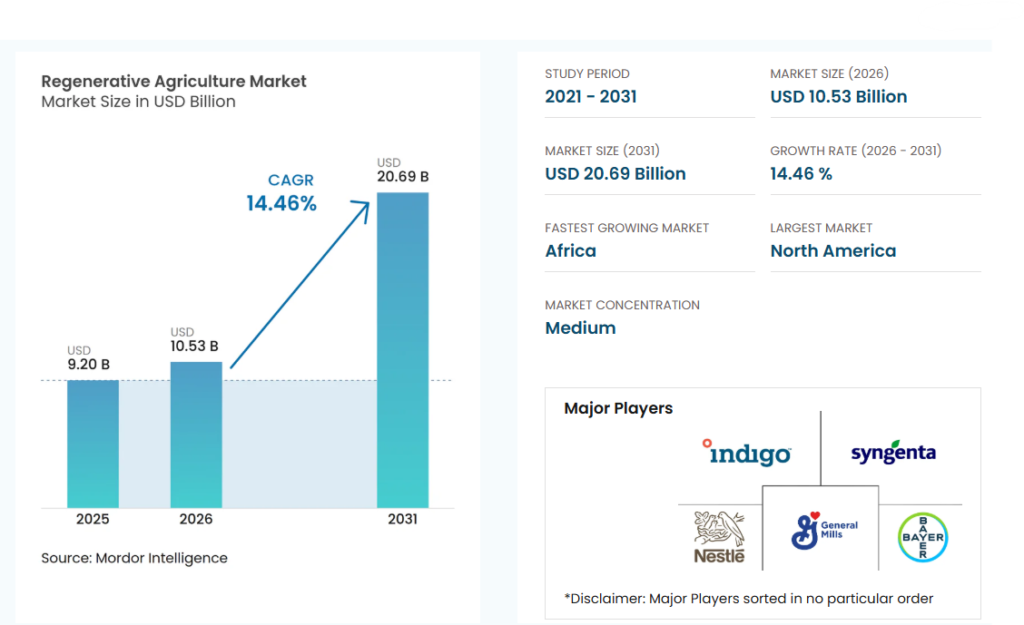
Despite lagging corporate accountability, the regenerative agriculture outlook remains expansive, and market momentum is accelerating. Mordor Intelligence projects the global regenerative agriculture market will grow from $10 billion in 2026 to $20 billion by 2031. Driven by Scope 3 emissions pledges and policies like the EU Nature Restoration Law, FAIRR estimates $1.4 trillion in business opportunities by 2030.

regen agriculture market outlook
Source: Mordor Intelligence

According to the November 2026 Action Agenda on Regenerative Landscapes survey, over 40 major companies have committed $6.4 billion to transition nearly 100 million hectares and 9.5 million farmers by 2030. Of this, 66 million hectares are already in active programs.

The Regen Compact offers a way for major food businesses to work toward industry goals. Long-term supply deals, farmer training and access to finance could help more farmers make the change. However, the real impact will depend on how much support reaches farms and whether companies expand their programs.

The agreement is a step toward wider use of regenerative agriculture across food supply chains. Its first annual progress summary, following the start of reporting in 2027, should offer an early look at whether the signatories are turning their shared goals into action.

The post McDonald’s, Nestlé, and Mars Sign Regen Compact to Scale Regenerative Agriculture appeared first on Carbon Credits.

Uniper Plans €6B Investment in Gas Plants and Data Centers as Climate Goals Face Test

Uniper Plans €6B Investment in Gas Plants and Data Centers as Climate Goals Face Test

German energy company Uniper plans to invest around €6 billion in new projects through the early 2030s, with most of the money going toward gas-fired power plants and data center development. The plan comes as Europe faces rising electricity demand, growing investment in artificial intelligence (AI) infrastructure, and pressure to secure reliable power supplies.

Uniper announced the investment program at its Capital Markets Day in London on November 16. It expects the projects to strengthen earnings and support its role in Europe’s changing energy system.

However, the plan also raises questions about the company’s climate goals, especially its commitment to reach carbon neutrality across its value chain by 2040. Uniper’s latest Sustainability Report shows that its direct emissions fell last year.

Still, emissions from the company’s wider business remain substantial, particularly those linked to natural gas sales and trading. Its new investment priorities will test how quickly it can expand cleaner energy while continuing to rely on gas.

Uniper Sets Out €6 Billion Growth Investment Plan

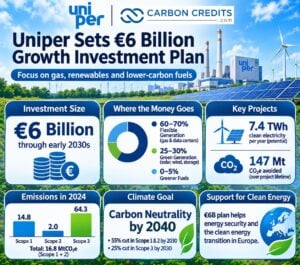
Uniper expects to invest around €6 billion in growth projects through the early 2030s. The program focuses on three business areas: flexible power generation, renewable energy and lower-carbon fuels.

The largest share, around 60% to 70%, will go to its Flexible Generation business. This includes building new gas-fired power plants and converting existing sites for data center development. Based on the planned budget, this could represent approximately €3.6 billion to €4.2 billion.

Uniper sees gas plants as important for balancing electricity supply when wind and solar output is low. The company expects demand for flexible power to rise as Europe adds more renewable energy and electrifies more industries.

Data centers are another major growth opportunity. Uniper said it has already secured around 700 megawatts (MW) of grid capacity for projects in advanced development. The potential sites are in Germany, the United Kingdom, the Netherlands and Sweden. Three projects have reached an advanced stage, although the company has not disclosed their locations or full details.

Uniper could sell or lease existing sites to data center developers or provide power agreements to operators. Its existing land and grid connections may help developers avoid some of the delays involved in securing new connections.

The company will allocate another 25% to 30% of its growth budget to Green Generation. This covers solar power, onshore wind, battery storage and pumped-storage hydropower. A smaller share of around 0% to 5% will support selected projects involving greener fuels and infrastructure.

Uniper said it has already committed around €1.3 billion to growth investments since 2023, with more than 20 projects in development or execution. Michael Lewis, Chief Executive Officer of Uniper, noted:

“Uniper enters its next phase from a position of strength. We have a high-quality asset base at the heart of Europe’s energy system, and our existing portfolio is already delivering earnings growth. Every beat of our strategy seeks to unlock value: by investing selectively and strengthening the quality of our earnings, we aim to create long-term value for shareholders while continuing to play a leading role in security of supply and the energy transition.”

New Gas Plants Will Support Europe’s Power Demand

Gas-fired generation will remain central to Uniper’s investment strategy. The company expects European electricity demand to increase as transport, heating and industry shift toward electricity. Data centers and AI services are also adding to power needs.

Gas plants can provide electricity when renewable generation falls, or demand rises. This flexibility can help support grid stability, but burning natural gas still releases carbon dioxide.

Uniper’s November investment presentation lists two major gas-fired combined-cycle power plant projects in Germany: Staudinger, with a planned capacity of around 860 MW, and Scholven, at around 870 MW. Together, they represent approximately 1.73 GW of potential generation capacity.

The company also plans to expand renewable power and storage. The project pipeline has about 570 MW of solar and onshore wind projects in Europe and the UK. It also includes the revitalization of the 160 MW Happurg pumped-storage plant in Germany. Additionally, there’s around 50 MW of new hydropower capacity along Sweden’s Ume River.

These projects show that Uniper is not directing all its growth spending toward fossil fuels. However, the planned allocation makes clear that gas and flexible generation will receive the largest share of new investment.

Uniper’s Carbon Emissions Fell Between 2022 and 2024

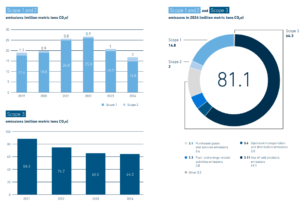
Uniper’s Climate Transition Plan 2025 shows that its greenhouse gas emissions declined between 2022 and 2024, mainly due to lower coal-fired power generation and reduced coal trading activities.

Uniper carbon ghg emissions 2024
Source: Uniper
  • In 2024, the company reported 14.8 million tonnes of CO2 equivalent (MtCO2e) in Scope 1 emissions, down from 19.7 MtCO2e in 2023.
  • Scope 2 emissions from purchased electricity and energy were 2.0 MtCO2e, bringing combined Scope 1 and 2 emissions to 16.8 MtCO2e.
  • Scope 3 emissions also declined, falling from 65.5 MtCO2e in 2023 to 64.3 MtCO2e in 2024. However, they remain the largest part of Uniper’s reported carbon footprint.

Emissions from the use of sold products reached 49.1 MtCO2e, mainly linked to the natural gas and other fuels the company sells. Other sources included purchased goods and services at 8.4 MtCO2e and fuel- and energy-related activities at 3.8 MtCO2e.

Uniper said lower coal-fired generation and the closure of coal plants helped reduce Scope 1 emissions. The company also reduced coal trading volumes and ended some trading activities with external parties, contributing to the Scope 3 decline.

By 2024, Uniper’s Scope 1 emissions were 41.9% lower than in 2021, while its carbon intensity from electricity and heat generation had fallen 27.8% over the same period. The company also reported that ending its third-party coal business removed around 5 million tonnes of annual Scope 3 emissions from its portfolio. These figures reflect changes in its business activities as well as operational progress.

Uniper Targets Carbon Neutrality by 2040

The German energy giant aims to achieve carbon neutrality across its Scope 1, 2 and 3 emissions by 2040. However, its Climate Transition Plan states that this goal includes compensation measures, to the extent economically viable.

Uniper carbon neutrality roadmap
Source: Uniper

It also says Scope 1 and 2 emissions will move toward neutrality within the EU Emissions Trading System, while Scope 3 reductions will depend partly on market developments, customer behavior and government policies.

The company has established several interim targets:

  • Scope 1 and 2: Cut absolute emissions by at least 55% by 2030, compared with a 2019 baseline.
  • Scope 3: Reduce absolute emissions by 25% by 2030 and 35% by 2035, compared with a 2021 baseline.
  • Coal phase-out: End commercial coal-fired power generation by 2029.

Uniper plans to reduce direct emissions by closing its remaining commercial coal-fired power plants, expanding renewable energy and converting parts of its gas-fired fleet to hydrogen, biofuels or carbon capture technologies. The company estimates that phasing out its remaining 2.1 GW of commercial coal capacity could cut annual Scope 1 emissions by up to 9.5 million tonnes of CO2e compared with its 2019 baseline.

For Scope 3, Uniper plans to expand its portfolio of biomethane, hydrogen and other lower-carbon fuels. It targets a 5% to 10% share of renewable and low-carbon fuels in its gas sales portfolio by 2030. It also aims to develop around 8 GW of ready-to-build solar and onshore wind projects in Europe.

Uniper acknowledges that reducing Scope 3 emissions will depend on factors beyond its direct control, including customer demand, the development of hydrogen markets and the pace of Europe’s energy transition. Its 2040 goal, therefore, depends on both actual emissions reductions and credible compensation for remaining emissions.

Uniper’s €6 Billion Clean Energy Plan

Gas Investment Creates a Challenge for Uniper’s Climate Goals

Uniper’s investment plan highlights the difficult balance between energy security, growing electricity demand and emissions reduction.

New gas plants can provide flexible power when wind and solar output is low. They may also support the expansion of data centers and other electricity-intensive industries. Yet, their climate impact will depend on how often they operate, what fuels they use, and whether they can be converted to lower-carbon technologies.

Uniper’s own 2025 report recognizes that additional measures may be needed to meet its Scope 1 and 2 targets if new carbon-emitting assets enter service or existing fossil fuel plants operate more often than expected.

The company’s investment plan also places a smaller share of its growth budget into renewable energy than into flexible generation. This does not mean its renewable projects will stop growing, but it shows where most of its new capital is expected to go. Its 2040 target remains in place, but the €6 billion investment program will test how well Uniper can balance new business growth with its climate commitments.

The post Uniper Plans €6B Investment in Gas Plants and Data Centers as Climate Goals Face Test appeared first on Carbon Credits.
IEA Sees Longer Oil and Gas Growth, Creating Opportunities in Methane and CCS

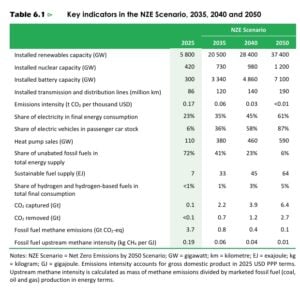
The global energy transition is gaining momentum, but oil and natural gas are not disappearing from the energy mix anytime soon. The International Energy Agency’s (IEA) World Energy Outlook 2026 highlights how fossil-fuel demand could remain resilient even as countries expand renewable energy, electrification and low-carbon technologies.

The report presents several possible energy pathways, reflecting differences in government policies, energy security priorities and climate commitments. Its findings suggest that the pace of the transition will depend heavily on how quickly countries can replace conventional fuels while meeting rising energy needs.

For investors in energy and carbon markets, this creates an important opportunity. Continued oil and gas production could sustain demand for methane reduction technologies, carbon capture and storage (CCS), and emissions-reduction projects across the fossil fuel supply chain.

Oil Demand Could Remain Strong Through 2035

The IEA’s projections show that oil demand will follow different trajectories depending on how quickly governments implement climate and energy policies.

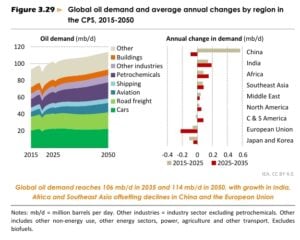
Under the Current Policies Scenario (CPS), global oil demand continues to grow, reaching approximately 106 million barrels per day (mb/d) by 2035. This would be around 3% higher than 2025 levels.

global oil demand

The Stated Policies Scenario (STEPS) presents a different outlook. Here, oil demand levels off at approximately 103 mb/d by 2030 before gradually declining. Faster electrification, improved energy efficiency and the growing use of alternative fuels help slow consumption.

However, rising demand from petrochemicals, aviation and heavy-duty transportation continues to support oil use. The IEA estimates that these three sectors together add around 5 mb/d to oil demand by 2035, more than offsetting reductions in passenger-car fuel consumption.

The Additional Response Case (ARC), which assumes stronger government action to reduce dependence on energy imports, brings an earlier decline in oil demand. By 2035, consumption is more than 4 mb/d below the STEPS level.

These differences show why forecasting peak oil demand remains complicated. Electric vehicles and renewable energy are changing consumption patterns, but industrial activity, aviation, and expanding economies continue to support demand.

LNG Becomes a Bigger Part of Energy Security

Natural gas also has an important role in the IEA’s outlook, particularly as countries look for reliable energy supplies.

The report highlights a major wave of new liquefied natural gas (LNG) export capacity. If planned projects move forward, global LNG supply could expand by more than 50%.

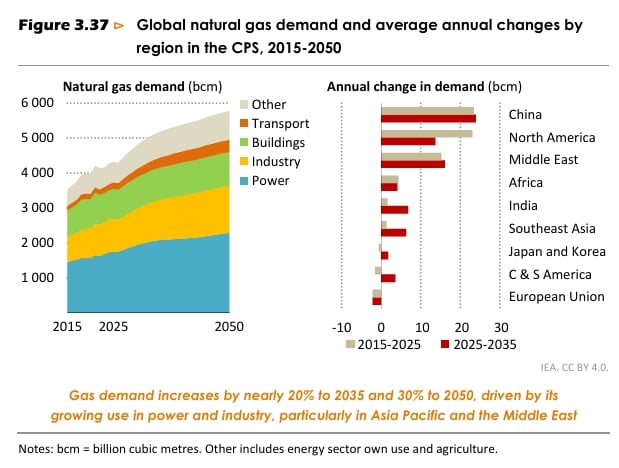
In the CPS, around 350 billion cubic metres (bcm) of new LNG supply is expected to enter the market between 2025 and 2035. Growing demand, particularly across emerging economies, is absorbing the additional volumes.

natural gas

China, India and Southeast Asia are important drivers. Under the CPS, India’s natural gas consumption doubles between 2025 and 2035, while demand in Southeast Asia increases by around 35%.

The STEPS expects slower growth as electrification and renewable energy reduce some gas consumption. The ARC goes further, with countries accelerating domestic energy development and reducing dependence on imported fuels.

Recent disruptions to energy shipments have also highlighted the importance of supply diversification. The Strait of Hormuz remains a critical shipping route for global energy markets, while the expansion of LNG exports from the United States and other producers could provide alternative supplies.

However, more LNG production also means greater attention to emissions throughout the supply chain. Methane leaks, flaring, liquefaction, and transportation can increase the climate footprint of natural gas.

oil and natural gas

Methane Abatement Could Create New Carbon Market Opportunities

Continued oil and gas production makes methane management increasingly important.

  • Methane is a powerful greenhouse gas, and fossil fuel operations remain a major source of emissions. The IEA’s 2026 outlook estimates that global energy-related methane emissions under the STEPS decline from approximately 150 million tonnes today to 120 million tonnes by 2035.

Although this represents progress, the remaining emissions highlight the need for stronger monitoring and mitigation across oil and gas operations.

methane emissions

Companies can reduce methane emissions through leak detection and repair (LDAR), improved equipment, better pipeline maintenance, and the recovery of gas that would otherwise be vented or flared.

These activities could also support carbon market development. Verified methane reduction projects can generate carbon credits under eligible methodologies, creating an additional revenue stream for project developers and operators.

However, credit generation depends on robust measurement, reporting, and verification, credible baselines and proof of additional emissions reductions. Not every methane reduction automatically qualifies for carbon credits.
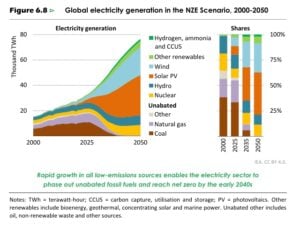
The investment case extends beyond voluntary carbon markets. Reducing methane leakage can help producers recover and sell additional natural gas, improving operational efficiency while lowering emissions.

For LNG exporters, demonstrating lower methane intensity could also become a competitive advantage as importing markets introduce stricter emissions requirements.

CCS Investment Remains Important for Hard-to-Abate Emissions

Methane reduction is only one part of the emissions challenge. Carbon dioxide from industrial processes and fossil fuel combustion also requires attention.

The IEA includes carbon capture, utilisation and storage (CCUS) among the important technologies in its Net Zero Emissions by 2050 (NZE) Scenario.

  • CCS can capture CO₂ from industrial facilities and certain energy-related operations before it enters the atmosphere. The captured carbon is then transported and stored in suitable geological formations.

For oil and gas companies, this creates opportunities to invest in capture equipment, pipelines, storage facilities and carbon management services.

However, CCS is not a substitute for reducing fossil fuel consumption or expanding clean energy. Its role is particularly relevant for emissions that are difficult to eliminate through electrification and efficiency improvements.

The investment outlook will depend on government incentives, carbon pricing, infrastructure availability and long-term demand for low-emissions industrial products.

global scenario

What This Means for Energy and Carbon Investors

The IEA’s 2026 outlook presents a more complicated energy transition than a simple shift from fossil fuels to renewables.

Oil and gas demand could remain significant for decades under less ambitious policy pathways. At the same time, stronger climate policies could accelerate electrification and reduce fossil fuel consumption.

For investors, this creates opportunities across several areas.

Methane detection and abatement technologies could benefit from continued upstream production and stricter emissions monitoring. CCS developers may find opportunities in industrial hubs and energy infrastructure. Carbon credit developers could also benefit from demand for independently verified methane reductions, provided projects meet recognized quality standards.

The broader message is that the energy transition will require more than replacing fossil fuels. It will also require reducing emissions from the energy systems that remain in operation.

Oil and gas may continue to matter, but their environmental footprint will increasingly influence investment decisions, operating costs, and market competitiveness.

The post IEA Sees Longer Oil and Gas Growth, Creating Opportunities in Methane and CCS appeared first on Carbon Credits.