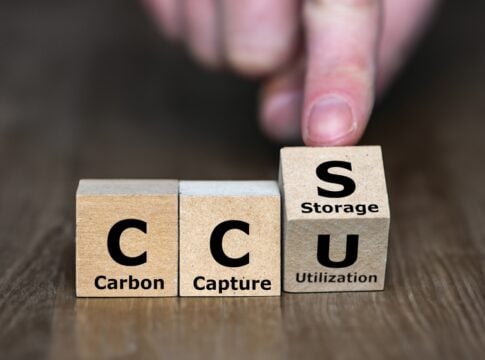
India Commits $2.12B to Carbon Capture and Utilization for Industrial Decarbonization

India is making its largest public commitment yet to carbon capture technology. Finance Minister Nirmala Sitharaman announced an allocation of ₹20,000 crore over the next five years for Carbon Capture, Utilization and Storage (CCUS) technologies in the Union Budget 2026–27.

The funding, equivalent to about US$2.12 billion, aims to speed up CCUS deployment in hard-to-abate industrial sectors. These sectors are difficult to decarbonize using renewable energy alone.

The investment focuses on five major carbon-intensive industries: steel, cement, power, refineries, and chemicals. These sectors are central to India’s economic growth, but also among the largest sources of emissions.

The announcement comes from Budget documents and media like Business Standard. It matches India’s national CCUS roadmap released in December 2025.

Breaking Down India’s CCUS Strategy

CCUS refers to technologies that capture carbon dioxide (CO₂) from industrial sources. The CO₂ can either be used in products such as chemicals or stored permanently underground.

The International Energy Agency (IEA) states that CCUS is vital for sectors with hard-to-avoid emissions. This includes cement, steel, and chemicals.

India’s roadmap targets large-scale deployment in exactly these industries. According to Down to Earth, the goal is to move from pilot projects to commercial-scale systems. The timeline has three phases:

  • 2025–2030: Focuses on research and pilot projects.
  • 2030–2035: Centers on industrial integration and regulation.
  • 2035–2045: Aims for full commercial scale-up.

Over the next five years, experts estimate CCUS capacity could reach 10–15 million tonnes (MT), and possibly up to 20 MT if execution is efficient. Even 10 MT would mark a strong early stage, according to energy consultancy M N Dastur, cited in Business Standard.

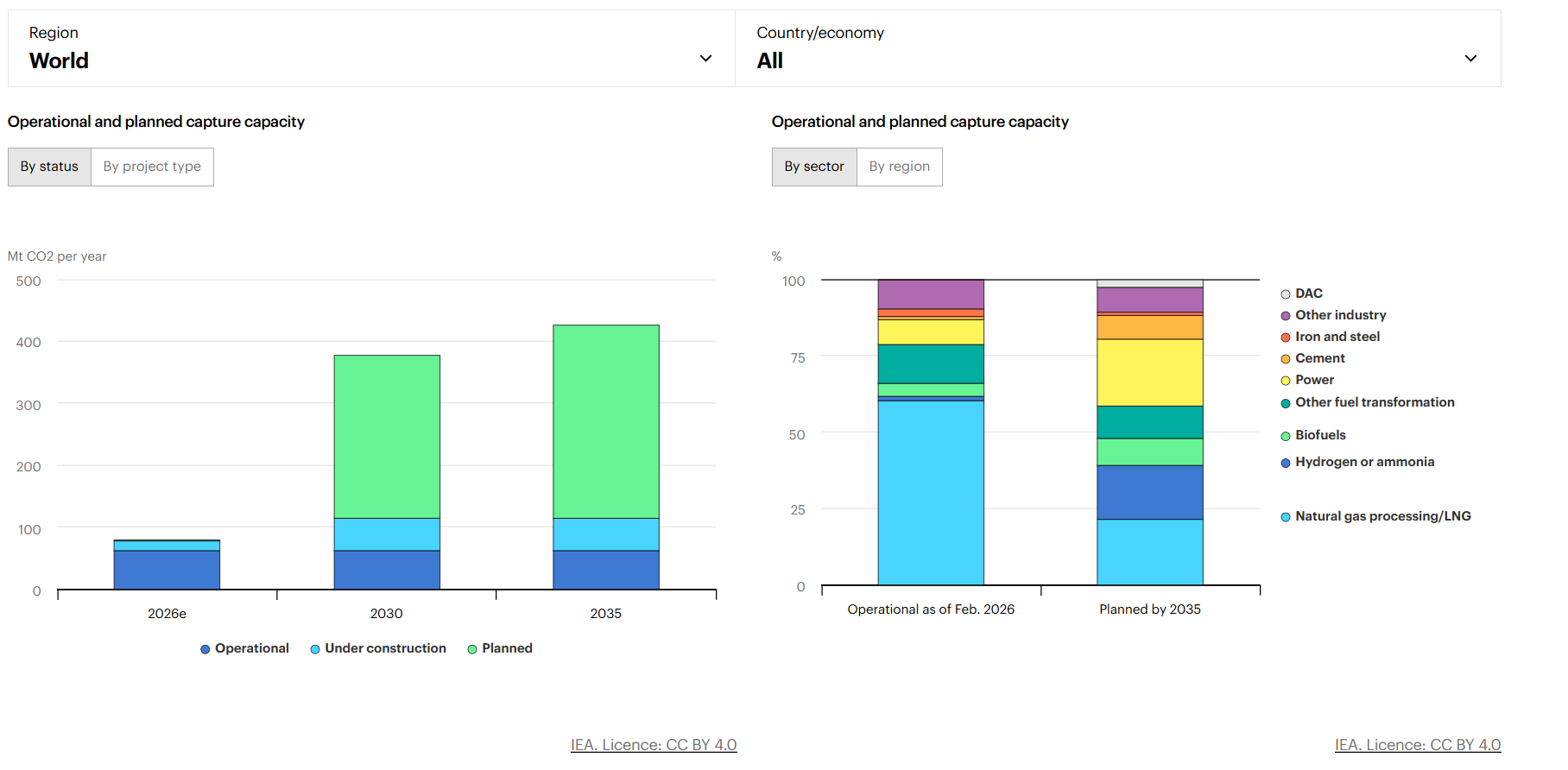
The IEA estimates that global CCUS capacity is about 50 MT each year. This means India’s planned expansion would be a significant but early step forward. The chart below shows global carbon capture capacity by status and by sector.

CCUS capacity by status and by sector global
Source: IEA

Why India Needs CCUS for Industrial Sectors

India’s steel and cement industries are central to its development goals, but are also major emission sources. The Council on Energy, Environment and Water (CEEW) reports that these two sectors make up 19% of India’s total emissions and 53% of industrial emissions. Within this, steel contributes about 300 MT CO₂ (33%), while cement contributes around 230 MT CO₂ (25%).

Demand is also expected to rise sharply. Research from The Energy and Resources Institute (TERI) and the World Business Council for Sustainable Development (WBCSD) shows that steel and cement demand may rise 3–4 times by 2050. If no action is taken, emissions in these sectors could nearly triple.

Both industries rely on fossil fuels. Over 90% of their energy comes from coal, petroleum coke, and other fossil sources.

In cement production, emissions come mainly from two sources. About 50–55% comes from calcination of limestone, while 30–35% comes from fuel combustion, according to Chemistry World. This makes cement especially difficult to decarbonize using renewable energy alone.

Studies show that CCUS could cut emissions in steel and cement by up to 56%. This makes it one of the few scalable solutions for process emissions.

Global CCUS Boom Adds Pressure and Momentum

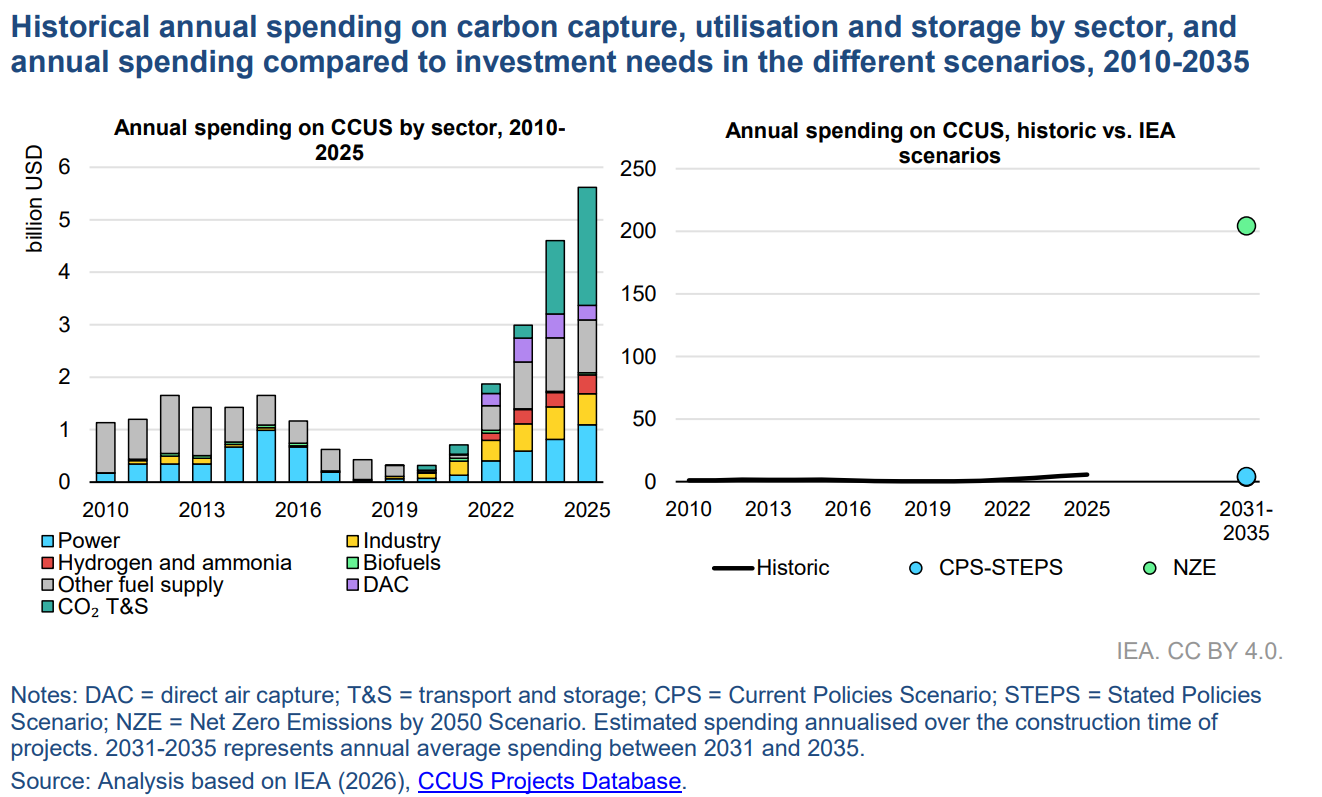
India’s push comes as global investment in CCUS accelerates. According to the IEA, global CCUS investment has increased more than 15 times since 2020 and reached over $5 billion in 2025. Operational capacity is expected to nearly double by 2030.

Over $27 billion in projects are in advanced planning stages. That’s almost double the investment in all CCUS projects since 2010. The IEA reports that more than 30 final investment decisions (FIDs) were made in just the last two years. This shows that private sector confidence is growing.

CCUS spending historic and forecast by IEA
Source: IEA

However, CCUS remains expensive. In India, capturing 1 MT of CO₂ per year is estimated to cost ₹900 crore–₹1,000 crore. ₹1 crore is equivalent to almost US$106,000 as of this writing.

Based on this, scaling to 10 MT could require around ₹15,000 crore (around US$1.6 million) in investment, which is close to the government’s planned allocation.

The IEA highlights that CCUS growth needs strong policy support, tax incentives, and carbon pricing. Without these, the economy will remain challenging.

India has already started preparing for this challenge. A draft 2030 CCUS roadmap tied to the oil and gas sector outlines early estimates of the country’s carbon storage potential.

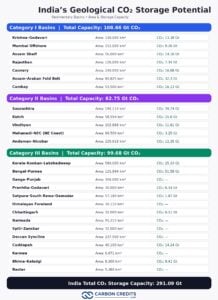
The roadmap identifies deep saline aquifers as the largest storage option, with an estimated capacity of about 291 gigatonnes (Gt). It also estimates potential storage of 97–316 Gt in basalt formations, 3.5–6.3 Gt in coal reservoirs, and around 1.2 Gt in oil fields through CO₂-enhanced oil recovery.

india carbon capture potential
“Estimated CO₂ storage capacity across India’s sedimentary basins (Gt). Source: Basin-wise geological assessments.”

However, these figures are still preliminary estimates and will require further site-level studies and validation before large-scale deployment.

Policy Push Meets Market Reality: Costs and Carbon Border Taxes

India’s CCUS push is also shaped by global trade pressure. One major factor is the European Union’s Carbon Border Adjustment Mechanism (CBAM), which places tariffs on imports based on their carbon content. This includes steel, cement, and chemicals.

For Indian exporters, this creates pressure to reduce emissions or risk losing competitiveness in European markets. CCUS is one of the few technologies that can directly reduce embedded carbon in heavy industry exports.

The CCUS roadmap also connects to India’s wider innovation goals. This includes the ₹1 lakh crore Research, Development, and Innovation (RDI) scheme, which aims to draw in private sector investment in clean technologies.

However, major challenges remain. India is still in the pilot stage of CCUS deployment. There is limited commercial infrastructure, unclear storage site identification, and slow regulatory processes.

Experts argue that a clear national strategy is needed. This includes identifying CO₂ storage basins, simplifying licensing, and offering viability gap funding for early projects. Without this, scaling could remain slow.

Cost Debate and Competing Priorities

Despite strong policy support, CCUS remains debated among experts.

One concern is cost efficiency. Analysis from Telangana Today suggests that the ₹20,000 crore (US$2.1 million) allocation could alternatively fund 10–15 GW of solar power capacity, along with large-scale energy efficiency upgrades.

Solar energy costs in India have fallen significantly in recent years, with utility-scale projects often below ₹40 crore per MW. This makes renewables a cheaper way to cut emissions in the power sector.

There are also concerns about long-term risks. Many CCUS projects globally are still experimental. Key issues include high costs, uncertainty around long-term carbon storage, and limited proof of large-scale viability.

Some analysts also warn about carbon lock-in. This refers to continued dependence on fossil fuel industries that rely on CCUS instead of shifting fully to cleaner alternatives like electrification and renewables. Critics argue this could slow the transition to cleaner energy systems if not carefully managed.

What Success Would Mean for India’s Net Zero 2070

India’s ₹20,000 crore CCUS commitment marks a major shift in its industrial decarbonization strategy.

Unlike renewable energy, which mainly targets electricity generation, CCUS focuses on process emissions from heavy industries like steel and cement. These emissions are harder to eliminate and represent a major challenge for India’s net-zero target by 2070.

If implemented well, the investment could help build early CCUS infrastructure, support export competitiveness, and reduce emissions in key industrial sectors. It could also position India more strongly in global markets that are increasingly shaped by carbon rules like CBAM.

Globally, CCUS is gaining momentum but remains in an early scaling phase. India’s approach will test whether large public investment can turn it into a commercially viable climate solution.

The post India Commits $2.12B to Carbon Capture and Utilization for Industrial Decarbonization appeared first on Carbon Credits.


NVIDIA’s Next Frontier: $2.1 Billion Deal With IREN Redefines AI Data Center Economics

NVIDIA’s Next Frontier: $2.1 Billion Deal With IREN Redefines AI Data Center Economics

NVIDIA has entered a strategic partnership with IREN Limited worth up to $2.1 billion, deepening its push into the fast-growing artificial intelligence (AI) infrastructure market.

The deal gives NVIDIA the option to purchase up to 30 million IREN shares over five years at $70 per share. Investors reacted positively to the announcement, sending IREN shares up more than 20%. The same goes for NVIDIA’s stock, which almost hit its highest record price on April 27 at $216.61.

Nvidia NVDA stock price

The partnership centers on building large-scale AI infrastructure powered by high-performance GPUs and backed by massive electricity capacity. It also reflects a larger trend reshaping global energy markets: AI is driving an unprecedented surge in electricity demand from data centers.

Jensen Huang, founder and CEO of NVIDIA, remarked:

“Deploying these systems [AI factories] at scale requires deep integration across the full stack — compute, networking, software, power and operations. IREN brings the scale and infrastructure expertise to help accelerate the buildout of next-generation AI infrastructure globally. Together, we are building for the age of AI.”

NVIDIA Expands Beyond Chips Into AI Infrastructure

NVIDIA has become the dominant supplier of AI chips used in generative AI systems, cloud computing, and advanced data centers. The company’s GPUs power many of the world’s largest AI platforms, including models developed by OpenAI, Microsoft, Meta, and Google.

But NVIDIA is moving beyond just selling hardware. It’s now placing itself deeper in the AI infrastructure ecosystem. The company has pursued several similar infrastructure partnerships as AI power demand accelerates globally.

The tech giant strengthened its ties with CoreWeave by investing in 5 GW of AI “factory” capacity by 2030. It also teamed up with Oracle and the U.S. Department of Energy to create one of America’s largest AI supercomputers, using 100,000 NVIDIA Blackwell GPUs.

NVIDIA has also partnered with AI firms like Nscale, Microsoft, and OpenAI. They focus on large data center projects in the U.K., Europe, and North America. These deals show a bigger plan to secure long-term computing and power resources. AI workloads are growing fast around the world.

The partnership with IREN aims to deploy NVIDIA’s DSX AI factory setup in IREN’s global data center network. This network has the potential for up to 5 gigawatts (GW) of infrastructure capacity.

A key part of the project will take place at IREN’s Sweetwater campus in Texas. This 2 GW site is set to be one of the biggest AI-focused data center hubs in the U.S.

AI’s Electricity Demand Is Rising at an Extraordinary Pace

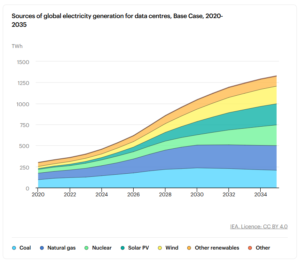
The deal comes as AI systems rapidly increase global electricity consumption. According to the International Energy Agency (IEA), global data centers consumed about 415 terawatt-hours (TWh) of electricity in 2024. That is roughly equal to the annual electricity demand of countries such as Japan.

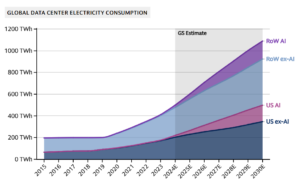
The IEA expects global data center electricity use to more than double by 2030, reaching around 945 TWh. AI workloads are becoming a major driver of this growth. The agency estimates electricity demand from AI-focused servers could rise by about 30% annually through the end of the decade.

Research from Lawrence Berkeley National Laboratory shows that U.S. data center electricity demand might grow. It could increase from 176 TWh in 2023 to 580 TWh by 2028 in high-growth scenarios.

Generative AI systems consume significantly more electricity than traditional internet services. Analysts say one AI-generated query uses about 10 times more electricity than a typical web search. This is due to the high computing power needed for large language models.

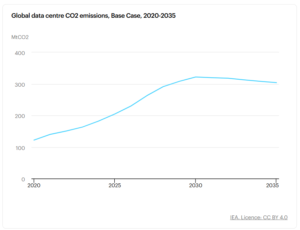
CO₂ emissions from electricity used by data centers are expected to peak at around 320 million tonnes (Mt CO₂) by 2030, per the IEA Report. Emissions are then projected to decline slightly to about 300 Mt CO₂ by 2035.

data center emissions IEA
Source: IEA

Despite fast growth in AI and digital demand, data centers are still expected to remain a small part of the global energy system. Their electricity use is projected to rise from around 1% of global demand today to about 3% by 2030. Even at that level, they would account for less than 1% of total global CO₂ emissions.

Power Capacity Is Becoming the New Competitive Advantage

As AI infrastructure expands, access to reliable electricity is becoming one of the sector’s most important strategic assets. IREN’s value largely comes from its access to large amounts of grid-connected power in regions with abundant renewable energy resources. The company operates across North America, Europe, and the Asia-Pacific.

Originally a bitcoin mining company, IREN has quickly moved to AI cloud infrastructure. This shift responds to the growing demand for high-performance computing.

The company has signed a $9.7 billion deal with Microsoft. This deal is for multi-year GPU cloud services that use NVIDIA GB300 systems. The agreement requires a 20% prepayment. It could bring in about $1.94 billion in annual revenue when fully operational.

IREN has also expanded into Europe through the acquisition of Spain-based data center developer Nostrum Group. The deal added about 490 megawatts (MW) of secured grid-connected power capacity and increased IREN’s total power portfolio to roughly 5 GW.

Industry analysts increasingly view power access as a major competitive moat in AI infrastructure. Building advanced AI data centers now relies on more than just chip availability. It also requires securing electricity, cooling systems, land, and transmission capacity.

AI and Clean Energy Are Becoming Closely Linked

The rapid expansion of AI infrastructure is also reshaping clean energy markets. Large technology companies are signing long-term power agreements for renewable electricity to support growing AI operations and meet climate goals.

Companies including Microsoft, Google, Amazon, and Meta are investing heavily in solar, wind, battery storage, and nuclear energy projects.

BloombergNEF reports that global investment in the energy transition topped $2 trillion in 2024. This surge was fueled by rising electricity demand from AI and electrification trends.

Data centers are now big buyers of renewable electricity as operators feel pressure to cut emissions and ensure stable energy supplies. Renewables supply around 27% of the electricity for data centers globally, as the IEA reports. Wind and solar are set to meet almost half of the future demand growth by 2030.

data center power sources, renewables, iea
Source: IEA

IREN’s infrastructure strategy focuses heavily on renewable-rich regions with lower power costs and cleaner electricity grids. This positioning could grow more valuable as governments tighten emissions reporting and sustainability rules for digital infrastructure.

NVIDIA has also increased its focus on energy efficiency. Its latest AI systems aim to deliver higher computing performance while lowering energy use per workload. The company claims its Blackwell platform cuts electricity use more than older AI systems.

Trillions in AI Infrastructure Spending Are Coming

The NVIDIA-IREN partnership is part of a much broader wave of AI infrastructure investment. Major technology companies are expected to spend hundreds of billions of dollars this decade on AI-related infrastructure, including:

  • advanced semiconductors,
  • hyperscale data centers,
  • transmission infrastructure,
  • cooling systems,
  • battery storage, and
  • renewable power generation.

According to Goldman Sachs, global power demand from data centers could increase by as much as 165% by 2030 due to AI growth.

global data center electricity use 2030 goldman
Source: Goldman Sachs

McKinsey estimates that global demand for AI-ready data center capacity could require more than $6 trillion in infrastructure investment worldwide by 2030. This surge is creating opportunities for companies with access to electricity, land, and digital infrastructure assets.

The New Converging Supercycle

NVIDIA’s potential $2.1 billion investment in IREN highlights how AI growth is transforming both the technology and energy sectors.

As AI systems become more powerful, the industry’s biggest challenge may no longer be chips alone. Reliable electricity supply is quickly emerging as one of the most critical factors in scaling AI infrastructure globally.

The partnership also shows how clean energy, data centers, and AI infrastructure are becoming increasingly interconnected. Companies that can combine computing power with scalable, lower-carbon electricity may be best positioned to benefit from the next phase of the AI economy.

The post NVIDIA’s Next Frontier: $2.1 Billion Deal With IREN Redefines AI Data Center Economics appeared first on Carbon Credits.

Apple Deepens India Clean Energy Push With $10.6 M Investment as 2030 Climate Deadline Nears

Apple Deepens India Clean Energy Push With $10.6 M Investment as 2030 Climate Deadline Nears

Apple is increasing its clean energy investments in India as the company moves closer to its 2030 carbon neutrality target. The tech giant plans to invest about Rs 100 crore (around $10.6 million) to boost renewable energy in India. The investment will support clean electricity projects linked to Apple’s operations and supply chain in the country.

The move comes as India becomes more important to Apple’s manufacturing and supply chain strategy. In recent years, the iPhone maker has grown its production partnerships in the country. They work with suppliers like Foxconn, Pegatron, and Tata Electronics.

Sarah Chandler, Apple’s VP of environment and supply chain innovation, posted:

“At Apple, our commitment to the environment is also a driving force for innovation — across the company and around the world. We’re proud to expand our efforts to invest in India’s clean energy economy and protect the country’s precious natural resources.”

At the same time, Apple is under pressure to reduce emissions across its global value chain. Most of the company’s carbon footprint comes from manufacturing, logistics, and product use rather than its direct operations.

Why India Has Become Critical to Apple’s Global Supply Chain

India now plays a growing role in both challenges: manufacturing growth and emissions reduction. The new investment will help boost renewable electricity for suppliers and facilities linked to Apple’s growing operations in India.

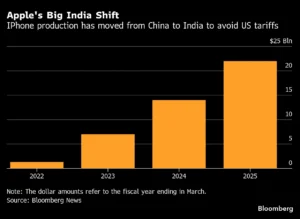
Apple’s clean energy investment is closely tied to its broader manufacturing expansion in India. The company has steadily increased iPhone production in the country as it diversifies beyond China.

Bloomberg reported that Apple made about $22 billion in iPhones in India for the year ending March 2025. This is nearly a 60% rise from the previous year. This shows how fast India is growing in Apple’s supply chain.

Apple production in India 2025 bloomberg
Source: Bloomberg

India’s government has also supported electronics manufacturing growth through incentive programs such as the Production Linked Incentive (PLI) scheme. However, rising manufacturing activity also increases electricity demand.

India’s power grid still relies heavily on coal, which generated around 74% of the country’s electricity in 2024, according to the Ministry of Coal data. This creates a major emissions challenge for companies trying to expand manufacturing while meeting climate goals.

As a result, multinational companies are increasingly investing directly in renewable energy projects tied to their supply chains. For Apple, clean energy procurement in India is becoming both an operational and climate strategy.

The iPod maker is also expanding environmental programs beyond electricity procurement. The company has partnered with WWF India on conservation and sustainability initiatives focused on clean energy awareness and environmental protection.

Apple has also backed community programs focused on water care and sustainable jobs in areas linked to its supply chain. These initiatives reflect a broader strategy. Apple aims to reduce emissions from manufacturing. It also wants to boost environmental resilience in communities tied to its operations.

For Apple, clean energy investment in India is becoming both an operational strategy and a long-term climate commitment.

Apple’s 2030 Climate Strategy Depends on Supply Chain Emissions Cuts

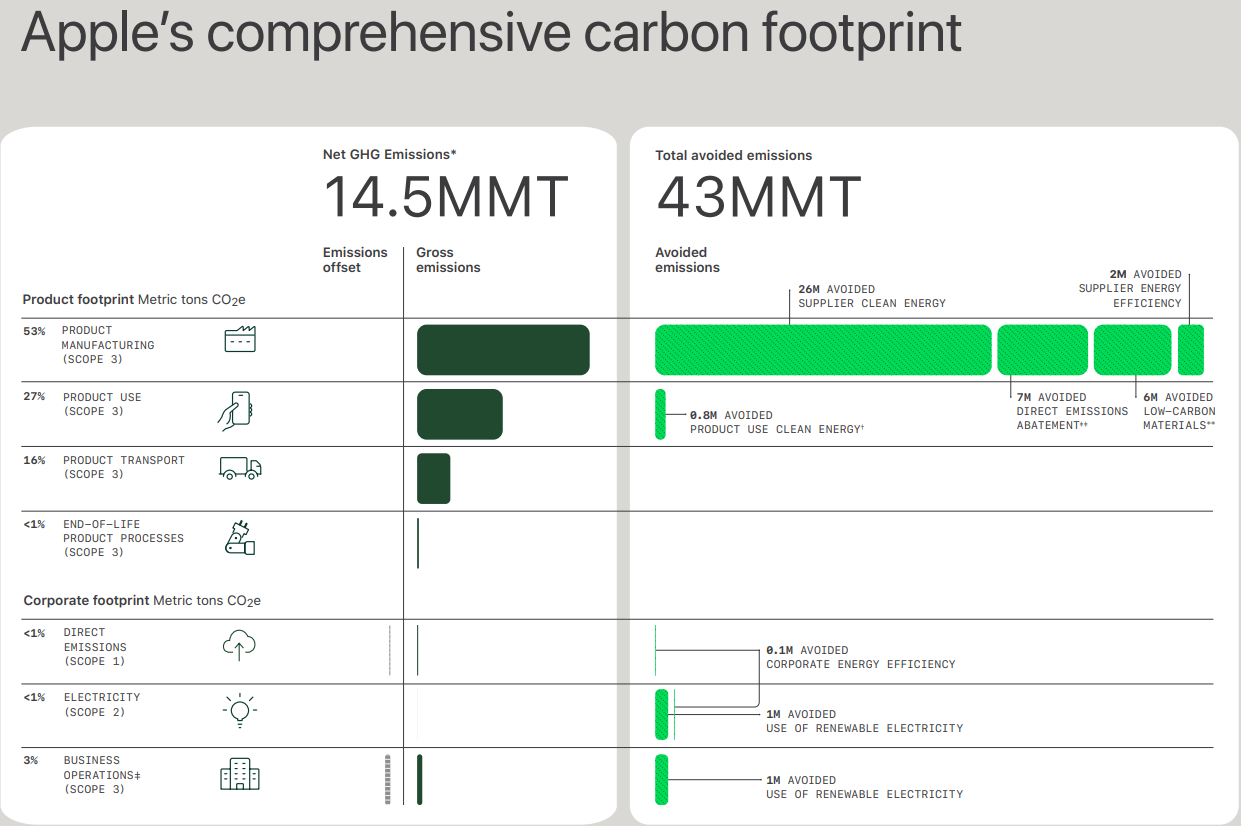
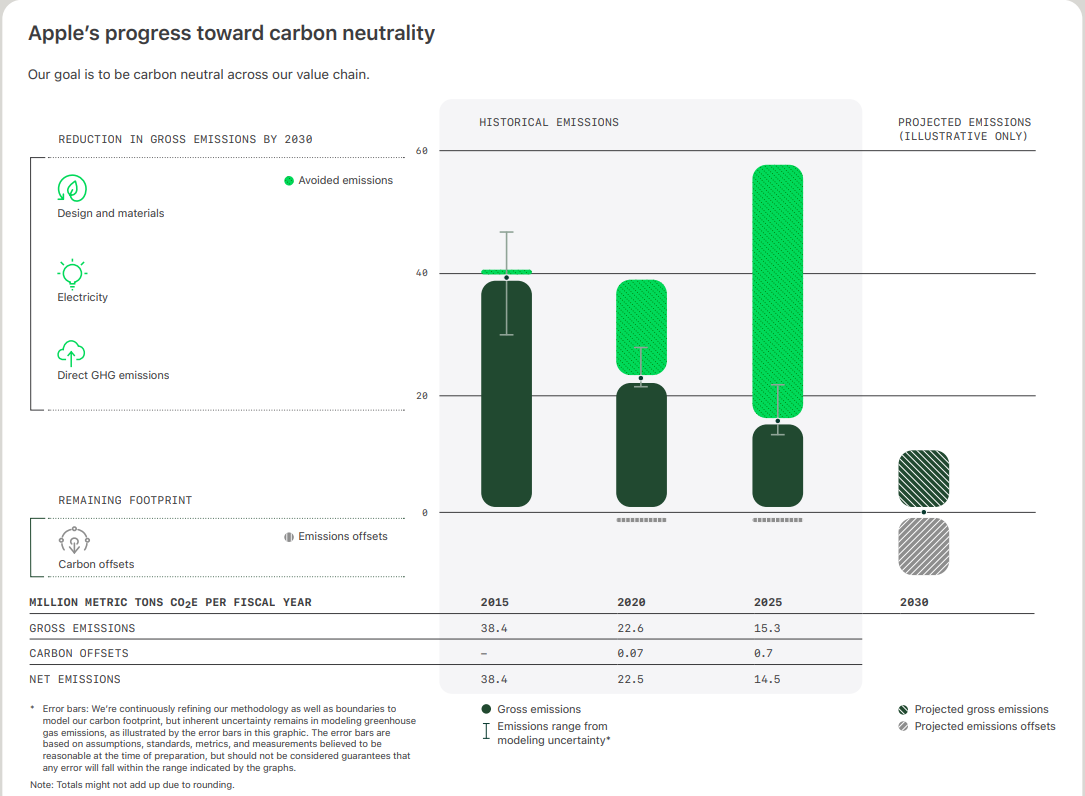
Apple aims to be carbon neutral in its business, manufacturing, and product life cycle by 2030. The company reports that over 75% of its carbon emissions come from making products, also called Scope 3 emissions. So, decarbonizing suppliers is key to meeting its climate goals.

Apple carbon footprint 2025
Source: Apple

Apple announced that its global greenhouse gas emissions have dropped by over 55% since 2015. This decrease happened while revenue and product shipments grew.

Apple carbon neutrality 2030 progress
Source: Apple

To speed up reductions, Apple started its Supplier Clean Energy Program. This program encourages manufacturing partners to switch to renewable energy. Over 320 suppliers worldwide have joined the program, based on Apple’s recent environmental report.

Together, these suppliers have committed to using 100% renewable electricity for Apple production. Several Apple suppliers in India are already participating.

The company has also increased the use of recycled materials in products and packaging. Apple reports that many new products now use recycled rare earth materials, aluminum, and cobalt in batteries.

In addition, the company aims to reduce emissions through:

  • Lower-carbon shipping methods,
  • Energy-efficient product design, 
  • Reduced packaging materials, and
  • Expanded recycling systems. 

These efforts form part of Apple’s broader environmental roadmap leading to 2030.

India’s Renewable Energy Boom Attracts Global Tech Giants

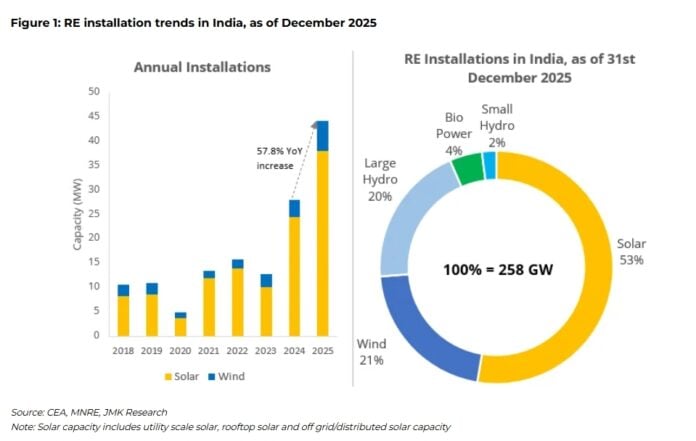
Apple’s investment also reflects the broader growth of India’s renewable energy sector. India is now one of the world’s fastest-growing clean energy markets. The country has set a target of reaching 500 gigawatts (GW) of non-fossil fuel electricity capacity by 2030.

India’s Ministry of New and Renewable Energy reports that renewable energy capacity has exceeded 190 GW. This includes projects in solar, wind, hydro, and biomass. Solar energy is leading much of the expansion.

India renewable energy production 2025

India added a lot of solar capacity in recent years. This happened as costs went down and demand for electricity from companies grew. Major global companies in India are signing more renewable energy deals. This enables them to cut down on emissions.

Meanwhile, electricity demand in India is rising. This is due to economic growth, more industrial activity, urbanization, and the expansion of digital infrastructure.

The International Energy Agency (IEA) expects India to have one of the biggest rises in global electricity demand over the next 10 years, averaging 6.4% annual growth rate through 2030. This creates both opportunity and pressure. The country must expand electricity generation rapidly while also reducing dependence on coal-fired power.

As a result, corporate renewable energy investments are becoming more important in supporting India’s energy transition.

Tech Companies Increase Focus on Clean Energy Procurement

Apple is not alone in expanding renewable energy investments in India and other emerging markets. Amazon, Google, Microsoft, and Meta are also boosting clean electricity purchases. This change comes as AI, cloud computing, and electronics manufacturing raise global power demand.

These companies are some of the largest buyers of renewable energy in the world. They achieve this through power purchase agreements (PPAs), solar projects, and grid partnerships.

Meanwhile, climate reporting standards are becoming stricter across the European Union, the United States, and Asia. Companies now need verifiable emissions reductions linked to their operations and supply chains.

Apple’s India Strategy Connects Manufacturing and Climate Goals

For Apple, expanding renewable energy access in India supports both its manufacturing growth and long-term climate goals. Its latest investment shows how closely manufacturing expansion and climate strategy are now linked.

India is growing as one of Apple’s top production hubs. However, its coal-heavy power system poses emission challenges for manufacturers. Renewable energy investments are now key to supply chain planning, not just sustainability efforts.

Challenges remain, including rising electricity demand, grid expansion, and energy storage needs. Still, investment momentum continues to grow.

For Apple, the Rs 100 crore investment is small compared to its global spending, but it shows a bigger trend: reliable low-carbon electricity is key for the future of manufacturing and tech infrastructure.

The post Apple Deepens India Clean Energy Push With $10.6 M Investment as 2030 Climate Deadline Nears appeared first on Carbon Credits.
Hydrogen Jet Breakthrough at NASA: Rolls-Royce and easyJet Push Aviation Toward Zero-Carbon Flight

Hydrogen Jet Breakthrough at NASA: Rolls-Royce and easyJet Push Aviation Toward Zero-Carbon Flight

Rolls-Royce and easyJet have finished a hydrogen engine flight cycle test at a NASA facility. This is a big step for zero-carbon aviation research. The test looked at how a hydrogen-powered aircraft engine works in various flight conditions. This included changes in thrust and engine load. The results were shared through Aerospace Global News.

The work forms part of a wider collaboration between the aerospace industry, airlines, and research institutions to explore hydrogen as a future aviation fuel.

Rolls-Royce has been developing hydrogen combustion technology for several years. easyJet, a low-cost European airline, has also been investing in long-term decarbonization options as it targets net-zero emissions.

NASA’s involvement highlights the global nature of the project. The agency provides advanced testing facilities that simulate real-world flight conditions without leaving the ground.

The test does not mean hydrogen aircraft are ready for commercial use. However, it shows that hydrogen engines can operate through a full simulated flight cycle, which is an important technical milestone.

How Hydrogen Aviation Technology Works

Hydrogen aviation is being explored in two main forms: hydrogen combustion engines and hydrogen fuel cells. In this case, Rolls-Royce is focusing on hydrogen combustion, where hydrogen is burned in a modified jet engine instead of kerosene. The goal is to produce thrust while emitting only water vapor at the point of combustion.

Hydrogen has a major advantage. When used as fuel, it produces no direct carbon dioxide emissions. However, it also comes with major technical challenges.

Hydrogen has a very low energy density by volume. It must be stored at extremely low temperatures (liquid hydrogen at around -253°C) or under high pressure. This requires redesigned fuel systems and larger storage tanks.

Aircraft design must also change. Hydrogen takes up more space than jet fuel, which affects range and aircraft structure. Engine control systems also need adjustment. Hydrogen burns differently from kerosene, which affects combustion speed and temperature.

Despite these challenges, aerospace companies are continuing to develop because aviation is one of the hardest sectors to decarbonize.

Aviation’s Emissions Problem Is Getting Harder to Ignore

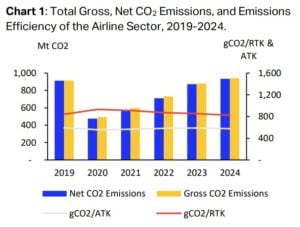
Air travel is a growing source of global emissions. According to the International Civil Aviation Organization (ICAO), aviation accounts for about 2–3% of global CO₂ emissions. However, its overall climate impact is higher when including non-CO₂ effects such as contrails.

Airline aviation sector ghg emissions 2024 IATA
Source: IATA

At the same time, demand for air travel continues to rise. The International Air Transport Association (IATA) predicts that global passenger traffic will nearly double by 2040. This growth will mainly come from Asia and emerging markets.

This creates a major challenge. Even with efficiency improvements, total emissions could rise without new fuel technologies.

Sustainable aviation fuel (SAF) is currently the main short-term solution. SAF can cut lifecycle emissions by up to 80% compared to regular jet fuel. This change depends on the feedstock and how it’s made.

However, SAF supply remains limited. IATA estimates that SAF production is still less than 1% of total jet fuel demand. The supply gap is driving the industry to look into new technologies. This includes hydrogen and electric propulsion for shorter routes.

NASA Testing Strengthens Hydrogen Development Path

NASA plays a key role in aviation research and decarbonization technology. Its testing facilities let engineers simulate extreme flight conditions. They can measure engine performance, fuel efficiency, and emissions.

The Rolls-Royce and easyJet hydrogen engine test is part of a broader push by NASA to support zero-emission aviation concepts. The agency has also worked with other aerospace companies on electric aircraft, hybrid propulsion systems, and advanced fuel technologies.

Hydrogen testing at this level is crucial. It checks if engines can run safely and reliably in various conditions. It also helps identify engineering gaps before full-scale aircraft development begins.

The aerospace industry typically moves slowly due to strict safety and certification requirements. Each stage of testing is required before commercial deployment is possible.

Rolls-Royce and easyJet Net Zero Goals

Both Rolls-Royce and easyJet have set long-term climate targets.

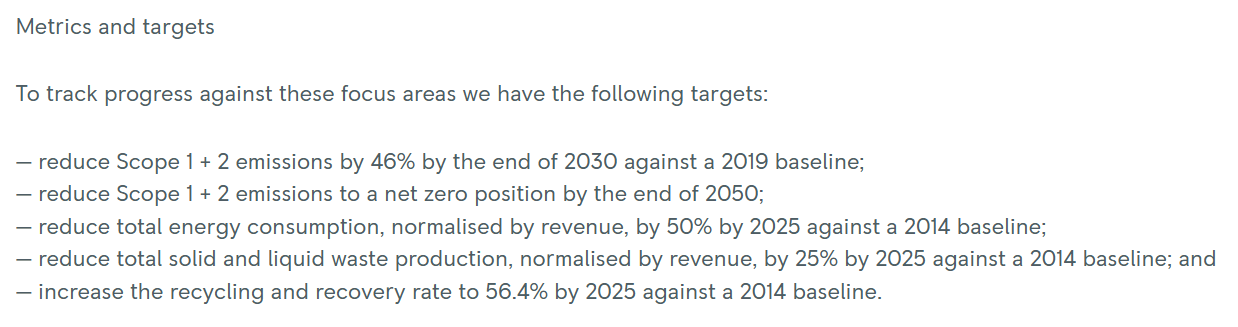
Rolls-Royce has committed to reaching net-zero carbon emissions by 2050 across its operations and products. The company is also investing in cleaner propulsion systems, including hydrogen, electric, and hybrid-electric technologies.

Rolls Royce net zero targets
Source: Rolls-Royce

Its aerospace division focuses on improving engine efficiency and developing new power systems that can reduce fuel consumption and emissions. Here are the company’s net zero targets:

easyJet has also committed to net-zero emissions by 2050. The airline has cut carbon emissions per passenger-kilometer by over 30% since 2000. This change comes mainly from updating its fleet and improving operations.

easyjet net zero roadmap
Source: easyJet

However, aviation remains difficult to decarbonize. Aircraft have long lifespans, often operating for 20–30 years. This slows the transition to new technology. To bridge this gap, airlines are investing in multiple solutions at the same time:

  • Fleet renewal with more fuel-efficient aircraft,
  • Use of sustainable aviation fuel (SAF), and
  • Research into hydrogen and electric propulsion.

easyJet has also entered partnerships with aircraft manufacturers and technology companies to explore future zero-emission aircraft designs. Rolls-Royce, meanwhile, is positioning itself as a long-term supplier of advanced propulsion systems for next-generation aviation.

The Roadblocks Standing Between Hydrogen and Commercial Flight

Hydrogen aviation is still in the early development stage, but global interest is rising.

The European Union, the United States, and several Asian countries are funding hydrogen research programs. Governments see hydrogen as a potential solution for hard-to-decarbonize sectors, including aviation, shipping, and heavy industry.

Airbus has also launched its ZEROe program, aiming to develop a hydrogen-powered commercial aircraft by the mid-2030s. However, the company has recently adjusted timelines, reflecting technical challenges in hydrogen storage, infrastructure, and certification.

Industry forecasts suggest that hydrogen aircraft will likely enter the market first in regional or short-haul routes before expanding further. But key challenges remain, including:

  • Lack of hydrogen production infrastructure at airports,
  • High cost of green hydrogen compared to jet fuel,
  • Need for redesigned aircraft and engine systems, and
  • Certification and safety approval timelines.

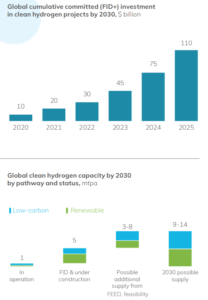
Despite these barriers, investment is increasing. According to the Hydrogen Council, global hydrogen investment commitments have reached $680 billion in announced projects through 2030, covering production, transport, and end-use applications.

As of the latest updates, this committed capital has passed $110 billion across more than 500 mature projects worldwide. Meanwhile, the current project pipeline could support up
to 14 mtpa of clean hydrogen capacity by the decade’s end.

clean hydrogen committed capital
Source: Hydrogen Council

Aviation is expected to be a smaller but strategic part of this broader hydrogen economy.

A Multi-Fuel Future for Aviation Is Taking Shape

The Rolls-Royce and easyJet hydrogen engine test reflects a broader shift in aviation. The sector is under pressure from governments, investors, and consumers to reduce emissions. At the same time, demand for air travel continues to grow.

This creates a structural challenge. Efficiency improvements alone are not enough to meet long-term climate goals. As a result, the industry is moving toward a multi-path approach:

  • SAF for near-term emission cuts,
  • Hydrogen for long-term zero-carbon flight, and
  • Electric propulsion for short regional routes.

Each technology is still developing, and none is ready to fully replace jet fuel today. However, tests like the NASA hydrogen engine trial show that progress is moving from theory to real-world engineering.

For Rolls-Royce and easyJet, the results support long-term plans to transform aviation into a lower-carbon industry.

For the wider market, it signals that hydrogen is now entering practical testing inside real aerospace systems, even if commercial use is still years away.

The post Hydrogen Jet Breakthrough at NASA: Rolls-Royce and easyJet Push Aviation Toward Zero-Carbon Flight appeared first on Carbon Credits.
Microsoft May Shelve 2030 Clean Energy Target Amid AI Power Consumption Growth

Microsoft May Shelve 2030 Clean Energy Target Amid AI Power Consumption Growth

Microsoft is reportedly reconsidering parts of its 2030 clean energy strategy, including its ambitious goal to match 100% of its electricity use with carbon-free energy on an hourly basis, Bloomberg reports.

The review arrives as AI infrastructure grows quickly. This surge is pushing electricity demand well past earlier forecasts.

Data Centers Become the New Power Giants

The company’s flagship commitment, known as the “100/100/0” goal, was announced in 2021. It aims to cover 100% of electricity use, 100% of the time, with zero-carbon energy bought from the same regional grids where the power is consumed. This is much stricter than annual matching, which allows renewable energy credits to balance energy use over a year, not just by the hour.

Microsoft has met its annual goal of matching 100% of its electricity use with renewable energy. This was mainly achieved through long-term power purchase agreements (PPAs). However, hourly matching requires far deeper coordination between real-time electricity demand and carbon-free supply.

Microsoft clean energy potfolio
Source: Microsoft

As AI workloads scale, this balance is becoming more difficult to maintain.

Global electricity demand from data centers is rising sharply, and AI is now the main driver of that growth. The International Energy Agency (IEA) predicts that global data center electricity use will hit about 945 terawatt-hours (TWh) by 2030. This is almost double the current levels. This would represent close to 3% of total global electricity demand.

Within that growth, AI is the fastest-expanding segment. The IEA predicts that electricity demand from AI-optimized data centers will rise over four times by 2030. This surge is fueled by extensive model training and inference tasks.

data center electricity demand due AI 2030
Source: IEA

In the U.S., electricity use by data centers will rise by about 240 TWh by 2030. This is over a 130% increase from 2024 levels, based on industry analysis.

The IEA notes that data centers might make up over 20% of electricity demand growth in advanced economies by 2030. This means they could become a key source of power demand in today’s grids.

This structural shift is now directly impacting corporate clean energy strategies, especially for hyperscale technology firms.

The Hidden Gap Between Green Energy and AI Growth

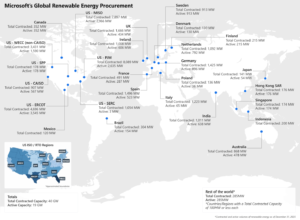
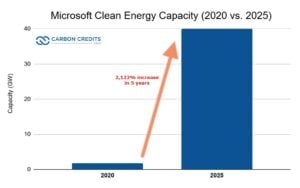
Microsoft has built one of the largest corporate clean energy procurement portfolios in the world. The company has locked in over 40 gigawatts (GW) of renewable energy capacity. This spans 26 countries and includes more than 400 power purchase agreements (PPAs).

Microsoft Clean Energy Capacity (2020 vs. 2025)

This includes partnerships with key developers. One example is a 10.5 GW agreement with Brookfield Renewable. This deal aims to speed up the renewable energy rollout while also giving multi-year demand signals for new projects.

Microsoft partners with over 20 energy firms. Each manages at least five renewable projects linked to its procurement pipeline. Several partners now have over 1 GW of contracted capacity each, linked to Microsoft demand. These investments help Microsoft reach its climate goals, including its promise to be carbon negative by 2030.

SEE MORE:

However, the company’s electricity demand is rising quickly due to AI infrastructure expansion. Large AI model training needs big computing clusters. These clusters run all the time and use much more energy than regular cloud tasks.

This creates a growing gap between clean energy procurement and real-time electricity usage.

Big Tech Faces a Structural Clean Energy Bottleneck

Microsoft’s challenge is not isolated. It reflects a broader structural issue across the technology sector. Despite strong renewable energy procurement activity, overall corporate clean power contracting has slowed.

BloombergNEF reports that corporate buyers signed contracts for about 55.9 GW of clean power in 2025. This is a 10% drop from last year. It’s the first big slowdown in nearly ten years.

However, large technology companies remain dominant buyers. Amazon, Microsoft, Google, and Meta together accounted for about 49% of global corporate clean energy PPA volumes in 2025. This concentration highlights how heavily AI-driven firms now influence renewable energy markets. The chart below shows these tech giants’ planned data center growth in MW.

big tech AI data center planned growth 2030

Another shift is also emerging. These companies are looking more into nuclear energy contracts. Recently, these contracts made up about 23% of Amazon and Meta’s clean energy purchases.

This shows a rising need for baseload clean power. It offers a steady electricity supply, no matter the weather, which is crucial for AI data centers.

Policy Changes and Energy Accounting Rules Add Pressure

Regulatory and accounting frameworks are also evolving, increasing pressure on corporate clean energy strategies. The Greenhouse Gas (GHG) Protocol is the main global standard for tracking corporate emissions. It is now updating its Scope 2 emissions method.

Proposed changes could require companies to move toward:

  • Hourly matching of electricity consumption and clean energy supply, 
  • More localized energy procurement rules, and
  • Stricter tracking of grid emissions data.

If implemented, these changes would make Microsoft’s hourly matching target more aligned with future reporting standards, but also significantly more difficult to achieve at scale. At the same time, policy uncertainty in major markets is affecting clean energy investment.

In the United States, corporate power purchase agreements (PPAs) hit a record 29.5 GW. However, the number of unique buyers dropped sharply to only 33 companies. This change shows tighter market conditions and uncertainty about tax credits and energy incentives.

From Annual Matching to Hourly Reality

The clean energy market is also shifting toward more reliable power structures. Developers are increasingly offering:

  • Hybrid solar and wind systems, 
  • Co-located storage projects, 
  • Long-term nuclear PPAs, and
  • Firm power contracts designed for 24/7 supply. 

This trend is driven by the needs of AI data centers, which require constant electricity rather than intermittent supply. The IEA has warned that grid flexibility and firm clean power will become critical to managing rising electricity demand from digital infrastructure.

For hyperscale companies, this means a renewable energy strategy is no longer just about volume. It is now about timing, location, and reliability.

AI Is Redefining Corporate Climate Targets

Microsoft’s potential reassessment of its 2030 hourly clean energy goal highlights a wider shift in the global energy system. AI-driven electricity demand is growing faster than most long-term forecasts made just a few years ago.

At the same time, clean energy procurement is becoming more complex due to grid constraints, regulatory changes, and the need for continuous power supply.

Microsoft remains committed to its carbon-negative by 2030 goal. However, its situation illustrates a broader reality for the tech sector: clean energy targets are now colliding with the physical limits of electricity systems.

As AI continues to expand, the central challenge is no longer just sourcing renewable energy. It is matching clean electricity to real-time demand on a global scale. This tension is now shaping the next phase of corporate climate strategy across the world’s largest technology companies.

The post Microsoft May Shelve 2030 Clean Energy Target Amid AI Power Consumption Growth appeared first on Carbon Credits.
France Roadmap to End Fossil Fuels by 2050: Climate Strategy, Targets, and Emissions Outlook Explained

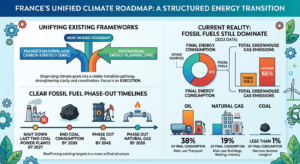
France has published a structured policy document titled “Roadmap for Transitioning Away from Fossil Fuels” (2026) by the French Government. This roadmap sets out how the country plans to reduce its dependence on coal, oil, and natural gas over the coming decades. It does not introduce entirely new commitments. Instead, it consolidates existing climate and energy strategies into a single framework and gives them a clearer direction.

The plan aligns with the goals of the Paris Agreement, especially the global objective of achieving net-zero emissions by 2050. It also reflects decisions from the Global Stocktake under COP28 guidance, which emphasized a fair, orderly, and science-based transition away from fossil fuels.

The roadmap was also influenced by broader European Union commitments to decarbonize the energy system and reduce dependence on fossil fuels.

A Unified Climate Strategy Built on Existing Policies

The roadmap is built mainly on two long-standing national frameworks: France’s National Low Carbon Strategy (SNBC) and the Multiannual Energy Planning (PPE).

These policies already define France’s climate targets and energy direction. The new roadmap brings them together under a single umbrella to enhance clarity and coordination.

  • It confirms clear phase-out timelines for fossil fuels. Coal consumption is expected to end by 2030, oil by 2045, and natural gas by 2050.

In addition, France plans to shut down its last two coal-fired power plants by 2027. These steps are already part of the national energy policy but are now reaffirmed in a more unified structure.

This approach shows that France is organizing its climate goals into a more visible transition pathway. The focus is on execution rather than new ambition.

Fossil Fuels Still Dominate Energy Use

Despite strong policy direction, fossil fuels continue to play a major role in France’s energy system. In 2023, fossil fuels accounted for slightly less than 60% of final energy consumption. They were also responsible for around 65% of total greenhouse gas emissions, according to French government climate data.

Oil remains the dominant fuel, mainly used in transport. It accounts for about 38% of final energy consumption. Natural gas accounts for around 19% of energy use, primarily in buildings, heating, and industry. Coal has now become marginal, representing less than 1% of total consumption.

A significant portion of these fossil fuels is imported, which creates energy security concerns. This dependence is one of the key reasons France is linking climate policy with energy sovereignty in this roadmap.

Transport Is the Core Focus of Oil Reduction

Transport is the largest source of emissions linked to oil consumption in France. The roadmap, therefore, places strong emphasis on electrification.

One of the key targets is for electric vehicles to represent 66% of new car sales by 2030. Alongside this, France is investing in charging infrastructure and expanding electrification to buses and heavy-duty vehicles. Public transport usage is also expected to increase by 25% by 2030.

These measures are designed to reduce oil demand in one of the most energy-intensive sectors. Transport decarbonization is seen as essential to meeting national emissions targets and reducing import dependency.

Buildings and Gas Phase-Out Strategy

Natural gas is widely used in buildings for heating and in some industrial applications. To reduce gas consumption, France is focusing on electrification and efficiency improvements.

A key measure is the ban on installing gas boilers in new residential and commercial buildings from the end of 2026. At the same time, the government plans to install around one million heat pumps per year by 2030.

Energy renovation of buildings is another major pillar. Better insulation and efficiency improvements are expected to significantly reduce heating demand. According to the roadmap, about 85 terawatt-hours of gas consumption could be replaced by domestically produced energy by 2030. This is equivalent to roughly 20% of current gas imports.

These actions show that France is targeting both demand reduction and fuel switching at the same time.

france

Clean Energy Expansion and Industrial Transition

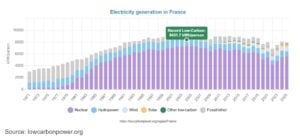
France’s roadmap places strong emphasis on expanding low-carbon energy production. The country already relies heavily on nuclear power for electricity generation, which keeps its power sector emissions relatively low.

According to data from RTE France, emissions from electricity generation have fallen to one of their lowest levels in recent years due to nuclear dominance and growing renewable capacity.

  • Looking ahead, France plans to expand offshore wind capacity to 15 GW by 2035 and add 1.3 GW of onshore wind annually. Solar photovoltaic capacity is expected to triple by 2035.

The country is also investing in emerging technologies. These include up to 8 GW of electrolyzers for green hydrogen production, a sixfold increase in biomethane output, and a doubling of biofuel use by 2035. Renewable heat production is also expected to double.

This diversified energy strategy aims to reduce dependence on fossil fuels while maintaining energy stability.

france renewable energy

Latest Emissions Data: Progress, But Slowing Momentum

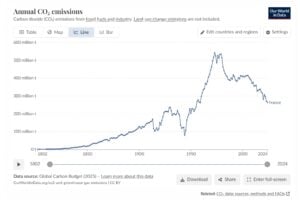
France has made long-term progress in reducing greenhouse gas emissions, but recent data shows a slowdown in the pace of reduction.

According to the European Environment Agency and French national statistics, total emissions in 2023 were around 376 million tonnes of CO₂ equivalent. In 2024, emissions fell slightly further to about 369 MtCO₂e. Early estimates for 2025 suggest emissions may have dropped to around 363 MtCO₂e, according to energy research estimates from Enerdata.

Overall, France has reduced emissions by roughly 35% compared to 1990 levels. However, this is still not fast enough to meet its 2030 climate targets.

france emissions

The IEA has noted that emission reductions in France are currently slower than required. The country would need a much faster decline rate to stay aligned with its national and EU climate commitments.

Transport remains the largest emitting sector, followed by buildings, industry, and agriculture. This sectoral imbalance explains why the roadmap focuses so heavily on electrification and efficiency improvements.

Improvements in Air, Water, and Land Protection

France has made progress in several environmental areas beyond emissions. Air quality has improved due to reduced pollution levels. Water quality is also relatively strong, with a majority of water bodies meeting good chemical standards.

Protected natural areas now cover more than 31% of the territory, exceeding earlier 2030 targets. Waste generation per person has also declined over the past decade.

However, challenges remain. Renewable energy still represents only about 22.3% of final energy consumption, below the 2030 target of 33%. Recycling systems, especially for plastics, are not yet fully efficient. Organic farming also remains below national targets.

This shows that environmental progress is real but uneven across sectors.

Clarity vs Action: France’s Climate Plan Faces the Real Test

Environmental experts and organizations have responded with mixed views. Speaking to AFP, Anne Bringault of the Climate Action Network said France has at least set clear timelines for phasing out fossil fuels after years of slow policy movement.

At the same time, Greenpeace France’s Lorelei Limousin described the roadmap as an early step but insufficient given the scale of the climate crisis. The concern is that existing policies may not be strong enough to accelerate emissions cuts quickly.

These reactions reflect a broader debate in climate policy: whether long-term planning is being matched by short-term action.

Thus, France’s fossil fuel roadmap provides clarity and structure by consolidating the existing policies. It provides direction, but success will depend on how quickly it can turn policy into measurable emissions reductions.

The post France Roadmap to End Fossil Fuels by 2050: Climate Strategy, Targets, and Emissions Outlook Explained appeared first on Carbon Credits.
Boom-Bust-Bounce: Understanding Nickel’s Latest Price Cycle

Nickel’s latest price cycle is more than just a story of volatility. It shows how fast sentiment can flip in a market now shaped by policy, supply control, and long-term energy transition demand. The sharp move from a deep slump in late 2025 to a strong rebound in early 2026 has forced investors to rethink how they value nickel assets.

Let’s take a ride through nickel’s roller coaster journey.

Nickel Price Crash to Recovery: What Triggered the 2025–2026 Market Swing?

The downturn began with oversupply. By late 2025, nickel prices had dropped to around $14,000–$15,000 per tonne. A surge in production from Indonesia flooded the market and pushed prices lower. According to Reuters, prices touched near $14,235 per tonne during this phase. Producers struggled, margins shrank, and sentiment turned weak.

Then came the reversal.

Indonesia’s Supply Moves Drive Nickel Price Rebound

In early 2026, Indonesia changed the game. The country tightened mining quotas, slowed permits, and signaled more control over supply. Since Indonesia accounts for more than half of global nickel output, even small policy shifts had a big impact.

Nickel prices retreated to $19,039.42/ton globally and ¥129,463/ton in China, representing a 2.76% decline. This downward movement is primarily driven by investor profit-taking after the metal recently hit a two-year high. Underlying fundamentals remain strong, supported by tight supply narratives. Specifically, Indonesia’s reduced mining quotas and a global sulfur supply squeeze—triggered by Middle East transit disruptions—continue to establish a higher cost floor. Despite the pullback, structural deficits in the broader battery metal supply chain persist.

Here’s a complete one-year presentation of the nickel price cycle:

Nickel Spot Price

Unit: USD/Tonne

Loading Chart…

${sign}${change.toLocaleString(undefined, {minimumFractionDigits: 2})} (${sign}${pct.toFixed(2)}%)

`;
};

Highcharts.stockChart(‘chart-69fcd6b3454e3’, {
chart: { backgroundColor: ‘#ffffff’, style: { fontFamily: ‘”Helvetica Neue”, Helvetica, Arial, sans-serif’ }, events: { load: function() { updateHeader(this); drawLogo(this); }, redraw: function() { updateHeader(this); drawLogo(this); } } },
xAxis: { min: null, max: null },
yAxis: yAxisConfig,
legend: { enabled: false, align: ‘right’, layout: ‘vertical’, verticalAlign: ‘middle’ },
rangeSelector: { buttons: [{ type: ‘day’, count: 7, text: ‘1D’ }, { type: ‘week’, count: 1, text: ‘1W’ }, { type: ‘month’, count: 1, text: ‘1M’ }, { type: ‘ytd’, text: ‘YTD’ }, { type: ‘year’, count: 1, text: ‘1Y’ }, { type: ‘all’, text: ‘All’ }], selected: 4, inputEnabled: false },
exporting: { enabled: true, filename: ‘Nickel Spot Price – CarbonCredits’, buttons: { contextButton: { menuItems: [‘viewFullscreen’, ‘downloadPNG’] } }, chartOptions: { navigator: { enabled: false }, scrollbar: { enabled: false }, rangeSelector: { enabled: false }, credits: { enabled: false }, title: { text: ‘Nickel Spot Price’, align: ‘center’, style: { fontSize: ’22px’, fontWeight: ‘bold’ } }, subtitle: { text: null }, chart: { spacingTop: 10, spacingBottom: 50, events: { load: function() { this.renderer.text(‘Source: Nickel Spot Price Chart by CarbonCredits.com’, 20, this.chartHeight – 20).css({ color: ‘#999′, fontSize: ’11px’ }).add(); } } } } },
series: series,
credits: { enabled: false },
navigator: { enabled: true, maskFill: ‘rgba(0, 85, 159, 0.1)’ },
scrollbar: { enabled: true },
title: { text: null },
subtitle: { text: null }
});
}).catch(err => { console.error(err); document.getElementById(‘chart-69fcd6b3454e3’).innerHTML = ‘

Error loading chart data.

‘; });
};
document.readyState === ‘loading’ ? document.addEventListener(“DOMContentLoaded”, initChart) : initChart();
})();

Singapore and the Philippines Launch Historic Article 6 Carbon Credit Deal, Boosting Climate Finance in Asia

Singapore and the Philippines Launch Historic Article 6 Carbon Credit Deal, Boosting Climate Finance in Asia

Singapore and the Philippines have signed a major carbon credit agreement, which could reshape climate finance in Southeast Asia. The deal is the first bilateral carbon credit partnership between the two countries under Article 6 of the Paris Agreement.

The framework will allow Singapore to buy high-quality carbon credits from projects in the Philippines. In return, the projects will receive funding for emissions reduction and climate programs.

The deal shows how international carbon markets are becoming a larger part of global climate policy. Many countries now use carbon credits to help meet net-zero goals. The credits also help fund clean energy, forest restoration, and climate adaptation projects.

Southeast Asia will likely be one of the fastest-growing regions for these investments. This is due to its abundant renewable energy resources and natural carbon sinks.

Inside the Landmark Singapore-Philippines Climate Deal

Singapore and the Philippines both say the agreement will support emissions cuts while creating economic and environmental benefits. Grace Fu, Singapore’s Minister for Sustainability and the Environment and Minister-in-charge of Trade Relations, said:

“Singapore and the Philippines share a strong and longstanding partnership… This Agreement will deepen collaboration between our two countries, channel climate finance towards impactful projects in the Philippines, and unlock new opportunities in carbon markets for businesses and local communities.”

Juan Miguel T. Cuna, the Philippines’ Department of Environment and Natural Resources Secretary, remarked:

“The signing of our Implementation Agreement marks a significant step forward in our shared pursuit of a low-carbon and climate-resilient future for our region…For the Philippines, entering into this Implementation Agreement under Article 6.2 is a strategic decision – one grounded in our national priorities, our development aspirations, and our commitment to global climate action.”

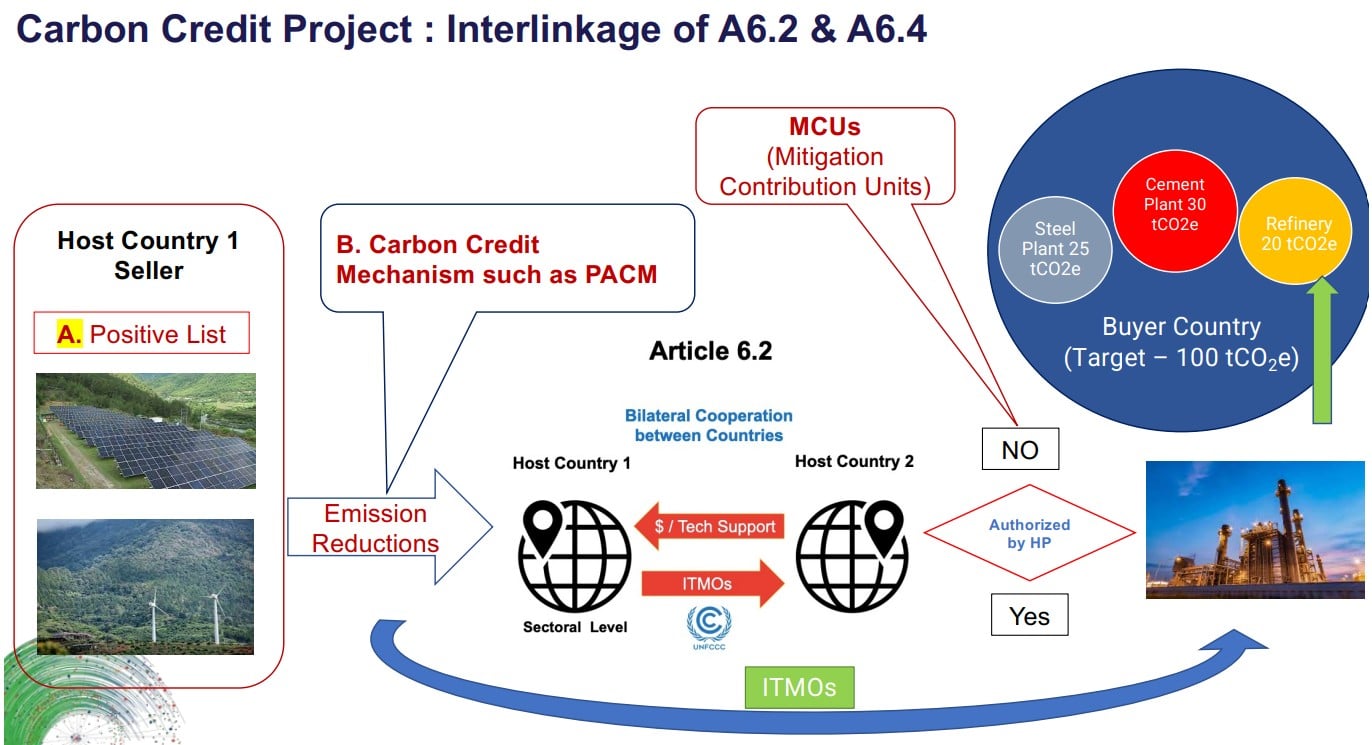
The deal creates a legal framework for cross-border carbon credit trading under Article 6.2 of the Paris Agreement. Article 6 allows countries to cooperate on emissions reductions by transferring carbon credits between nations. These credits are called “internationally transferred mitigation outcomes” or ITMOs.

Carbon Credit generation article 6
Source: UNFCCC

Under the agreement, Singapore-based companies can buy carbon credits from approved projects in the Philippines. These projects can include:

The Philippine government will authorize selected projects. It will also oversee environmental safeguards and emissions accounting rules.

Singapore’s Ministry of Trade and Industry said this deal will diversify the country’s decarbonization strategy. It will also support climate action in the region.

This is Singapore’s sixth Article 6 agreement. The country already has similar partnerships with Ghana, Papua New Guinea, Bhutan, Peru, and Chile.

Singapore Is Expanding Its Carbon Market Strategy

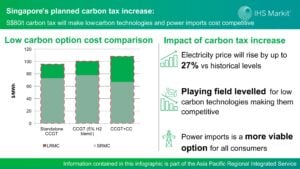
Singapore has become one of Asia’s largest carbon market hubs. The country introduced Southeast Asia’s first national carbon tax in 2019. The tax applies to large facilities that produce at least 25,000 tonnes of greenhouse gas emissions each year.

The Asian nation plans to raise the carbon tax from S$25 per tonne today to between S$50 and S$80 per tonne by 2030. To help companies manage costs, Singapore allows businesses to use eligible international carbon credits to offset up to 5% of taxable emissions.

singapore carbon tax increase
Source: Image from S&P Global

That policy is increasing demand for high-quality carbon credits across Asia.

Singapore has also committed to reaching net-zero emissions by 2050. The government says carbon markets will help with other climate tools. These include renewable energy, energy efficiency, and low-carbon technologies.

The country faces significant energy constraints due to its small land area. Singapore imports most of its energy and has limited space for large solar or wind projects. Because of this, international carbon markets are becoming more important to its climate strategy.

Singapore is also trying to become a global center for carbon trading and climate finance. The country already hosts several large carbon credit exchanges and climate finance firms. These include Climate Impact X. It’s a global carbon marketplace supported by DBS Bank, Singapore Exchange, Standard Chartered, and Temasek.

Why the Philippines Could Become a Major Carbon Credit Supplier

For the Philippines, the agreement could bring new foreign investment into climate and environmental projects. The country is highly vulnerable to climate change. The World Risk Index shows that the Philippines often ranks among the world’s most disaster-prone countries. This is due to typhoons, floods, and rising sea levels.

At the same time, the Philippines has strong renewable energy and nature-based carbon potential. The country has one of the world’s largest geothermal industries. It also has major opportunities in solar, wind, mangrove restoration, and tropical forestry.

According to the Department of Energy, the Philippines aims to increase the renewable energy share of its power mix to 35% by 2030 and 50% by 2040.

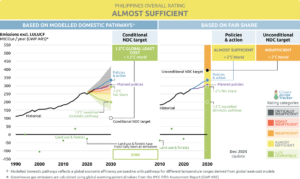
The government aims to cut greenhouse gas emissions by up to 75% by 2030. This goal is part of its Nationally Determined Contribution. However, much of that target depends on international financial support.

philippines NDC and emission reduction target
Source: Image from Climate Action Tracker

Carbon finance could help support those goals. Carbon market projects can create jobs, boost biodiversity, restore forests, and enhance climate resilience. Nature-based projects are expected to play a major role here.

The Philippines has vital mangrove and tropical forest ecosystems. These ecosystems absorb a lot of carbon dioxide. Mangroves are especially valuable because they store carbon more efficiently than many land forests.

Carbon Markets Are Expanding Across Southeast Asia

The Singapore-Philippines agreement comes as global carbon markets continue to grow. According to MSCI Carbon Markets, the voluntary carbon market was worth about $2 billion in recent years. Some forecasts suggest the market might surpass $100 billion each year. This could happen as climate rules strengthen and more countries commit to net-zero goals.

carbon credit market value 2050 MSCI

Today, over 140 countries have set net-zero targets. These goals cover about 90% of the world’s GDP, says the United Nations. Large companies are buying more carbon credits. They do this to offset emissions from sectors like aviation, shipping, heavy industry, and supply chains.

Southeast Asia will likely be a key carbon credit hub. This is due to its forests, mangroves, peatlands, and renewable energy resources. Industry estimates the region may need more than $1 trillion in climate investment by 2030. Carbon markets could help provide part of that funding.

Countries including Indonesia, Vietnam, Thailand, and Malaysia are also developing carbon trading systems and Article 6 frameworks.

However, investors still want better monitoring systems, clearer verification standards, and stronger environmental safeguards. They have concerns that some carbon credits exaggerate climate benefits.

Supporters believe Article 6 agreements could address this concern and boost market credibility. They offer government oversight, formal accounting rules, and safeguards against double-counting.

Carbon Finance Is Becoming Central to Net-Zero Strategies

The Singapore-Philippines agreement shows how carbon markets are becoming more connected to national climate strategies. The deal could also help increase climate finance flows into Southeast Asia. International carbon markets could help provide additional funding alongside public and private investments.

For Singapore, the agreement strengthens its position as a regional climate finance hub.

For the Philippines, this could attract new investment in renewable energy, forestry, and climate resilience projects. It would also help meet the country’s long-term emissions goals.

More importantly, the partnership reflects a larger global trend. Carbon markets are shifting from small pilot systems to larger, government-backed frameworks. These new systems connect directly to national net-zero goals and international climate efforts.

The post Singapore and the Philippines Launch Historic Article 6 Carbon Credit Deal, Boosting Climate Finance in Asia appeared first on Carbon Credits.
BYD’s Global EV Surge Masks Profit Pressure as Europe Drives Record Demand

BYD Electric SUV Generates 30,000+ Orders in 24 Hours at Sub-$40K Price Point

BYD, the biggest electric vehicle (EV) maker in the world, is experiencing high global demand for its new models. This comes even as it deals with rising costs and shrinking margins at home. The Chinese automaker is growing fast in Europe and other markets. It is also launching new high-performance cars for the mass premium segment.

The latest example is its new three-row electric SUV. It got over 30,000 orders in just 24 hours after pre-sales began, according to Electrek. The strong response shows that consumers still want electric SUVs. This is true even in a more competitive and price-sensitive EV market.

BYD is speeding up its global expansion, especially in Europe. EV adoption in the region is growing fast because of high fuel prices and tougher emissions rules.

Inside the 30,000-Order SUV Launch That Shocked the Market

BYD’s new three-row SUV, positioned as a flagship family model, has become one of its fastest-selling launches to date. Pre-orders passed 30,000 units within a single day of unveiling at the Beijing Auto Show.

The vehicle is priced from around 250,000 yuan ($36,500), placing it in the mid-range SUV category. It competes with models such as the Hyundai IONIQ 9 and Kia EV9, but at a significantly lower price point.

Key specifications include:

  • Range of up to 590 miles (CLTC cycle),
  • Up to 785 horsepower in dual-motor versions,
  • Fast-charging capability based on BYD’s latest battery system, and
  • Three-row seating for seven passengers.

The strong demand suggests that affordability and range remain key drivers of EV adoption, especially in large SUV segments where electrification is still developing.

Why China’s EV Price War Is Squeezing Profits

Despite strong product demand, BYD is facing financial pressure in its home market. The company reported a 55% drop in net profit in Q1 2026, falling to 4.08 billion yuan ($597 million). Revenue also declined by 12% to 150.2 billion yuan, according to Yahoo Finance.

The decline reflects intensifying competition in China’s EV sector, where multiple automakers are competing aggressively on price and incentives. Industry-wide discounting has reduced margins across the sector.

At the same time, BYD continues to invest heavily in research and development. The company invested around 11.3 billion yuan in R&D during the first quarter of 2026. This funding boosted developments in battery systems, electric drivetrains, and charging technology.

Overseas Expansion Becomes a Key Growth Engine

While domestic conditions remain challenging, BYD’s international business is expanding rapidly. In Q1 2026, overseas sales reached about 321,165 vehicles, representing nearly 46% of total NEV sales, according to industry reports. This marks a significant increase compared to previous years.

Europe has become a key growth region. BYD’s registrations in the EU jumped about 148% year-on-year in March. They reached 37,580 vehicles, as reported by the European Automobile Manufacturers’ Association.

BYD europe ev sales march 2026
Source: Electric-Vehicles.com

The broader European EV market is also expanding. Battery electric vehicles accounted for a growing share of total car sales as fuel prices remain elevated and emissions rules tighten.

SEE MORE: How BYD’s European Surge and Canada Deal Are Challenging Tesla’s EV Dominance

The key drivers behind BYD’s European growth are:

  • Rising oil prices are linked to geopolitical tensions,
  • Faster EV adoption policies in EU markets,
  • Expanding charging infrastructure, and
  • Competitive pricing versus European automakers.

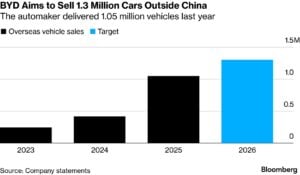
BYD is set to grow its manufacturing in Europe, including its plant in Hungary. The expansion aims to meet local demand and cut logistics costs. The Chinese EV giant also aims to sell 1.3 million units outside China.

BYD EV target sales for 2026

Range, Price, and Scale: The New EV Winning Formula

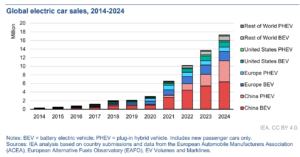
The global EV market continues to expand at a rapid pace. In 2025, worldwide EV sales hit around 20.7 million units. For the first time, EVs made up over 25% of global car sales, according to the International Energy Agency estimates.

China remains the largest EV market, accounting for more than two-thirds of global EV sales and over 70% of global EV production capacity.

global EV sales 2024 china lead
Source: IEA

This scale gives BYD a strong manufacturing advantage, particularly in cost efficiency and supply chain integration. At the same time, global demand is being supported by:

  • Government subsidies and emissions regulations,
  • Corporate fleet electrification,
  • Rising fuel costs in key markets, and
  • Expansion of charging networks.

These factors are expected to support continued EV growth through the end of the decade.  Some forecasts suggest annual EV sales could exceed 40 million units by 2030.

High Fuel Prices Are Rewriting the EV Adoption Curve

Recent spikes in global oil prices have also influenced consumer behavior. Crude oil prices surged following geopolitical tensions in the Middle East, pushing Brent crude above $100 per barrel earlier in the year.

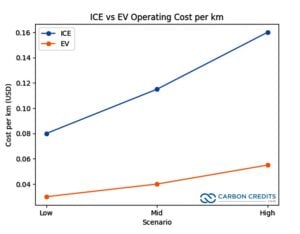
Higher fuel costs have historically increased demand for electric vehicles, particularly in Europe and Asia. As a result, the cost of running an EV becomes much lower than driving a gas-powered vehicle. This trend has contributed to BYD’s strong export growth in markets such as Australia, New Zealand, and Southeast Asia.

ICE vs EV operating cost per km
Source: Estimates from ICCT, IEA, U.S. DOE

BYD’s leadership has stated that overseas sales could eventually account for half of total company revenue if current trends continue.

The company is boosting its presence in Europe by applying to join the European Automobile Manufacturers’ Association (ACEA). This move shows a stronger link to regional rules and industry systems.

BYD’s Strategy: Global Growth vs Domestic Margin Pressure

BYD is entering a phase of strong global expansion, but also rising domestic pressure. The company’s new SUV launch shows that consumer demand for affordable, high-range electric vehicles remains strong. At the same time, falling profits highlight the impact of price competition in China’s crowded EV market.

Internationally, BYD is gaining momentum, particularly in Europe, where high fuel prices and policy support are accelerating EV adoption.

As global EV sales grow and electrification spreads in key markets, BYD stays a key player in low-carbon transport. However, its future performance will depend on how well it balances aggressive global expansion with profitability in an increasingly competitive industry.

The post BYD’s Global EV Surge Masks Profit Pressure as Europe Drives Record Demand appeared first on Carbon Credits.