Philippines Launches World’s Largest Solar-Plus-Battery Project in Historic Clean Energy Leap

Philippines Powers Up World's Largest Solar-Plus-Battery Project in Historic Clean Energy Leap

The Philippines has reached a major clean energy milestone. President Ferdinand Marcos Jr. recently inaugurated the first phase of the MTerra Solar Project, which is set to become the world’s largest integrated solar and battery energy storage facility on a single site once fully completed.

The project comes as countries race to expand renewable energy, strengthen energy security, and cut greenhouse gas emissions. For the Philippines, it also marks one of the country’s biggest investments in clean electricity.

A Record-Breaking Renewable Energy Project

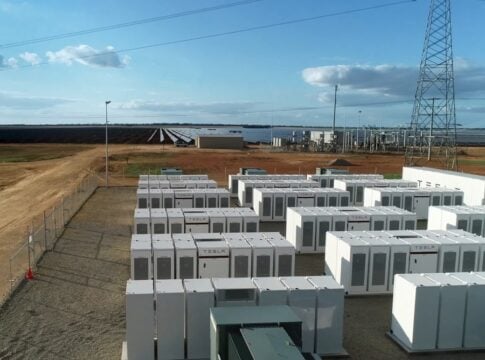
The first phase of MTerra Solar is in Nueva Ecija and Bulacan and has generated 1,373 megawatts (MW) of solar power. Additionally, it features 825 MW of battery energy storage, which holds 3,300 megawatt-hours (MWh) of capacity. It has fully energized 741 battery units. This makes it one of the largest solar and battery projects in the world.

When fully completed, the project will deliver 3,500 MWp of solar capacity backed by 4,500 MWh of battery storage. It could provide electricity to over 2.4 million Filipino homes.

  • This will help avoid about 4.3 million metric tons of carbon dioxide emissions each year, as stated by the Philippine government.

Meralco PowerGen (MGEN) and global investor Actis developed the project, which has recorded over 30 million work hours with no lost-time injuries. Following final grid tests, Phase 1 will begin supplying 600 MW of clean electricity under a long-term power agreement with Meralco.

Philippine largest solar and battery storage project launch

Why Batteries Are the Missing Piece of Clean Energy

Solar panels only generate electricity during the day. Battery storage solves that challenge by storing excess solar power for use after sunset or during periods of high electricity demand. This helps stabilize the grid and reduces the need for fossil fuel power plants.

The International Energy Agency (IEA) says battery storage is becoming one of the fastest-growing energy technologies in the world. As more countries add solar and wind power, large battery systems are becoming essential for delivering reliable electricity around the clock.

For the Philippines, this is especially important. The country has long depended on imported coal and natural gas for power generation. Large battery systems can help integrate more renewable energy while improving grid reliability and reducing fuel imports.

Supporting the Philippines’ Clean Energy Goals

The project also supports the country’s long-term climate plans.

The Philippine Energy Plan targets raising renewable energy’s share in electricity generation to 35% by 2030 and 50% by 2040. Expanding large-scale solar and battery storage is expected to play a major role in reaching those targets.

PEP emissions 2050
Source: Philippine Department of Energy

At the same time, electricity demand continues to grow because of population growth, industrial expansion, and digital infrastructure. The Department of Energy (DOE) says the country will need a lot of new power sources in the next twenty years to meet growing demand.

Projects like MTerra Solar help meet that need while reducing emissions. They also improve energy security by producing more electricity from domestic renewable resources instead of imported fossil fuels.

President Marcos said at the inauguration that this project aims to produce clean electricity. It will also help create a stronger, more reliable, and resilient energy system for the Philippines. He further noted that the current energy mix–

“… leaves us more vulnerable to fluctuations in global fuel prices and developments in the international market, as we have experienced in the last few months. It underscores the importance of diversifying our energy sources, and how we must be committed to moving that mix in the direction to favor renewables.”

Reducing Emissions While Strengthening Energy Security

The Philippines still depends heavily on fossil fuels to keep the lights on. According to the DOE, coal supplied about 60-62% of the country’s electricity generation in 2024, making it by far the largest source of power.

historical capacity and generation by fuel philippines
Source: SIPET

Renewable energy sources like geothermal, hydropower, solar, wind, and biomass made up about 25%. Natural gas supplied most of the rest of the electricity.

This reliance on imported coal and fuel exposes the country to global price swings and supply risks. The IEA notes that many countries now prioritize cutting down on imported fossil fuels. This shift is essential as energy demand keeps increasing.

Large solar and battery projects can help change that. Solar power produces electricity without burning fuel, while battery systems store excess electricity during the day and supply it when the sun is not shining. This reduces the need for coal and natural gas during peak demand and helps stabilize the power grid.

The shift is already underway. Solar generation in the Philippines grew over 30% in 2024. This makes it one of the fastest-growing electricity sources in the country, according to Ember’s Global Electricity Review. As more projects like MTerra come online, they will help lower emissions, improve energy security, and reduce exposure to volatile fossil fuel prices.

Philippine renewable energy generation
Source: SIPET

MGEN Expands Its Renewable Energy Portfolio

The MTerra Solar project is also an important step in Meralco PowerGen’s (MGEN) clean energy strategy.

The company is expanding its renewable energy portfolio while supporting the country’s transition to a lower-carbon power system. MGEN invests in solar, battery storage, and clean energy tech. This way, they can meet growing electricity demand without depending solely on fossil fuels.

The partnership with global investor Actis also shows growing international confidence in the Philippine renewable energy market. Large infrastructure investments like MTerra can attract more private capital and speed up the country’s clean energy transition.

Solar and Battery Storage Are Growing Worldwide

The Philippines is part of a much bigger global trend.

According to the International Energy Agency, renewable energy is expected to supply almost half of the world’s electricity by 2030, led by rapid growth in solar power. Solar is forecast to become the world’s largest source of installed electricity capacity before the end of this decade.

Battery storage is expanding just as quickly. The IEA reports that global battery use hit a new high in 2024. It will likely keep increasing as countries expand their solar and wind projects. Batteries help store excess renewable electricity and release it when demand is high, making clean energy more reliable.

solar and wind generation 2025 IRENA
Source: IRENA

The International Renewable Energy Agency (IRENA) also reported a record rise in global renewable energy capacity in 2025. Solar energy made up the largest part of this growth.

A Milestone for the Philippines’ Energy Future

The launch of MTerra Solar is more than breaking a world record. It shows that the Philippines can deliver utility-scale clean energy projects that match the size of the world’s biggest renewable developments.

As electricity demand grows, projects that mix solar power with battery storage will likely set the new standard for reliable, low-carbon energy.

The record-breaking project supports the country’s broader climate goals under the Paris Agreement while helping to build a more resilient power system. It also offers a clear example of how renewable energy can strengthen both climate action and long-term energy security.

The post Philippines Launches World’s Largest Solar-Plus-Battery Project in Historic Clean Energy Leap appeared first on Carbon Credits.

Constellation Backs Texas-based Blue Energy to Speed Up SMR Deployment in the U.S.

The push for new nuclear power plants in the U.S. is accelerating. Electricity demand is rising due to artificial intelligence (AI), data centers, and industrial electrification. Recently, Blue Energy received a strategic investment from Constellation Technology Ventures, the venture capital branch of Constellation Energy (NASDAQ: CEG).

This investment highlights increased support for small modular reactors (SMRs) as the U.S. seeks reliable, carbon-free electricity that can be deployed faster than traditional nuclear plants.

Blue Energy’s Nuclear Model Focuses on Speed, Scale, and Lower Risk

Blue Energy, a startup focused on prefabricated nuclear power plants, announced that Constellation Technology Ventures has invested to enhance its innovative nuclear deployment model.

While financial terms remain undisclosed, this marks Constellation Technology Ventures’ first investment in a U.S.-based SMR developer.

Blue Energy plans to deploy the GE Vernova Hitachi BWRX-300, one of the most advanced SMR designs. Instead of building plants mostly on-site, often leading to delays, the company will manufacture large sections in shipyards using robotic fabrication before transporting them for final assembly.

The BWRX-300 can generate about 300 MW of carbon-free electricity—enough for hundreds of thousands of homes. This design builds on decades of experience with boiling water reactors, adding passive safety systems and simpler construction.

This approach aims to reduce construction risks, shorten project timelines, and attract traditional infrastructure investors.

BWRX-300
Source: gevernova.com

Jake Jurewicz, Blue Energy’s CEO, noted that rising electricity demand requires a new nuclear development approach. He believes partnering with Constellation combines proven reactor technology with an experienced operator and introduces financing models that make nuclear projects more predictable and scalable.

David Dardis, Constellation’s Senior Executive Vice President, stated that the investment shows their commitment to innovating ways to speed up advanced nuclear deployment while managing project risks.

Constellation Sees Opportunity

Constellation is the largest producer of carbon-free energy in the U.S. It operates the biggest fleet of nuclear power plants in the country.

The company owns 21 nuclear reactors across 12 stations, providing about 22 gigawatts (GW) of capacity. These reactors power millions of homes and help avoid tens of millions of metric tons of carbon emissions each year.

Nuclear plants run almost continuously, offering reliable baseload electricity that complements intermittent sources like wind and solar.

Constellation believes expanding nuclear generation is crucial as electricity demand grows. The company reports that demand is rising at its fastest rate in decades, driven mainly by AI data centers and electrification in various industries.

The investment in Blue Energy supports technologies that could bring new nuclear capacity online much faster than traditional projects.

Why Small Modular Reactors Matter

SMRs are a key focus of U.S. energy policy. They offer many benefits of conventional nuclear power while lowering financial and construction risks.

Unlike traditional reactors that generate over 1,000 megawatts (MW), SMRs typically produce up to 300 MW each. Multiple modules can combine to meet larger power needs. Furthermore, experts believe factory-built components could significantly cut project costs and timelines compared to traditional nuclear plants.

SMRs
Source: IEA

Thus, SMRs are increasingly seen as a solution to meet energy needs.

Financing Nuclear Like Infrastructure

One of Blue Energy’s key goals is to tackle a long-standing issue in the nuclear sector: financing. Traditional nuclear projects often need billions upfront and take over a decade to finish. This makes investors wary due to delays and cost overruns.

Blue Energy aims to change this by merging standardized reactor technology with modular manufacturing and financing structures common in offshore energy and infrastructure projects.

Large sections of each plant will be made in controlled shipyards using robotic manufacturing before being sent to project sites for assembly. The company argues that standardization can improve cost certainty, reduce risks, and help lenders finance projects like conventional infrastructure assets.

If successful, this approach could speed up deployment and lower financing costs for future nuclear projects.

Building on Earlier Momentum

The Constellation investment follows several key milestones for Blue Energy in 2026.

Earlier this year, the company raised $380 million and teamed up with GE Vernova to develop multi-gigawatt gas-to-nuclear projects. This hybrid strategy lets developers generate electricity with natural gas while preparing sites for nuclear generation, meeting immediate power needs without waiting for full reactor construction.

Blue Energy also reached an important U.S. Nuclear Regulatory Commission licensing milestone, supporting its goal of delivering nuclear power in 48 months or less under its phased deployment model.

  • The company plans to start early site work for its first Texas project in 2026, aiming for a final investment decision in 2027.

Rising Demand Creates New Opportunities

Interest in SMRs is growing as the U.S. faces its strongest electricity demand in years.

The U.S. Department of Energy says data centers might use 12% of total U.S. electricity by 2028. To be more precise, the EIA projects that data center server electricity consumption alone could reach 818 billion kilowatt-hours by 2050 under its High Electricity Demand case.

data center electricity demand
Source: EIA

And this rise is mainly due to AI infrastructure. Utilities and tech firms are looking for steady, carbon-free power sources to meet this demand.

  • The White House aims to expand U.S. nuclear capacity to 400 GW by 2050, while supporting 5 GW of new nuclear generation and reactor uprates by 2030.
  • Additionally, it offers tax incentives, loan programs, and licensing reforms. These efforts aim to cut development timelines.

These initiatives, along with private investment from major energy firms like Constellation, show that advanced nuclear is entering a new phase of commercialization.

Blue Energy’s partnership with the country’s largest nuclear operator brings validation and expertise. This helps them commercialize a model that makes nuclear power faster to build, easier to finance, and better for meeting America’s rising electricity demands.

The post Constellation Backs Texas-based Blue Energy to Speed Up SMR Deployment in the U.S. appeared first on Carbon Credits.

EU Unveils Biggest Carbon Market Overhaul Yet to Keep Industry Competitive and Net Zero on Track

EU Unveils Biggest Carbon Market Overhaul Yet to Keep Industry Competitive and Net Zero on Track

The European Union has proposed its biggest carbon market overhaul in years. The European Commission wants to keep the EU Emissions Trading System (EU ETS) at the center of Europe’s climate strategy while giving heavy industry more time and support to cut emissions.

The proposal is part of the EU’s plan to reduce net greenhouse gas emissions by 90% by 2040 and reach climate neutrality by 2050. If approved, the reforms would reshape how Europe prices carbon, funds industrial decarbonization, and supports new technologies such as permanent carbon removals.

Ursula von der Leyen, President of the EC remarket:

“The best way to reduce Europe’s fossil energy dependency is to power our economy with electricity from clean, homegrown sources. Today, we are proposing to make Europe the world’s first electro-powered continent. From lowering electricity prices to adapting our carbon market to the changing global realities, this is also an investment and independence plan. To keep the clean transition on track, bring relief to our industry, and support decarbonisation. Let’s switch it on.”

Europe Slows Carbon Cuts to Protect Industry

The biggest change is a slower reduction in the number of carbon allowances after 2030. The Commission proposes a new Linear Reduction Factor (LRF) of:

  • 3.7% per year from 2031 to 2035
  • 1.7% per year from 2036 to 2040

This is a more gradual path than the current trajectory. Brussels says the change will reduce pressure on industry while still keeping the EU on track for its 2040 climate goal.

The proposal recognizes that cutting emissions becomes harder as the easiest reductions are already made.

Heavy Industry Gets More Time to Decarbonize

The review also extends support for energy-intensive industries. Free carbon allowances for sectors such as steel, cement, and chemicals would continue beyond 2030, with the phase-out slowed until 2038 for sectors covered by the Carbon Border Adjustment Mechanism (CBAM).

However, companies will not receive these permits automatically. Most free allowances will be linked to real decarbonization investments in Europe.

The Commission says the principle is simple: money paid by industry into the ETS should help industry invest in cleaner production.

  • A separate proposal would increase free allocation worth about €6 billion between 2026 and 2030.

EU ETS review July 2026

A New €100 Billion Investment Engine

The review puts much more emphasis on investment. The Commission plans to create a €100 billion Industrial Decarbonisation Bank to help fund clean industrial projects across Europe.

Before 2030, the first phase of this bank will be the ETS Investment Booster.

The EU ETS Innovation Fund will continue supporting first commercial deployments of technologies such as hydrogen, carbon capture, batteries, and other clean industrial solutions.

The Modernisation Fund will keep helping lower-income EU countries upgrade energy systems and industry.

Member states would also be required to spend at least 50% of their ETS revenues on investments that reduce emissions in ETS-covered sectors.

Together, the Commission says these measures could mobilize more than €100 billion in decarbonization investment before 2030.

Europe’s Carbon Market Reaches More Sectors

The proposal also broadens the scope of the carbon market. The ETS would be strengthened for aviation and maritime transport and extended to municipal waste incineration.

The Commission says this will reduce loopholes, create a more level playing field, and align the EU system with international climate rules.

  • The EU ETS already covers about 40% of the bloc’s greenhouse gas emissions.

According to the Commission, emissions from ETS-covered sectors have fallen by around 50% since 2005, while the system has generated more than €260 billion in auction revenue since 2013.

EU ETS revenue 2025
Source: EC

That track record is one reason Brussels still sees carbon pricing as a core climate tool.

Carbon Removals Make a Historic Entry

One of the most important changes is the planned integration of permanent carbon removals into the EU ETS. The proposal would allow these removals to provide additional flexibility for sectors that are hardest to decarbonize.

The Commission says this will also help scale up carbon removal technologies across Europe. Potential beneficiaries could include:

  • Direct Air Capture (DAC),
  • Biochar,
  • Bioenergy with carbon capture and storage (BECCS), and
  • Mineralization projects.

This is significant because the EU ETS has historically focused on emissions reductions, not carbon removals. The change could create a new long-term demand source for high-quality removal credits.

Ben Rubin, Co-Founder and Executive Director of The Carbon Business Council, remarked on this:

“Today’s decision recognises something that science has long made clear: deep emissions reductions and carbon removal solutions are both needed to reach net zero. Residual emissions from hard-to-abate industries such as steel, cement, and chemicals require a durable, high-integrity solution, and the ETS now provides the start of a credible pathway to deliver one… A level playing field across carbon removal pathways will spur innovation, accelerate deployment, and ensure the ETS builds on the method-neutral foundations established through the CRCF framework.”

International Carbon Credits Return Under Strict Limits

The proposal also reopens the door to international carbon credits. From 2036 to 2040, companies could use up to 2% high-quality international credits.

The Commission says these credits would help finance decarbonization projects abroad while providing flexibility during a period when emissions reductions in Europe become more difficult.

The credits would be tightly limited and subject to quality rules. Even so, the move is important because the EU largely phased out international offsets from its carbon market years ago.

For global carbon markets, it signals that carefully controlled international credits may again play a role in European climate policy.

Brussels Wants More Stable Carbon Prices

The review also targets carbon price volatility. The Commission proposes reforms to the Market Stability Reserve (MSR) to improve liquidity, strengthen predictability for investors, and reduce excessive price swings.

This comes after recent debates about how carbon prices affect industrial competitiveness and energy costs.

EU carbon prices remain among the highest in the world. According to ICE data, benchmark EU Allowance (EUA) futures traded around €80–82 per tonne in July.

EU carbon prices futures from ICE

Analysts expect future prices to remain sensitive to policy changes, economic growth, and the balance between permit supply and demand.

Electrification Takes Center Stage in Europe’s Climate Plan

Alongside the ETS review, the Commission released a new Electrification Action Plan. The plan argues that many low-carbon technologies already save consumers money:

  • Driving a battery-electric vehicle can cost up to 78% less than driving a comparable fossil-fuel vehicle.
  • Replacing a gas boiler with a heat pump can cut heating bills by up to 60% on average across the EU.

The Commission says adoption remains too slow because electricity is often taxed more heavily than gas, grid connections can take years, and upfront costs are high.

The plan would allow countries to reduce certain electricity taxes and network charges, expand smart meter deployment, support heat pumps and electric vehicles, and accelerate grid upgrades.

The goal is to make electricity cheaper relative to fossil fuels.

A New Phase for the World’s Largest Carbon Market

With all these new proposals in place, the EU ETS is no longer just a pollution-pricing system. The latest review turns it into a broader investment and industrial policy tool. It combines:

  • a slower emissions cap decline,
  • continued free allocation,
  • carbon removal integration,
  • limited international credits,
  • a stronger Market Stability Reserve,
  • and more than €100 billion of planned decarbonization investment.

The proposals still need approval from the European Parliament and EU member states, so details could change. Even so, the review marks a major shift.

Europe is trying to prove that it can keep one of the world’s most ambitious climate targets while protecting industry, supporting new clean technologies, and maintaining a stable carbon market.

The outcome will influence not only Europe but also the future direction of carbon pricing and carbon removal markets worldwide.

The post EU Unveils Biggest Carbon Market Overhaul Yet to Keep Industry Competitive and Net Zero on Track appeared first on Carbon Credits.

BHP Delivers Record Iron Ore Output While Boosting Copper for the Clean Energy Transition

BHP finished fiscal year 2026 with strong results. It reported record iron ore production and nearly 2 million tonnes of copper. This success came despite inflation, higher fuel costs, and supply chain issues. These results enhance BHP’s position as a top supplier of metals for steelmaking, electrification, and clean energy.

The company also advanced major growth projects in Chile, Argentina, Australia, Canada, and the United States. They aim to expand their copper business and add new commodities like potash to their portfolio.

Record Iron Ore Production Boosts Performance

The latest report states that BHP produced a record 265 million tonnes of iron ore in FY2026. This was a 1% increase from the previous year. Its Western Australia Iron Ore (WAIO) operations hit their highest production levels. Strong mining performance, better rail operations, and record shipments supported this achievement.

Average iron ore prices also rose to US$84.56 per wet metric tonne, helping to offset higher operating costs.

  • The company expects strong iron ore production in FY2027, forecasting output between 260 million and 272 million tonnes.

BHP is investing in future production by approving the US$900 million Ministers North project in Western Australia. This project is expected to add around 20 million tonnes per year once fully operational, with first ore expected in FY2029.

Iron ore remains BHP’s biggest earnings contributor. Although demand from China’s property sector has slowed, infrastructure investment and steel production continue to support long-term consumption.

Copper Production Stays Near Historic High

Copper has also been a bright spot for BHP.

The miner produced 1.953 million tonnes of copper in FY2026, marking its second straight year near 2 million tonnes. Production fell a bit from FY2025 because of lower ore grades at Escondida. However, operational improvements kept output strong.

  • Escondida, the world’s largest copper mine, delivered 1.261 million tonnes despite processing lower-grade ore. Record material mined, higher concentrator throughput, and better recovery rates offset the decline.

  • Copper South Australia also performed well, with production up 2% to 321,000 tonnes. Olympic Dam achieved its highest copper production in 20 years, while Carrapateena and Prominent Hill showed strong mining performance.

However, not all operations performed equally.

Production at Spence fell due to more complex ore and lower feed grades. BHP has approved two new projects to improve recoveries and handle more challenging ore, both expected to start production in 2028.

  • For FY2027, the company expects copper production to range between 1.65 million and 1.80 million tonnes. This is mainly because Escondida will continue mining lower-grade ore.

bhp copper
Source: BHP

Why Copper Matters More Than Ever

Copper demand is expected to rise steadily over the coming decades.

The metal is essential for electric vehicles, renewable energy projects, power grids, batteries, and rapidly expanding AI data centers. Electric vehicles require significantly more copper than conventional cars, while wind farms, solar installations, and electricity networks also consume large volumes of the metal.

The International Energy Agency (IEA) estimates that achieving global clean energy goals will require substantial growth in copper supply over the next two decades.

At the same time, developing new copper mines has become increasingly difficult because of permitting delays, declining ore grades, and higher construction costs. That supply challenge is supporting higher long-term copper prices.

  • During FY2026, BHP benefited from this trend, with its average realized copper price increasing about 35% year over year to US$5.74 per pound.
COPPER PRICES
Source: BHP

Expanding Copper Projects Around the World

Beyond current production, BHP continued investing heavily in future growth.

In Chile, the company submitted an Environmental Impact Assessment to restart the Cerro Colorado mine and potentially extend its operating life by another 20 years.

In Argentina, the Vicuña project received approval under the country’s Large Investment Incentive Regime (RIGI). The approval provides the project with long-term fiscal stability for 4 decades and keeps it on track for a final investment decision in 2026.

BHP is also expanding its footprint in the United States.

The company increased its investment in Faraday to help develop a new copper hub in Arizona, combining existing infrastructure with the Copper Creek project. It also continues advancing the Resolution and Globe-Miami projects, strengthening its long-term position in North American copper production.

These projects could become increasingly important as governments seek secure domestic supplies of critical minerals.

Potash Adds Another Growth Engine

While copper and iron ore remain the company’s biggest businesses, BHP is preparing to enter another important commodity market.

Its Jansen project in Canada remains on schedule to begin potash production next year. Potash is a key fertilizer ingredient used to improve crop yields and support global food production.

Adding potash further diversifies BHP’s revenue sources while reducing dependence on iron ore and copper. The investment also aligns with long-term trends including population growth, rising food demand, and global food security.

BHP POTASH
Source: BHP

Cost Control Remains a Key Strength

Mining companies worldwide continue facing rising labor costs, inflation, expensive diesel fuel, and equipment shortages. Despite these pressures, BHP said nearly all of its operations are expected to finish within their cost guidance ranges.

The company credited disciplined operational management, productivity improvements, and higher by-product credits for keeping costs under control.

Maintaining low production costs is particularly important during periods of commodity price volatility, helping protect profits even if metal prices weaken.

BHP’s Climate Goals Stay on Track

BHP also reported progress toward its climate commitments.

The company says it remains on track to reduce operational greenhouse gas emissions by at least 30% by FY2030 compared with its FY2020 baseline. Importantly, it said these reductions are being achieved without relying on carbon credits or offsets.

  • According to the report, operational emissions fell to 8.7 million tonnes of CO₂ equivalent in FY2025, about 5% lower than the previous year. The reduction was mainly driven by renewable power agreements and the temporary suspension of Western Australia Nickel operations.
  • But Scope 3 emissions inventory increased by 0.1 %
bhp emissions
Source: BHP

Looking ahead, the miner plans to further reduce emissions by electrifying mining equipment, increasing renewable electricity use, and deploying technologies to cut methane emissions from its operations.

For instance: it advanced trials of two Cat® 793 XE battery-electric haul trucks at its Western Australia Iron Ore (WAIO) operations. The project, conducted with Rio Tinto and Caterpillar, marks an industry-first collaboration to help reduce greenhouse gas emissions from large-scale mining.

Outlook

BHP enters FY2027 with strong momentum. Record iron ore production, resilient copper output, disciplined cost management, and a growing pipeline of major projects position the miner to benefit from long-term demand for critical minerals.

While lower ore grades will likely reduce copper production next year, the company’s expanding portfolio across copper, iron ore, and potash provides multiple avenues for future growth.

As countries invest in clean energy, electrification, artificial intelligence infrastructure, and food security, demand for the commodities BHP produces is expected to remain strong. By continuing to expand production while keeping costs under control and advancing lower-emission operations, the company is positioning itself to play a central role in supplying the materials needed for the global economy’s next phase of growth.

The post BHP Delivers Record Iron Ore Output While Boosting Copper for the Clean Energy Transition appeared first on Carbon Credits.

Elon Musk’s Quiet Energy Bet: Is APR Energy Tesla’s Biggest Advantage in the AI Race?

elon musk

As reported by JaxDailyRecord, Elon Musk has bought APR Energy, based in Jacksonville. This deal could boost Tesla’s presence in the growing data center energy market.

Though Musk and Tesla haven’t confirmed this, filings indicate the deal might exceed $1 billion. If accurate, this acquisition would merge APR Energy’s fast gas-powered generation with Tesla’s expanding battery storage. Together, they could provide strong solutions for (artificial intelligence) AI-driven data centers needing reliable power.

The acquisition comes as demand for electricity from AI and cloud computing surges. Companies are looking for alternatives to traditional utility connections.

FTC Filing Points to Elon Musk as Buyer

The first reports of the acquisition appeared in a Federal Trade Commission (FTC) filing. It identified Elon Musk as the buyer of New APR Energy LLC. In May, the FTC allowed the deal to proceed without further antitrust review.

Duos Technologies Group, which held a 5% stake in APR Energy, reported receiving about $50.4 million from the sale. This suggests the total transaction value exceeds $1 billion.

Neither APR Energy nor Musk has commented on the purchase.

APR Energy has changed hands several times in the last decade. It went private in 2016, was acquired by Atlas Corp. in 2020 for $750 million, and was later sold to Fortress Investment Group in late 2024. The company was then renamed New APR Energy, but it continues to operate under the APR Energy brand.

Inside APR Energy’s Rapid-Deployment Power Business

APR Energy specializes in quickly deploying temporary and permanent power plants worldwide.

Its modular systems can provide electricity in weeks, making them appealing to utilities, governments, industries, and AI data centers. Unlike traditional power plants, which often take years to build, APR claims some of its plants can be operational in just 30 days.

Its portfolio includes:

  • Mobile gas turbines
  • Modular natural gas power plants
  • Flexible generation systems
  • Temporary and bridge power solutions
  • Integrated engineering, construction, operation, and maintenance services

The company offers multiple fuel options, including natural gas, LNG, LPG, and hydrogen blends. Its systems work well with battery energy storage systems (BESS), enhancing grid stability and reducing emissions while ensuring reliable electricity.

This flexibility is increasingly important as AI infrastructure grows across North America.

AI Is Driving Massive Power Demand

Artificial intelligence is reshaping electricity demand. Modern AI training clusters require vast amounts of continuous power, often exceeding local utilities’ capacity.

  • Recent U.S. energy estimates show that data centers used about 176 terawatt-hours (TWh) of electricity in 2023, making up roughly 4.4% of total U.S. electricity use.
  • This demand could rise to between 325 TWh and 580 TWh by 2028, depending on AI growth.

Total data center electricity use from 2014 through 2028

AI data center energy consumption
Source: 2024 United States Data Center Energy Usage Report, Lawrence Berkeley National Laboratory

Utility interconnection queues are a major hurdle for hyperscale data centers, with new facilities sometimes waiting years for enough grid capacity.

APR Energy aims to solve this issue.

Its behind-the-meter power solutions let data centers start operating while awaiting permanent utility connections. The company claims to have delivered 250 MW of behind-the-meter generation for a major AI facility in under 30 days, allowing operations to begin before grid upgrades were complete.

  • It currently supplies APR currently supplies 375 megawatts of power to one of the world’s largest AI data centers. This capability will be increasingly valuable as AI companies race to expand computing capacity.

Tesla Energy Is Growing Rapidly

Musk’s Tesla is known for electric vehicles, but its energy division is one of its fastest-growing sectors. Tesla Energy creates utility-scale battery storage systems, residential batteries, and solar products.

Its flagship Megapack is now a leading grid-scale battery system. Designed for utilities and large customers, each Megapack stores significant amounts of electricity and helps stabilize power grids by balancing supply and demand.

The company reveals that Megapack systems now operate in over 65 countries, supporting multi-gigawatt-hour energy storage projects worldwide.

Demand is rising as governments and utilities invest in renewable energy and seek reliable backup power.

Tesla has increased its manufacturing capacity to meet this need. Its dedicated Megapack factory in Lathrop, California, has ramped up production, while a second facility in Shanghai boosts global supply.

This growth has resulted in impressive financial performance. Tesla’s Energy Generation and Storage segment has become one of its fastest-growing areas, generating billions in annual revenue as Megapack deployments accelerate.

TESLA energy storage
Source: Tesla

How APR Could Complement Tesla

If the acquisition is confirmed, APR Energy would add capabilities that Tesla does not fully provide. Tesla, as we know, also specializes in battery storage, while APR focuses on rapid power generation with mobile gas turbines and modular plants.

Together, they could offer a more complete energy solution.

For instance, an AI data center could use APR’s modular gas generation for immediate electricity while integrating Tesla Megapack batteries to balance power output, improve reliability, reduce fuel use, and support grid services. This was again analyzed by the Jacksonville Daily Record.

Once utility infrastructure becomes available, battery storage could operate alongside renewable energy, while temporary generation is scaled back or moved.

This hybrid approach is gaining interest as developers seek reliable power without delaying costly AI projects.

Assessing the Potential Impact of the Reported Acquisition

The global data center industry is entering a rapid expansion phase. AI, cloud computing, and digital services are driving record investments in new facilities, but electricity access is a major growth constraint.

Many utilities struggle to build transmission infrastructure quickly enough to meet demand. Consequently, companies are increasingly investing in behind-the-meter generation, battery storage, and microgrids for reliable power.

This trend opens opportunities for providers that can deploy energy infrastructure swiftly.

APR’s expertise in fast-track generation, combined with Tesla’s battery storage, could position them to serve one of the fastest-growing segments of the global energy market.

The acquisition isn’t confirmed yet, but the reported deal highlights how AI is reshaping the energy sector. Tech companies are looking for integrated, flexible energy solutions that can be deployed in months, not years.

For Tesla, enhancing its energy business with rapid-deployment power generation could strengthen its role as a provider of electricity infrastructure for the AI era.

The post Elon Musk’s Quiet Energy Bet: Is APR Energy Tesla’s Biggest Advantage in the AI Race? appeared first on Carbon Credits.

Europe’s New Carbon Price Faces Backlash as 10 Nations Seek Fuel Cost Changes

Europe's New Carbon Price Faces Backlash as 10 Nations Seek Fuel Cost Changes

The European Union’s biggest climate policy is facing fresh political pressure. Ten EU countries, led by Italy and Poland, have asked the European Commission (EC) to rethink its new carbon market for road transport and building fuels, known as ETS2. They argue that higher fuel costs could put more pressure on households and businesses already dealing with economic uncertainty.

The request comes as Brussels prepares a wider review of the EU Emissions Trading System (EU ETS). The countries want stronger safeguards against sharp price hikes before the new market starts in 2028. This comes after the EU decided to delay the launch by a year due to worries about energy costs.

The statement of the opposition reads:

“European citizens should not be facing new climate taxes in the current economic ​and geopolitical circumstances. ETS2 should therefore be addressed directly in the revision and carefully reconsidered.”

Countries that signed the statement and requested revisions to existing ETS include Italy, Poland, Bulgaria, Cyprus, the Czech Republic, Estonia, Greece, Hungary, Romania, and Slovakia.

What Is ETS2?

The EU Emissions Trading System 2 (ETS2) is a new carbon market created under the EU’s 2023 ETS reforms. It expands carbon pricing to buildings, road transport, and small industries that the existing EU ETS does not cover.

Road transport makes up about 25% of the EU’s greenhouse gas emissions. Buildings use around 40% of the bloc’s energy and contribute 36% of its energy-related emissions, says the European Commission.

Like the current system, ETS2 follows a cap-and-trade model, but it applies upstream. That means fuel suppliers, not households or drivers, must buy carbon allowances (carbon credits) through government auctions to cover the emissions from the fuels they sell. Some of these costs could be passed on to consumers through higher fuel prices.

The system will become fully operational in 2028 and aims to cut emissions from the covered sectors by 42% by 2030, compared with 2005 levels. All revenue from allowance auctions will be for climate action and social support.

EU carbon prices have been moving higher in recent months. ICE data shows that the benchmark EU Allowance (EUA) December 2026 contract rose to about €82 per tonne in July. It had traded around €80 per tonne in June.

Hopes for reforms in the EU ETS support the market. There may also be closer ties between the EU and UK carbon markets, while the supply of permits is expected to tighten over time. Analysts say carbon prices will remain sensitive to policy decisions as Brussels reviews the future of the ETS.

EU carbon prices futures from ICE
Source: ICE

Why Europe is Expanding Carbon Pricing

The EU believes carbon pricing remains one of its most effective climate tools.

The existing EU ETS, launched in 2005, already covers power generation, heavy industry, and aviation. Together, these sectors account for about 40% of the EU’s greenhouse gas emissions.

The results have been significant.

According to the European Commission, emissions from sectors covered by the EU ETS have fallen by about 50% since 2005. The carbon market has also raised more than €260 billion since 2013, with much of the revenue invested in renewable energy, clean technology, and climate projects.

EU ETS revenue 2025
Source: EC

By extending carbon pricing to transport and buildings, policymakers hope to cut emissions in sectors that have made slower progress. The move is central to the EU’s goal of reducing net greenhouse gas emissions by at least 55% by 2030 and reaching climate neutrality by 2050.

Balancing Climate Action and Energy Costs

The debate highlights one of Europe’s biggest climate challenges: how to reduce emissions without making everyday energy more expensive. The main challenge is finding the right balance.

Supporters say ETS2 will encourage cleaner vehicles, better home insulation, and low-carbon heating systems. Critics worry that higher fuel bills could place too much pressure on households, especially in lower-income regions.

To address those concerns, the EU created the Social Climate Fund, worth up to €86.7 billion. The fund will help member states support vulnerable households, small businesses, and transport users through investments in clean heating, energy efficiency, and low-emission mobility.

The current debate is therefore not about whether Europe should reduce emissions. It is about how quickly the transition should happen and how its costs should be shared across society.

Carbon Pricing Is Growing Worldwide

Europe is not the only region putting a price on carbon.

According to the World Bank’s State and Trends of Carbon Pricing 2025 report, there are now 80 carbon pricing instruments operating or scheduled worldwide. These include carbon taxes and emissions trading systems across national, regional, and local governments.

carbon pricing 2025 world bank
Source: World Bank

Together, they cover about 28% of global greenhouse gas emissions and generated more than US$100 billion in revenue in recent years. Much of that money has been used to support clean energy, climate projects, and programs that help households and businesses manage the transition.

Europe remains the global leader. The EU ETS is the world’s largest carbon market and has become a model for many countries developing their own emissions trading systems.

Cutting Emissions From the Hardest Sectors

The EU has already made strong progress in cleaning up electricity generation. According to Ember, wind and solar produced nearly 30% of the European Union’s electricity in 2025, while coal generation continued to fall.

As the power sector becomes cleaner, transport and buildings now account for a larger share of the region’s remaining emissions.

That is why ETS2 focuses on these sectors. Reducing emissions from these sectors will be essential if Europe wants to meet its 2030 and 2050 climate targets.

The Debate Is About Timing, Not the Goal

Most governments agree that emissions must continue to fall. The disagreement is over how quickly carbon pricing should expand and how to protect consumers from higher energy costs.

Some countries want stronger safeguards before ETS2 begins. Their proposals include releasing more allowances into the market if prices rise too quickly and improving mechanisms that prevent excessive price swings.

Supporters argue these changes would make the system more stable without weakening Europe’s climate goals. Others warn that delaying or softening the market too much could reduce investment in cleaner technologies and slow emissions reductions.

The European Commission is expected to review the proposals as part of its broader assessment of the EU carbon market.

A Critical Test for Europe’s Net-Zero Strategy

The outcome of the ETS2 will shape the next phase of Europe’s climate policy.

Carbon pricing remains one of the EU’s most important tools for reducing emissions because it rewards cleaner technologies while encouraging investment in energy efficiency and low-carbon fuels.

At the same time, public support will be just as important as strong policy. Governments must show that climate action can reduce emissions without placing an unfair burden on families and small businesses.

Finding that balance will determine the success of ETS2. As more countries move toward net-zero emissions, that balance may become one of the biggest challenges facing climate policy over the next decade.

The post Europe’s New Carbon Price Faces Backlash as 10 Nations Seek Fuel Cost Changes appeared first on Carbon Credits.

France Unveils €63B Offshore Wind Mega-Plan Approved by EC to Power Europe’s Net-Zero Race

France Unveils €63B Offshore Wind Mega-Plan Approved by EC to Power Europe's Net-Zero Race

France is making one of its biggest clean energy investments yet. The European Commission has approved a €63 billion (US$72 billion) support program to help France build and operate 11 offshore wind farms over the next 25 years. The plan aims to speed up renewable energy development, reduce greenhouse gas emissions, and strengthen Europe’s energy security as electricity demand continues to rise.

The approval comes at a time when Europe is working to replace fossil fuels with cleaner electricity while meeting its climate goals. At the same time, power demand is growing because of electric vehicles, heat pumps, and AI data centers.

For France, offshore wind is becoming a key part of this transition. Teresa Ribera, Executive Vice-President for Clean, Just and Competitive Transition,

“Today’s decision clears the way for France’s offshore wind support scheme. France will continue working towards a fully decarbonised energy system, and the Commission will continue supporting Member States in achieving our common climate objectives.”

France Unleashes a Historic Offshore Wind Buildout

The projects will be located in the North Sea, the Atlantic Ocean, and the Mediterranean Sea. Together, they will provide up to 11.1 gigawatts (GW) of new offshore wind capacity and generate about 47.8 terawatt-hours (TWh) of clean electricity each year. That is enough to supply more than 10% of France’s annual electricity demand.

France offshore wind program 63B euros

The program was approved under the European Union’s Clean Industrial Deal State Aid Framework (CISAF). It was introduced in May 2025 to speed up renewable energy projects and strengthen Europe’s clean technology industry.

France will award the projects through competitive auctions. Winning developers will receive long-term two-way Contracts for Difference (CfDs). These contracts provide stable revenues by linking payments to electricity market prices. They help lower investment risks while protecting consumers from excessive power prices.

The new program also moves France closer to its goal of installing 18 GW of offshore wind by 2035 and 45 GW by 2050, making offshore wind a key part of the country’s clean energy transition.

Offshore Wind Supports France’s Climate Goals

Offshore wind is a key part of France’s clean energy strategy. The country aims to reach carbon neutrality by 2050. To get there, it plans to expand renewable energy while keeping its low-carbon nuclear power system.

power generation in France 2025

The government wants offshore wind capacity to grow to 18 GW by 2035 and 45 GW by 2050. With more than 5,500 kilometers of coastline, France has some of Europe’s best offshore wind resources.

More offshore wind will help cut fossil fuel use, improve energy security, and meet rising electricity demand from electric vehicles, industry, and AI data centers. The new €63 billion program could speed up that transition and support France’s long-term climate goals.

Expanding offshore wind will make the country’s power mix even cleaner. It will also reduce the need for fossil fuel generation during periods of high demand.

Why Offshore Wind Is Booming Worldwide

France’s investment reflects a much bigger global trend.

According to the Global Wind Energy Council (GWEC), global offshore wind capacity has now grown to over 83 GW. The industry is expected to add over 410 GW of new offshore wind capacity between now and 2035 as countries invest in cleaner electricity and stronger energy security.

offshore wind installations outlook GWEC

Europe continues to lead the market. WindEurope says the region installed 16.4 GW of new wind power capacity in 2025. Wind now supplies about 20% of Europe’s electricity, making it one of the continent’s largest sources of clean power.

France has some of Europe’s best offshore wind resources because of its long Atlantic and Mediterranean coastlines. However, it has expanded more slowly than countries such as the United Kingdom, Germany, and the Netherlands. The new support program will help close that gap over the coming years.

It will also support the European Union’s target of cutting net greenhouse gas emissions by at least 55% by 2030 compared with 1990 levels.

The power sector remains one of the world’s biggest sources of emissions. According to the International Energy Agency (IEA), electricity and heat generation account for about one-third of global energy-related CO₂ emissions. Replacing coal and natural gas with renewable electricity is one of the fastest ways to reduce those emissions.

Wind Energy Is Reshaping Europe’s Power Mix

Ember reports that wind and solar produced almost 30% of the EU’s electricity in 2025. At the same time, fossil fuel generation kept falling with renewables overtaking it for the first time. The shift reflects years of investment in renewable energy and stronger climate policies across the region.

Europe wind and solar 2025 Ember

The next challenge is expanding the electricity grid.

The IEA says countries must build and upgrade millions of kilometers of transmission and distribution lines by 2040 to keep pace with rising electricity demand. Without stronger grids, many renewable energy projects could face delays because they cannot connect to the network.

Battery storage will also play a larger role. Batteries store extra electricity when wind output is high and release it when demand increases. Together, stronger grids and more storage will help make renewable electricity more reliable.

Billions Flow Into the Offshore Wind Revolution

The offshore wind industry is attracting record levels of investment.

IRENA estimates that in 2025, renewable power added a record amount of new capacity worldwide. Solar and wind led most of these new installations. Governments and investors continue to favor these technologies because costs have fallen sharply over the past decade. Moreover, energy security has become a higher priority.

solar and wind generation 2025 IRENA
Source: IRENA

Europe remains one of the world’s largest offshore wind markets. The region has built a strong supply chain that supports thousands of jobs in manufacturing, engineering, construction, and port operations.

France’s €63 billion program aims to boost the industry. It offers developers the long-term certainty they need to invest in new projects.

France Is Investing in Europe’s Clean Energy Future

The European Commission’s approval marks one of the largest offshore wind support programs ever introduced in Europe.

For France, the investment could reduce emissions, improve energy security, and strengthen domestic clean energy industries. For Europe, it reinforces offshore wind’s growing role in building a low-carbon economy.

The program also sends a broader message to global markets. Governments are no longer investing in renewable energy only to meet climate targets. They are also doing it to improve energy independence, support economic growth, and prepare electricity systems for a future powered by AI, electric transport, and clean industries.

As offshore wind capacity expands across Europe, projects like France’s €63 billion program will play an increasingly important role in reducing emissions while supplying the reliable electricity needed for the next phase of the global energy transition.

The post France Unveils €63B Offshore Wind Mega-Plan Approved by EC to Power Europe’s Net-Zero Race appeared first on Carbon Credits.
Gevo Expands Carbon Credit Business as Low-Carbon Fuel Growth Boosts 2026 Outlook

Gevo Inc. (NASDAQ: GEVO) reports strong results from its low-carbon fuels and carbon removal initiatives. The renewable fuels company is advancing in carbon markets, biofuels, renewable natural gas (RNG), and sustainable aviation fuel (SAF). As a result, management expects significantly higher earnings for 2026 than previously predicted.

The company believes its non-GAAP adjusted EBITDA for 2026 could more than double prior estimates. This positive outlook stems from carbon credit opportunities, increased production, improved operations, and new tax credit revenue.

Gevo’s Chief Executive Officer Paul Bloom said:

“We continue to deliver solid progress on recognizing greater value from our commodities, carbon business and incentives. Our actions taken in the second quarter demonstrated that our carbon strategy is working to deliver increased value for our shareholders from our operating assets, while also advancing our growth objectives.”

Carbon Business Drives Growth

A major milestone for Gevo this year is its entry into compliance and voluntary carbon markets.

The company has completed a new carbon intensity pathway under Canada’s Clean Fuel Regulations (CFR) for its low-carbon ethanol made with carbon capture and sequestration (CCS). This allows Gevo to generate and sell compliance carbon credits in Canada, with sales beginning this year and revenue expected in the third quarter of 2026.

Gevo is also expanding in the voluntary carbon market via its bioenergy with carbon capture and storage (BECCS) project in North Dakota.

  • According to carbon market platform CDR.fyi, Gevo ranks among the world’s top five suppliers of delivered carbon removal credits. Unlike many firms still in development, Gevo consistently delivers verified credits to clients.

Chief Carbon Officer Alex Clayton sees significant growth potential in this area. He stated that Gevo is creating new opportunities while helping to set standards for quality carbon removal. Clayton believes the company could generate over $30 million in carbon-related revenue as demand rises. He also noted the long-term goal is to build a trusted carbon credit market for global trading.

Carbon Credit Sales Surge

Demand for Gevo’s carbon removal credits has soared in 2026.

The company reports that sales in the first half of the year have already surpassed total sales for all of 2025. Notable organizations have retired carbon dioxide removal certificates (CORCs) from Gevo’s North Dakota BECCS project via the Puro.earth registry.

Clients include Nasdaq, Delta Air Lines, Bank of Montreal, Monzo Bank, and Amgen, all seeking reliable carbon removals. Recently, Nasdaq retired credits for about 8,500 tonnes of carbon dioxide equivalent and highlighted this partnership in its latest sustainability report.

gevo carbon credits sales
Source: CDR.Fyi

Launching a Carbon Marketplace

To meet rising demand, Gevo has launched an online platform for its carbon removal business.

This new site allows buyers to access Gevo’s carbon credits directly and explains how its BECCS technology works. The platform aims to simplify the purchasing process and educate companies on meeting climate targets through verified removals.

Gevo states that all its carbon credits are certified under the Puro Standard via Puro.earth. Cula Technologies provides monitoring to ensure transparency in project performance and verification. The company is also in discussions to improve standards in the voluntary carbon market.

Expanding Carbon Arbitrage Strategy

Gevo describes its business model as a “carbon arbitrage” strategy.

Instead of relying solely on fuel sales, the company gains value from multiple sources linked to the same production process. Low-carbon ethanol production generates fuel revenue, carbon credits, tax incentives, and carbon removal credits through CCS. These diverse revenue streams improve project economics and lessen reliance on fuel prices.

Management notes that growth in compliance and voluntary carbon markets is boosting returns from this integrated model.

Section 45Z Tax Credits Expected

A key factor in Gevo’s improved outlook is the U.S. Section 45Z Clean Fuel Production Tax Credit.

The company anticipates monetizing over $70 million in Section 45Z tax credits during 2026. These credits relate to ongoing production of low-carbon ethanol and renewable natural gas, rewarding further reductions in carbon intensity. Gevo expects to see cash proceeds from these tax credits in the second half of this year.

Financing Push Supports Gevo’s 2028 Capacity Expansion

The company is also planning to double the facility’s capacity to about 150 million gallons annually. Engineering work, permitting, and initial equipment purchases have already started. This larger expansion aims for completion in 2028 after securing financing.

It expects to finalize financing arrangements, including a partnership with Ara Energy, in the second half of 2026. If successful, this expansion would roughly double ethanol production, carbon capture capacity, and revenue from the North Dakota site.

gevo alcohol to jet

SAF Facility, Project Northstar Gets a Boost

Gevo is advancing Project Northstar, its main sustainable aviation fuel facility planned for North Dakota.

The company has completed Front-End Loading Phase 3 (FEL-3) engineering for the project. Construction costs are now estimated at $600 million, with typical engineering uncertainty around 10%.

Most of the alcohol-to-jet technology modules have performed close to earlier estimates, within 2% of previous projections. However, total project costs have risen due to site-specific challenges.

Gevo noted that weaker soil conditions at the North Dakota site require more civil engineering work. Shipping and logistics costs for key equipment have also increased. These site-specific costs added about $100 million to the overall project estimate.

Management mentioned that future facilities in different locations could have lower or higher costs depending on local conditions. The company is now working to secure additional long-term SAF purchase agreements before making a final investment decision later this year.

Operational Improvements Boost Production

  • The press release highlighted that a debottlenecking project is underway to increase low-carbon ethanol production capacity to around 75 million gallons by the end of 2026.

Additionally, the project is on track and within budget. Once complete, management predicts that production of ethanol, coproducts, captured carbon dioxide, and related incentives will rise by about 10% to 15% starting in 2027.

The company states that this expansion should not require significant unplanned production shutdowns.

gevo north dakota

Growing Support for SAF

Gevo revealed that market conditions for SAF are improving across North America.

According to Fortune Business Insights, the global sustainable aviation fuel (SAF) market was valued at US$2.72 billion in 2025.

The market is expected to grow to US$4.02 billion in 2026 and reach US$40.09 billion by 2034, reflecting a 33.3% compound annual growth rate (CAGR) during the forecast period. North America led the global SAF market in 2025, capturing 46.43% of total market revenue.

SAF market north america

Several U.S. states, like Colorado, Hawaii, Kentucky, Massachusetts, Minnesota, and New Mexico, have started or grown SAF tax credits and low-carbon fuel programs.

These efforts aim to prompt airlines to use cleaner aviation fuels. Together, these states use nearly 3 billion gallons of jet fuel each year, showing a big potential market for sustainable options. Gevo thinks these policies could boost long-term demand and improve funding for future SAF projects.

Renewable Natural Gas Performance

Gevo’s renewable natural gas business has also shown strong results in the second quarter.

The company reported RNG production above budget, averaging around 106% of planned output for the year. Meanwhile, its specialty fuels business in Silsbee, Texas, has transitioned from a cost center in 2025 to a profitable venture expected in 2026. Additional cost-cutting measures are projected to reduce annual corporate expenses by over $5 million.

  • As Gevo prioritizes Project Northstar, it is considering winding down development of its SAF project in Lake Preston, South Dakota.

Management noted that ending work at Lake Preston might lead to big non-cash write-downs. However, they expect no extra cash spending on it. Instead, resources will shift to North Dakota, where Gevo sees better long-term opportunities for both sustainable aviation fuel and carbon removal.

Gevo is focusing on carbon management and renewable fuels for long-term growth. With rising carbon credit sales and more access to compliance markets, the company is well-positioned. They are also boosting biofuel production and benefiting from valuable tax incentives. Progress on their flagship SAF project further supports this strategy.

The post Gevo Expands Carbon Credit Business as Low-Carbon Fuel Growth Boosts 2026 Outlook appeared first on Carbon Credits.

Copper Prices Enter a New Bull Market: Chile Raises Price Forecast as AI and Clean Energy Fuel Demand

Copper Prices Enter a New Bull Market: Chile Raises Price Forecast as AI and Clean Energy Fuel Demand

The central bank of Chile, the world’s largest copper producer, recently lowered its 2026 economic growth forecast, but it raised its average copper price forecast to US$5.90 per pound. The change reflects strong global demand and limited mine supply. It also shows that copper remains one of the world’s strongest commodity markets, even as economic growth slows. 

As the biggest producer, Chile has a major influence on global copper supply. Copper is essential for power grids, electric vehicles (EVs), renewable energy, battery storage, and AI data centers. Higher prices could benefit mining companies while supporting the industries driving the global energy transition.

Chile Sees Strong Copper Prices Ahead

Chile’s latest forecast shows confidence in the copper market. The central bank expects copper to average US$5.90 per pound in 2026, before easing to US$5.20 in 2027 and US$5.00 in 2028.

Copper Spot Price - CarbonCredits

Even with slower economic growth, officials believe demand will stay strong because the world still needs more copper for clean energy and new technology. 

Chile’s Copper Commission (Cochilco) shares that view. Earlier this year, it also raised its copper price outlook. The agency said prices are being supported by tight global supply and growing demand from renewable energy, electric transport, and digital infrastructure.

Copper prices have seen some ups and downs over the past year. However, they remain well above their historical average. Analysts say the market is now being driven more by long-term demand than by short-term economic swings.

Copper Spot Price - CarbonCredits (1)

AI and Clean Energy Are Reshaping Copper Demand

Copper has become one of the world’s most important metals.

According to the International Energy Agency (IEA), power grids will create the largest increase in copper demand over the coming decades. Countries need thousands of kilometers of new transmission lines to connect renewable energy projects and meet rising electricity demand.

Electric vehicles also use much more copper than traditional cars. The IEA estimates that a battery-powered EV needs about 2.5x more copper than a gasoline-powered vehicle. Wind turbines, solar farms, and battery storage systems also require large amounts of the metal.

Artificial intelligence is adding even more demand. AI data centers need transformers, substations, cooling systems, backup power, and large networks of electrical cables. All of these use copper.

copper demand in data centers 2030 IEA

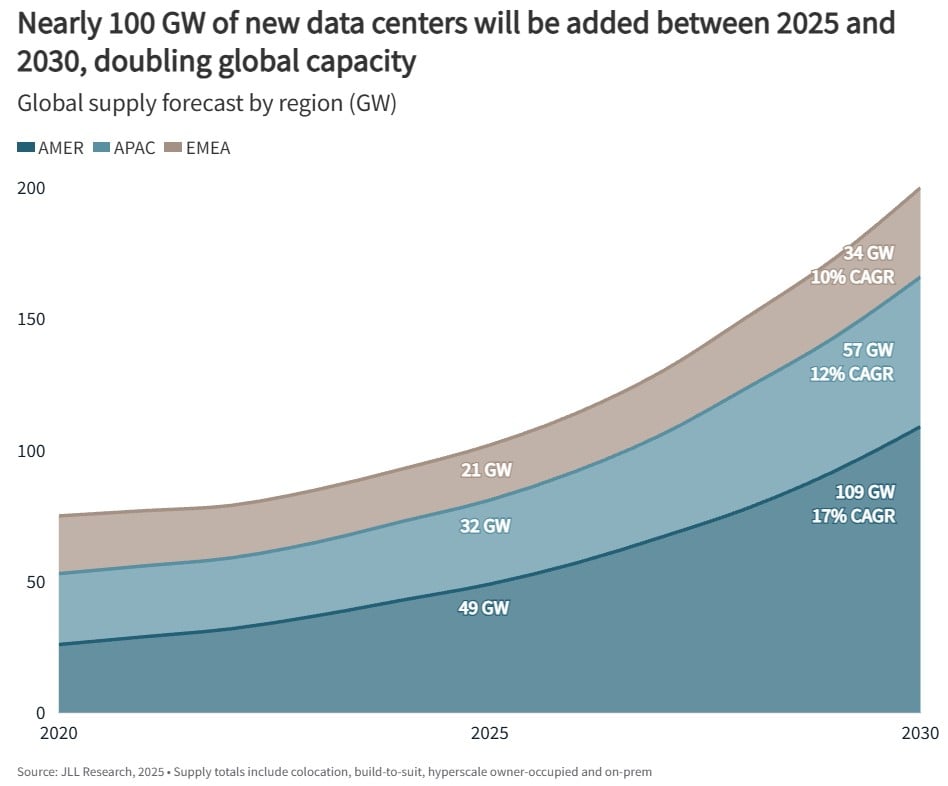
The IEA expects electricity use by data centers around the world to more than double by 2030, reaching about 945 terawatt-hours (TWh) each year. That is roughly equal to Japan’s total annual electricity use today. Most of the increase will come from AI.

As companies like Google, Microsoft, Amazon, and Meta build more AI data centers, demand for copper will keep growing.

Chile Remains the World’s Copper Powerhouse

Chile remains the world’s biggest copper producer.

According to the U.S. Geological Survey (USGS), Chile produced about 5.3 million metric tonnes of copper in 2025. That was about one-quarter of global mine production.

top copper producers 2025 usgs data

The country’s biggest mines include Escondida, Collahuasi, and Codelco. Together, they supply copper to manufacturers around the world.

Cochilco expects Chile’s annual copper production to reach about 5.54 million metric tonnes by 2034. However, growth is likely to be slow. Many older mines now produce lower-grade ore. New mining projects are also becoming more expensive and take longer to develop.

Chile’s state-owned miner Codelco recently said its production is expected to stay close to current levels over the next few years instead of reaching its long-term target of 1.7 million metric tonnes a year by 2030.

Bernardo Fontaine, Codelco Chairman, remarked:

“It is very ⁠possible ⁠that it sits at ⁠a ​production rate quite similar to the one it has today.”

The company is still recovering after output fell to its lowest level in more than 20 years during 2022 and 2023. Production from its own mines reached 1.33 million metric tonnes last year.

Fontaine further said several major expansion projects have faced unexpected delays and higher costs as it works to offset declining ore grades. The company also sees the El Abra mine, where it owns a 49% stake alongside Freeport-McMoRan, as a promising project for future investment. Freeport plans to invest US$7.5 billion to expand the mine.

With demand rising and supply growing slowly, many analysts believe copper prices could remain strong for years to come.

Why Global Copper Supply Is Falling Behind

While demand keeps growing, copper supply is not rising as fast.

Many of the world’s largest copper mines are getting older. As ore grades fall, companies must process more rock to produce the same amount of copper. That increases both costs and energy use.

New mines also take a long time to build. According to the IEA, developing a new copper mine can take 15 to 20 years from discovery to production. Permitting, financing, and environmental reviews all add time to the process.

copper supply forecast IEA

The International Copper Study Group (ICSG) expects global mine production to increase over the next few years. However, many analysts believe that growth will still fall short of future demand because of project delays, lower ore grades, and rising costs.

Copper Is Becoming a Critical Net-Zero Metal

Copper is now at the center of the clean energy transition.

The IEA estimates that clean energy technologies could account for almost half of global copper demand by 2040 under a pathway that reaches net-zero emissions by 2050. That includes electric vehicles, renewable power, battery storage, electricity networks, and hydrogen projects.

Power grids will need the biggest investment. The World Bank estimates that global electricity networks must expand rapidly to support cleaner energy and growing electricity demand. Every new transmission line, transformer, and substation requires large amounts of copper.

The rapid growth of AI is adding another layer of demand. New data centers require huge amounts of electrical equipment before they can even begin operating. As more countries build AI infrastructure, copper demand is expected to remain strong.

High Prices Are Sparking New Mining Investment

Strong copper prices may also encourage companies to invest in new projects. The challenge is timing.

Even if companies approve new projects today, many will not begin producing copper until the next decade. That means supply could remain tight while demand continues to grow.

According to S&P Global, global copper demand could nearly double, from 28 million metric tons a year in 2025 to 42 million metric tons by 2040. This is driven mainly by electrification, clean energy, AI, and digital technologies. Meeting that demand will require major investment across the mining sector.

copper demand by sector 2040 S&P Global

Copper’s Bull Run Faces New Tests

Copper’s long-term outlook remains positive, but risks still exist. A weaker global economy could reduce industrial demand in the short term. Trade tensions and changing government policies may also create periods of price volatility.

However, most market analysts expect the long-term trend to remain strong because the world cannot expand clean energy without more copper.

Chile’s latest forecast reflects that reality. Even as economic growth slows, the country expects copper prices to stay well above historical levels because demand continues to outpace supply.

As countries build more renewable power, modernize electricity grids, expand AI infrastructure, and produce more electric vehicles, demand for copper is likely to remain strong for many years. That is why many analysts believe today’s high prices may be part of a much longer market cycle rather than a short-term rally.

The post Copper Prices Enter a New Bull Market: Chile Raises Price Forecast as AI and Clean Energy Fuel Demand appeared first on Carbon Credits.