Aditya Birla Renewables Buys Shell’s Sprng Energy Business in India for $1.8 Billion

Shell Overseas Investment B.V., a wholly owned subsidiary of Shell plc, has signed an agreement to sell 100% of Solenergi Power Private Limited, including the Sprng Energy group of companies, to India’s Aditya Birla Renewables Limited (ABRen). It marks another significant investment in India’s rapidly expanding renewable sector.

The transaction reflects Shell’s strategy to reshape its global power business while strengthening Aditya Birla Group’s position as a leading renewable energy developer in one of the world’s fastest-growing electricity markets.

Machteld de Haan, President, Downstream, Renewables and Energy Solutions at Shell, said:

“This agreement reflects Shell’s continued focus on adjusting the portfolio in our power business. “We are high-grading our power portfolio and recycling capital in service of our asset-backed trading strategy outlined in Capital Markets Day 2025. This is another step in building a more focused, competitive and resilient business while improving returns year on year towards 2030.”

Shell to Sell Entire Sprng Energy Business

As per the press release, the deal, valued at $1.8 billion, is expected to close by the end of 2026, subject to regulatory approvals and customary closing conditions. The final purchase price will be adjusted for factors such as net debt and capital expenditure at closing.

The sale includes all of Sprng Energy’s physical renewable energy assets and its commercial contracts.

Sprng Energy has built one of India’s largest independent renewable power portfolios. The company currently owns 5.0 gigawatts-peak (GWp) of renewable energy projects. It includes 3.3 GWp of operating solar and wind assets and another 1.7 GWp under contract or development. These projects primarily supply clean electricity to state electricity distribution companies across India.

     Sprng Energy Portfolio

shell sprng energy
Source: Sprng Energy

Why Shell Is Selling

The sale is part of Shell’s broader strategy to streamline its global power business.

During its Capital Markets Day in 2025, Shell announced that it would focus more on an asset-backed power trading strategy rather than owning large numbers of renewable generation assets. The company said it plans to improve returns by optimizing its portfolio, increasing investment in flexible power generation, and executing projects more selectively across different regions.

Shell aims to achieve approximately 10% return on average capital employed (ROACE) by 2030, making disciplined capital allocation a key priority.

Although it is selling Sprng Energy, Shell emphasized that India remains an important market. The company will continue operating its integrated liquefied natural gas (LNG) business, mobility network, and lubricants business in the country. Shell recently strengthened its Indian lubricants business through the acquisition of Raj Petro Specialities.

Aditya Birla Expands Renewable Energy Portfolio

For Aditya Birla Renewables, the acquisition significantly expands its clean energy platform.

ABRen serves as the Aditya Birla Group’s dedicated renewable energy business, with Global Infrastructure Partners (GIP), part of BlackRock, as a strategic investor. The company develops a diversified portfolio of renewable projects across India, including solar, wind, hybrid power plants, floating solar facilities, and battery energy storage systems.

The acquisition of Sprng Energy instantly adds a large portfolio of operational assets while increasing ABRen’s presence across multiple Indian states.

The company has been investing heavily in advanced renewable technologies.

  • Its solar projects use high-efficiency bifacial solar modules mounted on artificial intelligence-guided tracking systems that follow the sun throughout the day.
  • These tracking systems increase electricity generation by maximizing sunlight exposure under changing weather conditions.

Floating Solar Offers New Growth Opportunities

One area where Aditya Birla Renewables sees strong growth is floating solar.

The company has already developed its first floating solar project in Madhya Pradesh. Unlike conventional solar farms, floating solar panels are installed on lakes, reservoirs, and other water bodies.

This approach offers several advantages. First, it reduces the need for large areas of land, which can be difficult and expensive to acquire. Second, the water beneath the panels naturally cools the solar modules, helping improve their efficiency. Finally, floating solar systems reduce water evaporation, making them especially valuable in hot and water-stressed regions.

As India seeks to expand renewable energy while protecting agricultural land and conserving water resources, floating solar is expected to become an increasingly important part of the country’s clean energy mix.

Sustainability Beyond Electricity Generation

Aditya Birla Renewables is also focusing on making its operations more sustainable.

One important initiative involves reducing water consumption at solar plants. Solar panels require regular cleaning to maintain peak performance, but traditional cleaning methods can consume significant amounts of water.

The company says it has steadily reduced per-megawatt water consumption across its projects by adopting more efficient cleaning technologies. It plans to continue lowering its water footprint as more renewable projects come online.

These improvements support India’s broader efforts to make renewable energy development environmentally sustainable while minimizing pressure on natural resources.

India’s Renewable Energy Boom Continues

The acquisition comes as India continues to expand its renewable energy capacity at one of the fastest rates globally.

  • According to the Ministry of New and Renewable Energy, India’s installed renewable energy capacity reached 288.59 GW as of June 30, 2026.

Solar power accounted for 162.15 GW, representing more than half of the country’s renewable capacity. Wind energy contributed 57.44 GW, while the remainder came from small hydropower, biomass, and waste-to-energy projects.

This rapid expansion is helping India diversify its electricity supply, reduce dependence on imported fossil fuels, and improve long-term energy security.

INDIA renewable
Source: NITI Ayog

At the same time, India remains the world’s third-largest emitter of greenhouse gases due to its large population and growing economy.

Boosting Net-Zero Goals

  • According to India’s latest National Inventory Report submitted to the UN Framework Convention on Climate Change (UNFCCC), the country’s total greenhouse gas emissions were approximately 4 billion tonnes of CO₂ equivalent in 2020, excluding emissions and removals from land use, land-use change, and forestry (LULUCF).

However, India’s per capita emissions remain well below the global average, reflecting lower emissions per person than many developed economies.

The country has committed to achieving net-zero emissions by 2070 while sourcing about 50% of its installed electric power capacity from non-fossil fuel sources by 2030. Continued investment in solar, wind, battery storage, and emerging technologies such as floating solar will be essential to meeting those goals.

Shell’s sale of Sprng Energy therefore represents more than a corporate portfolio adjustment. It also demonstrates continued investor confidence in India’s renewable energy sector.

As domestic companies like Aditya Birla Renewables expand their clean energy portfolios, India is likely to remain one of the world’s most important renewable energy investment destinations over the coming decade.

The post Aditya Birla Renewables Buys Shell’s Sprng Energy Business in India for $1.8 Billion appeared first on Carbon Credits.
Google Backs One of America’s Largest Solar Projects to Power AI and Cut Emissions

Steel River Energy Center in Arkansas

Google is making one of its biggest renewable energy investments yet as it works to balance the rising electricity needs of artificial intelligence (AI) with its ambitious climate goals.

The company will buy all the initial output from the Steel River Energy Center in Arkansas. This project is one of the largest solar-plus-storage developments in the U.S. It will help offset emissions from Google’s growing electricity use while supporting a cleaner U.S. power grid.

The tech giant stated in its publication:

“Steel River is a game-changer because it pairs massive solar arrays with advanced battery storage systems. This project can store the sun’s peak daytime output and feed it back into the grid exactly when it’s needed most, growing a more reliable, resilient grid that can meet rising electricity demand while keeping power affordable for everyone.”

AI Is Driving a New Wave of Renewable Energy Investment

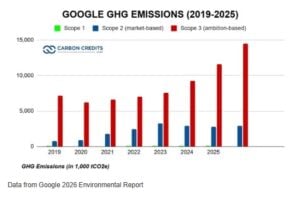
The move comes at a time when Google’s latest Environmental Report shows that its greenhouse gas emissions have continued to rise due to AI and cloud computing expansion.

Electricity use alone jumped 37% in 2025. This makes it harder for the company to meet its target of operating on 24/7 carbon-free energy by 2030 and reaching net-zero emissions across its operations and value chain.

Google ghg emissions 2019 to 2025
Source: Google

Artificial intelligence is changing how technology companies buy electricity. Training and running AI models require enormous computing power. That has led Google, Microsoft, Amazon, and Meta to rapidly expand their data center networks, pushing electricity demand to record levels.

The U.S. Energy Information Administration (EIA) says that total electricity demand in the U.S. might grow by 25% to 50% by 2050. This increase will mainly come from data centers, electrification, and industrial growth. Meeting that demand without increasing fossil fuel use will require massive investment in renewable energy and energy storage.

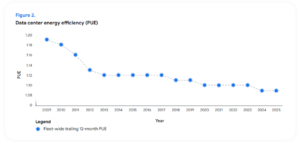
The tech giant has acknowledged this challenge. In its 2026 Environmental Report, the company stated that AI is challenging its climate goals. This is because advanced computing needs significantly more electricity than standard digital services. Even with major improvements in data center efficiency, overall power consumption continues to rise as AI workloads expand.

Rather than slowing its AI investments, Google is increasing its renewable energy purchases to keep pace with demand.

One of America’s Largest Solar Projects

The Steel River Energy Center represents the scale of renewable infrastructure that large technology companies now require.

Google solar project

The project in Mississippi County, Arkansas, will provide 1.6 gigawatts (GW) of solar power and 2 gigawatt-hours (GWh) of battery storage. It is set to start operations in 2029. That is enough electricity to power more than 315,000 U.S. homes each year.

When finished, Steel River will have about 2.5 GW of solar power and 2.9 GWh of battery storage. This will make it one of the biggest solar and battery projects in the country.

Google signed a long-term virtual power purchase agreement (VPPA) for the project’s entire initial output. Under this model, Google does not directly receive the electricity. Instead, the agreement provides stable long-term revenue that helps finance construction while adding new renewable power to the regional electricity grid.

These agreements have become one of the main ways large companies accelerate renewable energy development. They lower the financial risk for developers. This makes it easier to get funding for projects that might otherwise face challenges.

A Stronger U.S. Clean Energy Supply Chain

The Steel River project is also designed to strengthen U.S. clean energy manufacturing. Most of the project’s key components will come from domestic suppliers:

  • First Solar will provide solar panels made entirely with U.S.-sourced materials,
  • Steel will be produced in Arkansas, and
  • Battery systems will come from LG Energy Solution’s factory in Arizona.

The domestic supply chain has become increasingly important as U.S. policy encourages developers to reduce reliance on Chinese equipment. The International Energy Agency (IEA) estimates China controls about 85% of global solar manufacturing capacity and produces more than 80% of the world’s battery output in 2025.

Using more U.S.-made equipment can also help projects qualify for valuable federal tax incentives. As a result, large renewable energy developments like Steel River are not only adding clean power. They are also supporting domestic manufacturing and strengthening America’s energy supply chain.

Google Expands Clean Energy to Match AI Growth

The Arkansas project is part of a much broader strategy. Google keeps investing in solar, wind, geothermal energy, and long-duration storage. It aims to provide carbon-free electricity for its operations 24/7.

The company says that simply buying renewable electricity is no longer enough. It is now focusing on building cleaner and more reliable electricity systems in the regions where its data centers operate.

That strategy is becoming increasingly important. According to BloombergNEF, Google, Microsoft, Amazon, and Meta accounted for 49% of all corporate clean energy purchase agreements signed worldwide in 2025. Few industries are investing in renewable electricity at the same pace as the world’s largest AI companies.

Google’s latest solar deal reflects that shift. The company is financing large-scale renewable energy projects. This supports AI growth and helps to cut emissions over time.

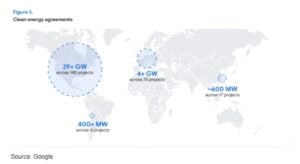
Google clean energy portfolio
Source: Google

Can the Power Grid Keep Up With AI?

Google is not alone in facing rising electricity demand. The rapid growth of AI is reshaping the U.S. power sector. Data centers could become one of the country’s biggest new electricity users over the next decade.

According to the International Energy Agency (IEA), electricity use by data centers worldwide is projected to more than double by 2030, reaching about 945 terawatt-hours (TWh) each year. That is slightly more electricity than Japan uses today. AI-optimized data centers are expected to account for most of that increase.

The trend is already changing investment decisions. The U.S. EIA expects utilities to add a record 86 gigawatts (GW) of new utility-scale electricity capacity in 2026.

eia solar uS
Source: U.S. EIA

About 68 GW, or almost 80%, will come from solar power (43.4 GW) and battery storage (24.3 GW). Together, they represent the largest share of the new generation added to the U.S. grid.

Battery storage is becoming just as important as solar. Large batteries store excess electricity during the day and release it when demand peaks or the sun goes down. This helps stabilize the grid and reduces the need for fossil fuel power plants during periods of high electricity demand.

For technology companies that operate around the clock, combining solar with battery storage provides a more reliable source of clean electricity than solar alone. It also supports Google’s goal of supplying its operations with 24/7 carbon-free energy while meeting the growing power needs of AI.

Building the Grid for the AI Era

While Google still faces a difficult path toward its climate goals, the company is investing in advanced technologies that support its goal of running on carbon-free electricity all day, every day.

The Steel River project highlights a broader shift taking place across the energy sector. Projects that combine large-scale solar generation with battery storage can add clean electricity to the grid while improving reliability. They also reduce the need for new fossil fuel generation during periods of rising demand.

For Google, this investment is about more than buying renewable power. It is helping build the energy infrastructure needed to support the next generation of AI while limiting the environmental impact of that growth.

As electricity demand continues to climb, similar projects are likely to become more common. The companies that can expand clean energy alongside digital infrastructure will be better positioned to meet both business growth and climate goals in the years ahead.

The post Google Backs One of America’s Largest Solar Projects to Power AI and Cut Emissions appeared first on Carbon Credits.
Austin-Based SuperCritical Materials Wins DOE License to Turn Seawater Into a New Source of Uranium

uranium

The race for uranium supplies is changing. The U.S. is expanding nuclear power to meet rising electricity demand. Companies are now exploring new fuel sources beyond traditional mining.

Austin-based SuperCritical Materials has secured an exclusive license from the U.S. Department of Energy (DOE). Their goal is to commercialize a patented technology that extracts uranium from seawater. The company believes this breakthrough will enhance domestic nuclear fuel security and lessen reliance on foreign uranium, especially as advanced reactors near large-scale deployment.

This technology was developed by the DOE’s Office of Nuclear Energy, with research led by Pacific Northwest National Laboratory (PNNL). After years of lab work, SuperCritical now has exclusive rights to manufacture and use this process in the U.S. before expanding to allied nations.

A Growing Need for Domestic Uranium

The DOE license comes as the U.S. works to rebuild its uranium industry after years of relying on imports.

  • The EIA reports that U.S. uranium concentrate (U₃O₈) production reached 1.04 million pounds in the first quarter of 2026.
  • It’s a slight 0.4% decline from 1.04 million pounds produced in the fourth quarter of 2025.

DOMESTIC URANIUM

But, despite the small quarterly dip, domestic uranium production remains significantly higher than it was just a few years ago. Thus, while U.S. output remains below reactor demand, production is rising from historic lows, reflecting new investments in the nuclear fuel supply chain.

Despite this recovery, the U.S. still imports much of the uranium for its reactors. As nuclear generation grows and advanced reactors need new fuel types like HALEU, experts expect more domestic production capacity will be necessary. Technologies like seawater extraction could eventually complement traditional sources if they become commercially viable.

What Is Seawater Uranium Mining

Uranium fuels nuclear reactors, but mining alone may not meet future needs.

  • The company revealed that the world’s oceans hold about 4.5 billion metric tons of dissolved uranium, over 1,000 times more than known land reserves. While the concentration is low, the ocean’s vastness makes seawater a significant untapped resource.

SuperCritical believes advances in chemistry and materials science could enable the economic recovery of some of this uranium. They also aim to extract other important minerals.

The company states its technology could be vital in the nuclear fuel supply chain. This would support utilities, reactor developers, and governments seeking long-term fuel security.

How the Technology Works

Instead of mining, the patented process captures dissolved uranium from seawater using specially treated acrylic fibers.

Here’s how it works:

  • Acrylic fibers with proprietary materials are immersed in seawater.
  • The fibers attract uranium and other dissolved metals through chemical reactions.
  • Once saturated, the fibers are removed and placed in a solution that separates the metals.
  • The fibers are treated and reused.

SuperCritical notes the system can run continuously due to the reusable fibers. The process is also environmentally friendly and requires less complex permitting than offshore oil and gas projects.

For early commercial operations, the recovered uranium concentrate, or yellowcake, could be processed at existing facilities in Texas. This avoids the need for new plants.

Here’s a picture of the setup

seawater uranium mining
Source: SuperCritical

The technology may also increase supplies of other strategic minerals.

The U.S. government lists about 50 minerals and elements as critical to national security and economic competitiveness. The U.S. relies heavily on imports for many of these materials, while China dominates global production of rare earth elements.

domestic critical minerals usa
Source: SuperCriticals

The company claims its process could recover 23 important metals dissolved in seawater along with uranium. While commercial recovery rates need testing on an industrial scale, the company believes the technology could help diversify mineral supply chains.

This effort aligns with recent federal initiatives to boost domestic mineral production, strengthen the nuclear industry, and expand access to offshore resources.

Supporting America’s Growing Nuclear Ambitions

The DOE license arrives as the U.S. aims to grow nuclear power to meet rising electricity demand from AI, advanced manufacturing, data centers, and electrification.

USA nuclear
Source: EIA

SuperCritical reports that policymakers are shifting from building reactors to securing the fuel they need.

As advanced reactor deployment speeds up, pressure rises across all stages of the nuclear fuel cycle, including:

  • Uranium production
  • Conversion
  • Enrichment
  • High-Assay Low-Enriched Uranium (HALEU) production
  • Fuel fabrication

The company warns these upstream challenges could pose major issues for the nuclear industry’s future.

Building the “Fuel Layer” of the Intelligence Economy

SuperCritical sees itself as building the “fuel layer” of the emerging Intelligence Economy—an economy driven by AI, robotics, and advanced computing. Just as coal fueled the Industrial Revolution, abundant nuclear energy could power the next economic wave.

Alexander Canon Bryan, Founder and Chief Executive Officer of SuperCritical Materials, noted:

“Our objective is straightforward. If the Intelligence Economy requires abundant, reliable nuclear energy, then it will also require abundant, reliable nuclear fuel. SuperCritical is building the infrastructure needed to help supply that fuel. We are proud to advance technology developed by the U.S. Department of Energy and contribute to strengthening America’s energy security, industrial competitiveness, and technological leadership.”

Looking Ahead

SuperCritical believes unconventional fuel sources are vital for meeting this demand. The company plans to commercialize DOE-developed technology. This will allow them to convert seawater into a sustainable uranium source and strengthen the U.S. nuclear fuel supply chain.

Though challenges remain, the DOE license marks an important milestone. If the technology succeeds in industrial use, it could provide the U.S. and its allies with a secure source of uranium and critical minerals for decades.

The post Austin-Based SuperCritical Materials Wins DOE License to Turn Seawater Into a New Source of Uranium appeared first on Carbon Credits.
Masdar Backs World’s First 24/7 Solar and Battery Project with $6.1 Billion Investment

The clean energy industry has reached another major milestone. Abu Dhabi Future Energy Company (Masdar) has secured financial close for the world’s first gigascale renewable energy project capable of delivering clean electricity around the clock. The landmark project combines one of the world’s largest solar power plants with a massive battery energy storage system, proving that renewable energy can provide reliable power 24 hours a day.

The project represents a total investment of US$6.1 billion, including a US$5.1 billion financing package backed by a group of 13 leading international and local banks. The deal highlights growing investor confidence in large-scale renewable energy projects that can supply continuous electricity while reducing dependence on fossil fuels.

A New Era for Round-the-Clock Clean Energy

Renewable energy has expanded rapidly over the past decade. However, one challenge has remained—solar panels only generate electricity when the sun shines. As countries increase their use of renewable energy, storing excess electricity has become essential to ensure a stable power supply.

Masdar’s new project addresses this challenge.

Developed in partnership with the Emirates Water and Electricity Company (EWEC), the project combines:

  • 5.2 gigawatts (GW) of solar photovoltaic (PV) capacity with a 19 gigawatt-hour (GWh) battery energy storage system (BESS).
  • Together, these facilities will provide 1 GW of uninterrupted clean electricity, day and night

This makes it the largest and most advanced integrated solar-plus-storage project built to date.

The project demonstrates that renewable energy is no longer limited to producing electricity only during sunny or windy periods. Instead, large battery systems can store surplus solar power during the day and release it when demand remains high after sunset.

As electricity demand continues to grow worldwide, this model could become increasingly important for future power systems.

Strong Financial Backing

The project’s financial close also marks an important achievement for renewable energy financing.

Masdar secured a US$5.1 billion financing package from a consortium of 13 banks, while contributing US$1 billion in equity, bringing the total project investment to US$6.1 billion.

The participating lenders include:

  • Abu Dhabi Commercial Bank
  • Abu Dhabi Islamic Bank
  • BNP Paribas
  • Bank of China
  • Crédit Agricole Corporate and Investment Bank
  • Dubai Islamic Bank
  • First Abu Dhabi Bank
  • HSBC
  • KfW IPEX-Bank
  • Natixis
  • Sumitomo Mitsui Banking Corporation
  • Standard Chartered Bank
  • Société Générale

The participation of both regional and global financial institutions reflects growing confidence that large renewable energy projects with integrated storage have become commercially viable.

Unlike earlier renewable developments that depended heavily on government support, this financing shows investors increasingly view next-generation clean energy infrastructure as a stable long-term investment.

Masdar’s Solar and BESS Project Sets a New Standard

Electricity demand is growing faster than ever. Artificial intelligence, cloud computing, hyperscale data centers, electric vehicles, advanced manufacturing, and digital infrastructure are all increasing power consumption across the world.

According to the IEA, electricity demand in the Middle East grew by 3.8% in 2025, slightly faster than the 3.7% increase recorded in 2024. The UAE contributed about 12% of the region’s total demand growth.

UAE middle east electricity demand
Source: IEA

At the same time, governments are working to reduce greenhouse gas emissions and replace fossil fuel generation with cleaner alternatives. This creates a major challenge: power grids need electricity every hour of every day—not just when renewable resources are available.

Bridging the Gap

And this Large-scale battery storage helps bridge that gap. By storing excess solar electricity during daylight hours and supplying it overnight, projects like Masdar’s can improve grid reliability while reducing carbon emissions.

The Abu Dhabi project is expected to serve as a model for future renewable developments seeking to provide baseload-style clean electricity.

Apart from this, Masdar has invested in several storage technologies over the years. One of its early projects was Spain’s Gemasolar concentrated solar power facility, which became the world’s first commercial renewable plant to use molten salt thermal storage.

In 2022, the company also acquired UK-based battery storage developer Arlington Energy, with plans to expand battery storage capacity across the United Kingdom.

The Abu Dhabi project builds on those earlier investments. It is expected to serve as a model for future renewable developments seeking to provide baseload-style clean electricity.

Aligning with UAE’s Clean Energy Target 

Masdar officially broke ground on the project in October 2025, with commercial operations expected to begin in 2027. Once completed, it will become a key part of the United Arab Emirates’ clean energy strategy, supporting both energy security and economic diversification.

The project also aligns with the UAE’s long-term efforts to increase renewable energy generation while reducing dependence on conventional fuels. Currently, the country’s total installed capacity is more than 7.4 GW at the end of 2025, and 7.5 GW are under construction.

uae renewable capacity
Source: dii-desertenergy.org

Renewable Energy Ambitions 

Currently, Masdar has expanded its renewable energy portfolio significantly over the past few years.

  • Its renewable generation capacity increased from 20 GW in 2022 to more than 51 GW in 2024, spanning projects across solar, onshore wind, offshore wind, battery storage, and hybrid renewable systems.

It further plans to nearly double that figure, targeting 100 GW of renewable energy capacity by 2030 through investments across established and emerging markets.

The company says this expansion reflects its commitment to providing affordable, reliable clean electricity while supporting global decarbonization efforts.

Masdar Is Cutting Millions of Tonnes of Carbon Emissions

Beyond generating electricity, Masdar’s renewable portfolio is delivering measurable climate benefits.

In 2024, the company’s operating renewable assets displaced approximately 15.5 million tonnes of carbon dioxide annually. This demonstrates the growing role that utility-scale renewable projects can play in reducing global greenhouse gas emissions.

MASDAR EMISSION
Source: Masdar

Masdar also reports its emissions using internationally recognized Greenhouse Gas (GHG) Protocol standards. The company tracks emissions under both the equity share and financial control reporting approaches to improve transparency.

Alongside emissions reporting, Masdar continues to focus on improving energy efficiency, conserving water resources, and reducing environmental impacts across its operations.

The company is also developing a broader sustainability strategy that includes its long-term pathway toward achieving net-zero emissions, supported by renewable energy use, greater operational efficiency, and carbon reduction initiatives.

A Blueprint for Future Renewable Projects

The successful financial close sends an important message to global investors and policymakers.

Large renewable energy projects that combine solar generation with advanced battery storage are no longer experimental concepts. They are becoming commercially bankable infrastructure capable of attracting billions of dollars in private financing.

As countries seek to meet growing electricity demand while reducing emissions, similar integrated renewable projects are likely to become more common.

For Masdar, the project reinforces its position as one of the world’s leading clean energy developers. For the broader renewable energy industry, it demonstrates that reliable, 24/7 clean electricity is moving from ambition to reality.

With operations expected to begin in 2027, the Abu Dhabi project could establish a new global benchmark for utility-scale renewable energy, showing how solar power and battery storage can work together to provide dependable, low-carbon electricity every hour of every day.

The post Masdar Backs World’s First 24/7 Solar and Battery Project with $6.1 Billion Investment appeared first on Carbon Credits.
U.S. Biochar Industry Triples to $157 Million as Carbon Removal Market Sparks Record Growth

U.S. Biochar Industry Triples to $157 Million as Carbon Removal Market Gains Momentum

The U.S. biochar industry is growing fast. A new report from the U.S. Biochar Initiative (USBI) estimates the industry was worth about $157 million in 2025. That is nearly three times higher than in 2023.

The growth comes as more companies buy durable carbon removal credits to meet their climate goals. It also shows rising interest in biochar as both a carbon removal tool and a way to improve soil health.

Biochar Industry Enters a New Growth Phase

The latest State of the U.S. Biochar Industry Report shows strong growth across the sector.

The report says the industry’s value reached $157 million in 2025, up from about $52 million in 2023. Annual biochar production also increased to more than 97,000 metric tonnes. At the same time, installed production capacity rose to more than 400,000 metric tonnes per year.

US biochar industry economic value 2025
Source: USBI

Today, the United States has more than 130 biochar production facilities. These plants support jobs in farming, forestry, manufacturing, engineering, and project development. Even with this growth, the report says the industry has only begun to tap its full potential.

Commercial biochar producers are also expanding quickly. The report estimates that producer revenue rose from $18.2 million in 2023 to $58.8 million in 2025. Producers expect that figure to reach about $159 million by 2027, showing confidence that demand will continue to grow.

Biochar Producer Annual Revenue
Source: USBI

Much of the recent increase came from companies earning $10 million to $50 million a year, suggesting the industry is moving beyond small pilot projects toward larger commercial operations.

The report also shows that production could grow much faster over the next two years. U.S. biochar output is projected to increase from about 151,000 metric tonnes in 2025 to more than 819,000 metric tonnes by 2027 if announced projects move forward.

While the report notes these forecasts are ambitious, they show how quickly companies expect demand for biochar and carbon credits to grow.

US biochar production
Source: USBI

Carbon Credit Demand Is Fueling the Market

Carbon markets are becoming a major source of income for biochar producers. The report found that only 6% of U.S. biochar production came from companies that earned no revenue from biochar carbon removal credits.

The largest share of production (42%) came from producers earning 11% to 20% of their revenue from carbon credits. Another 25% came from producers earning 71% to 80%, while 12% came from companies generating 31% to 40% of revenue from carbon credits.

A further 6% came from producers earning more than 90% of their revenue from carbon credits. The findings show that carbon finance is becoming a key part of many producers’ business models, although most still rely on biochar sales and other income sources.

carbon credit revenue biochar producers
Source: USBI

Demand continues to rise.

According to CDR.fyi, biochar supplied more than 90% of all durable carbon removal credits delivered worldwide in 2025. It also remained the largest source of delivered durable carbon removal by volume.

Large companies are helping drive this market. Microsoft, Google, Stripe, Shopify, JPMorgan Chase, and the Frontier buyers coalition have all signed major biochar carbon removal agreements. These long-term contracts help developers build larger facilities and increase production.

A Small Industry With Big Potential

Biochar is also one of the most mature carbon removal technologies on the market. Unlike newer methods such as direct air capture, commercial biochar plants are already operating at scale.

The technology is modular, uses widely available biomass waste, and generally costs less to deploy. These advantages have helped biochar become the leading source of delivered durable carbon removal credits.

The report identifies four main drivers behind the industry’s growth:

  • rising demand for carbon credits,
  • better use of agricultural and forestry waste,
  • growing awareness of biochar’s soil benefits, and
  • stronger interest in climate solutions that deliver both environmental and economic value.

Although the industry has grown quickly, it remains small relative to its long-term opportunity.

The USBI report says the United States produces hundreds of millions of tonnes of agricultural and forestry waste each year. Much of this material could be used to produce biochar instead of being burned or left to decay.

As demand for durable carbon removal grows, biochar is becoming an important part of the climate economy. The next step is to expand production while keeping high standards for carbon accounting, sustainable feedstocks, and environmental performance.

The market is expected to keep growing. Boston Consulting Group (BCG) estimates the global carbon removal market could reach $100 billion to $135 billion a year by 2050 if countries stay on track for net-zero emissions.

Biochar Offers More Than Carbon Removal: Helping Agriculture and Climate

Biochar creates value beyond carbon credits.

It helps store carbon for long periods while improving soil quality. Studies by the U.S. Department of Agriculture (USDA) show biochar can improve soil structure, increase water retention, and reduce nutrient losses. These benefits can help farmers improve crop yields while using resources more efficiently.

Biochar production can also reduce waste. Crop residues, forestry waste, and other biomass that might otherwise decompose or be burned can instead be turned into a useful product. This creates new income opportunities for farmers, forest owners, and rural businesses.

Because of these benefits, many experts see biochar as one of the few climate solutions that supports both emissions reductions and agricultural productivity. The global industry has seen tremendous growth in 2025, as shown below.

biochar carbon credit market 2025

Scaling Up Remains the Biggest Challenge

Despite its huge potential, the industry still faces several hurdles.

Production capacity remains much smaller than future demand. Many projects also need more financing to build commercial-scale facilities.

Moreover, the industry must maintain high standards. Buyers want carbon credits backed by strong measurement, reporting, and verification. They also expect producers to use sustainable feedstocks and protect forests and biodiversity.

Meeting these standards will help build confidence as the market expands, and when quality will become even more important. Strong standards such as Verra’s VM0044 methodology help ensure biochar credits represent real and durable carbon removal.

A Strong Outlook for the Industry

The new USBI report shows that biochar is moving into the mainstream.

Industry value has nearly tripled in just two years. Production capacity continues to grow, and more companies are investing in new facilities. At the same time, demand for high-quality carbon credits remains strong as businesses work toward net-zero targets.

The International Energy Agency (IEA) says carbon removal will be needed alongside deep emissions cuts to reach global climate goals. Biochar is well placed to help meet that need because it delivers durable carbon storage while improving soil health and making use of waste biomass.

As investment grows and production expands, biochar is likely to play a much larger role in both the U.S. carbon market and the global carbon removal industry over the next decade.

The post U.S. Biochar Industry Triples to $157 Million as Carbon Removal Market Sparks Record Growth appeared first on Carbon Credits.
SAF Takes Flight as FlyORO and Menzies Target Aviation’s Biggest Infrastructure Gap

SAF Takes Flight as FlyORO and Menzies Target Aviation's Biggest Infrastructure Gap

FlyORO, a clean aviation tech company from Singapore, is partnering with Menzies Aviation, a leading global aviation services provider. This collaboration aims to achieve their shared goals. The two companies signed a Memorandum of Understanding (MoU) to explore using FlyORO’s modular sustainable aviation fuel (SAF) blending technology in Menzies’ global fuel network.

The agreement comes as governments tighten clean fuel rules and airlines race toward net-zero targets. While global SAF production is growing quickly, it still supplies only a small share of the fuel that the aviation sector needs.

Damian Mc Loughlin, Chief Commercial Officer, FlyORO, remarked:

“Scaling SAF is no longer just a production challenge; it is increasingly a supply chain and infrastructure one. This collaboration combines FlyORO’s TRL 9 blending technology with Menzies’ expertise, to open a more practical path for SAF to reach the airports and airlines that need it. We are proud to be working alongside Menzies to help address one of aviation’s most critical infrastructure gaps.”

SAF Supply Is Growing, But Delivery Is the Real Challenge

SAF has become one of the aviation industry’s most important tools for cutting emissions. 

The International Air Transport Association (IATA) says that SAF could provide around 65% of the emission cuts needed for aviation to hit net-zero carbon emissions by 2050. Unlike electric or hydrogen aircraft, SAF can be used in today’s aircraft with little or no modification.

SAF for net zero aviation
Source: IATA

Production is increasing, but supply remains limited.

The association estimates global SAF production reached about 2 million tonnes, or 2.5 billion liters, in 2025. That was nearly double the previous year. Even so, it represented less than 1% of global jet fuel demand, showing how much production still needs to grow.

  • IATA estimates aviation will need around 449 billion liters of SAF each year by 2050 to help reach net-zero emissions.

At the same time, airlines continue to face pressure to reduce emissions. The International Energy Agency (IEA) estimates that aviation makes up about 2.5% of global energy-related CO₂ emissions. Passenger demand could also keep rising over the coming decades, making cleaner fuels increasingly important.

FlyORO’s Alphalite: The Missing Link in Aviation’s Clean Fuel Future

Building more SAF plants is only part of the solution.

Fuel must also be blended, stored, certified, and delivered through airport fuel systems before it reaches aircraft. Many airports still lack infrastructure designed for large-scale SAF handling.

That is where FlyORO hopes to make a difference.

Its AlphaLite system allows SAF to be blended directly within existing fuel supply chains. The modular system doesn’t need big new blending facilities. It fits inside a standard 40-foot container. This allows it to work at refineries, fuel terminals, or airports.

FlyORO saf technology
Source: FlyORO

The technology is at Technology Readiness Level (TRL) 9. This means it has been tested and proven in real operating conditions. According to FlyORO, AlphaLite has already blended more than 500,000 liters of SAF during commercial operations.

This modular approach could help airports increase SAF availability while reducing upfront infrastructure costs and shortening deployment times.

FlyORO Proves Its System Works at a Real Airport⁠

FlyORO has successfully tested its fuel-mixing system AlphaLite at a real airport. In 2025, the company set up the system at Australia’s Toowoomba Wellcamp Airport alongside ⁠Boeing and Wagner Sustainable Fuels.

  • A World First: This project was the very first eco-friendly fuel blending station built right inside an airport.
  • Real-World Success: It proved that these compact, portable mixing systems work safely and effectively during normal, everyday airport operations.
  • Ready for Business: Because of this successful test, the AlphaLite system reached Technology Readiness Level 9 (TRL 9). This is an official rating showing the technology is completely finished, thoroughly tested, and ready for regular commercial use.

READ MORE: Singapore-Based FlyORO and Aether Fuels Team Up to Explore Smarter SAF Blending and Fuel Delivery Solutions

A Global Airport Network Meets New SAF Technology

FlyORO’s technology could reach a much larger market through Menzies Aviation.

Menzies is one of the world’s biggest aviation services companies. It operates at more than 347 airports across 65 countries. Each year, the company supports around 5.3 million flights. It also handles about 2.4 million tonnes of cargo. Additionally, the company employs roughly 65,000 people worldwide.

The company has also committed to achieving net-zero greenhouse gas emissions across Scope 1, 2, and relevant Scope 3 emissions by 2045. It is replacing diesel ground support equipment with electric options. It is also boosting the use of renewable electricity across its operations.

The new agreement allows the two companies to explore how FlyORO’s blending technology can help Menzies with SAF deployment at its airports worldwide.

The agreement does not guarantee immediate commercial deployment. But it connects a tech developer with a major fuel service provider at a time when airports seek practical ways to increase SAF use.

New Rules Are Driving Demand

Policy is becoming another major driver of SAF growth.

In Europe, the ReFuelEU Aviation regulation now requires fuel suppliers to blend at least 2% SAF in 2025. That requirement will increase to 6% by 2030, 20% by 2035, and 70% by 2050, with separate targets for synthetic e-fuels.

ReFuelEU saf requirement
Source: EU

Similar policies are emerging in other regions as governments seek to reduce aviation emissions while maintaining air travel growth.

As these mandates expand, airports will need reliable systems that can blend and deliver larger volumes of sustainable fuel. That creates new opportunities for technologies designed to strengthen fuel infrastructure rather than fuel production alone.

Investment Is Fueling the Global SAF Race

Investment in sustainable aviation fuel is rising around the world. According to the International Energy Agency (IEA), more than 300 SAF projects have been announced globally.

Announced SAF Facilities

Announced SAF facilities
Source: IATA; SAF technologies include Hydroprocessed Esters and Fatty Acids (HEFA), HEFA co‑processing, Gasification Fischer–Tropsch (GFT), Alcohol‑to‑Jet (AtJ), Power‑to‑Liquids (PtL), and other emerging technologies (other).

If all moves forward, production capacity could reach several million tonnes a year by the early 2030s. Governments in Europe, North America, Asia, and the Middle East are also offering grants, tax credits, and fuel mandates to speed up investment.

The market is expanding quickly. Industry analysts at SkyNRG estimate global SAF demand could exceed 17 million tonnes a year by 2030, driven mainly by new blending mandates. However, current production plans still fall short of that target. This gap highlights the need for both more fuel production and stronger airport infrastructure.

Many experts now believe that improving fuel logistics will become just as important as building new SAF plants.

Carbon Credits and SAF: A Dual Path to Lower Emissions

Carbon markets will continue to play an important role as airlines reduce emissions.

The aviation sector is part of the Carbon Offsetting and Reduction Scheme for International Aviation (CORSIA). This scheme was created by the International Civil Aviation Organization (ICAO).

The program asks airlines to offset extra international emissions by buying approved carbon credits. They also need to use cleaner fuels and more efficient aircraft.

SAF and carbon credits work together rather than compete. SAF reduces emissions at the source, while carbon credits help address emissions that cannot yet be eliminated. Many airlines could use both approaches as they work toward their net-zero commitments.

Depending on the feedstock and production pathway, certified SAF can reduce lifecycle greenhouse gas emissions by up to 80% compared with conventional jet fuel, according to IATA and ICAO.

As SAF becomes more common, there is a need for reliable systems to measure, blend, and track fuel volumes. This is important for compliance and voluntary climate programs.

Building the Next Stage of Aviation Decarbonization

The aviation industry has made clear that SAF will play a central role in reaching net-zero emissions. The next challenge is delivering that fuel where it is needed.

The partnership between FlyORO and Menzies Aviation reflects this shift. Instead of focusing only on producing more SAF, it aims to improve the infrastructure that connects fuel suppliers with airports and airlines.

If successful, partnerships like this could help close one of the industry’s biggest infrastructure gaps and support faster growth of the global sustainable aviation fuel market.

The post SAF Takes Flight as FlyORO and Menzies Target Aviation’s Biggest Infrastructure Gap appeared first on Carbon Credits.
Canada’s Oil Sands Alliance Gets Green Light for Multi-Billion-Dollar CCS Project to Cut 16 Million Tonnes of CO₂

Canada is launching one of the world’s largest carbon capture and storage (CCS) projects. The federal government, Alberta’s government, and five oil producers, aka The Oil Sands Alliance, signed an agreement to cut oil sands emissions while supporting production and exports.

Announced on July 2, 2026, this agreement moves the Pathways Project closer to reality. It will capture carbon dioxide (CO₂) from oil sands facilities in northern Alberta, transporting it through a shared pipeline to a storage site near Cold Lake.

This deal links emissions cuts with plans for a new West Coast oil pipeline. Supporters view it as a chance for economic growth alongside climate action. However, environmental groups worry it might lead to increased fossil fuel production and emissions.

Unlock OSA’s Pathways Project

The Oil Sands Alliance—which includes Canadian Natural Resources, Cenovus Energy, ConocoPhillips Canada, Imperial Oil, and Suncor Energy—is developing the Pathways Project.

The plan involves building a network to transport and store carbon from several oil sands operations. Instead of letting CO₂ escape, it will flow through a pipeline to a geological storage site near Cold Lake.

Oil Sands Alliance Location

canada osa
Source: OSA

Originally, the project was expected to cost around C$16.5 billion. However, costs are now estimated between C$20 billion and C$30 billion due to rising construction expenses and an expanded project scope.

If all goes well, the carbon pipeline and storage system should start by January 1, 2032. The first phase aims for completion by January 1, 2035.

A New Target: Cutting 16 Million Tonnes of Emissions

The recent agreement sets a phased approach for greenhouse gas reductions. The first phase aims to capture and store 6 million tonnes of CO₂ per year through the Pathways CCS project by 2035.

Partners target an extra 5 million tonnes of reductions by 2040 and another 5 million tonnes by 2045. Future reductions may come from expanding the CCS network or adopting new technologies.

  • Overall, the plan aims for 16 million tonnes of net annual emissions cuts in Canada’s oil sands sector.

This replaces earlier proposals for larger cuts and aligns with the new Memorandum of Understanding (MOU).

  • According to Canada’s latest National Inventory Report, oil sands and thermal heavy oil operations emitted about 92 million tonnes of CO₂ equivalent (MtCO₂e) in 2024.
  • The initial capture phase would reduce emissions by roughly 6–7% of the sector’s total, while the full target represents about 17% of today’s emissions.

canada oil sands emissions

Government Support Extends Beyond Tax Credits

The agreement includes significant financial support from the federal and Alberta governments to make the project feasible.

Ottawa will extend its 50% investment tax credit for eligible carbon capture equipment and a 37.5% tax credit for transportation, storage, and utilization equipment until 2035, five years longer than planned.

The federal government also plans new tax incentives for enhanced oil recovery projects, offering a 25% credit for carbon capture equipment and 18.75% for transportation and storage used in those operations.

Alberta will extend its Carbon Capture Incentive Program through 2035 and provide additional financial support to increase oil production for future exports.

The province aims to speed up approvals with a 120-day regulatory timeline for qualifying projects and will form a working group to address regulatory barriers in oil sands investments.

Alberta Premier Danielle Smith said,

“The biggest nation-building projects in Canada’s history have succeeded through partnership. This agreement shows what can be achieved when governments and industry work together to grow our economy, strengthen our energy security and unlock new opportunities for people across Canada.”

Carbon Pricing Will Reward Progress

Oil and gas production accounts for roughly a quarter of Canada’s total greenhouse gas emissions, according to federal climate data. This makes Alberta central to national climate policy.

oil and gas production emissions

Additionally, a key part of the agreement is Alberta’s carbon pricing system, which encourages emissions reductions.

Under Alberta’s Technology Innovation and Emissions Reduction (TIER) program, industrial facilities face stricter emissions benchmarks each year. Companies that do not improve must buy emissions credits or pay into the provincial TIER Fund.

  • The new agreement notably offers incentives for companies meeting emissions reduction goals.
  • Members of the Oil Sands Alliance that reach their initial target of 6 million tonnes will see their TIER benchmark tightening rate drop from 2% to 1%.

Companies making progress toward future targets can keep this lower rate until 2045. However, those that fall short will face tougher benchmarks and higher compliance costs.

This structure rewards companies investing in emissions reduction technologies while pressuring those lagging.

carbon pricing

Linking Carbon Capture With Oil Production Growth

The Pathways agreement also aims to boost Canada’s oil production and export capacity via a proposed West Coast Oil Pipeline (WCOP).

The federal government, Alberta, and the Oil Sands Alliance see a link between the new pipeline and the Pathways Project. Increased oil production will supply the pipeline, while carbon capture aims to reduce emissions from expanded operations.

The agreement also seeks to diversify Canada’s export markets, improving access to customers beyond North America. In addition to production growth, governments commit to engaging with Indigenous communities to create economic opportunities in pipeline and emissions-reduction projects.

More significantly, it also encourages companies to prioritize Canadian suppliers, technologies, steel, aluminum, and construction materials when possible.

canada osa
Source: OSA

What Comes Next?

The July 2 Memorandum of Understanding is not the final legal agreement. It sets the stage for future binding agreements between the federal government, Alberta, and each member of the Oil Sands Alliance.

These agreements are expected to be signed by November 15, 2026.

A trilateral working group will oversee implementation, coordinate regulatory approvals, and advance the carbon capture project and related infrastructure.

If construction goes as planned, the Pathways Project could become one of the largest CCS networks globally, storing millions of tonnes of carbon each year while helping Canada boost its oil exports. Balancing climate goals with more fossil fuel production will be a key topic in Canada’s energy debate in the years ahead.

The post Canada’s Oil Sands Alliance Gets Green Light for Multi-Billion-Dollar CCS Project to Cut 16 Million Tonnes of CO₂ appeared first on Carbon Credits.

Kenya Eyes 2027 Carbon Exchange to Become Africa’s Carbon Trading Hub

Kenya is taking another step to grow its carbon market. The government plans to launch a national carbon exchange by 2027, creating a marketplace where verified carbon credits can be traded more efficiently.

The move comes as global demand for high-quality carbon credits continues to grow. It also supports Kenya’s goal of attracting more climate finance while helping businesses and communities reduce emissions. If successful, the exchange could strengthen Kenya’s position as one of Africa’s leading carbon market hubs.

Kenya Lays the Foundation for a National Carbon Exchange

Kenya already has one of Africa’s most active carbon markets. The new exchange aims to bring buyers, sellers, project developers, and investors together under one transparent platform.

The government claims the exchange will help with price discovery. It will boost market confidence and simplify trading verified carbon credits. The platform aims to draw more international investment. It will focus on projects that protect forests, restore ecosystems, expand renewable energy, and support local communities.

The exchange builds on Kenya’s Carbon Markets Regulations, which came into force in 2024. The rules set standards for carbon projects, benefit sharing, and government oversight. They also prepare Kenya to participate in international carbon trading under Article 6 of the Paris Agreement.

Kenya carbon market law
Source: National Council for Law Reporting (Kenya Law)

Many African countries are still building their carbon market rules. Kenya’s earlier policy work gives it a head start as demand for carbon credits grows.

Kenya Already Has Strong Climate Credentials

Kenya enters the market with an important advantage. Its electricity system is already one of the cleanest in Africa.

According to the International Energy Agency (IEA), more than 90% of Kenya’s electricity comes from renewable sources. Geothermal power provides the largest share, followed by hydropower, wind, and solar energy.

Kenya renewable energy generation

The country has installed over 950 megawatts (MW) of geothermal capacity. This makes it a top producer of geothermal electricity worldwide. This cleaner power mix helps reduce emissions while supporting economic growth.

Kenya has also set ambitious climate goals. The country plans to reduce greenhouse gas emissions by 32% by 2030. This goal is set in its updated Nationally Determined Contribution (NDC) compared to the business-as-usual scenario. The plan covers key sectors such as energy, transport, agriculture, forestry, and waste.

Kenya NCD 2030
Source: Climate Action Tracker

The government estimates it will need about US$62 billion between 2020 and 2030 to deliver its climate plan. Around 87% of that funding is expected to come from international support and private investment. Carbon markets could become an important source of that financing.

Carbon Credits Could Help Protect Kenya’s Natural Resources

Kenya has some of Africa’s most valuable natural carbon sinks. Its forests, mangroves, grasslands, and wildlife landscapes can store large amounts of carbon while supporting biodiversity and local livelihoods.

The country is already one of Africa’s largest carbon credit producers. Kenya has issued over 70 million verified carbon credits from more than 100 projects. This makes it a top supplier in Africa, according to Ecosystem Marketplace and AlliedOffsets.

  • Kenya accounts for roughly 15% of all carbon credits issued in Africa, second only to a handful of larger markets.

Kenya carbon credit market by the numbers

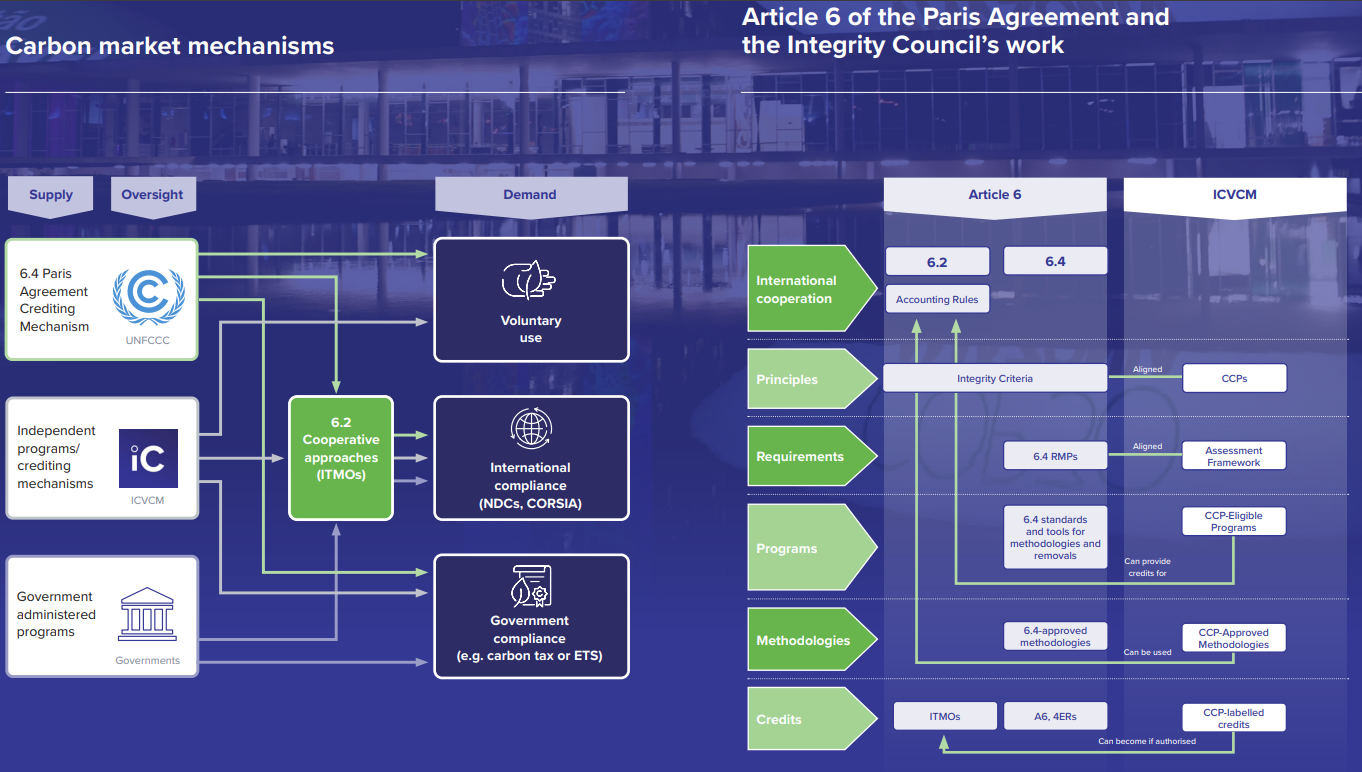
According to AlliedOffsets, Kenya could generate up to US$170 million by exporting 40 million tonnes of ITMOs under Article 6 at US$30 per tonne. This includes about US$160 million from corresponding adjustment fees, US$8 million in ITMO issuance fees—half of which goes to the Climate Change Fund—and US$2 million for domestic benefit-sharing.

Kenya’s Carbon Markets Regulations also require project developers to pay application fees of KES 150,000–300,000 (US$1,140–2,280), issuance fees of US$0.10–0.20 per tonne, and a US$4 corresponding adjustment fee for each authorized ITMO.

The African nation’s VCM could contribute about 202 million tonnes of CO₂ reductions during its NDC period. Around 75 MtCO₂e had already been issued as verified carbon credits by 2025, while another 141 MtCO₂e is expected by 2030.

Meanwhile, carbon projects could generate roughly 20 MtCO₂e in emissions reductions each year. The report says clear rules on credit quality and NDC accounting will be essential to maintain demand and support future compliance markets.

voluntary carbon credits in Kenya NCD
Source: AlliedOffsets

The carbon projects cover forest conservation, landscape restoration, clean cooking, renewable energy, regenerative agriculture, and community-based initiatives. Most are certified by well-known standards like Verra and the Gold Standard.

Major buyers of Kenya’s credits are big names like Microsoft, Netflix, Meta, Shell, and Air France. They, along with other companies, seek high-quality carbon credits to meet their climate goals.

The government sees carbon finance as a way to protect these natural resources while creating jobs and new income for local communities. A national carbon exchange could help Kenya capture more of the growing regional credit demand.

It would also help international buyers more easily find verified Kenyan carbon credits. A clearer and better marketplace would make this possible.

Africa’s Carbon Market Is Set for Rapid Growth

Kenya’s plans come as Africa’s carbon market gains momentum. The African Carbon Markets Initiative (ACMI) plans to create 300 million carbon credits yearly by 2030. By 2050, it aims for 1.5 billion credits each year.

The initiative estimates this could unlock more than US$6 billion in revenue by 2030 and over US$120 billion by 2050. It could also support 30 million jobs across the continent by mid-century.

ACMI ambition
Source: ACMI

Africa has a strong natural advantage. The continent holds vast forests, wetlands, grasslands, and mangroves that can store large amounts of carbon. Yet it currently supplies only a small share of the global carbon market. Many experts believe that could change as countries strengthen their carbon market rules and attract more investment.

Kenya hopes its planned exchange will help position the country at the center of this growth.

High-Integrity Credits Will Be Key

The opportunity is large, but so are the expectations.

In recent years, buyers have become more selective about the carbon credits they purchase. They want projects that deliver real and measurable emissions reductions while protecting biodiversity and supporting local communities.

Groups like the Integrity Council for the Voluntary Carbon Market (ICVCM) and the Voluntary Carbon Markets Integrity Initiative (VCMI) have released new guidance. This aims to enhance market quality and boost buyer confidence.

Kenya’s carbon market regulations include rules on project approval, monitoring, benefit sharing, and government oversight. These safeguards aim to boost transparency and ensure communities receive a fair share of project revenues.

Strong governance will be important if Kenya wants to attract long-term international buyers.

Carbon Finance Can Support Kenya’s Climate Goals

A carbon exchange is more than a new trading platform. It is part of Kenya’s broader plan to become a regional leader in climate finance.

The country continues to invest in renewable energy, forest restoration, climate-smart agriculture, and clean transport. It also aims to increase national tree cover to at least 30% by 2032. Carbon finance can help fund these efforts while creating jobs and supporting local communities.

Kenya already has strong renewable energy resources, clear carbon market rules, and a growing pipeline of high-quality projects. A national exchange could attract more investors, improve market transparency, and connect Kenyan credits with global buyers.

As demand for high-integrity carbon credits grows, countries with trusted policies and credible projects will be best placed to benefit. Kenya is positioning itself to become one of Africa’s leading carbon market hubs while advancing its climate and economic goals.

The post Kenya Eyes 2027 Carbon Exchange to Become Africa’s Carbon Trading Hub appeared first on Carbon Credits.
Saudi Aramco and Spiritus Join Forces to Cut Direct Air Capture Costs and Scale Carbon Removal

Saudi Aramco and Spiritus Join Forces to Cut Direct Air Capture Costs and Scale Carbon Removal

U.S. climate tech firm Spiritus has teamed up with Saudi Aramco on a new direct air capture (DAC) system. This system will remove carbon dioxide (CO₂) from the air at a lower cost.

If successful, the partnership could help solve one of the biggest challenges facing carbon removal today: scaling the technology while making it affordable. The announcement shows that big energy companies are increasingly interested in carbon removal. This comes as governments and businesses aim for net-zero emissions.

Direct Air Capture Moves Toward Commercial Scale

Spiritus and Aramco have signed an agreement to advance Spiritus’ DAC technology and explore how it can be deployed on a larger scale. The companies will test the technology in various operating conditions. They will also examine its potential for commercial use.

Spiritus has developed a new sorbent material that captures CO₂ directly from the atmosphere. Their DAC system, called the Carbon Orchard™, has a modular design that can ramp up deployment to megaton capacity.

The company stated:

“The companies that figure out how to make DAC cheap and modular will end up supplying decarbonization infrastructure to the hardest-to-abate sectors on the planet, not just carbon credits to sustainability teams. That’s the market we’re building toward, and partners like Aramco are how we get there faster.”

The company says its process requires less energy than many existing DAC systems, helping lower operating costs. Reducing costs is widely seen as the biggest hurdle for the industry.

These are the three main advantages of the company’s DAC system:

  • Lower energy use: The process uses over 50% less energy than many traditional DAC methods.
  • Lower cost potential: Target costs below US$100 per ton.
  • Scalable design: A modular system could scale quickly to megaton-level CO₂ removal.

Spiritus hasn’t shared a timeline for commercial deployment yet. However, this partnership allows them to tap into Aramco’s engineering skills, research abilities, and experience with big industrial projects.

Why the World Needs Direct Air Capture

DAC differs from traditional carbon capture. While traditional methods take emissions from factories or power plants before they reach the atmosphere, DAC pulls CO₂ directly from the air.

Scientists suggest this will be necessary to reach global climate goals. The Intergovernmental Panel on Climate Change (IPCC) says the planet needs to remove carbon dioxide with major cuts in emissions to keep global warming in check.

The challenge is scale.

direct air capture carbon planned net zero emissions IEA
Source: IEA

The International Energy Agency (IEA) reports that DAC plants around the world capture only about 0.01 million tonnes (Mt) of CO₂ each year. The agency says capacity needs to rise to over 80 Mt each year by 2030. Then, it should reach nearly 1 billion tonnes per year by 2050 to meet global net-zero goals.

That means today’s industry is still far from where it needs to be, as shown in the chart above.

Lower Costs Could Unlock a Bigger Market

High costs remain the biggest obstacle for direct air capture.

Most commercial DAC projects today cost between US$250 and US$600 per tonne of CO₂ removed, depending on the technology and project design. Those costs are too high for widespread adoption without government support or long-term purchase agreements.

Spiritus aims to change that. The company says its technology has the potential to reduce capture costs significantly by using lower-energy materials and a simpler regeneration process.

Although the technology still needs to prove itself at a commercial scale, lower costs could make DAC more attractive to companies seeking durable carbon removal.

Demand is already increasing. The IEA says that voluntary carbon markets are driving most direct air capture projects.

According to CDR.fyi, purchases of durable carbon removal reached another record in 2025 as companies expanded long-term buying commitments. Major buyers include Microsoft, Google, Stripe, Shopify, and the Frontier buyers coalition. They have committed billions of dollars to help scale new carbon removal technologies.

Their long-term deals have helped lower DAC carbon credit prices to around US$600 per tonne. Still, that is still about six times higher than the highest carbon prices in compliance markets. The IEA also says Article 6 of the Paris Agreement could create new opportunities for DAC credits once international accounting rules are finalized.

Aramco Sees Carbon Removal as a Crucial Part of Its Net-Zero Strategy

The Spiritus partnership also fits into Aramco’s broader climate strategy. The company has pledged to achieve net-zero Scope 1 and Scope 2 greenhouse gas emissions across its wholly owned and operated assets by 2050.

To reach that goal, Aramco is investing in carbon capture and storage (CCS), hydrogen, renewable energy, methane reduction, and energy efficiency. The target does not include Scope 3 emissions, which come from customers using the company’s oil and gas products.

According to Aramco’s Sustainability report, the company’s greenhouse gas emissions increased in 2025, mainly because of higher natural gas production to meet rising domestic demand in Saudi Arabia.

The company reported 58.0 million tonnes of Scope 1 emissions and 14.0 million tonnes of market-based Scope 2 emissions in 2025. This brings its total operational emissions to 72.0 million tonnes of CO₂e, up 5.1% from 2024.

Aramco ghg emissions 2023 to 2025
Source: Aramco Sustainability Report

Despite the increase in emissions, the world’s largest energy firm maintains its target of achieving net-zero Scope 1 and Scope 2 emissions across wholly owned operated assets by 2050.

Other climate metrics reported for 2025 include:

  • Upstream carbon intensity: 10.0 kg CO₂e per barrel of oil equivalent (boe) (up from 9.7 kg CO₂e/boe in 2024).
  • Upstream methane intensity: 0.04%, unchanged from 2024 and still within the Oil and Gas Climate Initiative (OGCI) aspiration of “well below 0.20%.”

Aramco is also working with the Saudi government to expand carbon management technologies. Saudi Arabia’s Vision 2030 and Saudi Green Initiative aim to reduce emissions while diversifying the economy.

The country plans to capture and store up to 44 million tonnes of CO₂ each year by 2035. This will make it one of the largest carbon capture hubs in the world.

For Aramco, direct air capture could become another tool to help remove emissions that are difficult to eliminate.

Demand for Durable Carbon Removal Is Rising, but Cutting Costs Is Critical

Demand for durable carbon removal continues to rise.

According to CDR.fyi, companies purchased a record amount of durable carbon removal in 2025. Technology firms remain the biggest buyers, led by Microsoft, Google, Stripe, Shopify, and Frontier. Together, they have signed long-term agreements worth billions of dollars to help new carbon removal projects reach commercial scale.

As seen in the chart below, DAC (under DACCS) gets the biggest investment share from investors, per the CDR.fyi data.

Cumulative Investment in Durable CDR by CDR.fyi

The market is still small, but it is growing quickly. The Boston Consulting Group (BCG) says the carbon removal market could reach $100 billion to $135 billion by 2050. This is possible if countries stay on track for net-zero emissions.

Experts say lower-cost technologies will be essential to reach that scale. Without major cost reductions, direct air capture will remain too expensive for widespread use.

This is where partnerships like Spiritus and Aramco could make a difference. If Spiritus can prove its technology works at a lower cost, it could help make durable carbon removal available to more companies and industries.

The Next Test Is Scaling Carbon Removal

The partnership between Spiritus and Aramco reflects a broader shift in climate technology. The discussion is no longer about whether carbon removal is needed. The focus is now on how quickly it can scale and how much it will cost.

For now, emissions reductions remain the world’s top climate priority. But many experts agree that reducing emissions alone will not be enough to reach global net-zero goals. High-quality carbon removal will also be needed to address emissions from sectors that are difficult to decarbonize.

For Aramco, the partnership expands its portfolio of lower-carbon technologies. For the carbon market, it is another sign that durable carbon removal is moving closer to the mainstream as governments and businesses invest in the next generation of climate solutions.

The post Saudi Aramco and Spiritus Join Forces to Cut Direct Air Capture Costs and Scale Carbon Removal appeared first on Carbon Credits.