Stegra Lands $1.6 Billion Funding Boost to Build Europe’s Largest Green Steel Plant

Stegra Lands $1.6 Billion Funding Boost to Build Europe’s Largest Green Steel Plant
Green steel startup Stegra has raised €1.4 billion ($1.6 billion) in equity funding. This money is for building what will be Europe’s largest green steel plant in Boden, northern Sweden.

Wallenberg Investments led the financing round. It also includes support from existing investors such as Temasek, Hy24, Just Climate, and Altor. The funding round closes months of uncertainty around the project and gives Stegra the capital needed to complete construction and begin commissioning operations.

The announcement is significant not only for Stegra but also for the broader clean industrial transition. Many green steel and green hydrogen projects in Europe have faced delays, funding issues, or cancellations in the last two years. This is mainly due to rising costs and slower market growth than expected.

Against that backdrop, Stegra’s successful capital raise stands out as one of the largest climate tech financing deals of 2026. Stegra CEO Henrik Henriksson remarked:

“We are grateful for the support for the work we are doing in bringing near-zero emissions steel to the market from both new and existing investors, as well as from lenders. It’s a strong sign of confidence in our business case and the project.”

Why Steel Is a Major Climate Challenge

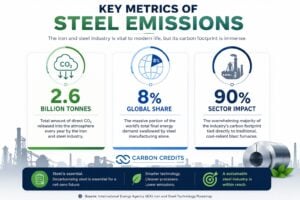
Steel production is one of the world’s most carbon-intensive industries. According to the International Energy Agency, the sector accounts for roughly 7% of global energy-related CO₂ emissions.
steel carbon emissions

Traditional steelmaking relies on coal-fired blast furnaces that use coking coal to remove oxygen from iron ore. This process releases large amounts of carbon dioxide.

The world produces nearly 2 billion metric tons of steel every year, making the industry one of the hardest sectors to decarbonize. Researchers estimate that making steel produces about 2 tons of CO₂ for every ton of steel.

Meanwhile, demand for steel will keep rising. Countries are investing in infrastructure, renewable energy, electric vehicles, and grid upgrades, which require steel. This is why green steel has become one of the most closely watched industrial decarbonization opportunities.

How Stegra Plans to Cut Emissions by Up to 95%

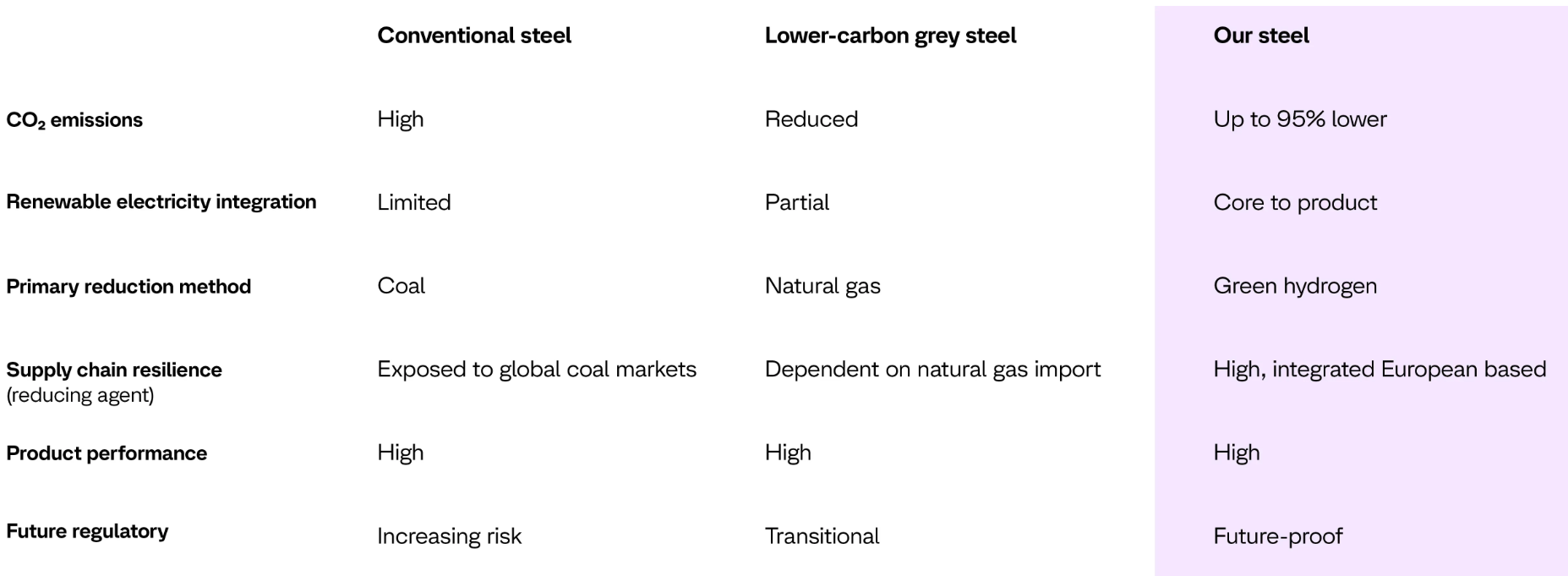
Stegra, formerly known as H2 Green Steel, aims to replace coal with green hydrogen produced from renewable electricity.

At its Boden facility, the company will use large-scale electrolyzers to produce hydrogen from water. That hydrogen will then be used to reduce iron ore into iron before it is processed into steel.

The company says this approach can reduce carbon emissions by up to 95% compared with conventional steelmaking. The facility is expected to produce 2.5 million metric tons of green steel annually during its first phase of operation. In the long term, Stegra plans to expand capacity to as much as 5 million tons per year.
Stegra green steel vs traditional steelmaking
Source: Stegra

The project also includes one of Europe’s largest green hydrogen facilities. Access to abundant hydropower and wind energy in northern Sweden is a key reason the company selected Boden as its location. Electricity costs in the region are often significantly lower than in many other parts of Europe.

Why Investors Are Still Writing Billion-Dollar Checks for Climate Industry

The latest funding round pushes Stegra’s total financing to almost €8 billion. This amount includes earlier equity, debt, and public funding. That makes it one of the most heavily funded industrial decarbonization projects in the world.

Investor backing is particularly notable given recent setbacks across Europe’s clean tech sector.

Swedish battery maker Northvolt filed for bankruptcy earlier this year after struggling with production and financing challenges. The collapse raised concerns about investor appetite for large-scale industrial climate projects. Stegra itself faced questions about its financing needs after project costs increased and construction timelines shifted.

However, investors appear to view Stegra differently. The company uses familiar steelmaking technologies, unlike battery manufacturing. It focuses on replacing fossil fuels with renewable electricity and hydrogen. Supporters argue that this lowers technology risk while still delivering significant emissions reductions.

The new funding package also provides additional financial flexibility as the company moves from construction to commercial operations.

Demand for Green Steel Is Growing Fast

Stegra’s investors are betting that demand for low-carbon steel will continue to grow. Automakers, construction firms, and industrial manufacturers are facing increasing pressure to reduce supply chain emissions.

  • Steel is a major source of embodied carbon. It’s found in many products, like cars, appliances, buildings, and wind turbines.

Several major companies have already signed supply agreements with Stegra, including Mercedes-Benz, Volvo Group, Porsche, Electrolux, and IKEA. These firms are looking for ways to reduce Scope 3 emissions, which typically account for the majority of their carbon footprints.

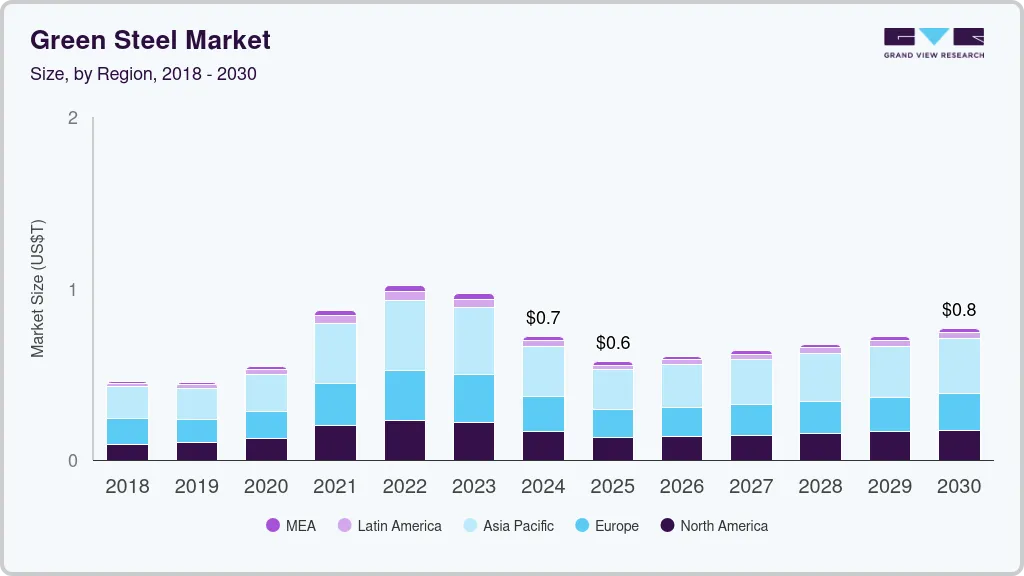
Market forecasts say the global green steel market could grow to $766.8 billion in 2030. This growth is due to stricter carbon pricing and companies pushing for net-zero targets. Europe is expected to remain one of the largest early markets due to its climate policies and industrial decarbonization goals.
green steel market 2030
Source: Grand View Research

The European Union’s Carbon Border Adjustment Mechanism (CBAM) is also encouraging lower-carbon steel production by adding a carbon cost to some imported materials.

Green Hydrogen Remains the Industry’s Biggest Challenge

Despite growing momentum, major challenges remain. The economics of green steel depend heavily on the cost of renewable electricity and green hydrogen. Producing hydrogen through electrolysis remains significantly more expensive than using coal or natural gas in many markets.

Also, many hydrogen-based projects are delayed. Developers are waiting for lower equipment costs, cheaper renewable energy, and better policy support.

Industry experts note that producing green steel at scale will require massive amounts of clean electricity. To fully decarbonize the sector, estimates suggest the steel industry needs nearly 100 million tons of green hydrogen each year by mid-century.

That means projects like Stegra are not only testing a new steelmaking model. They are also testing whether the wider green hydrogen economy can scale fast enough to support heavy industry.

A Key Test for Europe’s Industrial Net-Zero Future

Stegra’s successful funding round arrives at a pivotal moment for industrial decarbonization.

Heavy industries such as steel, cement, and chemicals account for nearly one-third of global greenhouse gas emissions. Many climate pathways show that deep emissions reductions in these sectors are essential for achieving net-zero goals.

By securing another €1.4 billion in funding, Stegra has strengthened its position as one of the world’s most important green steel projects. The company has a clearer plan to finish its main plant. This will show that low-carbon steel can compete on a large scale.

If successful, the Boden facility could become a model for future steel plants around the world. It would also provide evidence that investors remain willing to back large industrial climate projects despite recent setbacks elsewhere in the clean tech sector.

For Europe, the project serves as a test of whether the continent can turn climate ambition into a large-scale industrial reality.

The post Stegra Lands $1.6 Billion Funding Boost to Build Europe’s Largest Green Steel Plant appeared first on Carbon Credits.

Anglo American, Codelco Complete Chile Deal to Unlock 2.7 Million Tonnes of Copper

Anglo American and Chile’s state-owned miner Codelco have finalized a major deal. They will develop their neighboring Los Bronces and Andina copper mines. The agreement follows all necessary competition and regulatory approvals. This comes after a framework agreement from September 2025.

The partnership will boost copper production without needing a new mine. Instead, both companies will coordinate their mining efforts in nearby operations. This approach allows them to extract more copper from existing assets while keeping costs low.

  • Once fully in action, the joint mine plan is expected to yield an extra 2.7 million tonnes of copper over 21 years.
  • That means about 120,000 tonnes of additional copper each year, shared equally between Anglo American and Codelco.
  • The project should also generate at least $5 billion in extra pre-tax value for both companies.

The project won’t start just yet. It needs environmental approvals and some customary conditions first. Implementation is expected around 2030.

A Low-Cost Strategy That Preserves Future Growth

Unlike a merger, this agreement lets both companies keep ownership and control of their mines. They will collaborate on mine planning. This will boost efficiency, optimize infrastructure, and extract more copper from their shared mineral resources.

Importantly, the agreement allows each company to continue its own future projects. Anglo American and Codelco will work on their underground projects. They will also coordinate with the joint mine plan.

The partners have set sustainability principles to guide the project. These include protecting community programs and upholding environmental obligations throughout the agreement’s duration.

This deal highlights a trend in the mining industry. Companies prefer to improve current operations rather than invest billions in new mines. This approach boosts production more effectively. Partnerships help cut costs, lower project risks, and speed up metal supply delivery.

Chile Faces Production Challenges Despite Long-Term Potential

The agreement comes at an important time for Chile’s copper industry.

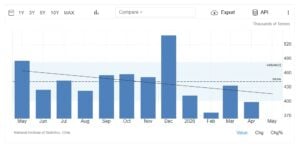
Although Chile remains the world’s largest copper producer, recent production has weakened. According to the country’s National Institute of Statistics, copper output fell 13.8% year over year to 399,954 metric tons in April 2026, following another decline in March. Lower ore grades and difficult comparisons with last year’s higher production contributed to the slowdown.

  • While analysts expect quarterly production to recover to around 485,000 tonnes, the recent decline has raised concerns about tightening global copper supplies.
copper output
Source: Trading Economics

Cochilco Lowers Growth Outlook as Copper Supply Risks Increase

Meanwhile, Chile’s copper commission, Cochilco, has reduced its 2025 production growth forecast from 3% to 1.5%. The revision follows weaker output at major mines, including BHP’s Escondida and Collahuasi.

Despite the downgrade, Cochilco still expects Chile to produce 5.58 million metric tons of copper in 2025 while maintaining its average copper price forecast at $4.30 per pound for both 2025 and 2026.

The agency also warned that operational disruptions remain a major risk. A fatal accident at Codelco’s El Teniente mine could affect future production if recovery efforts take longer than expected.

  • For 2026, Cochilco maintained its production growth estimate at 3%, although it lowered expected output to 5.75 million metric tons.
  • Over the longer term, Trading Economics projects Chile’s monthly copper production to gradually recover to approximately 510,000 tonnes in 2027 and 530,000 tonnes in 2028.

Nonetheless, copper continues to play a major role in Chile’s economy. According to United Nations COMTRADE data, the country exported $20.43 billion worth of copper in 2025, highlighting its importance as the world’s leading copper supplier.

Collaboration Supports Chile’s Copper Growth Ambitions

The Anglo American-Codelco partnership could help strengthen Chile’s position in the global copper market.

Industry analysts note that integrating the Los Bronces and Andina operations allows both companies to maximize existing resources rather than spending years developing entirely new projects. Better mine sequencing, shared infrastructure, and coordinated planning could improve productivity while lowering operating costs.

The agreement follows several years of negotiations involving Anglo American, Codelco, Mitsubishi Corporation, and Mitsui & Co. Together, the neighboring deposits represent one of the world’s largest concentrations of copper resources.

  • The project also supports Chile’s national goal of increasing annual copper production to 6 million tonnes by 2030.

Nevertheless, the benefits will take time to materialize. Chile’s environmental approval process for large mining projects is often lengthy, and any delays in permitting could postpone the project’s planned start date.

Duncan Wanblad, CEO of Anglo American, said:

“Our agreement with Codelco demonstrates what is possible when we work in partnership to unlock compelling industrial synergies -delivering significant value and more copper tonnes for both companies and for Chile. The next important milestone for Los Bronces – Andina is the timely receipt of the permits, which will allow us to begin delivering the additional volume and value that we are targeting, for the benefit of all our stakeholders, and for Chile.

“By integrating the Los Bronces and Andina mine plans, we are unlocking one of the most significant copper adjacency opportunities in the world. Adjacencies such as these are rare and they highlight the role that responsible, partnership-led development can play – in this case supporting Chile’s ambition to lift national copper production to 6 million tonnes per year by 2030.”

The Global Copper Outlook: Demand Vs Supply

While producers work to increase supply, demand for copper continues to accelerate.

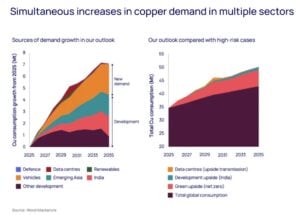
Wood Mackenzie’s report projects global copper demand to increase 24% by 2035, reaching 42.7 million tonnes annually. That represents an additional 8.2 million tonnes per year, driven by economic growth, electrification, and digital technologies.

supply and demand
Source: Wood Mackenzie

The consultancy believes several emerging trends could further tighten the market and increase price volatility beyond current expectations.

AI Data Centers Drive Copper Demand

Wood Mackenzie estimates AI-related data centers will consume an additional 2,200 TWh of electricity by 2035, increasing copper demand for power grids to 1.1 million tonnes a year by 2030. Copper accounts for less than 0.5% of total data center construction costs.

Clean Energy and EVs Boost Copper Use

Renewable energy projects are expected to require an additional 2 million tonnes of copper annually over the next decade. Copper demand from clean energy is projected to increase from 1.7 million tonnes today to 4.3 million tonnes by 2035. An electric vehicle uses up to four times more copper than a conventional vehicle.

Asia Leads Future Copper Demand

China is projected to consume 15.7 million tonnes of refined copper in 2025, while India’s demand is expected to grow 7.5%. By 2035, India and Southeast Asia are expected to add 3.3 million tonnes of annual copper demand

Supply May Struggle to Keep Pace

Meeting future copper demand will be tough.

Wood Mackenzie estimates the industry needs over 8 million tonnes of new mine capacity. It also expects a 3.5 million tonne increase in recycled copper by 2035.

The consultancy predicts more frequent mine disruptions. These will stem from climate issues, labor challenges, and operational risks. Annual supply losses could rise from 5% to 6%, removing about 250,000 to 300,000 tonnes of copper from the market each year.

As demand rises for AI, renewable energy, electric vehicles, and industrial growth, limited supply may keep copper prices high. This might cause more market volatility in the next decade.

For Anglo American and Codelco, their joint Chilean mine plan is a chance to add low-cost copper to the market. Every new tonne will be more valuable.

The post Anglo American, Codelco Complete Chile Deal to Unlock 2.7 Million Tonnes of Copper appeared first on Carbon Credits.

NVIDIA (NVDA Stock) Takes AI Deep Underground: Inside Its Geothermal Energy Push With Fervo and PNNL

NVIDIA (NVDA) Takes AI Deep Underground: Inside Its Geothermal Energy Push With Fervo and PNNL

Artificial intelligence (AI) is driving a surge in electricity demand worldwide. Now, NVIDIA is taking its AI platform into an unexpected area: geothermal energy.

This week, NVIDIA (NVDA) teamed up with Fervo Energy (FRVO) and the U.S. Department of Energy’s Pacific Northwest National Laboratory (PNNL). Together, they are creating a new AI-powered digital twin platform named EGS-Twin.

The platform will merge real-time field data, physics-based modeling, and AI forecasting. This will boost the performance of enhanced geothermal systems (EGS).

The goal is to help operators understand underground conditions better. This way, they can improve drilling efficiency, increase power output, and lower project risks. Fervo’s CTO and co-founder, Jack Norbeck, remarked:

“We believe that digital twins will expedite the learning curve for geothermal development as we build and operate our GeoBlock assets. Integrating high-fidelity physics-based models with AI-driven forecasting has the potential to reshape reservoir management, improve heat recovery, and enhance system reliability.”

Why AI Companies Are Looking Beyond Solar and Wind

The announcement shows a strong link between two fast-growing industries: artificial intelligence and clean energy. The rapid growth of AI is creating unprecedented pressure on electricity systems.

According to the U.S. Energy Information Administration (EIA), data centers accounted for about 5% of total U.S. electricity consumption in 2024. That share could rise to between 6.7% and 12% by 2028 as AI adoption accelerates.

US data center power use 2030 BLoomberg

Recent research suggests electricity use from major AI companies could more than double by 2030. A study predicts that the six biggest AI companies could boost power use from about 118 terawatt-hours (TWh) in 2024 to between 239 TWh and 295 TWh by 2030.

This growing demand is creating a challenge for technology companies.

Solar and wind power continue to expand rapidly, but they depend on weather conditions. AI data centers, by contrast, require electricity around the clock. That is why interest is growing in “firm” clean energy sources that can operate 24 hours a day.

Geothermal energy fits that profile.

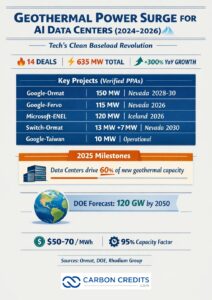
The Department of Energy estimates that geothermal power plants reach capacity factors of about 95%. This allows them to produce electricity nearly all year long. For data center operators, that reliability is becoming increasingly valuable.

Building a Digital Twin 10,000 Feet Underground

The new EGS-Twin platform aims to solve one of geothermal energy’s biggest challenges: understanding what happens deep underground.

Enhanced geothermal systems work by drilling wells into hot rock formations and circulating fluids through engineered reservoirs. The technology can access geothermal resources in many more places than traditional plants. However, subsurface conditions are still hard to predict.

The partnership hopes to change that.

PNNL researchers will use Fervo’s operational data to train AI models on NVIDIA’s accelerated computing platform. The models will join NVIDIA Omniverse libraries. This will create a digital twin that simulates geothermal operations in real time.

The platform is designed to:

  • Predict underground reservoir behavior.
  • Optimize heat extraction.
  • Improve drilling decisions.
  • Increase power generation efficiency.
  • Reduce operational risks.

The partners think AI can help operators react faster to underground changes. This could shorten development timelines and boost project economics. For geothermal energy, that could be a major breakthrough.

The Startup Leading America’s Next-Generation Geothermal

The project also shines a spotlight on Fervo Energy, one of the fastest-growing geothermal developers in the United States. The company is building Cape Station in Utah, which is expected to become one of the world’s largest enhanced geothermal developments.

Phase I of the project includes approximately 100 MW of capacity and remains on track to begin delivering power in late 2026. A second phase will expand the site to approximately 500 MW.

Fervo recently got over $421 million in project financing for Cape Station. They plan to invest about $1.2 billion between mid-2026 and early 2027 as construction speeds up.

Investor interest has been strong.

The company completed its public listing in 2026 and has attracted significant attention from markets betting on growing demand for clean, reliable electricity. Reuters previously reported that Fervo sought a valuation of up to $6.5 billion during its IPO process.

The company has also strengthened ties with major technology firms. Earlier this year, Fervo made a deal with Google. This agreement could lead to up to 3 GW of geothermal capacity by 2033. The first phase includes 1 GW of proposed projects.

Geothermal Is Back in the Spotlight 

For decades, geothermal energy remained a niche part of the renewable energy sector. Today, that is beginning to change.

New drilling techniques adapted from the oil and gas industry are making enhanced geothermal systems more practical and scalable. These advances allow developers to access underground heat in regions previously considered unsuitable for geothermal power.

Governments are also paying closer attention.

The U.S. DOE sees next-generation geothermal as a key technology for supporting grid reliability while reducing emissions. Unlike wind and solar, geothermal can provide constant power without requiring large-scale battery storage.

Interest is also growing among technology companies.

geothermal energy infographics

Google helped launch one of the first commercial enhanced geothermal projects with Fervo in Nevada. Microsoft, Meta, and other large technology firms have also explored geothermal opportunities as they seek dependable clean energy supplies for data centers.

As AI expands, geothermal’s value proposition becomes stronger.

NVIDIA’s Sustainability Strategy Extends Beyond Chips

The geothermal partnership aligns with NVIDIA’s broader sustainability goals. The company aims to match 100% of its global electricity use with renewable sources. It reached this goal in the fiscal year 2025.

Nvidia Renewable Electricity Use FY2025

NVIDIA also emphasizes energy efficiency as a key part of its climate strategy.

The tech giant claims its latest Blackwell AI systems offer over 50 times more energy efficiency than traditional CPU systems. This boost is specifically for large language model inference workloads.

However, efficiency improvements alone may not offset the rapid growth of AI demand.

As data centers continue growing, access to reliable carbon-free electricity is becoming a strategic priority across the technology sector. That makes partnerships like the one with Fervo increasingly important.

However, NVIDIA’s stock showed only a modest reaction to the announcement, as investors remain primarily focused on AI chip demand and data center growth. Still, the partnership highlights NVIDIA’s expanding influence across the broader AI ecosystem.

Nvidia NVDA stock price

The company uses AI and digital twin technologies for geothermal energy. This suggests that it’s not just a hardware provider but also aims to be a key player in creating the energy infrastructure for future AI growth.

AI and Clean Energy Are Becoming One Story

The partnership between NVIDIA, Fervo, and PNNL highlights a major shift taking place across the energy industry. Artificial intelligence is no longer just a consumer technology story. It is becoming an energy story as well.

Growing AI workloads require massive amounts of electricity. Meeting that demand while maintaining climate goals will require new sources of reliable clean power.

Geothermal energy offers one possible solution. By combining AI, advanced drilling techniques, and geothermal resources, companies hope to unlock a new generation of carbon-free electricity that can operate around the clock.

For the broader energy transition, it shows how AI and clean energy are becoming increasingly interconnected as the world builds the next generation of digital infrastructure.

The post NVIDIA (NVDA Stock) Takes AI Deep Underground: Inside Its Geothermal Energy Push With Fervo and PNNL appeared first on Carbon Credits.

Gevo Advances BECCS Strategy to Meet Rising Demand for Durable Carbon Removal

Gevo, Inc. is increasing its focus on the fast-growing carbon removal market, which is now worth about $12 billion. The company is already one of the leading suppliers of carbon removal credits and is working to expand its presence across both voluntary and regulated carbon markets.

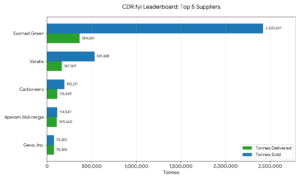
According to data provided by CDR.fyi — Carbon Removal Market Data, Leaderboards & Intelligence. Gevo recently ranked among the top five companies worldwide for delivering carbon removal credits to customers.

gevo carbon credits sales
Data Source: CDR.fyi

Many carbon removal companies still face technical and operational challenges that make large-scale delivery difficult. However, Gevo has developed a strong track record of issuing and delivering carbon credits on time, helping it stand out in a competitive market.

New Website Supports Carbon Credit Buyers

The press release highlights that, to make its carbon products easier to access, Gevo has launched a new website, gevocarbon.com. The platform is dedicated to the company’s carbon removal business and highlights its Bioenergy with Carbon Capture and Storage (BECCS) project.

The website will provide:

  • buyers with easy access to Gevo’s carbon removal products,
  • create a direct connection between the company and potential customers
  • explain how the BECCS process removes carbon dioxide from the atmosphere

The launch coincides with Climate Week London, where Gevo executives are participating in discussions on carbon removal standards and the future of carbon markets. This reflects the company’s growing influence within the industry.

Gevo Chief Carbon Officer Alex Clayton said,

“Gevo continues to help the industry set standards and create first-of-a-kind deals in the voluntary space while unlocking additional compliance and voluntary carbon market opportunities through new pathways and programs. We believe this business can exceed $30 million from our existing operations as demand grows for high-quality carbon removal. We see a clear long-term path toward a fungible carbon credit market – one built on trusted standards that can support a global exchange-traded system.”

Carbon Credits Sales Continue to Grow

Demand for Gevo’s carbon credits continues to rise. During the first half of 2026, the company’s carbon removal sales exceeded its total sales for the whole of 2025.

Equally important, Gevo has delivered all of its carbon credits on schedule. In a market where delivery delays can be common, consistent performance helps strengthen buyer confidence.

Several major organizations have purchased and retired carbon removal certificates generated by Gevo’s North Dakota project. These organizations include Nasdaq, Delta Air Lines, Monzo Bank, Bank of Montreal, and Amgen. Their participation demonstrates growing trust in Gevo’s carbon removal solutions and the quality of its credits.

How Gevo’s Carbon Removal Works 

Gevo’s carbon removal program is based at its North Dakota facility and uses Bioenergy with Carbon Capture and Storage technology. This process combines renewable fuel production with permanent carbon storage.

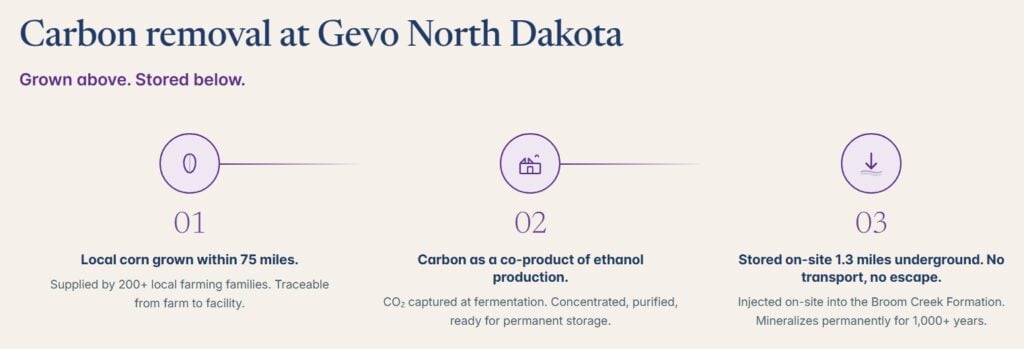
  • The process begins with corn supplied by more than 200 local farming families. Most of the corn comes from farms located within 75 miles of the facility, allowing Gevo to maintain a fully traceable supply chain.
  • During ethanol production, carbon dioxide is naturally released through fermentation. Instead of allowing this carbon dioxide to enter the atmosphere, Gevo captures and purifies it.
  • The captured carbon dioxide is then injected into the Broom Creek Formation, a geological storage site located approximately 1.3 miles beneath the facility.

Because the storage site is located directly below the plant, there is no need for transportation through pipelines or trucks. This reduces potential leakage risks and improves operational efficiency. The carbon dioxide is expected to remain safely stored underground for more than 1,000 years.

Gevo carbon removal
Source: Gevo

Focus on High-Quality Carbon Credits

As carbon markets continue to develop, buyers are increasingly looking for credits that are transparent, reliable, and independently verified. Gevo has made quality a central part of its carbon strategy.

The company’s carbon removal credits are certified through Puro.earth, a leading carbon removal registry. In addition, independent monitoring is provided by Cula Technologies to help verify carbon storage and ensure transparency.

These verification processes help confirm that the carbon credits represent real, measurable, and long-lasting carbon removal. As a result, buyers can have greater confidence in the environmental value of the credits they purchase.

Carbon Credits to Offset Emissions

Gevo also applies its carbon strategy within its own operations. The company uses its carbon credits to offset emissions generated by corporate travel activities.

By using its own credits, Gevo demonstrates confidence in the quality and integrity of its carbon removal products. This approach also provides a practical example of how businesses can incorporate carbon removal into broader sustainability plans.

North Dakota Facility Reached an Important Milestone

In January, Gevo announced that its North Dakota facility had issued more than 500,000 carbon dioxide removal certificates since carbon capture operations began in June 2022.

This milestone highlights the company’s ability to deliver carbon removal credits at a commercial scale while maintaining high standards of quality and reliability.

Gevo believes that reducing emissions across transportation and agriculture requires collaboration. As a result, the company continues to work closely with farmers, technology providers, fuel producers, and government agencies.

  • Climate-Smart Agriculture: Through its USDA-funded Climate-Smart Farm-to-Flight Program, Gevo supports farming practices that reduce the carbon intensity of crop production and improve sustainability.
  • Farm-Level Carbon Tracking: Partnered with Farmers Edge to improve carbon measurement and reporting at the farm level, increasing transparency and data accuracy.
  • Supply Chain Carbon Accounting: Gevo’s Verity platform tracks carbon emissions across the supply chain. Partnerships with ClearFlame Engine Technologies and Midwest Renewable Energy help strengthen carbon accounting from farm to fuel use.

Supporting Sustainable Aviation Fuel

Beyond carbon removal, Gevo continues to expand its sustainable aviation fuel business. The company is working with several technology and engineering partners to help bring low-carbon aviation fuels to commercial markets.

At the same time, the company is exploring additional opportunities in renewable fuels and renewable chemicals, including motorsports. These efforts support the company’s broader goal of reducing emissions across multiple industries.

Looking Ahead

A recent report from Abatable says that this year is built on “integrity at scale.” The goal is to provide carbon credits that are transparent, reliable, and supported by real-world operations.

Carbon credit buyers are becoming more informed and selective. They increasingly demand credits that deliver measurable climate benefits and meet strict verification standards.

While international frameworks such as CORSIA and Article 6 continue to evolve, voluntary carbon markets remain an important tool for climate action. These markets allow companies to invest in carbon reduction and removal projects today rather than waiting for future regulatory requirements.

With growing demand, a strong delivery record, and an expanding network of partners, Gevo is positioning carbon removal as a major growth area for the future. By focusing on quality, transparency, and scalability, the company aims to play an important role in the continued development of global carbon markets.

The post Gevo Advances BECCS Strategy to Meet Rising Demand for Durable Carbon Removal appeared first on Carbon Credits.

Walmart (WMT Stock) Secures 176 MW of Nuclear Energy Deal with Constellation Energy

Walmart (NYSE: WMT) has taken a major step toward cleaner energy by signing its first-ever nuclear power purchase agreement (PPA) with Constellation Energy. The long-term deal will provide emissions-free electricity from Constellation’s Dresden Clean Energy Center in Illinois and help support Walmart’s climate goals while strengthening local energy infrastructure.

  • The agreement covers about 176 megawatts (MW) of wholesale electricity supply, including 30 MW of additional generation capacity from planned efficiency upgrades at the nuclear facility.

Under the agreement, the retail giant will purchase electricity, environmental attributes, and capacity through two separate 15-year contracts starting in 2029 and 2030.

Walmart stock (WMT stock) moved slightly higher after the company announced its first nuclear energy deal with Constellation Energy. The stock rose about 1.9%, trading near $120, as investors reacted positively to Walmart’s plan to secure reliable, carbon-free electricity for its future operations.

Dresden Plant Expansion Supports Walmart Growth in Illinois

The agreement will help fund power uprates at the Dresden Clean Energy Center. These upgrades improve the efficiency of existing nuclear reactors and increase electricity output without building a new facility.

The additional power generated through these improvements will support Walmart’s new high-tech perishable distribution center currently under development in Belvidere, Illinois.

Together, the nuclear energy agreement and the distribution center investment are expected to create jobs, strengthen local communities, and support Walmart’s growing supply chain operations across the region.

Constellation announced in late 2025 that Dresden received renewed operating licenses, allowing the facility to continue operating through 2049 and 2051. The plant currently supports more than 1,100 jobs and provides reliable carbon-free electricity across Illinois.

Walmart Faces Challenges on Its Road to Net Zero

Walmart has set ambitious climate goals. The company aims to reduce its Scope 1 and Scope 2 greenhouse gas emissions by 65% by 2030 compared to 2015 levels. It also plans to achieve net-zero operational emissions by 2040.

However, it acknowledged in 2024 that reaching its interim climate targets may be difficult. The company cited challenges such as limited availability of low-carbon refrigeration technologies, transportation solutions, and clean energy infrastructure.

Scope 1 emissions come from sources Walmart directly controls, including transportation fleets, refrigeration systems, and fuel use in facilities. Scope 2 emissions result from purchased electricity used to power stores, distribution centers, and offices.

Despite these challenges, the company continues to make progress.

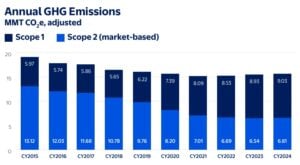
  • In 2024, the company reduced its emissions intensity by 3.7% compared to the previous year.
  • Since 2015, Walmart’s total Scope 1 and Scope 2 emissions have fallen by 18.1%, while emissions intensity has dropped by 47.4%.
walmart emission
Source: Walmart

The company noted that emissions increased slightly in some areas because of business growth. Higher transportation activity in the U.S. and expansion across Mexico and Central America contributed to increased emissions. Renewable energy production in some regions also declined because of drought and extreme heat conditions.

Building a More Resilient Power Mix

Alongside nuclear energy, Walmart continues to invest heavily in renewable power.

  • It aims to source 50% of its electricity from renewable energy by 2025 and reach 100% renewable electricity across its operations by 2035.

In 2024, renewable sources supplied 48.5% of Walmart’s global electricity needs. About 30.6% of its electricity came through renewable energy contracts, including long-term agreements tied to wind and solar projects.

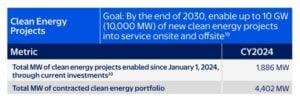
It has also announced plans to help enable up to 10 gigawatts (GW) of new clean energy projects between 2024 and 2030.

clean energy walmart
Source: Walmart

These investments are expected to support grid reliability while helping the company secure affordable, low-carbon power.

The new nuclear agreement complements Walmart’s broader clean energy strategy by adding a dependable source of emissions-free electricity to its growing energy portfolio.

Constellation Bolsters Its Position as America’s Nuclear Leader

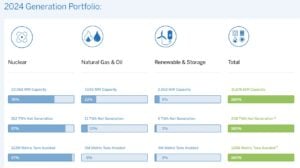
Constellation Energy is the largest nuclear power operator in the United States. It operates about 55 gigawatts (GW) of generating capacity across nuclear, natural gas, hydro, wind, solar, and geothermal facilities.

Its fleet produces enough electricity to power roughly 27 million homes and delivers nearly 10% of the nation’s clean energy. The company also serves around 2.5 million customer accounts, including about 80% of Fortune 100 companies.

constellation energy
Source: Constellation

As companies work to reduce emissions and meet climate targets, nuclear energy is becoming an increasingly attractive option. Unlike wind and solar power, nuclear plants provide around-the-clock electricity, making them a reliable source of carbon-free energy.

US Nuclear Generating Capacity

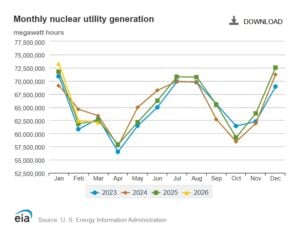
The United States remains the world’s largest producer of nuclear energy. EIA data shows that, in 2025, the country had about 97 GW of operating nuclear capacity, generating roughly 785 terawatt-hours (TWh) of electricity annually.nuclear energy usa

Nuclear power supplies around 18% of U.S. electricity and nearly half of the nation’s carbon-free power, making it a critical part of the country’s clean energy transition.

The deal also reflects a broader shift in the U.S. energy market. Rising electricity demand from data centers, advanced manufacturing, and electrification is increasing the need for stable, low-carbon power sources.

Illinois is an important market for both companies. Constellation’s generating assets play a key role in the state’s electricity supply, while Walmart operates approximately 175 stores and clubs and employs more than 55,000 associates across Illinois.

As demand for reliable clean power rises, Walmart’s partnership with Constellation could serve as a model for other large corporations seeking to balance growth, energy security, and emissions reductions.

The post Walmart (WMT Stock) Secures 176 MW of Nuclear Energy Deal with Constellation Energy appeared first on Carbon Credits.

Google Backs CO₂ Battery Breakthrough of Energy Dome in a First Bilateral Energy Storage Project in Ireland

Google Backs CO₂ Battery Breakthrough of Energy Dome in a First Bilateral Energy Storage Project in Ireland

Google and Energy Dome have taken a major step in long-duration energy storage (LDES) with a new 23 MW / 200 MWh CO₂ battery project in County Offaly, Ireland. The project is the first commercial deal between the two companies. It also boosts their rollout strategy across Europe and North America.

The system is designed to store surplus renewable electricity and dispatch it when demand rises. This helps stabilize grids that are increasingly powered by wind and solar energy.

The Ireland project follows a similar 19 MW / 200 MWh project announced in Arizona in the United States. Together, these deployments signal a coordinated global expansion strategy rather than isolated pilot projects.

The timing is important. Electricity demand from electrification and data centers is rising quickly. Grid operators are under pressure to integrate more renewables without compromising reliability.

Inside Ireland’s Landmark CO₂ Battery Project

The Irish project will be located in County Offaly near the town of Rhode. It will be developed, owned, and operated by Energy Dome. Key technical specifications include:

  • Capacity: 23MW
  • Storage: 200MWh
  • Duration: roughly 8–12 hours of dispatchable power (typical for Energy Dome systems)
  • Expected operation: 2028
  • Contract: 10-year capacity agreement with EirGrid

The site sits on a former peat-fired power station. This allows the reuse of industrial land while supporting Ireland’s transition away from fossil fuel generation.

Ireland as a Strategic Grid Test Case

renewable energy target Ireland
Source: Sustainable Energy Authority of Ireland

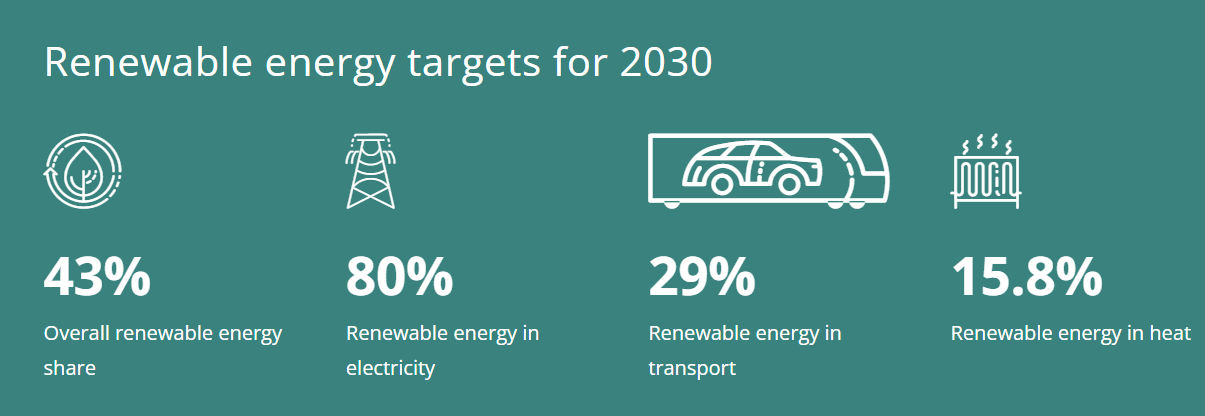
Ireland is becoming an important market for advanced energy storage. The country aims to generate 80% of its electricity from renewable sources by 2030, with wind power expected to play a major role. This creates a structural need for long-duration storage, especially during periods when wind output is high but demand is low.

The country faces three structural challenges:

  1. High wind penetration,
  2. Grid congestion in key regions, and
  3. Rapid growth in electricity demand, including data centers.

The Offaly project is designed to help address these issues. Built on the site of a former peat-fired power station, it repurposes existing energy infrastructure while supporting Ireland’s clean energy transition. Its location near key transmission lines serving the Greater Dublin area could also help improve grid flexibility.

EirGrid’s 10-year capacity contract shows strong support for long-duration storage. This approach helps keep energy reliable as renewable sources grow.

Why Google Sees Storage as the Missing Piece of Clean Power

Google’s participation is part of its broader effort to reach 24/7 carbon-free energy by 2030. The company has already invested in multiple clean energy technologies, including geothermal and advanced nuclear.

The Energy Dome partnership adds a critical missing layer: long-duration storage that can bridge multi-hour renewable gaps.

Google’s challenge is not just annual carbon matching. It is hourly matching. Wind and solar can fluctuate within minutes or hours. Lithium-ion batteries help, but they are typically optimized for short durations of around 1–4 hours.

Energy Dome’s CO₂ Battery system extends that window significantly. The company claims its system can deliver 8 to 24 hours of firm, dispatchable capacity depending on configuration. This makes it suitable for:

  • Evening peak demand after solar drops,
  • Multi-day weather variability, and
  • Grid congestion management in high-renewable regions.

For Google, this supports its data center expansion strategy, where continuous clean electricity is becoming a core infrastructure requirement. Vanessa Hartley, Head of Google Ireland, commented:

“At Google, we are committed to catalyzing next-generation energy technologies to bolster grid resilience and introduce critical storage capacity to the system. This milestone is a next step in our long-term partnership with Energy Dome, and will help scale their promising long-duration energy storage technology, charging ahead to an affordable, secure and clean energy future.”

SEE MORE: Google Backs Energy Dome’s CO₂ Battery Breakthrough for Clean Energy Storage

How the CO₂ Battery Technology Works

Energy Dome’s system uses carbon dioxide in a closed-loop thermodynamic cycle. The process has two main phases:

Charging phase

  • Excess renewable electricity powers compressors
  • CO₂ is compressed into liquid form
  • Heat generated during compression is captured and stored

Discharging phase

  • Stored heat is reused
  • Liquid CO₂ expands into gas
  • Gas drives a turbine to generate electricity

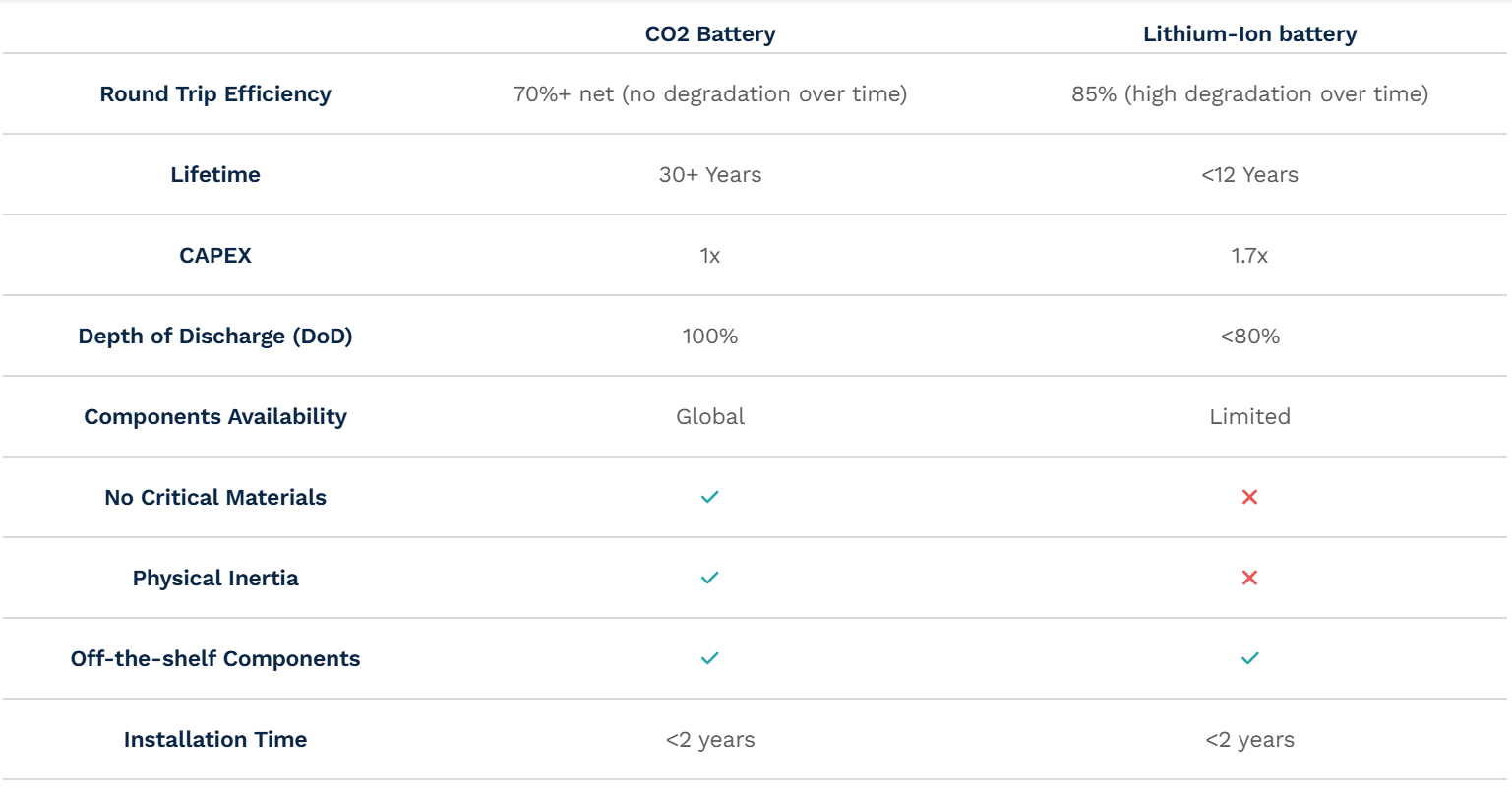
The CO₂ is not consumed; it cycles repeatedly inside the system. The company highlights several design advantages as shown below.

Energy Dome CO2 battery system
Source: Energy Dome

This positions the technology between lithium-ion batteries and mechanical storage systems like pumped hydro. Unlike lithium-ion, which is constrained by mineral supply chains, CO₂ storage relies mainly on steel, tanks, and compression systems.

The Global Storage Boom Is Just Getting Started

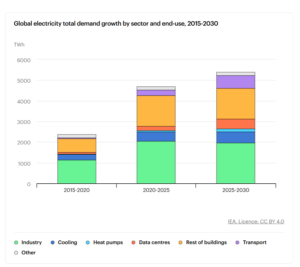
The global energy storage market is entering a new growth phase as countries add more renewable energy to their power systems. The International Energy Agency (IEA) says electricity demand will keep rising until 2030.

global electricity demand by sector 2030 IEA
Source: IEA

This increase is due to several factors: more electric transport and heating, larger data centers, higher power use from AI, and growing renewable energy production.

As wind and solar become a larger share of the energy mix, grid operators need more ways to balance supply and demand. Short-duration lithium-ion batteries are popular, but many power systems need storage that provides electricity for longer periods.

Interest in long-duration energy storage technologies has grown. This includes CO₂ batteries, pumped hydro, compressed-air storage, and thermal energy systems.

Energy Dome markets its CO₂ Battery as a grid-scale solution. It stores renewable energy and sends it out when needed. The technology aligns with a broader industry trend toward firm renewable power and more resilient electricity networks.

From Arizona to Ireland: A Multi-Continent Expansion

The Ireland facility is part of a broader strategy by Google and Energy Dome to deploy long-duration storage across multiple regions. Along with the Arizona project, this shows a move from demo projects to commercial-scale deployment.

The companies plan to keep expanding their technology in markets. This is where renewable energy growth is driving demand for flexible storage solutions. Energy Dome is also considering a second 200 MWh unit at the Irish site, which could turn the location into a larger storage hub.

Successful CO₂ battery systems could cut renewable energy waste, boost grid reliability, and reduce reliance on gas-fired peaker plants. Countries are aiming for net-zero targets, and electricity demand is growing. So long-duration storage will be crucial for modern power systems.

A Small Project With Big Implications

While the 23 MW Irish project is relatively modest in size, it represents an important milestone for long-duration energy storage. The project shows how advanced storage technology can boost renewable-heavy grids. It also helps companies like Google meet their carbon-free energy goals.

As the energy transition accelerates, projects like this could play a growing role in creating more reliable, flexible, and low-carbon electricity systems worldwide.

The post Google Backs CO₂ Battery Breakthrough of Energy Dome in a First Bilateral Energy Storage Project in Ireland appeared first on Carbon Credits.

ECB and Eurosystem Cut Portfolio Carbon Emissions as Green Bond Investments Rise

The European Central Bank (ECB) is working hard to cut the carbon footprint of its investment portfolios. It aims to support Europe’s green transition. Recent climate disclosures show that by 2025, the ECB and Eurosystem reduced portfolio emissions and increased green bond investments. They also introduced new reporting methods for clearer decarbonization insights.

While emissions are decreasing, future progress depends more on companies reducing their greenhouse gas emissions than on central bank strategies. The ECB is also focusing on nature-related risks alongside climate change.

ECB Portfolio Emissions Continue to Fall

The ECB released its fourth annual climate disclosures, covering various portfolios, including monetary policy and foreign reserves.

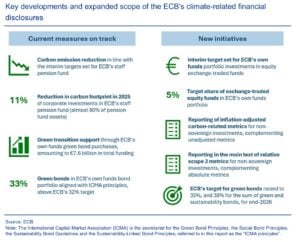
  • It revealed that emissions from these portfolios fell again in 2025. This decline is partly due to a 13% reduction in the portfolios as bonds matured without full replacements.

A smaller investment portfolio leads to lower financed emissions. However, the ECB stressed that reducing the portfolio is just one part of the story. The central bank will continue pursuing climate-related investment goals where possible.

The Eurosystem is on track to meet its interim emissions reduction targets for corporate bond holdings. These targets use relative carbon intensity, comparing emissions to company revenue, aligning with the Paris Agreement and the EU’s climate neutrality goals.

New Inflation-Adjusted Metrics Show Real Climate Progress

A key change this year is the introduction of inflation-adjusted emissions metrics.

Previously, carbon intensity calculations used nominal revenues. High inflation could make carbon intensity look better, even if emissions stayed the same.

Now, the ECB adjusts revenues for inflation before calculating carbon intensity. This gives a clearer view of decarbonization, showing real emissions declines from operational changes and cleaner practices.

The bank believes these new indicators enhance transparency and help investors understand long-term climate performance.

Scope 3 Emissions Included for the First Time

Another major improvement is the inclusion of Scope 3 emissions for non-sovereign holdings.

Scope 3 emissions are indirect greenhouse gas emissions from a company’s value chain, including those from suppliers and transportation. For many sectors, these emissions account for the largest share of total carbon output.

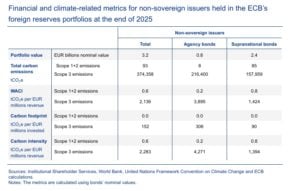
The ECB noted that improvements in emissions reporting now allow it to share these figures, though some limitations remain due to incomplete company reporting. Adding Scope 3 data gives investors a fuller picture of portfolio impacts and aligns with growing international reporting standards.

scope 3 emissions ECB report
Source: ECB

Green Bond Investments Continue to Expand

In addition to lowering emissions, the ECB is boosting investments that support climate solutions.

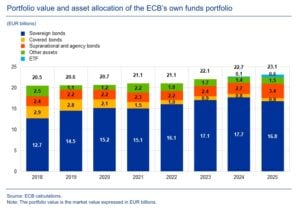
  • By the end of 2025, the ECB’s own funds portfolio increased its green bond share to 33%, amounting to about €7.6 billion in projects supporting the green transition.

These investments fund renewable energy, energy efficiency, sustainable infrastructure, and clean transportation across Europe.

  • The ECB aims to raise the green bond allocation to 35% in 2026, showing its commitment to sustainable finance.

ecb green bonds

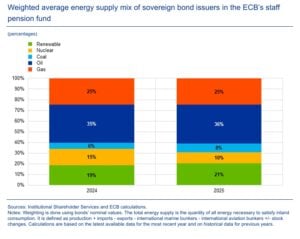
Additionally, the ECB’s staff pension fund also made progress, with its corporate investments’ carbon footprint declining again in 2025, keeping it on track for climate goals.

ECB Puts Nature and Biodiversity Higher on Its Green Agenda

Climate change is no longer the ECB’s only environmental focus. The bank is expanding its assessment of nature-related risks, recognizing links between biodiversity loss, ecosystem degradation, and climate change.

Following last year’s disclosures, the bank again reported on portfolio exposure to industries that significantly impact nature, in line with the Taskforce on Nature-related Financial Disclosures (TNFD).

Nature-related reporting is growing. The ECB expects better data, and global standards will improve disclosure quality. The bank plans to gradually enhance these disclosures in future reports.

More Transparency, Stronger Climate Action

The ECB emphasizes that publishing detailed climate disclosures is key to improving transparency in financial markets.

National central banks in the Eurosystem, such as the Bundesbank, shared their climate reports with the ECB. This shows a united push to improve climate reporting in Europe.

The ECB will continue to include climate change and nature loss in its policies. While portfolio emissions are improving, future progress will depend more on companies, banks, and the broader economy taking faster action to reduce real-world emissions. They can’t just depend on financial portfolio changes.

ecb emission

Banks’ Critical Role in Financing Emissions

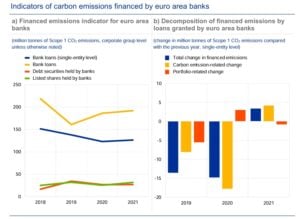
The report also emphasizes the crucial role banks have in financing corporate carbon emissions. Banks support businesses mainly through loans and, to a lesser extent, corporate bond investments. Thus, their lending choices heavily impact the financial system’s emissions.

It emphasized that financed emissions linked to euro area banks have generally decreased since 2018. However, progress has been uneven. After a significant drop during the COVID-19 pandemic, financed emissions rose slightly in 2021 as economic activity picked up.

ecb
Source: ECB

But Future Emissions Cuts Will Become More Difficult

Despite ongoing reductions, the ECB recognizes that cutting emissions will become harder in the coming years.

Previously, the central bank favored reinvesting in companies with strong climate performance when bonds matured. But as monetary policy portfolios shrink, there are fewer opportunities to adjust for lower-emission companies.

Future reductions in financed emissions will rely more on businesses actively lowering their greenhouse gas emissions. Passive portfolio reduction alone won’t drive significant climate gains. Companies need to accelerate decarbonization through cleaner technologies and renewable energy.

Notably, the ECB found that banks have made limited changes to their lending portfolios. Most of the decline in financed emissions came from shifts in corporate emissions, not from banks moving loans to lower-carbon firms.

These findings indicate that European banks have not yet significantly reduced lending to high-emission businesses. Stronger financial sector action is essential for Europe to transition to a low-carbon economy.

The post ECB and Eurosystem Cut Portfolio Carbon Emissions as Green Bond Investments Rise appeared first on Carbon Credits.

Amazon Opens Its Carbon Credit Vault for Hundreds of Companies as High-Quality Offsets Run Short

Amazon Opens Its Carbon Credit Vault for Hundreds of Companies as High-Quality Offsets Run Short

Amazon is opening its carbon credit agreements to Climate Pledge signatories and chosen suppliers. This change allows more companies to access high-quality carbon credits, which are often hard to get.

The program allows participating companies to purchase carbon credits from three projects that Amazon has already helped finance, which include:

  • a direct air capture (DAC) facility in Texas developed by 1PointFive,
  • a methane reduction project for rice farming in India, and
  • a landscape restoration initiative in South Africa.

Companies that signed Amazon’s Climate Pledge can join the program. Amazon suppliers and other partners in the value chain are also included.

The tech giant says that buyers can purchase as few as 100 carbon credits, and there’s no need for long-term contracts. This makes it easier for organizations to access high-quality carbon credits.

The Carbon Gold Rush: Why Future Credits Are Being Claimed Today

The move comes at a time when demand for premium carbon credits is rising rapidly. Many companies have set net-zero targets, but the supply of high-quality carbon removals remains limited. By sharing access to its long-term carbon deals, Amazon hopes to help partners reduce emissions while supporting the growth of new climate projects.

The initiative also marks a new phase in corporate climate action. Large companies are no longer just buying carbon credits. They are helping build the markets needed to scale carbon removal technologies.

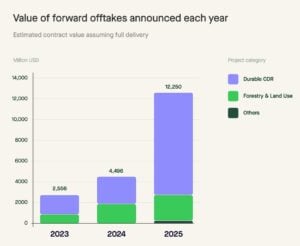
Carbon credit offtakes have become an important tool for financing climate projects.

Unlike traditional carbon credit purchases, offtake agreements allow companies to commit to buying future credits before they are issued. These early commitments help project developers secure funding and expand operations.

This model has become increasingly popular as competition for carbon removals grows. Major buyers such as Microsoft, Google, Stripe, Shopify, and Amazon have all signed long-term agreements to secure future carbon credit supplies.

carbon credit offtakes annual 2025 Sylvera
Source: Sylvera

The need is growing quickly. According to CDR.fyi, buyers contracted more than 29.6 million metric tons of carbon dioxide removal credits in 2025. However, only a small share of those removals have actually been delivered so far. This gap between demand and supply is pushing companies to lock in future credits years in advance.

Amazon’s new program gives smaller companies access to opportunities that would otherwise be difficult to negotiate on their own.

Too Many Buyers, Not Enough Credits

Amazon’s announcement points out a key challenge in the voluntary carbon market (VCM): there aren’t enough high-quality credits to meet future demand.

Many companies have pledged to reach net-zero emissions between 2040 and 2050. As those deadlines approach, demand for carbon removals is expected to increase sharply.

McKinsey estimates global demand for carbon credits could reach between 1.5 billion and 2 billion metric tons annually by 2030. By 2050, demand could exceed 7 billion metric tons per year.

voluntary carbon credit demand growth
Source: McKinsey & Company

At the same time, analysts expect the voluntary carbon market to grow significantly. Some forecasts project that the market could be worth more than $50 billion by 2030 if corporate climate commitments continue to grow.

However, buyers are becoming more selective. Many now favor projects that remove carbon from the atmosphere or deliver measurable emissions reductions. This has increased interest in technologies such as direct air capture, biochar, and methane reduction.

As a result, future supplies of high-integrity credits are becoming increasingly valuable.

How the Program Fits Amazon’s Climate Goals

The new initiative supports Amazon’s broader climate strategy. Per Amazon’s Jamey Mulligan,

“Most of what will be left in our footprint in 2040 will be in our Scope 3. And so we need our suppliers to be participating.”

In 2019, Amazon co-founded The Climate Pledge, which commits companies to reach net-zero carbon emissions by 2040. The pledge now includes more than 550 signatories across 46 countries and over 60 industries.

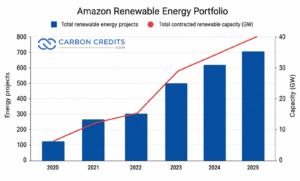
Amazon has also invested heavily in renewable energy and low-carbon technologies. The company’s latest sustainability report shows it matched 100% of its global electricity use with renewable energy for the second year in a row.

The tech firm now supports more than 500 solar and wind projects worldwide. Together, these projects generate enough carbon-free electricity to power millions of homes each year.

amazon renewable energy portfolio 2025

The company has rolled out over 31,000 electric delivery vans worldwide. It is also investing in sustainable aviation fuel, carbon removal tech, and supply chain decarbonization.

Amazon reported that its carbon footprint has fallen from its 2021 peak, showing progress toward its long-term climate goals.

The Offset Debate Isn’t Over—It’s Evolving

While carbon credits play an important role in many net-zero plans, they remain controversial.

Critics argue that companies should focus first on reducing emissions directly rather than relying on offsets. Concerns about project quality and verification have also led to greater scrutiny across the carbon market.

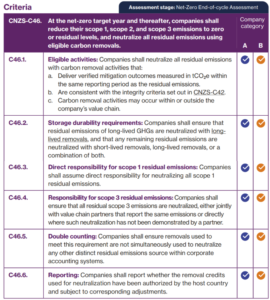
As a result, many climate standards now emphasize that carbon credits should be used only after companies make deep emissions cuts. The Science-Based Targets initiative requires companies to cut at least 90% of their emissions. They can then neutralize the rest with carbon removals.

SBTi new net zero standard and carbon removals
Source: SBTi

This has increased demand for higher-quality credits that can demonstrate measurable climate benefits.

Amazon’s push for projects like direct air capture and methane reduction shows a shift toward stronger carbon market standards.

Big Tech’s New Arms Race: Locking Up Carbon Removal Supply

Amazon is part of a growing group of technology companies investing heavily in carbon removals.

Microsoft is now the largest corporate buyer of carbon removal credits. They have contracted tens of millions of metric tons in recent years. Frontier, a coalition supported by Stripe, Shopify, Google, Meta, and McKinsey, has pledged almost $1 billion. This funding aims to boost new carbon removal technologies.

The competition is being driven by climate science. The Intergovernmental Panel on Climate Change (IPCC) and other researchers say the world has to remove billions of tons of carbon dioxide from the atmosphere each year by mid-century. This is key to meeting global climate goals.

Yet, many removal technologies are still in the early stages of development. Long-term purchase agreements provide the financial certainty needed to build new facilities and expand capacity. By opening its carbon credit pipeline to partners, Amazon is helping more companies to join this fast-growing market.

From Carbon Buyer to Carbon Market Builder

Amazon’s latest move is about more than carbon credits. The company is using its scale to help create demand for climate projects that may otherwise struggle to attract financing.

The giant e-commerce helps spread the risks and opportunities of carbon market participation by giving suppliers and Climate Pledge members access to its offtake agreements.

The strategy could speed up investments in projects that cut methane emissions, restore ecosystems, and directly remove carbon from the air.

Amazon’s new program shows how large companies are evolving from carbon credit buyers into carbon market builders. If more companies adopt this model, it could unlock the funds needed to grow the next generation of climate solutions.

READ MORE: Amazon (AMZN) Stock Slips as It Opens Carbon Credits to UK Firms and Secures $17.5B Loan for AI

The post Amazon Opens Its Carbon Credit Vault for Hundreds of Companies as High-Quality Offsets Run Short appeared first on Carbon Credits.

World’s Richest 10% Consumers Cause Up to $5.7T in Environmental Damage a Year, New Study Finds

World's Richest 10% Consumers Cause Up to $5.7T in Environmental Damage a Year, New Study Finds

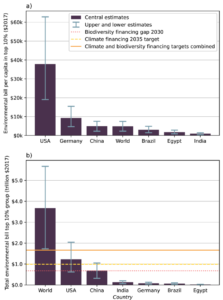
A new study has put a price tag on one of the biggest drivers of environmental damage: consumption by the world’s wealthiest households. Researchers from Leiden University and the University of Oxford found that the top 10% of global consumers cause $1.7 trillion to $5.7 trillion in environmental cost each year.

The study, published in Nature Communications Sustainability, offers one of the clearest estimates yet of how spending patterns translate into environmental costs.

The numbers are striking. At the high end, the annual damage exceeds the combined funding needed to meet major global climate and biodiversity goals. Scientists warn that humanity has crossed seven of the nine planetary boundaries. These boundaries define a safe space for human societies, and so the findings come at a critical moment.

The message of the study is this: a relatively small share of the world’s population is placing a disproportionate burden on the planet.

Climate Change and Nature Loss Drive Most of the Costs

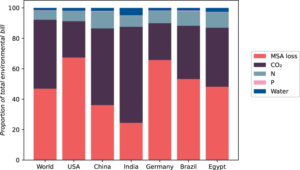
Researchers looked at how consumption impacts various environmental systems. They also estimated the financial cost of that damage. Their analysis covered climate change, biodiversity loss, freshwater use, land-use change, and nutrient pollution.

The highest costs came from biodiversity loss, which accounted for 47% to 56% of total environmental damage. Climate change followed closely, contributing 36% to 45% of the total. Together, these two issues made up more than 90% of the estimated costs.

environmental cost of consumption
Notes: MSA loss (biodiversity loss) is displayed in red, CO2 (climate change) in purple, N (nitrogen biogeochemical cycle) in light blue, P (phosphorus biogeochemical cycle) in pink, and freshwater use in dark blue. Source: Schrijver, I., Hoekstra, R. & Behrens, P. (2026). https://doi.org/10.1038/s44458-026-00079-x.

Even the study’s lowest estimate of $1.7 trillion per year is enormous. It exceeds the financing gaps that governments are trying to close through global climate and biodiversity agreements.

The findings show that environmental damage is not only a problem for ecosystems. It is also becoming a major economic challenge.

The More We Consume, the More the Planet Pays

The study found a strong link between wealth and environmental impact. Across the world, the average person in the top 10% of consumers causes between $2,300 and $7,500 in environmental damage every year.

In the United States, where consumption levels are among the highest globally, the damage rises to between $19,000 and $63,000 per person annually. According to the researchers, that equals roughly 6% to 20% of annual income or 0.8% to 3% of personal wealth.

environmental bill of top 10% consumers
Source: Schrijver, I., Hoekstra, R. & Behrens, P. (2026). https://doi.org/10.1038/s44458-026-00079-x.

The findings support previous research on emissions inequality.

Oxfam and the Stockholm Environment Institute say that the richest 10% of people worldwide account for almost half of carbon emissions from consumption. By contrast, the poorest half of humanity contributes only a small share despite representing billions of people.

  • The evidence points to a clear pattern: environmental impacts rise sharply as consumption increases.

SEE MORE: America’s Richest 0.1% Emits 62x More Than a Typical US Household

Biodiversity Loss Carries the Biggest Price Tag

One of the study’s most important findings is that biodiversity loss now rivals climate change as a global economic risk.

Climate change often dominates environmental discussions, but biodiversity loss actually has the highest cost in the analysis. That matters because modern economies depend heavily on healthy ecosystems.

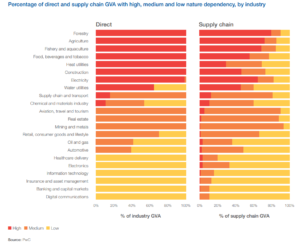
The World Economic Forum reports that over half of global GDP, about $58 trillion, relies significantly on nature and ecosystem services. Agriculture, food production, water supplies, forestry, fisheries, and many industrial sectors rely on functioning ecosystems.

nature dependency of industries
Source: World Economic Forum

Yet, biodiversity continues to decline rapidly.

The Intergovernmental Science-Policy Platform on Biodiversity and Ecosystem Services (IPBES) estimates that about one million species are at risk of extinction. Many of these could disappear in the next few decades.

Biodiversity loss is speeding up. Because of this, businesses and investors are focusing more on nature-related risks. These risks could disrupt supply chains, food systems, and economic growth.

Nature Still Loses the Funding Battle

Despite growing awareness, funding for nature protection remains far below what experts say is needed.

Earlier this year, the United Nations Environment Programme reported that for every dollar spent on nature protection, about $30 goes into activities that harm ecosystems. At the same time, governments continue to face large funding gaps.

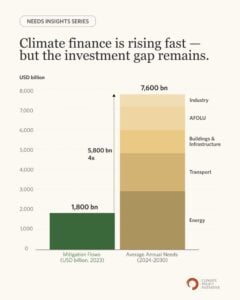
The Kunming-Montreal Global Biodiversity Framework aims to close a biodiversity finance gap estimated at roughly $700 billion per year. Climate finance needs are even larger. Countries recently agreed on goals that could require close to $1 trillion annually for climate action by 2035.

global climate finance investment gap CPI

The environmental costs identified in the study are comparable to these funding needs. This comparison shows a big problem: the world spends much more on harmful activities than on those that help nature.

Climate Policy Is Starting to Focus on Consumption

For decades, environmental policies mainly targeted production. Governments regulate power plants, factories, vehicles, and industrial facilities. While those efforts remain important, researchers increasingly argue that consumption patterns also deserve attention.

High-income households often travel more. They buy more goods, live in bigger homes, and use more energy-intensive products and services.

As a result, their environmental footprint is often much larger than the global average. This debate is gaining momentum as countries work toward net-zero goals.

The International Energy Agency reports that global carbon dioxide emissions from energy hit a record 37.8 billion metric tons in 2025. This rise happened even with ongoing growth in renewable energy and clean technologies.

Many experts now believe that cleaner technologies alone may not be enough. Resource efficiency, circular economy strategies, and sustainable consumption are key topics in climate policy talks.

The Bill for Environmental Damage Keeps Growing

The study does not argue against economic growth or rising living standards. Instead, it shows that a small number of high-consuming households cause a great deal of environmental damage.

By putting a dollar value on those impacts, the researchers offer a new way to understand the true cost of crossing planetary boundaries. Their findings arrive at a critical moment. Climate risks are growing, biodiversity continues to decline, and pressure on natural resources is increasing.

At the same time, governments, investors, and businesses are searching for ways to finance climate action and nature restoration.

The study suggests that part of the solution may involve more than raising new funding. It may also need to lower the environmental costs from the world’s biggest households.

Research shows that solving environmental issues might rely on two things: how much money is spent on solutions and how our consumption habits create the problems. This is significant as policymakers are getting ready for future climate and biodiversity talks, especially the upcoming 2026 United Nations Climate Change Conference, COP31, in November. 

The post World’s Richest 10% Consumers Cause Up to $5.7T in Environmental Damage a Year, New Study Finds appeared first on Carbon Credits.