DHL’s €3 Billion Clean Energy Bet: Why Logistics Has Become the Next Bottleneck in the Energy Transition

DHL’s €3 Billion Clean Energy Bet: Why Logistics Has Become the Next Bottleneck in the Energy Transition

As countries invest heavily in clean energy, the equipment needed to build that future is becoming larger, heavier, and more complex to transport. DHL Group believes this challenge represents one of the biggest growth opportunities in logistics.

At the New Energy Conference in Amsterdam, the company shared its goal to boost revenue from its new energy logistics business. They aim to grow it from about €600 million in 2025 to €3 billion by 2030. That would represent a fivefold increase in just five years.

The target shows a rising need for specialized logistics services. This includes renewable energy, battery storage, electric vehicles, hydrogen, and grid infrastructure.

Tobias Meyer, CEO, DHL Group, remarked:

“The energy transition is not happening through a single technology and a single supply chain. It is a set of different assets that help countries to shift. DHL has the capabilities to help establish this new supply chain end-to-end, from parts and components to aftermarket support, at a global scale like no one else… Our combination of reach, reliability, and sector expertise is what companies and countries can lean on to facilitate the energy transition and bolster resilience.”

The timing is significant. The International Energy Agency (IEA) says global energy investment will hit a record $3.3 trillion. About $2.2 trillion of this will go to clean energy technologies. This includes renewables, grids, batteries, nuclear power, and electrification. That is roughly double the amount expected to flow into fossil fuels.

As the clean energy buildout accelerates, companies like DHL are positioning themselves as critical enablers of the transition.

Bigger Turbines, Bigger Batteries, Bigger Logistics Challenges

One reason DHL sees such strong growth potential is the increasing complexity of clean energy supply chains. Wind turbines have grown dramatically over the past three decades.

Modern turbine rotors can generate roughly 15 times more electricity than those built in the 1990s. While that improves efficiency, it also creates major transportation challenges. Larger blades, towers, and nacelles require specialized trucks, vessels, cranes, and route planning.

Battery storage presents another challenge. Lithium-ion batteries are crucial for electric vehicles and large storage systems. However, they need strict safety measures during transport due to fire risks. Moving large battery systems by air remains particularly difficult.

At the same time, geopolitical disruptions are reshaping global logistics networks.

Conflicts in Ukraine and the Middle East, shipping disruptions, airspace restrictions, and trade tensions have forced companies to redesign supply chains that once operated smoothly. These changes have increased demand for logistics providers that can manage complex international projects.

DHL believes these challenges will continue to grow as energy infrastructure expands around the world.

A $17 Trillion Buildout Creates a Logistics Gold Rush

The scale of future demand helps explain DHL’s optimism. The Energy Industries Council reports about 17,000 energy projects worldwide. These projects have a total investment value of around $17 trillion.

Much of that investment is flowing into renewable energy and supporting infrastructure.

The IEA expects renewable energy deployment to continue expanding rapidly this decade. Global renewable power capacity additions hit a record 800 GW in 2025, while global battery storage investments climbed rapidly to surge above $65 billion. This growth supports countries in creating more flexible electricity systems.
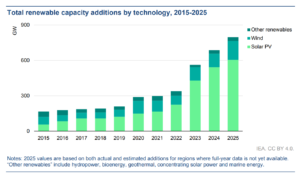
total renewable capacity additions 2025 IEA
Source: IEA

Grid infrastructure is becoming equally important.

The IEA estimates that global grid investment is around $400 billion each year. However, it warns that spending needs to rise a lot to meet increasing electricity demand and boost renewable energy use.

Each solar farm, wind project, battery system, transmission line, and hydrogen facility needs equipment. This equipment must be transported, stored, and delivered on time.

That growing need is creating a new market for specialized logistics services.

DHL Is Building a New Energy Logistics Platform 

To capture that opportunity, DHL has expanded its capabilities across multiple clean energy sectors. The company now provides logistics services for:

  • Wind energy,
  • Solar power,
  • Battery energy storage systems,
  • Electric vehicles,
  • EV batteries,
  • Hydrogen,
  • Alternative fuels, and
  • Grid infrastructure.

DHL has combined these features in its Express, Global Forwarding, and Supply Chain divisions. This forms what they call a completely new energy logistics platform.

One of the company’s latest offerings is Time Definite Plus, a specialized service designed for time-critical deliveries in the renewable energy sector. The service covers 22 European countries. It quickly delivers replacement parts to keep renewable energy assets running.

For wind farm operators, minimizing downtime can have a major impact on electricity generation and project economics.

DHL is also investing in infrastructure. The company plans to open a new European battery logistics hub in Holtum, Netherlands, in early 2027. The facility will meet the rising need for battery transport, storage, and handling. This comes as Europe boosts electric vehicle production and energy storage use.

DHL Is Also Decarbonizing Its Own Operations

DHL Group net zero goals
Source: DHL Group

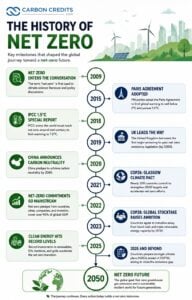
The company’s clean energy push aligns with its broader sustainability strategy. DHL has committed to achieving net-zero greenhouse gas emissions by 2050, a target approved by the Science Based Targets initiative (SBTi).

The company’s total GHG emissions for 2025 by scope are 38.71m metric t CO2e. Here is the breakdown.

As part of its 2030 roadmap, DHL aims to reduce emissions from 40 million metric tons of CO₂e in 2021 to below 29 million metric tons. The company is pursuing a 42% reduction in Scope 1 and Scope 2 emissions and a 25% reduction in key Scope 3 emissions categories.
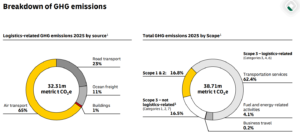
DHL carbon emissions 2025
Source: DHL Group

Several major initiatives support those goals. DHL plans to:

  • Achieve more than 30% sustainable aviation fuel (SAF) blending across its Express and Global Forwarding businesses by 2030.
  • Electrify more than 66% of its last-mile delivery vehicles.
  • Ensure all newly-owned buildings operate with carbon-neutral designs.
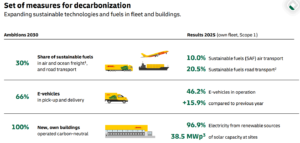
DHL 2030 emissions targets
Source: DHL Group

The company has also signed several major SAF agreements.

In 2025, DHL secured more than 314 million liters of SAF through a large supply agreement with Phillips 66. In 2026, it signed another long-term agreement with SAF One in Bahrain covering 250,000 metric tons of SAF over ten years beginning in 2028.

These efforts highlight a broader challenge facing logistics companies: helping customers reduce emissions while lowering their own carbon footprints.

Logistics Could Become a Critical Piece of the Energy Transition

The clean energy transition is often discussed in terms of technological breakthroughs or investment levels. However, infrastructure deployment depends on supply chains working efficiently.

Solar panels must reach project sites. Wind turbine components must cross oceans and highways. Batteries must move safely through global transportation networks. Grid equipment must arrive on schedule.

As projects become larger and more complex, logistics is becoming a strategic part of the energy transition rather than a supporting function.

The trend is creating new opportunities for logistics providers with specialized expertise.

Companies that handle oversized cargo, battery transport, renewable energy gear, and strong supply chains will become more important. This is as countries work towards climate goals and energy security.

A Growing Market Beyond Traditional Freight

DHL’s €3 billion target reflects more than just a new business segment. It signals how the logistics industry itself is evolving alongside the energy transition.

The company sees strong demand emerging from battery storage, electric vehicles, renewable energy, hydrogen, and grid modernization. These sectors are expected to attract trillions of dollars in investment over the coming decade.

At the same time, clean energy infrastructure is becoming larger, more valuable, and more difficult to move. This combination is creating a rapidly growing market for specialized logistics services.

For DHL, the opportunity could generate billions in new revenue by 2030. For the broader clean energy sector, it highlights an important reality: building a low-carbon economy requires not only new technologies but also the supply chains capable of delivering them.

The post DHL’s €3 Billion Clean Energy Bet: Why Logistics Has Become the Next Bottleneck in the Energy Transition appeared first on Carbon Credits.

Tesla (TSLA Stock) Signs 25 GWh Megapack Deal With NatPower to Boost Europe’s Battery Storage Market

TESLA

Europe’s battery storage market is rapidly expanding, and Tesla (TSLA stock) has secured a major energy storage deal. The electric vehicle maker signed a multi-year agreement with NatPower to supply over 25 GWh of Battery Energy Storage Systems (BESS) in Italy and the UK.

This partnership merges technology, engineering, financing, grid integration, and energy trading into one model. With an initial portfolio of five projects, they aim to exceed 100 GWh over time.

  • The collaboration could generate over $15 billion in revenue over 20 years while strengthening Europe’s power grid.
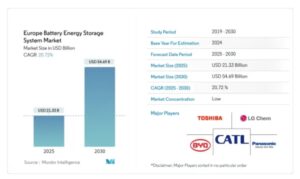
  • Reports indicate that the European Battery Energy Storage System (BESS) could reach $54.7 billion by 2030, at an average rate of 20.7% per year between 2025 and 2030.

europe battery storage market
Source: Modor Intelligence

Mike Snyder, VP Tesla Energy & Charging, said:

“Tesla is excited to partner with NatPower on this long-term agreement. They have a strong vision for scaling battery deployments quickly and efficiently across Europe. Our team of experts are helping accelerate these deployments through our vertically integrated offering, providing hardware, software, construction, trading optimization and service to bring projects online faster and ensure they operate smoothly throughout the lifetime of the product.”

Tesla Brings More Than Batteries to the Deal

The press release revealed that NatPower will own and operate the battery projects, while Tesla will supply its Megapack systems. However, Tesla’s role goes further. The company will provide engineering, procurement, and construction (EPC) services, along with energy trading solutions through its Autobidder platform.

This integrated approach gives NatPower confidence in project execution. Instead of juggling multiple contractors, it can rely on one framework for battery manufacturing, project delivery, and long-term energy operations.

The agreement also allows NatPower to use Tesla’s latest technology while enhancing financial security for large-scale projects.

Fabrizio Zago, CEO of NatPower, noted:

“The significance of this agreement lies in its ability to turn project development into concrete execution. The sector has access to technology and capital but still struggles to deliver infrastructure consistently and within the required timelines. What we have built with Tesla is an ecosystem that enables alignment between capital and execution, and that can be replicated across multiple markets.

Today, with this strategic agreement, we are launching the delivery of the first five major projects developed over recent years in Italy and the United Kingdom. This is a historic moment for our companies, not only because of the scale of the agreement, but also because of the impact it will have on the energy infrastructures.”

A New Model for Delivering Battery Storage

  • The first phase includes five utility-scale battery projects in Italy and the UK. These mark the start of a much larger program targeting over 100 GWh of storage capacity.
  • The total construction value is estimated at $4 billion to $5 billion, with projected revenues exceeding $15 billion over 20 years.

Unlike traditional projects that often progress through separate stages, this agreement coordinates all major steps within a single framework.

The partnership addresses five key challenges that often delay energy infrastructure projects:

  • Reserving manufacturing capacity
  • Securing grid connections
  • Managing permits and regulatory approvals
  • Structuring project financing
  • Coordinating construction schedules

By linking battery production directly to project delivery, Tesla and NatPower aim to reduce delays as demand for energy storage surges.

Megapack Drives Tesla’s Energy Growth

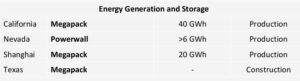
While Tesla’s automotive growth has slowed, its energy division is expanding quickly. The company deployed a record 46.7 GWh of energy storage in 2025, showing 48% year-over-year growth. Analysts expect strong deployments in 2026, with first-quarter installations around 8.8 GWh.

Tesla has also sped up product development. Last year, it introduced Megapack 3 and Megablock, pre-integrated systems that reduce installation time and simplify deployment. These innovations help developers build storage facilities faster, addressing a major industry challenge.

tesla megapack battery storage
Source: Tesla

The NatPower agreement boosts Tesla’s position in Europe’s utility-scale storage market and highlights energy storage as a key growth area.

Why Europe Needs More Battery Storage

The agreement comes as Europe’s electricity system faces increasing pressure. Countries are adding wind and solar generation rapidly, but renewable electricity relies on weather, not demand. Battery storage helps by storing excess power and delivering it when needed.

The planned systems will provide crucial services, including:

  • Stabilizing electricity grids
  • Supporting renewable energy integration
  • Supplying dispatchable electricity during high demand
  • Providing backup power for industrial facilities and large data centers

Demand for these services is rising as electrification accelerates in transportation, manufacturing, and heating. Additionally, artificial intelligence drives unprecedented electricity consumption from data centers, making reliable infrastructure essential.

This agreement emphasizes fast project delivery, a vital advantage as Europe modernizes its electricity network.

2030 Forecast: Europe’s Battery Storage Market to Grow 4X

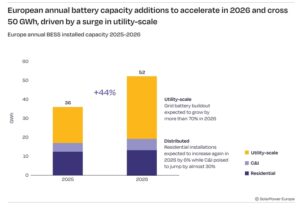
The timing of the agreement aligns with a booming European battery storage market. According to SolarPower Europe’s European Battery Market Outlook 2026-2030, Europe installed 36 GWh of new battery storage in 2025, marking the twelfth year of growth.

europe battery storage

These additions pushed the continent’s total operational capacity above 100 GWh for the first time. After a slow 2024, the market surged, growing 48% year over year. Much of this growth came from utility-scale projects, which now account for over half of all new installations.

The trend reflects rising demand for grid flexibility and strong project economics.

  • Germany, the UK, and Italy remained the largest markets, while countries like Ukraine and Bulgaria entered the top five, showing that battery deployment is spreading.

The growth outlook remains strong. Projections include: 

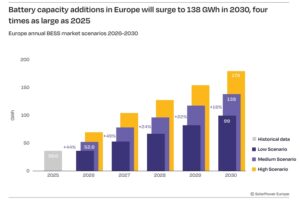
  • Annual installations are expected to exceed 50 GWh in 2026, reaching around 138 GWh by 2030—nearly four times the 2025 level.
  • Installed capacity could reach about 470 GWh by the decade’s end.
  • Utility-scale storage is likely to dominate, making up around 75% of Europe’s total capacity by 2030.

europe battery storage

Execution May Be the Industry’s Biggest Competitive Advantage

The Tesla-NatPower agreement signals a shift in the battery storage industry. Building battery projects now involves securing equipment, manufacturing capacity, financing, approvals, grid access, and construction expertise.

By combining these elements into one framework, the partnership offers a model for future large-scale energy projects.

As electricity demand grows faster than new power infrastructure, delivering projects on time has become just as important as the technology itself.

Through this partnership, Tesla (TSLA) expands its role in the energy storage market while NatPower bolsters its position in Europe. Together, they will help build a more reliable power grid that supports renewable energy, rising AI-driven electricity demand, and long-term energy security.

The post Tesla (TSLA Stock) Signs 25 GWh Megapack Deal With NatPower to Boost Europe’s Battery Storage Market appeared first on Carbon Credits.
Amazon, Skyborn Renewables Seal Germany’s Largest 600 MW Offshore Wind Energy Deal

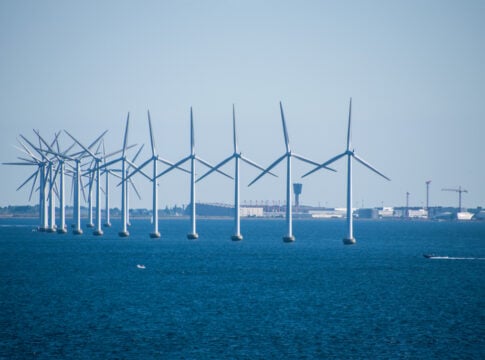
Amazon has signed Germany’s biggest-ever corporate clean energy deal, marking another major step in Europe’s renewable energy transition. The tech giant has entered into a 600-MW power purchase agreement (PPA) with offshore wind developer Skyborn Renewables for electricity from the Gennaker offshore wind farm in the German Baltic Sea.

The agreement is not only the largest single PPA ever signed in Germany but also ranks among the biggest corporate renewable energy contracts in Europe, according to BloombergNEF. The deal covers about 61% of Gennaker’s planned 976.5 MW capacity, providing the financial certainty Skyborn needs to begin construction.

The project also strengthens Amazon’s position as Europe’s largest corporate buyer of carbon-free electricity while supporting Germany’s ambitious renewable energy and climate targets.

Amazon’s Long-Term Commitment Unlocks Gennaker Project

Large renewable energy projects often depend on long-term electricity buyers before investors and lenders are willing to commit billions of dollars in financing. Amazon’s agreement provides that certainty.

Backed by the PPA, Skyborn plans to move ahead with financial close during the summer of 2026, with construction beginning shortly afterward. Commercial operations are expected by the end of 2028.

Once completed, Gennaker will become the largest offshore wind farm in Germany’s Baltic Sea. Located around 15 kilometers north of the Fischland-Darß-Zingst peninsula in Mecklenburg-Western Pomerania, the project will feature 63 next-generation offshore wind turbines, each rated at 15 MW.

Together, the turbines will generate enough carbon-free electricity to supply the equivalent of more than one million German households every year.

  • The project also supports Germany’s goal of installing 30 gigawatts (GW) of offshore wind capacity by 2030, while improving the country’s energy security through greater domestic renewable power generation.

Skyborn Builds on Strong Offshore Wind Experience

Skyborn Renewables has developed Gennaker from its earliest planning stages and secured the project’s construction permit in December 2025.

The company specializes in developing, building, and operating offshore wind projects across the entire value chain. Its strategy focuses on mature markets and proven technologies while maintaining responsibility for project development through operation.

Skyborn has already arranged financing for nearly 2 GW of offshore wind capacity and has worked with international banks, development finance institutions, and export credit agencies.

Its portfolio includes several major European and Asian offshore wind projects:

  • Butendiek (288 MW)
  • Nordergründe (111 MW)
  • Yunlin (640 MW)
  • Fécamp (500 MW)
  • Calvados (450 MW)

As part of Global Infrastructure Partners (GIP), Skyborn combines technical offshore wind expertise with access to large-scale infrastructure investment.

Adam Thomsen, Chief Development Officer of Skyborn Renewables, said:

“This agreement with Amazon marks a defining milestone for Gennaker and Skyborn. As our blueprint project, Gennaker demonstrates how large-scale offshore wind can be delivered in a reliable, scalable way. It also reflects the growing need to connect renewable electricity generation with robust and forward-looking infrastructure that enables a resilient energy system. I am extremely proud of our teams to make this happen.”

€3 Billion Investment Supports Local Jobs and Industry

Beyond clean electricity, Gennaker represents one of the largest industrial investments ever made in Mecklenburg-Western Pomerania.

The project will inject around €3 billion into the regional economy while supporting German manufacturing and skilled employment.

The press release further highlights that a key contract has already been awarded to EEW Special Pipe Constructions GmbH (EEW SPC) in Rostock. The company will manufacture the monopile foundations used to support the offshore turbines.

Since EEW SPC employs roughly 1,000 workers, the contract helps secure existing jobs while strengthening Germany’s offshore wind supply chain close to the project site.

Amazon Continues Expanding Its Renewable Energy Portfolio

Globally, Amazon has built one of the world’s largest corporate renewable energy portfolios. And the Gennaker agreement becomes the biggest contract in Germany.

  • The company now supports 12 renewable energy projects across Germany with a combined capacity exceeding 1.3 GW.
  • Once all projects become operational, they are expected to produce enough carbon-free electricity to supply the equivalent of more than 1.8 million German homes each year.

Globally, it has invested in more than 700 carbon-free energy projects, representing over 40 GW of generating capacity. That amount of electricity could power approximately 12.1 million U.S. homes annually.

amazon carbon free energy
Source: Amazon

Commitment to The Climate Pledge

These investments form part of Amazon’s commitment under The Climate Pledge, which the company co-founded in 2019. The initiative targets net-zero carbon emissions across Amazon’s operations by 2040, ten years ahead of the Paris Agreement timeline.

Amazon has also pioneered corporate renewable energy procurement in countries including India, Ireland, South Africa, Japan, and Indonesia, helping developers finance utility-scale clean energy projects.

Offshore Wind Becomes a Strategic Priority

Amazon has emerged as the world’s leading corporate purchaser of offshore wind power.

  • Across Europe, the company now supports nearly 1.7 GW of offshore wind capacity through six projects. Once fully operational, these wind farms are expected to generate enough electricity to power about 1.8 million European homes.

One milestone came last year when the Amazon-Shell HKN Offshore Wind Project off the Dutch coast entered commercial operation. The project delivers more than 750 MW of renewable electricity.

Amazon is also working with developers to improve turbine technology, helping increase electricity generation and improve project efficiency.

  • According to the United Nations, offshore wind has the technical potential to provide more than one-third of global electricity demand, making it a critical technology for long-term decarbonization.
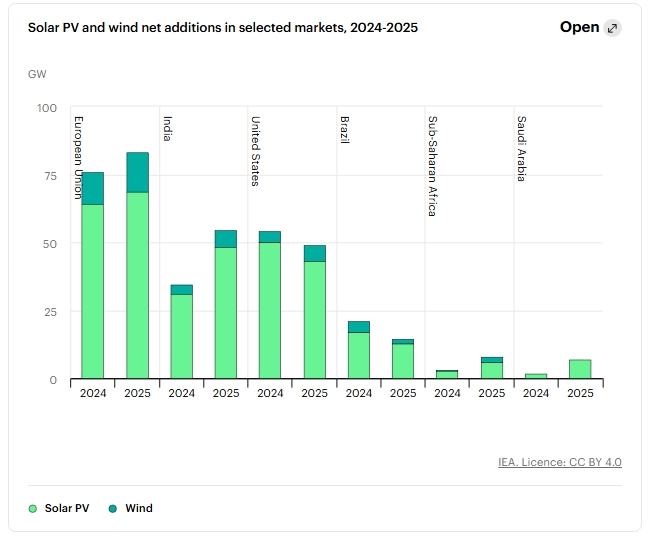
  • IEA revealed that in 2025, the European Union added nearly 85 GW of new renewable capacity, of which ~ 15 GW was wind energy.
wind energy
Source: IEA

Germany Faces a Challenging Path to Offshore Wind Targets

Although Germany continues expanding renewable electricity, offshore wind deployment still lags behind official goals.

As per reports, the country aims to increase renewable energy’s share of electricity generation from just over 57% in 2025 to 80% by 2030, with a fully greenhouse gas-neutral electricity system targeted by 2045.

  • At the beginning of 2026, Germany had 1,680 offshore wind turbines operating in its territorial waters, providing around 9.7 GW of installed capacity.

Reaching the government’s 30 GW target by 2030 would require installed capacity to more than triple within five years.

germany offshore wind

Progress has remained slower than expected. During 2025, only 41 new offshore turbines, totaling 0.5 GW, were connected to the grid. Industry groups, therefore, estimate Germany may reach only around 20 GW of offshore wind capacity by the end of the decade unless project development accelerates significantly.

Still, offshore wind continues gaining importance. It supplied 6.2% of Germany’s electricity in 2025, a dramatic increase from only 0.1% in 2014, despite weaker wind conditions reducing generation during part of the year.

The government has maintained long-term expansion goals of 40 GW by 2035 and 70 GW by 2045, even as policymakers review near-term capacity plans in response to slower electricity demand growth.

germany offshore wind project

Investor Confidence Depends on Policy Stability

Projects like Gennaker highlight how corporate power purchase agreements can unlock billions of euros in renewable energy investment. However, private financing alone will not determine Germany’s offshore wind future.

Investor confidence also depends heavily on consistent government policies, predictable permitting processes, and continued support for offshore wind deployment. Although the sector has achieved significant cost reductions over the past decade, developers still face high upfront investment costs, supply chain pressures, and lengthy approval timelines.

If Germany maintains a stable policy framework while attracting more long-term corporate buyers like Amazon, projects such as Gennaker could accelerate offshore wind deployment, strengthen domestic energy security, create thousands of skilled jobs, and move the country closer to its climate and net-zero goals.

The post Amazon, Skyborn Renewables Seal Germany’s Largest 600 MW Offshore Wind Energy Deal appeared first on Carbon Credits.
Sweden’s Biggest Nuclear Bet in 40 Years: Rolls-Royce Lands Historic SMR Deal, Pushing RYCEY Stock Upward

Sweden’s Biggest Nuclear Bet in 40 Years: Rolls-Royce Lands Historic SMR Deal, Pushing RYCEY Stock Upward

Sweden has taken a major step toward expanding nuclear energy for the first time in more than four decades. The country chose Rolls-Royce SMR to provide three small modular reactors (SMRs). These will support a new nuclear project on the Värö Peninsula, close to the Ringhals nuclear power station.

The decision follows a three-year review process in which project developer Videberg Kraft evaluated 75 reactor options before choosing Rolls-Royce’s technology. Tufan Erginbilgic, CEO, Rolls-Royce plc. remarked:

“Rolls-Royce SMR has now been successful in every competitively tendered SMR selection process in Europe, and it is now very well placed to become a market leader globally.”

Why Sweden Needs Twice as Much Electricity by 2045

The project could add about 1.41 gigawatts (GW) of new electricity capacity to Sweden’s grid. Each reactor is designed to generate 470 megawatts (MW) of power, with the first unit expected to enter operation in the mid-2030s.

The announcement marks a significant milestone for both Sweden and the global SMR industry. Sweden’s first big nuclear project since the 1980s is here. It’s also one of the largest investments in small modular reactor technology in Europe.

Sweden’s nuclear expansion comes as electricity demand could grow sharply over the coming decades. The Swedish Energy Agency predicts that electricity use could grow from about 135 terawatt-hours (TWh) now to over 300 TWh by 2045.

Most of that growth will likely come from:

  • Industrial electrification,
  • Electric vehicles,
  • Hydrogen production, and
  • Data centers.
Sweden net zero target
Source: IEA

At the same time, Sweden has committed to reaching net-zero greenhouse gas emissions by 2045. Meeting both goals will require a substantial increase in clean electricity generation.

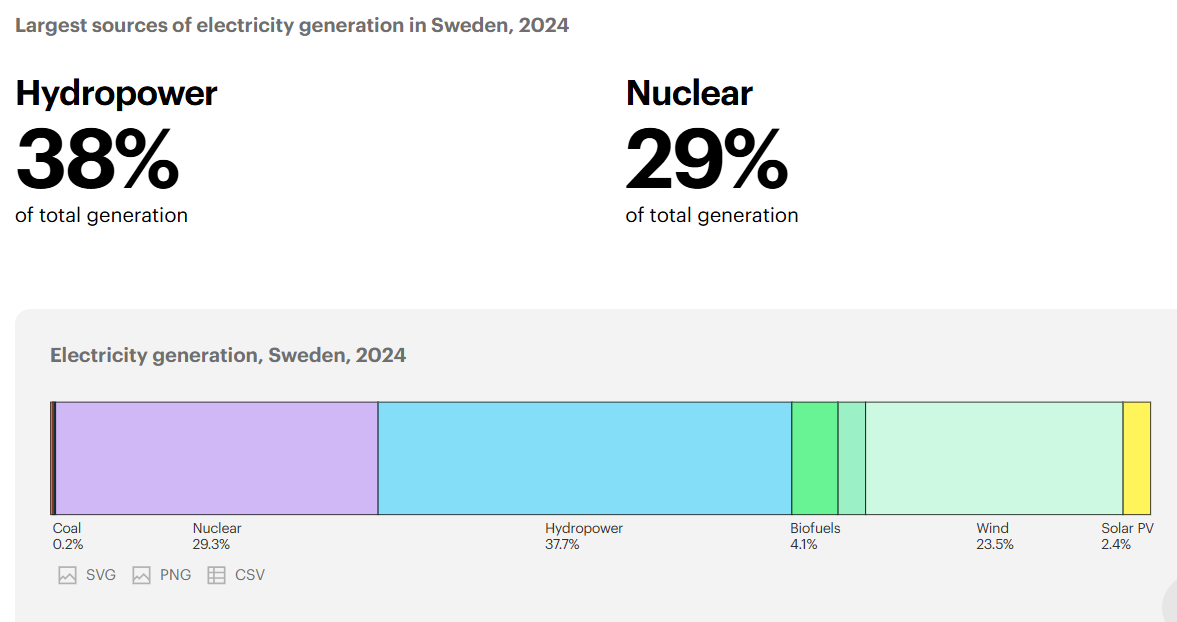
Today, Sweden already has one of Europe’s cleanest power systems. The International Energy Agency (IEA) reports that about 98% of Sweden’s electricity is from fossil-free sources. This mainly includes hydropower, nuclear energy, and wind power.

Sweden electricity generation sources, 2024
Source: IEA

However, policymakers believe additional generation will be needed to maintain energy security while supporting industrial growth.

Sweden’s government has proposed support measures to tackle that challenge. These measures are worth up to 440 billion Swedish kronor, which is about €40 billion or US$47 billion. The package includes state-backed loans, long-term price guarantees, and support for nuclear waste management.

  • The goal is to build at least 5 GW of new nuclear capacity, equivalent to several large reactors, by the middle of the century.

The SMR Revolution Is Gathering Momentum

The Swedish project is part of a growing global interest in small modular reactors.

Unlike traditional nuclear plants, which often exceed 1 GW per reactor, SMRs are smaller and designed for factory-based manufacturing. Developers argue that standardized designs can reduce construction costs, shorten build times, and lower project risks.

Rolls-Royce’s reactor design produces 470 MW. This makes it one of the larger SMR concepts in development today. The company estimates that one unit can supply electricity to about one million homes. Plus, it produces no direct carbon emissions when in operation.

Interest in the technology is accelerating worldwide.

According to the International Atomic Energy Agency (IAEA), more than 80 SMR designs are currently being developed globally. Governments and utilities in Europe, North America, and Asia are looking at SMRs. They see them as a way to decarbonize power systems while also keeping the electricity supply reliable.

Sweden now joins a growing list of countries supporting the technology. The deal makes Sweden the third European country to select Rolls-Royce SMR technology after the United Kingdom and the Czech Republic.

A Global Nuclear Renaissance Is Underway

Sweden’s decision reflects a broader global nuclear resurgence. According to the IEA, nuclear power generated around 2,900 TWh of electricity worldwide in 2024, close to a record high. Moreover, over 70 GW of new nuclear capacity is currently under construction globally.

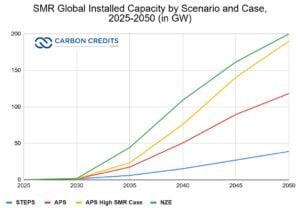
SMRs are also expected to grow massively by 2050. Under the Net Zero scenario, it can reach 200 GW of installed capacity.

SMR Global Installed Capacity by Scenario and Case, 2025-2050 IEA data

Investment is also increasing. The IEA estimates annual global investment in nuclear power has risen by nearly 50% since 2020, reaching around US$75 billion per year.

Several factors are driving renewed interest.

  • First, governments need reliable low-carbon electricity to support net-zero goals.
  • Second, growing renewable energy deployment increases demand for stable power sources that can operate regardless of weather conditions.
  • Third, rapidly expanding data center infrastructure is creating new electricity demand.

Artificial intelligence (AI) is becoming an important factor.

The IEA projects global data center electricity demand could more than double by 2030. Some forecasts suggest AI-driven data centers may consume as much electricity as major industrialized countries within the next decade.

As a result, policymakers are now viewing nuclear energy as a complement to renewable energy rather than a competitor.

Rolls-Royce is Expanding Beyond Aerospace

The project also represents an important milestone for Rolls-Royce. The company is best known for aircraft engines. Recently, it has focused on developing its SMR business. This effort is part of a larger plan to move into clean energy technologies.

Rolls-Royce received final approval for its SMR design from UK regulators earlier this year, a key step toward commercial deployment.

The company claims that using a fleet-based approach can cut costs. This is possible by making standard reactor parts and using them in different projects.

The Swedish selection provides another major vote of confidence. For Rolls-Royce, this project boosts its stance in the tough global SMR market. Key competitors include GE Hitachi, Westinghouse, Holtec, X-energy, NuScale, and TerraPower.

The global opportunity could be significant. Industry analysts estimate the SMR market could be worth hundreds of billions of dollars over the coming decades as countries seek low-carbon electricity solutions.

Rolls-Royce Shares Rally on Nuclear Boom

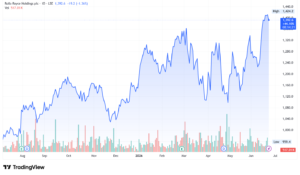
Investors reacted positively to the Swedish contract announcement. On the day the deal was announced, U.S.-listed shares of Rolls-Royce (RYCEY) jumped almost 4%. This was their highest level since March 2026. Markets saw this as a strong endorsement of the company’s SMR strategy.

Rolls Royce RYCEY stock price

This boosts Rolls-Royce’s status as a top nuclear technology provider in Europe. The RYCEY stock has risen over 16% this year and about 45% in the last 12 months and has outperformed the wider equity markets. Investors are excited about growth in nuclear energy, defense, and power systems.

Could This Project Redefine Europe’s Energy Future?

The selection of Rolls-Royce SMR is more than a single infrastructure project. It signals Sweden’s long-term commitment to nuclear energy as part of its climate and energy strategy.

The project will still face regulatory reviews, financing decisions, and construction challenges before power begins flowing in the mid-2030s. Yet, the direction is becoming clear.

For Rolls-Royce, the contract represents one of the most important SMR wins to date. For Sweden, it marks the start of a new chapter in nuclear development after more than 40 years.

For the broader energy sector, it offers another sign that nuclear power is once again becoming a central part of the global clean energy transition.

The post Sweden’s Biggest Nuclear Bet in 40 Years: Rolls-Royce Lands Historic SMR Deal, Pushing RYCEY Stock Upward appeared first on Carbon Credits.
Beyond Carbon Credits: How KARBNZ Global Is Building a Natural Capital Platform Around Forests, Biomass, and Biochar

Beyond Carbon Credits: How KARBNZ Is Building a Natural Capital Platform Around Forests, Biomass, and Biochar

The global carbon market is entering a new era. Investors, corporations, and regulators are no longer satisfied with projects built mainly around future credit issuance and long validation timelines.

Concerns over verification, permanence, transparency, and financing gaps are reshaping expectations across the voluntary carbon market toward a broader question:

  • What does a more durable and financeable natural capital model look like?

That shift is driving a new generation of land-based climate projects that combine reforestation, biomass, biochar, sustainable land management, and long-term land care into diversified operating businesses.

KARBNZ Global is positioning itself at the center of this transition. 

According to the company, KARBNZ’s platform currently spans more than 1.1 million hectares in Brazil, creating the scale necessary to integrate reforestation, biomass production, biochar carbon removal, and ARR (Afforestation, Reforestation, and Revegetation) carbon credits into a single natural capital platform.

Rather than relying solely on future carbon credits, KARBNZ is building multiple pathways to generate value from restored and sustainably managed forests.

Why Carbon Markets Are Evolving

Traditional carbon projects often require years before generating revenue. Developers must secure land rights, complete environmental studies, establish carbon baselines, and navigate complex verification requirements before credits may be issued.

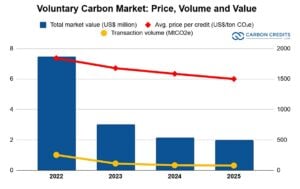
At the same time, increased scrutiny around older offset projects, particularly avoidance-based methodologies, has made carbon credit buyers more selective. According to Ecosystem Marketplace, the voluntary carbon market declined from around $1.9 billion in 2022 to about $535 million in 2024, and even further down in 2025, as demand shifted to higher-quality projects.

voluntary carbon market vcm price volume and value 2025

Today’s investors increasingly favor projects with:

  • Tangible underlying assets
  • Diversified revenue streams
  • Strong monitoring and verification systems
  • Long-term operational sustainability

The challenge is no longer simply creating carbon credits. It is building climate businesses that can thrive long before credits are issued.

Biochar Is Emerging as a Major Growth Market

A central component of the KARBNZ strategy is biochar.

Biochar is produced by heating biomass such as forestry residues or agricultural waste in a low-oxygen process called pyrolysis. The process makes a stable, carbon-rich material. This material can store carbon for hundreds to thousands of years. It also boosts soil quality and helps with water retention.

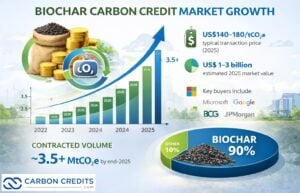
The market for biochar is expanding quickly. According to Carbonfuture and CDR.fyi, biochar represented 86% of all durable carbon dioxide removal deliveries in 2024, making it the largest durable carbon removal solution today.

biochar carbon credit market 2025

Corporate demand is also accelerating. Reuters reported that durable carbon removal purchases rose from about 8 million metric tons in 2024 to around 25 million metric tons in 2025. However, issued supply remains below 1 million tons, highlighting a major supply gap for high-quality removals.

KARBNZ says it plans to integrate biochar production directly into its forestry and land management, converting biomass that would otherwise be treated as waste into a high-value climate asset.

The company estimates its biochar operations could ultimately remove about 2.57 million tons of CO₂e annually, positioning KARBNZ among the larger emerging biochar developers globally if those targets are achieved.

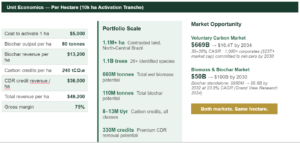
KARBNZ in numbers
Source: KARBNZ Global

Creating Revenue Before Carbon Credits

Another distinguishing feature of the KARBNZ model is its focus on generating earlier revenue streams.

Activities such as forest thinning, biomass collection, firebreak creation, and forest health management not only strengthen ecosystems but also produce commercially valuable biomass feedstock. 

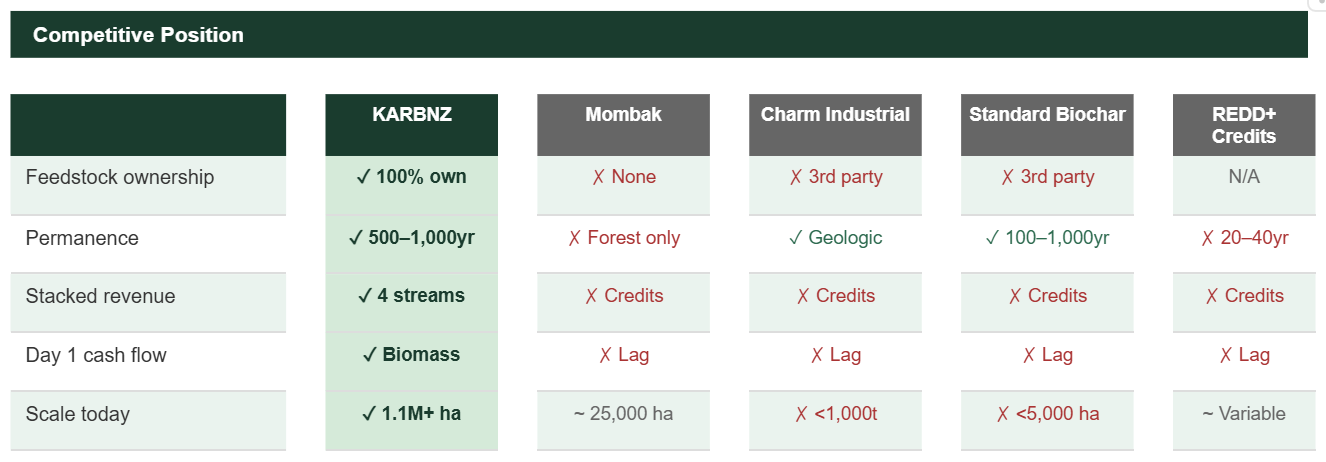
KARBZN competitive position
Source: KARBZN Global

Global demand for biomass energy continues to grow as countries look for alternatives to coal and other fossil fuels. According to the International Energy Agency (IEA), modern bioenergy currently provides about 55% of global renewable energy consumption.

Wood pellets are now a key global commodity, especially in Europe and Asia. Utilities are moving to lower-carbon fuel sources. The global wood pellet market was valued at more than $14 billion in 2024 and is projected to continue growing through the decade.

Brazil plays a major role in this sector. The Brazilian Tree Industry (Ibá) reports that Brazil has over 10 million hectares of planted forests and is one of the top exporters of forest products globally.

KARBNZ says biomass generated through sustainable land management may support biomass energy, wood pellets, and biochar production. This provides the company with several possible revenue streams as carbon projects move through development.

KARBNZ believes this diversified approach provides investors with something increasingly valuable: tangible operating assets rather than a business model dependent solely on future carbon credit issuance.

The company also emphasizes local economic development through job creation, infrastructure investment, energy access, and long-term regional partnerships.

Natural Capital Is Becoming an Institutional Asset Class

Climate finance is becoming more disciplined. Investors increasingly expect stronger governance, transparent reporting, and robust monitoring systems before committing capital.

KARBNZ says its platform is being built with institutional standards in mind, including project-level SPVs, Verra-aligned ARR methodologies, and advanced MRV (Monitoring, Reporting, and Verification) systems.

According to the company, its MRV architecture will incorporate satellite monitoring, AI-driven analytics and blockchain tracking to enhance transparency and auditability.

This reflects a broader industry trend. McKinsey has noted that scaling voluntary carbon markets will require stronger verification systems, higher integrity standards, and greater transparency.

Carbon credits alone are no longer enough. Investors increasingly want long-term businesses built around measurable environmental assets.

That institutional focus is also reflected in the company’s leadership structure. Managing Partner Pascal van Knijff leads land origination, local partnerships, and platform development, while Managing Partners Rich Neal and David Place focus on capital strategy, commercialization, investor readiness, and institutional execution.

What’s Next for KARBNZ

KARBNZ’s next phase is focused on execution. Near-term priorities include:

  • Advance carbon validation work,
  • Expand MRV partnerships,
  • Develop biomass and biochar agreements, and
  • Prepare projects for larger financing rounds.

The company is also developing project-level SPV structures designed to support long-term financing and operational scaling. 

More broadly, KARBNZ represents a larger trend reshaping climate finance: the evolution from standalone carbon projects to diversified natural capital platforms.

The future of climate investing may not be built on carbon credits alone. It may be built on integrated systems that combine forests, biomass, biochar, technology, and long-term land stewardship into durable, investable assets.

For KARBNZ Global, the opportunity is larger than issuing credits. It is demonstrating that large-scale ecological restoration can become an institutional asset class—one capable of delivering environmental impact, diversified revenues, and long-term value creation.

As demand for durable carbon removal and nature-based solutions continues to grow, companies that successfully combine restoration with financeable business models may define the next chapter of the natural capital economy. Organizations, investors, and strategic partners seeking exposure to this emerging asset class will be watching closely.

The post Beyond Carbon Credits: How KARBNZ Global Is Building a Natural Capital Platform Around Forests, Biomass, and Biochar appeared first on Carbon Credits.
Platinum Market in 2026: Price Swings, Supply and Demand Challenges, and the Race to Net Zero

Gold has long been seen as the top safe-haven investment. Platinum, however, is gaining attention for its growing role in the global energy transition. Once used mainly in catalytic converters and jewelry, platinum is now essential for hydrogen technologies, advanced manufacturing, and other clean-energy applications.

More industries now rely on platinum, supporting its long-term outlook despite price swings in 2026 and limited supply growth.

According to the World Platinum Investment Council (WPIC) report, the platinum market recorded its first quarterly surplus in six quarters during the first quarter of 2026. The surplus was mainly due to higher mine production and weaker investment demand.

But before we dive into the market dynamics, let’s understand what platinum is and why it is important for the energy transition.

What Is Platinum?

Platinum is a rare, naturally occurring precious metal known for its durability, corrosion resistance, and excellent catalytic properties. It belongs to the platinum group metals (PGMs), which also include palladium, rhodium, iridium, ruthenium, and osmium.

The metal is mined primarily in South Africa, which accounts for roughly 70% of global production, followed by Russia and Zimbabwe. Because platinum deposits are geographically concentrated, securing reliable supplies has become a growing concern as clean energy industries expand.

For decades, platinum’s biggest market was the automotive sector, where it is used in catalytic converters to reduce harmful emissions from gasoline, diesel, and hybrid vehicles. Today, its applications are expanding well beyond transportation

Why Platinum Is Becoming a Critical Energy Transition Metal

Few metals occupy as many strategic industries as platinum.

Unlike gold, whose value is driven primarily by investment demand, or copper, which is closely linked to construction and electrification, platinum supports a remarkably broad range of applications.

Although the automotive industry has historically been the largest consumer of platinum, the metal is now widely used in:

  • petroleum refining
  • chemical production
  • glass manufacturing
  • electronics and semiconductors
  • medical devices
  • low-carbon energy technologies

Its unique physical and chemical properties explain this versatility.

The metal resists corrosion and performs well even in extreme temperatures. It also acts as a highly effective catalyst, speeding up chemical reactions without being consumed. As a result, many industries rely on it for processes that require high performance, durability, and purity.

Today, its uses go beyond traditional industrial applications. As countries work toward net-zero emissions, demand for the metal is growing across clean energy technologies, especially hydrogen.

Because of its expanding role in the energy transition, many experts now view platinum as a strategic transition metal rather than just another precious metal.

Fueling the Hydrogen Economy

One key opportunity for platinum is in the growing hydrogen economy. Hydrogen will help cut emissions in steelmaking, chemicals, shipping, and heavy transport.

PEM Electrolyzers 

Platinum acts as a catalyst in proton exchange membrane (PEM) electrolyzers. These devices use renewable energy to split water into hydrogen and oxygen. The IEA reports that current PEM systems need about 0.3 kilograms of platinum for each megawatt (MW) of capacity.

hydrogen platinum
Source: IEA

Green hydrogen produced with platinum-enabled electrolyzers can replace fossil fuels in steelmaking, fertilizer production, chemical manufacturing, and oil refining. These industries account for a significant share of global carbon emissions and are among the hardest to decarbonize.

Hydrogen Fuel Cells

Platinum is also essential for hydrogen fuel cells, which produce electricity by combining hydrogen and oxygen. While battery-powered cars are becoming more common, hydrogen fuel cells are better suited for heavy vehicles such as trucks, buses, trains, ships, and mining equipment. They offer longer driving ranges and faster refueling, making platinum an important metal for cleaner transportation with zero tailpipe emissions.

Countries like China, Japan, South Korea, Germany, and the U.S. are investing in hydrogen infrastructure. So, platinum is likely to benefit from this trend.

Platinum Market Outlook: Q1 2026

The platinum market entered 2026 on the back of one of its strongest rallies in decades. A combination of persistent supply deficits, recovering industrial demand, and growing optimism surrounding hydrogen technologies had pushed prices sharply higher throughout 2025.

A Temporary Surplus Masks a Tight Physical Market

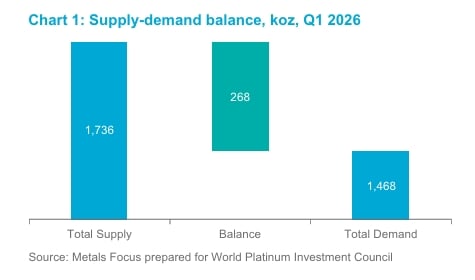
According to WPIC, total platinum supply increased 18% year over year to 1.736 million ounces (1,736 koz). The improvement was largely driven by a recovery in South African mining operations after severe flooding disrupted production during 2025.

  • Refined mine output increased 20% to 1.320 million ounces, while overall mine production rose 22% compared with the same period a year earlier.
  • Recycling also contributed to a higher supply. Elevated platinum prices encouraged greater recovery of spent automotive catalytic converters, lifting recycled supply 7% to 416,000 ounces.
PLATINUM SUPPLY
Source: WPIC report

Demand Shifts in the First Quarter

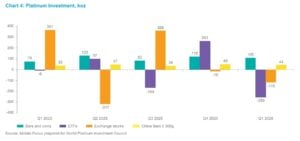
Total platinum demand reached 1.468 million ounces in the first quarter of 2026. Industrial demand remained strong, but investment demand fell sharply. Investors withdrew about 225,000 ounces from platinum investment products, reversing much of the heavy buying seen in 2025.

  • As a result, the market recorded a 268,000-ounce surplus, compared with a 658,000-ounce deficit in the first quarter of 2025. This was the first quarterly surplus in six quarters.

platinum q1 2026

However, this does not mean the market has too much platinum. The surplus was mainly caused by two temporary factors: higher mine production after earlier disruptions and heavy selling by investors. These are not expected to permanently increase platinum supply.

By the end of the quarter, investor sentiment had weakened. Many investors reduced their holdings, platinum prices fell from their record highs, and the market moved into a temporary surplus.

Annual Supply Growth Remains Constrained

Platinum production bounced back in the first quarter, but its long-term supply outlook is still troubled.

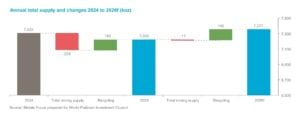
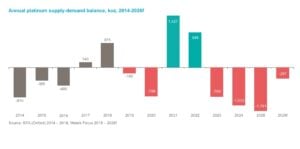
  • WPIC predicts a modest 2% increase in total platinum supply by 2026, reaching 7.377 million ounces. Mine production, the main source, is expected to stay nearly the same at 5.551 million ounces.
  • The report notes a 297,000-ounce deficit for 2026, marking the fourth straight year where demand outstrips supply.
  • Additionally, above-ground inventories are set to drop below three months of annual demand, making the market more sensitive to future supply issues.

Annual demand and supply platinum

Platinum production is different from many industrial metals. About 70% of the world’s supply comes from South Africa. This focus on one area makes the market weak. It can face issues like electricity shortages, labor strikes, aging infrastructure, declining ore grades, and operational delays.

The first quarter showed both the strength and weakness of this supply chain.

Industrial Demand Continues to Diversify

Although investment demand is expected to slow in 2026, platinum’s industrial demand continues to grow, making the market less dependent on investors.

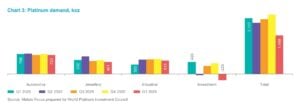
  • WPIC forecasts total platinum demand of 7.674 million ounces in 2026, down 9% from 2025. However, this decline is mainly due to a 54% fall in investment demand following last year’s unusually strong buying.

Key Drivers 

Industrial Demand: In contrast, industrial demand is expected to increase by 9%, highlighting platinum’s expanding role in the global economy.

Artificial Intelligence: The rapid expansion of AI is also creating new demand. As companies invest in semiconductor factories and precision manufacturing, platinum-group metals are becoming increasingly important in chip production.

Traditional Demand Remains Resilient

Automotive: Automotive demand is expected to fall by only 2%. Demand remains strong because hybrid and petrol/diesel vehicles are still being produced. Car makers are also replacing more expensive palladium with platinum in catalytic converters.

Jewellery: Jewellery demand is expected to decline by 12% because consumers are spending less. However, jewellery now makes up a smaller share of platinum demand as more industries are using the metal.

platinum demand

Regional Production Trends Highlight Supply Risks

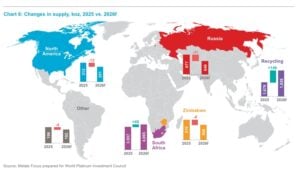
South Africa: Following widespread flooding during early 2025, South African operations recovered strongly. Refined production increased 41% year over year to 1.002 million ounces, supported by improved output from major producers.

Elsewhere, however, production remained under pressure.

Zimbabwe: It produced only 84,000 ounces, representing a 26% decline and the country’s weakest quarterly production in a decade due to scheduled furnace maintenance.

Russia: Production also declined 24% to 136,000 ounces, reflecting production scheduling rather than permanent mine closures.

These contrasting regional trends demonstrate how quickly gains in one jurisdiction can be offset by disruptions elsewhere. Because relatively few countries produce meaningful quantities of platinum, the global market has limited flexibility when operational problems occur.

platinum trends

Recycling is therefore becoming increasingly important.

Higher platinum prices encouraged additional recovery of automotive catalytic converters during the first quarter, increasing recycled supply to 416,000 ounces. WPIC expects recycling to rise 9% during 2026, reaching approximately 1.826 million ounces.

Even so, recycling alone cannot eliminate the supply deficit. Developing new platinum mines requires years of exploration, permitting, and infrastructure investment, making it impossible for supply to respond quickly to rising demand.

Platinum Prices React to the Iran Conflict

The biggest factor affecting platinum prices in early 2026 was investor sentiment, not industrial demand.

  • After rising 127% in 2025, platinum prices reached a record US$2,000 per ounce in January 2026.
  • Investors were optimistic because of supply shortages and growing demand from hydrogen technologies.

However, sentiment changed when tensions between Iran and Israel increased in late February.

Instead of buying precious metals, investors focused on rising oil prices and inflation. Brent crude oil prices rose 55%, increasing expectations that interest rates would stay higher for longer. Higher interest rates make non-yielding assets like platinum less attractive because investors can earn better returns from bonds.

  • As a result, platinum prices fell 16%, while gold dropped 13%. Many investors also sold platinum to lock in profits after its strong rally in 2025.
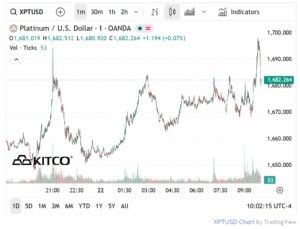
  • Currently, platinum is priced at USD 1,685.00 per ounce.

platinum prices

Despite the price decline, industrial demand remained strong. The sell-off was mainly driven by investor behaviour, while the physical platinum market continued to face tight supply.

Investment Trends Across Key Markets

Although global investment demand weakened, regional trends varied considerably.

Platinum investment varied across major markets in 2026, showing that demand is becoming more diversified around the world.

  • China: Remained the strongest physical investment market. Bar and coin investment rose 42%, supported by growing interest in hydrogen technologies and advanced manufacturing. The launch of platinum futures on the Guangzhou Futures Exchange in late 2025 also improved trading and price discovery.
  • Japan: Continued to see steady investment. ETF holdings increased by around 31,000 ounces, while net investment reached 21,000 ounces, reflecting strong long-term investor confidence.
  • India: Recorded the fastest growth, with bar and coin investment surging 226% as investors looked beyond gold and became more aware of platinum’s industrial uses.
  • United States: Followed a different trend. Many investors took profits after platinum’s record rally, while higher interest rates encouraged investment in assets that generate regular income.

These regional differences show that platinum investment is becoming more global, with growing demand from Asia helping reduce reliance on Western markets.

platinum investment trends

A Strategic Metal for Net Zero

As governments invest in hydrogen infrastructure and cleaner industrial technologies, platinum is evolving from a precious metal into a strategic material for the energy transition. However, supply remains concentrated in a few countries, mining faces operational challenges, and platinum is relatively expensive. Expanding recycling and developing more efficient catalysts will therefore be important to meeting future demand.

While batteries will drive much of the clean energy transition, platinum will remain essential for hydrogen production, fuel cells, industrial decarbonization, and emissions control. As the hydrogen economy expands, the metal is expected to play an increasingly important role in building a low-carbon future.

The post Platinum Market in 2026: Price Swings, Supply and Demand Challenges, and the Race to Net Zero appeared first on Carbon Credits.
How 2026–2027 Catalysts Could Make AEMC a Standout Nickel Story for Investors

Paid Advertisement – Disseminated on behalf of Alaska Energy Metals Corporation.

Alaska Energy Metals Corporation (AEMC) is moving into a more decisive phase. The company is no longer just an exploration story. Instead, it is building a case around scale, technical validation, and future economics. Yet, despite this progress, its valuation still reflects early-stage risk.

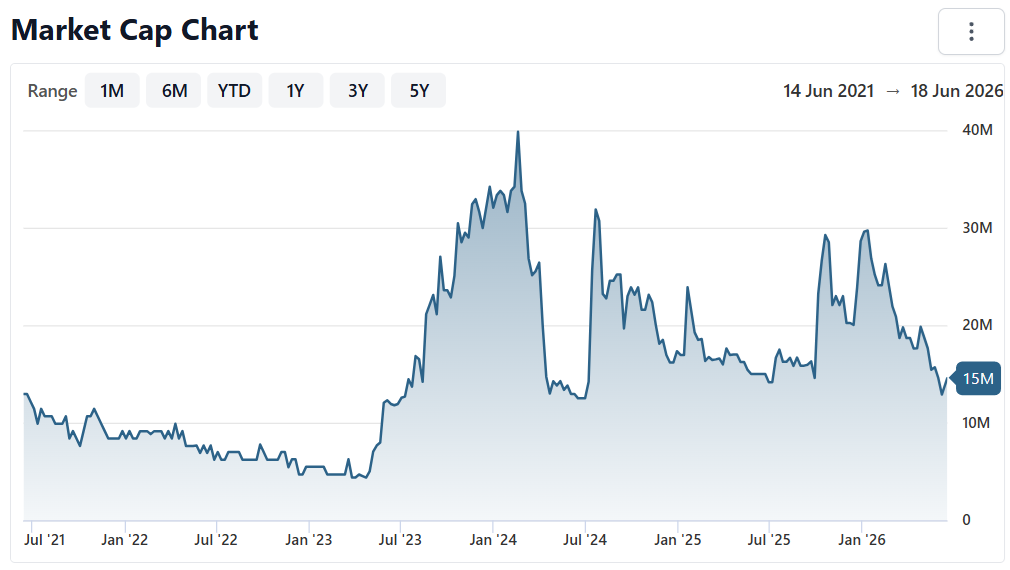
As of June 22, 2026, Alaska Energy Metals holds a market capitalization of CAD 14.56 million, with its shares trading on the TSXV at CAD 0.06. This lean valuation provides a compelling baseline entry point for investors eyeing the critical minerals sector. The current stock consolidation establishes a strong foundation just ahead of key upcoming company catalysts, positioning the company perfectly to leverage the structurally favorable and expanding long-term market for domestic energy metals.

Alaska Energy Metals Market Cap

Source: stockanalysis.com
And this growth story makes it interesting to investors seeking early-stage upside.

Scale First: A Resource That Commands Attention

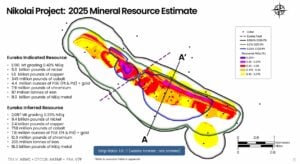
AEMC’s flagship Nikolai project hosts the Eureka deposit, which is already considered one of the largest undeveloped nickel resources in the United States. In a market increasingly shaped by supply security, scale matters more than ever.

nikolai

The U.S. currently relies heavily on imports for critical minerals like nickel. At the same time, global demand is rising fast due to electric vehicles and energy storage systems. According to industry estimates, nickel demand could double by 2030, driven largely by battery applications.

Against this backdrop, a large domestic resource carries strategic weight. AEMC is not just exploring for metals – it is positioning itself within a supply chain that policymakers now consider critical.

This combination of size and location creates a strong foundation. However, investors will want more than just potential. They need proof that the asset can grow, perform, and eventually generate returns.

Angliers Could Be Alaska Energy Metals’ Next Growth Driver

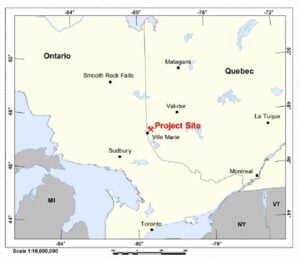
The Angliers Project is a nickel exploration property owned by Alaska Energy Metals in western Quebec, Canada. The project covers more than 26,000 hectares in the Témiscamingue region near the Ontario border. Good road access helps keep exploration costs low.

                                           Location and Access

Alaska energy
Source: AEMC

Promising Geology and Nickel Targets

Angliers sits within the Belleterre-Angliers Greenstone Belt, a region known for mineral deposits. The property contains ultramafic rocks, which often host nickel sulfide deposits. Its geology is similar to Australia’s Kambalda district, a major nickel-producing area.

The project targets nickel, copper, cobalt, and platinum-group metals (PGMs), all of which are important for EV batteries and clean energy technologies.

  • Using machine learning and historical data, the company identified four priority targets. Among them, Area 4 stands out.
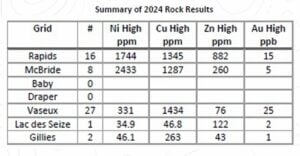
  • It hosts a six-kilometer nickel trend, and surface samples returned nickel grades of up to 2,290 ppm.

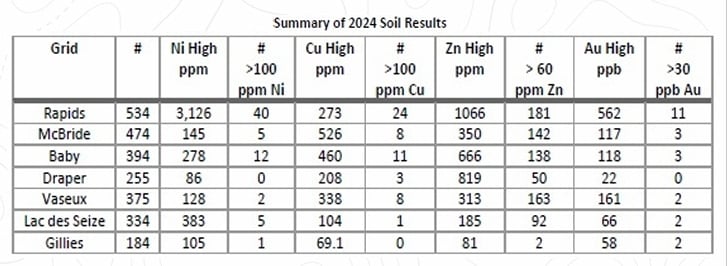
Meanwhile, prior exploration and government surveys have identified nickel-rich rocks and nearby nickel-copper occurrences. Notably, results from the 2024 VTEM survey revealed several undrilled areas with signs that could point to valuable mineral deposits.

Check out below:

AEMC Angliers

Alaska energy metals
Source: AEMC

August Drilling Could Add Value

As per company sources, AEMC plans to begin drilling at Angliers in August. These results could help confirm the project’s mineral potential.

For investors, the drill program will be an important milestone. Strong results can increase confidence in the resource, reduce uncertainty, and support future development studies. As a result, the project could attract greater market attention.

Although Angliers is still in the early exploration stage, it combines strong geology, encouraging early results, and near-term drilling catalysts. If drilling confirms significant nickel mineralization, the project could become an important source of critical minerals for the growing battery and clean energy markets.

Metallurgy: The Hidden Driver of Value

A large deposit only matters if the metal can be extracted efficiently. This is where metallurgical studies come into play.

AEMC is advancing test work to demonstrate that nickel and cobalt can be recovered at commercially viable rates. Early-stage metallurgy often determines whether a project remains theoretical or becomes investable.

If recovery rates are strong and processing methods remain practical, the implications are significant. Better metallurgy improves project economics by increasing output while controlling costs. It also makes the asset more attractive to strategic partners who prioritize operational simplicity.

In many cases, positive metallurgical results act as a turning point. They shift investor perception from “resource potential” to “recoverable value.”

eureka claim block
Source: AEMC

The PEA: Turning Geology Into Economics

One of the most important upcoming milestones is the company’s internal Preliminary Economic Assessment (PEA). This study will translate years of exploration into a financial framework.

The PEA will outline expected production levels, capital requirements, operating costs, and potential returns. For investors, this is where the story becomes tangible.

Markets tend to respond strongly to credible economic data. A solid PEA can anchor valuation and provide a clearer benchmark for comparison with peers. It also opens the door to financing discussions, offtake agreements, and strategic partnerships.

For AEMC, this step represents a shift from exploration-driven narratives to numbers-driven analysis.

Alaska energy metals
Source: AEMC

Funding and Policy Support Could Accelerate Growth

Funding remains a key challenge for junior mining companies. However, AEMC operates in a sector that is increasingly supported by government policy.

The United States has prioritized domestic critical mineral supply chains. Programs under frameworks like the Defense Production Act, Project Vault, and other federal initiatives aim to reduce reliance on foreign sources.

AEMC has already engaged with these pathways. Its earlier submission for development funding – reportedly around $56 million – received a “Met” determination, indicating eligibility under government criteria. While this does not guarantee funding, it signals alignment with national priorities.

This alignment matters. Government backing, even partial, can significantly reduce financial risk. It also attracts institutional investors and strategic partners who prefer projects with policy support.

If AEMC secures funding or forms partnerships, it could change the company’s trajectory quickly. In many cases, funding announcements serve as major re-rating events.

High-Grade Potential Adds Another Layer of Upside

Beyond scale, AEMC is also targeting higher-grade mineralization within its broader resource.

High-grade zones can improve project economics by increasing the amount of metal produced per tonne of ore. This can lower processing costs and enhance early-stage cash flow.

Even limited success in identifying such zones can reshape mine planning. Companies often prioritize higher-grade areas in initial production phases to improve project returns.

For investors, this creates an additional layer of optionality. The project is not just large—it also has the potential to become more efficient and profitable over time.

2026–2027: A Window of Catalysts

Looking ahead, AEMC’s timeline includes several key inflection points:

  • Expected drilling results at Angliers may refine scale and confidence this year.
  • At the same time, the internal PEA will introduce economic clarity. Progress on permitting and infrastructure—such as access routes and site development—will signal movement toward production readiness.
  • Overlaying all of this is the policy environment. Any announcements related to grants, incentives, or strategic investments could amplify the company’s narrative.

Individually, each catalyst matters. Together, they create a pathway for a broader market re-evaluation.

Valuation AEMC catalysts
Source: AEMC

Valuation Gap: The Core Investment Thesis

Perhaps the most compelling part of the story lies in valuation.

Companies like Canada Nickel, which operate in a similar thematic space, command market capitalizations exceeding $150 million. In contrast, AEMC trades at a fraction of that level despite having a large and growing resource base.

This gap reflects risk, but it also highlights opportunity. As AEMC advances through key milestones, that risk profile could change. When it does, the market may begin to close the valuation gap.

Re-ratings in the mining sector often happen in stages. Early gains come from exploration success. Larger moves typically follow economic validation and funding support.

AEMC appears to be approaching this transition point.

Can Nickel Market Rebalancing Boost Alaska Energy Metals’ Growth Story?

The nickel market is finally showing signs of recovery after years of oversupply, creating a more favorable backdrop for companies like Alaska Energy Metals.

AEMC appears to be approaching this transition point.

Shrinking Indonesian Output

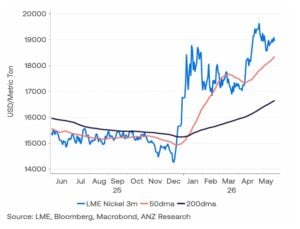
ANZ Research expects the global nickel market to shift from surplus to a small deficit by 2026. This change comes as Indonesia tightens its supply. Indonesia produces 60-70% of the world’s nickel.

They have cut mining quotas, reinstated annual production approvals, and raised costs for producers by changing ore pricing. Disruptions in sulfur and sulfuric acid supplies are also affecting Indonesian processing operations.

AEMC nickel market

These actions could reduce Indonesia’s nickel output by over 60,000 tonnes this year. This may help rebalance the market and support a price floor above $17,000 per tonne. Nickel prices have already risen above $19,000 per tonne due to supply concerns.

This shift is timely for Alaska Energy Metals. The recent downturn saw abundant Indonesian supply lower nickel prices and dampen investor interest in exploration. A tighter market could change that.

Rising Prices Strengthen the Investment Case

Higher nickel prices often improve project economics. They also increase the value investors place on large undeveloped resources. Concerns about supply concentration in Indonesia point to the need for new nickel sources in North America.

Nickel Prices

nickel prices

As Alaska Energy Metals advances its Angliers Project, better market conditions could attract more interest. Resource growth, technical studies, and development milestones will be key in a market seeking new nickel supplies.

In summary, ANZ’s outlook suggests the nickel sector is entering a healthier phase. If the expected supply deficit happens, companies with large-scale nickel assets outside Indonesia may benefit the most.

Final Take: A Strategic Bet on Execution

AEMC is evolving from a speculative explorer into a company with defined growth drivers. Its large-scale resource, ongoing drilling, advancing metallurgy, and upcoming economic studies create a clear roadmap.

At the same time, its alignment with U.S. critical mineral policy adds a strategic dimension that many junior miners lack.

The opportunity for investors lies in execution. If AEMC delivers consistent drilling results, demonstrates strong metallurgy, and advances its economic case, the current valuation may not hold.

In that scenario, the company could shift from being overlooked to being recognized as a meaningful player in the North American nickel supply chain.

For now, the market is waiting. But with multiple catalysts lined up through 2026 and 2027, that wait may not last long.

Qualified Person. Mr. Gregory Beischer, President & CEO of Alaska Energy Metals Corporation, has reviewed and approved the technical content of this document.
Mr. Beischer is a professional geologist (American Institute of Professional Geologists #10505) and is a qualified person under NI43-101.

DISCLAIMER 

New Era Publishing Inc. and/or CarbonCredits.com (“We” or “Us”) are not securities dealers or brokers, investment advisers, or financial advisers, and you should not rely on the information herein as investment advice. Alaska Energy Metals. (“Company”) made a one-time payment of $90,000 to provide marketing services for a term of three months. None of the owners, members, directors, or employees of New Era Publishing Inc. and/or CarbonCredits.com currently hold, or have any beneficial ownership in, any shares, stocks, or options of the companies mentioned.

This article is informational only and is solely for use by prospective investors in determining whether to seek additional information. It does not constitute an offer to sell or a solicitation of an offer to buy any securities. Examples that we provide of share price increases pertaining to a particular issuer from one referenced date to another represent arbitrarily chosen time periods and are no indication whatsoever of future stock prices for that issuer and are of no predictive value.

Our stock profiles are intended to highlight certain companies for your further investigation; they are not stock recommendations or an offer or sale of the referenced securities. The securities issued by the companies we profile should be considered high-risk; if you do invest despite these warnings, you may lose your entire investment. Please do your own research before investing, including reviewing the companies’ SEDAR+ and SEC filings, press releases, and risk disclosures.

It is our policy that information contained in this profile was provided by the company, extracted from SEDAR+ and SEC filings, company websites, and other publicly available sources. We believe the sources and information are accurate and reliable but we cannot guarantee them.

CAUTIONARY STATEMENT AND FORWARD-LOOKING INFORMATION

Certain statements contained in this news release may constitute “forward-looking information” within the meaning of applicable securities laws. Forward-looking information generally can be identified by words such as “anticipate,” “expect,” “estimate,” “forecast,” “plan,” and similar expressions suggesting future outcomes or events. Forward-looking information is based on current expectations of management; however, it is subject to known and unknown risks, uncertainties, and other factors that may cause actual results to differ materially from those anticipated.

These factors include, without limitation, statements relating to the Company’s exploration and development plans, the potential of its mineral projects, financing activities, regulatory approvals, market conditions, and future objectives. Forward-looking information involves numerous risks and uncertainties and actual results might differ materially from results suggested in any forward-looking information. These risks and uncertainties include, among other things, market volatility, the state of financial markets for the Company’s securities, fluctuations in commodity prices, operational challenges, and changes in business plans.

Forward-looking information is based on several key expectations and assumptions, including, without limitation, that the Company will continue with its stated business objectives and will be able to raise additional capital as required. Although management of the Company has attempted to identify important factors that could cause actual results to differ materially, there may be other factors that cause results not to be as anticipated, estimated, or intended.

There can be no assurance that such forward-looking information will prove to be accurate, as actual results and future events could differ materially. Accordingly, readers should not place undue reliance on forward-looking information. Additional information about risks and uncertainties is contained in the Company’s management’s discussion and analysis and annual information form for the year ended December 31, 2025, copies of which are available on SEDAR+ at www.sedarplus.ca.

The forward-looking information contained herein is expressly qualified in its entirety by this cautionary statement. Forward-looking information reflects management’s current beliefs and is based on information currently available to the Company. The forward-looking information is made as of the date of this news release, and the Company assumes no obligation to update or revise such information to reflect new events or circumstances except as may be required by applicable law.

The post How 2026–2027 Catalysts Could Make AEMC a Standout Nickel Story for Investors appeared first on Carbon Credits.
Carbon Credit Retirements Hit Record High Despite Falling Supply: What Does This Say About the Market?

Carbon Credit Retirements Hit Record High Despite Falling Supply: What Does This Say About the Market

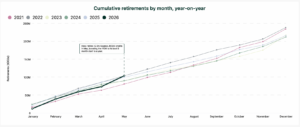
After several years of scrutiny, the voluntary carbon market (VCM) is showing signs of renewed strength. According to the latest H1 2026 report from AlliedOffsets, carbon credit retirements reached their strongest January-to-May performance on record.

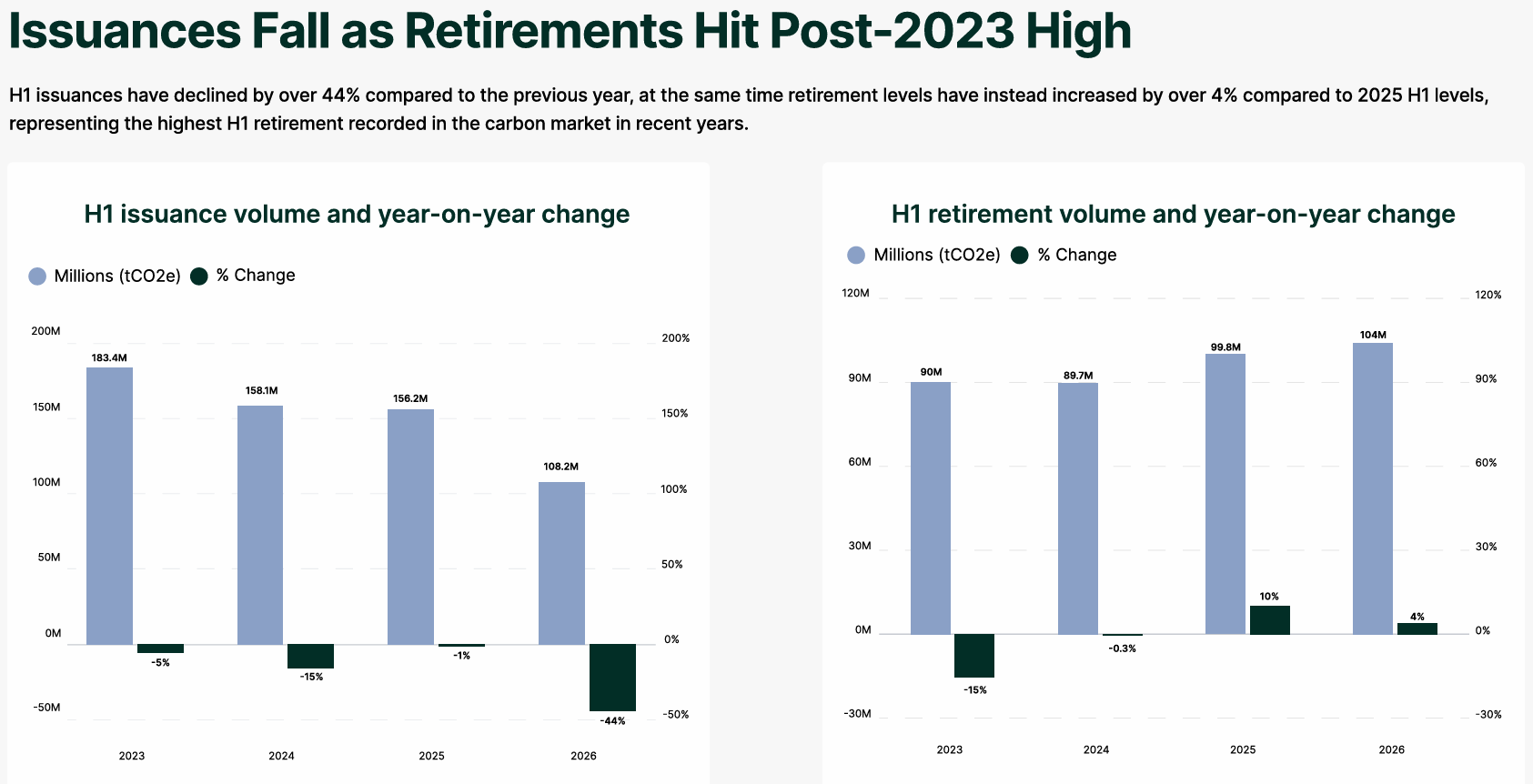
The numbers are notable because they come during a period of lower credit supply. In the first half of 2026, carbon credit issuances fell 44% year over year, but retirements went up 4%. This is the highest first-half retirement volume since AlliedOffsets started tracking the market.

A Rare Market Shift: Demand Is Rising While Supply Shrinks

The milestone shows the highest five-month start for the voluntary carbon market, which means buyers still use carbon credits. They do this even with ongoing debates about quality, regulation, and climate claims.

A major driver came in May, when Hess retired 12.5 million Guyana REDD+ credits. This helps push cumulative retirements to an all-time high for the January-May period.

carbon credit retirements H1 2026
Source: AlliedOffsets

The trend matters because retirements are widely viewed as one of the clearest indicators of real market demand. When companies retire credits, they permanently remove them from circulation and use them toward climate commitments. Unlike project announcements or future purchase agreements, retirements represent actual carbon market activity.

One of the most important findings from the report is that demand appears to be holding up despite a decline in new supply.

Global issuances dropped from 156.2 million credits in H1 2025 to 108.2 million in H1 2026. At the same time, retirements increased from 99.8 million to 104 million credits. This creates a very different market dynamic from previous years.

carbon credit issuances vs retirements h1 2026
Source: AlliedOffsets

For much of the last decade, the carbon market struggled with excess supply. Large inventories often pushed prices lower and raised concerns about credit quality. Today, fewer new credits are entering the market while more credits are being retired.

The carbon pricing data reflects that shift.

Buyers Are Paying More for Higher-Quality Credits

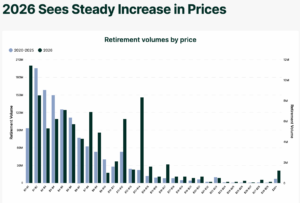
AlliedOffsets found that retirement volumes are increasingly occurring at higher price points. In 2026, buyers are more open to purchasing expensive credits. This is a change from past years when most retirements focused on cheaper credits.

That trend suggests a growing demand for higher-quality carbon projects rather than a race to secure the lowest-cost credits. Many companies now focus on stronger environmental integrity instead of just low-cost offsets. They want better verification and greater confidence in their climate impact.

carbon prices alliedoffsets
Source: AlliedOffsets


This trend could help support pricing across the voluntary carbon market as demand increasingly favors quality over quantity.

New Buyers Are Entering the Market

The market is also becoming more diverse. Active buyer participation in 2026 has already exceeded previous years, says AlliedOffsets. However, overall transaction volumes are still below the record levels of 2025.

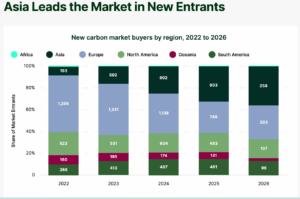
Asia has emerged as the fastest-growing source of new entrants.

The report shows that more companies entered the carbon market from Asia than from any other region in 2026. This growth has been supported by initiatives such as Singapore’s Action for a Resilient Climate (ARC) Coalition, which aims to procure at least 10 million tonnes of carbon credits by 2030.

new market buyers asia leading
Source: AlliedOffsets

The trend reflects broader changes in global climate policy.

Many Asian economies have strengthened emissions targets, launched carbon pricing systems, and increased participation in Article 6 carbon market mechanisms under the Paris Agreement. As a result, carbon market demand is becoming less concentrated in North America and Europe.

Carbon Removal Is Scaling—But Supply Still Can’t Keep Up

The carbon dioxide removal (CDR) market is also evolving, although growth remains uneven.

AlliedOffsets reports that cumulative CDR offtake agreements have reached approximately 48.5 million tonnes, compared with only about 2.65 million tonnes of issued credits since 2022. This means demand commitments remain roughly 18 times larger than actual delivered supply.

Biochar continues to lead the sector.

The pathway accounts for 57% of all-time CDR issuances and 53% of all retirements. Biochar has generated approximately 1.58 million credits out of 2.75 million total CDR issuances and remains the only removal technology delivering significant volumes across issuances, retirements, and offtake agreements.

biochar carbon credits
Source: AlliedOffsets

Enhanced rock weathering is also gaining momentum. Offtake volumes increased from 10,000 tonnes in 2022 to 470,000 tonnes in 2025, while issuances continue to rise in 2026.

By contrast, direct air capture faces ongoing scale challenges. Although more than 2 million tonnes have been contracted, only about 0.1% has been issued to date. High costs, often ranging from $300 to $1,000 per tonne, remain a major obstacle.

Policy Developments Are Reshaping the Market

Government policies are becoming increasingly important for market growth.

The Paris Agreement Crediting Mechanism (PACM), the successor to the Clean Development Mechanism, now has 22 registered projects and has issued its first credits in 2026.

The inaugural Myanmar cookstove project generated 58,428 credits, roughly 40% below previous CDM estimates. This highlights stricter accounting standards under the new framework.

At the same time, Article 6 markets continue to expand. Countries such as Singapore, South Korea, Vietnam, Chile, India, and Cambodia have strengthened their carbon market infrastructure and international trading frameworks.

The aviation sector is also preparing for greater carbon credit demand. AlliedOffsets estimates that only 37.9 million tonnes of CORSIA Phase 1-eligible supply currently exist. This is far below the projected airline demand of roughly 200 million tonnes.

If those demand projections materialize, high-quality credits could become increasingly valuable over the coming years.

The Market Is Moving From Quantity to Quality

One of the clearest themes emerging from 2026 is the shift toward quality. CCP-approved credit issuances increased 64% year over year in H1 2026, while issuances from rejected projects fell 67%. On the demand side, retirements of CCP-approved credits rose 18%. This suggests that buyers are becoming more selective.

CCP approved credits h1 2026
Source: AlliedOffsets

The trend aligns with broader developments across the climate sector. Investors, regulators, and standard setters are placing greater emphasis on transparency, additionality, permanence, and verification.

Recent updates from the Science-Based Targets initiative (SBTi), the growing use of Article 6 mechanisms, and stronger integrity frameworks are all pushing the market toward higher standards.

A New Phase for Carbon Markets

The record retirement volumes seen in early 2026 suggest that the voluntary carbon market may be entering a new phase. Supply is tightening. Prices are rising.

More buyers are entering the market. Carbon removal technologies continue to mature. Governments are building new compliance frameworks. And companies pursuing net-zero goals are increasingly looking for higher-quality credits.

Challenges remain. Issuances have fallen sharply, removal supply remains limited, and policy uncertainty still affects some markets.

Yet, the latest data show that demand has not disappeared. In fact, buyers appear to be becoming more selective and more willing to pay for quality.

That shift could help shape the next chapter of global carbon markets as companies, investors, and governments work toward increasingly ambitious climate goals.

READ MORE: IATA’s New Carbon Credit Alliance: Can Aviation Secure Enough Offsets for Net Zero?

The post Carbon Credit Retirements Hit Record High Despite Falling Supply: What Does This Say About the Market? appeared first on Carbon Credits.
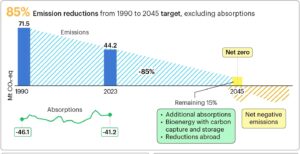
ISO Unveils New Net Zero Standard: How Can It Reshape Corporate Climate Action?

ISO Unveils New Net Zero Standard: How Can It Reshape Corporate Climate Action?

The International Organization for Standardization (ISO) has made a big move after years of debate on the meaning of “net zero.” They are working to create a single global net-zero framework.

This week, ISO launched a public consultation on ISO 14060, the world’s first international standard designed specifically for net-zero-aligned organizations. The standard aims to help companies create credible, verifiable, and science-based transition plans as they work toward net-zero emissions.

The move comes at a critical time. Net-zero commitments now cover 77% of global GDP, 74% of global emissions, and 79% of the world’s population, according to the Net Zero Tracker. Yet, many of these commitments vary widely in scope, reporting methods, and accountability mechanisms.

ISO hopes the new standard will help close that gap. The organization states that ISO 14060 will give a clear framework that will help all businesses align their strategies with net-zero goals. It will also boost transparency and accountability.

Noelia Garcia Nebra, Head of Sustainability and Partnerships at ISO, said:

“ISO 14060 has been developed to provide a globally agreed framework that helps organizations build credible transition plans while supporting resilience, innovation and long-term growth.”

The draft standard is now open for consultation across ISO’s network of more than 170 national standards bodies.

The Growing Demand for Credible Net Zero Claims

Net-zero commitments have expanded rapidly over the past decade. According to the Science-Based Targets initiative (SBTi), more than 12,000 companies worldwide have either set science-based emissions reduction targets or committed to doing so.

Source: SBTi

Together, these companies represent over $80 trillion in market capitalization. They also cover the vast majority of global GDP and greenhouse gas emissions.

However, climate experts have long warned that not all net-zero claims are equal. At the same time, concerns about greenwashing have increased.

A 2025 review by Net Zero Tracker found that while 63% of major firms have set net-zero targets, 31% lack public transition plans, interim targets, or clear disclosures on the use of carbon credits and offsets. And only 4% of those relying on nature-based removals have set transparent targets.

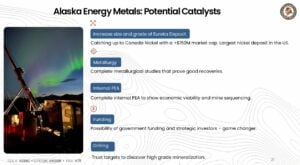
net zero tracker 2025
Source: Net Zero Tracker

Despite more companies having pledges, the findings highlight a persistent gap in minimum integrity standards and clear, actionable roadmaps.
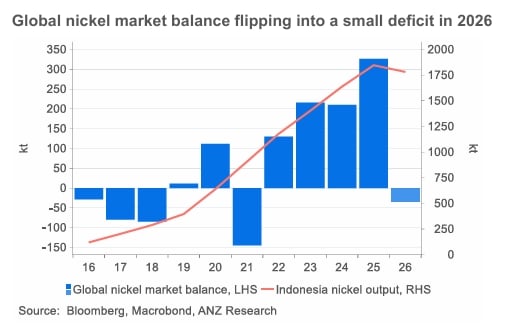
ISO says one of the main goals of the new standard is to create a common understanding of what credible net-zero action looks like. The framework is expected to address emissions reductions, transition planning, reporting, governance, carbon removals, and verification.

The standard builds on ISO’s earlier Net Zero Guidelines (IWA 42). These guidelines were launched at COP27 in 2022. They were developed with input from over 1,200 experts in more than 100 countries.

The Shift From Climate Promises to Climate Plans

The timing of the new standard reflects a broader shift in the climate world. For years, organizations focused on announcing long-term targets.

Today, investors and regulators increasingly want evidence that those targets can actually be achieved. This has increased attention on transition plans.

  • A transition plan shows how a company will cut emissions, handle climate risks, invest money, and change its business model over time.

The new ISO standard helps organizations go beyond general climate promises. It guides them to create clear, structured plans that can be verified by others. The goal is to turn ambition into measurable action.

The pressure is growing. Companies face increasing disclosure requirements from regulators in Europe, North America, and Asia. Investors are also paying closer attention to climate-related risks and transition strategies.

As a result, many organizations are looking for frameworks that provide consistency and credibility in setting and tracking net zero. Below is a quick historical illustration of how net zero came about. 

Can ISO Bring Order to a Fragmented Climate Landscape?

One reason ISO 14060 is attracting attention is the growing complexity of the net-zero landscape. Today, organizations can follow guidance from:

These sources help shape their sustainability efforts. While these frameworks often share similar goals, differences in definitions and reporting requirements can create confusion.

The reporting burden continues to grow. The International Federation of Accountants (IFAC) says companies now deal with many climate-related disclosure rules. These rules vary by location, standards, and frameworks.

ISO developed its Net Zero Guidelines to help unify the fragmented landscape. They offer a common reference for organizations around the globe. The new standard is expected to build on that foundation and create a framework that can be independently verified.

ISO 14060 net zero standard
Source: ISO

This is especially important for multinational companies. They operate in various countries and must follow different climate reporting rules.

A common global standard may help simplify compliance while improving confidence in corporate climate claims.

What ISO 14060 Could Mean for Carbon Markets

The new standard could also influence carbon markets. A major challenge for carbon credits and carbon removals is the uncertainty about their use in net-zero strategies.

Many organizations support the idea that emissions reductions should come first. However, there is ongoing debate about the role of carbon credits, removals, and offsets in reaching climate goals.

ISO’s earlier Net Zero Guidelines included guidance on emissions reductions, removals, offsets, credits, and claims. The new standard should clarify how these tools align with credible net-zero pathways. That could have important implications for VCMs.

The voluntary carbon market has faced scrutiny in recent years over quality concerns and inconsistent standards. This led to a decreasing volume of transactions in the market, as seen below. Greater alignment around net-zero planning may help improve confidence among buyers and investors.

voluntary carbon market vcm price volume and value 2025

It can also meet the rising need for high-quality carbon removal projects as organizations search for ways to tackle emissions that are hard to cut.

The Hard Reality Behind Corporate Decarbonization

The need for credible climate action remains urgent. According to the International Energy Agency (IEA), global energy-related carbon dioxide emissions reached a record 37.4 billion metric tons in 2024 and rose to 38 billion metric tons in 2025.

At the same time, global temperatures continue to rise, and climate-related risks are increasing across many sectors.

Notably, many companies have already made progress. Major corporations such as Microsoft, Google, Apple, and Unilever have invested heavily in renewable energy, energy efficiency, supply chain decarbonization, and carbon removal initiatives. Yet, reducing emissions across complex global operations remains difficult.

For many organizations, Scope 3 emissions from suppliers, transportation, and product use account for the majority of their carbon footprints. This is why businesses are looking for clear and practical climate planning frameworks.

ISO believes the new standard helps organizations face those challenges. It also strengthens resilience, manages risks, and supports long-term growth.

A New Chapter for Global Net Zero Governance

The launch of ISO 14060 marks an important moment in the evolution of corporate climate action. It shows that climate conversation is shifting from ambition to execution. Investors, regulators, customers, and employees increasingly want proof that net-zero commitments can be achieved.

ISO’s new standard aims to provide a common language and a shared framework for organizations around the world. If widely adopted, it could help bring greater consistency, transparency, and credibility to climate action at a time when accountability matters more than ever.

The consultation process is expected to continue over the coming months before the standard moves toward final approval. Once completed, ISO 14060 could become one of the most influential climate standards ever developed.

The post ISO Unveils New Net Zero Standard: How Can It Reshape Corporate Climate Action? appeared first on Carbon Credits.