Disseminated on behalf of Alaska Energy Metals Corporation
Nickel prices have recently climbed to their highest level in nearly two years, driven by supply cuts in Indonesia and growing pressure on global raw materials. The rally highlights how policy decisions in one country can reshape the global market for a critical battery metal.
Nickel futures recently pushed higher, hitting a major peak of $19,587 on May 6. This marks the highest price level for the metal since mid-2024. While the market has since balanced out a bit, prices as of June 4, 2026, are holding steady around $18,800 per tonne. This slight drop shows that even though the market is still very high compared to last year, supply constraints are causing short-term price adjustments.
The surge comes as Indonesia, the world’s largest nickel producer, tightens mining quotas. The move is limiting supply and raising concerns across industries that depend on nickel, including electric vehicles (EVs), stainless steel, and energy storage.
Nickel Price
Unit: USD/Tonne
—
—
Loading Chart…
https://globalcarbonfund.com/wp-content/uploads/2018/10/GCF_header_logo_340x156.png00carbonfundhttps://globalcarbonfund.com/wp-content/uploads/2018/10/GCF_header_logo_340x156.pngcarbonfund2026-06-04 12:14:552026-06-04 12:14:55Nickel Prices Rally: Why AEMC Matters in the New Supply Crunch
BYD (1211.HK Stock) made headlines for three different reasons. The company reported record overseas sales, outlined plans to introduce solid-state batteries, and announced a new policy tied to its driver-assistance technology. On the surface, these developments appear unrelated. However, together they tell a larger story about where BYD is heading.
The Chinese automaker is no longer competing only on vehicle sales. It is expanding globally, investing in next-generation battery technology, and adding advanced software features that could shape the future of electric mobility.
Global Expansion Fuels BYD’s Next Growth Engine
The strategy comes at an important time for the automotive industry. Governments are pushing for lower emissions. Automakers face growing pressure to support net-zero goals.
At the same time, consumers are demanding longer driving ranges, better safety features, and lower vehicle costs. BYD is positioning itself across all three areas.
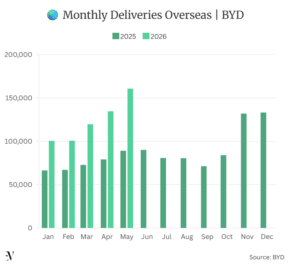
One of the strongest signals came from BYD’s latest sales figures. The company sold 383,453 new energy vehicles in May 2026. That includes battery electric vehicles and plug-in hybrids. More importantly, overseas sales reached a record 160,644 units during the month.
Source: EV (electric-vehicles.com)
This was the first time international deliveries exceeded 160,000 vehicles in a single month. Overseas sales were up more than 80% compared with the same period a year earlier.
Between January and May, BYD sold 616,263 vehicles outside China. International markets now account for more than 40% of the company’s monthly sales. The growth reflects BYD’s rapid expansion into Europe, Southeast Asia, Latin America, Australia, and the Middle East.
This matters because transportation remains one of the world’s largest sources of greenhouse gas emissions. According to the International Energy Agency (IEA), transport accounts for roughly one-quarter of global energy-related carbon dioxide emissions.
Electric vehicle adoption is becoming one of the main tools for reducing those emissions.
Global EV sales exceeded 17 million units in 2024, according to the IEA. The agency estimates that electric vehicles displaced more than 1.8 million barrels of oil demand per day during the year.
As EV adoption grows, companies with global reach will play a larger role in transport decarbonization. BYD is increasingly becoming one of those companies.
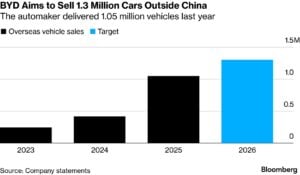
Several analysts expect overseas sales to become one of the company’s biggest growth drivers over the next decade. Citi previously estimated that BYD could sell as many as 1.6 million vehicles outside China in 2026. But the EV giant aims to sell about 1.3 million cars overseas.
Solid-State Batteries Could Shape the Next Phase of EV Adoption
While sales are growing today, BYD is also preparing for the next generation of electric vehicles. The company recently confirmed plans to begin limited deployment of all-solid-state batteries by 2027. Broader commercialization is expected closer to 2030.
Solid-state batteries have been viewed as one of the most promising advances in battery technology.
Unlike conventional lithium-ion batteries, solid-state batteries replace liquid electrolytes with solid materials. This can improve energy density, increase safety, and potentially reduce charging times.
BYD has indicated that its future solid-state batteries could exceed 400 watt-hours per kilogram (Wh/kg). That is significantly higher than many current EV battery systems.
Higher energy density means more energy can be stored in the same amount of space and weight. In practical terms, this could help support driving ranges of more than 1,000 kilometers under certain conditions.
The technology could also address one of the biggest concerns among potential EV buyers: range anxiety.
Battery innovation remains critical for the industry’s long-term growth. BloombergNEF predicts that global demand for lithium-ion batteries will keep growing fast. This increase is driven by transportation, energy storage, and electrification.
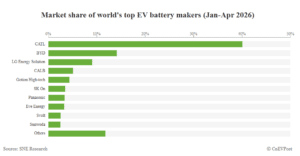
BYD already plays a major role in that market. The company is the world’s second-largest battery manufacturer by installed capacity, behind CATL. Its battery business accounts for more than 17% of global battery installations.
This gives BYD a unique advantage. Unlike many automakers, it manages most of its battery supply chain. This enables the company to add new technologies directly to its vehicles.
The EV Battle Is Shifting From Hardware to Software
The latest driver-assistance announcement highlights another shift taking place across the industry. For years, EV competition focused mainly on battery range and vehicle pricing. Today, software is becoming equally important.
BYD recently announced that it would assume liability in certain situations when its driver-assistance system is active. The move signals growing confidence in the company’s advanced driving technologies.
The announcement comes as automakers invest billions of dollars in software development, artificial intelligence, sensors, and computing systems. These technologies can improve safety, reduce driver workload, and support future automated driving capabilities.
The race is becoming increasingly competitive. Companies such as Tesla, Mercedes-Benz, XPeng, Huawei-backed automakers, and BYD are all investing heavily in intelligent driving systems.
As EV hardware becomes more standardized, software capabilities may become a major factor in purchasing decisions.
Why EVs Are Central to Global Net-Zero Strategies
BYD’s recent announcements also reflect a broader shift in the global energy transition. Countries, cities, and corporations are increasingly adopting net-zero targets. Transportation is a major focus because it remains one of the hardest sectors to decarbonize.
Transport remains one of the largest sources of emissions globally. According to the International Energy Agency, the transport sector accounts for about 23% of global energy-related CO₂ emissions. Road vehicles generate the majority of those emissions.
This is why electric vehicles become crucial in decarbonizing the sector. In the IEA’s Net Zero Emissions Scenario, EVs must make up about two-thirds of global vehicle sales by 2035. This is crucial to meet international climate goals.
EV adoption continues to accelerate. Global EV sales surpassed 17 million vehicles in 2024, representing more than 20% of all new vehicle sales worldwide.
This is where BYD’s scale becomes important. The company sold more than 4.2 million new-energy vehicles in 2024, making it the world’s largest NEV manufacturer.
As governments continue investing in renewable energy and grid modernization, battery manufacturers are expected to play an increasingly important role. That trend could create additional growth opportunities beyond vehicle sales alone.
BYD’s role extends beyond vehicles. The company makes batteries and energy storage systems. These are vital for adding renewable energy to power grids. As more solar and wind capacity comes online, demand for battery storage is expected to grow rapidly.
BYD Stock Reflects Growing Expectations
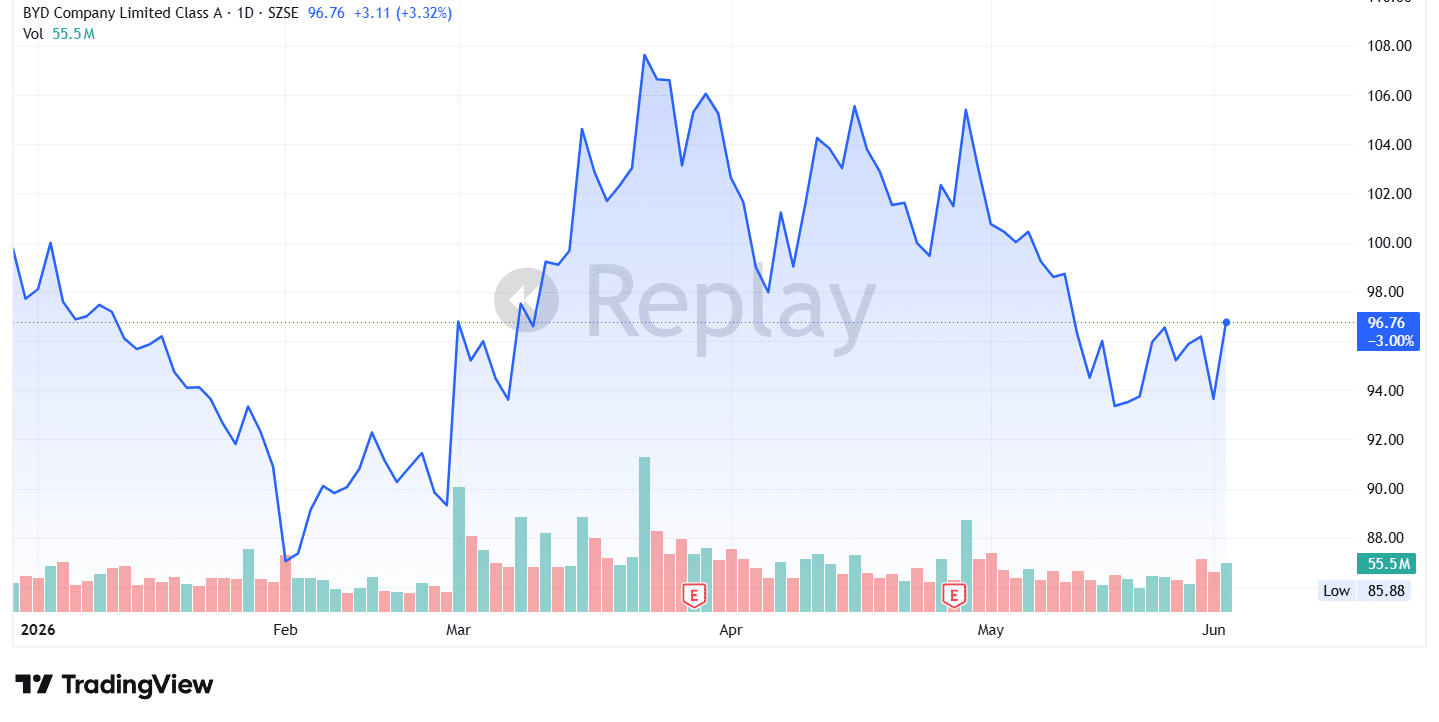
The company’s recent announcements have also drawn attention from investors. As of June 2, 2026, BYD’s Hong Kong-listed shares were trading around HK$96-97, following a recent rebound driven by record overseas sales figures.
The stock jumped about 6.6% on June 2. This came after the company announced that overseas deliveries soared over 80% year over year in May. This marked the end of eight straight months of declining annual sales.
BYD stock has benefited from strong sales growth, expanding international operations, and continued technology development. Investors increasingly view the company as more than an automaker. Many now see it as a broader clean energy and battery technology company.
Markets are paying close attention to several factors. These include overseas sales growth, battery innovation, profitability, and the company’s ability to compete in international markets.
Taken together, these developments show how the EV industry is evolving. Success is no longer determined by vehicle production alone. It now depends on a combination of scale, battery innovation, software capabilities, and participation in the wider clean energy transition.
BYD appears intent on competing across all of those fronts.
https://globalcarbonfund.com/wp-content/uploads/2018/10/GCF_header_logo_340x156.png00carbonfundhttps://globalcarbonfund.com/wp-content/uploads/2018/10/GCF_header_logo_340x156.pngcarbonfund2026-06-04 10:15:162026-06-04 10:15:16BYD Stock (1211.HK) in Focus: Record EV Exports, Solid-State Batteries Advances, and Smart Driving Push
The World Bank Group and Japan have expanded their partnership. This aims to help developing countries build stronger supply chains and secure energy systems. Geopolitical tensions are exposing weaknesses in global trade and energy networks.
World Bank Group President Ajay Banga and Japan’s Finance Minister Satsuki Katayama signed an agreement for two new initiatives. These initiatives aim to boost economic resilience, attract investment, and create jobs in developing nations.
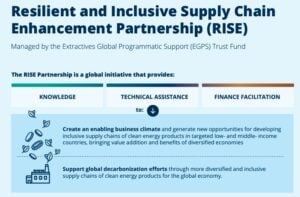
The programs: Resilient and Inclusive Supply-chain Enhancement Plus (RISE+) and Dynamic Response for Invigorating Value Chains and Energy Security (DRIVE) enhance cooperation between Japan and the World Bank. They focus on two key areas: critical minerals and energy security.
Ajay Banga, President of the World Bank Group, said:
“We appreciate Japan’s leadership in enhancing critical minerals supply chain resilience through RISE+ and strengthening energy security through POWERR Asia” said “These initiatives will help countries turn growing demand for clean energy and critical minerals into investment, jobs, and economic opportunity that improve lives across developing economies.”
RISE: Turning Mineral Wealth Into Economic Growth
Japan will establish RISE+, a new $20 million facility under its trust fund program. This initiative expands the original RISE Partnership, launched during Japan’s G7 presidency in 2023.
The timing is crucial. Global supply chains face uncertainty as conflicts disrupt trade routes. Concerns about the Strait of Hormuz highlight vulnerabilities beyond just oil markets.
While oil often grabs headlines, the Middle East also supplies fertilizers, industrial materials, and minerals crucial for global manufacturing and clean energy. Disruptions can quickly impact industries worldwide.
Helping Developing Nations Capture More Value
RISE+ aims to help developing countries meet the rising demand for critical minerals. These minerals, such as rare earth elements, are vital for electric vehicles, batteries, and wind turbines.
The program will support infrastructure development, attract private investment, and strengthen supply chains linked to these resources. The goal is to export not just raw materials but also to help countries build industrial capacity, create quality jobs, and generate long-term economic value.
A key focus is connecting public- and private-sector efforts. By coordinating investments and development strategies, the World Bank and Japan hope to help resource-rich countries turn mineral wealth into sustainable economic growth.
Supporting Decarbonization and Local Development
RISE+ also promotes industrial decarbonization. Cleaner infrastructure and improved supply chains can cut greenhouse gas emissions and expand energy access in underserved regions. Better transportation and energy networks can raise living standards and create new economic opportunities for remote communities.
Katayama Satsuki, Japan’s Minister of Finance, said,
“Critical mineral supply chain diversification through RISE+, and promotion of resilient regional supply chains and energy transition in the Asia-Pacific through DRIVE are both win-win policies that contribute not only to the creation of high-quality jobs and sustainable economic growth in developing countries, but also to helping ensure stable supply for importing countries, including Japan. I welcome the opportunity to leverage the World Bank Group’s expertise and policy tools in advancing these initiatives.”
DRIVE Expands Support for More Resilient Energy Systems in Asia
Alongside critical minerals, the new partnership emphasizes energy resilience.
The DRIVE framework complements Japan’s POWERR Asia initiative, a $10 billion program. This program addresses fuel shortages and supply chain disruptions across Asia. The effort has taken on more urgency due to ongoing instability in the Middle East.
So through DRIVE, the World Bank Group will partner with Japanese institutions. These include: Japan Bank for International Cooperation and the Japan International Cooperation Agency. They will support countries most vulnerable to energy supply shocks.
The initiative will also combine sovereign financing, private-sector investment, technical expertise, and policy support. It will help governments improve crisis preparedness, manage supply chains, and secure access to critical energy resources during disruptions.
Supporting Vulnerable Countries
Another goal is to help countries collaborate and pool purchasing power. This will allow them to access essential supplies more efficiently and at lower costs.
Asia’s Clean Energy Is Growing, but So Is Demand
Asia is at the center of the global energy landscape. The region accounts for over half of global electricity demand and is experiencing rapid economic growth. However, countries are on different paths toward energy transition and security.
China has quickly expanded solar power and battery storage, while Southeast Asian nations balance development with rising energy needs. Despite these differences, energy security is becoming a core part of national economic strategy.
Recent data shows this shift.
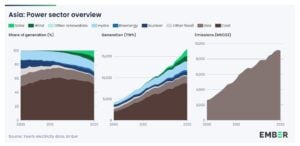
According to Ember, in 2025, clean electricity accounted for 37% of Asia’s power generation, up from 34% the previous year. Wind and solar energy provided 17% of the region’s electricity, just above the global average.
Renewable energy sources now account for nearly one-third of Asia’s power mix. At the same time, electricity demand continues to rise, increasing by about 5% in 2025.
Despite advancements in clean energy, Asia still relies heavily on imported fossil fuels.
The Strait of Hormuz is one of the world’s key energy chokepoints. About 80% of the crude oil passing through the strait goes to Asian markets, especially China, India, and Japan.
For Southeast Asian countries, this dependence is significant. Around 55% of ASEAN crude oil imports come from the Middle East, putting a large share of regional energy at risk if supply disruptions occur.
Why Diversification Is No Longer Optional
This reliance creates economic and strategic challenges. Higher energy prices can drive inflation, strain production, and slow growth. Supply disruptions can impact utilities, manufacturers, and transportation networks.
The current situation presents a paradox. Geopolitical tensions strengthen the case for renewable energy as countries aim to reduce fossil fuel reliance. However, these tensions also create short-term uncertainty that can slow investment and complicate energy transition plans.
As a result, governments in Asia are increasingly viewing energy diversification as an economic necessity and a national security priority.
The launch of RISE+ and DRIVE marks a shift in global development priorities. As supply chains grow more complex and geopolitical risks rise, countries seek greater resilience alongside economic growth. The World Bank and Japan emphasize critical minerals, energy security, and industrial development. They aim to assist developing nations in navigating an uncertain global economy and promoting long-term sustainability.
https://globalcarbonfund.com/wp-content/uploads/2018/10/GCF_header_logo_340x156.png00carbonfundhttps://globalcarbonfund.com/wp-content/uploads/2018/10/GCF_header_logo_340x156.pngcarbonfund2026-06-04 10:15:162026-06-04 10:15:16World Bank and Japan Unveil New Strategy to Strengthen Asia’s Energy Security and Critical Minerals Sector
Last week, U.S. climate policy changed quickly. California boosted its carbon market, but federal regulators decided to weaken climate disclosure rules.
On Friday, the California Air Resources Board (CARB) approved long-awaited updates to California’s Cap-and-Invest Program. The changes extend and reshape one of the world’s largest carbon markets through 2045.
On the same day, the U.S. Securities and Exchange Commission (SEC) proposed rescinding its climate-related disclosure rules in full. The agency argued that the requirements exceeded its legal authority and imposed costs on companies that were not justified by the benefits to investors.
Together, the two decisions highlight a widening divide in U.S. climate regulation. California is tightening its long-term emissions strategy. Meanwhile, federal regulators are rolling back climate reporting rules from the Biden administration.
The developments come as global carbon markets and clean energy investment continue to expand despite political uncertainty.
California Strengthens One of the World’s Largest Carbon Markets
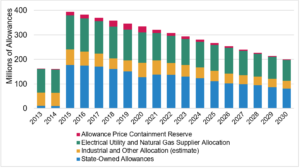
California’s Cap-and-Invest Program covers roughly 80% of the state’s greenhouse gas emissions. The system sets a declining cap on pollution and requires major emitters to buy allowances for their emissions.
The program applies to power generators, fuel suppliers, and large industrial facilities. Companies that reduce emissions can sell unused allowances, creating a carbon market that rewards lower pollution.
CARB said the updates will help California meet its climate goals for 2030 and 2045. They also aim to keep costs manageable for consumers and businesses. The state says the program has already delivered major results. Since launching, it has:
Generated about $35 billion for climate investments
Supported roughly 30,000 jobs
Funded more than 500,000 projects statewide
Delivered around $61 billion in utility bill credits to residents
Helped California reach its 2020 climate target six years early
State officials say carbon pricing is a smart way to cut emissions. It also helps the economy grow. The latest updates give investors a long-term signal. This is key for those in renewable energy, clean transportation, battery storage, and low-carbon industrial projects.
An 11% annual cap decline through 2030 and an average 7% annual cap decline from 2031–2045.
Removal of 118 million carbon allowances
$10 billion for electricity bill credits and $8 billion for the Greenhouse Gas Reduction Fund.
Manufacturing Decarbonization Incentive Fund doubled to $4 billion and $800 million in additional compliance support for industry.
Support for industrial emissions-reduction investments.
No additional fuel cost pass-through for consumers at the pump.
CARB Chair Lauren Sanchez remarked:
“At a moment when climate policy is under attack and global economic upheaval is creating real uncertainty, this rulemaking is critically important for California… By moving forward today, we are responding to real affordability concerns while sending a clear and unwavering signal to the world that we remain committed to long-term investment in clean energy, good jobs, and healthier communities.”
Washington Hits the Brakes on Climate Disclosure
While California expanded its climate framework, the SEC moved in the opposite direction.
The agency proposed fully rescinding climate disclosure rules adopted in March 2024. The rules would make many public companies report climate risks, greenhouse gas emissions, and the impact of severe weather on their finances.
The rules never took effect because of lawsuits filed by business groups and several Republican-led states. The SEC stopped defending the rules in court in 2025 and has now formally proposed removing them.
“We must re-examine the costs, burdens, and benefits of disclosure mandates to make becoming and remaining a public company more attractive again. SEC disclosure obligations should comply with the Commission’s statutory authority, be guided by materiality as the North Star, avoid the practical effect of dictating corporate behavior, and be imposed only when the expected benefits justify the likely costs and burdens.”
The agency identified key policy reasons for such a decision, including:
Misalignment with SEC policy objectives,
High compliance costs for public companies,
Limited additional investor benefits and potential burden on shareholders,
Possible barrier to capital formation, and
Reduced attractiveness of public market listings.
The proposal now enters a 60-day public comment period before any final decision is made. Many large companies will still need to report on climate issues. This is true even if federal rules go away. California regulations and European sustainability disclosure requirements will still apply.
Global Carbon Trading Keeps Expanding Despite Political Headwinds
The regulatory debate comes as carbon markets remain a major part of global climate policy. According to the World Bank, carbon pricing instruments now cover nearly one-quarter of global greenhouse gas emissions. Governments worldwide operate dozens of emissions trading systems and carbon taxes.
Compliance carbon markets, like California’s system and the EU Emissions Trading System, manage billions in trading each year.
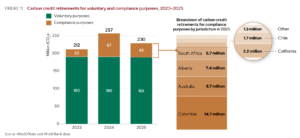
At the same time, voluntary carbon markets remain important for corporations pursuing net-zero goals. In 2023, companies retired about 182 million voluntary carbon credits, per data from market registries tracked by Ecosystem Marketplace.
Data from AlliedOffsets also shows a similar volume of retired voluntary carbon credits.
Demand is highest among technology firms, airlines, energy companies, and consumer brands. They want to offset hard-to-eliminate emissions.
Emissions Keep Rising as Climate Deadlines Get Closer
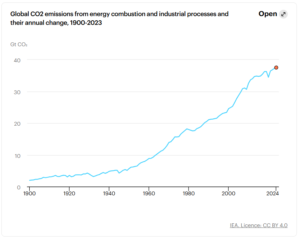
These policy shifts occur when global emissions remain near record levels. The International Energy Agency reports that energy-related carbon dioxide emissions hit about 37.8 billion metric tons in 2024. This is the highest level ever recorded worldwide.
Meanwhile, the Intergovernmental Panel on Climate Change says global emissions need to drop by about 43% by 2030. This is based on 2019 levels and is necessary to stay on track for a 1.5°C warming limit.
These targets are driving continued investment in clean energy, carbon markets, and emissions reporting systems.
BloombergNEF estimates global energy transition investment reached a record $2.3 trillion in 2025. Growth remains strong across renewable energy, battery storage, electric vehicles, and grid infrastructure.
As a result, many investors continue to view climate-related financial risks as increasingly relevant, regardless of shifting federal policies.
A Growing Divide in Climate Regulation
The latest actions by California and the SEC show two very different approaches to climate governance.
California is expanding the use of carbon pricing as a long-term emissions reduction tool. Federal regulators, meanwhile, are reducing climate-related disclosure requirements for public companies.
Despite these differences, broader market trends continue moving toward decarbonization. Clean energy investment remains at record levels, carbon markets continue to grow, and large corporations are still pursuing net-zero targets.
The result is a climate policy environment that is becoming more fragmented. States, countries, investors, and corporations are increasingly shaping their own climate strategies even as federal regulations shift direction.
For businesses, the challenge is no longer whether climate policy matters. It is learning how to operate across a growing mix of carbon markets, disclosure systems, and emissions rules that continue to evolve around the world.
https://globalcarbonfund.com/wp-content/uploads/2018/10/GCF_header_logo_340x156.png00carbonfundhttps://globalcarbonfund.com/wp-content/uploads/2018/10/GCF_header_logo_340x156.pngcarbonfund2026-06-04 10:15:162026-06-04 10:15:16Two Americas on Climate: California Tightens Carbon Rules While SEC Backs Away
Google has signed a 15-year agreement to purchase 200 megawatts (MW) of solar power from the Solstice Solar project in Oklahoma, developed by Enlight Renewable Energy.
The project will supply clean electricity to support Google’s growing data center operations in the region. The facility is planned as a 250 MWdc solar project and could eventually include 800 megawatt-hours (MWh) of battery storage.
Driving a New Wave of Electricity Demand
The agreement is about more than adding another renewable energy asset. It reflects a challenge facing the entire technology sector: how to power the rapid expansion of artificial intelligence (AI) while still meeting climate goals.
Across the industry, electricity demand is rising at a pace not seen in years. Data centers are expanding, AI workloads are becoming more energy intensive, and utilities are scrambling to add new generating capacity. In response, technology companies are signing larger and longer renewable energy contracts to secure future power supplies.
The Oklahoma deal is one example of how that shift is reshaping energy markets. AI is changing how much electricity technology companies need.
Google reported that electricity consumption at its data centers increased by 27% in 2024 compared with the previous year. The increase was largely driven by AI-related computing demand.
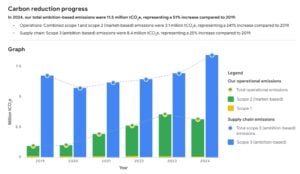
The company has also acknowledged the climate impact of this growth. Google reported greenhouse gas emissions of 11.5 million metric tons of carbon dioxide equivalent (CO₂e) in 2024. That is 51% higher than its 2019 baseline.
Source: GOOGLE
The challenge becomes more common across the sector. New AI models require large clusters of advanced chips operating around the clock. These facilities consume far more electricity than traditional computing workloads.
The impact is already visible at the grid level. According to the International Energy Agency (IEA), global electricity demand from data centers could more than double by 2030. AI is expected to be the largest driver of that increase.
In the United States, utilities and grid operators are preparing for a sharp rise in demand. The Southwest Power Pool (SPP), which serves Oklahoma and several neighboring states, expects peak electricity demand to increase by nearly 5 gigawatts between 2026 and 2029. During the same period, more than 5.7 GW of existing power generation is expected to retire.
This means new sources of electricity will be needed quickly. Solar energy is emerging as one of the fastest solutions.
Google Is Betting on Carbon-Free Energy, Not Just Renewable Credits
Despite growing energy demand, Google says its climate commitments remain unchanged.
In May 2026, company executives reaffirmed that Google’s goal of operating on 24/7 carbon-free energy by 2030 remains intact. The target was first announced by CEO Sundar Pichai in 2020 and remains one of the most ambitious energy goals in the corporate world.
Unlike traditional renewable energy programs, Google’s approach goes beyond annual energy matching.
Source: Google
Many companies purchase enough renewable electricity to offset their yearly power consumption. Google’s goal is harder. It aims to match every hour of electricity use with locally sourced carbon-free electricity.
This distinction matters because solar power is available mainly during daylight hours, while data centers operate continuously.
According to Google, carbon-free energy supplied 66% of the electricity consumed across its global operations in 2024. The company aims to continue increasing that figure throughout the decade.
To support this effort, Google has become one of the world’s largest corporate clean energy buyers. Since 2010, the company has signed agreements for more than 22 gigawatts of renewable energy generation capacity globally.
The Oklahoma agreement adds another piece to that portfolio.
Solar Is Becoming a Critical Tool for Industrial Decarbonization
The rise of corporate solar procurement extends far beyond the technology sector. Solar energy has become one of the fastest-growing sources of electricity in the world. Costs have fallen sharply over the past decade, making utility-scale solar one of the lowest-cost options for new power generation in many markets.
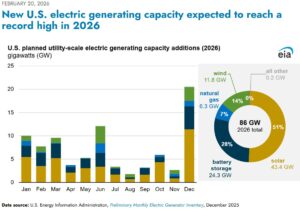
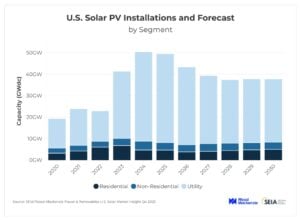
In the United States, solar accounted for a record 43.2 GW of new capacity installations in 2024. According to the Solar Energy Industries Association (SEIA) and Wood Mackenzie, this represented about 84% of all new electricity-generating capacity added during the year.
Renewables as a whole accounted for more than 90% of new generating capacity additions. The trend is expected to continue. SEIA forecasts total U.S. solar capacity could reach 739 GW by 2035, more than triple current levels.
This growth is becoming increasingly important for corporate decarbonization efforts.
Many industries are electrifying operations to reduce emissions. Manufacturers are replacing fossil fuel equipment with electric systems. Mining companies are increasing their use of renewable energy, as Rio Tinto’s renewable deal shows. Transportation firms are expanding electric vehicle fleets. Data centers are consuming more power than ever.
All of these trends increase demand for clean electricity. As a result, renewable energy is becoming a central part of net-zero strategies across the global economy.
Tech Giants Are No Longer Buying Power—They’re Building the Grid
Google’s Oklahoma agreement reflects a broader change in how companies think about energy.
In the past, corporations purchased electricity from utilities and treated energy as a routine operating expense. Today, large energy users are helping finance the construction of new generation assets.
Long-term power purchase agreements provide stable revenue for developers while giving companies access to future electricity supplies. This model is becoming increasingly important as AI expands.
Google has already committed about $9 billion toward cloud and AI infrastructure investments in Oklahoma. The company has also supported more than 700 MW of solar capacity in the state before this latest agreement.
The new contract strengthens both objectives. It helps Google secure electricity for future growth while supporting the development of additional clean energy infrastructure.
For developers such as Enlight Renewable Energy, these agreements create long-term certainty that can support financing and project construction. For the broader energy sector, they signal a larger transformation.
The 200 MW Oklahoma solar project is only one facility. Yet, it reflects a growing reality. As AI drives electricity demand higher, technology companies are becoming active participants in building the energy systems that will power the next phase of the digital economy.
https://globalcarbonfund.com/wp-content/uploads/2018/10/GCF_header_logo_340x156.png00carbonfundhttps://globalcarbonfund.com/wp-content/uploads/2018/10/GCF_header_logo_340x156.pngcarbonfund2026-06-03 11:15:162026-06-03 11:15:16Google’s 200 MW Solar Deal in Oklahoma Highlights the Growing Energy Cost of AI
The 2026 FIFA World Cup is a global sports event that is becoming a large-scale test of clean energy use in public infrastructure. A key feature of the tournament is the energy design of its stadiums.
Out of the 16 World Cup 2026 host stadiums, 13 are already powered by clean energy through a mix of on-site solar generation, renewable energy credits, clean electricity grids, and renewable power procurement arrangements.
With this, more than 80% of the stadiums are already connected to clean energy systems. This data shows how sports infrastructure is increasingly becoming part of the energy transition.
This marks a shift in how major sports venues operate. Stadiums are no longer just places for games. They are becoming connected parts of local power systems.
Clean Energy Integration Through Stadium Design
In many host cities, energy planning is now part of event preparation. Local authorities and organizers are pushing for lower emissions through energy efficiency rules, cleaner electricity sourcing, and long-term sustainability requirements.
Some stadiums are even targeting 100% renewable electricity during World Cup operations, depending on grid access and contract structures. This reflects a broader trend. Large venues are starting to act as “distributed clean-energy hubs” that interact directly with electricity grids.
Modern stadiums consume large amounts of energy. Lighting, cooling systems, broadcasting equipment, and crowd services all require a constant electricity supply.
To reduce emissions, many 2026 World Cup venues are integrating renewable energy in two main ways.
The first is on-site generation. Some stadiums are installing solar panels on roofs and surrounding facilities. These systems help reduce reliance on fossil-fuel-based grid electricity during peak hours.
The second is renewable energy procurement. Stadium operators are signing long-term contracts called power purchase agreements. These agreements let them buy electricity directly from wind and solar projects. This helps match stadium demand with clean energy supply on a yearly or hourly basis.
Together, these approaches reduce the carbon footprint of stadium operations. They also help stabilize energy costs over time.
Energy efficiency upgrades are another key part of stadium design. Host cities are introducing stricter building standards for cooling systems, lighting efficiency, and smart energy management systems. These upgrades reduce total electricity demand, not just emissions intensity.
The clean energy transition in stadiums is not happening by chance. It is being shaped by host city policies and infrastructure requirements.
Across the United States, Canada, and Mexico, World Cup host cities are incorporating climate targets into event planning. These include requirements for energy-efficient buildings, renewable electricity sourcing, and emissions tracking systems.
This is already visible in how specific stadiums are being integrated into city-level sustainability systems:
BC Place Stadium (Vancouver) operates under British Columbia’s clean electricity grid dominated by hydropower. It aligns stadium operations with provincial decarbonization policy.
Mercedes-Benz Stadium (Atlanta) is widely recognized for its LEED Platinum certification and on-site solar generation. This reflects city-scale sustainability ambition.
Levi’s Stadium (Santa Clara) is embedded in California’s renewable energy mandates and Silicon Valley’s broader clean-tech infrastructure ecosystem.
Estadio BBVA (Monterrey) is aligned with regional efficiency upgrades and modern stadium energy systems tied to municipal development planning.
In some cases, stadium upgrades are tied to long-term city climate goals rather than the tournament alone. This means infrastructure improvements are expected to remain in place long after the World Cup ends.
For example:
Lincoln Financial Field (Philadelphia) has long operated with large-scale solar integration and energy efficiency retrofits aligned with the city’s emissions reduction strategy.
Estadio Akron(Guadalajara) reflects Mexico’s growing integration of efficiency upgrades in major sports infrastructure planning.
Some venues are joining the city’s clean energy programs. These programs aim to boost renewable electricity access in urban areas. They connect stadium energy needs with larger energy transition plans. The image below shows how the 16 stadiums operate and the ones with installed solar on-site.
Sources: Green Sports Alliance – 2026 FIFA World Cup Stadium Report, and public stadium disclosures
One of the most important shifts in the 2026 World Cup is how stadiums interact with the power grid. Traditionally, stadiums were passive consumers of electricity. They drew power without influencing supply systems.
Now this model is changing.
According to the Canal Solar dataset, several host venues are already operating as active or semi-active energy participants, not just consumers:
BC Place Stadium uses a grid mix that benefits from low-carbon electricity, effectively reducing its operational emissions footprint without requiring full on-site generation.
Mercedes-Benz Stadium integrates on-site solar generation and energy-efficient systems that allow it to offset a meaningful share of peak demand.
Estadio BBVA represents a newer generation of stadium design where energy systems are optimized for efficiency and lower grid dependency.
Lumen Field (Seattle) is part of a regional grid where renewable electricity penetration is increasing, enabling more flexible low-carbon operations.
Some stadiums are starting to use smart energy systems. These systems help keep the grid stable by managing demand and optimizing efficiency. While not all World Cup venues currently use large-scale storage, the trend is clearly moving in that direction.
This creates a new role for stadiums: instead of only consuming electricity, they are beginning to behave like grid-linked clean energy assets.
This shift matters. Electricity systems in North America face pressure from electrification, data centers, and cooling needs. Flexible stadium loads help reduce stress on the system while reinforcing municipal decarbonization goals.
Clean Power Helps, But It’s Only Part of the Climate Equation
The use of renewable electricity in stadiums helps reduce operational emissions. However, it only covers part of the World Cup’s total footprint.
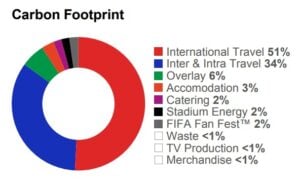
Most emissions from large sporting events come from transportation, construction materials, and supply chains. Stadium energy use is only one piece of the total system.
Source: FIFA World Cup 2026 Bid Book
Still, stadium decarbonization plays an important signaling role. It shows how clean electricity can be integrated into high-demand public infrastructure.
Event planning data shows that major sports venues usually produce fewer emissions than travel and logistics. This means stadium upgrades alone cannot make the World Cup fully low-carbon.
However, they can reduce baseline emissions and demonstrate scalable solutions for other large infrastructure projects. This is especially relevant for cities planning future events. Stadium energy systems can serve as prototypes for airports, convention centers, and urban transport hubs.
A Model for Future Infrastructure Transition
The 2026 World Cup is highlighting a new role for stadiums in the global energy transition. With most venues powered by renewable electricity, stadiums are evolving from passive consumers into active participants in energy systems.
They are becoming connected to grids, linked to clean energy contracts, and shaped by city-level climate policies. This shift does not eliminate the broader environmental impact of mega-events. But it does show how infrastructure design can reduce emissions at the operational level.
More importantly, it signals a longer-term change. Stadiums are no longer just sports venues. They are becoming part of the clean energy infrastructure that supports modern cities. As global electricity demand continues to rise, this model may become more common far beyond the World Cup.
https://globalcarbonfund.com/wp-content/uploads/2018/10/GCF_header_logo_340x156.png00carbonfundhttps://globalcarbonfund.com/wp-content/uploads/2018/10/GCF_header_logo_340x156.pngcarbonfund2026-06-03 11:15:162026-06-03 11:15:16World Cup 2026: How Stadiums Move Beyond Sports Venues and Turn Into Clean Energy Hubs for the Grid
Gatwick Airport Limited (GAL) is enhancing its climate efforts by investing in nature-based carbon removal projects across England. The airport has teamed up with Kent Wildlife Trust and Somerset Wildlife Trust to restore damaged land and lower carbon emissions that can’t yet be eliminated from its operations.
This initiative builds on Gatwick’s long-standing commitment to sustainability and biodiversity. The airport has earned the Wildlife Trust Biodiversity Benchmark for 11 consecutive years, making it a leader in environmental management among UK airports.
Gatwick Invests £1 Million in Nature Projects
The press release says that GAL has dedicated £1 million to two environmental projects supported by Wilder Carbon, a non-profit that connects companies with wildlife restoration efforts.
This funding will help remove around 10,000 tonnes of carbon dioxide equivalent (CO2e) from the air. The projects are located at Ironhurst Valley Nature Reserve in Kent and Honeygar Farm in Somerset.
Both sites, once farmland, will be transformed into rich habitats in the coming years. These projects aim to capture carbon and enhance biodiversity, soil quality, flood management, and local ecosystems.
At Ironhurst Valley, land will shift from farming to a blend of wet floodplain meadows, grasslands, and mixed woodland. This change will create healthier ecosystems and store more carbon.
GAL stated that the carbon removed through these projects will offset emissions generated between 2030 and 2039. These emissions can’t be fully eliminated due to current technological limitations.
Nature-Based Solutions Become Part of Net-Zero Plans
The airport is lowering emissions through infrastructure upgrades and cleaner operations. However, some emissions will likely remain after 2030.
Mark Edwards, Head of Sustainability at Gatwick, said:
“We have an unwavering commitment to sustainability and to achieving our aim of being net zero for emissions under our direct control by 2030. We are making great progress, as detailed in our 2025 Sustainability Report.
“We are doing all we can to reduce our carbon footprint but come 2030 a small proportion of greenhouse gas emissions will remain. We won’t be able to eradicate these emission sources for various reasons such as the technology not yet existing.
“In order to achieve Net Zero, we will need to remove these residual emissions.
“Collaborating with Wilder Carbon offered us the opportunity to support local, high integrity, nature-based projects that offered considerable benefits in addition to carbon removal.
“We carefully considered which projects to partner with and I’m delighted that Ironhurst is so close to the airport. I’m excited to see how nature will transform Ironhurst and Honeygar over the coming years as our partnership progresses. Our thanks go to the Wilder Carbon team for helping us find our partner sites, and to the two Trusts.”
The Ironhurst Valley project is especially welcomed because of its proximity to Gatwick. Edwards is eager to see nature recover at both sites in the coming years.
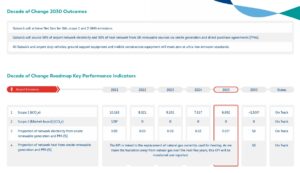
The wildlife partnerships are part of Gatwick’s broader “Decade of Change” sustainability plan.
In 2023, the airport advanced its net-zero target for Scope 1 and Scope 2 emissions from 2040 to 2030. To support this quicker timeline, GAL launched a £250 million decarbonization investment program.
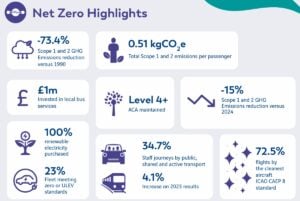
So far, the airport has reduced Scope 1 and 2 greenhouse gas emissions by over 73% compared to its 1990 baseline.
The latest 2025 Sustainability Report highlights several major achievements.
One significant project involves replacing natural gas boilers across the airport. Initial work is set to begin in 2026. Gatwick also lowered emissions from heating systems by reducing temperatures and optimizing operations.
The company reported a 35% reduction in Scope 1 emissions from natural gas use since 2019.
Meanwhile, Gatwick has continued to purchase 100% renewable electricity for the twelfth year in a row.
The airport also completed a strategic electrical power study to prepare for its long-term net-zero transition. This will support future renewable energy systems and expanded EV charging infrastructure.
Source: Gatwick
Electric Vehicles and Cleaner Transport
Transport electrification is another key area for Gatwick. Last year, the airport received 48 electric vehicles, with another 25 on order. It also opened two new EV charging stations for operational vehicles.
Gatwick expanded its electric public transport fleet, with four of the 14 electric buses already delivered. These buses will transport passengers between terminals and long-stay parking areas.
The airport believes cleaner transport systems will significantly lower emissions from ground operations in the coming years.
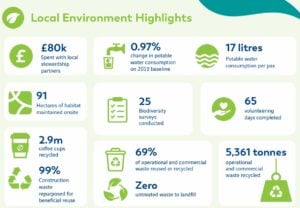
It resumed its annual wildlife recording day with the Gatwick Greenspace Partnership, local ecologists, volunteers, and the Sussex Biodiversity Record Centre. The event recorded 202 species, including a fungi species called Lophiostoma caespitosum, identified for the first time in Great Britain.
The airport is also replacing herbicides with alternative weed management methods in landside areas. Instead of chemicals, teams are using manual sweeping and hot lance equipment.
Gatwick published its second Biodiversity Action Plan Review Report, showing ongoing progress in maintaining and enhancing biodiversity areas.
Together with the Gatwick Greenspace Partnership, the airport hosted 65 volunteering events and 49 education events during the year.
These initiatives support Gatwick’s goal of achieving a “sector-leading” biodiversity net gain strategy while eliminating herbicide use by 2030.
Recycling Projects Add to Sustainability Goals
Beyond emissions and biodiversity, Gatwick expanded community and circular economy initiatives in 2025.
The airport created the UK’s first recycling facility on-site. It focuses on airline cabin waste that is not contaminated. This project aims to improve recycling rates and reduce landfill waste.
Source: Gatwick
Sustainable Aviation Industry Joins Carbon Removal Push
Gatwick collaborates with the wider aviation industry to support long-term climate solutions. The airport is part of Sustainable Aviation, a coalition that includes airlines, airports, aerospace companies, and fuel producers focused on achieving net-zero aviation emissions.
Earlier this year, the coalition launched an Advanced Market Signal initiative for greenhouse gas removals. Through this commitment, members will invest over £2 million in greenhouse gas removal credits to speed up the carbon removal market.
This growing interest shows how aviation companies are linking direct emissions cuts with long-term carbon removal strategies.
As we see, the airport is making significant investments in clean energy, electrification, biodiversity restoration, and carbon removal. This shows its commitment to leading sustainability in the UK’s aviation sector.
In conclusion, Gatwick’s projects highlight that nature restoration and carbon removal are key to long-term climate strategies. While challenges remain for aviation decarbonization, these efforts are crucial.
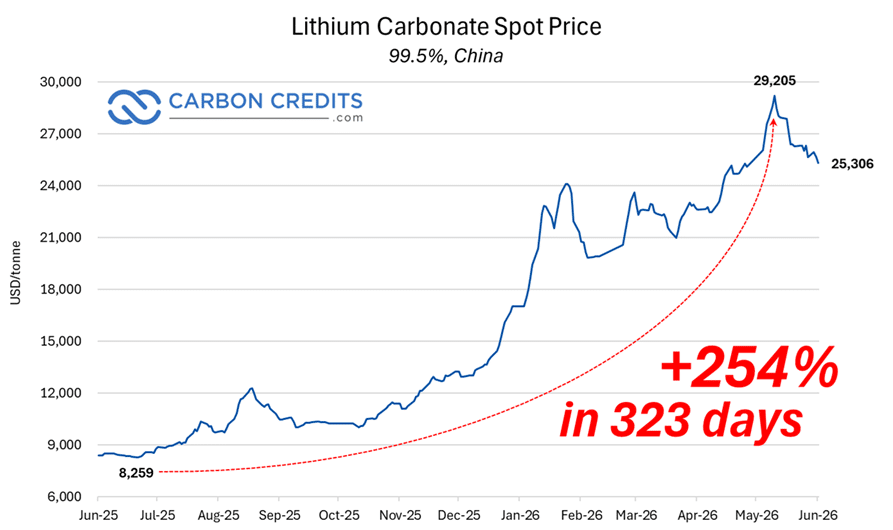
Lithium carbonate prices in China have risen close to their highest levels in years, officially passing the 200,000 CNY mark on May 12. While prices have since dropped to around 170,000 CNY per tonne or about $25,306 USD, this sharp bounce keeps lithium in a high-price bracket. This fast-moving market shows a major shift in how people view global battery metals. It proves that the industry has entered a new era of unpredictable price swings.
But this time, unlike past cycles marked by steady demand or supply shocks, the current shift is happening in a more complex setting. Pricing is getting more volatile. It reacts quickly to changes in inventory signals, procurement timing, and benchmark shifts in China — the main reference point for lithium carbonate value.
The result is a market that is no longer behaving like a traditional commodity cycle. Instead, it behaves like a high-volatility pricing system adjusting to evolving long-term supply expectations.
Lithium’s New Bull Market Is Driven by Volatility, Not Stability
Lithium remains supported by strong structural demand from electric vehicles and energy storage systems. However, price behavior has shifted significantly compared to earlier cycles.
The market has shifted from slow trends based on consumption growth to quick ups and downs. Now, it moves within a tighter trading range.
Two dynamics are particularly important to note here:
China’s lithium benchmark prices are now a real-time sentiment gauge. They amplify short-term market reactions in global supply chains.
Supply responses vary by region, causing sporadic tightness. This only increases volatility instead of solving it.
This environment has created a market where prices depend more on expectations than just physical supply and demand. In this case, lithium is acting less like a typical industrial commodity. Instead, it resembles a strategic material that quickly adjusts its prices.
China’s Lithium Benchmarks Are Once Again Steering Global Markets
China is key to global lithium carbonate prices. It is a big consumer and the main processing hub for battery-grade materials at the same time.
Recent lithium carbonate price changes reaching $29,205 per tonne on May 12, 2026, multi-year highs, show this trend. Global sentiment often shifts quickly with changes in Chinese benchmark pricing.
Source: Bloomberg
Demand for electric vehicles and grid storage is strong. However, the main factor is how quickly prices respond to changes in sentiment in Chinese markets rather than to slow shifts in consumption.
This creates a feedback loop. Expectations, procurement strategies, and inventory positioning all add to short-term volatility.
Lithium Is Moving Beyond Boom-and-Bust Cycles
One of the most important developments in the lithium market is the transition away from traditional boom-and-bust cycles toward a structural pricing band with persistent volatility inside it.
Earlier cycles had clear phases of growth and correction. This usually happened because supply couldn’t keep up with rising demand. That structure is becoming less predictable.
Today, lithium prices seem to be stabilizing in a higher range. However, they still show frequent and sometimes sharp movements within that range. This suggests that the market is now shaped by a combination of:
shifting expectations about future supply,
liquidity-driven price adjustments,
regional benchmark sensitivity, and
contract timing dynamics across Asia.
The result is a market where volatility is no longer an anomaly — it is a defining feature.
NNLP Project: How Surge Battery Metals (NILI) Fits Into the Next Supply Cycle
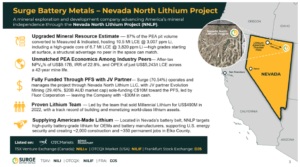
Within this evolving pricing environment, Surge Battery Metals (TSX-V: NILI | OTCQX: NILIF) is increasingly positioned around its flagship Nevada North Lithium Project (NNLP). It represents the company’s core asset in the United States’ lithium development landscape.
The NNLP project is in northeastern Nevada, an area that is crucial for critical mineral development. Its mining-friendly rules and closeness to new battery supply chains make it strategically important in North America.
With lithium prices steady at high levels, projects like NNLP are becoming crucial. They are not just exploration assets; they are future supply options in a tighter global market.
The broader market shift toward sustained higher lithium pricing is also changing how early-stage projects are evaluated. Investors are increasingly focused on:
the long-term scalability of resource bases
jurisdictional stability and permitting visibility
alignment with North American supply chain security priorities
In this context, NNLP becomes more than a standalone development project. It shows future supply potential in a market that values flexibility more than quick production timelines.
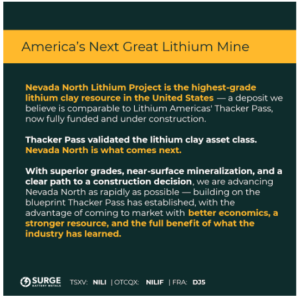
That strategic importance has grown even more following the continued development of major Nevada lithium projects like Thacker Pass. Lithium Americas recently confirmed construction progress at Thacker Pass, with first production targeted for 2028.
Moreover, General Motors supported the project with $625 million. This investment is part of a larger joint venture and a long-term strategy for lithium supply.
For many investors, this was a major validation moment for Nevada clay lithium. For years, sedimentary clay deposits were doubted. This was mainly because only a few projects reached commercial-scale production. Thacker Pass moving into construction helped reduce that uncertainty and increased attention on nearby and similar lithium clay assets across Nevada.
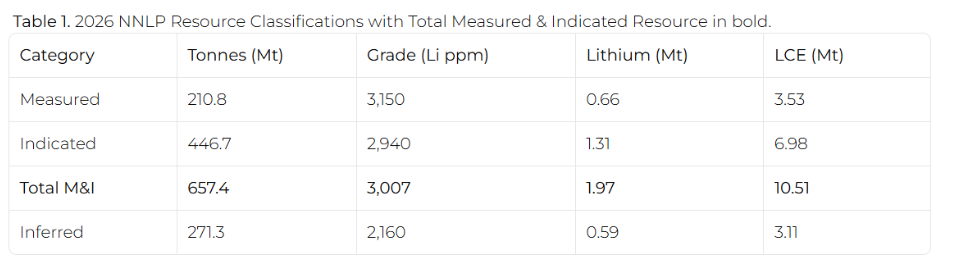
This broader shift has helped bring more focus to Surge Battery Metals’ Nevada North Lithium Project. The company reported an updated resource of 10.5 million tonnes of lithium carbonate equivalent (Measured & Indicated), grading 3,007 ppm lithium, including a high-grade subset of 6.7 million tonnes LCE at 3,820 ppm lithium.
Source: Surge Battery Metals
The project benefits from Nevada’s mining infrastructure. Its location is in one of America’s fastest-growing battery material areas. And with prices high and volatility ongoing, undeveloped domestic lithium assets are becoming more strategically important.
Rising Lithium Demand Is Shifting Attention Toward Future Supply Assets
For Surge Battery Metals (NILI), the current lithium market is not just about short-term price moves. It reflects a longer shift in how the market values future supply.
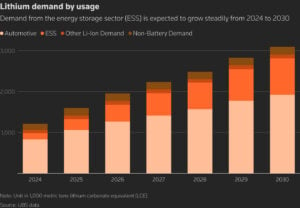
Lithium demand continues to grow strongly. The International Energy Agency (IEA) expects lithium demand to rise several times over by 2030, mainly driven by electric vehicles and battery storage.
At the same time, supply is still highly concentrated. China remains a major hub for lithium processing and battery-grade material production. This makes global pricing more sensitive to Chinese benchmark movements.
Because of this, investors are looking beyond current production. They are focusing more on future supply sources that can support long-term demand growth.
This is where NNLP becomes important. The project is located in one of the key lithium regions in the United States. The U.S. government is also pushing to secure more domestic critical mineral supply for the energy and battery industries.
As lithium prices stay high compared to long-term averages, early-stage projects like NNLP gain more attention. They represent future supply in a market where demand is expected to keep rising for years.
Lithium Enters a High-Volatility Structural Phase
The latest move in China’s lithium carbonate price, about $29,500 per tonne, shows more than a simple price increase. It reflects a deeper change in the market.
Lithium is no longer moving in simple boom-and-bust cycles. Instead, it is now trading in a higher and more unstable price range.
For Surge Battery Metals (NILI), this shift is important. The NNLP project becomes more relevant as the market looks for new long-term lithium supply sources.
Overall, lithium is now in a phase where future supply matters as much as current production. This supports long-term interest in early-stage developers as the market adjusts to a tighter and more volatile pricing environment.
New Era Publishing Inc. and/or CarbonCredits.com (“We” or “Us”) are not securities dealers or brokers, investment advisers, or financial advisers, and you should not rely on the information herein as investment advice. Surge Battery Metals Inc. (“Company”) made a one-time payment of $75,000 to provide marketing services for a term of three months. None of the owners, members, directors, or employees of New Era Publishing Inc. and/or CarbonCredits.com currently hold, or have any beneficial ownership in, any shares, stocks, or options of the companies mentioned.
This article is informational only and is solely for use by prospective investors in determining whether to seek additional information. It does not constitute an offer to sell or a solicitation of an offer to buy any securities. Examples that we provide of share price increases pertaining to a particular issuer from one referenced date to another represent arbitrarily chosen time periods and are no indication whatsoever of future stock prices for that issuer and are of no predictive value.
Our stock profiles are intended to highlight certain companies for your further investigation; they are not stock recommendations or an offer or sale of the referenced securities. The securities issued by the companies we profile should be considered high-risk; if you do invest despite these warnings, you may lose your entire investment. Please do your own research before investing, including reviewing the companies’ SEDAR+ and SEC filings, press releases, and risk disclosures.
It is our policy that information contained in this profile was provided by the company, extracted from SEDAR+ and SEC filings, company websites, and other publicly available sources. We believe the sources and information are accurate and reliable but we cannot guarantee them.
CAUTIONARY STATEMENT AND FORWARD-LOOKING INFORMATION
Certain statements contained in this news release may constitute “forward-looking information” within the meaning of applicable securities laws. Forward-looking information generally can be identified by words such as “anticipate,” “expect,” “estimate,” “forecast,” “plan,” and similar expressions suggesting future outcomes or events. Forward-looking information is based on current expectations of management; however, it is subject to known and unknown risks, uncertainties, and other factors that may cause actual results to differ materially from those anticipated.
These factors include, without limitation, statements relating to the Company’s exploration and development plans, the potential of its mineral projects, financing activities, regulatory approvals, market conditions, and future objectives. Forward-looking information involves numerous risks and uncertainties and actual results might differ materially from results suggested in any forward-looking information. These risks and uncertainties include, among other things, market volatility, the state of financial markets for the Company’s securities, fluctuations in commodity prices, operational challenges, and changes in business plans.
Forward-looking information is based on several key expectations and assumptions, including, without limitation, that the Company will continue with its stated business objectives and will be able to raise additional capital as required. Although management of the Company has attempted to identify important factors that could cause actual results to differ materially, there may be other factors that cause results not to be as anticipated, estimated, or intended.
There can be no assurance that such forward-looking information will prove to be accurate, as actual results and future events could differ materially. Accordingly, readers should not place undue reliance on forward-looking information. Additional information about risks and uncertainties is contained in the Company’s management’s discussion and analysis and annual information form for the year ended December 31, 2025, copies of which are available on SEDAR+ at www.sedarplus.ca.
The forward-looking information contained herein is expressly qualified in its entirety by this cautionary statement. Forward-looking information reflects management’s current beliefs and is based on information currently available to the Company. The forward-looking information is made as of the date of this news release, and the Company assumes no obligation to update or revise such information to reflect new events or circumstances except as may be required by applicable law.
Disclosure: Owners, members, directors, and employees of carboncredits.com have/may have stock or option positions in any of the companies mentioned: None.
Carboncredits.com receives compensation for this publication and has a business relationship with any company whose stock(s) is/are mentioned in this article.
Additional disclosure: This communication serves the sole purpose of adding value to the research process and is for information only. Please do your own due diligence. Every investment in securities mentioned in publications of carboncredits.com involves risks that could lead to a total loss of the invested capital.
Disclosure: Owners, members, directors, and employees of carboncredits.com have/may have stock or option positions in any of the companies mentioned: None.
Carboncredits.com receives compensation for this publication and has a business relationship with any company whose stock(s) is/are mentioned in this article.
Additional disclosure: This communication serves the sole purpose of adding value to the research process and is for information only. Please do your own due diligence. Every investment in securities mentioned in publications of carboncredits.com involves risks that could lead to a total loss of the invested capital.
https://globalcarbonfund.com/wp-content/uploads/2018/10/GCF_header_logo_340x156.png00carbonfundhttps://globalcarbonfund.com/wp-content/uploads/2018/10/GCF_header_logo_340x156.pngcarbonfund2026-06-03 11:15:162026-06-03 11:15:16Lithium Price Trends: Why NILI Could Benefit From the New Volatility Era
Elon Musk wants SpaceX and Tesla (TSLA stock) teams to build 100 gigawatts of solar power manufacturing capacity in the US. He wants to do that within three years. Industry reports say this plan could reshape America’s solar market if the companies can pull it off.
The plan is huge. Module manufacturing grew more than 50% in 2025, with 65.5 GW of capacity online, up from 42.5 GW at the end of 2024. Musk wants to build more than the entire current US market can make. That’s bold even for him.
The Scale Challenge: Can Tesla and SpaceX Really Build 100 GW of Solar Capacity?
The numbers show just how big this goal is. As of last year, U.S. factories were officially able to produce enough solar modules to meet domestic demand. Cell capacity, however, lags far behind, at just 3.2 gigawatts. Tesla and SpaceX each want to build 100 GW of yearly output.
Total solar module manufacturing in the US was approximately just above 45 GW at the end of 2025, and is expected to rise to 60 GW in 2026.
The two companies want to build over three times that much. Combined, they’d aim for 200 GW of total yearly capacity.
This would make them the world’s biggest solar makers. China leads global output today. But Musk thinks America can build massive solar capacity quickly. Tesla has built manufacturing facilities in China and the US — much faster than skeptics assumed the company could.
The plan goes beyond just making panels. “We’re going to work toward getting 100 GW a year of solar cell production, integrating across the entire supply chain from raw materials all the way to finished solar panels.” That means mining, refining, cells, and modules all in America.
A $2.9 Billion Bet on American Solar Manufacturing
Tesla has already started spending. Tesla is looking to buy equipment worth $2.9 billion for manufacturing solar panels and cells from Chinese suppliers, including Suzhou Maxwell Technologies. The deal shows Musk is serious about the 100 GW goal.
The equipment purchase from China includes key tools for making solar cells. As per reports, Suzhou Maxwell Technologies, the world’s biggest producer of screen-printing equipment used to make solar cells, is among the leading candidates to supply machinery for the project. Other potential suppliers include Shenzhen S.C New Energy Technology and Laplace Renewable Energy Technology.
The timing matters too. The Chinese companies were told to deliver the equipment before this autumn, with two saying it would be shipped to Texas. Tesla wants to move fast on this plan.
The reported $2.9 billion solar spend would likely increase Tesla’s previously guided $20 billion in 2026 capex, Barclays analyst Dan Levy said following the news. That’s a lot of money for one company to invest in solar.
Why Texas Is Ground Zero for Musk’s Solar Ambitions
Texas will be the center of Tesla’s solar push. The Brookshire facility is where Tesla plans to anchor that 100 GW ambition. Electrek has confirmed that Tesla is planning full vertically integrated solar manufacturing at the Brookshire site, not simple panel assembly.
The state gives Tesla some help with power grid rules too. Legislators in Texas, where Tesla operates its largest US gigafactory and has announced plans to expand, passed Senate Bill 6 in June 2025, directing the Public Utility Commission of Texas to develop a new framework for large load interconnections greater than 75 MW.
SpaceX will likely build its own separate 100 GW capacity. Musk plans to build the solar capacity mainly for use by Tesla, although some will be used to power SpaceX satellites. That suggests both companies will use much of their own output.
The space-based solar plans connect to SpaceX’s broader goals. Both companies see huge energy demand coming from AI and data centers. Solar could power those needs.
Source: US National Power Demand Study 2025 Report
Dream Big, Build Bigger: What Could Stand in the Way?
Industry experts have mixed views on whether this can work. To anyone who knows about US solar manufacturing, Elon Musk’s claim that SpaceX and Tesla are working to build 100 GW of annual PV manufacturing capacity might seem unachievable.
Additionally, the supply chain needs work too. The domestic solar supply chain shows severe imbalances. Some stats include:
Polysilicon production from Hemlock Semiconductor and Wacker Chemie holds steady at 40,000 metric tons, which supplies only 21 GW of solar production.
Ingot and wafer active capacity from Hanwha Qcells and Corning provides just 5.3 GW. Crystalline silicon cell manufacturing stands at only 3 GW.
But the equipment costs look right. According to the 2025 Benchmarks in the Detailed Cost Analysis Model from energy data resource Open EI, the equipment necessary to produce 100 GW of tunnel oxide passivated contact (TOPCon) cells per year would require an investment of $3.5 billion if purchased from the lowest-cost Chinese suppliers. Tesla’s $2.9 billion deal fits that range.
Current demand supports big growth, too.
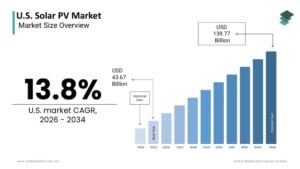
The U.S. Solar PV Market was valued at USD 43.67 billion in 2025, is estimated to reach USD 49.69 billion in 2026, and is projected to reach USD 139.77 billion by 2034, growing at a CAGR of 13.8% from 2026 to 2034.
Can Tesla Beat China’s Solar Dominance?
Tesla faces trade rule challenges. Federal rules govern a 10% domestic content bonus tax credit, with projects needing to prove that 50% of total component costs come from U.S.-mined, produced, or manufactured items. The 45X advanced manufacturing tax credit provides a $0.07 per watt subsidy for U.S.-assembled modules.
Chinese oversupply hurts US makers. Severe and chronic oversupply in the global solar industry is largely driven by manufacturing capacity expansion in China, where production output now exceeds global installation demand.
At the peak of China’s 2024 solar boom, new factories were announced almost weekly, resulting in module prices dropping by up to 50%.
Other companies are building capacity too. Manufacturing concentration is moderate: the top five module suppliers held roughly 60% shipment share in 2025.
First Solar’s 14 GW cadmium-telluride capacity unlocks full domestic-content and prevailing-wage adders.
Hanwha Q CELLS’ 8.4 GW Georgia facility brings crystalline-silicon output within 10% of Southeast-Asian cost benchmarks.
New factories keep opening. April 2025:
Boviet Solar opened a North Carolina plant worth USD 294 million, launching 2 GW of initial capacity with plans to reach 4 GW.
Waaree Energies secured approval to double its solar module manufacturing capacity at its Brookshire facility in Texas, USA, elevating the total capacity to a significant 3.2 GW.
The Bottom Line
Musk’s 100 GW solar plan is huge but not impossible. Tesla has the money to try. The US market can support big growth. China’s oversupply creates opportunities for US makers with the right cost structure.
The real test will be execution. Tesla is almost a decade behind schedule on what Musk said the company would achieve with self-driving cars, and SpaceX is years behind schedule on sending people to Mars. But both companies have delivered on big factory projects before.
Success would transform US solar manufacturing. Two companies making 200 GW yearly would make America a solar export power. It would also reduce dependence on Chinese supply chains. That fits with broader US goals for energy independence and carbon reduction.
The plan faces real challenges. Supply chain gaps, trade rules, and Chinese competition all create risks. But if Tesla and SpaceX can build their 100 GW factories, they’ll reshape global solar markets. The next three years will show if Musk’s latest big bet pays off.
https://globalcarbonfund.com/wp-content/uploads/2018/10/GCF_header_logo_340x156.png00carbonfundhttps://globalcarbonfund.com/wp-content/uploads/2018/10/GCF_header_logo_340x156.pngcarbonfund2026-06-02 12:15:142026-06-02 12:15:14Elon Musk’s 100 GW Solar Moonshot: Can Tesla (TSLA) and SpaceX Pull It Off?