American Battery Technology (ABAT Stock) Wins Back $115M DOE Grant as Tonopah Lithium Project Moves Forward
American Battery Technology Company (NASDAQ: ABAT) has achieved a significant milestone. The U.S. Department of Energy (DOE) reinstated a $115 million grant for its Tonopah Flats Lithium Project (TFLP) in Nevada. This decision eliminates uncertainty for the company and bolsters its aim to establish a domestic lithium supply chain. This is crucial as the U.S. seeks to gain more control over critical mineral production.

The grant will fund the first phase of a lithium refinery. This facility is set to produce battery-grade lithium hydroxide for electric vehicles, energy storage, and other clean energy uses.

For investors, this reinstatement is vital. It confirms the project’s progress and validates the company’s technology after months of federal review.

DOE Reverses Earlier Decision

ABAT first received the DOE award in October 2022. This five-year grant was meant to help build the first phase of its lithium refinery at Tonopah Flats.

However, in October 2025, the company learned that the grant would be terminated, along with many others. ABAT quickly contested this and entered the DOE’s Informal Dispute Resolution process. After several months, DOE officials assessed the project’s achievements and progress. Based on this review, the agency decided to fully restore the grant.

Importantly, the reinstatement keeps the funding unchanged. The original $115 million award remains, and the project’s milestones are still intact. The only change is an updated timeline reflecting the review period.

ABAT’s CEO, Ryan Melsert, stated that the decision shows the company met all requirements and proved the value of its technology.

This reinstatement is noteworthy, as few terminated DOE grants have been restored after appeals.

Tonopah Flats Could Be a Major Lithium Source

The Tonopah Flats Lithium Project is among the largest lithium claystone resources in the U.S. Located near Tonopah, Nevada, the project spans over 10,000 acres across many mining claims managed by the Bureau of Land Management.

The Tonopah Flats Lithium Project Site

The Tonopah Flats Lithium Project

ABAT began exploration in 2021 and has advanced through multiple development stages. The company has completed resource studies, economic assessments, and a pre-feasibility study.

  • The project aims to extract lithium from sedimentary claystone deposits, which differ from the hard-rock and brine deposits used globally.
  • ABAT claims these claystone deposits are ideal for its proprietary extraction technology, unlocking a large domestic lithium resource.
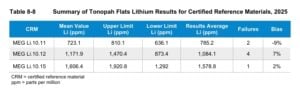
lithium
Source: ABAT

Domestic lithium production is increasingly vital as electric vehicle adoption rises and battery manufacturing expands in North America.

Proprietary Technology Aims to Lower Costs and Environmental Impact

A key part of ABAT’s investment appeal is its lithium extraction technology.

Traditional methods often need vast amounts of chemicals, water, and energy. ABAT’s selective leach extraction (SLE) process aims to cut these needs while keeping commercial recovery rates high.

The company has already produced battery-grade lithium hydroxide from Nevada claystone deposits.

ABAT highlights several advantages of its technology:

  • Lower chemical reagent use
  • Reduced water consumption
  • Less contamination during processing
  • Lower production costs
  • Smaller environmental footprint

These benefits are crucial as regulators and manufacturers push for sustainable mineral production.

The company is refining its technology through ongoing research at the Nevada Center for Applied Research at the University of Nevada, Reno.
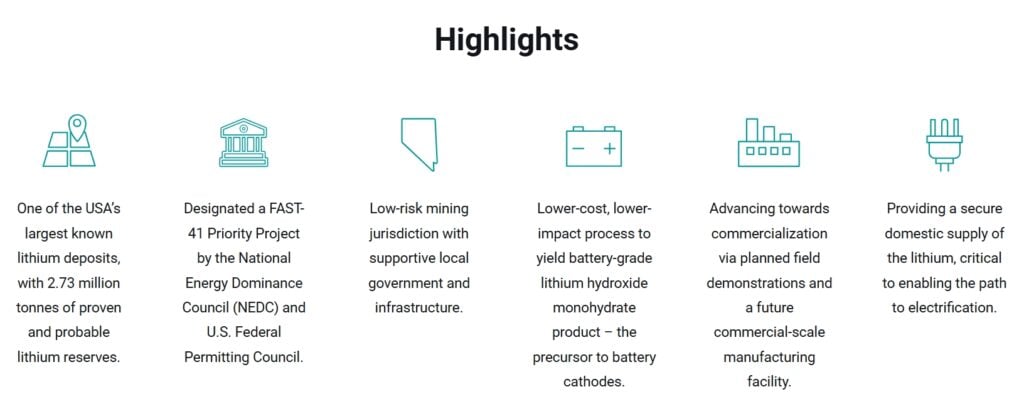
american battery technology Company ABTC
Source: ABTC

The Case for Expanding U.S. Lithium Production

The U.S. faces challenges in securing critical battery materials. Demand for lithium-ion batteries is rising due to electric vehicles, energy storage, consumer electronics, and data centers.

According to the U.S. Geological Survey (USGS):

  • The United States holds about 30 million metric tons of lithium resources, while global lithium resources total roughly 150 million metric tons.
  • These resources are found in claystone, brines, geothermal sources, oilfields, and pegmatites.
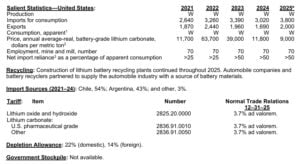
us lithium
Source: USGS data

However, the U.S. still depends heavily on imports for critical battery materials. It accounts for less than 1% of global processing capacity for lithium, nickel, cobalt, and manganese.

While domestic EV and battery manufacturing have expanded rapidly, production of key battery metals has lagged. Thus, expanding domestic lithium production has become increasingly important for supply security and energy independence.

This creates three major issues:

  • Supply Security: The U.S. heavily relies on foreign sources for critical battery materials. Lithium, nickel, cobalt, and manganese are classified as strategically important minerals. Boosting domestic production could reduce supply chain risks and enhance national energy security.
  • Rising Costs: Increased global demand has raised battery metal prices in recent years. More domestic production could help improve supply and lower long-term costs.
  • Environmental Concerns: Conventional mining and processing can create significant greenhouse gas emissions. New extraction methods aim to reduce these effects while remaining economically viable.

ABAT believes both recycling and primary mineral production will be essential to meet future demand.

While battery recycling will be important in the circular economy, it won’t produce enough lithium to meet rapidly growing global demand. New domestic mining and refining projects are still necessary.

Federal Support Across Administrations

A notable aspect of the Tonopah project is its bipartisan support.

Initially, it received federal funding during the Trump administration through the DOE’s Advanced Materials and Manufacturing Technologies Office.

Later, support continued during the Biden administration via the Manufacturing Energy Supply Chain program.

Under the second Trump administration, the project received further federal backing through the grant reinstatement process.

In June 2025, the White House National Energy Dominance Council designated Tonopah Flats as a Priority Project, allowing for streamlined federal permits. This consistency shows that domestic critical mineral development remains a priority, regardless of political leadership.

What It Means for ABAT Stock

The grant reinstatement alleviates a major concern for investors.

Federal funding eases project financing pressures and paves the way for commercial lithium production. It also validates the project’s technical progress and economic potential.

Despite this positive news, ABAT shares are still below their 52-week high of $11.49. The stock trades near its 50-day moving average and below its 200-day average, showing cautious long-term market sentiment.

ABAT stock
Source: Yahoo Finance

However, Wall Street remains optimistic about the company’s future. One analyst has a 12-month price target of $6.00 per share, suggesting a significant upside from current levels.

As the Tonopah Flats project moves through permitting, engineering, and construction, investors will likely focus on execution, lithium market conditions, and the company’s ability to scale its extraction technology.

For now, the DOE’s decision marks an important step for ABAT and the broader goal of building a secure domestic lithium supply chain in the U.S.

The post American Battery Technology (ABAT Stock) Wins Back $115M DOE Grant as Tonopah Lithium Project Moves Forward appeared first on Carbon Credits.

EU Emissions Trading System (ETS) Under Pressure Ahead of Landmark 2026 Review

A group of 45 major institutional investors, managing about €11.4 trillion in assets, has urged EU leaders to protect the EU Emissions Trading System (ETS). They warn that weakening this carbon market could damage investor confidence and slow Europe’s clean-energy transition.

This appeal arrives weeks before a key review of the ETS, one of the world’s biggest carbon markets. As per reports, these investors shared their message before the European Council summit on June 18-19. At this summit, EU leaders will discuss carbon pricing.

Signatories include Allianz SE, L&G Asset Management, Nordea Asset Management, Sampension, Erste Asset Management, and the Church of England Pension Board. The Net-Zero Asset Owner Alliance supports this initiative.

Investors Want Stability, Not Policy Reversals

The investors believe a stable carbon market is crucial for channeling private funds into clean technologies, renewable energy, and low-carbon projects.

They see this moment as key for Europe’s competitiveness and energy security. Investors need clear, long-term policies before committing billions of euros to projects that often take decades to pay off.

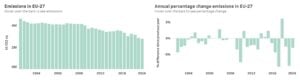
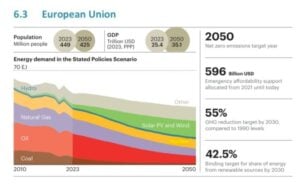
Since its start in 2005, the EU ETS has been vital in cutting emissions. Emissions from sectors under the system have dropped by about half. Recent data show the ETS is on track to reduce emissions by 62% by 2030 compared to 2005 levels, with a 5% drop expected in 2024 due to declines in the power sector.

eu emissions
Source: EU

Investors warn that weakening the ETS now could send the wrong message, discouraging private investment when Europe needs significant funding for its energy transition.

Industry Pushes for Relief

This appeal comes amid rising calls from EU member states and industrial groups for relief from carbon costs.

Countries like Italy and Germany argue that high carbon prices hurt the competitiveness of European manufacturers facing high energy costs and global competition.

Reuters reports that the European Commission is considering changes to let industries keep free emissions permits if they invest within the EU. This proposal aims to balance climate goals with industrial competitiveness.

The EU’s main business lobby has urged Brussels to continue free carbon allowances for energy-intensive industries. Companies claim carbon costs put European manufacturers at a disadvantage compared to regions with weaker climate rules.

However, investors argue that weakening carbon pricing won’t solve Europe’s competitiveness issues. They point to deeper problems like high electricity prices, slow grid expansion, and limited access to affordable clean energy.

They believe carbon pricing sends a critical market signal that fosters innovation and investment while helping industries prepare for a low-carbon future.

The ETS Remains Central to EU Climate Strategy

The EU ETS uses a cap-and-trade model. It sets limits on greenhouse gas emissions from covered sectors and gradually lowers those limits over time. Companies must surrender allowances for their emissions, creating a financial incentive to reduce pollution.

Reuters revealed that the EU has agreed to strengthen price controls in its upcoming ETS2 carbon market, which will cover emissions from road transport and building heating fuels starting in 2028.

  • Under the new rules, if carbon prices rise above €45 per tonne, regulators can release up to 40 million additional permits from a market reserve twice a year—potentially adding 80 million permits annually to ease price spikes.

The move aims to address concerns from member states that higher carbon costs could increase fuel and heating bills for households while preserving the market’s role in driving emissions reductions and clean energy investments. Revenues from ETS2 will help fund energy-efficient home upgrades, electric vehicles, and other low-carbon solutions.

eu carbon pricing
Source: EU

Broader ETS Overhaul Ahead

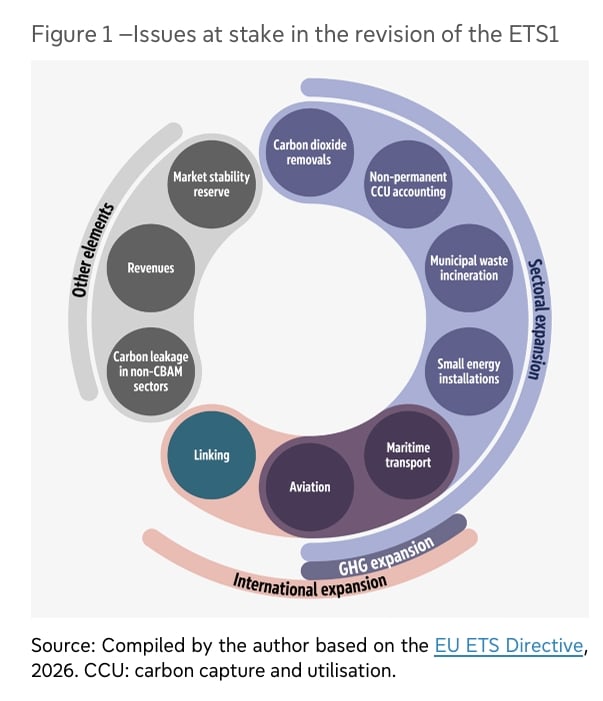
The European Commission is expected to present its formal ETS revision proposal in July 2026. This review will address key issues, including carbon dioxide removals, carbon capture accounting, and the potential inclusion of more sectors.

The July review will make changes to the EU carbon market to help meet the bloc’s goal of cutting emissions by 90% by 2040. Officials will also look at ways to keep carbon prices stable and prevent companies from moving production outside Europe to avoid carbon costs.

  • Notably, in May, the EU proposed giving industries more free carbon permits to help cover electricity-related emissions. This support could be worth around €4 billion to businesses by 2030.

EU Emissions Hit Record Low

Recent data from the European Environment Agency shows that EU greenhouse gas emissions fell by another 3% between 2023 and 2024.

They are now 40% below 1990 levels, while the EU economy has grown more than 70% during this time. The EU’s net emissions are at their lowest since records began in 1990.

EU emission tracker
Source: EEA

The energy sector has played a major role in these reductions. Emissions from electricity and heat production have dropped sharply as renewable energy increased and coal use fell. In 2024, emissions covered by the ETS were about 50% below 2005 levels, keeping the system on track for its 2030 targets.

Airlines Resist Expansion of Carbon Costs

Aviation has become a hot topic in the upcoming ETS review.

According to Reuters, Europe’s largest airlines have asked the European Commission not to extend carbon pricing to international flights from Europe.

In a letter to European Commission President Ursula von der Leyen, CEOs from Air France-KLM, IAG, Lufthansa, and Ryanair argued that expanding the ETS would raise ticket prices and cargo costs for passengers and businesses. Other airlines, like easyJet and TUI, also signed the letter.

Currently, the ETS mainly covers flights within Europe. A temporary arrangement delays including flights between European Economic Area countries and destinations outside until the end of 2026.

The Commission must evaluate how effective the International Civil Aviation Organization’s Carbon Offsetting (ICAO) and Reduction Scheme for International Aviation (CORSIA) is by July 2026. If it’s deemed insufficient, the EU might expand the ETS to cover international departures starting in 2027.

Airlines argue this could create competitive disadvantages and weaken support for CORSIA. They want ETS costs for international flights to align more closely with CORSIA requirements.

Environmental advocates and some policymakers disagree. They argue the EU ETS is more ambitious than CORSIA, creating stronger incentives for airlines to cut emissions instead of relying on carbon offsets.

The aviation debate may expand in the coming years. The Commission is also considering whether to include non-CO2 aviation impacts—like contrails and nitrogen oxides—into the ETS framework.

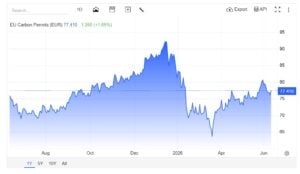
EU carbon permit pricing data 

EU carbon pricing

A Test for Europe’s Carbon Market

The upcoming ETS review is a major test for Europe’s climate and industrial strategy.

Investors need policymakers to maintain a strong and steady carbon market. This will help attract private capital for long-term decarbonization. At the same time, industrial groups are seeking protections to help companies manage rising costs and global competition.

The European Commission must balance climate goals, industrial competitiveness, and energy security, according to Reuters. The July review will determine if the EU ETS remains central to Europe’s climate policy or shifts to a more flexible system to meet economic needs.

Trillions of euros depend on future carbon prices. This review matters for more than just the environment. It could shape Europe’s industrial competitiveness, clean energy investments, and the journey to climate neutrality for many years.

The post EU Emissions Trading System (ETS) Under Pressure Ahead of Landmark 2026 Review appeared first on Carbon Credits.

JPMorgan Backs Carbon Removal Growth With New Charm Industrial Deal

Carbon removal is moving beyond pilot projects. A new agreement between JPMorgan Chase and Charm Industrial shows how the sector is entering a new phase. The deal combines carbon removal credit purchases with financing support, helping expand future supply while reducing project risk.

Under the agreement, JPMorgan will purchase 61,500 metric tons of carbon removal credits from Charm Industrial. The bank will also provide financing support to help the company grow its operations.

The deal highlights a broader trend. Large financial institutions are starting to view carbon removal not only as a climate tool but also as a market with long-term growth potential.

As net-zero deadlines approach, demand for high-quality carbon removal credits is rising. Companies are looking for solutions that deliver measurable climate benefits and long-term carbon storage.

Taylor Wright, Head of Operational Sustainability at JPMorganChase, remarked:

“Our initial purchase with Charm marked an important step as we expanded our ambition in carbon removal and refined how we assess quality and deliver real impact across our portfolio. This new purchase—bringing our total to 90,000 tons—together with financial support from our business, reflects how our portfolio has matured over time and Charm’s track record of delivering measurable, durable outcomes across its projects.”

Carbon Removal Becomes a Bigger Part of Net Zero

Carbon dioxide removal (CDR) is different from traditional carbon offsets. Many offsets focus on avoiding emissions. Carbon removal takes carbon dioxide out of the atmosphere and stores it for the long term.

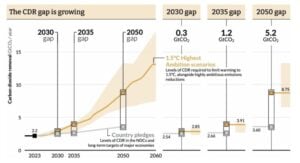
Most climate experts agree that emissions cuts alone will not be enough to meet global climate goals. According to the Intergovernmental Panel on Climate Change (IPCC), most pathways that limit warming to 1.5°C require large-scale carbon removal.

Today, the novel technological market remains small. Global demand for these engineered carbon removals is still below 10 million metric tons per year, according to CDR.fyi. 

However, the State of Carbon Dioxide Removal Report shows that total global removals—mostly from forestry—already sit at 2.2 billion tons. Looking forward, IPCC climate pathways project that total global demand will need to reach billions of tons annually by mid-century to meet net-zero targets.

CDR novel technologies in metric tons
Source: CDR 2026 Report

That growth is expected to come from sectors such as aviation, steel, cement, and shipping. These industries are difficult to fully decarbonize and will likely need carbon removal to address remaining emissions. Thus, investors and financial institutions are paying closer attention to the sector.

Inside JPMorgan’s Growing Climate Strategy

The agreement also fits JPMorgan’s broader climate strategy. The bank has committed to aligning key parts of its financing portfolio with net-zero emissions by 2050. It has also set emissions reduction targets across sectors including power generation, oil and gas, aviation, shipping, and automotive manufacturing.

In addition, JPMorgan has pledged to finance and facilitate more than $2.5 trillion toward sustainable development initiatives by 2030. That includes $1 trillion dedicated to climate action and green solutions. Carbon removal is becoming an important part of those efforts.

JPMorgan $1 trillion green investment
Source: JPMorgan

Many companies can reduce most of their emissions through clean energy, efficiency improvements, and new technologies. However, some emissions are likely to remain. Carbon removal is expected to help address these residual emissions.

The structure of the JPMorgan-Charm deal is also notable. Instead of only purchasing carbon credits, the bank is helping support future production capacity. This approach gives developers access to capital while helping buyers secure future carbon removal supply.

Peter Reinhardt, CEO and Co-Founder of Charm Industrial, stated:

“JPMorganChase is helping build the infrastructure for a permanent carbon removal industry. Having a sophisticated, mission-aligned financial institution come back for a second, larger purchase while also stepping up with growth capital is exactly the kind of validation that tells us we’re on the right path.”

Charm’s Way: Turning Farm Waste Into Permanent Carbon Storage

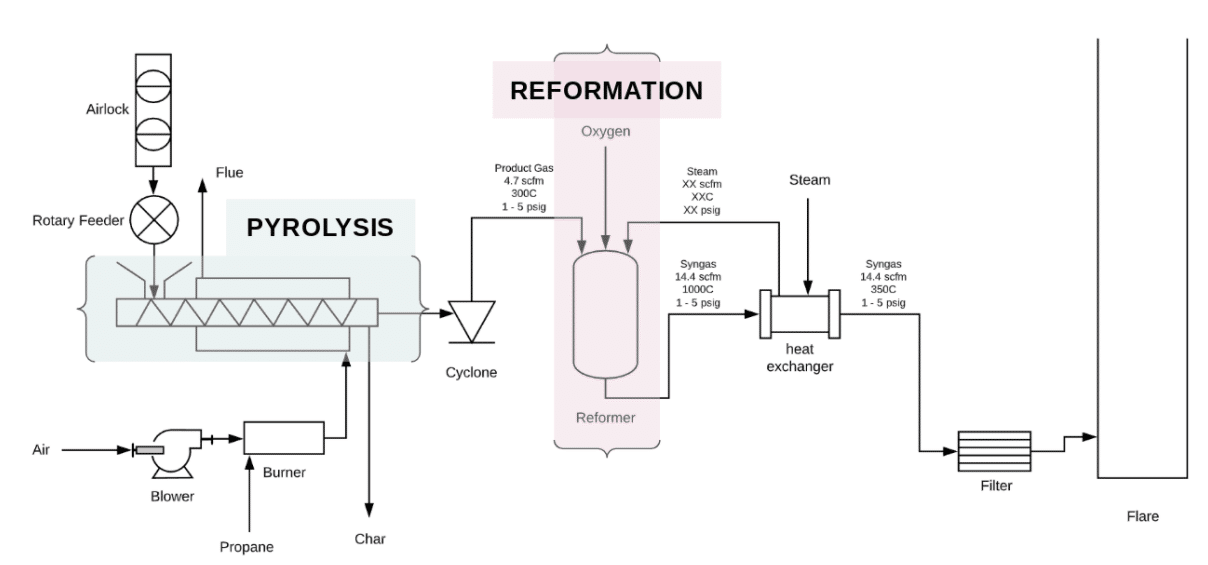
Charm Industrial uses a process known as biomass carbon removal and storage. The company collects agricultural waste, including crop residues that would otherwise decompose or be burned. It converts this material into a carbon-rich bio-oil through a process called fast pyrolysis.

Charm Industrial carbon removal process
Source: Charm Industrial

The bio-oil is then injected deep underground for long-term storage. This method is designed to keep carbon locked away for hundreds or even thousands of years.

One advantage is that the process can use existing energy infrastructure. Storage wells, transportation systems, and other equipment already used in the energy sector can often be adapted for carbon storage.

Charm has become one of the leading companies in the sector. The company says it has already delivered more than 150,000 metric tons of carbon removal to customers, making it one of the world’s largest suppliers of durable carbon removal credits.

While the technology continues to develop, many experts see biomass carbon removal as one of the more mature engineered carbon removal pathways available today.

The Carbon Removal Supply Crunch Is Emerging

Corporate demand for carbon removal continues to increase. Technology companies have been among the biggest buyers. Many have net-zero goals and are looking for ways to address emissions that cannot be eliminated through renewable energy or operational improvements.

Programs such as Frontier have also helped accelerate the market. The initiative, backed by major technology companies, commits funding to help scale carbon removal technologies.

Yet, supply remains limited. Novel or engineered solutions contribute only 0.1%, roughly 2.2 million metric tons, to the physical supply.

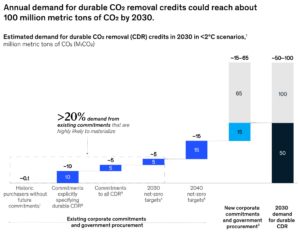
durable carbon removal credits demand by 2030

Analysts at McKinsey estimate global demand for carbon removals could reach 100 million metric tons per year by 2030 and grow 100-fold by 2050. Current delivery volumes are only a small fraction of that level. CDR.fyi data shows only 1.5 million metric tons were delievered as of June 2026. 

This gap between supply and demand is pushing buyers to sign long-term agreements years before credits are delivered. That trend is creating new opportunities for financing and investment.

Why Capital Could Unlock the Next Wave of Growth

One of the most important aspects of the JPMorgan-Charm agreement is the financing component.

Carbon removal projects often need large upfront investments. Companies must build infrastructure, secure storage sites, and establish monitoring systems before generating significant revenue.

New financing models are helping address this challenge. These include:

  • Long-term carbon removal purchase agreements,
  • Advance market commitments,
  • Project financing backed by future credit deliveries, and
  • Blended finance structures that combine different sources of capital.

The approach resembles the early growth of renewable energy. Long-term power purchase agreements helped wind and solar developers secure financing and expand rapidly.

Many industry observers believe carbon removal could follow a similar path. The involvement of a major institution like JPMorgan suggests the market is beginning to mature.

From Climate Niche to Investable Market

The JPMorgan-Charm Industrial agreement shows how climate finance is evolving. Companies are no longer focused only on buying carbon credits. Increasingly, they are investing in the systems needed to produce those credits at scale.

Most net-zero pathways still require large amounts of carbon removal to balance emissions from hard-to-abate industries. The challenge now is building enough capacity to meet future demand.

Technology is advancing. Corporate demand is growing. Financing is becoming more available. Together, these trends are helping move carbon removal from a niche climate solution toward a larger and more established market.

The post JPMorgan Backs Carbon Removal Growth With New Charm Industrial Deal appeared first on Carbon Credits.
Waymo and B2U Unlock a Second Life for EV Batteries with Grid-Scale Storage

As electricity demand rises and renewable energy grows in the U.S., battery storage is key. Waymo has launched a battery repurposing program to give retired electric vehicle (EV) batteries a new purpose in the power sector.

Waymo is working with B2U Storage Solutions to turn used batteries from its all-electric fleet into large-scale energy storage systems. Instead of recycling these batteries after use, Waymo will repurpose them to store electricity and support local power grids.

This program reflects a commitment to the circular economy, keeping products useful before recycling.

Adam Lenz, Head of Sustainability & Environment at Waymo, said:

“Our shared fleet of EVs provide a massive opportunity to support the growth of clean energy on the electricity grid while expanding the circular economy. Through this partnership, we can repurpose our batteries for local grid storage and ensure our batteries continue to provide economic and environmental value to the community long after they’ve retired from the road.”

Turning Old EV Batteries Into Energy Assets

EV batteries often retain significant storage capacity after their driving days. While their performance may drop for vehicles, many can still serve well in energy storage projects.

The press release says that retired Waymo batteries will join grid-connected energy storage systems through this partnership. These systems will store electricity from renewable sources like solar and wind.

During peak renewable generation, especially when solar production is high, the batteries will absorb excess electricity. Later, when demand increases in the evening, this stored energy can flow back into the grid.

This process helps balance electricity supply and demand, making renewable energy more reliable.

B2U specializes in second-life battery storage technology. They will manage the batteries during their second use and ensure proper recycling when they reach the end of their life.

Here’s a picture to show how B2U’s storage works.

b2u grid storage
Source: B2U

This collaboration creates a complete lifecycle pathway for EV batteries—from vehicle use to energy storage and finally recycling.

Supporting Growing Demand for Battery Storage

This initiative comes at a time of rapid growth in renewable energy and battery storage in the U.S.

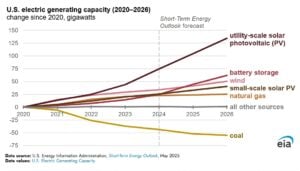
  • According to the U.S. Energy Information Administration (EIA), developers plan to add 86 gigawatts (GW) of new utility-scale electricity generation capacity by 2026. If completed, it would be a record increase.

Solar energy will account for over half of these additions, with battery storage the second-largest category. Wind energy also plays a significant role in this growth.

In 2025, the U.S. power sector added 53 GW of new capacity, the highest since 2002. Meanwhile, battery storage installations keep increasing.

  • They also expect to add about 24 GW of utility-scale battery storage in 2026, surpassing the previous record of 15 GW installed in 2025. Over the last five years, more than 40 GW of battery storage capacity has been added to the grid.

Texas, California, and Arizona are expected to account for around 80% of the planned battery storage in 2026.

EIA grid capacity battery storage

The Grid Advantage of Reusing EV Batteries

Repurposing EV batteries offers crucial benefits for power systems and communities.

First, it extends the useful life of battery materials. Making lithium-ion batteries requires a lot of critical minerals and energy. Second-use batteries maximize the value of those materials.

Second, second-life batteries can lower energy storage costs. Since the batteries have already served in transportation, utilities can access storage capacity at lower costs than buying new systems.

Third, repurposing helps reduce electronic waste. Companies can keep batteries in use for several more years, easing pressure on waste management.

  • Most importantly, battery storage boosts grid reliability. Renewable sources like solar and wind don’t produce electricity constantly. Energy storage systems fill this gap by storing power when production is high and delivering it when demand rises.

As renewable energy grows, these storage systems will be vital for stable electricity networks.

Freeman Hall, CEO of B2U Storage Solutions, said:

“This agreement marks a significant milestone in B2U’s mission to provide integrated repurposing services to the automotive industry. By extending the use of these batteries as grid storage, we are monetizing the full potential of EV batteries, now providing crucial stability to the power grid as energy demand continues to grow.”

First Deployments Planned for Texas and California

The first battery storage projects in the Waymo-B2U partnership will focus on Texas and California. Waymo already provides public autonomous ride-hailing services in these states.

Both states lead in renewable energy deployment. California increasingly relies on clean electricity and often has periods where renewable generation exceeds demand. Texas continues to lead the nation in new solar installations.

Waymo plans to repurpose old EV batteries into stationary storage systems. This will help manage renewable energy growth and improve local electricity infrastructure.

The company believes this initiative could deploy hundreds of megawatts of storage capacity in these regions. As autonomous EVs retire, their batteries could continue to provide value long after leaving the road.

This partnership shows how transportation electrification and clean energy can work together. Instead of viewing used EV batteries as waste, Waymo and B2U are transforming them into valuable energy assets. These assets support grid reliability, renewable energy integration, and a sustainable circular economy.

Waymo’s Broader Sustainability Efforts

The battery repurposing program is part of Waymo’s larger sustainability strategy. The company operates one of the largest fleets of fully autonomous electric vehicles, providing over 500,000 paid EV trips each week. These trips help cut emissions by replacing conventional vehicles with electric ones.

  • Waymo estimates that every 500,000 weekly trips prevent about 530 tons of carbon dioxide emissions.

It also measures emissions avoided through its autonomous electric service. This framework evaluates the environmental benefits of electric, autonomous, and shared mobility solutions.

Additionally, the company reports its greenhouse gas emissions through parent company Alphabet as part of broader environmental efforts.

The post Waymo and B2U Unlock a Second Life for EV Batteries with Grid-Scale Storage appeared first on Carbon Credits.

SMRs Set for Breakout: Global Nuclear Capacity Forecast to Jump Nearly Sixfold by 2030

SMRs Set for Breakout: Global Nuclear Capacity Forecast to Jump Nearly Sixfold by 2030

Small modular reactors (SMRs) are moving from concept to commercial reality. A new forecast from GlobalData suggests global SMR capacity could increase nearly sixfold between 2025 and 2030.

The projection reflects rising confidence in advanced nuclear technology as countries search for reliable, low-carbon electricity. This demand is being driven by electrification, artificial intelligence (AI), data center growth, and industrial decarbonization.

For years, SMRs were seen as a long-term idea. That view is now shifting. Governments are updating nuclear policies. Regulators are speeding up licensing reviews. Utilities are forming partnerships with technology developers.

At the same time, electricity demand is rising sharply, strengthening the case for firm power sources capable of operating 24/7. This momentum comes as countries try to meet net-zero targets while also ensuring stable and affordable energy supplies.

Why SMRs Are Gaining Momentum

SMRs are nuclear reactors that typically produce up to 300 megawatts (MW) of electricity per unit. Unlike large nuclear plants, they are designed to be built in factories and assembled on site.

Supporters say this modular approach can reduce construction time, improve cost control, and make deployment more flexible. SMRs can also be added in phases, depending on demand growth.

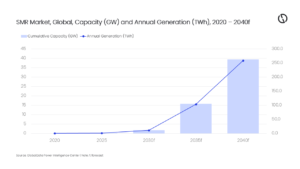
GlobalData’s forecast reflects a wider revival in nuclear energy. The firm expects global nuclear capacity to grow steadily over the next decade, by almost sixfold from 2025 to 2030. That increase could even reach a hundredfold by 2040. Cleaner energy goals, policy backing, and increasing demand for stable baseload electricity will support this growth.

SMR global capacity forecast 2030
Source: GlobalData

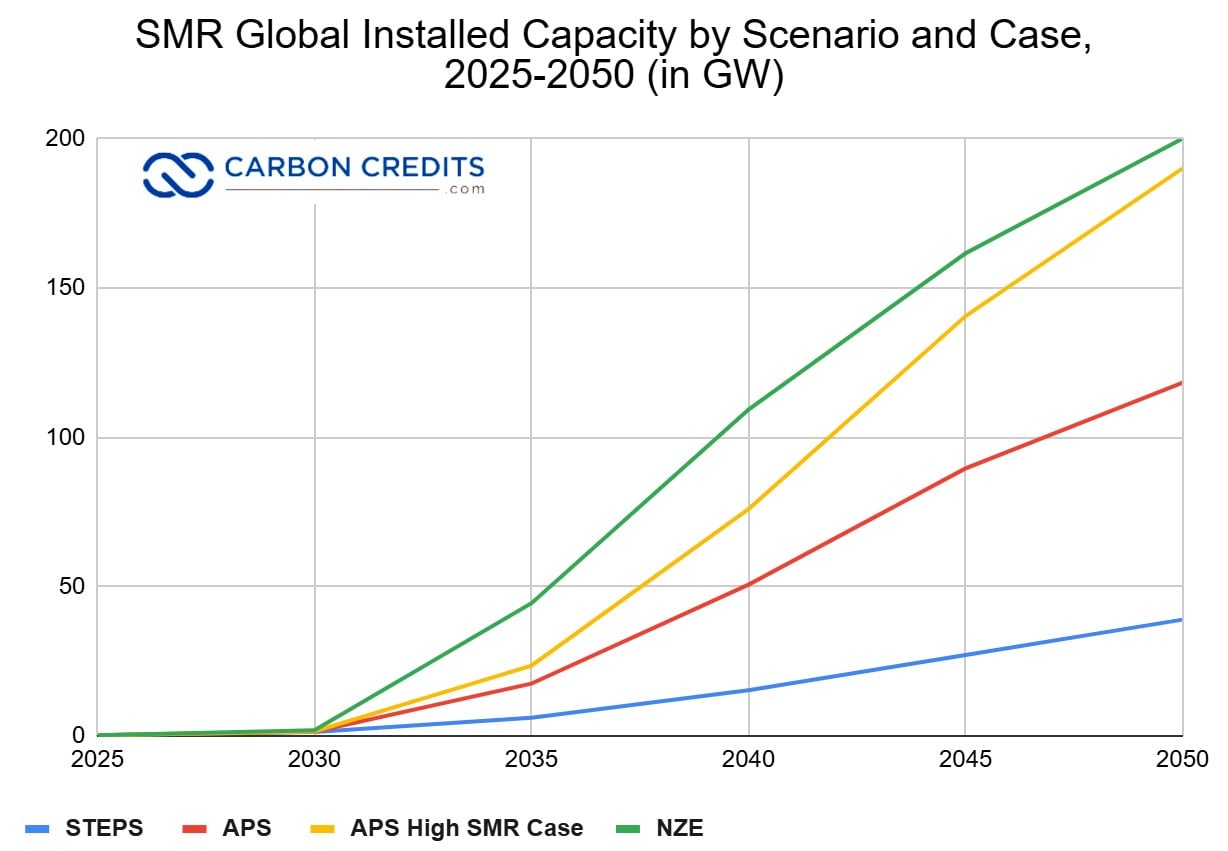
The International Energy Agency (IEA) also expects strong long-term growth. In its Announced Pledges Scenario, the IEA predicts over 1,000 SMRs to be used worldwide by 2050. This would add up to about 120 gigawatts (GW) of capacity. It also estimates SMR investment could rise from about $5 billion today to more than $25 billion by 2030.

SMR Global Installed Capacity by Scenario and Case, 2025-2050 IEA data
Data source: IEA

Meanwhile, major SMR projects are moving forward. GE Hitachi’s BWRX-300 design will be used at Ontario Power Generation’s Darlington site in Canada. This is one of the most advanced SMR projects currently in planning.

Holtec International is also advancing plans to install SMR-300 reactors at the Palisades site in Michigan. The company has outlined a long-term vision that could scale SMR capacity across North America to as much as 10 GW in the coming decades.

These early projects are important. They will test cost, speed, and performance. Their results will help determine how quickly SMRs can scale globally.

Nuclear Power’s Quiet Climate Comeback

As countries move toward net-zero targets, nuclear energy is receiving renewed attention as a low-emissions power source.

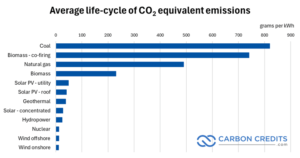
According to the IEA, nuclear is the world’s second-largest source of low-emissions electricity after hydropower. In 2024, more than 410 reactors in over 30 countries supplied about 9% of global electricity. Nuclear also generated more low-carbon electricity than wind and significantly more than solar.

nuclear-carbon-emission

  • Since 1971, nuclear power has helped avoid roughly 72 gigatonnes of carbon dioxide emissions by reducing reliance on fossil fuels.

This climate contribution is becoming more important as electricity demand rises and countries retire coal plants. The IEA expects global nuclear generation to reach a record high in 2025, supported by reactor restarts in Japan, maintenance work in France, and new builds in Asia.

More than 60 reactors are currently under construction worldwide, adding over 70 GW of new capacity.

SMRs could strengthen this role further. Their smaller size makes them suitable for regions where large nuclear plants are not practical. They may also replace aging coal plants by using existing grid infrastructure.

GE hitachi SMR design
GE Hitachi SMR design

In addition, SMRs are being considered for industrial uses such as hydrogen production, mining, and heavy manufacturing, where steady heat and power are required.

Big Tech and Data Centers Drive New Power Demand

One of the strongest drivers for SMR growth is the rapid expansion of artificial intelligence and data centers. AI systems require large amounts of electricity. Training and operating these systems depend on high-performance computing infrastructure that runs continuously. This is pushing electricity demand higher in key technology hubs.

Goldman Sachs has raised its forecast for AI-related capital spending by major hyperscalers. The bank now expects Meta, Microsoft, Amazon, and Alphabet to invest about $5.3 trillion between 2025 and 2030, up from a previous estimate of $4.5 trillion. A large share of this spending will go into AI infrastructure, data centers, and supporting energy systems.

Moreover, Goldman Sachs Research estimates global data center electricity demand could increase by as much as 165% by 2030 compared with 2023 levels.

This surge in demand is changing energy planning. While renewable energy remains central to corporate climate strategies, many technology companies are also looking for stable, round-the-clock power sources.

SMRs are increasingly viewed as a potential solution because they can provide constant power without weather dependence. Unlike wind or solar, nuclear plants can operate day and night continuously. This reliability is becoming more important as AI workloads grow and grids face higher stress.

As a result, several SMR developers are now targeting data center operators as future customers, alongside traditional utilities.

The First Wave of SMR Projects Breaks Ground

The SMR industry is now entering a more practical phase, with several flagship projects moving toward construction and deployment.

In Canada, Ontario Power Generation is advancing the first commercial deployment of GE Hitachi’s BWRX-300 reactor at the Darlington site. This project is widely seen as a key test case for SMR commercialization in North America.

In the United States, TerraPower continues development of its Natrium reactor in Wyoming. The project, backed by Bill Gates, combines nuclear generation with advanced energy storage. This design aims to improve flexibility and help balance electricity grids with growing renewable energy penetration.

These developments mark an important shift. The industry is moving beyond design and licensing discussions and into construction, financing, and real-world deployment.

The Roadblocks on the Nuclear Revival Path

Despite strong momentum, SMRs still face major challenges.

  • Cost remains the most important issue. Early projects must prove that factory-based construction can reliably reduce total costs compared with traditional nuclear plants.

SMR construction cost

  • Regulatory approval is another barrier. Even though licensing frameworks are improving, nuclear projects still require long review timelines in most countries.
  • Fuel supply is also a concern. Many advanced SMR designs depend on high-assay low-enriched uranium (HALEU), but global supply chains are still limited.
  • There are also broader concerns around nuclear waste management and public acceptance, which continue to influence project timelines in several regions.

These challenges explain why some analysts remain cautious about near-term deployment, even while long-term forecasts are becoming more positive.

Outlook: A Defining Decade for SMRs

The next five years could be decisive for SMRs. Global momentum is being driven by several overlapping trends. Electricity demand is rising. AI growth is accelerating. Countries are committing to net-zero targets. Energy security has become a national priority. At the same time, nuclear technology is improving.

GlobalData’s forecast of a nearly sixfold increase in SMR capacity by 2030 reflects growing confidence that the sector is approaching commercial scale.

While SMRs are still in the early stages of deployment, progress in Canada, the United States, China, and other regions suggests the industry is moving closer to wider adoption.

If current projects succeed, SMRs could become an important part of the global low-carbon energy mix. They may help support grid stability, reduce reliance on fossil fuels, and provide the steady power needed for a more electrified and digital economy.

The post SMRs Set for Breakout: Global Nuclear Capacity Forecast to Jump Nearly Sixfold by 2030 appeared first on Carbon Credits.
Rubidium and Cesium: The Hidden Value at Nevada North

Rubidium and Cesium, The Hidden Value at Nevada North

Disseminated on behalf of Surge Battery Metals.

The lithium story at Nevada North is well understood. The project has scale, grade, and long-term production potential.

What is less discussed is the presence of other critical minerals within the same system. Recent drill results show that rubidium (Rb) and cesium (Cs) occur alongside lithium mineralization at the Nevada North Lithium Project (NNLP) of Surge Battery Metals (TSX-V: NILI | OTCQX: NILIF). These elements are not the primary focus of development today, but they may represent an additional strategic layer of value.

Both rubidium and cesium are classified as critical minerals in the United States. Yet, neither mineral is mined domestically, and supply is largely dependent on imports, mainly from China and Canada. At the same time, both elements are used in high-value applications such as atomic clocks, fiber optics, satellite systems, and advanced defense electronics.

A New Layer in the Drill Results

In early 2026, assay results from NNLP began to highlight the consistent presence of rubidium and cesium within the lithium-bearing zones.

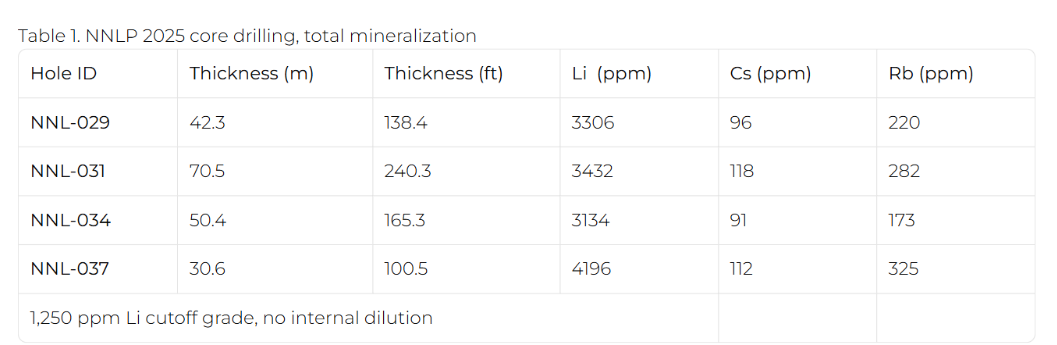
From the February 17, 2026, news release, drill hole NNL-037 returned:

  • 4,196 ppm lithium
  • 325 ppm rubidium
  • 112 ppm cesium
NILI rubidium and cesium
Source: Surge Battery Metals

Follow-up results from the February 25, 2026, news release showed similar trends. Infill drilling returned values of up to:

  • 349 ppm rubidium
  • 163 ppm cesium

These results are important because they show that rubidium and cesium are directly associated with the lithium core, not isolated occurrences. This suggests a consistent geological relationship across the deposit.

At this stage, these findings remain exploration results. They have not been incorporated into the project’s Preliminary Economic Assessment, and their economic contribution is still being evaluated. However, their presence is clear and repeatable across multiple drill holes.

Rubidium and Cesium for Tech and Defense

Rubidium and cesium are not widely known compared to lithium, but they play critical roles in advanced technologies.

Cesium is used in atomic clocks, which are essential for GPS systems, telecommunications networks, and defense infrastructure. It is also used in specialty drilling fluids and electronics.

Rubidium is used in fiber optic systems, specialty glass, and emerging quantum technologies. Both elements are also relevant for aerospace and satellite applications.

Rubidium and cesium at NNLP

Despite their importance, the global supply is limited. There are a few large-scale producers, and production is often tied to other mining operations rather than dedicated projects. As a result, supply chains can be concentrated and less transparent than those for more widely traded commodities.

For the United States, this creates a dependency on imported material for applications that are increasingly tied to national security and advanced technology.

More Than Lithium: A Multi-Critical-Mineral Profile

The presence of rubidium and cesium at NNLP introduces a different way to view the project. It is not only a lithium resource, but potentially a multi-critical-mineral system. The project’s updated resource base includes 10.5 million tonnes LCE in Measured & Indicated categories, with additional high-grade mineralization identified at 3,820 ppm lithium. 

This does not change the core development strategy, which remains focused on lithium. However, it adds another dimension to how the asset may be evaluated over time.

Recent developments also point to growing confidence in the project’s advancement. On June 3, Surge Battery Metals announced a strategic financing of up to C$30 million, with an option to increase the amount to C$36 million.

The company said the funding is intended to help fast-track Nevada North toward a construction decision. The financing strengthens Surge’s ability to continue resource development, metallurgical work, and project studies while further evaluating the broader critical mineral potential of the deposit.

Graham Harris, Chairman of Surge, commented,

“This announcement marks a defining moment for Surge. With Nevada North fully funded, upon the successful closing, toward a construction decision, and with Brian and Michael leading our Strategic Advisory Board, we believe that we have the capital, the expertise, and the relationships to move this project at the pace the current environment demands. The United States is focused on developing a secure and sustainable domestic supply of critical minerals.[2] Once constructed, we plan to participate in the domestic supply of lithium through Nevada North.”

Some of the key points to consider include:

  • Rubidium and cesium are co-located with lithium mineralization, not in separate zones.
  • Both elements are classified as critical minerals with a limited U.S. supply.
  • Supply chains are currently import-dependent, with concentration in a few countries, but no data is available on specific percentages.
  • NNLP is a domestic resource located in Nevada.

These factors align with broader trends in resource development, where projects are increasingly assessed not only for their primary commodity but also for associated critical minerals.

Ongoing Evaluation Through Metallurgy: Can Rb & Cs Add Value?

At this stage, the key question is not whether rubidium and cesium are present, but how they behave during processing.

Surge Battery Metals is evaluating the deportment of these elements as part of its ongoing metallurgical work. This step is important. It will determine whether these minerals can be recovered, how they interact with lithium processing, and whether they could contribute to future project economics.

Moreover, it is too early to draw conclusions yet. No economic assumptions have been made for rubidium or cesium in the current project studies. However, identifying their presence at this stage allows for a more complete understanding of the resource.

Strategic Context: Beyond Batteries

The broader context is also evolving. Critical minerals are increasingly tied to national strategy, not just market demand.

Lithium remains central to EVs and energy storage. But rubidium and cesium connect the project to defense, communications, and advanced technology sectors. These are areas where supply security is becoming a priority.

In this sense, NNLP sits at the intersection of multiple strategic themes:

  • Energy transition, through lithium,
  • Technology infrastructure, through battery materials and electronics, and
  • National security, through the critical mineral supply. 

This combination is not common among lithium projects, particularly within Nevada clay deposits.

Standing Out in Nevada’s Lithium Landscape

Within the Nevada lithium landscape, most projects are evaluated on grade, scale, and processing pathways. NNLP meets those criteria. The additional presence of rubidium and cesium introduces a differentiated element that is not widely highlighted in comparable projects.

Importantly, this differentiation should be viewed with the right level of caution. These elements are still under study. Their economic value has not been defined, and their recovery is not yet established.

At the same time, their consistent presence in drilling results is a data point worth noting, especially in a market where supply chains for critical minerals are under increasing scrutiny.

The Next Chapter for Nevada North’s Mineral Story

As metallurgical work progresses, more information will become available on how rubidium and cesium behave within the NNLP system. This will help determine whether they remain a geological feature or evolve into a potential secondary value stream.

For now, the key takeaway is straightforward. Nevada North is not only a lithium project. It is also a broader critical mineral system, with exposure to materials that support advanced technology and defense applications.

The latest financing also highlights how Nevada North is moving beyond the exploration stage. With the project now supported by a major strategic funding package and an expanded advisory team, attention is increasingly shifting toward development readiness and long-term value creation.

While lithium remains the primary focus, the presence of additional critical minerals may provide further strategic relevance as the project advances. And in a market focused on securing supply chains, that distinction may become more relevant over time.


DISCLAIMER

New Era Publishing Inc. and/or CarbonCredits.com (“We” or “Us”) are not securities dealers or brokers, investment advisers, or financial advisers, and you should not rely on the information herein as investment advice. Surge Battery Metals Inc. (“Company”) made a one-time payment of $75,000 to provide marketing services for a term of three months. None of the owners, members, directors, or employees of New Era Publishing Inc. and/or CarbonCredits.com currently hold, or have any beneficial ownership in, any shares, stocks, or options of the companies mentioned.

This article is informational only and is solely for use by prospective investors in determining whether to seek additional information. It does not constitute an offer to sell or a solicitation of an offer to buy any securities. Examples that we provide of share price increases pertaining to a particular issuer from one referenced date to another represent arbitrarily chosen time periods and are no indication whatsoever of future stock prices for that issuer and are of no predictive value.

Our stock profiles are intended to highlight certain companies for your further investigation; they are not stock recommendations or an offer or sale of the referenced securities. The securities issued by the companies we profile should be considered high-risk; if you do invest despite these warnings, you may lose your entire investment. Please do your own research before investing, including reviewing the companies’ SEDAR+ and SEC filings, press releases, and risk disclosures.

It is our policy that information contained in this profile was provided by the company, extracted from SEDAR+ and SEC filings, company websites, and other publicly available sources. We believe the sources and information are accurate and reliable but we cannot guarantee them.

CAUTIONARY STATEMENT AND FORWARD-LOOKING INFORMATION

Certain statements contained in this news release may constitute “forward-looking information” within the meaning of applicable securities laws. Forward-looking information generally can be identified by words such as “anticipate,” “expect,” “estimate,” “forecast,” “plan,” and similar expressions suggesting future outcomes or events. Forward-looking information is based on current expectations of management; however, it is subject to known and unknown risks, uncertainties, and other factors that may cause actual results to differ materially from those anticipated.

These factors include, without limitation, statements relating to the Company’s exploration and development plans, the potential of its mineral projects, financing activities, regulatory approvals, market conditions, and future objectives. Forward-looking information involves numerous risks and uncertainties and actual results might differ materially from results suggested in any forward-looking information. These risks and uncertainties include, among other things, market volatility, the state of financial markets for the Company’s securities, fluctuations in commodity prices, operational challenges, and changes in business plans.

Forward-looking information is based on several key expectations and assumptions, including, without limitation, that the Company will continue with its stated business objectives and will be able to raise additional capital as required. Although management of the Company has attempted to identify important factors that could cause actual results to differ materially, there may be other factors that cause results not to be as anticipated, estimated, or intended.

There can be no assurance that such forward-looking information will prove to be accurate, as actual results and future events could differ materially. Accordingly, readers should not place undue reliance on forward-looking information. Additional information about risks and uncertainties is contained in the Company’s management’s discussion and analysis and annual information form for the year ended December 31, 2025, copies of which are available on SEDAR+ at www.sedarplus.ca.

The forward-looking information contained herein is expressly qualified in its entirety by this cautionary statement. Forward-looking information reflects management’s current beliefs and is based on information currently available to the Company. The forward-looking information is made as of the date of this news release, and the Company assumes no obligation to update or revise such information to reflect new events or circumstances except as may be required by applicable law.

Disclosure: Owners, members, directors, and employees of carboncredits.com have/may have stock or option positions in any of the companies mentioned: None.

Carboncredits.com receives compensation for this publication and has a business relationship with any company whose stock(s) is/are mentioned in this article.

Additional disclosure: This communication serves the sole purpose of adding value to the research process and is for information only. Please do your own due diligence. Every investment in securities mentioned in publications of carboncredits.com involves risks that could lead to a total loss of the invested capital.


Disclosure: Owners, members, directors, and employees of carboncredits.com have/may have stock or option positions in any of the companies mentioned: None.

Carboncredits.com receives compensation for this publication and has a business relationship with any company whose stock(s) is/are mentioned in this article.

Additional disclosure: This communication serves the sole purpose of adding value to the research process and is for information only. Please do your own due diligence. Every investment in securities mentioned in publications of carboncredits.com involves risks that could lead to a total loss of the invested capital.

Please read our Full RISKS and DISCLOSURE here.

The post Rubidium and Cesium: The Hidden Value at Nevada North appeared first on Carbon Credits.
What Does “Net Zero Emissions” Really Mean?

net zero emissions

The recent report from climate scientists is crystal clear: the world must act now. That means limiting global warming to 2 or 1.5 degrees Celsius.

But what does this entail?

Cutting a lot of emissions and reaching net zero. And this is urgent.

Embracing the urgency of this matter, more and more entities are pledging their net zero targets. There are now over 80 nations and hundreds of businesses that laid out their net zero roadmaps. These include the world’s supper emitters – China, the United States, the European Union, and India.

But what does achieving net zero emissions really mean?

This guide will explain the key facts and insights about this world-saving concept.

What Does Hitting Net Zero Emissions Mean?

Being at net zero emissions refers to a point where the GHG emissions released by humans into the air are balanced by the emissions removed from the air.

Think of it as a weighing scale. Emitting carbon and other GHG tips the scale and the net zero aim is to get the scale back into balance.

Reaching this balance requires two things.

  1. Reducing the emissions released from human activities closest to zero.
  2. Removing the emissions that are hard to reduce.

Getting to net zero means we can still generate some emissions. But as long as they are offset by initiatives that reduce GHG already in the atmosphere.

There are plenty of carbon removal solutions and technologies being developed to suck in CO2 from the air and store it.

So, emission reductions and removals go together in the world’s race to net zero.

When Must The World Get to Net Zero?

Every new ton of carbon emitted into the atmosphere is heating the planet more. The sooner the world stops adding CO2 and other GHG to the air, the better. But what’s the timeline for this?

As per IPCC’s latest report, to honor the Paris Agreement and limit temperature rise at 1.5°C, global emissions should be at net zero by 2050.

Still, hitting net zero in 2050 is too far distant away. Short-term emissions reduction targets are necessary. The Paris accord requires countries to reduce emissions by 7% each year this decade (from 2020 to 2030).

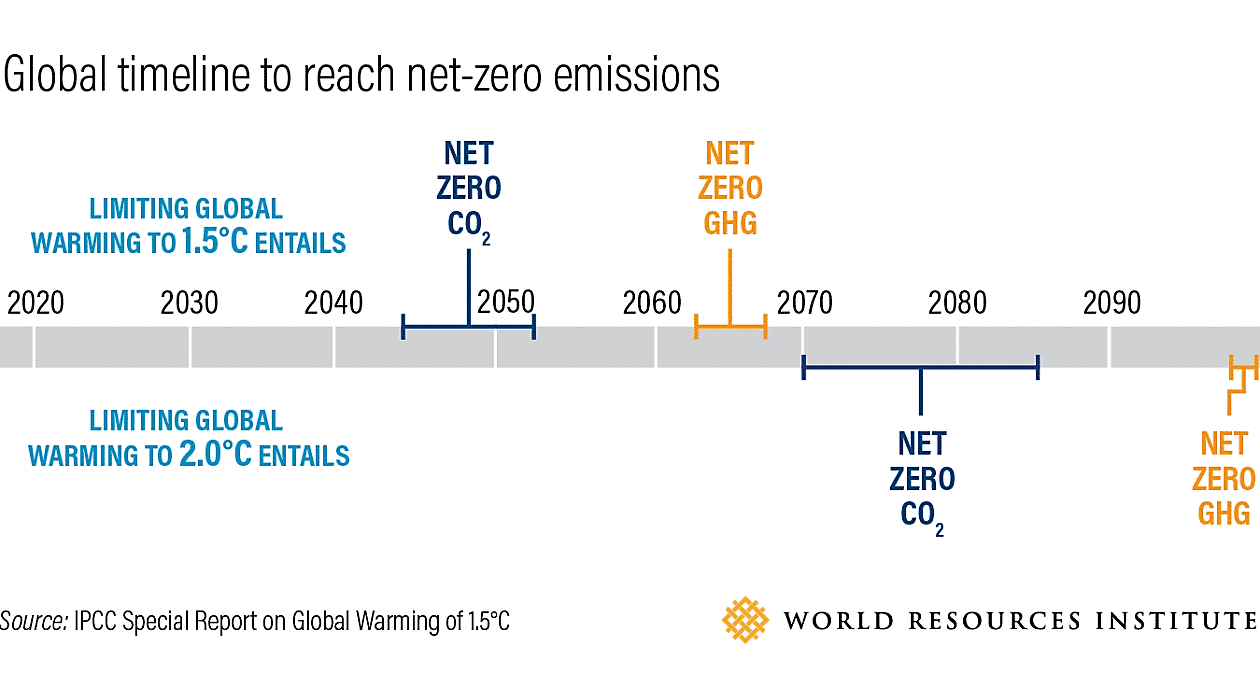
Climate science suggests a global timeline to be at net zero under two scenarios: limiting warming to 1.5°C and to 2°C.

The figure below shows this timeline. It separates two significant emissions – carbon dioxide and total GHG.

net zero emissions timeline

What the picture depicts is that achieving net zero CO2 emissions must be by 2050 (1.5°C) or by 2070 (2°C) at the latest. Whereas for non-CO2 emissions, it means by 2060 and by the end of the century.

The sooner emissions peak, the more realistic hitting net zero becomes.

This scenario results in less dependence on removing carbon beyond 2050.

But this timeline doesn’t say that all countries need to be at net zero at the same time. There are a lot of factors to consider here including:

  • Responsibility for past GHG emissions
  • Per-capita emissions
  • Capacity to act

This suggests that the deadline for the wealthier, higher emitters could be earlier. The opposite holds true for poorer emitters.

For instance, India has net zero targets by 2070 while Saudi Arabia and China both pledged to be at net zero by 2060.

Whereas the US, EU, UK, and Japan have all committed to hitting it by 2050.

But it’s crucial not just for countries but also for companies to have net zero targets. More so, their near-term emissions reduction goals must align with their net zero pledges.

Why It’s Vital to Align Interim CO2 Reduction Targets with Net Zero Plans?

Entities often set their net zero targets by 2050.

But to ensure that they’re on track toward their net zero pledge, their long-term goals must inform their interim targets.

This is critical to prevent locking in carbon-intensive and non-resilient infrastructure and technologies. It can also help them align the costs by investing in projects that can cut emissions now and still do so years later.

This is more vital for countries to design consistent policies that support reduction efforts in the long run. Also, countries party to Paris Agreement and COP26 agreed to submit their climate plans.

Such plans form part of their NDCs or nationally determined contributions. The NDCs outline interim emissions targets by 2030 and align governments’ climate plans with their near-term goals.

Most countries with net zero targets are starting to incorporate them into their interim NDCs. Here’s the current global map of countries that have net zero ambitions and their status.

net zero emissions
Source: ClimateWatch Net Zero Tracker

More importantly, the corporate world had also paved its path toward net zero emissions.

World’s Heaviest Emitting Companies With Net Zero Targets And Strategies

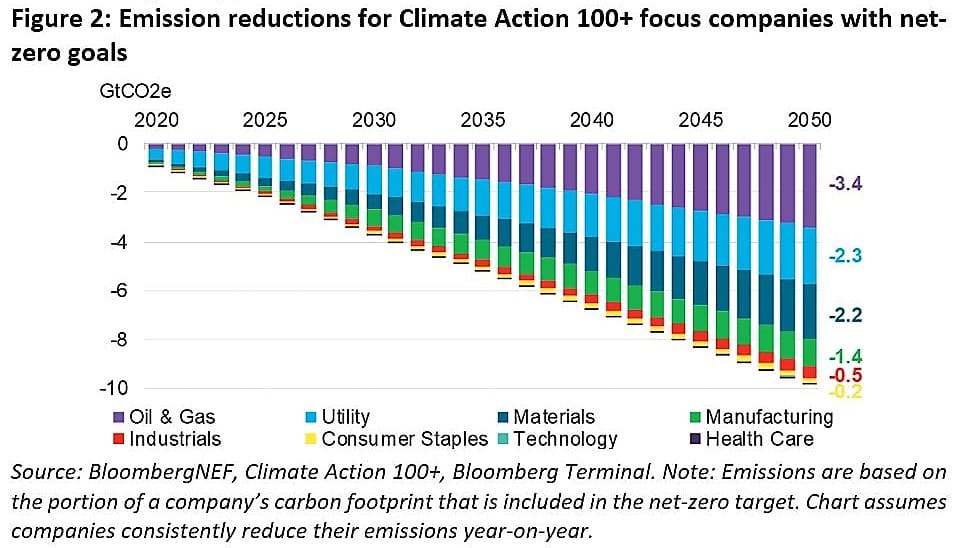
According to BloombergNEF (BNEF) analysis, 2/3 of the world’s heaviest emitters set their net zero goals. These focus companies (100+) represent over 80% of global industrial GHG emissions.
 
BNEF estimates that the net zero targets of those companies will cut emissions by 3.7 billion metric tons of CO2 equivalents in 2030. And by 2050, reductions will become 9.8 billion Mt. This is equal to over a quarter of global GHG emissions today.
 
The chart below shows the emission reductions for those companies per sector.
 
companies net zero emissions targets

The oil and gas sector accounts for over a third (3.4 GtCO2e) of targeted reductions, more than any other sector.

European oil majors have set net zero emissions targets by 2050 last year like Shell and Total. They already made some progress by investing in low-carbon initiatives.
 
The same goes with some US oil majors ExxonMobil, Occidental Petroleum, and Chevron.
 
In particular, Exxon pledges to reach net zero global operations by 2050. Part of this climate goal is a couple of key promises such as:
  • $15 billion towards reducing GHG emissions over the next six years
  • Better processes to reduce methane gas leakage
  • To reach net zero within the U.S. Permian Basin shale field by 2030

Exxon also bid the highest to get offshore properties to use for carbon sequestration.

Likewise, Chevron also announced a $10 billion dollar investment into low carbon initiatives as part of its net zero targets.

Half of that budget will be for reducing emissions from fossil fuel initiatives. The remaining half will be for hydrogen energy and renewable fuels.

Specifically, Chevron will increase:

  • Renewable fuels production to 100,000 barrels per day
  • Renewable natural gas output to 40 billion British thermal units (BTUs) per day.
  • Hydrogen production to 150,000 tonnes per year
  • Carbon capture and offsets to 25 million tonnes per year.

Meanwhile, Occidental Petroleum has also set its net-zero ambition by 2050. Like other oil majors, Occidental also invests in direct air capture (DAC) technology as one of its net zero strategies.

The firm expects to pull as much as 1 million metric tons/year of CO2 emissions via DAC.

The second heaviest emitting sector is the utilities with 2.3GtCO2e.

Italy-based Enel, one of the world’s biggest utility firms, has an initial net-zero emissions target by 2050 but moved it to 2040 instead. The firm also expressed to exit coal generation by 2027 and gas by 2040.

Enel plans to invest $160 billion to fund its net zero strategies to reach its ambitious goal. Part of that is to install around 154GW of renewable capacity by 2030.

Duke Energy also set ambitious climate goals. That’s to have at least a 50% reduction in CO2 emissions from electricity generation in 2030 on its way to net zero by 2050. They’re also targeting net zero methane emissions for their natural gas distribution by 2030.

The third sector with high emissions is manufacturing (1.4GtCO2e) which includes automakers.

While the utility companies are turning to renewables, car manufacturers are becoming electric.

Tesla led the way in its all-electric lineup and amassed huge carbon credit sales for it. It also produces green products that further add to its credit generation. Yet, it still hasn’t revealed its net zero goals.

Stellantis, on the other hand, has pledged to hit net zero emissions the soonest time by 2038.

While it used to rely on Tesla to meet its regulatory emissions, the European carmaker managed to cut down its emissions.

It was through its electrification ramp-up and technical improvements. This includes its battery electric vehicles (BEVs) and low-emission vehicles (LEVs) production.

To become carbon net zero in 2038, the carmaker focuses on these main levers:

  • Energy-efficient projects and energy management in all plants
  • Site compression and improvement of industrial footprint
  • Use and production of renewable energies
  • Technical innovations (e.g. Hydrogen, Power to gas)
  • CO2 capture and storage

Other manufacturers also made significant strides in their way toward decarbonization. Take for example the case of Del Monte Foods.

Del Monte Foods has invested significantly in renewable energy and reduced food waste. It also doubled capital investment in energy-efficient production operations.

The company’s strategy to reach net zero emissions by 2050 is to invest more in:

  • Renewable energy,
  • Automation,
  • Transportation efficiency,
  • Regenerative agricultural practices, and
  • Eco-friendly packaging innovation

Though they’re not directly specified as a sector in the chart above, the airlines are also one of the big emitters.

In fact, the global aviation industry generates around 2.1% of all CO2 emitted by humans. Within the transport sector, it accounts for 12% of emissions compared to 75% from road transport. 

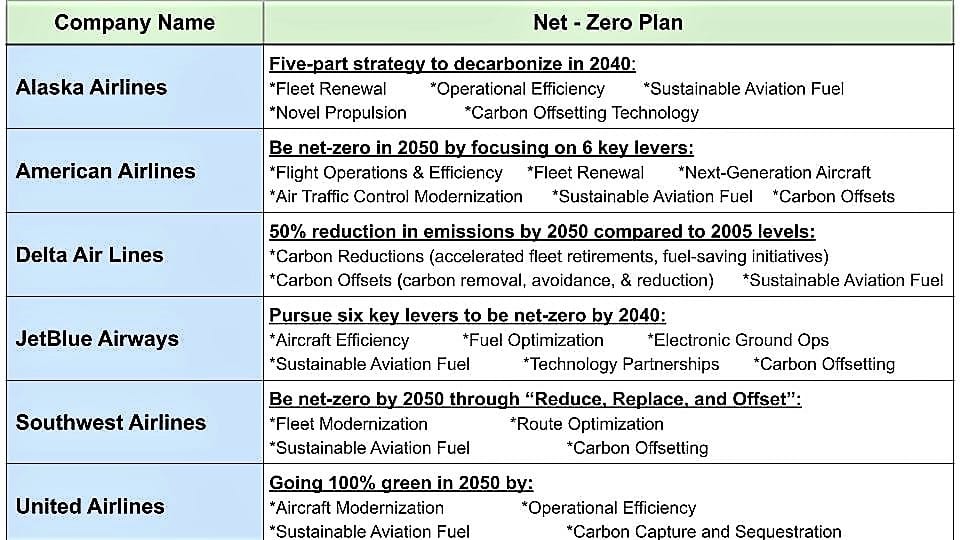
Here’s how the major US airlines are dealing with their net zero targets.

airlines carbon net zero plan

The Way to Net Zero 

It is certain that the world needs to take action and treat climate change as an emergency.

And the only means to face this emergency heads on is for countries and companies to hit their net zero emissions.  

There’s no single approach to how the world reaches net zero by 2050 or earlier. It requires a combination of various initiatives or strategies as to how different companies are doing it.

Another major element of that is setting near-term climate targets that align with long-term goals.

This will help investors assess the climate ambitions of their portfolio companies. It will also help corporations to have a good benchmark as they go on their journey to net zero.

The post What Does “Net Zero Emissions” Really Mean? appeared first on Carbon Credits.

IATA’s New Carbon Credit Alliance: Can Aviation Secure Enough Offsets for Net Zero?

IATA’s New Carbon Credit Alliance: Can Aviation Secure Enough Offsets for Net Zero?

The global aviation industry has launched a new effort to solve one of its biggest net-zero challenges. It is trying to secure enough high-quality carbon credits.

The International Air Transport Association (IATA) recently launched the Supporting Alliance for CORSIA Eligible Emissions Unit (EEU) Supply. It brings together airlines, governments, carbon market players, investors, and civil society groups.

  • The goal is ambitious. The alliance aims to increase the supply of 225 million to 250 million CORSIA-eligible carbon credits by spring 2027.

The move shows a key reality in aviation. Sustainable aviation fuel (SAF) is still the main tool for cutting emissions, but supply is still limited. Because of this, airlines will depend more on carbon markets in the short term to meet climate rules under CORSIA.

The alliance is not only about carbon credits. It also shows how aviation, climate finance, and carbon markets are becoming more connected.

A $5 Billion Carbon Credit Race Takes Flight

CORSIA stands for the Carbon Offsetting and Reduction Scheme for International Aviation. It was created by the International Civil Aviation Organization (ICAO) in 2016. It is still the only global market-based offsetting scheme for managing aviation emissions.

Under this system, airlines must offset emissions that go above set limits. They do this by buying and canceling approved carbon credits called CORSIA Eligible Emissions Units (EEUs).

CORSIA compliance requirements abatable
Source: Abatable

These credits must meet strict environmental rules. They also need approval from host governments. This helps avoid double counting under the Paris Agreement.

The main problem is supply.

  • IATA estimates airlines will need about 200 million CORSIA EEUs by January 2028. This represents a market worth about $4 billion to $5 billion. Demand could rise to nearly 2 billion EEUs by 2035 as rules expand.

Even with this demand, supply is still low. Many countries have not approved credits for CORSIA use. This creates a regulatory bottleneck. It is now one of the biggest risks for aviation’s climate plans.

According to Marie Owens Thomsen, IATA’s Senior Vice President Sustainability and Chief Economist,

“The Supporting Alliance will provide implementation assistance to clear this [double-counting] and other bottlenecks that prevent credits from coming to the CORSIA market. It should be noted that CORSIA will likely generate $4-5 billion of climate finance in the first phase, and potentially $100 billion by 2035, depending on market prices. This will help fund climate action, support remote communities, and spur economic development. We welcome all carbon market stakeholders and related organizations to join forces in the Supporting Alliance to help CORSIA realize its potential social, economic and climate benefits.”

The new alliance aims to fix this. It will help governments connect national climate goals with global carbon market rules under Article 6.2 of the Paris Agreement.

Aviation’s Net-Zero Path Is Becoming More Challenging

The launch comes at a time when airlines face growing pressure. They must cut emissions while air travel demand continues to rise.

sustainable aviation fuel saf for net zero ICAO
Source: ICAO

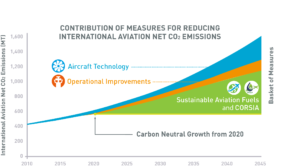
The aviation industry has pledged to reach net-zero carbon emissions by 2050. IATA says Sustainable Aviation Fuel could deliver about 65% of the emissions cuts needed. However, SAF production is still very low.

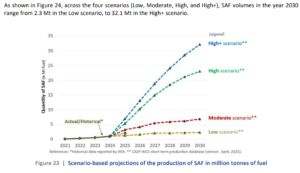
IATA expects global SAF production to reach over 2 million tonnes in a low-case scenario. But this is only 0.7% to 0.8% of total aviation fuel use. This gap is large. But it can also increase up to 32 million in a high-case scenario. 

SAF production
Source: ICAO

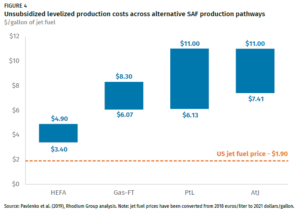
SAF can reduce lifecycle emissions by about 80% compared with regular jet fuel. This makes it one of the most important tools for decarbonization. But high costs, limited raw materials, and slow production growth are holding it back.

SAF production cost vs jet fossil fuel

Because of this, carbon credits are still a key bridge solution. They help airlines reduce emissions while SAF production scales up. This is also increasing demand for CORSIA-compliant credits and stronger carbon market systems.

From Voluntary Offsets to Compliance-Driven Carbon Markets

The alliance launch also reflects wider growth in global carbon markets. Over the past decade, carbon pricing has become a major climate policy tool. Governments, companies, and investors now see carbon markets as a way to fund emissions cuts and support net-zero goals.

For aviation, carbon credits help cover emissions that cannot yet be reduced with technology.

This is important because aviation is one of the hardest sectors to decarbonize. Unlike cars or trucks, long-distance flights still rely heavily on liquid fuels.

As demand for CORSIA credits grows, carbon project developers may see new opportunities. These include nature-based solutions, renewable energy, methane reduction projects, and engineered carbon removal. All must meet CORSIA rules and get government approval.

The creation of a dedicated alliance for credit supply shows a shift. Carbon markets are moving from voluntary tools to more structured, compliance-based systems for aviation. This shift could bring more investment into high-quality carbon projects worldwide.

Why the World’s Biggest Airlines Are Backing the Alliance

The alliance already has strong support from the industry. It includes more than 32 founding organizations. These include major airline groups such as:

  • Air France-KLM,
  • Lufthansa Group,
  • Qatar Airways,
  • Singapore Airlines,
  • Japan Airlines,
  • International Airlines Group (IAG),
  • AirAsia,
  • ANA, and
  • SWISS.

Their participation shows how important future credit supply is.

Many airlines already invest in sustainability programs. These include fleet upgrades, efficiency improvements, SAF contracts, and carbon reduction projects. At the same time, airlines are under growing pressure from investors, regulators, and customers to improve climate performance.

Access to high-quality CORSIA credits may become more important as airlines meet both regulatory and ESG goals.

The alliance also creates a space for cooperation between governments, airlines, project developers, and financial institutions. This may speed up credit approval and improve transparency in the market.

A Carbon Market Test for Aviation’s Future

The Supporting Alliance for CORSIA EEU Supply could become one of the most important carbon market developments for aviation in recent years. The industry’s net-zero plan depends on SAF, efficiency gains, new technologies, and carbon markets. But the supply of both SAF and CORSIA credits is still below what is needed.

By targeting up to 250 million credits by 2027, IATA is trying to close a growing supply gap before it becomes a bigger compliance issue.

More broadly, this shows how carbon markets are becoming part of real decarbonization strategies. They are no longer just voluntary tools. They are now part of regulated systems for hard-to-decarbonize sectors.

For the airline sector, the pressure is high. Passenger demand is rising while emissions pressure is also increasing every year.

Whether the alliance succeeds or not, its launch sends an important message. The future of aviation net zero will depend not only on cleaner fuels and better aircraft but also on strong and scalable carbon markets.

The post IATA’s New Carbon Credit Alliance: Can Aviation Secure Enough Offsets for Net Zero? appeared first on Carbon Credits.

CATL Bets on Lithium-Air Batteries While Expanding Sodium-Ion and Energy Storage Leadership

The global battery industry is moving fast, and China’s battery giant CATL is already looking beyond today’s technologies.

At the 2026 Forum on Building China Into an Equipment Manufacturing Power, CATL Chief Scientist Wu Kai highlighted lithium-air batteries as one of the most promising technologies for the future. While the technology is still far from commercial use, its potential could transform electric vehicles (EVs) and energy storage systems over the next decade.

At the same time, CATL is pushing ahead with sodium-ion batteries and expanding its energy storage testing capabilities, showing that the company is working on both near-term and long-term battery solutions.

Why Lithium-Air Batteries Are Creating Excitement

Battery makers constantly search for ways to store more energy in smaller and lighter packages. This is where lithium-air batteries stand out.

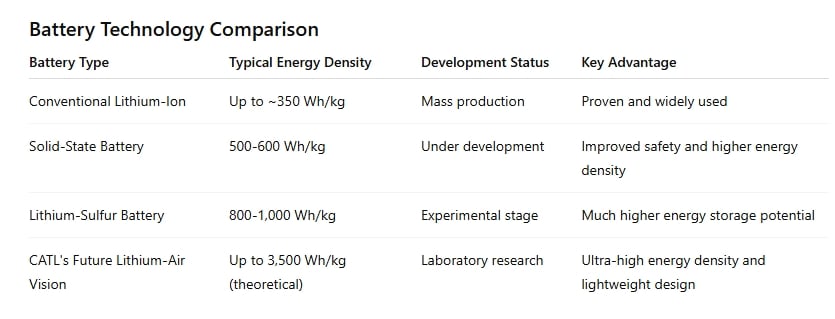
  • According to Wu Kai, lithium-air batteries could theoretically achieve an energy density of up to 3,500 watt-hours per kilogram (Wh/kg). That is several times higher than today’s commercial lithium-ion batteries.

Higher energy density means a battery can store more power without increasing weight. For electric vehicles, this could translate into significantly longer driving ranges. For energy storage systems, it could mean more power in a smaller footprint.

The concept itself is not new. Scientists first discussed lithium-air batteries in the 1970s, and rechargeable versions appeared in the 1990s. Since then, researchers worldwide have worked to unlock the technology’s potential.

Major companies and research groups have continued exploring the field. Around 2010, IBM conducted extensive lithium-air battery research. More recently, U.S. researchers reported important breakthroughs, including improved cycle life and energy density under laboratory conditions.

However, despite decades of research, lithium-air batteries remain largely confined to laboratories.

How Lithium-Air Batteries Work

Unlike conventional lithium-ion batteries, lithium-air batteries use metallic lithium as the anode.

The biggest difference lies on the cathode side. Instead of relying on heavy solid materials, lithium-air batteries use oxygen from the surrounding air. The oxygen enters through a porous carbon structure and participates in the battery’s chemical reactions.

This design reduces the amount of material required inside the battery, helping create an extremely lightweight system.

Because the battery draws oxygen from the atmosphere, it can theoretically achieve much higher energy density than existing battery technologies.

lithium ion battery CATL
Data compiled from chinaevhome.com article

The table shows why lithium-air technology attracts so much attention. Even compared with advanced solid-state batteries, the theoretical energy storage potential is dramatically higher.

Significant Challenges Still Remain

Despite its promise, lithium-air technology faces several major obstacles.

One challenge involves lithium peroxide, a material that forms during discharge. This compound acts as an electrical insulator, making battery operation less efficient.

In addition, scientists still struggle with slow reaction speeds inside the battery. Catalysts designed to improve these reactions have yet to deliver consistent results.

Another issue is electrolyte stability. Current electrolytes tend to degrade over time, limiting battery lifespan. Furthermore, lithium metal anodes can develop dendrites—tiny needle-like structures that may reduce performance and create safety concerns.

Because of these technical barriers, industry experts generally believe large-scale commercialization remains at least a decade away.

Sodium-Ion Batteries Are Much Closer to Reality

While lithium-air batteries represent a long-term goal, CATL is making faster progress with sodium-ion technology.

The company unveiled its sodium-ion battery platform last year and expects large-scale production to begin in 2026.

Sodium-ion batteries use abundant sodium instead of lithium. Although they generally store less energy than lithium-based batteries, they offer several advantages:

  • Lower material costs
  • Greater resource availability
  • Better performance in cold weather
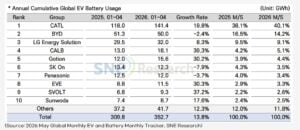
  • Reduced dependence on lithium supply chains

To support commercialization, CATL recently launched Phase VI expansion of its Fuding manufacturing base in Fujian Province.

The company plans to invest approximately RMB 5 billion ($725 million) in a new production line capable of adding 40 gigawatt-hours (GWh) of annual sodium-ion battery capacity.

Meanwhile, CATL and Changan Automobile have announced plans to launch the world’s first mass-produced passenger vehicle powered by sodium-ion batteries. The vehicle is expected to reach customers in mid-2026.

CATL Continues to Dominate Global EV Batteries

CATL’s investment strategy comes as the company strengthens its position in the global battery market.

According to data from SNE Research, CATL installed 141.4 GWh of batteries worldwide during the first four months of 2026. That represented nearly 20% growth compared with the same period last year.

  • The company’s global market share climbed to 40.1%, reinforcing its leadership in the EV battery sector.

Chinese battery manufacturers continue to gain ground across the industry. Companies such as CALB, Gotion, EVE Energy, SVOLT, and Sunwoda all reported strong year-over-year growth.

Meanwhile, BYD maintained its position as the world’s second-largest battery supplier. Although its battery installations declined slightly, the company’s overseas EV expansion and battery innovations could support future growth.

Battery storage CATL
Source: SNE Research

CATL Opens World’s Largest Energy Storage Validation Center

Beyond batteries themselves, the company is also investing heavily in energy storage reliability. It recently opened the CATL Xiamen Energy Storage Validation Research Institute (ESVL), which it describes as the world’s largest and most comprehensive energy storage testing and validation platform.

The facility covers roughly 10 hectares and required an investment of around RMB 3 billion ($440 million).

Importantly, CATL says the platform will operate as open infrastructure available to the broader energy storage industry.

ESVL lab CatL
Source: CATL

Why Real-World Testing Matters

As energy storage installations expand worldwide, performance and reliability have become major concerns.

Many storage projects fail to perform exactly as expected after deployment. Delays in grid connection and operational challenges can increase costs and reduce returns for developers and investors.

CATL believes the industry must move beyond testing individual components and focus on validating entire systems under real operating conditions.

The ESVL facility is designed to evaluate:

  • Safety performance
  • Grid-support capabilities
  • Long-term reliability
  • Station-level operational performance

According to Wu Kai, scientific testing and rigorous validation will become increasingly important as energy storage projects grow larger and more complex.

The facility also works with international certification organizations, including TÜV SÜD, TÜV Rheinland, China General Certification Center, and CSA Group.

Looking Ahead

CATL’s latest moves reveal a two-track strategy. On one hand, the company is preparing for the future through advanced technologies such as lithium-air batteries. On the other hand, it is accelerating the commercialization of sodium-ion batteries and expanding energy storage infrastructure today.

Lithium-air batteries may still be years away from reaching consumers. Nevertheless, their enormous theoretical energy density makes them one of the most intriguing battery technologies under development.

Meanwhile, sodium-ion batteries and advanced energy storage systems are already moving toward commercial reality. Together, these efforts could help CATL maintain its position at the center of the rapidly evolving global battery industry.

The post CATL Bets on Lithium-Air Batteries While Expanding Sodium-Ion and Energy Storage Leadership appeared first on Carbon Credits.