Samsung SDI Takes Full Control of $3.5B Indiana Battery Plant as EV Strategy Shifts

Samsung SDI Takes Full Control of $3.5B Indiana Battery Plant as EV Strategy Shifts

Samsung SDI is taking full control of a $3.5 billion battery plant in Indiana after General Motors decided to exit its joint venture. The South Korean battery maker will acquire GM’s 49.99% stake in SynergyCells, the joint venture developing the facility in New Carlisle, Indiana. The move gives Samsung SDI full ownership of the project and its first independently operated battery production facility in North America.

The companies originally planned the plant to produce electric vehicle (EV) batteries. Samsung SDI and GM agreed in 2024 to invest about $3.5 billion, with an initial annual capacity of 27 gigawatt-hours (GWh) and an expansion path to 36 GWh.

Mass production was targeted for 2027, but market conditions have changed. Samsung SDI now plans to use the facility initially for energy storage system (ESS) batteries and other advanced applications. The decision reflects slower-than-expected EV demand in the U.S. while battery storage demand continues to grow.

Samsung SDI Takes the Wheel in Indiana as GM Exits

Samsung SDI and GM announced their battery partnership in 2023. They finalized the Indiana joint venture in August 2024.

The project is located on a 680-acre site in New Carlisle. The original plan called for more than 1,600 jobs and annual battery production of 27 GWh in the first phase. The companies also planned to expand the facility to 36 GWh.

GM will now sell its 49.99% interest to Samsung SDI. The purchase price has not been disclosed.

The ownership change reflects the weaker-than-expected growth of EV demand, according to Samsung SDI. The two companies will end the joint venture but continue their broader strategic relationship.

They have also agreed to jointly develop next-generation prismatic battery cells for future EV applications. This keeps GM connected to Samsung SDI’s battery technology without requiring the automaker to remain an owner of the Indiana facility.

Indiana Plant Gets a New Market

The biggest change is the planned shift toward energy storage. Samsung SDI said the Indiana facility can respond to growing demand for ESS batteries in the U.S. The company has not publicly specified how much of the plant’s eventual capacity will be dedicated to ESS products.

That flexibility could become important as the battery market expands beyond electric cars. The International Energy Agency (IEA) reported that global battery storage deployment reached 108 GW in 2025, up 40% from 2024. Utility-scale systems accounted for about 87 GW, or roughly four-fifths of the total.  Other industry analysis shows the following gross capacity for the battery energy storage systems (BESS) market.
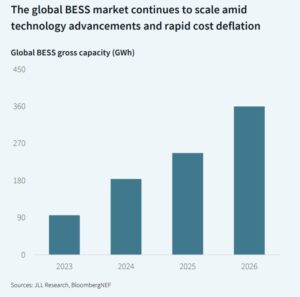
global BESS market

Battery storage has become one of the fastest-growing technologies in the global power sector. Total installed battery storage capacity is now 11 times higher than in 2021, according to the IEA. The shift toward BESS therefore gives Samsung SDI another market for a factory that was originally designed around EV demand.

AI Is Adding to Battery Storage Demand

The growth of artificial intelligence is creating another source of demand for batteries. AI data centers require large amounts of electricity and highly reliable power. Battery systems can provide backup power and help manage short-term changes in electricity supply.

Samsung SDI has been targeting this market.

In its second-quarter 2026 results, the company said it expects AI-driven UPS and battery backup unit demand to support its business in the second half of the year. It also pointed to U.S. prismatic LFP battery production and expansion of EV projects as growth drivers.

Global Battery Demand Still Has Long-Term Growth

The Indiana strategy does not mean EV batteries are losing their long-term importance. The IEA’s Global EV Outlook 2026 found that global EV battery deployment reached 1.2 TWh in 2025, almost 30% higher than in 2024. EVs accounted for more than 70% of total battery deployment last year.

The agency expects global EV battery deployment to reach almost 3 TWh by 2030 under both its Current Policies Scenario and Stated Policies Scenario.
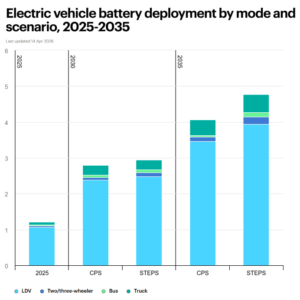
Electric vehicle battery deployment by mode and scenario
Source: IEA

Electric trucks are also becoming a larger source of battery demand. They accounted for about 8% of global EV battery deployment in 2025, up from less than 5% in 2024. The IEA expects that share to reach about 10% by 2030.

Battery manufacturing capacity is expanding as well. Global battery cell manufacturing capacity grew almost 30% in 2024, reaching more than 3 TWh. U.S. manufacturing capacity grew almost 50%, with Korean companies accounting for nearly 70% of that increase.

This supports Samsung SDI’s decision to maintain a large U.S. manufacturing presence even as the immediate EV market outlook changes.

Samsung SDI Pairs U.S. Expansion With a Net-Zero Push

The Indiana expansion also fits into Samsung SDI’s wider environmental strategy. The company has a 2050 net-zero target and joined the RE100 initiative in 2022. Its environmental strategy includes shifting to renewable electricity, reducing direct greenhouse gas emissions, moving business vehicles to zero-emission vehicles, and expanding battery recycling.

Samsung SDI’s latest sustainability report sets a goal of 100% renewable energy use by 2050 across its operations. The company is also working to reduce direct emissions and expand the use of recycled battery materials.

The company reported that it reduced a significant amount of greenhouse gas emissions across its facilities in 2024 as part of its climate roadmap. It also reported that its cumulative direct (Scope 1) greenhouse gas reductions reached 32,000 tons by 2024, which grew to a total of 57,000 tons the following year.
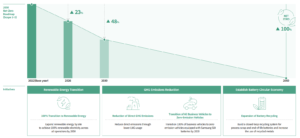
Samsung Net Zero Roadmap
Source: Samsung Sustainability Report 2026

Samsung SDI is also investing in battery circularity. Its sustainability strategy includes developing closed-loop systems for production scrap and used batteries and increasing the use of recycled metals. These measures will become more important as the company expands its manufacturing footprint in North America.

Battery Strategy Is Becoming More Flexible

Samsung SDI’s takeover reflects a wider change in the battery industry. Battery manufacturers are still preparing for strong long-term EV growth, but they are also responding to changing demand in the near term. Energy storage, data centers, and other power-intensive industries are creating new markets for battery technology.

The IEA’s latest data supports this broader view. Battery storage grew 40% globally in 2025, while EV battery deployment also increased almost 30%.

For Samsung SDI, the ability to serve both markets could make the Indiana plant more valuable. The company will have greater control over the facility after acquiring GM’s stake. It can also adjust its production strategy as demand changes.

At the same time, the company still has a relationship with GM through the development of next-generation prismatic EV batteries.

Samsung SDI battery plant indiana

A New Role for Samsung SDI’s Indiana Plant

Samsung SDI’s decision to take full control of the Indiana facility changes the project’s original purpose but not its broader strategic importance.

The $3.5 billion plant was initially planned as a major U.S. EV battery hub, with 27 GWh of initial annual capacity, an expansion path to 36 GWh, and more than 1,600 expected jobs.

Now, its first major role could be in the BESS market. That shift comes as global battery storage reaches record levels and AI increases demand for reliable electricity infrastructure. At the same time, EV battery demand continues to grow and is expected to approach 3 TWh annually by 2030.

Samsung SDI’s move shows how the battery industry is adapting to a changing market. Rather than relying on EV demand alone, the company is positioning its Indiana investment to serve a broader mix of electric mobility, grid storage, and emerging power needs.

The post Samsung SDI Takes Full Control of $3.5B Indiana Battery Plant as EV Strategy Shifts appeared first on Carbon Credits.

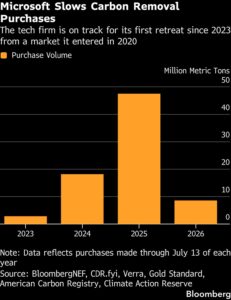
Microsoft Cuts Carbon Removal Buying 80% as AI Emissions Put Climate Goals Under Pressure

Microsoft Cuts Carbon Removal Buying 80% as AI Emissions Put Climate Goals Under Pressure

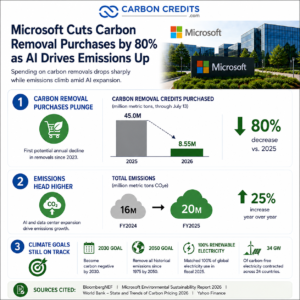
Microsoft is sharply reducing its carbon removal purchases this year as the company spends heavily to expand its artificial intelligence (AI) business. The tech giant purchased 8.55 million metric tons of carbon removal credits through mid-July 2026, about 80% less than it bought during the same period in 2025, according to BloombergNEF calculations. The drop could mark Microsoft’s first annual decline in carbon removal purchases since 2023.

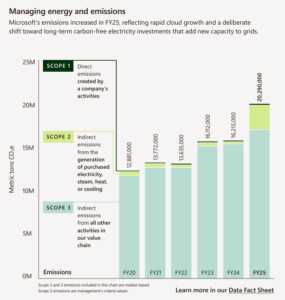
The change comes as Microsoft’s emissions are moving in the opposite direction. The company’s latest sustainability report shows that total emissions rose 25% in fiscal 2025, driven mainly by the expansion of its data center network and growing electricity demand linked to AI.

The contrast highlights a growing challenge for technology companies: AI is driving rapid business growth, but it is also increasing the energy and emissions burden of building the infrastructure needed to support it.

Microsoft Pulls Back From Its Carbon Removal Buying Spree

Microsoft has been one of the world’s largest corporate buyers of carbon removal. In fiscal 2025, the company signed agreements covering a record 45 million metric tons of carbon dioxide removal with 21 companies. That was twice the volume contracted in fiscal 2024 and nine times the amount contracted in fiscal 2023.

The company has used these purchases to support a wide range of removal technologies. They include nature-based projects, biochar, carbon mineralization, and engineered carbon removal.

Microsoft says its carbon removal program is intended to help build a market for technologies that can remove carbon at scale. The latest reduction does not mean the company has abandoned carbon removal.

The tech firm continued to make purchases in 2026. In May, it agreed to buy 650,000 metric tons of carbon removal credits from BioCirc, even after reports that it had paused some new deals. That suggests a more selective approach rather than a complete exit.

Still, the decrease in its removal purchases this year ( as of July 13) compared to last year is massive, as shown in the chart below.

microsoft carbon removal purchases mid-2026

AI Growth Is Sending Microsoft’s Emissions Higher

The change comes as Microsoft’s environmental footprint is growing. The company reported that its total Scope 1, 2 and 3 emissions increased 25% year over year in fiscal 2025. The company said the increase was driven mainly by the expansion of its data center infrastructure and its decision to stop using some non-additional, unbundled renewable energy certificates.

Microsoft’s total emissions reached about 20 million metric tons of CO2e in fiscal 2025, compared with about 16 million metric tons a year earlier.

The company also reported a major change in its emissions mix. Scope 2 emissions accounted for 13% of Microsoft’s total footprint in fiscal 2025, up from nearly 2% the previous year. The Windows developer said this reflects the growing role of electricity systems across its operations and supply chain.

Microsoft ghg emissions 2025
Source: Microsoft

Scope 3 remains the largest part of Microsoft’s overall footprint. This matters because AI services require large amounts of computing power. Expanding data centers means more servers, construction materials, electricity, and equipment across Microsoft’s supply chain.

Microsoft’s Carbon Goal Remains in Place

Despite increased emissions and reduced purchases so far this year, Microsoft has not abandoned its main climate target. The company aims to become carbon negative by 2030. It also aims to remove from the atmosphere by 2050 an amount of carbon equal to all the company’s direct and electricity-related emissions since its founding in 1975.

A spokesperson for the tech firm stated in response to Bloomberg News:

“Any adjustments we make are part of our disciplined approach, not a change in ambition.”

Microsoft’s 2026 sustainability report says the company matched 100% of its annual global electricity consumption with renewable energy in fiscal 2025. It also said it is expanding its focus on adding new carbon-free electricity to the grids where it operates.

The company has contracted 34 GW of carbon-free electricity across 24 countries, according to its sustainability reporting. These actions show that carbon removal is only one part of Microsoft’s climate strategy.

The company is also trying to reduce emissions from its operations, increase clean electricity supply, and cut emissions throughout its supply chain. 

Microsoft (MSFT) Stock Edges Higher

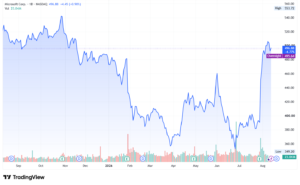
Microsoft (NASDAQ: MSFT) shares were up about 0.5% on August 13, after rising nearly 2% earlier in the session, according to a Yahoo Finance report. The modest gain came despite news of the sharp reduction in carbon removal purchases. This suggests that investors were paying more attention to Microsoft’s broader AI growth and spending plans than the carbon market development.

Microsoft MSFT stock

AI’s Emissions Problem Keeps Carbon Removal in the Mix

The reduction in purchases raises an important question: how will Microsoft deal with the emissions that it cannot eliminate quickly?

Carbon removal is designed for that part of the problem.

Microsoft’s original climate strategy called for cutting emissions by more than half by 2030 and using carbon removal to address the remainder. The company has said that its removal portfolio will include both nature-based and technology-based solutions.

But Microsoft’s own emissions data shows why the task is becoming harder. In fiscal 2024, the company said total emissions were already 23.4% above its 2020 baseline. At the same time, its energy use had increased 168%, while revenue had grown 71%.

The latest 25% year-over-year increase adds another challenge. If AI infrastructure continues to expand rapidly, Microsoft may need larger reductions elsewhere to stay on its 2030 path.

Microsoft carbon removal purchases down

Carbon Removal Enters a More Selective Market

Microsoft’s pullback comes as the wider carbon market is becoming more selective. The World Bank’s State and Trends of Carbon Pricing 2026 found that global carbon credit issuance increased 8% between 2024 and 2025. However, carbon credit prices declined slightly overall. Credits with strong ratings or high-integrity labels continued to receive premiums.

Future demand remains strong. Companies signed about $12 billion in offtake agreements for future carbon credits in 2025, three times the level recorded in 2024.

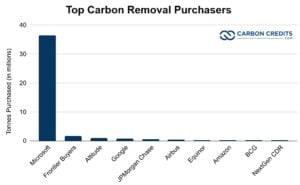
However, the market remains heavily dependent on a small number of large buyers. Microsoft has been the biggest driver of demand for carbon removal. Its purchasing decisions can therefore affect project developers, technology companies and investors across the sector.

Top 10 carbon removal purchases cdr.fyi data

A sustained reduction in Microsoft’s purchases could make it harder for early-stage carbon removal companies to secure long-term financing. At the same time, it could push the market toward projects that offer stronger evidence of permanent and measurable carbon removal.

AI Growth Is Raising the Stakes for Microsoft’s Climate Plan

Microsoft’s carbon removal pullback highlights a wider problem for the technology industry. AI is creating enormous demand for data centers and electricity. Companies are responding by building infrastructure at record speed. That growth can make it harder to reduce absolute emissions even when efficiency improves.

Microsoft has made major investments in clean electricity and carbon removal. It has also maintained its goal of becoming carbon negative by 2030. But its latest numbers show the scale of the challenge.

Emissions rose 25% in fiscal 2025, while carbon removal purchases through mid-July 2026 were down about 80% from the same period last year.

For Microsoft, the next phase will require more than buying carbon credits. It will depend on reducing emissions from data centers and suppliers while adding new clean electricity to the grids that power AI.

For the carbon removal industry, the shift is equally important. Microsoft remains a major buyer, but its latest move shows that future demand may depend less on volume and more on cost, quality, permanence, and measurable climate impact.

The post Microsoft Cuts Carbon Removal Buying 80% as AI Emissions Put Climate Goals Under Pressure appeared first on Carbon Credits.

Lloyds Sets £100B Sustainable Finance Target to Power the UK’s Net-Zero Shift

Lloyds Sets £100B Sustainable Finance Target to Power the UK's Net-Zero Shift

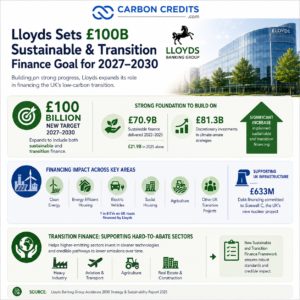
Lloyds Banking Group is setting a new £100 billion sustainable and transition finance target for 2027 through 2030, giving the UK banking group a larger role in financing companies as they cut emissions and invest in cleaner technologies.

The new goal is part of Lloyds’ Accelerate 2030 strategy. It broadens the bank’s focus on sustainable finance. Now, it also includes transition finance. This helps higher-emitting companies and sectors shift to lower-carbon business models.

The target comes after Lloyds delivered £70.9 billion of sustainable finance from 2022 through 2025, including £21.9 billion in 2025 alone. The new four-year target therefore represents a significant increase in the bank’s planned financing activity.

Lloyds Expands Its Sustainable Finance Ambition

Lloyds’ new target builds on several existing sustainable finance commitments. The bank previously targeted £30 billion of sustainable finance for Commercial Banking customers from 2024 through 2026.

It also set goals for £10 billion of EV financing and £11 billion of mortgage lending for EPC A and B-rated properties from 2025 through 2027.

The new £100 billion goal is broader. It covers both sustainable finance and transition finance. This allows Lloyds to support businesses that may not yet qualify for green finance but have credible plans to reduce emissions.

That distinction is important for sectors such as heavy industry, transport, agriculture and real estate. Many of these industries cannot switch to low-carbon systems overnight.

Transition finance offers loans and other financial products. This helps companies invest in cleaner equipment, boost energy efficiency, or change their production systems.

£70.9B Already Deployed Sets the Stage for More

Lloyds has made sustainable finance a growing part of its broader business strategy. The bank reported £70.9 billion of sustainable finance since 2022, with £21.9 billion supported in 2025. It also reported £81.3 billion in discretionary investments in climate-aware strategies.

The bank’s sustainable finance activity covers several areas, including: 

  • Clean energy,
  • Energy-efficient housing,
  • Electric vehicles,
  • Social housing,
  • Agriculture and
  • Other projects linked to the UK’s transition.

Lloyds also committed £633 million in debt financing to Sizewell C, the UK’s new nuclear power project. The bank says one in eight electric vehicles on UK roads is financed by the Group. These figures show that the new £100 billion goal is not a standalone climate pledge. It builds on an existing lending and investment business.

Lloyds Banking Group 100B euro sustainable finance

Transition Finance Targets Hard-to-Abate Sectors

The biggest change is the addition of transition finance. The UK government defines transition finance as financial products and services that help higher-emitting companies and activities reduce emissions over time. These products should support a credible pathway that aligns with global climate goals.

This matters because many businesses cannot immediately move to zero-emission operations.

A steel producer, for example, may need years to replace equipment. An airline may need time to adopt sustainable aviation fuel and more efficient aircraft. Farmers may need financing to change equipment and farming practices.

Transition finance can help fund these steps. Lloyds’ 2025 Sustainable Financing Framework already said it was reviewing how to include transition finance. The bank has now developed a new Sustainable and Transition Finance Framework to support the expanded target.

The framework is intended to give the bank a consistent basis for deciding which activities qualify for sustainable and transition finance.

The UK Needs Billions More to Fund Energy Transition

Lloyds is expanding its target as the UK works to increase private investment in the energy transition. UK energy transition investment hit £51.1 billion in 2024, according to government data from BloombergNEF. This is a drop from £58.1 billion in 2023, but still higher than early 2020s levels.

The UK government is also trying to make London a larger global center for sustainable finance.

In 2025, the government said 70% of FTSE 100 companies had already developed many of the key elements of a transition plan. It also said net-zero sectors were growing three times faster than the overall economy in the previous year, based on CBI Economics data.

Energy Secretary Ed Miliband noted:

“This government is determined to make the UK the sustainable finance capital of the world as we seize the huge economic opportunities provided by clean energy.”

The government has backed recommendations from its Transition Finance Market Review to help expand the market. For banks such as Lloyds, that creates an opportunity to finance companies that need capital to meet changing climate and energy requirements.

Lloyds Sees Climate Finance as a Growth Opportunity

Lloyds is also presenting the new target as a commercial opportunity. The bank’s wider Accelerate 2030 strategy targets mid-single-digit compound annual income growth from 2027 through 2030. It also aims for a cost-to-income ratio below 45% and return on tangible equity of about 20% by 2030. 

That means sustainable finance is being placed alongside the bank’s broader growth plans. This approach is becoming more common across the financial sector. Banks are looking at the transition not only as a climate issue but also as a source of new lending, investment and advisory opportunities.

Lloyds says its purpose is to “Help Britain Prosper.” Its sustainability strategy links financing the transition with long-term economic growth and resilience.

The bank will provide over £35 billion in new finance to UK companies in 2026. This includes £9.5 billion specifically for small and medium-sized businesses.

Lloyds’ Own Net-Zero Targets Raise the Stakes

As a major lender, Lloyds also faces pressure to reduce emissions linked to its own operations and financing activities.

Lloyds Bank ghg emissions profile and target 2025
Source: Lloyds Banking Group

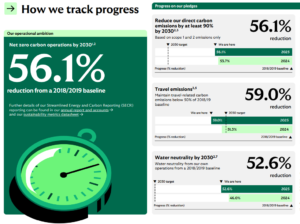
The bank has a target to achieve net-zero carbon operations by 2030. It also aims to cut its Scope 1 and 2 emissions by at least 90% by 2030 and reduce supply-chain Scope 3 emissions by 50%.

  • More importantly for a bank, Lloyds aims to reduce bank-financed emissions by more than 50% by 2030, on the path to net zero by 2050 or sooner.
Lloyds Bank net zero roadmap
Source: Lloyds Banking Group

The bank has also set sector-specific financed-emissions targets. These targets make the new £100 billion financing goal more significant. Lloyds will need to grow transition finance while also managing the emissions risks within its lending portfolio.

The £100B Question: Will the Finance Deliver Real Cuts?

The expansion of transition finance also creates a challenge. Not every loan labelled “transition” will automatically deliver meaningful emissions reductions. The quality of the underlying transition plan matters.

This is why Lloyds’ framework and measurement rules will be important. The bank says its transition approach includes client engagement, assessment of transition risks and opportunities, and greater use of data to support decisions. Its 2025 sustainability report also highlighted work with clients in sectors where emissions and transition risks are material.

The UK government has also stressed the need for high-integrity transition finance. Its Transition Finance Market Review called for instruments that can attract long-term capital while maintaining market confidence.

For Lloyds, the value of the £100 billion target depends on two things. First, how much money it helps to raise. Then, where that money goes and the environmental results it achieves.

A Bigger Role for Banks in the UK Transition

Lloyds’ new £100 billion sustainable and transition finance target marks a major expansion of its climate-finance ambitions. This plan helps the bank bring transition finance into its core target. The move also comes as the UK seeks more private capital for clean energy, energy efficiency and industrial decarbonisation.

For Lloyds, the opportunity is also commercial. Transitioning businesses need financing for new equipment, cleaner energy, efficiency upgrades and other investments. Yet, the bank also needs to show that its financing supports genuine progress rather than simply increasing the amount of capital labelled sustainable.

If Lloyds can combine its £100 billion financing goal with strong transition standards and measurable emissions results, the strategy could make the bank a larger force in both the UK’s financial sector and its wider path toward net zero.

The post Lloyds Sets £100B Sustainable Finance Target to Power the UK’s Net-Zero Shift appeared first on Carbon Credits.

Costa Rica’s Forests Deliver 10.3M Tons of Net Removals in UN-Backed REDD+ Review

Costa Rica's Forests Deliver 10.3M Tons of Net Removals in UN-Backed REDD+ Review

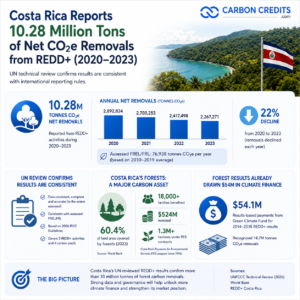
Costa Rica reported more than 10.2 million tonnes of net carbon dioxide equivalent (CO2e) removals from REDD+ activities between 2020 and 2023, according to a new United Nations technical review.

The latest UNFCCC report found that Costa Rica’s reported results totaled 10,277,856 tonnes of CO2e across the four-year period. The results came from efforts to reduce deforestation and forest degradation and increase forest carbon stocks.

The report is important for Costa Rica’s forest carbon strategy. It confirms that the country’s data and methods are broadly consistent with UNFCCC requirements. It also shows how Costa Rica is building on its long-running forest conservation and payments-for-ecosystem-services programs.

However, the results should not be confused with 10.2 million carbon credits already issued for sale. They are REDD+ results reported for the purpose of accessing results-based payments. That distinction is important as governments place greater focus on high-integrity forest carbon markets.

Costa Rica’s Forests Deliver More Than 10M Tons of Net Removals

Costa Rica’s reported net removals declined each year during the 2020–2023 period. The UNFCCC technical report lists:

  • 2020: 2,892,834 tonnes of CO2e
  • 2021: 2,700,253 tonnes
  • 2022: 2,417,498 tonnes
  • 2023: 2,267,271 tonnes

Together, the four years produced about 10.28 million tonnes. The annual total fell by about 22% between 2020 and 2023. Even so, Costa Rica reported net removals in every year covered by the review.

The UN assessment measured the results against Costa Rica’s assessed forest reference emission level (FREL) and forest reference level (FRL) of 76,938 tonnes of CO2e per year. That reference level is based on average historical emissions and removals from 2010 to 2019. It covers Costa Rica’s national territory except Cocos Island.

UN Review Finds the Results Consistent

The new report provides an important layer of independent technical review. UNFCCC experts concluded that Costa Rica’s data and information were consistent, complete and accurate to the extent that they could be judged, while describing the information as mostly transparent.

The experts also found that the reported results were consistent with the assessed FREL/FRL.

Costa Rica used the 2006 IPCC Guidelines for National Greenhouse Gas Inventories to estimate emissions from deforestation and forest degradation and removals from enhanced forest carbon stocks. The country’s national approach covers three REDD+ activities:

  1. Reducing emissions from deforestation,
  2. Reducing emissions from forest degradation, and
  3. Enhancing forest carbon stocks.

The assessment covers four carbon pools: above-ground biomass, below-ground biomass, deadwood, and litter. This broad coverage gives the reported results a stronger technical basis than a project-level estimate alone.

Costa Rica’s Forests Remain a Major Carbon Asset

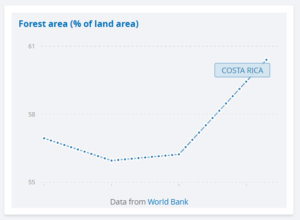
Costa Rica’s forest resources give the country a strong base for nature-based climate finance. World Bank data show that forests covered 60.4% of Costa Rica’s land area in 2023. The country has spent decades developing policies that link forest conservation with economic incentives.

forest area share costa rica world bank

Its Payments for Environmental Services (PES) program began in 1996 and pays landowners for environmental services from forests. The UNFCCC says the program has benefited more than 18,000 families, with $524 million invested and more than 1.3 million hectares covered by PES contracts.

In May 2026, the Food and Agriculture Organization also highlighted Costa Rica’s efforts to improve monitoring of its PES program and integrate newer tools such as results-based payments and carbon markets.

That history is important because REDD+ does not operate as a stand-alone carbon credit project. It forms part of a wider national forest-management system.

Forest Results Have Already Drawn $54M in Climate Finance

Costa Rica has already used forest results to attract international climate finance. For its earlier 2014–2015 REDD+ results, the country reported 14,794,747 tonnes of CO2e. Those results were assessed against a reference level of about 4.37 million tonnes of CO2e per year.

The Green Climate Fund approved $54.1 million in results-based payments linked to those earlier results. Costa Rica’s REDD+ platform says the payments recognized 14.7 million tonnes of removals from its forests during 2014 and 2015.

The latest 2020–2023 results could therefore provide another basis for results-based climate finance, subject to the relevant financing and authorization processes. That is different from automatically creating tradable credits.

Forest Carbon Buyers Are Raising the Quality Bar

The Costa Rica results arrive as the global carbon market puts more emphasis on quality and transparency.

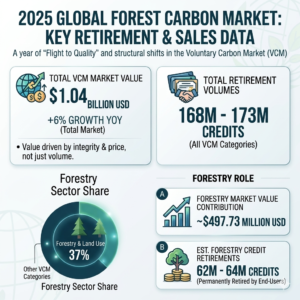
The World Bank’s State and Trends of Carbon Pricing 2026 found that global carbon credit issuance increased 8% from 2024 to 2025. However, overall credit prices declined slightly. High-rated forest conservation and reforestation credits continued to receive price premiums.

forest carbon credit market
Sources: Sylvera Carbon Markets Report; AlliedOffsets VCM Review; Ecosystem Marketplace SOVCM Data; Market Growth Reports (Voluntary Carbon Offsets for Forestry).

The market is also seeing stronger demand for credits with clear quality attributes. The World Bank reported that companies signed about $12 billion in offtake agreements for future carbon credits in 2025, three times the amount recorded in 2024.

For forest projects, this trend makes credible measurement and national oversight increasingly important. Costa Rica’s UN-reviewed REDD+ results can help demonstrate that its forest accounting system follows international rules.

UN Review Also Flags Areas for Improvement

The UN assessment was positive, but it did not say the system was perfect. Costa Rica reported uncertainty of 62% for its results, using a Monte Carlo simulation and a 90% confidence interval.

The UN experts said Costa Rica had taken steps to assess uncertainty and improve future estimates. They also identified several areas for future improvement. These include better methods for separating human-caused forest changes from natural disturbances, improving estimates of forest degradation and enhancing national registry systems.

The registry issue is especially relevant to carbon markets.

The UN experts said stronger registry systems would help ensure that the same emission reductions are not counted more than once across REDD+, national climate targets and Article 6.4 of the Paris Agreement.

This is becoming a central requirement as countries move toward international carbon trading.

 Costa Rica forest carbon credits

Costa Rica’s Forest Carbon Strategy Enters a New Phase

Costa Rica’s latest REDD+ results show that forest conservation remains a significant part of its climate strategy. The country reported 10.28 million tonnes of net removals between 2020 and 2023, with the UNFCCC finding the results consistent with its assessed reference level and international reporting requirements.

The numbers also build on Costa Rica’s earlier REDD+ results and its long-running PES program. However, the next step will require more than producing large removal figures.

Costa Rica will need strong monitoring, clear accounting, and safeguards against double counting if it wants to expand results-based finance and participate more deeply in international carbon markets. That matters because the global market is increasingly rewarding credits and projects that can demonstrate stronger integrity.

Costa Rica’s latest UN-reviewed results give its forest carbon strategy a stronger technical foundation. With more than 10 million tonnes of net removals reported over four years, the country has another significant body of results that could support future climate finance while strengthening its position in the growing market for high-integrity forest carbon.

The post Costa Rica’s Forests Deliver 10.3M Tons of Net Removals in UN-Backed REDD+ Review appeared first on Carbon Credits.

Tesla’s (TSLA Stock) $10.1 Billion Solar Factory in Texas Signals a New U.S. Manufacturing Push

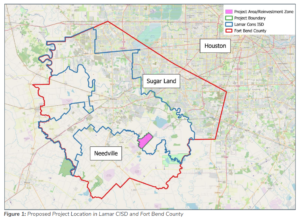
Tesla is planning a massive solar manufacturing project in Texas that could reshape its energy business and strengthen U.S. solar supply chains. The company has filed for tax incentives for Project Crystal Sun, a proposed $10.1 billion solar manufacturing campus in Fort Bend County, southwest of Houston. The project could create 9,712 permanent jobs and begin commercial production in early 2029, according to documents filed with Texas authorities.

The filing is still an early step. Tesla says it is also considering other sites in the U.S. That means the $10.1 billion investment is not yet a final construction commitment.

Still, the proposal is significant. It would give Tesla a much larger role in solar manufacturing at a time when the U.S. is trying to build more domestic clean energy supply chains.

Inside Tesla’s $10.1B Solar Manufacturing Campus

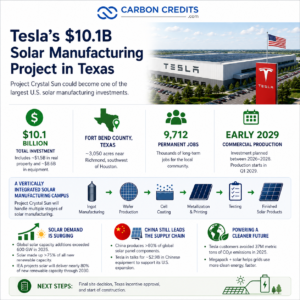
Project Crystal Sun would cover about 3,050 acres near Richmond, Texas. Tesla’s filing puts the total investment at $10.116 billion, including about $1.5 billion in real property and $8.6 billion in equipment.

Tesla plans to spend the money between 2026 and 2028. Commercial production would then begin in the first quarter of 2029.

The proposed site would be vertically integrated. The facility would handle several stages of solar production, including ingot manufacturing, wafer production, cell coating, metallization, printing, and testing. It would also include cleanrooms and equipment for producing finished solar products.

Tesla has not disclosed the plant’s planned annual output in the filing. That makes it difficult to compare the project’s future production directly with existing U.S. solar factories.

However, the size of the investment is clear. At $10.1 billion, Project Crystal Sun would become one of Tesla’s largest manufacturing projects outside its vehicle and battery operations.

Tesla Project Crystal Sun map
Source: Tesla Filing

Tesla Wants to Build a Homegrown Solar Supply Chain

The proposed factory also fits Tesla’s wider push to expand solar manufacturing in the U.S. CEO Elon Musk has said Tesla and SpaceX are working toward 100 GW of solar manufacturing capacity per year in the U.S. by 2028. Reuters reported in February that Tesla was hiring to support this target.

That goal is far larger than Tesla’s current solar manufacturing base. The carmaker has already started customer deployments of its first in-house designed solar panel from Gigafactory New York.

The company said the panel has 18 individual power zones, or three times as many as a conventional residential panel. This design allows the panel to keep producing energy in shaded conditions.

The company has also been expanding its energy manufacturing network. Its Q1 2026 update listed 40 GWh of installed annual Megapack capacity in California and 20 GWh in Shanghai. A new Megafactory outside Houston was under construction, with production of Megapack 3 expected to begin later in 2026.

Project Crystal Sun would add another major piece to that energy strategy. 

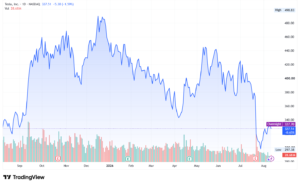
Tesla (TSLA) stock was trading lower around the time of this massive solar project news, reflecting broader investor pressure on the stock. The move was not directly tied to the solar factory filing, and market attention has also focused on Tesla’s heavy spending plans and its broader AI, robotics, and energy strategy. Thus, the stock movement can be viewed as part of a wider market reaction rather than a direct response to the $10.1 billion solar project.

Tesla TSLA stock

Solar’s Global Boom Creates a Bigger Manufacturing Race

Tesla’s move comes as solar power continues to expand at record speed.

The International Energy Agency (IEA) said global solar PV capacity additions surpassed 600 GW in 2025. Solar accounted for more than 75% of all new renewable power capacity added worldwide that year. Global solar PV capacity reached about 2,800 GW.

The outlook remains strong. The IEA expects renewable power capacity to grow by almost 4,600 GW between 2025 and 2030. Solar PV is expected to provide nearly 80% of that expansion.

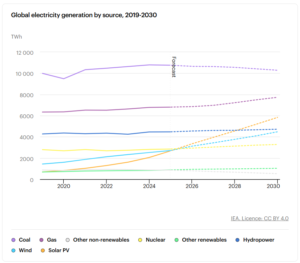
The agency also expects solar PV generation to increase by more than 600 TWh per year on average through 2030. Solar is expected to overtake wind and nuclear in electricity generation by 2026 and hydropower by 2029, as seen below.

global electricity generation by source 2030 IEA
Source: IEA

This growth creates a large market for solar equipment. It also makes manufacturing capacity more important as governments try to reduce supply-chain risks.

China Still Dominates Solar Manufacturing

Building a large U.S. solar factory would also help Tesla address one of the industry’s biggest challenges: China’s dominance of the supply chain.

China remains the world’s leading producer of solar manufacturing equipment and components. In April, China produced more than 80% of global solar panel components. Tesla’s own supply strategy shows how difficult it can be to reduce that dependence.

Reuters reported in March that Tesla was in talks with Chinese companies over about $2.9 billion in solar manufacturing equipment for its U.S. expansion. The equipment could support the company’s push toward its 100-GW manufacturing goal.

That creates an interesting contrast. Tesla wants to build more solar products in America. Yet, some of the equipment needed to build those products may still come from China.

Project Crystal Sun could eventually reduce that dependence if Tesla develops a fully domestic supply chain around the plant.

Tesla’s Energy Business Is Becoming a Bigger Growth Engine

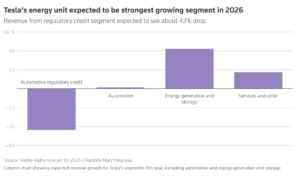
The solar factory would also support a business that is becoming a larger part of Tesla’s financial results. The company’s energy generation and storage revenue reached $12.77 billion in 2025, up 27% from 2024. The increase was mainly driven by higher Megapack and Powerwall deployments.

Energy storage has continued to grow in 2026. Tesla deployed 13.5 GWh of energy storage products in the second quarter of 2026. That brought the company’s total storage deployments for the first half of the year to at least 22.3 GWh, based on its reported Q1 and Q2 figures.

Tesla energy storage business growth 2026
Source: Tesla

For comparison, Tesla deployed 46.7 GWh of energy storage products during all of 2025.

Solar and batteries are closely linked in Tesla’s energy strategy. Solar generation produces electricity, while battery systems such as Megapack can store that electricity for later use.

That combination could become more valuable as electricity demand rises and grids add more variable renewable power.

A Bigger Solar Footprint Brings a Bigger Climate Test

The project also fits Tesla’s wider environmental mission. The EV giant’s latest Impact Report says its customers avoided 37 million metric tons of CO2e emissions in 2025 through the use of its products. The company says its mission is to build an energy system powered by solar energy and supported by batteries and electric vehicles.

Tesla has also linked its energy products to broader grid needs.

In its 2025 financial materials, the company said Megapack can help increase the use of existing generation and transmission capacity. Tesla also said that pairing Megapack with solar PV can make it cost-competitive with traditional fossil-fuel generation assets and allow faster deployment.

These efforts support Tesla’s broader emissions reduction goals. But the new factory itself would also create environmental impacts from construction, energy use, and manufacturing. That distinction matters. A solar factory can support clean energy deployment while still having its own industrial emissions and resource needs.

Tesla Project Crystal Sun in texas

Project Crystal Sun Could Redefine Tesla Energy

Project Crystal Sun marks a major potential expansion of Tesla’s clean energy business. The company already has a growing battery operation, and its energy generation and storage revenue have increased.

If Tesla builds Project Crystal Sun as proposed, it could move beyond selling solar and batteries and become a major U.S. solar manufacturer.

For now, however, the $10.1 billion figure remains a proposed investment, not a completed project. The next steps will be Tesla’s final site decision, approval of the Texas incentives, and the start of construction.

If those steps happen, Project Crystal Sun could become one of the clearest signs yet that Tesla’s future energy business is moving from a supporting operation toward a much larger part of the company’s strategy.

The post Tesla’s (TSLA Stock) $10.1 Billion Solar Factory in Texas Signals a New U.S. Manufacturing Push appeared first on Carbon Credits.

Malaysia Targets $21.5 Billion in Energy Savings as Data Center Power Demand Rises

Malaysia has renewed its 10-year energy efficiency strategy. Rising electricity demand, industrial growth, and more data centers are straining the country’s power system.

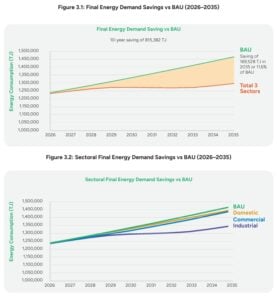
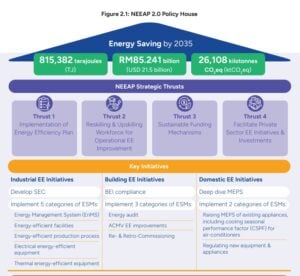
The National Energy Efficiency Action Plan 2026–2035 (NEEAP 2.0) aims for about US$21.5 billion (RM85.24 billion) in savings over the next decade. It also seeks to cut energy demand by 11.6% by 2035 compared to a business-as-usual (BAU) scenario.

This plan supports Malaysia’s goal of lowering greenhouse gas emissions while fostering a fast-growing economy. Energy efficiency is key. It can reduce consumption and emissions without hindering economic activity.

Malaysia Sets 11.6% Energy Demand Reduction Target

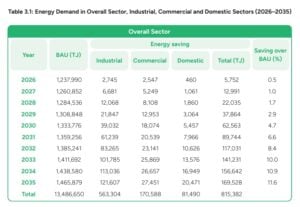
NEEAP 2.0 is expected to save 815,382 terajoules (TJ) of energy by 2035. These savings could avoid around 26.1 million metric tons of CO2-equivalent emissions compared to the BAU scenario.

malaysia energy efficiency
Source: NEEAP

Without new measures, energy demand from industrial, commercial, and domestic sectors could hit 1.47 million TJ by 2035. The new plan aims to cut this demand by about 169,528 TJ.

Targets vary by sector:

  • Industrial sector: 11.9% reduction by 2035
  • Commercial sector: 13.2% reduction
  • Domestic sector: 8.7% reduction

The industrial sector is expected to provide the largest savings, about 69% of total reductions. Commercial users will contribute around 21%, while households will account for about 10%.

energy savings
Source: NEEAP

This focus aligns with Malaysia’s industrial structure. Factories consume much more energy than homes. Improving industrial equipment and processes can lead to significant savings.

Malaysia’s Energy Demand Is Also a Climate Challenge

The efficiency push comes as Malaysia grapples with a significant emissions footprint.

In 2024, Malaysia’s CO₂ emissions, excluding land use and forestry, were about 8.3 tonnes per person, according to World Bank data. This is up from 5.7 tonnes per person in 2000, reflecting industrial growth.

This figure becomes critical as electricity demand rises. Malaysia attracts major investments in manufacturing, semiconductor production, and data centers, all requiring reliable power.

The land-use sector also affects emissions. Forests can reduce net greenhouse gas emissions when they absorb more carbon than they release.

Thus, cutting energy-related emissions is essential. Efficiency measures can help slow emissions growth while Malaysia expands its economy and increases renewable energy use.

First NEEAP Program Exceeded Its Target

NEEAP 2.0 builds on Malaysia’s first energy efficiency action plan from 2016 to 2025. The initial program saved around 60,886 gigawatt-hours (GWh) of electricity, exceeding its target of 52,233 GWh. This saved about RM16.1 billion.

  • The first NEEAP also avoided an estimated 35.6 million tonnes of CO2-equivalent emissions.

The new program aims to improve results by creating a stronger regulatory framework and encouraging broader participation.

Data Centers Add to Malaysia’s Power Challenge

Malaysia’s growing data center industry highlights the need for energy efficiency.

The country is becoming one of Southeast Asia’s fastest-growing data center markets, attracting billions from global tech firms. Data centers require significant electricity for computing and cooling.

The rise of artificial intelligence may increase electricity demands as companies expand their computing capacity. This poses a challenge for Malaysia. It wants to attract energy-intensive industries while controlling electricity demand and emissions.

Thus, energy efficiency can bridge that gap. Improved cooling systems and energy management can lower energy needs while maintaining output.

NEEAP 2.0
Source: NEEAP

New Rules Strengthen Energy Efficiency

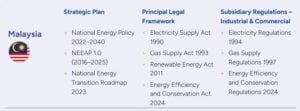
One major change is the Energy Efficiency and Conservation Act (EECA).

This law provides a stronger framework for managing energy use and emphasizes efficiency among major users. It shifts from voluntary measures to a more structured approach.

NEEAP 2.0 will work alongside this framework, extending efficiency measures to smaller companies, households, and other consumers. Financial incentives may encourage investments in energy-efficient technologies.

This approach creates a wider pool of participants contributing to Malaysia’s energy savings.

NEEAP 2.0 Supports Malaysia’s Net-Zero Goal

Malaysia aims to cut carbon intensity by 45% from 2005 levels by 2030 and reach net-zero emissions by 2050.

Achieving these goals requires more than just renewable energy. Malaysia must manage demand, boost industrial productivity, and cut unnecessary energy use. Thus, NEEAP 2.0 is vital for complementing renewable energy policies.

The plan also reflects a shift in how governments approach decarbonization. Malaysia targets reducing overall energy consumption, not just replacing fossil fuels.

Energy Efficiency Could Cut Costs and Emissions

The success of NEEAP 2.0 will depend on effective implementation.

Malaysia’s energy landscape has changed since the first NEEAP began in 2016. Electricity demand is rising, industrial investment is growing, and data centers are a larger part of the economy.

     Overview and Comparison of Energy Policies in Malaysia

energy policies

  • The potential US$21.5 billion in utility savings is significant for businesses and consumers.
  • The projected 815,382 TJ in cumulative energy savings could ease pressure on the power system and cut millions of tonnes of emissions.

For Malaysia, energy efficiency is more than a cost-saving measure. It is a crucial tool for managing rising power demand, boosting competitiveness, and cutting emissions.

If NEEAP 2.0 meets its 11.6% energy demand reduction target by 2035, it could strengthen Malaysia’s balance between economic growth and climate goals.

The post Malaysia Targets $21.5 Billion in Energy Savings as Data Center Power Demand Rises appeared first on Carbon Credits.
EFM’s $100M Oregon Forest Bet Puts Carbon at the Heart of Timber Investment

EFM's $100M Oregon Forest Bet Puts Carbon at the Heart of Timber Investment

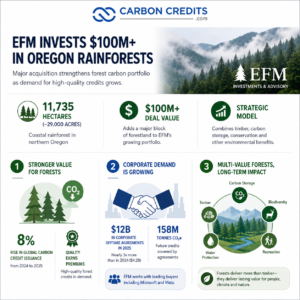
EFM Investments & Advisory has acquired 11,735 hectares, or about 29,000 acres, of coastal rainforest in northern Oregon in a deal worth more than $100 million. The acquisition adds a major block of forestland to EFM’s portfolio. It also highlights a growing trend in the carbon market wherein investors are placing greater value on forests for more than timber.

EFM’s model combines timber production with carbon storage, conservation, and other environmental benefits. The company has developed forest carbon projects across the U.S. West and sees carbon revenue as a way to support longer forest rotations and restoration.

The deal comes as buyers show stronger interest in higher-quality forest carbon credits.

EFM Builds a Larger Forest Carbon Portfolio

EFM is a U.S. forest investment and management firm focused on what it calls climate-smart forestry. The company says it has developed forest carbon projects across about 150,000 acres in the United States. It has worked with the three major U.S. voluntary carbon registries: Verra, the American Carbon Registry (ACR), and the Climate Action Reserve (CAR).

EFM manages forests for several sources of value. These include timber, carbon credits, conservation, and recreation. Its approach is important because carbon revenue can help change how forests are managed. EFM says this revenue can support longer harvest rotations, restoration, salmon habitat, and tribal partnerships.

The Oregon acquisition gives the company another large forest asset where this model can be applied.

Forests Are Becoming More Valuable for Carbon

Forests are a major part of the global carbon market because they can remove and store large amounts of carbon dioxide.

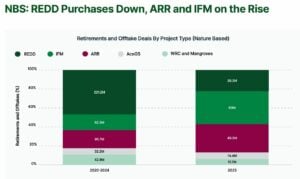
The World Bank’s State and Trends of Carbon Pricing 2026 found that global carbon credit issuance increased 8% from 2024 to 2025. Prices declined slightly overall, but some credits continued to earn premiums. These included highly rated forest conservation and reforestation projects.

forest carbon credit market
Sources: Sylvera Carbon Markets Report; AlliedOffsets VCM Review; Ecosystem Marketplace SOVCM Data; Market Growth Reports (Voluntary Carbon Offsets for Forestry).

This is an important change for forest investors. The market is becoming less focused on the number of credits a project can produce. Buyers are paying more attention to quality, measurement, and the risk that claimed carbon benefits may not last.

That trend favors forest projects with strong management plans and reliable monitoring.

Improved Forest Management Is EFM’s Core Strategy

A key part of EFM’s business is Improved Forest Management (IFM). IFM projects seek to increase carbon storage by changing how existing forests are managed. Actions can include:

  • Extending harvest rotations,
  • Protecting carbon-rich areas, and
  • Restoring degraded forests while maintaining timber production.

EFM uses third-party carbon standards and says it uses ACR’s dynamic baseline approach for its projects.

A dynamic baseline updates the reference scenario over time. EFM says this helps measure project performance more accurately and reduce the risk of over-crediting. This matters because forest carbon credits face scrutiny over additionality and permanence.

A project must show that its carbon gains are real and that the forest management changes would not have happened without the carbon project. The company is also following a 5R framework for its climate-smart forestry implementation.

EFM 5R framework for forest improvement
Source: EFM

Oregon Offers Strong Carbon and Conservation Value

Oregon is an important market for this strategy. EFM already has a history in the state. Its Moss Creek project on the Garibaldi property was the first forest carbon project in Oregon and Washington to generate credits, according to the company.

EFM says the project is expected to offset about 150,000 tons of carbon through 2040. The carbon benefits come from actions such as reducing harvest volumes, extending rotations, expanding reserves and protecting habitat. The company’s latest acquisition adds another major forest asset to this strategy.

Oregon’s forests also have important climate value at the state level. The Oregon Department of Energy says forests provide the largest carbon removal benefit among the state’s land types.

However, the state also faces growing climate risks. Wildfire emissions have increased, while the annual carbon removal provided by Oregon’s lands has declined since 1990. That makes long-term forest management increasingly important.

Corporate Demand Is Supporting Forest Carbon

The growth of forest investment is also linked to rising demand from corporate buyers. The World Bank found that companies signed about $12 billion in carbon credit offtake agreements in 2025. These contracts covered an estimated 158 million tonnes of CO2e in future credits.

The value of the agreements was nearly three times the $4.2 billion recorded in 2024. Nature-based projects (NBS)accounted for a significant share of this future demand.

nature based credits Allied Offsets
Source: AlliedOffsets

These agreements can provide forest developers with more certainty. Instead of waiting until credits are issued, developers can secure buyers in advance. That can help finance forest acquisitions and long-term management.

EFM has already worked with major corporate buyers. Its forest carbon portfolio includes projects linked to buyers such as Microsoft and Meta.

The company says its Olympic Rainforest project in Washington contains more than 10 million tonnes of stored carbon across a 68,000-acre property. EFM expects climate-smart management to add about 1 million tonnes of CO2 in carbon storage over the next decade.

These projects show how forest ownership and carbon finance can work together.

Higher-Quality Credits Face a Higher Bar

The growing value of forest carbon does not remove the risks. Forests can lose stored carbon through wildfire, disease, drought, and other disturbances. Carbon projects must also prove that their claimed reductions or removals are additional.

This makes strong measurement and monitoring essential.

The World Bank’s latest market data shows why quality matters. Carbon-credit prices fell slightly overall in 2025, but higher-quality forest projects continued to receive premiums. EFM is positioning itself around this part of the market.

The company says it keeps control of carbon project development, including baseline design, third-party consultants, credit marketing, and delivery. It also uses major carbon registries and third-party standards.

For investors, this approach can help reduce some of the risks linked to low-quality credits.

EFM $100M Oregon forest carbon investment

Forest Investment Is Moving Beyond Timber

EFM’s $100 million Oregon acquisition reflects a broader change in how forests are valued. Timber remains an important source of revenue. But forests can also generate value through carbon storage, conservation, biodiversity, water protection, and recreation.

The carbon market is creating another financial incentive to manage those assets over longer periods. This opportunity is becoming more important as companies commit billions of dollars to future carbon purchases. At the same time, buyers are becoming more selective and placing premiums on higher-quality forest credits.

EFM’s strategy fits this shift. Its latest Oregon acquisition gives the company a larger forest base while expanding its potential role in the U.S. forest carbon market.

The deal shows how forests are becoming multi-value assets: sources of timber and investment returns, as well as long-term carbon stores that can support the growing demand for higher-quality nature-based credits.

The post EFM’s $100M Oregon Forest Bet Puts Carbon at the Heart of Timber Investment appeared first on Carbon Credits.
NVIDIA (NVDA Stock) Targets $500 Billion AI Buildout: The Race for Compute, Power and Clean Energy

NVIDIA (NASDAQ: NVDA) is bringing some of the world’s largest financial institutions into the artificial intelligence infrastructure boom as it seeks to mobilize more than $500 billion in third-party capital over time.

The chipmaker has signed memorandums of understanding with Apollo, BlackRock, Blackstone, Brookfield, Goldman Sachs and KKR to establish independent compute financing platforms.

The goal is simple: give AI companies, cloud providers and enterprises better access to the capital needed to build large-scale computing infrastructure.

The timing is important. AI demand continues to grow rapidly, but the next phase of the boom will require much more than advanced chips. Companies also need data centers, electricity, cooling systems, networking equipment, and financing.

NVIDIA now wants to help bring those pieces together.

NVIDIA Wants to Turn Compute Into Infrastructure

NVIDIA has become one of the biggest beneficiaries of the AI boom by supplying the GPUs that power many of the world’s AI data centers. Now, however, the company is moving beyond selling chips.

NVIDIA describes large-scale AI data centers as “AI factories.” These facilities use electricity, computing power, and data to produce AI services and intelligence. And this makes AI compute look increasingly like an infrastructure asset.

This is important because infrastructure investors already understand how to finance long-lived assets that generate cash flows over time.

Under the proposed financing model, the six financial institutions will independently evaluate individual projects. Their assessments will include customer demand, expected utilization, cash flow, and the residual value of computing equipment.

As a result, NVIDIA is not promising to finance every AI project. Instead, it is helping create financing platforms that could allow qualified customers to raise capital at scale.

nvidia

What Does the $500 Billion Figure Mean?

The more than $500 billion figure represents aggregate third-party capital that the platforms are designed to mobilize over time.

It is not NVIDIA revenue. It is also not a single $500 billion fund or a commitment to one customer.

The financial institutions will make independent investment decisions based on the economics of each project. NVIDIA will provide the technology platform and broader AI ecosystem, while the financial institutions bring long-term capital and infrastructure-financing expertise.

This structure could address a growing problem in the AI market.

Many AI companies, enterprises, and AI cloud providers have strong demand for computing capacity but may not have enough capital to build the infrastructure themselves.

Financing could allow these companies to secure computing capacity without taking on the full upfront cost of building and owning the infrastructure.

Why NVIDIA Could Support Some Projects

The GPU giant said it may provide residual-value support of up to 25% for certain opportunities. However, this support would be assessed individually and would be limited to residual value. It would not replace independent underwriting by the financial institutions.

NVIDIA believes its computing infrastructure has characteristics that can make it attractive to investors. Its GPUs are widely used across the AI industry and can serve different models and workloads. They can also potentially be redeployed between customers and operators.

Meanwhile, NVIDIA’s CUDA software ecosystem supports a large global base of developers and customers. Together, these factors could help computing equipment retain value even as newer generations of GPUs reach the market.

That is particularly important for investors financing assets in a sector where technology changes quickly.

NVIDIA’s Revenue Shows the Scale of AI Demand

NVIDIA’s financial results demonstrate why investors are paying close attention to AI infrastructure.

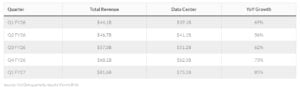
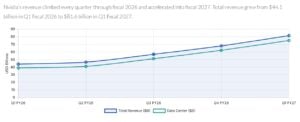
The company reported $81.6 billion in revenue for fiscal Q1 2027, an 85% increase from a year earlier. Data center revenue reached $75.2 billion, making up the vast majority of quarterly sales.

  • For full fiscal 2026, NVIDIA generated $215.9 billion in revenue. Data center revenue reached $193.7 billion, accounting for roughly 90% of the company’s total revenue.

NVIDIA

NVIDIA
Source: quantumrun.com

The shift shows how quickly AI has transformed NVIDIA’s business.

The company is also moving through another major technology cycle. Its Blackwell platform has become a major source of revenue, while the next-generation Rubin platform is expected to enter production in the second half of 2026.

However, rapid innovation also creates a challenge for infrastructure investors.

Projects financed today must generate enough value to justify their cost even as newer and potentially more powerful computing systems enter the market.

A New Financing Model for AI Factories

NVIDIA’s initiative could ultimately have implications far beyond the chip industry.

Major infrastructure buildouts have historically depended on outside capital. Electricity networks, telecommunications systems, transportation infrastructure and data centers all required significant investment before they could generate returns.

NVIDIA sees AI factories entering a similar phase.

The economic cycle is relatively straightforward. More computing capacity can support better AI models and services. Better AI can increase usage. Higher usage can generate more revenue. That revenue can then support additional investment in computing capacity.

However, the model depends on real demand and strong project economics.

But AI Is Creating a New Electricity Demand Surge

The financing push also comes as AI reshapes global electricity demand.

AI data centers require huge amounts of electricity to operate and cool increasingly powerful computing systems.

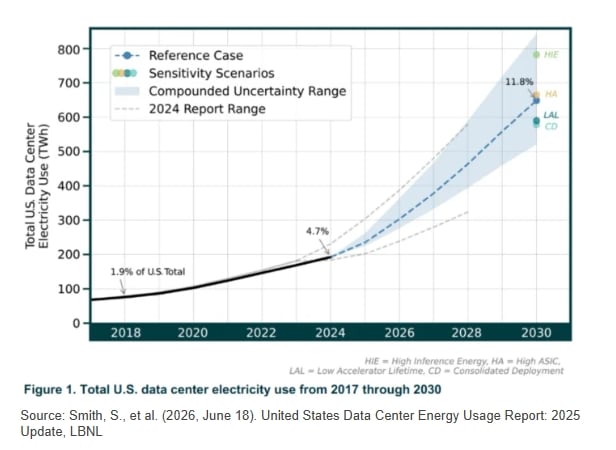
The International Energy Agency expects global data center electricity consumption to more than double by 2030. It projects demand will reach about 945 terawatt-hours (TWh), compared with roughly 415 TWh in 2024.

This would bring data centers close to 3% of global electricity consumption by the end of the decade.

Accelerated servers, primarily used for AI workloads, are expected to drive much of this growth. The IEA expects electricity consumption from these systems to increase by around 30% annually through 2030.

AI electricity demand

The United States faces an especially significant increase. Data centers could account for almost half of the growth in U.S. electricity demand through 2030.

Therefore, the AI infrastructure story is increasingly becoming an energy story as well.

Building more GPUs will not solve the problem if data centers cannot secure enough electricity or connect to the grid.

NVDA Stock Gains: Can AI Infrastructure Deliver the Returns?

NVIDIA’s partnerships with major financial institutions could help turn AI compute into a new investable infrastructure asset. By improving access to capital, the initiative may allow more companies to expand their AI capacity without funding the entire buildout themselves.

For NVIDIA, that could support long-term demand for its GPUs. However, investors still need to weigh risks such as high valuations, changing AI spending, export restrictions and limited power capacity.

NVDA stock closed at $225.30 on August 13, up 0.54%. The share price reflects strong investor confidence in NVIDIA’s role in the AI boom. Yet, the bigger question is whether growing AI infrastructure spending will generate enough revenue to justify the capital being deployed.

nvidia stock NVDA
Source: Google

If demand and utilization remain strong, NVIDIA’s financing strategy could accelerate the next phase of the AI buildout. Conversely, weaker demand or lower returns could increase risks for investors. For now, NVIDIA is betting that compute will become a core infrastructure asset of the AI era

The post NVIDIA (NVDA Stock) Targets $500 Billion AI Buildout: The Race for Compute, Power and Clean Energy appeared first on Carbon Credits.

Copper Prices Surge Past $14,800: Will New Mines Help Ease the Supply Crunch?

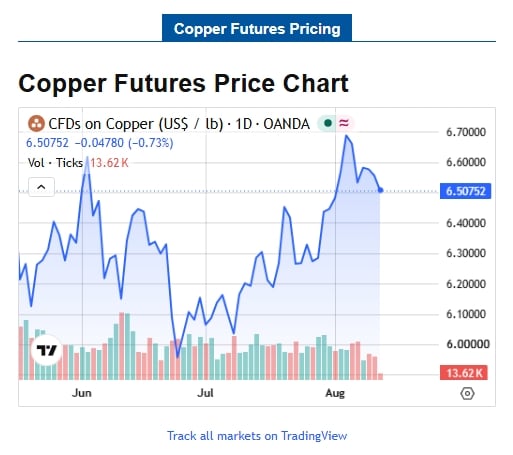
Copper prices reached a new high on the Comex as softer US inflation eased fears of interest rate hikes. Shrinking inventories in London also indicate that supply is tightening.

On August 12, Comex copper prices hit $6.7140 a pound, or about $14,802 a tonne, surpassing the previous record of $6.7045 set on August 5. It later eased to $6.6335 a pound.

This surge followed the US July Consumer Price Index, which showed inflation at 3.4% year over year, down from 3.5% in June. Core inflation was 2.5%. This data lessened the Federal Reserve’s urgency to raise rates in September, supporting commodities and risk assets.

But copper’s rise isn’t just about interest rates. The physical market is sending a stronger signal.

copper futures copper prices

LME Copper Premium Widens as Inventories Fall

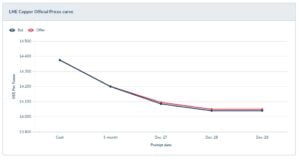
London copper has moved into deeper backwardation, meaning buyers pay more for immediate metal than for future delivery.

Cash copper on the London Metal Exchange settled at $14,424.50 a tonne, compared to $14,217 for the three-month contract. The resulting $207.50 premium was the widest of 2026, up from $138 a day earlier and just $34 at the end of July.

This spread indicates that consumers and traders are competing for available metal.

  • LME warehouse stocks have also fallen sharply. Inventories stood at 214,550 tonnes, down over 35,000 tonnes, or about 14%, since the end of July.
  • Reuters noted that LME stocks have dropped from about 401,000 tonnes in early May, with 58% of the remaining inventory tied up in cancelled warrants awaiting removal.
LME copper prices
Source: LME

Copper Supply Problems Are Multiplying

Copper producers are struggling to boost output quickly enough to meet market needs.

Chile, the world’s largest copper producer, has cut its production outlook for the second straight quarter due to weaker output at major mines. Codelco, the state-owned producer, faces aging operations, high debt, and a need for major investment.

  • The company expects 2026 copper production between 1.331 million and 1.357 million tonnes.

Chile’s supply issues are significant because the global copper market has little room for disruption.

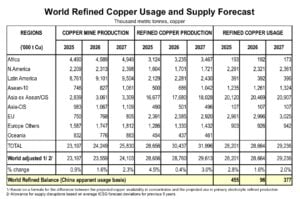
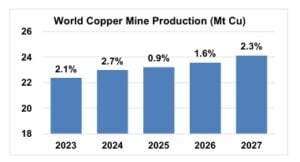
  • The International Copper Study Group expects global mine production to grow just 1.6% in 2026, down from an earlier forecast of 2.3%. Growth is expected to improve to 2.3% in 2027.

COPPER DEMAND

Indonesia adds another risk. The Gresik smelter, processing ore from Freeport’s Grasberg mine, remains offline due to a boiler leak reported on August 8. Any prolonged outage could limit the availability of refined copper in Asia.

The Democratic Republic of Congo has also tightened its grip on supply. Kinshasa recently banned exports of copper and cobalt concentrates, allowing limited exceptions. Reuters stated this may not significantly impact the global balance but could tighten an already stressed concentrate market.

Copper Demand Is Moving Beyond Construction

Copper demand is increasingly linked to electrification.

Power grids, electric vehicles, renewable energy projects, energy storage, industrial equipment, and data centers all require significant copper.

The rapid growth of artificial intelligence is creating an additional demand driver. AI data centers need electricity-intensive computing equipment, transmission infrastructure, transformers, cables, and backup power systems. Rising data center investment could boost copper consumption across the power network.

  • The ICSG expects global refined copper usage to rise 1.6% in 2026 and 2% in 2027. Chinese demand is expected to rise about 1.9% this year, while consumption outside China is forecast to grow 1.3%.

The group noted that energy transition, urbanization, digitalization, and data center development will continue to support copper demand.

There is a key difference between the short-term and long-term outlook.

The institute still sees a refined copper surplus of about 96,000 tonnes in 2026 and 377,000 tonnes in 2027. This could limit prices if production improves and demand weakens, but forecasts are sensitive to mine disruptions, inventory changes, and Chinese stock levels.

The longer-term picture looks much tighter.

  • The International Energy Agency estimates that the copper market could face a 30% supply deficit by 2035 under the current project pipeline.

Copper ore grades have dropped by about 40% since 1991, while average capital intensity for brownfield expansions has risen 65% since 2020. New copper projects can take around 17 years from discovery to production.

This makes today’s high prices less important than the industry’s ability to create new supply.

COPPER DEMAND SUPPLY
Source: ICSG

Copper Miners Are Benefiting

Higher copper prices are improving the outlook for major producers.

Southern Copper Corporation has emerged as one of the strongest large-cap names. The company reported $4.289 billion in second-quarter 2026 revenue, up 41% year over year, with earnings rising 71% to $2.01 a share. The stock is seen as a potential breakout candidate, driven by strong copper demand from AI infrastructure and grid investment.

Freeport-McMoRan remains another major player. BHP, Rio Tinto, First Quantum Minerals, Ivanhoe Mines, and Lundin Mining also offer investors direct exposure to copper production.

Recent market pricing shows First Quantum, BHP, and Rio Tinto among the stronger copper-related large-cap names, while the broader Global X Copper Miners ETF continues to benefit from the copper rally.

Investors should note that mining stocks do not simply track copper prices. Costs, production guidance, political risk, debt, and project execution can lead to large differences in returns.

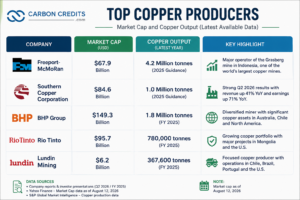
Refer to the infographic below for their latest copper output and market cap data:

tOP COPPER PRODUCERS

Fresh Deals Show Miners Are Racing for Copper

The industry’s deal activity reflects the growing value of copper assets.

Hudbay Minerals

In June, Hudbay Minerals completed its acquisition of Arizona Sonoran Copper, creating what the company calls the third-largest copper district in North America. Arizona Sonoran is now wholly owned by Hudbay.

Anglo American

Anglo American and Codelco finalized their agreement to combine the Los Bronces and Andina mine plans in Chile. This project is expected to unlock 2.7 million tonnes of additional copper over 21 years, or about 120,000 tonnes a year, pending environmental permits.

Meanwhile, Anglo American and Teck Resources are moving forward with their merger to create Anglo Teck, a major copper-focused mining group expecting over 70% exposure to copper.

Hindustan Copper

India is also deepening its involvement in the global copper supply chain. The country currently produces about 573,000 tonnes of refined copper annually, against a demand of around 1.8 million tonnes, according to Reuters.
Hindustan Copper is discussing potential cooperation with Chile’s Codelco to secure copper supply and explore mining opportunities.
Long-Delayed Copper Projects Could Unlock New Supply

Two delayed projects are gaining attention.

Papua New Guinea, Bougainville

In Papua New Guinea, Bougainville has chosen India’s Lloyds Metals & Energy for preparatory and feasibility work at the Panguna copper-gold mine. The project has estimated remaining resources of about 5.3 million tonnes of copper and 19.3 million ounces of gold. Lloyds previously set up a dedicated vehicle to pursue cooperation on the project.

Panguna has been closed since 1989 due to conflict over environmental damage, revenue sharing, and local control. Reopening the mine will need more than just capital. Community support, regulatory approvals, and political agreements are critical.

Tampakan Copper-Gold Project

In the Philippines, the Tampakan copper-gold project aims for production by 2028. The mine expects to produce about 375,000 tonnes of copper and 360,000 ounces of gold annually for 17 years.

These projects highlight a central issue for the copper market: the world has large deposits, but turning them into producing mines takes years.

Copper Outlook: Bullish, but Volatile

Strong fundamentals support copper’s record run.

Near-term prices benefit from falling LME inventories, tight physical premiums, supply disruptions, and the US premium. A softer inflation reading has also eased fears of higher US interest rates.

Longer term, demand is even stronger. AI data centers, grid expansion, electric vehicles, renewable energy, and industrial electrification are increasing copper needs at a time when new mines are more challenging and costly to develop.

The biggest risk is that high prices may weaken demand or spur enough new supply to create a temporary surplus. The ICSG’s projected surpluses for 2026 and 2027 show this is still possible.

Still, the structural landscape is shifting. The market increasingly rewards companies that own producing copper assets, while major miners are paying up for future supply.

For investors, the copper story is not just about the next price target. It’s evolving into a race for secure, long-term resources.

The post Copper Prices Surge Past $14,800: Will New Mines Help Ease the Supply Crunch? appeared first on Carbon Credits.