World Bank, Brazilian Bank Plan $100M Carbon Fund to Finance Brazil Projects

World Bank, Brazilian Bank Plan $100M Carbon Fund to Finance Brazil Projects

The World Bank and a Brazilian bank are structuring a carbon fund with an initial target of $100 million to provide upfront financing for carbon projects in Brazil. The resulting carbon credits would then be sold to international investors. 

The identity of the Brazilian bank and the final structure of the fund have not been disclosed. It is also not yet clear how many projects the fund could finance or how many carbon credits they could generate.

Still, the proposed vehicle points to a growing effort to connect international capital with Brazil’s large pipeline of nature and carbon projects. While the World Bank’s partner remains confidential, market speculation points to major institutions like BNDES or Banco da Amazônia (BASA) due to their strong history with green capital. However, these names are strictly market context, not confirmed facts yet.

Upfront Funding Could Fill Brazil’s Carbon Finance Gap

Carbon projects often face a financing problem at the start. Developers may need years of investment before projects generate verified carbon credits that can be sold.

An upfront financing fund could help bridge that gap. Developers can get funding sooner instead of waiting for future credit sales. They can use this money for activities like forest restoration, conservation, or other projects that reduce emissions.

The model could also give international investors greater access to Brazilian carbon projects. The proposed $100 million fund is still being set up. So, its investment terms and risk-sharing details are not yet clear.

The announcement comes as demand for carbon projects is shifting toward assets with stronger environmental and social value. The World Bank said in its State and Trends of Carbon Pricing 2026 report that global carbon credit issuances rose 8% from 2024 to 2025.

Total carbon credit issuances

At the same time, credit prices fell slightly overall, while some higher-value categories continued to receive premiums. These included credits eligible for international aviation and highly rated forest conservation and reforestation projects.

World Bank Has Already Tested Carbon Finance in Brazil

The new fund would build on earlier World Bank efforts to connect Brazilian climate projects with private finance.

In 2022, the World Bank approved a $500 million project with Banco do Brasil. This project aims to boost sustainability-linked lending and help Brazilian companies access carbon markets. The project aims to reduce emissions by up to 90 million tonnes of CO2e by 2030. It also seeks to attract $1.4 billion in private capital.

That project is separate from the new $100 million fund. The latest report only identifies the current partner as a Brazilian bank.

The World Bank also used a different financing structure for Amazon restoration in 2024. It issued a $225 million, nine-year Amazon Reforestation-Linked Outcome Bond. Returns for investors depend partly on carbon removal units from reforestation projects. Mombak raised about $36 million to boost its reforestation efforts in Brazil.

These transactions illustrate how carbon and climate results can be included in everyday financial products. This approach goes beyond just direct project investments.

Brazil Is Building a Larger Carbon Market

Brazil is also creating a stronger domestic framework for carbon markets. The country established the Brazilian Emissions Trading System, or SBCE, through Law No. 15,042, enacted on December 11, 2024. The law created a regulated carbon market and set rules for emissions trading, carbon credits, and related infrastructure.

brazil ghg emissions trading system
Source: ICAP

Implementation is now moving forward. In July 2026, Brazil’s Ministry of Finance began public consultations. They focused on which sectors would be included in emissions monitoring, reporting, and verification (MRV). The consultation also addressed a proposed timetable for implementing the system.

The government said the MRV framework will help create an official and reliable emissions database. That information will later help support:

  • decisions on the emissions cap,
  • allocation of Brazilian Emissions Allowances, and
  • the limits for using verified reduction or removal certificates to meet compliance obligations.

The developing regulated market could eventually create another source of demand for eligible emissions reductions.

Nature and Forestry Could Be Major Opportunities

Brazil’s forests offer a large potential project base, particularly for restoration and carbon removal. Public financing is already helping scale this sector.

The BNDES Forest Credit program has approved R$1.9 billion for 14 projects. These projects focus on ecological restoration, productive restoration, native-species forestry, and forest management. BNDES says the program has attracted R$1.59 in private resources for every R$1 invested by the bank.

The bank has also supported projects focused directly on carbon removal. In 2025, BNDES approved R$100 million for Mombak to reforest degraded areas in the Amazon while supporting biodiversity recovery and carbon capture.

These projects illustrate why Brazil could be an important market for carbon finance. The country has vast degraded lands and important forest ecosystems. It is also developing a growing policy framework for carbon markets.

Global Investors Are Looking for Better Credits

The proposed fund also comes as the carbon market becomes more selective. The World Bank reported that carbon credit issuances increased in 2025, but overall prices declined slightly. Credits linked to international aviation and highly rated forest conservation and reforestation projects still attracted premiums.

Investors are now focusing more on the quality, use case, and project type of carbon credits. They’re not seeing all credits as the same anymore.

For a Brazilian fund targeting international buyers, project quality, measurement, and verification will, therefore, be critical. Strong monitoring and clear ownership of the resulting credits would also matter for investors assessing future revenue.

Right now, there’s no public information on whether the proposed $100 million fund will target voluntary carbon markets, Brazil’s future regulated system, international Article 6 transactions, or a mix of these markets.world bank brazilian bank $00M carbon fund

Article 6 Eligibility Is Not Yet Confirmed

Brazil is building its international carbon market. However, it’s too soon to say that projects funded by the new fund will qualify for international transfers under Article 6 of the Paris Agreement.

Article 6.2 allows countries to transfer internationally traded mitigation outcomes, known as ITMOs, under cooperative approaches. A corresponding adjustment stops the same emissions reduction from being counted by both the selling and buying countries.

Whether a project can use this framework depends on national authorization and other eligibility requirements. The latest report on the $100 million fund does not disclose whether its credits will receive such authorization.

For now, the fund should therefore be viewed as a proposed financing mechanism rather than a confirmed source of Article 6 credits.

The Bigger Goal: Turn Public Finance Into Private Capital

The most important feature of the proposed vehicle may be its focus on upfront finance. Brazil has already shown that public and development-bank capital can help bring private money into climate projects.

A new international-investor fund could extend that approach specifically to carbon projects. The opportunity is significant, but the details will determine its impact. Investors will need clarity on project selection, expected returns, credit ownership, verification, market eligibility, and risks before committing capital.

For Brazil, the timing is important. Its regulated carbon market is taking shape, private investment in forest projects is growing, and international demand is increasingly focused on higher-quality credits.

The proposed $100 million fund could help connect those trends. But until the World Bank and its Brazilian partner disclose more details, the size of the opportunity remains an early-stage estimate rather than a confirmed pipeline.

The post World Bank, Brazilian Bank Plan $100M Carbon Fund to Finance Brazil Projects appeared first on Carbon Credits.

CATL’s Jianxiawo Mine Loses EIA Approval: Will China’s Lithium Supply Take a Hit?

CATL’s Jianxiawo lithium mine has suffered another major setback, with Chinese regulators revoking its environmental impact assessment (EIA) approval and forcing the operation back into care and maintenance.

The development is important for the global lithium market because Jianxiawo is China’s largest lithium mine by planned capacity. Its prolonged shutdown comes at a time when lithium inventories have been falling, and prices have recovered sharply from their 2025 lows.

Benchmark Mineral Intelligence originally reported on September 1 that the mine’s EIA had been revoked. The licence setback subsequently highlighted the potential impact on China’s lithium supply.

Jianxiawo Faces Another Delay

The Jianxiawo mine is located in Yichun, Jiangxi province, a major lithium-producing region in China. The operation extracts lithium-bearing lepidolite, a lower-grade ore that has become increasingly important to China’s domestic battery-material supply chain.

The mine had already been offline since August 2025 after its mining permit expired. That shutdown followed tighter regulatory scrutiny of lithium operations in Jiangxi and changes affecting the classification and permitting of lithium resources.

Progress toward a restart appeared to accelerate in June 2026. CATL secured a safety production permit on June 29, removing what Benchmark had described as the final major official hurdle to restarting the mine.

That optimism did not last.

The operation briefly restarted in July but was subsequently placed back into care and maintenance. The latest problem is environmental approval. With the EIA revoked, Jianxiawo now needs to go through another environmental review before a meaningful restart can take place. Benchmark estimates the process could extend into the fourth quarter of 2026 or even 2027.

The issue also appears connected to concerns surrounding the mine’s tailings facilities and environmental management, making the approval process more significant than a simple administrative delay.

CATL’s Expected Lithium Output Has Been Cut

The biggest immediate consequence is the reduction in expected production.

  • Benchmark has cut its forecast for Jianxiawo’s 2026 mined output to 32,000 tonnes of lithium carbonate equivalent (LCE) from 62,500 tonnes LCE previously.

That is a reduction of 30,500 tonnes LCE, or almost 49%.

The revised figure is particularly significant because Jianxiawo was expected to become a major source of additional Chinese lithium supply following its restart. Benchmark had previously expected the mine to contribute roughly 1.5% of global mined lithium supply in 2026.

For perspective, S&P Global expects global lithium raw-material supply to reach about 1.63 million tonnes LCE in 2026, up roughly 10% from 2025. On that basis, Jianxiawo’s revised 32,000 tonnes would represent around 2% of global annual supply, while the 30,500-tonne reduction represents almost 1.9% of the global supply estimate.

The impact is therefore meaningful, even though the mine alone is not large enough to determine the global market balance.

Benchmark has kept its 2027 production forecast for Jianxiawo at approximately 99,000 tonnes LCE, suggesting that the current disruption does not necessarily mean the resource will remain offline permanently. However, that forecast becomes more difficult to achieve if environmental approval slips into next year.

CATL LITHIUM

What Does It Mean for Lithium Prices?

The timing is particularly important.

Lithium prices have already staged a major recovery in 2026. A market benchmark tracked by Trading Economics stood at around 156,000 yuan ($22,000) per tonne on September 3, up more than 105% from a year earlier. The price has also risen about 11% over the past month, showing how quickly sentiment has changed.

lithium prices
Source: Trading Economics

The Jianxiawo setback could add another bullish factor.

China’s battery-grade lithium carbonate and lithium hydroxide inventories have been declining since September 2025, according to Benchmark. Lower inventories make the market more sensitive to unexpected production losses because buyers have less material available to absorb supply disruptions.

That does not mean lithium prices will automatically surge.

Global supply is still expanding. S&P Global’s forecast is positive, and the market had previously been characterized by ample supply. New production from other mines can also partly offset Jianxiawo’s shortfall.

The more important question is therefore whether the mine remains offline for months or slips into 2027.

A Bigger Problem for China’s Lithium Supply

Jianxiawo matters beyond its individual production numbers because it highlights the growing regulatory risk surrounding China’s domestic lithium industry.

China dominates lithium refining and battery manufacturing, but some of its domestic ore resources are relatively challenging to process. Lepidolite operations in Jiangxi are particularly important because they provide feedstock for China’s enormous conversion industry.

  • SDIC Securities’ August 12, 2026 forecast puts China’s lithium carbonate supply at 1.725 million tonnes in 2026, compared with 1.208 million tonnes in 2025.

If environmental and permitting requirements continue to delay projects, domestic supply growth could become slower than expected.

That could force Chinese refiners and battery manufacturers to source more material from overseas producers. CATL has already been reported to seek alternative feedstock following previous disruptions at Jianxiawo.

The result could be higher competition for imported spodumene and lithium chemicals, potentially supporting prices outside China as well.

china lithium
Source: SIDC

Lithium Market Could Become More Sensitive to Supply Shocks

The Jianxiawo setback does not create an immediate global lithium shortage. The revised 2026 production loss is relatively small compared with total global supply.

But markets rarely price commodities based only on current production.

Expectations matter.

  • A restart at Jianxiawo was expected to bring a significant amount of additional supply into the market. Removing almost 30,500 tonnes LCE from that expectation changes the outlook, particularly when inventories are already tighter and battery demand remains strong.

Energy storage is also becoming an increasingly important source of lithium demand alongside electric vehicles. Strong battery demand means supply disruptions can have a larger effect on prices when producers and converters have limited inventories.

For now, the most likely impact is upward pressure rather than a full-blown lithium price shock. If Jianxiawo receives environmental approval and resumes production before the end of 2026, the market could absorb much of the lost output. If the review extends into 2027, however, traders may begin pricing in a more persistent supply constraint.

The bigger message is clear: Jianxiawo’s lithium is not lost, but its return to the market is no longer guaranteed on the timeline investors expected. With lithium prices already recovering and inventories tighter, another delay at one of China’s largest planned lithium mines could keep the market firmly focused on supply risk.

The post CATL’s Jianxiawo Mine Loses EIA Approval: Will China’s Lithium Supply Take a Hit? appeared first on Carbon Credits.
Microsoft Uses NORDEN’s Book & Claim Pilot to Tackle Scope 3 Emissions

A new maritime decarbonization pilot is showing how companies could reduce supply chain emissions without waiting for low-carbon fuels to become available on every shipping route.

Danish shipping company NORDEN has delivered the first verified maritime emissions reductions through the Roundtable on Sustainable Biomaterials (RSB) Book & Claim registry. The pilot, completed with Microsoft and RSB, marks the first time a maritime carrier has issued and delivered verified emissions reductions through the RSB system.

The development could give companies a more practical way to tackle shipping-related Scope 3 emissions, particularly when sustainable fuels remain limited in availability.

Anne Jensen, COO at NORDEN, commented:

“For many companies, some of the most difficult emissions to address are those embedded deep within global supply chains, where they often have little visibility or direct influence over how goods are transported.

This transaction demonstrates how Book & Claim can help bridge that gap. By enabling companies to invest in verified emissions reductions from maritime transport, regardless of where the fuel is used or where they sit in the value chain, we can help accelerate decarbonisation across industries.”

Shipping Remains a Major Emissions Challenge

The maritime sector carries most of the world’s international trade, but it also produces a significant carbon footprint.

The latest figures cited by the United Nations Conference on Trade and Development (UNCTAD) show that shipping greenhouse gas emissions increased by 5% in 2024. Longer voyages, including those caused by geopolitical disruptions and rerouting, contributed to the increase. At the same time, only about 8% of the world’s fleet by tonnage was equipped to use alternative fuels.

shipping emissions

  • The International Maritime Organization (IMO) estimates that global shipping produced 1.056 billion tonnes of CO2 in 2018, about 2.89% of global anthropogenic CO2 emissions at the time.

The sector therefore faces a difficult transition. Ships have long operating lives, alternative fuels are still developing, and supply is not evenly distributed across global ports.

That creates a problem for companies trying to reduce emissions linked to their transported goods.

A business may want to use a lower-emission fuel for its cargo, but the required fuel may not be available at the port where its particular vessel operates.

NORDEN’s Book & Claim model is designed to address that gap.

How NORDEN’s Maritime Book & Claim Model Works

Under a Book & Claim system, the physical movement of a low-emission fuel does not have to match the customer’s specific cargo movement.

Instead, NORDEN can use lower-emission fuel where it makes the most operational sense within its fleet. The resulting emissions reductions are then documented and allocated to a customer.

This separates the physical use of the fuel from the customer’s shipping activity.

For companies, that means they do not necessarily have to change their logistics routes or wait for sustainable fuel to become available at every port.

Scaling Biofuel Through Book & Claim

NORDEN says its biofuel solutions can be used either as blends or as B100, with emissions reductions of up to 80%–90%, depending on the fuel and application. The company also says customers can select the level of emissions reduction based on their ambitions and budget.

The important distinction is that the model is built around documented and verified emissions reductions rather than simply purchasing a conventional carbon offset.

NORDEN first had to obtain RSB Book & Claim trader certification before it could issue and sell verified reductions through the registry. RSB developed the certification by adapting its existing Book & Claim framework, previously used in aviation, for maritime transport and carriers.

Why Microsoft Is Testing the Model

Microsoft is the first company globally to use the RSB registry’s Book & Claim system for shipping emissions. The move fits into a much larger challenge for the technology giant: reducing emissions across its value chain.

Microsoft’s latest sustainability report highlights the growing emissions challenge from its expanding AI and data center infrastructure.

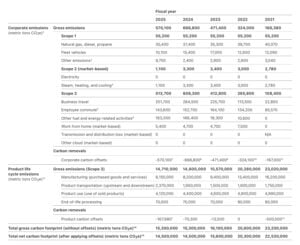
In FY2025, Microsoft reported 20.29 million metric tons of CO₂e across Scopes 1, 2 and 3. That was 25% higher than the 16.21 million metric tons reported a year earlier. Microsoft linked the increase mainly to data center growth and changes in its use of renewable energy certificates.

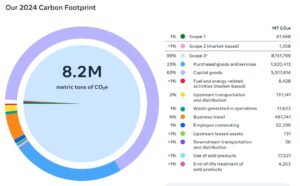
  • Scope 3 remained the largest source, accounting for 85.82% of total emissions, down from 97.29% in FY2024. Scope 2 made up 13.34%, while Scope 1 accounted for 0.84%.
  • Precisely, Scope 3 emissions were 17.41 million metric tons. Capital goods made up the largest share at 44.57%, followed by purchased goods and services at 25.28%. Together, they accounted for nearly 70% of Scope 3 emissions. Transportation also contributed to the footprint. Upstream transportation and distribution accounted for 3.66% of Scope 3 emissions, while downstream transportation and distribution made up 0.42%.

Turns to Shipping to Cut Scope 3 Emissions

These figures show why cleaner shipping can play a role in Microsoft’s climate strategy. Maritime transport is only a small part of its overall Scope 3 footprint, but it gives the company a direct way to reduce emissions linked to its global supply chain.

More importantly, its Scope 3 emissions remained a growing problem as they were 26% higher in FY2024 than its 2020 baseline. This makes maritime freight an important area for intervention.

microsoft scope 3 emissions
Source: Microsoft

Microsoft has already been working with suppliers and other partners to address emissions embedded in its wider supply chain. In 2024, the company contracted 19 GW of new renewable energy across 16 countries and continued investing in technologies and partnerships designed to tackle hard-to-abate Scope 3 emissions.

The NORDEN pilot adds another tool to that strategy.

Bella Horstmann, Senior Manager, Market Development, Microsoft, said:

“Decarbonising supply chains requires solutions that are both credible and scalable. This collaboration with NORDEN and RSB shows how Book & Claim can help accelerate progress in sectors where change is otherwise complex and demonstrates that companies don’t need to wait to start reducing their shipping emissions in a verified and meaningful way.” 

The Pilot Could Help Scale Maritime Decarbonization

NORDEN and Microsoft had already announced their collaboration in 2025. At the time, the companies said the pilot could reduce Microsoft’s maritime Scope 3 emissions by nearly 10,000 tonnes of CO2e over three years.

The latest transaction takes that collaboration a step further by putting the reductions through the RSB registry.

That verification component could prove critical as more companies look for credible ways to account for supply chain emissions.

Book & Claim does not eliminate the need to increase the physical supply of sustainable marine fuels. Instead, it can create demand while the industry works through fuel availability, infrastructure, and cost challenges.

RSB now plans to update its Book and Claim Chain of Custody procedure to support broader adoption across maritime transport. NORDEN also plans to work with customers and partners to expand the model.

The timing is significant. Shipping emissions are rising again, while the availability of alternative-fuel-capable vessels remains limited.

For companies such as Microsoft, the challenge is therefore not simply finding cleaner ships. It is finding a system that can connect real emissions reductions with complex global supply chains.

NORDEN’s pilot suggests Book & Claim could become one part of that solution.

However, strong verification and transparent accounting remain essential. If the model scales, companies can use it to cut maritime Scope 3 emissions today. Meanwhile, the shipping industry can continue building the cleaner fuel infrastructure needed for the long term.

The post Microsoft Uses NORDEN’s Book & Claim Pilot to Tackle Scope 3 Emissions appeared first on Carbon Credits.
Verra Wins ICVCM Approval for VCS Version 5 as Carbon Market Integrity Tightens

Verra Wins ICVCM Approval for VCS Version 5 as Carbon Market Integrity Tightens

Verra has gained key backing for its Verified Carbon Standard (VCS) Version 5. The Integrity Council for the Voluntary Carbon Market (ICVCM) recognized VCS Version 5 as CCP-Eligible on September 2, 2026. The decision shows that the latest version of Verra’s program meets the ICVCM’s Core Carbon Principles (CCPs). These principles set a global standard for trustworthy carbon markets.

The decision is important. Verra runs the world’s largest voluntary carbon credit program. It has issued about 1.3 billion Verified Carbon Units (VCUs) across 2,579 VCS projects in 132 countries. This comes as the voluntary carbon market shifts to stricter rules on credit quality, transparency, and community protections.

However, the approval does not mean every VCS credit can now carry the CCP label. The ICVCM uses a two-step process. First, it assesses the crediting program. It then assesses the specific methodologies and credit categories used to generate credits.

Verra Raises the Bar for Carbon Credit Quality

Verra launched VCS Version 5 in December 2025 as a major update to its carbon crediting rules. The new version aims to improve program integrity, usability, and climate impact. It also strengthens social and environmental safeguards and places more focus on the rights and role of local communities.

Verra developed the new version through three public consultations, which generated nearly 5,000 comments from around 200 respondents. The company says this was the highest response rate for a VCS program consultation.

  • The updated rules cover the entire project lifecycle. They include project design, validation, monitoring, verification, and credit issuance.

Verra states that projects must create carbon credits that are additional, properly measured, durable, independently verified, traceable, and not double-counted. These requirements address some of the main concerns that have affected confidence in voluntary carbon markets.

Verra VCS Version 5 updates
Source: Verra

Community Safeguards Take a Bigger Role

One of the biggest changes in Version 5 is its focus on people living in and around carbon projects. Verra says the new rules strengthen protections for Indigenous Peoples and local communities. Projects must improve stakeholder engagement, assess social and environmental risks, and put safeguards in place.

The standard also calls for clearer financial transparency and fair benefit-sharing arrangements before projects begin. This is important because many carbon projects involve forests, farmland, or other land used by local communities.

A project may deliver a measurable climate benefit but still face serious concerns if it does not respect land rights or share benefits fairly. By putting these safeguards directly into the program rules, Verra is trying to make social performance a core part of credit quality rather than a separate add-on.

ICVCM Approval Comes With an Important Catch

The distinction between CCP-Eligible and CCP-Approved is critical.

The ICVCM first checks if a crediting program has good governance, transparency, tracking, third-party verification, and clear rules for measuring emissions reductions and removals. After that, it assesses the methodologies used to create different types of credits.

Only credits from a CCP-Eligible program and a CCP-Approved methodology may bear the CCP label. This means VCS Version 5’s new status strengthens the program, but buyers still need to check the methodology behind a specific credit.

That two-step system is designed to avoid assigning a single broad quality label to credits that use very different methods.

ICVCM Approves 13 Verra Methodologies

Alongside VCS Version 5, the ICVCM has approved 13 methodologies and one VCS Jurisdictional and Nested REDD+ Framework that are active in Verra’s program. The approved methodologies cover several project types, including:

  • Afforestation, reforestation and revegetation, biochar, improved forest management, REDD+, cookstoves, rice production, landfill gas, renewable electricity and coal-mine methane.

The approved methodologies are the following:

Verra ICVCM-Approved Methodologies

As of August 12, 2026, the ICVCM’s broader assessment program had approved 44 methodologies in total, per its assessment-status page. That means Verra’s approved methodologies now form a meaningful part of the CCP-approved market.

Version 5 Is Not Fully Mandatory Yet

Another important detail is timing. Verra launched VCS Version 5 in December 2025, but many of its project-level requirements do not become mandatory until January 1, 2027.

Verra fully operationalized Version 5 in June 2026 by publishing the updated templates and guidance needed for project developers. This allows projects to begin using the new system.

  • Existing projects have transition paths, while new projects registering after January 1, 2027 generally must use Version 5 requirements.
  • All existing projects must transition to Version 5 safeguard requirements after January 1, 2030. Some projects have a longer transition period.

This staged approach gives developers time to adapt while gradually moving the whole program toward the new rules.

Carbon Reversal Risk Gets a New Option

Version 5 also introduces a pilot for managing non-permanence risk. Land-based carbon projects can face the risk that stored carbon is released later through events such as fires, drought, or land-use changes.

Verra’s traditional system uses a pooled buffer approach to manage some of this risk. Version 5 allows a pilot using insurance or fund-based approaches as alternatives.

The goal is to give project developers more ways to protect against carbon reversals. Verra says this could help unlock more financing for projects that use these approaches.

The move is especially relevant for nature-based projects, where long-term storage remains one of the biggest concerns for carbon buyers.

Verra VCS standard version 5

Can Tougher Rules Restore Confidence in the VCM?

The ICVCM’s endorsement comes at a critical time for voluntary carbon markets. Buyers increasingly want proof that credits provide real climate benefits. They also want clearer information about project risks, community impacts, and how credits are measured.

The ICVCM created the CCP framework partly to address those concerns. It says the CCP label should make it easier for buyers to identify and price high-integrity credits across different standards and project types. That could help reduce confusion in a market where credits can vary widely in quality and price.

For Verra, the decision also provides external recognition of the changes it has made to its flagship standard. However, the approval does not eliminate the need for project-level scrutiny.

A CCP-eligible program includes many projects. Individual credits rely on the methodology, project design, monitoring, and verification used.

What It Means for Carbon Credit Buyers

For buyers, the new VCS status could make some Verra credits easier to evaluate. However, they still need to check whether the specific methodology and credit category have CCP approval. They also need to consider the project’s location, vintage, environmental risks, and social impacts.

This is especially important because Verra has a very large existing project base. Its program has issued about 1.3 billion VCUs, but those credits span many project types and years.

New Version 5 projects will face stricter rules, but existing projects will transition over time. That means the voluntary market will have a mix of credits operating under older and newer requirements for several years.

The market will need clear communication about those differences.

For the wider VCM, the next question is whether these stricter rules translate into more buyer confidence, better project practices, and greater demand for high-integrity credits.

The ICVCM approval is therefore more than a standards update. It is another step toward a carbon market where quality, transparency, and community protections play a larger role in determining which credits attract buyers and climate finance.

The post Verra Wins ICVCM Approval for VCS Version 5 as Carbon Market Integrity Tightens appeared first on Carbon Credits.
Textile Emissions Are Rising. Can Carbon Credits Help the Industry Cut Its Footprint?

The textile industry is facing a difficult climate equation. Global demand for clothing and other textile products continues to grow, while the industry is under increasing pressure to reduce emissions across energy use, raw materials, manufacturing and transportation.

The scale of the challenge is becoming clearer. The United Nations Environment Programme estimates that the fashion and textile sector accounts for 2% to 8% of global greenhouse gas emissions. The sector also consumes about 215 trillion liters of water annually, highlighting how closely its climate footprint is tied to broader resource use.

More recent data suggests that emissions are not falling fast enough.

The Apparel Impact Institute calculated that global apparel emissions reached 944 million metric tons of CO₂e in 2023, up 7.5% from the previous year. The increase represented the first year-over-year rise in the institute’s series and was driven largely by higher apparel production and growing dependence on virgin polyester.

At the same time, the industry’s raw-material base continues to expand.

Global Fiber Production Hits Another Record

Textile Exchange reported that global fiber production climbed to approximately 132 million tonnes in 2024, up from 125 million tonnes in 2023. That means production has increased by roughly 34 million tonnes since the Paris Agreement was adopted in 2015. Textile Exchange expects continued growth toward 2030, and polyester sits at the center of this problem..

The trend matters because additional production can offset efficiency improvements. Even if individual factories become cleaner, total emissions can continue rising when the industry produces more material.

global fiber production
Source: Textile Exchange Materials Market Report 2025.
  • Textile Exchange said polyester production reached approximately 78 million tonnes in 2024, accounting for about 59% of global fiber production. Synthetic fibers as a whole represented around 69% of the market.

The problem is that most polyester remains fossil-fuel-based. The industry therefore faces a double challenge: reducing the emissions associated with manufacturing textiles while also limiting the growth of virgin fossil-based materials.

Recycling is growing, but not quickly enough.

The share of recycled fibers was about 7.6% of the global fiber market in 2024, according to Textile Exchange. Yet less than 1% of global fiber production came from recycled pre- and post-consumer textiles. Most recycled polyester still comes from plastic bottles rather than old clothing.

That leaves manufacturers with a large decarbonization opportunity.

Where Textile Emissions Come From?

Textile emissions do not come from a single stage of production.

The footprint starts with raw materials. Producing polyester requires fossil feedstocks, while cotton can carry emissions from fertilizer, irrigation, farm machinery and land use.

The next major source is manufacturing.

Spinning, weaving, knitting, dyeing, finishing and drying can require substantial amounts of electricity and heat. In countries where factories rely heavily on coal and natural gas, the carbon intensity of textile production can be particularly high.

Transportation further boosts the emissions.

Recent corporate disclosures show how quickly logistics emissions can rise when brands depend on air freight. Shein reported 8.52 million tonnes of CO₂e from transportation in 2024, up 13.7% from 2023. Inditex reported 2.61 million tonnes of transport-related emissions in its 2024 financial year, up 10%.

The figures demonstrate why textile decarbonization cannot focus solely on fabric.

It needs to address the entire value chain.

TEXTILE EMISSIONS
Source: Textile Exchange

Textile Carbon Credits Could Create a New Financial Incentive

This is where carbon markets become increasingly relevant.

A textile carbon credit can represent a verified reduction or removal of greenhouse gas emissions. In practical terms, a factory could reduce its emissions through measures such as renewable electricity, energy-efficiency improvements, fuel switching or cleaner industrial heat.

If the reduction qualifies under an approved carbon-crediting system, the resulting environmental benefit could potentially become a tradable asset.

India’s Textile Carbon Market Takes Shape, Sets an Example 

That creates a direct economic incentive to reduce the amount of emissions generated per unit of textile production.

And the system is moving closer to implementation.

In August 2026, the Bureau of Energy Efficiency opened a tender to engage agencies for baseline energy and greenhouse-gas emissions data collection for the textile sector under CCTS.

This is an important development because reliable baselines are essential before factories can accurately determine how much they have reduced emissions.

What Textile Factories Can Do to Generate Reductions?

The biggest opportunities are likely to come from technologies that reduce fossil-fuel consumption.

Factories can replace coal- or gas-fired thermal systems with electric equipment where technically feasible. Renewable electricity can also reduce emissions from spinning, weaving and other electricity-intensive processes.

Energy efficiency offers another relatively immediate opportunity.

Efficient boilers, motors, compressors, heat recovery systems and process controls can reduce energy consumption without necessarily requiring a complete redesign of a factory.

Fuel switching could become particularly important for dyeing and finishing, where industrial heat represents a significant energy requirement.

Carbon-credit revenues could help improve the economics of these investments.

But there is an important caveat.

A company should not treat carbon credits as a substitute for cutting its own emissions. High-quality climate strategies prioritize direct reductions first. Credits can then provide an additional financial mechanism for verified reductions that meet strict accounting and verification requirements.

The Bigger Opportunity is Supply-Chain Finance

The textile industry’s carbon problem extends far beyond major fashion brands.

Thousands of manufacturers produce yarn, fabric, dyes, garments and finished products for global brands. Many smaller suppliers lack the capital to install renewable energy, modern boilers or advanced efficiency systems.

Carbon finance could potentially help bridge that gap.

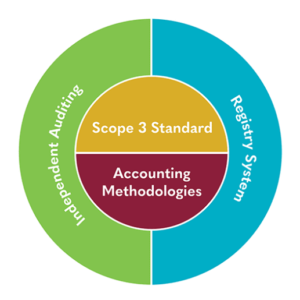
This is particularly relevant to Scope 3 emissions. Verra’s emerging Scope 3 Standard program is designed to certify value-chain interventions and issue units associated with verified greenhouse-gas benefits. Its development work specifically includes textiles as a potential value-chain application.

That could eventually allow brands to help finance emissions reductions at supplier facilities while establishing a clearer link between the investment and the resulting climate benefit.

The model could look something like this:

  • Brand financing → Factory investment → Verified emissions reduction → Carbon unit → Revenue/Scope 3 accounting

The key will be credible measurement.

Without accurate production data, energy data, and emissions baselines, it becomes difficult to determine whether a claimed reduction is real and additional.

Europe is Adding Another Layer of Pressure

The economics of textile emissions are also changing because governments are targeting waste and overproduction.

  • EU textile consumption reached 19 kg per person in 2022, up from 17 kg in 2019. EU households’ textile consumption generated an estimated 159 million tonnes of CO₂e in 2022, equal to about 355 kg per person.
  • Europe also generated approximately 6.94 million tonnes of textile waste in 2022, or 16 kg per person.

Greenhouse gas emissions from the EU’s textile consumption

eu textlie emission
Source: European Environment Agency (eea.europa.eu)

The EU is moving toward stronger producer-responsibility and circularity requirements, while France has already introduced environmental fees targeting ultra-fast-fashion businesses such as Shein and Temu. And this could make low-carbon production increasingly important for exporters.

EU textile emission

But Carbon Credits Are Not the Whole Solution

The textile industry’s climate challenge is ultimately a production problem.

Textile Exchange’s Climate+ strategy calls for a 45% reduction in greenhouse-gas emissions from fiber and raw-material production by 2030. Yet the organization says the industry remains off track to meet that target. This gap explains why carbon finance is attracting attention.

The opportunity is not simply to create another market for offsets. It is to direct capital toward factories and supply chains that can produce measurable, permanent and additional emissions reductions.

For investors, the most interesting opportunities may therefore sit behind the clothing brands—in renewable industrial heat, energy efficiency, low-carbon dyes, recycled fibers, textile-to-textile recycling and cleaner manufacturing.

For textile manufacturers, the message is even more direct.

Carbon is becoming a cost. But with credible measurement and the right market structure, it can also become a source of financing for the transition.

The companies that reduce emissions most efficiently could eventually gain an advantage not only in compliance but also in access to global customers demanding lower-carbon supply chains.

A summary of key textile carbon and emissions data

Sources: Textile Exchange, Apparel Impact Institute, EEA and UNEP.

Bottom Line

Textile carbon credits are still an emerging market, but India’s inclusion of textiles in its compliance carbon market could be a major turning point. The combination of emissions-intensity targets, factory-level baselines and tradable certificates could turn decarbonization from a sustainability expense into a measurable financial incentive.

The post Textile Emissions Are Rising. Can Carbon Credits Help the Industry Cut Its Footprint? appeared first on Carbon Credits.
Econetix Lands Million-Dollar RWE Deal as CORSIA Carbon Credit Shortage Deepens

Econetix Lands Million-Dollar RWE Deal as CORSIA Carbon Credit Shortage Deepens

Econetix, a carbon project developer, has signed a million-dollar deal with RWE Supply & Trading. This agreement allows the German energy trader access to carbon credits for the international aviation market under CORSIA.

The deal, announced September 1, 2026, will see Vienna-based Econetix supply CORSIA-eligible carbon credits from its certified project portfolio. RWE will then market the credits to airlines and other buyers that need units for compliance.

The deal shows a major challenge for CORSIA: airlines might need many more eligible credits than the market can provide right now.

RWE Builds a New Bridge to Airline Carbon Buyers

Under the partnership, Econetix will provide CORSIA-eligible credits from its portfolio to RWE Supply & Trading. RWE will act as the intermediary. It will use its trading platform and customer network to connect the credits with airlines and other compliance-driven buyers.

The companies did not disclose the exact value or volume of credits covered by the agreement. Econetix described it as a million-dollar forward supply agreement.

A forward deal allows a buyer to secure future credit supply before all of the credits are ready for delivery. That can be useful in CORSIA because projects often need time to secure host-country approval, complete certification, and receive the required labels.

For developers, a committed buyer can also make future projects easier to finance. For RWE, the agreement adds another source of credits for customers preparing for CORSIA’s first compliance deadline.

CORSIA’s Carbon Credit Gap Is Getting Harder to Ignore

The timing reflects a major supply problem. ICAO’s latest CORSIA Eligible Emissions Unit Supply Project estimates 170 million to 236 million tonnes of demand during the 2024–2026 first phase. It puts eligible supply from 10 countries at about 36-38 million tonnes as of June 2026.

Sylvera data also shows a similar trend for the demand and supply gap for CORSIA credits. 

corsia credit demand and supply gap sylvera

ICAO estimates that the first phase could create a $4 billion to $5 billion climate investment opportunity for developing countries. These countries can provide eligible emissions units.

IATA’s June 2026 market update gives a similar warning. The main scenario shows a first-phase demand of 213 million tonnes. However, there are only 38 million tonnes of eligible units available. This results in a shortfall of about 175 million tonnes.

The small difference between the ICAO and IATA supply figures reflects timing and methodology. But both point to the same conclusion: CORSIA supply remains far below potential demand. That gap is creating stronger interest in forward agreements such as the Econetix-RWE deal.

What Makes a Credit CORSIA Eligible?

Not every carbon credit can enter the CORSIA market. ICAO maintains a specific list of approved emissions-unit programs and sets rules for eligible vintages and other conditions.

For the 2024–2026 first phase, eligible programs include standards such as:

  • American Carbon Registry,
  • Gold Standard,
  • Verra’s Verified Carbon Standard, and
  • Isometric, among others.

Credits also need to meet host-country requirements.

For many credits issued from 2021 onward, ICAO requires evidence linked to host-country authorization and corresponding adjustments. These rules help prevent a country from counting the same emissions reduction toward its own climate target after an airline uses the credit under CORSIA.

That makes CORSIA supply more difficult to build than a normal voluntary carbon project. A project may generate carbon credits, but that does not mean those credits are automatically eligible for aviation compliance.

Article 6 Is Becoming Central to CORSIA

The CORSIA market is also becoming closely linked to Article 6 of the Paris Agreement. Host countries must approve projects and follow accounting rules before credits can be used internationally.

Econetix says its portfolio includes projects with Article 6 Letters of Authorization and corresponding adjustments. Its earlier Rwanda cookstove project, for example, received authorization for up to 1.77 million tonnes of CORSIA supply.

Econetix carbon developer in numbers
Source: Econetix

In August, Econetix also secured a Ugandan authorization covering up to 10 million tonnes of CO2e from its clean cooking program for vintages from 2025 to 2030. The company described that as the largest single Article 6 authorization granted to a private company in Uganda.

These authorizations do not mean all 11.77 million tonnes will immediately become available to airlines. Projects still need to meet the relevant CORSIA and certification requirements.

But they show how host-country approvals can create a pipeline of future eligible supply.

Econetix Builds a Six-Country CORSIA Pipeline

The RWE deal follows several other CORSIA-related transactions for Econetix. The company said it is advancing more than 10 projects across the Democratic Republic of Congo, Uganda, Tanzania, Malawi, Rwanda and Sierra Leone. It has already signed supply deals with SCB Environmental Markets and SmartestEnergy.

Econetix CORSIA article 6 carbon projects
Source: Econetix

In July, Econetix also delivered its first Phase 1-tagged CORSIA credits under an earlier million-dollar agreement with a major international commodity trading house. That delivery is important because it shows a distinction between having a project pipeline and delivering credits that buyers can actually use.

Econetix’s new RWE agreement adds another commercial channel for future supply. For the company, the strategy appears to be moving from individual project development toward a broader CORSIA supply platform.

Airlines Race Toward the 2028 Compliance Deadline

CORSIA’s timing is putting pressure on buyers. The scheme’s first phase runs from 2024 through 2026. Airlines must then cancel the eligible emissions units needed to meet their obligations. ICAO’s timetable sets January 31, 2028 as the deadline for cancellation of units linked to the first compliance period.

That means airlines do not simply need credits eventually. They need qualifying units ready for use ahead of the deadline.

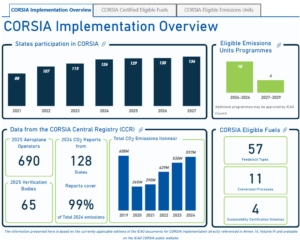
ICAO says 130 states will participate in CORSIA from 2026, increasing to 134 states from 2027, together covering about 85% of international aviation emissions. As participation grows, the need for eligible units could increase. This is one reason airlines, traders and other buyers are securing supply early.

CORSIA compliance requirements abatable

The CORSIA Credit Crunch Could Reward Early Supply

CORSIA is moving toward a larger compliance market. IATA estimates airlines might buy over 200 million credits in the first phase, valued at $4 billion to $5 billion. Demand could reach almost 2 billion credits by 2035.

ICAO estimates a first-phase supply gap of up to 200 million tonnes, while IATA puts the gap at about 175 million tonnes in its central scenario.

That shortage makes forward deals such as the Econetix-RWE agreement more important. The deal gives RWE access to future CORSIA-eligible credits while giving Econetix a route to airline and other compliance buyers.

However, projects still need financing, host-country approval, validation, verification, and CORSIA eligibility before they can deliver credits. With airlines facing a January 2028 deadline to cancel units for the first compliance period, securing reliable future supply is becoming increasingly important.

The post Econetix Lands Million-Dollar RWE Deal as CORSIA Carbon Credit Shortage Deepens appeared first on Carbon Credits.

US Biochar Firm and Singapore Asphalt Producer Test Carbon-Sequestering Roads

US Biochar Firm and Singapore Asphalt Producer Test Carbon-Sequestering Roads

U.S. biochar company Verde Resources and Singapore asphalt producer Highway International have signed a memorandum of understanding (MoU) to test a biochar-based system for roads and other infrastructure.

The companies plan to start a pilot in Singapore to test road performance, asphalt mixes, production, and carbon accounting. The project will also test how the system could work on a larger scale.

The partnership could create a new market for biochar carbon removal by storing stable carbon inside roads, airfield pavements, and other long-lasting infrastructure. Yet, the project remains in the testing stage. The companies must first prove that the material works and that they can measure and verify the carbon stored in finished roads.

Singapore Roads Become a Carbon Removal Test Bed

Verde and Highway plan to work on an initial pilot with Singapore’s Land Transport Authority (LTA). The pilot will test technical performance, pavement mixes, production readiness and the system for measuring stored carbon. It will also test the project’s monitoring, reporting and verification (MRV) process.

If the pilot succeeds and LTA approves the approach, the companies plan to discuss a wider licensing deal. Highway could become Verde’s Singapore licensee for its Net Zero Blueprint. The planned use could cover roads, airport runways and other infrastructure.

However, the MoU does not guarantee commercial rollout. The companies still need successful testing, LTA approval, regulatory approvals, due diligence and final commercial agreements.

How Biochar Could Store Carbon in Roads

Biochar is made by heating biomass with little oxygen. The process creates a stable form of carbon that can remain stored for a long time.

Verde plans to use biomass waste, including palm-oil residues, to make engineered biochar for asphalt. Instead of allowing the carbon in the biomass to return to the atmosphere through decay, the company wants to lock it into road materials.

The idea turns infrastructure into a potential carbon storage site.

Verde’s system combines engineered biochar with asphalt technology and carbon accounting. It also includes lifecycle assessment (LCA), environmental product declarations (EPDs), and digital project-data tracking.

verde biochar asphalt technology
Source: Verde Resources

The actual amount of carbon stored will vary by project. Developers must also count emissions from making, transporting, and processing the biochar when calculating the net removal.

Verde Has Early Carbon Removal Results

The Singapore pilot builds on earlier testing in the United States. In December 2024, Verde and C-Twelve tested cold-mix biochar asphalt at the National Center for Asphalt Technology (NCAT) test track in Auburn, Alabama.

Verde’s latest SEC filing says the test sequestered about 8 tons of carbon. Puro.earth verified and certified the related carbon removal credits, which Verde says it issued and sold in April 2025. Verde describes the project as the world’s first to generate carbon removal credits from asphalt production and installation.

The volume was small, however. The Singapore pilot will test whether the method can move from a demonstration to larger commercial projects.

Isometric Adds Another Verification Route

Verde is also working with Isometric to develop a carbon credit pathway for its engineered biochar. The companies announced their collaboration in April 2026. Isometric says its biochar protocol includes lifecycle accounting, feedstock rules, and durability measurements, including uses such as asphalt.

Verde is therefore working with more than one carbon market platform. Its SEC filing says Puro.earth has registered Verde as a carbon removal credit supplier. The company is also working with Isometric on certification and verification.

Strong carbon accounting will remain important. A road can generate credible removal credits only if developers can prove how much carbon the biochar stores and how long that carbon stays locked away.

Biochar Supply Will Matter at Scale

Commercial growth will require a steady supply of qualifying biochar. In March 2026, Verde signed a supply agreement with Biochar Solutions LLC for up to 38,500 U.S. tons of engineered biochar per year.

At least 50% of that supply must qualify for carbon removal credit generation. The agreement also covers revenue sharing from credits generated when the biochar goes into Verde’s products.

The deal shows that Verde is preparing for larger production. But the Singapore pilot will still need to prove that biochar can meet road performance standards while keeping its carbon storage benefits.

Global Biochar Market Gains Momentum

The global biochar market is growing as demand for durable carbon removal increases. The American Biochar Institute found that the U.S. biochar industry reached about $157 million in 2025, nearly three times its 2023 value of $52 million. U.S. production topped 97,000 metric tonnes, while installed capacity exceeded 400,000 tonnes a year.

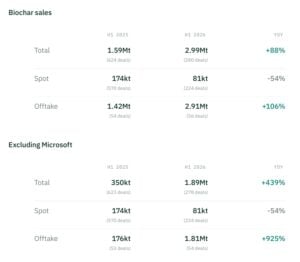
Globally, biochar supplied more than 90% of durable carbon removal credits delivered in 2025, according to CDR.fyi. Strong corporate demand and new production projects are helping the sector expand, while buyers increasingly seek credits backed by clear carbon accounting and durable storage.

biochar carbon credit market 2025

SEE MORE: U.S. Biochar Industry Triples to $157 Million as Carbon Removal Market Sparks Record Growth

Why Singapore Is a Strategic Test Market

Singapore provides a useful test market because it has a large infrastructure system but limited land for renewable energy projects. The country aims to reach net-zero emissions by 2050. It also targets emissions of 45 million to 50 million tonnes of CO2e by 2035, compared with about 60 million tonnes in 2030.

Singapore is using several tools to cut emissions, including a carbon tax and international carbon markets. Its carbon tax rose to S$45 per tonne in 2026 and 2027, with a target of S$50 to S$80 per tonne by 2030. Covered facilities can use eligible international carbon credits to offset up to 5% of taxable emissions.

That does not mean Verde’s road credits automatically qualify for Singapore’s compliance market. They would need to meet the country’s rules on Article 6, additionality, and double counting.

For now, the project should be viewed as a carbon removal development rather than an approved Singapore compliance credit program.

verde biochar asphalt

Credit Quality Must Keep Pace With the Technology

The carbon market side is just as important as road performance. Verde’s earlier NCAT test produced about 8 tons of verified carbon removal, but that result does not prove every future road project will achieve the same level of storage.

The Singapore pilot will help answer those questions. Developers will need to measure the amount of biochar used, its carbon content, emissions from production and transport, and the carbon that remains stored in the finished road.

That makes the LCA and MRV systems especially important. A road product can create a new carbon-removal market only if independent systems can confirm the actual net removal.

Could Roads Become the Next Carbon Sink?

The Verde-Highway MoU brings biochar and road construction into the same carbon removal strategy. The pilot will test whether engineered biochar can meet road standards while storing carbon in long-lived infrastructure. It will also test how developers can measure and verify those removals.

The project remains at an early stage. The MoU does not guarantee a final licensing deal or a specific volume of carbon removals from Singapore.

Still, Verde already has an early U.S. demonstration, a 38,500-ton annual biochar supply agreement, an Isometric partnership and a Singapore subsidiary focused on regional growth.

If the Singapore pilot succeeds, roads could become a new application for durable biochar carbon removal. For the biochar market, the key question is whether carbon stored in everyday infrastructure can become measurable, verifiable, and scalable enough to support a new class of carbon removal credits.

The post US Biochar Firm and Singapore Asphalt Producer Test Carbon-Sequestering Roads appeared first on Carbon Credits.
Singapore-based CIX, Carbonplace Merger Targets More Connected Global Carbon Market

Singapore-based CIX, Carbonplace Merger Targets More Connected Global Carbon Market

Climate Impact X (CIX) and Carbonplace plan to merge in a deal that could reshape the infrastructure behind global carbon markets. The Singapore-based environmental markets exchange and London-based carbon portfolio management platform announced their intent to combine on August 26, 2026.

The deal would bring together CIX’s exchange, trading, and price-discovery tools with Carbonplace’s multi-registry access and bank-grade settlement system. The companies say the goal is to create a more connected system for buying, trading, settling, holding, and retiring carbon credits.

The deal still needs regulatory approval. The companies expect to finish the integration by Q1 2027. Both businesses will keep their current brands during this time.

Two Carbon Market Powerhouses Move to Join Forces

CIX and Carbonplace operate at different points in the carbon credit transaction process.

CIX provides procurement, trading, and price discovery. Its platforms include an exchange for standardized carbon contracts and tools for project sourcing and transactions. CIX also provides price benchmarks and data products.

Carbonplace focuses on what happens after a trade. Its platform provides multi-registry access, settlement, custody, reporting, and retirement. It currently connects users to 14 carbon and renewable energy certificate registries through a single system.

The merger would combine these functions. Buyers and sellers could have one clear path. They can find and price credits easily, and they can complete the transaction and track ownership smoothly.

The companies say this could ease some of the friction in the carbon market. Right now, it’s divided across various exchanges, registries, countries, and standards.

CEO Oi-Yee Choo remarked:

“Scaling access and liquidity to meet the growing needs of global carbon markets requires robust, trusted infrastructure. This infrastructure must work across voluntary and compliance schemes, and across geographies and standards.”

12 Financial Giants Back the Deal

The proposed company will have backing from 12 major financial institutions, investors, and market operators.

  • They are BBVA, BNP Paribas, CIBC, DBS, GenZero, Mizuho Financial Group, National Australia Bank, NatWest Group, Singapore Exchange (SGX), Standard Chartered, Sumitomo Mitsui Banking Corporation (SMBC), and UBS.

The shareholder base gives the deal a strong link to traditional financial markets.

CIX itself was established in 2021 and is backed by DBS, GenZero, Mizuho, SGX, and Standard Chartered. GenZero is a decarbonization investment platform founded by Temasek. In 2020, major banks like BBVA, BNP Paribas, CIBC, National Australia Bank, NatWest, SMBC, Standard Chartered, and UBS supported Carbonplace.

The combined ownership, therefore, gives the new platform access to financial institutions across Asia, Europe, and other major markets.

Can One Platform Fix Carbon Market Fragmentation?

The merger comes as carbon markets try to become larger and more credible. A major challenge is fragmentation.

Different carbon standards and registries use different systems for issuing, tracking, and retiring credits. Buyers may also need separate relationships with different platforms to source credits, assess prices, and complete transactions. That can make carbon trading more complex than trading many traditional financial assets.

CIX and Carbonplace argue that stronger infrastructure can help solve this problem. Their proposed platform would connect price discovery, trading, registry access, settlement, custody, and retirement across the transaction lifecycle.

That could become more important as carbon markets expand beyond voluntary corporate purchases.

Article 6 Could Increase Demand for Infrastructure

The growth of Article 6 of the Paris Agreement is one reason companies see a need for better infrastructure.

Article 6.2 allows countries to transfer emissions reductions internationally, provided they follow agreed accounting rules. This creates a potential bridge between national climate policies and international carbon markets.

The CIX-Carbonplace announcement also points to the Carbon Offsetting and Reduction Scheme for International Aviation (CORSIA). CORSIA requires participating airlines to use eligible emissions units to address certain growth in international aviation emissions.

CIX CORSIA database

As these systems expand, carbon transactions may involve more than just voluntary corporate buyers. Governments, financial institutions, and regulated companies could play a bigger role.

That could increase demand for systems that can track ownership and retirement with clear records.

CIX Brings Trading and Price Discovery to the Table

Price transparency is another major part of the proposed merger. Carbon markets often have different prices for credits based on project type, location, vintage, and quality. This can make it difficult for buyers to compare credits.

CIX database and price benchmark
Source: CIX

CIX operates an exchange and develops price benchmarks designed to provide more visibility into market-driven prices. Its exchange offers standardized contracts. This lets buyers purchase larger volumes of credits that meet specific requirements. They don’t have to pick individual credits from each project one at a time.

Carbonplace adds a different layer. Its system tracks ownership and provides settlement and reporting tools across multiple registries.

Carbonplace database
Source: Carbonplace

Combining the two could address both market sides: finding and pricing credit, then securely completing and recording the transaction.

Singapore and London Build a Carbon Market Bridge

The proposed merger also connects two important financial centers. CIX is headquartered in Singapore, while Carbonplace is based in London. The companies say the combined business could connect participants across different time zones, regulatory systems and trading communities.

That Asia-Europe link could be important for carbon markets.

Southeast Asia offers great potential for nature-based carbon projects. Meanwhile, Europe holds vast amounts of corporate and institutional capital eager for climate investments.

A more connected platform could make it easier to link project developers and suppliers in emerging markets with international buyers.

The companies highlight cooperation among Singapore, the UK, and Kenya. They’re working together through the Coalition to Grow Carbon Markets. This group aims to boost carbon market development.

CIX and Carbonplace merger

Better Infrastructure Won’t Fix Credit Quality

Despite its potential, the deal does not automatically solve the carbon market’s biggest challenges. A better trading and settlement system cannot by itself guarantee that carbon credits deliver real emissions reductions or removals.

Credit quality remains critical.

CIX says it maintains standards around quality, impact, and credibility for the products offered through its platforms. Carbonplace focuses on secure ownership, tracking, and reporting. The broader market still needs strict rules for additionality, permanence, monitoring, reporting, and verification.

Liquidity is another challenge.

A platform can make trading easier, but buyers and sellers still need to participate at a sufficient scale. Without enough market activity, price discovery and trading volumes can remain limited.

The merger, therefore, provides infrastructure. It does not guarantee the growth of the underlying market.

The Bigger Goal: Unlock Institutional Carbon Trading

The CIX-Carbonplace deal reflects a broader shift in carbon markets.

Early voluntary carbon markets relied heavily on project developers, brokers, and individual registries. As the market becomes more connected to Article 6, CORSIA, and sovereign climate policies, participants need systems that can handle more complex transactions.

The proposed merger aims to provide that foundation. If completed, the merger would mark a major consolidation in carbon market infrastructure.

The bigger question is whether a more connected trading and settlement system can help carbon markets attract the liquidity, transparency and institutional capital needed to scale.

The post Singapore-based CIX, Carbonplace Merger Targets More Connected Global Carbon Market appeared first on Carbon Credits.
What Types of Projects Generate Carbon Credits?

What Types of Projects Generate Carbon Credits?

Carbon credits can come from many different types of projects, but they all have one basic purpose: to reduce greenhouse gas emissions or remove carbon dioxide (CO₂) from the atmosphere.

A single carbon credit generally represents one metric ton of CO₂ equivalent (tCO₂e) reduced or removed by a project. For example, a project that captures methane from a landfill may generate credits by preventing that methane from entering the atmosphere. A reforestation project can generate credits by storing additional carbon in growing trees.

The voluntary carbon market (VCM) supports projects across energy, waste, agriculture, forestry, and carbon-removal technologies. Verra’s Verified Carbon Standard (VCS), one of the major carbon crediting programs, currently recognizes project activities across 18 sectoral scopes, ranging from energy and waste to agriculture, forestry, geological carbon storage, engineered removals, and marine resources.

But not all carbon projects work in the same way. The most important distinction is between emissions reduction projects and carbon removal projects.

Emissions Reduction and Avoidance Projects

Many carbon credits come from projects that reduce or avoid emissions that would otherwise occur.

These projects do not necessarily remove CO₂ that is already in the atmosphere. Instead, they reduce the amount of greenhouse gases released compared with a defined baseline.

Common examples include renewable energy, methane capture, energy efficiency, and forest conservation.

Renewable Energy Projects

Renewable energy projects can generate carbon credits when they replace more emissions-intensive sources of electricity or energy.

Solar, wind, and some other renewable energy projects have historically been used in carbon markets. The basic idea is that generating electricity from a low-carbon source can reduce emissions compared with a higher-emitting alternative.

However, whether a renewable energy project can generate credits depends on the applicable methodology and whether the emissions reduction is considered additional. In other words, the project must meet the relevant rules for demonstrating that the carbon market incentive contributes to the claimed climate benefit.

Methane and Waste Projects

Waste projects are another important source of carbon credits. Landfills, wastewater treatment facilities, agriculture, and other waste-related activities can release methane, a powerful greenhouse gas. Projects can capture methane and either destroy it or use it to generate energy.

Other waste projects can also generate credits by changing how organic waste is treated. Biochar, for example, can be produced from biomass and used in ways that store carbon while also potentially reducing emissions from conventional waste management.

Carbon crediting programs such as Verra include waste handling and disposal among their recognized project categories.

Clean Cooking and Energy Efficiency

Carbon credits can also support technologies that reduce energy use or replace more polluting fuels. Clean cooking projects are one example. Improved cooking technologies can reduce the amount of fuel needed and, depending on the technology and methodology, reduce greenhouse gas emissions.

These projects can also produce health and social benefits by reducing household exposure to harmful cooking smoke.

Clean cooking remains an important carbon market project type. In 2025, the Integrity Council for the Voluntary Carbon Market (ICVCM) confirmed that several Gold Standard clean cooking methodologies were eligible under its Core Carbon Principles (CCP), reflecting the continued role of the sector in the voluntary market.

Other energy efficiency projects can include more efficient lighting, heating, appliances, and industrial processes. The Gold Standard, for example, recognizes renewable energy and end-use energy efficiency projects among its eligible activities.

Forestry and Land-Use Projects

Forestry and land-use projects are among the best-known categories in the carbon market. These projects can either avoid emissions or remove and store carbon.

Forest conservation projects, including REDD-related activities, aim to reduce emissions associated with deforestation and forest degradation. Other projects focus on planting trees, restoring forests, improving forest management, or protecting wetlands.

Verra’s Agriculture, Forestry and Other Land Use (AFOLU) category includes afforestation, reforestation and revegetation, agricultural land management, improved forest management, REDD, grassland conservation, and wetland restoration.

The climate benefit comes from either preventing carbon that is already stored in ecosystems from being released or increasing the amount of carbon stored in vegetation, soils, or other natural systems.

However, these projects also face risks that can affect the durability of their carbon benefits. Forests can be damaged by wildfire, pests, drought, storms, or future changes in land use. This makes careful monitoring and appropriate accounting especially important.

Agricultural Projects

Agriculture can generate carbon credits through changes in farming practices that reduce emissions or increase carbon storage.

Examples include improved soil management, changes in fertilizer use, better water management, reduced tillage, improved livestock practices, and other techniques that can lower greenhouse gas emissions or increase soil carbon.

Agricultural projects can be more complex to measure because carbon levels can vary across fields and over time. As a result, strong measurement, reporting, and verification systems are important for determining how much additional climate benefit a project actually creates.

Agriculture is a recognized carbon project category under major standards, including Verra’s VCS.

emissions reductions and avoidance projects

Carbon Removal Projects

The second major category is carbon removal. Unlike an emissions-reduction project, a carbon removal project takes CO₂ from the atmosphere and stores it in a carbon reservoir.

There are several ways to achieve this, ranging from natural approaches such as reforestation to engineered technologies such as direct air capture.

Reforestation and Other Natural Removals

Trees and plants naturally absorb CO₂ as they grow. Reforestation, afforestation, improved forest management, and some agricultural practices can therefore remove carbon from the atmosphere and store it in biomass and soils.

Other natural carbon removal projects include wetland restoration and blue carbon projects, which protect or restore carbon-rich coastal and marine ecosystems.

These approaches can provide additional benefits such as biodiversity protection, improved soil health, water management, and support for local communities. However, the stored carbon can be vulnerable to fires, droughts, storms, land-use changes, and other risks.

Biochar

Biochar is another carbon removal approach. It is produced by heating biomass under controlled conditions with little or no oxygen. The resulting material can then be used in soil or other applications.

When biomass absorbs CO₂ as it grows and is subsequently converted into stable biochar, some of that carbon can remain stored for a long period.

Biochar has attracted growing attention because it combines carbon removal with the potential to put agricultural and organic waste to productive use.

carbon removal project types

Direct Air Capture and Engineered Removals

Some carbon removal projects use technology to capture CO₂ directly from the atmosphere. Direct air capture (DAC) uses specialized equipment to extract CO₂ from ambient air. The captured carbon can then be stored underground or used in other applications, depending on the project.

Other engineered approaches include carbon capture and storage, enhanced mineralization, and other technologies designed to permanently or durably store atmospheric CO₂.

These technologies can offer more durable storage than some nature-based approaches, but they are generally more expensive and remain at an earlier stage of deployment.

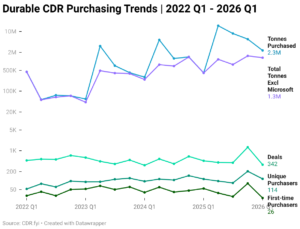
Demand for durable carbon removals has increased sharply in recent years. In 2025, buyers purchased an estimated 30 million tonnes of durable carbon removal credits, up from about 8 million tonnes in 2024, according to CDR.fyi data. Yet, fewer than 1 million tonnes of durable removal credits had been issued at the time, highlighting the gap between demand and available supply.

durable-cdr-purchase-volume-2022-2026-q1

Why Does the Project Type Matter?

The type of project matters because each approach has different costs, risks, climate benefits, and measurement challenges.

A methane capture project may prevent a powerful greenhouse gas from reaching the atmosphere. A forest project may protect existing carbon stocks or increase biological carbon storage. A DAC facility physically removes CO₂ from the atmosphere and can store it for very long periods.

These differences also affect carbon credit prices. Lower-cost emissions-reduction projects can generate relatively inexpensive credits, while newer carbon-removal technologies can cost substantially more. But a higher price does not automatically mean a better credit.

Buyers should examine whether the claimed emissions reduction or removal is real, measurable, additional, durable, and independently verified. They should also consider risks such as leakage, reversal, and double counting.

The Bottom Line

Carbon credits can be generated by a wide range of projects, from renewable energy and methane capture to forest conservation, clean cooking, agriculture, biochar, and direct air capture.

The key distinction is whether a project reduces or avoids emissions or removes CO₂ from the atmosphere. Both can play a role in climate action, but they have different costs, risks, and methods for measuring their impact.

As the carbon market develops, demand is increasingly shifting toward projects that can demonstrate strong and durable climate benefits. Understanding where a carbon credit comes from is therefore just as important as knowing its price.

The post What Types of Projects Generate Carbon Credits? appeared first on Carbon Credits.