Why BYD Stock (BYDDY) Is a Long-Term Winner in Clean Energy and EV Markets?

BYD

Investors today are looking for companies that aren’t just talking about change, but are leading in cleaner energy and lower emissions. One company doing exactly that is BYD Company Limited (HKEX: 1211 | OTC: BYDDY).

With record EV sales, strong profits, and real action on sustainability, the Chinese EV maker stands out. In this article, we’ll explain why BYD stock is one of the best sustainable EV stocks to buy and hold for the long term.

BYD’s New Energy Vehicles Hit a New High

In June 2025, BYD made history by selling 382,585 New Energy Vehicles (NEVs) in just one month. That’s the company’s highest monthly total ever and a 12% jump from the same time last year. While growth from May was only 0.03%, it still shows a strong and steady performance.

This sales milestone is more than a number. It proves BYD is leading the clean transportation race. As countries move toward cleaner energy and lower emissions, BYD continues to grow both at home and abroad.

BYD NEV sales
Source: BYD LinkedIn

BYD Builds It All—And That’s a Big Advantage

BYD, aka “Build Your Dreams”, started as a battery company and has since grown into a global name in electric vehicles and clean energy. While many carmakers only joined the EV wave recently, BYD has been working on electric solutions for decades.

One of its biggest strengths is that it makes most of its key parts in-house. The company designs and builds its own batteries (e.g., lithium iron phosphate: LFP batteries), motors, chips, and vehicle platforms. This full control helps BYD avoid supply chain delays and cut costs, while still delivering high quality.

This setup allows the company to launch new products faster and respond quickly to market shifts. When other automakers face delays or cost jumps, BYD keeps moving due to its strong in-house system.

Furthermore, the EV giant is aggressively expanding its global footprint across the U.S., Hungary, Brazil, and Thailand. Its EVs are reaching customers in Europe, Southeast Asia, Latin America, and the Middle East.

Today, exports make up about 20% of BYD’s NEV sales. As more countries push for cleaner vehicles and tighter emissions rules, BYD is well-positioned to meet that demand.

Driving Toward Net Zero: BYD’s Carbon Commitment

The company aims to cut its carbon intensity by 50% by 2030 and become carbon neutral by 2045. It’s already working on this goal by switching to renewable energy and improving factory efficiency.

BYD revealed,

“As of 10 March, 2025, BYD has counterbalanced 86,874,386,498 kg of CO₂, equivalent to the CO₂ absorption of 1,447,906,442 trees”

BYD’s 2024 sustainability report outlines major efforts, including:

  • Using 35% green electricity by 2025

  • Expanding solar power use across its plants

  • Producing only zero-emission vehicles

  • Recycling batteries and finding second-life uses for them

By investing in both clean vehicles and green manufacturing, BYD is creating a full-circle sustainable business model.

byd EMISSIONS
Source: BYD

Solar and Battery Storage Push

BYD isn’t only about vehicles. It also plays a key role in the solar energy and battery storage industries. The company builds everything from solar wafers to full PV modules, offering complete systems for homes, businesses, and power grids.

A recent deal with Saudi Electricity Company shows just how far BYD has come. The two companies signed a contract to build the world’s largest grid-scale energy storage project, with a capacity of 12.5 GWh. That brings their total collaboration in Saudi Arabia to 15.1 GWh—a major win for both BYD and the country’s Vision 2030 goals.

This move highlights BYD’s growing role in the global energy market, beyond just transportation.

Competing and Winning in a Tough EV Market

The EV space is crowded, with companies like Tesla, NIO, and legacy automakers all in the mix. But BYD stands out by growing steadily, even during price wars and economic uncertainty.

Its strong supply chain and smart pricing strategies help the company stay competitive. When others cut prices to chase market share, BYD keeps its margins by relying on its low-cost, in-house production model.

BYD’s ability to adapt quickly to changes in policies, markets, and supply trends shows just how solid its game plan is.

Analysts Say BYD Stock Is a Long-Term Winner

Despite global challenges, BYD’s numbers look strong. As of mid-2025, its market value reached HK$359.45 billion. The company expects 16% sales growth this year, with revenue possibly hitting HK$1.4 trillion.

Earnings per share (EPS) are also climbing. Analysts predict an average EPS of HK$7.20, which is higher than last year. Out of 115 analysts, 106 have rated BYD as a “Buy” or “Strong Buy”—a clear sign of confidence in its future.

Experts believe BYD’s stock has room to grow over the next decade and beyond, and the price projections reflect the company’s ongoing research, innovation, and international growth plans.

byd stock
Source: Yahoo Finance

Beyond EVs: BYD’s Bigger Vision

BYD isn’t just building electric cars. It also makes electric buses, trucks, and even monorail systems. Its SkyRail, a driverless monorail, is already in use in several cities, offering clean urban transit options.

Its all-in-one approach, making batteries, building cars, producing solar panels, and supporting the energy grid, provides a solid base for future growth.

If investors are looking for a stock that blends smart innovation, global reach, and real climate impact, BYD is a top choice. It’s not just about profits, it’s about progress. And BYD is clearly driving both.

The post Why BYD Stock (BYDDY) Is a Long-Term Winner in Clean Energy and EV Markets? appeared first on Carbon Credits.


Carbon Removal in 2025: Are You Investing in the Right Climate Credits?

carbon removal

The voluntary carbon market made great strides in early 2025.  strong growth. This is fueled by record credit retirements, a focus on integrity, and increased interest in carbon removals compared to traditional avoidance credits.

We have studied newly published reports from two credible research agencies, namely Sylvera and CEEZER. Both say that organizations are now willing to invest more in credits that deliver real climate impact. Thus, the market is shifting from quantity to quality, and the numbers support this. Let’s deep dive.

Carbon Credit Retirements Reach a New Peak

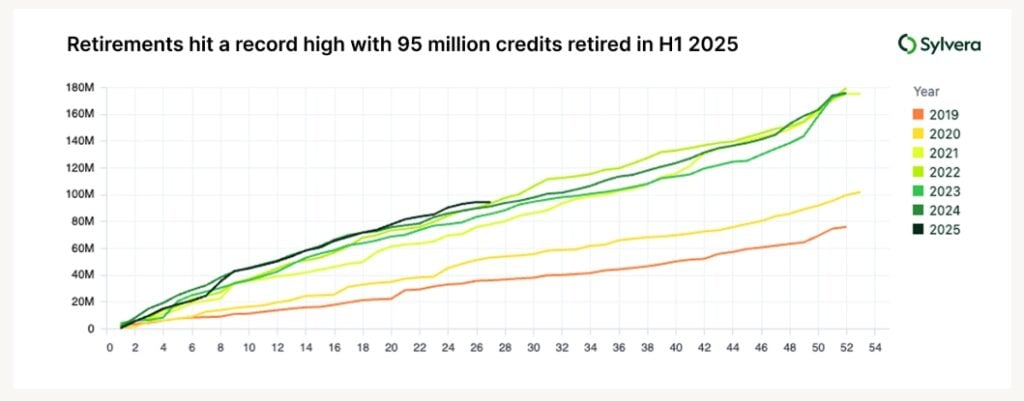
Carbon credit retirements hit 95 million in the first six months of 2025, the highest total ever recorded for a half-year. This marks a 9% increase compared to H1 2024. More importantly, total retirement value jumped by 32%, indicating that buyers are not just retiring more credits—they’re paying more for the right ones.

This increase reflects a clear preference for verified high-quality credits. Buyers are becoming more selective and placing climate integrity at the forefront.

carbon removal
Source: Sylvera

Supply is Growing, But Demand Is Growing Faster

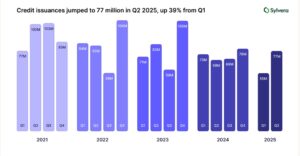
On the supply side, carbon credit issuances rose to 77 million in Q2 2025, a 39% increase from the previous quarter. This represents a 14% boost compared to Q2 2024.

Yet even with more credits available, retirements continue to outpace issuances. If this trend holds, this year could see negative net issuance for the first time. However, this imbalance can inevitably put pressure on developers to meet demand for high-integrity credits. As companies pursue long-term climate targets, they seek more than low-cost offsets.

carbon credits issuance
Source: Sylvera

Quality Becomes a Core Priority

Data shows buyers are moving up the quality ladder. In H1 2025, 57% of Sylvera-rated credits retired had BB ratings or higher, up from 52% in all of 2024. This shift is driven by better due diligence tools, clearer carbon credit ratings, and initiatives like the ICVCM’s Core Carbon Principles.

Market participants are becoming more informed and aligning purchases with ESG goals, climate science, and regulations. Buyers now choose credits with intention instead of blindly purchasing.

CORSIA Spurs Growth in Compliance-Eligible Credits

The Sylvera report further emphasizes that more than 37% of credits issued in Q2 2025 could be eligible under Phase 1 of CORSIA, the global offsetting scheme for international aviation.

  • This is a notable increase from 28% in the same period of 2024. This alignment with international standards is closing the gap between voluntary and compliance markets.

Full CORSIA eligibility depends on host country authorizations under Article 6 of the Paris Agreement. The cancellation deadline for Phase 1 is January 2028, and developers are closely watching national authorities’ responses.

The Market Shifts Toward Durable Carbon Removals

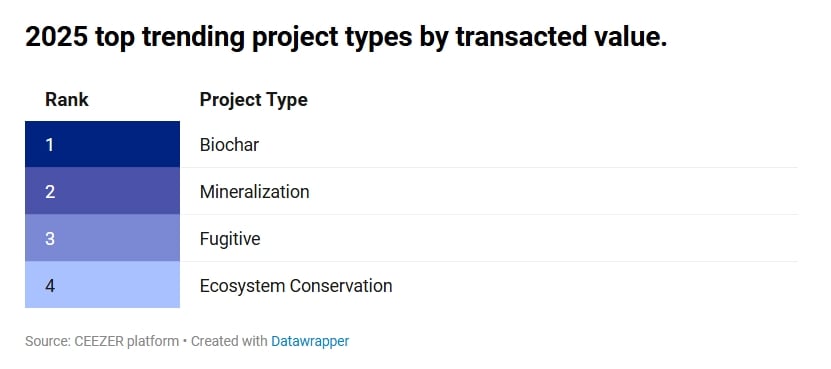
One key trend of 2025 is the strong shift toward carbon removals. CEEZER data shows a 102% increase in the share of removal credits transacted compared to last year. Buyers are prioritizing long-term impact over short-term avoidance.

Spending patterns reflect this shift. The average spend per ton across all credit types has more than doubled, rising 2.2 times year-on-year. For removals specifically, prices have increased by 3.2 times. This premium reflects interest in projects with lasting impact, such as biochar, mineralization, and reforestation.

Companies are now focusing on credits in Oxford Category 5, representing durable removals with low reversal risk, rather than Category 4 credits, which carry higher long-term uncertainties.

carbon removal
Source: CEEZER

Nature-Based Credits in Demand, But Supply and Standards Remain a Challenge

Nature-based projects like ARR (Afforestation, Reforestation, and Revegetation) are attracting premium prices. On average, ARR credits are selling for $24 per ton in the primary market. For credits with BBB+ ratings, prices can reach up to $27. However, these credits only make up 3.7% of total retirements, indicating high demand but limited supply.

This supply-demand gap is prompting developers to increase high-quality nature-based removal projects. However, challenges like land access, cost, and long verification timelines still hinder expansion.

Moving on, REDD+ projects, aimed at reducing deforestation and forest degradation, rebounded in Q2 2025. Their share rose from 3% in Q1 to 16%, the highest since Q2 2023. Still, scrutiny remains over outdated REDD+ methodologies, many of which may not meet ICVCM’s integrity standards.

This uncertainty is pushing buyers to explore alternatives like waste management, biogas, and improved forest management, where credibility and transparency are easier to achieve.

North America Leads Issuance Growth

Significantly, North America has become a major player in carbon markets, doubling its share of new issuances to 43% in Q2 2025. This growth propelled the American Carbon Registry (ACR) to the top spot among registries, holding a 33% share. Gold Standard followed at 25%, and Verra at 21%.

This surge reflects stronger project pipelines, clearer regulations, and confidence in the U.S. market’s ability to meet both voluntary and compliance criteria.

Industrial and Commercial Credits Gain Market Share

Carbon credit projects from industrial and commercial sectors are quickly gaining traction. In H1 2025, these projects accounted for 19% of new issuances, up from just 7.9% during the same time in 2024. These include initiatives like refrigerant recovery, methane capture, and energy efficiency upgrades.

These scalable, technology-driven projects are becoming popular alternatives to traditional forestry and land use projects. As demand grows, industrial credits are expected to capture a larger share of the market.

Tech and Services Drive Up Carbon Removal Demand

The CEEZER report also highlighted that professional services and tech sectors are emerging as key players in carbon removal. Professional services firms now account for 24% of the total retirement value in 2025. The tech and IT sector has seen a 61% jump in retirement value for removals, the highest growth rate of any sector this year.

These industries align decarbonization with business values, helping shape the next phase of the market.

Greenhushing Begins to Decline

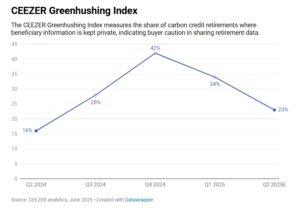
Many companies used to quietly retire credits. This trend is known as “greenhushing.” However, things are changing. CEEZER’s Greenhushing Index tracks these anonymous retirements. It peaked at 42% during the 2024 U.S. elections. By Q1 2025, it fell to 35% and then to 23% in Q2.

This decline indicates growing buyer confidence. Companies are becoming more transparent, using credit retirements to showcase their climate leadership.

carbon removals
Source: CEEZER

So, Is Integrity the New Standard for the Carbon Market?

Data from H1 2025 shows the carbon market is growing. Buyers are now focusing on credits that offer long-term benefits instead of offsets. With PACM credits coming later this year and high-integrity standards becoming standard, 2025 could establish new benchmarks for credibility and performance.

As demand and quality expectations increase, developers and registries will feel more pressure to deliver. The voluntary carbon market is aligning more with compliance markets. It is becoming a key tool for global climate action.

Allister Furey, CEO at Sylvera, summarized:

“Demand for credits and, in particular, high-quality credits is at an all-time high. At the same time, increasing use of project-based credits in compliance schemes is narrowing the gap between voluntary and compliance markets. Meeting both higher climate integrity standards, as evidenced by ratings, and eligibility criteria for schemes, like CORSIA, is being seen as essential for new projects in development. Market alignment with both integrity and regulatory expectations is starting to unlock the potential of carbon markets to deliver genuine climate impact at lower economic costs.”

If this trend continues, 2025 won’t just break records; it could redefine how the world values the carbon removal market.

The post Carbon Removal in 2025: Are You Investing in the Right Climate Credits? appeared first on Carbon Credits.
Explosive Report Challenges Google’s Emissions Data as Nothing but Greenwashing

google

Google has often claimed to be a climate leader. It highlights its use of renewable energy and efficient data centers. In its 2025 sustainability report, the company said it reduced energy emissions from its data centers by 12% in 2024. This was despite the rising demand for AI.

Google Highlights Clean Energy Wins

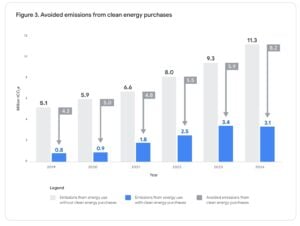
The tech giant reported that between 2011 and 2024, its clean energy purchases helped avoid an estimated 44 million metric tons of CO₂ emissions. Additionally, it signed contracts for 8 GW of new clean energy and brought 2.5 GW online in 2024 alone. Since 2017, Google says it has matched 100% of its global electricity use with renewable energy.

To strengthen its green credentials, Google also pointed to major hardware advancements. For instance, its Ironwood TPU is reportedly 30 times more energy efficient than earlier models. The company further claimed a sixfold increase in computing power per unit of electricity since 2019.

Moreover, Google has invested in advanced clean energy solutions. Through partnerships focused on small modular nuclear reactors and geothermal energy, it positioned itself as a leader pushing the boundaries of innovation in the clean tech space.

Google clean energy
Source: Google

However, a New Report Tells a Different Story

Despite these claims, a recent report sharply criticizes Google’s environmental impact, raising doubts about the effectiveness and transparency of its climate actions

Kairos Fellowship Report Critiques Google’s “Eco-Failures”

On July 2, 2025, the Kairos Fellowship released a report called Google’s Eco-Failures. It accuses Google of misleading the public about its greenhouse gas (GHG) emissions. Google talks about cutting data center emissions and investing in energy. But the report reveals a different story: emissions are rising, and the accounting is unclear.

Key findings from the report include:

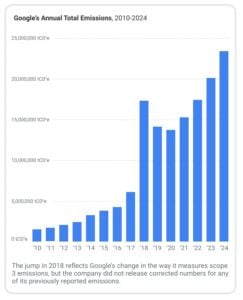
  • GHG emissions increased by 1,515% from 2010 to 2024.

  • Google emitted 21.9 million more metric tons of carbon in 2024 than in 2010.

  • Scope 2 emissions, related to purchased electricity, surged 820% during this time.

  • Scope 3 emissions (from supply chains and product use) remain high, with little transparency.

  • Only Scope 1 emissions (direct operations) showed a slight drop, just 0.31% of total emissions.

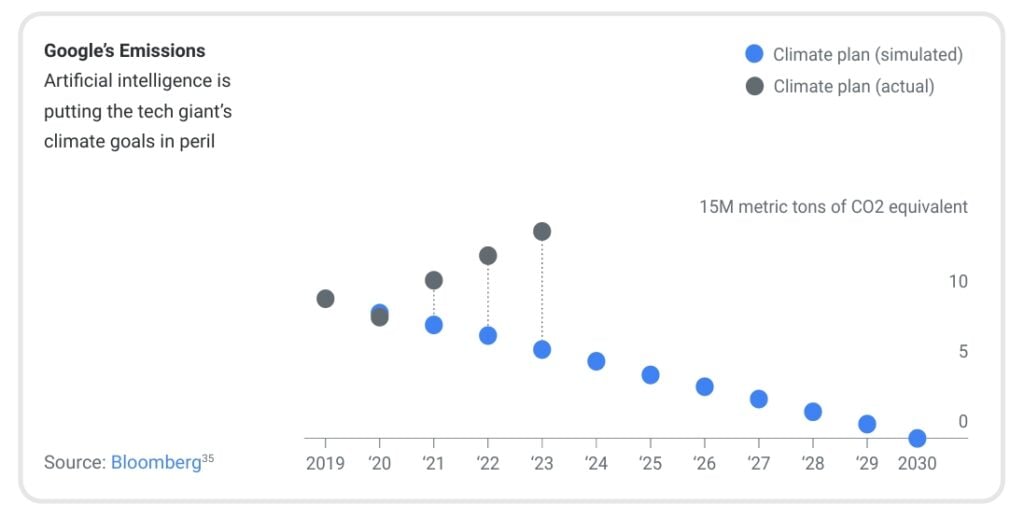
According to Kairos, Google’s focus on “market-based emissions,” which depend on renewable energy credits (RECs), hides its rising actual emissions. Instead of making real cuts, the company seems to offset its emissions on paper while expanding energy-intensive AI and cloud computing infrastructure.

Additionally, the team has also incorporated a chart (see below) from Bloomberg in July 2024 that tracks Google’s market-based emissions. It showed the enormous gap between the company’s plan and its reality.

Google emissions
Source: Chart from Kairos Fellowship report, “Google’s Eco-Failures”

AI Growth Fuels Energy Demand and Emissions

One major concern is the environmental impact of Google’s growing artificial intelligence infrastructure. The report links rising emissions to increased power use in data centers for generative AI services like Gemini and Google Cloud AI.

Since 2010, Google’s energy use has jumped by 1,282%, even with improvements in computing efficiency. In real terms, energy use and emissions are rising sharply, casting doubt on Google’s sustainability claims.

The Kairos report warns that efficiency metrics may distract from the real issue: massive energy growth driven by AI.

Google’s Energy Savings Aren’t as Impressive

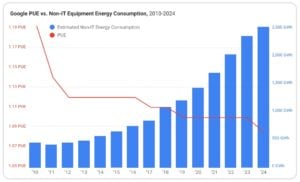
Google often highlights its PUE (Power Usage Effectiveness) improvements. However, the real drop in non-IT energy use happened only in 2011. That year, PUE improved slightly, saving 26.3 gigawatt-hours (GWh) of energy. While it sounds good, it’s small in the bigger picture.

In 2011, Google’s top executives took 491 private jet trips. These flights consumed about 855,000 gallons of jet fuel and burned over 33.8 GWh of energy—more than the energy saved from better PUE. Just by cutting private jet flights, Google could’ve saved more energy.

Simply put, 33.8 GWh equals all the clean energy added to the U.S. power grid in 2023.

google energy
Source: Chart from Kairos Fellowship report, “Google’s Eco-Failures”

Net Zero by 2030? “Unrealistic” and Overly Dependent on Tech Hype

Google aims for net-zero emissions by 2030, but the report calls this goal “unrealistic.” Much of Google’s strategy relies on speculative technologies like advanced nuclear power and carbon-free energy (CFE), which Kairos argues aren’t advancing quickly enough to make a real impact soon.

For exampDle:

  • Deal with Kairos Power for small modular reactors (SMRs) is still in early stages.

  • Its geothermal energy project in Nevada is promising, but too small to offset emissions company-wide.

  • 24/7 CFE score rose only 2% (from 64% to 66%) in 2024. Only 9 of 20 grid regions achieved over 80% CFE.

The report noted that even Google admitted progress is slower than needed, citing challenges like energy policy delays, resource limits (especially in Asia-Pacific), and rising energy demands from AI.

Water Use Raises More Questions

Environmental concerns go beyond emissions. According to Kairos, Google’s water withdrawals rose by 340% from 2016 to 2024, reaching 11 billion gallons in 2024 alone. That equals the yearly water use of over 750,000 U.S. households, nearly the entire population of Phoenix, Arizona.

Much of this water cools data centers, raising alarms about Google’s overall environmental impact, especially in drought-prone areas.

Climate Denial on YouTube Adds to the Backlash

Additionally, the report accused Google of enabling climate misinformation on YouTube. Despite the platform’s content policies, Kairos states YouTube still hosts and monetizes climate denial content against its own guidelines.

Even more concerning, in 2025, YouTube reportedly reduced moderation efforts, allowing harmful narratives to spread unchecked, undermining Google’s climate goals.

Greenwashing Allegations Erode Trust

The Kairos Fellowship claims Google’s selective transparency misleads activists, policymakers, and the public about its true climate impact. By showcasing relative improvements and speculative technologies while downplaying rising total emissions, Google risks being seen as a greenwasher rather than a true climate leader.

The group asserts that:

  • Emissions disclosures are unclear and incomplete.

  • Changes in methodology (especially regarding Scope 3 emissions) obscure year-over-year comparisons.

  • Public claims of sustainability don’t match the reality.

The report appears amid growing pressure on tech giants to lessen their environmental impacts. Data centers are expected to use as much power as 22 million U.S. homes in five years.

google emissions
Source: Chart from Kairos Fellowship report, “Google’s Eco-Failures”

Furthermore, a news agency stated that an open letter in major U.S. newspapers urged the CEOs of Google, Amazon, and Microsoft to turn down fossil fuel projects. It also called for faster coal plant closures.

What’s Next for Google’s Climate Path?

Google’s environmental goals are ambitious, but its actual progress may differ. The Kairos Fellowship report shows rising emissions, a heavy reliance on credits, and slow clean energy transitions.

While its technological advances and renewable energy efforts are commendable, they may not offset the climate impact of AI-driven growth. So, unless it tackles these underlying issues beyond its current green messaging, it risks falling short of its 2030 net-zero goal.

The bottom line is that Google faces a crucial choice…The tech world is moving fast into an AI-driven future, but environmental costs are climbing. To stay credible and set a standard, the tech giant will have to move from green promises to genuine climate action. If not, it may become a symbol of high-tech greenwashing in the climate battle.

The post Explosive Report Challenges Google’s Emissions Data as Nothing but Greenwashing appeared first on Carbon Credits.

Key Takeaways from Bonn’s Climate Talks Ahead of COP30

Key Takeaways from Bonn’s Climate Talks Ahead of COP30

The Bonn climate talks, held from June 16 to 26, 2025, provided a crucial bridge to the upcoming COP30 in Belém, Brazil. While tangible victories were limited, the sessions clarified where global climate efforts stand—and where they need to be stronger.

Delegates discussed many topics covering national climate plans, climate finance, and just transition. They also talked about adaptation and energy sector reform. Here are the key takeaways to note in line with the upcoming COP30 talks. 

1. National Climate Plans: The 1.5°C Gap

One of the most urgent issues at Bonn was the slow pace of updated Nationally Determined Contributions (NDCs). Most countries missed the February 2025 deadline, which slowed efforts to limit global warming to 1.5°C.

Brazil, the host of COP30, asked nations to submit stronger NDCs by September. This way, the NDCs can be reviewed before the summit in November.

Yet, those early submissions fall far short of what’s needed. Delegates warned that current NDCs would still result in warming well above 1.5°C, and possibly near 2°C. With no plan B, COP30 will need to push for NDC 3.0, urging countries to adopt bolder actions by 2025.

2. Climate Finance: Debt Over Diplomacy

Bonn was marred by bitter disputes over climate finance. Developing nations pressed wealthier countries to fulfill previous pledges—such as mobilizing $1.3 trillion per year by 2035—to support adaptation and loss & damage. A South African delegate remarked bluntly, “There is no money,” highlighting how little has materialized.

Developed countries said private finance can help. But critics argued that public grants, not loans, are what really matter. Without firm commitments and timelines, many adaptation plans for vulnerable countries may remain unfunded.

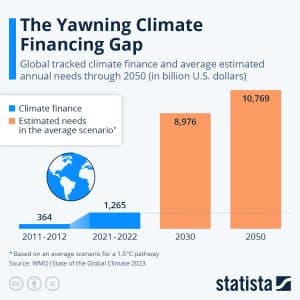
According to an analysis, the world needs around $9 trillion annually to close the financing gap by 2030, and more by 2050.

climate financing gap 2030 - 2050

3. A Just Transition Wins Ground

Bonn made real progress on the Just Transition Work Programme (JTWP). This program helps workers and communities affected by moving away from fossil fuels.

Caroline Brouillette, Executive Director, Climate Action Network Canada highlighted the importance of this program, noting:

“The UNFCCC feels increasingly disconnected from the real world. Amidst the dark clouds of these existential challenges to the planet and to this process, there is a ray of sunshine: parties are finding common ground around a Just Transition. The text forwarded to Belem offers us a fighting chance to a COP30 outcome that truly connects workers, communities and Peoples with the Paris Agreement.”

Negotiators agreed to create a Belém Action Mechanism, which will share strategies for fair and inclusive economic transitions. This breakthrough gives civil society more influence and sets a foundation for stronger action at COP30.

4. Reforming UN Climate Governance

The Bonn talks focused on procedural issues for days. They debated what should be on the agenda and how to make the negotiation process smoother. Countries proposed to limit agenda items, cap delegation sizes, and rush old initiatives toward their end.

The goal:

“to make UN climate talks less bureaucratic and more action-oriented—an issue now officially flagged for COP30.”

5. Adaptation and Gender Equity: Quiet Wins

Though overshadowed by finance fights, Bonn achieved meaningful progress on adaptation and gender equity. Delegates improved indicators for the Global Goal on Adaptation (GGA). They also outlined steps for National Adaptation Plans. They also began drafting a Gender Action Plan, pushing for more inclusive and representative climate policymaking.

Richer countries often blocked funding indicators. This raised concerns that adaptation gains might not have enough resources to succeed.

6. Fossil Fuel Language and Methane Agenda Lag

Decades after the fossil-fuel phase-out entered UN discussions, Bonn again failed to adopt strong language on it. Fossil-energy interests continue to slow reforms. Meanwhile, calls to include methane targets in NDCs gained traction, despite slow movement on actual text or enforcement measures.

7. What These Results Mean Ahead of COP30

The outcomes of the Bonn Climate Conference 2025 are crucial as the world heads toward COP30 in Belém, Brazil. The climate talks didn’t bring big breakthroughs. However, it helped shape important choices about climate goals, funding, and global cooperation.

The talk also highlighted continued tensions between developed and developing nations. The former urged stronger emissions cuts, while the latter stressed the need for greater financial and technical support.

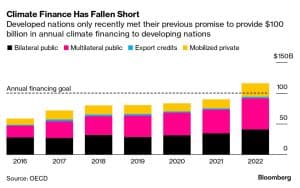
Progress on the new collective quantified goal (NCQG) for climate finance was limited. The $100 billion target, first set in 2009, has been missed for years. Many vulnerable nations are now calling for a new target in the trillions, not billions, to fund adaptation, mitigation, and loss and damage.

COP29 climate finance

The conference also moved forward technical discussions on the Loss and Damage Fund, created at COP28. However, disagreements remain on how to fund it long-term and ensure fairness in access and governance.

Carbon markets were another hot topic. Talks under Article 6 showed big gaps in transparency and environmental integrity. Still, there’s momentum to finalize rules that could attract more private-sector investment.

Finally, Bonn served as a key follow-up to the Global Stocktake, which warned that current climate action is far off-track. COP30 is now expected to be a major “course correction” moment where countries must align policies with the 1.5°C goal.

In summary, Bonn laid the groundwork but left tough choices for COP30—where ambition, equity, and accountability will be at the heart of the talks.

Heading to Belém: What to Watch at COP30 Summit

The upcoming COP30 in November now faces big tests:

  • NDC Submission: Will countries deliver substantial, 1.5°C-aligned plans by September?
  • Climate Finance Roadmap: Can Brazil and global north nations agree on timelines and sources for $1.3 trillion/year target?
  • Just Transition Showcasing: Will the Belém mechanism emerge with concrete funding and implementation plans?
  • Fossil Fuel and Methane Language: Will COP30 firm up phase-out commitments and stronger methane cuts?
  • UN Process Reform: Will Belém adopt streamlined, efficient formats for future conferences?

Fragile Gains, High Stakes: The Path Forward

Bonn laid important groundwork—but left most major questions unresolved. Delivering a just transition and better adaptation indicators shows that civil groups can shift priorities. However, the lack of NDCs, weak finance plans, and fossil fuel resistance could undermine COP30.

The upcoming climate summit must show dramatic progress. COP30 presents an important opportunity to move from fragmented pledges toward more unified climate action and to reinforce confidence in the Paris Agreement.

The outcomes of the summit will have significant impact for vulnerable nations, workers, and global stability, highlighting the importance of translating commitments into tangible results.

The post Key Takeaways from Bonn’s Climate Talks Ahead of COP30 appeared first on Carbon Credits.

S&P Global and JPMorgan Partner to Tokenize Carbon Credits

S&P Global and JPMorgan Partner to Tokenize Carbon Credits

S&P Global and JPMorgan’s blockchain division, Kinexys, launched a pilot to tokenize carbon credits. They aim to use blockchain and smart contracts to improve voluntary carbon markets (VCMs), make them more transparent, trustworthy, and liquid.

Their initiative is important because the global carbon credit market is worth about $933 billion in 2025, and can grow to over $16 trillion by 2034. This move could unlock major climate finance opportunities by tackling key issues that have held the market back.

From Blocks to Credits: The Digital Carbon Evolution

The voluntary carbon credit market is worth about $4.04 billion in 2024. It could grow to $24 billion by 2030 with an annual growth rate over 35%. However, this market has many flaws. Multiple registries make it hard to compare credits.

global demand for voluntary carbon credits increase by factor of 15 by 2030 and factor of 100 by 2050

Transparency issues continue to raise concerns about fraud and double-counting—when the same carbon credit gets sold or claimed more than once—in carbon markets. Ghost credits, which are fake reductions, hurt market integrity. Overstated impact claims and double-counting also damage investor confidence, as shown in the chart below.

VCM market size traded volume 2024

Estimates show that in 2021, hundreds of millions of tonnes of CO₂ equivalent credits faced issues. As the market grows, this number could rise significantly. To improve transparency, organizations are using blockchain tracking and better verification. These efforts aim to cut risks as the VCM grows. By 2030, analysts expect trade around 1.5 billion tonnes of CO₂ equivalent.

Low liquidity turns off big investors. Plus, no central exchange or standard contracts splits the market. This limits growth and makes it hard for institutions to join in.

These weaknesses undermine trust and prevent big capital from entering the market. By tokenizing credits, S&P and JPMorgan aim to fix these problems and transform carbon credits into reliable digital assets.

How Tokenization Changes the Game

The joint pilot combines the Environmental Registry from S&P Global Commodity Insights with JPMorgan’s Kinexys blockchain platform. Together, they can turn carbon credits into digital tokens. These tokens are stored on an unchangeable ledger that everyone can access.

This system performs the following:

  • Standardizes credits across different projects—such as reforestation or direct air capture—to make them comparable.
  • It ensures transparency by permanently logging the issuance, transfers, and retirement of each credit. This helps tackle fraud and double-counting issues that have affected the market.
  • Enables smart contracts that automate tasks. For example, credits retire when purchased, which cuts transaction times from months to minutes.
  • Enables cross-chain transfers, which lets tokens move smoothly between platforms and registries. It boosts interoperability and market depth.
carbon credit tokenization lifecycle PwC
Source: PwC

Tokenized credits can act more like stocks or bonds by solving issues of fragmentation, trust, and liquidity. This makes them tradable, verifiable, and scalable. 

In the JPMorgan and S&P Global partnership, tokenized carbon credits can move more easily between companies, countries, and investors. This allows credits to be part of new climate-related financial products. Examples are tokens that show a share in a reforestation project or investments in carbon removal tech.

By making carbon markets more efficient and trustworthy, tokenization could attract more money into projects that fight climate change. This is a vital step as demand for high-quality, verifiable credits continues to outpace supply.

JPMorgan and S&P Global’s Pilot Program

JPMorgan launched this pilot with Kinexys, its blockchain arm. Kinexys, once called Onyx, has handled over $1.5 trillion in transactions since 2015. This shows it can support large finance systems.

The bank teamed up with S&P Global Commodity Insights and top registries: EcoRegistry and the International Carbon Registry. This partnership aims to get real carbon credit data and test how well blockchain can track credits from issuance to retirement.

Keerthi Moudgal, Head of Product at Kinexys Digital Assets, Kinexys by J.P. Morgan, noted:

“The voluntary carbon market is primed for innovation, and we’re eager to collaborate with participants to develop and implement new blockchain technology. Our shared aim is to establish standardized infrastructure that enhances information and price transparency, paving the way for financial innovation and increased market liquidity.”

Why This Deal Matters for Investors and the Environment

This new digital approach to carbon credits matters for both financial markets and climate action. For investors, tokenization creates a new asset class that is transparent, secure, and easy to trade.

Investors can now track where their money goes and how it helps reduce emissions. It also helps diversify portfolios with climate-related assets. These assets might gain value as climate rules become stricter.

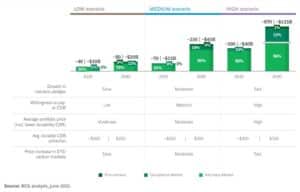
For the environment, a more transparent and accessible carbon market means more funding can go to projects like forest restoration, clean energy, and carbon removal. Notably, removal credits are expected to account for 35% of the voluntary carbon market by 2030.

BCG carbon removal credit demand projection 2030-2040
Source: Boston Consulting Group

When it’s easier to see that these projects provide real climate benefits, trust grows. Then, participation increases too. This is crucial for helping companies, especially in tough-to-decarbonize sectors, meet their climate goals effectively.

What This Means for Carbon Trading’s Future

Despite the promise of improving trust and market growth, this pilot still needs to tackle key challenges:

  • Regulatory alignment: Different regions (e.g., EU vs. U.S.) have distinct rules on carbon accounting and tokenized assets. Global standards are still being developed. This uncertainty in regulations is a barrier to widespread adoption.
  • Integration with existing systems: The tokenized model must link to current registries, such as Verra and Gold Standard. This connection prevents isolation and ensures market-wide interoperability.
  • Market adoption: Tokenized credits need backing from investors, corporates, and funds. Without demand, liquidity may remain low, even as the voluntary market is projected to grow fivefold by 2030.
  • Avoiding hype cycles: Blockchain projects risk attracting speculative investment. Tokenized carbon must demonstrate real value, not bubble-like behavior.

JPMorgan and S&P aim to resolve these by proving the approach in the coming months. Their success could set a global template for carbon finance.

Together, they are pioneering an important innovation to address transparency, trust, and liquidity problems in voluntary carbon markets. They aim to mix registry data with blockchain tech to create a secure, programmable, and tradable asset for climate financing

The post S&P Global and JPMorgan Partner to Tokenize Carbon Credits appeared first on Carbon Credits.

Is Apple Stock a Green Investment? Net-Zero Goals and Sustainable Supply Chain

APPLE

Apple Inc. (NASDAQ: AAPL) is a key player in the fight against climate change. The tech giant runs one of the largest carbon reduction programs worldwide. And over 320 suppliers have committed to using 100% clean energy by 2030. This makes Apple an appealing investment for those who care about the environment and want solid returns.

Apple’s Strong Financial Performance Supports Green Goals

Apple’s strong finances enable meaningful change. The company achieved record revenue of $124.3 billion in early 2025, a 4% increase from the year before. In the next quarter, Apple earned $95.4 billion, with an 8% rise in earnings per share. Services revenue also hit $26.6 billion, a significant milestone.

This success is crucial for investors focused on carbon reduction. Apple can invest billions in sustainability while providing good returns. Its stock price of about $201 reflects its solid position in technology and environmental leadership.

Record Carbon Reduction Progress

Apple has made significant strides in corporate sustainability. The company has cut global greenhouse gas emissions by over 60% since 2015. This was achieved without relying on carbon offsets; Apple reduced real emissions directly.

In 2024, Apple avoided 41 million metric tons of greenhouse gas emissions. This is like taking 9 million cars off the road for a year. The company aims for a 75% reduction in emissions compared to 2015 levels.

During this period, Apple’s revenue grew by 64%, while it cut emissions by 55%. This shows companies can profit while protecting the planet.

Supply Chain Change at Huge Scale

Apple’s Supplier Clean Energy Program is the largest corporate effort for supply chain carbon reduction. More than 320 manufacturing partners have committed to using 100% renewable energy by 2030. These suppliers make up 95% of Apple’s manufacturing spending.

The impact is significant. Suppliers generated 17.8 gigawatts of renewable electricity, avoiding 21.8 million metric tons of greenhouse gas emissions in 2024.

Manufacturing emissions account for about 55% of Apple’s total carbon footprint. The company nearly halved product manufacturing emissions, dropping from 16.1 million tons in 2020 to 8.2 million tons in 2024.

Apple’s progress toward carbon neutrality: Goal Carbon Neutral by 2030.                                        Timeline: 2015, 2019, and 2024

Apple (AAPL) emissions

Apple (AAPL) emissions
Source: Apple

First Carbon Neutral Consumer Electronics

Apple produced the world’s first carbon-neutral consumer electronics. The Apple Watch lineup and Mac mini achieved this through emissions reductions of over 75%. Remaining emissions were balanced by high-quality carbon credits from nature projects.

The carbon-neutral Apple Watch reduced emissions from 36.7 kg to 8.1 kg of CO2 per device, a 78% cut. The Mac mini is now Apple’s first carbon-neutral Mac computer.

These carbon-neutral products have key features:

  • Over 30% recycled content by weight

  • 100% recycled aluminum in cases

  • Manufacturing with 100% renewable electricity

Recycled Materials Drive Sustainability

Apple has made progress in using recycled materials. In 2024, 24% of product materials came from recycled or renewable sources. The company now uses 99% recycled rare earth elements in magnets and 99% recycled cobalt in batteries.

Many products feature 100% recycled aluminum cases, reducing emissions from mining new materials. In 2023, 71% of aluminum and 56% of cobalt in Apple products came from recycled sources.

Apple’s recycling innovations include the Daisy robot, which disassembles used devices to recover rare materials. The company has also removed leather from all product lines.

Apple recycled materials
Source: Apple

Carbon Market Investment Opportunities

For investors focused on carbon markets and ESG criteria, Apple offers many value opportunities. Its leadership in supply chain carbon reduction positions it well as carbon accounting becomes more detailed.

Apple invests in high-quality, nature-based carbon credits instead of cheap offsets. It spends up to $400 million through its Restore Fund programs, aiming for 1 million metric tons of carbon dioxide removal each year.

Its influence in the supply chain creates chances for broader industry change. For example, the renewable energy requirements have spurred clean energy development in key manufacturing regions, especially in China, where nearly 70 suppliers are now committed to 100% renewable electricity.

Strategic Advantages Through Environmental Leadership

Apple’s environmental leadership provides many competitive advantages. Its detailed carbon accounting prepares it well for global carbon pricing. Early use of renewable energy and efficient manufacturing gives it cost benefits as energy prices change.

Furthermore, supply chain carbon reduction efforts also build strong relationships with manufacturing partners and drive innovation in clean technologies. The company’s environmental standards have boosted clean energy deployment in manufacturing areas.

Investment Considerations and Risks

Considering Apple’s sustainability progress, investors should consider several factors. The company trades at a premium price with a P/E ratio of around 28, which may lead to volatility risks. However, Apple’s environmental leadership sets it apart.

Apple still faces challenges in managing supply chain emissions, which make up 98% of its total carbon footprint. The company has made progress with manufacturing partners, but achieving full supply chain carbon reduction by 2030 will require ongoing effort.

The stock has seen volatility in 2025, declining about 19% year-to-date. This may present opportunities for long-term investors focused on Apple’s sustainability leadership and financial strength.

Future Outlook and Growth Potential

Looking to 2030, Apple’s sustainability commitments may create many value opportunities. Its goal is to power customer device usage with 100% clean electricity, which addresses 24% of its carbon footprint.

Additionally, the company plans to use only recycled and renewable materials in its products by 2030. This goal will drive innovation, create competitive advantages, and reduce risks from commodity price swings.

The regulatory environment increasingly favors companies with strong environmental programs. Apple’s established reporting and emission reductions give it advantages in this evolving landscape.

Apple (AAPL stock)
Source: Apple

Is Apple (AAPL Stock) For Carbon-Conscious Investors? 

From the above analysis, we can see that Apple Stock (AAPL) is a solid choice for carbon-conscious investors. We have already seen that the company has cut emissions by 60% since 2015, and over 320 suppliers have pledged to use renewable energy. This highlights Apple’s commitment to climate action.

Its carbon-neutral products set new standards in consumer electronics, marking profitable ways to achieve net-zero emissions. All these achievements and advantages provide long-term value for investors.

As global carbon markets expand and ESG investing increases, Apple shines in environmental leadership. Its solid financial resources and focus on transparency make it a top pick for portfolios aimed at climate solutions and sustainable tech.

The post Is Apple Stock a Green Investment? Net-Zero Goals and Sustainable Supply Chain appeared first on Carbon Credits.

Formation Metals (FOMO): Is it the Next Big Gold Stock to Watch in 2025?

gold

Disseminated on behalf of Formation Metals Inc.

Formation Metals Inc. (CSE:FOMO, OTCPK:FOMTF, FSE:VF1) is turning heads in the mining world as it pushes forward with one of Quebec’s most promising exploration projects. With gold prices soaring and demand for critical metals on the rise, this junior explorer could be sitting on a major discovery.

Here’s why savvy investors should be watching Formation Metals closely in 2025.

Gold Bull Market and Clean Energy Trends Align Perfectly

Gold has soared to record highs in 2025, trading above $3,400 per ounce. Central banks and investors are rushing to buy gold as a safe-haven asset. President Trump’s renewed push for tariffs has created more market uncertainty, which is also driving prices up.

Source: Bloomberg

Looking ahead, the outlook stays strong. JP Morgan expects gold to average around $3,675 per ounce by late 2025 and climb toward $4,000 by mid-2026. Demand is likely to stay high, with central banks and investors expected to buy about 710 tonnes each quarter this year.

Gold
Source: JP Morgan

Also, the demand for metals tied to electrification and clean energy is surging. And Formation’s flagship N2 gold project aligns perfectly with both trends. Additionally, Quebec has simple permitting rules, so projects move faster with less paperwork and delays.

Formation Metals’ Flagship N2 Gold Project: A Prime Asset in Quebec’s Abitibi Gold Belt

The miner’s flagship asset, the N2 Gold Project is located in Quebec’s Abitibi sub province. This region is well-known for producing millions of ounces of gold because of its rich geology and mining-friendly policies. N2 covers 87 claims across nearly 4,400 hectares and lies right along the Casa Berardi trend which is a home to several major gold discoveries.

More importantly, the property is accessible year-round via highway and logging roads, which makes it easier and cheaper to explore.

Gold Resource Nears 1 Million Ounces!

The N2 Project already holds a historical gold resource of around 870,000 ounces, spread across multiple zones. This includes 18 million tonnes grading roughly 1.4 to 1.5 grams per tonne of gold, plus a higher-grade zone (RJ) with 243,000 tonnes at 7.82 g/t.

What’s even more exciting is that much of the property remains underexplored. Only about a third of the “A” zone has been drilled, leaving over 3 kilometers open for future expansion. The Management believes that with proper exploration, the resource could grow well beyond three million ounces.

2025 Drill Program Fully Funded and Underway

It has launched a 20,000-metre drill program, with the first 5,000 metres fully funded and set in motion. The focus is on expanding the known gold zones, especially “A,” “RJ,” and “Central” while also chasing new mineralized trends.

This kind of aggressive drilling is often what sets early-stage juniors apart. Formation is betting big on the ground it owns, and investors may soon see the results.

Formation metals
Source: FOMO

Base Metals Upside: Copper and Zinc Intercepts Add Value

Gold might be the headliner, but there’s more to N2. A fresh review of historic drill core revealed notable copper and zinc intercepts across the property. That means Formation could be holding onto a multi-metal discovery, not just a gold project.

In a market where base metals like copper are seeing renewed demand with the EV boom, infrastructure, and clean tech, that’s a major bonus.

Undervalued Formation Metals Stock Offers Re-Rating Potential

With C$2.8 million in working capital and $14.3M market cap, the mining company is fully funded for its 2025 drill plans. That financial stability removes a key risk often seen in the junior space i.e. running out of cash mid-program.

Based on these figures, experts say that if FOMO can confirm even a 3 million-ounce gold resource, the in-ground value at current gold prices could exceed $9.9 billion. Assuming just a 50% success rate in its drill campaign, that’s potentially $4.95 billion in value creation, yet the company’s market cap remains a fraction of that.

This gap presents a clear re-rating opportunity. Once drill results hit the market and permit approvals come through (expected within weeks), investors could start pricing in N2’s full potential.

Strong Re-rating Potential

Formation Metals FOMO
Source: FOMO

Formation Metals Stock Could Be 2025’s Breakout Mining Play

The company is shaping up to be one of 2025’s most interesting junior mining stories. With a large, underexplored gold project in a tier-one jurisdiction, base metals potential, a fully funded drill campaign, and a clear path to resource expansion, this company is positioned for a major upside move.

For investors looking to ride the gold wave and get exposure to copper and zinc also Formation Metals could be the opportunity to watch before the market catches on.

DISCLAIMER

New Era Publishing Inc. and/or CarbonCredits.com (“We” or “Us”) are not securities dealers or brokers, investment advisers or financial advisers, and you should not rely on the information herein as investment advice. Formation Metals Inc. made a one-time payment of $30,000 to provide marketing services for a term of 1 month. None of the owners, members, directors, or employees of New Era Publishing Inc. and/or CarbonCredits.com currently hold, or have any beneficial ownership in, any shares, stocks, or options in the companies mentioned. This article is informational only and is solely for use by prospective investors in determining whether to seek additional information. This does not constitute an offer to sell or a solicitation of an offer to buy any securities. Examples that we provide of share price increases pertaining to a particular Issuer from one referenced date to another represent an arbitrarily chosen time period and are no indication whatsoever of future stock prices for that Issuer and are of no predictive value. Our stock profiles are intended to highlight certain companies for your further investigation; they are not stock recommendations or constitute an offer or sale of the referenced securities. The securities issued by the companies we profile should be considered high risk; if you do invest despite these warnings, you may lose your entire investment. Please do your own research before investing, including reading the companies’ SEDAR+ and SEC filings, press releases, and risk disclosures. It is our policy that information contained in this profile was provided by the company, extracted from SEDAR+ and SEC filings, company websites, and other publicly available sources. We believe the sources and information are accurate and reliable but we cannot guarantee it.

 CAUTIONARY STATEMENT AND FORWARD-LOOKING INFORMATION

Certain statements contained in this news release may constitute “forward-looking information” within the meaning of applicable securities laws. Forward-looking information generally can be identified by words such as “anticipate”, “expect”, “estimate”, “forecast”, “planned”, and similar expressions suggesting future outcomes or events. These statements reflect current views regarding company performance, business goals, market conditions, and intellectual property development. The statements are based on current business and market expectations. However, they involve various risks and uncertainties, including potential delays, financial difficulties, operational challenges, and problems protecting intellectual property. Additional risks include possible regulatory approval delays, market disruptions, personnel issues, and competitive pressures.

Although management of the Company has attempted to identify important factors that could cause actual results to differ materially from those contained in forward-looking information, there may be other factors that cause results not to be as anticipated, estimated or intended. There can be no assurance that such forward-looking information will prove to be accurate, as actual results and future events could differ materially from those anticipated in such forward-looking information. Accordingly, readers should not place undue reliance on forward-looking information. Readers are cautioned that reliance on such information may not be appropriate for other purposes. Additional information about risks and uncertainties is contained in the Company’s management’s discussion and analysis for the year ended December 31, 2024, and the Company’s annual information form for the year ended December 31, 2024, copies of which are available on SEDAR+ at www.sedarplus.ca.

The forward-looking information contained herein is expressly qualified in its entirety by this cautionary statement. Forward-looking information reflects management’s current beliefs and is based on information currently available to the Company. The forward-looking information is made as of the date of this news release and the Company assumes no obligation to update or revise such information to reflect new events or circumstances, except as may be required by applicable law.

For more information on the Company, investors should review the Company’s continuous disclosure filings that are available on SEDAR+ at www.sedarplus.ca.

Please read our Full RISKS and DISCLOSURE here.


Disclosure: Owners, members, directors, and employees of carboncredits.com have/may have stock or option positions in any of the companies mentioned: None.

Carboncredits.com receives compensation for this publication and has a business relationship with any company whose stock(s) is/are mentioned in this article.

Additional disclosure: This communication serves the sole purpose of adding value to the research process and is for information only. Please do your own due diligence. Every investment in securities mentioned in publications of carboncredits.com involves risks that could lead to a total loss of the invested capital.

Please read our Full RISKS and DISCLOSURE here.

The post Formation Metals (FOMO): Is it the Next Big Gold Stock to Watch in 2025? appeared first on Carbon Credits.
Lucid Group (LCID Stock) Sets New EV Standard: Highest Efficiency and 30% Lower Emissions

Lucid Group (LCID Stock) Efficiency Revolution: How Air EVs Achieve 30% Lower Emissions Than German Competitors

Lucid Group Inc. (NASDAQ: LCID) is leading a new era in electric vehicle (EV) technology by focusing on energy efficiency. The company produces the most energy-efficient electric sedan in the U.S. and aims to lower carbon emissions throughout the vehicle lifecycle.

Lucid’s fresh approach lets investors and environmental supporters back clean transportation. They can also benefit from the rising demand in the premium EV market.

Breakthrough Efficiency and Lower Emissions: Lucid’s Energy Edge

The 2025 Lucid Air Pure is the first EV to reach 5 miles per kilowatt-hour of energy. Rated by the U.S. Environmental Protection Agency (EPA) at 146 MPGe (miles per gallon equivalent), the Air Pure sets a new benchmark in EV performance.

It uses an 84 kWh battery pack to deliver 420 miles of EPA-estimated range. This high efficiency lets the car use less energy per mile. This reduces strain on power grids and lowers carbon emissions while driving.

Lucid’s 2023 Sustainability Report states that the Air Grand Touring model produces about 6% less emissions than the top U.S. EV competitor. It also emits around 30% less than the leading German luxury EV.

Vehicles like the Mercedes-Benz EQS and Porsche Taycan average 79–85 MPGe, significantly lower than Lucid’s models. This difference directly affects emissions per mile driven.

Lucid achieves these results by designing and manufacturing its own drive units, battery systems, and software. The EV maker controls all core systems. This lets them optimize efficiency better than companies that rely on third-party suppliers.

Sustainability Commitments and Industry Recognition

In 2023, Lucid boosted its sustainability efforts by joining the United Nations Global Compact. This program encourages companies to adopt responsible practices in human rights, labor, the environment, and anti-corruption. This commitment requires regular progress reports aligned with the UN Sustainable Development Goals.

CEO Peter Rawlinson called this step “a milestone in our sustainability journey.” Lucid aims to maximize each kilowatt-hour. This approach reduces energy needs, cuts emissions, and supports global decarbonization.

In 2025, Lucid topped Forbes’ Net Zero Leaders list, ranking #1 out of nearly 15,000 companies.

Forbes Net Zero Leader 2025

Forbes looked at how companies manage emissions in three areas:

  • Direct emissions from operations
  • Indirect emissions from the energy they buy
  • Emissions from their supply chain and product use

Lucid scored highly on its ability to manage these emissions, along with governance, risk preparedness, and financial resilience. The company doesn’t disclose a net-zero pledge. However, it does commit to the following goals and actions:

  • Efficiency-driven carbon cuts: Lucid emphasizes vehicle efficiency—maximizing miles per kWh—meaning fewer emissions from power generation and reduced lifecycle emissions .
  • Renewable energy measures at plants: Their Casa Grande, Arizona factory includes on-site solar and is built to be energy-efficient, targeting lower operational emissions.
  • UN Global Compact membership: Lucid joined the UN Global Compact in April 2023, committing to broader sustainability principles and annual reporting.

Technology Innovation and Market Impact

Lucid’s strength lies in its technology. The company develops its own motors, inverters, battery systems, and control software. This vertical integration allows it to deliver higher power and efficiency from smaller, lighter components.

The Air lineup now includes heat pump technology standard across all models. This system improves cold weather efficiency by using compressed refrigerant to produce heat, rather than traditional electric heating.

Lucid’s efficiency-first design has real environmental benefits. Smaller battery packs for the same range reduce the use of raw materials like lithium and cobalt. This not only lowers vehicle weight but also cuts emissions from the battery manufacturing process. During use, especially in regions where power comes from fossil fuels, more efficient EVs result in fewer emissions.

Lucid competes in the luxury EV segment against Mercedes-Benz, BMW, Audi, and newer entrants like Tesla and Genesis. Its ability to pair luxury performance with top-tier efficiency gives it an advantage in a fast-growing market. For example, while other luxury EVs deliver strong acceleration and comfort, Lucid adds extended range and energy savings, helping ease concerns like range anxiety.

Bold EV Expansion Plans

Lucid Group is aggressively scaling its electric vehicle production, aiming to more than double output in 2025 despite ongoing industry challenges. In the first quarter of 2025, Lucid delivered 3,109 vehicles—a 58% increase compared to 1,967 deliveries in Q1 2024—and produced 2,212 vehicles at its Arizona factory, with an additional 600 units in transit to Saudi Arabia for final assembly.

For the full year 2024, Lucid produced approximately 9,029 vehicles and delivered 10,241, meeting its production targets and marking a 7% increase in production and a 70% rise in deliveries compared to 2023. The company is on track to manufacture around 20,000 vehicles in 2025, more than doubling its 2024 output, bolstered by the launch of its first electric SUV, the Gravity.

Lucid Q1 2025 results
Source: Elektrek

By comparison, Tesla, the industry leader, delivered 443,956 vehicles and produced 410,831 in Q2 2024 alone. Globally, EV sales reached a record high in the second quarter of 2024, growing 19% from the first quarter, according to New AutoMotive’s Global Electric Vehicle Tracker.

Powering Up Profits: The Road Ahead for Lucid

Lucid is still growing. In Q1 2025, it reported $235 million in revenue, up from $173 million in the same quarter the previous year. It delivered 3,109 vehicles, a 58% year-over-year increase.

With $5.76 billion in liquidity, the company is aiming to produce 20,000 vehicles in 2025—more than double the output in 2024.

Lucid’s stock trades at around $2.16 per share as of July 2025. Analysts rate the stock as “Hold,” with a price target of $2.68, indicating a possible 30% upside.

The carmaker faces production and scaling challenges, but its efficiency leadership provides a solid base for long-term growth in the premium EV market.

Lucid Group is setting a new standard in electric vehicle efficiency. The company proves that sustainability and performance can work together. It achieves 5 miles per kilowatt-hour and produces up to 30% lower emissions than top German EVs. 

Lucid is serious about clean energy, and its global efforts show this. It was also named a top Net Zero Leader. These factors highlight the company’s strong position in the premium EV market.

For investors focused on cutting-edge EV technology and lifecycle carbon impact reduction, Lucid offers a compelling opportunity. With advanced innovation, growing market presence, and a clear sustainability mission, Lucid stands out in a competitive and rapidly evolving industry.

The post Lucid Group (LCID Stock) Sets New EV Standard: Highest Efficiency and 30% Lower Emissions appeared first on Carbon Credits.

Stellantis and Leapmotor Forge Carbon Credit Deal Amid Booming EV Market

Stellantis and Leapmotor Forge Carbon Credit Deal Amid Booming EV Market

China’s electric vehicle (EV) maker Leapmotor has signed a carbon credit transfer agreement with Italy’s Stellantis. The plan sees Stellantis buying CO₂ credits from Leapmotor, which can generate these credits through producing and selling zero-emission vehicles (ZEVs).

The deal reflects how EV manufacturers are not only cutting emissions but also earning revenue by selling tradable carbon credits. Let’s uncover how.

Trading Carbon and Cars: Inside the Leapmotor-Stellantis Deal

In a strategic move, Leapmotor announced that its subsidiary Leapmotor Power has signed a carbon credit transfer agreement with Stellantis units in China. The deal allows Stellantis’ Chinese units to purchase carbon credits from Leapmotor, helping the global auto giant comply with China’s strict vehicle emission regulations.

Leapmotor’s subsidiary will transfer CO₂ credits to several Stellantis brands, such as Fiat and Jeep, under a plan that likely spans several years. Each credit represents one tonne of CO₂ avoided by selling an EV instead of a fossil-fuel vehicle. 

The Italian carmaker aims to be net zero by 2038, and part of this goal is rolling out battery electric vehicles (BEVs) by 2030. Apart from buying carbon credits, Stellantis is also ramping up its EV strategy, investing in battery production and infrastructure. The company aims for 100% battery electric vehicle (BEV) sales in Europe and 50% in the U.S. by 2030.

Stellantis EV rollout production plan
Source: Stellantis

While specific volumes and pricing weren’t disclosed, Stellantis and Leapmotor called the deal “landmark.” It signals a growing trend: EV makers increasingly rely on carbon credit sales to boost revenue and offset costs.

The transaction highlights the growing importance of carbon credits in global automotive strategy. By selling credits from its zero-emission EVs, Leapmotor not only gains new revenue but also strengthens its relationship with Stellantis, which owns a 20% stake in the Chinese EV maker.

Moreover, the agreement reflects Stellantis’ push to meet regulatory requirements while scaling up its electrification strategy in a cost-effective way. Leapmotor further said the agreement complies with China’s “Parallel Management Method for Passenger Vehicle Corporate Average Fuel Consumption (CAFC) and New Energy Vehicle (NEV) Credits.”

This policy encourages automakers to improve fuel efficiency and expand NEV output to earn tradable credits, aligning with China’s national goals to peak carbon emissions before 2030.

Turning Emissions Into Earnings: How EVs Mint Carbon Credits

Electric vehicles play a crucial role in the global shift to cleaner transportation, not just by reducing tailpipe emissions, but also by generating carbon credits. Because EVs produce zero direct emissions, each vehicle sold contributes to a manufacturer’s carbon offset capabilities.
These offsets can be converted into carbon credits, which are then traded or sold to other companies that need to balance out their carbon footprint. This system provides a major incentive for automakers to go green.

Zero-emission vehicles (ZEVs) automatically earn credits under many emissions rules. Regulators like California, China, and the EU set ZEV quotas, mandating that a share of each automaker’s sales must come from EVs. If carmakers fall short, they must buy credits from those, like Leapmotor, that sell EVs.

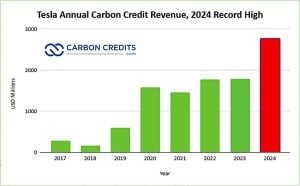
Tesla is the most notable case. In 2024, it earned $2.76 billion in carbon-credit revenue, up 54% from 2023 ($1.79B). That credit sales helped Tesla generate nearly 30% of its quarterly profits in late 2024.

Tesla annual carbon credit revenue in 2024

Since 2017, Tesla has made over $10.4B from regulatory credit sales. Its dominance shows how EV-led carbon programs can turn into powerful income streams.

This income supports Tesla’s bottom line and helps fund further investment in clean technology. As more countries introduce stricter emissions regulations and carbon pricing systems, EV makers like Leapmotor and Tesla are well-positioned to benefit.

Leapmotor Cashes In: Joining the Billion-Dollar EV Credit Market

Leapmotor’s deal with Stellantis means it can tap into this same market. As more countries tighten emissions rules, demand for credits is rising. For Stellantis, buying Leapmotor’s ZEV credits helps the company meet regulatory targets, especially in Europe, where non-compliance can trigger fines of €95 per gram of CO₂ per kilometer.

For Leapmotor, this provides steady revenue and strengthens its financial profile. The company can now scale production more confidently and reinvest in EV technology, production capacity, or market expansion.

Bumps in the Fast Lane

EV credit markets can shift quickly. In the U.S., lawmakers are considering phasing out credit programs, which would threaten Tesla’s model. In the EU, pooling credits between automakers is allowed, but regulators may change these rules.

Analysts also warn that as every carmaker ramps up EV production, credit prices may drop. Tesla’s revenues rose when others lagged, but as more EVs flood the market, credit demand could weaken and prices fall.

What It Means for the EV Market and Carbon Goals

The Leapmotor-Stellantis carbon credit deal shows how traditional and electric carmakers can work together to meet climate targets. It also reveals a growing trend in the EV space, where clean car companies gain an additional stream of revenue by selling credits to those that lag behind in electrification.

For Leapmotor, the deal boosts credibility and financial flexibility as it expands in and outside China. For Stellantis, the agreement helps it stay compliant in the world’s largest auto market while giving it time to accelerate its own EV rollout.

This model mirrors what Tesla has long benefited from and could soon become a standard revenue model for many EV players. With global carbon credit markets expected to reach hundreds of billions of dollars by 2030, carbon trading between automakers could significantly impact the industry’s economics and the pace of decarbonization.

Bloomberg forecasts global EV sales to take 50% of the market by 2030. China remains the top market globally. global EV sales 2030 BNEF

As global policies tighten and consumer demand for EVs grows, automakers will likely explore more creative ways, like this partnership, to manage their carbon footprints. These deals reinforce how EVs are more than just clean transport—they’re a powerful lever in the global carbon economy.

Looking Ahead: Leapmotor’s Path to Profit and Sustainability

Leapmotor’s deal with Stellantis positions it not only as an EV innovator but also as an energy-efficient exporter of carbon compliance. As global emissions rules tighten, its ability to generate carbon assets may become a key revenue source.

The deal also highlights how the shift to electric vehicles is reshaping global emissions markets. Automakers that sell EVs can now earn substantial revenue through regulatory credits, while legacy firms comply with climate rules.

Tesla’s multi-billion-dollar credit earnings show just how lucrative this business can be. As EV sales grow, the competition for credits will intensify. For EV producers, carbon credits offer not just sustainability merit but real financial value, bolstering their position in the global automotive market and speeding the transition to net-zero transport.

The post Stellantis and Leapmotor Forge Carbon Credit Deal Amid Booming EV Market appeared first on Carbon Credits.